Keywords
Modest fashion, purchase decision, Islamic marketing

Modest fashion, purchase decision, Islamic marketing
This revised version introduces several important improvements to enhance the clarity, rigor, and overall contribution of the study. The manuscript now provides a clearer definition of modest fashion, positioning it not only as a clothing category but also as a reflection of religious values, identity, and lifestyle. The theoretical framework has been strengthened by more clearly explaining how the Theory of Planned Behavior (TPB) is extended in this study. In particular, E-WOM is positioned as a form of social influence, while religiosity is incorporated as a moderating factor, offering a more integrated explanation of how cognitive, social, and spiritual factors shape purchase decisions.
The operationalization of key constructs has also been improved. The attitude variable is now explicitly defined as encompassing aesthetic, functional, and religious evaluations. In addition, the manuscript consistently uses the term “purchase decision” and clearly distinguishes it from intention. References for all measurement items have been added to improve transparency. From a methodological perspective, the sampling approach has been corrected and better justified. Additional analyses, including Common Method Bias testing, Q², PLSpredict, and SRMR, have been incorporated to strengthen the robustness of the findings. Potential limitations, such as high reliability values and the focus on Jakarta respondents, are now explicitly acknowledged.
See the authors' detailed response to the review by A'rasy fahrullah
See the authors' detailed response to the review by Tiara Nur Anisah
The modest fashion industry in Indonesia has been experiencing rapid growth and has positioned itself as a major contributor to the global halal economy (Yuniastuti & Pratama, 2023). As the country with the largest Muslim population in the world, Indonesia offers not only a vast market but also a unique consumer landscape. For Muslim consumers, modest fashion represents more than clothing choices. It reflects religious identity, moral values, and social aspirations (Furehaug, 2024; Mirza, 2024; Munawaroh et al., 2025). This phenomenon highlights the importance of understanding the factors that drive purchase decisions in the modest fashion sector.
In this study, modest fashion refers to clothing that adheres to Islamic principles of modesty, including covering the body appropriately, avoiding transparency and tightness, and reflecting ethical and cultural values. Beyond its functional aspect, modest fashion also represents a form of identity expression that integrates religious commitment, aesthetic preference, and contemporary lifestyle (Aruan & Wirdania, 2020; Mirza, 2024). Thus, modest fashion is conceptualized not merely as a dress code, but as a socio-cultural and religious phenomenon embedded in consumer behavior.
Purchase decisions in modest fashion are shaped by both psychological and social factors (Manzoor et al., 2024; Sholihah et al., 2025). Attitude has often been emphasized as a key predictor of consumer behavior, as it reflects individual evaluations of modest fashion products across cognitive, affective, and conative dimensions (Sumarliah et al., 2022). However, a favorable attitude may not be sufficient to drive actual decisions, as consumers also rely on information, social validation, and religious justification in their choices (Kim & Rana, 2025; Naeem & Ozuem, 2021).
At the same time, the rise of digital platforms has made electronic word of mouth (E-WOM) increasingly influential (Dehyadegari et al., 2025; Matiukaite et al., 2024; Singh et al., 2023). Reviews, recommendations, and consumer-generated content about modest fashion disseminated through social media and online platforms provide powerful signals that can shape perceptions, reduce uncertainty, and strengthen consumers’ confidence in their purchase decisions (Almashaleh & Fatahi Valilai, 2025).
Another factor that deserves decision is religiosity. In the Islamic context, religiosity serves not only as a spiritual identity but also as a guiding principle for daily behavior. Religious consumers are more likely to ensure that their choices, including those related to modest fashion, align with Islamic values (Amalanathan & Reddy-Best, 2024; Aruan & Wirdania, 2020). Beyond its direct role, religiosity may moderate the relationship between consumer attitudes, E-WOM, and purchase decisions. It can reinforce or weaken the effects of these variables, depending on the degree of religious commitment (Akhtar et al., 2023; Dehyadegari et al., 2025; Nickerson et al., 2023).
Although prior studies have examined the role of attitude, religiosity, and word of mouth in halal-related consumption, limited attention has been given to modest fashion in Indonesia. Specifically, there is a lack of research that simultaneously examines the influence of attitude and E-WOM on purchase decisions, while considering religiosity as a moderating factor. This study seeks to fill this gap by investigating the effects of attitude and E-WOM on purchase decisions in modest fashion, and by analyzing the moderating role of religiosity. The findings are expected to contribute to the literature on Islamic marketing and provide practical insights for modest fashion businesses in Indonesia.
While the Theory of Planned Behavior (TPB) has been widely used to explain consumer decision-making, its application in Islamic consumption contexts remains theoretically underdeveloped. TPB emphasizes attitude as a key determinant of behavior; however, it does not explicitly account for external digital influences such as electronic word of mouth (E-WOM) or internal spiritual drivers such as religiosity. This limitation is particularly relevant in the modest fashion context, where consumption is not only driven by rational evaluation but also shaped by social validation and religious commitment. Prior studies have produced inconsistent findings regarding the role of religiosity, some suggest it directly influences purchase decisions, while others indicate it acts as a boundary condition that strengthens or weakens behavioral relationships. Similarly, although E-WOM is recognized as a powerful driver in digital environments, its integration into TPB-based models remains fragmented.
This study focuses on purchase decision as a proxy for actual behavior, rather than purchase intention. While intention reflects a consumer’s willingness to act, purchase decision captures a more concrete behavioral outcome, representing the final stage of the decision-making process. Therefore, this study develops an extended TPB framework by incorporating E-WOM as a form of social influence and religiosity as a moderating variable. This integration provides a more comprehensive explanation of how cognitive (attitude), social (E-WOM), and spiritual (religiosity) factors interact in shaping purchase decisions in the modest fashion market. This represents a conceptual contribution, not merely a contextual extension.
Attitude refers to an individual’s learned predisposition to evaluate an object positively or negatively, reflecting cognitive, affective, and behavioral tendencies. It reflects a psychological orientation that develops through experience, social interaction, and personal values, influencing how a person thinks, feels, and behaves toward something. In essence, attitude embodies the internal evaluation that bridges one’s cognition, emotion, and behavior, forming the basis for how individuals interpret and react to their environment.
In the context of consumer behavior, attitude plays a crucial role in determining how consumers perceive products and make purchasing decisions. It represents an underlying mindset that guides their evaluation of product attributes, brand image, and overall satisfaction. A positive attitude generally leads to greater willingness to purchase, recommend, or remain loyal to a brand, while a negative attitude may result in avoidance or rejection.
In the case of modest fashion, for example, attitude influences how Muslim consumers perceive clothing that aligns with Islamic values of decency and modesty. When consumers develop a positive attitude toward modest fashion, they are more likely to engage in actual purchase behavior. Thus, attitude does not stand in isolation; it is shaped by various internal and external factors, including personal beliefs, cultural context, social influence, and religiosity.
Within the Theory of Planned Behavior (Ajzen, 1991), attitude plays a central role in shaping both intention and actual behavior. In the context of modest fashion, consumer attitudes are formed through cognitive beliefs (e.g., knowledge of syariah compliance and quality), affective evaluations (e.g., feelings of pride or identity expression), and conative tendencies (e.g., readiness to act).
In this study, attitude toward modest fashion is conceptualized as a multidimensional construct that reflects consumers’ overall evaluation based on three key aspects: (1) aesthetic value (e.g., design, style, attractiveness), (2) functional value (e.g., comfort, quality, usability), and (3) religious value (e.g., compliance with Islamic principles of modesty). This integrated perspective is particularly relevant in the modest fashion context, where consumption decisions are influenced by both symbolic and utilitarian considerations.
Prior studies in halal-related products, such as cosmetics and food, have shown that positive attitudes significantly influence consumers’ decisions (Ashraf, 2019; Nguyen et al., 2024; Sholihah et al., 2025; Sumi & Ahmed, 2022). A favorable attitude toward modest fashion, therefore, is expected to increase the likelihood of making purchase decisions.
Attitude has a positive effect on purchase decision in modest fashion.
E-WOM refers to consumer-to-consumer communication conducted through digital platforms, where individuals share opinions, reviews, and recommendations about products and services (Shen, 2021). It represents a modern form of interpersonal communication where individuals actively share product reviews, recommendations, and personal experiences across various online channels such as social media, discussion forums, blogs, and e-commerce platforms (Akdim, 2021).
In contemporary consumer behavior, E-WOM has become a powerful source of influence that often shapes perceptions, attitudes, and purchase decisions. Consumers today tend to rely heavily on the experiences and evaluations of others before deciding to buy a product. Positive E-WOM can enhance trust, build credibility, and strengthen brand reputation, while negative E-WOM may create doubt, damage brand image, and discourage potential buyers (Thurau et al., 2004; Yang, 2022).
E-WOM functions as a form of social proof that reduces uncertainty in decision-making. When consumers are exposed to consistent positive messages about a product, they are more likely to perceive it as reliable and worthy of purchase. Conversely, repeated exposure to negative comments may lead to avoidance behavior, regardless of the product’s actual quality (Gaffar & Sentika, 2024; Sousa & Fortes, 2023). In the context of modest fashion, E-WOM plays a significant role in influencing how Muslim consumers evaluate and select clothing brands that align with their values. Through online discussions, consumers share insights not only about design and quality but also about sharia compliance, modesty, and ethical production. This exchange of information builds a sense of trust and community among consumers who share similar religious and moral orientations.
In the modest fashion industry, E-WOM plays a crucial role in reducing uncertainty and helping consumers evaluate product quality, brand reputation, and compatibility with their personal and religious values. Empirical studies (Dehyadegari et al., 2025; Matiukaite et al., 2024; Singh et al., 2023; Yang, 2022) consistently show that E-WOM has a positive effect on purchase intention and decision, particularly for products that involve religious and symbolic attributes.
E-WOM has a positive effect on purchase decision in modest fashion.
Religiosity can be viewed as the extent to which an individual lives out the values, beliefs, and practices rooted in their faith (Safrilsyah et al., 2021). It represents not only one’s acknowledgment of religious teachings but also the depth of internalization that shapes attitudes, perceptions, and daily conduct (Samad et al., 2022). In essence, religiosity reflects the degree to which religion becomes a central and guiding force in one’s life, affecting how a person interprets right and wrong, makes moral judgments, and interacts with the surrounding environment (Abdullah et al., 2021).
From an Islamic perspective, religiosity is reflected through the observance of sharia principles in all aspects of life, including consumption (Aruan & Wirdania, 2020). This means that the act of purchasing is not merely an economic transaction but also an expression of obedience to Allah. For Muslim consumers, the selection of goods and services must align with Islamic teachings that emphasize halal, tayyib (good and wholesome), and modest conduct. As a result, religiosity becomes a central determinant of consumer behavior, shaping preferences toward products that embody spiritual meaning and religious compliance (Alsaad et al., 2021; Dehyadegari et al., 2025). When consumers are highly religious, their purchase decisions are likely to be filtered through Islamic principles, such as modesty, syariah compliance, and moral appropriateness. Consumers with a positive attitude toward modest fashion may be more likely to translate that attitude into an actual decision if their religiosity reinforces the belief that modest fashion aligns with Islamic teachings.
Findings from previous studies indicate that religiosity can strengthen the influence of independent variables on purchase decisions, particularly attitude and electronic word of mouth (E-WOM) (Akhtar et al., 2020; Dehyadegari et al., 2025; Nickerson et al., 2023). Consumers with a high level of religiosity tend to filter their evaluations and decisions through religious principles, ensuring that their choices align with faith-based values. When exposed to positive attitudes or favorable online recommendations that reflect Islamic values, these consumers are more likely to translate such influences into actual purchasing behavior. Thus, religiosity not only shapes the moral foundation of consumer behavior but also reinforces the impact of both attitude and E-WOM on purchase decisions, leading to more consistent and value-driven consumption patterns.
Religiosity moderates the relationship between attitude and purchase decision in modest fashion.
Religiosity moderates the relationship between E-WOM and purchase decision in modest fashion.
The conceptual model developed in this study is presented in Figure 1. It outlines the proposed relationships between Attitude, E-WOM, Religiosity, and Purchase Decision, and serves as the basis for formulating the research hypotheses.
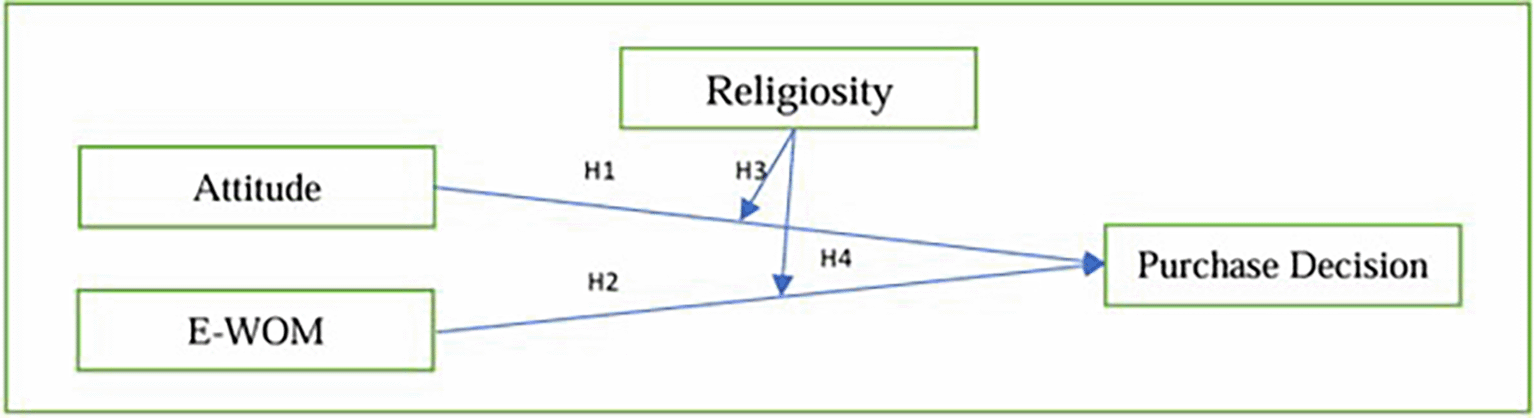
Source: Author’s own work, 2025.
This study employs a quantitative research design using Structural Equation Modeling (SEM) to examine how religiosity moderates the influence of attitude and electronic word of mouth (E-WOM) on modest fashion purchase decisions among Muslim consumers in Indonesia. The SEM approach was chosen because it enables simultaneous testing of multiple relationships among latent variables, allowing for a comprehensive understanding of the structural and measurement models within a single framework.
The population of this research consists of Muslim consumers residing in Jakarta and its surrounding areas who have experience in purchasing modest fashion products. Jakarta and its surrounding areas were selected as the research setting due to their role as the primary hub of Indonesia’s fashion industry and digital economy. The region represents a highly dynamic market where consumers are more exposed to modest fashion trends, social media influence, and diverse brand offerings. Therefore, it provides a relevant context for examining the interaction between attitude, E-WOM, and religiosity.
Respondents were selected using a non-probability sampling technique, specifically convenience sampling, as the questionnaire was distributed online via social media platforms. While this approach enables efficient data collection, it may limit the generalizability of the findings.
The determination of the sample size followed, which recommends a sample size of five to ten times the number of indicators used in the model. This study employed 36 indicators; hence, the minimum required sample ranged from 180 to 360 respondents. Data were collected through an online questionnaire distributed via social media channels. A total of 324 responses were received, but four were excluded due to incomplete answers, leaving 320 valid responses for analysis. This sample size meets the SEM requirements and ensures adequate statistical power.
This study did not involve medical procedures, clinical interventions, or the collection of sensitive personal data. Therefore, formal ethical approval from an institutional review board was not required according to the applicable national research ethics guidelines for social science research. Nevertheless, the study was conducted in full compliance with the ethical principles outlined in the Declaration of Helsinki. Participation was voluntary and anonymous. Informed consent was obtained through a digital consent mechanism embedded in the online questionnaire (Google Forms). At the beginning of the survey, respondents were presented with an online consent statement outlining the purpose of the study, confidentiality of responses, and their right to withdraw at any time without consequences. Respondents were required to actively indicate their agreement by selecting “Yes” before accessing the research questions. Those who selected “No” were automatically directed to exit the questionnaire and could not proceed further.
All constructs were measured using multi-item scales adapted from prior validated studies. Attitude was measured using items adapted from Ajzen (1991) and Sumarliah et al. (2022), reflecting cognitive, affective, and conative dimensions. The attitude construct was operationalized to capture aesthetic, functional, and religious evaluations of modest fashion products, ensuring alignment with the multidimensional nature of consumer perception in Islamic fashion contexts. E-WOM was measured based on Akdim (2021) and Thurau et al. (2004), capturing message credibility, quality, and recommendation behavior. Religiosity was operationalized using scales adapted from Aruan and Wirdania (2020) and Abdullah et al. (2021), covering belief, practice, and ethical dimensions. Purchase decision was measured using indicators adapted from Ashraf (2019) and Nguyen et al. (2024), reflecting both intention and actual purchase behavior. The purchase decision construct reflects actual or realized consumer behavior rather than mere intention, capturing the extent to which consumers have made or are committed to making a purchase.
Data were analyzed using Partial Least Squares Structural Equation Modeling (PLS-SEM) with SmartPLS version 4. This technique was selected due to its suitability for exploratory and predictive research involving complex models and moderating effects. The analysis proceeded in two main stages: the measurement model assessment and the structural model assessment.
The measurement model was evaluated through indicator reliability, internal consistency (Cronbach’s alpha and composite reliability), convergent validity (average variance extracted or AVE), and discriminant validity. The structural model was then examined using path coefficients, coefficient of determination (R2), effect size (f2), and predictive relevance (Q2). The moderating role of religiosity was tested using an interaction term between religiosity and the predictor variables (attitude and E-WOM), and its significance was evaluated using the bootstrapping method with 5,000 resamples. To assess the potential for Common Method Bias (CMB), this study employed the full collinearity variance inflation factor (VIF) approach as recommended for PLS-SEM. A VIF value below 3.3 indicates that the model is free from common method bias. In addition to the full collinearity VIF assessment, Harman’s single-factor test was conducted to further examine the presence of common method bias.
The measurement model was assessed to ensure the reliability and validity of all constructs before proceeding to structural model testing. Table 1 presents the results of the measurement model evaluation, which includes factor loadings, Cronbach’s alpha, composite reliability, and average variance extracted (AVE) for each construct.
All item loadings exceeded the minimum threshold value of 0.70, indicating that each indicator had a strong relationship with its respective latent construct. The purchase decision construct showed item loadings ranging from 0.814 to 0.924, suggesting that all indicators consistently represented consumers’ purchasing behavior toward modest fashion products. Similarly, the attitude construct exhibited loadings between 0.859 and 0.931, demonstrating that the items effectively captured respondents’ cognitive and affective evaluations. The E-WOM construct recorded loadings between 0.838 and 0.940, reflecting strong consistency in measuring message quality, credibility, and recommendation behavior. Finally, the religiosity construct displayed loadings ranging from 0.884 to 0.958, confirming that all items were highly representative of the dimensions of Islamic belief, worship, and ethical conduct.
Internal consistency reliability was confirmed through Cronbach’s alpha and composite reliability (CR) values, all of which exceeded the acceptable threshold of 0.70. Specifically, Cronbach’s alpha values ranged from 0.951 (attitude) to 0.977 (religiosity), while CR values varied between 0.952 and 0.977. These results indicate that the measurement model demonstrated a high level of internal consistency across all constructs.
Convergent validity was evaluated using the Average Variance Extracted (AVE). All constructs showed AVE values above the recommended minimum of 0.50, confirming that each construct explains more than half of the variance of its indicators. The AVE values were 0.778 for purchase decision, 0.804 for attitude, 0.788 for E-WOM, and 0.826 for religiosity, signifying that the constructs possess satisfactory convergent validity.
Although some VIF values exceeded the recommended threshold, additional tests (Harman’s single-factor test) in this study suggest at common method bias is unlikely to substantially distort the results. The result of Harman’s single-factor test shows that a single factor accounts for less than 50% of the total variance, indicating that common method bias is not a critical issue in this study.
After confirming the validity and reliability of the measurement model, the structural model was analyzed to examine the relationships among latent constructs and to evaluate the predictive strength of the model. The analysis included the assessment of the coefficient of determination (R2), effect size (f2), and the significance of the path coefficients.
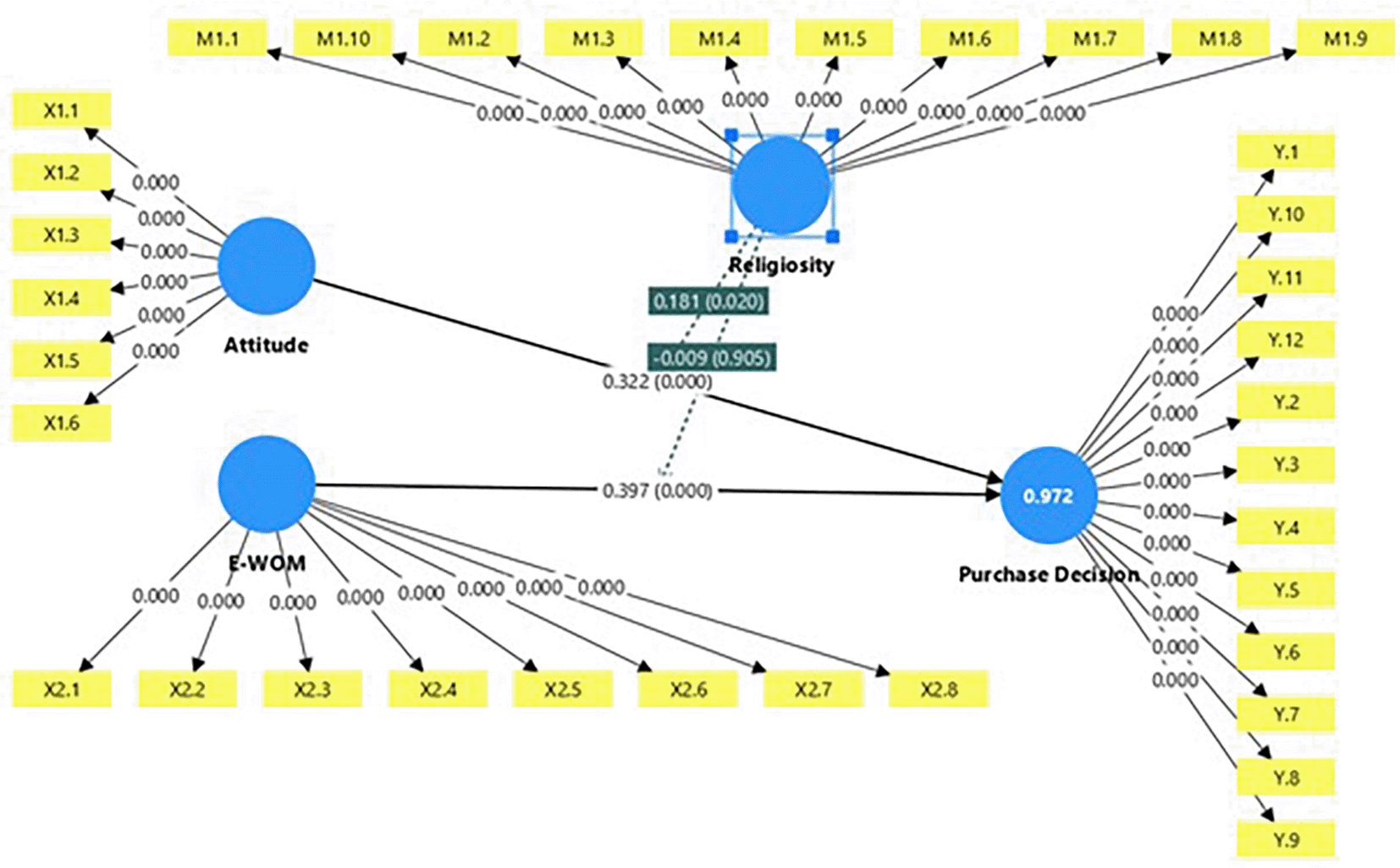
As illustrated in Figure 2, the path from Attitude to Purchase Decision shows a positive but statistically insignificant effect, while E-WOM demonstrates a significant influence. The figure also indicates the mediating role of Religiosity in the model.
Source: Author’s own work based on the analysis of collected data, 2025.
The R2 value for the purchase decision construct was 0.972, with an adjusted R2 of 0.971. This result indicates that attitude, E-WOM, and religiosity—including their interaction terms—jointly explain 97.2% of the variance in modest fashion purchase decisions. Referring to Chin (1998), an R2 value above 0.67 represents a substantial level of explanatory power. Therefore, the model demonstrates a very strong predictive capability in explaining Muslim consumers’ purchasing behavior toward modest fashion in Indonesia.
The effect size (f2) values show the contribution of each predictor to the endogenous construct. E-WOM recorded the highest effect (f2 = 0.203), indicating that electronic word of mouth exerts the strongest influence on purchase decisions. Attitude also showed a meaningful contribution (f2 = 0.105), suggesting that consumers’ positive evaluations toward modest fashion significantly enhance their purchasing decisions. Religiosity demonstrated a smaller but relevant effect (f2 = 0.062), confirming its role as an important personal determinant of purchasing behavior. The interaction between religiosity and attitude yielded a small but notable effect (f2 = 0.044), while the interaction between religiosity and E-WOM had a negligible effect (f2 = 0.000), indicating that religiosity only moderates the influence of attitude, not E-WOM.
The path coefficient results, summarized in Table 2, further confirm these findings. Attitude toward modest fashion had a significant positive effect on purchase decision (β = 0.322, t = 3.870, p < 0.001). Likewise, E-WOM showed a strong and significant positive relationship with purchase decision (β = 0.397, t = 5.012, p < 0.001). Religiosity also exerted a significant direct influence on purchase decision (β = 0.231, t = 2.731, p = 0.006), highlighting that higher religiosity levels are associated with stronger purchasing decisions toward modest fashion.
The moderating analysis revealed that religiosity significantly strengthened the effect of attitude on purchase decision (β = 0.181, t = 2.322, p = 0.020), indicating that the more religious the consumers are, the more consistent their positive attitudes become in translating into actual purchasing behavior. However, the interaction between religiosity and E-WOM was statistically insignificant (β = -0.009, t = 0.119, p = 0.905), suggesting that religiosity does not moderate the relationship between E-WOM and purchase decision.
These findings confirm that attitude, E-WOM, and religiosity play significant roles in shaping modest fashion purchase decisions among Muslim consumers in Indonesia. Attitude and E-WOM remain the most dominant predictors, while religiosity acts as a reinforcing factor that enhances the effect of attitude but not E-WOM.
The predictive relevance of the model was assessed using the Stone-Geisser Q2 value. The results show that the Q2 value for purchase decision is greater than zero, indicating that the model has strong predictive relevance. Additionally, PLSpredict analysis was conducted to evaluate the model’s out-of-sample predictive power. The results demonstrate that the model achieves adequate predictive performance, as the prediction errors are lower than those of the benchmark linear model. Furthermore, model fit was assessed using the Standardized Root Mean Square Residual (SRMR). The SRMR value was below the recommended threshold of 0.08, indicating a good model fit.
The results of this study provide meaningful insights into how religiosity shapes consumers’ purchase decisions in the modest fashion market in Indonesia. Attitude and electronic word of mouth (E-WOM) emerged as significant predictors of purchase intention, reaffirming established consumer behavior theory that positive attitudes and peer recommendations strongly influence purchase decisions. This finding is consistent with prior studies indicating that consumer attitudes toward modest fashion brands are often built upon both functional and symbolic values that align with Islamic principles (Hwang & Kim, 2020, 2021; Mirza, 2024). When consumers perceive that a product not only satisfies their aesthetic or quality expectations but also reflects their religious commitment, their attitude becomes a key driver in forming purchase intentions. Importantly, religiosity not only directly affects decision-making but also strengthens the relationship between attitude and purchase intention. This suggests that consumers with deep religious values weigh their positive attitudes towards modest fashion more heavily when making purchase decisions, reflecting an alignment of personal beliefs and consumption behaviors.
In the context of Indonesia’s modest fashion market, religiosity is not just an additional factor but a fundamental basis for consumers when making purchase decisions (Kusumawati et al., 2019; Munawaroh et al., 2025). Consumers who firmly hold religious values tend to give greater weight to their positive attitudes toward products when deciding what to buy. This means that purchases are influenced not only by trends or style but also by alignment with their beliefs and religious identity.
In practice, religiosity encourages consumers to be more selective and discerning, choosing fashion items that not only meet aesthetic standards but also comply with syariah principles, such as modesty and the halal status of materials or manufacturing processes. This trust arising from alignment is reinforced by recommendations from close peers, both directly and through social media (E-WOM), which plays a significant role in shaping purchase intention. However, it is important to recognize that younger consumers increasingly balance religious values with lifestyle and fashion trends. This requires businesses to offer products that fulfill religious demands while also being attractive in terms of style and relevant to contemporary tastes.
On the other hand, religiosity did not moderate the effect of E-WOM on purchase decisions. This indicates that regardless of religious intensity, electronic word of mouth operates independently as a powerful driver. This means that no matter how deeply religious someone is, the influence of online reviews, recommendations, and social sharing remains strong and independent. The power of social proof and peer opinions in the digital world cuts across all levels of religious commitment. It highlights the universal influence of social proof and online peer opinions in the digital era, impacting consumers across the religiosity spectrum (Bakar et al., 2013; Misiak & Paruzel-Czachura, 2025). This finding aligns with (Millie & Baulch, 2024) work on digital influence in Islamic consumerism, which argues that the increasing visibility of pious consumption and the uptake of new technologies by Indonesian Muslims illustrate how the borders between religion and consumerism have become increasingly porous. This suggests that religious and non-religious cultural forms are blending, which can facilitate the transcendence of religious differences in consumer behavior.
This study provides empirical insights into how attitude, electronic word of mouth (E-WOM), and religiosity shape Muslim consumers’ purchasing behavior in Indonesia’s modest fashion market. The results confirm that both attitude and E-WOM have significant and positive effects on purchase decisions, demonstrating that cognitive and social influences remain central in explaining consumer behavior within Islamic markets. Among the predictors, E-WOM emerged as the strongest determinant, underscoring the growing role of digital peer communication in driving consumer confidence and reducing uncertainty in the decision-making process. Religiosity also exhibits a direct positive influence on purchase decision, signifying that faith-based values remain a vital part of consumption patterns among Muslim consumers. Moreover, religiosity strengthens the link between attitude and purchase decision, implying that higher religious commitment enhances the translation of favorable attitudes into actual purchasing behavior. However, religiosity does not moderate the relationship between E-WOM and purchase decision, indicating that digital influence operates across varying levels of religious commitment and reflects a broader social mechanism in the digital era.
Theoretically, this study contributes to Islamic marketing literature by extending the application of the Theory of Planned Behavior (TPB) within the context of modest fashion consumption. It demonstrates that religiosity not only serves as a direct determinant but also as a moderating variable that reinforces attitude-driven decision-making among Muslim consumers. These findings offer a nuanced understanding of how religious identity interacts with psychological and technological factors in shaping market behavior in the halal economy.
From a managerial perspective, the findings highlight the importance for modest fashion entrepreneurs and marketers to integrate religiosity and digital engagement in their strategies. Marketers should emphasize syariah compliance, ethical sourcing, and value-based storytelling to strengthen consumer attitudes rooted in Islamic principles. At the same time, they must cultivate credible E-WOM by encouraging authentic consumer reviews, influencer collaborations, and social media interactions that foster trust and community. Balancing spiritual authenticity with contemporary design and digital appeal will allow brands to effectively connect with both religiously driven and trend-oriented consumers. For policymakers, the findings underscore the importance of supporting the modest fashion industry as part of Indonesia’s broader halal economy agenda, by promoting digital literacy, ethical standards, and market competitiveness.
This study is subject to potential common method bias due to the use of self-reported data collected from a single source. Although statistical remedies were applied, future research is encouraged to use longitudinal or multi-source data to minimize this issue. This study is subject to limitations related to the use of convenience sampling, which may introduce selection bias and limit the generalizability of the findings. Although the reliability values are very high, exceeding 0.95, this may indicate potential item redundancy. Future studies are encouraged to refine the measurement instrument by reducing overlapping items to enhance content validity.
However, the focus on Jakarta limits the generalizability of the findings, as consumer behavior in other regions of Indonesia may differ due to variations in cultural norms, income levels, and degrees of religiosity. Future studies are encouraged to include a more diverse geographical sample.
Future research also could extend this study by examining generational or cross-cultural variations in the interplay between religiosity and digital influence. Comparative studies between Muslim-majority and minority contexts would enrich understanding of how Islamic values, social identity, and technological engagement shape consumer behavior across different cultural settings.
| Views | Downloads | |
|---|---|---|
| F1000Research | - | - |
|
PubMed Central
Data from PMC are received and updated monthly.
|
- | - |
Provide sufficient details of any financial or non-financial competing interests to enable users to assess whether your comments might lead a reasonable person to question your impartiality. Consider the following examples, but note that this is not an exhaustive list:
Sign up for content alerts and receive a weekly or monthly email with all newly published articles
Already registered? Sign in
The email address should be the one you originally registered with F1000.
You registered with F1000 via Google, so we cannot reset your password.
To sign in, please click here.
If you still need help with your Google account password, please click here.
You registered with F1000 via Facebook, so we cannot reset your password.
To sign in, please click here.
If you still need help with your Facebook account password, please click here.
If your email address is registered with us, we will email you instructions to reset your password.
If you think you should have received this email but it has not arrived, please check your spam filters and/or contact for further assistance.

Comments on this article Comments (0)