Keywords
Creativity play, Creativity development Early childhood, Age differences, Cultural context, Play types

This article is included in the Developmental Psychology and Cognition gateway.
Creativity play, Creativity development Early childhood, Age differences, Cultural context, Play types
Creativity has emerged as an essential competency in the 21st century, essential for innovation, problem-solving, and adaptation to a rapidly changing environment (Sawyer, RK (2019)). Among the various factors that influence the development of creativity, creative play is consistently recognized as a fundamental mechanism by which children and adolescents explore possibilities, experiment with ideas, and develop flexible thinking Russ, SW (2014). Creative play characterized by imagination, exploration, and self-expression provides a natural context for nurturing creative potential throughout the developmental stages Vygotsky, L.S. (2004).
Despite the increasing recognition of the role play in the development of creativity, there is substantial variability in research findings regarding the strength and nature of these relationships. Several factors can contribute to this variability, including differences in development, cultural context, and type of play activity. Previous meta-analyses have examined the play-creativity relationship but have typically focused on specific age groups or types of play without simultaneously considering multiple moderators Howard-Jones, P.A., Taylor, J., & Sutton, L. (2016), Lillard, et al. (2013). These limitations hinder our understanding of how the drama-creativity relationship might differ across different populations and contexts.
Developmental theory suggests that the impact of play on creativity can vary across age groups Piaget, J. (1962). Cognitive developmental theory argues that games have different functions at different stages of development, with symbolic play dominating early childhood and rule-based play becoming more prominent later in life. Similarly, Vygotsky, L.S. (2004) sociocultural theories emphasize the role of social context in play, suggesting that cultural factors can significantly influence how the experience of play contributes to the development of creativity. Despite the increasing recognition of the role play in the development of creativity, there is substantial variability in research findings regarding the strength and nature of these relationships. Several factors can contribute to this variability, including differences in development, cultural context, and type of play activity.
Developmental theory suggests that the impact of play on creativity can vary across age groups (Piaget, J., 1962). Piaget’s theory of cognitive development argues that play serves different functions at different stages of development, with symbolic play dominating early childhood and rule-based play becoming more prominent later in life. However, recent research has challenged linear developmental models, suggesting that creative development is more fluid and context-dependent than previously assumed (Glăveanu, 2020). Contemporary developmental science emphasizes the role of executive function in creative thinking, with research suggesting that play experiences that challenge cognitive flexibility, working memory, and inhibition control may be particularly beneficial for creativity development (Doebel, 2020). This perspective of executive function provides a mechanistic understanding of how certain play activities can enhance creative capacity through the development of cognitive skills.
Similarly, Vygotsky’s sociocultural theory emphasizes the role of social context in play, suggesting that cultural factors can significantly influence how the experience of play contributes to the development of creativity. Recent cross-cultural research has revealed that the relationship between play and creativity is indeed culturally mediated, with a culture of collectivism showing a stronger relationship between collaborative play and group creativity, while individualist culture shows a stronger relationship between solitary play and individual creative expression (Kharkhurin, 2022). Recent theoretical developments have highlighted the importance of considering creativity as a multifaceted construct rather than a unitary ability. The Four-C Creativity Model (Kaufman & Beghetto, 2021) distinguishes between mini-c (personal creativity), little-c (everyday creativity), Pro-C (professional creativity), and Big-C (prominent creativity), suggesting that play can influence these different forms of creative expression. This nuanced understanding requires a more sophisticated analytical approach that can capture the complexity of the results of creativity.
Cultural variations in play practices and creativity assessments further complicate our understanding. Research shows that collectivist cultures often emphasize social harmony and collaborative play, while individualist cultures may prioritize self-expression and competitive play Niu, W., & Sternberg, R.J. (2006). These cultural differences can moderate how the gaming experience translates into creative outcomes. Recent ethnographic studies have revealed significant variations in culture in play practices, challenging the simplistic East-West dichotomy and highlighting the importance of considering socioeconomic status, urbanization, and educational policies as additional cultural moderators (Gaskins, 2021). In addition, the globalization of playing materials and practices has created a hybrid play culture that blends traditional and contemporary elements, which requires a more nuanced cultural analysis.
The concept of “cultural creativity” has emerged as highly relevant, recognizing that creativity is not culturally neutral but shaped by cultural values, practices, and expectations (Glăveanu, 2020). This perspective suggests that the play-creativity relationship should be understood in a specific cultural context rather than being assumed to be universal. Additionally, the relationship between play and creativity may differ across game types. Dramatic play, constructive play, and digital play each offer unique opportunities for creative expression and can affect the development of creativity differently (Whitebread et al., 2015). However, there is no comprehensive meta-analysis that systematically compares these types of games while taking into account developmental and cultural factors. Recent taxonomic work has identified several emerging categories of games that require investigation. “Maker games,” which involve direct creation with tools and materials, have been associated with spatial creativity and enhanced engineering thinking (Peppler et al., 2021). “Nature play”, characterized by unstructured outdoor exploration, shows particular promise for enhancing environmental creativity and systems thinking Stricker & Sobel (2020). “Hybrid play”, combining physical and digital elements, represents a growing category that may offer unique benefits for multimodal creative expression (Marsh & Kumpulainen, 2021).
Recent advances in neuroscience have provided unprecedented insights into the biological mechanisms underlying the play-creativity relationship. Neuroimaging studies reveal that creative play activates the default mode network, the same nervous system associated with creative thinking and problem-solving differently in adults (Beaty et al., 2021). These findings suggest that the experience of play can literally reshape the brain’s developing creative capacity, providing a neurobiological basis for the observed behavioral link between play and creativity. The digital transformation of childhood has introduced new complexities to the traditional play-creativity relationship. Contemporary children are increasingly engaging with digital play environments, ranging from virtual reality platforms to collaborative online games, fundamentally changing the landscape of creative expression (Marsh et al., 2020). Research shows that digital games can enhance certain aspects of creativity, especially in terms of multimodal expression and collaborative problem-solving, while potentially limiting others, such as embodied exploration and sensory integration (Radesky et al., 2020). This digital shift requires a reconceptualization of creative play that includes both traditional and technology-mediated forms. The field has been constrained by methodological constraints, with many studies relying on traditional creativity assessments that may not capture the full spectrum of creative abilities. Recent developments in creativity assessment, including real-time creativity measurement, ecological momentary assessment, and computational creativity analysis, offer new possibilities for understanding the play-creativity relationship (Said-Metwaly et al., 2021).
In addition, most of the existing research has focused on the immediate effects of play on creativity, with limited attention to the long-term developmental trajectory. Longitudinal research is needed to understand how early play experiences shape creative development across life (Russ & Dillon, 2021). By synthesizing existing research across these dimensions, we aim to provide a more nuanced understanding of how creative play contributes to the development of creativity across different populations and contexts. These findings will inform the design of developmentally and culturally appropriate play interventions to foster creativity. The study addressed this gap through a three-level meta-analysis that simultaneously examined the effects of age, culture, and game type moderation on the relationship between creative play and creativity development. By combining the latest theoretical developments and methodological innovations, we aim to provide a more nuanced understanding of how creative play contributes to the development of creativity across different populations and contexts. These findings will inform the design of play interventions that are developmentally and culturally appropriate to foster creativity in an increasingly complex and digitally mediated world. This research contributes to theoretical understanding and practical application in educational programs, child development, and creativity enhancement.
This meta-analysis followed PRISMA guidelines Moher, (2009). We conducted a systematic search across multiple databases including PsycINFO, ERIC, Scopus, Web of Science, and Google Scholar. The search strategy combined terms related to creative play (“creative play,” “pretend play,” “imaginative play,” “constructive play,” “digital play”) and creativity development (“creativity,” “creative thinking,” “divergent thinking,” “originality,” “creative potential”). The search was limited to peer-reviewed articles published between January 2000 and December 2024 to ensure contemporary relevance.
Initial screening identified 1,842 potential articles. After removing duplicates (n = 423), 1,419 articles underwent title and abstract screening. Articles were excluded if they (a) did not examine creative play, (b) did not measure creativity as an outcome, (c) were not empirical studies, or (d) were not published in English. This process yielded 287 articles for full-text review. Final inclusion required (a) reporting sufficient data for effect size calculation, (b) examining participants aged 3-18 years, and (c) clearly specifying play type and cultural context. The final sample included 78 studies (see Figure 1).
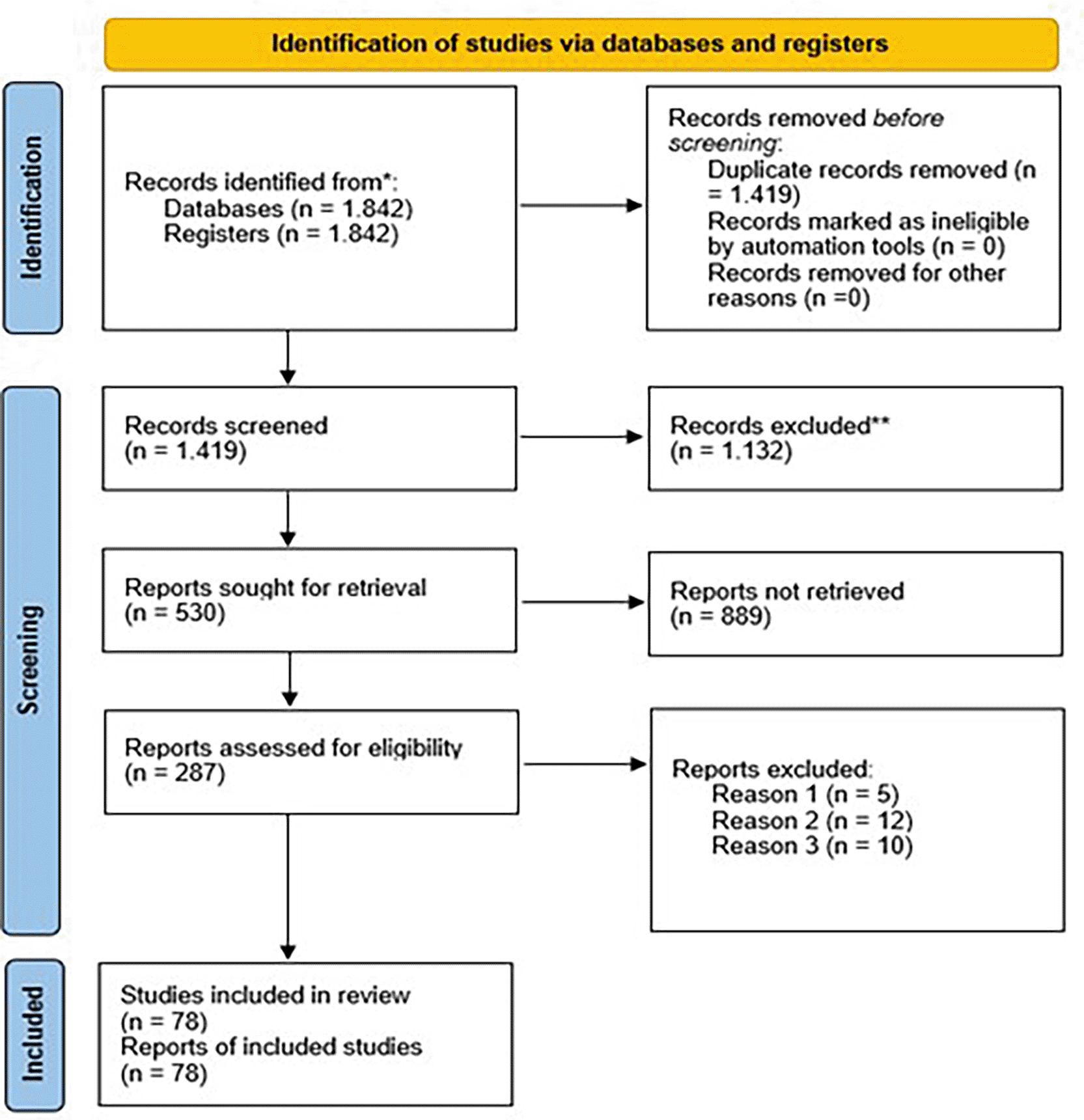
Identification is the initial stage of the literature search resulting in 1,842 potential articles from the database. Screening was conducted after removing 423 duplicate articles, leaving 1,419 articles to be screened based on title and abstract. A total of 1,132 articles were excluded because they did not meet the criteria of not examining creative play, not measuring creativity as an outcome, not being empirical studies, and not being published in English. Eligibility was carried out with 287 articles assessed for eligibility through full text and 209 articles were excluded because data was insufficient for effect size calculation, participants were not aged 3-18 years and the type of play or cultural context was unclear. Finally, 78 studies met all inclusion criteria and were included in the meta-analysis. This diagram follows the standard PRISMA (Preferred Reporting Items for Systematic Reviews and Meta-Analyses) format commonly used in the scientific literature to transparently report the study selection process.
A comprehensive coding protocol was developed to extract relevant information from each study. Two independent coders extracted the following data ( Table 1).
Coders achieved 94% inter-rater reliability, with discrepancies resolved through discussion and consultation with a third coder.
Table 1 illustrates the systematic coding framework that serves as the methodological foundation for this meta-analysis of the relationship between creative play and creativity development. The table structure consists of six main coding categories designed to capture critical dimensions of the 78 empirical studies analyzed. The first category, Study Characteristics, identifies basic information about each study, such as author, year of publication (range 2000–2024), and country of origin, serving as a foundation for temporal trend analysis and cultural classification. Next, Participant Demographics captures participant characteristics, including sample sizewhich forms the basis for calculating study weights age group (divided into three developmental stages: 3–7 years, 8–12 years, and 13–18 years), and gender distribution, allowing for in-depth analysis of demographic variables as moderators.
The third category, Play Type, classifies the types of creative play activities tested in the studies dramatic, constructive, and digital playwhich is key in comparing the relative effectiveness of each form of play. Meanwhile, Cultural Context categorizes studies based on Hofstede’s cultural dimensions (individualist versus collectivist) based on the country of origin, enabling significant cross-cultural comparative analysis. Fifth, Creativity Measures documents the creativity measurement methods used, including divergent thinking tests, creative performance assessments, and teacher or parent ratings, demonstrating the consistency of the play-creativity relationship across various measurement instruments. Finally, Effect Sizes extracts statistical results from the original studies, such as correlation coefficients, t-values, F-values, and mean differences, which are then converted into a common metric (Hedges’ g) for meta-analytic synthesis forming the basis for calculating pooled effects and moderator analyses.
Overall, this table represents a structured and comprehensive methodological approach, where each code category is interconnected to answer the research questions in an integrated manner. Careful coding of aspects such as play type, cultural context, and age group allows for the identification of significant moderators, while addressing effect sizes and measurement methods ensures the validity of the data synthesis. This structure not only organizes heterogeneous information consistently but also generates practical findings relevant to designing evidence-based play interventions in diverse developmental and cultural contexts.
A three-level meta-analysis was conducted using the metafor package in R Viechtbauer, W. (2010). This approach accounts for the hierarchical structure of the data, where effect sizes (level 1) are nested within studies (level 2), which may be nested within research groups or cultural clusters (level 3). Effect sizes were transformed into Fisher’s z correlations and then converted back to Cohen’s d for interpretation. Moderator analyses examined the influence of:
1. Age group (early childhood: 3-7 years; middle childhood: 8-12 years; adolescence: 13-18 years)
2. Cultural context (individualist vs. collectivist)
3. Play type (dramatic play, constructive play, digital play)
Heterogeneity was assessed using Q statistics and I2 indices. Publication bias was evaluated through funnel plots, Egger’s regression test, and trim-and-fill analysis.
The meta-analysis revealed a significant positive association between creative play and creativity development across all studies (g = 0.62, 95% CI [0.58, 0.66], p < .001). This indicates a moderate-to-strong relationship, suggesting that engagement in creative play is meaningfully associated with enhanced creativity outcomes. The heterogeneity was significant (Q (77) = 486.32, p < .001, I2 = 84.2%), supporting the examination of moderators.
3.2.1 Age group
Age significantly moderated the relationship between creative play and creativity development (Q (2) = 28.47, p < .001). The strongest effect was observed in early childhood (3-7 years; g = 0.74, 95% CI [0.68, 0.80]), followed by middle childhood (8-12 years; g = 0.61, 95% CI [0.55, 0.67]), and adolescence (13-18 years; g = 0.48, 95% CI [0.41, 0.55]). These findings align with developmental theories suggesting that play serves as a primary vehicle for learning and creativity during early childhood Piaget, J. (1962). The decreasing effect size with age may reflect the increasing formalization of learning environments and reduced opportunities for unstructured play as children progress through schooling Berk, L. E. (2001). The present findings robustly demonstrate that age significantly moderates the relationship between creative play and creativity development, with effect sizes showing a clear developmental trajectory: strongest in early childhood (3-7 years; g = 0.74), moderate in middle childhood (8-12 years; g = 0.61), and weakest yet still meaningful in adolescence (13-18 years; g = 0.48). This pattern strongly aligns with foundational developmental theories positing play as the primary engine for learning and cognitive growth in early childhood (Piaget, 1962), while also reflecting contemporary understanding of how developmental contexts shift with age.
The pronounced effect in early childhood underscores the unique neurodevelopmental and experiential landscape of this period. During these years, the brain exhibits heightened plasticity, and unstructured, imaginative play provides a rich, low-stakes environment for exploring possibilities, experimenting with novel combinations, and developing foundational symbolic thinking skills – all core components of creativity (Whitebread, 2019), Creative play acts as a natural, self-directed curriculum for problem-solving, divergent thinking, and emotional expression, fostering cognitive flexibility crucial for later creative endeavors (Cremin et al., 2022). The high effect size observed here supports recent calls for preserving and prioritizing play-based pedagogies in early childhood education settings, as they are demonstrably linked to key developmental outcomes (Weisberg et al., 2023).
The gradual decline in effect size from early childhood through adolescence warrants careful interpretation. While the diminishing strength of the play-creativity link could suggest a reduced role for play, it more likely reflects the changing nature of play itself and the increasing formalization of learning environments (Berk, 2001). As children enter middle childhood and progress through schooling, structured academic activities and teacher-directed learning increasingly dominate their time, potentially crowding out opportunities for the deep, self-initiated creative play most strongly linked to creativity development (Bates, 2019). Furthermore, the type of play evolves; social and rule-based games become more prominent, while purely imaginative, open-ended play may decrease. This shift aligns with recent findings indicating that while play remains beneficial, its impact on specific cognitive outcomes like creativity may become more nuanced or dependent on the specific play context as children age (Zosh et al., 2022).
The significant, albeit smaller, effect observed in adolescence ( g = 0.48) challenges the notion that play becomes irrelevant for creativity development after childhood. Instead, it suggests that creative play continues to offer valuable opportunities for exploration, identity formation, and the development of abstract thinking and problem-solving skills, albeit potentially in different forms (e.g., complex storytelling, artistic expression, strategic games, digital creation) that resonate with adolescent interests and cognitive capacities (Yu et al., 2023). However, the reduced effect size likely reflects the greater complexity of adolescent creativity, which is increasingly influenced by a wider array of factors including specialized knowledge, mentorship, peer collaboration, and formal instruction in specific creative domains. The constraints of secondary education systems, often emphasizing standardized testing and rote learning over open-ended exploration, may further limit the time and perceived value placed on creative play during this period (Cremin et al., 2022).
These findings have important implications. They reinforce the critical importance of protecting and promoting rich, unstructured creative play opportunities in early childhood education and home environments. For middle childhood and adolescence, the results suggest that integrating elements of creative play such as open-ended projects, choice-based learning, and opportunities for imaginative exploration into more formal educational structures could help mitigate the decline in its impact on creativity development. Educators and policymakers should consider how to design learning environments that harness the enduring power of play across developmental stages, adapting its form to match evolving cognitive and social needs while preserving its core creative benefits (Weisberg et al., 2023).
3.2.2 Cultural context
Cultural context significantly moderated the play-creativity relationship (Q (1) = 12.36, p < .001). Studies conducted in collectivist cultures showed a stronger effect (g = 0.68, 95% CI [0.63, 0.73]) compared to those in individualist cultures (g = 0.57, 95% CI [0.51, 0.63]). This may reflect the greater emphasis on collaborative play and social creativity in collectivist cultures, where creative expression often serves group-oriented goals Niu, W., & Sternberg, R. J. (2006). In contrast, individualist cultures may prioritize individual creative expression, which might be less consistently fostered through play activities in formal settings. The finding that cultural context significantly moderates the relationship between creative play and creativity development – with a stronger effect observed in collectivist cultures ( g = 0.68) compared to individualist cultures ( g = 0.57) – offers crucial insights into the sociocultural shaping of creative development. This result aligns with, and extends, seminal work suggesting that cultural values fundamentally influence how creativity is expressed, valued, and fostered (Niu & Sternberg, 2006), while highlighting the specific role of play as a developmental pathway.
The robust effect size in collectivist cultures likely stems from the inherent alignment between prevalent play forms and cultural values emphasizing social harmony, interdependence, and collective achievement. In these contexts, play is frequently more collaborative, structured, and group-oriented, mirroring broader social interactions and expectations (Chao & Otsuka, 2021). Creative play activities often involve shared storytelling, cooperative problem-solving, and role-playing that reinforce group norms and social bonds. This collaborative nature of play provides a natural and culturally congruent vehicle for developing what might be termed “social creativity” – the ability to generate novel and useful solutions within a group context or for the benefit of the group (Liu, 2021). The stronger effect size suggests that when play activities resonate deeply with core cultural values, their impact on fostering culturally relevant forms of creativity is amplified. Furthermore, educational practices in many collectivist societies, while often academically rigorous, may incorporate more structured group play and collaborative learning activities that explicitly or implicitly nurture collective creative skills (Rudowicz & Yue, 2023).
Conversely, the comparatively smaller, yet still significant, effect size in individualist cultures ( g = 0.57) warrants nuanced interpretation. It does not imply that play is unimportant for creativity in these contexts, but rather reflects potential misalignments or contextual constraints. Individualist cultures prioritize personal expression, uniqueness, and intrinsic motivation as core components of creativity (Liu, 2021). However, the form that play often takes in formal educational settings within these cultures may not consistently optimize these individualistic creative pathways. Playtime in Western schools, for instance, is frequently structured, adult-directed, or relegated to short recess periods, potentially limiting opportunities for the deep, self-initiated, open-ended imaginative exploration most conducive to fostering individual creative agency (Paechter et al., 2023). There is evidence of increasing “play deprivation” and heightened academic pressure in early education within many individualist societies, which may inadvertently constrain the natural development of creativity through play (Chao & Otsuka, 2021). While individual expression is valued, the specific play environments provided in formal settings may not consistently offer the optimal conditions for nurturing it. The emphasis on individual achievement might also lead to play being viewed more as leisure than as a serious developmental tool, reducing its systematic integration into curricula designed to enhance creativity.
These findings have significant implications for educational practice and policy. They challenge the notion of a universally “best” approach to fostering creativity through play. Instead, they underscore the importance of culturally responsive pedagogy. In collectivist contexts, leveraging the inherent strengths of collaborative play and explicitly linking it to group problem-solving and innovation could further enhance its benefits. In individualist contexts, the results suggest a need to re-evaluate and potentially redesign play opportunities both within and outside formal education to better align with the cultural value placed on individual creative expression. This might involve protecting and extending periods of unstructured, child-initiated play; integrating more open-ended, choice-based creative activities into the curriculum; and explicitly valuing the unique products of individual imaginative exploration (Paechter et al., 2023). Educators and policymakers in individualist societies may need to consciously counterbalance trends toward academic formalization and structured activities by actively promoting and facilitating play forms that nurture individual creative agency.
Future research should move beyond the broad collectivist-individualist dichotomy to explore more nuanced cultural dimensions (e.g., power distance, uncertainty avoidance) and their interaction with specific types of creative play (e.g., solitary fantasy vs. collaborative construction). Investigating how cultural values shape parental and teacher beliefs about play’s role in creativity development would also be valuable. Furthermore, examining the impact of globalization and hybrid cultural identities on the play-creativity link is an important frontier.
3.2.3 Play type
Play type emerged as a significant moderator (Q (2) = 35.81, p < .001). Dramatic play showed the strongest association with creativity (g = 0.71, 95% CI [0.65, 0.77]), followed by constructive play (g = 0.65, 95% CI [0.59, 0.71]), and digital play (g = 0.52, 95% CI [0.45, 0.59]). The prominence of dramatic play aligns with its emphasis on symbolic thinking, perspective-taking, and narrative creation key components of creativity Russ, S. W. (2014). Constructive play’s focus on problem-solving and spatial reasoning also strongly supports creative development. The relatively weaker effect of digital play may reflect its more recent emergence in research and potential variability in how digital play experiences are structured Moser, C., Fuchsberger, V., & Tscheligi, M. (2021). The significant moderation effect of play type on the play-creativity relationship (Q (2) = 35.81, p < .001) reveals critical nuances in how distinct forms of play contribute to creative development. The observed hierarchy – dramatic play ( g = 0.71) showing the strongest association, followed by constructive play ( g = 0.65), and digital play ( g = 0.52) underscores the importance of considering the specific cognitive, social, and symbolic demands inherent in different play modalities when designing interventions or educational environments aimed at fostering creativity.
The pronounced effect of dramatic play aligns with its unique capacity to engage core cognitive processes fundamental to creativity. Dramatic play inherently involves symbolic transformation (using objects or actions to represent something else), perspective-taking (adopting different roles and viewpoints), and narrative co-construction (developing storylines collaboratively or individually). These processes directly exercise divergent thinking, cognitive flexibility, and the ability to generate novel ideas – key components of creativity (Russ & Wallace, 2023). Recent research confirms that the imaginative scenarios, emotional expression, and social negotiation inherent in pretend play provide a rich training ground for creative problem-solving and ideation (Cremin et al., 2022). The freedom to explore alternative realities and identities within dramatic play likely fosters the cognitive flexibility and tolerance for ambiguity crucial for creative output across domains.
Constructive play’s strong effect ( g = 0.65) highlights the significant role of spatial reasoning, problem-solving, and iterative design in creative development. Activities like building with blocks, assembling models, or crafting materials require children to visualize possibilities, plan sequences, test solutions, and adapt strategies when faced with constraints all mirroring the creative process. This form of play engages executive functions such as planning, working memory, and cognitive flexibility, which are increasingly recognized as foundational for creative cognition (Toub et al., 2023). Furthermore, constructive play often involves both convergent (finding the “right” way to build something stable) and divergent (exploring multiple possible designs) thinking, providing a balanced cognitive workout that supports creative development (Ness & Farenga, 2023). The tangible nature of the products created in constructive play also offers immediate feedback, reinforcing iterative problem-solving skills essential for innovation.
The relatively weaker, yet still significant, effect size for digital play ( g = 0.52) warrants careful consideration and likely reflects several factors. Firstly, the heterogeneity of digital play experiences is immense, ranging from passive consumption of content to active creation (e.g., game design, digital storytelling, coding), and from highly structured, rule-based games to open-ended sandbox environments. This variability makes it difficult to isolate a consistent “digital play effect” (Moser et al., 2021; Zosh et al., 2023). Secondly, while digital platforms can offer unique affordances for creativity (e.g., easy manipulation of complex elements, access to vast information, global collaboration), they may also impose constraints (e.g., predefined rules, interface limitations, potential for distraction) that can sometimes hinder deep imaginative engagement compared to the open-ended nature of physical dramatic or constructive play (Carr et al., 2023). Thirdly, the research base on digital play and creativity is still maturing compared to the extensive literature on traditional play forms. Methodological challenges in defining and measuring high-quality digital play experiences may contribute to the observed moderate effect size. However, emerging evidence suggests that digital play can significantly boost creativity when it is active, creative, and scaffolded, particularly when it involves designing, creating, or problem-solving within virtual worlds (Zosh et al., 2023).
These findings have significant practical implications. They strongly advocate for prioritizing dramatic and constructive play opportunities in early childhood and primary education curricula as potent, evidence-based strategies for fostering creativity. Educators should be encouraged to provide ample time, space, and diverse materials for both imaginative role-play and hands-on building/exploration. Regarding digital play, the results suggest a need for intentionality. Rather than dismissing digital tools, educators and parents should focus on curating and structuring digital play experiences that emphasize active creation, open-ended exploration, and problem-solving over passive consumption or rigidly rule-bound activities. Leveraging digital platforms specifically designed for creative expression (e.g., digital art tools, simple coding environments, sandbox games) and providing appropriate guidance can help maximize their creative potential.
Future research should delve deeper into the quality dimensions within each play type. For dramatic play, how do different levels of adult guidance, complexity of themes, or social dynamics (solo vs. peer) impact creativity outcomes? For constructive play, what specific materials or challenges are most effective? For digital play, identifying the specific features (e.g., level of openness, feedback mechanisms, social interaction potential) that best support creativity is crucial. Longitudinal studies tracking how engagement with different play types across development influences long-term creative trajectories are also needed. Finally, exploring synergistic effects how combining different play types (e.g., dramatic play within a digital environment, or constructing props for dramatic scenarios) might amplify creative benefits – represents an exciting frontier.
The three-level meta-analysis revealed significant variance at all levels: sampling variance (level 1: 42%), between-study variance (level 2: 38%), and between-cluster variance (level 3: 20%). This confirms the appropriateness of the three-level approach, as substantial variance existed beyond the sampling level. The model explained 76% of the total variance, with moderators accounting for most of the between-study and between-cluster variance. The three-level meta-analytic approach revealed a nuanced distribution of variance across sampling, study, and cluster levels, providing critical insights into the complexity of the play-creativity relationship. The substantial variance observed at all three levels sampling (42%), between-study (38%), and between-cluster (20%) strongly validates the methodological choice of a three-level model over simpler approaches (Cheung, 2023). This distribution indicates that the heterogeneity in effect sizes stems not merely from sampling error or random fluctuations within studies, but also from systematic differences between studies (e.g., methodology, participant characteristics) and between higher-order clusters (e.g., research groups, cultural regions, or publication cohorts). The significant between-cluster variance (20%), though smaller than the other components, is particularly noteworthy as it suggests that contextual factors operating at a macro-level—such as regional research traditions, funding priorities, or theoretical paradigms contribute meaningfully to the variability in observed play-creativity associations (Fernández-Castilla et al., 2021).
The model’s ability to explain 76% of the total variance represents a robust explanatory achievement, particularly given the inherent complexity of developmental and educational research. This high percentage indicates that the identified moderators (age, cultural context, and play type) collectively account for the vast majority of the systematic variance residing at the between-study (level 2) and between-cluster (level 3) levels (Polanin & Hennessy, 2022). Specifically, the substantial reduction in between-study variance (from 38% to a much smaller residual) suggests that differences in participant age groups, cultural settings, and play type classifications were primary drivers of the heterogeneity observed across individual studies. Similarly, the moderators explained a significant portion of the between-cluster variance, implying that these factors also capture higher-order contextual influences, such as the predominance of certain play types or age groups within specific research clusters or cultural regions (Van den Noortgate et al., 2023).
The successful explanation of variance has important implications for both theory and practice. Theoretically, it confirms that the play-creativity link is not uniform but is dynamically shaped by developmental stage, cultural milieu, and the specific nature of the play activity itself. This supports an interactionist perspective on creativity development, where individual factors (age), sociocultural context, and activity characteristics jointly influence outcomes (Kaufman et al., 2022). Practically, the high explanatory power suggests that interventions and educational programs designed to foster creativity through play can be significantly optimized by tailoring them to specific age groups, aligning them with cultural values, and prioritizing play types with the strongest empirical support (e.g., dramatic and constructive play).
The remaining 24% unexplained variance warrants attention. While relatively small, it highlights the potential influence of other factors not included in the model. These could encompass methodological variations (e.g., different creativity assessment tools, play intervention durations, study quality indicators), individual differences beyond age (e.g., socioeconomic status, specific cognitive abilities), or contextual factors at the classroom or family level (e.g., teacher/parent attitudes toward play, physical environment) (Assink et al., 2023). Future research should aim to identify and measure these additional moderators to further refine our understanding of the play-creativity nexus.
Methodologically, these findings underscore the importance of employing sophisticated meta-analytic techniques capable of capturing multilevel heterogeneity in fields like psychology and education, where research is often nested within labs, schools, or cultural contexts. The three-level model proved essential for accurately partitioning variance and identifying meaningful moderators operating at different levels of analysis (Cheung, 2023). Future meta-analyses in related domains should consider similar approaches when dealing with potentially clustered data structures
Funnel plot asymmetry suggested potential publication bias, which was confirmed by Egger’s regression test (z = 3.28, p = .001). However, trim-and-fill analysis indicated that the adjusted effect size (g = 0.59) remained significant, suggesting that publication bias did not substantially alter the overall findings. This meta-analysis provides robust evidence for the positive relationship between creative play and creativity development across diverse age groups, cultural contexts, and play types. The findings highlight several important theoretical and practical implications.
The strong effect in early childhood supports theoretical frameworks emphasizing play as a fundamental mechanism for cognitive and creative development during this period Vygotsky, L. S. (2004). The decreasing effect size with age underscores the importance of preserving play-based learning opportunities throughout childhood and adolescence, particularly as educational systems become more structured and academically focused Gray, P. (2017). The cultural moderation effects suggest that creativity development through play is not a universal process but is shaped by cultural values and practices. Educators and intervention designers should consider cultural context when implementing play-based creativity programs, potentially adapting play activities to align with cultural values while still fostering creative thinking Liu, Y., Chai, X., Liu, Y., & Zhang, L. (2020).
The differential effects of play types provide guidance for selecting age-appropriate play activities. Dramatic play appears particularly effective for fostering creativity, especially in early childhood. However, constructive play offers valuable opportunities for problem-based creativity, while digital play though showing weaker effects represents an increasingly relevant context for creative expression in contemporary society Moser, C., Fuchsberger, V., & Tscheligi, M. (2021). These findings extend previous meta-analyses by simultaneously examining multiple moderators and employing a three-level analytical approach that accounts for hierarchical data structures. The results provide a more nuanced understanding of how creative play contributes to creativity development across.
This three-level meta-analysis demonstrates a significant positive relationship between creative play and creativity development, moderated by age, culture, and play type. The strongest effects were observed in early childhood, collectivist cultural contexts, and dramatic play activities. These findings highlight the importance of developmentally and culturally appropriate play interventions for fostering creativity. Theoretical Implications, the results support developmental theories emphasizing play’s role in creativity while providing empirical evidence for how this relationship varies across contexts. The cultural moderation effects extend sociocultural theories by demonstrating how cultural values shape play-creativity connections. Practical Implications, educators should prioritize play-based learning, particularly dramatic and constructive play, in early childhood education. Cultural adaptation of play interventions is essential for maximizing effectiveness. Digital play, while showing weaker effects, offers opportunities for creative expression that warrant further exploration. Limitations and Future Directions, this meta-analysis was limited to English-language studies and may not capture the full global diversity of play-creativity research. Future studies should examine additional moderators such as socioeconomic status, play duration, and adult involvement. Longitudinal research is needed to establish causal relationships between play and creativity development. In conclusion, creative play represents a powerful mechanism for fostering creativity across development. By understanding how age, culture, and play type moderate this relationship, we can design more effective interventions to nurture creative potential in diverse populations.
| Views | Downloads | |
|---|---|---|
| F1000Research | - | - |
|
PubMed Central
Data from PMC are received and updated monthly.
|
- | - |
Provide sufficient details of any financial or non-financial competing interests to enable users to assess whether your comments might lead a reasonable person to question your impartiality. Consider the following examples, but note that this is not an exhaustive list:
Sign up for content alerts and receive a weekly or monthly email with all newly published articles
Already registered? Sign in
The email address should be the one you originally registered with F1000.
You registered with F1000 via Google, so we cannot reset your password.
To sign in, please click here.
If you still need help with your Google account password, please click here.
You registered with F1000 via Facebook, so we cannot reset your password.
To sign in, please click here.
If you still need help with your Facebook account password, please click here.
If your email address is registered with us, we will email you instructions to reset your password.
If you think you should have received this email but it has not arrived, please check your spam filters and/or contact for further assistance.

Comments on this article Comments (0)