Keywords
Legal Pluralism, Agrarian Conflict, Indigenous Communities, Customary Law, Land Grabbing

Legal Pluralism, Agrarian Conflict, Indigenous Communities, Customary Law, Land Grabbing
Indonesia, as a postcolonial state, has a basic agrarian policy conundrum. On the one hand, the Republic of Indonesia’s Constitution of 1945, specifically Article 18B Paragraph (2), officially recognizes the existence of indigenous communities and their traditional rights. On the other hand, the implementation of national agrarian policy remains rooted in the colonial regime’s centralistic and state-centric approach (Burns, 2004). Constitutional Court Decision No. 35/PUU-X/2012 on the Recognition of Customary Forests is regarded a positive breakthrough; yet, it indicates a significant gap between normative recognition and factual application in the Indonesian legal system (Safitri, 2015). Large-scale infrastructure development programs in the post-reform era have become exclusionary instruments, altering indigenous groups’ social interactions and living places (Hall, Hirsch and Li, 2012).
According to the Agrarian Reform Consortium’s (KPA) 2023 annual report, Indonesia experienced 241 agrarian conflicts, involving 638,188 hectares of land and resulting in 135,608 families in 346 communities. The crop industry dominated these conflicts (44%), followed by property (18%), mining (13%), and infrastructure (12%). More disturbing is the escalation of institutional violence, as evidenced by the 608 victims of violence: 508 arrested, 91 attacked, 6 shot, and 3 died (Konsorsium Pembaruan Agraria, 2023). This data establishes Indonesia as a unique laboratory for complex agrarian disputes that depict the confrontation between development modernity and indigenous populations’ ontologies (Li, 2020).
Previous research on agrarian disputes in Indonesia has been fragmented, with a sectoral approach that fails to fully address issues of justice. Much of the previous research is based on a positive legal approach that fails to appropriately account for the features of legal diversity (Sikor and Lund, 2009). Sectoral rules, such as Law No. 41/1999 on Forestry and Law No. 2/2012 on Land Acquisition, are opposed to the spirit of Constitutional Court Decision No. 35/2012 (Safitri, 2015). There is currently a dearth of extensive research into the process of politicizing identity and commodifying land rights via regional regulations that recognize indigenous peoples (Tyson, 2010). This study vacuum is due to the lack of a systematic literature evaluation that incorporates genealogical analysis of policies, relationships between state and customary law, and government’s role in regulating legal diversity.
Empirically, this demonstrates that infrastructure projects like toll highways, dams, and special economic zones have become systematic land grabs. (Bank and Deininger, 2003) research revealed that formalizing land rights through the PTSL (Complete Systematic Land Registration Program) program marginalizes indigenous groups by disregarding the communal and relational aspects of customary land (Fitzpatrick, 2005). This study is significant because it contributes to the discussion of agrarian governance in postcolonial states by providing a comprehensive viewpoint that incorporates policy analysis, law, and public administration (Urano, 2014). This study’s findings are likely to provide an epistemological foundation for developing agrarian policies that address legal pluralism and social justice (Ribot and Peluso, 2003).
This study aims to: (1) trace the genealogy of agrarian conflict in the evolution of post-Reformation Indonesian agrarian policy (Urano, 2014); (2) analyze the triadic interaction of state law, customary law, and global market forces in the context of infrastructure development; and (3) identify theoretical and practical gaps in the current literature regarding the role of the state in managing legal pluralism; (4) Understanding the dynamics of agricultural conflict in indigenous communities in the context of post-Reformation infrastructural development; and (5) Conducting comparative research on land grabs.
During the Dutch colonial period, Indonesia’s agrarian policy was meant to exploit natural resources through a forced cultivation system (cultuurstelsel), which required farmers to grow export commodities including coffee, sugar cane, and indigo (Wiradi and Shohibuddin, 2009). This policy was supported by the Agrarian Law of 1870 (Agrarische Wet), which established private property rights and allowed for large-scale foreign investment (McCarthy and Robinson, 2016). This colonial legacy resulted in an unequal land ownership structure and a dualistic agrarian law system, which are at the root of Indonesia’s agrarian difficulties today (Booth, 1998). Following independence, the Indonesian government attempted to make fundamental reforms with the Basic Agrarian Law (UUPA) No. 5 of 1960, which highlighted the principle of “land for the people” and prohibited monopoly ownership (Wiradi and Shohibuddin, 2009). However, political instability and conflicting interests between the central and provincial administrations have impeded the implementation of the Basic Agrarian Law (UUPA). Efforts to transfer land and respect customary rights were impeded by opposition from political elites and former landlords, resulting in agricultural reform failing to meet its objectives (Wiradi and Shohibuddin, 2009).
The New Order era saw a transition in agrarian policy from a people-oriented to a centralised developmental approach (McCarthy and Robinson, 2016). The 1967 Foreign Investment Law permitted large-scale land acquisitions for plantations and mining, while the transmigration program hastens the change of indigenous tribes’ land. These policies created systematic, structural agricultural conflicts in which the state used legal tools to regulate and promote land grabbing (McCarthy, 2002).
As the Reformation era began, Constitutional Court Decision No. 35/PUU-X/2012 about customary forests established constitutional acknowledgment of indigenous peoples’ rights (Arizona, 2023). However, the execution remains limited by overlapping (Urano, 2014) regulations between the Basic Agrarian Law (UUPA) and sectoral laws such as the Forestry and Mining Law (Hammar et al., 2021). The land redistribution initiative through agrarian reform has technical and political challenges, including a delayed certification procedure and opposition from large investors who hold agrarian resources (Safitri, 2015).
Critically, Indonesia’s agrarian policy continues to face fundamental issues such as disparities in land ownership and governance (Arizona, 2023). The neoliberal approach to rural administration sometimes ignores marginalized populations’ rights in favor of investment interests. Furthermore, research on the effectiveness of agricultural reform at the local level is sparse, particularly in terms of assessing its influence on food security and the well-being of small-scale farmers. The integration of progressive legal techniques, political ecology research, and political economics analyses is critical in developing fair agrarian policy (Hall, Hirsch and Li, 2012).
This research employs the PRISMA (Preferred Reporting Items for Systematic Review and Meta Analysis) approach checklist (Heil and Ifenthaler, 2023) as a methodological foundation for conducting systematic and thorough reviews. The PRISMA framework is divided into four phases: identification, screening, eligibility, and inclusion, which ensures a full and transparent examination.
This study established five precise criteria for identifying and selecting relevant papers. A complete literature analysis was undertaken utilizing three academic databases: Scopus, ScienceDirect, SpringerLink, and ERIC to locate publications on agrarian conflict, indigenous people, and agrarian policy. These databases were chosen because they provide access to high-quality papers while also meeting the study’s objectives. The search criterion for papers were those published between 2015 and 2025 and written in English. The next search criterion was open access papers, as a way to assure widespread accessibility. The next criterion was the availability of full text, which allowed for limitless access to the selected studies.
Table 1 provides a full review of the five inclusion criteria. Each database search was carried out methodically across four databases to find relevant research on agrarian conflict among indigenous people. The inclusion criteria included research publications published within the last 10 years, studies concentrating on agricultural conflict among Indonesian indigenous people, and research addressing aspects of agrarian conflict, indigenous communities, and agrarian policy.
Tables 1 and 2 describe the search criteria and procedures used to find relevant studies on distance assessment. Table 1 describes the selection and rejection criteria, while Table 2 contains the search terms used in all databases.
In this phase, articles chosen in phase 1 underwent a second round of screening based on titles. The titles were carefully reviewed for conformity with preset keywords. Then, each article’s abstract was quickly screened to ensure that it met specified acceptance and exclusion criteria. Non-linear or inconsistent studies were excluded in order to increase validity.
The third phase involves extensive screening to determine the appropriateness of the retrieved articles for further screening. Only articles that meet the predefined and rejected criteria are considered for the final screening procedure. This approach is critical for ensuring that the selected papers are directly relevant to the phenomenon under consideration.
During this stage, publications that meet the established eligibility criteria are selected for analysis, while those that do not are excluded. The exclusion procedure includes a wide range of scientific materials, such as published books, book citations, academic proceedings, papers with limited or inaccessible full text, and publications produced after 2015-2025. Figure 1 depicts the article identification procedure.
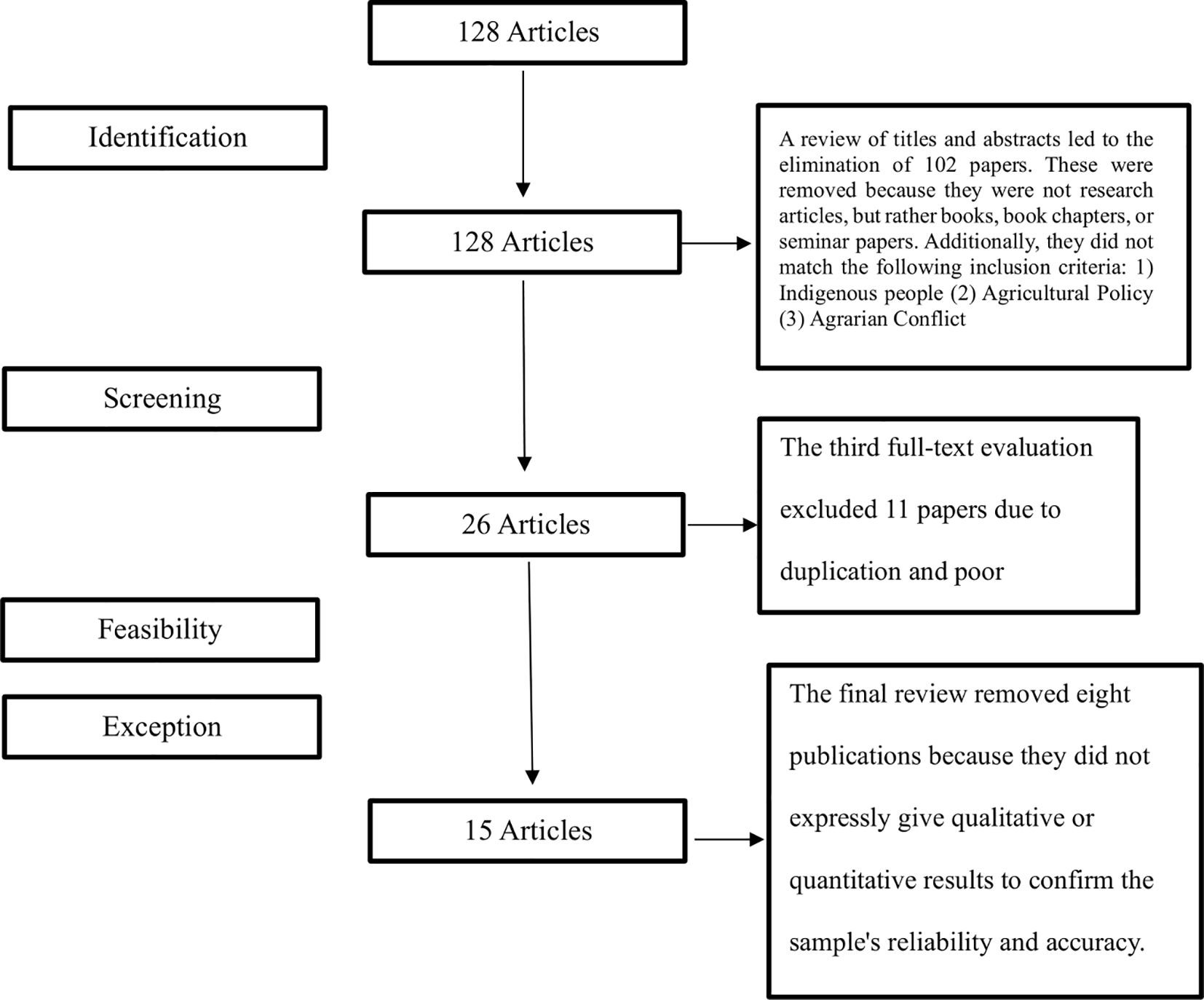
Source: Researcher's Process (2025).
Agrarian conflict in Indonesia is the result of long-term processes including social structures, political authority, and land management practices (Notess et al., 2021). Following the Reformation in 1998, Indonesia underwent a period of transition to a more open democracy (White et al., 2018), this should allow for agrarian policy reform (Notess et al., 2021). However, policy evolution frequently does not align with conflict resolution, but rather contributes to its complexity, scale, and severity (Notess et al., 2021). According to important literature, the main causes of agrarian conflict are ambiguous land rights (tenure instability), disregard for customary rights, corporate exploitation of natural resources, and liberalization policies that discriminate against indigenous groups and local farmers (White et al., 2018).
During the New Order period (1966-1998), agrarian policy was governed by a centralistic, top-down approach (Notess et al., 2021). By putting economic growth first, the government encourages the creation of major plantations, producing forests, and infrastructure (White et al., 2018), frequently disregard social and ecological sustainability (Notess et al., 2021). Land ownership is defined within the state’s formal legal framework, regardless of the existence of customary rights (Notess et al., 2021). Following the Reformation, new laws such as Law No. 5/1999 on the Prohibition of Monopolistic Practices, Law No. 41/1999 on Forestry, and regulations on forest conversion expedited the liberalization of land resources (Notess et al., 2021). Massive land clearing by corporations for the palm oil, mining, and power generating industries has heightened tensions (Notess et al., 2021). This transformation was not accompanied by land rights reform for local people, resulting in “networked conflicts” between local governments, corporations, non-governmental organizations (NGOs), and indigenous populations (White et al., 2018).
Post-Reformation agrarian conflicts have changed in type and scale. The main triggering reasons are: (1) corporate land domination and huge projects such as oil palm plantations and mining, which take vast amounts of land without concessions or proper compensation (Notess et al., 2021); (2) A lack of clarity on land rights (tenure insecurity), in which government policies fail to protect land rights, particularly for people who rely on customary rights systems (White et al., 2018); (3) Liberalization strategies that undermine local rights, such as opening up forest regions for investment without regard for conservation and customary rights, thereby portraying farmers and indigenous populations as “disturbers” (Notess et al., 2021); and (4) The growing participation of transnational entities and global networks, such as international NGOs, multinational businesses, and cross-border conflict resolution networks, in adding a global dimension to local disputes, notably in Sumatra and Kalimantan (White et al., 2018). The evolution of these primary conflict drivers corresponds to distinct post-Reformation policy periods, as summarized in Table 3.
The rise of custom as a struggle strategy and legal mobilization is a critical step in the dynamics of this conflict (Arizona, 2023). According to research, customary practices in Papua, Java, and Kalimantan have evolved into strategic tactics against land exploitation, rather than cultural emblems (Arizona, 2023). Indigenous communities systematically adopt customary norms to: (1) claim land rights based on customary law that is passed down through generations; (2) manage conflicts through transparent and inclusive customary deliberation, rejecting state- or corporate-centered mediation; and (3) mobilize mass action using moral consistency as the basis for legitimacy (White et al., 2018). This technique, termed as “customary law as a tool of legitimating resistance,” allows communities to bypass a tainted court system while simultaneously developing strong local solidarity. This kind of resistance is anchored in the community’s epistemology and values (White et al., 2018). As Arizona (2023) underlined, custom serves as a narrative and strategy for oppressed communities to confront external forces that threaten their life, as well as a tool of emancipation and a weapon of exclusion (White et al., 2018).
Furthermore, the origins of this dispute must be interpreted as a sign of the systematic “blurring of public and private security” (Notess et al., 2021). State security actors, like as the TNI and Polri, frequently serve to defend business interests rather than performing public tasks (White et al., 2018). This issue of corporate capture of public security forces fosters an environment in which human rights crimes against indigenous peoples become a structural consequence of a large-scale investment-based development strategy (White et al., 2018). Research in the palm oil and forestry sectors in Sumatra demonstrates how violence by a combination of state and private security actors not only exacerbates tenure insecurity (White et al., 2018), however, indigenous groups’ social relations and living environments have been transformed into conflict zones fraught with intimidation and violence. These data support the notion that agrarian disputes are caused not only by overlapping legislation, but also by “state capture by corporations” (Notess et al., 2021), the economic and military elite use the governmental machinery to protect the interests of capital accumulation (White et al., 2018). In this context, legal reform attempts such as Constitutional Court Decision No. 35/2012 on Customary Forests (Arizona, 2023) becomes ineffectual because it is confronted with a world in which corporate security outweighs the rationale of preserving citizens’ constitutional rights (Notess et al., 2021).
On the other side, the government’s efforts to address conflicts through policies like PPTKH (Land Control Settlement in Forest Areas) confront significant implementation issues. A case study in Ogan Komering Ulu demonstrates that, despite the presence of a legal framework, communities frequently lack access to relevant program information, and their ability to develop formal proposals is severely hampered (Nazir Salim, Wulan and Pinuji, 2021). The long and complicated bureaucratic process, along with a lack of adequate help, means that programs like PPTKH only reach a small part of the population (Notess et al., 2021) from the community who should be the beneficiaries (Nazir Salim, Wulan and Pinuji, 2021). This increases tenure uncertainty and prolongs the dispute.
As a result, agrarian policies function not just on the legal and economic levels, but also in a “political arena rife with power struggles” between the state, companies, and local communities (Notess et al., 2021), where market incentives and repressive state forces frequently ally to suppress resistance. The implication is that a long-term solution to agricultural conflicts requires more than just policy reform; it also requires the demolition of entrenched corporate capture mechanisms and the enforcement of accountability for all security actors, both public and private, for human rights violations (White et al., 2018).
Furthermore, the PPTKH mentorship model suggests a more participatory and community empowerment-based approach (Nazir Salim, Wulan and Pinuji, 2021) and improving customary-based legal mobilisation techniques (Arizona, 2023) is critical to ensure that policies do not only exist on paper, but also reach the people who require them the most. A recent study by (Kurnijanto et al., 2023) on tenurial conflict resolution in the Central Sulawesi Grand Forest Park found that the conservation partnership pattern in social forestry was regarded as the best alternative by the community, emphasizing the importance of collaboration and transparency in conflict management.
According to Kurnijanto et al. (2023) post-Reformation agricultural conflict altered agrarian policy dynamically through resistance, mobilization, and institutional transformation. The violence began as a result of structural injustice and a failure to recognize the rights of local communities. Liberal policies that neglected customary rights escalated the conflict to a national and global level (White et al., 2018).
Recent developments include efforts to establish traditional land rights through reconciliation and land management programs. However, the effectiveness of these systems is strongly reliant on transparency, participation, and fairness in the process. Without them, these programs risk becoming “codifications of inequality,” giving formal legality for actual exclusion, with community formalization procedures being more onerous than corporate land acquisition (Notess et al., 2021).
When communities lack the ability to handle disagreements equitably and honestly (Urano, 2014), independent third-party action is urgently needed (Notess et al., 2021). Sustainable solutions necessitate not only regulatory improvements, but also a redefinition of the relationship between the state, society, and land, with land rights serving as the foundation of humanity and social justice within the framework of the community’s epistemology and sovereignty (White et al., 2018).
A literature review of post-Reformasi agrarian conflict indicates more than just overlapping regulations (Kurnijanto et al., 2023), but also a pattern of harmful triadic interactions between state law, customary law, and global market forces (Siregar et al., 2024). Land disputes are not an exception, but rather the result of institutional failure, structural imbalances, and a fundamental collision of worldviews (Notess et al., 2021). This discussion section will draw on significant results from the existing literature study to make a thorough argument on how these three players impact and form the landscape of agrarian conflict in Indonesia (White et al., 2018).
The history of post-Reformasi rural conflicts demonstrates the vulnerability of state legality in the face of global market influences. Despite important normative recognition of indigenous peoples’ rights, as confirmed by Constitutional Court Decision No. 35/PUU-X/2012, their implementation has been impeded by so-called corporate takeover. Empirical research (White et al., 2018) in Sumatra shows that public security forces, rather than carrying out their public tasks, serve to safeguard corporate interests, blurring the distinctions between public security and commercial objectives (Siregar et al., 2024). These findings have major implications: they call into question the idea that the state is a neutral entity that promotes justice, as well as vice versa (Kurnijanto et al., 2023), suggesting that the state can be used to accumulate capital. As a result, agricultural disputes stem not just from legislation, but also from dysfunctional governance, which is worsened by systemic failures in state-centered agrarian reform projects (Siregar et al., 2024).
These findings are particularly relevant to the Indonesian setting, where programs like the Settlement of Land Tenure in Forest Areas (PPTKH) in South Sumatra have failed to address core concerns such as a lack of accurate data and uncertain land legal status (Nazir Salim, Wulan and Pinuji, 2021). This pattern of failure has created vulnerabilities through which global market forces might exploit tenure insecurity. Furthermore, decentralization and liberalization policies, which were initially conceived as solutions, have instead provided new channels for local elites to abuse their power and exacerbate inter-community tensions (Urano, 2014).
Global market pressures, on the other hand, not only impact state law but also neglect and marginalize customary law through formal procedures (White et al., 2018). A literature assessment finds procedural imbalances that systematically place indigenous populations at risk (Notess et al., 2021). The formalization process for customary land, which is required for legal recognition, is exceedingly long and complicated, whereas land purchase procedures for corporations move significantly faster. This disparity effectively exposes indigenous people to land grabs sanctioned by state legislation. A network of international norms and standards serves as a proxy for global market power in addition to corporate domination. Work demonstrates that entities such as global NGOs and certification systems (Brad and Hein, 2023), which are designed to promote sustainability, can actually aggravate disputes when their standards do not correspond with local circumstances (Urano, 2014).
However, this narrative does not portray Indigenous peoples as passive subjects. Instead, the literature repeatedly shows that customary law serves as a dynamic agency and resistance mechanism (Arizona, 2023). Indigenous peoples in Indonesia intentionally apply and deploy customary law in public and political settings to achieve their aims, such as recognizing land and natural resource rights (Arizona, 2023). This resistance is not only a reaction, but also an active process in the development of communal identity and agency.
Collectively, these findings demonstrate that effective agrarian conflict resolution necessitates a paradigm change away from solutions based on formal law and towards a more holistic and pluralistic approach. The role of communication as a resolution tool indicates how successful discourse between parties can transcend power disparities and pave the road for just outcomes (Siregar et al., 2024). Furthermore, an organized and systematic resolution mechanism is required, one that looks beyond simple ownership conflicts to how space and natural resources are managed collectively (Kurnijanto et al., 2023).
This demonstrates that reasonable and durable conflict resolution requires systemic adjustments to the legal framework (Arizona, 2023), bureaucracy, and social practices that accept multiple worldviews and current power relations. Overall, this analysis shows that agricultural conflict in Indonesia is a complex phenomenon that goes beyond simple ownership conflicts.
This is the setting where three major actors state law, customary law, and global market forces interact, influence, and define the conflict landscape (Urano, 2014). To offer a solid empirical foundation for the synthesis and arguments presented in this discussion, Table 4 provides a complete description of the 12 essential papers that constitute the basis of this systematic literature evaluation. Table 4 highlights each publication based on its references, study location, major issue, and main contribution to improving our understanding of the dynamics of the triadic interactions that have been thoroughly discussed.
| No | Reference (Author and Year) | Research location | Main problem (Special topic) | Strengthened triadic pillars | Findings |
|---|---|---|---|---|---|
| 1 | White et al. (2018) | Sumatra, Indonesia | Corporate takeover of public security forces and human rights violations. | State Laws and Global Market Power | It demonstrates how public security forces obscure their role in safeguarding corporate interests, which has an influence on human rights violations. |
| 2 | Notess et al. (2021) | 15 Countries Across Continents | Procedures for formalizing customary land differ from those for acquiring corporation land. | State Laws and Global Market Power | Explaining the procedural imbalance in which the formalization of customary land takes far longer than land purchase by businesses, leaving communities vulnerable. |
| 3 | Arizona (2023) | Indonesia | Customary law as a means of conflict. | Customary law | Recognizing that customary law is a dynamic and adaptable tool utilized by communities as a negotiating technique with the state legal system. |
| 4 | Urano (2014) | East Kalimantan, Indonesia | The effects of liberalization policies on customary land rights. | State and Customary Law | Demonstrates how decentralization programs can fail, resulting in abuse of power by local elites and intercommunity strife. |
| 5 | Salim et al. (2021) | South Sumatra, Indonesia | Implementation of land dispute settlement schemes presents challenges. | State and Customary Law | Provides empirical evidence that government initiatives fail to resolve conflicts owing to fundamental data and administrative issues. |
| 6 | Siregar et al. (2024) | Indramayu, Indonesia | Communication plays an important part in resolving agricultural conflicts. | State and Customary Law | Provides a new dimension to conflict resolution by demonstrating that communication breakdown is at the foundation of the problem and that discussion is required for a fair resolution. |
| 7 | Kurnijanto et al. (2023) | Central Sulawesi, Indonesia | Tenurial dispute resolution patterns. | State and Customary Law | Explains the importance of taking an organized and methodical approach to conflict resolution that extends beyond simple ownership disputes. |
| 8 | Brad & Hein (2023) | Sumatra, Indonesia | The role of global non-governmental organizations and transnational agriculture. | Global Market Power and Customary Law | Developing the concept of “global market forces” to encompass the involvement of non-governmental organizations (NGOs) and transnational certification schemes, which can complicate dispute resolution. |
The Indigenous Peoples’ Rights Defenders Network (JAPHAMA) laid the groundwork for the resurgence of the indigenous peoples’ movement in Indonesia (Arizona, 2023). The culmination was the foundation of an alliance, AMAN (Indigenous Peoples Alliance of the Archipelago), which was established in 1999. AMAN evolved into an institution that supported the indigenous peoples’ movement on a national level while also serving as an international liaison (Urano, 2014). AMAN also advocates Indonesian indigenous peoples in international forums and organizes international activities for indigenous peoples who visit Indonesia (Arizona, 2023).
The birth of the movement and the manifestation of the state’s role in responding to legal pluralism (Urano, 2014) can be seen in the indigenous peoples’ movement, which began to emerge following the enactment of Law Number 5 of 1979 concerning Village Government, in which customary institutions were “destroyed” and standardized into villages (Arizona, 2023). The introduction of the transmigration program, which relocated less than 50 million people from Java and Madura to Indonesia’s big islands, sparked conflict between transmigrants and indigenous people (Urano, 2014).
The issue is aggravated by the government’s acquisition of land, including customary land, for logging and mining concessions, oil palm plantations, industrial timber plantations, national parks, and megatourism (Notess et al., 2021). Indigenous tribes in Kalimantan and Sumatra are the most affected by the situation, in which residents of forest areas are compelled to evacuate while the government distributes forest concessions to huge corporations (Urano, 2014). This is confirmed by the findings in North Maluku (Tola Gumi), which show that indigenous groups rely heavily on land as their primary source of income, notably for farming (Hammar et al., 2021). However, legal protection remains inadequate, especially in the lack of compulsory laws within municipal governments. This has resulted in social strife and the erosion of traditional land rights (Hammar et al., 2021).
The strengthening of customary rights as constitutional rights (Campbell and Pirie, 2024), the existence of the 1945 Constitution of the Republic of Indonesia, the first constitution currently in operation in Indonesia, is relatively limited in accommodating indigenous peoples’ rights. The 1945 Constitution was mostly utilized as a provisional constitution, to be amended when conditions improved (Arizona, 2023). Furthermore, it was influenced by the Republic’s founders, who favored modernism in state growth over old legal institutions (Arizona, 2023).
The 1998 revisions were followed by amendments to the 1945 Constitution, which resulted in some unclear passages. However, it can increase the potential of legal mobil (Arizona, 2023). Article 18B Paragraph (2) of the 1945 Constitution exists as a result of an amendment that states: “The state recognizes and respects the units of customary law communities and their traditional rights as long as they are still alive and in accordance with the development of society and the principles of the Unitary State of the Republic of Indonesia, which are regulated by law.” Meanwhile, Article 281 Paragraph (3) of 1945 specifies that: “The cultural identity and rights of traditional communities are respected in line with developments in the times and civilization.”
This remark is problematic because it acknowledges this, albeit under certain conditions (Arizona, 2023). This provision has become a resource for indigenous groups defending their constitutional rights (Campbell and Pirie, 2024). This section also acts as a standard for the Constitutional Court for determining the constitutionality of statutes, such as the Forestry Law, which still adheres to colonial forestry principles. AMAN’s efforts to break free from the colonial legal system included filing two constitutional cases, which were allowed by the Constitutional Court (Arizona, 2023).
The first ruling is in Case Number 35/PUU-X/2012. AMAN made an argument linked to the Forestry Law, claiming that incorporating customary woods into state forests is a form of denial of the existence of customary forests that should belong to and be governed by indigenous communities (Urano, 2014). The Constitutional Court removed the word “state” from the Forestry Law’s definition of customary forests, which originally read “Customary Forests are state forests located within the territory of indigenous legal communities,” resulting in customary forests that were previously part of state forests becoming separate forests that are not state forests (Arizona, 2023).
The Second Decision refers to case Number 95/PUU-XII/2014 regarding the testing of Law No. 18 of 2013 concerning the Prevention and Destruction of Forests and Law No. 41 of 1999 concerning Forestry, as shown in Table 5:
The table summary demonstrates that the law changed prior to the Constitutional Court’s judgment, emphasizing the state’s ownership of forests and their contents. This caused complications since it left a void in the subject of customary law. The Constitutional Court adopted AMAN’s proposed statute, signifying particular values and advantages for indigenous groups living in the area. However, situations on the ground do not completely reflect the aspects of justice outlined in the new law. As a result, it can be concluded that the present law has failed to bind proper execution.
Following Reformasi, infrastructure development in Indonesia saw exceptional rapidity. The state placed the building of toll highways, dams, airports, trains, and even energy projects within the larger context of economic growth and national integration (Notess et al., 2021). However, this development drive had major ramifications for indigenous populations, whose territory were frequently used as the location of important projects (Notess et al., 2021). The subsequent agricultural conflicts encompassed more than just land disputes; they also included legal difficulties, bureaucracy, boundaries, development ideology, and the dynamics of community opposition. This complexities show that post-Reformasi infrastructure development is more than just a technical undertaking; it is a political arena plagued with power battles between the state, companies, and local populations defending their land rights.
Notess et al. (2021) point to structural inequities in the judicial system as the source of the problem. Customary land is especially vulnerable since formal legal recognition procedures are significantly more complicated and costly than land acquisition for investment or national development (Notess et al., 2021). This disparity reveals how the state consistently subordinates indigenous communities. In Indonesia, this is particularly evident in post-Reformasi infrastructure development (Notess et al., 2021), where indigenous claims are frequently stymied by bureaucratic red tape, whereas national projects move forward quickly in the name of the public interest. In other words, regulations that prioritize capital interests over indigenous peoples’ rights frequently favor infrastructure development. To date, the implementation of the 1960 Basic Agrarian Law has not fully accommodated customary rights, leaving indigenous populations in a weak legal position despite controlling their land for generations (Notess et al., 2021).
In addition to the procedural inequalities raised, a normative study in Papua by (Hammar et al., 2021) demonstrates that the national legal framework has opened up a path to recognition for indigenous peoples’ rights through the Spatial Planning Law, Article 18B (2) of the 1945 Constitution, and the Papua Regional Regulations and Special Regional Regulations (Notess et al., 2021). These positive legal ideas are essentially associated with Papuan customary norms, such as the belief that land is “mama” or the source of life, the principle of territorial boundaries, and customary sanction mechanisms (Notess et al., 2021). Despite this normative consistency, implementation on the ground is inadequate, resulting in insufficient real-world protection for indigenous communities. This demonstrates that the major issue is not a lack of rules, but rather inadequate implementation and oversight procedures, making infrastructure development easier than recognizing customary rights (Notess et al., 2021).
In line with that, the gap between top-down spatial planning and the need for bottom-up participation magnifies the potential for conflict Hammar et al. (2021). The construction of Regional Spatial Plans (RTRW), which should engage indigenous groups, is often reduced to an administrative routine with little consideration, neglecting indigenous communities’ voices. As a result, legal documents do not recognize indigenous claims and cultural maps that exist inside communities (Notess et al., 2021). This situation is similar to many post-Reformation infrastructure development cases, in which spatial planning based on state administrative maps frequently undermines local land viewpoints. Thus, agrarian conflicts are more than just land disputes; they are also epistemological and spatial standpoint battles (Notess et al., 2021).
The subject of agrarian disputes between indigenous peoples can also be understood in the context of Papua, which is under Special Autonomy. Hammar (2018) demonstrates that, while Article 18B(2) of the 1945 Constitution, Law No. 21 of 2001 concerning Special Autonomy for Papua, and Special Regional Regulation of Papua No. 23 of 2008 have provided a legal foundation for the protection of customary rights, the reality on the ground remains far from ideal. A study of the Arfak customary law community in Manokwari demonstrates how the state does not fully adapt the complex structure of customary rights, which ranges from the collective rights of the Arfak tribe, sub-tribes, and family rights (Notess et al., 2021).
As a result, agrarian disputes persist in Papua, particularly in relation to infrastructure development and strategic initiatives (Notess et al., 2021). Cases such as customary land disputes over Wamena Airport construction, the Freeport mining project with the Amungme community, and oil company expansion show that customary land is frequently used as an investment asset without legal customary consent mechanisms (Notess et al., 2021). This circumstance demonstrates that, while Special Autonomy is theoretically designed to bolster indigenous groups’ positions, in practice, it has failed to prevent confrontations between the state, companies, and indigenous communities.
These findings (Hammar, 2018) close a significant gap in understanding the dynamics of post-Reformation agrarian conflict. Notess et al. (2021) stress structural inequities in national law, whereas Hammar et al. (2021) emphasize the poor execution of spatial planning, Hammar (2018) exemplifies the paradox of special autonomy: rules intended to protect indigenous people have proven inadequate in maintaining customary rights when confronted with infrastructure developments and business opportunities. Thus, agricultural conflict in Papua reflects the tension between formal acknowledgment of customary law and the realities of development, which are still controlled by the logic of national economic expansion (Notess et al., 2021).
A study of Tola Gumi in the Tobaru community (West Halmahera) reveals another critical factor (Situmorang et al., 2021) despite a national legal framework and a Constitutional Court order (MK 35) that recognizes customary forests, local protection remains very inadequate. The Tola Gumi tradition of awarding hereditary ownership of customary land has proven socioculturally effective (Hammar et al., 2021), but it is legally vulnerable due to a lack of regional norms and insufficient rights registration. Furthermore, low legal literacy prohibits indigenous groups from using legal tools to defend their property against investment and infrastructure development (Notess et al., 2021). This reveals that, in addition to procedural inequities and deficient legal execution, indigenous populations’ susceptibility is determined by their legal knowledge and literacy. Thus, post-Reformation agricultural disputes result not just from the logic of land capitalization and state dominance (Notess et al., 2021), but also from indigenous groups’ limited ability to access and negotiate their rights within the formal legal system.
To clarify the comparison and mapping of each relevant study’s contributions, the table below presents a summary of major characteristics of the four publications mentioned above. Table 6 shows the research setting, primary topic, key findings, and relevance of each paper to the dynamics of indigenous agrarian conflict in Indonesia during the post-Reform infrastructure building period.
| Author and year | Context/Location | Main focus of the study | Key findings | Relevance to sub-chapter |
|---|---|---|---|---|
| Notess et al. (2021) | Global/Indonesia | Procedures to recognize customary land and structural legal imbalances. | Recognizing customary rights is more complex and costly than acquiring land for investment, putting indigenous groups at a disadvantage. | Shows a legal bias that promotes infrastructure development while undermining indigenous peoples’ rights. |
| Hammar et al. (2021) | Papua (RTRW & spatial planning) | Compliance with Papuan positive and customary law; execution of the RTRW. | Normatively aligned (1945 Constitution Article 18B(2), Perdasus), but execution is lacking; RTRW is top-down and overlooks customary participation. | Emphasizing that the conflict emerged as a result of inadequate application of spatial planning legislation and the lack of legitimacy of customary maps. |
| Hammar (2018) | Papua (Special Autonomy) | The effectiveness of Papua’s Special Autonomy in safeguarding customary rights. | Special regulations (Special Autonomy Law, Regional Regulations) are not yet in place, and the Arfak, Amungme, and others’ customary rights continue to be ignored in infrastructure development and investment. | demonstrates a paradox: there exist particular restrictions, but they do not prevent agrarian disputes in Papua. |
| Situmorang et al. (2021) | Tobaru, West Halmahera | Tola Gumi Tradition and Legal Literacy in the Protection of Indigenous Lands. | Tola Gumi has significant traditional hereditary ownership but is legally vulnerable due to a lack of regional legislation and inadequate legal literacy. | Shows that legal literacy and regional implementation are critical to preserving customary land. |
The table’s description demonstrates that post-Reformation agrarian conflict encompasses more than just land disputes; it also includes legal issues, spatial planning, autonomy politics, and even indigenous literacy. The four investigations compliment one another. Notes highlight structural inequities Hammar (2018) emphasizes the inadequate application of spatial planning, Hammar (2018) discovering the contradiction of particular autonomy, and Situmorang et al. (2021) included the component of legal literacy. Thus, the dynamics of indigenous agrarian conflicts in the post-Reformation era of infrastructure development must be viewed as a multifaceted issue that necessitates a simultaneous legal, institutional, and community empowerment strategy.
Land grabbing is not an Indonesian occurrence; it has become a worldwide issue impacting many places of the world (Notess et al., 2021). Many countries, particularly those with sizable indigenous populations, have agrarian disputes as a result of infrastructure, energy, and conservation initiatives (Situmorang et al., 2021). The resulting conflict patterns are similar, with customary rights being marginalized, state and corporate domination, and local community resistance (Hammar et al., 2021). To understand the dynamics of indigenous agrarian conflicts in the context of post-Reformation development in Indonesia, it is necessary to set them in a comparative perspective. Studies from the Philippines (Jadina, Nissen and Rennie, 2025), Australia (Campbell and Pirie, 2024) Mexico, and Colombia (Zambrano-Cortés, Behagel and Winkel, 2025) show global patterns of land grabbing as well as indigenous peoples’ resistance strategies, which can help interpret similar cases in Indonesia (Arizona, 2023).
According to a study conducted in the Philippines (Jadina, Nissen and Rennie, 2025) state bureaucracy not only slows but actually impedes true agrarian reforms. The laborious land distribution process does not improve communities, but rather exacerbates local internal tensions. These findings highlight a widespread pattern in which bureaucracy frequently serves as a tool of state control, limiting indigenous peoples’ access to land rights. Similar tendencies may be found in other Southeast Asian countries, such as Indonesia, where promises of agricultural reform are frequently thwarted by administrative complexity and bureaucratic politics that favor large-scale development goals.
Another strengthening feature is the logic of variations in territorial limits. In Australia, Indigenous peoples understand territory through cultural, spiritual, and ecological ties (Campbell and Pirie, 2024). This frequently contradicts with the state’s approach, which is based on maps, surveys, and legal documents. This epistemic tension exists not only in Australia, but also in many other countries in the Global South, including Indonesia (Notess et al., 2021), where Indigenous claims based on local cosmologies and knowledge systems are frequently ignored in favor of modern infrastructure and spatial planning initiatives.
Another pattern, documented in a case study of the Zapotec and Ikoots indigenous tribes in Mexico (Velasco-Herrejón, Bauwens and Calisto Friant, 2022) is that wind energy projects marketed as sustainable development are viewed as a sort of green colonialism. These findings show that land grabbing occurs not just through traditional infrastructure projects, but also through green development agendas that promote modernization ideas (Notess et al., 2021). This situation is similar to that of Indonesia and other Asian countries, where renewable energy development or environmental projects frequently violate indigenous groups’ rights.
Meanwhile, research in Colombia demonstrates how indigenous peoples and local communities organize collective resistance to conservation and agro-industry projects (Zambrano-Cortés, Behagel and Winkel, 2025). They enhance political identification, internal solidarity, and advocacy techniques in response to state and corporate dominance using self-reliant technologies. This pattern of resistance reveals that indigenous peoples are not passive victims, but rather active political actors who devise multifaceted resistance measures. Similar tendencies can be noted in Southeast Asia (Jadina, Nissen and Rennie, 2025), where indigenous advocacy networks grew stronger after Reformasi to negotiate their land rights (Notess et al., 2021).
The table below highlights four significant publications on the dynamics of land grabbing in various countries, with each emphasizing bureaucracy, territorial boundaries, green development philosophy, and community resistance. This cross-national study illustrates that the struggle for indigenous territory is a multifaceted, worldwide phenomenon. Comparing cases from the Philippines (Jadina, Nissen and Rennie, 2025), Australia (Campbell and Pirie, 2024), Mexico (Velasco-Herrejón, Bauwens and Calisto Friant, 2022), Colombia (Zambrano-Cortés, Behagel and Winkel, 2025), and Indonesia (Arizona, 2023), a consistent pattern emerges. While the state and corporations employ legal tools, development projects, and even sustainability narratives to expand land ownership, indigenous communities use a variety of resistance strategies. This overview is crucial because it provides comparison statistics to understand how the agrarian conflicts suffered by indigenous people in post-Reformation Indonesia are strongly linked to global dynamics. Table 7: A comparative analysis of land-grabbing tendencies and opposition.
| Author and Year | Context | Main focus of the study | Key findings | Relevance to sub-chapter |
|---|---|---|---|---|
| Jadina et al. (2025) | Philippines | Implementation of the Comprehensive Agrarian Reform Program (CARP) | Slow parcelization, complex bureaucracy, and failed reforms New disagreements arise throughout the community. | Similar to post-Reformation Indonesia, lethargic bureaucracy exacerbates agrarian disputes during development. |
| Campbell & Pirie (2024) | Australia | The distinction between customary and formal legal boundaries | The spiritual-cultural customary limits do not correspond to the state’s formal maps and certifications. | Understanding conflicts over customary land boundaries is relevant to spatial planning for infrastructure development in Indonesia. |
| Velasco-Herrejón et al. (2022) | Mexico | Wind energy projects, the Zapotec indigenous struggle, and Boots | "Green" development is perceived as green colonialism. Clash between development and custom | Demonstrating epistemological conflict: infrastructure is forced in the name of development while indigenous cosmology is ignored. |
| Zambrano-Cortés et al. (2025) | Colombia | Indigenous peoples’ opposition to conservation, REDD+, and agroforestry programs. | Collective identity is employed for resistance. Self-centered technologies as a political strategy. | demonstrates indigenous tribes’ collective resistance to post-Reformation development/infrastructure. |
| Arizona (2023) | Indonesia | Indigenous agrarian disputes and post-Reformation infrastructural initiatives. | Customary rights are frequently undermined by governmental and corporate interests; community resistance evolves through legal advocacy and grassroots networks. | Shows that legal literacy and regional implementation are critical to preserving customary land. |
Based on cases from the Philippines, Australia, Mexico, Colombia, and Indonesia, it is possible to conclude that global land grabbing consistently results in multidimensional conflict patterns (Notess et al., 2021), including bureaucracy, boundary epistemology, green development projects, and even community resistance dynamics (Campbell and Pirie, 2024). The Indonesian context is similar to these trends, while each country has its own particular peculiarities. As a result, this cross-national study contributes to our understanding that indigenous agrarian conflicts are not isolated incidents (Notess et al., 2021), but rather part of the global dynamics of land battles in the era of capitalist development and state modernization (Notess et al., 2021).
Based on the findings, it can be stated that agrarian conflict in Indonesia is a structural and multidimensional issue caused by unequal land ownership, uncertainty about ownership rights, and overlapping laws between state law, customary law, and global market pressures. The research findings show that many indigenous tribes continue to lack unambiguous legal legitimacy from the state, despite the fact that Indonesia, as a multicultural society, recognizes customary and religious law in its constitution. This paradox produces a situation in which customary law and customary land are not yet well-established in the national legal system. Despite the constitutional acknowledgment of indigenous peoples’ rights through Constitutional Court Decision No. 35/2012, its implementation in the field remains relatively weak due to corporate control, cumbersome bureaucracy, and a lack of community involvement.
Large-scale infrastructure development after Reformasi has frequently become a weapon of exclusion, disregarding customary rights and causing tensions on legal, geographical, political, and epistemological levels. Indigenous communities are not passive; they adopt dynamic resistance techniques that use customary law as a tool for struggle and advocacy. More broadly, agrarian conflicts in Indonesia are part of a global phenomena of land grabbing that has occurred in a number of other countries, with comparable patterns of marginalization of customary rights, governmental and corporate dominance, and the rise of local community resistance.
To solve this difficult issue, the report proposes a number of strategic initiatives. At the policy and legal level, sectoral rules must be revised and harmonized in order to recognize customary rights and accelerate inclusive agrarian reform by simplifying procedures for recognizing customary land. At the governance and execution levels, it is critical to expand public engagement mechanisms in spatial planning and infrastructure development, which should be accompanied by increased legal pluralism capacity among government officials. It is also critical to empower indigenous populations by providing legal help, increasing literacy, and respecting customary conflict settlement procedures. Finally, conducting additional research on the effects of sustainable development on indigenous people and establishing worldwide advocacy networks are critical steps toward promoting agricultural justice. To resolve agrarian conflicts, all stakeholders must commit to a comprehensive approach that includes law change, inclusive governance, community development, and strong political leadership.
| Views | Downloads | |
|---|---|---|
| F1000Research | - | - |
|
PubMed Central
Data from PMC are received and updated monthly.
|
- | - |
Provide sufficient details of any financial or non-financial competing interests to enable users to assess whether your comments might lead a reasonable person to question your impartiality. Consider the following examples, but note that this is not an exhaustive list:
Sign up for content alerts and receive a weekly or monthly email with all newly published articles
Already registered? Sign in
The email address should be the one you originally registered with F1000.
You registered with F1000 via Google, so we cannot reset your password.
To sign in, please click here.
If you still need help with your Google account password, please click here.
You registered with F1000 via Facebook, so we cannot reset your password.
To sign in, please click here.
If you still need help with your Facebook account password, please click here.
If your email address is registered with us, we will email you instructions to reset your password.
If you think you should have received this email but it has not arrived, please check your spam filters and/or contact for further assistance.

Comments on this article Comments (0)