Keywords
childhood neglect, emotional regulation, preference for solitude, young adults

This article is included in the Manipal Academy of Higher Education gateway.
childhood neglect, emotional regulation, preference for solitude, young adults
Child maltreatment is usually identified in individuals who have undergone one or more forms of neglect, including physical, emotional or sexual abuse, physical or emotional, before 18 years of age (Grummitt et al., 2022). Neglect is the most prevailing manifestation of maltreatment of a child (Ogle et al., 2022). The World Health Organisation defines neglect as “an act of ‘inattention or omission by the caregiver to provide for the child: health, education, emotional development, nutrition, shelter, and safe living conditions”. From an early stage of infancy, attachment styles affect later emotional, social, and interpersonal functioning. Repeated experiences of emotional and physical needs being met in a child, or the failure to do so, significantly influence the attachment styles they develop throughout their life. The negative consequences of childhood neglect is not just limited to childhood but was found to be related to substance abuse, anxiety, and mood disorders (Salokangas et al., 2020), disordered eating (Musetti et al., 2023), severity of PTSD symptoms (Kahl, et al., 2020), internet addiction (Guo et al., 2023), rejection sensitivity (Bhutani & Tara, 2023), loneliness and depression (Wang et al., 2022), and increased localized threat reactivity in the anterior amygdala (Puetz et al., 2020) during later years of life. Thus, different socioemotional and neurobiological implications underlie childhood neglect, distinct from the experience of abuse in childhood, distinguishing the two. However, the impact of neglect on psychological functioning and its long-term effects on affective states during adulthood is less well understood in research (Rozanski et al., 2021).
According to Erik Erikson’s theory of psychosocial development, individuals aged 21 years enter the sixth stage of development: Intimacy vs. Isolation. This stage is characterised by the goal of forming intimate, reciprocal relationships, the failure of which results in isolation. Childhood neglect in the previous stages is theorised to have a significant impact on this stage and future relationships formed, and the consequences can be observed through cognitive, socio-emotional, and behavioural development (Hildyard & Wolfe, 2002). Poor parental bonding with children and the experience of neglect during childhood can echo into later stages, which is reflected in the alarming increase in the rate of loneliness worldwide, affecting both older and younger age groups.
Loneliness is a sense of lacking, emptiness, and abandonment (Yanguas et al., 2018). Loneliness is looked at as a negative state resulting in various physical and psychological distress. It is a state of social and emotional deficiency. In contrast, solitude is often experienced by choice, where an individual prefers to physically separate from others and focus on themselves (Weinstein et al., 2023). Loneliness is not a choice made by the person and is a negative experience. However, the literature on solitude does not confirm it as a positive state of being because, solitude can be positive, negative, or both; it is mostly associated with socioemotional outcomes like loneliness and lower life satisfaction, which are negative (Toyoshima & Sato, 2019), and as an opportunity to encourage positive aspects such as personal growth, self-exploration (Bansal, 2024), well-being and good adjustment (Burger, 1995). Positive solitude is associated with positive feelings of calmness and relaxation. These may be developed as a coping strategy due to poor upbringing and subsequent inadequacy in forming deep, meaningful relationships. Moreover, research has found that childhood neglect is characterised by a deficiency in various interpersonal skills, including low self-esteem, social isolation, loneliness, insecure attachment styles, and difficulties initiating and maintaining interpersonal relationships (Bigras et al., 2020). Although there is limited evidence for the benefits of a preference for solitude, it has also been largely demonstrated to be associated with poor mental health, which is linked to the challenges of socialising (Sakurai et al., 2024). As humans are social animals and typically enjoy social interactions and gatherings, one’s preference for solitude raises questions about its reasons and is often observed as a sign of compromised well-being. Due to these inconclusive remarks, in the present study, preference for solitude is considered as an outcome variable predicted by the experience of childhood neglect and mediated by emotional regulation.
Emotional regulation is an individual’s capacity to manage emotions and respond to emotional experiences efficiently. Morris et al. (2007) put forward the Tripartite Model, which proposed the three types of influences of different emotional socialization on the emotional regulation of children, namely: (a) observation and modeling by children of their parent’s emotional regulation, (b) parenting behaviors and practices related to emotions, and (c) the overall emotional climate in the family. Parents’ reactions to their children’s expressions of emotions, and the various responses and behaviours they employ, provide a more influential form of feedback in the socialisation process, especially the explicit feedback that follows immediately after the child’s emotional expression. A lack of response or neglect, therefore, would limit accessibility to the repertoire of various emotional regulation strategies that could be employed flexibly and adaptively in various contexts. The emotional regulatory styles formed during childhood persist into adulthood (Cabecinha-Alati et al., 2020). The innate biopsychological need for nurturance and contact in children, along with the development of the brain that is enhanced in a nurturing and caring environment, results in traumatic experiences of abandonment and deprivation in a context where such nurturance is absent, as in cases of continuing childhood neglect. Childhood maltreatment, specifically childhood neglect, was associated with limited coherence and stability in an individual’s sense of self across various interpersonal and emotional situations. Neglect may also be associated with feelings of neediness and emptiness, as it is often lacking the parental stimulation required to cultivate self-knowledge and rich internal representations of oneself, as well as the development of identity (Bigras et al., 2020). Unresponsive and unavailable caregivers, especially those who are, foster this inability. Thus, neglect has implications for mentalization, which is “a preconscious mental activity, namely, perceiving and interpreting human behavior in terms of internal mental states”. This is significant for recognising one’s own thoughts, intentions, feelings, desires, and beliefs as well as those of others. Caregivers nurture mentalization skills through consistent attunement to the mental states, needs, and emotional reactions of children. Failing this, a state of identity diffusion may develop due to a lack of understanding of how to connect actions with one’s internal world.
Emotional regulation strategies are developed in childhood when parents act as primary sources for modeling. When acts of commission (abuse) entail explicit communication from caregivers, though negative, acts of omission, i.e., neglect, imply an insufficiency or absence of communication, mirroring, and engagement. Emotional socialization and feedback from parents are essential in the early stages of life (Wang et al., 2022). The social biofeedback theory, proposed by Gergely and Watson (1996), suggests that reflections from parents, or the mirroring of a child’s emotions by caregivers, facilitate the development of emotional control and an awareness of the emotional self. Equipping a child with the required emotional and cognitive skills enhances functioning in life. Neglect in early life, therefore, deprives children of these sources and sometimes acts as a faulty model. Emotional dysregulation leads to difficulty in understanding or identifying one’s own emotions, avoidance of emotional experiences, being overwhelmed by negative emotions, and the use of maladaptive strategies to manage these emotions, such as anger or sadness (Kaufman et al., 2016). Failure to acknowledge, understand, and respond to one’s emotions and those of others can induce them to use dissociation, substance abuse, and self-injurious behaviors as means of coping. Emotional dysregulation causes harm to self and others, creates problems in relationships, and leads to isolation. Conversely, isolation and heightened experiences of loneliness can cause emotional dysregulation (Velotti et al., 2021). Emotional dysregulation is a mediating variable between trauma experienced during childhood and psychological disorders such as Alcohol Dependence Syndrome, PTSD, depression, and anxiety (Zaorska et al., 2020; Huh et al., 2017). An exploration of the long-standing consequences of adverse experiences during childhood on emotion processing in a sample of middle-aged people showed poorer processing of affective images as compared to those who were not maltreated as children (Young & Widom, 2014).
Though abuse and neglect of children are widely studied, the consequences of childhood neglect on adulthood are slightly overlooked. However, it is an area gaining increasing attention as numerous impacts of childhood neglect have been found only recently, especially the biological and neuropsychological effects. Most research looks at the combined effect of childhood neglect and abuse, which is found to be linked to depression, anxiety, stress, and emotional dysregulation, with a differential gendered effect. Exploring the experiences and consequences of neglect yields a greater understanding of developmental trajectories from a multidimensional perspective. Based on the available literature, the preference for solitude remains a paradoxical concept, with its effects lying in the subjective experience and phenomenology. Hence, the present study examines the relationship between childhood neglect, difficulties in emotional regulation, and a preference for solitude, using path analysis as illustrated in Figure 1.
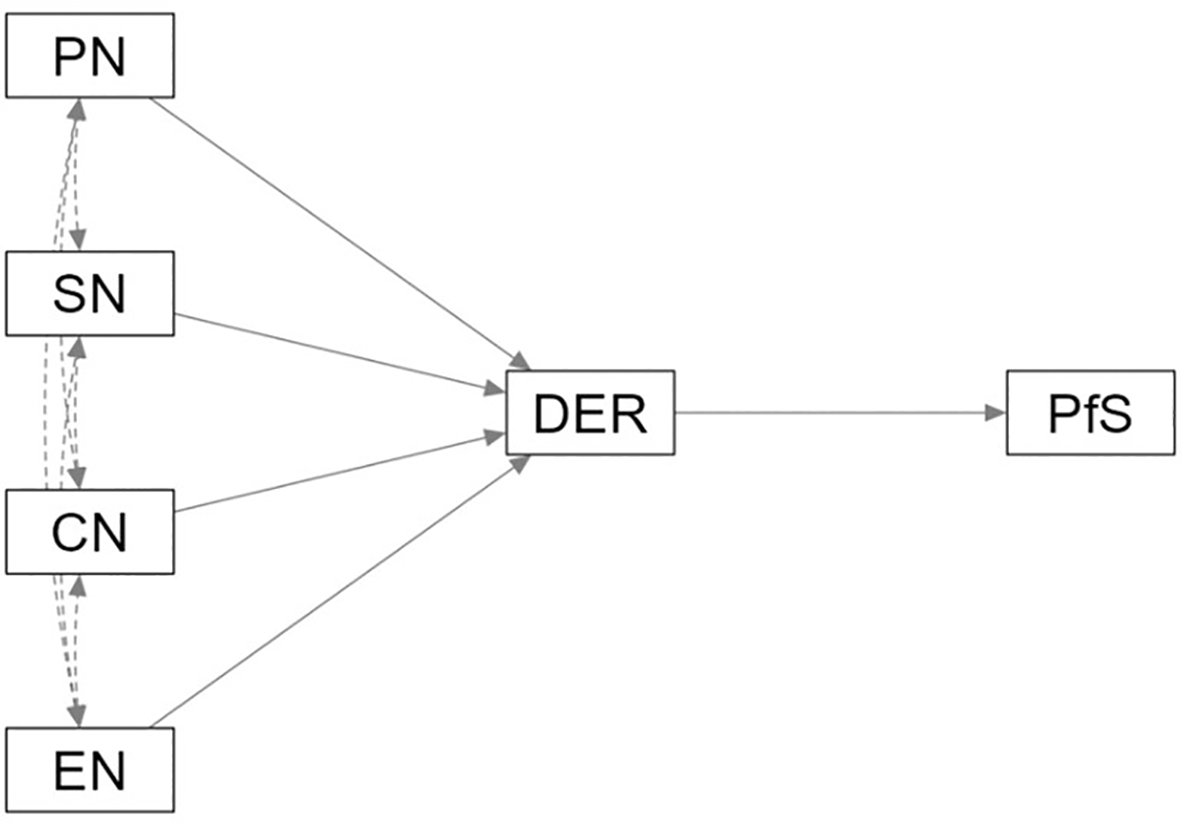
DER- Difficulties in Emotional Regulation, EN- Neglect of emotional needs, CN- Neglect of cognitive needs, SN- Neglect of supervisory needs, PN- Neglect of physical needs, PfS-Preference for Solitude. The proposed path analysis model examines the effects of different types of childhood neglect (PN, SN, CN, and EN) on preference for solitude, mediated by difficulties in emotional regulation.
The study implemented a cross-sectional design and purposive sampling method. A call for participation in the research study was advertised using flyers that clearly stated the inclusion and exclusion criteria. The flyers were circulated online on various social media platforms. 209 unmarried young adults aged 19 to 30 years who have lived with members of their own family from birth till the age of at least 15 years participated in the study. Individuals who met the inclusion criteria but had children were excluded. As the study dealt with the experience of neglect and emotional dysregulation, individuals who were diagnosed with any psychiatric illness, and those undergoing therapy or who had undergone therapy in the past, were also excluded.
Those who volunteered to participate in the study were required to read detailed information about the study, including its objectives, inclusion and exclusion criteria, informed consent, the voluntary nature of participation, and the investigator’s contact details. The next section of the participant information sheet was informed consent. Written informed consent was ensured from the participants using Google Forms as the data was collected online. Participants had to read the statement declaring informed consent and click the ‘I agree’ button. Upon clicking ‘I agree’ button, they were directed to complete a sociodemographic data, as well as measures assessing the experience of childhood neglect, difficulties in Emotion Regulation, and a preference for solitude. Due to online mode of data collection, there were no missing data. The mean age of the participants was 22.1 years (SD = 1.93). A total of 209 young adults, comprising 149 (71.3%) women and 60 (28.7%) males, participated in the study.
Childhood neglect. The experience of neglect during childhood was measured using the 20-item 4-point Likert scale, the Multidimensional Neglectful Behaviour Scale Form A: Adolescent and Adult-recall version, developed by Straus et al. (1995). It assesses how well the four fundamental developmental needs viz. physical (food, hygiene, or medical care), emotional (love, support, and friendship), supervision (setting boundaries, acknowledging and correcting misconduct, and being informed of where one’s child is and about their friends), and cognition (reading to and engaging them in play, aiding the child in their studies, etc.) are met or neglected. The overall score and scores of each subscale are computed, giving a score between 5 and 20 for each subscale and 20 and 80 for the overall scale. A high score is indicative of the experience of high neglect during childhood.
Difficulties in Emotion Regulation. Difficulties in regulating emotions were assessed using an 18-item five-point Likert scale, Difficulties in Emotion Regulation Scale- Short Form, developed by Kaufman et al. (2016). It is a condensed form of the Difficulties in Emotion Regulation Scale created by Gratz & Roemer in 2004. The DERS-SF evaluates an integrated framework on emotion regulation that includes the regulation of emotional arousal, the comprehension, acceptance, and awareness of emotions, and one’s ability to respond positively irrespective of their emotional situation. Composite scores range from 18 to 90 with high scores indicative of problems in emotion regulation.
Preference for Solitude. The Preference for Solitude scale, created by Burger (1995) has 12 items that determine whether an individual prefers to spend time in solitude, highlighting an optimistic view of being alone. For each item, one of two options is chosen. The total score ranges from 0 to 12, with 12 indicating a higher preference for solitude.
The cross-sectional study received approval from the Institutional Research Committee and the Institutional Ethics Committee of Kasturba Hospital, with approval number IEC: 255/2023 and Clinical Trials Registry-India (CTRI/2023/08/056639), dated August 18, 2023. A call for voluntary participation was made using flyers and advertisements on secure online platforms. Participants who volunteered to participate read the participant information sheet before providing consent to participate. Confidentiality was maintained by not collecting the personal information in detail. An article was selected to be sent to those who would report any experiences of psychological distress. However, no participant reported such distress. Data were collected between August 30, 2023, and November 29, 2023.
Data was analysed using Jamovi 2.6.44. The Shapiro-Wilk test was administered to determine whether the dataset closely adhered to a normal distribution, and it was found that the sample did not follow a normal distribution. Descriptive statistics were employed to present the demographic details of the sample. Correlations between the variables were computed with Spearman’s rank correlation. Path analysis was performed to test the study hypothesis. Since the data were not normally distributed, robust estimation methods were employed, including Maximum Likelihood Robust (MLR), the Satorra-Bentler correction to adjust test statistics for non-normality, and bootstrapping to obtain bias-corrected confidence intervals. The fitness of the hypothesised model was determined using chi-square statistics(p > 0.05), Comparative Fit Index (CFI > 0.90), the Tucker–Lewis index (TLI > 0.90), the root mean square error of approximation (RMSEA < 0.08), and the standardized root mean square residual (SRMR < 0.08). The direct and indirect effects of experiencing different types of childhood neglect and difficulties in emotion regulation on a preference for solitude were examined using path analysis.
Mean, Standard deviation, and intercorrelations among the study variables are presented in Table 1. The mean scores of different types of neglect indicated that neglect of emotional needs was found to be high (M = 9.43, SD = 3.16), followed by neglect of cognitive needs (M = 9.03, SD = 3.03), supervision needs (M = 6.77, SD = 1.76), and physical needs (M = 5.75, SD = 1.45). The mean scores on preference for solitude (M = 7.13, SD = 2.84) and difficulties in emotional regulation (M = 50.2, SD = 13.1) indicate that the distributions are skewed towards the higher end of the scale.
| Mean | SD | 1 | 2 | 3 | 4 | 5 | |
|---|---|---|---|---|---|---|---|
| 1. Neglect of emotional needs | 9.43 | 3.16 | — | ||||
| 2. Neglect of cognitive needs | 9.03 | 3.03 | .51*** | — | |||
| 3. Neglect of supervisory needs | 6.77 | 1.76 | .21** | .36*** | — | ||
| 4. Neglect of physical needs | 5.75 | 1.45 | .22** | .39*** | .37*** | — | |
| 5. Preference for Solitude | 7.13 | 2.84 | -.014 | .02 | -.04 | -.06 | — |
| 6. Difficulties in Emotional Regulation | 50.2 | 13.1 | .25*** | .14* | .24*** | .19** | -.03 |
A significant positive relationship between different types of childhood neglect was observed. Significant positive correlation was observed between EN and CN, r(207) = .51, p < .001, EN and SN, r(207) = .21, p < .01, EN and PN, r(207) = .22, p < .01. Moderate positive correlations were also observed between CN and PN, r(207) = .39, p < .001, CN and SN, r(207) = .36, p < .0001, and between PN and SN, r(207) = .37, p < .001. Difficulties in emotional regulation were also significantly positively correlated with different types of childhood neglect, r(207) = .25, p < .001. Preference for solitude was not significantly correlated with any type of childhood neglect or difficulties in emotional regulation.
The model fit indices value for the present study is presented in Table 2, and the results of direct and indirect estimates are presented in Table 3 and Figure 2. Although a significant bivariate correlation between preference for solitude and other study variables was not found, the model fit indices’ values ensured the fitness of the proposed model for path analysis (χ2 = 4.17, p = 0.384; CFI = 0.991; TLI = 0.980; SRMR = 0.022; RMSEA = 0.014).
| Fit indices | Value |
|---|---|
| Chi-square | X2 = 4.17, p = 0.384 |
| Satorra-Bentler | X2 = 4.57, p = 0.320 |
| CFI | 0.991 |
| TLI | 0.980 |
| SRMR | 0.022 |
| RMSEA | 0.014 |
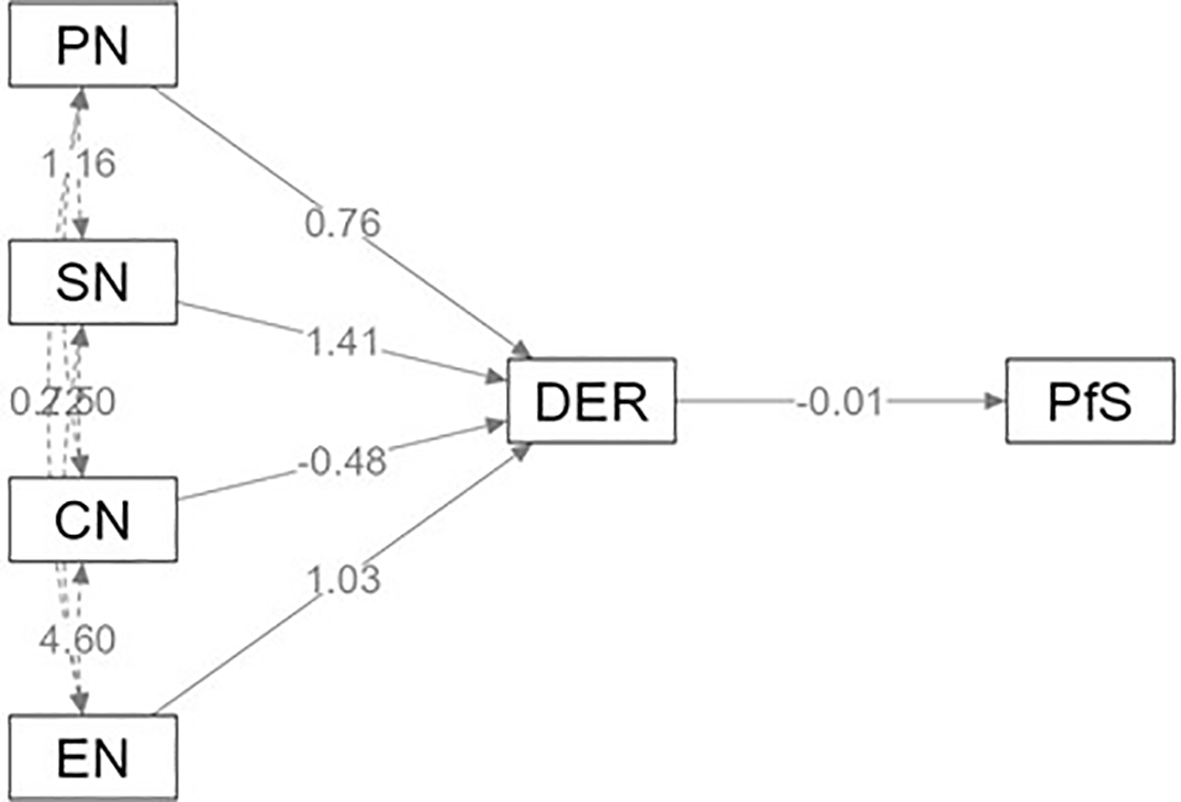
DER- Difficulties in Emotional Regulation, EN- Neglect of emotional needs, CN-Neglect of cognitive needs, SN- Neglect of supervisory needs, PN- Neglect of physical needs, PfS- Preference for Solitude. The results of a path analysis examining the effects of different types of childhood neglect (PN, SN, CN, and EN) on the preference for solitude, mediated by difficulties in emotional regulation.
The results of path analysis indicated that EN had a significant positive direct effect on DER (β = 0.25, SE = 0.31, 95% CI [0.45/1.65], z = 3.34, p < .001). Similarly, SN also significantly positively predicted DER (β = 0.19, SE = 0.52, 95% CI [0.39/2.51], z = 2.71, p = .007). However, the direct effects of CN (β = -0.11, p = .18) and PN (β = 0.08, p = .26) on DER were not statistically significant. Furthermore, DER did not significantly predict PfS (β = -0.03, SE = 0.02, 95% CI [-0.04/0.03], z = -0.41, p = .68). Indirect effects of EN, CN, SN, and PN on PfS through DER were examined, but none reached statistical significance.
Though neglect is the most prevalent form of child maltreatment, it is one of the least-researched developmental aspects due to its complexity and multidimensionality (Ogle et al., 2022). Although systematic and scientific attempts have been made to understand the neglect of children, exploration from a psychological perspective is still insufficient in drawing clear conclusions (Rozanski et al., 2021).
Due to a lack of clear definition and criteria/criteria and evidence, many instances of neglect go unreported and unobserved, particularly in parenting practices influenced by culture and society (Manly, 2005). Hence, it can be understood that, like child abuse, the data indicating neglect is just the tip of the iceberg, rather than the accurate ones. However, attempts have been made to explore the prevalence of neglect of children, and an estimated global prevalence of emotional neglect was higher (18.4%) compared to physical neglect (16.3%) (Maguire & Naughton, 2016; Hildyard & Wolfe, 2002). A similar trend is reflected in the present study, with the mean scores for the neglect of emotional needs being higher among the different types of neglect measured. This complements the findings of the systematic review on latent classes of maltreatment by Rivera et al. (2018), which indicated emotional neglect to be experienced by a large percentage of the sample compared to physical neglect. While emotional neglect has been found to be higher than physical neglect in multiple studies, the introduction of supervision and cognitive neglect adds to the understanding of neglect more effectively (Pignatelli et al., 2016; Grummitt et al., 2022; Liu et al., 2023; Ion et al., 2023).
A child experiencing multiple types of abuse and neglect during a single incident of maltreatment is not a rare occurrence (Ogle et al., 2022; Bhutani & Tara, 2023; Dellor et al., 2025), hence as observed in the present study, significant positive correlations between cognitive, emotional, physical and supervisory neglect indicate that one type of neglect does not happen in isolation but co-occurs with other types of neglect. This finding highlights the multifaceted nature of neglect and its far-reaching consequences.
Multiple studies have been conducted to understand the short-term and long-term consequences of neglect. Neglect has also been positively correlated with maladaptive attachment patterns and difficulties in understanding or interpreting emotions in oneself as well as others (Maguire & Naughton, 2016; Zhang et al., 2022; Ion et al., 2023; Shahab & Taklavi, 2019), as well as a lack of social relationships (Murthy, 2014). Emotions are understood as functional tools used for adaptive purposes (Kehoe & Havighurst, 2020). A deficiency in using emotions appropriately to adjust to situations results in mental health concerns of varying severity (Victor & Klonsky, 2016). Emotional neglect refers to the shortcomings of caregivers in providing adequate affection and addressing the child’s emotional needs. It also encompasses the dismissal of or failure to validate the child’s emotional experiences and expressions. The experience of emotional rejection is associated with the expression of the same pattern in adults, as well as a negative perception of social support (Wilk et al., 2024). Though the results of the present study and the number of earlier studies, recent and old, have indicated the significant positive association between the experience of childhood neglect and failure to regulate one’s emotions appropriately, at least one study identified no significant association between adverse childhood experiences and emotional regulation (Narula & Tara, 2023). This suggests the need to examine the link between childhood neglect and adult emotional regulation, as recommended by Simon et al. (2024).
Due to the limited ability and skills of children of different ages to respond to or protect themselves from potential danger, supervision needs emerge as a priority for caregivers. Evidence suggests a significant positive link between poor supervision and child injury, sometimes resulting in fatal consequences, such as lifelong disability or the death of the child (Damashek et al., 2014). However, it is observed in the literature that it is difficult to attribute any such traumatic consequence as a result of supervisory neglect because in a few contexts, children might get injured because of the unpredictable things that can occur over which parents have no control over such as animal bites or random falls (Morrongiello & Cox, 2020). Research on supervisory neglect has focused extensively on the reasons for this phenomenon, including a lack of partners’ (especially the child’s father) support, a lack of skilled and trustworthy childcare assistants, and other responsibilities and commitments of the caregivers. However, exploration of the long-term consequences of supervisory neglect is very little compared to other forms of neglect.
There is evidence that such unresponsive, insensitive, and traumatising care leaves children feeling unworthy of love. Furthermore, it may also foster a sense of unavailability in others or rejection (Hildyard & Wolfe, 2002). In the present study lack of fulfilment of supervisory needs significantly predicted difficulties in emotional regulation among young adults. This is an indicator of the longitudinal impact of inadequate supervision provided to children by caregivers.
The path analysis indicated no significant results when preference for solitude was analysed with difficulties in emotional regulation as a predictor or as a mediator. Though preference for solitude is associated with challenges in socialising (Sakurai et al., 2024), self-harm, suicidal ideation, and emotional dysregulation (Endo et al., 2017), it is also observed to be not aligned with trait anxiety (Burger, 1995) and as an opportunity to encourage personal growth, self-exploration (Bansal, 2024), and autonomy (Chen et al., 2024). However, because solitude is a preferred way of being and enjoying solitary activities, its psychological predictors and consequences remain inconclusive. In the Indian context, social and family ties are given great importance; hence, a preference for solitude is not highly appreciated. However, the cultural shift towards individualism and access to modern psychological perspectives for the present-day young adults has led to considering positive solitude a desirable state of being. Hence, a non-significant relationship between the preference for solitude among young adults and other study variables is an important finding. This creates scope for further exploration of the construct.
An empirical research study in psychology cannot be without limitations, as the study variables are influenced by multiple factors. The exploration of the experience of childhood neglect using self-report inventories alone poses a significant limitation, as it lacks the scope for in-depth exploration through mixed-method approaches. Various types of neglect did not significantly correlate with or predict preference for solitude in the present study. However, the overall model was found to be a good fit for path analysis. This encourages the exploration of multidimensional developmental consequences of childhood neglect using longitudinal research methods. Significant factors, such as cultural context, socioeconomic status, society-specific child-rearing practices, parental stressors, parent-child relationship dynamics, and the relationship between parents, as well as the number of children, age gap between children, etc., play a major role in determining the experience and consequences of neglect. Further, the paradoxical nature of preference for solitude, indicated by the mixed results, suggests the need for exponential exploration.
Childhood neglect is a largely neglected topic of study compared to child abuse studies. The exploration of the link between trajectories of childhood neglect and emotional and social aspects is a significant contribution to the existing literature. Significant prediction of difficulties in emotional regulation due to neglect of emotional needs and supervisory needs provides direction for therapeutic exploration and the design of interventions. The preference for solitude needs to be explored at an individual level, as it can serve as a psychological resource when a person has meaningful social connections. If not, it might prove to be a hindrance to growth and life satisfaction.
The cross-sectional study received approval from the Institutional Research Committee and the Institutional Ethics Committee of Kasturba Hospital, Manipal, Karnataka, India with the approval number IEC: 255/2023 and Clinical Trials Registry- India (CTRI/2023/08/056639). Written informed consent was obtained from all participants in the study, in accordance with the ethical guidelines on anonymity, confidentiality, and the freedom to withdraw from the study.
| Views | Downloads | |
|---|---|---|
| F1000Research | - | - |
|
PubMed Central
Data from PMC are received and updated monthly.
|
- | - |
Provide sufficient details of any financial or non-financial competing interests to enable users to assess whether your comments might lead a reasonable person to question your impartiality. Consider the following examples, but note that this is not an exhaustive list:
Sign up for content alerts and receive a weekly or monthly email with all newly published articles
Already registered? Sign in
The email address should be the one you originally registered with F1000.
You registered with F1000 via Google, so we cannot reset your password.
To sign in, please click here.
If you still need help with your Google account password, please click here.
You registered with F1000 via Facebook, so we cannot reset your password.
To sign in, please click here.
If you still need help with your Facebook account password, please click here.
If your email address is registered with us, we will email you instructions to reset your password.
If you think you should have received this email but it has not arrived, please check your spam filters and/or contact for further assistance.

Comments on this article Comments (0)