Keywords
(Institutional cultural intelligence digital transformation smart governance Central Bank of Iraq)

This article is included in the Fallujah Multidisciplinary Science and Innovation gateway.
(Institutional cultural intelligence digital transformation smart governance Central Bank of Iraq)
In the era of globalization and digital transformation, the ability to operate effectively within culturally diverse environments has become a critical competency for both individuals and institutions. Cultural Intelligence (CQ) refers to an individual’s capacity to function effectively in contexts characterized by cultural diversity and is considered a multidimensional construct consisting of four dimensions: metacognitive, cognitive, motivational, and behavioral. The metacognitive dimension reflects the processes used to acquire cultural knowledge, the cognitive dimension represents structures of general knowledge about cultures, the motivational dimension measures the interest in understanding other cultures, and the behavioral dimension reflects the ability to demonstrate a variety of appropriate verbal and non-verbal behaviors in intercultural interactions (Sousa, 2025:2). Individuals possessing high CQ can adapt to different cultural environments, engage effectively with others, and gain an adequate understanding of organizational processes and appropriate behaviors (Abu-Qtaish, 2024:3). Intelligence, as a key determinant of individual differences and a significant factor in organizational learning and development, was first integrated into the concept of Cultural Intelligence by Christopher Earley and Soon Ang in their seminal work, “Cultural Intelligence: Individual Interactions Across Cultures,” published in 2003 (Tesfaye et al., 2025:2).
Simultaneously, organizational digital transformation represents more than the mere adoption of technology; it signifies a profound shift in how institutions operate, interact with stakeholders, and maintain competitiveness in a digitally driven environment (Omol, 2025:241). Digital transformation may involve IT modernization, digital optimization, or the creation of new digital business models, all aimed at fundamentally improving traditional organizational processes (Parra-Sanchez and Talero-Sarmiento, 2025:258). Financial institutions, including central banks, increasingly integrate CQ into their digital transformation strategies to enhance internal efficiency, improve external services, and achieve effective smart governance (Alkhawlani et al., 2018:24).
Smart governance is recognized as a key approach to enhance transparency, reduce corruption, and streamline public sector services. The adoption of digital systems minimizes direct interactions between service providers and clients, ensuring objective decision-making while meticulously recording transactions (Purnamasari et al., 2024:4). E-Government initiatives serve multiple functions, including improving internal efficiency (e-organization), enhancing service delivery (e-service), fostering stakeholder collaboration (e-partnering), and promoting citizen participation in decision-making (e-democracy) (Roxas, 2025:17). Consequently, smart governance contributes to cost reduction, improved protection of citizen rights, and mitigation of corrupt practices (Rakhimova, 2023:140).
Against this backdrop, this study aims to examine the impact of institutional cultural intelligence on promoting digital transformation and smart governance at the Central Bank of Iraq. The study seeks to understand how the integration of CQ can enhance organizational performance, improve governance practices, and align institutional operations with international standards and best practices.
To deepen the foundation of the literature review for this study, a comprehensive review of scientific articles was conducted based on three relevant areas: (a) cultural intelligence, (b) digital transformation, and (c) smart governance. Initially, international scientific articles were examined to identify the key theoretical contributions and empirical findings that explain the interaction among these three variables within institutional contexts.
Initially, international scientific articles were considered; (Wolff et al., 2023:1). demonstrated that student exchanges enhance students’ Cultural Intelligence (CQ), and evaluated two semi-virtual intercultural seminars using telepresence robots between Germany and Kenya. Active participation significantly increased metacognitive, cognitive, and behavioral CQ, whereas the control group showed no changes. The seminars were promising despite some technical issues (Al-Rawi et al., 2021:1070). explored the influence of employees’ Cultural Intelligence on sustainable innovation behavior using Cultural Intelligence Theory and Trait Activation Theory (Al-Sabaawe et al., 2020: 5). Results indicated that CQ positively affects sustainable innovation, with knowledge sharing as a mediating factor, while organizational culture differences negatively moderate this effect.
Regarding digital transformation, (Awad & Martín-Rojas, 2024:1). investigated its impact on organizational resilience, focusing on organizational learning and innovation in 376 SMEs in Andalusia, Spain. The study found that digital technologies enhance learning capacity and innovation, increasing SMEs’ adaptability and ability to respond to market fluctuations. As for the study (Cao et al., 2024:1), it examined the role of digital twin technology in enterprise digital transformation for renewable energy investment decisions. The research of over 200 global companies showed that using digital twins improves accuracy, accelerates decision-making, and enhances ROI, providing competitive advantages across industries and company sizes.
To highlight previous studies on smart governance, As for the study (Jibladze et al., 2025:193), it explored how local authorities under the Open Government Partnership (OGP) in Georgia respond to e-governance challenges. Using a weighted scoring system and website analysis, the study found that while Tbilisi and Kutaisi showed notable progress in transparency, digital service delivery, and citizen engagement, other authorities faced challenges with coordination, accessibility, and service provision. Building on this perspective, the research conducted by (Pandey, 2025:197). examined the public service value generated through collaborative e-governance initiatives under India’s National e-Governance Plan (NeGP). The study highlighted a strong positive relationship between collaborative e-governance implementation and the enhancement of public service value, emphasizing the critical roles of responsiveness, transparency, and effective service delivery.
However, there are still apparent gaps in the literature, even with all this work, notably on how technical and cultural factors interact to shape behaviors within complex organizational settings such as a central bank. Although emerging evidence exists of the role that computer tools can play in helping build cultural intelligence, no comprehensive solutions are available that combine technological and pedagogical challenges to offer interactive content supporting realistic simulated cultural interaction. In addition, little attention has been paid to applying these constructs to various forms of cultural intelligence (cognitive, behavioral, and strategic), which prevents the application from being fully effective in multinational settings. In the context of digital transformation, literature discusses innovation and learning associated with this process. However, the relationship between this phenomenon and institutional cultural intelligence has not been well explored, even in international organizations. Studies on smart governance lack methodological frameworks that encompass organizational culture and digital technology, and they have little application beyond local contexts. Therefore, this study aims to fill this gap by proposing a multi-level integrated analytical model which is based on the cross-level methodological approach to investigate institutional cultural intelligence and digital transformation, as well as smart governance in an organizational context, such as a central bank, while designing a technological tool and institutional intervention for cultural interaction that manage digital change, which support modern governance.
Based on the reviewed literature, this study proposes a conceptual framework illustrating the interrelationships among cultural intelligence, digital transformation, and smart governance, showing how each variable influences and mediates the others within complex organizational settings. This framework serves as the theoretical foundation for the current research and clarifies the study’s assumptions regarding the interaction of technological, cultural, and governance factors.
Regarding the study variables, we have
Cultural Intelligence (CQ) can be understood as a framework of interrelated knowledge and skills that enable individuals to adjust to, navigate, and influence the cultural elements within their environment (Reed et al., 2023:2). It represents an individual’s capability to operate effectively within culturally diverse contexts, encompassing four distinct dimensions: Metacognitive CQ, Cognitive CQ, Motivational CQ, and Behavioral CQ (Kokubun et al., 2025:2). Individuals with elevated levels of Cultural Intelligence tend to enjoy intercultural engagements and possess confidence in their ability to manage such interactions successfully, reflecting the motivational aspect of CQ. They are also familiar with the practices, norms, and values associated with various cultures (Cognitive CQ), demonstrate an awareness of how culture can influence both personal and others’ thoughts and behaviors (Metacognitive CQ), and can enact suitable verbal and non-verbal actions across diverse cultural settings (Behavioral CQ) (Grosch et al., 2023:2). Due to its rapid expansion within areas such as cross-cultural psychology, international management, and related disciplines, CQ has evolved into a comprehensive field of study, supported by both theoretical advancements and empirical research (He & Baharom, 2023:2).
Regarding the dimensions of cultural intelligence, four key aspects are widely recognized. The metacognitive dimension involves cognitive processes that enable individuals to plan and develop strategies for effectively navigating the distinctive cultural contexts of another country (Tripathi et al., 2024:170). The cognitive dimension refers to acquiring knowledge about the rules, norms, and frameworks of a specific culture, including legal, economic, linguistic, religious, artistic, marital, and nonverbal conventions, which can be learned through intercultural training (Rüth & Netzer, 2020:6). The motivational dimension reflects the mental ability to focus and sustain interest and effort in understanding and engaging effectively in intercultural situations (Malay et al., 2024:4). Finally, the behavioral dimension involves the capacity to adapt verbal and nonverbal actions to align with the norms and expectations of people from different cultures (Kromidha et al., 2022:11).
Digital transformation refers to the strategic application of emerging technologies to fundamentally reshape business processes, elevate customer experiences, and foster innovative business models (Mavitha & Shekhar, 2025:1). It often entails the automation of workflows, systematic data collection and analysis, and enhancing connectivity across organizational operations. The Internet of Things (IoT) plays a pivotal role in enabling these functionalities by linking devices, systems, and machinery, which supports real-time data gathering and communication. Such interconnectedness allows for predictive maintenance, minimizing downtime and costs by resolving potential problems before they escalate (Almeida & Okon, 2025:2). Moreover, digital transformation positions data as a key production resource, digital platforms as arenas for growth, and information assets as critical sources of value, thereby driving high-quality corporate development (Zhang & Wang, 2024:2). It encompasses the deployment of digital technologies to generate value-added products and services while embedding them into organizational processes, structures, and operational models. In recent years, this trend has gained substantial attention from both scholars and practitioners, as companies adopt digital initiatives to secure sustainable competitive advantages amid pervasive digital disruption (Lokuge & Duan, 2021:2). Ultimately, digital transformation can be understood as a profound change process facilitated by the innovative use of digital tools, coupled with strategic exploitation of key organizational resources and capabilities, aimed at significantly enhancing organizations, industries, or society, and redefining the value delivered to stakeholders (Saari et al., 2025:213).
Regarding the dimensions of digital transformation, four key aspects are highlighted. The technological dimension is a primary driver of digital transformation, providing an advantage to organizations that integrate it into their strategy. Technology facilitates value creation by enabling innovative business models and the development of new skills and capabilities (Reis & Melão, 2023:7). The strategic dimension emphasizes designing digital initiatives to generate value, optimize processes, and enhance customer engagement across various channels (Wahdaniyah et al., 2025:604). The digital business dimension focuses on leveraging technology through a digitally skilled workforce and a collaborative culture, strengthening businesses by combining modern technologies with governance and financial structures and driving new digital ecosystems (Reis & Melão, 2023:6). Finally, the organizational dimension refers to structuring and managing internal processes to support digital transformation, aligning tools, competencies, and resources to drive innovation and enable progress (Romero & Mammadov, 2025:8501).
The implementation of Smart Governance aims to enhance the community’s productivity and the quality of public services. Additionally, an introduction to Smart Governance allows individuals to obtain services more quickly, boost competitiveness, and decrease the digital divide within society (Purnamasari et al., 2022:5). The Smart Governance policy is defined as “the utilization of digital technologies as a core component of government modernization strategies to generate public value.” The objective of this policy is to enhance the efficiency, transparency, and quality of services provided by the state via its public institutions (Puentes-Poloche et al., 2023:3). Smart Governance plays a critical role in shaping management and operations in public administration. It seeks to effectively execute governmental policies through the integration of new technologies. The responsiveness of public sector institutions concerning Smart Governance initiatives depends on two main aspects. Firstly, the degree of effectiveness regarding accessible funding, advanced technology, citizen participation, institutional structure, coordination among local authorities, and political practices (Aldegheishem, 2024:2). “the strategic application of digital technologies as a central element of government modernization efforts to create public value” (Sarofah, 2023:46).
In terms of smart governance components, three critical aspects are recognized (Husien et al., 2018: 1088). The accountability aspect focuses on establishing responsibility and answerability mechanisms within the organization to ensure decisions and actions are transparent and justified (AD) (Malay et al., 2024:4). The coordination aspect emphasizes effective collaboration both internally and externally, promoting synergy among departments and enhancing organizational efficiency (IAECD) (Kromidha et al., 2022:11). Finally, the transparency aspect highlights openness in decision-making processes and information sharing, fostering trust and clarity in governance practices (TRD) (Rüth & Netzer, 2020:6).
The methodology of this study was developed using a quantitative approach based on a descriptive-analytical framework, involving the collection and statistical analysis of data from the selected sample of employees at the Central Bank of Iraq. The research is applied in nature and primarily correlational, aiming to examine the relationships between institutional cultural intelligence, digital transformation, and smart governance. The variables were observed in their natural context without any manipulation, allowing for an accurate assessment of how the different dimensions of institutional cultural intelligence influence digital transformation and smart governance within a multicultural financial environment.
The study variables, their dimensions, and the number of items used for measurement are described, providing a clear operational framework for the research. Institutional Cultural Intelligence (ICI) consists of four dimensions—cognitive, metacognitive, motivational, and behavioral—with a total of 19 items. Digital Transformation (DT) includes technological, strategic, digital business, and organizational dimensions, also totaling 19 items. Smart Governance (SG) comprises accountability, internal and external coordination, and transparency, with 13 items in total.
Following the research design, the study adhered to systematic and logical steps that facilitated addressing the research problem. The key stages of the research included: conceptualizing the idea, defining the research problem, planning the study design, selecting the sample, collecting data, analyzing the data, interpreting the results, and discussing the findings.
It is important to note that the technique applied, considering the dimensions and indicators of the study, is the survey, which was developed through a questionnaire. Regarding the variables, the questionnaire included 51 questions (with 5 options structured on a Likert scale).
The survey was administered to a diverse sample within the Central Bank of Iraq, including senior officials in the higher management, employees, and heads of departments and divisions in the middle management, to ensure comprehensive representation and greater accuracy in the results. Additionally, interviews were conducted with senior officials and department heads to complement the survey data and enhance the validity of the findings.
The reliability of the instrument was examined using the Cronbach’s Alpha coefficient, where the scores were as follows: Institutional Cultural Intelligence (0.943), Digital Transformation (0.919), and Smart Governance (0.871), all of which are considered highly reliable.
Data were collected using a structured questionnaire that encompassed the cognitive, metacognitive, motivational, and behavioral dimensions of institutional cultural intelligence, in addition to measures of digital transformation and smart governance. Descriptive statistics—including mean scores, standard deviations, and distribution patterns—were analyzed using SPSS version 28. Correlational analysis was also performed to examine the relationships between institutional cultural intelligence and its influence on digital transformation and smart governance.
The study aimed to examine the impact of institutional cultural intelligence (ICQ) on promoting digital transformation and smart governance at the Central Bank of Iraq. A quantitative approach was employed based on survey data collected from the selected participants. The analysis focused on the different dimensions of ICQ—cognitive, metacognitive, motivational, and behavioral—and their relationships with measures of digital transformation and smart governance. According to the collected data, the following observations were made.
Table 1 summarizes the study variables, their dimensions, and the number of items used for measurement, providing a clear operational framework for the research. Institutional Cultural Intelligence (ICI) is represented by four dimensions—cognitive, metacognitive, motivational, and behavioral—totaling 19 items. Digital Transformation (DT) includes technological, strategic, digital business, and organizational dimensions, also totaling 19 items. Smart Governance (SG) comprises accountability, internal and external coordination, and transparency, with 13 items in total. This structure links each construct to its measurable indicators, ensuring clarity, consistency, and reliability for subsequent statistical analysis.
As shown in Table 2, the statistical indicators for the study variables reveal that all Composite Reliability (CR) values exceeded the 0.70 threshold, ranging from 0.855 to 0.958, indicating high internal consistency. Cronbach’s Alpha values also fell within acceptable limits, with the highest at 0.945 for Cognitive Intelligence (CCI) and the lowest at 0.775 for Behavioral Intelligence (BCI), confirming reliability across the scales. Additionally, Average Variance Extracted (AVE) values exceeded 0.50 (ranging from 0.507 to 0.822), reflecting strong convergent validity for all dimensions. These results confirm that the measurement tools are highly reliable for capturing the multidimensional aspects of Institutional Cultural Intelligence, Digital Transformation, and Smart Governance.
In Table 3, the global load values for all items of the research model ranged from 0.562 (lowest for IAECD1) to 0.962 (highest for CCI2), all exceeding the minimum acceptable threshold of 0.40. This indicates a strong correlation between the items and their respective theoretical dimensions. T-test values ranged from 6.962 to 113.918, all statistically significant at the 0.05 level with P values of 0.000, confirming the stability and accuracy of the measurement items. Cognitive and motivational intelligence items recorded the highest loadings, while the dimensions of digital transformation and smart governance maintained consistently high values.
These results demonstrate that the research tool effectively captures the key aspects of institutional cultural intelligence, digital transformation, and smart governance. From a managerial perspective, this means that the collected data can reliably inform decision-making and strategic planning. For example, the high loadings for cognitive and motivational intelligence highlight the critical role of employee awareness, understanding, and drive in achieving successful digital transformation initiatives and strengthening governance practices. Similarly, the strong correlation of digital transformation and smart governance items with their theoretical dimensions indicates that organizations can confidently use these measures to monitor progress, identify areas for improvement, and enhance overall institutional performance. Managers can leverage these validated dimensions to design targeted training programs, improve internal coordination, and optimize transparency and accountability processes within the bank.
Table 4 shows that digital transformation was at a moderate level overall, with a mean score of 2.227, a standard deviation of 0.535, and a coefficient of variation of 24.0%. This indicates that the development of digital efficiency remains limited and requires strengthening across technology, organization, and strategy. The Digital Business dimension ranked first (mean = 2.000, C.V. 27.9%), showing an initial tendency to integrate applications and digital platforms into organizational processes, though its evolutionary structure is not yet fully developed. The Strategic dimension followed (mean = 2.312, C.V. 30.7%), reflecting management’s understanding of the importance of digital transformation, but also highlighting insufficient organizational readiness and implementation orientation. The Organizational dimension was third (mean = 2.225, C.V. 30.8%), indicating attempts to adapt structures and processes, although these changes are not yet fully embedded. The Technological dimension ranked fourth (mean = 2.372, C.V. 31.2%), emphasizing the need to improve technical infrastructure and information systems to enhance operational efficiency.
The Central Bank of Iraq has implemented key digital transformation models to support these dimensions and enhance operational efficiency and service delivery. These include electronic payment systems such as RTGS and ACH for faster and more transparent transactions, mobile payment platforms and e-wallets for financial inclusion, integrated data and analytics platforms for data-driven decision-making, and digital e-KYC initiatives for secure customer verification. Together, these models provide a practical foundation for the bank’s digital evolution and support the study of institutional cultural intelligence’s impact on digital transformation and smart governance.
Smart governance achieved the highest ranking among the study variables, with a moderate level, an overall mean of 2.287, a standard deviation of 0.486, and a coefficient of variation of 21.2%. This reflects relative stability and consistency in participants’ perceptions regarding digital governance practices. Internal and external coordination scored highest (mean = 2.428, C.V. 26.7%), indicating satisfactory collaboration across departments and with external partners for information flow and decision-making. Transparency followed (mean = 2.261, C.V. 24.9%), demonstrating the institution’s interest in clarifying rules and sharing information, although open communication via digital systems still needs improvement. Accountability ranked third (mean = 2.173, C.V. 29.7%), reflecting variation in employees’ understanding of accountability principles and digital role definitions, highlighting the need for systems to evaluate performance and track task completion with practical digital tools. Overall, the level of smart governance at the University is relatively high compared to other variables; however, reinforcing transparency, digital accountability, and expanding electronic coordination channels is necessary to achieve a more efficient and sustainable digital government.
Table 5, the results of the path analysis between Institutional Cultural Intelligence (ICI) and Digital Transformation (DT) indicate that the direct effect coefficient (O = 0.793) reached a significance level of P = 0.000 and a T-value of 23.889, which is higher than the tabulated value of 1.984 at the 0.05 level. This demonstrates that the relationship is statistically significant and strongly directional.
| Pathways of influence | Original sample (O) | T statistics (|O/STDEV|) | P values | F2 | R2 | Q2 |
|---|---|---|---|---|---|---|
| ICI -> DT | 0.793 | 23.889 | 0.000 | 4.178 | 0.629 | 0.628 |
| ICI -> SG | 0.580 | 8.340 | 0.000 | 0.361 | 0.265 | 0.324 |
The F2 value of 4.178 represents a significant effect according to Cohen’s criteria (1988), showing that Institutional Cultural Intelligence has a substantial impact on the variation in the level of Digital Transformation. The R2 value of 0.629 indicates that 62.9% of the variation in Digital Transformation is explained by Institutional Cultural Intelligence, reflecting the strength of the explanatory model. Additionally, the Q2 value of 0.628 is positive, confirming the predictive power of the model and its practical applicability.
These findings suggest that Institutional Cultural Intelligence is a key driver of Digital Transformation in an organization. It supports the development of effective digital behaviors and promotes the adoption of modern technologies through a flexible, learning-oriented organizational culture capable of adapting to rapid digital changes. Therefore, the hypothesis stating that “Institutional Cultural Intelligence has a significant effect on Digital Transformation” is accepted.
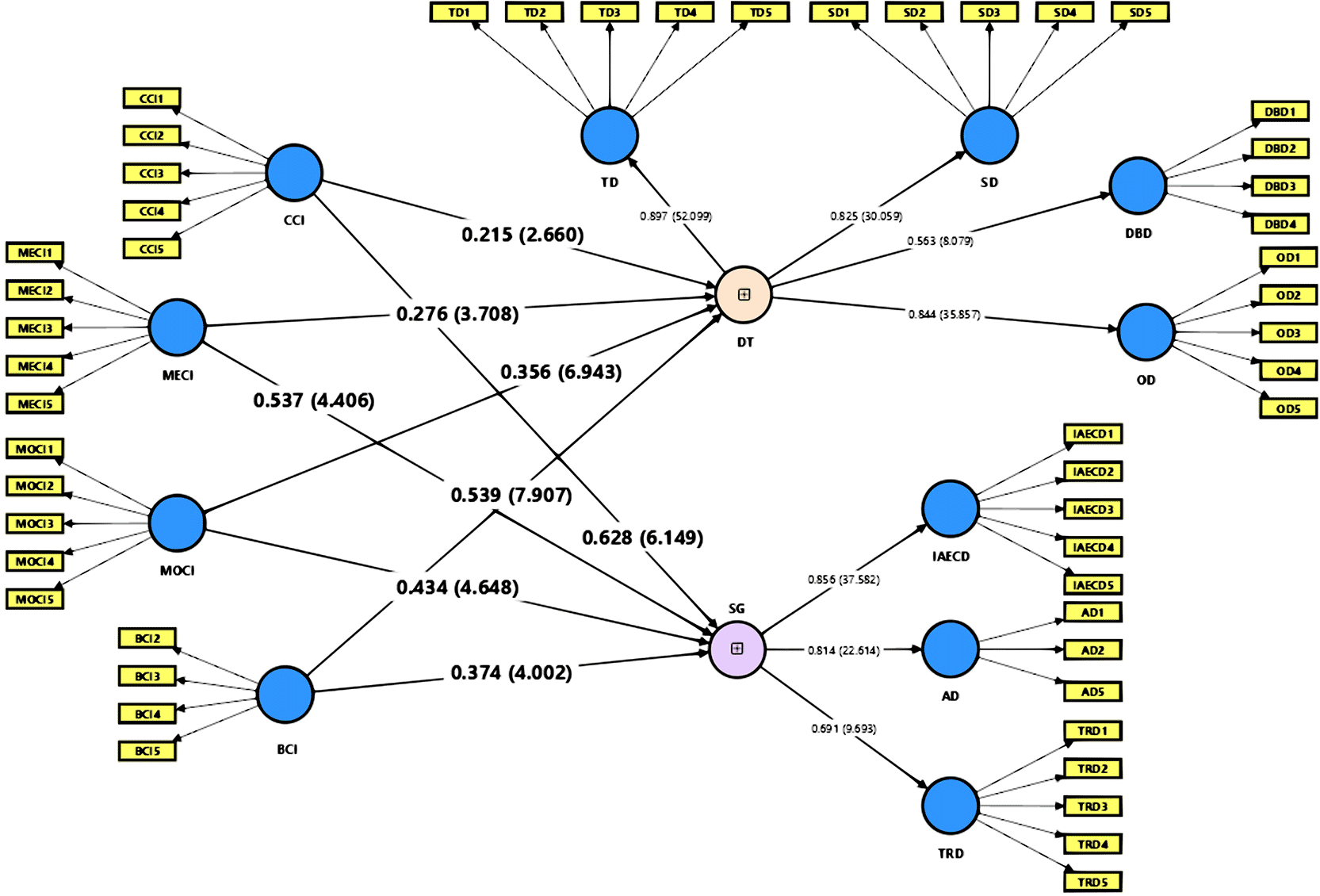
Table 6, the partial path analysis demonstrates the statistically significant impact of institutional cultural intelligence (ICI) on both digital transformation (DT) and smart governance (SG). Regarding DT, behavioral cultural intelligence (BCI) emerged as the most influential dimension (coefficient = 0.539, P = 0.000), highlighting the critical role of adaptive and flexible behaviors in facilitating digital change. Motivational cultural intelligence (MOCI) (0.356, P = 0.000) further underscores how cultural motivation drives the adoption of digital solutions. Metacognitive cultural intelligence (MECI) (0.276, P = 0.000) emphasizes the importance of self-awareness and reflective thinking in navigating technical transformation, while cognitive cultural intelligence (CCI) (0.215, P = 0.008) exerts a significant but comparatively smaller effect, indicating that awareness alone is insufficient without behavioral and motivational support.
In the context of SG, cognitive cultural intelligence (CCI) (0.628, P = 0.000) is the most impactful, demonstrating that deep understanding of institutional cultures enhances transparency and accountability. Metacognitive intelligence (MECI) (0.537, P = 0.000) facilitates culturally informed behaviors that support smart institutional coordination. Motivational intelligence (MOCI) (0.434, P = 0.000) promotes alignment with smart governance values through intrinsic motivation, while behavioral intelligence (BCI) (0.374, P = 0.000) enhances communication and accountability within digital governance frameworks.
Overall, Table 6 confirms that all dimensions of institutional cultural intelligence significantly contribute to the success of digital transformation and the effective implementation of smart governance, with each dimension exhibiting varying levels of influence depending on the context.
Figure 1 illustrates the complete research model, showing the relationships among Institutional Cultural Intelligence (ICI), Digital Transformation (DT), and Smart Governance (SG). ICI includes cognitive, metacognitive, motivational, and behavioral dimensions. DT is represented by technological, strategic, digital business, and organizational dimensions. SG includes accountability, internal and external coordination, and transparency. The figure demonstrates how cultural intelligence drives digital practices that reinforce governance quality.
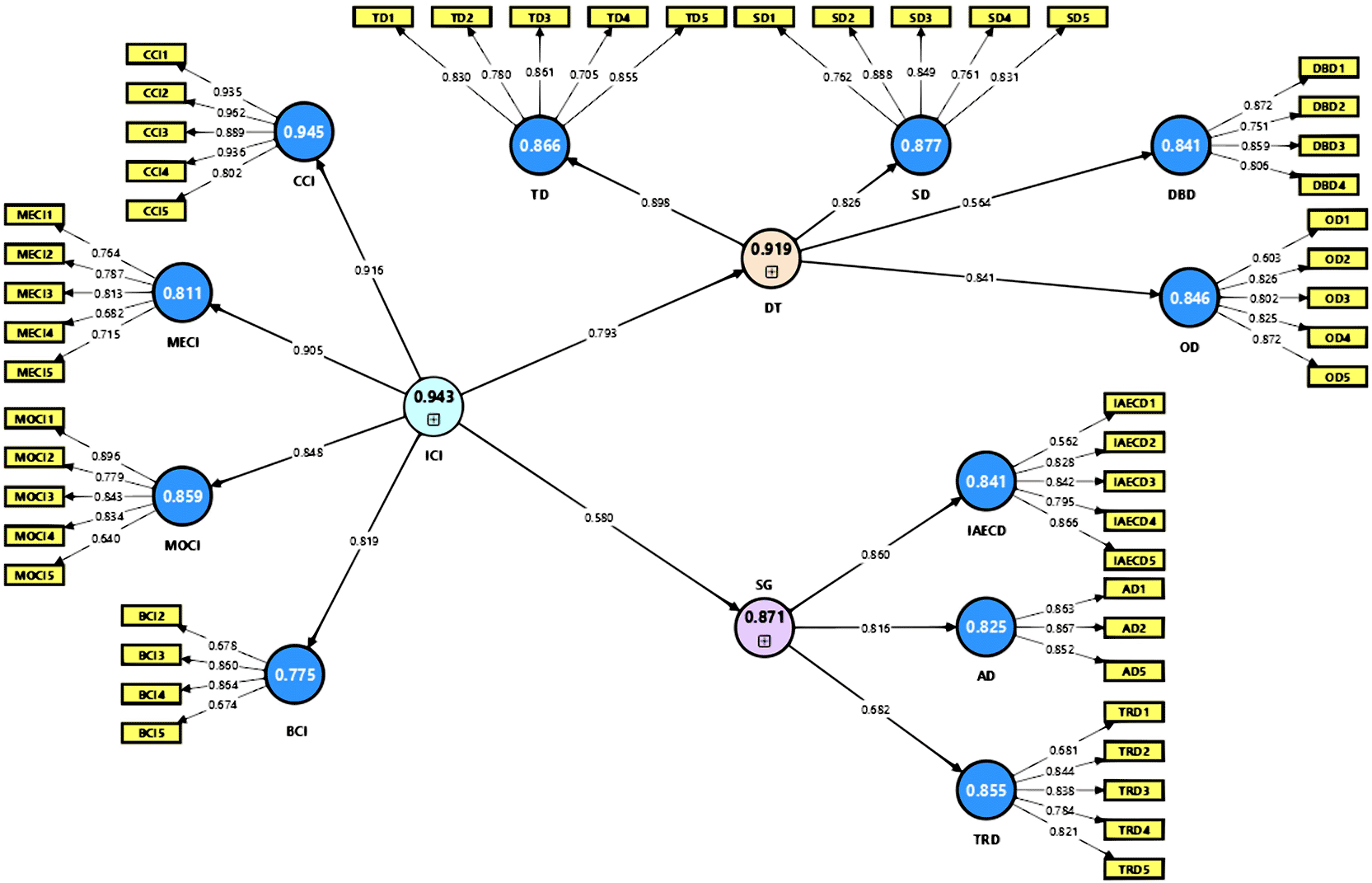
Figure 2 shows the path analysis highlighting the significant effects of ICI on DT and SG. ICI acts as a key driver for enhancing digital behaviors, adoption of technologies, coordination, transparency, and governance practices.
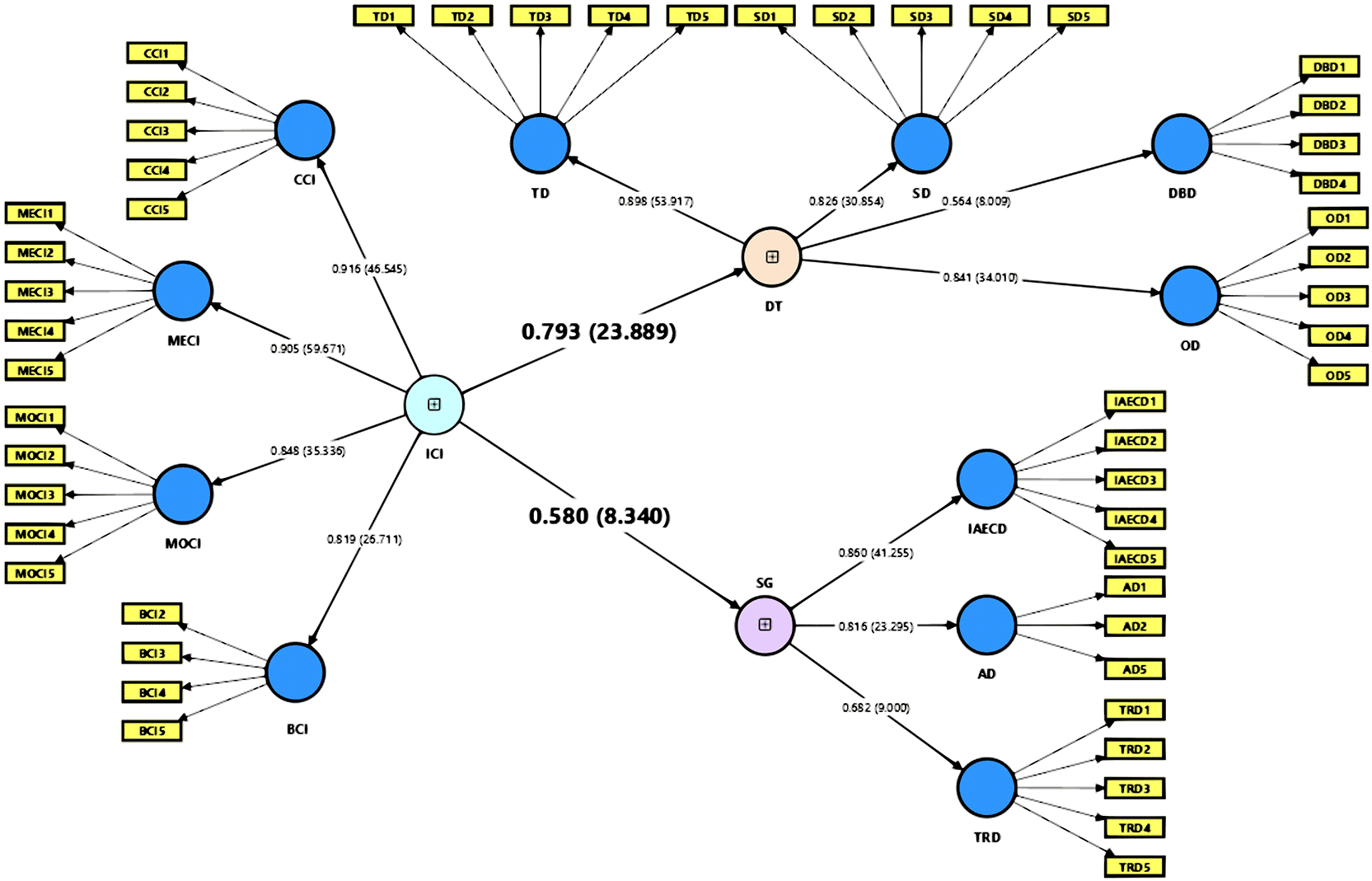
Figure 3 presents the partial path analysis of the four dimensions of ICI on DT and SG. Behavioral intelligence is most influential for DT, cognitive intelligence strongly supports SG, and all dimensions significantly contribute to achieving effective digital transformation and governance.
The findings reveal that Institutional Cultural Intelligence plays a central role in driving digital transformation at the Central Bank of Iraq, explaining 62.9% of its variance and demonstrating that a flexible cultural environment enables effective adoption of digital tools and process optimization. Behavioral intelligence emerged as the strongest predictor of digital transformation, highlighting the importance of adaptive and interactive behaviors for successful digital implementation. In contrast, the impact of cultural intelligence on smart governance was moderate, indicating that achieving digital transparency and accountability requires cultural awareness supported by administrative reforms. Cognitive intelligence showed the strongest influence on smart governance, suggesting that a deep cultural understanding enhances trust, clarity, and regulatory compliance. Motivational and metacognitive dimensions also contributed significantly by strengthening institutional coordination and guiding digital behaviors. Overall, the results emphasize that cultural intelligence is essential for digital transformation but insufficient alone for advancing smart governance without organizational enhancement. Therefore, fostering a culturally aware, motivated, and adaptive workforce is crucial for achieving sustainable digital transformation and more effective smart governance practices.
The results of this study confirm that institutional cultural intelligence (ICQ) is a critical driver of digital transformation and smart governance within the Central Bank of Iraq. Key findings include:
1- Behavioral and motivational dimensions of ICQ significantly facilitate the adoption of digital tools and processes, improving employees’ ability to implement change and adapt to new technological systems. This aligns with prior research showing that cultural intelligence enhances employee performance, creativity, and innovation in diverse organizational settings.
2- Cognitive and metacognitive dimensions are essential for establishing transparency, accountability, and coordination, which underpin effective smart governance. These results underscore the theoretical link between organizational culture, knowledge integration, and governance mechanisms, extending the literature on cultural intelligence in complex financial institutions.
3- Digital transformation mediates the relationship between cultural intelligence and smart governance, indicating that an organization’s cultural capabilities must be closely integrated with its digital infrastructure to achieve efficient governance outcomes.
4- Current levels of institutional cultural intelligence are moderate and declining, highlighting the need for targeted development programs to strengthen cultural competencies across the organization.
Based on these findings, a future-oriented operational model is proposed to enhance ICQ, digital transformation, and smart governance:
• Integrated Cultural Development Programs: Design training initiatives that build cognitive, behavioral, motivational, and metacognitive cultural competencies. Include practical simulations and digital tools to enhance intercultural collaboration.
• Digital-Cultural Alignment: Embed cultural indicators within digital decision-making systems and analytics platforms to guide governance processes and monitor performance.
• Governance Enhancement Mechanisms: Establish clear accountability and coordination frameworks using smart digital platforms. Optimize internal and external collaboration networks to facilitate cross-departmental synergy.
• Strategic Implementation Framework: Develop a phased roadmap that assesses current organizational capabilities, identifies gaps, applies targeted interventions, and evaluates outcomes, ensuring continuous improvement in both digital and governance domains.
• Theoretical Contribution: The study empirically demonstrates the role of institutional cultural intelligence in supporting digital transformation and smart governance, filling a literature gap in organizational behavior within financial institutions.
• Practical Implications: Provides actionable guidance for managers and policymakers to design interventions, integrate cultural and digital capabilities, and implement governance mechanisms that enhance performance, adaptability, and organizational resilience.
In summary, institutional cultural intelligence not only drives digital transformation but also forms the foundation for activating smart governance. The proposed model offers both conceptual and operational frameworks for improving organizational excellence in complex financial environments, ensuring sustainable adaptation to technological and cultural changes.
This study involved human participants and was conducted in accordance with accepted ethical research standards. Ethical approval was obtained from the Scientific Research Ethics Committee, University of Fallujah, Iraq (Approval No. HOF.HUM.2025.001). Written informed consent was obtained from all participants prior to their participation. All participants were informed about the purpose of the study, their voluntary participation, their right to withdraw at any time, and the confidentiality of their data.
| Views | Downloads | |
|---|---|---|
| F1000Research | - | - |
|
PubMed Central
Data from PMC are received and updated monthly.
|
- | - |
Provide sufficient details of any financial or non-financial competing interests to enable users to assess whether your comments might lead a reasonable person to question your impartiality. Consider the following examples, but note that this is not an exhaustive list:
Sign up for content alerts and receive a weekly or monthly email with all newly published articles
Already registered? Sign in
The email address should be the one you originally registered with F1000.
You registered with F1000 via Google, so we cannot reset your password.
To sign in, please click here.
If you still need help with your Google account password, please click here.
You registered with F1000 via Facebook, so we cannot reset your password.
To sign in, please click here.
If you still need help with your Facebook account password, please click here.
If your email address is registered with us, we will email you instructions to reset your password.
If you think you should have received this email but it has not arrived, please check your spam filters and/or contact for further assistance.

Comments on this article Comments (0)