Keywords
gender differences, balance, postural control, central stability, physically active adults, neuromotor adaptation

gender differences, balance, postural control, central stability, physically active adults, neuromotor adaptation
The human body’s capacity to maintain balance is a fundamental physiological function essential for sustaining daily activities and optimizing athletic performance.1–3 Balance is defined as the ability to maintain the center of gravity within the base of support in a controlled manner, relying on the integrated performance of the vestibular, somatosensory, and visual systems.4,5 The effectiveness of this multisystem mechanism is influenced by several individual factors, including age,6,7 level of physical activity,8,9 neuromuscular coordination,9,10 and gender.7,8 In recent years, gender-related differences in balance have become a focal point of investigation in exercise science, athlete performance evaluation, and rehabilitation studies. Nevertheless, empirical findings regarding gender-specific postural control strategies remain limited and inconsistent across studies.
Research has indicated that men and women may differ in their balance capacities due to physiological and biomechanical factors. Males generally exhibit greater muscle mass and strength, which may enhance postural stability,11 while hormonal differences are known to influence neuromuscular control and may affect balance, particularly during dynamic tasks.12 In populations with chronic obstructive pulmonary disease (COPD), females have been shown to perform worse than males on balance assessments,13 and they tend to display higher step variability in dynamic balance tasks.12 Furthermore, aging appears to amplify these gender-based disparities, as balance impairments are generally more pronounced in older women compared to men.13 However, most existing studies have assessed balance through composite performance indices such as total stability scores or error counts without examining the spatial distribution of postural control, such as the proportion of time spent in anterior, posterior, or central positions.
Advancements in balance assessment technologies now allow for detailed analysis of postural deviations by quantifying the percentage of time spent in specific spatial zones. The anterior, posterior, and central stability percentages are sensitive indicators of how individuals maintain their center of gravity and reveal directional tendencies in postural control.14–17 Investigating these parameters in relation to gender provides a multidimensional perspective, enabling the exploration of both general balance proficiency and underlying strategic postural differences. Despite this potential, studies directly comparing these spatial tendencies across genders remain scarce, limiting the field’s understanding of micro-dynamic balance behavior and the generalizability of observed gender effects.
Although numerous studies have explored the relationship between gender and balance,7,18–21 the majority have relied on aggregate or static indicators such as total balance time, error frequency, or composite stability indices. However, balance maintenance is a dynamic process characterized by continuous micro-adjustments and postural corrections.22 A consistent anterior shift during stance, for instance, may suggest an individual’s biomechanical or neuromotor predisposition, which can provide valuable insights for both individualized rehabilitation programs and athletic performance enhancement. Accordingly, analyzing the proportion of time spent in anterior, posterior, and central positions can yield deeper insights into postural control mechanisms.
The present study aims to investigate gender-related differences in postural balance among physically active young adults by examining the percentage of time spent in anterior, posterior, and central regions during balance assessments. By quantifying the directional distribution of the center of gravity, the study seeks to elucidate how postural control strategies differ between males and females. These findings are expected to contribute to a more comprehensive understanding of how biomechanical structure and neuromotor regulation interact across genders. Moreover, the outcomes may offer practical implications for athlete selection, the design of individualized rehabilitation protocols, and the evaluation of fall risk in older populations.
Based on existing literature, it is hypothesized that significant gender differences exist across postural regions. Specifically, it is expected that males and females will differ in the percentage of time spent in the anterior and posterior regions, reflecting distinct postural control strategies. Additionally, a meaningful difference between genders is anticipated in the proportion of time spent maintaining a central balance position, further highlighting potential variations in stability mechanisms and neuromotor adaptations.
The sample size required to achieve adequate statistical power for between-group comparisons was determined using the G*Power 3.1.9.7 software. Based on a power analysis for an independent samples t-test assessing mean differences between two groups, the following parameters were adopted: an effect size (Cohen’s d) of 0.80 (large effect), a significance level (α) of 0.05, and a test power (1–β) of 0.80. The analysis indicated that a minimum of 26 participants per group would be necessary, yielding a total of at least 52 participants for adequate statistical validity. Accordingly, the study included 52 physically active young adults—26 males (Age: 20.08 ± 1.14 years; Height: 176.75 ± 8.59 cm; Weight: 72.70 ± 14.26 kg) and 26 females (Age: 19.24 ± 0.54 years; Height: 165.95 ± 5.73 cm; Weight: 55.98 ± 7.57 kg).
Eligibility criteria required participants to be healthy young adults aged between 18 and 25 years, engaging in regular exercise for at least three days per week and a minimum of 30 minutes per session over the previous six months, and free from any acute or chronic medical conditions. Participants were required to identify as either male or female, volunteer for the study, and provide written informed consent prior to testing. Exclusion criteria included any diagnosed central nervous system, musculoskeletal, or vestibular disorders; traumatic injuries, surgical procedures, or functional impairments affecting the upper or lower limbs within the past six months; the use of psychotropic medications, muscle relaxants, alcohol, or other psychoactive substances that might affect balance; and sensory impairments (visual or auditory) that could compromise postural stability. Female participants who were pregnant or suspected pregnancy were also excluded. In addition, individuals who were expected to experience cognitive or physical difficulty performing the balance tasks were not included in the study.
This study employed a cross-sectional and comparative quantitative research design. Gender (male vs. female) was defined as the independent variable, while the dependent variables were the percentages of time spent in anterior, posterior, and central balance zones. Participants’ balance performance was assessed using a standardized static balance protocol. All measurements were conducted in a controlled laboratory environment with stable illumination, minimal noise, and no external distractions. Balance assessments were carried out using a high-precision digital force platform (Sigma System, CosmoGamma, Italy), which continuously recorded the position of each participant’s center of pressure (CoP) and automatically computed the percentage of time spent in anterior, posterior, and central positions. The software categorized postural data into these three zones, and results were expressed as percentage values. A between-groups comparative design was adopted to analyze gender-based differences in balance distribution. Each participant was assessed individually, and statistical analyses were based on group means. To enhance reliability and validity, all assessors were trained on the testing protocol, and all measurements were conducted using the same equipment and under identical environmental conditions. Participants received detailed instructions prior to testing to minimize bias. To control for circadian rhythm effects, all assessments were performed at approximately the same time of day for each participant. Prior to testing, all participants provided written informed consent, and the study was approved by the Ethics Committee of Düzce University (Decision No: 2025/387; date: 11.08.2025).
Height and body weight were measured in accordance with the International Society for the Advancement of Kinanthropometry (ISAK) standards, following established measurement protocols to ensure consistency and repeatability. All assessments were performed by the same trained investigator under similar environmental conditions. For height measurement, participants stood barefoot on a flat surface in an upright position, maintaining contact of the heels, buttocks, and back with a vertical plane. Head alignment was adjusted according to the Frankfurt plane, ensuring that the tragus and the inferior margin of the orbit were horizontally aligned. Height was measured using a portable stadiometer (Seca 213, Seca GmbH & Co. KG, Hamburg, Germany) and recorded to the nearest 0.1 cm. Body weight was measured in the morning, with participants wearing light clothing and standing barefoot and motionless on a level, hard surface. A digital scale (Omron HN-289, Omron Healthcare Co., Ltd., Kyoto, Japan) was used, calibrated before each session, and verified for accuracy. Weight measurements were recorded in kilograms with a precision of 0.1 kg.
Balance performance was assessed using the Dynamic Limit of Stability Test, administered with the Sigma Balance System (CosmoGamma, Italy), a wireless, portable device designed to evaluate proprioceptive sensitivity and the integration of the musculoskeletal and postural control systems. Participants performed the test barefoot, standing on their dominant leg with eyes open in a single-leg stance position to minimize lateral asymmetry and ensure measurement standardization. Each trial lasted 30 seconds. During the test, participants were instructed to maintain stability within the central zone defined by the Sigma software, without intentional movement toward any direction. The objective was to sustain postural stability with minimal sway. Throughout the trial, the software continuously tracked and calculated the time spent in the central region as well as anterior and posterior deviations, storing the data digitally. Before the formal testing session, all participants were provided with detailed instructions and completed one familiarization trial. The main measurement was performed once for each participant. The difficulty level was set to “Easy (XL)” in the Sigma software, with a 20% tolerance range, indicating the acceptable deviation from the center position. All tests were conducted under consistent laboratory conditions (temperature, lighting, and noise) and administered by the same researcher according to the standardized protocol.
All statistical analyses were performed using GraphPad Prism (Version 9.5.1; GraphPad Software, San Diego, CA, USA). Prior to analysis, data were tested for compliance with the assumptions of parametric statistics. The distribution of each variable was examined both visually and through skewness and kurtosis coefficients. Values within the ±2 range were considered acceptable for normality, and all variables met this criterion; therefore, parametric analyses were applied. Independent samples t-tests were used to compare male and female groups. Homogeneity of variances was examined using the F-test. For variables with equal variances, the standard t-test was applied; in cases where variances were unequal, the Welch-corrected t-test was used. The level of statistical significance was set at p < 0.05 for all analyses, and all tests were two-tailed. In addition to p-values, effect sizes (eta squared, R2) were calculated to quantify the magnitude of differences. Estimation plots were employed to present results more comprehensively, displaying individual data points, group means, and 95% confidence intervals. This approach provided a clear visual interpretation of the direction, magnitude, and uncertainty of the observed differences.
The findings of this study are presented below and illustrated through estimation plots that display individual data points, group means, and 95% confidence intervals for each comparison.
Figure 1 shows the comparison of anterior sway percentages between male and female participants. Independent samples t-tests revealed no significant gender difference in anterior sway. The mean anterior sway percentage for the male group was 50.76%, while that for the female group was 51.43%. The mean difference between groups was 0.67 ± 1.02, which was not statistically significant, t(40) = 0.66, p = .516. The 95% confidence interval (CI) for the mean difference [–1.39, 2.72] included zero, indicating that gender did not significantly affect anterior sway performance. The effect size, calculated as eta squared (R2 = .0106), indicated a very small effect. The assumption of homogeneity of variances was met, F(20, 20) = 1.73, p = .228. As illustrated in Figure 1, individual data points, group means, and 95% confidence intervals collectively demonstrate the minimal difference and high overlap between genders.
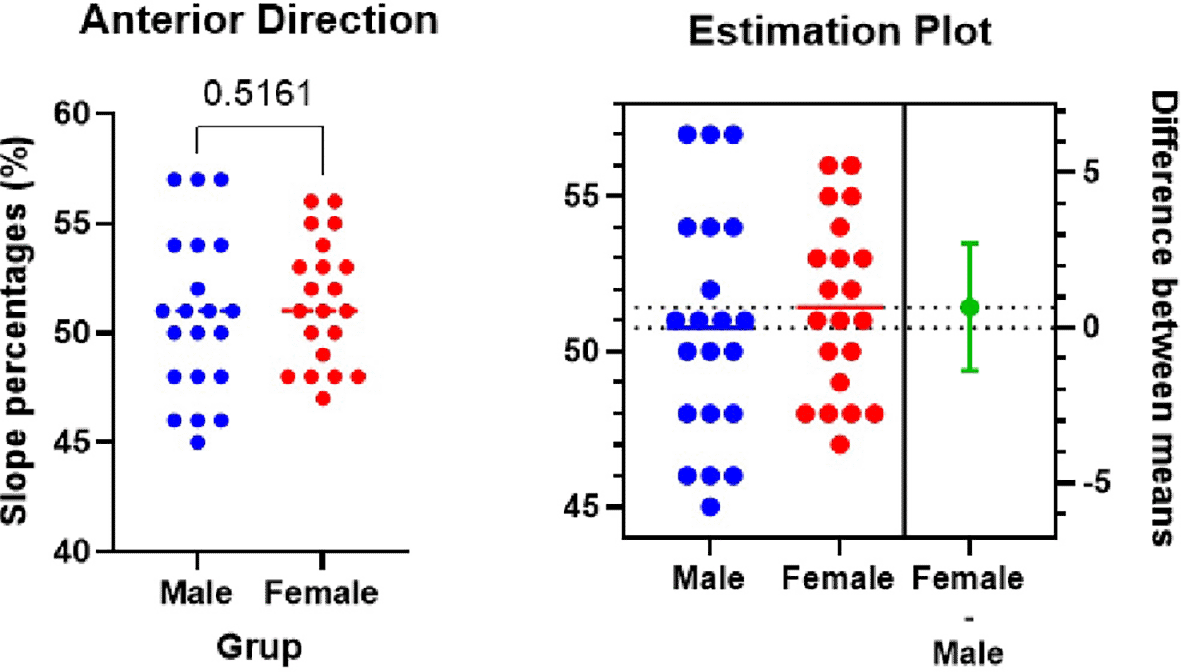
Figure 2 presents the comparison of posterior sway percentages by gender. Independent samples t-tests indicated no significant gender effect. The male group’s mean posterior sway was 48.90%, whereas the female group’s mean was 48.19%. The mean difference (–0.71 ± 1.29) was not statistically significant, t(40) = 0.55, p = .584, with a 95% CI [–3.33, 1.90] that included zero. This suggests that gender had no measurable influence on posterior sway percentage. The eta squared value (R2 = .0076) reflected a negligible effect. Equality of variances was confirmed, F(20, 20) = 1.40, p = .461. As shown in Figure 2, the estimation plot visually supports the statistical findings, highlighting the near-identical distributions between male and female participants.
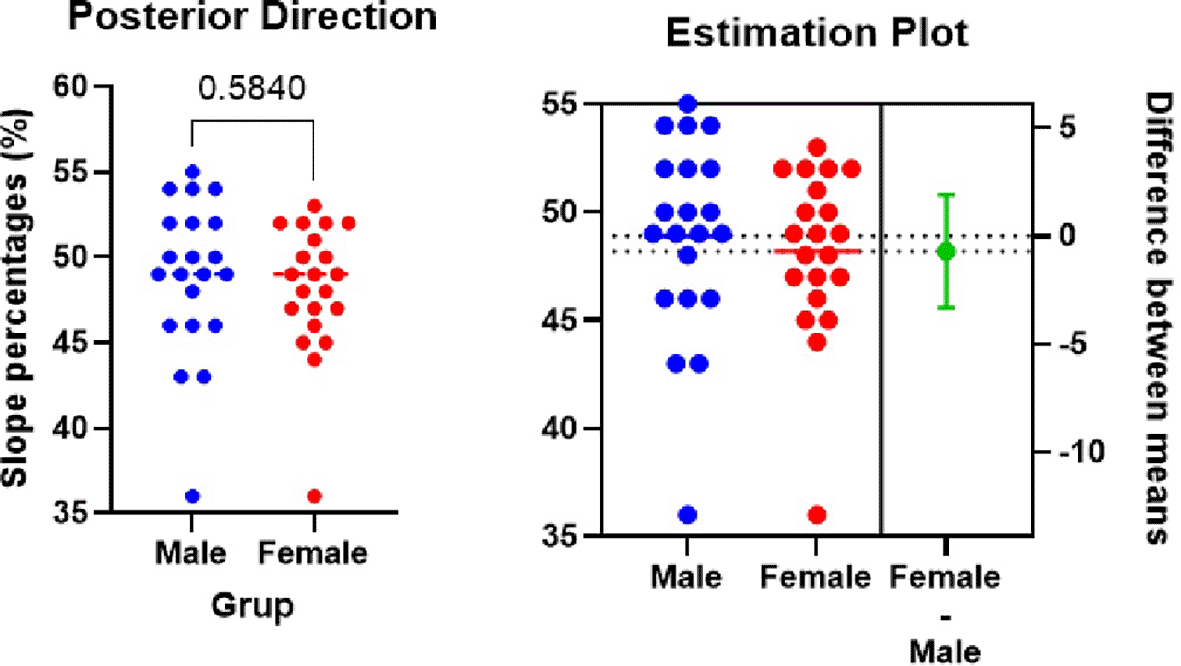
Figure 3 illustrates the comparison of centering performance between male and female participants. Because the assumption of equal variances was violated (F(20, 20) = 2.97, p = .019), Welch’s t-test was applied. The mean centering percentage for males was 90.14%, while for females it was 95.71%. The mean difference of 5.57 ± 2.36 was statistically significant, Welch’s t(32.09) = 2.36, p = .025. The 95% CI [0.76, 10.38] excluded zero, indicating a significant gender effect on centering performance. The eta squared effect size (R2 = .1477) suggested a moderate effect. As depicted in Figure 3, estimation plots show higher centering performance among females compared to males, with distinct separation of group means and non-overlapping confidence intervals. These results collectively indicate that, while no gender differences were found for anterior or posterior sway, females demonstrated significantly superior centering stability during balance assessment.
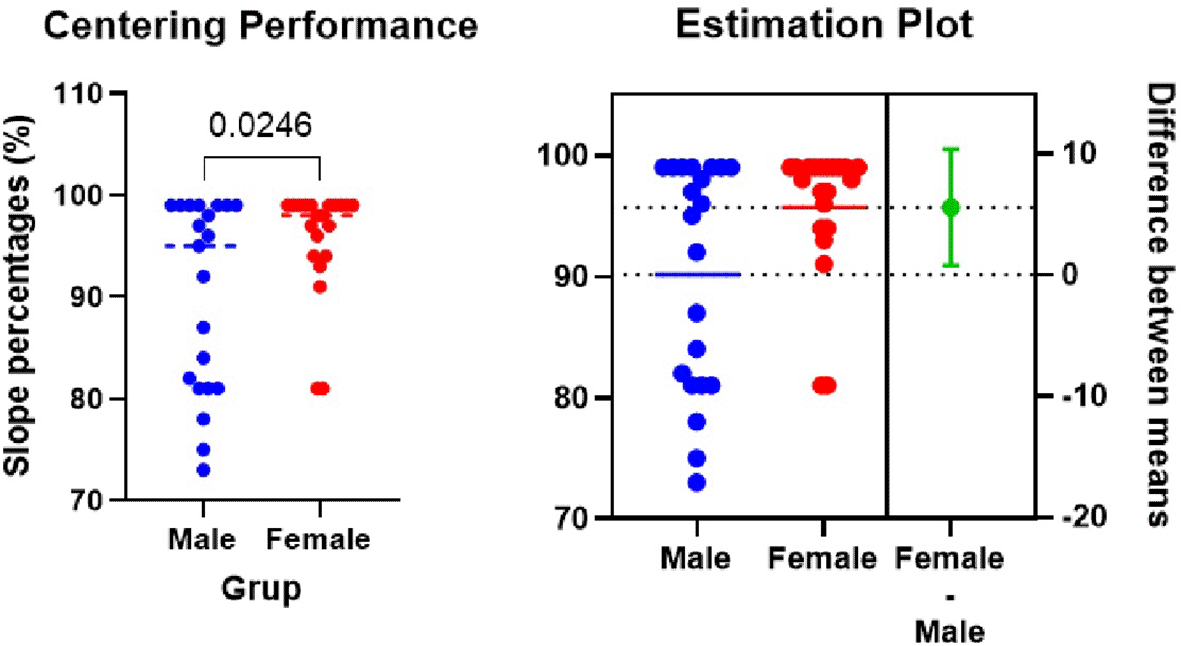
This study examined the effect of gender on balance performance among physically active young adults, focusing on anterior, posterior, and centering tendencies. The findings revealed that females demonstrated significantly superior centering performance compared to males, whereas no significant gender differences were observed in anterior or posterior sway tendencies. These results suggest that while the primary components of postural control are similarly organized across genders, neuromuscular strategies related to central stability may differ. This implies that certain subcomponents within the overall balance system could be sensitive to gender-based neuromotor variations.
The absence of significant gender differences in anterior and posterior sway indicates that the somatosensory, vestibular, and visual systems key contributors to balance operate with comparable efficiency in both males and females. Grace Gaerlan et al.23 reported that these three sensory systems influence balance in young adults, yet no gender differences were observed. Similarly, Torres et al.24 found no significant differences in static postural sway between physically active males and females. The current study’s homogeneous sample in terms of neuromotor proficiency may account for this consistency. Additionally, the ±20% tolerance range used in the measurement system might have masked subtle between-group variations. Therefore, the similarity in anterior–posterior sway patterns likely reflects a combined effect of physiological and methodological factors.
Conversely, the finding that females exhibited significantly higher centering performance (p = .0246, R2 = .1477) supports a moderate effect size and aligns with prior evidence suggesting that women employ more precise muscle activation and efficient sensorimotor integration strategies. Martín-Mohr et al.25 reported that females outperform males in fine motor control of muscle strength, while Smith et al.26 found that girls demonstrated superior postural stability compared to boys. Similarly, Torres et al.24 and Khobkhun and Thanakamchokchai12 documented more frequent micro-adjustments in the balance strategies of females. Together, these findings indicate the presence of gender-specific neuromotor control mechanisms.
Anatomically, females may benefit from a lower center of mass due to smaller body mass and a wider pelvic structure, which can confer greater static stability. Additionally, proprioceptive function has been shown to vary according to hormonal status. For instance, Sung and Kim27 demonstrated that fluctuations in estrogen levels modulate proprioceptive sensitivity and influence postural stability. This suggests that although female balance control may fluctuate across hormonal phases, overall superior central stability in women may be linked to more refined neuromotor strategies rather than transient hormonal effects.
The fact that a significant difference emerged only in the centering parameter suggests that gender-based distinctions are more closely related to stability maintenance mechanisms than to recovery strategies following postural perturbations. Women’s enhanced ability to maintain balance near the central stability zone may result from greater proficiency in fine motor corrections during static postures. Supporting this interpretation, Stephenson et al.28 reported higher balance scores among females, while Ghram et al.29 found that women better preserved central stability under challenging balance conditions. Likewise, Varsha et al.30 and Kim et al.31 observed greater center-of-pressure sway amplitudes in males, indicating a need for larger corrective movements to maintain equilibrium.
The practical implications of these results are noteworthy. Superior central stability in females may provide an advantage in sports or performance disciplines requiring sustained or semi-static postures such as dance, figure skating, or artistic gymnastics. For male athletes, incorporating targeted balance exercises aimed at improving central stability such as single-leg stance, wobble-board training, or proprioceptive tasks performed with eyes closed could be beneficial. In rehabilitation contexts, consideration of gender-related centering differences may aid in designing individualized balance therapy protocols and improving patient outcomes.
This study has certain limitations. The sample consisted exclusively of young, physically active adults, which restricts the generalizability of the findings to sedentary or elderly populations. Future research should integrate additional variables such as hormonal cycle phases, muscle activation patterns (e.g., EMG measurements), and frequency-domain analyses of center-of-pressure oscillations. Such multidimensional approaches could provide a more comprehensive neurophysiological understanding of gender influences on postural control.
In conclusion, this study offers new insight into the gender-specific organization of postural control mechanisms. The lack of significant differences in anterior and posterior sway suggests that core balance systems operate similarly in males and females. However, the superior centering performance observed among females indicates the presence of distinct neuromotor control strategies related to central stability. These findings provide valuable, evidence-based implications for both sports performance optimization and clinical rehabilitation practices.
This study demonstrated that gender plays a significant role in balance performance among physically active young adults, particularly in terms of central stability, where females exhibited a distinct advantage. The findings suggest that while the overall mechanisms of postural control operate similarly across genders, females appear to employ more refined neuromotor strategies when maintaining central balance. This difference likely reflects an interaction between biomechanical and neurophysiological factors, emphasizing the importance of gender-specific approaches in both sports performance and rehabilitation settings. The superior central stability observed in females may provide a performance advantage in aesthetic and balance-dependent disciplines such as dance, figure skating, and artistic gymnastics. Conversely, for male athletes, incorporating balance-centered and proprioceptive training into regular exercise routines may serve as an effective strategy to enhance postural control. Overall, the study highlights that gender-based neuromotor adaptations influence specific components of postural regulation, offering valuable implications for both performance optimization and clinical practice.
| Views | Downloads | |
|---|---|---|
| F1000Research | - | - |
|
PubMed Central
Data from PMC are received and updated monthly.
|
- | - |
Provide sufficient details of any financial or non-financial competing interests to enable users to assess whether your comments might lead a reasonable person to question your impartiality. Consider the following examples, but note that this is not an exhaustive list:
Sign up for content alerts and receive a weekly or monthly email with all newly published articles
Already registered? Sign in
The email address should be the one you originally registered with F1000.
You registered with F1000 via Google, so we cannot reset your password.
To sign in, please click here.
If you still need help with your Google account password, please click here.
You registered with F1000 via Facebook, so we cannot reset your password.
To sign in, please click here.
If you still need help with your Facebook account password, please click here.
If your email address is registered with us, we will email you instructions to reset your password.
If you think you should have received this email but it has not arrived, please check your spam filters and/or contact for further assistance.

Comments on this article Comments (0)