Keywords
COVID-19, Living systematic review, Suicide; Attempted suicide, Self-harm, Suicidal ideation, Children, Young people, adolescents

This article is included in the Coronavirus (COVID-19) collection.
COVID-19, Living systematic review, Suicide; Attempted suicide, Self-harm, Suicidal ideation, Children, Young people, adolescents
Suicide and self-harm are major public health concerns in children and young people. Suicide is the fourth leading cause of death globally in 15–19-year-olds,1 with rates increasing over the past decade in high-income countries, including by 7.9% per year in the UK.2 Self-harm is a key risk factor for suicide,3,4 but it is commonly a hidden behaviour, with high levels of stigma being a barrier to help-seeking, with only a small proportion of young people who self-harm presenting to hospitals.5,6
The COVID-19 pandemic resulted in global societal disruptions and an increased mortality rate, leading to over 6 million COVID-related recorded deaths by the end of May 2022.7 Concerns were repeatedly raised about the potential impacts of the pandemic and of the public health measures taken to curb its spread on population mental health8 and suicide and self-harm.9,10 Previously quarantine measures e.g., during the SARS pandemic in Taiwan, presented some evidence of elevated suicide rates, predominately in older age groups.11 Although children and young people were much less vulnerable to becoming seriously ill with COVID-19 than older people, measures such as school closures, limited social interactions, and cancellation of events and activities, were thought to have disproportionately affected this age group, mainly due to their stage of social and emotional development and the importance of peer interaction.12,13 Lengthy periods of quarantine and/or fear of quarantine as well as increased experience of bereavement, or increased exposure to home environments where domestic and other abuses were present, were thought to increase the likelihood of mental health problems such as depression, irritability, anger, emotional exhaustion, and, in more severe scenarios, post-traumatic stress symptoms.14
We therefore aimed to identify, appraise and synthesise the published evidence for the pandemic’s impact on risks of suicidal ideation, self-harm (including suicide attempts), and death by suicide in children and young people aged up to and including 24 years to both understand impacts during the COVID-19 pandemic and to inform future pandemic planning.
The current systematic review is nested within a larger registered living systematic review (LSR) (PROSPERO ID CRD42020183326; registered on 1st May 2020 and updated until December 2022), with similar inclusion and exclusion criteria also applied for this review.15 This review reporting follows the PRISMA guidelines.16
The exposure of interest was the COVID-19 period and related experiences. The COVID-19 period was based on the authors’ definition in the included studies. The related experiences include physical distancing, quarantine, lockdown, school closures, stigma, becoming ill after being infected by the virus, being in contact with someone who has contracted the virus, COVID-related bereavement, and any other relevant potentially detrimental exposure. We also included studies that reported on factors that may have reduced the risk of suicidal behaviour (e.g., reduced academic pressure, individuals being bullied not having to attend school or college in-person). The comparison was the pre-pandemic period, or at least three waves of post-pandemic data and/or individuals who have not been exposed to the related experiences outlined above.
The main deviation from the living review protocol was that this nested review focused solely on participants aged up to and including 24 years of age of any ethnicity living in any country. If age was not stated, participants had to have been described as children, adolescents, or young adults. Where studies examined more than one age group, only data related to those aged up to 24 years were included if they could be extracted separately. No language restrictions were imposed.
Outcomes of interest were:
i. Studies with no data on children and young people
ii. Studies where data on children and young people could not be extracted separately
iii. Cross sectional studies with less than three waves of only post-pandemic data
iv. Studies that reported outcomes solely based on media reports. However, studies that reported on official suicide/suicide attempt data in the media were included
v. Studies that did not report outcomes separately but amalgamated them
vi. Studies that reported risk of suicide or self-harm rather than measured outcomes
vii. Studies that reported qualitative findings
viii. Case series studies reporting less than five cases
ix. Case series studies with no baseline data
x. Studies where only an abstract was available
xi. Editorials, commentaries and letters to an editor
The following databases were searched: PubMed, Scopus, medRxiv, bioRxiv, PsyArXiv, the WHO COVID-19 database (all from January 2020 up to June2022); and the COVID-19 Open Research Dataset by Sematic Scholar, and the Allen Institute for AI, which includes relevant records from Microsoft Academic, Elsevier, arXiv and PubMed Central (from January 2020 up to November 2020). The COVID-19 Open Research Dataset by Sematic Scholar, and the Allen Institute for AI was only searched until Novemeber2020 because it was determined it did not contribute a single unique study, since it was drawing records from already covered sources. Full details of searches have been published elsewhere.15 Both peer reviewed and pre-print publications were included. Published evidence specifically on children and young people was included up until June 30th, 2022.
The full electronic search strategy for PubMed (adapted for use in the other databases listed above) is provided as Extended Data (https://doi.org/10.7910/DVN/XRO2JE).
Within the LSR an initial screening to identify potentially relevant studies was conducted (DD, EE, CMH, AM, FM, LB), followed by screening of full texts for inclusion (AJ, DG, DK, or RTW). All LSR-included studies were full text screened to determine eligibility based on the current review’s inclusion and exclusion criteria (DD), with 50% screened by a second reviewer (EE). Any disagreements that could not be resolved by consensus were assessed by an expert reviewer (AJ) for a final decision.
Using a piloted structured data extraction form from the living review, data were doubly extracted by AJ, DG, DK or RTW and then independently by DD. Extracted data included: study characteristics (country, setting, design, observations period/s, sample/cohort size), outcomes (suicidal ideation or thoughts of self-harm, suicidal behaviours and/or self-harm and suicide), key findings, and comments/limitations.
Study quality and risk of bias were assessed using National Institute for Health (NIH) tools according to study design.17 For ‘before and after’ studies, a specifically designed adapted version of an existing NIH quality assessment tool was used, which included consideration of the pandemic and associated lockdown periods and other societal restrictions.18 Quality assessments were carried out by two study authors (DD and EE) independently and a consensus rating (i.e., whether the study was of reasonable quality or not) was generated. All papers that met our criteria were included irrespective of their quality. AJ resolved any disagreements. All studies were included in the synthesis regardless of study quality. The adapted NIH quality assessment tool and the full data extraction table for all included studies are provided as Extended data (https://doi.org/10.7910/DVN/XRO2JE).19
Studies were synthesised narratively based on outcome (suicide death, self-harm and suicidal ideation or thoughts of self-harm), using tables and narrative. Studies that presented combined results on suicidal ideation or thoughts of self-harm and self-harm were reported separately. Studies in healthcare settings (general hospital emergency departments, children’s hospitals, psychiatric units, and multiservice settings) were defined as service utilisation studies. Studied that were conducted using surveys or questionnaires, with different participants across data sweeps (e.g., panel surveys), were defined as cross-sectional studies (with repeated measurement waves).
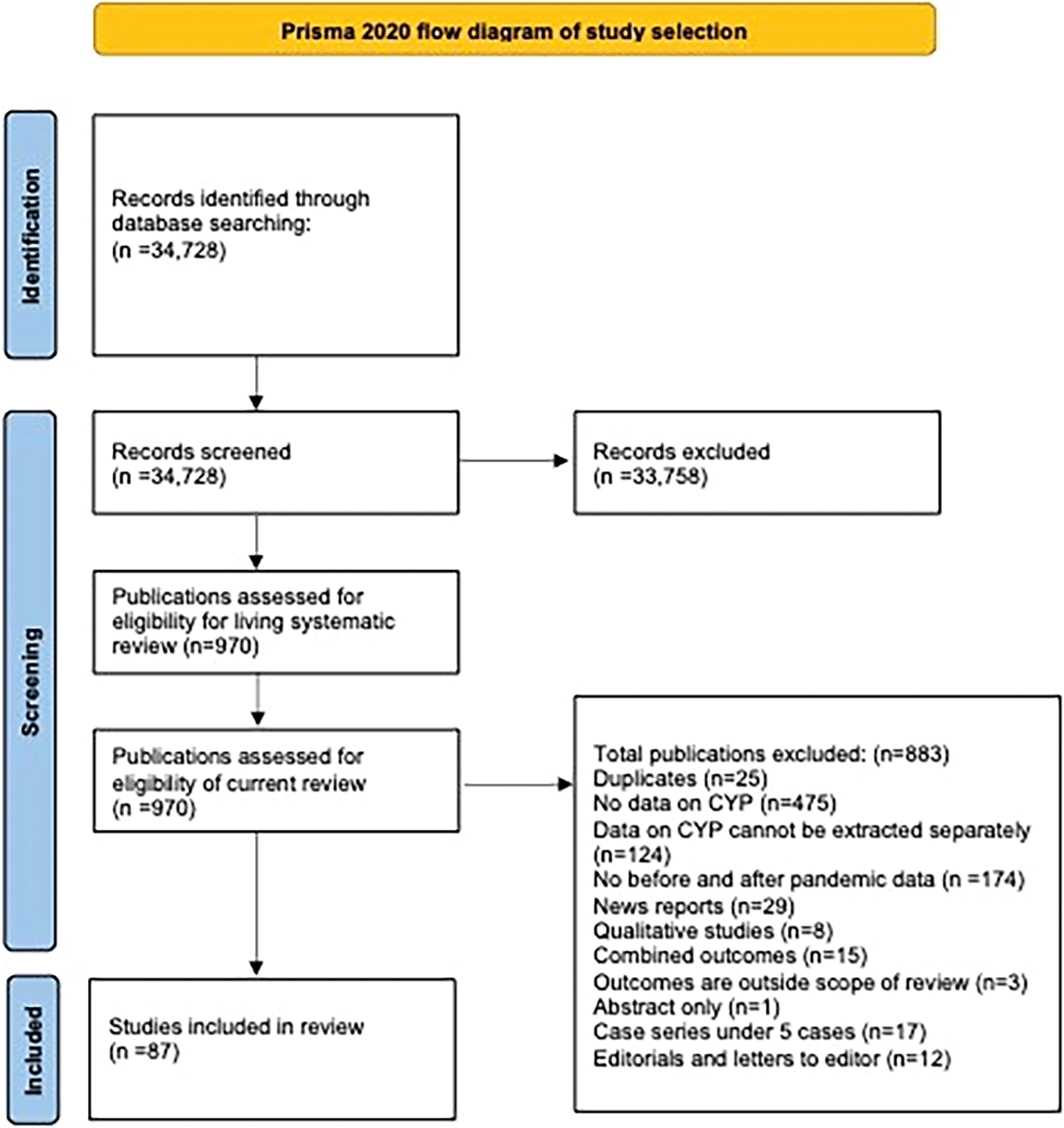
In total, by June 30th, 2022 34,728 studies were initially identified from all electronic searches. Eighty-seven studies met the review’s inclusion criteria ( Figure 1, Supplementary Table 1); 22 studies reported findings from the USA; 9 from Japan; 5 each from Australia and Canada; 4 each from China, France, South Korea, the UK; 3 from Germany; 2 each from India, Italy, Spain, Switzerland and Turkey; and 1 each from Bangladesh, Brazil, Chile, Denmark, Ecuador, Iceland, Ireland, Mexico, New Zealand, Norway, Poland, Sri Lanka, Sweden, and Taiwan. Three studies spanned multiple countries. Forty-three studies were service utilisation studies, 4 were cohort studies, and 17 were cross-sectional surveys. Twenty-three studies assessed suicide rates across general populations using a range of time series analysis techniques.
Across service utilisation studies, 37 were based in hospital settings (e.g., EDs, admissions, inpatient psychiatric units and trauma centres), with 19 basing their results on a single hospital/unit. Two studies utilised data from a national digital crisis texting platform,20,21 one was set in a youth justice centre,22 two utilised data from national suicide reporting systems,23,24 one utilised data from electronic primary care records,25 and one data from primary care, EDs and hospital admissions.26
The 17 cross-sectional surveys included eight with university students, one with young people in primary care and the rest of the studies recruited young people across different age groups from the general population.
Of the 87 included studies, 22 reported suicide event counts or rates, 37 self-harm incidence, 12 incidence of suicidal ideation, and a further 16 on multiple outcomes (e.g. death by suicide, self-harm and suicidal ideation or thoughts of self-harm separately). Due to heterogeneity of sources in terms of study design, outcome measures, definitions of self-harm and suicidal behaviours, and the variety of settings in which studies took place, it was decided that a meta-analysis was not feasible for this review. Studies are summarised according to study outcome in Tables 1-3. Two studies were pre-prints and were not yet peer reviewed.27,28
Summary of studies assessing suicide rates
Twenty-three studies, based on data from 11 countries – Australia, Chile, China, Ecuador, Germany, Japan, Norway, Canada, Taiwan, UK and USA, with one further article presenting data from 33 countries, described changes in suicide rates in children and young people in relation to the onset of COVID-19 and national lockdowns, compared with previous years (Table 1). Ten studies reported no change in suicide rates, twelve studies (of which six were based in Japan, three using the same dataset) described an increase in rates, and one reported a decrease.
Pirkis et al,29 reported that there was no consistent evidence of change across 33 countries, although there were signals of an increase in some countries. However, this study only included data from three low-middle-income countries (LMIC). Seven of the Japanese studies investigating suicide rates, all rated as high or moderate quality, used data either from the Japanese National Police Agency,30–33 or from suicide statistics published by the Ministry of Health, Labour and Welfare for children.34–36 One further paper form Japan37 used data from the Basic Data on Suicide in the Region (BDSR). Three of the Japanese studies reported an initial decline in suicide rates during the first months of the pandemic followed by a rise during later months; Anzai et al30 reported no overall excess suicide mortality in the early months of the pandemic (April-May 2020), but highlighted excess suicide mortality in June 2020 for those under 20 years, as did Matsumoto et al,37 with a decrease early in the pandemic followed by an increase during August-December 2020. Comparably, Tanaka & Okamoto35 indicated a decline of 14% in suicide rates in children and adolescents during the first five months of the pandemic, subsequently rising by 49% between July and October 2020. In support of these findings, Japanese studies that investigated later months of the pandemic, up until Dec 2020,32,33,38 confirmed an increase in suicide rates, although this was often attributed to a celebrity suicide. In contrast, Yoshioka et al36 found no statistical difference in suicide rates for those under 20 years. Isumi et al,34 investigated the impact of school closures (March-May 2020) on children (<20 years) and found that while suicide rates tended to increase in equivalent months in previous years, in 2020 there was a slight decrease.
Zheng et al,39 in the only paper from China, reported a significantly elevated suicide rate of 151% among boys aged 10-14 years and 127% among girls of the same age group during Jan-June 2020. A further study from Taiwan40 investigating suicide rates from January 2017 up until the end of 2020, found that while suicide rates decreased in the older age groups (25-64 years), it increased among young people (<25 years) before the pandemic, and continued to rise afterwards.
Four studies were published with data from the USA during 2020 and included comparisons with pre-pandemic years.41–44 Larson43 reported a small decline in suicide rates for those aged below 17 years in Michigan State. Ruiz Sánchez44 utilising data from 19 US counties (15% of US population), reported an overall decline in suicide rates for all age groups, while also stating that a restricted analysis looking at the impact of school closures on school aged children early in the pandemic indicated a possible increase in deaths by suicide below age 19 years (31.3 to 43.1% rises). Charpignon et al41 presented aggregated data from 2015-2019 compared to 2020, from 14 US states (Alaska, Arkansas, California, Colorado, Connecticut, Georgia, Indiana, Montana, Nebraska, New Jersey, Ohio, Oklahoma, Virginia, Vermont) which indicated that there was an overall increase in suicide rates among adolescents from 5.9% to 6.5%. Ehlman et al42 included a whole USA national vital statistics system dataset, which indicated that while there is no change in suicide rates in the general population overall, however, there were higher suicide rates amongst males, in comparison to females, specifically at ages 15-24 years. A rise in suicide rates in young males was also found in two studies from Australia for all Australian states throughout 2020.45,46 Both confirmed a rise in suicide age 25 years. Chavez & Romero Heredia47 from Ecuador indicated that there was no overall change in number of suicides in ages 10-19 years, with only a slight increase in male suicides during 2020. Five other reports, from Germany,48 Chile,49 Norway,50 England,51 and Nova-Scotia, Canada,52 all rated of moderate or high quality, found little to no evidence of the pandemic affecting suicide rates in young people. Schleihauf & Bowes et al52 investigated the first 12 months of the pandemic in Nova Scotia and reported a small overall decline in suicide rates in young people <20 years.
Summary of studies assessing self-harm (including suicide attempt & NSSI)
Fifty-three studies reported self-harm either solely or in a way that data could be extracted separately from the other outcomes examined ( Table 2). Four were cohort studies,28,53–55 eight were cross- sectional surveys with comparisons being made with similar pre-pandemic measures56–63 and one study was a repeat cross-sectional survey with no baseline data.64 Forty studies took place in healthcare settings and presented baseline data, including from trauma centres registries, hospital ED records, primary healthcare data, emergency dispatch data, and psychiatric unit data. Nine were conducted in the USA, four in France, three in South Korea, two each in Germany, the UK, Australia, India, New Zealand, Spain and Turkey, two studies spanned each across 10 different countries globally, and one each were from Brazil, Canada, China, Ireland, Italy, Japan, Sri Lanka, and Switzerland. Overall, ten studies were from LMICs.54,55,62,65–71 Sample sizes ranged from as high as 541,53026 to 67 cases.66
Among the service utilisation studies, in comparison to various pre-pandemic periods, 19 out of 40 studies reported a decrease or no change in self-harm incidence in young people,22,24,26,65,66,68–81 of which one study reported a 33% drop in self-harm-related visits during April 2020 in Ontario,Canada, with SH presentations returning to near pre-pandemic numbers by August 2020.75 Jollant73 investigated SH presentations in France until August 2020, reporting a decline of 22% amongst adolescents aged 10-14 years, and 14.8% amongst 15-19 year olds. Sperandei et al78 from Sydney, Australia examined data from January 2016-June 2021, and reported that there was no overall rise in self-harm presentations, although overall presentations to ED were lower than in previous years. Eleven of the studies reporting a decrease in outcome frequencies based their results on very small numbers or single hospital unit.64,66,68,69,71,73,74,76,77,79,80 In contrast, Del Pozo Banos et al26 linked primary and secondary healthcare data for 3.2 million people living in Wales, up to March 2021, which included a little over 500,000 children and young people aged 10-24 years. Although there was an overall decline in self-harm presentations, this drop was proportionately smaller amongst those aged 10-24 years, and even less so in females aged 10-24 years. Habu et al72 in a study from Japan, also saw a decline in self-harm presentations in 15–24-year-olds. Knipe et al71 reported declines in self-harm in Sri Lanka, in those aged 25 and under. Six of the studies that reported declines in self-harm presentations investigated the very early phase of the pandemic (up to May 2020) and presented either initial decreases with return to pre-pandemic levels, or very small changes in comparison with pre-pandemic data.22,24,76,77,79,81 Studies reporting declines or no change in self-harm largely relied on small numbers or were restricted to one hospital or region, and only five studies utilised large samples or cohorts.26,72,73,75,78 Additionally, 6/19 were rated as moderate or high quality, while the rest scored low.
Twenty-one studies set in service settings reported an increase in self-harm, or an initial decrease followed by an increase in later months into the pandemic.23,25,27,48,67,82–97 A study byOugrin et al,84 rated as moderate-high quality and spanning data across 23 hospitals in 10 countries worldwide, reported that hospital presentations in all areas studied declined during March/April 2020, although SH presentations amongst children and adolescents increased by 7% overall during 2020 compared with 2019. A study by Hill et al,83 rated as moderate quality, reported an increase in suicide attempts that was statistically significant mainly during March and July 2020. Kim et al,91 in a study rated moderate-high quality, utilised a national South-Korean emergency database and reported an overall decline in self-harm presentations, with an increase only in ages 13-18 years. A further study from South-Korea90 reported an increase in suicide attempts only amongst 17 and 18 year-olds, although this study included a very small sample. A study by Radhakrishnan et al,93 scoring moderate quality also explored data for the whole of the USA much later in to the pandemic (up to January 2022), reported an ongoing increase from January 2020 onwards in self-harm presentation amongst 12-17 year-olds. The same age group was investigated by Corrigan et al88 in Australia, with a reported increase in self-harm presentation from March to August 2020.
Five studies23,85,87,95,97 reported that outcomes differed by sex; Bruns et al87 from Germany reported that suicide attempts increased amongst adolescent males, while decreasing amongst females. Wong et al95 examined data across 10 countries (England, Scotland, Austria, Hungary, Ireland, Italy, Oman, UAE, Serbia, and Turkey) and reported no change in self-harm presentations overall, but found an increase in male children, estimated at 8%. It was further reported that ‘looked-after children’ constituted a greater proportion of self-harm presentations, although their study dataset was restricted to only the first two months of the pandemic. In contrast, Gracia et al,23 from Spain, in a study that compared March 2019-March 2020 with March 2020-March 2021 reported no change among adolescent boys, and a substantial increase amongst girls, especially during September 2020 to March 2021, reaching a 195% increase. Comparably, Yard et al,8 reporting ED visits from the summer of 2020 up until May 2021 in 49 US states (Hawaii excluded) indicated a significant rise in suicide attempts amongst girls aged 12-17 years, rising up to 51% during Feb-March 2021. Jollant et al73 from France, presented evidence of a decrease in hospital self-harm presentations up to August 2020.73 However, a follow-up study97 found a significant rise of 27.7% from January to August 2021 amongst adolescent girls.
Several studies reported an initial decrease in suicide attempt/self-harm during the early months of the pandemic (March/April 2020) compared to pre pandemic levels, followed by an increase by either May 2020,85 Sep/Oct 202089 Nov/Dec 202086 or up to mid-202127,48 when compared with the same calendar periods in previous years. Cousien et al86 from Paris, France, examined suicide attempts in children aged less 15 years over the course of 11 years, from January 2010 up until April 2021, and found a substantial rise that at its highest reached a 299% increase during November-December 2020. That said, generalizability was limited due to data being based on a single hospital. Overall, half (10/20) of studies reporting increases in self-harm were scored as moderate or moderate-high quality while the rest scored low.
Within the cross-sectional surveys or cohort studies reporting self-harm/suicide attempt, three studies utilised standardised scales, with Koenig et al59 using the Paykel Suicide Scale (PSS) to asses suicidal behaviours, Zetterqvist et al63 applying the self-report version of the Self-Injurious Thoughts and Behaviours Interview (SITBI), and King53 utilising the Columbia Suicide Rating Scale. Rabbani et al55 examined 30 different behavioural patterns, self-injurious behaviour being one of them, in young children (age 2-9 years) with ASD and reported that the pandemic had a positive effect on the frequency and severity of self-injurious behaviours. The paper, which was scored as being of low quality, however, placed very little emphasis on that outcome. Similarly, Koenig59 in a study that included a sample of 324 in each observation period, reported no change in outcomes, although this was based on extremely low numbers (suicide attempts n=1). Steinhoff et al,61 who conducted a longitudinal study on children recruited at age 7 and up until they were aged 20 years reported that from 2018- September 2020 there was no change in self-injurious behaviours post-pandemic, yet it was not clear which participants dropped out of the sample prior to 2018, and were not included in all data collection follow-ups. Comparably, Danielsen et al28 conducted a longitudinal cohort study in Denmark and reported no change in incidence of outcomes post-pandemic. Conversely, a further longitudinal study of children and adolescents in Sweden,63 which was also one of the higher-rated quality studies, reported that while results remained the same in pre-pandemic waves, an increase of 27% in non-suicidal self-injury (NSSI) was observed during the pandemic period. However, the sample included different cohorts across observation points. However, King et al,53 using the same cohort in Canada across measurement points, and rated moderate quality, reported an increase in self-harm in both males and females. Neither Halldorsdottir et al56 from Iceland nor Hamza et al57 from Canada, both scoring low quality, found any clear evidence of increase in NSSI during the pandemic. In contrast, a cohort study from China by Zhang et al.54 reported increases in NSSI and suicide attempts in primary and secondary school children post-pandemic. Most studies (8/13) scored low quality as well as reporting no change in self-harm.
Seven studies that investigated self-harm were set in LMICs54,55,62,65,67,71,98 and were mostly rated as low quality; two cross sectional surveys from China54,62 utilised appropriate methodologies and reported increases in self-harm (including NSSI). The study from Mexico by Valdez-Santiago et al62 collected data from a repeated national study using a large sample and applying similar methodologies in both timepoints, reported that although the frequency of suicide attempts dropped in males, they became more frequent in females and were more likely to occur in households where a family member lost their jobs, and less likely to happen among participants who were forced to reduce their spending or attend lessons online. Zhang et al54 reported an increased frequency of suicide attempts and in NSSI episodes in China. One article rating as moderate quality was a service utilisation study from Sri Lanka71 that reported a decrease in self-harm episodes. A further service utilisation study from China,67 reported an ongoing steep rise in self-harm presentations, although the timing of NSSI in relation to admission is unclear.
Summary of studies assessing suicidal ideation or thoughts of self-harm
We identified 27 studies that reported suicidal ideation or thoughts of self-harm (i.e., which would include those with and without suicidal intent), either solely or in a way that data could be extracted separately from the other outcomes examined ( Table 3). Twelve studies were set in the USA, two in Canada, two in Italy, two in China, and one each in Denmark, Germany, New Zealand, Poland, South Korea, Spain and the UK. Two were set in LMICs.54,99 Eighteen were of low quality, with only one paper rated high, the rest rated moderate quality.
Fifteen studies were cross sectional surveys or cohort studies reporting suicidal ideation. Four studies presented data collected over three waves,99,100 four waves64 or five waves,101 with no pre-pandemic data. The other 11 studies presented pre- and post-pandemic results.53,54,58–60,102–107 Eight studies used standardised scales to measure suicidal ideation, four of them using the PHQ-9,58,99,104,105 Charles et al100 utilised the DSM 5 Self-Rated Level 1 Cross-Cutting Symptoms Measure- Adult (CCSM), Debowska et al101 used the Depressive Symptom Inventory-Suicidality Subscale DSI-SS, Koenig et al59 used the Paykel Suicide Scale (PSS), and King et al53 utilised the Columbia Suicide Rating Scale. Seven studies collected data from university students,53,60,99–101,103,107 one from primary and secondary schools,54 two from paediatric units,104,105 one from individuals recently hospitalised for suicidal ideation,102 and the rest were collected from the general population.28,58,59,64
Amongst studies that presented repeat measures only (no pre-pandemic data),54,55,64,100,101 all but one found no statistical difference in suicidal ideation across the data collection waves during the pandemic. In contrast, Liang et al99 who used the same cohort over 3 waves, found an increase in suicidal ideation from wave 1 (8.5%) to wave 3 (14.3%). Some of the studies reporting a decrease in outcomes rates had sampling methodology flaws; Debowska et al,101 collected data from students across 10 Polish universities over 5 waves, with the representativeness of the sample being unclear. Charles et al100 presented a small sample using different cohorts across all measurement points. Similarly, Reuter60 also used different cohorts and had a low response rate. In contrast, King53 used the same cohort across data collection points and reported a 5% increase in suicidal ideation.
Cross-sectional studies that presented pre- and post-pandemic data mostly reported no change in suicidal ideation. Most of these were assessed as of lower quality. Fortgang et al102 examined adults and adolescents and found that while suicidal ideation increased significantly amongst adults following the onset of the pandemic, it remained unchanged amongst adolescents. Koenig et al59 found no change in suicidal ideation, and a significant reduction in suicidal plans. However, both studies examined very small samples that cannot be considered being representative. Gratz et al103 reported on a large sample of students in a mid-western US university, and the study was rated as being of moderate quality. It showed that suicidal ideation remained the same post pandemic, although a standardised scale was not utilised, and suicidal ideation were assessed through a single item question.
Two studies from the USA utilised the PHQ-9 scale (Kim et al., 2021a; Macdonald et al., 2021). The study by Kim et al (2021a) was in university students whereas MacDonald et al104 surveyed attendees at a specialist paediatric outpatient (age 12-18), who scored ≥3 on their PHQ-2 screening score, with the PHQ-9 measure. Both involved different participants over waves and found no change in pre- versus post-pandemic suicidal ideation. In contrast, Mayne et al,105 scored moderate quality and also used the PHQ-9 scale, which was administered during primary care visits, and found suicidal ideation was elevated post pandemic, especially among female adolescents. King,53 in a cohort study conducted in Canada, between 2018-2021, used the Columbia Suicide Rating Scale and found an increase in suicidal ideation in both males and females. Zhang et al54 study from China, which was also scored as being of moderate quality, surveyed primary and secondary age children from November 2019 up to May 2020 and reported an increase of 7% in suicidal ideation and an increase of 6% in suicide plans.
Twelve of the studies reporting suicidal ideation took place in healthcare settings; ten used routinely- recorded data from ED visits or hospital admissions,76–79,83,89,92,96,108,109 and two presented data from a national digital crisis texting service.20,21 Sample sizes ranged considerably from over 68,000,108 to 355 cases.77,83 Seven studies reported an increase in suicidal ideation, with 5 of them presenting data into 2021.21,78,83,89,92,96,109 Hill et al83 from Texas, USA, reported an increase in suicidal ideation in 11-21 year olds from March 2020-July 2020, which was statistically significant, as did Sperandei et al78 in a study from Australia that included several pre-pandemic periods and indicated a significant rise in suicidal ideation at ages 15-24 years. Five studies reported a decrease or no change in suicidal ideation.20,76,77,79,108 Two of the studies reporting a decrease examined the very early months of the pandemic (Feb/April 2020),76,77 which limits the applicability of their findings. Methodologies in the other four studies, all reporting a decrease or no change in suicidal ideation, were weak in terms of very small numbers,79 or lack of clarity on how suicidal ideation was measured.20,108
Eighty-seven studies were included in this review, all observational. Twenty-three studies described suicide rates, fifty-three self-harm, and twenty-seven studies suicidal ideation or self-harm thoughts (16 studies reported more than one outcome). Concerns related to the potential impact of the pandemic on suicide rates were flagged at its onset,10 as also were potential significant impacts on children and young people,110 including detrimental ones associated with quarantine measures.14 While we found more definitive evidence on self-harm, suicide rates among young people remain somewhat inconsistent and inconclusive when considered globally. Almost half of the 23 included studies reported no change in rates. Of the other 12 studies reporting a rise, six were based in Japan, with three of these studies utilising the same dataset. These Japanese studies commonly indicated a fall in rates followed by a rise,30,35,37 the latter often attributed to a celebrity suicide that took place during the pandemic.111 Evidence from LMICs remains sparse,98 comprising 17% (n = 4) of included studies on suicide rates in this review, with Pirkis et al’s29 responsible for reporting on 13% of that figure. This large study indicated no overall change in rates in young people. Of the seven studies that stratified suicide rates by sex, three reported a rise in young males; two were from Australia,45,46 with one using a national dataset, and one from Guangdong province, China.39 Two studies from Japan30,33 reported increases in females. A study from the USA,42 utilising a national dataset, indicated that while there was no change overall in suicide rates in young people across all US states, rates were higher in males aged 15-24 years, which is also an expected finding in non-pandemic times.112,113 Chavez et al47 found a similar pattern in Ecuador, although their methodology had no statistical analysis.
Self-harm (including NSSI and suicide attempt) was the most reported outcome in the reviewed studies, with the majority of studies taking place in healthcare settings and including pre-pandemic data. Studies that investigated the early phases of the pandemic found an initial decline in self-harm during the early months (March-May 2020), followed by subsequent increases towards late 2020 and onwards. Overall, evidence for an increase in self-harm in young people in the later months of the pandemic was strong. This finding is consistent with that reported from a review of self-harm health service presentations,114 which highlighted a rise amongst adolescents, particularly among girls during 2021, and a World Health Organization scientific brief that reported a higher risk of suicidal behaviours among young people.115 It is worth noting there were large reductions in healthcare contacts for both physical and mental conditions following the introduction of restrictions in the early part of the pandemic. However, in primary care some of the largest reductions were in self-harm contacts, with limited return to pre-pandemic levels by July 2020 whereas in EDs self-harm proportionally had one of the smallest reductions, potentially resulting in the sense that self-harm was rising (Mansfield et al., 2021; Del Pozo Banos et al., 20). Studies published past our review’s cut-off point also reiterate this pattern of a fall followed by a rise,116,117 although one highlighted an ongoing rise in self-harm during the pandemic.118 Several causes for this pattern have been proposed; fear of infection and ‘stay at home’ orders were commonly used to explain an initial avoidance of healthcare services,119–121 as was use of alternative sources of care, while others suggested a “pulling together” period122,123 at the onset of the pandemic.
Most studies that reported suicidal ideation commonly had methodological flaws, such as small sample sizes,59,76,79,100,102 or ambiguity as to how suicidal ideation was measured.20,21,58,108 Out of 27 studies, ten reported an increase in suicidal ideation during the pandemic, while the rest reported no change. Evidence from another review124 suggested an increase in suicidal ideation across the general population, with no age restrictions. However, the authors stated this was more evident in younger populations. Similarly, a recently published review focusing on the paediatric ED setting125 reporting combined outcomes of suicidal ideation and self-harm, supported the finding that although overall emergency department presentations declined during the pandemic, visits relating to suicidal ideation and self-harm increased, particularly amongst young girls. However, based on our findings this may have been driven specifically by an increase in self-harm.
We conducted an extensive systematic review focussed on children and young people, the pandemic, suicide, self-harm and suicidal ideation. While this review is based on data published during and in the early aftermath of the pandemic, to our knowledge no other reviews have examined this range of behaviours across this range of settings. This review was based on an established, peer-reviewed living systematic review methodology (John et al, 2021), with ongoing data extraction by a panel of suicide prevention experts. We conducted a narrative synthesis of the data rather than a meta-analysis due to heterogeneity in the pandemic and antecedent comparison periods, definitions of self- harm and suicidal ideation, and settings (e.g., healthcare, regions, countries) where studies were conducted.
The findings of this review ought to be viewed in the context of its limitations. Literature reporting on suicide, self-harm and suicidal ideation during the pandemic expanded rapidly over a short period of time from the onset of the public health emergency. This speed and volume likely compromised the quality of evidence, with approximately half the included studies assessed as of low quality and the wide variation in study methodology and settings. Methodological flaws included absence of validated scales or suboptimal sampling methods (e.g., different samples used in each wave, response or dropout rates not clear), or limited generalisability stemming from settings based in individual hospitals. It is further important to note that some of the studies, while meeting our inclusion criteria, carried little weight in the overall narrative description for these reasons.
Research conducted in LMICs is still too limited to comprehensively evidence impacts of the pandemic on our outcomes. Pandemic measures in LMICs were generally more restrictive, longer lasting due to shortages in available vaccines, and where welfare, social and mental health support is generally lacking. This is against a backdrop of already high suicide rates in those countries, including amongst children and young people.126 There is also a paucity of research focusing on ethnic minorities, low-income households, underserved groups, and populations in rural locations in relation to children and young people. Differences between studies may be explained by geographical location, timelines of lockdowns and other societal restrictions, as well as stringency of those measures. Additionally, suicidal behaviours, as well as suicide in certain communities, tend to be underreported and hidden behaviours that go unrecorded.6
Existing literature on suicide rates is sparse in comparison to self-harm and fails to appropriately account for sub-groups, minorities, within-country deprivation, and LMICs.127 These gaps should be addressed in future pandemics and may require investment in data infrastructures. The drop in healthcare contacts that occurred for self-harm is concerning. This is particularly the case for primary care contacts since approximately twice as many people typically seek support in primary care than access secondary care following self-harm.128–130 If this drop reflects changes in access to care there are potentially a large number of young people who have not received appropriate clinical care and support.131,132 There is some evidence of a widening excess mortality gap between individuals who self-harm and the general population during the pandemic,133 highlighting that people who have self-harmed need prompt aftercare and the investment into these services should be an urgent priority for policymakers. Large-scale and long-term follow-up studies to monitor the effects of the pandemic on physical and mental health, self-harm and suicide are warranted. Investment in probability-sampled surveys and longitudinal population studies that can be rapidly deployed and upscaled (in terms of frequency and harmonised validated measures) during pandemics may avoid the large volume of methodologically flawed studies conducted early in the pandemic to address the gap in knowledge. There is also a need for the development of acceptable interventions, that can be delivered remotely, for children and young people after self-harm and at elevated risk of suicide.
The needs of children and young people should be considered in the development of ‘pandemic preparedness’. In future pandemics messaging needs to promote routes to help-seeking. Age-specific polices and prevention strategies should be prioritised and developed that have the agility to transform during pandemics, to ensure that children and young people have timely access to effective care. Changes need to be reflected at all service levels from community, to primary, secondary, and tertiary care settings.134
There appears to have been little change in overall suicide rates in children and young people in relation to the Covid-19 pandemic, based on evidence that was generated predominantly from high-income countries, but the research literature continues to expand. There was a signal of a rise in suicide rates among young males, but this was not consistent enough across countries to be conclusive. Increases in self-harm were found in studies set in healthcare settings towards the later months of 2020 and early 2021, particularly in females. Most studies examining suicidal ideation, while methodologically flawed, reported no change to pre-pandemic rates. Age-specific polices and prevention strategies should be prioritised and developed which have the agility to transform during pandemics, ensuring children and adolescents have timely access to effective care.
| Views | Downloads | |
|---|---|---|
| F1000Research | - | - |
|
PubMed Central
Data from PMC are received and updated monthly.
|
- | - |
Provide sufficient details of any financial or non-financial competing interests to enable users to assess whether your comments might lead a reasonable person to question your impartiality. Consider the following examples, but note that this is not an exhaustive list:
Sign up for content alerts and receive a weekly or monthly email with all newly published articles
Already registered? Sign in
The email address should be the one you originally registered with F1000.
You registered with F1000 via Google, so we cannot reset your password.
To sign in, please click here.
If you still need help with your Google account password, please click here.
You registered with F1000 via Facebook, so we cannot reset your password.
To sign in, please click here.
If you still need help with your Facebook account password, please click here.
If your email address is registered with us, we will email you instructions to reset your password.
If you think you should have received this email but it has not arrived, please check your spam filters and/or contact for further assistance.

Comments on this article Comments (0)