Keywords
QR code attendance system, smart educational platform, parental supervision, low connectivity environments, hybrid data architecture; rural education, open-source technologies, automatized notification system.

This article is included in the Software and Hardware Engineering gateway.
QR code attendance system, smart educational platform, parental supervision, low connectivity environments, hybrid data architecture; rural education, open-source technologies, automatized notification system.
There has been a significant increase in the popularity of web-based systems globally over the last decade, mostly attributed to their sophisticated nature and their capacity to provide simultaneous user support.1 Research by Mulyananda et al.2 in Indonesia also highlighted the importance of information technology (IT) systems in attendance management, finding that manual control was time-consuming in educational care. According to Molina-Ríos and Pedreira-Souto,3 these systems are similar to traditional software and require development processes that include requirements gathering and programming in different languages, which can lead to uncertainty during their development. In addition, the generalized adoption of web systems, driven by their fast growth and many advantages, contributed significantly to educational management,4 facilitating direct interaction between end users and web page content.
In Peru, many public and private organizations have implemented software to automatize their educational processes, giving them a competitive advantage by enabling them to reduce costs in terms of money, time, and personnel.5 In this context, the education sector has shown increasing investment on technology, with private education and professional activities among the most important sectors.6 In the public education sector, institutions have the responsibility to account for, control, and report student attendance in a responsible manner.7 These educational institutions are subordinate to the “Unidad de Gestión Educativa Local” (UGEL), as an example of local government decentralization, and depend on the “Dirección Regional De Educación” (DRE) for administrative, regulatory, and technical support. Management follows the rules of the “Ministerio de Educación” (MINEDU), which standards codes and processes for student control, where failure or delays in sending this information can result in warnings, memorandums, or the retention of financial resources.8
A number of educational settings have been implementing web-based attendance systems with positive results. Jadhav et al.9 developed a QR code-based system that accelerates and automatizes attendance registration in educational institutions, improving efficiency and reducing administrative cost. On the other hand, Rahaman et al.10 developed SmartPresence, a system that exploits Wi-Fi networks to automatically register attendance, showing the effectiveness of lightweight technologies in educational management. In a similar way, agile methodologies such as Scrum have facilitated the successful implementation of educational systems, allowing iterative acceleration and achieving functionalities that improve significantly the control work.11 Currently, according to information provided by officials at public educational institutions in San Vicente de Cañete, Lima, Peru, attendance information is registered in paper documents and then typed into Excel worksheets, which has reportedly resulted in unorganized and duplicated registrations over the year, as well as reports with incomplete or incorrect information.
Therefore, the objective of this research is to implement web-based software that will improve the school attendance control process and provide the institution with a technological advance to face new educational challenges. In addition, it seeks to provide accurate information on student attendance, which will enable efficient management of institutional resources and indirectly promote quality education for both students and society. While it is true that there are several applications with similar objectives in other fields,12 it is important to note that the application described in this article has been developed especially for the rural secondary education area, taking into account the particular needs and requirements of an institution which lacks both technological tools and knowledge in the implementation of technology in the education process.
This tool is a significant innovation in the context of rural education and represents an important solution for improving attendance monitoring in schools with limited connectivity. The application complies with education sector laws and regulations regarding information management13 and demonstrates how technology can be used to improve public-sector services and promote digital transformation. This may be relevant for other institutions wishing to implement digital solutions to improve information management. It therefore represents an innovation in the local context and contributes to the progress of digital solution implementation in the education context.
In this section, we provide a detailed account of the methods used in the development and operation of our software tool customized for attendance registration in secondary educational institutions.
The software platform was meticulously developed using a combination of cutting-edge technologies. The backend is powered by Node.js, an open-source JavaScript runtime environment recognized for its consistency and efficiency, taking full advantage of modern JavaScript capabilities. Also, the frontend is built on Next.js, an open-source React framework that ensures a dynamic and responsive user interface, incorporating server-side rendering (SSR) and static site generation (SSG). In addition, TypeScript was implemented as the main development language, allowing for the application of best programming practices through static typing, early error detection, and greater code maintainability.
To enhance the functionality of our software tool, we incorporated many plugins and essential libraries, including:
• Socket.io for real-time bidirectional communication using WebSockets
• Nodemailer for generating and sending email notifications
• QR Code libraries for advanced QR code generation capabilities
• Redis client for managing temporary data with automatic expiration
• MongoDB Driver and PostgreSQL client for interacting with relational and non-relational databases
The central framework of our software was customized to align with the distinctive requirements of secondary schools. This involved adapting the categorization of students by grade and section, user roles (auxiliaries, teachers, directors, parents), and reporting functionalities specifically to address the needs of educational attendance management.
• Backend Framework: The system is based on Node.js, an open-source JavaScript runtime environment that, together with TypeScript, promotes good programming practices and greater code maintainability.
• Frontend Framework: The user interface is built using Next.js, an open-source React framework known for its dynamic and responsive design with SSR/SSG capabilities.
• Real-time Communication: Socket.io for real-time bidirectional communication.
• Database Systems: PostgreSQL for school employee data and MongoDB for high-volume student information.
• Caching Layer: Redis for temporary storage with daily expiration, IndexedDB for client-side caching.
• Cloud Storage: Google Drive for file storage (profile photos, attendance JSON files).
• Task Automation: GitHub Actions for scheduled tasks and data synchronization.
During the system revision process, the following evaluation standards were judiciously employed to assess the effectiveness and applicability of the developed system:
• Functionality: Evaluation of the system’s functionalities and capabilities, with a focus on seamless integration and operational efficiency, especially the attendance registration flow using QR codes, parental consultation, and automatic notifications.
• Security: Strict evaluation of API authentication mechanisms and user role management to ensure strong authentication and security measures.
• Resilience: Examination of the system’s ability to operate under low connectivity conditions, evaluating local caching mechanisms, FIFO queues, and delayed synchronization.
• Reporting: Testing of reporting features adapted for schools, evaluating their integration with specific needs for attendance management and parental monitoring.
• Scalability: Evaluation of distributed architecture with multiple server and database instances to ensure availability and load distribution.
Minimal system requirements
The web-based attendance control system operates smoothly with minimal system requirements. These include:
• A modern web browser with JavaScript enabled
• Support for IndexedDB (local browser storage)
• Built-in or external camera for scanning QR codes
• Internet connectivity for web-based access (with offline capability using local cache)
Adhering to these minimum system requirements ensures that our software tool remains accessible and functional, even in resource-constrained rural educational environments.
This software tool has distinctive features that set it apart from existing solutions:
• Educational institution-centric for rural contexts: our software is specifically designed for rural secondary educational institutions with low connectivity, accommodating their specific workflows and requirements for efficient attendance management.
• Offline-first architecture: ability to operate without a continuous Internet connection through local caching (IndexedDB), non-blocking FIFO queues, and automatic synchronization when connectivity is restored.
• Parental monitoring integration: comprehensive parental monitoring module that allows parents and legal representatives to access daily and monthly attendance records in real time, promoting family-school co-responsibility.
• Automated notification system: automatic email notifications to tutors and directors about patterns of consecutive absenteeism or tardiness, facilitating early intervention.
• Hybrid data architecture: strategic combination of PostgreSQL (employee data), MongoDB (student data), Redis (temporary data with expiration), and Google Drive (file storage), optimizing performance and costs.
• Multi-instance deployment: distributed architecture with multiple instances of UI servers and APIs to ensure high availability using free cloud services (Vercel for frontend).
• QR-based attendance: lightweight system based on QR codes that does not require expensive biometric infrastructure, with data compression to optimize recognition.
In outlining these unique methods and characteristics, we provide a clear blueprint for the development and implementation of our software tool within rural secondary schools, improving its replicability and applicability.
To demonstrate the functionality of the software, we present a specific use case involving the generation of QR codes for students within the educational institution’s inventory. In this scenario, an assistant initiates the generation of QR codes by accessing the system through a device with an integrated camera to request complete lists of students in all academic sections. Upon sending the request, the system queries the MongoDB database (RDP03) and returns the requested information to the mobile interface. In addition, the responsible persons (parents or legal representatives) can also generate QR codes, but only for their children who are students, thus ensuring security and personalization of access within the system.
The QR generation module automatically produces student ID cards containing encrypted metadata such as system name (SN), school name (SN), educational level (EL), student grade (SG), identification number (IN), identification type (IT), and academic year. The data is compressed to avoid generating a very dense QR code, which reduces camera and processing requirements while maintaining a high recognition rate, as shown in Figure 1.
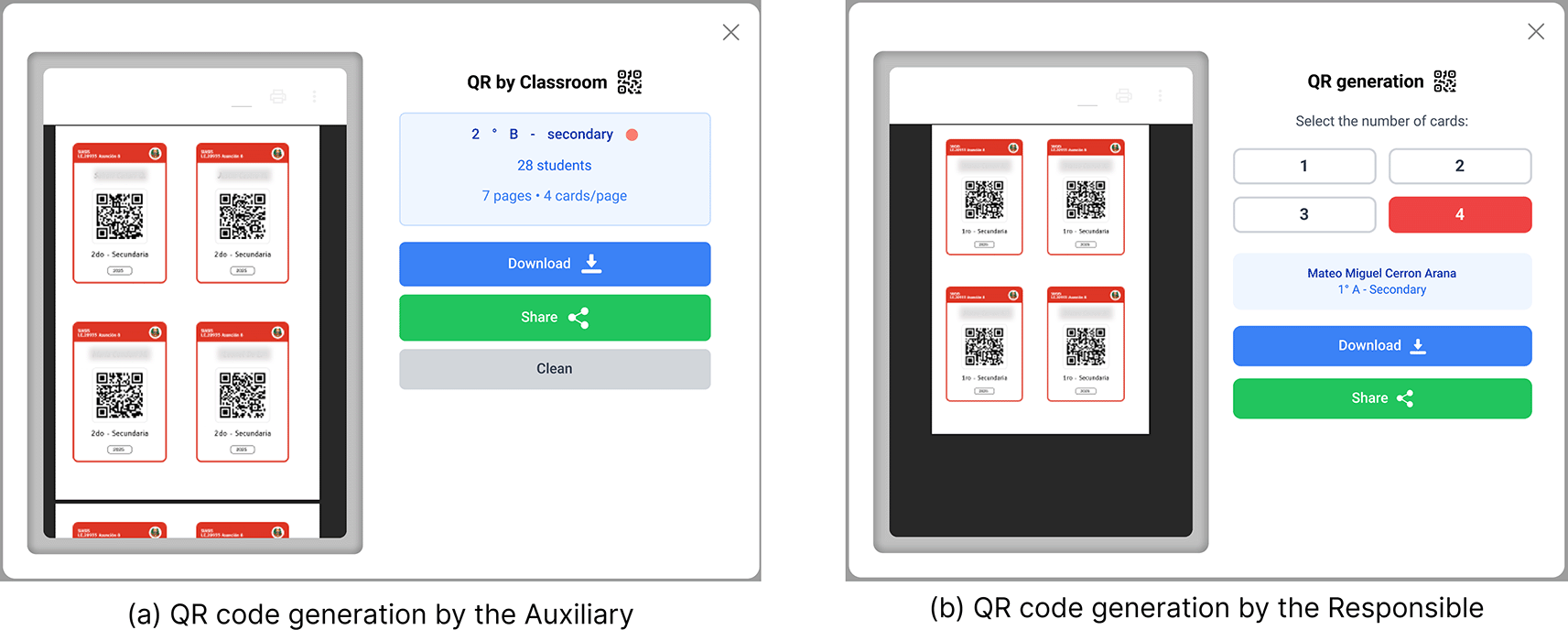
Note: Figure 1 shows the system interfaces for generating QR codes. In (a), the auxiliary generates QR codes in mass quantities for each classroom, obtaining complete lists of students. In (b), the responsible person (parent or legal representative) generates QR codes associated only with their registered children, ensuring the privacy and traceability of the information.
Input:
Output:
In this scenario, the software facilitates attendance registration using QR codes under variable connectivity conditions. The process begins when the assistant activates the camera through the system interface (SIU01 component) and students present their printed QR cards. The mobile device’s camera captures the QR code, and the system extracts and processes the text contained therein. An initial validation is performed to verify that the text obtained can be decompressed and decrypted correctly, as shown in Figure 2.
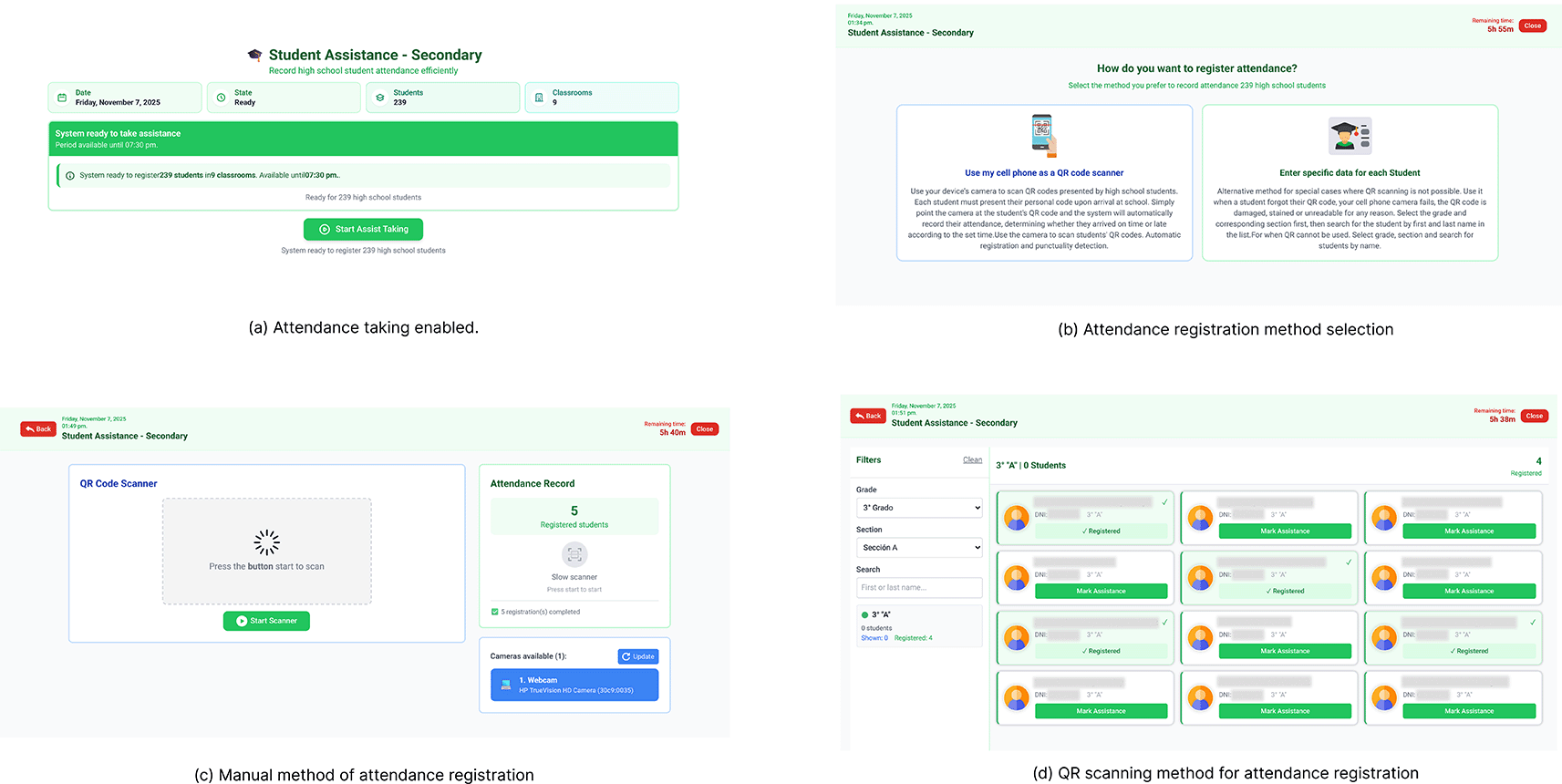
Note: The figure shows the complete process of recording attendance within the system. (a) shows the screen where the attendance module is enabled by the teacher or auxiliary. (b) shows the interface for selecting the registration method, allowing a choice between using QR codes or manual registration. (c) details the manual method of attendance registration, where the user marks the presence of each student individually. Finally, (d) shows the QR code scanning registration method, which allows for automated and faster attendance registration, ensuring higher precision and efficiency in the process.
When this validation fails, the system displays a specific error message through the SIU01 interface and activates a one-second vibration on the mobile device to alert the assistant. When the QR code is valid, the system queries the student data in IndexedDB, where the updated lists for the day are stored locally, previously synchronized from RDP04 (BLOB storage) or RDP01 (Google Drive). To handle connectivity interruptions, the system implements a non-blocking FIFO queue in IndexedDB. The valid attendance registrations are added to this structure for asynchronous processing, allowing the assistant to continue scanning QR codes without interruption.
When Internet connectivity is available, SIU01 processes the queue of attendance records stored in IndexedDB, retrieving the records in FIFO order and sending both the student ID and the time difference in seconds from the entry time to the server, while displaying non-blocking informational messages about the synchronization status. At the same time, the SIU01 saves the records in the Redis database (RDP05) for temporary storage, while the Socket Server (SS01) transmits the data in real time to keep the overall status synchronized among all auxiliary devices. In the event of connectivity interruptions, the system implements resilience mechanisms that allow for operational continuity, storing records locally and processing them automatically when the connection is restored.
Input:
• Camera activation in attendance interface
• Student QR code scanning
• Alternatively: manual registration by selecting the student from a list
Output:
In this scenario, the system provides responsible persons (parents or legal representatives) with an efficient mechanism for monitoring student attendance. When a responsible person accesses the system via their mobile device and logs into the monthly attendance query interface, a verification process is activated that gives priority to the use of local data when available. The system initially checks whether the requested attendance records are stored in IndexedDB and are up-to-date, allowing for an immediate response without the need to consult remote servers.
The interface is designed to integrate all relevant information about student attendance into a single dashboard. It allows parents to view monthly statistics (attendance, lateness, absences), a graphical summary of performance, and a calendar with daily details, including the exact times of each entry. The monthly selection facilitates historical analysis, while teacher and tutor contact details promote direct communication when absence patterns requiring intervention are detected.
In case local data is unavailable or needs updating, the system implements a distributed query flow. For the attendances from previous days of the current month, the manager’s device communicates with API02, which queries MongoDB (RDP03) directly, where the complete history is saved. For the current day’s attendance, the system performs a temporary evaluation: if more than two hours have elapsed since the established registration time (1:00 PM), Redis (RDP05) is queried directly; otherwise, the corresponding file is requested from Google Drive (RDP01). This multi-layer architecture ensures that managers have access to up-to-date and reliable information, enabling continuous and opportune parental monitoring, as shown in Figure 3.
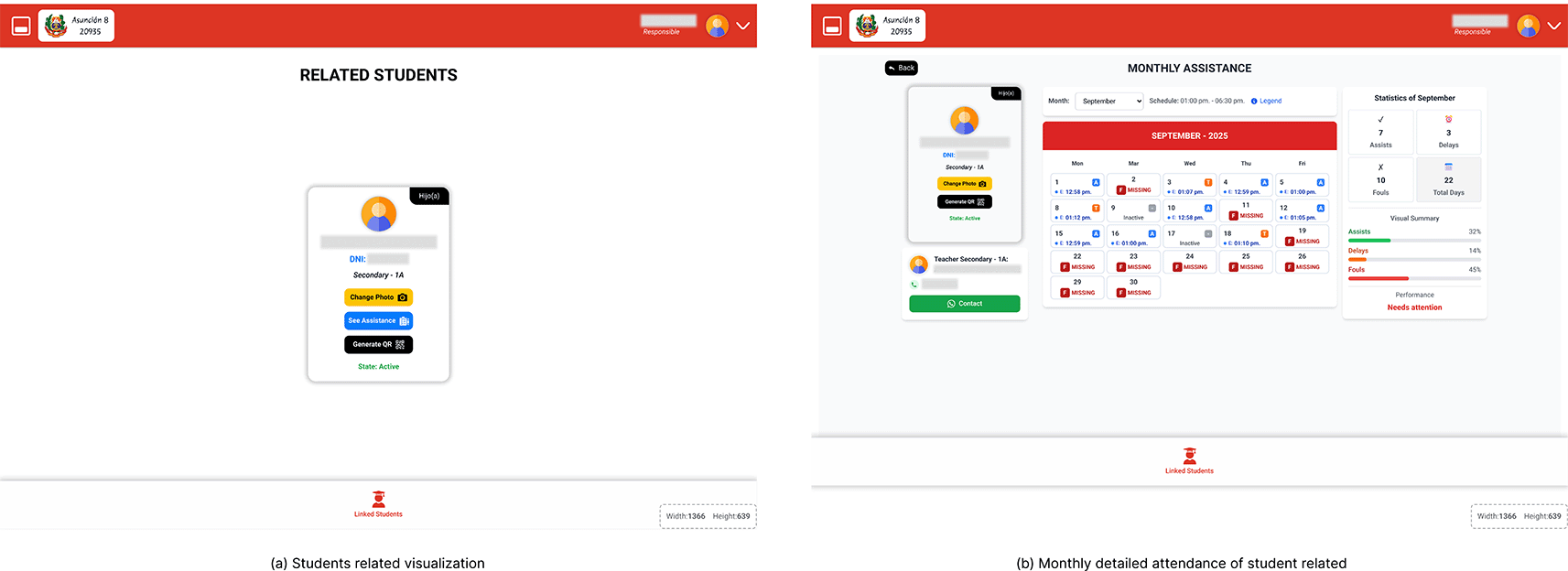
Note: The figure shows the features designed for guardians to monitor their children's attendance. (a) shows the students linked to the responsible person, allowing them to quickly identify each child under their supervision. (b) details the monthly attendance interface for the selected student, showing daily registrations, as well as punctuality, lateness, and absence percentages, providing a clear and comprehensive view of the student's attendance performance.
Input:
• Parent/legal representative login
• Access to the “Attendance Tracking” module
• Select the month to view
Output:
In this final scenario, the system’s capacity to automatically generate notifications to tutors and directors regarding cases of consecutive absences or lateness of secondary school students is demonstrated. This process is executed by the Scheduled Tasks component TPS01, implemented through GitHub Actions and Node.js scripts, which operates periodically to ensure the timely communication of relevant incidents.
The flow begins when TPS01 accesses the JSON files stored in Google Drive (RDP01) containing attendance registers from previous days. These files, previously generated by the attendance management system, are processed to identify patterns of absenteeism or lateness among students. The analysis is specifically focused on detecting consecutive cases of absences or tardiness that may require intervention by tutors or Academic Management.
Once the relevant cases have been identified, the system queries MongoDB (RDP03) for the email addresses of the corresponding tutors and directors involved. This query ensures that notifications are sent only to authorized recipients who are directly responsible for monitoring each student. Finally, the system sends the reports using External Service SE01, which uses the Gmail platform to distribute emails. Each communication includes detailed information about the incidents detected, allowing tutors and directors to have precise data to implement timely corrective actions, as shown in Figure 4.
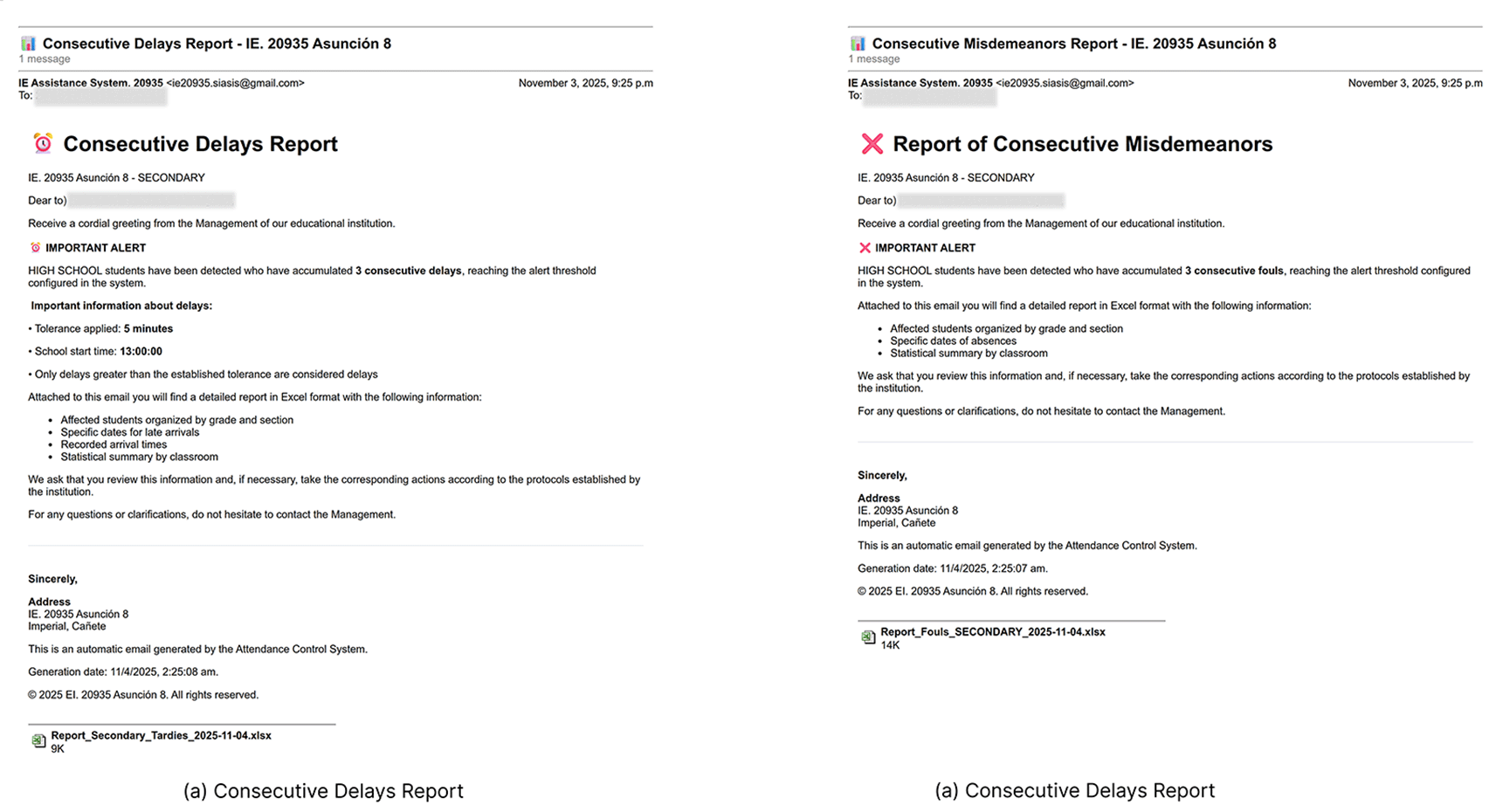
Note: The figure shows the automatic notification formats generated by the system in response to recurring student behavior. (a) shows the Consecutive Lateness Report, which is issued when the student exceeds the lateness limit established by the institution. (b) shows the Consecutive Absence Report, which is issued when the student accumulates repeated absences. Both documents include alerts, academic data, and attachments in Excel format, allowing for formal and transparent monitoring of attendance behavior.
Input:
• Automatic execution of TPS01 (daily scheduled task)
• Access to JSON attendance files in Google Drive (RDP01)
• Analysis of patterns of consecutive absences/lateness
Output:
The automated generation of QR codes for student identification represents a significant advance over traditional credentialing systems. Research by Mohammed and Zidan14 highlighted that animated QR codes effectively reduce fraud in attendance registration, which coincides with our approach of encrypting student metadata in the generated codes. Shah15 defended QR systems as light-weight alternatives to more expensive biometric devices, validating our decision to implement this technology in a rural context with limited resources. Additionally, Skurowski et al.16 demonstrated that data compression in QR codes is critical to maintaining high recognition rates even with moderate-resolution cameras, which supports our strategy of compressing metadata before encoding it. For his part, Sancar17 showed that deep learning-based processing techniques can reconstruct partially damaged QR codes, suggesting future lines of research to improve the resilience of our system to codes damaged by constant physical use.
Improvements in attendance recording and the ability to operate without a constant connection significantly optimized the identification and documentation of student attendance. This is consistent with Siew et al.,18 who developed a hybrid facial recognition and QR system that improved transparency and usability in university settings, although our system goes a step further by operating efficiently even without continuous connectivity. Similarly, Rafila et al.19 validated QR technology in Indonesian universities by replacing paper signatures, confirming significant reductions in registration times, while Shaban et al.20 developed a QR-based multi-platform application to automate attendance in medical settings, showing how versatile this tech is. This implementation introduces a non-blocking FIFO queue mechanism in IndexedDB that allows for operational continuity during connectivity interruptions, a critical feature validated by Kormos and Wisdom,21 who identified the digital divide as the main barrier to technological integration in rural schools.
The implementation of the parental monitoring module significantly improved transparency and communication between the educational institution and families, allowing parents to consult daily and monthly attendance registers in a structured manner. This is in line with Guo et al.,22 who reported that students whose parents have access to digital monitoring platforms show better attendance rates, corroborating the benefits observed in our implementation. Similarly, Knopik et al.23 described that during remote education, many parents frequently monitored attendance, demonstrating their readiness to use more structured systems when available. Lee24 evidenced that parents value tools that allow them to consult school records in an organized and accessible manner, while Calderón-Villarreal et al.25 demonstrated that parental involvement through digital platforms increased during the pandemic, and that attendance monitoring was a key factor in educational contexts.
The automatic notification system improved communication between school employees and enabled early intervention in cases of recurring absenteeism or tardiness. This aligns with Harwanto et al.,26 who found that digital communication that includes notifications about absences increases the perception of transparency and effectiveness in school management. Similarly, Musaddiq et al.27 showed that the use of integrated digital platforms for attendance monitoring contributes to increasing institutional responsibility for student retention metrics. Hansen et al.28 emphasized the importance of systems that, in addition to monitoring attendance, offer structured support in cases of prolonged absenteeism, facilitating the early identification of students at risk. For his part, O’Connor Bones29 focused on communication with parents during the pandemic, and his results support the relevance of timely and automatized notifications as a means of reinforcing educational management and support in contexts of high uncertainty.
The web-based platform has significantly improved the attendance monitoring process at the public secondary school in Imperial, Cañete. After its implementation, the software demonstrated notable improvements in the four proposed dimensions (QR code generation, offline attendance recording, parental monitoring, and automatic notifications). These improvements have significantly benefited the school by optimizing the attendance monitoring process.
The development and implementation of the QR code-based smart web platform has proven to be a viable and efficient solution for attendance management in rural educational institutions in Imperial, Cañete. In contrast to systems that rely on costly infrastructure or permanent connectivity, this model makes use of low-cost, light-weight technologies, facilitating its adoption in resource-limited environments. The simplicity of QR codes, combined with an optimized workflow, significantly reduces registration times and minimizes human errors associated with manual methods.
One fundamental contribution of this system lies in its hybrid, multi-level architecture, which incorporates local (IndexedDB), temporary (Redis), and persistent (MongoDB/Google Drive) caching strategies. This design ensures operational continuity even in scenarios with interrupted connectivity, a critical feature in areas with a digital divide. The ability to operate offline and synchronize data later ensures that attendance records are not interrupted, improving the reliability of the process. In addition, the integration of parental monitoring as a central component of the system reinforces the relationship between the school and the parents. Allowing parents to access their children’s attendance records in real time promotes active co-responsibility in the school process.
Finally, this research should be applied in other secondary schools, both public and private, with similar characteristics of limited connectivity, in order to improve and have access to precise and fast information on student attendance. At the same time, the extension of methods with complementary technologies such as NFC or integration with lightweight biometric systems is suggested, with the objective of further optimizing attendance registration time. In the future, it is considered relevant to develop predictive models based on accumulated historical attendance data that allow for the early identification of patterns of risk of school dropout, as well as to explore integration with the national education management system of the Peruvian Ministry of Education. The use of free cloud services and open-source tools shows that it is possible to deploy modern, scalable architectures with minimal investment. The modular approach and implementation through microservices make the solution adaptable and replicable in other educational contexts with similar challenges, constituting a practical benchmark for technological innovation in rural environments or those with infrastructure restrictions.
This study received institutional authorization from I.E. No. 20935 Asunción 8, granted by Director Elena Cullanco Serafina on December 17, 2025. The school authorized the use of its institutional context as a case study with the express agreement that all data on students, school employees, and tutors published in academic repositories would be completely made up and used for demonstration purposes, protecting the privacy of the real school community.
Individual consent from participants was not required, as the system was developed through an analysis of institutional needs with the school administration, and all personal data published in academic repositories was generated synthetically for demonstration purposes, without using real information from students, teachers, or parents.
The institutional authorization letter is included as a supporting document confirming that: (1) the institution approved the research and development of the system, (2) all published data would be fictitious to protect privacy, (3) the analysis of the system was based on real institutional needs, but the publication of data uses only synthetic information, and (4) the institution complies with Peruvian data protection laws relating to information on minors.
Software available from:
Source code available from: https://github.com/GeoCoderDev/SIASIS-WEB
Archived source code at time of publication: https://zenodo.org/records/17636629 31
| Views | Downloads | |
|---|---|---|
| F1000Research | - | - |
|
PubMed Central
Data from PMC are received and updated monthly.
|
- | - |
Provide sufficient details of any financial or non-financial competing interests to enable users to assess whether your comments might lead a reasonable person to question your impartiality. Consider the following examples, but note that this is not an exhaustive list:
Sign up for content alerts and receive a weekly or monthly email with all newly published articles
Already registered? Sign in
The email address should be the one you originally registered with F1000.
You registered with F1000 via Google, so we cannot reset your password.
To sign in, please click here.
If you still need help with your Google account password, please click here.
You registered with F1000 via Facebook, so we cannot reset your password.
To sign in, please click here.
If you still need help with your Facebook account password, please click here.
If your email address is registered with us, we will email you instructions to reset your password.
If you think you should have received this email but it has not arrived, please check your spam filters and/or contact for further assistance.

Comments on this article Comments (0)