Keywords
Insomnia, stress, medical students, Iraq

This article is included in the Fallujah Multidisciplinary Science and Innovation gateway.
Insomnia, stress, medical students, Iraq
Insomnia is a common sleep disorder characterized by trouble falling asleep, staying asleep, or experiencing restful sleep, even when conditions are appropriate for sleep.1,2 Multiple factors play a role in the development of insomnia, with stress being a primary contributor due to its two-way relationship with the disorder.3 Other risk factors include demographic characteristics (such as being female, living alone, and old), genetic influences (like a family history of insomnia), respiratory issues (including asthma and sleep apnea), mental health conditions (such as anxiety and depression), and certain lifestyle habits (obesity, excessive caffeine intake, alcohol use, and smoking).4
Due to the intense demands of clinical training and the extensive academic workload, medical students are especially vulnerable to high levels of stress, which can adversely affect their sleep quality and contribute to the onset of insomnia and other sleep disorders.5–7 Insomnia may negatively influence students' academic performance and overall health. Studies show that medical students experiencing insomnia often have lower Grade Point Averages than those without sleep difficulties.8,9 Some students tend to use non-prescribed hypnotics or tranquilizers as a means of managing their sleep problems.10
Sleep disturbances are reported more frequently among medical students compared to those in other academic fields.3 Research has identified insomnia prevalence rates of 27.8% among medical students in China and 39.4% in India.11,12 Likewise, insomnia is widely recognized as a common sleep disorder within the Arab region.13–15
In Iraq, medical students have faced unique and ongoing challenges, such as political instability, economic difficulties, and security issues, which contributed to the high prevalence of insomnia within this group.16,17
This survey aims to assess the prevalence of insomnia among a sample of medical students, and to highlight its relation to stress as a potential predictor.
This cross-sectional study was conducted during the academic year 2022–2023, and involved students from medical colleges at Anbar and Fallujah Universities, that are located in Anbar Province (which is located to the west of Baghdad, the capital of Iraq). All students from the six academic years, who agreed to participate after being informed about the purpose of the survey, were included in the study via a convenience sampling technique.
The self-administered questionnaire comprised three main sections. The first section collected socio-demographic information, including age, gender, education level, place of residence, family income, smoking status, medical history, and family history of insomnia.
The second section included questions borrowed from the Athens Insomnia Scale (AIS-8), which is a self-assessment psychometric instrument that has previously been adopted, has shown a high consistency, reliability, and an external validity for the evaluation of the intensity of sleep difficulty, and can be utilized in clinical practice and research as an instrument to measure the intensity of sleep-related problems, and also as a screening tool in establishing the diagnosis of insomnia.18–20 It consists of 8-items; the first five investigate sleep procedure (sleep induction, night awakening, awakening in the early morning, total sleep duration, and quality of sleep), while the last three refer to well-being, functioning capacity, and sleepiness during the day. The 8 items are scored on a 4-point rating scale ranging from 0 to 3, with 0 refers to ‘no problem’ with the corresponding sleep parameter and 3 refers to a serious problem (occurrence of more than three times a week in the past month). A total AIS score of ≥6 indicates insomnia.
The third section was the Perceived Stress Scale 10 (PSS-10), which is a global measure of perceived stress that proved reliable and valid.21 The ten items are scored on a 5-point rating scale ranging from 0 (never) to 4 (very often). A total score ranging from 0 to 40 is calculated by reverse scoring the four positively worded items and then summing all the items on the scale. The questions assess feelings and thoughts experienced over the past month. Higher total scores reflect greater levels of psychological distress or stress, while lower scores indicate better coping abilities and emotional well-being. Subscale scores were computed by summing the six negatively worded items (1, 2, 3, 6, 9, and 10) and the four positively worded items (4, 5, 7, and 8). Stress levels were classified into the following 3 categories: low stress (PSS score ≤13), moderate stress (PSS score 14-26), and high stress (PSS score ≥27).
Data collection was carried out during March 20, 2023 for four weeks.
The questionnaire was administered in Arabic language and filled through a face-to-face interview that took about ten minutes for each student. The process of data collection was performed during March through April 2023.
The research was approved by the Scientific Committee at the Medical College/University of Fallujah. A verbal consent was obtained from each of the participants prior to the interview as written consent is very difficult to be taken from the participants in our culture, for it is considered as a sensitive procedure that might raise suspicion, and is only done when there is a serious surgical intervention. The respondents were informed that the information they give would be kept confidential and anonymous, accessed by no one but the authorized personnel, and would not be used for other than research purposes.
Data entry was done by using the Microsoft Excel software program. The statistical analysis was performed using SPSS software version 26. The characteristics of the sample were summarized using means and standard deviations for continuous variables, and frequencies/percentages for categorical variables. Chi-squared test was used to measure the association between insomnia and stress with other variables, while adjusted logistic regression test was applied to measure the odds ratio and to exclude the effect of other confounders such as age and gender. P value of 0.05 was considered as a cut-off level for significance.
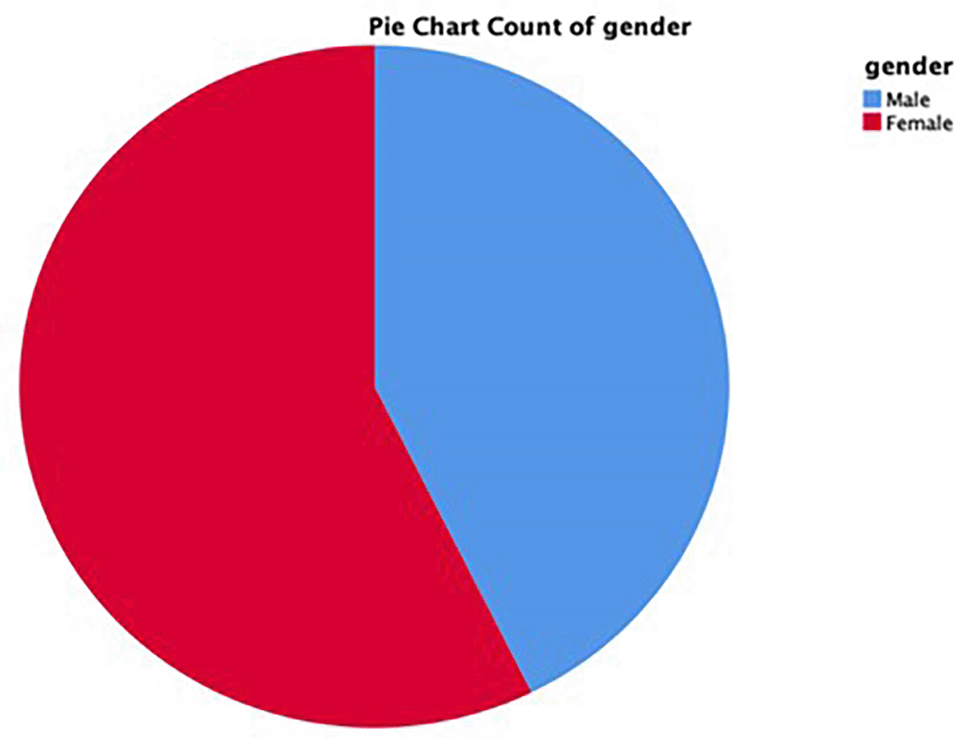
The total number of participants was 452 medical students, with a mean age of 21.43±1.912 years (range = 17–27 years). Female students (259) formed 57.3%, while males (193) formed 42.7%% of the sample. Students in the preclinical stage (first three years of medical study) formed 52.7%, while those in the clinical stages (4th, 5th, and 6th years) formed 47.3% of the sample, as showed in Table 1, which also demonstrates that 72.8% of the participants reported having insomnia, while 31.6% had high perceived stress level.
Table 2 shows a statistically significant relation between level of stress and insomnia (p < 0.001). Level of stress was significantly associated with gender (p < 0.001). The prevalence of insomnia among females was 42.5%, which is higher than that among males (30.3%), as demonstrated in Figure 1. However, there was no statistically significant association between insomnia and gender (p = 0.457). The results indicated that the prevalence of insomnia among students in the pre-clinical stages was 76.5%, while it was 69% among students in the clinical stages. Statistical analysis showed no significant association between insomnia and academic year (p = 0.363), or between stress and academic year (p = 0.448) ( Table 3).
Logistic regression model revealed that students with high perceived stress had OR of 3.188 for insomnia compared to those with low level of stress (C.I. 2.1-4.8, P < 0.001). The association of insomnia with gender or age was insignificant ( Table 4).
Medical students frequently face high levels of stress due to long study hours, frequent exams, and the intense demands of clinical training. This persistent stress can lead to insomnia, making it difficult to fall asleep or maintain restful sleep.6,22 The present study tried to explore the relationship between stress and insomnia, driven by the observation that many medical students engage in poor sleep habits, such as inconsistent sleep schedules and insufficient sleep duration. These sleep difficulties—along with symptoms like fatigue, reduced cognitive performance, and mood disturbances—can significantly affect their academic success, overall well-being, and quality of life.
The findings of this study indicate a significantly high prevalence of insomnia among medical students, consistent with findings from previous studies across the region. Reported rates of poor sleep quality include 76% in Saudi Arabia, 55.7% in Egypt, 70.2% in Jordan, and 37.1% in Lebanon.23–25
In the Iraqi context, several factors likely contribute to elevated stress and insomnia rates, including ongoing security instability, exposure to violence, economic challenges, political uncertainty, overcrowding, difficult living conditions, social tensions, and limited access to mental health support.26
This study also revealed a high overall level of stress among medical students, consistent with earlier findings in Iraq, where 30.2% reported experiencing high perceived stress.27 Comparable levels were observed in other studies—using various stress assessment tools—in both developed and developing nations, including 30.9% in Egypt, 28.9% in Saudi Arabia, and 49.9% in Singapore.28
Insomnia was found to be more common among females than males. Multiple studies have indicated that female medical students are more likely to experience higher levels of insomnia and stress compared to their male counterparts.29,30
Students with elevated stress levels showed a greater occurrence of insomnia than those with lower stress levels. Although stress was significantly associated with gender in favor of females, the association between gender and insomnia was not significant, probably because females are more resilient than males due to biological and cultural factors.31 Logistic regression analysis reinforced this result, revealing that stress significantly increases the risk of insomnia, thereby confirming the hypothesis that stress is a key contributing factor to the development of insomnia.
Additionally, the study observed a higher prevalence of insomnia among students in the preclinical phase compared to those undergoing clinical training, although no significant link was found between insomnia and academic year. This pattern might be attributed to that clinical-stage students are adapting better to academic demands and managing their sleep schedules more effectively than preclinical students. Interestingly, these findings differ from a study conducted in Saudi Arabia, which reported a higher rate of insomnia among medical students in clinical stages compared to those in preclinical stages.32
The current study adopted a cross-sectional design, which lacks the temporal relationship between factor and outcome. All variables were assessed at the same time, limiting the ability to draw causal inferences. Besides, we could not exclude the role of confounders that may influence the relation between stress and insomnia. Lastly, stress and insomnia were measured using a self-report questionnaire, which can be affected by recall bias, people may over report or underreport certain conditions due to lack of insight, social desirability concerns or poor recall.
The prevalence of insomnia among medical students is high, with a significant association with stress, suggesting that stress is an important factor contributing to insomnia among medical students. It is important to raise the awareness of medical students about how stress exacerbates sleep problems and reflects on general health and wellbeing through short education programs that helps build their resilience.
| Views | Downloads | |
|---|---|---|
| F1000Research | - | - |
|
PubMed Central
Data from PMC are received and updated monthly.
|
- | - |
Provide sufficient details of any financial or non-financial competing interests to enable users to assess whether your comments might lead a reasonable person to question your impartiality. Consider the following examples, but note that this is not an exhaustive list:
Sign up for content alerts and receive a weekly or monthly email with all newly published articles
Already registered? Sign in
The email address should be the one you originally registered with F1000.
You registered with F1000 via Google, so we cannot reset your password.
To sign in, please click here.
If you still need help with your Google account password, please click here.
You registered with F1000 via Facebook, so we cannot reset your password.
To sign in, please click here.
If you still need help with your Facebook account password, please click here.
If your email address is registered with us, we will email you instructions to reset your password.
If you think you should have received this email but it has not arrived, please check your spam filters and/or contact for further assistance.

Comments on this article Comments (0)