Keywords
Saliva officinalis, Rosmarinus officinalis, Chlorhexidine, Streptococcus mutans.

This article is included in the Pathogens gateway.
This article is included in the Plant Science gateway.
Saliva officinalis, Rosmarinus officinalis, Chlorhexidine, Streptococcus mutans.
Oral health is one of the major global health challenges. Dental caries remains one of the most widespread oral diseases, affecting more than two billion people of all ages.1 It is attributed to oral infections caused by primary oral pathogens in dental caries, such as Streptococcus sobrinus and Streptococcus mutans.2
The main etiological process in dental caries starts with the biotransformation of fermentable carbohydrates like fructose, glucose, and sucrose by glucosyltransferases, producing dental plaque or biofilm that adheres to the oral surfaces, protects itself within an extracellular environment, and leads to the gradual progression of carious lesions.3
This microbial biofilm is composed of various virulence factors, microbial communities, and extracellular polymeric substances (EPS), supported by the acidic microenvironment in addition to the physical barrier of the biofilm to enhance the persistence of the invading bacteria, and augmenting the aggressive development of dental caries.4 This matrix is considered a shield, preventing the penetration of antimicrobials and stimulating biofilm-associated bacteria over than 1000 times resistant to antibiotics compared with their planktonic counterparts.5 Therefore, consistent physical methods are generally considered vital for a healthy routine across all ages to control biofilms, mainly through tooth brushing and chemical antimicrobial agents, which are the primary key players in oral disease prevention and treatment. An ideal antibiofilm agent should possess the efficacy to inhibit biofilm formation, minimise the risk of microbial resistance, be safe for oral tissues, and be free of tooth staining, and preferably have an acceptable taste.6 Nevertheless, to date, no conventional product satisfies all these standards, raising the crucial need for novel agents that might safely and effectively inhibit oral pathogens.7
Chlorhexidine (CHX) interacts with the negatively charged microbial membrane, leading to effective cell disruption and preventing biofilm formation.8 It is the gold standard antiseptic mouthwash. However, despite its efficacy, long-term use of CHX is linked to undesirable side effects, including increased calculus formation, alterations in mucosal tissues, tooth discolouration, and temporary taste disturbances,9 as well as its non-selective toxicity, which might negatively affect bone and mucosal cells.10 These drawbacks justify the search for alternative antimicrobial agents. In addition, the increasing microbial resistance of pathogens associated with oral diseases highlights the need for innovative antimicrobial strategies11
For centuries, herbal products have been used to prevent and manage dental diseases. One promising approach involves the use of extracts from medicinal plants, which have gained significant attention due to their safe and effective analgesic, antimicrobial, and anti-inflammatory properties. These benefits are attributed to the phytochemical content found in these plants.12
Rosmarinus officinalis, from the family Lamiaceae, is an aromatic evergreen plant widely distributed and extensively considered for its phytochemical ingredients.13 Used in Traditional medicine, it also serves as a favourable food spice, seasoning, and food preserving agent. It exhibits many pharmacological activities, including anti-inflammatory, antitumor, antibacterial, antiviral, antithrombotic, antidiabetic, diuretic, and antioxidant effects.14
Sage or Salvia officinalis from the Lamiaceae family, native to Asia and North Africa, naturally grows in dry stony grounds. Its remarkable therapeutic effects include anti-inflammatory, relaxant, antispasmodic, antiperspirant, and antidiabetic effects.15
Considering the increasing popularity of herbal products due to their minimal side effects when used properly, and the complications associated with synthetic mouthwashes, this study aimed to investigate the individual and synergistic effects of 50% ethanolic extracts of Salvia officinalis and Rosmarinus officinalis L. by evaluating their antimicrobial effects.
The null hypothesis of this study is that the synergistic antibacterial activity of Salvia officinalis and Rosmarinus officinalis L. extracts does not significantly influence oral pathogens.
The in vitro tests were conducted at the Faculty of Dental Medicine, Damascus University.
Ethical approval was obtained from the Damascus University Ethics Committee (Date 2025/No. DN-210224-11-H9). The study adhered to the ethical guidelines outlined in the Declaration of Helsinki.16 The patient who obtained a human swab was provided written informed consent before enrollment.
The aerial parts of Salvia officinalis and Rosmarinus officinalis L. were collected from the Medicinal Plants Garden at the Faculty of Pharmacy, Damascus University. These plant materials were taxonomically identified by Dr Essa Assaf, Faculty of Pharmacy, Damascus University, Damascus, Syria. Voucher specimens of these plants are deposited in the herbarium of the Faculty of Pharmacy, Damascus University, under the voucher numbers S142 and R170.
After drying in the shade, the plant materials were ground into a fine powder. Next, the extraction was performed using the maceration technique, which involved soaking 100 g of each plant species powder in Ethanol (50%, v/v) obtained from Al-Farabi Pharmaceutical Company (Damascus, Syria). The mixture was placed in a covered flask, shaken at 90 rpm for 72 hours. Afterwards, the resulting solutions were filtered through a 0.5-mm Whatman filter paper. The solvents were then removed under vacuum using a rotary evaporator, and the dried extracts were stored in sterile containers in the freezer at -18 °C.
Swab samples were collected from various regions of the oral cavity of a patient diagnosed with Grade II dental plaque accumulation, as assessed by the Plaque Index (PI), with particular focus on areas with evident plaque buildup.
The samples were inoculated into broth and then streaked onto laboratory-prepared blood agar. Plates were incubated under facultative anaerobic conditions at 37°C for 24 hours.
After incubation, the resulting colonies were subcultured and subjected to a series of identification tests to isolate streptococcal species. The procedures included microscopic inspection, which revealed Gram-positive cocci organized in chains, consistent with the morphological characteristics of streptococci. Catalase testing was performed using hydrogen peroxide (3%). Alpha-hemolysis was observed on the laboratory-prepared blood agar.
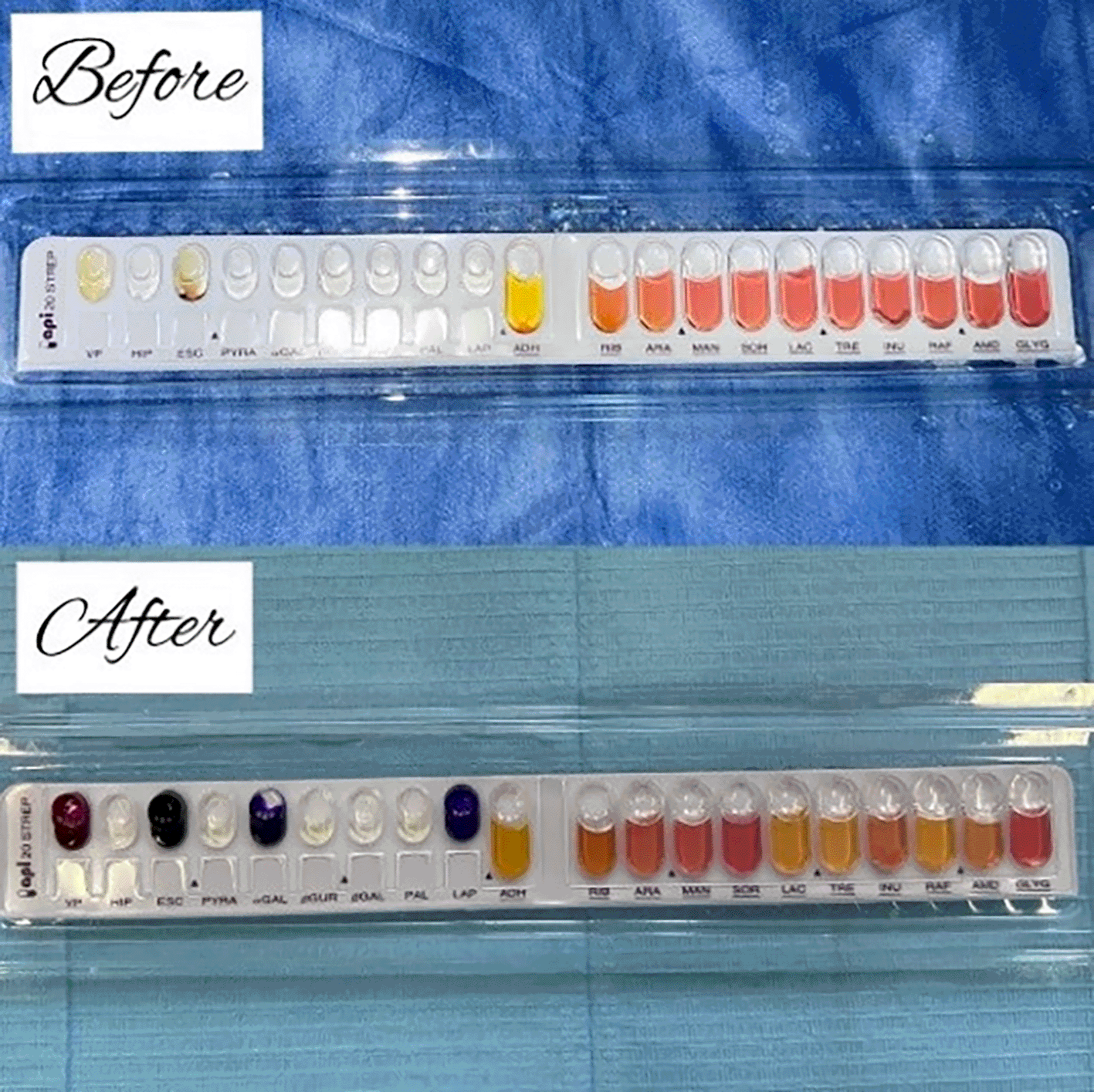
To confirm the bacterial identity, API 20 Strep identification strips (bioMérieux, Marcy-l'Étoile, France; catalogue number: 20600) were used according to the manufacturer’s guidelines. The results indicated that the isolated strain belongs to Streptococcus mutans. The confirmed isolate was presented on tryptic soy agar (TSA) (HiMedia Laboratories, Mumbai, India; catalogue number: M290) for further use ( Figure 1).
To determine the MIC, specific concentrations of Salvia officinalis and Rosmarinus officinalis L. extracts were prepared by dissolving 300 mg of each extract in 3 mL of dimethyl sulfoxide (DMSO) (Sigma-Aldrich, St. Louis, USA; catalogue number: D2650). The solution was placed in a shaker within a water bath set to 36 °C to ensure complete dissolution. Following this, the extracts were diluted using saline phosphate buffer (HiMedia Laboratories, Mumbai, India; catalogue number: AL007) to achieve the following serial dilutions: 12.5, 25, 50, 100, 200, 400, and 800 μg/mL.
A 0.5 McFarland standard bacterial suspension (bioMérieux, Marcy-l'Étoile, France; catalogue number: 25543) was used. Subsequently, 4 ml of the 0.5 McFarland suspension was added to each test tube, followed by 1 ml of the prepared double-concentration plant extracts.
For the controls, a positive control was established using 1 mL of 0.12% chlorhexidine with fluoride (Sigma-Aldrich, St. Louis, USA; catalogue number: C9394), while a negative control consisted of DMSO mixed with the 0.5 McFarland suspension.
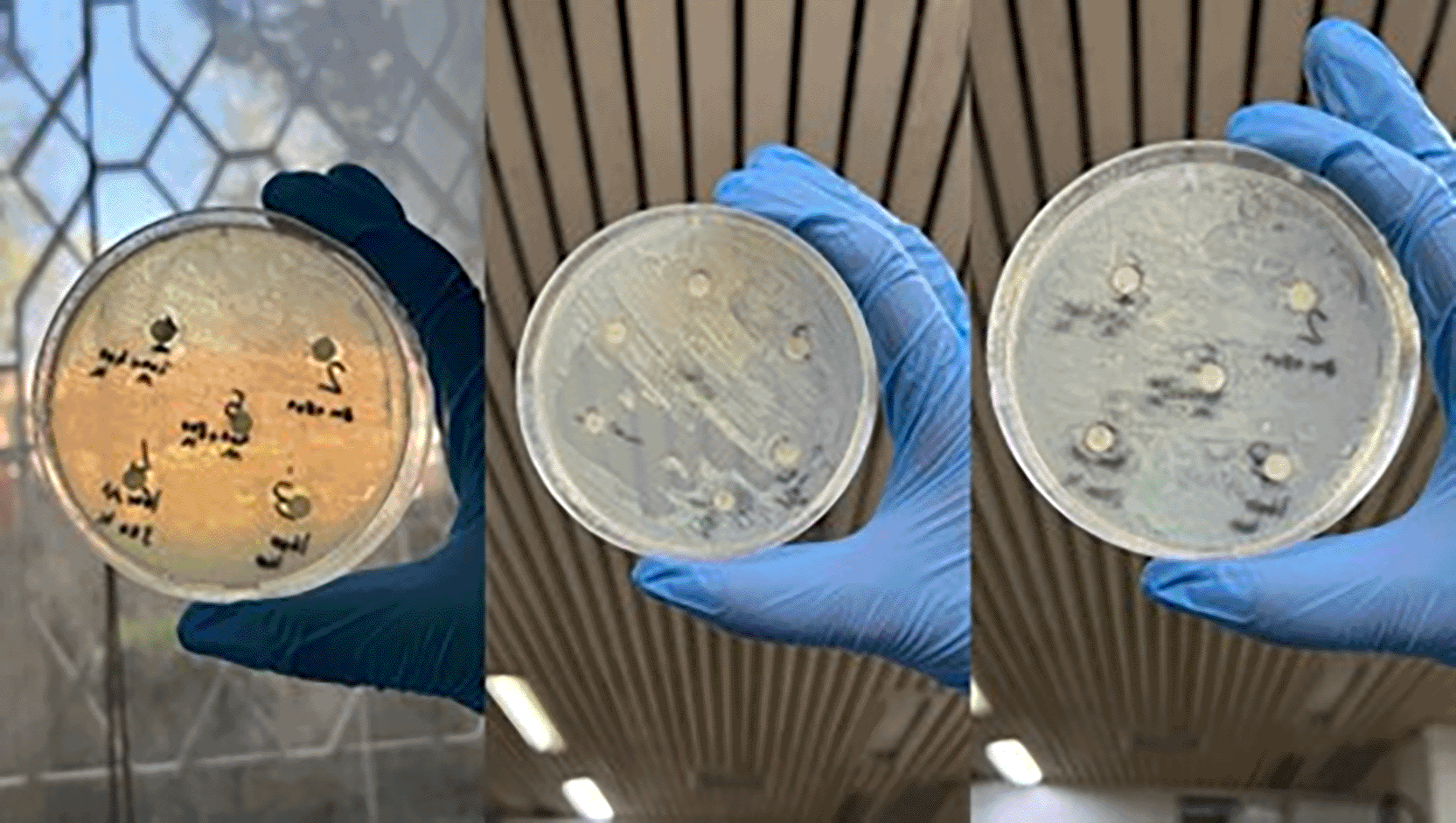
The agar diffusion method was used to evaluate the antibacterial activity of each extract on Müller-Hinton agar (HiMedia Laboratories, Mumbai, India; catalogue number: M173). Sterile filter paper discs (Whatman No. 1, Sigma-Aldrich, St. Louis, USA; catalogue number: Z375301) were soaked in 50 ml of each extract at concentrations near the minimum inhibitory concentration (MIC) and then placed on the agar surface. The plates were incubated for 48 hours at 37°C. After incubation, the diameters of the inhibition zones (in mm) were measured and recorded. The activity of the mixtures was compared to that of each extract and the positive control ( Figure 2).
The effect of Salvia officinalis and Rosmarinus officinalis L. extracts on Streptococcus mutans was evaluated using the MIC method. Visual inspection revealed no bacterial turbidity at 200 μg/mL for Salvia officinalis extract and at 400 μg/mL for Rosmarinus officinalis extract. The positive control showed no turbidity, confirming inhibition of bacterial growth, while the negative control exhibited clear turbidity, indicating active bacterial growth.
The diameter of the inhibition zones increased proportionally with concentration for both extracts. The results were compared with the positive control containing a standard antibiotic ( Tables 1 and 2).
The results indicated an enhanced antibacterial effect when both extracts were used together, demonstrating synergistic efficacy against Streptococcus mutans ( Table 3).
Streptococcus mutans is a facultative anaerobic, Gram-positive bacterium recognized for its strong ability to adhere to tooth surfaces. This bacterium metabolizes sucrose, producing lactic acid as a byproduct. The lactic acid lowers the pH in the oral cavity, which erodes tooth enamel. This aciduric nature of Streptococcus mutans allows it to thrive in low pH environments. Additionally, S. mutans produces a sticky, insoluble polysaccharide made of dextran, which promotes plaque formation.17 A significant feature of Streptococcus mutans virulence is its capacity to create biofilms on tooth surfaces. This ability is enhanced by the production of exopolysaccharides (EPS), which are generated by glucosyltransferases (Gtfs).18 Furthermore, two-component systems (TCSs) in S. mutans are essential for detecting and reacting to environmental changes, including the presence of antimicrobial substances. The TCSs comprise two primary components: the Histidine Kinase (HK) and the Response Regulator (RR). The HK, found in the cell membrane, identifies specific environmental cues, such as the presence of antimicrobials, while the RR relays the response within the cell.19
Streptococcus mutans plays a significant role in the development of dental caries by forming harmful bacterial biofilms. These bacteria can produce acid within the biofilm, which poses a risk to dental health.20 Recent research has indicated that infections caused by members of the oral viridans group, such as S. mutans, are responsible for almost 20% of infective endocarditis cases. These bacteria form intricate biofilms that can enter the bloodstream. Furthermore, different therapeutic approaches for addressing dental problems can unintentionally facilitate the transfer of these bacterial pathogens from the mouth into the bloodstream, leading to bacteremia.21
Consequently, the growth of streptococci needed to be limited through the use of antimicrobials. Chlorhexidine is regarded as safe for oral use when applied at suitably low concentrations and has become the benchmark for antibacterial mouth rinses, proving effective in diminishing oral biofilm. Chlorhexidine contains positively charged groups that bind to the negatively charged surfaces of bacterial cells, damaging the cell wall and leading to significant leakage of intracellular components. While mild damage to the cell wall and leakage of intracellular material won't result in immediate cell death, such damage will lead to a loss of intracellular pressure, accompanied by slight deformation of the cell wall in adhering bacteria. However, the long-term use of CHX is linked to a lot of undesirable side effects.22
Given the ongoing global rise in antimicrobial resistance and the adverse effects associated with long-term CHX use, this study aimed to introduce a natural, plant-based antimicrobial agent for preventing oral diseases. Specifically, the study investigated the effects of extracts from Salvia officinalis and Rosmarinus officinalis L. on Streptococcus mutans. To the best of our knowledge, this study is the first to examine the synergistic antibacterial efficacy of Salvia officinalis and Rosmarinus officinalis extracts on Streptococcus mutans isolated from oral plaque.
In this study, at a concentration of 800 μg/mL, Salvia officinalis demonstrated significant effectiveness against streptococcal bacteria, as indicated by an inhibition zone diameter of 8 mm. This antibacterial effect is likely attributed to the essential oil of Salvia officinalis, which contains active monoterpenoid compounds such as α-thujone, camphor, 1,8-cineole (eucalyptol), β-myrcene, α-pinene, borneol, and carvacrol—compounds known for their antimicrobial properties.23
Previous studies on Salvia officinalis have shown that it possesses antimicrobial activity, though it exhibits lower effectiveness against Candida species compared to other oils.24 Another study has shown that Salvia officinalis exhibits antimicrobial effects against bacterial pathogens, including Staphylococcus aureus and Providencia stuartii. The presence of camphor and camphene contributes to its notable antifungal and antibacterial properties.25
On the other hand, at concentrations ranging from 1600 to 3200 μg/mL, Rosmarinus officinalis demonstrated significant antibacterial activity, indicated by an inhibition zone diameter of 2-3 mm.
This effect can be linked to the presence of important phenolic compounds in rosemary extracts, such as diterpene derivatives 1,8-Cineole (Eucalyptol), camphor, urosolic acid, carnosic acid, rosmanol, and rosmarinic acid. The differences in phenolic profiles are what contribute to the antimicrobial effects of rosemary extracts.14 This study concurs with the research conducted by Tsai T-H et al., which showed that a methanolic crude extract of R. officinalis can inhibit the growth of Streptococcus mutans. Furthermore, it has been reported that both aqueous and methanolic extracts of R. officinalis possess antimicrobial activity against Streptococcus sobrinus and Streptococcus sanguinis.26
To achieve maximum effectiveness and minimize potential side effects from the use of plant extracts in high concentrations, the synergistic action of two extracts at half their typical concentrations was studied. The results indicated that saliva officinalis at a concentration of 1600 μg/mL, combined with rosemary officinalis at a concentration of 3200 μg/mL, resulted in an inhibition halo diameter of 10 mm for bacterial growth. This was a more effective outcome than using each extract individually. Furthermore, this result was comparable to the commercial chlorhexidine solution used as a positive control, which produced an inhibition halo diameter of 15 mm.
The combined antibacterial effects prevent the proliferation of Streptococcus mutans by disrupting bacterial cell membranes, leading to leakage of cellular contents and subsequent cell death. Additionally, it inhibits glucosyltransferase activity, reducing the production of extracellular polysaccharides essential for biofilm formation. Furthermore, Salvia officinalis destabilises bacterial membranes, disrupts energy metabolism, and reduces acid production in S. mutans.27,28
Laboratory results from this study indicate that extracts of Salvia officinalis and Rosmarinus officinalis exhibit vigorous synergistic antibacterial activity against Streptococcus mutans. When used together, these extracts are as effective as chlorhexidine. This finding suggests that these plants may serve as viable and safe alternatives for controlling dental biofilm. However, further clinical evidence is necessary to evaluate the effectiveness of these extracts at appropriate, secure, and effective concentrations.
| Views | Downloads | |
|---|---|---|
| F1000Research | - | - |
|
PubMed Central
Data from PMC are received and updated monthly.
|
- | - |
Provide sufficient details of any financial or non-financial competing interests to enable users to assess whether your comments might lead a reasonable person to question your impartiality. Consider the following examples, but note that this is not an exhaustive list:
Sign up for content alerts and receive a weekly or monthly email with all newly published articles
Already registered? Sign in
The email address should be the one you originally registered with F1000.
You registered with F1000 via Google, so we cannot reset your password.
To sign in, please click here.
If you still need help with your Google account password, please click here.
You registered with F1000 via Facebook, so we cannot reset your password.
To sign in, please click here.
If you still need help with your Facebook account password, please click here.
If your email address is registered with us, we will email you instructions to reset your password.
If you think you should have received this email but it has not arrived, please check your spam filters and/or contact for further assistance.

Comments on this article Comments (0)