Keywords
ARDS, Critical care, COVID-19, ECMO, Mortality.

This article is included in the Coronavirus (COVID-19) collection.
ARDS, Critical care, COVID-19, ECMO, Mortality.
Acute respiratory distress syndrome (ARDS) is a life-threatening complication of COVID-19 with significant mortality.1 Approximately 3.2% of patients require intubation, and nearly half of ICU admissions need mechanical ventilation, highlighting the severity of respiratory failure in critical cases.2 Although intermittent positive-pressure ventilation is the standard treatment, it carries risks such as barotrauma, volutrauma, biotrauma, and oxygen toxicity, which may lead to ventilator-induced lung injury (VILI). Extracorporeal membrane oxygenation (ECMO) offers an alternative by providing extracorporeal gas exchange, allowing for reduced ventilator settings and time for lung recovery.3
ECMO has been increasingly integrated into ARDS management. A meta-analysis of two major randomized controlled trials, the CESAR and EOLIA trials, showed reduced 90-day mortality in severe ARDS patients treated with ECMO compared to conventional therapy.4 As a result, ECMO has emerged as a last-resort rescue strategy to manage severe respiratory and/or cardiac failure. While its role in severe COVID-19 remains under investigation,5 the risk–benefit balance is still debated.6 In COVID-19 patients receiving VV-ECMO for ARDS, the projected 90-day in-hospital mortality rate is approximately 38%,7 highlighting the need for optimized, evidence-based ECMO application.
To date, there are no detailed reports on ECMO use, in Indonesian COVID-19 patients. Data from other low- to middle-income countries are also limited. Evaluating ECMO outcomes is essential to improve patient care and system preparedness during pandemics. This study aimed to analyze the clinical characteristics and outcomes of COVID-19–related ARDS patients who received ECMO. To our knowledge, this is the first retrospective study on ECMO use for COVID-19–associated ARDS in Indonesia.
We advise using subheadings in this section to improve the readability of the article (For example: study design, data collection, data analysis).
This single-center retrospective cohort study was conducted at a tertiary referral hospital in Indonesia from July 2020 to August 2021. Using convenience sampling, all patients aged ≥16 with COVID-19-related ARDS who received ECMO, as recorded in the ELSO registry between July 24, 2020, and August 26, 2021, were included. COVID-19 was confirmed via RT-PCR, and ARDS was diagnosed according to the Berlin Definition,8 ECMO indication followed the ELSO Guideline for COVID-19 related ARDS,5 including:
1. PaO2/FiO2 ≥150 mmHg with pH <7.25 and PaCO2 ≥60 mmHg for >6 hours, RR ≥ 35 breaths/min, plateau pressure of <32 cm H2O and no contraindications.
2. PaO2/FiO2 <80 mmHg for >6 hours, or <50 mmHg for >3 hours, or pH <7.25 with PaCO2 ≥60 mmHg for >6 hours despite maximal conventional support (eg. prone positioning, neuromuscular blockade, high PEEP, inhaled pulmonary vasodilators and recruitment maneuvers).
Absolute ECMO contraindications at our center included MODS, coagulation disorders, end-stage chronic illnesses, and intracranial pathology. Relative contraindications included prolonged mechanical ventilation, advanced age, cardiac arrest, neurological deficits, severe comorbidities, and extrapulmonary organ failure. Patients with contraindications or incomplete data were excluded. To minimize bias, we used standardized protocols, ensured complete follow-up, and followed the STROBE guidelines9 (see Supplementary File 1).
The ECMO circuit included a centrifugal pump for circulation, a membrane oxygenator for gas exchange, a heat exchanger to regulate blood temperature, and cannulas to divert blood flow from the heart or lungs. Sorin Livanova and Maquet Cardiohelp units were used. ECMO management at our center follows The Extracorporeal Life Support Organization (ELSO) guidelines for COVID-19.5 Vascular access was established percutaneously using the Seldinger technique by the cardiothoracic team in the ICU. For veno-venous (VV) ECMO, a 21 Fr drainage cannula was inserted into the femoral vein and a 19 Fr return cannula in the internal jugular vein. Veno-arterial (VA) ECMO involved bifemoral cannulation with a 19 Fr arterial cannula in the right femoral artery and a 21 Fr venous cannula in the left femoral vein. A heparin bolus (50–100 IU/kg) was administered prior to cannulation. Cannula placement was confirmed via echocardiography and chest radiography.
ECMO pump flow was set at 2000-2300 rpm, targeting a cardiac index of 1.2–1.6 L/min/m2. Sweep gas flow was adjusted to 2–3 times cardiac output to maintain oxygen SpO2 > 90%. Activated clotting time was maintained between 180-220 s, and hemoglobin ≥10 g/dl. Lung-protective ventilation included tidal volume <4 mL/kg, Pplat <25 cmH2O, PEEP ≤10 cmH2O, driving pressure <14 cmH2O, respiratory rate 4–15 breaths/min, and low FiO2.10
ECMO weaning criteria for ARDS-related COVID-19 included resolution of the acute phase (e.g., cytokine storm, based on clinical assessment and CRP levels), control of secondary infections (confirmed microbiologically), improvement in chest X-ray, labs, and blood gas analysis, minimal ventilator and medication support, and the ability to breathe independently after cessation of muscle relaxants. ECMO gas flow was gradually reduced to zero before weaning. Weaning decisions were made by intensive care physicians, while decannulation was performed by cardiothoracic surgeons. No fixed maximum ECMO duration was set for cessation.
While awaiting the ECMO device, our hospital established a dedicated ECMO team led by an intensive care anesthesiologist, with a cardiothoracic surgeon serving as deputy. The team comprised anesthesiologist-intensivists, surgeons, perfusionists, ICU nurses, and support staff, including pharmacists, radiologists, pathologists, and nutritionists. Internal training sessions facilitated knowledge transfer, and residents occasionally assisted as part of the teaching hospital environment. The cardiothoracic surgery team, including Danang Himawan Limanto, contributed to patient evaluation, ECMO cannulation strategy, and clinical decision-making during ECMO support.
Patient data were retrospectively collected, and all ECMO recipients were followed for 90 days post-cannulation via phone and medical records. The primary outcome was in-hospital mortality (death before discharge). Secondary outcomes included mortality at 10, 20, 30, 60, and 90 days; ICU length of stay; ECMO duration; and ECMO-related complications.
Baseline variables included age, sex, BMI, and comorbidities. Pre-ECMO parameters at the time of indication included Sequential Organ Failure Assessment (SOFA) score, Respiratory ECMO Survival Prediction (RESP) score and class, APSS, Murray score, blood gas values, ventilator settings, and clinical conditions (anemia, septic shock, vasopressor use, hypoalbuminemia, hypothyroidism, cardiac arrest, acute kidney injury (AKI), continuous renal replacement therapy (CRRT), postpartum state, and hepatitis).
ECMO-related complications included septic shock, neurological events, AKI, CRRT, major bleeding (per International Society on Thrombosis and Haemostasis criteria), gastrointestinal bleeding (hematemesis, melena, or nasogastric hematin), multiple organ dysfunction syndrome (MODS), atelectasis, post-cannulation pneumothorax, Harlequin syndrome, and cannula-related complications requiring revision, repositioning, or refixation. Data collection continued until discharge.
Due to the retrospective nature of this study and the use of anonymized medical record data, the requirement for written informed consent was waived by the Health Research Ethics Committee of Dr. Soetomo General Academic Hospital/Faculty of Medicine, Universitas Airlangga.
Descriptive statistics were reported as mean ± SD for normally distributed variables and median (IQR) for non-normal distributions. Categorical variables were presented as frequencies. Group comparisons used t-tests or Mann–Whitney U tests for continuous data, and χ2 tests for categorical data. Logistic regression estimated odds ratios. All analyses were conducted using R Studio (version 4.2.1), with P < 0.05 considered statistically significant. Missing data were imputed using the mean.
During the study period, 4,695 confirmed COVID-19 patients were treated at our center, including 26 ECMO cases, 55.32% of all ECMO related COVID-19 cases in Indonesia. Complete data were available for all, with 9 survivors followed for 90 days ( Figure 1). Only the first ECMO was supervised by Harapan Kita Hospital perfusionists; subsequent procedures were performed independently by the Soetomo ECMO team. During November 2020–November 2021, the team completed 26 cases, reporting Indonesia’s first ECMO survivor for COVID-19 related ARDS and the highest national survival rate (34.6%).
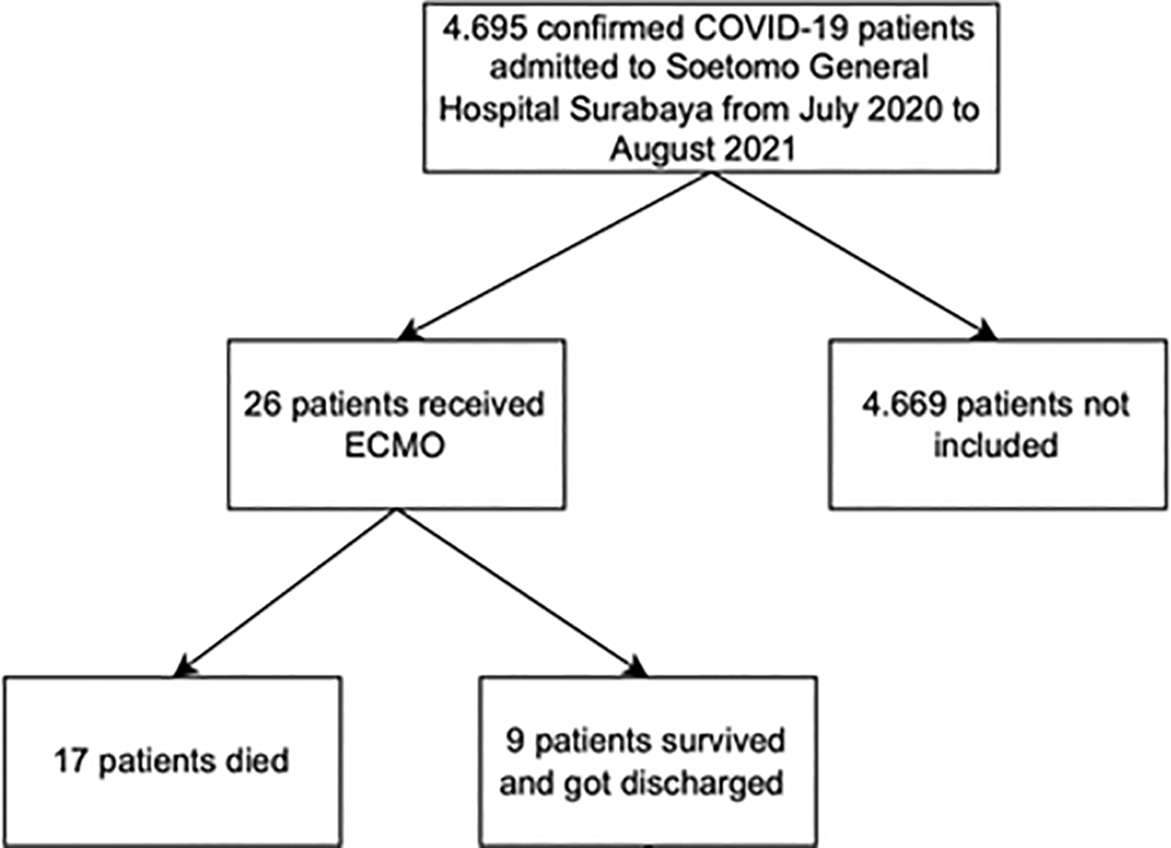
Demographic and baseline characteristics, stratified by survival status, are presented in Table 1.1. Most patients were male, with comparable mean ages. A higher proportion of survivors had greater BMI classes. VV-ECMO was used in most cases; one patient received VA-ECMO due to right heart failure and acute pulmonary embolism. No significant differences in mortality were observed based on gender, age, BMI, or ECMO mode.
| Variable | Survivor (n=9) | Non-survivor (n=17) | p-value |
|---|---|---|---|
| Gender | |||
| Female | 4 (44.4%) | 3 (17.6%) | Ref |
| Male | 5 (55.6%) | 14 (82.4%) | 0.32* |
| Age | 40.8 ± 10.1 | 41.8 ± 9.8 | 0.81++ |
| BMI | 31.1 (26.7-34.3) | 27.7 (25.2-33.0) | 0.21+ |
| BMI class | |||
| Normal | 0 (0%) | 4 (23.5%) | |
| Underweight | 0 (0%) | 0 (0%) | |
| Pre-obesity | 4 (44.4%) | 7 (41.2%) | 0.42* |
| Obesity Class I | 3 (33.3%) | 2 (11.8%) | |
| Obesity Class II | 1 (11.1%) | 3 (17.6%) | |
| Obesity Class III | 1 (11.1%) | 1 (5.9%) | |
| ECMO Mode | |||
| VV | 9 (100%) | 16 (94.1%) | Ref |
| VA | 0 (0%) | 1 (5.9%) | 1.00* |
| Comorbidity | |||
| 1 | 6 (66.7%) | 12 (70.6 %) | 1.00* |
| >1 | 5 (55.6%) | 8 (47.1%) | 1.00* |
| >2 | 3 (33.3%) | 4 (23.5%) | 0.94* |
| Comorbidity | |||
| Diabetes Mellitus | 5 (55.6%) | 9 (52.9%) | 1.00* |
| Arterial Hypertension | 2 (22.2%) | 7 (41.2%) | 0.59* |
| Asthma | 1 (11.1%) | 1 (5.9%) | 1.00* |
| Cardiac abnormality | 1 (11.1%) | 4 (23.5%) | 0.81* |
| Obesity (BMI ≥ 30) | 5 (55.6%) | 6 (35.3%) | 0.56* |
| Morbid obesity (BMI ≥ 40) | 1 (11.1%) | 1 (5.9%) | 1.00* |
Diabetes was the most common comorbidity in both groups (55.6% in survivors vs. 52.9% in non-survivors), followed by hypertension (22.2% vs. 41.2%). No significant differences in comorbidities or baseline characteristics were observed. Median PaO2/FiO2 at ICU admission was lower in non-survivors (88 [70–120]) than in survivors (96 [71.3–113.0]; p = 1.000), and declined further at ECMO cannulation (89.5 [82.2–104] vs. 90 [67–125]).
Table 1.2 compares pre-ECMO characteristics and special conditions by survival. Other pre-ECMO variables showed no significant differences. Most patients in both groups were classified as RESP class III. Both had a median Murray score ≥ 2.5 and APSS grade 2, indicating the need for ECMO support despite a high mortality risk.
| Variable | Survivor (n=9) | Non-survivor (n=17) | p-value |
|---|---|---|---|
| Anemia | 1 (11.1%) | 5 (29.4%) | 0.57* |
| Septic shock | |||
| At ICU admission | 2 (22.2%) | 4 (23.5%) | 1.00* |
| At ECMO indication | 2 (22.2%) | 8 (47.1%) | 0.42* |
| At ECMO cannulation | 4 (44.4%) | 10 (58.8%) | 0.77* |
| Subclinical hipotiroid | 2 (22.2%) | 2 (11.8%) | 0.90* |
| Hypoalbuminemia | 6 (66.7%) | 14 (82.4%) | 0.68* |
| Post Sectio Caesarean | 2 (22.2%) | 2 (11.8%) | 0.90* |
| Hepatitis | 1 (11.1%) | 1 (5.9%) | 1.00* |
| Acute Kidney Injury | 0 (0%) | 5 (29.4%) | 1.00* |
| CRRT | 0 (0%) | 3 (17.7%) | 1.00* |
| Vasopressor use | |||
| At ECMO indication | 2 (22.2%) | 8 (47.1%) | 0.42* |
| At ECMO cannulation | 4 (44.4%) | 10 (58.8%) | 0.77* |
| Inotrope use (dobutamine/milrinone) | |||
| At ECMO indication | 0 (0%) | 2 (11.8%) | 1.00* |
| At ECMO cannulation | 0 (0%) | 4 (23.5%) | 1.00* |
| Cardiac arrest | 0 (0%) | 1 (5.9%) | 1.00* |
| RESP Risk Class | |||
| II | 1 (11.1%) | 0 (0%) | |
| III | 8 (88.9%) | 11 (64.7%) | 0.06* |
| IV | 0 (0%) | 6 (35.3%) | |
| RESP Score | 0 (0-2) | -1 (-2-1) | 0.07++ |
| APSS score grade | 2 (2-2) | 2 (2-2) | 0.80+ |
| APSS score | 6.22 ± 0.972 | 6.18 ± 1.13 | 0.92++ |
| Murray Score | 3.08 ± 0.31 | 2.98 ± 0.40 | 0.48++ |
| SOFA score | |||
| At ICU admission | 4 (3-8) | 4 (4-6) | 0.80+ |
| At ECMO indication | 4 (3-8) | 4 (4-6) | 0.80+ |
| PaO 2/FiO 2 ratio | |||
| At ICU admission | 88 (70-120) | 96 (71.3-113.0) | 1.00+ |
| At ECMO indication | 89.5 (82.2-104) | 90 (67-125) | 0.94+ |
| pH | |||
| At ICU admission | 7.38 (7.35-7.42) | 7.39 (7.32-7.43) | 0.98+ |
| At ECMO indication | 7.33 ± 0.0875 | 7.30 ± 0.116 | 0.52++ |
| Other BGA parameter at ECMO indication | |||
| PCO2 (mmHg) | 46.6 (44-54.6) | 58.4 (45.3-72.8) | 0.25+ |
| HCO3 (mEq/L) | 24.8 (22.7-30.1) | 28.5 (25.8-33.7) | 0.16+ |
| PO2 (mmHg) | 80 (74-86) | 69 (62-78) | 0.29+ |
| BE (mEq/L) | 3 (2-7) | 3.4 (2-8) | 0.72+ |
| Ventilator parameter at ECMO indication | |||
| Tidal Volume/Vt (ml/kg) | 5.41 ± 1.32 | 4.60 ± 1.75 | 0.18++ |
| <4 ml/kg | 2 (22.2%) | 6 (35.3%) | Ref |
| ≥ 4 ml/kg | 7 (77.8%) | 11 (64.8%) | 0.81* |
| PEEP (cmH2O) | 11 (10-12) | 12 (10-12) | 0.95+ |
| Plateu Pressure (PPlat) (cmH2O) | 30.4 ± 4.42 | 28.6 ± 5.10 | 0.35++ |
| Driving pressure (cmH2O) | 19.2 ± 3.35 | 17.6 ± 4.84 | 0.32++ |
| RR (breaths/min) | 23 (20-24) | 24 (24-25) | 0.35+ |
| FiO2 (%) | 91 (80-95) | 100 (90-100) | 0.18+ |
| Compliance (mL/cmH2O) | 25.3 (23.5-25.3) | 23.1 (17.6-23.1) | 0.37+ |
| Timing | |||
| Symptoms-first hospitalization (days) | 4 (2-5) | 3 (2-6) | 0.53+ |
| Symptoms-ICU admission (days) | 7 (6-8) | 9 (4-17) | 0.63+ |
| Symptoms-ECMO indication (days) | 8 (7-9) | 12 (9-19) | 0.03 + |
| Symptoms-ECMO cannulation (days) | 9 (9-10) | 16 (10-20) | 0.01 + |
| ECMO indication-ECMO cannulation (days) | 1 (0-3) | 2 (1-4) | 0.25+ |
| ECMO cannulation – discharge/death (days) | 16 (13-17) | 7 (5-11) | 0.01+ |
| IMV duration prior to ECMO cannulation (days) | 3 (1-3) | 4 (2-5) | 0.14+ |
| IMV duration prior to ECMO cannulation (class) | |||
| <2 days | 4 (44.4%) | 3 (17.6%) | |
| 2-7 days | 5 (55.6%) | 12 (70.6%) | 0.24* |
| >7 days | 0 (0%) | 2 (11.8%) |
Table 1.3 summarizes clinical events during ECMO. Four patients received CRRT; 3 were non-survivors. Mechanical issues were more frequent in non-survivors, including 4 cannula revisions and 6 minor bleeding cases requiring refixation. The only VA-ECMO patient died from neurological complications. Radiographic progression during ECMO was assessed using routine chest radiographs as part of standard clinical care. All survivors demonstrated near-complete resolution of pulmonary infiltrates following decannulation (Cases 1–3). In contrast, non-survivors exhibited varied patterns of radiographic progression, including worsening infiltrates (Case 4), no significant change (Case 5), and partial resolution (Case 6).
| Variable | Survivor (n=9) | Non-survivor (n=17) | p-value |
|---|---|---|---|
| Complications | |||
| Septic shock | 6 (66.7%) | 8 (47.1%) | 0.59* |
| Neurological complications | 0 (0%) | 3 (17.7 %) | 1.00* |
| Acute Kidney Injury | 3 (33.3%) | 5 (29.4%) | 1.00* |
| CRRT | 0 (0%) | 4 (23.53%) | 1.00* |
| Major bleeding | 1 (11.1%) | 6 (35.3%) | 0.39* |
| Gastrointestinal bleeding | 2 (22.2%) | 2 (11.8%) | 0.90* |
| MODS | 1 (11.1%) | 12 (70.6%) | 0.01* |
| Atelectasis | 1 (11.1%) | 1 (5.9%) | 1.00* |
| Pneumothorax | 0 (0%) | 2 (11.8%) | 1.00* |
| Harlequin syndrome | 0 (0%) | 1 (5.9%) | 1.00* |
| Cannula revision and repositioning | 1 (11.1%) | 4 (23.5%) | 0.81* |
| Canula refixation | 3 (33.3%) | 6 (35.3%) | 1.00* |
| Duration | |||
| ECMO duration (days) | 7 (6-10) | 7 (4-10) | 0.59+ |
| ICU length of stay (days) | 16.8 ± 4.35 | 14.5 ± 7.68 | 0.35++ |
Patient demographics, pre-ECMO characteristics, and clinical events during ECMO were analyzed using bivariable binary logistic regression ( Table 2). Survivors had significantly shorter symptom-to-ECMO cannulation (OR 1.36; 95% CI 1.01–1.84; p = 0.04) and ECMO duration (OR 0.82; 95% CI 0.69–0.99; p = 0.04). MODS was strongly associated with mortality (OR 19.2; 95% CI 1.88–196.55; p = 0.013), while other variables were not significant.
Table 3 presents outcomes at 10, 20, 30, 60, and 90 days post-ECMO cannulation. Eleven patients died within 10 days, including 2 within 48 hours after decannulation. The 90-day in-hospital mortality was 65.4% (17/26), and total 90-day mortality was 69.2% (18/26). One patient died at home on day 64 due to tracheostomy-related laryngeal stenosis.
In this study, the in-hospital mortality rate was 65.4%. Mortality was significantly associated with symptom-to-ECMO cannulation interval, MODS as a complication and ECMO intiation to discharge/death interval. While demographic and pre-ECMO characteristics were similar between groups, some ECMO-related factors differed. In non-survivors, IMV duration before ECMO was longer, PaO2/FiO2 ratio and pH declined further from ICU admission to ECMO cannulation, and several complications were more frequent. ECMO duration and ICU stay did not differ significantly.
During the COVID-19 pandemic, ECMO use increased, with 90-day survival rates of 46–65% reported in the ELSO registry.7 Compared to mortality rate at other centres (41-57%),11,12 our cohort showed higher mortality (65.4%), likely reflecting the predominant pulmonary pathology of COVID-19 and the associated need for circulatory support. More non-survivors required vasopressors and inotropes at ECMO cannulation, and one patient received VA-ECMO, indicating circulatory failure in our cohort.
A recent meta-analysis reported the highest ECMO-related mortality in Southwest Asia and Africa (71.3%), followed by Asia-Pacific (58.6%) and Europe (50.7%).13 Notably, our cohort had a lower in-hospital mortality rate than German studies (66–73%),14,15 which may reflect more liberal ECMO use, including in elderly patients, as noted by Karagiannidis et al.16 Similarly, our center adopted a maximum-care approach, resulting in broader indications that may have led to some futile cases. While our oldest patient was in their 50s, several had relative contraindications, including cardiac arrest and morbid obesity.
A multicenter study in Saudi Arabia, Kuwait, Qatar, India, and Egypt reported similar mortality rates between established and new ECMO centers (41.9% vs. 41%, p = 0.89).12 Another study on ARDS patients in Southeast Asia found a comparable mortality rate (68.4%) to ours (65.4%), despite being conducted in an established center.17 This similarity may be attributed to the majority of patients being classified as RESP class III.
Consistent with previous study by Dreier et al. (2021), survivors exhibited significantly shorter symptom-to-ECMO intervals, while delayed cannulation in non-survivors likely resulted in more advanced disease at ECMO cannulation.18 Although a meta-analysis of 54 studies found no difference in symptom onset to ECMO timing, non-survivors demonstrated longer intervals from diagnosis to ECMO.19 Early ECMO cannulation, prior to the development of severe lung injury, may reduce mortality.17 Prolonged symptom-to-cannulation intervals may reflect delayed hospital presentation, referral bottlenecks, patient overload, and ICU resource limitations during peak pandemic periods. These findings emphasize the need for early referral protocols, decentralization of ECMO teams, and routine simulation training to reduce decision-to-cannulation delays during future surges.
Our findings also align with a meta-analysis of 13 cohorts reporting no significant association between pre-ECMO mechanical ventilation (MV) duration and outcomes.20 In our cohort, non-survivors had a median MV duration only one day longer than survivors (4 vs. 3 days), remaining within the reported safe range of 4–12 days,21 except for one case ventilated for 14 days. Although the 2020 ELSO guidelines consider MV duration beyond 10 days an absolute contraindication,22 this delay reflected the time required to assemble a trained ECMO team and secure equipment, as it was our first ECMO case.
At the time of ECMO cannulation, patients had already been exposed to ventilation settings known to precipitate ventilator-induced lung injury (VILI), with both groups reaching driving pressures above 15 cm H2O and plateau pressures exceeding 30 cm H2O.23 This underscores the challenges of adhering to lung-protective strategies in severe COVID-19 ARDS and likely contributed to progressive lung injury under crisis conditions.
Early ECMO cannulation, within 3 days of ARDS onset, has been associated with lower mortality,24 likely due to improved lung protection via reduced tidal volumes, plateau pressures, and respiratory rates.25 A RESP score of 3, reflecting MV <48 hours prior to ECMO, corresponded to survival rates ≥76%.26 Similarly, a German cohort of 768 patients demonstrated increasing mortality with longer MV durations: 59.6% for 0–3 days, 75.9% for 4–7 days, 85% for 8–12 days, with a slight decline to 76.4% beyond 12 days.16 However, the ideal of initiating ECMO within 2-6 hours of indication, as recommended by ELSO, was hardly achievable in our center. Resource constraints and capacity saturation during pandemic peaks often forced prolonged high ventilator settings before ECMO, likely contributing to the higher mortality we observed compared to well-resourced centers. This disparity underscores the impact of regional resource limitations on critical care outcomes during the pandemic.
Although ECMO duration was not significantly associated with mortality, the interval from ECMO cannulation to discharge or death differed significantly in our analysis. Interestingly, Ling et al. (2022) found that longer ECMO support was associated with lower mortality,13 a finding often attributed to immortal time bias, since only patients who survive long enough can be weaned, while those with early complications may not. In COVID-19 ARDS, prolonged ECMO support was not associated with worse outcomes. A study comparing short (<28 days) and prolonged (≥28 days) ECMO runs found no significant differences in most complications, aside from more frequent oxygenator changes in the prolonged group. Extended support facilitated lung recovery, and none of the survivors required lung transplantation.18
Patients demographics were comparable in both groups. Consistent with our findings, another ECMO study in COVID-19 patients reported 81.0% of deaths occurred in males (3figh74 cases) vs. 18.0% in females (83 cases), with no significant difference (p = 0.37).27 Similarly, Takeuchi et al. (2023) found all non-survivors were male, with a 1.3-fold higher mortality than females.28 The cause of this disparity remains unclear but may involve immunological factors, such as androgen-regulated differences in ACE2 and TMPRSS2 expression,29 and behavioral factors like higher smoking rates and more comorbidities in males.28 BMI was comparable between survivors and non-survivors in our cohort. Interestingly, a higher (though not statistically significant) proportion of survivors were obese (55.5% vs. 35.3%, p = 1.00). Previous studies reported no increased mortality with BMI >40 and even shorter ICU and ECMO durations in obese patients,30 supporting the “obesity survival paradox”.31
Comorbidities remain a debated factor. While some studies found no association,32 Tanaka et al. (2021) reported higher mortality with comorbidities,33 echoing earlier findings linking pre-ECMO cardiac arrest, AKI, chronic respiratory insufficiency, and immunocompromised states with poor outcomes.7 Immunocompromised patients are especially vulnerable due to impaired immunity and the invasive nature of ECMO, which raises bloodstream infection risk. Additional factors such as hypoalbuminemia, vasopressor use, elevated SOFA score, and low PaO2/FiO2 ratios may further worsen outcomes.
MODS was the most frequent and fatal ECMO complication in our cohort, consistent with ICU data.34 ECMO may alter antibiotic pharmacokinetics, leading to subtherapeutic levels, increased risk of sepsis, and subsequent MODS.35 AKI and fluid overload were also common, with AKI affecting 70–85% of ECMO patients.36 ECMO-associated kidney injury is thought to result from circuit- and catheter-related factors, including systemic inflammation, perfusion disturbances, ischemia-reperfusion injury, and oxidative stress.36 Fluid overload is often secondary to AKI or inadequate volume management, with 40–60% of affected patients requiring CRRT.37 This combination has been associated with mortality rates ranging from 39.5% to 100%.38
One non-survivor developed Harlequin syndrome during VA-ECMO for acute cor pulmonale. This condition, seen in peripheral VA-ECMO, involves differential oxygenation between the upper and lower body due to mixing of poorly oxygenated native output with oxygenated ECMO flow.39 Transition to central cannulation, the standard management, was not feasible due to resource constraints. A shortage of adequately trained healthcare personnel further compounded the challenge.
This study provides insight into the use of ECMO for COVID-19–associated ARDS in a new high volume centre in a low resource setting. Our study reported high in-hospital mortality (65.4%), comparable to outcomes reported in non-centralized and low to middle income country (LMIC) settings.12,13,16,21,32 As per previous studies,18,34 delayed ECMO initiation after symptom onset, MODS and sepsis related complications were associated with mortality. The results support international evidence on timely ECMO cannulation and management of complications.4,6,19,22,27 They also highlight the need for early identification of candidates, robust infection control and clinical training especially in scaled up programs. Most importantly our findings add LMIC specific data to the literature dominated by high income settings.
Even so, several limitations must be acknowledged. First, its single-center, retrospective design along with the absence of a comparison group of COVID-19 patients who did not receive ECMO, limits the generalizability of the findings. Although our sample accounted for 55.32% of the national ECMO population, Dr. Soetomo Hospital is a tertiary referral center with advanced ICU facillities, so findings may not fully applicable to hospitals with limited resources. The patient demographics and comorbidities may also differ from those in other regions or countries. Second, the small sample size reduced the stength of our statistical analysis and limited our ability to fully control for potential confounders. The limited sample size was largely due to inadequate infrastructure and resources, which rendered ECMO a scarce, last-resort treatment option. Thus, the findings should be interpreted with caution.
We believe our cohort still offers valuable insights into a resource-intensive and underexplored treatment strategy, particularly relevant for emerging ECMO centers in LIMCs. The findings highlight how critical early ECMO cannulation, timely infection management and careful management of complications like MODS can be in determining patient outcomes. Though this study, we also came to appreciate just how essensial proper infrastructure, multidisciplinary team training, and ongoing supervision are, especially in regions working to expand ECMO capacity in emergency setting. Moving forward, we hope that future multicenter studies can build on these findings and help define the best practices for when and how to implement ECMO in LMICs.
Ethical approval for this study was obtained from the Health Research Ethics Committee of Dr. Soetomo General Academic Hospital, Surabaya, Indonesia (Approval Number: 0096/KEPK/XI/2020). All procedures involving human participants were conducted in accordance with the ethical standards of the institutional research committee and with the 1964 Declaration of Helsinki and its later amendments. Patient data were anonymized prior to analysis.
| Views | Downloads | |
|---|---|---|
| F1000Research | - | - |
|
PubMed Central
Data from PMC are received and updated monthly.
|
- | - |
Provide sufficient details of any financial or non-financial competing interests to enable users to assess whether your comments might lead a reasonable person to question your impartiality. Consider the following examples, but note that this is not an exhaustive list:
Sign up for content alerts and receive a weekly or monthly email with all newly published articles
Already registered? Sign in
The email address should be the one you originally registered with F1000.
You registered with F1000 via Google, so we cannot reset your password.
To sign in, please click here.
If you still need help with your Google account password, please click here.
You registered with F1000 via Facebook, so we cannot reset your password.
To sign in, please click here.
If you still need help with your Facebook account password, please click here.
If your email address is registered with us, we will email you instructions to reset your password.
If you think you should have received this email but it has not arrived, please check your spam filters and/or contact for further assistance.

Comments on this article Comments (0)