Keywords
Air Quality Index (AQI), K-Nearest Neighbour (KNN), Post-Quantum Linkable Ring Signature (PQLRS), and Artificial Bee Colony (ABC)

This article is included in the Fallujah Multidisciplinary Science and Innovation gateway.
Air Quality Index (AQI), K-Nearest Neighbour (KNN), Post-Quantum Linkable Ring Signature (PQLRS), and Artificial Bee Colony (ABC)
The Internet of Things (IoT) connects an enormous number of devices to the internet; therefore, huge data can be utilised in several applications like the medical industry, communication sector, confidential applications and smart cities.1,2 Due to this tremendous development, certain concerns are becoming essential, such as data integrity, trust factor and security among the IoT devices.3–5 The major drawbacks which are addressed in the earlier research are data manipulation, scalability and latency challenges.6–9 In order to overcome these drawbacks, in this article efficient security and optimisation model is developed, and it mainly concentrates on decreasing the latency and maximising the throughput of each one of the IoT devices. The paper's major contribution is discussed below. The contribution of the papers is below. The PQRAEI model introduces a hybrid that integrates post-quantum cryptography, blockchain technology, and intelligent optimisation for secure air quality forecasting. A PQLRS mechanism to maintain the quantum computing threats, the XMSS signature scheme enhances cryptographic security with maintained efficiency.
Research in post-quantum IoT has focused on hybrid frameworks mixing PQC with classical methods and hardware changes for PQC support in small devices. Some have studied encryption and signature efficiency, lacking a specific linkable, hash-based ring signature for blockchain transactions with a data-driven optimisation layer for application-level forecasting in previous papers, FHPCC,30 ELDSE,31 and PQBFR.32 The PQRAEI method addresses this gap by combining a Merkle-root-based PQLRS on XMSS to enhance blockchain efficiency and a Q-learning augmented ABC algorithm for improved AQI prediction. This system secures sensor data to the blockchain while enhancing AQI forecasting accuracy and latency, as the model performance comparison in Section 4.
In,10,11 the author developed a novel approach with hybrid cryptography, which combines the idea of PQC with AES, that helps to enhance data security. It mainly concentrates on attacks like DDOS and man-in-the-middle attacks. In,12,13 a new post-quantum cryptographic model is introduced to enhance the MQTT authentication among the IoT devices. In,4 the author introduced a FPGA technology that is combined with NTT to improve polynomial multiplication to maximize the network efficiency of the IoT systems, and it can also help to provide high speed and low latency with proper hardware utilization. In,15 a proxy-based signature scheme is presented by the author, and it clearly identifies the need for message recovery. It is developed with the presence of the NTRU lattices, which results in the reduction of signature size and energy consumption among the devices. In,16,17 a post-quantum cryptographic method is presented that combines the idea of Ring-LWE and CRYSTALS-Dilithium, which is mainly utilized to enhance data security and overall performance of the corresponding devices that are located in decentralized environments. In,18 a PQC model development is concentrated, which works against the quantum threats in 5G networks. It core modules of this work help to improve cybersecurity, which impacts latency and bandwidth utilization. In,19 the author presented an effective authentication system to improve the communication quality of the artificial intelligence-assisted Internet of Things environment. The implementation includes a Raspberry Pi to increase the feasibility of the IoT devices and to ensure data security against quantum attacks. In,20,21 a new process is developed for cross-platform benchmarking analysis to reduce bandwidth and latency. In,22,23 the authors developed post-quantum algorithms that are tested on the Raspberry Pi devices mainly to maximize the efficiency of the IoT devices.
In,24 in the SSI platform, certain modules are included to increase the authentication for IoT environments, such as the SSI-PQM protocol and lightweight encryption. In,25,26 a hybrid cryptographic platform is created which includes FPGA technology with elliptic-curve and post-quantum algorithms, which is mainly utilized to enhance security and reduce the latency among the IoT user devices. In,27,28 the author developed a lattice-based digital signature for the IoT devices, which concentrates on the memory allocation issues. In,29 a digital signature is introduced that provides proper resource allocation among the IoT devices. The security of the network is increased with the presence of the post-quantum security model.30 In,31 the IoMT framework is presented, which ensures security in the medical data processing using advanced technologies. It offers fast performance and useful analytics for healthcare applications.32 Table 1 explains the research summary in detail as show in Appendix 1.
| Ref | Method name | Purpose | Advantages | Limitations |
|---|---|---|---|---|
| 10 | PQC–AES Encryption Framework | Secure applications like file transfer, video streaming, and chat | Balances security and speed | PQC algorithms are complex and may require major hardware/software changes |
| 12 | MQTT Authentication using PQC (CRYSTALS-Dilithium & CRYSTALS-KYBER) | IoT device authentication against quantum threats | KEM-based strategy reduces CPU usage and speeds up authentication | Increases memory use |
| 14 | NTT with FPGA for CRYSTALS-Kyber | Accelerate polynomial multiplication for IoT devices | Fast operations, enhanced performance | Increases hardware complexity and cost |
| 15 | Identity-Based Proxy Signature with Message Recovery (NTRU lattices) | Efficient signatures for IoT and blockchain | Reduces signature size and energy use | Challenging for low-power IoT devices |
| 16 | Lightweight PQC schemes (Ring-LWE, CRYSTALS-Dilithium) | Secure IoT, blockchain, and e-learning | Optimised for limited resources | Lacks real-world testing |
| 18 | SHAKE-based SPHINCS+ on FPGA | Low-resource digital signatures | Reduces energy use by 20–30% | Input rearrangement needed |
| 19 | PQC KEMs in 5G Networks | Secure VNF communications in 5G/6G | Minimal impact on latency and bandwidth | Integration may increase system complexity |
| 20 | AIoT PQC Communication (NTRU + Falcon) | Device authentication and secure communication | Resists quantum attacks | Higher computational |
| 22 | NIST PQC Algorithm Benchmarking | Cross-platform evaluation of PQC algorithms | Optimisation strategies provided | Resource-limited devices face significant overhead |
| 23 | PQC Algorithms on Raspberry Pi (Kyber, Dilithium, Falcon) | IoT and TLS security | Kyber/Dilithium efficient | Limited testing on extremely constrained devices |
| 24 | Hardware-Accelerated NTRU | Speed up polynomial multiplication for IoT | 30–45× faster | Increases system complexity |
| 25 | SSI-PQM IoT Network | Lightweight PQC key exchange and data protection | Better performance than RSA | Implementation complexity |
| 27,28 | HySecure Hybrid Cryptographic Platform | Secure NB-IoT communications | Quick key establishment, dual-signature authentication | FPGA-based |
| 29 | Lattice-Based Digital Signature for IoT | Compact PQC signatures | <3 KB signatures, <10 KB RAM | Signature generation is more complex than classical schemes |
| 30 | Post-Quantum Security Model | Increase network security | Resistant to quantum attacks | Implementation complexity |
| 31 | IoMT Framework | Ensure security in medical data processing | Fast performance, useful analytics for healthcare | May require advanced infrastructure |
| 32 | IoMT framework | Support healthcare applications with analytics | Useful insights, improved healthcare services | Specific limitations not mentioned |
The PQRAEI model merges blockchain data security with advanced air quality forecasting. Initial steps involve refining the PSC dataset environmental data, employing KNN for missing values, and data normalisation. Figure 1 illustrates the detailed process and flow of the PQRAEI model.
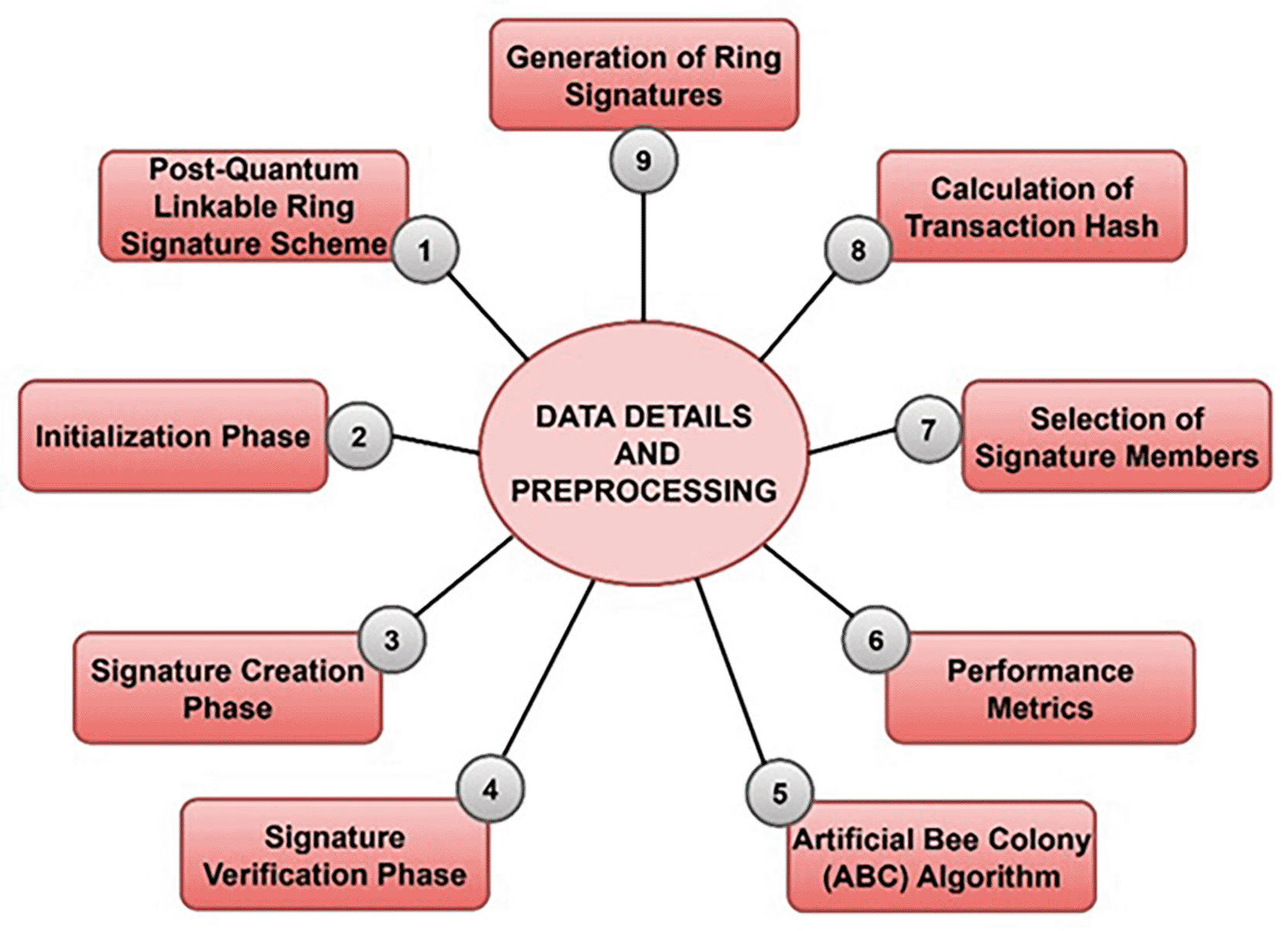
This figure illustrates the overall architecture of the proposed post-quantum link-based ring signature framework designed for secure data management in IoT-based smart city environments. The framework demonstrates the interaction between IoT devices, the post-quantum key generation module, the link-based ring signature construction process, and the signing and verification phases prior to secure data transmission. Distinct blocks represent the main functional components of the system, including IoT data sources, post-quantum key generation, ring signature formation, signature verification unit, and the secure communication channel. The arrows indicate the flow of data and cryptographic operations between the signing and verification entities within the proposed architecture.
The Pune Smart City Dataset is part of the data collected by the Pune Smart City Development Corporation Limited (PSCDCL) and IISC, Bangalore, for smart city projects. It can be used to estimate the Air Quality Index (AQI) and predict AQI in various places, like bus stops and IT centres, based on local data such as the railway station. Analysing AQI with factors like temperature, sound, light, and weather can help improve living conditions in Pune. Data preprocessing is done by addressing missing values using the KNN technique, where the missing values ( ) are filled in based on nearby data points. The distance between instances and the imputed values is calculated using specific Equations (1) and (2).
and denote the values of certain features I for different instances and , respectively, and missing values are filled in by using similar instances , based on their k-nearest neighbours features Min-max normalisation is a technique for adjusting dataset values to fit within a specific range, typically between 0 and 1. denotes the normalised data in Equation (3), and “min” and “max” refer to the respective minimum and maximum values of the feature.
PQLRS schemes utilising hash functions improve performance, storage, and bandwidth for privacy-centric blockchain applications, particularly in high-frequency transaction contexts. A post-quantum pluggable ring signature scheme based on hash functions.
3.2.1 Initialisation phase
The initialisation phase includes two key steps: key generation and ring generation. The security parameter λ and the establishment of two hash functions.
Definition of knowledge signatures:
The pair generation where users create their own key pairs using the XMSS post-quantum security scheme. Here, the public keys are denoted as ), and the private keys are denoted as ( ), which are stored in the users' devices. The network includes N participants. Were a user initiates a transaction that selects a ring signature group, which is denoted as S = , that includes their own ( ) and other users maintain the public keys of . Followed by that a ring signature is generated mainly to enhance security against forgery. In the ring signature, the corresponding public keys are properly validated to avoid such malfunctions among the IoT devices. The key generation procedure is detailly in Algorithm 1.
Input:
Output:
1:
2:
3: return
4: End
3.2.2 Signature creation phase
In this process, the user selects the signer itself, which helps to create an ring. Each signer consists of its public key ( ), which constructs a Merkle tree, with a root hash that serves as an entry point for authentication paths derived from each signer’s index , and private key. Each signer generates a ring signature for the transaction hash using their private key , which includes all public keys in the ring while identifying a unique initiator. The complete signature process involves generating the Merkle tree and its authentication path, forming a zero-knowledge signature , and combining it with a signature label , as detailed in Algorithm 2.
Input:
Output: σ
1:
2:
3:
4:
5: return
6: End
3.2.3 Signature verification phase
In a blockchain network, each node validates a signature's authenticity using transaction data and the public key from a signature ring. A hash function ensures the signature is legitimate and that the transaction remains unchanged. The process involves creating a Merkle tree and verifying the signature as a zero-knowledge proof stemming from a verified secret key , which is part of the corresponding public key ring . Based on specified parameters such as event ID, singular signature, message, and ring public key detailed in Algorithm 3, the verification will return 1 for a valid signature or 0 if invalid.
Input:
Output:
1:
2: parse
3: return
4: End
Each transaction creates a unique ring signature that is stored with the transaction data on the blockchain.
The ABC algorithm is an optimisation method that uses swarm intelligence, where agents (represented as bees) work together and with their environment. Each bee aims to find the best food source, symbolising potential solutions. There are three types of bees: scout, employed, and observation bees. Employed bees start by randomly finding a food source and then search for better options nearby. The ABC algorithm is a nature-inspired method based on swarm intelligence mimicking honey bee foraging. It uses food sources as potential solutions, with fitness evaluated by nectar amount. Bees include employed bees adjusting local solutions, onlooker bees exploring based on fitness, and scout bees maintaining diversity. Through neighbor generation and greedy selection, solutions are enhanced. Deb's rules prioritize feasible solutions in constrained optimization. They only move if a new source is better than their current one. Observant bees learn from employed bees and choose new food sources based on their findings. If a food source is rich or of high quality, observation bees are more likely to select it. They will pick one food source before looking for another nearby. The number of iterations is fixed, so the recruited bees for a chosen food source become scout bees to explore new sources if a better one isn't found. Groups of bees engage in both explorative and exploitative activities. Exploratory behaviour involves searching for new food sources to avoid settling for a lesser option, while exploitative behaviour focuses on finding better options near the current source. Q-learning to enhance problem-solving solutions by optimising exploitative behaviour, given that the ABC algorithm has constraints in exploitation while exhibiting robust exploration capabilities. The process starts with the ABC algorithm locating food supplies and generating them randomly in Equation (4), followed by assigning worker bees to these sources, with the Q-table starting at zero.
During the employed bee phase, the focus is on identifying the neighbouring food source ( ) relative to the current food ( ) source, which is measured using Equation (5). The paragraph does not specify exact lower ( or upper limits ( for the optimisation parameter .
From Equation (5), the terms, representation of optimisation parameters and indices , and k. When a newly discovered food source exhibits a higher fitness value than the current one , the associated current source is discarded in favour of the new one. A reward-penalty scheme outlined in Equation (5) is employed to adjust the Q-table based on fitness evaluations: rewarding new food sources that outperform the current one while penalising the others. Network updates to the Q-values occur with each recruited bee confirmation, specifically driven by an allowed number of Emp. If a new eligible food source is discovered that exhibits improved outcomes in Equation (6), trends related to the Q-values will similarly adjust.
The optimisation process in the foraging algorithm uses food sources represented by in the range of [-1,1] and . Observer bees optimise specific dimensions by Equation (6), assigning varying weight values to improve exploitation, while also adjusting Q-values associated with rewards and penalties. If a scout bee does not find a better food source after multiple attempts, it will abandon the current source and begin a random search for another one.
Key functionalities of the signature scheme involve generating public and private keys, along with measuring the processing time using Python and NS2. We compared our proposed PORAEI model with some existing models, FHPCC,30 ELDSE,31 and PQBFR.32 With the following parameters, message signing and verification, PSNR, latency, and throughput calculation, the performance of the proposed model is compared and validated with the existing systems.
The FHPCC model has a signing time of 0.17 seconds; the ELDSE scheme is faster at 0.06 seconds with limited post-quantum defence. PQBFR requires 2.2 seconds due to its complex post-quantum formulation. The PQRAEI model, signing in 1.7 seconds, improvement over PQBFR while enhancing post-quantum security. It captures a 22.7% reduction in signing time relative to PQBFR in Figure 2.
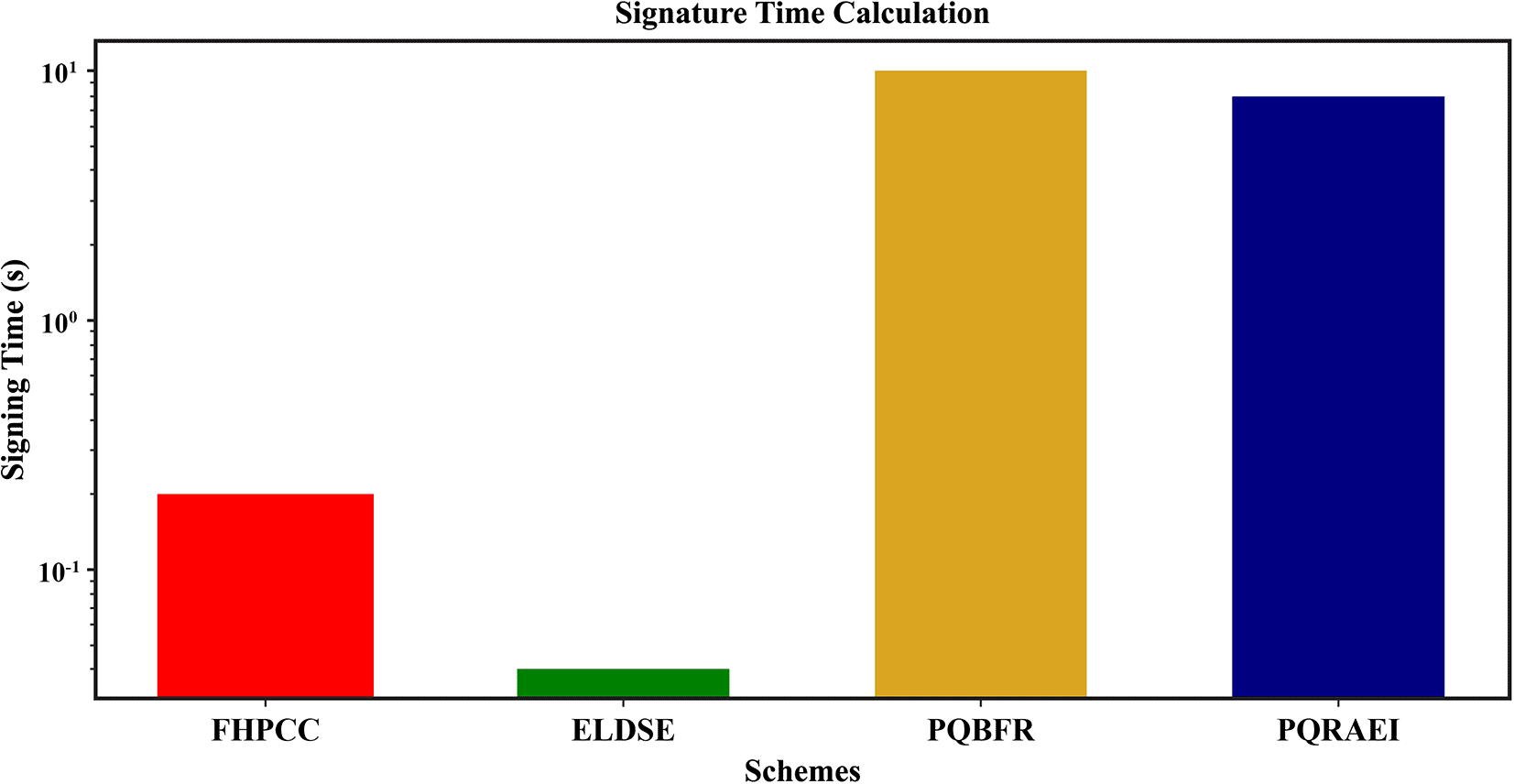
This figure compares the signature generation time of the proposed PQRAEI model with existing post-quantum and hybrid cryptographic schemes. The comparison highlights the computational cost associated with signing operations under different security models. The red bar represents the FHPCC scheme, the green bar corresponds to ELDSE, the orange bar denotes PQBFR, and the blue bar represents the proposed PQRAEI model. Lower bar heights indicate faster signature generation time, demonstrating the efficiency of the proposed approach.
The FHPCC scheme moderate verification time of 110 ms, whereas the ELDSE model performs better at 65 ms. The PQBFR model shows a longer verification time of 2500 ms due to its complex post-quantum structure. The PQRAEI model achieves a verification time of 1 ms, showing a 99.96% improvement over PQBFR. This efficiency arises from its optimised verification process that combines a PQLRS scheme with ABC-Q learning, as shown in Figure 3.
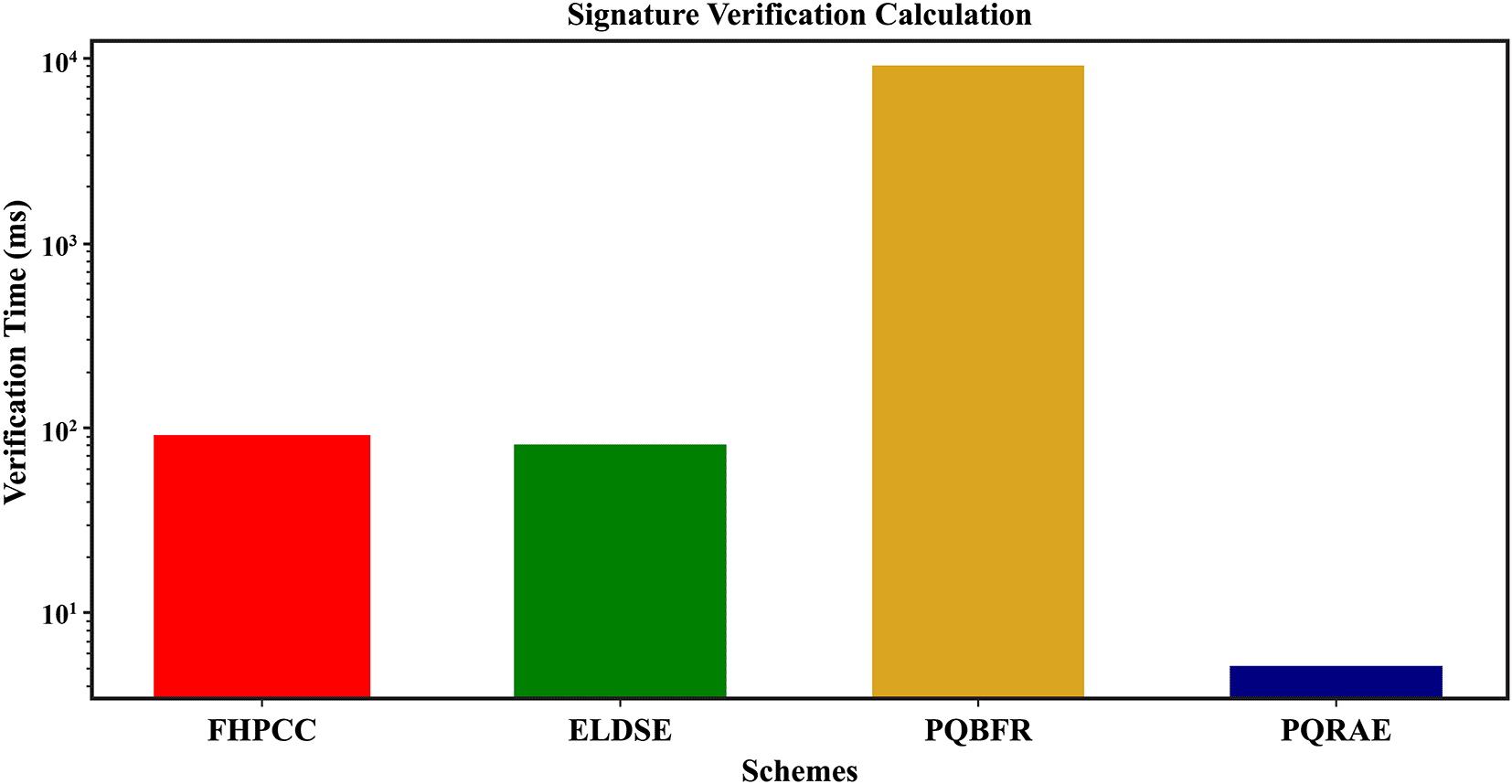
This figure illustrates the signature verification time required by different cryptographic schemes, emphasizing the efficiency of the proposed PQRAEI framework during the verification phase. The red bar corresponds to FHPCC, the green bar denotes ELDSE, the orange bar represents PQBFR, and the blue bar indicates the proposed PQRAEI model. The reduced height of the blue bar reflects the optimized verification process achieved by the post-quantum link-based ring signature mechanism.
PSNR (Peak Signal-to-Noise Ratio) measures image reconstruction quality by comparing compressed images to the original. The FHPCC model achieves a PSNR of 25 dB, while ELDSE improves it to 28 dB, and PQBFR reaches 26 dB. The PQRAEI model has the highest PSNR at 29 dB in Figure 4 with lower prediction errors than the others. The use of Q-learning with the ABC algorithm and a PQLRS-based blockchain framework ensures optimised performance and data integrity.
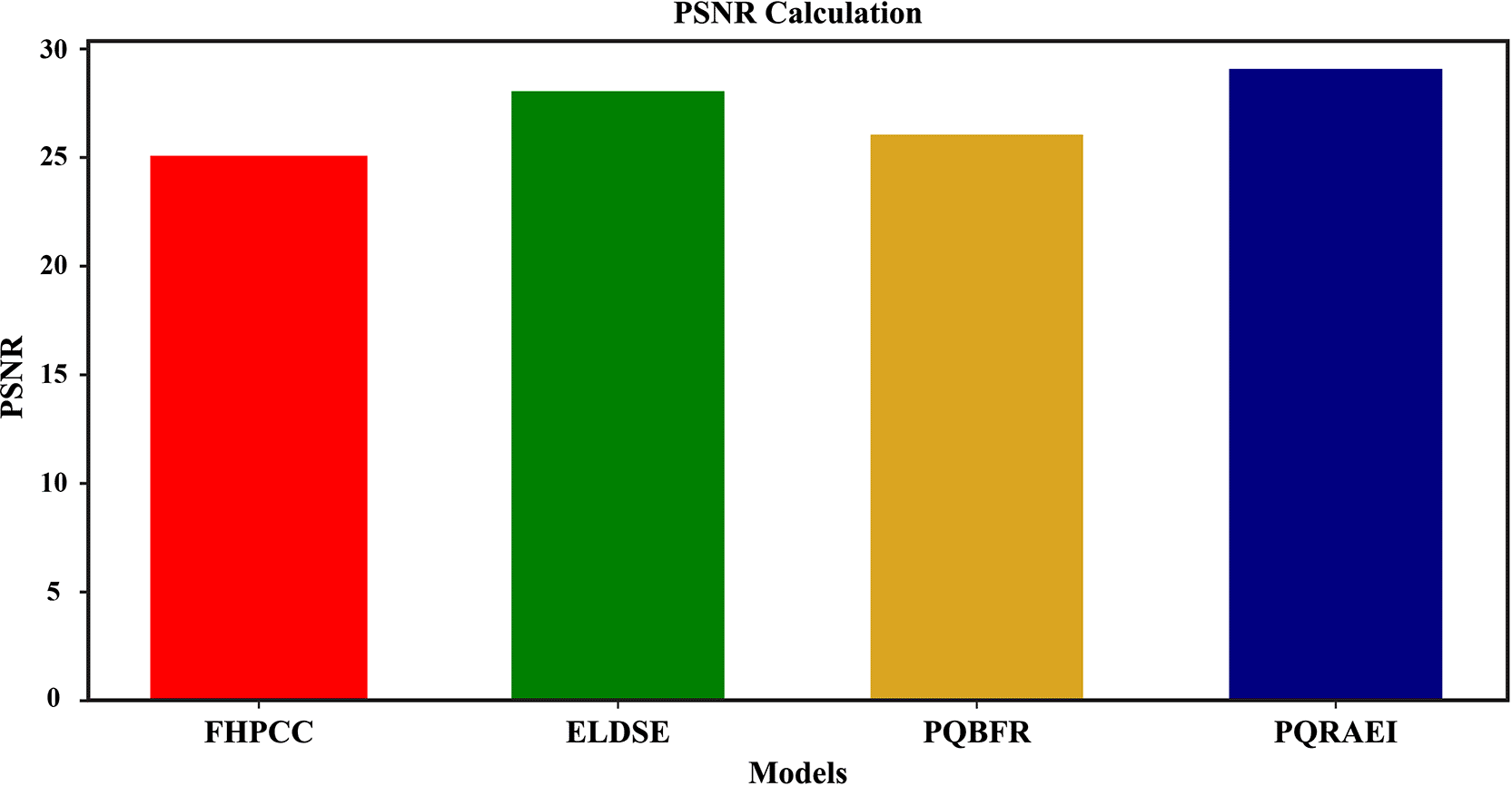
This figure presents a comparison of the Peak Signal-to-Noise Ratio (PSNR) among different cryptographic models to evaluate data reconstruction quality and integrity in IoT-based smart city environments. The red bar represents FHPCC, the green bar corresponds to ELDSE, the orange bar denotes PQBFR, and the blue bar represents the proposed PQRAEI model. Higher PSNR values indicate improved signal reconstruction quality and enhanced data integrity.
Latency is the time between a process's start and finish in systems or devices, showing how quickly data moves between points. The FHPCC model has a greatest latency increase from approximately 1 ms to nearly 20 ms. PQBFR managed latency between 1 ms and 18 ms, while ELDSE had moderate latency fetching between 1 ms and 17 ms due to better processing protocols. The lowest latency, peaking at 16 ms, achieves roughly 20% lower latency than FHPCC and better performance against PQBFR (12% lower) and ELDSE (8% lower) in Figure 5.
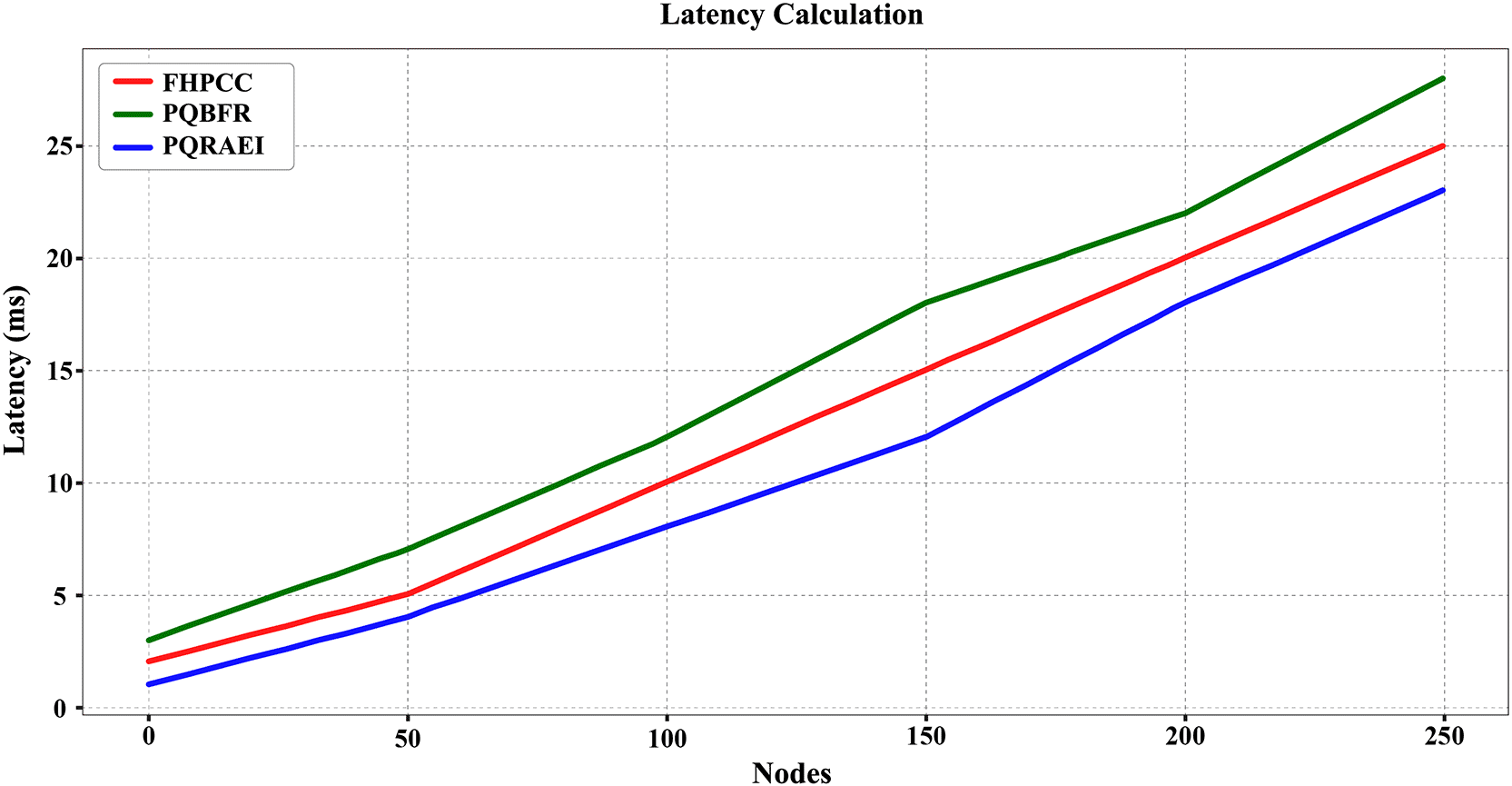
This figure shows the end-to-end latency comparison of different cryptographic and data-processing models, reflecting system responsiveness within smart city IoT networks. The red curve represents FHPCC, the green curve corresponds to PQBFR, and the blue curve denotes the proposed PQRAEI model. Lower latency values indicate reduced communication delay and processing overhead, highlighting the improved performance of the proposed framework.
Throughput is the data rate over a network or processed by a system in a specific time, typically one second. It is measured in bits, packets, or transactions per second. The analysis identifies that PQRAEI achieves high throughput at 100 units, FHPCC (by 5%), PQBFR (by 25%), and ELDSE (by over 40%). This improvement is attributed to its Q-learning-enhanced ABC optimisation and a PQLRS post-quantum blockchain layer. The FHPCC reached around 95 units, while ELDSE and PQBFR reached only 70 and 80 units in managing air quality data in Figure 6.
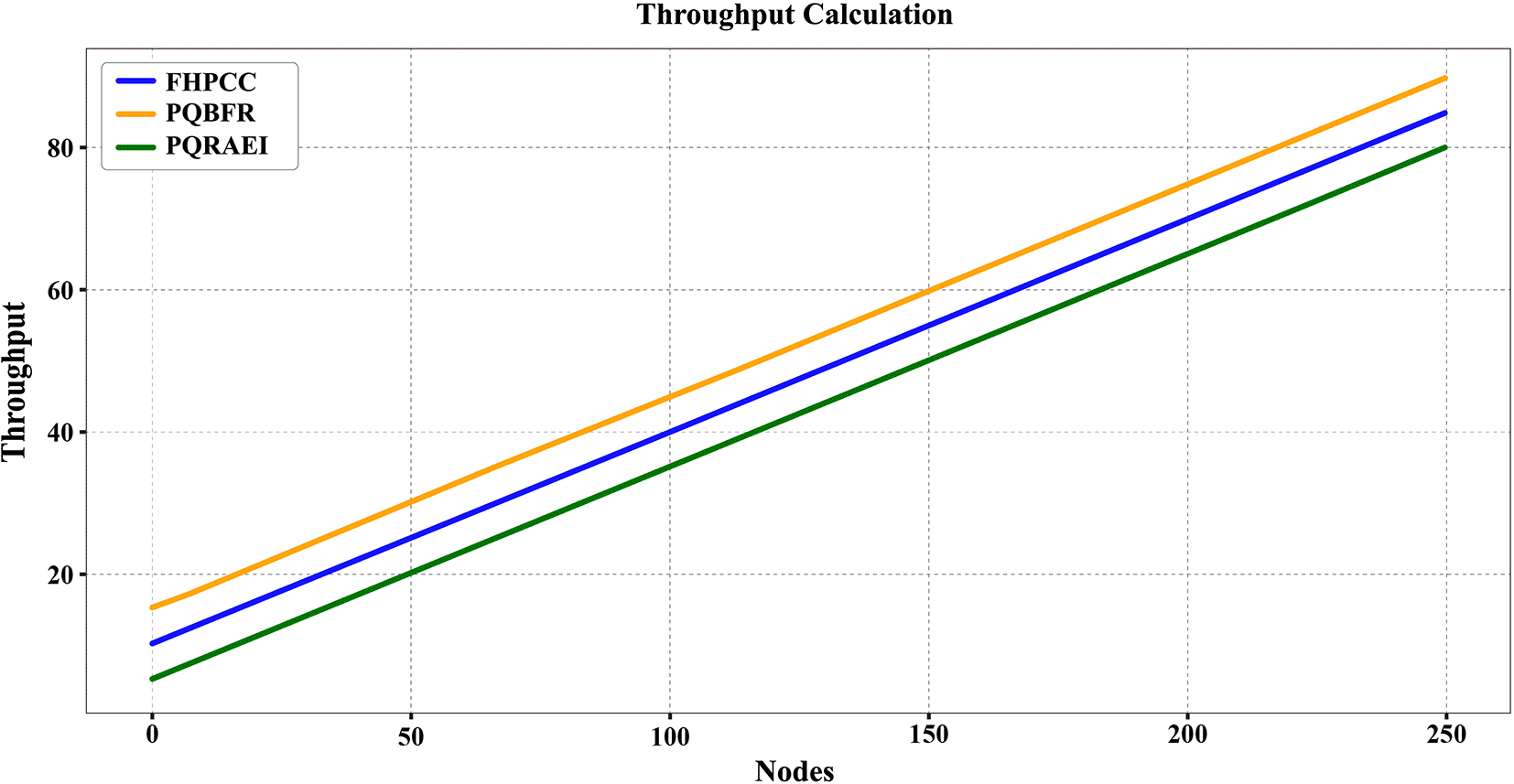
This figure compares the throughput performance of different cryptographic models, demonstrating their ability to efficiently process and transmit IoT data under smart city conditions. The blue bar represents FHPCC, the orange bar denotes PQBFR, and the green bar corresponds to the proposed PQRAEI model. Higher throughput values indicate improved data transmission efficiency and scalability of the system.
The PQRAEI model over existing methodologies, FHPCC, ELDSE, and PQBFR, including signing time, verification time, PSNR, latency, and throughput. PQRAEI achieves a signing time of 1.7 seconds, PQBFR (2.2 s), while securing post-quantum cryptographic operations, despite ELDSE having a faster signing time at 0.06 seconds without the desired quantum resilience. An exceptional verification time of 1 ms, a major reduction compared to FHPCC (110 ms), ELDSE (65 ms), and PQBFR (2500 ms), attributed to its PQLRS scheme. The highest PSNR of 29 dB with FHPCC (25 dB), PQBFR (26 dB), and ELDSE (28 dB) data quality improved noise reduction and AQI prediction accuracy via Q-learning optimisation. PQRAEI maintains a minimal latency of 2 to 16 ms, like blockchain, and IoT, compared to FHPCC (1–20 ms), PQBFR (1–18 ms), and ELDSE (1–17 ms). Utilising Q-learning for adaptive exploration reduces redundant computations, network nodes increases to 250.As explained in Table 2 explains the computation analysis in detail in Appendix 1.
Comparison of PQRAEI with FHPCC, ELDSE, and PQBFR reveals PQRAEI's superior efficiency. It excels in signing and verification times, predicting AQI, and data reconstruction with minimal noise, maintaining low latency even with 250 nodes for real-time IoT applications in smart cities. Throughput analysis supports ABC-Q-learning optimization for scalable data processing. Python simulations using PQRAEI's resilience to quantum attacks and accuracy. The PQLRS scheme combined with XMSS ensures transaction confidentiality and integrity in decentralized environmental sensing networks, making PQRAEI an ideal choice for urban IoT systems managing AQI.
The PQRAEI model integrates post-quantum blockchain security and advanced optimization techniques. It ensures data integrity by handling missing values in environmental data with KNN-based imputation and normalizing using min-max technique. The system uses PQLRS for enhanced security against quantum threats, and for privacy and traceability in blockchain transactions. The experimental analysis is signing duration of 1.7 seconds, FHPCC (0.17 s), ELDSE (0.06 s) and PQBFR (2.2 s), which is 22.7% faster than PQBFR. Its verification process is reduced to 1 ms, showing a 99.96% improvement over PQBFR of 2500 ms compared to FHPCC (110 ms) and ELDSE (65 ms). A PSNR of 29 dB compared to PQBFR (26 dB), ELDSE (28 dB), and FHPCC (25 dB). Latency measures indicate a peak of 16 ms, lower than competing models, and its throughput reaches 100 units, compared to FHPCC (95 units), PQBFR (80 units), and ELDSE (70 units). The PQRAEI has limitations due to the high computational requirements of XMSS-based PQLRS. While XMSS provides robust security, signing costs increase because of hash-tree operations, leading to higher energy consumption. A battery-powered sensor is unsuitable. Hardware acceleration or lighter post-quantum solutions may be required. Subsequent studies can expand the PQRAEI model to data from various urban areas or nations, thus enhancing AQI prediction generalization. Additionally, focus is needed on efficient post-quantum cryptographic features in IoT devices to reduce computational and energy demands.
| Views | Downloads | |
|---|---|---|
| F1000Research | - | - |
|
PubMed Central
Data from PMC are received and updated monthly.
|
- | - |
Provide sufficient details of any financial or non-financial competing interests to enable users to assess whether your comments might lead a reasonable person to question your impartiality. Consider the following examples, but note that this is not an exhaustive list:
Sign up for content alerts and receive a weekly or monthly email with all newly published articles
Already registered? Sign in
The email address should be the one you originally registered with F1000.
You registered with F1000 via Google, so we cannot reset your password.
To sign in, please click here.
If you still need help with your Google account password, please click here.
You registered with F1000 via Facebook, so we cannot reset your password.
To sign in, please click here.
If you still need help with your Facebook account password, please click here.
If your email address is registered with us, we will email you instructions to reset your password.
If you think you should have received this email but it has not arrived, please check your spam filters and/or contact for further assistance.

Comments on this article Comments (0)