Keywords
Entrepreneurial Leadership, Leadership, Leadership Styles, Leadership in Entrepreneurship, Systematic Literature Review

Entrepreneurial Leadership, Leadership, Leadership Styles, Leadership in Entrepreneurship, Systematic Literature Review
Awad et al. (2024) conducted a cross-sectional study among undergraduate nursing students in Thailand, revealing that a significant number of students exhibit high levels of entrepreneurial leadership. The entrepreneurial characteristics of nursing education can improve students' skills and readiness for innovative healthcare practices. Clark et al., (2023) highlighting the implementation of entrepreneurial leadership (EL) in the public sector, EL plays a role in promoting the principles of democratic principles and can improve organizational effectiveness. Soomro et al., (2019) Observing entrepreneurial leadership behaviors among college students, they showed that activities that promote cognitive flexibility can significantly improve students' entrepreneurial leadership behaviors, thus preparing them for future leadership roles in diverse organizational settings.
An essential point in entrepreneurial leadership is to consider the concept of open innovation (Ataei et al., 2024a). Research related to EL has been widely conducted, some focusing on individual units of analysis (Abualoush et al., 2022; Cai et al., 2019; K. Ercantan et al., 2024; Hoang, Luu, et al., 2023a; Hou et al., 2024c; Iqbal et al., 2022; Islam & Asad, 2024; Yang & Bentein, 2023) and organizations (Khan et al., 2024; Paudel, 2019; Sarabi et al., 2020; Sarmawa et al., 2020; Sultan et al., 2023; Wu et al., 2021). This systematic literature review aims to explore research related to EL that has been carried out so far. This study synthesizes documents based on a systematic review in four stages, similar to the approach used by (Hosany et al., 2022). However, it was further developed. The study is also expected to (1) identify key themes and trends in entrepreneurial leadership research, (2) develop a conceptual framework that can be used for further research, (3) provide practical insights for business leaders and entrepreneurs on how to apply entrepreneurial leadership principles to achieve success and innovation.
The focus on the examination of entrepreneurial leadership can traditionally be divided into two, depending on whether it is initially viewed from an entrepreneurial or leadership perspective (Leitch & Volery, 2017). Integrating the latest technology, innovation, resources, opportunities, and added value will determine the success of a business (Chaniago, 2023). The complexity of the relationship between organizational culture and entrepreneurial leadership and the application of a combined model of reflective practitioners and learner organizations in innovative leadership (Shiferaw et al., 2023).
The conceptualization of EL can determine the direction of an organization and have a dynamic process (Harrison et al., 2016). Although attention is focused, entrepreneurship and leadership are still ambiguous concepts (Harrison et al., 2016). Shiferaw et al., (2023) conducting a systematic literature review, revealing the intricate relationships between entrepreneurial leadership, organizational learning, and organizational culture. Entrepreneurial leadership skills are still broad and largely unstructured (Harrison et al., 2016). Norena-Chavez & Thalassinos, (2023) entrepreneurial leadership, not only at the leadership level but also throughout the organizational hierarchy. Djalil et al. (2023) demonstrating the important role of entrepreneurial leadership in improving the bank's performance through market orientation and innovation. The field of leadership and entrepreneurship provides essential insights into how individuals and organizations function and work in complex environments (Harrison et al., 2016). Hensellek et al., (2023) entrepreneurial leadership affects performance in various kinds of organizations, such as new ventures, small- and medium-sized enterprises, and established firms.
Entrepreneurial Leadership (EL) is a leadership style that focuses on recognition, exploitation of opportunities, and empowering teams to create value in organizations. Gupta et al., (2004), added that EL includes the scenario enactment dimensions (creating a vision and mitigating uncertainty) and cast enactment (building team commitment). In an empirical context, Latif et al., (2020) shows that EL has a significant impact on the success of the project through the mediating role of the knowledge management process, such as the acquisition and utilization of strategic information. (Mehmood, Jian, & Akram, 2020a) found that EL enhances employee creativity through knowledge sharing, with the added influence of learning orientation.
EL is also relevant in cross-cultural contexts. (Gupta et al., 2004) identified that EL is globally recognized as a characteristic of effective leadership, although there are variations in its implementation depending on organizational culture and power hierarchies. (Renko et al., 2015) developed the ENTRELEAD scale to quantitatively measure EL attributes, with high validity in various organizational contexts. EL requires determination to create solutions to various challenges, reducing uncertainty and risk at various stages of business development (Hussain & Li, 2022). This leadership style is not limited to the organizational level, but rather focuses on exploiting opportunities and developing value through route clearing to achieve goals (Hussain & Li, 2022). Although individual attention is an important component of transformational leadership, it is not a key element in EL (Hussain & Li, 2022).
According to (Hoang et al., 2022), EL plays an important role in improving the company's performance, while Taleb et al., (2023) emphasizes that EL helps micro, small, and medium enterprises (MSMEs) to survive and achieve success. Therefore, governments and socio-economic development institutions should focus more on developing entrepreneurial leadership skills, especially among low-income entrepreneurs (Taleb et al., 2023). Gupta et al., (2004) explains that EL is a different type of leadership from traditional leadership styles, as it prioritizes resource mobilization and a commitment to creating value. These two challenges are interrelated, because the vision will be meaningless without supporters who are able to carry it out (Gupta et al., 2004). Through cross-cultural research using data from Global Leadership and Organizational Behavior Effectiveness (GLOBE), EL is recognized as a universal leadership style that is relevant in various societies and is able to adapt to different social contexts (Gupta et al., 2004).
This literature review aims to synthesize and critically analyze existing research on the interaction between entrepreneurial leadership and organizational outcomes, focusing on research variables, hypotheses, and theoretical foundations. It offers a comprehensive overview of how different studies conceptualize and measure key variables such as innovation performance, organizational culture, and entrepreneurial success. This research employs a systematic approach, beginning with a literature search and thematic analysis. The article is structured as follows: first, defining and discussing the core characteristics of entrepreneurial leadership; second, examining various theoretical frameworks in the literature; third, reviewing common variables in the literature; and finally, analyzing prevalent themes, identifying gaps and challenges, and proposing implications for future research and practice.
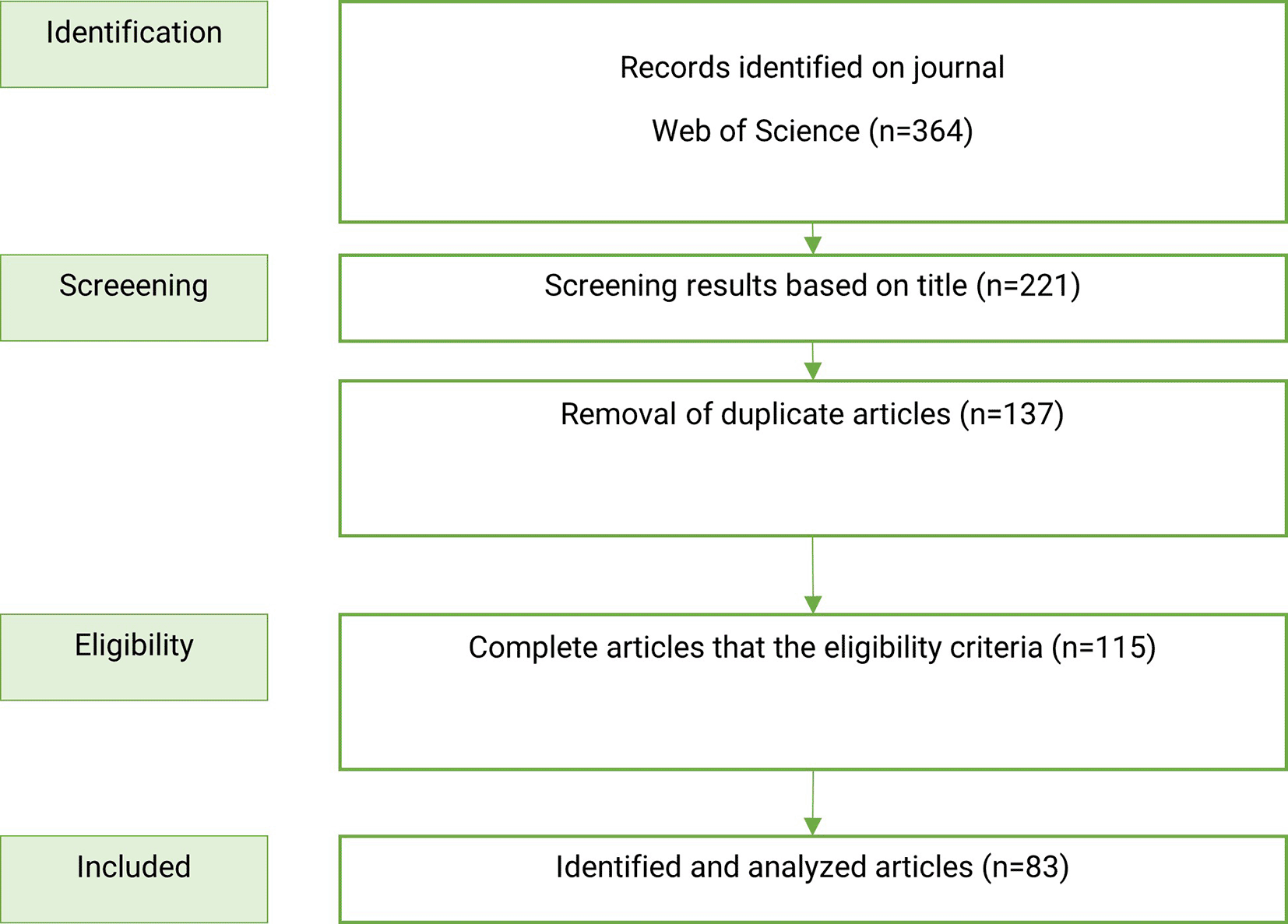
Ideally, all papers on entrepreneurial leadership would be included in this review (Helden et al., 2023). Alternatively, a representative sample of papers relevant to conceptual development in entrepreneurial leadership could be included. However, due to the extensive research in this field and the numerous articles identified through our search and screening process, including all relevant articles would be impractical and time-consuming. Therefore, a feasible alternative is employing theoretical sampling as per the PRISMA guidelines to achieve the study's objectives. Initially, articles were selected from a population of 364 articles from Scopus. To illustrate the article selection process, a PRISMA flowchart (Helden et al., 2023) was used, comprising four main stages: identification, screening, eligibility, and inclusion. Initially, 364 articles were identified through database searches. After excluding ineligible articles (titles, abstracts, and irrelevance), 83 articles underwent full-text review, with all 83 ultimately included in the final systematic review.
Theoretical sampling continued until saturation and completeness were achieved, which was defined as reaching a sufficient number of research articles that identified conceptualizations pertinent to entrepreneurial leadership research. In total, 83 relevant research articles contributed to identifying and explaining these conceptualizations. Analyzing articles to elucidate entrepreneurial leadership conceptualizations (see Figure 1) necessitates constant comparison (Helden et al., 2023). This process involves comparing codes and concepts to uncover and document their relationships, thereby refining labeled conceptualizations. These emergent conceptualizations serve as frameworks for subsequent article selection, guiding systematic deductions to select further articles. Memos are utilized to record emerging ideas and guide the selection of subsequent article samples. Each sampled article is scrutinized to discern its core contributions regarding the essence of entrepreneurial leadership or pivotal components within the conceptual framework of variables (Helden et al., 2023) pertinent to entrepreneurial leadership research. Only after thorough analysis does the transition occur to selecting another article for examination.
The results bibliometric analysis starting from information in Figure 2 illustrates the trend in the number of articles published from 2014 to 2025. In 2014, 11 articles were published, and this number slightly increased to 13 in 2015. However, there was a significant drop in 2016, with only 5 articles published. Starting in 2017, the number of articles began to rise steadily, reaching 16 articles that year and then jumping to 29 in 2018. In 2019, there was a slight decrease to 23 articles, followed by an increase to 33 in 2020. In 2021, the number of publications declined slightly to 30 articles but increased again in 2022 to 36 articles, and further to 45 in 2023. The highest number of articles was recorded in 2024, with a total of 73. Although there was a slight decrease in 2025 to 43 articles, the publication volume remained significantly higher compared to the earlier years.
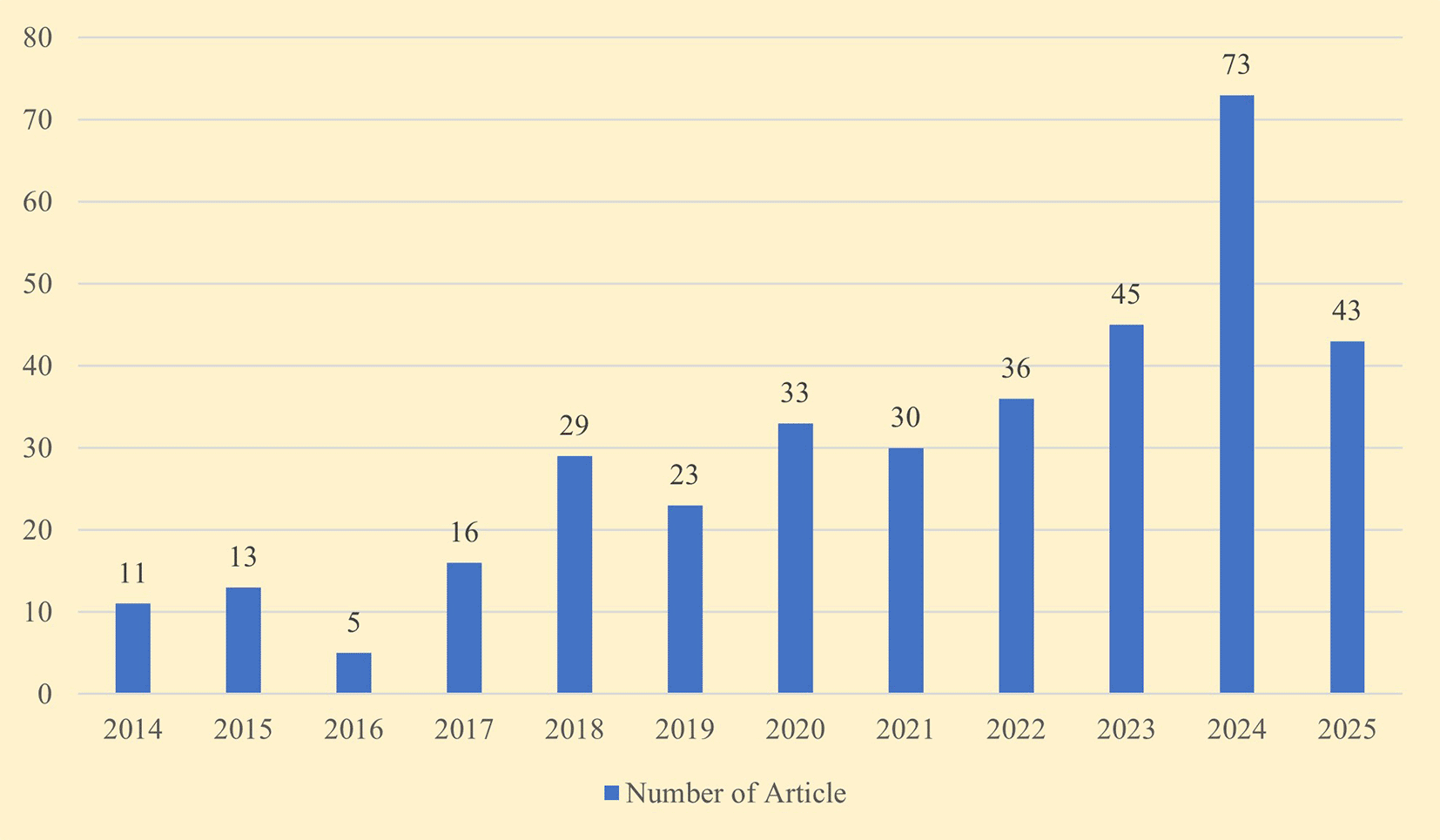
Figure 3 is a tree map showing the classification of countries based on a specific size. In this treemap, each rectangle represents a single country, with the size of the rectangle indicating the magnitude of the value or amount associated with that country. The country of China has the largest rectangle, followed by Pakistan and Vietnam, each of which has a significant size. Indonesia also occupies a sizable area on this map. Other countries shown, albeit smaller in size, include Iran, Australia, India, South Africa, Saudi Arabia, Turkey, Italy, Nepal, USA, Jordan, Peru, Arabia, Germany, and South Korea. This treemap provides an effective visualization of the comparison between different countries in the context of their size or contribution to a given metric. This allows the reader to quickly understand the distribution and proportions between the countries involved.
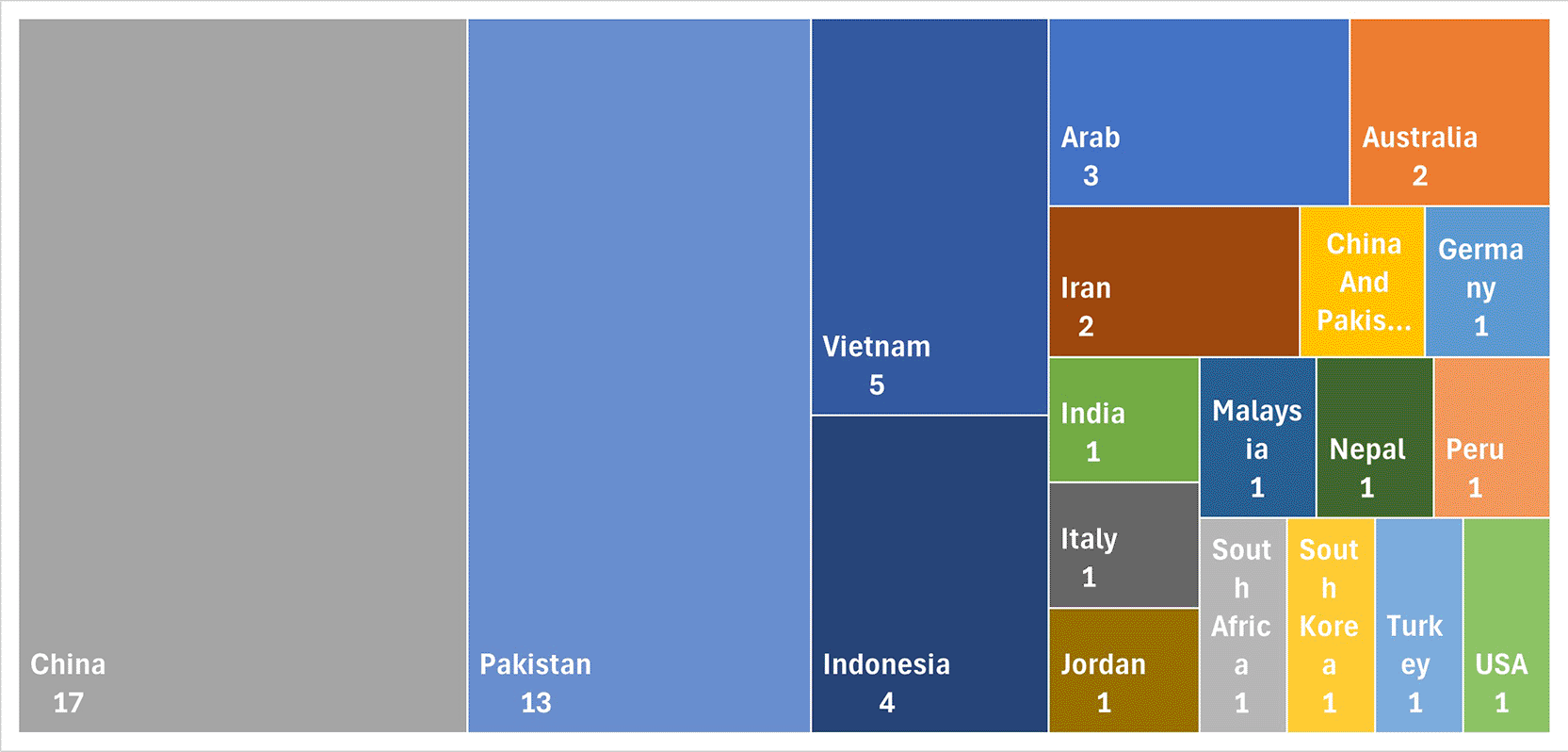
Table 1 shows the ten institutions with the most relevant affiliations based on the number of publications related to entrepreneurial leadership research. The listed institutions are spread across different regions of the globe, demonstrating an international contribution to this research topic. The University of Tehran in Iran, Swinburne University of Technology in Australia, and the University of the West of Scotland in Southwest Scotland each lead with a total of 7 publications. The geographical distribution of these affiliations shows that entrepreneurial leadership research has received widespread attention from different countries and continents, with significant contributions from institutions in Iran, Australias, Scotland, China, the United Kingdom, Indonesia, and Vietnam.
| No | Affiliation | Region | Number of publication |
|---|---|---|---|
| 1 | University of Tehran | Iran | 7 |
| 2 | Swinburne University of Technology | Australia | 7 |
| 3 | University of the West of Scotland | South-Western Scotland | 7 |
| 4 | Deakin University | Australia | 6 |
| 5 | University of Science and Technology Beijing | China | 5 |
| 6 | Nottingham Trent University | English | 4 |
| 7 | Universitas Padjadjaran | Indonesia | 4 |
| 8 | RMIT University Vietnam | Vietnam | 4 |
| 9 | Foreign Trade University | Vietnam | 4 |
| 10 | Xi'an Jiaotong University | China | 4 |
Table 2 provides insight into the journals that cite articles related to entrepreneurial leadership research, particularly those published in journals indexed by Web of Science. Sustainability is 184 citations from 9 articles, showing significant influence in this area. The European Journal of Innovation Management, recorded 146 citations from 5 articles, while Cogent Business & Management had 37 citations from 5 articles. The Journal of Small Business Management stands out with the highest number of citations, reaching 548 citations from 4 articles, signifying its great relevance in entrepreneurial leadership research. Frontiers in Psychology and Leadership & Organization Development Journal, have 11 and 72 citations from 3 articles, respectively.
Table 3 shows the research variables that most frequently appear in studies related to entrepreneurial leadership, along with the number of studies that mention those variables and their researchers. The most dominant variable is Entrepreneurial Leadership, with 56 studies contributing, among them Awad et al., 2024a; Ercantan et al., 2024; Norena-Chavez & Romani Torres, 2024. This variable was followed by Employee Creativity and Entrepreneurial Leadership, which were mentioned in 5 studies each. Researchers such as Hou et al., 2024c Yang & Bentein, 2023 are some of the researchers who are researching Employee Creativity, while Hoang, Nguyen, et al. 2023b; Sultan et al., 2023 are researching Entrepreneurial Leadership.
Table 4 shows the various theories that are often used in research related to entrepreneurial leadership, complete with the number of citations and the number of articles supporting the theory, as well as the names of relevant researchers. Social Cognitive Theory digunakan oleh 19 peneliti terdahulu dengan sitasi terbanyak yaitu 714. Teori yang digunakan terbanyak kedua adalah Resource Based View Theory. Resource Based View Theory digunakan sebanyak 14 peneliti terdahulu dengan jumlah sitasi 163. Social Learning Theory memiliki sitasi sebanyak 298 dengan 10 peneliti. Dynamic Capability Theory disitasi sebanyak 35 kali, Entrepreneurial Leadership Theory disitasi sebanyak 117 kali dan Self-Determination Theory SDT disitasi sebanyak 28 kali. Empat peneliti berbeda melakukan penelitian dengan theory Social Exchange Theory, Theory Of Planned Behavior, dan Upper Echelons Theory. Contingency Theory, Effectuation Theory, Knowledge-Based View KBV Theory, Resource Dependence Theory, Social Identity Theory, Social Information Processing Theory masing masing digunakan oleh 2 artikel yang berbeda.
In addition, the theories used in conducting EL research are Absorptive Capacity Theories, Cognitive-affective Personality System Theory, Collective Identity Theory, Complex Adaptive System Theory, Conservation Of Resources Theory, Creativity Theory, Culturally Endorsed Leadership Theories, Empowerment Theory, Entrepreneurial Event Theory, Entrepreneurial Vision, Entrepreneurship and Innovation Theory, Explorer Behavior EXPB, Gender Theory, Institutional Theory, Instrumental Stakeholder Theory, Intrinsic Motivation Theory, Job Embeddedness Theory, Organization Learning Theory, Person-Environment Fit Theory, Psychological Theories, Self-Efficacy Theory, Social Capital Theory, Social Construction Theory, Social Role Theory, Strategic Entrepreneurship Theory, Technology Affordances and Constraints Theory, The Affective Events Theory, Theory Of Creativity. Although only 1 article wrote each of these theories, there are theories that are cited many times, namely Social Information Processing Theory 108 times and Institutional Theory 110 times.
In Table 5, Resource-Based View Theory is used to base the research variables Accountability, Analytical Thinking, Competitive Advantage, Corporate Sustainable Development, Emotional Intelligence, Entrepreneurial Leadership, Entrepreneurial Leadership Skills, Entrepreneurial Opportunity Recognition, Entrepreneurial Success, Firm Performance, Innovation Capability, Innovative Behaviour, Micro-Entreprise Performance, Micro-Enterprise Sustainability, People-Oriented Leadership Style, Responsibility, Saudi Female Entrepreneurs, Task-Oriented Leadership Style (Abdullah Alshammari et al., 2023; Al Mamun et al., 2018; Ercantan et al., 2024; Razzaque et al., 2024; Taleb et al., 2023). These resources allow companies to create strategies that are difficult for competitors to replicate (Barney, 1991). RBV views the company as a collection of historical and "semi-permanent" resources, including physical capital, brand names, and organizational routines and capabilities. These resources are the basis for competitive advantage (Lockett et al., 2009).
| No | Theory | Variable | Author |
|---|---|---|---|
| 1 | Resource-Based View Theory |
| Abdullah Alshammari et al., 2023; Al Mamun et al., 2018; Ercantan et al., 2024; Razzaque et al., 2024; Taleb et al., 2023 |
| 2 | Social Cognitive Theory SCT |
| Awad et al., 2024; Bagheri & Harrison, 2020; Cai et al., 2019; Hoang et al., 2022a; Malibari & Bajaba, 2022; Newman et al., 2018b |
| 3 | Complex Adaptive System Theory |
| Lin & Yi, 2023 |
| 4 | Dynamic Capability Theory |
| Haq & Aslam, 2023 |
| 5 | Knowledge-Based View KBV Theory |
| N. Hussain & Li, 2022 |
| 6 | Self-Determination Theory SDT |
| Bilal et al., 2021, 2022 |
| 7 | Social Exchange Theory SET |
| Islam & Asad, 2024 |
| 8 | Social Learning Theory |
| Mehmood, Jian, & Akram, 2020a |
| 9 | Theory Of Planned Behavior |
| Dhakal et al., 2022 |
| 10 | Upper Echelons Theory |
| Ali & Ghildiyal, 2023; Hensellek et al., 2023 |
Graphical information from the authors' network with the theme of Entrepreneurial Leadership was created using VOSviewer in figure 4. Each color group in this diagram shows a cluster of authors who often work together, and some authors act as liaisons between those groups. The group of authors in red has Newman, A. as its center, suggesting that this author has many collaborations with other authors in the group, such as Manville, G., Tse, H.H.M., and Nielsen, I. These writers form a close network with strong connections between them. On the other hand, the group of authors in green is made up of Hughes, D., Lee, A., and Knight, C., which also shows significant collaboration among them, albeit on a smaller scale than the red group.
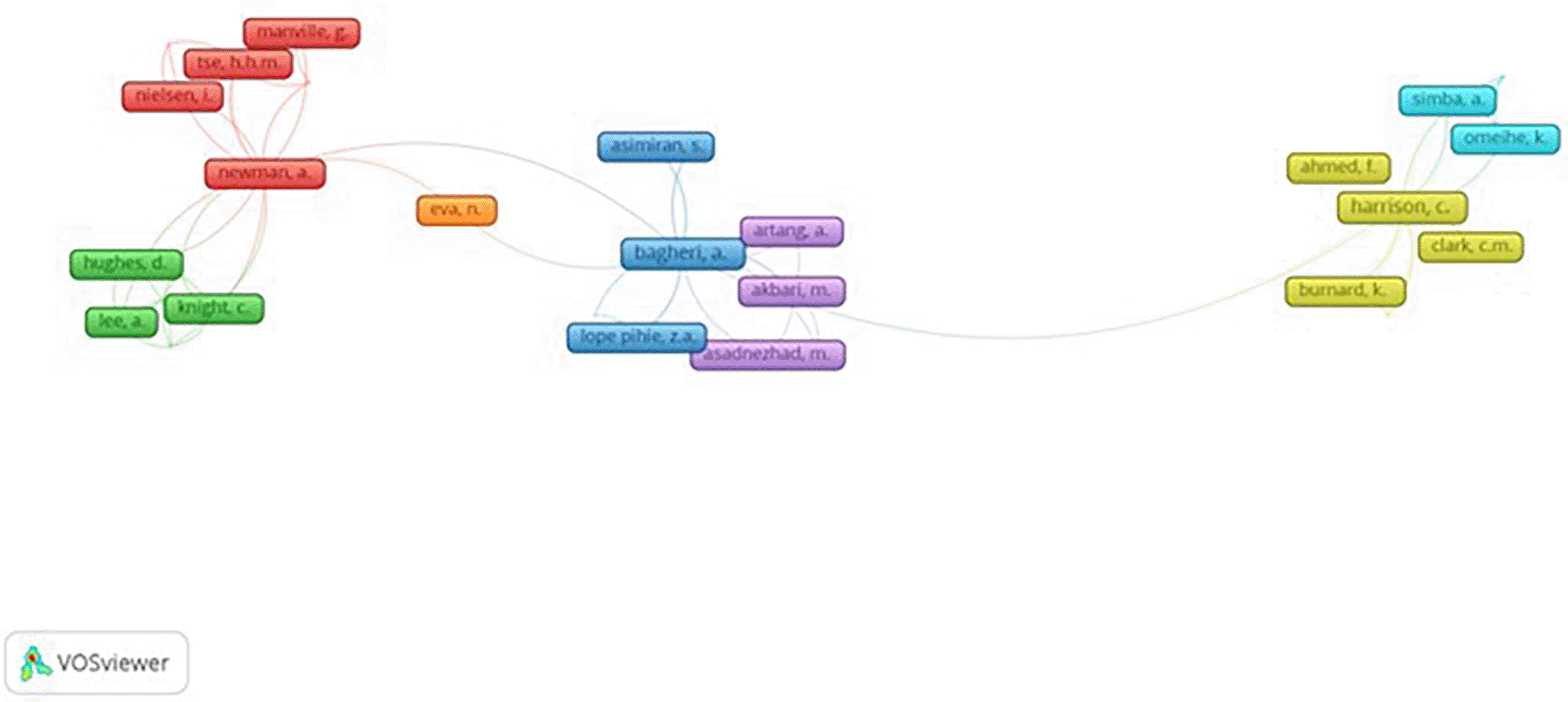
The orange group of authors consists only of Eva, N., who was connected to the red group through a collaboration with Newman, A. This suggests that although Eva N. does not collaborate well within her own group, she still plays an important role in the overall network through her connection with Newman, A. Meanwhile, the group of writers in blue is led by Bagheri, A., who has many collaborations with writers such as Asimiran, S., Lope Pihie, Z.A., Artang, A., Asadnezhad, M., and Akbari, M. This group shows a strong and interconnected collaboration dynamic. On the other hand, the group of authors in yellow consists of Burnard, K., Clark, C.M., Harrison, C., and Ahmed, F., which also shows close collaboration between them. The group was connected to the cyan-colored writers' group, consisting of Simba, A. and Omeihe, K., through a collaboration involving several writers from both groups. This diagram provides a clear visual picture of how these networks of authors are interconnected and demonstrates the importance of collaboration in academic research.
Table 6 provides an overview of Entrepreneurial Leadership Characteristics influence on Business Organization Outcomes. This table shows that the variables Individual Capability, Team Behaviour, Entrepreneurial Bricolage will affect Project Success. Career Growth Opportunities have an effect on Entrepreneurial performance. Entrepreneurial Opportunity Recognition, Knowledge Management Processes, Innovation Capability have an impact on Entrepreneurial success. Employee Creativity, Intrinsic Motivation will create New product development performance. Ambidextrous Learning, Ethical Behaviour, Perceived Organizational Support, Proactiveness, Risk Taking, Social Entrepreneurial encourage the improvement of Organizational performance. Subsidiary Organizational Inertia, Subsidiary Decision Autonomy, Subsidiary Task Complexity determine Subsidiary performance. Risk taking, Entrepreneurial Competencies, Entrepreneurial intentions can improve Enterprise performance.
| Categories (Themes) | Outcomes | Exemplary papers |
|---|---|---|
| Individual Capability, Team Behaviour, Entrepreneurial Bricolage | Project Success | Ahmed & Lucianetti, 2024; Latif et al., 2020; Norena-Chavez & Romani Torres, 2024; Tariq et al., 2024 |
| Career Growth Opportunities | Entrepreneurial performance | Pu, Ji, et al., 2022a |
| Entrepreneurial Opportunity Recognition, Knowledge Management Processes, Innovation Capability | Entrepreneurial success | Hussain & Li, 2022; Taleb et al., 2023 |
| Employee Creativity, Intrinsic Motivation | New product development performance | Sultan et al., 2023 |
| Ambidextrous Learning, Ethical Behaviour, Perceived Organizational Support, Proactiveness, Risk Taking, Social Entrepreneurial | Organizational performance | Imran & Aldaas, 2020; Sarmawa et al., 2020; Sipahi Dongul & Artantaş, 2023; Wu et al., 2021 |
| Subsidiary Organizational Inertia, Subsidiary Decision Autonomy, Subsidiary Task Complexity | Subsidiary performance | Sarabi et al., 2020 |
| Risk Taking, Entrepreneurial Competencies, Entrepreneurial intentions | Enterprise performance | Khan et al., 2024 |
Network visualization is seen in figure 5. The most widely used keyword is entrepreneurial leadership according to the topic carried out by the author. Keywords related to individual analysis units consist of innovatice work behavior, creative self efficacy, ethical entrepreneurial leader, absorptive capability, entrepreneurial bricolage, and adaptive innovation. Meanwhile, keywords related to organizational analysis units consist of innovation performance. In this network visualization, it also displays information on keyword theory that are often used in articles is upper echelons theory. The leadership styles that are often related to the topic of EL. Agriculture students are also quite interesting topics in EL's research. It is possible for Agriculture students to have a unique character in providing leadership in an organization. The countries that are often used to conduct EL research is African.
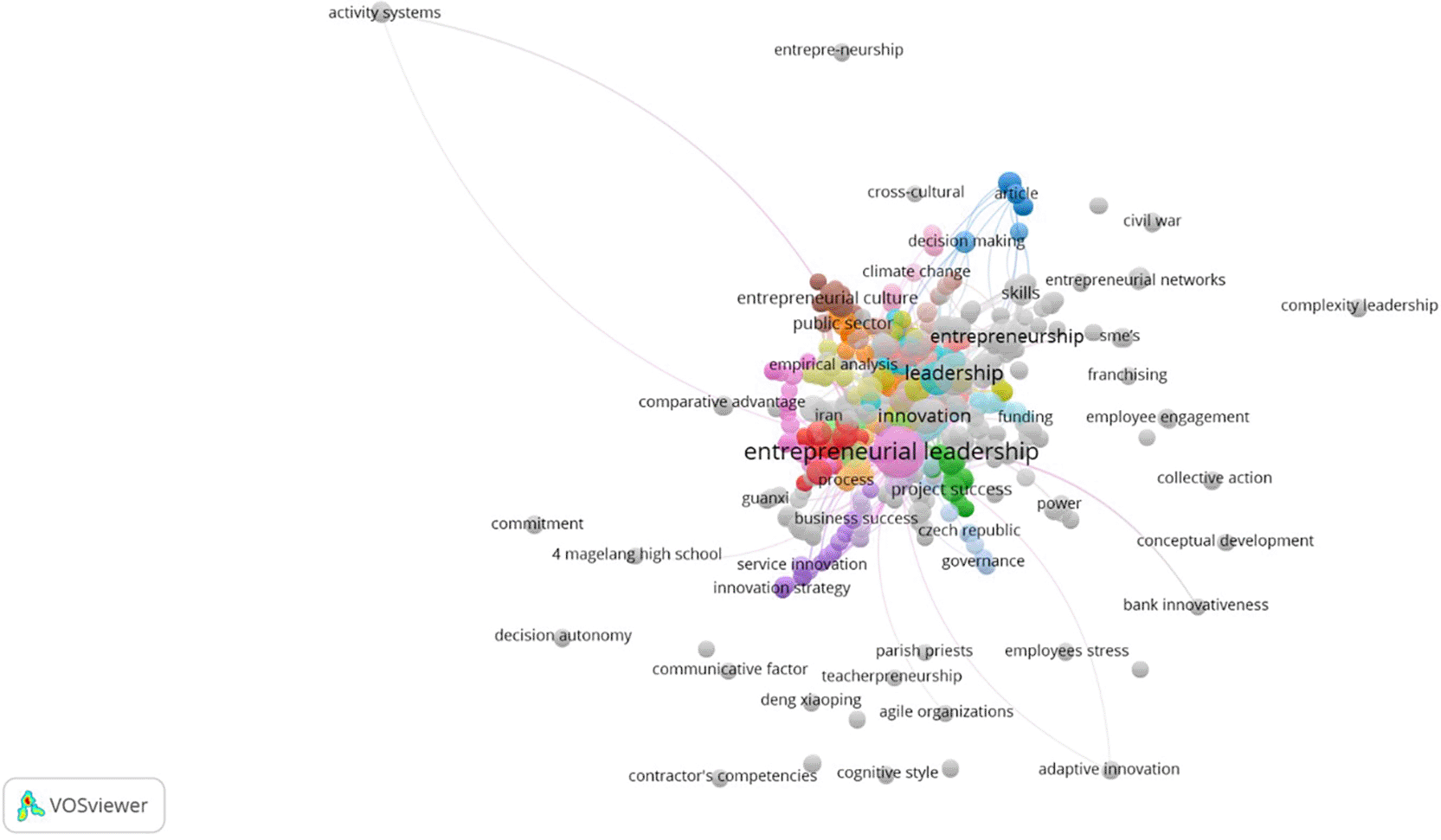
Table 7 shows the difference between Employee Skills and Entrepreneurial Leadership Factors. To achieve sustainable competitive advantage, technical/business skills are required to achieve Big Data Analytic Capilibity, Knowledge-based Dynamic Capability, Infrastructure Capability, Dynamic Capabilities. Conceptual Skills are needed to support Product Innovation, Know-Source Management Processes, Green Innovation Behavior, Idea Generation, Strategic Flexibility, Design Thinking, Employees Intellectual Agility, and Supply Chain Resilience. Interpersonal skills focus on Innovation Work Behaviour, Employee Creativity, Proactive Work Behavior, Tacit Knowledge Sharing, Entrepreneurial Intentions, Intrinsic Motivation, and Affective Commitment. The most important skills to have are Entrepreneurial skills to create Entrepreneurial Passion, Entrepreneurial Opportunity Recognition, Individual Creativity, Self Efficacy, and Entrepreneurial Resilience.
| Categories (Themes) | Entrepreneurial leadership factors | Exemplary papers |
|---|---|---|
| Technical/business skills |
| Nguyen et al., 2021; Tariq et al., 2024 |
| Conceptual skills |
| Ali & Ghildiyal, 2023; Bagheri & Akbari, 2018; Fontana & Musa, 2017; Haq & Aslam, 2023; Hensellek et al., 2023; Hoang, Nguyen, et al., 2023b; N. Hussain & Li, 2022; Malibari & Bajaba, 2022; Rehman et al., 2021 |
| Interpersonal skills |
| Abualoush et al., 2022; Awad et al., 2024; Bagheri, Akbari, et al., 2022a; Bagheri, Newman, et al., 2022b; Bilal et al., 2022; O. Ercantan & Eyupoglu, 2022; Hoang, Nguyen, et al., 2023b; G. Hussain et al., 2023; Iqbal et al., 2022; Islam et al., 2024; Khan et al., 2024; Li et al., 2020; Mehmood, Jian, & Akram, 2020a; Newman, Tse, et al., 2018a; Pu, Ji, et al., 2022a; Shabeer, 2023; Yang et al., 2019a; Zhang et al., 2023 |
| Entrepreneurial skills |
| Dhakal et al., 2022; Khan et al., 2024; Taleb et al., 2023 |
Table 8 outlines the Outcomes of the Entrepreneurial Leadership Model. Individual outcomes in Entrepreneurial Leadership research consist of Big Data Analytic Capilibity, Knowledge-based Dynamic Capability, Knowledge Infrastructure Capability, Dynamic Capabilities, Product Innovation, Knowlede Management Processes, Green Innovation Behavior, Idea Generation, and Employees' Intellectual Agility. In addition, Entrepreneurial Leadership research also has an impact on team outcomes in the form of Team Creativity, Team Reflexivity, Team Innovation Culture, and Team Entrepreneurial Passion. Organizational Outcomes from Entrepreneurial Leadership research are in the form of Project Success, Entrepreneurial Performance, Entrepreneurial Success, Supply Chain Performance, Business Performance, Bank Performance, and Job Performance.
Social Cognitive Theory (SCT) describes how individuals shape behavior through interactions between environment, experience, and cognition. In this context, this theory is widely used to explain innovative and proactive behavior in organizations. Bilal et al., (2021) states that proactive work behavior is influenced by self-perception, past experiences, and future expectations that are in accordance with the observation and reinforcement mechanisms in the SCT. Employees with high self-confidence and social support tend to exhibit initiative and anticipatory behaviors. Bagheri et al., (2022b); Cai et al., (2019); Newman, Neesham, et al., (2018); Sultan et al., (2023) emphasizing that an individual's belief in his or her creative self-efficacy is a central aspect of SCT. This belief encourages individuals to try new approaches, solve problems innovatively, and not be afraid to fail. Sultan et al., (2023) Show that intrinsic motivation (the internal drive to do something because it is fun or meaningful) is aligned with self-efficacy beliefs and personal values in SCT. Ercantan et al., (2024); Hoang et al., (2022); Iqbal et al., (2022) concludes that innovative behaviors are the result of a combination of self-efficacy, observational learning, and a work environment that supports experimentation. SCT describes how individuals model the behavior of innovative colleagues.
Latif et al., (2020) argues that knowledge management processes (such as acquisition, sharing, and deployment) are core components in improving organizational innovation capabilities. KBV emphasizes that organizations must create a system that allows the effective use of knowledge. N. Hussain & Li, (2022); Taleb et al., (2023) highlighting that entrepreneurial success is heavily influenced by the way knowledge is developed and managed. KBV explained that the combination of explicit and tacit knowledge is the foundation in creating entrepreneurial value.
RBV explains that unique, unreplicable, and valuable internal resources are key to long-term competitive advantage. In this context, leadership and opportunity recognition are two forms of strategic human resources. Study by Abdullah Alshammari et al., (2023); Al Mamun et al., (2018); Ercantan et al., (2024); Getaneh Kebede et al., (2024); Hai et al., (2021); Khan et al., (2024); Norena-Chavez & Romani Torres, (2024); Razzaque et al., (2024); Taleb et al., (2023); Wahab & Tyasari, (2020); Wu et al., (2021) shows that entrepreneurial leadership is a strategic resource that affects business performance. RBV views this capability as a unique resource that allows organizations or individuals to pursue new opportunities before competitors.
Research on entrepreneurial Leadership has seen significant growth in the last decade, with major contributions from developed countries such as the United States and leading organizations such as Harvard University. The journal "Journal of Business Venturing" emerged as the primary source for this study. The research focus that is often encountered includes innovation, organizational performance, and intrinsic motivation, with transformational leadership theory and intellectual capital as the dominant theoretical basis. In the future, research is expected to continue to develop with a focus on digitalization and globalization in the context of entrepreneurial Leadership. The areas of research that are anticipated to be the focus in the future include the role of entrepreneurial Leadership in the context of digitalization and globalization. The research is also expected to explore more deeply the impact of new technologies and innovative business models on entrepreneurial Leadership.
Research related to EL can also be done by comparing the conditions of two or more countries. EL is widely carried out in business organizations, it needs to be expanded in non-business sectors such as education and health organizations. There are still many limitations of the research conducted in this study. This research is primarily based on articles available in Scopus, which may not include all publications related to Entrepreneurial leadership, so there is a possibility of bias in the publications accessed. The EL variable can also be used as a moderation and mediation variable. This is because currently many people have conducted research using EL variables to be Variable Independent and Variable Dependent.
| Views | Downloads | |
|---|---|---|
| F1000Research | - | - |
|
PubMed Central
Data from PMC are received and updated monthly.
|
- | - |
Provide sufficient details of any financial or non-financial competing interests to enable users to assess whether your comments might lead a reasonable person to question your impartiality. Consider the following examples, but note that this is not an exhaustive list:
Sign up for content alerts and receive a weekly or monthly email with all newly published articles
Already registered? Sign in
The email address should be the one you originally registered with F1000.
You registered with F1000 via Google, so we cannot reset your password.
To sign in, please click here.
If you still need help with your Google account password, please click here.
You registered with F1000 via Facebook, so we cannot reset your password.
To sign in, please click here.
If you still need help with your Facebook account password, please click here.
If your email address is registered with us, we will email you instructions to reset your password.
If you think you should have received this email but it has not arrived, please check your spam filters and/or contact for further assistance.

Comments on this article Comments (0)