Keywords
Attitudes, COVID-19, Knowledge, Practice behavior, Taxi drivers, Structural equation modeling

This article is included in the Pathogens gateway.
This article is included in the Global Public Health gateway.
This article is included in the Coronavirus (COVID-19) collection.
Attitudes, COVID-19, Knowledge, Practice behavior, Taxi drivers, Structural equation modeling
Although the World Health Organization declared the end of the global coronavirus disease 19 (COVID-19) health emergency in 2023,1 the risk of transmission persists in many countries.2 Understanding transmission dynamics is essential for preventing and managing future pandemics. Taxi drivers represent a relevant occupational group in this context, as they play a key role in ensuring their passengers’ health and safety.3 Since COVID-19 is transmitted mainly through respiratory droplets or nasal secretions,4 drivers face a heightened risk of both direct and indirect exposure due to close proximity with passengers.5
Evidence from several metropolitan areas in Europe and Asia indicates that taxi drivers face disproportionately high infection risks. For example, cases in New York revealed that taxi drivers became infected after transporting COVID-19 patients to hospitals.6 In Thailand, taxis serve as a critical link between major airports and tourist destinations. Bangkok’s two largest international airports, Suvarnabhumi and Don Mueang, handled over 106 million passengers in 2019, serviced by approximately 80,000 registered taxis, many with two alternating drivers.7,8 Such conditions, characterized by confined spaces, limited ventilation, and the inability to identify infected passengers, create a high-risk environment for disease transmission. Indeed, one of the first reported COVID-19 cases in Thailand involved a local taxi driver.9
Pandemic control measures are closely linked to knowledge, attitude, and practices (KAP), a framework grounded in the “KAP theory.” This theory posits that behavioral changes occur sequentially through knowledge acquisition, attitude formation, and practice adoption ( Figure 1).10 In the context of infectious disease outbreaks, early and accurate knowledge enables individuals to recognize risk behaviors and engage in protective action.11 However, improving knowledge and attitudes in the midst of an outbreak remains challenging.12 Timely recognition of symptoms and awareness of high-risk behaviors are critical for reducing viral spread, while early diagnosis and supportive care, specifically preventive measures for drivers, further contribute to containment.13,14 Prior studies consistently show that KAP levels influence the effectiveness of prevention and management of illness.15–18
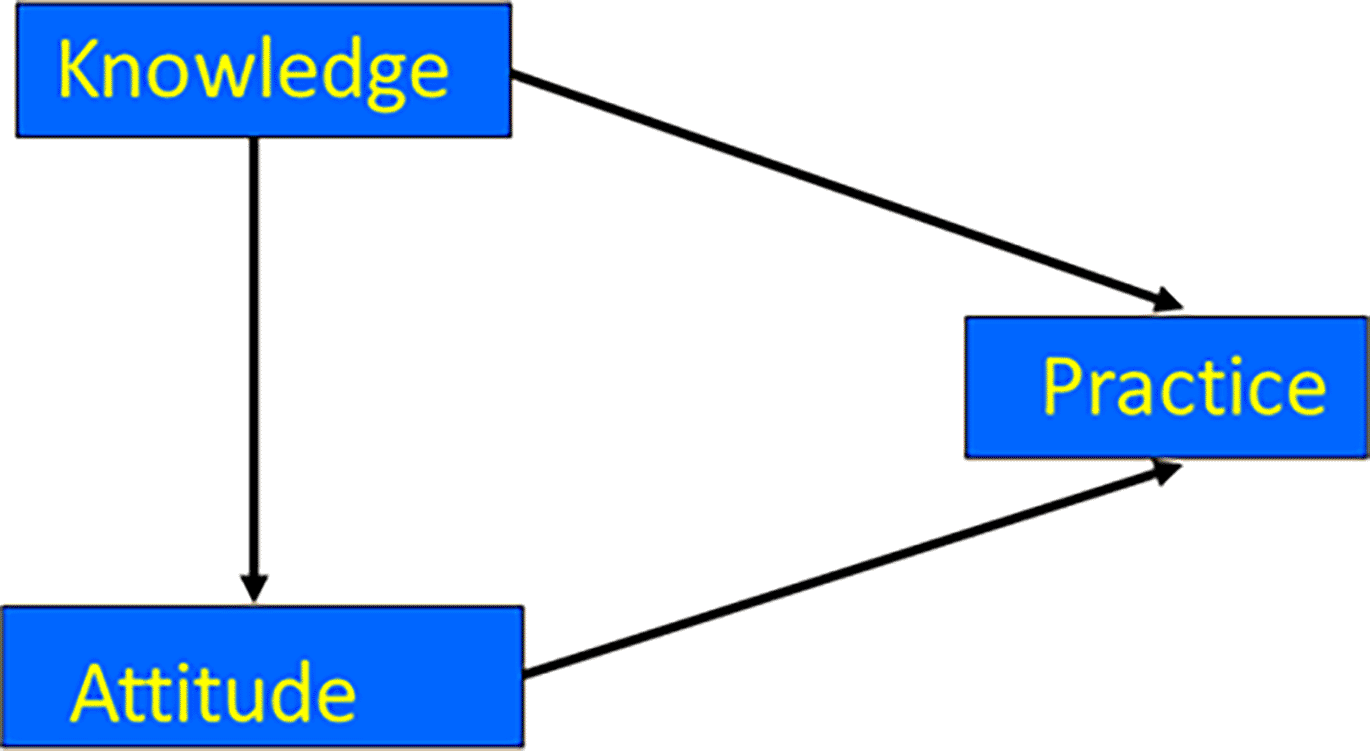
Solid arrows represent the hypothesized direct effect between constructs. Knowledge is assumed to influence both attitudes and practices, while attitudes are hypothesized to influence practices.
Access to reliable information empowers individuals to make evidence-based decisions, enhancing risk comprehension, and fosters community participation. The COVID-19 pandemic underscored the importance of rapid and accurate information dissemination. Governments bear the responsibility of providing clear, timely, and transparent information, while also countering misinformation that undermines preventive efforts. Nevertheless, standard operating procedures were frequently disrupted, and access to information, particularly for high-risk occupational groups outside healthcare, was limited.19–24
Despite numerous KAP studies conducted among healthcare providers and the general public,25–29 little attention has been given to taxi drivers, who remain a vulnerable group with unique occupational risks. Assessing their KAP is essential for informing effective prevention and control strategies.
Traditional KAP research has primarily relied on descriptive statistics and bivariate analysis, which, although informative, are limited in their ability to explain causal mechanisms.30 Structural equation modeling (SEM) addresses this gap by allowing examination of both direct and indirect effects, inclusion of latent constructs, and assessment of measurement error.30–32
These strengths make SEM particularly suitable for exploring the complex interrelationships among KAP factors.
To date, no study in Thailand has examined the relationships between KAP toward COVID-19 using SEM. This study, therefore, aimed to assess these relationships among airport taxi drivers during the pandemic and to identify causal pathways. The findings are expected to inform policies and guidelines for future emerging infectious disease control.
This cross-sectional study assessed the associations between information access, KAP behaviors related to COVID-19 prevention among airport taxi drivers in Thailand during the pandemic.
Participants were recruited from taxi service centers at Suvarnabhumi and Don Mueang International Airports, both operated under the jurisdiction of the Airports of Thailand (AOT). Convenience sampling combined with the snowball technique was applied. The inclusion criteria were: (1) actively providing passenger services during the study period; (2) at least 12 months of airport taxi services experience; (3) ability to complete a smartphone-based questionnaire accessed via QR code; and (4) willingness to participate. Drivers who lacked smartphone access were excluded.
Sample size estimation followed SEM’s RSS table for a population of 80,000, which recommended a minimum of 382 participants.33 To accommodate potential dropouts and incomplete data, the target size was set at 445 participants. This aligns with Memon et al. (2020), who note that samples between 160 and 300 observations are generally adequate for multivariate techniques such as CB-SEM and PLS-SEM.34
Based on the KAP framework, the research team developed the Knowledge, Attitude toward Prevention, and Practice of Preventive Behaviors questionnaire, using guidelines for COVID-19 prevention in community and public transportation settings.35,36 The KAP model is widely used in behavioral research to assess determinants of health-related behaviors.37
The questionnaire consisted of four parts:
1. Demographic and occupational characteristics: age, working hours per day, years of experience as a taxi driver, underlying diseases (hypertension, diabetes, cardiovascular disease, chronic respiratory disease, or cancer), and access to COVID-19 information.
2. Knowledge of COVID-19: 15 true/false items (correct = 1 point, incorrect = 0; score range 0–15).
3. Attitude toward COVID-19 prevention: 10 items measured on a 5-point Likert scale (1 = strongly disagree to 5 = strongly agree; score range 10–50).
4. Practice of preventive behaviors: 21 items measured on a 5-point Likert scale (0 = never to 4 = always; score range 0–84).
Cut-off values were calculated using quartiles to ensure balanced distribution across categories. Scores were classified as good (≥third quartile), moderate (interquartile range), or undesirable (< first quartile).
Validity and reliability: Content validity was reviewed by five experts: an infectious disease specialist, a physician–epidemiologist, an infection control nurse, a nurse-epidemiologist, and a community health nurse. Index of Item Objective Congruence values ranged from 0.60 to 1.00. Pilot testing was conducted with 30 taxi drivers at the airport stands. Cronbach’s alpha values were 0.80 for knowledge, 0.67 for attitude, and 0.85 for practice, indicating reliability.
Data collection was conducted from April 15 to 22, 2020 by trained researchers specialized in community infectious diseases. To ensure safety, physical distancing of at least 2 meters was maintained, and the researcher wore gloves and masks. Surveys were administered in a well-ventilated room at airport taxi service centers.
The questionnaire was prepared in Google Forms and distributed via QR code. A researcher was present onsite to assist. Participants completed the questionnaire using their smartphones, and responses were submitted electronically and verified immediately.
Data were analyzed using IBM® SPSS® Statistics version 28.0, with p < 0.05 considered statistically significant. Continuous variables were summarized using means and standard deviations (SD), and categorical variables with frequencies and percentages.
Spearman’s rank correlation was used to assess associations between information access and KAP scores. Parameter estimation for SEM was based on maximum likelihood, with non-significant variables excluded after exploratory factor analysis. Pearson’s correlation was conducted alongside SEM to test the following hypotheses:
1. Knowledge about COVID-19 affects attitudes toward preventive practices.
2. Knowledge about COVID-19 affects preventive practices.
3. Attitude affects the implementation of preventive practices.
SEM and path diagrams were analyzed using SPSS AMOS. Mediating effects in the final model were assessed using the bootstrap method.38 A bias-corrected 95% confidence interval (CI) from 5,000 bootstrap samples was applied to test the significance of direct and indirect effects.39,40
Model fit was evaluated using χ2/df (CMDN/DF), standardized root mean square residual (SRMR), root mean square error of approximation (RMSEA), comparative fit index (CFI), goodness of fit index (GFI), and normed fit index (NFI). Acceptable thresholds were CMDN/DF < 3, CFI/GFI/NFI > 0.90, and RMSEA/SRMR < 0.08.41–43
Ethical approval was obtained from the Human Research Ethics Committee, Faculty of Medicine Ramathibodi Hospital, Mahidol University (No. COAMURA2020/602; Date of approval: April 14,2020). Permission for data collection was granted by the AOT. Participants were informed verbally about the study’s purpose and procedures before participation. Consent was obtained electronically via QR code before completing the questionnaire. Compensation for participants’ time was provided following the policies of the Faculty of Medicine, Ramathibodi Hospital, Mahidol University, Bangkok, Thailand.
A total of 445 participants completed the questionnaire assessing demographic characteristics, work-related factors, information access, and KAP ( Table 1). The majority of participants were male (98.7%) and middle-aged, with a mean age of 52.5 years (SD =8.4; range: 28–78 years). Participants’ work experience as taxi drivers at international airports ranged from 1–25 years, with 37.7% having worked for 9–17 years and 28.1% for ≥18 years.
| Characteristics | n | % |
|---|---|---|
| Gender | ||
| Male | 439 | 98.7 |
| Female | 6 | 1.3 |
| Age (M = 52.5 years, SD = 8.4, Min–Max = 28–78 years) | ||
| <53 years | 231 | 51.9 |
| >==53 years | 214 | 48.1 |
| Years working as a taxi driver (M = 13.7, SD = 6.6, range = 1–25 years) | ||
| =<8 years | 152 | 34.2 |
| 9–17 years | 168 | 37.7 |
| >=18 years | 125 | 28.1 |
| Working hours per day (M = 11.5, SD = 2.6, range = 4–17 hours/day) | ||
| <12 hours | 266 | 59.8 |
| >=12 hours | 179 | 40.2 |
| Had an underlying disease | 102 | 22.9 |
| Had access to COVID-19 information | 298 | 67.0 |
| * Source of Information * * | ||
| Television | 217 | 48.8 |
| 151 | 33.9 | |
| Radio | 144 | 32.4 |
| YouTube | 112 | 25.2 |
| Line app | 109 | 24.5 |
| Friends | 88 | 19.8 |
| Health personnel | 50 | 11.2 |
| Newspaper | 48 | 10.8 |
| Employer | 15 | 3.4 |
Most participants reported working long hours, with a mean of 11.5 hours per day (SD = 2.6; range: 4–17 hours/day). Despite these extended working hours, the majority reported being in good health; however, 22.9% disclosed underlying medical conditions.
Regarding information access, 67% of participants reported COVID-19-related information. The most frequently cited sources included television (48.8%), Facebook (33.9%), and radio (32.4%), followed by YouTube (25.2%). The Line messaging app (24.5%), friends (19.8%), health personnel (11.2%), newspapers (10.8%), and employers (3.4%).
KAP assessment revealed that the most participants fell into the moderate category for knowledge (40.8%), attitude (42.7%), and practices (42.24%), based on the three-level classification (good, moderate, poor).
Table 2 presents the comparison of demographic factors and KAP levels among taxi drivers, based on two cut-off point values (good vs. not good; moderate vs. poor). A significant association was found between participants’ access to COVID-19 information and their KAP scores, reflecting how information exposure influenced the practiced application of the KAP approach (P < 0.05). However, no significant association was observed between mean KAP scores and age, daily working hours, years of taxi driving experience, or the presence of underlying diseases.
Table 3 summarizes the correlation analysis of information access, KAP prevention related to COVID-19 among airport taxi drivers. The results indicate that knowledge was positively correlated with both attitudes and practices, while information access showed significant but weaker correlations with knowledge and practices. The analysis further demonstrated that participants with greater access to COVID-19 information tended to have higher knowledge levels, more positive attitudes, and more frequent engagement in correct preventive practices.
| Score | Information access | Knowledge | Attitudes | Practices |
|---|---|---|---|---|
| Information Access | 1.00 | |||
| Knowledge | 0.300** | 1.00 | ||
| Attitudes | 0.077* | 0.267** | 1.00 | |
| Practices | 0.132** | 0.392** | 0.305** | 1.00 |
Table 4 reports the standardized path coefficients (β) for the direct, indirect, and total effects in the final structural model as shown in Figure 2. Knowledge had a direct positive effect on practices (β = 0.240, p < 0.001) and attitudes (β = 0.259, p < 0.001). Attitudes, in turn, had a direct positive effect on practices (β = 0.282, p < 0.001). Knowledge also indirectly influenced practices through attitudes (β = 0.073, p < 0.001), resulting in a stronger total effect (β = 0.313, p < 0.001). Furthermore, information access directly enhanced knowledge (β = 0.315, p < 0.001), which subsequently improved attitudes and practices through both direct and mediated pathways. However, the direct effect of information access on attitudes was not statistically significant.
| Model paths | Direct effect | Indirect effect | Total effect | ||||||
|---|---|---|---|---|---|---|---|---|---|
| β | 95% CI | β | 95% CI | β | 95% CI | ||||
| LL | UL | LL | UL | LL | UL | ||||
| Knowledge ➔ Practices | 0.240** | 0.154 | 0.325 | - | - | - | - | - | - |
| Knowledge ➔ Attitude | 0.259** | 0.168 | 0.351 | - | - | - | 0.259** | 0.168 | 0.351 |
| Knowledge ➔ Attitude ➔ Practices | - | - | - | 0.073** | 0.038 | 0.108 | 0.313** | 0.224 | 0.401 |
| Attitude ➔ Practices | 0.282** | 0.198 | 0.367 | - | - | - | 0.282** | 0.197 | 0.367 |
| Information Access ➔ Knowledge | 0.315** | 0.234 | 0.397 | - | - | - | 0.315** | 0.233 | 0.397 |
| Information Access ➔ Attitude | 0.024 | −0.071 | 0.118 | - | - | - | - | - | - |
| Information Access ➔ Knowledge ➔ Attitude | - | - | - | 0.082** | 0.044 | 0.119 | 0.105** | 0.013 | 0.198 |
| Information Access ➔ Knowledge & Attitude ➔ Practice | - | - | - | 0.105** | 0.059 | 0.151 | 0.105** | 0.059 | 0.151 |
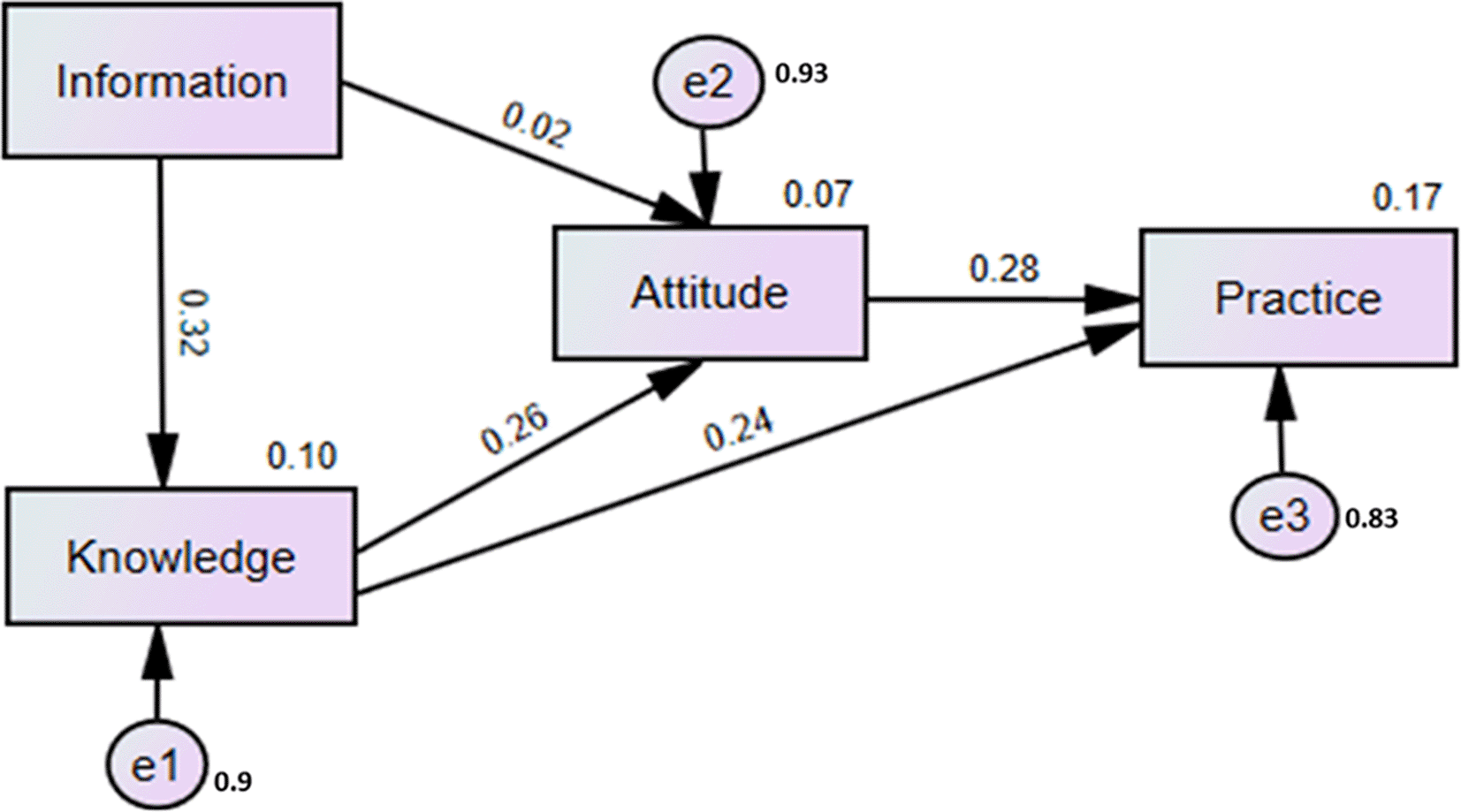
The model incorporation information accessibility as an exogenous factor influencing knowledge and subsequent pathways to attitudes and practices.
Model fit indices indicated good model adequacy: χ2(1) = 2.912, p = 0.0875; CFI = 0.988; IFI = 0.988; GFI = 0.997; AGFI = 0.967; NFI = 0.983; TLI = 0.929; RMSEA = 0.066; and SRMR = 0.0221. All effects in the final model were statistically significant (p < 0.05), except the direct path from information access to attitudes.
This study is the first in Thailand to use SEM to explore the relationships among the KAP regarding COVID-19 among airport taxi drivers. Knowledge is a key determinant in promoting effective COVID-19 prevention and control programs, as it can positively influence both attitudes and practices. The KAP theory provides a useful framework for understanding these relationships, proposing that behavior change occurs through a three-step process: (1) acquisition of knowledge, (2) Formation of beliefs, and 3) adoption of practice.44
Our evaluation of KAP among airport taxi drivers revealed a mixed scenario. Although a significant proportion of drivers demonstrated moderate or poor KAP levels, personal characteristics, such as age, years of experience, and underlying diseases, were generally not associated with KAP, except for access to information. This finding contrasts with previous studies reporting that chronic diseases can influence higher KAP levels. One potential limitation of this study is the lack of assessment of education level, which is commonly associated with knowledge. However, studies such as Deesue et al.45 on Bangkok taxi drivers found no significant effect of education on COVID-19 preventive behaviors. Previous research has generally indicated that socioeconomic factors, including education, are linked to health behaviors.46–48 Highly educated individuals are more likely to seek health information, protective measures, and manage chronic illnesses effectively. Our findings suggest that if individuals have access to accurate information and can apply it in practice, education level may become less of a barrier to improving preventive behavior.
The results demonstrated a direct positive relationship between knowledge and attitude, and between knowledge and practice. Attitude also had a direct effect on practices, suggesting a mediating role of attitude in translating knowledge into action. These findings are consistent with prior studies. For instance, Ethiopian taxi drivers exhibited good knowledge, positive attitudes, and frequent hand hygiene practices.49 Similarly, studies in Hubei, China,50 Ethiopia,51 and Bangladesh52 reported a significant association between knowledge, attitudes, and preventive behaviors toward COVID-19. A systematic review of South and Southeast Asian populations indicated that greater knowledge increased the likelihood of practicing preventive behaviors by 1.5 times.53 These findings reinforce the core premise of the KAP theory in modifying health behaviors.30 Notably, underlying diseases were not associated with KAP levels in our sample of airport taxi drivers.
Taxi drivers are particularly at high-risk of COVID-19 infection due to occupational exposure. Public awareness campaigns, government-mandated control measures, and guidance from taxi agencies contribute to protective behaviors. Continuous media coverage emphasizing COVID-19’s severity, potential transmission of family members, and economic consequences appears to enhance adherence to preventive measures. Our study found that access to information significantly influenced knowledge and attitude, which in turn indirectly affected practices. This emphasizes that information access, while not directly related to job tasks, can improve occupational preventive behaviors through enhanced knowledge and attitudes.
Thailand was the first country outside China to report a confirmed COVID-19 case, leading to heightened public attention to all types of media.54 This aligns with evidence from Saudi Arabia indicating that early knowledge of an outbreak helps the public understand risk and adopt preventive behaviors.11 In our study, 67% of participants accessed COVID-19 information through media such as Facebook, Line, radio, television, YouTube, and friends. While taxi drivers reported adherence to airport safety standards during work, their preventive behaviors were less consistent when off duty, contributing to moderate overall KAP scores (knowledge: 40.8%). This contrasts with a study of non-airport taxi drivers in Bangkok during the second wave of the pandemic, which found no association between media-based information and preventive behaviors.45 These findings highlight the importance of timely access to reliable information, especially in the early stages of an emerging infectious disease outbreak.
The dissemination of accurate, visually appealing, and updated health information is critical to prevent misinformation and promote effective public health practices.55,56 Authorities play a central role in ensuring that populations receive valid, actionable guidance, thereby supporting behavior modification and mitigating risks associated with misinformation on social media and other channels.
Moreover, the use of a self-administered questionnaire may have introduced potential biases. Nonetheless, the SEM model, grounded in theoretical principles and supported by robust GFIs, mitigated these limitations to a considerable extent. The SEM results were further corroborated by descriptive analysis and interpreted conservatively to account for potential uncertainties. Overall, this study provides valuable insights into the relationship between COVID-19 prevention and transmission and KAP among taxi drivers in an endemic setting.
The findings suggested the need for organizational policies to strengthen supervision and promote adherence to respiratory infection disease safety standards, ensuring safe working conditions for taxi drivers. Provision of protective equipment, including masks, hand sanitizers, and a vehicle barrier, should be ensured. Taxi associations and garages should regularly raise awareness regarding respiratory infection prevention, emphasizing both the health benefits and potential severity of infection. Peer-support initiatives, such as “friends remind friends” campaigns, could enhance compliance through co-worker engagement. Furthermore, taxi service could incentivize safe practices by incorporating loans and protective equipment as part of welfare benefits.
The Occupational Health Nurses Association should play a key role in developing and implementing health policies and services aimed at improving preventive behaviors among taxi drivers. Further study should explore respiratory infection disease preventive behaviors among other public transportation drivers, such as vans and bus operators, to identify additional factors influencing preventive practices. Qualitative studies are also warranted to gain in-depth insights and develop contextually appropriate policy recommendations tailored to the transportation sector.
The findings highlight that while most drivers exhibited moderate levels of knowledge, attitude, and practice, information access significantly influenced knowledge and indirectly shaped attitudes. Moreover, knowledge exerted both direct and indirect effects on preventive practices, mediated in part by attitudes. These results underscore the importance of timely, accurate, and accessible information dissemination to support protective behaviors among high-risk occupational groups. We believe this study makes an important contribution to understanding occupational health risks and prevention strategies during pandemics. By employing SEM, our work moves beyond descriptive statistics to reveal causal mechanisms linking knowledge, attitudes, and behaviors. These insights not only enhance theoretical understanding of KAP relationships but also provide practical implications for health policymakers in designing targeted interventions for vulnerable worker populations.
Petcharat Kerdonfag ([email protected]) Co- Corresponding author: Supunnee Thrakul ([email protected]) Author roles: Petcharat Kerdonfag: Conceptualisation and Initiation, Methodology, Funding acquisition, Project administration, Supervision, Data collection, Formal analysis, interpretation of data, Discussion, writing‐original draft, validation, review & editing; Supunnee Thrakul: Conceptualisation, Investigation, Methodology, Project administration, Supervision, Data collection, carried out analysis, interpretation, of data, discussion, Validation, Writing – review & editing; Siriluk Apivanich: Conceptualisation, Supervision, Validation, Writing – review & editing; Poolsuk Janepanish Visudtibhan: Conceptualisation, Funding acquisition, methodology, Resources, Validation, Writing – review & editing
| Views | Downloads | |
|---|---|---|
| F1000Research | - | - |
|
PubMed Central
Data from PMC are received and updated monthly.
|
- | - |
Provide sufficient details of any financial or non-financial competing interests to enable users to assess whether your comments might lead a reasonable person to question your impartiality. Consider the following examples, but note that this is not an exhaustive list:
Sign up for content alerts and receive a weekly or monthly email with all newly published articles
Already registered? Sign in
The email address should be the one you originally registered with F1000.
You registered with F1000 via Google, so we cannot reset your password.
To sign in, please click here.
If you still need help with your Google account password, please click here.
You registered with F1000 via Facebook, so we cannot reset your password.
To sign in, please click here.
If you still need help with your Facebook account password, please click here.
If your email address is registered with us, we will email you instructions to reset your password.
If you think you should have received this email but it has not arrived, please check your spam filters and/or contact for further assistance.

Comments on this article Comments (0)