Keywords
Kidney failure, Initiation of hemodialysis, Lung congestion, B line, Lung ultrasonography

This article is included in the Health Services gateway.
Kidney failure, Initiation of hemodialysis, Lung congestion, B line, Lung ultrasonography
Chronic kidney disease (CKD) is defined as an abnormality of kidney structure or function that occurs for at least 3 months, characterized by a decrease in the glomerular filtration rate (GFR) <60 ml/minute/1.73 m2 and has a negative impact on health. The CKD classification system is based on 3 categories, namely cause (C), Glomerular Filtration Rate (GFR), and degree of albuminuria (A), abbreviated as CGA. Kidney failure is defined as patients with stage 5 CKD.1
Progressive loss of glomerular filtration function leads to fluid retention, leading to fluid overload. This condition can manifest as pulmonary congestion, which is common in patients with kidney failure. Fluid overload typically causes symptoms in kidney failure and is often associated with underlying conditions, such as hypertension, congestive heart failure, and left ventricular hypertrophy. Fluid overload, or hypervolemia, is a significant problem that frequently occurs in patients with chronic kidney disease, with increasing morbidity and mortality. It can be seen in both non-dialysis and dialysis patients.2,3
A study by Khan et al.,4 which examined patients with non-dialysis kidney failure, showed that the most common fluid status in these patients was hypervolemia at 43.4%, while euvolemia and hypovolemia were next at 36.2% and 20.5%, respectively.
Patients with volume overload status have been shown to have a negative impact on the progression of kidney failure. Research by Hung et al.5 showed that non-dialysis kidney failure patients with fluid overload experienced a significantly worsening glomerular filtration rate compared with kidney failure patients without fluid overload (~4.3 ml/min/1.73 m2/year vs. ~1.7 ml/min/1.73 m2/year).
Numerous objective methods, from the non-invasive tools such as spirometry, chest X-ray, natriuretic peptide measurement, blood volume monitoring, and bioimpedance analysis (BIA), have been extensively investigated to assess volume status and management in dialysis patients with kidney failure. Research conducted by Fikry et al.6 showed that the failure rate of spirometry was only 1.9% and the adverse event rate was only 0.44%. However, all these methods possess significant limitations and yield unsatisfactory outcomes when employed in isolation.6,7
Lung ultrasound (LUS) has been shown to effectively assess pulmonary congestion. It is non-invasive, radiation-free, and can be performed at the bedside by experienced operator. Lung ultrasound can evaluate extravascular lung fluid volume by identifying the B-line. This finding not only quantitatively and qualitatively evaluates lung fluid volume status but also assesses the effectiveness of hemodialysis therapy by observing the B-line: its disappearance indicates effective fluid removal through the hemodialysis process.8–10
Research conducted by Kaysi, et al.11 showed that improvement in pulmonary congestion as assessed by a decrease in the total B-line value can be seen since the initiation of hemodialysis (pre-dialysis: 16 ± 5.53 and post-dialysis: 15.3 ± 6.63) and continues to be seen after the second hemodialysis (pre-dialysis: 16.3 ± 5.27 and post-dialysis: 13.6 ± 5.83). This study also stated that a significant decrease in the total B-line was seen after 1 month since undergoing hemodialysis initiation (17.4 vs 8.5, p < 0.0001).
Assessing the degree of pulmonary congestion in patients with kidney failure undergoing hemodialysis initiation is crucial for assessing the success of hemodialysis. Lung ultrasound is a potentially useful modality due to its relatively rapid and sensitive performance. However, few studies have assessed the degree of pulmonary congestion before and after hemodialysis initiation, which is the rationale for this study.
A prospective pre-and-post test research was conducted among 61 patients with kidney failure scheduled to undergo initiation of hemodialysis in Wahidin Sudirohusodo Hospital in Makassar, Indonesia, from May to September 2025.
The study population included individuals over 18 years of age diagnosed with kidney failure and were about to undergo initiation of hemodialysis, who visited Wahidin Sudirohusodo Hospital and expressed their willingness to participate by signing an informed consent form, and without conditions that are going to biased the research; such as acute kidney injury, hepatic cirrhosis and liver failure, interstitial lung disease, and patients who are hemodynamically unstable. The minimum sample size for our study was 61, utilizing a sample size formula. Participants were chosen through purposive sampling.
Prior to participation, written informed consent was obtained from each individual, following a thorough explanation of the procedures involved. The researcher collected data on all kidney failure patients who were admitted to Wahidin Sudirohusodo Hospital in Makassar, Indonesia, and were going to undergo initiation of hemodialysis and meet the inclusion criteria.
Prior to initiation of hemodialysis, lung ultrasounds were performed by the same operator on each patient, pre and post hemodialysis. The method used is the full 28 sites and the placement of the transducer followed the 28 sites protocol. B-lines are then measured on each site and summed to obtain pre-dialysis total B-line. Degree of lung congestion is determined by the number of B-lines. After the initiation of hemodialysis, the process is then repeated. Lung ultrasounds were reperformed with the same 28-sites method. B-lines are then measured and quantified. Degree of lung congestion is re-evaluated and the alterations are therefore measured.
Assessment of Kidney failure
Kidney failure is defined by the decreased of glomerular filtration rate (GFR) <15 ml/min/1.72 m2 according to Kidney Disease Improving Global Outcomes (KDIGO) criteria, or chronic kidney disease stage 5.1
initiation of hemodialysis
Initiation of hemodialysis is a condition where patient with kidney failure first time undergone a 2-hour hemodialysis session. Initiation of hemodialysis can be planned or unplanned; in planned patients, the vascular access modality is already determined and ready for use; in unplanned patients, dialysis is performed using the most readily available vascular access (in this case, a central venous catheter).12
lung ultrasound and degree of pulmonary congestion
Lung ultrasound was performed to assess pulmonary congestion by assessing the number of B-lines. The pulmonary ultrasound device used was a portable ultrasonograph (MyUSG medical ultrasound with serial number UXCCCJH062). This examination was performed by the same two operators (one a nephro in each patient and at each hemodialysis session. Transducer placement was performed according to the 28-site method. Evaluation of pulmonary congestion was assessed by observing the B-lines.12 A B-line count of <15 indicates mild pulmonary congestion, 15-30 lines indicates moderate pulmonary congestion, and >30 lines indicates severe pulmonary congestion. A B-line count of <5 indicates no pulmonary congestion. Improvement in pulmonary congestion is indicated by a reduction in its severity relative to the last assessment.12
Acute kidney injury
Acute kidney failure is defined by the presence of one or more of the following criteria: (1) Increase in serum creatinine ≥0.3 mg/dl within 48 hours, or (2) Increase in serum creatinine ≥1.5 times the baseline level within 7 days, or (3) Urine volume <0.5 ml/kg/hour within 6 hours.13
Liver cirrhosis
Liver cirrhosis is a diffuse process characterized by extensive fibrosis and alterations in liver architecture, resulting in abnormal regenerative nodules, representing the terminal phase of chronic liver injury. Diagnosis is confirmed by radiological evaluation using ultrasound, CT scan, or abdominal MRI, which reveals a reduced liver size with irregular edges. Transient liver elastography examination idicates fibrosis grade 4.14
Pneumonia and interstitial lung disease
Pneumonia is a respiratory tract infection affecting lung parenchyma. The diagnosis of pneumonia is based on the clinical syndrome (fever, dyspnea, cough, and sputum production), accompanied by radiological findings from chest radiograph or chest CT scan, which may reveals lobar consolidation, infiltrates, and/or cavities. Interstitial lung disease (IBD) is a group of diseases involving the alveolar epithelial lining, capillary endothelium, and other supporting lung tissues, including the perilymphatic and perivascular spaces. It is characterized by diffuse fibrosis, extensive scarring, hilar retraction, or hyperinflation on the chest radiograph. High-resolution CT scans (HRCT) may reveal peripheral, subpleural, basilar-predominant reticular opacities with a combination of basilar honeycombing.14
Hemodynamic instability
Hemodynamic instability is defined as the presence of one or more of the following criterias: 1) Hypotension (systolic blood pressure <90 mmHg); 2) Signs of tissue hypoperfusion (peripheral vasoconstriction, decreased venous filling, cold extremities, capillary refill time >2 seconds); 3) Increased blood lactate >50% of the upper limit of normal; 4) Acute loss of consciousness associated with hemodynamic changes.15
Encephalopathy
Encephalopathy is defined as a decreased level of consciousness resulting from cerebral dysfunction caused by the accumulation of uremic toxins, also known as uremic encephalopathy.16
Refractory hyperkalemia
Refractory hyperkalemia is defined as a severe, life-threatening elevation of serum potassium levels (usually >7 mmol/L) that cannot be reduced by multiple pharmacological treatments (such as intravenous calcium, insulin, and potassium binders).17
Oliguria and anuria
Oliguria is defined as a urine output <0.5 ml/kg/hour or <400 ml/24 hours, while anuria is defined as a urine output <100 ml/24 hours.18
Uremia
Uremia is defined as a clinical syndrome resulting from the accumulation of uremic toxins in the body (such as nausea, vomiting, fatigue, muscle pain, and pruritus), resulting from excessively high urea levels (serum urea >200 mg/dl or blood urea nitrogen >90 mg/dl).19
Data were analyzed using the Statistical Package for the Social Sciences (SPSS) version 25. Data analysis methods used in this research are Kolmogorov-Smirnov test to assess data normality, Paired T-Test, and McNemar Test with a significance value of p < 0.05. Results are presented in a narrative format, supplemented by tables to enhance clarity and understanding of the findings.
In this study, a total of 23 male and 38 female participants, aged 27 to 82 years (mean age: 52 years), were enrolled. Of the participants, 78.7% were aged <60 years, while 21.3% were older than 60 years. Of the 61 subjects in pre-hemodialysis (pre-HD) conditions, 9 subjects (14.8%) had no pulmonary congestion, 18 subjects (29.5%) had mild pulmonary congestion, 17 subjects (27.9%) had moderate pulmonary congestion, and 17 subjects (27.9%) had severe pulmonary congestion. Meanwhile, of the 61 subjects in post-hemodialysis (post-HD) condition, 15 subjects (24.6%) had no pulmonary congestion, 12 subjects (19.7%) had mild pulmonary congestion, 26 subjects (42.6%) had moderate pulmonary congestion, and 8 subjects (13.1%) had severe pulmonary congestion. Majority of the patients initiate hemodialysis with an indication of uremia (60,6%), followed by pulmonary edema (55,7%), oligo/anuria (50,8%), dan lastly encephalopathy and refractory hyperkalemia (18,0% dan 9,8%) respectively. It can be concluded that eighteen individuals exhibited pulmonary congestion as evidenced by B-line imaging, while lacking clinical pulmonary edema ( Table 1).
In this study, changes in the number of B-lines were found, consisting of three types of changes: decrease, increase, and no change ( Table 2). The results were as follows ( Table 2):
a) 45 subjects (73.7%) experienced a decrease in the number of B-lines post-HD, with an average of 10.2 (46.2%).
b) 3 subjects (5.0%) experienced no change in the number of B-lines post-HD.
c) 13 subjects (21.3%) experienced an increase in the number of B-lines post-HD, with an average of 4.7 (33.9%).
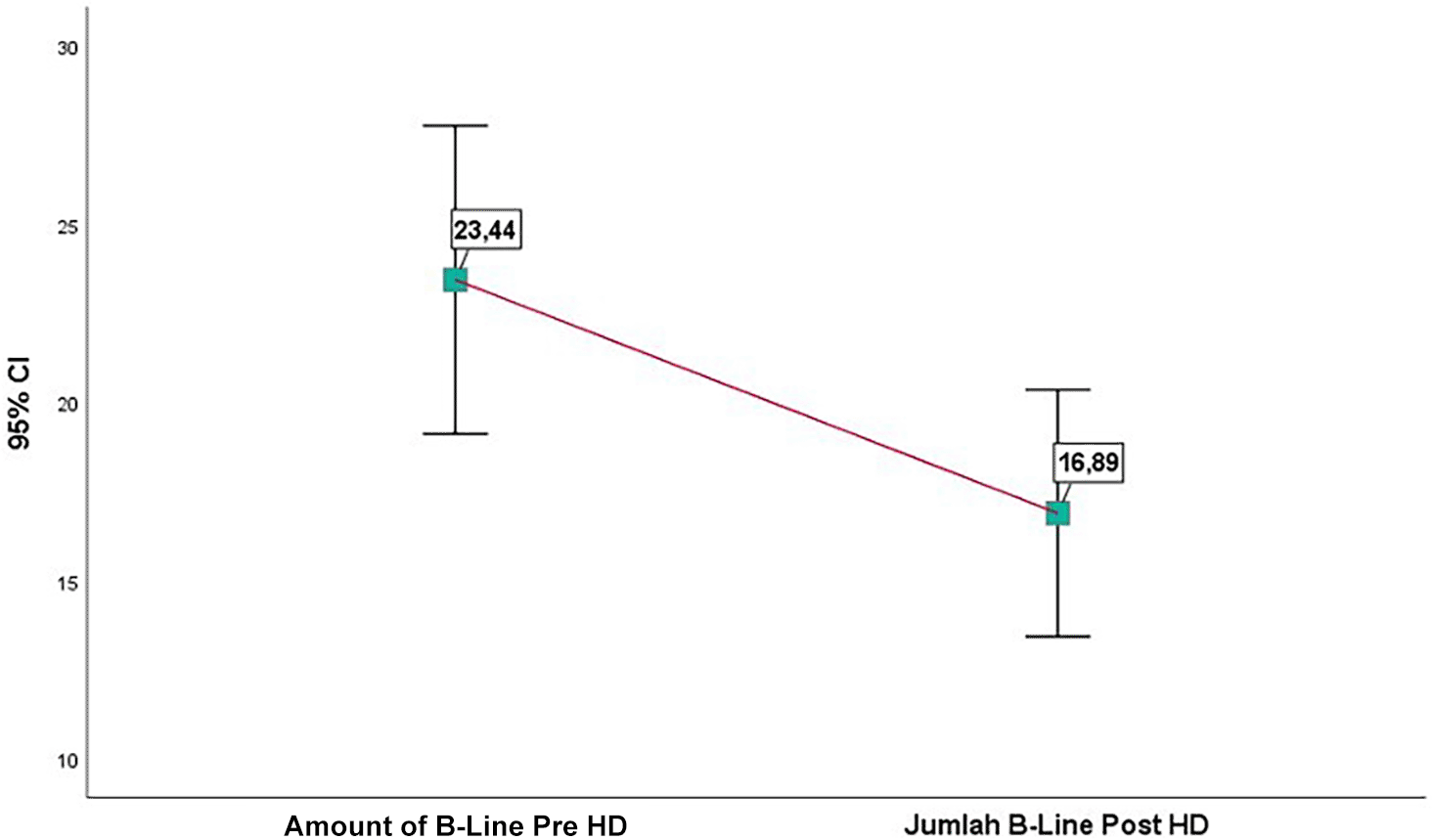
There was a significant decrease in the quantity of B-lines in post-HD compared to pre-HD, from 23.4 to 16.9 (p < 0.05, 95% CI). This signifies the impact of the initiation of hemodialysis on alterations in the quantity of B-lines ( Table 3, Figure 1)
| Variable | n | Min | Max | Mean | SD | p |
|---|---|---|---|---|---|---|
| Amount of pre-HD B-line | 61 | 1 | 73 | 23,4 | 16,9 | 0,000 |
| Amount of post-HD B-line | 61 | 0 | 54 | 16,9 | 13,5 |
There are 9 subjects who did not have pulmonary congestion in pre HD session so they were not included in the table. In this study, there were significant changes in the degree of pulmonary congestion pre- and post-HD (p < 0.05), with the following results ( Table 4):
a) Of the 17 subjects with severe congestion pre-HD, 10 (59%) decreased to moderate congestion post-HD.
b) Of the 17 subjects with moderate congestion pre-HD, 4 (24%) decreased to mild congestion post-HD.
c) Of the 18 subjects with mild congestion pre-HD, 7 (39%) decreased to non-congestive congestion post-HD.
Fluid retention is a major problem in patients with kidney failure. A multitude of reasons contribute to this phenomenon, including a progressive decline in glomerular filtration rate, activation of the renin-angiotensin-aldosterone system, and concomitant cardiovascular diseases, all of which result in sodium and water retention. This volume expansion due to fluid retention increases the heart's workload, coupled with ventricular hypertrophy and arterial stiffness, common in patients with long-standing hypertension that often accompany kidney failure. This creates a mutually exacerbating cycle between kidney failure and cardiovascular disease.5,12 A study by Tsai et al.20 demonstrated a significant positive association between pulmonary congestion and an increased risk of initiation of hemodialysis in patients with kidney failure. Therefore, pulmonary congestion is not only a clinical manifestation but also an indicator of worsening kidney function.
Lung ultrasonography is a method for assessing pulmonary congestion that has been widely studied in recent years. This technique is easy to perform, fast, radiation-free, and can be performed in real time at the patient's side. Research conducted by Mallamaci et al.21 showed that lung ultrasonography has fairly good intraprobe reproducibility; meaning the results obtained will be more or less the same even if performed by different researchers with different equipment. Research shows that the presence of B-lines on lung ultrasound is closely associated with the occurrence of fluid overload, reflected by high EVLW (r = 0.91, p 0.0001). Study by Enghard et al.22 showed that B-lines >1.5 had a sensitivity of 92.1% and a specificity of 91.7% for detecting fluid overload (AUC: 0.9419).22,23
In this study, a total of 61 subjects with kidney failure that underwent initiation of hemodialysis and who met the inclusion criteria were obtained from at Wahidin Sudirohusodo Hospital during the period of May – September 2025. The proportion of female subjects was higher at 62.3% compared to 37.7% male subjects, with 78.7% of subjects being under 60 years of age. A study conducted in the United States of all CKD patients aged 18 years and above from 2017-2020 based on data from the National Health and Nutrition Examination Survey showed that CKD was more common in women than men (14.4% vs. 11.8%),24 in line with this study. Another study conducted in Austria by Lewandowski et al.25 using data from adult CKD patients in 6 hospitals in Austria from 1989-2008 showed that CKD was also more common in women than men (12.3% vs. 6.1%). Another finding by Vosters et al.26 studying multiethnic adult CKD sufferers (Dutch, Surinamese, African, Ghanaian, Turkish, and Moroccan) living in the Netherlands also found that women dominated the CKD population compared to men (57.8% vs. 42.2%) with a mean age of 45 years for men and 44 years for women. Majority of the patients initiate hemodialysis with an indication of uremia (60,6%), followed by pulmonary edema, oligo/anuria, dan lastly encephalopathy and refractory hyperkalemia (55,7%, 50,8%, 18,0% dan 9,8%) respectively.
Based on the assessment of the degree of pulmonary congestion, in this 61 study samples, the majority of samples showed moderate and severe pulmonary congestion (27.9% in each category) in pre-HD, while the majority of samples showed moderate pulmonary congestion (42.6%) in post-HD. This is in line with research done by Mallamaci et al.,21 where it is found that approximately 63% of patients had mild to moderate pulmonary congestion before initiation of hemodialysis, while the remaining 37% had mild to no pulmonary congestion. This finding is similar to the results obtained in this study, where the majority of CKD patients before initiation of hemodialysis experienced moderate to severe pulmonary congestion. A study in Kenya by Mwango et al. involving 120 patients with kidney failure revealed that nearly all were treated for uremia syndrome (98%), followed by hyperkalemia (55%) and fluid overload (49.2%). Similar findings were reported by Alemam et al. who examined 149 patients with acute kidney failure undergoing hemodialysis, discovering that 44% required hemodialysis due to uremia, followed by fluid overload at 30% and metabolic acidosis at 10%.
This study revealed a statistically significant reduction in the number of B-lines post-HD, decreasing from 23.4 to 16.9 (p < 0.05, 95% CI). This is in line with previous research by Curto, et al.27 who conducted a study on 27 kidney failure patients undergoing chronic hemodialysis and underwent chest ultrasound (4 sites and 8 sites methods), it was found that the number of pre-HD B-lines was significantly higher than the number of post-HD B-lines in both methods (R -0.67, p < 0.05). Similar findings were also reported in a study by Trezzi, et al.,28 which examined 41 patients with kidney failure undergoing chronic hemodialysis and utilised chest ultrasound using the full-scanning method; revealing a significant decrease in the number of B-lines post-HD (from 24 ± 25 in pre-HD, to 9 ± 10 in post-HD, p < 0.001). A study conducted by Kaysi, et al.11 which examined the number of B-lines pre and post-HD first and second in a week in chronic HD patients, showed that in both the first and second HD, there was a significant reduction in the number of B-lines post-HD (16 ± 5.53 pre-HD and 15.3 ± 6.63 on the first post-HD session, dan 16.3 ± 5.27 pre-HD and 13.6 ± 5.83 on the second post-HD session; p < 0.001).
B-line imaging is a marker of pulmonary congestion. Detection of multiple and diffuse B-lines, especially when accompanied by a clinical presentation of shortness of breath, indicates pulmonary edema with high sensitivity. A significant reduction in the number of B-lines after hemodialysis indicates rapid clearance of pulmonary congestion following the elimination of excess fluid through hemodialysis. Noble et al.29 also reported that the number of B-lines also decreased midway to the end of a hemodialysis session. This demonstrates the effectiveness of lung ultrasound in evaluating the therapeutic effect of hemodialysis by observing B-lines.28
In this study, there was a significant improvement in the degree of pulmonary congestion pre- and post-HD, where the degree of pulmonary congestion (mild, moderate, severe, and no congestion) can be determined by looking at the number of B-lines (p < 0.05). This is in line with the study conducted by Annamalai et al.30 who conducted a study on 100 kidney failure patients undergoing chronic HD and underwent a full scanning thorax ultrasound method with a description of the number of B-lines: <5 (no congestion), 5-15 (mild), 16-30 (moderate), >30 (severe); it was found that there was an improvement in the number of B-lines pre-HD, an improvement in the status of pulmonary congestion, and a reduction in the diameter of the inferior vena cava (IVCD) post-HD (p < 0.001).
Another study by Mallamaci et al.21 which assessed the effect of hemodialysis on the degree of pulmonary congestion in patients with kidney failure with chronic hemodialysis and initiation of hemodialysis as assessed by lung ultrasound, showed that there was a significant improvement in the degree of pulmonary congestion after hemodialysis sessions, where the percentage of patients with moderate to severe pulmonary congestion status in pre-HD decreased from 63% to 31% in post-HD (p < 0.001).22
Our study found that a significant positive correlation was found between initiation of hemodialysis and the decrease in the number of B-lines. Additionally, a significant positive correlation was found between initiation of hemodialysis and a decrease in the degree of pulmonary congestion. Our findings can serve as foundational data for subsequent research to evaluate the impact of initiation of hemodialysis on alleviating lung congestion in patients with kidney failure.
There was a correlation between initiation of hemodialysis and improvement in the degree of pulmonary congestion, as indicated by a reduction in the number of B-lines on post HD session. Further follow ups are required in the next couple sessions of hemodialysis to ensure the adequacy of the improvement of the lung congestion.
This study has been approved by the Research Ethics Committee of the Faculty of Medicine, Hasanuddin University through the publication of an ethical approval letter number 645/UN4.6.4.5.31/PP36/2025. The study adhered to the ethical principles, ensuring the protection of participants' rights and confidentiality.
| Views | Downloads | |
|---|---|---|
| F1000Research | - | - |
|
PubMed Central
Data from PMC are received and updated monthly.
|
- | - |
Provide sufficient details of any financial or non-financial competing interests to enable users to assess whether your comments might lead a reasonable person to question your impartiality. Consider the following examples, but note that this is not an exhaustive list:
Sign up for content alerts and receive a weekly or monthly email with all newly published articles
Already registered? Sign in
The email address should be the one you originally registered with F1000.
You registered with F1000 via Google, so we cannot reset your password.
To sign in, please click here.
If you still need help with your Google account password, please click here.
You registered with F1000 via Facebook, so we cannot reset your password.
To sign in, please click here.
If you still need help with your Facebook account password, please click here.
If your email address is registered with us, we will email you instructions to reset your password.
If you think you should have received this email but it has not arrived, please check your spam filters and/or contact for further assistance.

Comments on this article Comments (0)