Keywords
entrepreneurship; artificial intelligence; challenges; obstacles; emerging technologies

This article is included in the Artificial Intelligence and Machine Learning gateway.
entrepreneurship; artificial intelligence; challenges; obstacles; emerging technologies
Changes made: Figure 1 title updated to "Selection of primary studies"; In section Results and discussion, paragraph 3, instead of an APA-style quote, there is a part of a DOI: (10.1111/jofi.13302).; the duplicate reference in Table 9 removed; and Alex Israel Nuñez Sanchez is now listed as the lead and corresponding author
See the authors' detailed response to the review by Susana Berenice Vidrio Barón
Artificial intelligence is capable of processing, analyzing, and interpreting data at speeds and scales far beyond human capabilities. Despite the growing attention devoted to AI, limited research has focused on its role within business contexts. Nonetheless, its potential to enhance business operations is becoming increasingly evident (Jia & Stan, 2021). In the context of leveraging emerging AI technologies, globalization, scientific advancement, and technological innovation have significantly impacted the workplace. According to Pandey (2023), these changes influence employees’ perceptions and overall job satisfaction. The relevance of maintaining a happy, engaged, and proactive workforce is thus underscored, as such employees are considered invaluable to organizations. This highlights the need for effective human resource management within organizational culture. As noted by Sajad Ahmad Bhat and Priyanka Patni (2023), cultivating an organizational mindset oriented toward engagement and well-being can drive greater productivity. Companies that adopt specific artificial intelligence strategies and tools are achieving greater operational efficiency by integrating these technologies into their decision-making processes. The widespread availability of AI algorithms and their ease of access now allow for the automation of tasks and more accurate, data-driven decisions, ultimately leading to smoother customer experiences. As noted in recent studies (Makar, 2023; Abousaber & Abdalla, 2023), AI plays a growing role in business strategy through critical literature reviews, synthesis of current frameworks, and discussions on benefits, challenges, and future directions. Combining artificial and human intelligence enables more collaborative, informed decisions and streamlines repetitive tasks. This, in turn, frees up employee time for more productive activities. Machine learning tools such as regression algorithms and neural networks can predict sales volumes based on data analysis, helping companies adjust supply chains and production strategies accordingly. As recent findings suggest AI-driven solutions enable accurate, real-time sales forecasting, supporting strategic decisions in marketing, inventory management, and production planning (O’Callaghan, 2023; Generative AI Boosts Business Productivity, 2023; Jeya et al., 2023; Wang & Aviles, 2023).
The implementation of artificial intelligence technologies in businesses can have significant effects, especially when training and continuous updates are lacking. A lack of empathy and alignment between companies, direct employers, and employees may lead to resistance to change. This resistance can, in turn, hinder creativity in entrepreneurial efforts, particularly in businesses operating within local markets. Ahmad Mashat’s (2020) research on the impact of AI use and knowledge among small and emerging businesses reveals a strong reluctance to adopt these technologies. His findings highlight the need to strengthen entrepreneurial spirit and promote better integration of AI in small enterprises.
Facing the rise of artificial intelligence has led to the gradual replacement of trained IT professionals by machines, raising concerns about the long-term viability and growth of tech-driven businesses. Ali et al. (2023), in their study on organizational challenges and the individualization of risk among ethical entrepreneurs, highlight how the integration of AI often brings ethical dilemmas to the forefront. In many cases, businesses adopting AI technologies must navigate complex frameworks of values and regulations. These ethical standards, while necessary, are sometimes embedded in policies that unintentionally create obstacles for entrepreneurs rather than supporting innovation and business development.
Investment decisions and the adoption of new technologies are closely tied to government policies and regulations concerning the use of artificial intelligence by entrepreneurs. However, the absence of a clear and established legal framework often leads small businesses to limit their use of AI due to uncertainty or lack of awareness. As Engstrom & Haim, (2023), note, limited access to digital skills can further discourage adoption among smaller enterprises. Regulatory frameworks that promote responsible AI use must address existing paradigm shifts by strengthening public law without hindering government functions or stifling innovation. Properly designed standards can help reduce risks while enhancing benefits, supporting innovation even in government-regulated markets. As highlighted by Tartaro et al. (n.d.; 2023) and Hadfield & Anthropic (2023), regulatory approaches should aim to overcome current limitations while preserving effective oversight and control, especially in contexts that rely on forms of self-regulation. The implementation of artificial intelligence in business settings, based on practices adopted by entrepreneurs, has largely focused on prioritizing the development of products within an ethical framework—particularly in the area of software. However, few studies have examined how these ethical values are genuinely embedded in the AI systems of tech companies. Ali et al. (2023), drawing from a qualitative analysis of technology workers tasked with integrating ethics into product development, note that “workers experience an environment where policies, practices, and outcomes are decoupled,” and that “AI ethics workers, as ethical entrepreneurs, strive to institutionalize new practices related to ethics within organizations […]” (p. 1). These professionals often face significant barriers in advancing both their work and the company’s growth.
This study aims to analyze the solutions proposed in the scientific literature regarding how entrepreneurs implement artificial intelligence, the main challenges they encounter in integrating these technologies, and how such strategies influence employee training, institutional support, and the obstacles that must be overcome to promote successful entrepreneurship.
A systematic literature review was conducted following the guidelines proposed by Kitchenham, Petersen et al., and Sinoara et al., as referenced in Basantes-Andrade et al. (2022), outlines the process and the three phases of this study.
This phase presents the mapping of the main activities and the structure of the systematic literature review.
A preliminary review of the literature reveals the existence of models and frameworks for digital competencies in artificial intelligence and entrepreneurship within both small and large enterprises, aiming to characterize the emerging challenges faced by new entrepreneurs. Studies deemed to have limited relevance to the objectives of the present research were excluded based on established exclusion criteria.
The central question guiding this study was: What are the main challenges entrepreneurs face when integrating artificial intelligence technologies into their businesses, and how do implementation strategies, staff training, and institutional support influence the ability to overcome these obstacles in order to foster successful entrepreneurship in the era of artificial intelligence?
As entrepreneurs attempt to incorporate new technologies into their ventures, they may face significant hurdles. These include, first and foremost, organizational resistance to change, which can lead to dissatisfaction or discomfort, strict regulatory and validation requirements, and the challenge of implementing ethical AI principles—often hindered by existing policies and organizational practices (Ali et al., 2023; Sharma, 2023).
The systematic literature review aims to address the following research questions in alignment with the study’s objectives.
• RQ1. What is the impact of organizational culture and entrepreneurial mindset on the adoption and effective use of artificial intelligence technologies by entrepreneurs?
• RQ2. What specific artificial intelligence strategies and tools are entrepreneurs using to enhance operational efficiency and decision-making within their businesses?
• RQ3. What are the effects of resistance to change and lack of training on the successful implementation of artificial intelligence technologies by entrepreneurs?
• RQ4. How do government policies and regulations on artificial intelligence influence entrepreneurs’ decisions regarding investment and technology adoption?
• RQ5. What are the best practices and key lessons learned from entrepreneurs who have successfully overcome the challenges associated with integrating artificial intelligence into their businesses?
The systematic review defines its scope using the CIMO framework (Context, Intervention, Mechanisms, and Outcomes), as outlined in Table 1, based on the model proposed by Kitchenham et al. (2009).
Based on the CIMO framework and the research questions, exploratory searches were conducted to evaluate the keywords and identify their relevance to the field of study. The ERIC and UNESCO thesauri were used to define the terms or synonyms associated with the keywords used in the information search ( Table 2).
The review protocol, outlined in Figure 1, consists of three phases: (a) inclusion and exclusion criteria, (b) search strategies, and (c) search string.
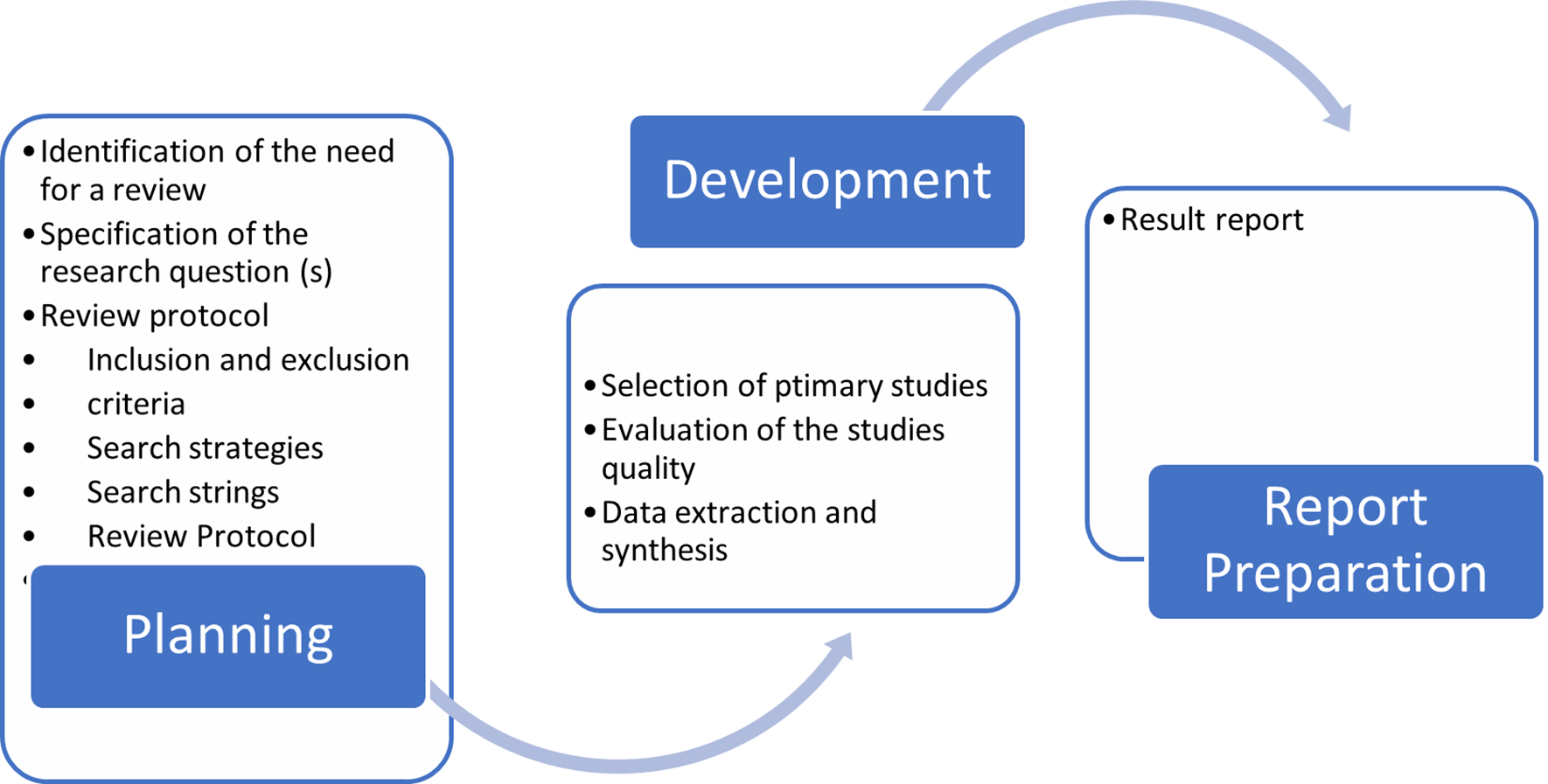
To select the most relevant studies that contribute to answering the research questions, six inclusion criteria (IC) were established:
IC1: Relevant publications, including academic studies, research papers, and articles that specifically address the challenges of entrepreneurship related to the implementation and use of artificial intelligence technologies.
IC2: Only publications from the period 2020 to 2024 will be included, ensuring that the data and conclusions are aligned with the current context of artificial intelligence and entrepreneurship.
IC3: To ensure diversity of perspectives, studies will be considered that explore entrepreneurial challenges in the AI era from various viewpoints, including different industries, business sizes, and geographic locations.
IC4: Methodologically, the review will include studies that demonstrate appropriate rigor to address the complexity of AI-related entrepreneurial challenges, such as case studies, surveys, and both qualitative and quantitative analyses. Publications in multiple languages will be included, provided that translations or summaries are available in a language comprehensible to the reviewer.
IC5: A practical focus will be prioritized, favoring studies that offer actionable insights for entrepreneurs and business owners on how to address and overcome the specific challenges associated with integrating AI into their companies.
Exclusion criteria apply to all documents that do not meet the inclusion standards described above.
The selection of information was based on open-access databases available through the virtual library of Universidad Técnica del Norte: Scopus, Web of Science (WoS), Taylor and Francis, and Scielo. The assessment of quality and relevance within the field of study was guided by the use of specific search strings.
Using the CIMO question framework and considering the discipline of business and management, the keywords, inclusion and exclusion criteria were structured into tailored search strings for each database. These keywords were combined using Boolean operators AND and OR, allowing for multiple query combinations. Quotation marks (“”) were used to include exact term pairs, and the asterisk (*) was applied to capture both singular and plural forms.
Additional inclusion criteria were applied: publication dates between 2020 and 2024; languages included English, Spanish, and Portuguese (either written or translated in draft or final article versions); open-access availability; and document type. The customized search strings for each database are presented in Table 3.
A protocol “is an essential component of the systematic review process; it ensures that the review is carefully planned and that this planning is explicitly documented before the review begins” (Moher et al., 2015, p. 1; as cited in Basantes-Andrade et al., 2022).
The systematic review was developed based on the PRISMA 2020 statement. To ensure methodological rigor, the review protocol was assessed in accordance with PRISMA 2020 guidelines, even though the study does not include a synthesis component. This assessment was intended to uphold the review’s credibility and transparency. The protocol was validated by experts in entrepreneurship and artificial intelligence technologies. “The PRISMA 2020 statement is intended for use in systematic reviews that include synthesis (e.g., pairwise meta-analyses or other methods of synthesis)” (Page et al., 2021), thereby reinforcing the review’s validity and ethical standards.
During the study selection process, the systematic review was conducted based on primary studies, including an assessment of study quality, as well as the extraction and synthesis of data.
To identify and organize key bibliographic sources, the data were compiled using Microsoft Excel 365. Data from the Web of Science (WoS) and Scielo databases were extracted using the Win tab tool, which downloads records in a text file format (savedrecs.txt). Files from Taylor and Francis and Scopus were downloaded in comma-separated values (.csv) format.
The selection of primary studies was guided by the flow diagram proposed by Page et al. (2021), shown in Figure 2, which outlines four stages: identification, screening, eligibility, and inclusion.
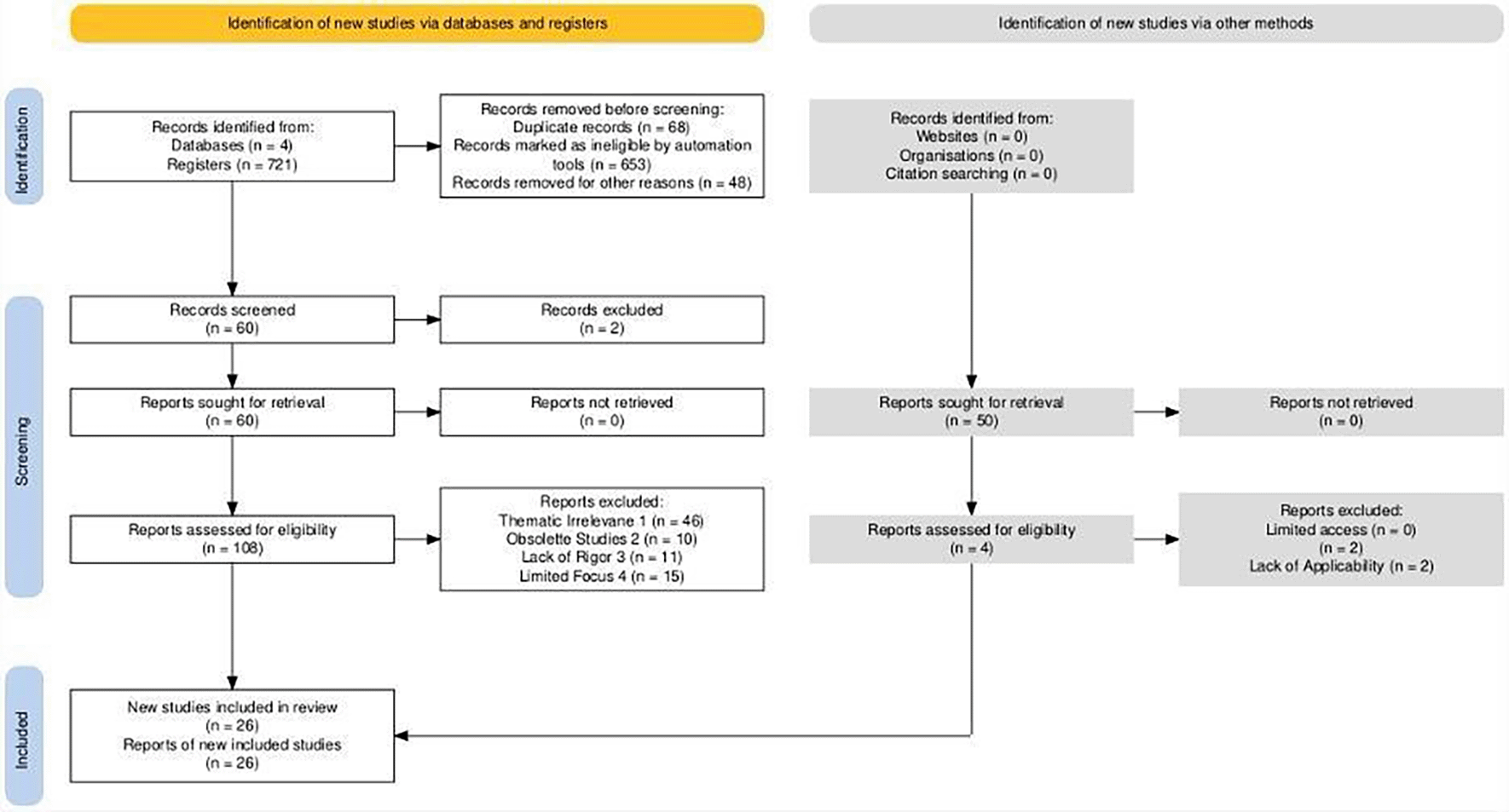
A total of 721 documents were retrieved: 121 indexed in Scopus, 123 in Web of Science (WoS), 123 in Taylor and Francis, and 429 in Scielo. During the screening phase, duplicate records were removed (n = 68) using Excel’s “Remove Duplicates” function. In the eligibility phase, the titles, abstracts, and keywords of each document were reviewed, applying the predefined inclusion criteria and search strings (n = 108).
Subsequently, the documents were evaluated according to the inclusion and exclusion criteria. A total of 82 studies were excluded for one or more of the following reasons: they did not address the research questions, their context differed from that of entrepreneurship, or the full text was not accessible. In the final phase, 26 articles were included for in-depth reading and detailed analysis. It is declared that there are no conflicts of interest.
The main criteria for the overall assessment of study quality were analyzed comprehensively and are presented through a procedure involving inference by both academic experts and professionals from the business sector. This process employed a quantitative quality checklist, detailed in Table 4. Since the studies had already been evaluated using a qualitative checklist, the quantitative checklist was developed based on the questions proposed by (Kitchenham et al., 2009).
The checklist includes ten questions, each assigned a value of 1 point and evaluated using a three-option Likert scale: yes, no, and partial, corresponding to scores of 1, 0, and 0.5, respectively. A cutoff score of 7 was established; thus, all studies scoring 7 or higher were included, while those failing to meet this threshold were excluded due to insufficient reliable evidence. Table 5 presents a summary of the 26 selected studies and their corresponding scores, organized by reference to enhance clarity in the presentation of results.
The selected studies, derived from the extraction of primary data, were evaluated and organized in two stages: 1) General metadata were considered for each primary study, categorized by author(s), document title (topic), abstract, keywords, DOI, year of publication, database, document type, and language; and 2) The selected studies were classified according to their purpose, type of study, and the country in which the research was conducted. For the development of this research, training standards and frameworks were used as references to support the study topic: the challenges of entrepreneurship in the era of artificial intelligence.
A systematic review requires categorization by type of study, as it typically relies on predefined inclusion and exclusion criteria established by the researchers. Among these categories—based on data quality, information practices, and privacy classification—relevant considerations were drawn from the work of Jaya et al. (2017), Inverardi et al. (n.d.), and Zhong et al. (2023).
Experimental or Quasi-Experimental Studies (EQ-ES) include randomized controlled trials and quasi-experimental studies (QE-S), which use similar methods but do not randomly assign participants. Observational Studies (OS) may include cohort studies, case-control studies, cross-sectional, and descriptive studies. These do not involve manipulation of variables; instead, they are limited to observing and collecting data. Case Studies (CS) involve detailed and in-depth analyses of one or more individual cases, offering valuable insights into rare or unique phenomena. Qualitative Studies (QS) focus on understanding participants’ experiences, meanings, and perceptions through methods such as in-depth interviews, focus groups, and content analysis to explore complex themes. Mixed Methods Studies (MS) combine both qualitative and quantitative research approaches, addressing complex research questions from multiple perspectives. Meta-analyses or Literature Reviews (SLR), although not primary studies, are essential for synthesizing existing research within a specific area.
Clearly defining the inclusion and exclusion criteria from the outset was essential to ensure that the systematic review of primary studies remained focused and rigorous. This step guaranteed that all selected studies were relevant to the research questions and met the established quality standards, Table 5.
It is important to note that these types of studies may vary in terms of data quality, information practices, and privacy categorization, as highlighted in the works of Inverardi et al. (n.d.), Jaya et al. (2017), and Zhong et al. (2023). Inclusion and exclusion criteria must be clearly defined at the outset of the systematic review to ensure that all selected studies are relevant to the research questions and meet established quality standards.
The review is summarized in the following section based on each of the research questions previously outlined.
A systematic analysis was conducted based on the studies included in this research, addressing each of the research questions accordingly.
As shown in Table 6, findings indicate that organizational culture and entrepreneurial mindset are critical factors shaping the adoption and effective use of AI technologies by entrepreneurs (Gofman & Jin, 2024). Traditional entrepreneurial thinking has primarily emphasized economic gains, often overlooking broader social and environmental impacts.
| Title | Author | Doi |
|---|---|---|
| AI Startup Business Models: Key Characteristics and Directions for Entrepreneurship Research | (Weber et al., 2022) | 10.1007/s12599-021-00732-w |
| An analysis of the sustainability goals of digital technology start-ups in Berlin | (Lammers et al., 2022) | 10.1016/j.techfore.2022.122096 |
| Artificial Intelligence and Big Data in Sustainable Entrepreneurship | (Bickley et al., 2024) | 10.1111/joes.12611 |
| Artificial Intelligence Factory, Data Risk, and VCs’ Mediation: The Case of ByteDance, an AI-Powered Startup | (Jia & Stan, 2021) | 10.3390/jrfm14050203 |
| Artificial Intelligence, Education, and Entrepreneurship | (Gofman & Jin, 2024) | 10.1111/jofi.13302 |
| Artificial intelligence: a catalyst for entrepreneurship education in the baltics | (Voronov et al., 2023) | 10.5922/2079-8555-2023-3-3 |
| Big data methods, social media, and the psychology of entrepreneurial regions: capturing cross-county personality traits and their impact on entrepreneurship in the USA | (Obschonka et al., 2020) | 10.1007/s11187-019-00204-2 |
| Correlation between Entrepreneurial Orientation and implementation of AI in Human Resource Management (HRM) | (Baldegger et al., 2020) | 10.22215/timreview/1348 |
| Data science for entrepreneurship research: studying demand dynamics for entrepreneurial skills in the Netherlands | (Prüfer & Prüfer, 2020) | 10.1007/s11187-019-00208-y |
| Exploring the knowledge spillovers of a technology in an entrepreneurial ecosystem—The case of artificial intelligence in Sydney | (Cetindamar et al., 2020) | 10.1002/tie.22158 |
| Future of Business Culture: An Artificial Intelligence-Driven Digital Framework for Organization Decision-Making Process | (Rajagopal et al., 2022) | 10.1155/2022/7796507 |
| How Artificial Intelligence Drives Sustainable Frugal Innovation: A Multitheoretical Perspective | (Govindan, 2024) | 10.1109/TEM.2021.3116187 |
| Improving Entrepreneurs’ Digital Skills and Firms’ Digital Competencies through Business Apps Training: A Study of Small Firms | (Drydakis, 2022) | 10.3390/su14084417 |
| Industry 4.0 and micro and small enterprises: systematic literature review and analysis | (da Silva et al., 2022) | 10.1080/21693277.2022.2124466 |
| Knowledge Sharing Key Issue for Digital Technology and Artificial Intelligence Adoption | (Binsaeed et al., 2023) | 10.3390/systems11070316 |
| Managing start-up - incumbent digital solution co-creation: a four-phase process for intermediation in innovative contexts | (Garcia Martin et al., 2024) | 10.1080/13662716.2023.2189091 |
| RETRACTED: Entrepreneurial Bricolage Based on Big Data and Artificial Intelligence Decision-Making (Retracted Article) | (Kang & Zeng, 2022) | 10.1155/2022/7821069 |
| The influence of digital entrepreneurship and entrepreneurial orientation on intention of family businesses to adopt artificial intelligence: examining the mediating role of business innovativeness | (Upadhyay et al., 2023) | 10.1108/IJEBR-02-2022-0154 |
| The Influence of Entrepreneurial Bricolage on Opportunity Recognition for New Ventures Based on Artificial Intelligence | (Kang et al., 2023) | 10.55267/iadt.07.13782 |
Resistance to change within companies often arises in organizations that maintain a traditional culture or a generally conservative mindset (Jia & Stan, 2021). In contrast, companies that foster a culture of openness to innovation and experimentation are significantly more likely to adopt AI effectively and maximize its benefits (Guatemala Mariano et al., 2023).
Companies that are structured around artificial intelligence from the outset—such as AI-driven startups—tend to have a greater likelihood of success (Jia & Stan, 2021). Additionally, certain studies offer a framework for addressing the convergence of the Fourth Industrial Revolution (4IR), the impact of the COVID-19 pandemic, and climate change, emphasizing the need for a renewed approach to entrepreneurship. These analyses suggest that the rapid pace of technological advancement has profound implications for both society and institutions, calling for a reassessment of the fundamental characteristics of entrepreneurship (Guatemala Mariano et al., 2023).
As summarized in Table 7, the findings highlight the central role of automation and data analytics among the specific artificial intelligence strategies and tools used by entrepreneurs to improve operational efficiency and decision-making within their businesses. AI is employed to streamline operations, generate insights to support decision-making, and offer new ways to engage with both customers and employees. Machine learning and deep learning are frequently cited as key techniques for analyzing data and extracting actionable knowledge (Weber et al., 2022), in relation to sustainability and education, AI and Big Data are increasingly used to address challenges linked to sustainable business practices. Furthermore, the literature provides an overview of how AI technologies are leveraged as valuable resources to enhance operational efficiency and decision-making in student-led enterprises across the Baltic countries (Bickley et al., 2024), In relation to decision-making and risk, the development of AI-based risk assessment algorithms for ventures in rural areas is particularly noteworthy. Additionally, the creation of an AI factory is mentioned—an integrated system that combines data, algorithms, and experimentation to drive business growth and support strategic decision-making (Wu et al., 2022). The section on innovation and marketing suggests that AI tools can be used to enhance operational efficiency and decision-making by analyzing large datasets and generating predictive insights. Moreover, it emphasizes that understanding new paradigms and adopting emerging technologies are essential for the effective implementation of digital marketing—an area where AI tools are increasingly being applied (Guatemala Mariano et al., 2023). In terms of competitive advantages, the use of AI contributes to improved operational performance and more efficient decision-making within businesses. Specific tools such as data analytics, machine learning, and customer relationship management (CRM) systems are highlighted as key enablers in this process (Rajagopal et al., 2022).
| Title | Authors | Doi |
|---|---|---|
| AI Startup Business Models: Key Characteristics and Directions for Entrepreneurship Research | (Weber et al., 2022) | 10.1007/s12599-021-00732-w |
| Analysis of the Influence of Back Home to Start Undertaking and Rural Revitalization Based on Artificial Intelligence | (Wu et al., 2022) | 10.1155/2022/4616959 |
| Artificial Intelligence and Big Data in Sustainable Entrepreneurship | (Bickley et al., 2024) | 10.1111/joes.12611 |
| Artificial intelligence components and fuzzy regulators in entrepreneurship development | (Bogachov et al., 2020) | 10.9770/jesi.2020.8.2(29) |
| Artificial Intelligence Factory, Data Risk, and VCs’ Mediation: The Case of ByteDance, an AI-Powered Startup | (Jia & Stan, 2021) | 10.3390/jrfm14050203 |
| Artificial intelligence: a catalyst for entrepreneurship education in the Baltics | (Voronov et al., 2023) | 10.5922/2079-8555-2023-3-3 |
| Can support by digital technologies stimulate intrapreneurial behaviour? The moderating role of management support for innovation and intrapreneurial self-efficacy | (Rabl et al., 2023) | 10.1111/isj.12413 |
| How Artificial Intelligence Drives Sustainable Frugal Innovation: A Multitheoretical Perspective | (Govindan, 2024) | 10.1109/TEM.2021.3116187 |
| Managing start-up - incumbent digital solution co-creation: a four-phase process for intermediation in innovative contexts | (Garcia Martin et al., 2024) | 10.1080/13662716.2023.2189091 |
| Mapping the Wave of Industry Digitalization by Co-Word Analysis: An Exploration of Four Disruptive Industries | (Bzhalava et al., 2022) | 10.1142/S0219877022500018 |
| Redefining entrepreneurship education in the age of artificial intelligence: An explorative analysis | (Vecchiarini & Somià, 2023) | 10.1016/j.ijme.2023.100879 |
| RETRACTED: Entrepreneurial Bricolage Based on Big Data and Artificial Intelligence Decision-Making (Retracted Article) | (Kang & Zeng, 2022) | 10.1155/2022/7821069 |
| The Influence of Entrepreneurial Bricolage on Opportunity Recognition for New Ventures Based on Artificial Intelligence | (Kang & Zeng, 2022) | 10.1155/2022/7821069 |
The results obtained across most of the studies analyzed indicate that entrepreneurs are leveraging AI capabilities to automate processes, analyze data, make informed decisions, and drive innovation and sustainability. These strategies and tools are enabling businesses to enhance operational efficiency, improve decision-making, and gain competitive advantages in an increasingly digital and data-driven business environment. “Companies that design their organizational structure around AI from the outset—such as AI-driven startups—are more likely to succeed in adopting and leveraging these tools for rapid growth […]” (Jia & Stan, 2021).
As shown in Table 8, a lack of training, combined with resistance to change, represents a significant barrier to the successful implementation of artificial intelligence technologies by entrepreneurs. The studies reviewed indicate that internal resistance, organizational inertia, and limited understanding of technological transformation often hinder the transition toward AI-driven business models. This underscores the importance of fostering an organizational culture that is open to change as a key enabler of AI adoption (Jia & Stan, 2021), Moreover, insufficient knowledge, skills, and training in AI severely limit entrepreneurs’ ability to fully leverage these technologies. Several studies highlight the growing demand for AI-related competencies in the business environment and emphasize the role of educational institutions in addressing this skills gap (Weber et al., 2022). Overall, resistance to change and inadequate training negatively affect the successful implementation of AI, reinforcing the need for continuous learning, collaboration, and capacity building ( Table 8). In summary, entrepreneurs must adopt a proactive approach to overcoming resistance and closing the AI skills gap by promoting an innovation-oriented culture and strengthening collaboration with educational institutions to develop relevant competencies (Rajagopal et al., 2022).
| Title | Authors | Doi |
|---|---|---|
| AI Startup Business Models: Key Characteristics and Directions for Entrepreneurship Research | (Weber et al., 2022) | 10.1007/s12599-021-00732-w |
| Artificial intelligence components and fuzzy regulators in entrepreneurship development | (Bogachov et al., 2020) | 10.9770/jesi.2020.8.2(29) |
| Artificial Intelligence Factory, Data Risk, and VCs’ Mediation: The Case of ByteDance, an AI-Powered Startup | (Jia & Stan, 2021) | 10.3390/jrfm14050203 |
| Artificial Intelligence, Education, and Entrepreneurship | (Gofman & Jin, 2024) | 10.1111/jofi.13302 |
| Correlation between Entrepreneurial Orientation and implementation of AI in Human Resource Management (HRM) | (Baldegger et al., 2020) | 10.22215/timreview/1348 |
| Cultivation Model of Entrepreneurship From the Perspective of Artificial Intelligence Ethics | (Yang et al., 2022) | 10.3389/fpsyg.2022.885376 |
| Data science for entrepreneurship research: studying demand dynamics for entrepreneurial skills in the Netherlands | (Prüfer & Prüfer, 2020) | 10.1007/s11187-019-00208-y |
| Future of Business Culture: An Artificial Intelligence-Driven Digital Framework for Organization Decision-Making Process | (Rajagopal et al., 2022) | 10.1155/2022/7796507 |
| How Artificial Intelligence Drives Sustainable Frugal Innovation: A Multitheoretical Perspective | (Govindan, 2024) | 10.1109/TEM.2021.3116187 |
| Improving Entrepreneurs’ Digital Skills and Firms’ Digital Competencies through Business Apps Training: A Study of Small Firms | (Drydakis, 2022) | 10.3390/su14084417 |
| Knowledge Sharing Key Issue for Digital Technology and Artificial Intelligence Adoption | (Binsaeed et al., 2023) | 10.3390/systems11070316 |
| Managing start-up - incumbent digital solution co-creation: a four-phase process for intermediation in innovative contexts | (Garcia Martin et al., 2024) | 10.1080/13662716.2023.2189091 |
| Mapping the Wave of Industry Digitalization by Co-Word Analysis: An Exploration of Four Disruptive Industries | (Bzhalava et al., 2022) | 10.1142/S0219877022500018 |
| Redefining entrepreneurship education in the age of artificial intelligence: An explorative analysis | (Vecchiarini & Somià, 2023) | 10.1016/j.ijme.2023.100879 |
| RETRACTED: Entrepreneurial Bricolage Based on Big Data and Artificial Intelligence Decision-Making (Retracted Article) | (Kang & Zeng, 2022) | 10.1155/2022/7821069 |
As detailed in Table 9, government policies and regulations play a critical role in shaping the entrepreneurial and technological landscape, directly influencing investment decisions and the adoption of artificial intelligence. This influence is particularly significant for early-stage and growth-oriented ventures, where access to financial support and regulatory clarity is essential for prioritizing innovation and attracting investment (Lammers et al., 2022). Public initiatives such as China’s “Mass Entrepreneurship and Innovation” program illustrate how policy frameworks can promote innovative activity and encourage AI adoption among high-tech startups operating in makerspaces (Y. Li et al., 2023). At the same time, AI-driven companies face regulatory challenges related to data governance, cybersecurity, and ethical risks, which can be further complicated by government regulations (Jia & Stan, 2021). Despite these challenges, policies and regulations remain essential for fostering sustainable and frugal innovation, even though their impact on investment decisions may vary across contexts (Cetindamar et al., 2020). Another important factor is the adaptation of educational models and the optimization of the teaching environment within business education, particularly in virtual reality-based learning contexts. Artificial intelligence also underscores the role of governmental policies in supporting the training of entrepreneurs (W. Li et al., 2022). Overall, the findings summarized in Table 9 highlight that government policies and regulations significantly shape entrepreneurs’ investment behavior and technology adoption in the AI domain. These policies can foster innovation, provide financial support, address regulatory challenges, and promote the integration of emerging technologies such as AI within the entrepreneurial ecosystem.
| Title | Authors | Doi |
|---|---|---|
| An analysis of the sustainability goals of digital technology start-ups in Berlin | (Lammers et al., 2022) | 10.1016/j.techfore.2022.122096 |
| Analysis of the Influence of Back Home to Start Undertaking and Rural Revitalization Based on Artificial Intelligence | (Wu et al., 2022) | 10.1155/2022/4616959 |
| Analysis on the Effectiveness and Mechanisms of Public Policies to Promote Innovation of High-Tech Startups in Makerspaces | (Y. Li et al., 2023) | 10.3390/su15097027 |
| Artificial Intelligence Factory, Data Risk, and VCs’ Mediation: The Case of ByteDance, an AI-Powered Startup | (Jia & Stan, 2021) | 10.3390/jrfm14050203 |
| Designing AI implications in the venture creation process | (Schiavone et al., 2023) | 10.1108/IJEBR-06-2021-0483 |
| Exploring the knowledge spillovers of a technology in an entrepreneurial ecosystem—The case of artificial intelligence in Sydney | (Cetindamar et al., 2020) | 10.1002/tie.22158 |
| Influence of Ideological and Political Education Strategies on College Students’ Entrepreneurship Based on Wireless Network and Artificial Intelligence Knowledge Map | (Zhang et al., 2022) | 10.1155/2022/5726099 |
| Analysis on the Effectiveness and Mechanisms of Public Policies to Promote Innovation of High-Tech Startups in Makerspaces | (Y. Li et al., 2023) | 10.3390/su15097027 |
As presented in Table 10, best practices and lessons learned from entrepreneurs who have successfully integrated artificial intelligence emphasize adaptability to continuous technological change as a strategic priority. Developing an agile mindset and maintaining flat organizational structures are identified as key factors that facilitate effective AI implementation and support rapid, informed decision-making (Jia & Stan, 2021), Partnerships with venture capital investors also emerge as a critical strategy for mitigating the risks associated with AI adoption, as these alliances provide not only financial resources but also strategic guidance and technical expertise (Jia & Stan, 2021b). Innovation and experimentation are consistently highlighted as essential practices, enabling entrepreneurs to redesign processes and business models in response to digital transformation (Voronov et al., 2023). Finally, training and the development of digital skills are fundamental for overcoming integration challenges. Acquiring relevant competencies significantly enhances entrepreneurs’ ability to fully exploit the potential of AI within their operations (Drydakis, 2022). Collectively, the evidence summarized in Table 10 demonstrates that agility, collaboration, experimentation, and continuous learning are central to successful AI integration in entrepreneurial ventures.
| Title | Authors | Doi |
|---|---|---|
| AI Startup Business Models: Key Characteristics and Directions for Entrepreneurship Research | (Weber et al., 2022) | 10.1007/s12599-021-00732-w |
| Artificial intelligence: a catalyst for entrepreneurship education in the baltics | (Voronov et al., 2023) | 10.5922/2079-8555-2023-3-3 |
| Designing AI implications in the venture creation process | (Schiavone et al., 2023) | 10.1108/IJEBR-06-2021-0483 |
| Future of Business Culture: An Artificial Intelligence-Driven Digital Framework for Organization Decision-Making Process | (Rajagopal et al., 2022) | 10.1155/2022/7796507 |
| Improving Entrepreneurs’ Digital Skills and Firms’ Digital Competencies through Business Apps Training: A Study of Small Firms | (Drydakis, 2022) | 10.3390/su14084417 |
The critical influence of organizational culture and government policies on the adoption of artificial intelligence (AI) and the use of technologies in businesses is strongly shaped by an entrepreneurial mindset that is open to innovation and experimentation, which significantly facilitates the effective integration of AI. In contrast, a conservative and traditional mindset tends to resist technological change. Moreover, government policies and regulations play a crucial role in shaping the business and technological environment. The existence of innovation support programs, such as the “Mass Entrepreneurship and Innovation” initiative in China, can encourage the adoption of AI technologies, while regulatory challenges related to data governance and cybersecurity must be addressed in order not to hinder technological progress.
Moreover, training and collaboration are considered key to overcoming challenges and seizing the opportunities presented by AI. At the same time, the lack of training and skills in AI technologies represents a significant barrier for entrepreneurs, limiting their ability to fully leverage these tools. To overcome these obstacles, it is essential to promote a culture of learning and collaboration, both within organizations and with educational institutions. Key considerations include closing the skills gap, collaborating with venture capital, and being open to experimenting with new technologies—all of which are fundamental to mitigating risks and fostering innovation. Successful entrepreneurs have shown that an agile mindset, a flat organizational structure, and a focus on sustainability are essential for adapting to technological changes and remaining competitive in a data-driven, digital business environment.
Cybersecurity in AI environments must be promptly addressed to ensure sustainable advantages in research and to formalize advancements in security. This approach helps align challenges and solutions with the adoption of AI, including data protection and the mitigation of ethical risks.
The Impact of Organizational Culture on AI Implementation and the Supporting Research on Cultural Differences, Which Contribute to Diverse Organizational Cultures Across Regions and Industrial Sectors That Influence the Adoption and Success of AI Technologies.
A longitudinal study of cultural transformation becomes necessary within the framework of longitudinal research representations to observe how companies can shift their organizational cultures to become more receptive to AI and which specific practices are most effective.
Likewise, the role of Government Policies and Regulations should be shaped based on an international comparative analysis that examines how different governmental policies and regulatory frameworks across countries influence the adoption of AI in startups and small businesses.
The evaluation of innovation support programs aims to study the effectiveness of specific initiatives—such as China’s “Mass Entrepreneurship and Innovation”—in promoting AI technologies, whether through training or skill development in AI.
This includes designing AI educational programs that explore both the creation and implementation of effective training initiatives to close the skills gap among entrepreneurs. Continuous education and its assessment play a key role in lifelong learning, enhancing entrepreneurs’ ability to adapt to and leverage new AI technologies.
Another suggested research avenue is the collaboration between startups and venture capital. This would involve case studies of successful partnerships where startups have worked with venture capital to identify key factors that contribute to the successful adoption of AI.
Another suggested line of research is innovative financing that integrates AI to improve risk and opportunity assessment in investments in tech startups. At the same time, it’s important to explore AI’s role in sustainability and social responsibility—examining how these technologies can be applied to enhance business sustainability and address environmental and social challenges, including the impact of AI on Corporate Social Responsibility (CSR).
Innovation and experimentation with AI are also key, using agile experimentation methods and frameworks for testing AI technologies in startups and small businesses. It is therefore necessary to combine this with innovation in AI-based business models that can be used to transform traditional business models and create new entrepreneurial paradigms.
Risk and security evaluation in AI should include the development and implementation of AI algorithms for risk assessment across various business contexts, with a special focus on rural areas and underrepresented sectors.
This study is a systematic literature review based exclusively on previously published studies and publicly available data. No human participants, personal data, or animal subjects were involved. Therefore, ethical approval and informed consent were not required.
| Views | Downloads | |
|---|---|---|
| F1000Research | - | - |
|
PubMed Central
Data from PMC are received and updated monthly.
|
- | - |
Provide sufficient details of any financial or non-financial competing interests to enable users to assess whether your comments might lead a reasonable person to question your impartiality. Consider the following examples, but note that this is not an exhaustive list:
Sign up for content alerts and receive a weekly or monthly email with all newly published articles
Already registered? Sign in
The email address should be the one you originally registered with F1000.
You registered with F1000 via Google, so we cannot reset your password.
To sign in, please click here.
If you still need help with your Google account password, please click here.
You registered with F1000 via Facebook, so we cannot reset your password.
To sign in, please click here.
If you still need help with your Facebook account password, please click here.
If your email address is registered with us, we will email you instructions to reset your password.
If you think you should have received this email but it has not arrived, please check your spam filters and/or contact for further assistance.

Comments on this article Comments (0)