Keywords
Student dropout; Higher education retention; Psychosocial factors; Scholarship students; Academic integration; Social integration; Structural equation modeling (SEM); PLS-SEM; Peru.

Student dropout; Higher education retention; Psychosocial factors; Scholarship students; Academic integration; Social integration; Structural equation modeling (SEM); PLS-SEM; Peru.
It is evident that higher education plays a pivotal role in the competitive and sustainable development of a nation. This assertion is corroborated by research findings that demonstrate a positive correlation between university education and higher economic income, in comparison to those who do not attain this level of education.1 The impact of this phenomenon is twofold: it is beneficial to the individual, and it is also conducive to the development of a skilled workforce that is able to drive innovation and productivity. Nevertheless, the efficacy of the system is undermined when educational institutions are unable to maintain a high retention rate of their students. This indicates a discrepancy between the system's design and the actual requirements of the population.2–4
In order to optimise their potential, it is essential that systems guarantee not only access but also retention, by integrating mechanisms that identify and mitigate early barriers. The economic return on higher education has encouraged its promotion as an engine of competitiveness. However, this process faces a critical challenge in the limited functionality of education systems in retaining students.5,6
This problem is indicative of a multifaceted nature, manifesting as a consequence of numerous underlying factors. These include, but are not limited to, inadequate curricular adaptation and an absence of sufficient consideration for psychosocial elements such as academic stress and identity disconnection. These elements are further compounded in contexts characterised by inequality, where institutional entities perpetuate exclusionary dynamics rather than addressing them. This phenomenon is indicative of the inefficiencies inherent in systems that prioritise access over retention, without addressing the underlying causes, such as a lack of prior academic preparation or the absence of emotional support networks. First-generation university scholarship recipients, in particular, encounter a “culture shock” when entering academic environments that fail to consider their sociocultural backgrounds. This can result in feelings of isolation and stress. Furthermore, the presence of institutional bureaucracy, manifesting in the form of protracted processes for the resolution of administrative issues, has been demonstrated to intensify feelings of frustration and result in elevated rates of attrition. This issue has been identified as a priority challenge for global agendas, as demonstrated by the case of students who, despite being recipients of state scholarships, discontinue their studies due to economic, psychological or institutional factors.7,8
In Peru, the proportion of young people who have access to higher education is only 30%, which is lower than the proportion in countries such as Chile and Colombia.9 This disparity is further accentuated when analysing expenditure per individual: while two out of ten young people in the lowest quintile manage to enrol, this figure rises to five out of ten in the highest quintile. The geographical concentration of educational resources in the capital, Lima, has been identified as a contributing factor to the exacerbation of the educational disparities between regions. A significant proportion of university enrolment is concentrated in Lima, with 41% of all enrolments being located within the city. This has the effect of limiting access to educational opportunities in regions that may not possess the same level of educational infrastructure as Lima. This phenomenon of territorial inequality is indicative of systems that demonstrate a bias towards urban and higher-income populations, thereby marginalising those inhabiting rural or peri-urban areas. Furthermore, the absence of public universities in the provinces compels a significant number of students to migrate, resulting in expenses that, when combined with job insecurity, heighten the likelihood of attrition. It is evident that, in the absence of effective decentralisation and regional inclusion policies, the system is likely to continue exhibiting exclusionary tendencies.
Conversely, 65% of the university-age population encounter economic impediments to accessing higher education, a phenomenon that has given rise to policies such as scholarships and educational loans.10–12 Nevertheless, these mechanisms frequently prove to be inadequate when not accompanied by academic and psychosocial support. Consequently, scholarship recipients from public educational institutions may encounter deficiencies in their prior learning, which can result in their falling behind and, ultimately, dropping out of their studies. Furthermore, the paucity of information regarding the requirements for maintaining a scholarship, such as minimum grade point averages, has been shown to engender feelings of anxiety and demotivation among scholarship recipients.
Consequently, the phenomenon of university dropout can be considered as multi-causal, as posited by,13 thus necessitating interdisciplinary approaches to facilitate comprehension. From a psychological standpoint, factors such as academic self-concept, resilience to failure, and disconnection from the educational project have been demonstrated to influence the decision to discontinue one's education.14 Conversely, the sociological approach to understanding the phenomenon of dropout, as articulated in the seminal work of,15 undertakes a multifaceted examination of salient variables including family income, parental educational attainment, and gender.
A comprehensive understanding of the phenomenon of scholarship students dropping out of higher education necessitates an examination of both socioeconomic and psychological factors. As asserted by Refs. (16 and 17), economic precariousness imposes limitations on both access and retention. To illustrate this point, consider a scholarship student who is obliged to contribute financially to their family. In such a scenario, they may find themselves compelled to prioritise securing informal employment over their academic pursuits. From a psychological standpoint, the pressure to maintain high grades in order to retain scholarship funding has been shown to engender chronic stress, which in turn has a detrimental effect on performance. The interaction of these factors within education systems that lack safety nets, such as supplementary subsidies or academic flexibility, results in scholarships serving merely as temporary remedies rather than comprehensive solutions. In order to break this cycle, there is a necessity for policies that recognise the multiple dimensions of vulnerability. Such policies must integrate financial, academic and emotional support in a synergistic manner.
The Peruvian university sector is currently undergoing a series of reforms to its National Policy on Higher University Education. A key element of these reforms is the identification of the most pertinent factors to inform the development of strategies to address the issue of increasingly restricted access to university life. This assertion is supported by empirical evidence derived from rigorous research. The present study seeks to explore the psychosocial factors that explain academic dropout among scholarship students at a public university in 2024. The primary motivation underlying this research endeavour is to make a substantial scientific and practical contribution to policy makers in the domain of strategy design.
According to Himmel,18 the term ‘university dropout’ is defined as the severing of ties with academic enrolment. This can be caused by various factors, such as financial difficulties, problems adapting to the university environment, or lack of motivation. This period is distinguished by the premature termination of university studies, marked by an extended absence of the student.19 For,20 the term 'dropout' is employed to denote either the voluntary or involuntary termination of enrolment in an academic programme. The former is characterised by the individual's own decision to disengage from their studies, while the latter is precipitated by substandard academic performance. The phenomenon of 'dropout' thus engenders the act of withdrawal. The interruption may be temporary or permanent, voluntary or forced, and manifests itself in different ways, as well as the multi-causal problem presented by the diversity of students who are admitted to the university system.21 As asserted by Ref. Barroso et al.,22 the dropout process can be subdivided into two critical periods. Firstly, there is the initial contact with the institution, and secondly, there is the period during the first semesters of the programme. This is due to the fact that the social adaptation programme and the academic aspect begin when students come into contact with the university environment. The relevant study Ref. Tinto21 provides a social perspective on university dropout, emphasising the significance of students' social integration. Social integration can be defined as the process by which students establish meaningful relationships with peers, professors and the institution itself. The hypothesis that students who feel integrated are more likely to persist in their studies is one that merits further investigation. Conversely, a paucity of social integration can engender feelings of isolation and frustration, which in turn can increase the risk of dropout.
Social integration in the university environment is defined as the capacity of students to establish meaningful connections with their peers, teaching staff, and the institution itself. This process is of fundamental importance in the context of academic retention, insofar as it engenders a sense of belonging and motivation, thereby reinforcing commitment to studies. Recent research has indicated that social integration is a pivotal factor in student retention, and its absence can considerably increase the likelihood of university dropout.23 As asserted by Tlalajoe-Mokhatla,23 the prevailing paradigms of retention have accorded precedence to the pursuit of academic integration, while neglecting to address the necessity of social integration. However, it is imperative to recognise that the simultaneous consideration of both dimensions is indispensable for the enhancement of graduation rates. The present author hypothesises that social learning and the implementation of intentional support strategies have the capacity to reduce rates of student attrition and enhance the student experience in higher education. Conversely, a paucity of social integration can engender a sense of alienation, which may, in turn, precipitate a decline in motivation and ultimately result in academic withdrawal. A study undertaken at the University of Granada discovered that students who withdrew from their studies exhibited marked disparities in domains such as academic and social integration, university stress, and institutional commitment. The findings of the research indicate that individuals with a reduced degree of social integration encounter heightened challenges in coping with the demands of university life, a factor that increases their probability of departing the institution during their early years of study.24
In a comparative analysis, Ref. Franz and Paetsch25 investigated the differences in social integration between teacher training students and those in other university courses. The findings indicated that prospective educators exhibited a propensity to establish stronger connections with their peers, while concurrently cultivating less pronounced relationships with their instructors. This dynamic exerted a significant influence on their decision to persist in their academic pursuits or discontinue their studies. This finding serves to reinforce the importance of interaction with the educational community in university retention. The present study provides a compelling illustration of the impact of social integration on university dropout rates, with particular reference to students who are engaged in paid employment while pursuing their academic studies. Research conducted in Estonia, Lithuania and Poland revealed that employed students who maintained positive relationships with their teachers and peers were less likely to discontinue their studies. However, students encountering academic challenges and a sense of alienation from the university community exhibited higher rates of attrition. This study underscores the significance of university social capital in the context of student retention, as evidenced by the seminal work of.26
In the Latin American context, research conducted in Ecuador has identified a number of factors associated with university dropout, including personal, family and economic factors. However, it was also highlighted that a lack of integration with the university community was a determining factor in the decision to drop out. It has been demonstrated that students who are unable to establish meaningful connections with their academic environment are more likely to leave university. This suggests that retention strategies should focus on strengthening social inclusion within institutions.27
Meanwhile, scientific literature refers to academic productivity and intellectual growth involving interactions with teachers and authorities. These interactions are reflective of beliefs about one's goals, which are affected by both institutional and other external factors.28
In the present study Himmel,29 the researcher considered the role of external factors in university academic dropout, in addition to psychological aspects. This was approached through the lens of sociological models. Therefore, it is evident that Durkheim's findings, as outlined in Ref. Gross & Niman,28 contribute to the existing body of knowledge on the subject. Specifically, the study draws upon suicide theory, asserting that the dissolution of both the social system and social affiliation exert a direct influence on the incidence of suicide. In other words, the research considers the comprehensive perspective of students, acknowledging the interplay between the higher education environment and social integration on the decision to discontinue their education. This analysis identifies factors such as students' sense of alienation from their immediate environment and familial influences, which impact both academic and normative aspects of their lives. It is evident that there is a multifaceted relationship between the family environment and intellectual power and articulation from a normative perspective. This normative perspective is predicated on traditional academic performance and the relevance of impacting intellectual power, peers, and integration. This, in turn, has been shown to result in student satisfaction and commitment to the institution, which, as a consequence, leads to the decision to drop out.30
It is therefore evident that social aspects are pertinent in the context of the direct correlation between academic performance and the decision to discontinue formal education. The theoretical model demonstrates the influence of individual student characteristics on the likelihood of attrition, which is a matter of concern both in terms of the economic implications for the state and the role of familial and social environments in shaping academic performance. The investigation of the influence of social mechanisms on student academic performance is therefore of paramount importance.31
Within the domain of social factors, education assumes a pivotal role in the development of social consciousness and the propagation of values and norms to subsequent generations.32 Education is regarded not only as a means of preparing individuals for the world of work, but also as a conduit for the maintenance and transmission of culture and social solidarity. Meanwhile, the Ref. Gobato33 posits that, in consideration of its functionalist approach, sociological theory examines the manner in which social institutions contribute to the well-being and stability of society. Within this paradigm, education is regarded as an institution that fulfils multiple functions, including the transmission of knowledge, the assignment of roles, and the selection and classification of individuals within society. Conversely, it has been contended that educational institutions can engender anomie if they fail to provide all individuals with equal opportunities to achieve socially valued success. As posited by Ref. Vega et al.,30 the paucity of equitable access to education has been demonstrated to engender deviance and frustration.
Whilst education can offer opportunities for advancement in the social hierarchy, it was also noted that inequalities in access to quality education can hinder mobility and contribute to the reproduction of social inequality.20 Therefore, from an educational perspective, social structures provide differential opportunities to individuals according to their position within the structure. It has been demonstrated that such opportunity structures can play a pivotal role in the establishment and perpetuation of social inequalities.14
As posited by Pérez et al.34 education is currently experiencing a social crisis, characterised by the challenges confronting educational institutions in the effective transmission of knowledge and values to successive generations. The argument is posited that factors such as the diversification of society, changes in authority and the role of the family contribute to this crisis.
Contemporary society is characterised by its diversity in terms of cultures, values and knowledge. Villegas et al.35 draws attention to the challenge faced by educational institutions in adapting to this diversification and identifying effective methodologies for the transmission of a unified body of knowledge and values that are pertinent and meaningful to all students, irrespective of their cultural and social contexts.
Consequently, educational institutions have ceased to be the exclusive conduits of knowledge, as alternative institutions and media have assumed significant roles in shaping public opinion and facilitating knowledge acquisition.20 This indicates that the crisis of transmission gives rise to the emergence of novel forms of inequality. Individuals with access to supplementary educational resources beyond the formal education system are likely to benefit from a more comprehensive education, while those who rely exclusively on formal schooling may encounter difficulties in acquiring the necessary skills and knowledge.13
From a neo-institutionalist perspective, educational institutions are regarded as normative structures that define the rules of the game in society. It is important to note that these rules encompass not only formal policies and practices, but also cultural and social norms that exert influence on the behaviour of actors within the education system.30
The concept of institutionalisation, as it pertains to the tendency of organisations to emulate the structures and practices of other organisations, is of particular relevance in this context. This phenomenon, known as institutionalisation, is characterised by three distinct mechanisms: coercive, mimetic, and normative pressures. Within the domain of education, this phenomenon may be evidenced by the adoption of analogous policies and practices among educational institutions.20
This approach considers the conditions of the environment, both external and internal, that affect the functioning of educational institutions. This may encompass factors such as competition between educational institutions, shifts in the demand for education, and government policies.36
From a sociological perspective Labraña,37 higher education institutions are conceptualised as entities in a state of constant evolution and adaptation. The process of transformation in higher education is driven by a complex interplay of endogenous and exogenous factors, which, when aligned with the overarching objective of promoting social development, can significantly impact the teaching and learning processes. This perspective, as outlined by Weber, emphasises a specific, structurally social and formalised purpose, where economic and social factors interweave to influence individual behaviour within a social environment. This environment, in turn, responds to imbalances that extend from moral patterns to human action.
Fishbein and Ajzen38 in their theory of reasoned action, consider a psychological approach that addresses the identification of the real aspects and characteristics of those students who generate a strong intention to achieve their goal. The model under discussion addresses three key factors related to previous behaviours, attitudes and subjective norms from which human behaviour is approached.
The attitudinal aspect involves the analysis of the cognitive, affective and behavioural dimensions. This is achieved by means of an examination of the behaviour exhibited by individuals who tend to adopt positive, negative or neutral attitudes. In the case of the student model, achievement in the attitudinal aspect is influenced by factors related to persistence, selection and academic performance, which implies the attitude towards the intellectual aspect.39
The behavioural aspect is associated with students' behaviour in relation to their intellectual aspects. This is demonstrated by their behaviour after investing time and effort in obtaining a grant or scholarship, and their behaviour when interacting with the university environment.39
Subjective norms are defined as the normative beliefs that are explained by the perception of pressure towards behavioural intentions, which in turn allow for practical decisions to be made.40
The contemporary era of psychological research has witnessed a paradigm shift towards a more comprehensive understanding of behavioural patterns in relation to students' academic performance. This paradigm shift has been precipitated by the recognition that psychological factors, encompassing cognitive, affective and behavioural dimensions, exert a significant influence on students' behavioural patterns. Consequently, this theoretical contribution posits that human behaviour, in its multifaceted nature, exerts a profound impact on academic performance, which, in turn, affects practical decision-making processes.34
The present study adopts a quantitative approach, thus enabling the phenomenon of academic dropout to be addressed through a descriptive-explanatory design, as has been previously suggested by.41 The methodological choice is substantiated by its capacity to analyse causal relationships and statistical patterns in large samples, thereby facilitating the objective identification of psychosocial factors associated with dropout. At the descriptive level, the characterisation of variables is facilitated by univariate statistics (frequencies), which provide a contextual framework for understanding the profile of the population under study. At the explanatory level, inferential techniques are employed to test hypotheses and ascertain the significant influence of specific factors. This contributes to the study's empirical rigour through structural equations.42–44
The data collection technique employed was a survey, utilising a structured questionnaire as the primary instrument. This instrument was designed on a Likert scale and administered via a Google Form link for data collection. The survey was disseminated via WhatsApp to a cohort of students exhibiting substandard performance over a two-week period from 14 to 30 July 2024, with an average completion time of 25 minutes.
Ethical considerations and consent in this research consisted of a non-interventional, minimal-risk, anonymous survey administered to adult participants through an online Google Form. The work originated as a formative activity within a postgraduate research methods course in the Master’s programme at the Graduate School of the National University Pedro Ruiz Gallo (UNPRG), and it was not submitted as a thesis- or degree-related protocol; therefore, no formal ethics committee/Institutional Review Board (IRB) approval, waiver, or reference number is available. All procedures adhered to the principles of the Declaration of Helsinki. Participation was voluntary and anonymous; no sensitive or directly identifiable personal data were collected. Electronic informed consent (e-consent) was obtained prior to participation via the first page of the Google Form; only participants who indicated agreement could proceed to the questionnaire. Participants were informed about the study objectives, procedures (approximately 25 minutes), the academic/scientific use of the information, confidentiality safeguards (coding of responses), and their right to withdraw at any time without consequences.
The population under study corresponds to a total of 135 beneficiaries of the Beca 18 programme at a Peruvian public university in the 2024 period with low academic performance. In the context of this study, students exhibiting substandard academic performance are designated as having the proxy variable of academic dropout. This is due to the direct correlation between academic performance and the proxy variable, which facilitates identification within the theoretical model outlined by.45–47
The subject of the research is the beneficiary of Scholarship 18 at a Peruvian public university in the period 2024 who has either dropped out of school or has demonstrated low academic performance.
The procedure used for sample selection is based on the inclusion criterion of having been a scholarship recipient and having a grade point average below 10. This parameter is used for probabilistic sampling to select a sample of 100 respondents, considering a margin of error = 5%, p = 50% and = 95%; calculated to ensure adequate representativeness of the scholarship recipient population.
The data are processed in a scheme that begins by identifying the psychosocial factors that have influenced academic dropout. For the quantitative analysis, the advanced statistical technique of structural equation modelling (SEM) was applied to analyse and model complex relationships between observed and latent variables. its main utility lies in its ability to represent causal and structural relationships through a combination of factor analysis and multiple regression.41
On the other hand, the latent variables observed in the data are processed digitally using Microsoft Excel and the specialised programme for structural equation modelling (SEM) data processing, SmartPLS, to analyse the four constructs related to social, psychological, academic integration, and social integration, where 30 observed variables are considered, as presented in Table 1, including the construct shown in Figure 1.
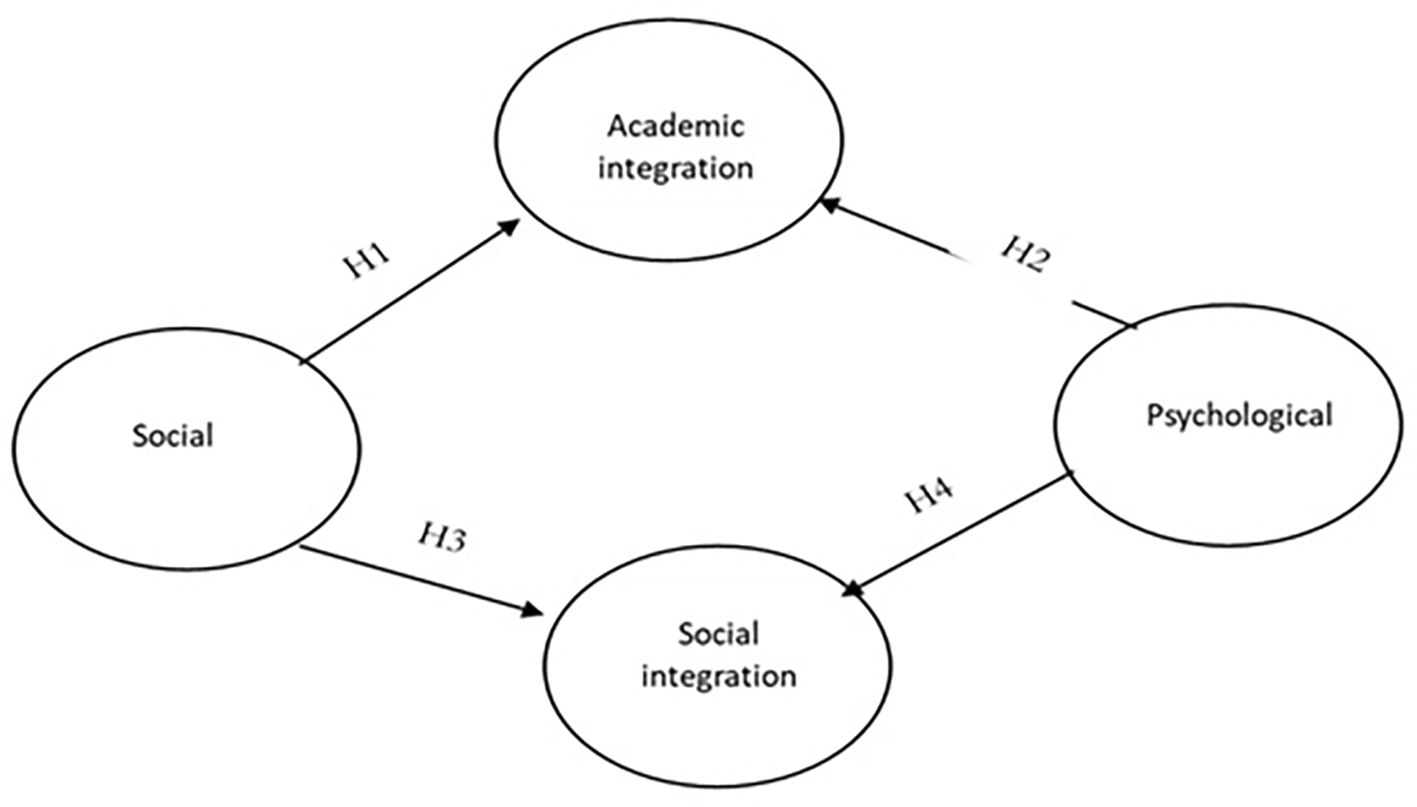
Note: Theoretical design obtained from university dropout models that include social and psychological factors.
The results of the study are presented sequentially, commencing with a descriptive analysis of the characteristics of the respondents to identify the perceptions of those students and the SEM analysis to address the research objective.
The majority of the students surveyed are female (53%) and male (47%), and are enrolled in the following degree programmes: human medicine (18%), administration (16%), accounting (16%), and economics (15%).
In relation to social factors, the majority of students expressed disagreement with the notion that family members exert influence over their decision-making processes (42%). Conversely, a significant proportion of students concurred with the assertion that members of their immediate social circle tend to offer mutual support (43%) and acknowledged the presence of considerable challenges within their family environment (37%) ( Figure 2).
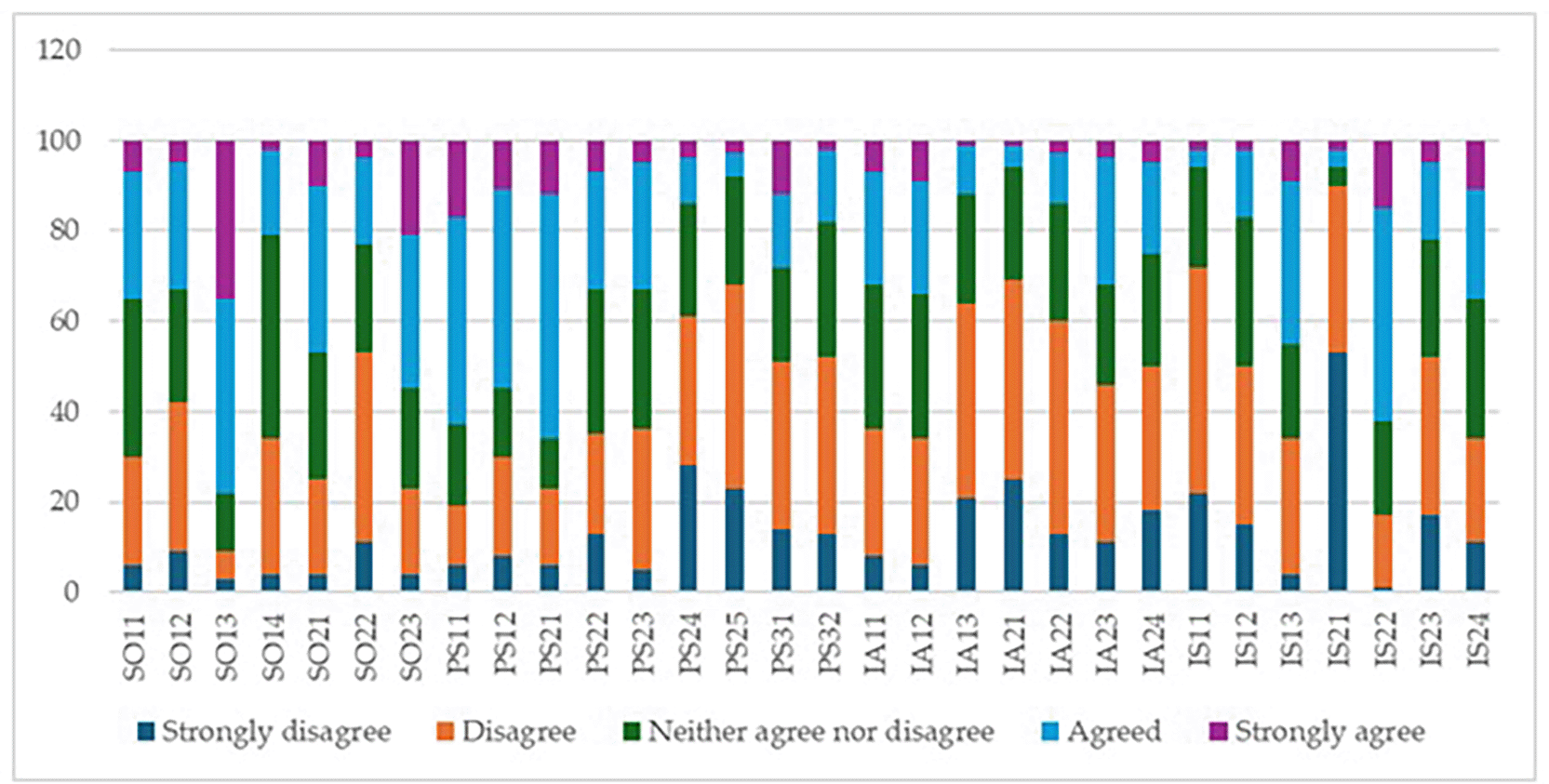
Note: Obtained from the survey applied on a Likert scale 1: strongly disagree; 2: disagree; 3: neutral; 4: agree; 5: strongly agree.
With regard to the psychological factors under consideration, it is evident that the majority of students (46%) adopt a proactive stance towards their university studies, while a significant proportion (44%) express a strong motivation to persevere in their academic pursuits. Furthermore, there is a notable consensus among the student body that their approach to academic endeavours is consistently positive (54%).
With regard to the matter of academic integration, it is evident that students have expressed their disagreement with inflexible schedules (47%), as well as the notion that university teachers are more demanding than school teachers (44%), and the perception that the university environment is more arduous than the school environment (43%).
With regard to social integration, students indicate that they strongly disagree with the assertion that they encounter any difficulty in living alone (53%), and also with the assertion that their family has experienced any financial difficulties (50%). Furthermore, they express disagreement with the statements that they are not entirely certain about their chosen career (35%) and that they have experienced any health problems (35%) in Table 2.
The present study aims to evaluate the psychosocial factors that explain academic dropout among scholarship students at a public university. To this end, a Structural Equation Model (SEM) analysis will be performed in order to pay close attention to construct validity, reliability, and the testing of hypotheses that contribute to this research.
With regard to the individual reliability of the items, all weights are above 0.707, with the exception of fifteen items belonging to the social, psychological, academic integration, and social integration constructs. Nevertheless, these items were retained on the basis that their content is also important in defining each of the constructs. In addition, the individual reliability of the items is adequate, as demonstrated in Table 3.48 Initially, an evaluation was conducted to ascertain the potential for multicollinearity between the constructs.49
In each of the partial multiple regressions, the VIF index for each of the exogenous constructs is less than 5. Therefore, we can affirm that there are no multicollinearity problems between the exogenous constructs of each endogenous variable, as shown in Table 3.
With regard to the internal consistency of the measurement scales, it is evident from Table 4 that the composite reliabilities of the constructs are greater than 0.7, with the exception of the psychological constructs. This observation serves to affirm the importance of the items or manifest variables for the model. In addition, the elevated Cronbach's alpha values (IA: α = 0.757; IS: α = 0.682; PS: α = 0.616; SO: α = 0.789) substantiate the inherent consistency and reliability of the instruments.
| Construct | Composite reliability |
|---|---|
| Academic integration (AI) | 0.819 |
| Social integration (SI) | 0.779 |
| Psychological (PS) | 0.690 |
| Social (SO) | 0.847 |
The AVE (Average Variance Extracted) coefficient represents the proportion of variance in the construct that can be explained by its indicators, and it has been verified that this coefficient is greater than 0.5 for all constructs, as shown in Table 5. We can therefore affirm that there is convergent validity for each of the latent variables.50
| Construct | Average extracted variance (AVE) |
|---|---|
| Academic integration (AI) | 0.598 |
| Social integration (SI) | 0.574 |
| Psychological (PS) | 0.583 |
| Social (SO) | 0.545 |
Discriminant validity analysis between constructs by calculating HTMT coefficients51 and using the criteria of.50 Table 6 shows that all constructs achieve discriminant validity according to the Forner-Lacker criterion and the stricter HTMT criterion52 therefore, all constructs measure different aspects.
In order to analyse the structural model and conduct hypothesis testing, it is hypothesised that a relationship exists between the constructs. The findings indicate that social factors related to integration with the environment and the family environment do not provide a satisfactory explanation for academic dropout as measured by academic integration (β = 0.228, t = 0.534, p < 0.593). Similarly, these factors do not provide a satisfactory explanation for academic dropout measured by social integration (β = 0.227, t = 0.579, p < 0.563). Contrary to the psychological factors that have been measured in previous studies on behavioural and subjective norms, it has been demonstrated that attitudes and subjective norms are more effective in explaining academic dropout when measured by academic integration (β = 0.836, t = 2.009, p < 0.045) and social integration (β = 0.747, t = 1.909, p < 0.056) ( Table 7).
Conversely, the results of the SEM analysis are presented for each of the 30 items of the four constructs considered: social integration, psychological integration, academic integration, and social integration. The results indicate that four items pertaining to the psychological constructs PS11, PS21, and PS32, as well as the social integration item IS12, are non-significant ( Table 8).
On the other hand, the structural equation model uses the results of confirmatory factor analysis, whose indices yield the following results: χ2 = CMIN/df = 1.64, GFI = 0.923, AGFI = 0.955, NFI = 0.906, CFI = 0.996, RMSEA = 0.081, and SRMR = 0.100, demonstrating that the indices of the constructs in the estimated model are adequate to explain the social and psychological factors that account for academic dropout among scholarship students at a Peruvian public university ( Table 9 and Figure 3).
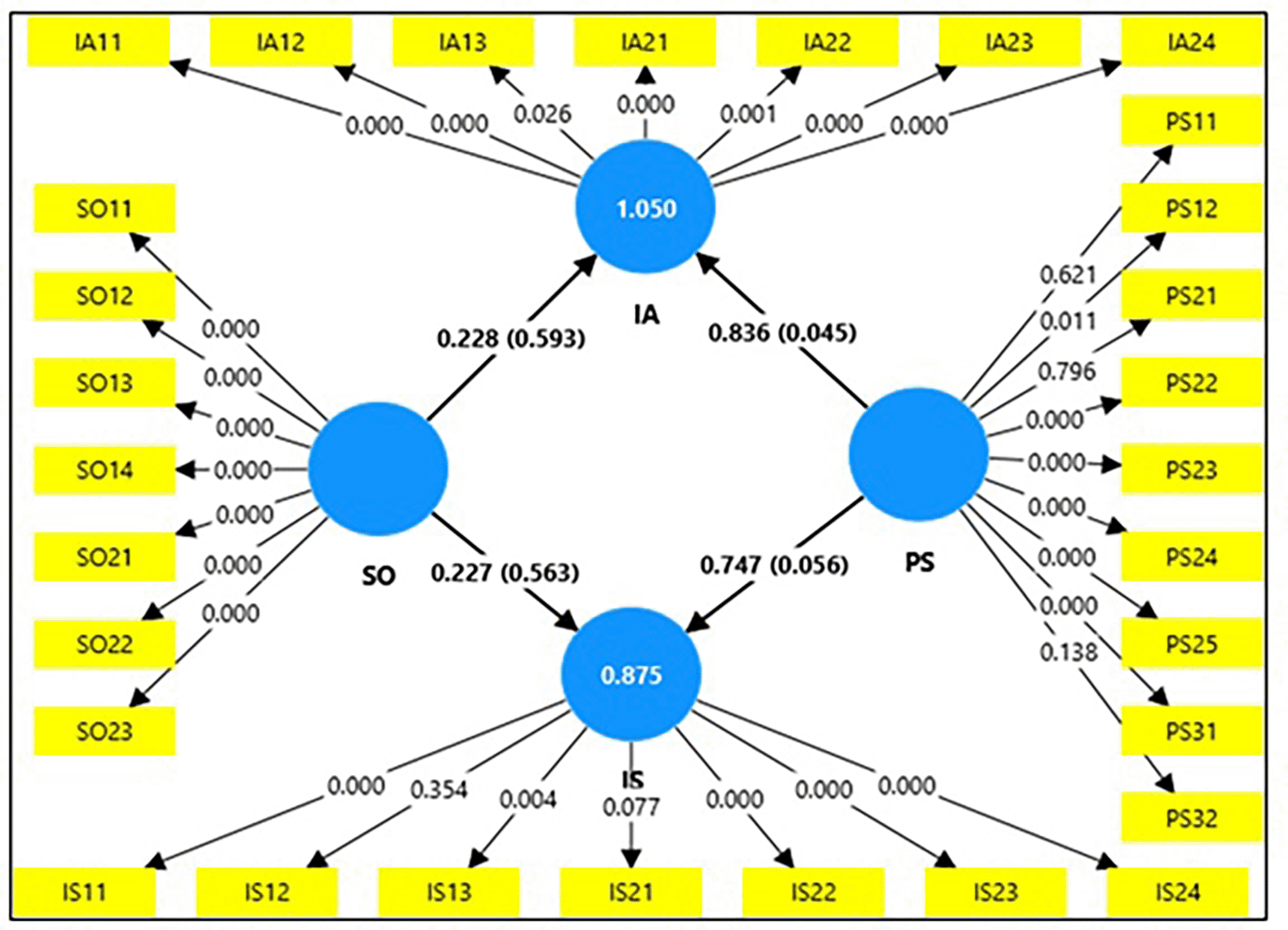
Note: Obtained from survey processing.
The findings of the present study demonstrate that psychosocial factors are a contributing element in the decision of scholarship students to withdraw from their academic studies. These results are in alignment with those of previous research conducted by27,34 The present study identifies academic self-regulation, self-efficacy, and social support as key determinants of university persistence. These findings correspond with those of the aforementioned authors, who also identified the importance of social integration and the family environment in student retention. The present study's findings demonstrate a robust correlation between the capacity to establish amicable relationships and the capacity to coexist harmoniously with individuals who have chosen to discontinue their academic pursuits. This observation aligns with the identification of institutional commitment as a protective factor in the systematic review conducted by the aforementioned authors.
In addition, the results of the present study are consistent with those of the research conducted by Ramos31 and Tlalajoe-Mokhatla.23 These researchers demonstrated that low academic performance, workload, and negative perceptions of the family environment have a detrimental effect on student motivation and increase the risk of dropout. The findings of the present study demonstrate that the family environment is a significant predictor of student attrition, thus indicating that a paucity of support from family members can directly influence students' decisions to abandon their studies.
In contrast, the findings of Vega et al. and Vilchez30,53 serve to reinforce the evidence that psychological factors, including depressive symptoms, suicidal ideation, insomnia, and insufficient parental support, are associated with an elevated risk of academic disengagement. The present study has identified a correlation between psychological well-being and emotional skills on the one hand, and university retention on the other. This finding highlights the importance of psychosocial interventions within higher education institutions in order to mitigate the adverse effects identified.
Kocsis & Molnár54 The psychological, realm our findings on mental health as a protective factor are in accordance with those of García et al.13 who observe that “the pressure to maintain high grades in order to retain the scholarship generates chronic stress, affecting performance” (p. 12). Nonetheless, there is a divergence of opinion regarding the magnitude of the effect. Whilst the aforementioned study Garcia et al.13 attributes greater weight to economic variables, the present study demonstrates that “knowledge of institutional norms” is the most influential predictor. This finding is in accordance with that of the study Kocsis and Molnár54 conducted by the second author, who identified that clarity in academic expectations reduces uncertainty among scholarship students.
In contrast to the findings presented above, the study by Nuñez27 emphasised the role of institutional and academic factors in dropout rates. This differs partially from the results obtained in this study, since the model developed herein highlighted the influence of subjective norms in the education system as the most influential factor. This finding suggests that enhancing comprehension and adaptability to institutional stipulations may substantially mitigate the inclination to withdraw among scholarship students.
In the Peruvian context, Salazar39 dentified that factors such as rural origin and mother tongue have an impact on scholarship loss. This finding is at odds with our results, which indicate that the family environment, rather than demographic variables, is the critical factor. The observed discrepancy may be attributed to methodological disparities, given that Salazar39 employed probit models, whereas our quantitative methodology placed greater emphasis on psychosocial constructs. Nevertheless, the consensus of both studies is that there is a requirement for comprehensive policies, as suggested by55: “Scholarships must be complemented by mentoring and curricular flexibility to address multidimensional vulnerabilities” (p. 320).
Finally, the work of Franz & Paetsch25 on social integration in working students corroborates our observation that “those employees with strong university networks are less likely to drop out” (p. 5), although their study focuses on teaching careers, while the present study covers multiple disciplines. This convergence underscores the universality of social integration as a retention factor, irrespective of the academic context.
The present study identified the psychosocial factors that explain academic dropout among scholarship students at a Peruvian public university, thereby highlighting the relevance of psychological aspects over social ones. The findings indicated that prior behaviours, attitudes towards studies, and knowledge of institutional norms exert a substantial influence on academic and social integration. This suggests that intrinsic motivation and clarity in academic expectations function as protective factors against dropout. In contrast, factors such as difficulty in establishing social networks or family environment did not demonstrate a statistically significant relationship. This calls into question traditional models that prioritise social integration as a central axis.
Theoretically, the present findings serve to reinforce the necessity of integrating psychological perspectives into models of university dropout, a requirement that is in alignment with studies emphasising self-regulation and mental health as pivotal factors in the retention of students. Methodologically, the use of structural equations enabled the unravelling of complex interactions between latent variables, thus validating the usefulness of quantitative approaches to analyse multi-causal phenomena. Nevertheless, the restricted impact of social elements may be indicative of deficiencies in the operationalisation of constructs such as family assistance or institutional coexistence, domains that necessitate further qualitative investigation.
Among the study's limitations, the exclusive focus on a single university and a small sample of scholarship recipients with low academic performance is particularly salient, thereby restricting the generalisation of results. Moreover, the exclusion of contextual variables, such as geographical origin or workloads, may have resulted in the omission of determining factors in contexts of economic vulnerability. It is recommended that future research endeavours encompass a more diverse sample and adopt a mixed methods approach to encompass the subjective dimensions that are not amenable to quantification through Likert scales.
The practical implications of this study indicate a necessity to formulate educational policies that incorporate ongoing psychological support, academic mentoring, and emotional skills training for scholarship recipients. The implementation of institutional adaptation programmes, with a focus on clarifying normative expectations and reducing academic anxiety, has the potential to mitigate the risk of dropout. These efforts should be complemented by strategies that foster institutional belonging, even if their direct impact was not statistically significant in this study.
In future research, it is recommended that the role of socioeconomic variables not previously considered be explored. Such variables may include family financial stability and access to technological resources, which could modulate the relationship between psychosocial factors and dropout. Conversely, longitudinal research would facilitate analysis of how these factors evolve throughout the university trajectory, thereby identifying critical windows for preventive interventions.
The aggregate contribution of this study is that it highlights that academic drop-out among scholarship students is a multifaceted phenomenon, with psychological components emerging as primary determinants. Whilst the findings challenge established socially-centred paradigms, they nevertheless pave the way for innovation in the field of evidence-based retention strategies. The combination of methodological rigour and sensitivity to student realities remains pivotal to the transformation of educational systems into environments that are genuinely inclusive.
The study involved an anonymous online questionnaire administered via Google Forms (non-interventional; no clinical procedures or experimental manipulation; no directly identifiable data collected). This work originated as a formative assignment within a postgraduate research methods course at the Graduate School of the National University Pedro Ruiz Gallo (UNPRG),56 and it was not submitted as a thesis- or degree-related protocol. Therefore, no formal ethics committee/IRB approval or waiver reference number is available. In the manuscript we now cite the relevant UNPRG institutional documents (Code of Ethics and Scientific Integrity for Research; Regulation of the Research Ethics Committee) and we attach an updated sworn statement explaining this context. The study also adhered to the UNPRG Code of Ethics and Scientific Integrity for Research (Resolution No. 1134-2018-R).
Informed consent was obtained in written electronic form (e-consent). The consent statement was displayed on the first page of the Google Form, and respondents could proceed only after actively selecting the agreement option (“I agree”). This has been clarified in the manuscript, and an updated e-consent form is included as a supplementary file.
| Views | Downloads | |
|---|---|---|
| F1000Research | - | - |
|
PubMed Central
Data from PMC are received and updated monthly.
|
- | - |
Provide sufficient details of any financial or non-financial competing interests to enable users to assess whether your comments might lead a reasonable person to question your impartiality. Consider the following examples, but note that this is not an exhaustive list:
Sign up for content alerts and receive a weekly or monthly email with all newly published articles
Already registered? Sign in
The email address should be the one you originally registered with F1000.
You registered with F1000 via Google, so we cannot reset your password.
To sign in, please click here.
If you still need help with your Google account password, please click here.
You registered with F1000 via Facebook, so we cannot reset your password.
To sign in, please click here.
If you still need help with your Facebook account password, please click here.
If your email address is registered with us, we will email you instructions to reset your password.
If you think you should have received this email but it has not arrived, please check your spam filters and/or contact for further assistance.

Comments on this article Comments (0)