Keywords
India VIX-RSI, Weak-form of Efficient Market Hypothesis, Valuation Multiples, ARDL, Market Regimes, Behavioral Finance

India VIX-RSI, Weak-form of Efficient Market Hypothesis, Valuation Multiples, ARDL, Market Regimes, Behavioral Finance
The determination of stock market returns is a central theme in financial economics, situated at the intersection of macroeconomic fundamentals, global financial integration, and investor behavior. The Indian equity market, as one of the world’s largest and most dynamic emerging markets, offers a critical context for this inquiry. Traditional financial theory, notably the Efficient Market Hypothesis (EMH) in its weak form (Malkiel and Fama, 1970), posits that asset prices fully reflect all historical information, rendering past prices and technical indicators useless for predicting future returns. In contrast, behavioral finance and empirical evidence from emerging markets consistently challenge this view, demonstrating that investor sentiment and psychological biases can create systematic exploitable patterns. The extant literature established that Indian market performance is driven by a complex synthesis of factors. Capital flows, particularly Foreign Portfolio Investment (FPI) net equity flows, are identified as a primary driver, exhibiting a persistent co – movement with and often preceding market volatility (Dharshne et al., 2025; Lakshmi and Thenmozhi, 2018). Domestically, macroeconomic expansion – proxied by the Index of Industrial Production (IIP) or GDP – underpins market performance through its direct relationship with corporate earnings (Bhuiyan and Chowdhury, 2020; Panda et al., 2023). Furthermore, India’s financial integration is evident, with global benchmarks like the MSCI World Index serving as a dominant predictor of domestic investments, reflecting the transmission of international risk sentiment (Goel and Singh, 2022; Jana, 2024).
Conversely, a substantial body of literature delineates the adverse influence of macroeconomic and risk factors. Inflation erodes real corporate earnings and elevates discount rates, compressing equity valuation (Mukherjee and Tiwari, 2022; Sreenu, 2023). Similarly, rising interest rates increase the cost of capital and trigger a reallocation away from equities (Anand et al., 2021; Gupta and Kumar, 2020). Beyond traditional fundamentals, Economic Policy Uncertainty (EPU) and geopolitical risk foster risk aversion, leading to heightened market volatility (Agoraki et al., 2022; Ghosh et al., 2024), often crystalized in the Volatility Index (VIX) as a direct fear gauge (Chhimwal and Bapat, 2020; H. Kaur, 2020). Critically, the literature identifies a category of variables with ambiguous or context-dependent impacts, highlighting significant complexities in modeling. The influence of money supply remains indeterminate (Gupta and Kumar, 2020), and the safe-haven role of gold is inconsistent (Ali et al., 2020; Shahzad et al., 2022). Most importantly, prior research has largely relied on linear models and broad aggregates, potentially obscuring more precise, regime-dependent relationships and avoid overlooking the combined predictive power of technical and sentiment indicators.
Despite a substantial body of literature, a critical empirical gap exists in modeling India’s equity market due to an over-reliance on linear frameworks and broad macroeconomic aggregates that fail to capture the nuanced interplay of market-specific dynamics. Previous research has largely overlooked three critical elements: (1) the combined predictive power of technical and sentiment indicators, such as a novel composite variable of the India VIX and Relative Strength Index (RSI); (2) the role of valuation metrics (P/B and P/E Ratios) as direct contemporaneous mediators of market returns, rather than just long-term fundamentals; and (3) the impact of primary market resource mobilization on secondary market liquidity and returns, a variable virtually unresearched in the Indian context. This lack of holistic, non-linear model that integrates these neglected variables means the current understanding of market efficiency and return determinants is incomplete. The urgency of this research is underscored by the need to better understand the sources of market volatility and predictability, especially in an era of heightened global uncertainty and complex financial interconnectedness.
This study aims to address these omissions by integrating the neglected variables into a unified Autoregressive Distributed Lag (ARDL) model to provide a robust challenge to the tenets of the EMH and offer a superior framework for understanding the determinants of Indian stock returns. The primary objective is encapsulated in the following research question:
To what extent do investor sentiment (proxied by India VIX-RSI), valuation multiples (P/B and P/E Ratios), and primary market resource mobilization collectively influence short-and long-term returns of the NIFTY 50 index, and do these relationships challenge the assumptions of the Efficiency Market Hypothesis in the Indian context? To answer this question, the study pursues the following specific objectives:
1. To examine the individual and combined impact of the India VIX-RSI composite, P/B Ratio, P/E Ratio, and primary market resource mobilization on NIFTY 50 returns.
2. To analyze both short-run dynamics and long-run equilibrium relationships among these variables using the ARDL bounds testing approach.
3. To assess the validity of the weak-form Efficient Market Hypothesis in light of the predictive power exhibited by the technical and sentiment – based India VIX-RSI composite.
4. To derive actionable policy and strategic implications for investors, regulators, and portfolio managers based on the empirical findings.
The significance of this research is manifold, contributing substantially to both academic discourse and practical application. Academically, this study pioneers the construction and application of the India VIX-RSI composite variable, a novel sentiment-adjusted momentum gauge designated to isolate high-risk, high-reversal market regimes. By integrating this technical indicator with valuation metrics and primary activity into a robust ARDL framework, the research bridges a critical gap in the literature. It moves beyond siloed and linear analyses to provide a unified, non-linear model that captures the synergistic effects of behavior, valuation, and market structure, offering a stringent test of the weak-form EMH. From a practical standpoint, the findings hold substantial value for a diverse set of stakeholders. For policymakers and regulators (like SEBI and RBI), the evidence on the destabilizing potential of “hot money” (FPI) flows and the stabilizing role of DIIs can inform macroprudential policies designed to deepen domestic capital pools and manage capital flow volatility. Understanding the impact of primary market resource mobilization can guide the strategic staggering of large issuances to prevent secondary market liquidity drains. For investors and portfolio managers, the validated predictive power of the India VIX-RSI composite provides a new, powerful tool for identifying overbought and volatile regimes prone to correction, enhancing tactical asset allocation and risk management strategies. For corporate managers, insights into how valuation multiples directly influence contemporaneous returns are vital for strategic financial planning and investor communication. Ultimately, by synthesizing these critical elements, this research provides a more complete and nuanced understanding of the forces shaping the Indian stock market, offering valuable insights for stabilizing financial markets and fostering sustainable economic growth.
The relationship between stock market performance and a multitude of internal and external factors is a cornerstone of financial economic research. The Indian stock market, as one of the world’s largest and most dynamic emerging markets, has been the focus of significant scholarly attention. This review synthesizes the existing literature, primarily derived from the provided compilation of studies, to map the current state of knowledge. It categorizes the key findings based on the nature of the relationship (positive, negative, neutral), highlighting studies from other contexts for a global perspective, and culminates in identifying critical research gaps specific to the Indian market that the current research aims to address.
The extant literature establishes a clear positive correlation between Indian equity market performance and several pivotal factors broadly categorized into capital flows, domestic, macroeconomic fundamentals, and global integration. Empirical evidence consistently identifies Foreign Portfolio Investment equity net inflows (FPI) as a primary driver of returns, characterized by a persistent co-movement where FPIs trading activity not only correlates with but often precedes market volatility, particularly over extended time horizons, while net investment figures exhibit a pronounced short-term interdependence with benchmark indices like the NIFTY (Dharshne et al., 2025; Gahlot, 2019; Lakshmi and Thenmozhi, 2018). Concurrently, Domestic Institutional Investors (DIIs) Net equity investment has emerged as a critical stabilizing agent, with their participation significantly bolstering returns and mitigating market volatility, thereby enhancing overall financial resilience (Aggarwal et al., 2022; Naik and Padhi, 2015; Saxena and Sikdar, 2024). At a fundamental level, macroeconomic expansion proxied by the Index of Industrial Production (IIP) or GDP growth underpins market performance through its direct positive long-run relationship with corporate earnings capacity and investor confidence, a finding robust across emerging market contexts (Bhuiyan and Chowdhury, 2020; Hashmi and Chang, 2023; Panda et al., 2023). Furthermore, India’s financial integration is evident as global equity indices (e.g., MSCI World Index) serve as a dominant positive predictor of domestic market movements, reflecting the transmission of international risk sentiment and capital flows (Goel and Singh, 2022; Jana, 2024; Üniversitesi et al., 2023). Finally, structural indicators such as rising market capitalization and FDI signal deepening market development and sustained foreign commitment, which subsequently attract further portfolio investments and reinforce valuation multiples (Hussain and Goswami, 2022; Verma and Bansal, 2021).
Conversely, a substantial body of literature delineates a predominantly adverse influence of several macroeconomic and risk factors on Indian equity performance. Inflation exhibits a well-documented negative relationship with stock returns, a phenomenon primarily attributed to the erosion of real corporate earnings and the subsequent elevation of discount rates, which collectively compress equity valuations (Mukherjee and Tiwari, 2022; Raghutla, 2020; Sia et al., 2023; Sreenu, 2023), with emerging evidence suggesting this effect may be asymmetric, presenting a potential avenue for further research into its differential impact across market regimes. Similarly, rising interest rates exert a depressive effect by increasing the cost of corporate capital and enhancing he relative attractiveness of fixed-income securities, thereby triggering a reallocation of investment away from equities (Gupta and Kumar, 2020; Ho and Njindan Iyke, 2017; Kaur and Chaudhary, 2022). For a net oil-importing economy like India, crude oil price surges consistently correlate with negative market returns, as they exacerbate the import bill, elevate inputs costs, fuel inflationary pressure, and ultimately impair aggregate corporate profitability (Agarwalla et al., 2021; Anand et al., 2021; Raza et al., 2016). However, the sectoral heterogeneity of this impact remains underexplored. Furthermore, exchange rate depreciation (INR/USD) negatively impacts markets by increasing the cost of critical imports and foreign-denominated debt, while also potentially precipitating destabilizing FPI outflows (Gupta and Kumar, 2020; Hussain and Goswami, 2022; Sreenu, 2023). Beyond traditional fundamentals, economic policy uncertainty (EPU) and geopolitical risks foster an environment of risk aversion, leading to heightened market volatility and negative returns as investors demand a higher risk premium (Agoraki et al., 2022; Dai et al., 2021; Ghani and Ghani, 2024; Ghosh et al., 2024). This is often crystalized in the Volatility Index (VIX), which serves as a direct fear gauge, wherein elevated levels are intrinsically associated with negative market conditions and downward price pressure (Chhimwal and Bapat, 2020; H. Kaur, 2020).
The literature further identifies a category of variables-whose impact on Indian equity returns is ambiguous, context-dependent, or contingent on methodological approach, highlighting significant complexities in modeling financial markets. The trading behavior of FPIs and DIIs, for instance, is not monolithic; evidence of both positive feedback trading and herding exists, but its effect -whether destabilizing or not – is highly contingent on prevailing market conditions (bullish vs. bearish), suggesting that aggregate market studies may mask these nuanced behavioral dynamics (Choudhary et al., 2022; Garg et al., 2016; Mukherjee and Tiwari, 2022). Similarly, the influence of money supply remains indeterminate in the Indian context (Gupta and Kumar, 2020), a discrepancy potentially attributable to offsetting monetary transmission mechanisms or the dominance of other macroeconomic shocks, a finding that diverges from significant relationships observed in other countries (Asmy et al., 2009; Mumo, 2017). The role of gold prices as a safe haven is also inconsistent with its negative correlation to equities breaking down during certain periods, suggesting its diversification benefits are time-varying and unreliable (Ali et al., 2020; Shahzad et al., 2022). Furthermore, while global financial stress invariably induces volatility, its net effect on returns is mixed due to competing forces of contagion-driven sell-offs and subsequent value-buying opportunities (Huynh, 2021; Luchtenberg and Vu, 2015). Insights from global research underscores that these ambiguous results often stem from aggregation bias and non-linearities; studies from developed and other emerging markets compellingly argue that relationships are frequently asymmetric and sector specific (Bhuiyan and Chowdhury, 2020; Borjigin et al., 2018; Ding et al., 2016), implying that the use of broad market indices and linear models in the Indian context likely obscures more precise, regime-dependent relationships, representing a critical gap in the extant literature.
Research Gap: Based on a comprehensive review of literature, a critical gap exists in the empirical modeling of India’s equity market, stemming from an over-reliance on linear framework and broad macroeconomic aggregates that fail to capture the nuanced interplay of market-specific dynamics. Previous research has largely overlooked the combined predictive power of technical and sentiment indicators, such as a novel composite variable of the India VIX and the Relative Strength Index (RSI). This study pioneers the India VIX-RSI composite variable to directly test the weak-form Efficient Market Hypothesis (EMH) by capturing concurrent market fear (volatility) and momentum. Furthermore, the role of valuation metrics (P/B and P/E ratios) as direct contemporaneous mediators of market returns – rather than just long-term fundamentals – remains underexamined, with their short-term predictive capacity often dismissed under EMH assumption. Concurrently, the impact of primary market resource mobilization on secondary market liquidity and returns is a significant yet virtually unresearched variable in the Indian context. This study directly addresses these omissions by integrating these neglected variables into a unified Autoregressive Distributed Lag (ARDL) model. This methodology not only accommodates the mixed order of integration typical of financial data but also explicitly tests for non-linear, short-run dynamics and long-term equilibria, thereby providing a more robust challenge to the tenets of the EMH and offering a superior framework for understanding the determinants of Indian stock returns.
Research Question: To what extent do investor sentiment (proxied by India VIX-RSI), valuation multiples (P/B and P/E Ratios), and primary market resource mobilization collectively influence short-and long-term returns of the NIFTY 50 index, and do these relationships challenge the assumptions of the Efficient Market Hypothesis in the Indian context?
Research hypothesis: The following hypotheses are framed in order to test the objectives.
Hypothesis 1 (Testing the core novel variable):
: The India VIX-RSI composite variable has no significant predictive power over NIFTY 50 returns.
: The India VIX-RSI composite variable has significant predictive power over NIFTY 50 returns, thereby challenging the weak-form EMH.
Hypothesis 2 (Testing the Comprehensive Model) .
: Valuation multiples (P/B and P/E Ratios) and primary market resource mobilization have no significant relationship with NIFTY 50 returns in the short or long run.
: Valuation multiples (P/B and P/E Ratios) and primary market resource mobilization are significant determinants of NIFTY 50 returns, exhibiting both short-run dynamics and a stable long-run equilibrium relationship.
This study employs a rigorous quantitative framework to analyze the determinants of the Indian equity market, utilizing monthly secondary data from January 2011 to May 2025. The dataset integrates domestic, global, and macroeconomic variables to ensure a holistic capture of market dynamics.
Data Collection and Sources: Data were sourced ( Table 17) exclusively from authoritative institutions to ensure reliability and reproducibility. Domestic variables – including NIFTY returns, FPI and DII flows, primary market resource mobilization, and valuation ratios (P/E, P/B) were collected from the SEBI Handbook of Statistics. Global indicators (MSCI World Index, India VIX, Gold Future prices) were sourced from Investing.com, while US Fed Rates came from the FRED. Macroeconomic variables (CPI, IIP, REER, Crude Oil Prices, trade balance) were obtained from the RBI’s database. Sentiment indicators (Consumer Confidence Index, Global Economic and Political Uncertainty Index) were incorporated from Trading View and the Economic Policy Uncertainty Index database.
| Type | Code | Description | Supporting Literature |
|---|---|---|---|
| Dependent | NSE NIFTY Index (LN_NIFTY) | NSE NIFTY Index tracks India’s 50 largest companies, serving as the principal benchmark for Indian equity market returns. | (Dey & Tareque, 2020; Dharshne et al., 2025; Gahlot, 2019; Lakshmi & Thenmozhi, 2018; Panda et al., 2023; Parab & Reddy, 2020a) |
| Independent | FPI’s Net Equity Investment (LN_FPI) | FPI’s Net Equity Investment indicates the net buying or selling of Indian equities by foreign portfolio investors within a given period, signaling foreign capital flow trends. | (Babu & Prabheesh, 2008; Chhimwal & Bapat, 2020; Derbali & Lamouchi, 2020; Hussain & Goswami, 2022; Kaur, 2020) |
| Independent | DII’s Net Equity Investment (LN_DII) | Domestic Institutional Investors’ (DII) Net Equity Investment is the net buying or selling of Indian equities by domestic institutions like mutual funds and insurance companies, reflecting their investment flows in the stock market. | (Aggarwal et al., 2022; Bansal, 2021; Chauhan & Chaklader, 2023; Gahlot, 2019; Sathish, 2020; Saxena & Sikdar, 2024) |
| Independent | Consumer Price Index (LN_CPI) | The CPI measures the average change over time in prices paid by consumers for a fixed basket of goods and services. It is widely used as a key indicator to track inflation and assess changes in the cost of living. | (Chellaswamy et al., 2020; Raghutla et al., 2020; Sia et al., 2023.; Singh & Padmakumari, 2020; Sreenu, 2023; Tiwari et al., 2022) |
| Independent | MSCI World Index (LN_MSCI_WORLD_INDEX) | The MSCI-World Index tracks large and mid-cap equities across 23 developed countries, serving as a global benchmark that captures international influence on Indian market dynamics. | (Goel & Singh, 2022; Pal & Garg, 2019; Patel, 2021; Üniversitesi et al., 2023) |
| Independent | Resource Mobilization from the Primary Market (LN_RESOURCE MOBILIZATION) | Resource Mobilization through Public and Right Issues by companies through new securities issuance. This variable is unresearched and is assumed to have an impact on the stock market returns in India. | (Bantwa & Bhatt, 2020; Bavachan & Muthu Gopala Krishnan, 2024; Dhanda & Singh, 2025) “This variable remains largely unexplored in the Indian context concerning its effects on stock market returns”. |
| Independent | Monthly Average Crude Oil Prices (LN_CRUDEOIL _PRICES) | Monthly crude oil prices significantly impact Indian stock returns, as rising costs impair corporate earnings and heighten market volatility, particularly in this net-importing economy. | (Anand & Paul, 2021; Liu et al., 2023; Pachiyappan et al., 2024; Panda et al., 2023; Zhang & Hamori, 2021) |
| Independent | Monthly US Federal Interest Rates (LN_US_FED_RATES) | Monthly US Federal Interest Rates critically influence Indian equities, as hikes typically trigger foreign capital outflows and depress stock prices, while cuts encourage and support market gains. | (Bhuiyan & Chowdhury, 2020; Bianchi et al., 2023; Lakdawala, 2021; P H & Rishad, 2020) |
| Mediating Variables | Price to Earnings Ratio of NIFTY 50 Companies (LN_PE_RATIO) | The P/E Ratio of the NIFTY 50 reflects market valuation relative to earnings, signaling investor sentiment. A high ratio may indicate overvaluation and lower future returns, while a low ratio suggests undervaluation and higher potential returns, directly influencing index performance. | This ratio, though examined in sector-specific contexts, lacks as a direct contemporaneous mediator of overall index returns – particularly in high-frequency settings – revealing a critical gap in the existing literature. |
| Mediating Variables | Price to Book Value Ratio of NIFTY 50 Companies (LN_PB_RATIO) | The P/B Ratio of the NIFTY 50 compares market to book value, where a higher ratio implies growth expectations that may boost returns. Its predictive role for monthly returns remains less studied, highlighting a key research gap. | (K. V. Lakshmi et al., 2025; Sethi, 2019; Sood et al., 2024; Suchetha, 2022) |
| Mediating Variables | Consumer Confidence Index (CCI) LN_CCI | The Consumer Confidence Index (CCI) measures consumer expectations about the economy and plays a key role in explaining stock market returns. Theoretically, higher confidence often leads to increased spending and investment, boosting stock returns. | (Anand et al., 2021; Gaspar & Jiaming, 2023; Nowzohour & Stracca, 2020; Xuan Trang & Phan Thi Hang, 2023) |
| Interactive Variables | India’s VIX and RSI (LN_INDIA_VIX_RSI) | Multiplying India VIX and RSI creates a powerful composite variable that captures both volatility and momentum. This index enhanced the explanation power of stock market returns by concurrently reflecting investors sentiment and the strength of price trends, making it highly valuable for forecasting complex market movement. | This is a novel composite variable pioneered in this study. Its construction is motivated by the separate bodies of literature on the predictive power of volatility indices (Chhimwal & Bapat, 2020) and momentum indicator (JEGADEESH & TITMAN, 1993) for market returns. |
| Interactive Variables | Index of Industrial Production (IIP-General) (LN_IIP_GROWTH _RATE) | The Index of Industrial Production (IIP) measures India’s industrial output and serves as a key barometer of economic activity. Rising IIP often signals higher corporate profits and strengthens investors confidence, acting as a fundamental driver of stock market performance. | (Chellaswamy et al., 2020; Gupta & Kumar, 2020; Kaur & Chaudhary, 2022; Parab & Reddy, 2020b; Syed, 2021; Verma & Bansal, 2021) |
| Interactive Variables | Monthly Trade Balance (LN_TRADE_BALANCE) | The Monthly Trade Balance, reflecting net exports, influences India’s currency and growth. A surplus typically strengthens investor sentiment and supports higher equity returns, as confirmed by empirical studies. | (Arora & Mukherjee, 2020; Hashmi & Chang, 2023; Jana, 2024) |
| Interactive Variables | Monthly Global Economic and Political Uncertainty Index of the World (LN_GEPUI_WORLD) | The GEPUI Ratio measures worldwide uncertainty through news-based analytics. Elevated levels increase investor risk aversion, prompting capital flight from equities to safe-haven assets. | (Agoraki et al., 2022; Dai et al., 2021; Ghani & Ghani, 2024; Ghosh et al., 2024; Huynh et al., 2021; Yu et al., 2018) |
| Interactive Variables | Monthly Average Real Effective Exchange Rate (LN_REER) | The REER measures the inflation-adjusted value of the Indian rupee against a trade-weighted basket of currencies. A strong REER can dampen exports and corporate earnings but may stabilize markets by reducing imports cost and inflation. | (Chinn, 2006; Dutta & Sengupta, 2018; Hassan & Holmes, 2012; Hyder & Mahboob, 2006; Nain, Md Zulquar; Kamaiah, 2012; Rasmané Ouedraogo, 2017a; Rasmane Ouedraogo, 2017b; Vogiazas et al., 2019) |
| Interactive Variables | Monthly Average Gold Future Prices (LN_GOLD_FUTURE_PRICES) | Gold Futures prices, derived from exchange-traded contracts, reflect market expectations and hedging demand rather than immediate physical supply. We use futures due to their higher liquidity and role as a leading sentiment indicator for institutional investors. | (Ali et al., 2020; Dewan & Dharni, 2023; Kaur & Singh, 2020; Shahzad et al., 2022) |
| Null Hypothesis: No Serial Correlation at up to 2 lags | |||
|---|---|---|---|
| F-statistic | 0.28719 | Prob. F(2,139) | 0.3975 |
| Obs* R-squared | 2.083491 | Prob. Chi-Square (2) | 0.3528 |
| Null Hypothesis: Residuals are Homoscedastic | |||
|---|---|---|---|
| F-statistic | 0.859175 | Prob. F(16,141) | 0.6168 |
| Obs* R-squared | 14.03579 | Prob. Chi-Square (16) | 0.596 |
| Scaled explained SS | 12.76253 | Prob. Chi-Square (16) | 0.69 |
| F-test summary | Sum of Sq | df | Mean Squares |
|---|---|---|---|
| Test SSR | 0.000287 | 1 | 0.000287 |
| Restricted SSR | 0.050469 | 141 | 0.000358 |
| Unrestricted SSR | 0.050181 | 140 | 0.000358 |
| Dependent Variable: D (LN_NIFTY) | ||||
|---|---|---|---|---|
| Selected Model: ARDL (2,2,2,1,2,1,0,1,2,1,0,0,1,1,0,0) | ||||
| Case 2: Restricted Constant and No Trend | ||||
| Sample: 1 173 | ||||
| Included Observations: 164 | ||||
| Conditional Error Correction Regression | ||||
| Variable | Coefficient | Std. error | t-statistic | Prob. |
| C | 0.941158 | 0.763080 | 1.233368 | 0.2196 |
| LN_NIFTY(−1)* | −0.107030 | 0.039163 | −2.732898 | 0.0071* |
| LN_FPI(−1) | 0.000124 | 0.000402 | 0.307598 | 0.7589 |
| LN_DII(−1) | 0.000138 | 0.000411 | 0.334907 | 0.7382 |
| LN_MSCI_WORLD_INDEX(−1) | 0.090720 | 0.046822 | 1.937577 | 0.0548* |
| LN_CRUDEOIL_PRICE(−1) | −0.002939 | 0.011403 | −0.257768 | 0.7970 |
| LN_US_FED_RATES(−1) | 0.027895 | 0.009292 | 3.001954 | 0.0032* |
| LN_CPI** | −0.003545 | 0.008372 | −0.423408 | 0.6727 |
| LN_PRICE_TO_BOOK_RATIO(−1) | 0.095795 | 0.043744 | 2.189883 | 0.0303* |
| LN_PRICE_EARNINGS_RATIO(−1) | −0.003798 | 0.024340 | −0.156032 | 0.8762 |
| LN_CCI(−1) | −0.043990 | 0.029346 | −1.499011 | 0.1363 |
| LN_INDIA_VIX_RSI** | 0.000017 | 0.000007 | 2.324394 | 0.0216* |
| LN_GDP_GROWTH_RATE** | −0.004365 | 0.009169 | −0.476008 | 0.6349 |
| LN_TRADE_BALANCE(−1) | −0.000708 | 0.000996 | −0.710588 | 0.4786 |
| LN_GEPUI_WORLD(−1) | −0.023313 | 0.010144 | −2.298250 | 0.0231* |
| LN_GOLD_FUTURE_PRICES(−1) | 0.030126 | 0.017820 | 1.690604 | 0.0933 |
| LN_REER** | −0.141132 | 0.198095 | 0.712449 | 0.4774 |
| D (LN_NIFTY (−1)) | −0.125819 | 0.060524 | −2.078817 | 0.0396* |
| D (LN_FPI) | 0.000529 | 0.000020 | 2.626104 | 0.0097* |
| D (LN_FPI(−1)) | 0.000353 | 0.000199 | 1.778642 | 0.0776 |
| D (LN_DII) | 0.000188 | 0.000624 | 0.710719 | 0.4785 |
| D (LN_DII (−1)) | 0.000543 | 0.000245 | 2.214203 | 0.0285* |
| D (LN_MSCI_WORLD_INDEX) | 0.324602 | 0.051496 | 6.303504 | 0.0000* |
| D (LN_CRUDEOIL_PRICES) | −0.026439 | 0.018506 | −1.428660 | 0.1555 |
| D (LN_CRUDEOIL_PRICES (−1)) | −0.035837 | 0.015934 | −2.249081 | 0.0262* |
| D (LN_US_FED_RATES) | 0.102270 | 0.028466 | 3.592685 | 0.0005* |
| D (LN_PRICE_TO_BOOK_RATIO) | 0.438592 | 0.054667 | 8.022984 | 0.0000* |
| D (LN_PRICE_EARNINGS_RATIO) | 0.275543 | 0.051265 | 5.374891 | 0.0000* |
| D (LN_PRICE_EARNINGS_RATIO (−1)) | 0.066850 | 0.051326 | 1.302450 | 0.1950 |
| D (LN_CCI) | 0.044854 | 0.047433 | 0.945617 | 0.3461 |
| D (LN_TRADE_BALANCE) | 0.000446 | 0.000724 | 0.616200 | 0.5385 |
| D (LN_GEPUI) | −0.005011 | 0.009685 | −0.517010 | 0.6057 |
| Null Hypothesis: No Serial correlation at up to 2 lags | |||
|---|---|---|---|
| F-statistic | 0.719280 | Prob. F(2, 130) | 0.4890 |
| Obs *R-squared | 1.794937 | Prob. Chi-Square(2) | 0.4076 |
| F-statistic | 0.885839 | Prob. F (31, 132) | 0.6421 |
| Obs *R-squared | 28.242680 | Prob. Chi-Square (31) | 0.6086 |
| Scaled explained SS | 21.784060 | Prob.Chi-Square (31) | 0.8897 |
| F-test summary | Sum of Sq | df | Mean Squares |
|---|---|---|---|
| Test SSR | 0.000287 | 1 | 0.000287 |
| Restricted SSR | 0.143721 | 132 | 0.000331 |
| Unrestricted SSR | 0.043434 | 131 | 0.000332 |
| Type | Code | Source of collecting the data | URL |
|---|---|---|---|
| Final dataset | https://doi.org/10.6084/m9.figshare.30996205 | ||
| Dependent | NSE NIFTY Index (LN_NIFTY) | Investing.com | Nifty 50 Historical Data - Investing.com India |
| Independent | FPI’s Net Equity Investment (LN_FPI) | SEBI – Handbook of Statistics 2024–25 | SEBI | Handbook of Statistics 2024-25 |
| Independent | DII’s Net Equity Investment (LN_DII) | BSE Market Data | www.Bseindia.com/markets/equity/EQReports/StockPrcHistori.htmal?flat=1 |
| Independent | Consumer Price Index (LN_CPI) | RBI – Database on Indian economy | data.rbi.org.in/BOE/OpenDocument/2409211437/OpenDocument/opendoc/openDocument.jsp?logonSuccessful=true&shareId=1 |
| Independent | MSCI World Index (LN_MSCI_WORLD_INDEX) | Investing.com | MSCI World Index Share Price Today LIVE - Investing.com India |
| Independent | Resource Mobilization from the Primary Market (LN_RESOURCE MOBILIZATION) | SEBI – Handbook of Statistics 2024–25 | SEBI | Handbook of Statistics 2024-25 |
| Independent | Monthly Average Crude Oil Prices (LN_CRUDEOIL _PRICES) | Yahoofinane.com | Crude Oil Feb 26 (CL=F) Stock Historical Prices & Data - Yahoo Finance |
| Independent | Monthly US Federal Interest Rates (LN_US_FED_RATES) | Federal Reserve Bank | Federal Funds Effective Rate (FEDFUNDS) | FRED | St. Louis Fed |
| Mediating Variables | Price to Earnings Ratio of NIFTY 50 Companies (LN_PE_RATIO) | SEBI – Handbook of Statistics 2024–25 | SEBI | Handbook of Statistics 2024-25 |
| Mediating Variables | Price to Book Value Ratio of NIFTY 50 Companies (LN_PB_RATIO) | SEBI – Handbook of Statistics 2024–25 | SEBI | Handbook of Statistics 2024-25 |
| Mediating Variables | Consumer Confidence Index (CCI) LN_CCI | Moneycontrol.com | India Consumer Confidence Indicator | Live Consumer Confidence Forecast | Historical Data and Stats - Moneycontrol |
| Interactive Variables | India’s VIX and RSI (LN_INDIA_VIX_RSI) | Calculated by taking the daily Nifty 50 data from January 2011 to May 2025 | Step 1: Calculate daily price change
Step-2: Calculation of Average Gain and Average Loss (First 14 periods) Step3: Calculation of RS Step 4: Calculation of RSI |
| Interactive Variables | Index of Industrial Production (IIP-General) (LN_IIP_GROWTH _RATE) | RBI.org | DBIE |
| Interactive Variables | Monthly Trade Balance (LN_TRADE_BALANCE) | RBI.org | DBIE |
| Interactive Variables | Monthly Global Economic and Political Uncertainty Index of the World (LN_GEPUI_WORLD) | Economic Policy Uncertainty | Economic Policy Uncertainty Index |
| Interactive Variables | Monthly Average Real Effective Exchange Rate (LN_REER) | RBI.org | DBIE |
| Interactive Variables | Monthly Average Gold Future Prices (LN_GOLD_FUTURE_PRICES) | Investing.com | Gold Futures Historical Prices - Investing.com India |
Variable Selection and Rationale: Variables were selected based on theoretical and empirical foundations in financial literature ( Table 1). The NIFTY index serves as the dependent variable, representing broad market performance. Independent variables span liquidity measures (FPI, DII), valuation metrics (P/E and P/B), global benchmarks (MSCI, US Rates), macroeconomic fundamentals (IIP, Inflation, Exchange Rate), and risk sentiment indicators (VIX, Uncertainty indices). This structured approach ensures methodological transparency, aligns with the established financial research paradigm, and facilitates nuanced insights into the drivers of Indian equity returns.
Data Transformation and Econometric Approach: All the chosen variables were transformed into natural logarithms to stabilize variance and normalize distributions. Stationarity was achieved via first-difference transformations ( Table 2), confirmed through unit root testing. Given the mixed order of integration – I (0) for LN_FPI and LN_DII and I(1) for others – the Autoregressive Distributed Lag (ARDL) Bounds testing approach was adopted to model both short-run dynamics and long-run equilibria. An Error Correction Model (ECM) specified the speed of adjustment to long-run relationships, while Engle-Granger causality tests identified directional influences. Ordinary Least Squares (OLS) regression provided preliminary insights, with robustness ensured through diagnostic checks for autocorrelation, heteroscedasticity, and model stability.
Construction of the India VIX-RSI Composite Variable: To capture the complex of dynamics of concurrent market sentiment and momentum, a novel composite variable was constructed. This variable is the product of the India Volatility Index (VIX) and the Relative Strength Index (RSI) of the NIFTY 50 index. The India VIX, a forward-looking measure derived from option prices, reflects the market’s expectation of 30-day volatility and is a well-established proxy for investor fear and uncertainty. However, it is non-directional and does not convey information about price momentum. Conversely, the RSI is a momentum oscillator that identifies overbought (typically >70) and oversold (typically <30) conditions based on recent price changes. A key limitation of the RSI is that it generates signals without accounting for the underlying market sentiment or volatility environment; a high RSI reading can occur in both a calm, bullish trend and a volatility, panic-driven rally. The rationale for employing the multiplicative product of these two variables rather than their sum, is to isolate and amplify signals from specific high-stress regimes where elevated volatility coincides with extreme momentum. Such a scenario is characteristic of market phases like short-covering rallies, panic buying, or “blow-off tops”, where sharp price movements are driven by fear and euphoria rather than fundamentals, creating conditions highly prone to reversals. The resulting composite index, India VIX-RSI, thus functions as a sentiment-adjusted momentum gauge. The interpretive value of this composite ( Table 16) is significant and non-linear. The product of the VIX and RSI helps identify specific market regimes, as illustrated in the framework below:
The descriptive statistics ( Table 3), based on 158 monthly observations, real non-normal distributions – evidenced by high standard deviations, skewness, kurtosis, and significant Jarque-Bera tests – which is typical for financial data (Tsay, 2010). Nevertheless, parametric analysis remains valid for large samples. To ensure stationarity, all variables were log-transformed. Augmented Dickey-Fuller tests indicated that only LN_FPI and LN_DII were stationary at level I(0), where others become stationary after first differencing (I(1)). Given this mix of integration orders, the Autoregressive Distributed Lag (ARDL) approach was employed, as it is robust for cointegrating analysis with variables of different orders (Pesaran et al., 2001). This allows reliable estimation of both short-and long-run dynamics.
The study employs OLS regression ( Table 4) to analyze the short-term determinants of India’s NIFTY 50 index returns, categorizing explanatory variables into independent, mediating, and interactive groups to clarity their distinct roles. The model exhibits robust explanatory power, with an adjusted R2 of 0.842, indicating that it accounts for over 84% of the variation in monthly returns – a notably high fit for financial market data. Global factors exert a dominant influence on short-term returns. The MSCI World Index (DLN_MSCI_WORLD_INDEX) shows a strong positive impact (β = 0.3647, ρ < 0.0001), consistent with financial integration theory. Rallies in developed markets enhance global risk appetite, triggering capital flows into high-growth emerging markets like India (Goel and Singh, 2022; Üniversitesi et al., 2023). Conversely, crude oil prices significantly depress returns (β = −0.0391, ρ = 0.0295). As a net importer, India faces elevated input costs, inflationary pressures, and compressed corporate margins during oil price surges – a mechanism well-documented in prior literature (Agarwalla et al., 2021; Anand et al., 2021). A counterintuitive yet significant positive relation exists for US Federal Reserve Rates (β = 0.0549, ρ = 0.015). This suggests that the market may interpret rate hikes nor merely as a liquidity constraint but as a confirmation of a robust US economy, which improves the earnings outlook for Indian exporters – an effect that can outweigh concerns about capital outflows in the short run (Bhuiyan and Chowdhury, 2020; Garg et al., 2016). On the domestic front, FPI (LN_FPI) inflows serve as a significant positive driver (β = .000498, ρ = 0.0082), providing immediate liquidity and bolstering investor confidence, thereby acting as a classic “hot money” stimulus (Bhattacharya and Mukherjee, 2002; Mukherjee et al., 2005; Mukherjee and Tiwari, 2022). In contrast, primary market resource mobilization (DLN_RESOURCE_MOBILIZATION) exhibits a significant negative relationship (β = −0.001877, ρ = 0.0089), likely reflecting periods where substantial new capital raising absorbs liquidity from the secondary market, creating temporary downward pressure on prices – a phenomenon noted in earlier studies (Singh Yadav, 2020). Domestic Institutional Investment (LN_DII) and Inflation (DLN_CPI) were statistically insignificant in the short-run, indicating their limited immediate influence on market fluctuations.
Valuation and Behavioral Dynamics: Valuation ratios play a pivotal mediating role. The P/B Ratio (DLN_PRICE_TO_BOOK_VALUE_RATIO) is highly significant and positive (β = 0.453, ρ < 0.0001), indicating that rising valuations – reflecting investor optimism about future growth and asset value – are directly correlated with contemporaneous returns (Anand et al., 2021; Singh et al., 2024). Similarly, the P/E Ratio (DLN_PRICE_TO_EARNINGS_RATIO) is positive and significant (β = 0.222, ρ < 0.0000), demonstrating that higher earnings multiples boost returns. The consumer confidence index (DLN_CCI) was positive but only marginally significant (ρ = 0.0933), suggesting that while consumer sentiment is relevant, its influence is secondary to financial metrics in the short-run.
Most notably, the novel India VIX-RSI (DLN_INDIA_VIX_RSI) composite variable exhibits a statistically significant negative relationship with NIFTY 50 returns (β = −0.0612, ρ = 0.032). This empirical finding provides robust validation for the variable’s theoretical construction and its utility as a contrarian indicator. The negative coefficient confirms a critical hypothesis: periods of high composite values – which, as designed, corresponds to the “overbought& volatile” regime outlined in Table 16 (where high RSI > 70 intersects with high VIX > 20) – are a reliable predictor of short-term market corrections. This regime represents a state of fragile exuberance, where euphoric buying occurs amid elevated investor fear, creating a high-probability environment for a sharp reversal. The result empirically demonstrates that the composite variable successfully filters out less reliable signals from RSI alone by embedding a necessary condition of market stress. Consequently, the India VIX-RSI composite offers superior explanatory power by isolating specific, high risk market states, thereby challenging the assumptions of the weak-form of EMH.
In conclusion, the OLS regression results present a nuanced challenge to market efficiency paradigms. The significant predictive power of the India VIX-RSI composite variable – a technical indicator derived from publicly available historical data – directly contradicts the weak-form of EMH. Its negative coefficient demonstrates that investor psychology and behavioral biases manifests in measurable, exploitable patterns, creating short-term inefficiencies. Conversely, the rapid and significant response of the NIFTY to global benchmark (MSCI World Index) and domestic fundamentals (P/B Ratios) supporting the semi-strong form of EMH, confirming the market’s efficiency in rapidly incorporating public macroeconomic information.
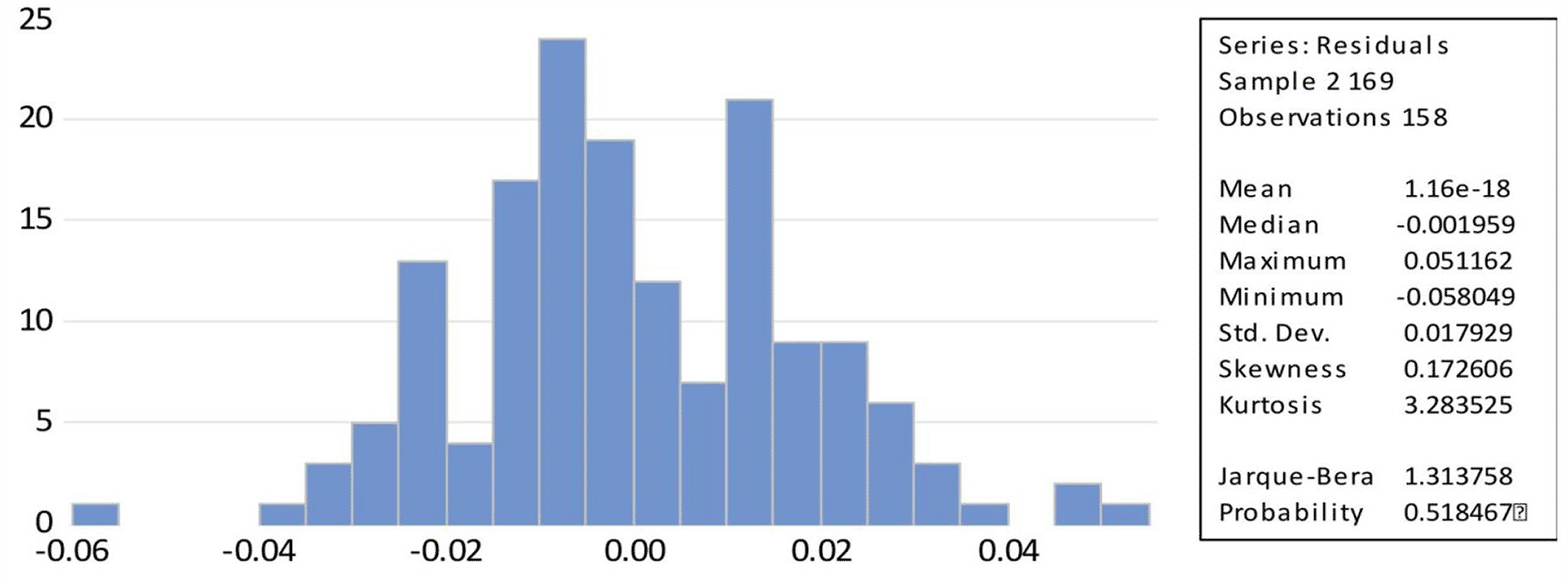
The OLS regression model satisfies all critical diagnostic assumptions ensuring the robustness and validity of its inferences. Multicollinearity is absent ( Table 5), with all variance inflation factors (VIFs) substantially below the threshold of 10 (max:2.87). The residuals are normally distributed ( Figure 1), as confirmed by a Jarque-Bera statistic of 1.31(ρ = 0.52), and exhibit desirable properties of skewness (0.17) and kurtosis (3.289). Furthermore, the Breusch-Godfrey test ( Table 6) (F-stat ρ = 0.39) and Breusch-Pagan-Godfrey test ( Table 7) (F-stat ρ = 0.62) provide strong evidence against serial correlation and heteroscedasticity, respectively. This collective diagnostic rigor affirms that the parameter estimates are efficient, unbiased, and suitable for reliable statistical inference and forecasting.
The Ramsey RESET test for model specification ( Table 8) confirms the robustness and validity of the regression equation, as all reported statistics (t-statistic = 0.8956, F-statistic = 0.8020, and likelihood ratio = 0.9026, with respective p values of 0.3720 and 0.3421) are well above conventional significance levels, indicating no evidence of omitted variable bias or incorrect functional form. This result means the null hypothesis of correct model specification cannot be rejected, affirming that the regression model for Indian stock determinants is properly specified, free from misspecification errors, and provides reliable, trustworthy parameter estimates and inferences for economic and policy analysis.
The CUSUM test ( Figure 2) confirms parameters stability, as the statistic remains within the 5% significance bounds, indicating no structural breaks in the regression coefficients. In contrast, the CUSUM of Squares test ( Figure 3) reveals instability in the residual variance, with the statistic breaching the upper critical bound late in the sample. This divergence suggests an exogenous shock or regime change – such as a financial crisis or major policy shift – that altered the error variance without affecting the model’s coefficients. Consequently, while the estimated relationships remain valid for inference, the increased variance of the residuals in the latter period implies reduced forecasting precision and highlights the presence of unmodeled volatility during that phase.
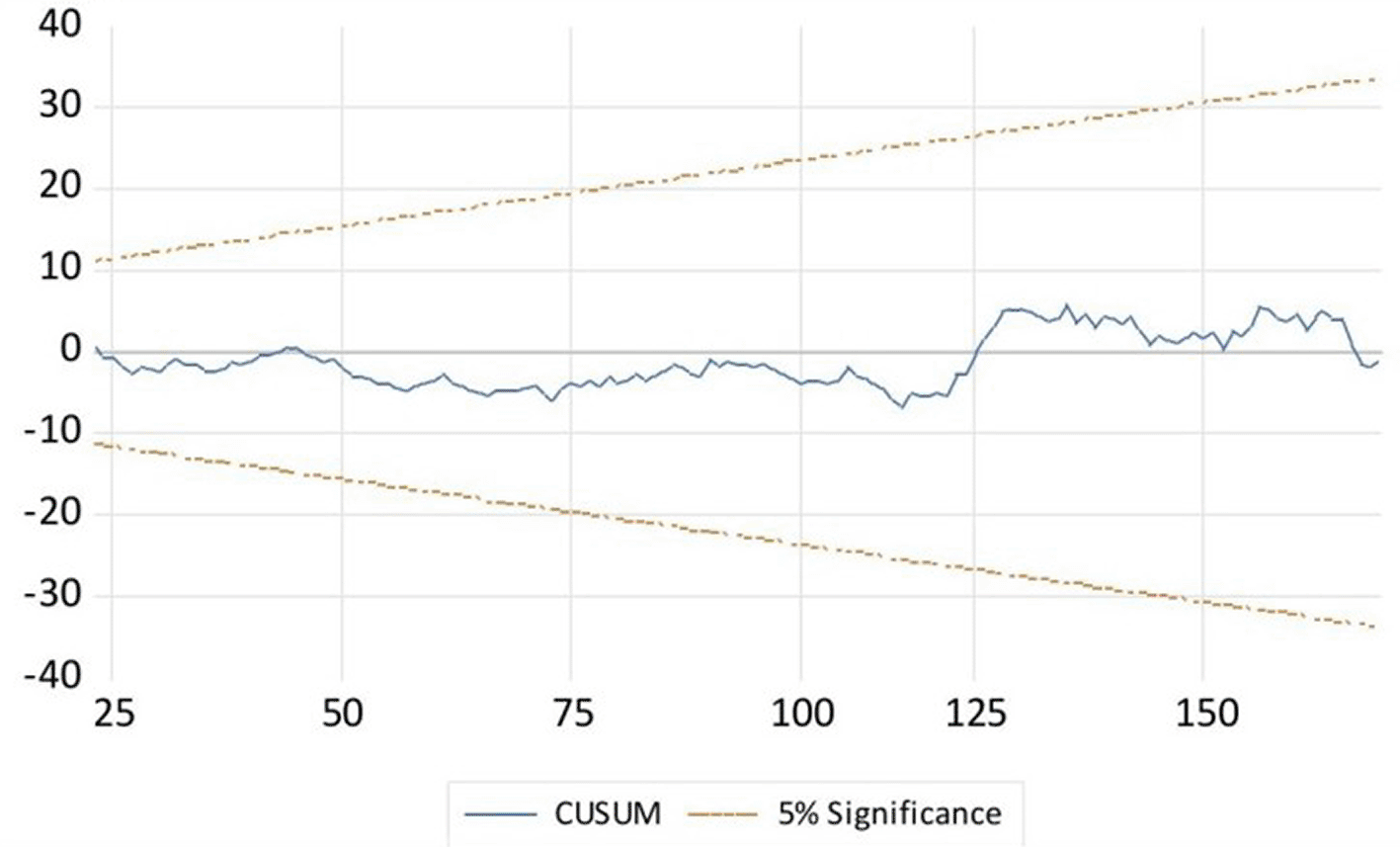
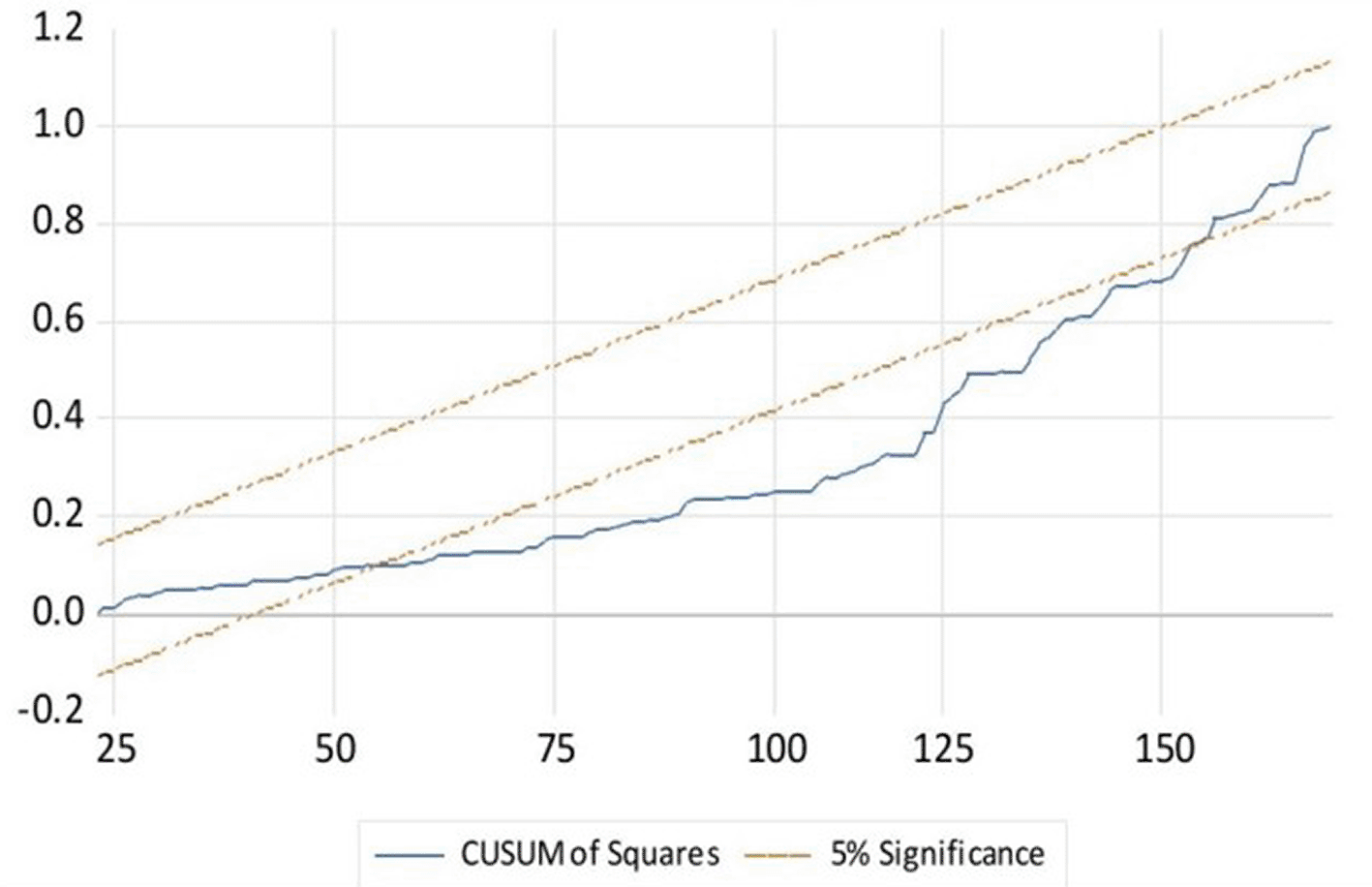
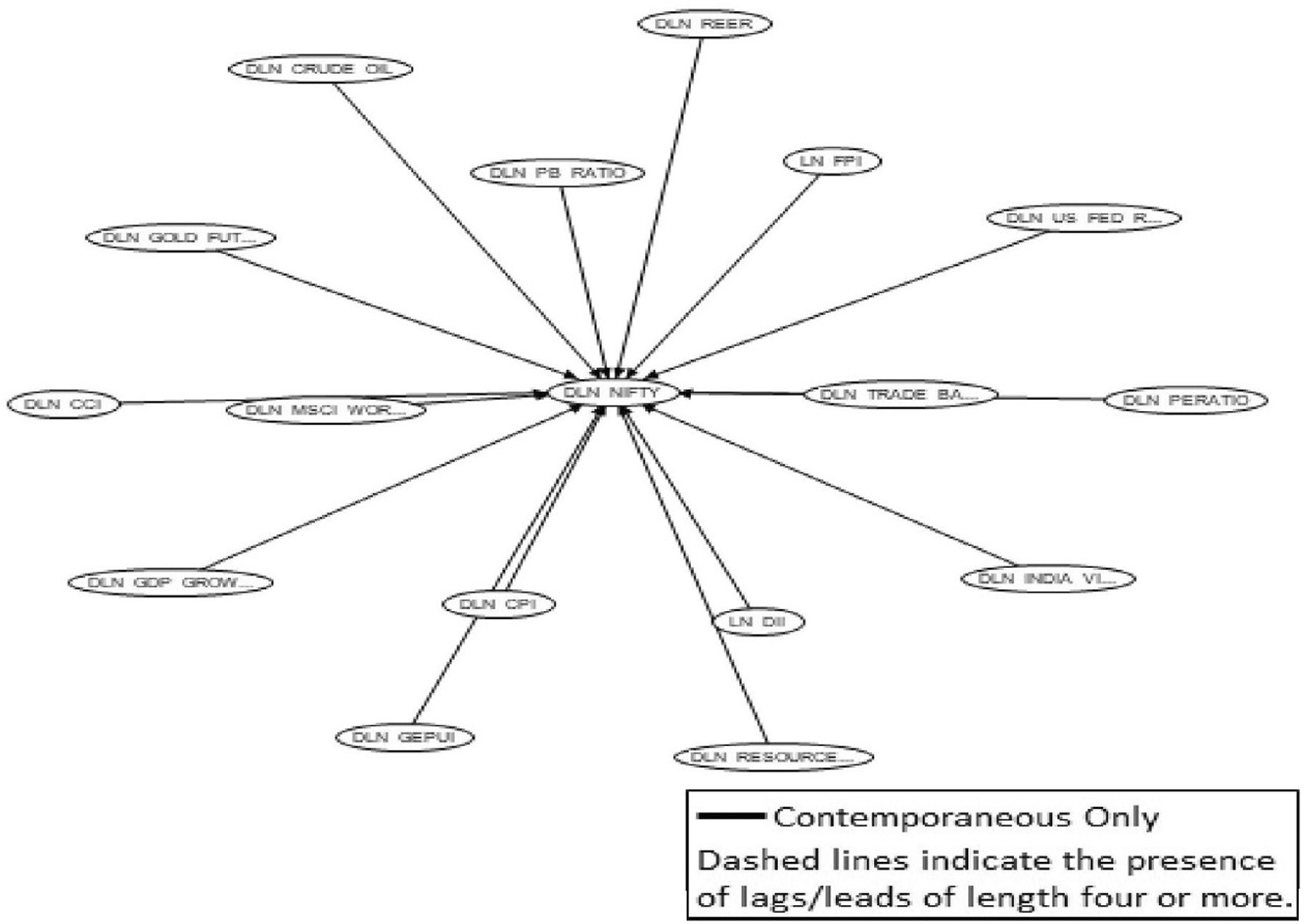
Figure 4 maps the contemporaneous causal linkages between NIFTY returns and key global, microeconomic, and financial variables, with solid lines indicating immediate (lag<4 periods) interactions. The network reveals that NIFTY is instantaneously influenced by global benchmarks (MSCI World Index, US Fed Rates, Crude Oil Prices, and global uncertainty – GEPUI), demonstrating fundamentals (CPI, P/B and P/E Ratios; trade balance, IIP Growth), institutional flows (DIIs and FPIs), and sentiment indicators (India VIX-RSI, gold futures and primary market resource mobilization). This dense web of real-time connections underscores the high degree of integration and responsiveness of the Indian equity market to a complex set of international and domestic shocks, reflecting its maturity and vulnerability to synchronous financial and economic stimuli.
Based on the OLS regression results, the findings primarily challenge the weak-form Efficient Market Hypothesis (EMH), which posits that current stock prices are fully reflect all historical market data and the past price movements cannot be used to predict future returns. The significant predictive power of the India-VIX-RSI composite – a technical and sentiment-based indicator derived from publicly available historical volatility and momentum data – directly contradicts this form of market efficiency. Ceteris paribus, the observed short-term predictive capacity of this composite variable implies that investors may systematically exploit patterns in sentiment and momentum to achieve returns what would be expected under weak-form efficiency. Furthermore, the significance of contemporaneous valuation multiples (P/B and P/E ratios) – which are also based on public fundamental information – supports this deviation from weak-form efficiency. While these results do not explicitly test semi-strong or strong-form EMH (which incorporate all public and private information, respectively), the demonstrated predictive power of publicly available data suggests that the Indian market may not even meet the criteria for weak-form efficiency in the short run.
It is important to note, however, that these OLS-based conclusions are limited to short-term dynamics. Long-run efficiency cannot be dismissed without further cointegration analysis, as short-term inefficiencies may dissipate over time, allowing prices to eventually reflect all available information. Thus, while the OLS results advocate for the rejection of weak-form EMH in the short term, the overall degree of market efficiency remains a nuanced empirical question requiring further validation.
The VAR lag order selection criteria ( Table 9) (AIC, SC, HQ) unanimously indicated one optimal lag, ensuring model parsimony and mitigating overfitting. This selection is critical for the ARDL model specification, as correct lag length is essential to accurately capture short-run adjustments and long-run cointegrating relationships among the variables with different orders of integration, thereby guaranteeing robust estimation and valid inference.
The transition from OLS regression to Autoregressive Distributed Lag (ARDL) bounds testing is a critical methodological advancement necessitated by the mixed order of integration within the dataset. The initial OLS model provided insights into short-run relationships using the stationary variables I(0) to avoid spurious results. However, it is inherently ill-equipped to identify long-run equilibrium relationships among non-stationary variables I(1) or a mix of I(0) and I(1) series. The ARDL approach elegantly circumvents this limitation, allowing for the simultaneous estimation of short-run dynamics and long-run cointegrating relationships without requiring all variables to be integrated of the same order. It is important to note that certain variables present in the OLS specification were excluded from the final ARDL model. This was necessary to maintain model parsimony and because the inclusion of all variables exceeded the computational capacity of the software, preventing estimation. The selected, more streamlined model ensures robustness and avoids overfitting. The existence of a long-run relationship is formally tested using the F-bounds test ( Table 10 Part-2). The computed F-statistic of 3.17 exceeds the upper critical value at the 5% significance level, allowing for the decisive rejection of the null hypothesis of “no levels relationship”. This confirms a stable long-run cointegrating relationship between the NIFTY 50 and its key determinants.
The Conditional Error Correction Regression ( Table 10 Part-1) provides critical insights into the short-term dynamics and adjustment processes of the NIFTY 50 index, illustrating how the market responds to shocks and converges towards its long-run equilibrium. The error correction term (ECT), represented by LN_NIFTY (−1)* is both statistically significant (ρ = 0.071) and negative (−0.107), confirming the existence of a stable long-run relationship and indicating a rapid adjustment speed. Specifically, approximately 10.7% of any deviation from the long-run equilibrium is corrected within a single month, underscoring the market’s efficiency in reverting to its fundamental value following short-term disruptions. The short-run determinants can be categorized into three groups based on their statistical significance and directional influence.
Global equity sentiment, captured by the MSCI World Index (D (LN_MSCI_WORLD_INDEX), exerts a substantial positive influence (β = 0.3246, ρ = 0.000), highlighting India’s deep financial integration and sensitivity to international risk appetite (Goel and Singh, 2022; Üniversitesi et al., 2023). Foreign Portfolio Investment (D (LN_FPI)) shows strong contemporaneous effects (β = 0.000529 ρ = 0.0097), reinforcing its role as “hot money” providing immediate liquidity (Lakshmi and Thenmozhi, 2018). Domestic Institutional Investment (D (LN_DII(−1)), (β = 0.000543, ρ = 0.0285), confirming its stabilizing, counter-cyclical role (Saxena and Sikdar, 2024). Valuation multiples including Price-to-Book (D (LN_PRICE_TO_BOOK_RATIO), (β = 0.4386, ρ = 0.0000) and Price-to-Earnings Ratios (D (LN_PRICE_EARNINGS_RATIO), (β = 0.2755, ρ = 0.0000) are highly significant, confirming immediate market responses to valuation improvements (Anand et al., 2021). The US Federal Rate (D (LN_US_FED_RATES), (β = 0.102270, ρ = 0.0005) shows positive impact, suggesting market interpretation of rate hikes as signals of strong global growth rather than mere liquidity constraint (Bhuiyan and Chowdhury, 2020). The lagged dependent variable (D (LN_NIFTY(−1)), (β = −0.1258, ρ = 0.0396) exhibits negative coefficient, indicating inherent mean reversion. Lagged crude oil prices (D (LN_CRUDEOIL_PRICES(−1)), (β = −0.0358, ρ = 0.0262) negatively impact returns, reflecting delayed assimilation of cost-push inflationary pressure (Agarwalla et al., 2021; Anand et al., 2021). Variables including contemporaneous DII flows (D (LN_DII), consumer confidence index (D (LN_CCI), and trade balance (D (LN_TRADE_BALANCE) were statistically insignificant, suggesting limited short-term influence.
Long-Run Equilibrium Relationships: Levels Equation Analysis
The Levels Equation ( Table 10 Part-2) elucidates fundamental determinants anchoring NIFTY 50’s long-run equilibrium, reflecting sustained economic forces driving permanent valuation shifts. The MSCI World Index (LN_MSCI_WORLD_INDEX) (β = 0.8476, ρ = 0.0003) emerges as the most influential driver, underscoring India’s financial globalization (Goel and Singh, 2022). The US Federal Reserve Rates (LN_US_FED_RATES) (β = 0.2606, ρ = 0.00200) shows positive relationship, attributable to correlation between US tightening and robust global growth benefiting Indian earnings (Bhuiyan and Chowdhury, 2020). The price-to-book (LN_P/B_RATIO) (β = 0.8950, ρ = 0.0028) confirms long-run valuation ties to corporate asset quality (Sethi, 2019; Suchetha, 2022). India VIX-RSI (LN_INDIA_VIX_RSI) (β = 0.000157, ρ = 0.0598) shows marginally significant positive impact, consistent with financial theory that elevated volatility demands higher risk premium over the long term. Global Economic and Political Uncertainty Index (LN_GEPUI) (β = −0.2178, ρ = 0.1071) exerts negative influence, aligning with theoretical expectations that uncertainty induces risk aversion (Dai et al., 2021; Ghosh et al., 2024). Variables including FPI, DII, CPI, and Crude oil prices are insignificant in the long-run, indicating transient rather than permanent impacts.
The results present nuanced perspectives on market efficiency. The significant predictive power of India VIX-RSI composite variable – derived from historical public data -contradicts weak-form Efficient Market Hypothesis (EMH), demonstrating that past price and volatility data can predict future returns through behavioral biases and investor sentiment creating short-term inefficiencies. However, the rapid adjustment mechanism (ECT-0.107) and significance of fundamental variables support semi-strong form EMH, as public information is swiftly incorporated into prices. The market exhibits dual nature: inefficient short-run due to behavioral factors but efficient long-run prices converge to fundamental values. This suggests weak-form EMH violation but semi-strong form efficiency maintenance over longer horizons. The India VIX-RSI’s positive long-run coefficient (β = 0.000157, ρ = 0.0598) despite short-term negative impact validates its theoretical construction. This apparent contradiction aligns with the interpretation framework where high VIX-RSI values indicate “Panic Oversold” conditions (Low RSI < 30 + High VIX > 20) that predict short-term reversals but ultimately command higher long-run risk premium, consistent with financial theory’s risk-return trade-off paradigm.
The ARDL Error Correction Regression results ( Table 11), presented in their canonical form, provide a sophisticated decomposition of market dynamics into short-term fluctuations and equilibrium-restoring forces. The model’s core insight is captured by the highly significant error correction term (ConEq(−1) = −0.107, ρ = 0.0000), which quantifies the market’s remarkable efficiency in self-correction. This coefficient indicates that approximately 10.7% of any deviation from the long-run fundamental equilibrium is eliminated within a single month, representing a powerful mean-reversion force that anchors prices to their theoretical values. The ARDL Error Correction results reveal a sophisticated market microstructure where short-run dynamics are dominated by global financial integration, with contemporaneous reactions to the MSCI World Index (β = 0.325, ρ = 0.0000) and the US Fed Rates (β = 0.102, ρ = 0.0005) demonstrating India’s sensitivity to international capital flows and risk sentiment. The immediate pricing of valuation multiples (P/R: β = 0.439, ρ = 0.0000; P/E: β = 0.276, ρ = 0.0000) confirms rapid assimilation of fundamental information, supporting semi-strong form efficiency. However, the significant predictive power of lagged variables – including institutional flow patterns (FPI contemporaneous β = 0.00053, ρ = 0.0001; DII lagged β = 0.00054, ρ = 0.0050) and the India VIX-RSI composite – reveals behavioral inefficiencies contradicting weak-form efficiency. The delayed impact of crude oil prices (β = −0.036, ρ = 0.0073) further demonstrates predictable market lag in processing supply shocks. This paradox suggests context – dependent efficiency: while the market exhibits rational long-run equilibrium behavior (error correction of 10.7% monthly), it simultaneously maintains short-term predictable patterns arising from institutional herding, sentiment-driven trading and delayed fundamental adjustments, creating opportunities for strategic arbitrage despite overall informational efficiency.
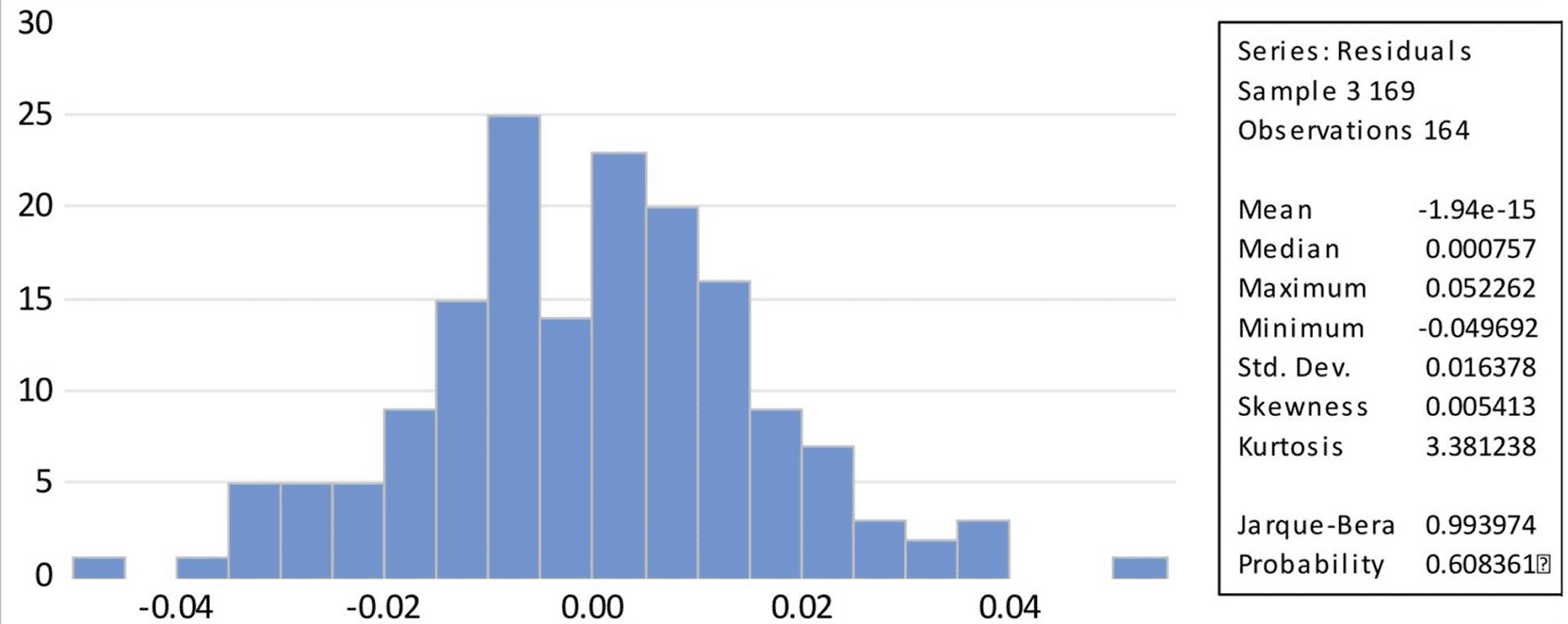
The residuals are normally distributed ( Figure 5), as confirmed by the Jarque-Bera statistic of 0.994 with a high p-value (0.608). This indicates the model’s error term is well-behaved, validating the reliability of the regression inferences.
The diagnostic tests confirm the ARDL model’s robustness. The high p-values for both serial correction ( Table 12) (0.4890) and heteroscedasticity ( Table 13) (.6421) tests indicate no autocorrelation and constant variance in the residuals, validating the model’s statistical reliability.
The Ramsey Regression Equation Specification Error Test (RESET) ( Table 14) serves as a critical diagnostic for assessing functional form validity in econometric modeling. This test evaluates whether omitted variables, incorrect functional form, or other misspecification issues exist by examining the statistical significance of non-linear combinations of fitted values. The null hypothesis posits that the model is correctly specified. In this analysis, the RESET test yields an F-statistic of 0.8658 with a corresponding ρ-value of 0.3538, substantially exceeding conventional significance thresholds. This provides decisive statistical evidence that we fail to reject the null hypothesis of correct specification. The accompanying t-statistic (0.9305, ρ = 0.3538) and likelihood ratio (1.0804, ρ = 0.2986) provide convergent validation of this result. These findings robustly indicate that the specified ARDL model exhibits no statistically detectable specification errors. The results affirm the absence of omitted variable bias and confirm the appropriateness of the functional form. This rigorous diagnostic assessment thereby reinforces the model’s econometric validity and its reliability for both statistical inferences and forecasting applications. The specification demonstrates sufficient comprehensiveness to capture the underlying data-generating process without systematic misspecification.
The Pairwise Granger Causality tests ( Table 15) reveal distinct patterns of predictive relationships among market variables significant bidirectional causality exists between NIFTY returns and Foreign Portfolio Investments (FPI), indicating a mutually reinforcing feedback loop where market performance both attracts and is driven by foreign capital flows. Similarly, a bidirectional relationship emerges between NIFTY and the India VIX-RSI composite, demonstrating that market returns and sentiment-driven volatility predict each other in a self-reinforcing mechanism. Unidirectional causality flows from NIFTY to several key variables: domestic institutional investments (DIIs) exhibit reactive behavior, primary market resource mobilization responds to secondary market performance, consumer confidence follows market trends, and exchange rate (REER) adjust to equity market strength. Conversely, foreign investments are unidirectionally caused by global market movements (MSCI World Index) and domestic valuation metrics (P/B and P/E ratios). Notably, no causal relationship exists between NIFTY and several fundamental variables including global indices (MSCI World Index), inflation (CPI), and industrial production (IIP) suggesting these influences operate through more complex channels than simple linear predictability. The identified causal relationships yield significant implications for market efficiency. The bidirectional causality between the India VIX-RSI composite and NIFTY returns challenges weak-form market efficiency, demonstrating that historical volatility and momentum data possess predictive power over future prices. This aligns with behavioral finance frameworks where investor sentiment generates persistent market patterns (Gupta et al., 2024; Kumar and Anandarao, 2019). Similarly, unidirectional causality from valuation ratios (P/B, P/E) to foreign institutional flows indicates sophisticated fundamental analysis by international investors, supporting semi-strong form efficiency for institutional market participants (N. Sethi, 2013; Suchetha, 2022). The absence of significant causality between NIFTY and macroeconomic fundamentals suggests either immediate price incorporation or complex nonlinear transmission mechanisms beyond linear predictability. These results collectively indicate a market characterized by partial efficiency, where behavioral factors create predictable short-term patterns while institutional investors demonstrate informationally efficient responses to fundamental data.
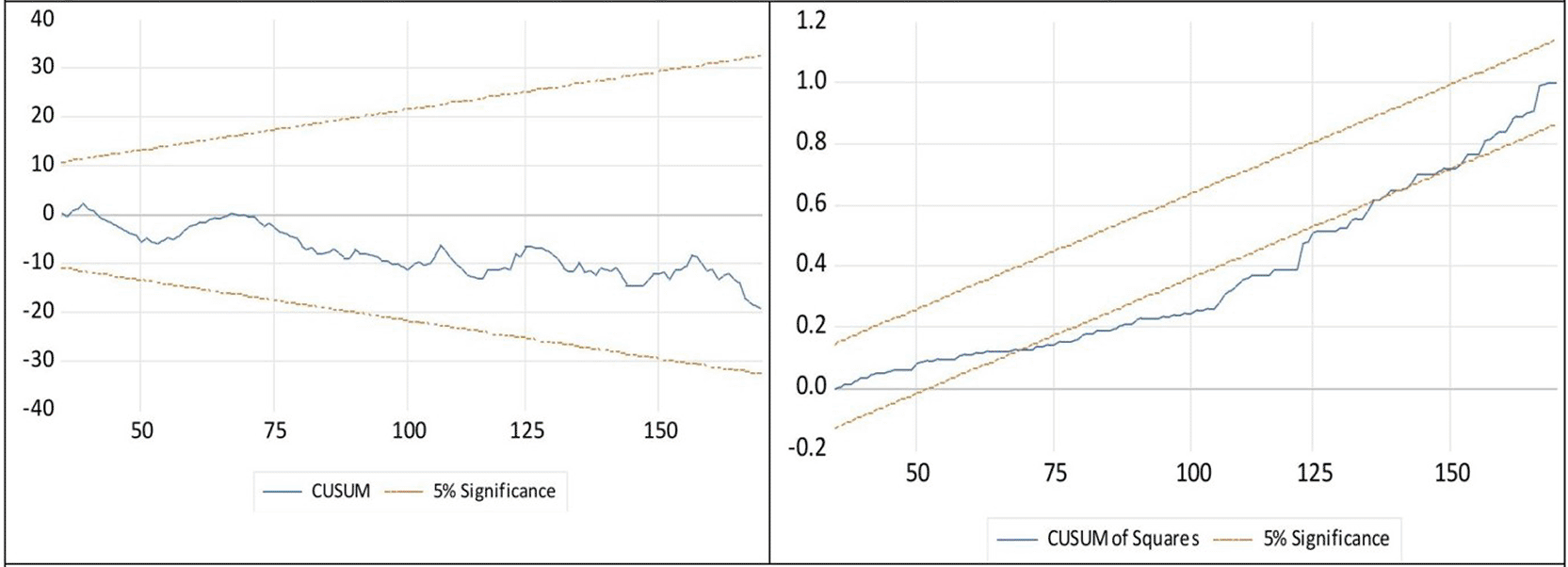
The dynamic sources of volatility in NIFTY returns are rigorously quantified using a Forecast Error Variance Decomposition (FEVD) ( Figure 6) analysis, predicted on a Cholesky decomposition identification scheme within a Structural Vector Autoregressive (SVAR) framework. This methodological approach orthogonalizes the structural shocks, allowing for the precise attribution of the forecast error variance in NIFTY returns to innovations in each variable in the system over a 10-period horizon. The results delineate a clear hierarchy of influence, dominated by external global factors. Orthogonalized shocks to global variables, identified via the Cholesky ordering, constitute the primary transmission channels for systematic risk. Innovations in the MSCI World Index exbibit a monotonically increasing explanatory power, with their contribution rising significantly to 1.1% by the tenth period. This demonstrates a progressive integration where international risk sentiment and business cycles increasingly dictate domestic volatility dynamics. Concurrently, shocks to US Federal Rates assert a potent and persistent influence, their contribution consistently exceeding 1% from the second period onward. This confirms the critical transmission of US monetary policy shocks through interest rate and capital flow channels, directly amplifying short-term volatility in emerging markets. Conversely, the FEVD reveals that shocks to domestic variables provide statically insignificant explanatory power. Innovations in valuation metrics (P/B and P/E Ratios) and macroeconomic fundamentals (CPI and IIP) exhibit minimal contributions, indicating these slow-moving variables are either efficiently priced ex-ante or capture long-term equilibrium value rather than high-frequency volatility. The negligible influence of exchange rate fluctuations further suggests their impact is sector-specific and diversified away at the aggregate index level. Most notably, the minimal contribution from DII flows confirms their role as stabilizers who absorb rather than generate systemic volatility. Collectively, the FEVD results underscore that NIFTY’s short-term forecast error variance is predominantly driven by undiversifiable global systematic risk factors, while domestic shocks are effectively neutralized at the market portfolio level.
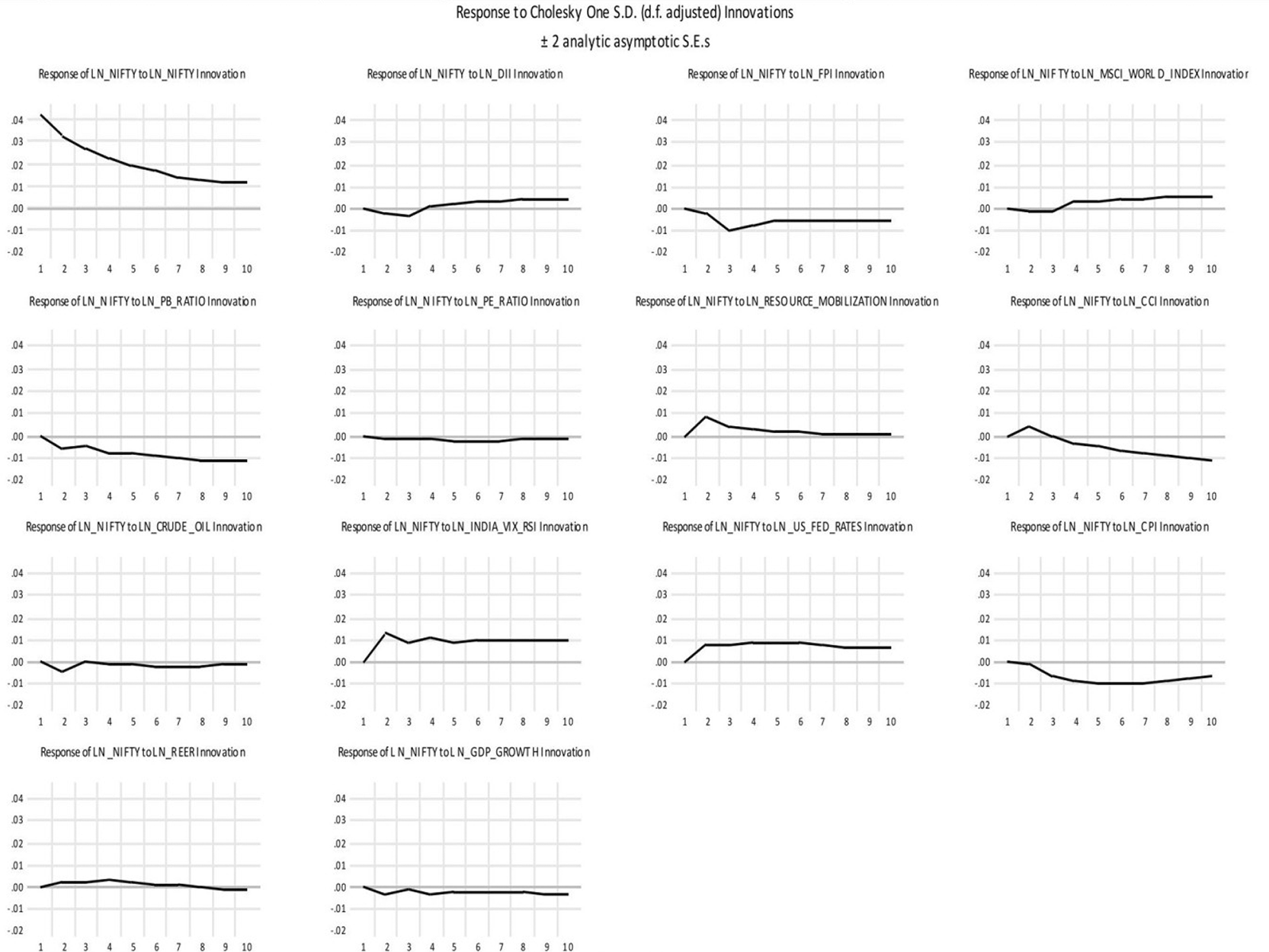
The CUSUM test confirms parameter stability ( Figure 7), with the statistic remaining within the 5% significance bounds, indicating no structural breaks in the model’s coefficients. In contrast, the CUSUM of Squares test breaches the critical bounds, revealing heteroscedasticity in the residuals. This divergence suggests that while the mean relationships among variables remain stable, the residual variance experienced volatility shocks – potentially from exogenous events – without altering the fundamental economic linkages. The model maintains reliable coefficient estimates, though forecast confidence intervals may vary with volatility regimes.
This study investigated the determinants of NIFTY 50 returns from January 2011 to May 2025, employing a comprehensive set of variables including a novel India VIX-RSI composite to test the weak-form Efficient Market Hypothesis (EMH). The results provide compelling evidence of a complex market structure characterized by high short-run equilibrium anchored by fundamental valuations and global integration. The findings collectively challenge the pure assumptions of the weak-form EMH while upholding the tenets of semi-strong form efficiency over the long horizon.
Major Findings:
1. Challenge to Weak-form EMH: The novel India VIX-RSI composite variable demonstrated significant predictive power over NIFTY returns. Its negative short-run coefficient identifies “Overbought & Volatile” regimes as reliable precursors to corrections, indicating that historical price and volatility data can be used to predict future returns, thereby contradicting the weak-form EHM.
2. Global Dominance: Global factors are the primary drivers of both short- and long-run market dynamics. The MSCI World Index is a fundamental long-run cointegrating variable, while US Federal Rates and Crude Oil Prices exert significant short-run influences. The FEVD analysis confirmed that innovations in global factors (MSCI, US Rates) are the dominant sources of forecast error variance in NIFTY returns.
3. Dual Role of Institutional Flows: Foreign Portfolio Investment (FPI) acts as significant “hot money”, with a strong positive short-run impact and a bidirectional causal relationship with NIFTY, creating a performance – chasing feedback loop. Conversely, Domestic Institutional Investment (DIIs) exhibits a stabilizing, counter-cyclical role, with its impact manifesting significantly only in a lagged period, providing liquidity after market moves.
4. Valuation Multiples as Key Mediators: P/B Ratio is a critical mediator, showing significant positive relationships in both the short and long run, confirming its role as a fundamental anchor for sustainable valuation. The P/E Ratio was significant only in the short-run, indicating its sensitivity to cyclical sentiment rather than long-term value.
5. Transient Nature of Certain Factors: Primary market resource mobilization showed a significant negative short-run impact, reflecting temporary liquidity absorption, but had no long-run effect. Similarly, while Crude Oil prices negatively impacted returns with a lag, they were not part of the long-run equilibrium.
6. Efficient Long-Run Adjustment: The highly significant error correction term (ECT) of −0.107 indicates a rapid adjustment process, with approximately 10.7% of any deviation from long-run equilibrium corrected within a month. This demonstrates the market’s inherent efficiency in converging towards its fundamental value over time, supporting semi-strong form EMH.
7. Complex Causal Networks: Granger causality tests revealed a web of predictive relationships, including bidirectional causality between NIFTY and both FPI and the India VIX-RSI composite. Unidirectional causality was found from NIFTY to DII, Consumer Confidence, and Primary market resource mobilization, suggesting the secondary market leads these variables.
Policy Recommendations: Based on the empirical findings, the following policy measures are recommended to enhance market stability and efficiency.
A. Stabilizing Capital Flows: Policymakers should focus on macroeconomic stability to attract sustained foreign investment rather than speculative “hot money”. Simultaneously, deepening domestic capital pools by strengthening DIIs (pension and insurance funds) through favorable regulations and tax incentives is crucial to reduce vulnerability to volatile FPI outflows.
B. Managing External Vulnerabilities: Strategic foreign exchange reserve management is essential to buffer against short-term negative spillovers from US monetary tightening. Reducing oil import dependency through strategic reserves and alternative energy investments can mitigate the impact of crude oil price shocks.
C. Enhancing Market Resilience: Regulators should consider staggering large primary market issuances to prevent excessive short-term liquidity drain in the secondary market. Promoting corporate governance and transparency helps ensure that valuation multiples reflect fundamental strength, not speculation. Deepening derivative markets will improve hedging mechanisms against the volatility captured by indicators like the India VIX-RSI.
D. Ensuring Policy Predictability: Maintaining consistent and transparent economic policies will reduce economic policy uncertainty (GEPUI), reinforce investor confidence, and align short-run market movements more closely with long-run fundamentals.
This study concludes that the Indian equity market is a complex system where short-term inefficiencies, driven by behavioral sentiment and global spillovers, coexist with long-run fundamental efficiency. The significant predictive power of the India VIX-RSI composite variable offers a new tool for understanding market regimes and presents a clear challenge to the weak-form EMH. For investors, these findings underscore the importance of a multi-horizon approach: leveraging sentiment indicators for short-term timing while adhering to fundamental global and valuation metrics for long-term allocation. For regulators, the imperative is to foster a deep, stable domestic investor based and implement policies that mitigate the volatility imported from global markets. Future research should build on this work by investigating sector-specific asymmetries, incorporating high-frequency data, or exploring the predictive power of the India VIX-RSI composite in other emerging markets.
This comprehensive study delineates the determinants of NIFTY 50 returns and critically evaluates the Efficient Market Hypothesis (EMH) in the Indian context. Employed an ARDL framework alongside OLS regression, Granger causality, and FEVD analysis, the results reveal a market characterized by a fundamental duality. It exhibits significant short-term inefficiencies driven by behavioral sentiment and global spillovers, while simultaneously demonstrating a robust long-run equilibrium anchored in fundamental valuations, thereby upholding semi-strong form efficiency over extended horizons. The most potent evidence challenging weak-form EMH is the significant predictive power of the novel India VIX-RSI composite. Its negative coefficient validates that specific “Overbought & Volatile” regimes serve as reliable contrarian indicators, implying that historical data, ceteris paribus, can predict near-term returns – a direct contradiction to weak form EMH. Global factors, particularly the MSCI World Index and US Federal Reserve rates, are the dominant forces, acting as both immediate drivers and fundamental long-run cointegrating variables, a finding cemented by FEVD results. Institutional flows are bifurcated: FPI acts as “hot money” with a contemporaneous impact and a bidirectional feedback loop, amplifying volatility. In contrast, DIIs exhibit a lagged, stabilizing, counter-cyclical role. Valuation metrics, especially the P/B Ratio, are crucial mediators across both horizons. Conversely, primary market resource mobilization and crude oil prices exert only transient impacts. Ultimately, the highly significant error correction term (ECT) reveals a powerful self-correcting mechanism, with deviations corrected at approximately 10.7% monthly. This demonstrates that while behavioral biases create short-term inefficiencies, the market is remarkably efficient at converging to its intrinsic value over the long run.
This study’s findings open several vital avenues for future research to deepen our understanding of emerging market dynamics. A critical next step is to disaggregate the analysis to the sectoral level, investigating potential asymmetric effects of key determinants like the India VIX-RSI, crude oil prices, and interest rates across different countries. Such an approach would validate sector-specific nonlinearities and provide actionable insights for portfolio managers. Furthermore, the predictive power of the India VIX-RSI composite warrants investigation at higher frequencies intraday or daily data could reveal if its predictive power window compress in high-frequency environments, offering more timely signals and testing the limits of weak-form inefficiency. Methodologically, future work should employ nonlinear frameworks like Markov-Switching or Threshold Autoregression models to formally characterize the regime-dependent behavior alluded to here. Expanding the sentiment measurement by integrating machine learning to parse unstructured data from news and social media could capture nuanced investor psychology missed by traditional metrics. Finally, testing the external validity of the India VIX-RSI composite in other emerging markets is essential to determine if it’s a unique feature of the Indian market or a replicable tool across diverse financial ecosystems, thereby significantly advancing the literature on behavioral finance in developing economies.
| Views | Downloads | |
|---|---|---|
| F1000Research | - | - |
|
PubMed Central
Data from PMC are received and updated monthly.
|
- | - |
Provide sufficient details of any financial or non-financial competing interests to enable users to assess whether your comments might lead a reasonable person to question your impartiality. Consider the following examples, but note that this is not an exhaustive list:
Sign up for content alerts and receive a weekly or monthly email with all newly published articles
Already registered? Sign in
The email address should be the one you originally registered with F1000.
You registered with F1000 via Google, so we cannot reset your password.
To sign in, please click here.
If you still need help with your Google account password, please click here.
You registered with F1000 via Facebook, so we cannot reset your password.
To sign in, please click here.
If you still need help with your Facebook account password, please click here.
If your email address is registered with us, we will email you instructions to reset your password.
If you think you should have received this email but it has not arrived, please check your spam filters and/or contact for further assistance.

Comments on this article Comments (0)