Keywords
Mentor, clinical, mentorship, nursing, qualitative methods, United Arab Emirates

Mentor, clinical, mentorship, nursing, qualitative methods, United Arab Emirates
Clinical education is the cornerstone of nursing curricula and provides essential experiential learning opportunities for students in authentic healthcare settings.1 These practical experiences are crucial for bridging the gap between theoretical knowledge and real-world applications and ensuring that nursing graduates are adequately prepared for the complexities and evolving demands of contemporary clinical practice.2 The effectiveness of clinical education significantly depends on structured mentorship programmes, which facilitate skill acquisition, clinical decision-making capabilities, and professional confidence.2,3
Globally, mentorship is recognised as a pivotal component of nursing education that significantly affects students’ clinical competence, professional identity, and preparedness for independent practice.3,4 However, its implementation and effectiveness in Arab cultural contexts, particularly in the United Arab Emirates (UAE), require further exploration. Mentorship in these settings often incorporates culturally sensitive practices designed to accommodate diverse student needs and enhance students’ clinical experiences. Effective mentorship in the UAE context fosters environments that empower students, enabling them to develop the technical skills and culturally responsive care capabilities essential for high-quality patient care.2,5
Effective clinical mentorship in the UAE involves robust collaboration between academic nursing programmes and healthcare institutions. Experienced clinical mentors guide students by assisting them in translating theoretical concepts into clinical practice through structured engagement and hands-on training.2,5 Such collaboration ensures coherence between educational objectives and clinical experiences and promote skill development, critical thinking, and confidence among students.
Despite these recognised benefits, mentorship faces challenges, such as identifying suitable mentors, managing clinical workloads, and addressing mentors’ preparedness.4,6 Innovative solutions, including virtual and metaverse-based mentoring programmes, have emerged as promising alternatives that offer immersive and interactive experiences capable of enhancing mentorship accessibility and effectiveness.4
This study sought to deepen our understanding of the role of mentorship in skill acquisition, confidence building, essential mentoring skills, and structured interactions within clinical learning environments. By exploring these areas, this study provided strategic insights for enhancing the effectiveness of mentorship practices, thus contributing significantly to nursing education and clinical practice outcomes in the Arab region. To achieve these goals, this study addressed the following research questions:
1. How does mentorship influence the practical skills and confidence of nursing students?
2. What are the critical mentoring skills necessary for effective learning outcomes in clinical settings?
3. How do the frequency and structure of mentoring interactions affect the learning outcomes of nursing students?
4. How can strengths and opportunities be leveraged to enhance the mentoring scheme in this study’s clinical setting?
The cultural landscape of the UAE significantly shapes nursing mentorship practices. Cultural values such as communal solidarity, family-like relational dynamics, and mutual respect are integral to mentorship in UAE healthcare settings, shaping mentor and mentee interactions. The mentorship relationship in this context goes beyond technical skills and involves deep interpersonal connections that reflect broader cultural values. Students who receive mentorship aligned with cultural norms experience enhanced adaptation to clinical environments and professional confidence.5 These cultural influences underline the necessity for culturally responsive mentorship frameworks, which are essential for the successful integration of nursing students into diverse clinical environments.
Globally, healthcare systems, including those in the UAE, increasingly operate in multicultural environments that demand the effective integration of diverse nurses into cohesive clinical teams. Effective mentorship, complemented by robust peer support, substantially assists new nurses from diverse backgrounds in navigating workplace challenges and enhances their overall professional development. Given the UAE’s culturally diverse workforce, healthcare institutions must foster inclusive mentorship environments that recognise and address cultural and linguistic differences.6 Implementing structured mentorship programmes that emphasise cultural sensitivity is vital for developing cohesive clinical teams and supporting nurses’ professional transitions and continued growth.
Organisational structure and workload demands heavily influence the frequency and effectiveness of mentorship interactions. Rigid scheduling and demanding clinical workloads create significant barriers to effective mentor–student engagement, limiting the consistency and quality of mentorship interactions. These structural barriers necessitate organisational interventions such as protected mentorship time and adjusted workloads to facilitate meaningful mentor–mentee relationships.6 Without addressing these systemic issues, the full benefits of mentorship programmes remain unrealised, highlighting the importance of management support in ensuring effective mentorship practices.
The effectiveness of mentorship depends on mentor selection processes. Ideal mentors should possess clinical expertise, strong communication skills, and the ability to foster supportive professional relationships. Effective mentors typically demonstrate high levels of empathy, problem-solving ability, and leadership skills, which significantly impact mentees’ skill development and professional confidence.7–9 Mentor proximity and availability and mentees’ perceptions of their mentors’ professional competence and support are critical factors that influence successful mentorship outcomes.10 These insights suggest that healthcare institutions and academic programmes must develop rigorous mentor selection criteria that emphasise interpersonal skills, cultural competence, and professional expertise to enhance mentorship effectiveness.11,12,29
Mentorship is increasingly being recognised as a reciprocal process that benefits both mentors and mentees. The literature underscores mentorship as a dynamic interaction in which experienced nurses enhance their professional and personal growth through reflective practice and teaching responsibilities, which benefits mentees through enriched clinical guidance.13,14 Experienced mentors report personal and professional growth through reflective practice and continuous skill refinement, demonstrating the multidirectional benefits of mentorship.13 These findings emphasise the potential of mentorship programmes to transform clinical environments into collaborative learning communities and foster professional development for mentors and mentees.15–18,30
Mentorship effectively bridges the gap between theoretical knowledge and clinical application, facilitating nursing students’ development of practical skills and clinical judgment.19 Mentors play a pivotal role in translating classroom theory into practical skills through individualised instruction and feedback, significantly enhancing students’ readiness for clinical practice.20 This bridging role is essential in nursing education as it promotes critical reflection and a deeper understanding of nursing roles and responsibilities, ultimately contributing to higher standards of patient care and professional fulfilment.21,22
Emerging technological solutions, such as virtual reality and digital learning platforms, offer innovative approaches to mentorship by enhancing teaching capabilities and providing flexible and accessible learning opportunities. Integrating technology into mentorship programmes can effectively overcome traditional mentorship limitations such as scheduling challenges and limited mentor availability.4 Additionally, technological advancements enable tailored mentorship approaches, offering individualised support and feedback mechanisms that significantly enhance learning outcomes.23 Thus, technological integration represents a critical opportunity for advancing mentorship effectiveness, particularly in resource-constrained environments.
Drawing on the reviewed literature, effective mentorship practices require structured support from nursing management, comprehensive mentor training programmes, culturally informed mentorship strategies, and innovative technological solutions.24 Consequently, healthcare, and academic institutions in the UAE should strategically implement evidence-based practices to facilitate enriched mentor–mentee relationships and enhance clinical education outcomes. Such improvements are expected to foster inclusive clinical learning environments, increase retention rates among nursing professionals, and ensure ongoing professional growth within the culturally diverse healthcare settings that characterise the UAE. However, the literature indicates the need for additional data derived from the perspectives of key stakeholders to effectively understand and optimise mentoring experiences. Therefore, this study specifically addressed this gap by focusing on mentors’ insights into student learning outcomes in clinical education contexts that employ structured mentoring within the unique cultural environment of the UAE.
This study used a qualitative approach, employing structured interviews and qualitative content analysis to explore mentors’ perceptions and experiences in nursing education. Content analysis, an established interpretive technique, facilitates the systematic coding and categorisation of qualitative data and identifies patterns and thematic structures within textual data.25 This allows for a comprehensive examination and interpretation of similarities, differences, and relationships within and across textual information, thus ensuring reliable and detailed insights into mentorship experiences.
This study was conducted in the context of clinical mentorship programmes across hospitals in the UAE, specifically involving mentors who supervised undergraduate nursing students during their final clinical practicum. The mentors were selected through purposive sampling to ensure the targeted selection of experienced nursing professionals. The inclusion criteria comprised clinical expertise, willingness to participate, effective communication abilities, and active mentoring roles with undergraduate students during their final clinical practicum. A total of 20 mentors were recruited based on their mentorship experience, clinical expertise, and commitment to student guidance. No eligible mentor declined to participate or later withdrew once the study commenced.
A structured interview guide was the primary research instrument and was developed based on an extensive literature review focusing on mentorship, nursing students, mentors, and mentees. The interview questions underwent expert validation by two additional nursing faculty members experienced in mentorship research. The structured interview guide comprised of three main sections.
Section 1: Importance of Mentorship
• Importance and benefits of mentorship.
• Preferred communication style during mentorship interactions.
• Essential skills required for effective mentorship.
Section 2: Effects on Student Learning
• Frequency and preferred structure of mentorship interactions.
• Observed effects of mentorship on student learning and clinical competence.
Section 3: SWOT Analysis
The data were collected using structured face-to-face interviews conducted between January and May 2024 in private, quiet locations within the participating hospital settings while ensuring confidentiality and comfort for participants. Each interview lasted approximately 30–45 minutes allowing for sufficient depth to explore mentors experiences and perspectives. The interviews were conducted by an experienced qualitative researcher in nursing education with prior experience in mentorship research who facilitated open and candid discussions regarding the mentors’ experiences, perceptions, and recommendations. The interviews were digitally recorded, transcribed verbatim, and supplemented with detailed field notes and reflective memos taken by the research team. Throughout the data collection and analysis the research team engaged in reflexive discussions. This methodological triangulation enhanced data credibility and interpretation accuracy. The interviews continued until data saturation was reached, with a total of 20 participants.
The collected qualitative data were analysed using Graneheim and Lundman’s content analysis method.26 Two members of the research team independently coded the data. This approach involved the systematic coding and categorisation of interview transcripts, memos, and field notes. The initial line-by-line coding identified key concepts, which were grouped into meaningful categories and themes through iterative discussions among the research teams. The patterns and thematic relationships were systematically examined using tables and conceptual diagrams to illustrate the emerging relationships. The research team collaboratively discussed, refined, and validated these themes, resulting in three major themes: the cornerstone of practical training, confidence building, and mutual learning. Additionally, essential improvements related to the programme structure, clinical exposure, mentor collaboration, and student accountability were identified and organised thematically. Participant checking was not done. However, methodological rigor was ensured through group discussions and extensive use of verbatim quotes.
The University of Sharjah Research Ethics Committee (REC) approved this study (Number: Reference Number: REC 24–01–02-01-S). The participants received comprehensive explanations of the study’s purpose, procedures, risks, and voluntary participation and provided written informed consent. The interviews were conducted privately in hospital settings to ensure confidentiality and participant comfort. Confidentiality was maintained by assigning random alphanumeric codes (e.g., M1 for Mentor 1) to the participants and securely storing the digital recordings and transcripts on password-protected devices accessible only to the research team. The participants were informed of the researchers academic role and the study purpose and were assured that their involvement or responses would not affect their roles as clinical mentors. Upon completing the analysis, the digital data were securely stored and scheduled for future secure destruction.
In this section, the insights derived from the collected data are presented and analysed. The findings illustrated key themes and addressed the specific research questions, providing comprehensive insights into the mentorship experiences and outcomes in the clinical setting.
To determine the influence of the mentorship scheme on nursing students’ development of practical skills and confidence, we asked mentors to clarify the benefits of the initiative and justify their views. From the analysed data, two main themes emerged as follows, along with supporting vignettes.
4.1.1 Critical for practical learning
The participants underscored the critical role of mentoring in providing hands-on experience and practical learning. This sentiment was articulated as follows:
“Mentoring allows them to practice and learn the right procedures.” (M1)
“The mentor has to be a role model so that the students can learn practical experiences and procedures from the mentor’s teachings.” (M2)
These responses highlighted the necessity for practical hands-on learning experiences provided through mentoring, which are essential for developing clinical skills in nursing students.
4.1.2 Confidence building
The participants also highlighted the role of mentoring in building student confidence and competence. This view was exemplified in the following text:
“It helps students transition from theory to clinical practice and builds their confidence and competence.” (M4)
“Provides field experience, exposes students to clinical settings, and helps them gain confidence.” (M3)
Building confidence is a critical aspect of mentoring that helps students become more competent and self-assured in their clinical practice. The unanimous agreement among mentors regarding the importance of mentoring reflects its perceived essential role in nursing education. This suggests that mentoring is not just beneficial but also vital for the professional development of nursing students.
Given that the participants substantially alluded to the importance of mentoring, we asked them to clarify their views and thematically analysed the data, with the following two themes emerging.
4.1.3 Bridging theory and practice
The participants clarified how mentoring helps students apply theoretical knowledge in practical settings to justify their view that mentoring is important. Below are some examples of these explanations:
“It provides clarity on procedures and how to deal with patients from an experienced person.” (M5)
“To convert theoretical knowledge into practical skills.” (M14)
Mentoring is important for transforming theoretical knowledge into practical skills, which is essential for effective nursing practice.
4.1.4 Mutual learning
Interestingly, the participants acknowledged the role of mentoring in fostering mutual learning for mentors and students in terms of professional learning development and growth. This perspective was described as follows:
“Both the mentor and the student can learn from each other.” (M16)
“Mentoring allows them to practice and learn the right procedures.” (M11)
From the data analysed, it was evident that bridging the gap between theory and practice and the mutual benefits for both mentors and mentees were the primary reasons for the importance of mentoring. These aspects highlighted the practical and relational dimensions of effective mentoring.
The findings demonstrated that mentorship is a critical component of nursing education and significantly enhances students’ practical skills and confidence. The participants strongly emphasised that mentorship provides crucial hands-on training, facilitating the transition from theoretical knowledge to practical application. Mentors serve as role models who demonstrate clinical procedures and decision-making processes. These results align with the literature that emphasises experiential learning as central to developing professional competence and confidence among nursing students.27 Moreover, practical exposure directly enhances clinical judgment and patient safety. Thus, institutions should ensure structured and consistent mentorship experiences that emphasise the development of practical skills. Enhanced training for mentors via procedural demonstrations and role modelling is necessary to improve students’ clinical preparedness and confidence.
As clinical and workplace learning through mentoring engagement is required for nursing students, it is essential to explore the participants’ views on the required mentoring skills. Through their responses, the participants revealed two critical themes.
4.2.1 Communication skills
The participants overwhelmingly highlighted the importance of effective communication in mentoring. Below are some examples that support this notion:
“Proper communication skills, the ability to pace down work to teach students effectively.” (M12)
“Good listener, good communication skill, critical thinking.” (M11)
Effective communication is fundamental to mentoring and facilitates clear instruction, feedback, and understanding between mentors and mentees.
4.2.2 Patience and understanding
The participants also acknowledged the need for patience and an understanding of mentoring relationships. This sentiment was exemplified as follows:
“Understanding the student’s point of view, needs, and objectives, and improving one’s skills to meet student needs.” (M7)
“Patience, understanding students’ needs, knowing what to teach.” (M17)
The analysis consistently highlighted communication skills and patience, indicating their critical role in effective mentoring. These skills are necessary for fostering a supportive learning environment and ensuring clear and effective guidance.
The critical mentoring skills included effective communication, patience, and understanding. The participants underscored communication as essential for clear instruction, feedback, and fostering trust in mentor–mentee relationships. In culturally diverse healthcare environments such as the UAE, effective communication helps bridge potential cultural and linguistic gaps, facilitating more productive interactions. The literature consistently indicates that communication skills are fundamental to successful mentorship, particularly in multicultural settings.12 Patience and empathy are equally vital, allowing mentors to adjust their teaching to individual student needs and ensuring positive learning outcomes. By implication, specialised mentor training programmes are necessary, which focus on communication strategies, cultural competency, and emotional intelligence to optimise mentorship effectiveness within culturally diverse settings.
To analyse the mentors’ responses and address this research question, we identified the common themes related to the three specific questions posed. The themes were grouped according to their respective questions. We quantified these themes and presented the results in Tables 1, 2, and 3 for a clear and structured interpretation of the mentoring feedback.
| Frequency | Number of mentors | Percentage |
|---|---|---|
| Daily | 12 | 60% |
| Weekly or Biweekly | 7 | 35% |
| Variable | 1 | 5% |
| Observation | Number of mentors | Percentage |
|---|---|---|
| Yes, With Specific Examples | 10 | 50% |
| General Improvement Noted | 6 | 30% |
| Contextual Factors | 1 | 5% |
| No Direct Response or Other | 3 | 15% |
| Correlation | Number of mentors | Percentage |
|---|---|---|
| Strong Positive Correlation | 19 | 95% |
| Contextual Dependence | 1 | 5% |
Table 1 shows that most mentors (60%) preferred daily interactions with students, indicating a belief in the importance of consistent and frequent contact for effective mentoring. A significant proportion (35%) found weekly or biweekly interactions to be sufficient, suggesting some flexibility in effective mentoring practices. A small percentage (5%) adjusted the frequency based on specific needs, highlighting the need for tailored approaches.
Table 2 shows that half of the mentors (50%) provided specific examples of improvements in clinical competence, reinforcing the tangible benefits of mentorship. Following this category, 30% of mentors noted general improvements, which indicated positive outcomes but with less specificity. One mentor (5%) highlighted the difficulty in assessing improvements due to limited exposure or student engagement.
To gain deeper insight into how the number of mentors influences outcomes, we analysed the relationship between the number of mentors and their respective impacts, categorised as either a strong positive correlation or contextual dependence. The results are summarised in Table 3 and illustrates that an overwhelming 95% of mentors believed in a strong positive correlation between mentorship and the development of clinical competence. One mentor (5%) noted that the correlation depended on various factors, indicating that mentorship effectiveness may vary. Therefore, initiatives aimed at enriching mentoring engagement for students in clinical settings supported by dedicated mentors should receive robust support, including appropriate resources and training.
The findings demonstrated a strong preference among mentors for daily interactions (60%), reflecting their belief in the significance of frequent and consistent engagement. Regular interactions enable continuous feedback, fostering incremental skill development and sustained confidence growth.28 The preference for frequent interactions supports the literature that advocates regular mentor engagement for optimal skill development and professional socialisation.29 Additionally, the flexibility indicated by mentors highlighted the need to accommodate students’ individual learning styles and clinical needs.
These findings suggest that nursing programmes should structure mentorship schedules to balance regularity with flexibility, allowing personalised interactions while maintaining consistent engagement and feedback opportunities to maximise student learning outcomes.
To address this question, we employed a SWOT analysis to collect and analyse data systematically. Figure 1 presents the key findings, highlighting participants’ perceptions of the strengths, weaknesses, opportunities, and threats associated with the mentoring processes.
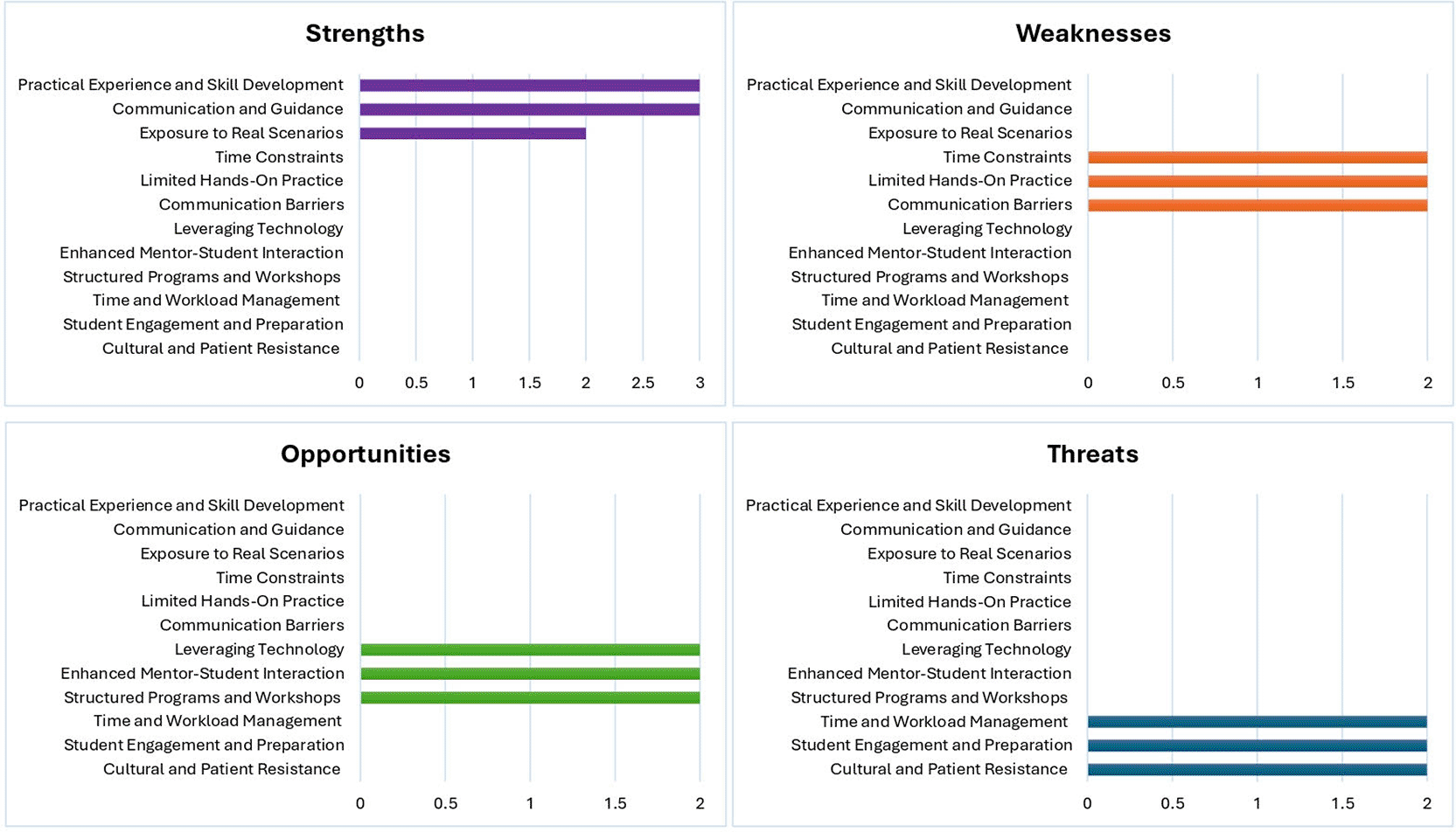
This figure illustrates the strengths, weaknesses, opportunities, and threats associated with the structured clinical mentorship programme. Strengths included practical exposure, communication, and skill development. Weaknesses involved time constraints and communication gaps. Opportunities focused on technological integration, structured mentor engagement, and programme expansion. Threats included workload pressures, variable student engagement, and cultural barriers within diverse clinical environments.
As revealed by the SWOT analysis, the strengths of the current mentoring scheme include the effective integration of practical experience and skill development and linking theoretical learning with real-world applications. Robust communication channels between mentors and mentees ensure timely feedback and support, and exposure to real-world scenarios enhances participants’ adaptability and competence. However, the analysis also pointed out significant weaknesses such as time constraints that could hinder engagement quality, a gap between theoretical instruction and practical application, and communication barriers that may lead to misunderstandings.
Opportunities for enhancing the mentoring process were evident, including leveraging technology to improve accessibility and efficiency, deepening mentor–mentee interactions, and developing structured programmes and workshops to address specific educational needs. However, threats such as inadequate time and workload management, variable student engagement levels, and cultural resistance in diverse settings require strategic management to prevent adverse effects. By addressing these weaknesses and threats while capitalising on opportunities, a mentoring programme can significantly enhance its reach and impact, ultimately improving the overall effectiveness and experience of mentors and mentees.
In addition to the SWOT analysis, we invited the participants to provide additional comments to enhance the mentoring processes within the research context. We conducted a thematic analysis of these comments and identified four main themes that emerged as key areas for further consideration from the mentors’ perspectives.
4.4.1 Programme duration and structure
The participants identified the need to revise the duration and structure of the mentoring programme to better align with educational goals and enhance learning outcomes.
“Extending the duration of the mentorship programme from 20 days to at least 1–2 months to ensure proper exposure and experience”. (M3, M15)
“Recommendations for students to work with multiple mentors to gain diverse experiences and perspectives”. (M5)
The suggested adjustments to the programme duration and structure could provide students with more opportunities to engage with a broader array of mentors, thereby enhancing the overall effectiveness of the mentoring scheme.
4.4.2 Hands-on clinical learning and engagement
The participants overwhelmingly emphasised the need for enhanced hands-on clinical learning and engagement.
“Emphasis on allowing students to perform minor procedures under supervision to gain practical experience”. (M6)
“Need for more opportunities for hands-on clinical learning under guidance without other patient responsibilities”. (M12)
“Suggestions for dedicated clinical instructors to guide and engage students”. (M14, M16)
Ensuring robust mentorship and practical experiences is crucial for equipping students with the skills necessary for professional practice.
4.4.3 Mentor preparation and collaboration
The participants stressed the importance of a more comprehensive orientation for mentors and effective collaboration with clinical instructors to enhance educational outcomes.
“Need for proper orientation for mentors regarding their roles and student expectations”. (M2)
“Emphasis on improving collaboration between mentors and clinical instructors”. (M8)
“Suggestion to ensure mentors are well prepared and committed, enabling growth and serving as role models”. (M20)
The results indicated that these measures are crucial for ensuring that mentors are well prepared and that there is cohesive support for students’ learning experiences.
4.4.4 Student accountability and integration
The participants recognised the importance of student accountability and its integration into decision-making processes.
“Implement attendance tracking for students, including break times”. (M2)
“Ensuring students spend regular time with mentors to decide and meet objectives”. (M7)
“Recommending the education of patients about student involvement to increase acceptance”. (M8)
Drawing on the analysed data, leveraging the identified strengths and opportunities can significantly enhance mentoring schemes in clinical settings. Extending mentorship programmes to one or two months can deepen engagement and improve mentoring relationships. Integrating diverse mentors and practical activities into the curriculum can enrich learning experiences and effectively blend theoretical knowledge with practical skills. Comprehensive mentor orientation and clear student accountability measures are crucial for maintaining mentorship quality.
Students should fully engage in these opportunities for professional growth by focusing on acquiring practical skills and engaging in professional conduct. Clinical mentors and sites must prepare for extended mentoring periods, diversify their experience, and invest in mentor training. Regular monitoring and patient education initiatives can improve mentorship quality and patient outcomes, fostering a dynamic and effective mentoring environment that benefits the entire healthcare community.
The SWOT analysis revealed strengths, including the effective integration of practical experience, robust mentor–mentee communication, and exposure to real-world clinical scenarios. Mentors suggested leveraging opportunities such as incorporating technology, extending programme duration, and enhancing structured mentor–student interactions. However, significant weaknesses such as time constraints, communication barriers, and inconsistent student engagement were identified. This aligns with global findings suggesting that structured mentorship frameworks are the best practices for enhancing clinical education.27 These implications highlight the need for strategic interventions to address the identified weaknesses and leverage strengths and opportunities. Nursing leaders should consider providing structured and protected mentorship time, enhancing mentor orientation, implementing technological solutions for better communication, and increasing hands-on clinical opportunities. This holistic approach is likely to enhance mentorship effectiveness by benefiting both students and mentors.
This study concluded that mentorship significantly influenced nursing students’ clinical skills, confidence, and professional competence, particularly within the culturally distinct context of the UAE. Critical mentorship skills, such as effective communication, patience, empathy, and structured interactions, have been identified as essential components for enhancing clinical education outcomes. The frequency and structure of mentoring interactions directly impact student learning, underscoring the importance of consistent and tailored mentor engagement.
Moreover, addressing the structural barriers and leveraging strategic enhancements are essential for optimising the effectiveness of mentorship programmes. Several strategic recommendations have been provided to strengthen mentorship practices and the quality of clinical education.
1. Healthcare institutions should address structural mentorship barriers by establishing designated mentorship times, effectively managing mentor workloads, and fostering supportive organisational environments that encourage meaningful interactions between mentors and mentees.1,26
2. Mentor training should be prioritised, focusing on essential skills such as communication, patience, empathy, cultural sensitivity, and clinical expertise. Comprehensive mentor training programmes must be developed and supported institutionally to ensure that mentors possess both the clinical knowledge and interpersonal skills necessary for effective student guidance.9,28
3. Nursing education programmes should integrate innovative digital learning platforms, including virtual and metaverse-based mentoring approaches, to facilitate immersive, flexible, and interactive mentoring experiences. Technological integration can effectively address traditional mentorship limitations, improve engagement, and enhance the overall quality of clinical education quality.4,23
4. Orientation programmes for mentors should be strengthened to ensure comprehensive training on mentorship responsibilities, expectations, and student engagement strategies. Nursing schools and clinical institutions must collaborate closely, providing ongoing support and supervision to mentors to facilitate smoother student transitions to clinical practice and reduce potential errors.17
5. Mentorship duration and structure should be reassessed to ensure alignment with educational objectives and offer extended mentorship periods that allow for deeper engagement and skill development. Dedicated meeting times, interactive workshops, and structured programmes enhance mentorship effectiveness and student preparedness.8,9,25
6. Recognising and addressing language and cultural barriers in mentorship relationships is crucial. Institutions should incorporate cultural competency training into mentorship preparation programmes to improve communication effectiveness and foster inclusive learning environments.5,13,14
Implementing these recommendations promises substantial improvements in mentorship quality and enhances nursing education and professional practice standards. Ultimately, strategic attention to mentorship structures, mentor preparation, technological innovation, and cultural responsiveness will contribute profoundly to developing competent, confident, and culturally informed nursing professionals in the UAE and beyond.
This study demonstrates that structured mentorship plays a pivotal role in supporting nursing students’ clinical competence, confidence, and transition readiness within the culturally diverse healthcare settings of the United Arab Emirates (UAE). Mentors perceived structured mentorship as essential in bridging the gap between theory and practice, facilitating hands-on learning, and strengthening professional identity formation. The study also provides culturally grounded insights into the relational expectations, communication styles, and organisational dynamics that shape the mentoring process in Arab contexts. These findings underscore the importance of implementing context-sensitive, well-supported mentorship frameworks tailored to multicultural learning environments.
Several limitations should be considered when interpreting the findings of this study:
• The study was conducted among mentors from selected hospitals in the UAE and may not reflect all clinical settings or specialties.
• Data were self-reported and may be influenced by social desirability or recall bias.
• Only mentors’ perspectives were explored; including students, clinical instructors, and administrators could provide a more holistic understanding.
• The cross-sectional nature of data collection limits the ability to capture changes in mentorship practices over time.
Despite these limitations, the study offers valuable insights into structured mentorship within multicultural healthcare settings.
• Healthcare providers should ensure protected mentorship time to promote consistent, high-quality supervision.
• Structured mentorship frameworks should be incorporated into routine clinical practice to enhance learning outcomes.
• Mentors should receive ongoing professional development in communication, cultural sensitivity, reflective supervision, and feedback strategies.
• Nursing programmes should integrate structured mentorship models into clinical curricula to ensure continuity and alignment with competency-based education principles.
• Collaborative academic–clinical partnerships should be strengthened to harmonise expectations and enhance student preparedness.
• Technology-enhanced mentorship—such as virtual simulation and digital feedback tools—can complement in-person supervision and mitigate workload challenges.31
• Policymakers should recognise mentorship as a strategic workforce development priority aligned with national nursing expansion goals.
• Regulatory and accreditation bodies may consider adopting standards for mentor preparation and structured mentorship practices.
• Institutional investment in digital infrastructure can support scalable, flexible mentorship models.
• Future studies should incorporate perspectives from students, nurse educators, and clinical leaders to capture a more comprehensive view of mentorship.
• Longitudinal research is needed to examine the sustained effects of structured mentorship on competence development and workforce readiness.
• Exploring the potential of digital and AI-supported mentorship models can inform innovation in clinical education.
In conclusion, structured mentorship is a critical component of clinical nursing education and has significant implications for nursing practice, education, policy, and research in the UAE. Strengthening mentorship frameworks through cultural responsiveness, organisational support, and technological integration can advance nursing education and contribute to the development of a competent and confident nursing workforce.
| Views | Downloads | |
|---|---|---|
| F1000Research | - | - |
|
PubMed Central
Data from PMC are received and updated monthly.
|
- | - |
Provide sufficient details of any financial or non-financial competing interests to enable users to assess whether your comments might lead a reasonable person to question your impartiality. Consider the following examples, but note that this is not an exhaustive list:
Sign up for content alerts and receive a weekly or monthly email with all newly published articles
Already registered? Sign in
The email address should be the one you originally registered with F1000.
You registered with F1000 via Google, so we cannot reset your password.
To sign in, please click here.
If you still need help with your Google account password, please click here.
You registered with F1000 via Facebook, so we cannot reset your password.
To sign in, please click here.
If you still need help with your Facebook account password, please click here.
If your email address is registered with us, we will email you instructions to reset your password.
If you think you should have received this email but it has not arrived, please check your spam filters and/or contact for further assistance.

Comments on this article Comments (0)