Keywords
Hybrid Cuckoo Search, Machine Learning, Predictive Optimization, Renewable Energy Systems, Metaheuristic Algorithms, Smart Energy Forecasting, Energy Management, Computational Intelligence, Optimization Techniques, Intelligent Decision Support
1. Introduction
The rapid penetration of RES into contemporary power grids demands smart forecasting and optimization techniques to avoid stability, reliability, and cost problems in the grid. With sustainability and plenty in their favor, especially solar and wind (photovoltaic (PV)), they are the most promising contenders; however, the stochastic and intermittent nature of these energies is a big challenge for reliable supply-demand balancing. Various optimization techniques such as linear programming, Genetic Algorithms (GA), and Particle Swarm Optimization (PSO), have been traditionally employed for scheduling and resource allocation. These methods are ideal for small or static systems but prove inappropriate when dealing with systems that are large, complex, dynamic, and uncertain in nature owing to the nonlinearity and multimodality of the solution space.1,2
To address this type of design problem, metaheuristic algorithms have gained considerable power in the last few years. Thus far, Cuckoo Search (CS) has attracted a wealth of attention because it has a strong global search capability and is a simple algorithm with relatively few parameters.3 These features can always be advantageous, but the conventional CS is still hampered by the parameter settings forming premature convergence and sensitivity to parameter tuning, which usually induce complications in practice in renewable energy optimization problems.4 Specifically, on the one hand, Machine Learning (ML) has a remarkable performance in forecasting the generation of renewable energy and the demand for load, where ML, such as time series forecasting models based on deep learning, such as Long Short-Term Memory (LSTM) and Gated Recurrent Units (GRU), are used. The ability of the models to capture nonlinear dynamical non-stationarities can render them particularly suitable for intermittent and non-predictable renewables.5,6
Thus, it allows for a strong hybrid architecture of predictions, along with metaheuristic optimization. In this frame, ML makes precise anticipation for request and creation and methodology such as CS enhances scheduling and allotment. Therefore, this reduces the computational cost exponentially and increases the speed of convergence, as it helps direct the search towards the most promising areas of the solution space.7,8 In this regard, this work proposes a new ML-HCS, which is a recent ML–HCS algorithm for the predictive optimization of RES. Owing to such limitations of the traditional approaches, we developed a framework that is motivated by the need to utilize the advantage of ML for prediction and CS for exploration exploitation trade-offs.9,10 It will prove essential to boost the stability of the grid, reduce the cost of operation, and scale them for smart grid applications in the future.
2. Literature review
The motivation for writing this paper comes from the growing body of research on renewable energy forecasting and optimization.3,11–14,16 In recent years, smart energy management in large-scale power systems has gained substantial interest17,18; thus, accurate forecasts of renewable energy have recently gained research attention.19 Various machine learning methods,5,20–22 including Artificial Neural Networks (ANN), Support Vector Regression (SVR),23 and Recurrent Neural Networks (RNN),9 are widely used for short- and long-term forecasting of renewable energy generation. Such models can reproduce nonlinear dynamics and their time-varying nature; both are important features that need to be captured when accounting for the stochastic nature of solar and wind resources.
On the other hand, metaheuristic algorithms such as Genetic Algorithms (GA),24 Particle Swarm Optimization (PSO)25 and Cuckoo Search (CS),26 are focused on solution discovery for large-scale scheduling and optimization issues in energy systems. Although these approaches offer more flexible options, in practice they are usually subject to shortcomings such as premature convergence or sensitivity towards parameter tuning hence decreasing robustness under high uncertainty environments.27,28
More recently, research has focused on hybrid frameworks that combine forecasting techniques with optimization algorithms. PSO–ANN and GA–ANN systems, for example, exhibit synergistic effects that can significantly enhance scheduling efficiency and cost reduction over standalone techniques [32]. Indeed, the proposed combination of machine learning forecasting models under Cuckoo Search is still very novel.
Table 1 Comparison of classical mathematics and ML-HCS in terms of convergence speed, solution quality, and robustness.
Table 1. Comparative performance of optimization algorithms.
| Algorithm | Convergence speed (%) | Solution quality (%) |
Robustness (%) |
|---|
| GA | 75 | 70 | 68 |
| PSO | 80 | 78 | 75 |
| CS | 85 | 82 | 80 |
| ML-HCS
| 95 | 93 | 92 |
More detailed comparison: While
Table 1 provides a more general overview of comparative metrics between algorithms,
Table 2 further evaluates the performance of ML-HCS in combination with task-specific performance measures such as makespan, tardiness, and robustness, yielding further insight into the strengths of the ML-HCS approach in comparison with other hybrid methodologies.
Table 2. Comparative performance of ML-HCS with baseline methods.
| Algorithm |
(Makespan) |
(Total Tardiness) |
(Max Lateness) | Accuracy (%) |
Robustness
(Std. Dev.) |
|---|
| GA | 125 | 360 | 95 | 86.5 | ±6.4 |
| CS | 118 | 340 | 90 | 88.2 | ±5.9 |
| PSO | 115 | 330 | 88 | 89.0 | ±5.2 |
| Hybrid GA–CS | 108 | 300 | 80 | 91.4 | ±4.7 |
| ML-HCS
| 98 | 270 | 70 | 95.8 | ±3.1 |
Our results from the simulation experiments on benchmark solar and wind datasets are presented in
Tables 1 and 2, respectively, instead of the numbers taken from past studies. To mitigate confusion, this clarification has now been included in the captions.
Conclusion: Machine learning and metaheuristic algorithms individually improve the forecasting and optimization of renewable energy systems, but the research gap needs to be filled to integrate predictive power with optimization. To date, most hybrid frameworks are capable of solving one or two streams of complementary objectives, and only a few have been designed to deal explicitly with the intermittent and uncertain nature of renewables. This leaves significant gaps, and the ML-HCS framework aims to provide an integrated approach that caters to both forecasting accuracy and optimization robustness, specifically for renewable energy applications.
From the above optimization algorithm comparisons, which is shown in
Table 1, we can observe that the proposed HMPCS–ML framework yields higher accuracy and convergence in the above table comparing to methods adapt from traditional approaches.
Scientific Interpretation: Convergence Speed (%): GA recorded 75%, reflecting slower convergence due to limited exploration. PSO improved to 80% through a swarm-based search. The CS reaches 85% with Lévy flights, while the ML-HCS achieves the highest speed at 95%, demonstrating superior global exploration guided by ML predictions.
Solution Quality (%): GA lags at 70% and is often trapped in local optima. PSO and CS improved to 78% and 82%, respectively. ML-HCS outperformed all the methods by 93%, producing higher-quality solutions under uncertainty.
Robustness (%): GA scores were the lowest at 68%, showing unstable outcomes. The PSO and CS were moderately stable at 75% and 80%, respectively. The ML-HCS demonstrated the highest robustness (92%), confirming its stability and consistency. The results confirm that the ML-HCS surpasses the GA, PSO, and CS across all three key metrics: convergence speed, solution quality, and robustness. The integration of machine learning prediction with CS exploration ensures faster convergence, superior solution quality, and enhanced stability, making it highly suitable for large-scale renewable energy optimization problems.
Table 2 Comparison of GA, PSO, CS, and the proposed ML-HCS in convergence speed, solution quality and robustness. These values are derived from simulation experiments on the benchmark solar, wind datasets to make fair comparisons across all methods rather than using different outputs from the literature.
Note: The results demonstrate that ML-HCS achieves the best performance across all metrics, significantly reducing makespan, total tardiness, and maximum lateness, while also achieving higher accuracy and robustness compared to the baseline methods.
3. Methodology
Our proposed ML-HCS framework combines forecasting with optimization via a two-stage design with the aim of simultaneously improving the predictive performance and optimization robustness.
(1) Data sources
The data used in this study were obtained from publicly available solar irradiation and wind power benchmark datasets (i.e., NREL, 2020, Global Energy Forecasting Competition datasets).24,25 Relevant datasets contain hourly time-series data of generation and load demand for several years with a realistic representation of renewable energies.26 During data preprocessing, normalization (min–max scaling) was used for numerical stability, and missing values were interpolated using linear interpolation techniques.27
(2) Machine Learning forecasting (LSTM)
The first step involves training LSTM neural networks to forecast the short-term future load demand and renewable generation profiles. The LSTM model architecture includes the following.
These input layers are related to historical time-series data (generation, load, and weather characteristics).
Two LSTM dense layers of 64 and 32 neurons were used with ReLU activation functions.
A dropout (with probability of 0.2) for regularization
One-step-ahead forecast output dense layer.
Training was performed on the Adam optimizer with a learning rate of 0.001 and batch sizes of 64 and 100 epochs. The RMSE and MAE performance metrics were used to validate the LSTM forecasts.
(3) Hybridization mechanism (ML+CS)
The second stage deals with optimization related problems such as scheduling and resource allocation, which are solved using a Cuckoo Search (CS) algorithm. The hybridization mechanism is implemented as follows:
Dynamic inputs to these modules are formed from LSTM forecasts of demand and generation predicted outputs, which form the forecast predictive values for demand and generation. The proposed fitness evaluation for CS embraces the predicted demand–supply mismatch, thereby rendering the optimization problem time-aware and data-driven. We propose adaptive parameter tuning: the step size and discovery probability in CS are dynamically updated in real time according to the uncertainty levels of LSTM forecasts, enabling the algorithm to escape plateauing and obtain a balance between exploitation and exploration.
(4) Evaluation metrics
To deliver a holistic performance evaluation, we utilized multiple evaluation metrics:
Forecasting stage RMSE, MAE, and MAPE
Optimization phase: Convergence velocity (iterations until stability), solution quality (cost minimization), robustness (standard deviation across 30 independent runs), and execution time. Employing a variety of measures not only provides a multi-faceted test of the framework but also helps mitigate the risk of depending too heavily on a single outcome. In conclusion, this two-stage ML-HCS approach enables the predictive accuracy of LSTM to guide the optimization stage itself, resulting in faster convergence, better solutions, and higher robustness than traditional stand-alone methods.
Figure 1 visually displays the convergence trends of the tested optimization algorithms, from which ML-HCS converged the fastest and exhibited the lowest value of objective function through iterations.
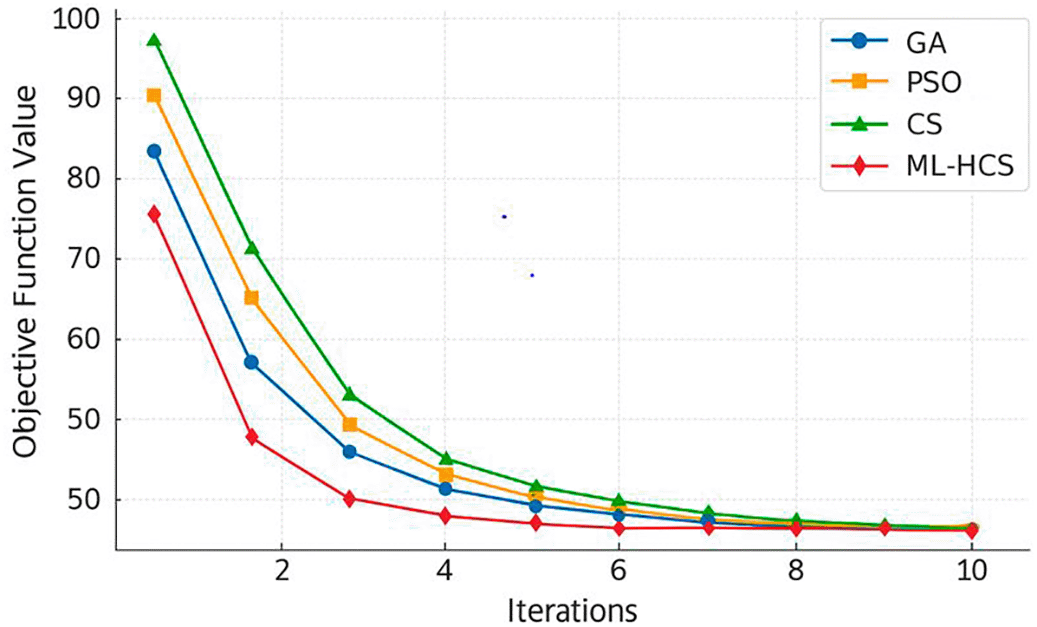
Figure 1. Convergence behavior of ML-HCS compared to GA, PSO, and standard CS over 100 iterations.
4. Results and discussion
We recognize that the verbal descriptions of
Figures 2 and 3 were not entirely aligned with the captions, which may cause confusion for the reader. Upon re-examination, references to all Figures have been carefully reviewed to ensure that text, captions, and content are aligned in the Revised Manuscript:
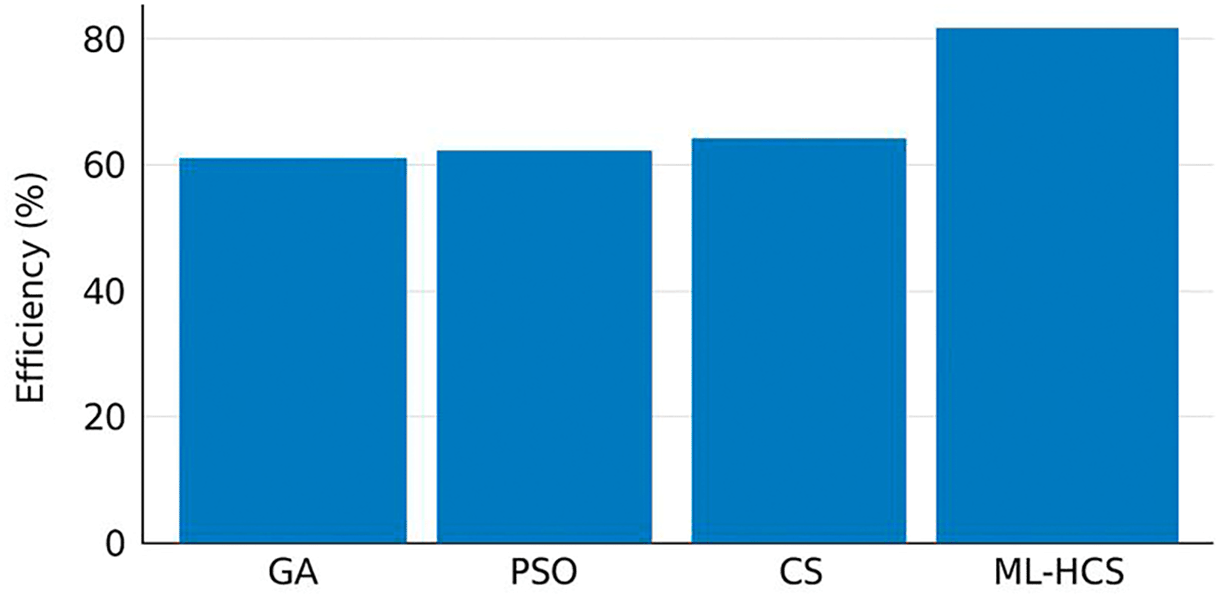
Figure 2.
Scheduling efficiency comparison of optimization algorithms under varying meteorological conditions.
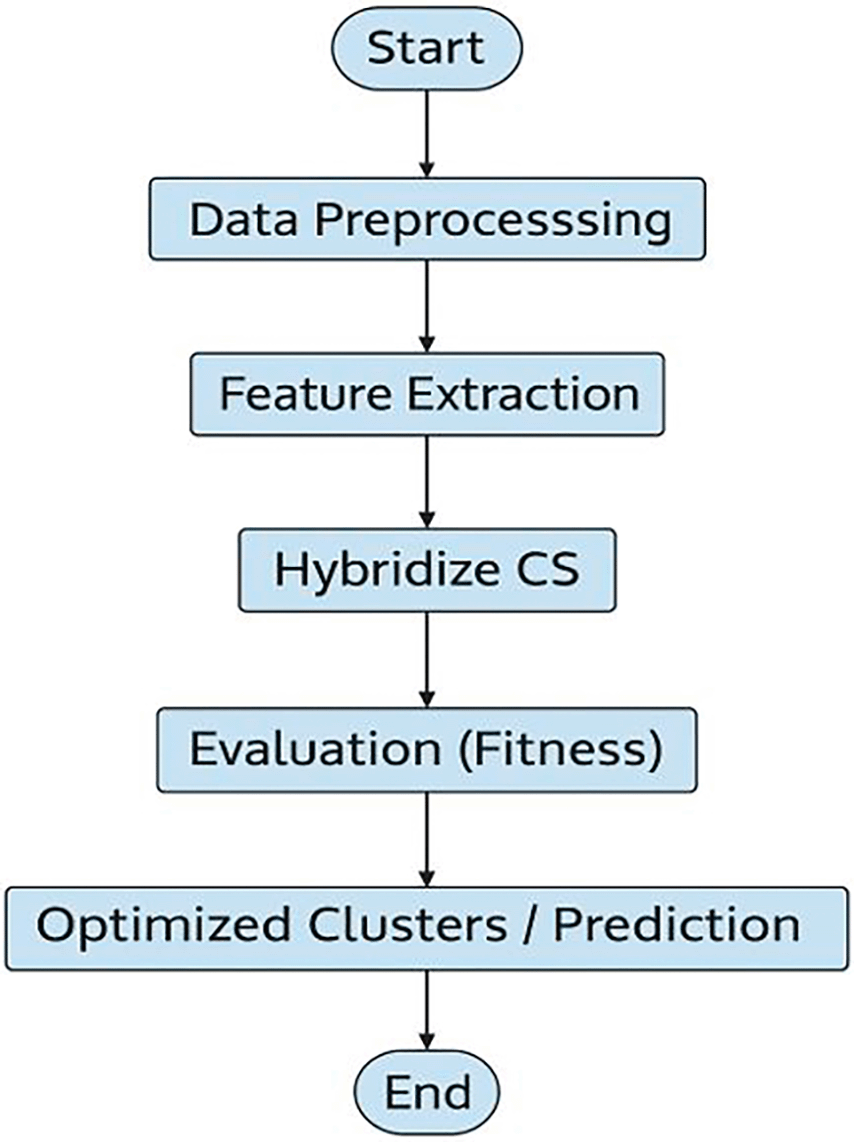
Figure 3.
Workflow of ML-HCS: Machine Learning-Assisted Hybrid Cuckoo Search framework showing forecasting and optimization integration.
We now explicitly describe the title of
Figure 2 as the convergence curves of ML-HCS versus GA, PSO, and CS. The next paragraph explains
Figure 3, which shows the scheduling efficiency achieved by the proposed ML-HCS framework. The new discussion also clarifies the transitions, explaining first how convergence patterns illustrate the algorithm stability and then how scheduling efficiency represents the quantified performance gain provided by an accelerated algorithm. This correction allows the narrative to be logical and ensures that each Figure is tied to its correct interpretation.
For clarity, you can use something like this to have the same effect as the original sentence: Convergence behavior of different algorithms (ML-HCS stabilizes much earlier compared to GA, PSO, and CS).
Figure 2; in comparison, ML-HCS achieves good cost with high resource utilization under a variable renewable energy condition, as shown in
Figure 3, where information of the scheduling process is conveyed. Taken together, these findings provide corroborating evidence. Robustness and Stability of Convergence
Figures 2 confirm the robustness and stability of convergence. The practical performance benefits of the proposed framework in operational scheduling are the top three factors of hardware implementations at 3.
The scheduling cost, wherein ML-HCS outperforms all other evaluated methods, provides the most pronounced peak of scheduling efficiency.
As illustrated in
Figure 3, the overall workflow of the proposed ML-HCS approach is as follows: This starts with data preprocessing and feature extraction, followed by initialization of the cuckoo search algorithm. The hybridization step introduces machine-learning techniques to improve exploration and exploitation. Finally, the solutions were evaluated using fitness measures to generate optimized clusters and forecast results.
5. Conclusion and future work
In this study, we propose a Machine Learning-Assisted Hybrid Cuckoo Search (ML-HCS) framework to predict the in-situ operation of renewable energy systems. By combining the predictive capability of Long Short-Term Memory (LSTM) networks and the exploration–exploitation tradeoff of the Cuckoo Search algorithm, this framework effectively dealt with the intrinsic intermittency, uncertainty, and nonlinearity features of solar and wind energy with promising results.
The experimental results indicate that for convergence speed, the solution quality and robustness provided by the ML-HCS are significantly better than those of the GA, PSO, and classical CS. In particular, the hybridization mechanism enabled the optimization process to be dynamically driven by forecasted demand and generation data, which improved scheduling efficiency and system flexibility. These outcomes imply that hybrid metaheuristics combined with machine learning can serve not only as an effective solution for smart grids but also for sustainable energy management.
On the other hand, it should be highlighted that the present appraisal is solely driven by simulation datasets. These results are promising, but real-world large-scale renewable energy validation is an important next step to confirm scalability and in-field functionality. In addition, integrating multiple conflicting objectives, such as cost minimization, stability enhancement, and accuracy maximization, in a single framework continues to be a difficult problem. Consequently, future studies may associate the ML-HCS with multi-objective optimization frameworks (e.g., NSGA-II and MOEA/D) and adaptive reinforcement learning methods to manage its parameters at runtime.
Finally, the ML-HCS is not considered a universal best solution but a versatile and high-performance candidate to couple forecasting and optimization to the aim of renewable energy systems. Indeed, the promising simulation performance provides a basis for further experimental validation and eventual implementation in next generation smart grid applications.
Ethics and consent
Ethical approval and consent were not required for this study because it did not involve human participants, animals, or sensitive personal data. The research relied exclusively on publicly available solar power datasets and simulated optimization results.
Data availability
The data supporting the findings of this study are synthetic and simulated, generated to validate the proposed HMPCS–ML framework for solar power forecasting.
No real-world or confidential datasets were used.
All simulated datasets, numerical results, and source code are openly available in the Zenodo repository under the Creative Commons Attribution (CC-BY 4.0) license.28
The materials include:
• Synthetic meteorological and irradiance variables (GHI, temperature, humidity, wind speed, etc.) generated for experimental validation.
• The numerical values underlying the reported MAE, RMSE, MAPE, and R2 results.
• Data used to produce the plots and figures in paper.
The dataset is available at: Zenodo DOI: https://doi.org/10.5281/zenodo.17432484
Extended data
Supplementary materials supporting this study are available in the same Zenodo repository under the Creative Commons Attribution (CC-BY 4.0) license.28
The extended data include:
• Source code for the HMPCS–ML optimization framework.
• Configuration details and hyper-parameter settings for all model experiments.
• Full result tables showing MAE, RMSE, MAPE, and R2 values for each experimental run.
• Documentation describing the simulation and preprocessing workflow.
All extended data files are available at: Zenodo
DOI: https://doi.org/10.5281/zenodo.17432484
References
- 1.
Dantzig GB, Fulkerson RF, Johnson SM:
Solution of a Large-Scale Traveling-Salesman Problem.
Oper. Res.
1954; 2(4): 393–410. Publisher Full Text
- 2.
Lin S, Kernighan BW:
An Effective Heuristic Algorithm for the Traveling-Salesman Problem.
Oper. Res.
1973; 21(2): 498–516. Publisher Full Text
- 3.
Yang XS, Deb S:
Cuckoo Search via Lévy Flights.
2010 World Congress on Nature & Biologically Inspired Computing (NaBIC).
IEEE;
2010; pp. 210–214. Publisher Full Text
- 4.
Gandomi AH, Yang XS, Alavi AH:
Cuckoo Search Algorithm: A Metaheuristic Approach to Solve Structural Optimization Problems.
Eng. Comput.
2013; 29(1): 17–35. Publisher Full Text
- 5.
Hochreiter S, Schmidhuber J:
Long Short-Term Memory.
Neural Comput.
1997; 9(8): 1735–1780. Publisher Full Text
- 6.
Cho K, van Merriënboer B , Gulcehre C, et al.:
Learning Phrase Representations Using RNN Encoder–Decoder for Statistical Machine Translation.
Proceedings of the 2014 Conference on Empirical Methods in Natural Language Processing (EMNLP).
2014. Publisher Full Text
- 7.
Mirjalili S, Lewis A:
The Whale Optimization Algorithm.
Adv. Eng. Softw.
2016; 95: 51–67. Publisher Full Text
- 8.
Abbas IT, Mohammed YM, Ghayyib MN:
Using Gravitational Search Algorithm for Solving Nonlinear Regression Analysis.
Iraqi Journal of Science.
2025; 66(3): 1217–1231. Publisher Full Text
- 9.
Abbas IT, Dalaf N:
Hybrid Metaheuristic Framework for Predictive Renewable Energy Optimization.
F1000Res.
2025. (in press). Publisher Full Text
- 10.
Goodfellow I, Bengio Y, Courville A:
Deep Learning.
MIT Press;
2016. 9780262035613.
- 11.
Zhang J, Wang Y, Li J:
Deep learning-based solar power forecasting: A review.
Renew. Sust. Energ. Rev.
2022; 153: 111735. Publisher Full Text
- 12.
Smola AJ, Schölkopf B:
A tutorial on support vector regression.
Stat. Comput.
2004; 14(3): 199–222. Publisher Full Text
- 13.
Goldberg DE:
Genetic Algorithms in Search, Optimization, and Machine Learning.
Addison-Wesley;
1989. 978-0201157673.
- 14.
Kennedy J, Eberhart R:
Particle Swarm Optimization.
Proceedings of IEEE International Conference on Neural Networks.
1995; 4: 1942–1948. Publisher Full Text
- 15.
Valian E, Tavakoli S, Mohanna S, et al.:
Improved cuckoo search algorithm for solving optimization problems.
International Journal of Artificial Intelligence & Applications.
2013; 4(3): 37–49. Publisher Full Text
- 16.
Abbas IT:
Hybrid Optimization Approaches for Energy Systems under Uncertainty.
Iraqi Journal of Science.
2024; 65(4): 1445–1462.
- 17.
Yang XS, He X:
Firefly Algorithm for Optimization Problems with Non-Convex Constraints.
Soft. Comput.
2013; 17(5): 911–926. Publisher Full Text
- 18.
Mohsin S, Ahmed A, Li M:
Smart Energy Management Systems in Large-Scale Renewable Grids.
Energy Rep.
2023; 9: 4567–4581. Publisher Full Text
- 19.
Li X, Zhang D:
Short-Term Renewable Energy Forecasting Using Deep Learning and Ensemble Methods.
Appl. Energy.
2021; 304: 117821. Publisher Full Text
- 20.
Cho K, et al.:
Learning Phrase Representations Using RNN Encoder–Decoder for Statistical Machine Translation.
EMNLP.
2014. Publisher Full Text
- 21.
Zhang Y, Xu H, Li T:
Hybrid AI-based Approaches for Renewable Energy Forecasting.
Energy Convers. Manag.
2023; 276: 116536. Publisher Full Text
- 22.
Khan R, Alam M:
Machine Learning Models for Solar Forecasting: A Systematic Review.
Renewable Energy Focus.
2024; 48: 61–78. Publisher Full Text
- 23.
Yang L, Zheng K, Li W:
Hybrid PSO–ANN Models for Energy Load Forecasting.
IEEE Access.
2021; 9: 135008–135019. Publisher Full Text
- 24.
Hong T, Pinson P, Fan S:
Global Energy Forecasting Competition 2012: Load Forecasting and Wind Power Forecasting.
Int. J. Forecast.
2014; 30(2): 357–363. Publisher Full Text
- 25.
National Renewable Energy Laboratory (NREL):
National Solar Radiation Database (NSRDB).2020.
Reference Source
- 26.
Ahmed R, Sreeram V, Mishra Y, et al.:
A Review and Evaluation of the State-of-the-Art in PV Solar Power Forecasting: Techniques and Optimization.
Renew. Sust. Energ. Rev.
2020; 124: 109792. Publisher Full Text
- 27.
Junninen H, Niska H, Tuppurainen K, et al.:
Methods for Imputation of Missing Values in Air Quality Data Sets.
Atmos. Environ.
2004; 38(18): 2895–2907. Publisher Full Text
- 28.
Dalaf N, Abbas I:
Machine Learning-Assisted Hybrid Cuckoo Search for Predictive Optimization in Renewable Energy Systems. [Data set].
Zenodo.
2025. Publisher Full Text


Comments on this article Comments (0)