Keywords
Interdisciplinary research, panel data, Scopus disciplines, citations, H-indexes; epistemological issues, institutional changes

This article is included in the Research on Research, Policy & Culture gateway.
Interdisciplinary research, panel data, Scopus disciplines, citations, H-indexes; epistemological issues, institutional changes
I updated references on obstacles to IDR.
I removed future tenses.
I introduced some paragraphs on scopes for future research in Section 6.
I introduced some paragraphs on policy suggestions in Section 5 and practical implications in Section 6.
I improved my conclusions, by better supporting my title. However, I mentioned my experiences in Section 5 rather than in Section 6.
I made my manuscript be checked by a native English editor at Wall Street English.
See the author's detailed response to the review by Dillip K Swain
An established literature defines inter-disciplinary research (IDR) (e.g.,1), by highlighting the main contexts Where IDR can achieve the largest benefits (e.g., solving problems across naturally complex and socially relevant challenges, by relying on alternative scientific knowledge and management strategies) (e.g.,2) and the main reasons Why IDR should be implemented (e.g., solving today’s grand challenges, which are too complex to any discipline to tackle alone; generating new research avenues and challenging established beliefs, by enhancing creativity and fostering innovation) (e.g.,3). Consequently, IDR has become a catchword in current higher education and science policies across the world. However, interdisciplinary promises in policy discourses are not realised in work practices, since academics confront cognitive-epistemological and institutional-organisational challenges.
In particular, a recent literature discusses the main epistemological obstacles to be dealt with in implementing IDR (e.g.,4,5). For example, researchers should renounce prejudices in favour of, and accept simplifications within, their own discipline; researchers should be asking themselves about the origin of their assumptions, in applying the usual procedures to similar topics within IDR; scientists retain incomplete understanding and respect to, or discrimination against, other disciplines; scientists associate IDR with intellectual fashion rather than research substance; IDR is often focused on applied issues and so it is perceived of lower scientific rigor by theoretical scientists; IDR is still risky, poorly defined and variable in terms of interdisciplinary integration.
In addition, a recent literature discusses the main institutional obstacles to be coped with by inter-disciplinary scientists (e.g.,6). For example, as for IDR supply (e.g.,7,8,9,10,11,12), funding is limited to core sciences; researchers should renounce to funds in favour of other disciplines; academic career is based on publications in few mainstream journals; insufficient training in, early exposure to, opportunities for and encouragement toward IDR; IDR faces difficulty in identifying the best collaborating scientists from different disciplines as well as in managing coordination and integration of distributed knowledge; IDR requires higher initiation effort and time, whereas academic career is based on many latest publications with many overall citations; IDR activities dilutes core disciplinary expertise; IDR focus is more likely to lead to short-term employment rather than tenure jobs in unidisciplinary departments, with possible near-term income risk. Similarly, as for IDR demand (e.g.,13,14,15,16,17,18), difficult assessment of contributions to IDR due to its complex project management and authorship; few brave editors, since journals are ranked in terms of citations and standard articles are more likely to be quoted in the short-run; reviewers are biased against, or they lack understanding of, IDR or scientific methods of other disciplines; reviewers ignore the strength of a papers due to its interdisciplinarity.
However, the focus on either epistemological or (demand and supply) institutional obstacles precludes the evaluation of their relative importance in barring IDR (GAP 1). Next, the use of (unreliable and inadequate) data gathered for a small number of years or a small number of disciplines precludes the consideration of the differences across disciplines in restraining IDR (GAP 2).
The purpose of this paper is to bridge these gaps, by summarising the theoretical literature on inter-disciplinary research (IDR) (THEORETICAL GOAL 1 in Section 2 on issues; THEORETICAL GOAL 2 in Section 4 on solutions) to empirically rank the main obstacles that are preventing its launch (EMPIRICAL GOAL 1 in Section 3) and to empirically suggest the main policies which could favour its launch (EMPIRICAL GOAL 2 in Section 5). To do so, it theoretically characterises IDR in terms of What, How, Where, Why and Who, by linking epistemological obstacles with What (i.e., a set of eight methodologies) and How IDR is implemented (i.e., realism and neutrality) and by linking institutional obstacles with scientists Who implement IDR (i.e., fewer citations of IDR articles and a discriminatory bibliometric indexes to assess IDR scientists). Moreover, it constructs a representative dataset on the interdisciplinary literature (i.e., articles in Scopus with “interdisciplinary” or “interdisciplinarity” in title or abstract) as well as average citations per article and average H-indexes for authors across all disciplines from 2001 to 2020 (i.e., scientific articles are indexed in Scopus). Finally, it empirically ranks the epistemological obstacles, the institutional obstacles due to lack of demand and the institutional obstacles due to lack of supply, by referring to the number of IDR articles, the percentages of IDR articles over the total articles in terms of trends and linkages with citations and H-indexes.
In other words, the research questions can be summarised as follows: 1) (GOAL 1) What is the relative importance of epistemological and (demand and supply) institutional obstacles faced by interdisciplinary scientists? 2) (GOAL 2) Which (long-run and institutional) changes are suggested for scientists to have lower barriers in implementing interdisciplinary research?
The topical contribution of the present paper can be summarised as follows:
• It finds that epistemological obstacles are irrelevant, while the institutional obstacles due to lack of demand by journals are non-significant and the institutional obstacles due to lack of supply by scientists would be termed the driving variable within the complex system theory (EMPIRICAL GOAL 1).
• It shows that long-run public institutional changes (e.g., top-down regulations such as a net per-capita per-year H index with extras for IDR scientists) are required to foster short-run private cognitive changes (e.g., bottom-up scientific collaborations), by compensating interdisciplinary scientists for current private opportunity costs (i.e., a 74% lower H-index for a CV characterised by a 10% higher IDR) (EMPIRICAL GOAL 2).
In addition, the methodological contribution of the present paper can be summarised as follows:
• It constructs the most reliable dataset (i.e., academic and non-academic authors and articles in Scopus) and most comprehensive dataset (i.e., all disciplines over 20 years) used in the literature (GAP 1).
• It applies the most reliable statistical analysis (i.e., fixed effects panel data with discipline dummies) used in the literature (GAP 2).
Note that I disregard trans-disciplinary research,19 since the focus here is on research- rather than decision-making, although the engagement of stakeholders in decisions is crucial in some contexts (e.g., environmental sustainability in20) and problematic in all contexts (e.g., stakeholder’s representativeness and knowledge in21). Moreover, I provide examples from the publication experience of the author to support “positive existence statements”, since the lived experience is a legitimate source of information in research and the author is characterised by a net per-capita per-year H-index (i.e., the only version of H-index being suitable to compare inter-disciplinary scientists) (22,23) at 2.5, with an inter-disciplinary degree24 at 40%, with the main focus of his thirty-year experience on the most popular topic in IDR (i.e., environmental ethics, sustainability and decisions).25 Finally, I disregard IDR education, although it could increase the sensitivity degree of future researchers in the long-run.26
The structure of the paper is as follows. Section 2 reviews the theoretical literature on obstacles to IDR, by characterising IDR in terms of What & How, Where & Why, and Who (i.e., epistemological and institutional lack of demand and supply) (THEORETICAL GOAL 1). Section 3 empirically ranks those obstacles, by relying on an original dataset (i.e., epistemological < institutional lack of demand < institutional lack of supply) (EMPIRICAL GOAL 1). Section 4 discusses the theoretical solutions from the literature for the main obstacles empirically identified (THEORETICAL GOAL 2), by stressing the strengths and weaknesses of the methodologies adopted in the present paper. Section 5 suggests empirical solutions for the main obstacles ranked in the present paper (EMPIRICAL GOAL 2), by resting on the potential synergies of sequential solutions.
This section summarises the main theoretical obstacles to IDR (THEORETICAL GOAL 1). To do so, it reviews the literature which characterises IDR in terms of What, How, Where, Why and Who, by linking epistemological (i.e., cognitive) obstacles with What and How IDR is implemented (i.e., there is consensus on the social benefits of IDR – epistemological Where and Why) and institutional (i.e., organisational) obstacles with scientists Who implement IDR (i.e., there is no consensus on private costs of IDR - institutional Where and Why).
The literature agrees on distinguishing IDR (with knowledge integration) from multidisciplinary research (without integration) from transdisciplinary research (with involvement of non-academic actors in knowledge creation) (27,28). However, Valikangas29 shows that some disciplines (e.g., arts, behavioural sciences, social sciences other than economics, humanities) are not given equal opportunities to engage in interdisciplinary collaboration, with an inferior position compared to natural and technical sciences, since they are not aimed at achieving production or innovation, with related potential markets. Thus, the focus here is on IDR including Social Sciences and Humanities to account for ethical issues in private and public decisions and ethical values in integrated different disciplines (e.g.,30) as well as Hard Sciences to provide new critical, theoretical and analytical tools for cultural studies (e.g.,31).
The definition of science as a human activity (i.e., the demarcation problem) was extensively debated within philosophy of science some decades ago (e.g.,32,33,34,35). In particular, its main definitions are based on its ontological, epistemological, methodological, or teleological features. In order to acknowledge the same scientific dignity to all disciplines involved in IDR, the focus here is on a factual set of scientific methodological features that is shared by all disciplines, by referring to all meaningful intersections of inductive vs. abductive, topical vs. contextual, and experimental vs. observational properties.36
Note that those eight properties are a social convention, although evolutionism supports a winning approach to epistemology, ranging from philosophy and religion (a pure theoretical way of thinking) to science (a theoretical thinking supported by empirical observations).37 Moreover, Maki38 stresses the semantic and methodological incommensurability of disciplines, whereas Andersen & Wagenknecht39 highlight the potential complementarity of disciplines and cooperation between scientists. Finally, some mix of properties (e.g., experimental and contextual science) are inconsistent with a scientific activity.40 Thus, a common IDR definition requires a larger understanding of, and a smaller discrimination against, it.
Let us assume that a consensus on the definition of science (i.e., what) is reached. However, two main epistemological issues (i.e., How) still remain: realism and neutrality.
As for the realism of science, the literature identifies alternative perspectives (e.g.,41): realism, instrumentalism, constructivism, internal realism, perspectival realism, anti-realism.
Note that instrumentalism and constructivism enable to include music and painting in (emotional) sciences (e.g., it is true that a sad emotion is more likely if a minor tone is used) (e.g.,42). Moreover, perspectival could be replaced by contextual (i.e., the identified relationship depends on the context considered or the perspective adopted). Finally, the concepts of feasibility (i.e., realistically successful as prevailing in normative sciences aiming at explaining) and reliability (i.e., practically trustworthy as prevailing in positive sciences aiming at understanding) could be introduced in contextual and observational science to depict tight (rather than true) and diriment relationships (e.g.,43). Thus, a comprehensive IDR requires the acceptance of different degrees of realism. However, from the author’s expertise on environmental sustainability, there is no a real IDR: any adopted definition of ecological resilience is an abductive simplification of complicated interactions between ecosystems; the adopted assumption of rationality is an abductive simplification of convergent behaviours of individuals (i.e., these are not true but functioning simplifications).
As for the neutrality of science, the literature identifies alternative approaches (e.g.,44): axiological, functionalist, consequentialist, cooperative and systemic.
Note that some disciplines (e.g., behavioural sciences, humanities) could play the mediator role, to favour communication between disciplines.29 Moreover, natural world has no meaning, but social world has a meaning which is included whenever a decision is expected to be taken (i.e., understand includes explain). Finally, scientists involved in IDR have to learn how to make their skills and expertise interlocking, by breaking cognitive and methodological barriers.45 Thus, a comprehensive IDR requires the acceptance of different degrees of neutrality. However, from the author’s expertise on environmental sustainability, there is no a neutral IDR: the adopted definition of ecological resilience (e.g., distance from another stable equilibrium vs. the amount of disruption leading to another stable equilibrium) might imply that the current status of the environment is resilient and so no policies are required; the assumption of welfare as unit together with complete information, perfect information, competitive markets and perfect substitution between types of capitals implies that the current status of the environment is sustainable and so no policies are required. These are not neutral but pregnant assumptions. Note that modifying the concept of biodiversity (i.e., a stock of possible environmental services that future generations could obtain from it instead of the number of species in a given ecosystem that favours its resilience) to make it fit into the economic models represents an unscientific research (i.e., it is against other theoretical papers). Similarly, assuming the unrealistic assumption of absolute decoupling to make the economic models leading to ecological sustainability represents an unscientific research (i.e., it is against other empirical papers).
In summary, a consensus on the definition of IDR (i.e., What) as well as on a common perception about science performance in terms of realism and neutrality (i.e., How) require a private cognitive change, by including the agreed process to reach a methodological consensus. In other words, it is possible to find a common epistemological background for all disciplines, but researchers in each discipline should accept some compromise about the relative importance of the eight methodologies (i.e., all new disciplines based on the possible combinations of these methodologies are included) and the different degrees of realism and neutrality (i.e., all scientists must renounce to some peculiar features of their disciplines about realism and must clarify the ethical assumptions and implications within their disciplines).
Note that the required increased specialisation of scientists coupled with the increased complexity of problems imply larger organisational problems of scientific teams to solve the epistemological problems behind IDR.46 Moreover, scientists coping with epistemological issues combine human efforts and institutional contexts (e.g., IDR requires more individual time which regulations should properly evaluate; IDR requires more organisational time which institutions could properly tackle).47 Finally, for relatively simple problems, cognitive diversity may not benefit science epistemologically, since the required consensus on a theory or hypothesis could converge to partially inadequate theories or hypotheses.48
Therefore, an agreed What and How IDR is possible in theory, but the process of integration and coordination of concepts, methods and expertise across various disciplines may encounter various challenges and require significant additional efforts from researchers (and institutions). Note that epistemological (i.e., What and How) concerns of IDR are depicted in Section 3 by comparing absolute and relative numbers of articles characterised as interdisciplinary. As for policies about What and How, Murray et al.49 specifically suggest an interdisciplinary, experiential graduate education program focused on the scientific topic of interest (e.g., food, energy and water systems), since epistemological issues are different for different topics.
If a decision must be taken, then ethics is combined with science.50 Similarly, if a system is analysed, then many disciplines must be combined.51
The most popular topic in the literature with these features is environmental sustainability, since it involves both public and private decisions (i.e., a solution to collective action problems) and social and ecological dynamics (i.e., a balance between interconnected influences).52 Examples of IDR with religious and secular ethics applied to environmental sustainability include Zagonari,53 Zagonari,54 Zagonari,25 Zagonari,55 and Zagonari.56 Note that I mentioned only recent (i.e., last 5 years) papers on environmental sustainability by Zagonari which involve both Arts & Humanities and Mathematics & Statistics (i.e., as a maximum degree of interdisciplinary disparity) with a single author (i.e., as a maximum degree of interdisciplinary CV).57
Therefore, Where and Why issues of IDR, from an epistemological perspective, is a matter of diffusion rather than of consensus (i.e., no doubts on the social benefits of IDR). Note that these features are depicted in Section 3 by including all disciplines, whereas specific policies are redundant. In contrast, from an organisational perspective, there is a huge debate about Where IDR should be implemented (i.e., in universities as mainly public institutions or in professional and funding agencies as mainly private institutions) (e.g.,58,59) and Why IDR should be incentivised (i.e., to get research funds at individual or institutional levels or to achieve better placements at an individual level) (e.g.,60,61). Note that Where and (public) Why concerns of IDR are depicted in Section 3 by including all research institutions, whereas (private) Why aspects are described in the next subsection about Who. As for specific policies (e.g.,62) about organisational issues, Barringer et al.63 suggest both administrative support and interdisciplinary research grants; Leahey et al.64 suggest interdisciplinary centres; Salmela et al.65 suggest research platforms; Ahn et al.66 suggest internal funding programs; Arnold et al.67 suggest increasing communication between faculties, departments, centres and institutes within universities.
The definition of science as a social system was extensively debated within philosophy of science some decades ago (e.g.,68). In particular, the literature highlights professional activities, social and ethical norms, community aspects of science work, and the relationships of science with technology and society. In order to identify and measure the possible institutional obstacles to IDR, the focus here is on peer review in community aspects of scientific work and on research assessment and fundraising in professional activities.
Indeed, as for demand for IDR, peer reviewing has traditionally been a discipline-based practice, with its shared qualitative standards, and it may be biased against interdisciplinary papers, if these standards are inapplicable and inconsistent with a mainstream research.69 As examples from the author’s experience, “not enough economics” from Journal of Environmental Economics and Management (then published as Zagonari53), “too simple methodology” from Journal of Economic Theory (then published as Zagonari70), “no causal relationships without experiments” from Nature Scientific Reports (then published as Zagonari30).
As for supply of IDR, participation in IDR is likely to disadvantage scholars in their earlier career, since evidence of individual contribution and scientific purity are required for promotion and career advancement.71 As an example from the author’s experience, four “class A” articles for each discipline are required to get a position as a full professor in an Italian University, where there is no “Environmental Science” as a discipline.72 Moreover, Social Sciences and Humanities are likely to be excluded from interdisciplinary fields in research funding.29 Finally, institutions do not compensate for extra (time) costs of pursuing novel and risky lines of IDR.3 As example from the author’s experience, by referring to Zagonari & Foschi23 for the gamma distributions of the alternative H-indexes and by assuming 2.4 Million scientists as 0.03% of the world’ population, the H-index of the author is 14 (i.e., he is within the first 200,688 scientists), the net per-capita per-year H-index of the author is 2.5 (i.e., he is within the first 586 scientists), the net per-capita per-year H-index of the author with an extra of 296% based on his 40% interdisciplinary CV (i.e., 40 x 7.4 as estimated in Section 3) is 7.4 (i.e., he would be the first interdisciplinary scientist).
In summary, it is possible to find a shared non-discriminatory assessment of IDR for all disciplines, from both the demand and supply side (i.e., Who), but researchers in each discipline should change their approach to IDR papers and their attitude towards co-author citations (e.g., groups of researchers citing each other), co-authorship (e.g., accepting additional authors who did not contribute to the article in exchange for other benefits), and long-standing authorship (e.g., old heads of departments accumulating blurred articles and citations). In other words, all scientists might renounce to some peculiar features of their CV.
Therefore, Who IDR is a matter of revolution rather than of diffusion or consensus. Note that private costs of IDR are depicted in Section 3 by using H-indexes for authors. As for policies about (private) Why or Who, Zagonari & Foschi23 specifically suggest an improved (i.e., net per-capita per-year) H-index to reduce discrimination against interdisciplinary scientists, although it cannot be tested in the present study due to the Lucas critique (i.e., in general, it is naïve to predict the effects of a change in economic policy entirely on the basis of the relationships observed in historical data, especially with highly aggregated historical data; in particular, it is impossible to test the impacts of a change in H-index on IDR, since scientists took their past decisions by referring to the currently prevailing H-index and they will take different decisions by referring to the possibly improved version of the H-index).
The previous section highlighted some theoretical obstacles to IDR. This section empirically evaluates the relative importance of these obstacles and the consequences on the future achievements of IDR (EMPIRICAL GOAL 1). To do so, it constructs a representative dataset of IDR for all disciplines and it refers to the observed behaviours by scientists in all disciplines.
As for dependent and independent variables, Table 1 compares the main aspects of the recent empirical studies about the impacts of IDR on scientific actors with the main aspects of the present study. Concisely, the present study combines methodologies used by previous papers, by referring to the averages of citations (CIT) and H-indexes (HIN) across properly represented disciplines to enlarge the sample up to all articles in Scopus about IDR in 20 years and up to a representative random sample of 10,000 authors about CIT and HIN in all countries in all disciplines. In particular, within pros, one should stress that the use of Scopus is more reliable than other bibliometric datasets (e.g.,73) and that the focus is on articles as peer-reviewed publications, by neglecting reviews, editorials, and book chapters. However, within cons, one should stress that some specific features of authors (e.g., academic, gender, education background, original discipline) are missed as control variables (e.g.,74) and that the use of CIT and HIN are proxies for Impact Factors and University Placements or Funds for journals and authors, respectively.
Abbreviations: MAG = Microsoft Academic Graph, WoS = Web of Science, * = used as independent variable, ABS = articles’ abstract, TIT = articles’ title.
| The present study | Lyu et al.75 | Fontana et al.74 | Hackett et al.76 | Leahey et al.78 | Yegros-yegros et al.77 | |
|---|---|---|---|---|---|---|
| Analysis units | Authors & Articles | Authors | Articles | Articles | Authors | Articles |
| Database | Scopus | Scopus | MAG | WoS & Scopus | WoS | WoS |
| Only universities | No | Yes | Yes | No | No | No |
| Sample sizes: | ||||||
|
| 10,000 | 84,910 | 6,105 | 894 | ||
|
| All | 6 | 1 | All | 1 | All |
|
| All | All | 19 | 5 | 3 | 4 |
|
| 507,557 | 23,926 | 398,378 | 32,000 | 62,408 | |
|
| 20 | 1 | 5 | 1 | 1 | 1 |
|
| 562,688 | 52,051 | 366,024 | 385,566 | 1,868,662 | |
|
| 31,950 | 112 | ||||
| IDR indicator | Semantic for ABS & TIT | Disciplinary shift by authors | Cited articles in references | Semantic for ABS & TIT | Authors’ CVs & departments | Cited articles in references |
| Aspect of diversity | ||||||
|
| Yes | Yes | Yes | Yes | No | Yes |
|
| No | No | Yes | Yes | Yes | Yes |
|
| No | Yes | Yes | Yes | No | Yes |
| Measure of impact on journal | CIT | CIT | CIT | CIT & JIF* | CIT | |
| Measure of impact on authors | HIN | Placements | HIN* | PUB | ||
| Panel data | Yes | No | Yes | No | No | No |
| Regression controls | Fixed effects | Yes | Yes & Fixed effects | Yes | Yes | Yes |
Note that I disregarded papers based on surveys (e.g.,79) and multiple case studies (e.g.,80), since they are based on perceived and subjective rather than observed and objective values of the relevant variables. Moreover, measuring IDR for each author by relying on the citing articles of his/her papers from outside its discipline when his/her articles are produced with many co-authors might overestimate the interdisciplinary degree of each author (e.g.,77): for example, a statistician could apply the same method to different topics by producing papers with co-authors from different disciplines. Finally, I disregarded papers on societal impacts (e.g.,81,82) and technological impacts (e.g.,83,84), since they are not focused on private costs and risks in realizing IDR.
In summary, the empirical purpose of the present study (i.e., ranking the main obstacles preventing IDR from taking off: epistemological, institutional on the demand side, institutional on the supply side) suggested to consider both actors (i.e., journals represented by CIT as the demand side; authors represented by HIN as the supply side) and articles, by using the averages of CIT and HIN across disciplines to link the two units of observations.
As for the IDR dataset, I use data on all articles in the Scopus dataset with “interdisciplinary” or “interdisciplinarity” in title or abstract across 27 disciplines (see Table S1 in Extended data at http://osf.io/b3cj6 for the list of disciplines) from 2001 to 2020, whereas I use the average citations per article and the average H-indexes for authors across 25 disciplines from 2006 to 2015 from a sample of 10,000 authors extracted from the Scopus dataset (i.e., Health Professions and Multidisciplinary disciplines are not well represented in the sample of authors). In particular, I applied a stratified sampling procedure to the reference population of authors with at least one publication in the Scopus dataset from 2006 to 2015, by partitioning this population according to the 25 scientific disciplines used by Scopus. By preserving the percentages of authors in each discipline, I then randomly chose 10,000 authors, by attaching each author to a single discipline, according to the attribution suggested by Scopus (i.e., an author is linked to the discipline with the largest percentage of publications).
Note that I used the Scopus dataset, since it was showed to be less easily manipulated than other bibliometric dataset and more reliable as a set of scientific articles (85,73). Moreover, although there are many examples of bad practices within the peer review process (e.g., acceptance of papers conditional to some quotations of the journal), I trusted it as a crucial community aspect of scientific work. Consequently, I disregarded books, reviews, and proceedings, since these are less likely to be peer refereed. Similarly, I compared articles with “interdisciplinary” or “interdisciplinarity” in abstract from articles with “interdisciplinary” or “interdisciplinarity” in title to distinguish trendy from genuine IDR (i.e., more and more journals mention “interdisciplinary” or “interdisciplinarity” in their “aims and scope”), under the assumption that peer reviewers highlight a possible inconsistency between titles and methodologies, whereas they do not pay attention to the use of the same words in abstracts (see86,87 and88 for established and recent examples of bibliometric measures of papers’ interdisciplinarity, respectively). Finally, I used the average citations per article as a proxy of the IDR publication incentives for journals (i.e., the opportunity cost of IDR for journals) and the average H-indexes for authors as a proxy of the IDR incentives for scientists (i.e., the opportunity cost of IDR for scientists).
As for the scientists’ behaviours, I link epistemological obstacles to the difference between absolute and relative numbers of published IDR articles. Indeed, epistemological issues in writing an IDR paper do not depend on the proportion of written papers and they are successfully tackled if this paper is published as a scientific article. In other words, epistemological problems are said to be solved, if the increasing dynamics of absolute IDR articles is significantly larger than the increasing dynamics of relative IDR articles. Moreover, I link institutional obstacles on the demand side to the relationship between percentages of IDR articles and the average citations per article for all disciplines. Indeed, journals are ranked in terms of impact factors (i.e., an index based on the number of citations per year) and IDR articles are likely to be quoted to a smaller extent (i.e., only brave and forward-looking editors accept these papers). In other words, institutional obstacles on the demand side are said to be unsolved, if there is a negatively significant relationship between the average citations per article and the proportion of IDR articles across disciplines. Finally, I link institutional obstacles on the supply side to the relationship between percentages of IDR articles and the average H-indexes for authors for all disciplines. Indeed, scientists are evaluated according to their H-indexes and the academic career is likely to be slower or the access to research funds is likely to be harder for IDR scientists. In other words, institutional obstacles on the supply side are said to be unsolved, if there is a negatively significant relationship between the average H-indexes for authors and the proportion of IDR articles across disciplines.
Thus, a significant difference between the dynamics of absolute vs. relative numbers of published IDR articles means that the epistemological obstacles are irrelevant. In particular, I compare exponential and linear dynamics. Moreover, a significantly negative relationship between percentages of IDR articles (in abstracts ABS or titles TIT) and the average citations per article (CIT) means that the institutional obstacles on the demand side are relevant (i.e., lack of demand). In particular, I refer to the following equations:
Where YEA depicts the yearly trend and θ depicts the discipline fixed effects. Finally, a significantly negative relationship between percentages of IDR articles (in abstracts ABS or titles TIT) and H-indexes for authors (HIN) means that the institutional obstacles on the supply side are relevant (i.e., lack of supply). In particular, I refer to the following equations:
Where YEA depicts the yearly trend and θ depicts the discipline fixed effects. Note that I did not analyse papers with “interdisciplinary” or “interdisciplinarity” as a keyword, since they do not provide additional insights (see Figure S1 to Figure S4 in Extended data at http://osf.io/b3cj6) and they could include contrasting interests between editors, referees and authors. Indeed, editors often modify keywords suggested by authors to increase citations and referees rarely argue on keywords suggested by authors. Moreover, the yearly trend YEA combined with the discipline fixed effects θ enable to register the effect of a change in interdisciplinarity on CIT and HIN, while sorting out potential confounding factors and the influence of a change in other dimensions. In other words, YEA and θ allow to compare only articles with similar characteristics, by considering different sources of unobserved heterogeneity which may interfere with the effect that interdisciplinarity has on the scientific impact of an article (e.g., different citation patterns across disciplines, different co-authorship practices across disciplines). Finally, CIT is different from HIN, since HIN includes the number of articles, although journals can affect citations (e.g., management of peer review processes, policy of open access) and authors can affect H-index (e.g., reciprocal co-author citations to increase the number of citations, large teams of co-authors to increase the number of articles).
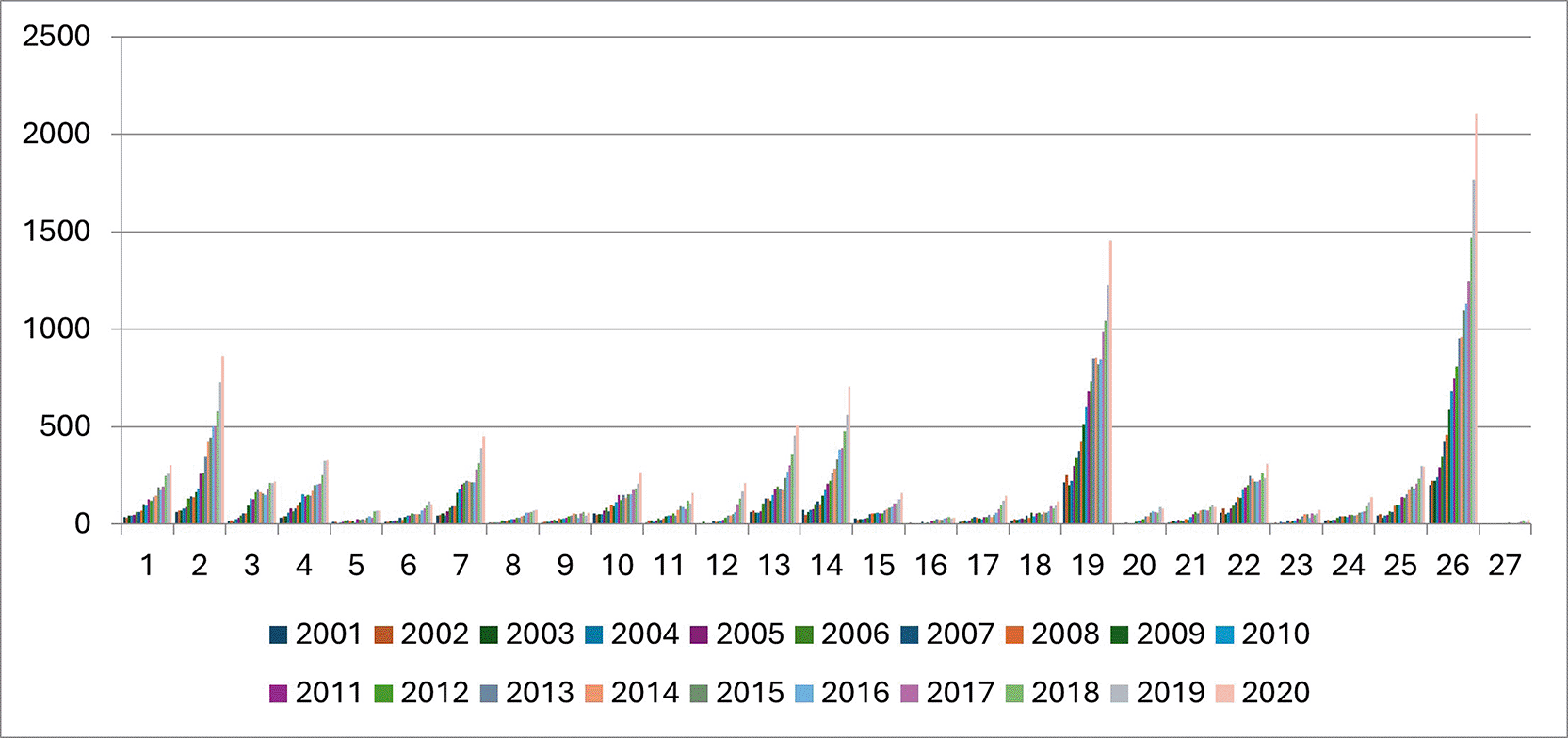
This section focuses on the absolute and relative number of articles with the words “interdisciplinary” or “interdisciplinarity” in their abstracts. Figures 1 and 2 depict the absolute number (N) of articles in each discipline and for all disciplines, respectively. Note that almost all dynamics for disciplines are exponential over time and the overall dynamics is also exponential over time with an yearly growth rate at 0.1164. In particular, Medicine 19 and Social Sciences 26 seem to have properly tackled the epistemological issues.
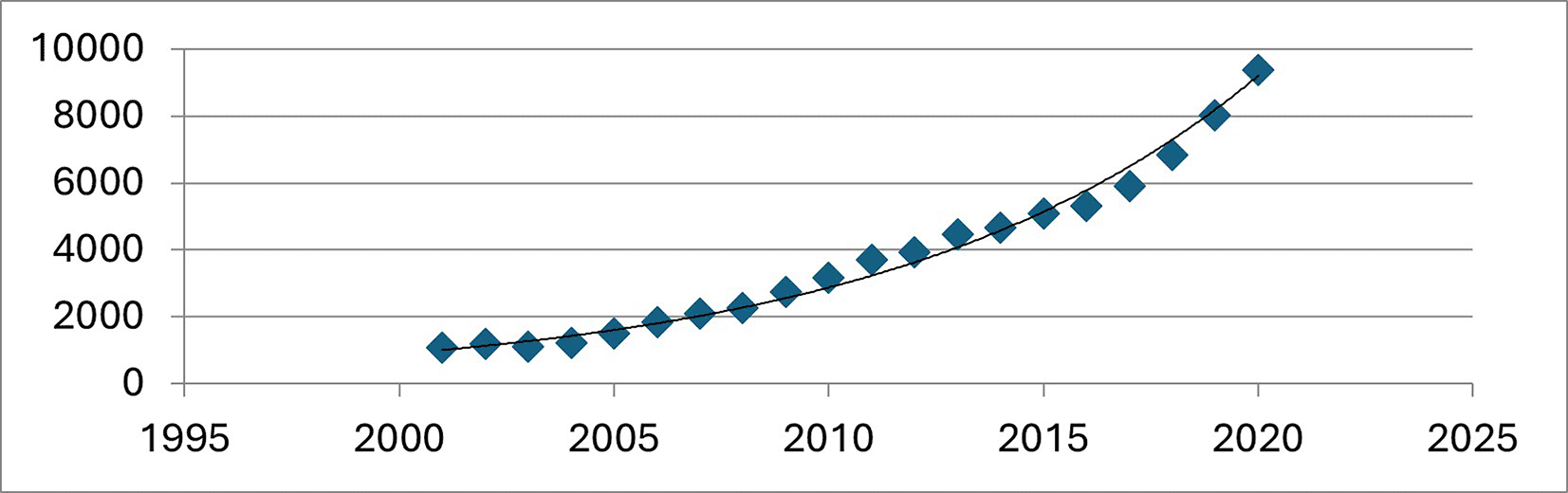
An exponential dynamic of N with ∆N/N = 0.1164.
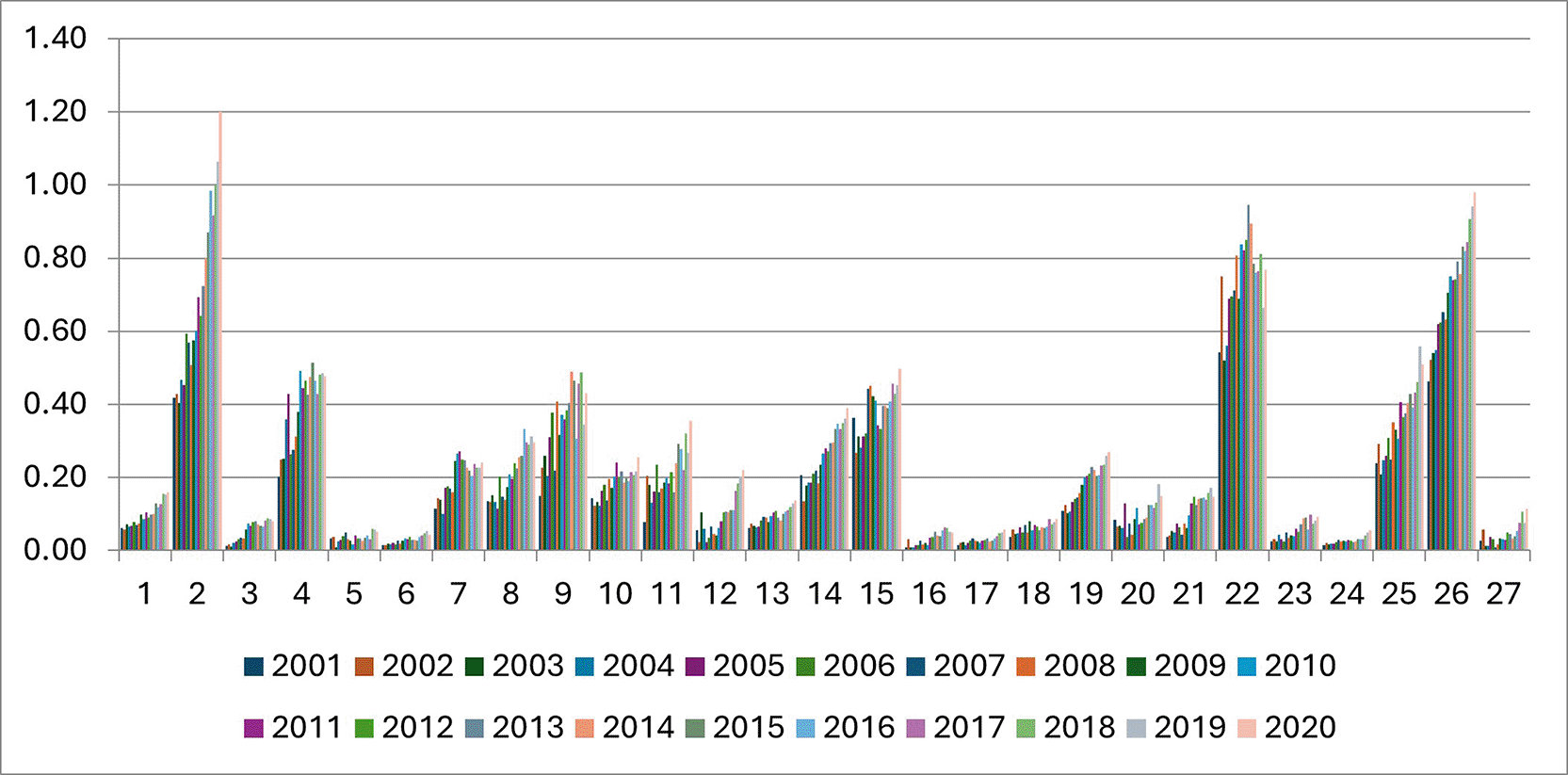
Figures 3 and 4 depict the relative number (%) of articles in each discipline and for all disciplines, respectively. Note that few dynamics for disciplines are exponential over time and the overall dynamics is linear over time. Comparing Figure 1 and Figure 3 shows that some exponential dynamics continue (e.g., Arts & Humanities 2, Environmental Science 14, Psychology 25, Social Sciences 26), while some exponential dynamics vanish (e.g., Engineering 13, Medicine 19).
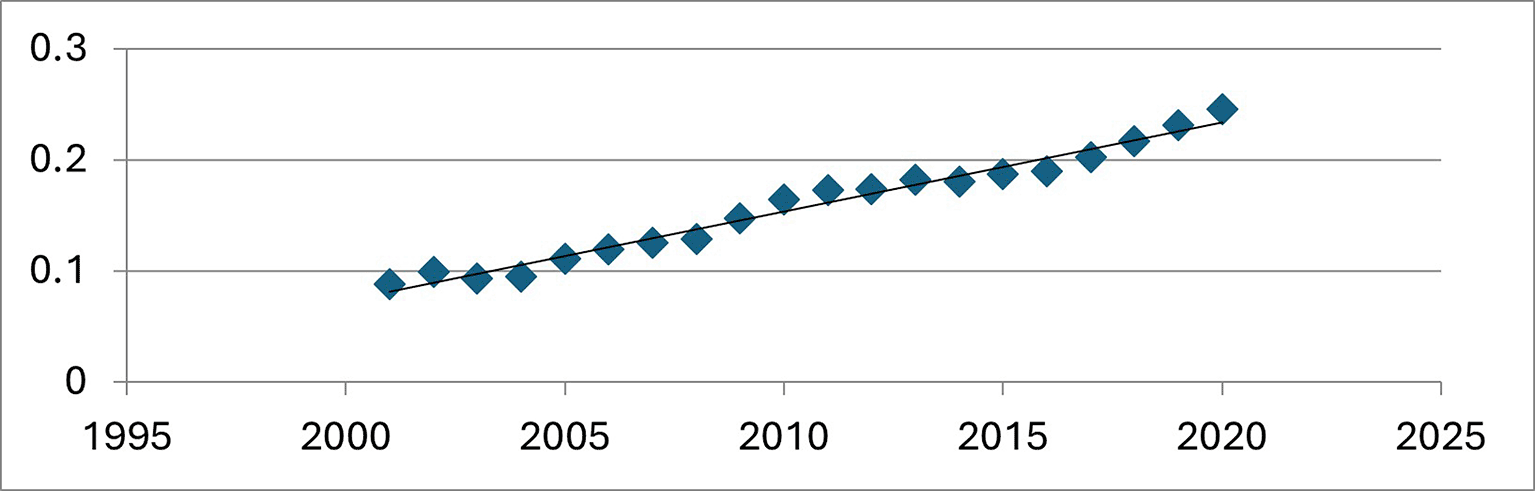
Comparing Figure 2 and Figure 4 suggests that the failure of a trendy IDR is due to institutional rather than epistemological issues. Note that the small percentage of IDR articles in 2000 (i.e., slightly below 0.1%) and in 2020 (i.e., slightly above 0.2%) confirms that the sample of articles in the period 2000 to 2020 does not miss relevant information.
Table 2 and Table 3 depict the impacts of Abstracts in percentages on average Citations per article with and without the yearly trend, respectively, based on the panel data robust estimations with fixed effects (i.e., the demand side of institutional issues in equation (1). Table 4 and Table 5 depict the impacts of Abstracts in percentages on the average H-index of scientists with and without the yearly trend, respectively, based on the panel data robust estimations with fixed effects (i.e., the supply side of institutional issues in equation (3).
CONS = constant, σu = 3.5453168, σe = 4.1376226, ρ = 0.42336185, Prob > F = 0.
| CIT | Coef. | Robust Std. Err. | t | P > t | [95% Conf. | Interval] |
|---|---|---|---|---|---|---|
| ABS | 4.217782 | 12.47208 | 0.34 | 0.738 | −21.52332 | 29.95889 |
| YEA | −1.377915 | .1280387 | −10.76 | 0.000 | −1.642174 | −1.113656 |
| CONS | 2775.318 | 256.3705 | 10.83 | 0.000 | 2246.195 | 3304.44 |
CONS = constant, σu = 10.206999, σe = 5.3197282, ρ = 0.78639032, Prob > F = 0.0035.
| CIT | Coef. | Robust Std. Err. | t | P > t | [95% Conf. | Interval] |
|---|---|---|---|---|---|---|
| ABS | −48.74497 | 15.07737 | −3.23 | 0.004 | −79.86314 | −17.6268 |
| CONS | 16.28037 | 3.205681 | 5.08 | 0.000 | 9.66417 | 22.89657 |
CONS = constant, σu = 0.94372682, σe = 0.77650877, ρ = 0.59629657, Prob > F = 0.
| HIN | Coef. | Robust Std. Err. | t | P > t | [95% Conf. | Interval] |
|---|---|---|---|---|---|---|
| ABS | 2.695203 | 1.673686 | 1.61 | 0.120 | −.7591148 | 6.149522 |
| YEA | −.3479692 | .0346511 | −10.04 | 0.000 | −.4194856 | −.2764529 |
| CONS | 700.4491 | 69.38591 | 10.09 | 0.000 | 557.2436 | 843.6546 |
CONS = constant, σu = 2.2140865, σe = 1.1480871, ρ = 0.78809581, Prob > F = 0.0001.
| HIN | Coef. | Robust Std. Err. | t | P > t | [95% Conf. | Interval] |
|---|---|---|---|---|---|---|
| ABS | −10.67965 | 2.336397 | −4.57 | 0.000 | −15.50173 | −5.857563 |
| CONS | 3.700642 | .4967538 | 7.45 | 0.000 | 2.675393 | 4.725892 |
Note that I used “impacts”, since the reverse causality is meaningless in my context. Indeed, it is well-known that IDR reduces the average citations per article and the average H-index for authors so it is unlikely to have editors and scientists who increase their degree of interdisciplinarity to increase impact factors and personal H-indexes, respectively.
Let us focus on Table 2 for the demand side, since journals are interested in impact factors for a short period of time (i.e., with the yearly trend) and on Table 5 for the supply side, since scientists are concerned for the scientific assessment of their work for a long period of time (i.e., without the yearly trend). Table 2 shows a significant negative yearly trend (i.e., more recent articles are less likely to be quoted) and a non-significant positive impact of Abstracts in percentages on the average number of Citations (i.e., articles with the words “interdisciplinary” or “interdisciplinarity” in their abstracts do not decrease their average number of citations). Note that Table 3 shows a significant negative impact of Abstracts in percentages on the number of Citations over the whole period under consideration (i.e., 2.99% of smaller average citations per year).
Table 5 shows a significant negative impact of Abstracts in percentages on the average H-index (i.e., scientists who publish articles with the words “interdisciplinary” or “interdisciplinarity” in their abstracts decrease their H-indexes). Note that Table 4 shows a non-significant positive impact of Abstracts in percentages on the average H-index per year (i.e., articles with the words “interdisciplinary” or “interdisciplinarity” in their abstracts do not decrease the yearly average H-index).
Comparing impacts in Table 2 and in Table 5 (i.e., P values at 0.738 and 0, respectively) suggests that the institutional issues of a trendy IDR are due to a lack of supply.
Note that the yearly trend in Table 2 is −1.37 per year. Moreover, the average H-index in Table 5 is 3.70. Finally, ρ (i.e., the proportion of the total variance contributed by the panel-level variance component is large and a panel estimation is better than a the pooled estimation) is positive both in Table 2 and in Table 5, although its value is larger for H-indexes than for Citations (i.e., disciplines differ each other for H-indexes to a greater extent than for citations).
In order to compare the impacts for each single discipline, Table S2 and Table S3 in Extended data at http://osf.io/b3cj6 present the same estimations, where fixed effects are replaced by dummies for each discipline.
The previous section focused on the absolute and relative number of articles with the words “interdisciplinary” or “interdisciplinarity” in their abstracts. However, these words in abstracts do not ensure that IDR is actually implemented in the article, since they do not commit the authors to do IDR and reviewers could accept these words (i.e., it could be a matter of fashion). In order to enable comparisons, this section performs the same analyses previously implemented, by focusing on the absolute and relative number of articles with the words “interdisciplinary” or “interdisciplinarity” in their titles. Indeed, these words in the title commit authors to perform IDR and reviewers would stress an inconsistency between title and content of these papers.
Figures 5 and 6 depict the absolute number (N) of articles in each discipline and for all disciplines, respectively. Note that almost all dynamics for disciplines are exponential over time and the overall dynamics is also exponential over time with an yearly growth rate at 0.1005. In particular, Medicine 19 and Social Sciences 26 seem to have properly tackled the epistemological issues.
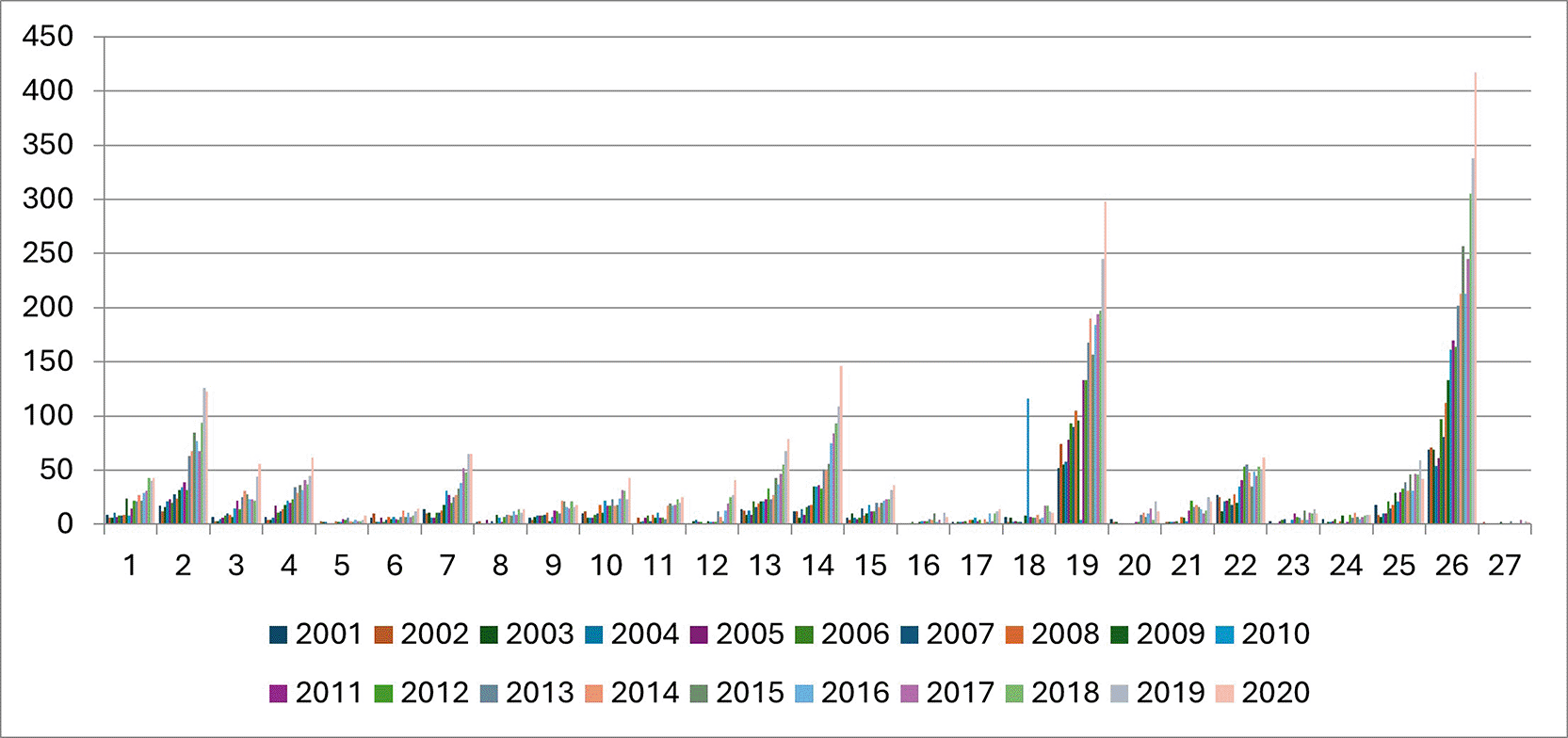
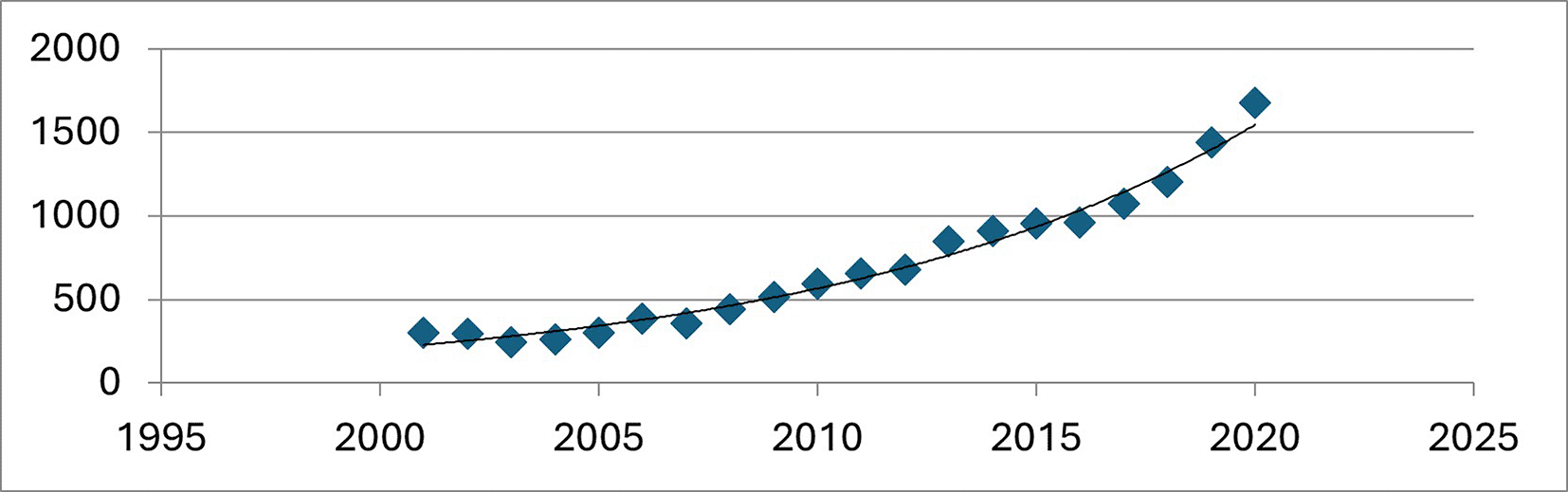
An exponential dynamic of N with ∆N/N = 0.1005.
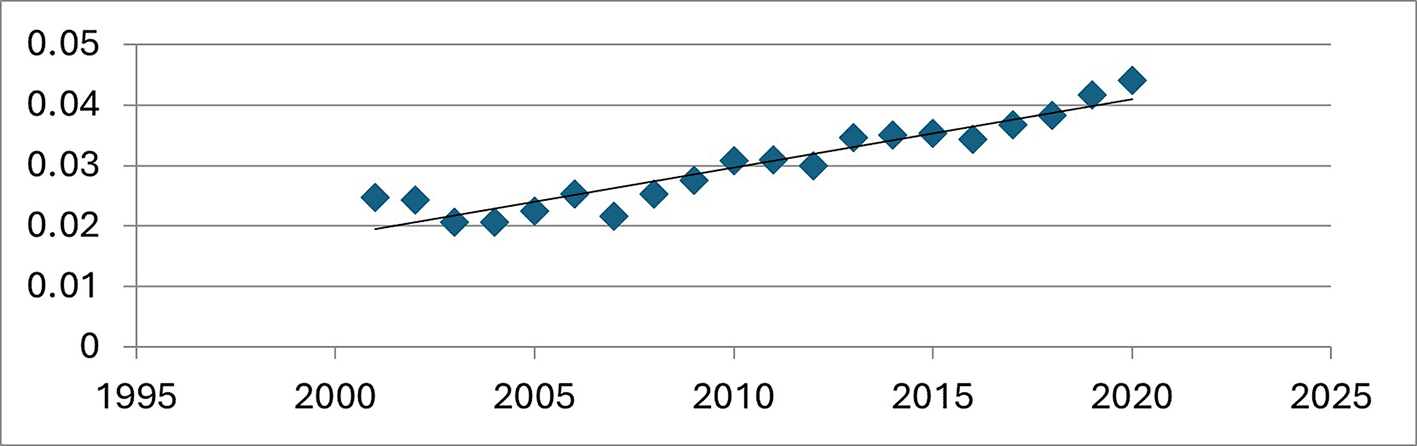
Figures 7 and 8 depict the relative number (%) of articles in each discipline and for all disciplines, respectively. Note that few dynamics for disciplines are exponential over time and the overall dynamics is linear over time. Comparing Figure 5 and Figure 7 shows that some exponential dynamics continue (e.g., Arts & Humanities 2, Environmental Science 14), while some exponential dynamics vanish (e.g., Medicine 19, Social Sciences 26).
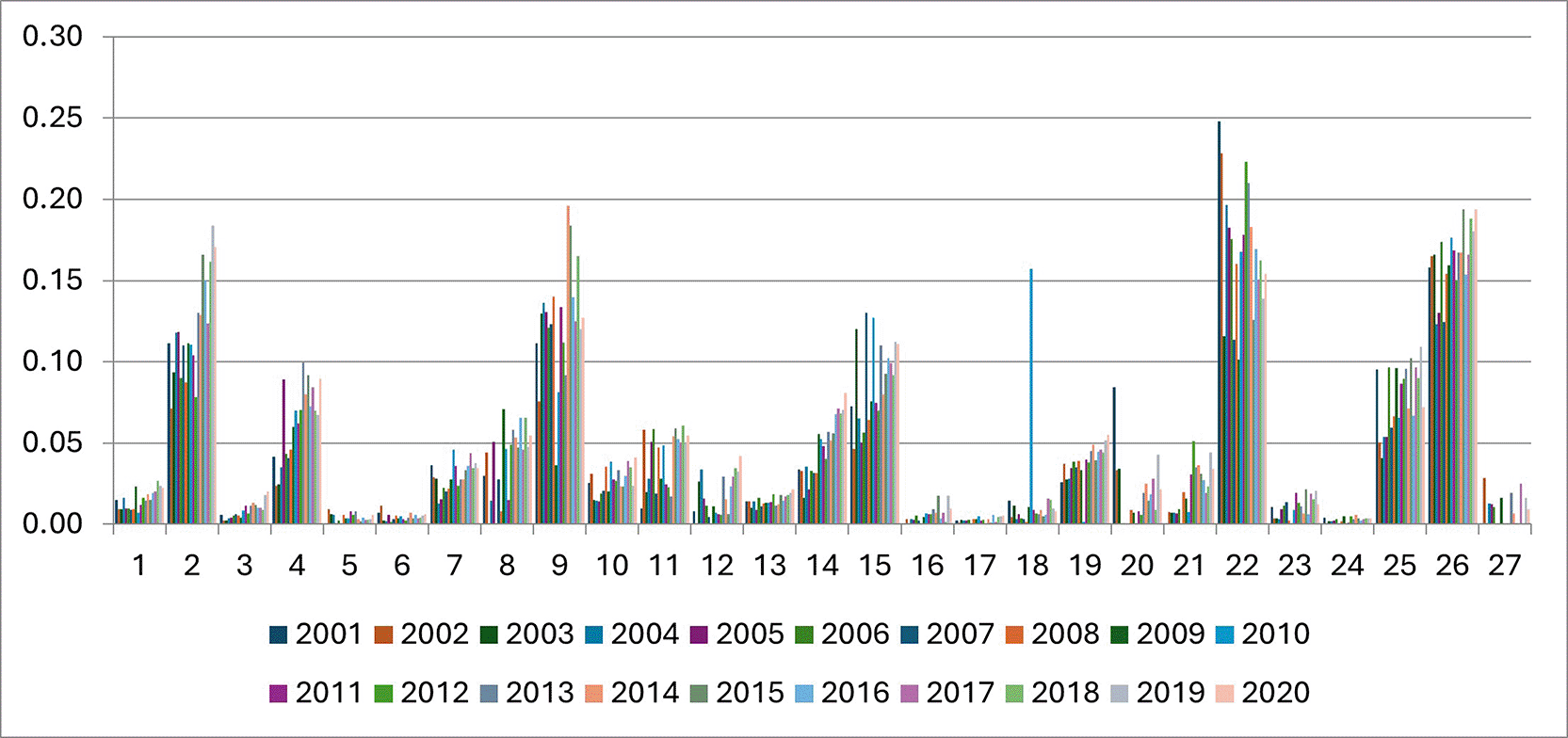
Comparing Figure 1 and Figure 5 suggests that the genuine implementation of IDR does not pay in terms of individual benefits for most disciplines. In particular, a genuine IDR is implemented in Arts & Humanities 2, Environmental Science 14; a trendy IDR is implemented in Psychology 25 and Social Sciences 26; IDR is not implemented in Engineering 13 and Medicine 19.
Comparing Figure 6 and Figure 8 suggests that the failure of a genuine IDR is due to institutional rather than epistemological issues. Note that the small percentage of IDR articles in 2000 (i.e., slightly below 0.03%) and in 2020 (i.e., slightly above 0.04%) confirms again that the sample of articles in the period 2000 to 2020 does not miss relevant information.
Table 6 and Table 7 depict the impacts of Titles in percentages on average Citations per article with and without the yearly trend, respectively, based on the panel data robust estimations with fixed effects (i.e., the demand side of institutional issues in equation (2). Table 8 and Table 9 depict the impacts of Titles in percentages on the average H-index of scientists with and without the yearly trend, respectively, based on the panel data robust estimations with fixed effects (i.e., the supply side of institutional issues in equation (4).
CONS = constant, σu = 2.8885932, σe = 4.1327591, ρ = 0.32819696, Prob > F = 0.
| CIT | Coef. | Robust Std. Err. | t | P > t | [95% Conf. | Interval] |
|---|---|---|---|---|---|---|
| TIT | −13.7201 | 13.54233 | −1.01 | 0.321 | −41.67009 | 14.22989 |
| YEA | −1.313504 | .1256613 | −10.45 | 0.000 | −1.572856 | −1.054152 |
| CONS | 2647.294 | 252.7757 | 10.47 | 0.000 | 2125.59 | 3168.997 |
CONS = constant, σu = 3.7754271, σe = 5.6191011, ρ = 0.31102828, Prob > F = 0.0177.
| CIT | Coef. | Robust Std. Err. | t | P > t | [95% Conf. | Interval] |
|---|---|---|---|---|---|---|
| TIT | −72.60982 | 28.50954 | −2.55 | 0.018 | −131.4506 | −13.76903 |
| CONS | 8.968591 | 1.198397 | 7.48 | 0.000 | 6.495222 | 11.44196 |
CONS = constant, σu = .46016911, σe = .78300047, ρ = 0.25672159, Prob > F = 0.
| HIN | Coef. | Robust Std. Err. | t | P > t | [95% Conf. | Interval] |
|---|---|---|---|---|---|---|
| TIT | −.932498 | 3.821232 | −0.24 | 0.809 | −8.819133 | 6.954137 |
| YEA | −.3212753 | .0267509 | −12.01 | 0.000 | −.3764864 | −.2660641 |
| CONS | 647.3931 | 53.71722 | 12.05 | 0.000 | 536.5262 | 758.26 |
CONS = constant, σu = .69563733, σe = 1.2174036, ρ = 0.2461422, Prob > F = 0.0146.
| HIN | Coef. | Robust Std. Err. | t | P > t | [95% Conf. | Interval] |
|---|---|---|---|---|---|---|
| TIT | −15.33657 | 5.829839 | −2.63 | 0.015 | −27.36877 | −3.304372 |
| CONS | 2.074657 | .245057 | 8.47 | 0.000 | 1.568884 | 2.58043 |
Note that I used again “impacts”, since the reverse causality is meaningless in my context). Moreover, comparing Figure 2 and Figure 6 shows that both dynamics are exponential, but the latter is at a smaller level than the former. Finally, comparing Figure 4 and Figure 8 shows that both dynamics are linear, but the latter is at a smaller level than the former. In particular, the 10% of articles with trendy and genuine IDR (i.e., “interdisciplinary” of “interdisciplinarity” in abstract and title, respectively) are expected in 2030 and 2334, respectively.
Let us focus on Table 6 for the demand side (i.e., with the yearly trend) and on Table 9 for the supply side (i.e., without the yearly trend). Table 6 shows a significant negative yearly trend (i.e., more recent articles are less likely to be quoted) and a non-significant negative impact of Titles in percentages on the average number of Citations (i.e., articles with the words “interdisciplinary” or “interdisciplinarity” in their titles do not increase their average number of citations). Note that Table 7 shows a significant negative impact of Titles in percentages on the number of Citations over the whole period under consideration (i.e., 8.10% of smaller average citations per year).
Comparing Table 6 with Table 2 suggests that a trendy IDR might be beneficial for journals, whereas a genuine IDR might be detrimental for journals.
Table 9 shows a significant negative impact of Titles in percentages on the average H-index (i.e., scientists who publish articles with the words “interdisciplinary” or “interdisciplinarity” in their titles decrease their H-indexes). Note that Table 8 shows a non-significant negative impact of Titles in percentages on the average H-index per year (i.e., articles with the words “interdisciplinary” or “interdisciplinarity” in their titles do not increase the yearly average H-index).
Comparing Table 9 with Table 5 suggests that a genuine IDR is detrimental for scientists (i.e., −7.4% of H-index for +1% of IDR based on 15.33/2.07) much more than a trendy IDR (i.e., −2.8% of H-index for +1% of IDR based on 10.67/3.70).
Comparing impacts in Table 6 and in Table 9 (i.e., P values at 0.321 and 0.015, respectively) suggests that the institutional issues of a genuine IDR are due to a lack of supply.
Note that the yearly trend in Table 6 is −1.31 per year, which is similar to the value estimated for Abstracts. Moreover, the average H-index in Table 9 is 2.07, which is smaller than the value estimated for Abstracts (i.e., a genuine as opposed to a trendy IDR reduces the average H-index from 3.70 to 2.07). Finally, ρ is positive both in Table 6 and in Table 9, although its value is smaller for H-indexes than for Citations (i.e., disciplines differ each other for H-indexes to a smaller extent than for citations). In other words, the individual cost for a genuine IDR is more similar across disciplines than for a trendy IDR.
In order to compare the impacts for each single discipline, Table S4 and Table S5 in Extended data at http://osf.io/b3cj6 present the same estimations, where fixed effects are replaced by dummies for each discipline.
The previous section ranked the main obstacles to IDR. This section reviews the theoretical literature to suggest some solutions (THEORETICAL GOAL 2), by referring to the empirical literature to highlight the main methodological advances of the present paper. Note that the most complicated issue in theory (i.e., the institutional obstacles on the supply side, which require a revolution) turned out to be the most urgent issue in practice (i.e., a structural break is required).
The main theoretical solutions to the epistemological obstacles suggested in the literature are as follows:
• An improved division of cognitive labour and scheduling of joint epistemic work and evaluation could favour an adequate organisational arrangement, since IDR can be represented as a cognitive coordination problem to be characterised in terms of heuristics 89,90
• Leaders could play a crucial role in coordinating team interaction by facilitating the sharing, consideration, evaluation, and integration of relevant knowledge91,92
• A better focus on epistemological issues of IDR could favour the development of scientific standards, since there are few models and practical guides for IDR teams 93
The main theoretical solutions to the institutional obstacles on the demand side suggested in the literature are as follows:
• Handle editors should be identified with an interdisciplinary culture to appreciate the novelty across disciplines.
• More time should be spent on interdisciplinary papers to find a compromise about concepts and methods, although this might require a second round of the referee process and postpone the payment of the publication fee.
• Editors in Chief should be identified with a forward-looking perspective to get rid of the short-term rule of getting money.
The main theoretical solutions to the institutional obstacles on the supply side suggested in the literature are as follows:
• Larger trainings on IDR for undergraduate and graduate students could favour interpersonal communication and collaborative skills94,95
• A Better selection of interdisciplinary scientists could increase commitment to and patience with the cross disciplinary process, since IDR does not require only disciplinary depth and expertise (96,71,97)
• Supporting structures (e.g., reorganisation of university research to target IDR funding calls and programmes) and incentivizing regulations (e.g., new indexes for research assessment and funding) could increase the number of interdisciplinary collaborations (6,65,94–98)
The main empirical solutions suggested by the present paper are as follows:
• Scholars should be ranked also in terms of the IDR proportion in their publication history (e.g., 100,101,102). This could favour the recruitments of interdisciplinary scientists at universities in addition to monodisciplinary scientists. However, this policy is likely to be aborted in the short-run, since it is likely to be opposed by unidisciplinary scientists in power thanks to financial systems based on monodisciplinary structures (e.g., 103,104). As an example from my experience, ScholarGPS, apart from showing me within 0.5% of all scientists, 0.5% of all social scientists and 0.5% of all economists, it could detail my first speciality ranking (i.e., 99 in Sustainability, which is an interdisciplinary issue) in terms of my IDR proportion to show my ranking as an interdisciplinary scientist.
• Journals should be ranked also in terms of the proportion of genuine interdisciplinary articles (e.g., 105,106,107). This could favour the identification of reviewers, who have experience in research spanning multiple fields (to assess interdisciplinarity along the dimensions of variety, balance and disparity) and who are willing to challenge their standard rules of judgments (based on their epistemic cultures, networks, and research environments). This policy is easy to implement in the short-run, although it may take some time to equip journals with standardised informatics systems to deal with the many alternative disciplines involved in IDR (e.g., 108,109). As an example from my experience, reviewers are rarely interdisciplinary scholars and reject a manuscript either for methodological reasons only (e.g., “the variable used is an inadequate proxy of the phenomenon under consideration”, although this is the best available variable) or for topical reasons only (e.g., “this specific difference between these two features is missed”, although this is a patently unessential difference), by showing that necessary compromises of IDR are often neglected by reviewers.
• Universities should be ranked also in terms of the IDR proportion in their academic production (e.g., 110,111,112). This could favour the development of graduate programs to shape interdisciplinary scientists. However, this policy is likely to fail in the long-run, since the organisation of interdisciplinary research centres at a university level (rather than at department level) to nurture junior scientists engaging in interdisciplinary research must be coupled with incentives or rewards (together with tenures and promotions) to consolidate a genuine interdisciplinary approach at universities (e.g., 113,114). As an example from my experience, I worked as an economist with engineers and biologists in international projects on coastal and river sustainability, and I had to study issues faced by other disciplines (i.e., to learn the main methodologies in engineering and biology), whereas other scientists hardly made efforts to understand my interdisciplinary conciliations.
Note that the use of bibliometric indexes to suggest an empirical solution to epistemological and institutional obstacles to IDR leads the present paper to disregard educational issues (e.g., 115, 116, 117 ) and administrative issues (e.g., 118, 119, 120 ).
The methodological strength of the present study is threefold:
1. It referred to all disciplines within IDR rather than to few disciplines (e.g.,29). This is theoretically supported by a broad definition of science, where all disciplines accepting its methodologies have the same scientific dignity.
2. It distinguished genuine from trending IDR, by referring to abstracts and titles, respectively. It used text analysis rather than citation analysis. Otherwise, IDR could be over evaluated for some more interdisciplinary disciplines, deliberately “ex-ante” IDR could be under evaluated, and unintentionally “ex-post” IDR could be over evaluated.
3. It used a comprehensive dataset for all disciplines in the last 20 years rather than small samples (e.g.,71). This is empirically supported by the few percentages of IDR, both for trending and genuine IDR.
The methodological weakness of the present study is the reference to different observation units. Indeed, it did not link the interdisciplinary degree of each single author with his/her H-index and the average citations of his/her articles, but it used interdisciplinary indexes (i.e., dynamics of trending and genuine IDR) which refer to all articles, it used the H-indexes (i.e., the costs of writing IDR papers by authors) which refers to some scientists, and it used the citations (i.e., the costs of accepting IDR papers by editors) which refer to articles published by the same scientists. However, it linked these variables by calculating their averages across the 25 disciplines. In particular, the different sizes of the different disciplines are represented by the proportions of sampled scientists and by the percentages of all articles, whereas the additional differences between disciplines are caught by applying the fixed effects method.
The purpose of this paper was to empirically rank the main obstacles that prevent the IDR launch. By relying on indexes from informetrics, Section 3 empirically showed that institutional obstacles due to lack of supply > institutional obstacles due to lack of demand > epistemological obstacles (EMPIRICAL GOAL 1), whereas Section 4 reviewed some theoretical solutions (THEORETICAL GOAL 2). However, the relative empirical importance of obstacles leads to a sequence of suggested practical solutions (EMPIRICAL GOAL 2), by referring to the short-side theory in economics. First, the adoption of a net per-capita per-year H-index to evaluate scientific activity, with a bonus for IDR, would foster academic careers of interdisciplinary scientists and favour their access to research funds (i.e., supply side of institutional obstacles). Second, a larger group of (old) interdisciplinary reviewers would increase the awareness of the IDR potentials and the publication of IDR articles (i.e., demand side of institutional obstacles). Third, a greater probability of publication would increase the demand for training on IDR by (young) undergraduate and graduate students (i.e., epistemological obstacles).
Note that this sequence would avoid the IDR take off to be based on a few heroic scientists (i.e., around 0.03% of scientists, if each IDR scientist publishes around one IDR article per-capita per year) who bear a private opportunity cost to produce a public benefit (i.e., IDR is a collective action problem). Moreover, it would reduce the time to move from trending to genuine IDR, by keeping the characterisation of IDR. Finally, it would increase the likelihood of an institutional change which is needed to break the vested interests (i.e., IDR scientists are not behind the veil of ignorance by Rawls). In other words, since university leaders and administrators continue to allocate significant resources to monodisciplinary research (i.e., financial systems are essential socio-institutional dimensions of science as a human activity), obstacles to IDR will never be overcome, since the lack of interdisciplinary scientists makes it difficult to identify and group interdisciplinary reviewers and the lack of interdisciplinary funds makes it difficult to set up and preserve interdisciplinary centres.
The present study could be developed by considering transdisciplinary science instead of IDR (i.e., a different topic). However, the theoretical insights should include additional frameworks such as engagement of stakeholders and communication of information, while empirical results should rely on a larger dataset to include variables such as average or top-down decisions and majority or bottom-up decisions by representative and informed stakeholders. In addition, the present study could be developed by using semantic analysis to measure IDR (i.e., a different metric). However, the dataset should include all disciplines, while empirical results should consider different hierarchical relationships between the same keywords in different disciplines.
| Views | Downloads | |
|---|---|---|
| F1000Research | - | - |
|
PubMed Central
Data from PMC are received and updated monthly.
|
- | - |
Provide sufficient details of any financial or non-financial competing interests to enable users to assess whether your comments might lead a reasonable person to question your impartiality. Consider the following examples, but note that this is not an exhaustive list:
Sign up for content alerts and receive a weekly or monthly email with all newly published articles
Already registered? Sign in
The email address should be the one you originally registered with F1000.
You registered with F1000 via Google, so we cannot reset your password.
To sign in, please click here.
If you still need help with your Google account password, please click here.
You registered with F1000 via Facebook, so we cannot reset your password.
To sign in, please click here.
If you still need help with your Facebook account password, please click here.
If your email address is registered with us, we will email you instructions to reset your password.
If you think you should have received this email but it has not arrived, please check your spam filters and/or contact for further assistance.

Comments on this article Comments (2)
The paper is well positioned within an important debate, and its main argument is relevant: academic incentives may not fully reward interdisciplinary work, especially when impact materializes only with delay or when evaluation procedures rely on conventional metrics. This is a useful and policy-relevant point. The paper also has the merit of presenting the argument in a clear and accessible way.
However, the literature review would benefit from some updating and sharpening. Since the paper deals with research evaluation, citations, career incentives, and interdisciplinarity, it should engage more explicitly with recent work on delayed citation impact, responsible research metrics, tenure and promotion incentives, and bibliometric measures of interdisciplinary research. Updating the references would also help moderate some of the stronger claims in the paper. A more balanced conclusion would probably be more convincing: the results suggest that current academic incentive systems may create significant barriers to interdisciplinary research, rather than proving that interdisciplinary research cannot succeed.
The paper is well positioned within an important debate, and its main argument is relevant: academic incentives may not fully reward interdisciplinary work, especially when impact materializes only with delay or when evaluation procedures rely on conventional metrics. This is a useful and policy-relevant point. The paper also has the merit of presenting the argument in a clear and accessible way.
However, the literature review would benefit from some updating and sharpening. Since the paper deals with research evaluation, citations, career incentives, and interdisciplinarity, it should engage more explicitly with recent work on delayed citation impact, responsible research metrics, tenure and promotion incentives, and bibliometric measures of interdisciplinary research. Updating the references would also help moderate some of the stronger claims in the paper. A more balanced conclusion would probably be more convincing: the results suggest that current academic incentive systems may create significant barriers to interdisciplinary research, rather than proving that interdisciplinary research cannot succeed.