Keywords
Cliimate change, maize yield, minimum and maximum temperatures

This article is included in the Enhancing water, energy, and food security in an era of increasing demand, degradation, depletion and climate change collection.
Cliimate change, maize yield, minimum and maximum temperatures
The changes have been made under the conclusion section as suggested by the reviewer. A few changes have been made to the analyses section where the statement about the causal relationship have been removed and replaced by the correlational effect as suggested by the reviewer.
To read any peer review reports and author responses for this article, follow the "read" links in the Open Peer Review table.
Rain-fed agriculture in sub-Saharan Africa faces significant risks of crop failure due to various stressors, with climatic factors and nutrient deficiencies being the most critical (Siatwiinda et al., 2021). Anticipated shifts in rainfall and temperature patterns across different locations and timeframes are expected to influence water and nutrient availability, crop development, and overall yield (Fosu-Mensah et al., 2019). The ongoing increase in global temperatures has intensified extreme weather events, creating substantial challenges for agriculture and food production (Zhang et al., 2022a). Climate change continues to affect maize production, food security, and the livelihoods of smallholder farmers in many developing countries (Zizinga et al., 2022). These challenges have serious consequences for human well-being, including food insecurity and conflicts arising from shortages, making climate change a critical issue for policymakers (Magodora 2020).
Several studies have explored the impacts of climate change on maize production. Adisa et al. (2018) found that maximum temperature positively influenced maize yields in Mpumalanga, KwaZulu-Natal, and the Free State, while minimum temperatures had a negative effect on maize production in KwaZulu-Natal. Similarly, Zhang et al. (2022b) reported that increasing temperature and precipitation are contributing factors to maize output and highlighted the importance of labor and material capital inputs in determining yield. Mapfumo et al. (2020) observed that rainfall positively affected white maize yields in the Free State, KwaZulu-Natal, and North-West, while yellow maize yields also benefited from increased rainfall in the Free State and KwaZulu-Natal. Additionally, Li et al. (2022) concluded that a global temperature rise of 1.5 degrees Celsius would enhance maize yields in most countries.
Previous empirical studies have indicated that agricultural production is heavily influenced by climatic conditions, making the sector particularly vulnerable to climate change (Matimolane et al., 2020). This vulnerability poses a significant risk to subtropical countries, such as South Africa, where shifting climate patterns contribute to declines in farm output (Bouteska et al., 2024). Maize is South Africa’s most essential grain crop, serving as both a staple food for the majority of the population and a key feed grain ( South African Government 2023). In the South African context, most previous studies have relied on disaggregated data to assess the effects of climate change on maize yields (Matimolane et al., 2020; Mapfumo et al., 2020; Simanjuntak et al., 2023).
These studies focused on provinces declared to be high maize producers and neglected those with low maize production. Prior to 1987, there were four provinces in South Africa; hence, the majority of researchers used the data collected after nine provinces were formed (Simanjuntak et al., 2023). Thus, data collected before 1987 were ignored. The current study addressed this gap in the literature by utilizing nationally representative time-series data and quantile regression models to accommodate farmers in provinces with lower maize production. This is the only model capable of dividing maize yield into low, medium, and high production (Olagunju et al., 2020).
To the best of our knowledge, no study has attempted to distinguish maize producers using quantile regression and incorporating temperature change on land in the regression to assess its effect on maize yield. Thus, the current study contributes to the existing literature by including temperature change on land as an indicator of climate change to examine its impact on maize yield in the South African context. It is important to investigate the impact of climate in South Africa, because almost all provinces are severely affected by changing weather patterns (Roffe et al., 2024). The findings of the current study will inform policy interventions needed to tackle the issue of climate change among maize producers in South Africa.
The topic of climate change versus maize yield has been the subject of discussion for many decades. Climate change refers to scientific theories regarding the relationship between carbon dioxide (CO2) and heat (temperature). The onset of excessive carbon emissions causing global warming was envisaged by Arrhenius (1997). The study based its findings on the fact that carbon dioxide increases temperature over time; however, the work gained attention in the mid-19th century, when most studies noticed changes in climate conditions. Approximately 97% of the studies concluded that CO2 emissions are significant in harming the atmosphere (Harris et al., 2016). Lower-income economies will suffer the worst effects of global warming (Bellon and Massetti, 2022). Moreover, the SADC community is home to lower-income economies in Africa. The IMF report continues to be poor in terms of climate vulnerability. At the same time, richer households can adapt to the climatic conditions.
The economics of climate change is the introduction of the tax system (sin tax) to polluters of the atmosphere. Again, the contribution has been made to the literature on the effect of climate change on economic sectors, negative externalities, taxation, agriculture, human health, and comparisons between developed economies, emerging economies, and less developed countries. This study is interested in providing literature on the effect of climate change on maize yield and the possible gaps that exist in the literature. For example, the literature discussed below has three clusters: the effects of climate change on maize yield, food insecurity, and projections of world temperature.
Previous studies have shown that climate change has no positive or negative effects on maize yield. For instance, Li et al. (2011) noted that reduced maize supply is associated with high product prices in the world. This study was conducted in the United States of America and China, which hold first and second place, respectively, in terms of mass production of maize in the world. Studies conducted at the beginning of the 21st century have projected an increase in temperature from time to time. For example, Mati (2000) investigated the incidence of climate change in three Kenyan regions. The study indicated that by 2030, the temperature will rise from 2.29 to 2.89, in summer. Xiao et al. (2022) noted that a very sharp temperature increase will occur throughout the 21st century and it will cause drought. The study was conducted using 20 global climate change models and the APSIM maize model in northern China. Several studies have used the APSIM model to make future projections regarding climate change in relation to maize yield. For example, Luo et al. (2023) noted that high temperatures are expected to reduce maize yields by 23%. This study used data from 1990 to 2012. In the same lane, feasible generalized least squares (FGLS), indicated that both minimum and maximum temperatures induce a high risk of reducing maize yield (Guntukula and Goyari, 2020). The study used data from 1956 to 2015 in the Telangana region in southern India. Luhunga (2017) shared similar sentiments with Tanzania. These studies have provided both projections and the effects of climate change on maize yield. Unlike earlier studies, the latest literature confirms the negative effects of climate change on maize yields.
Some studies have used temperature to measure climate change, while others have used CO2. Zhang et al. (2022a), who in their findings indicated that both precipitation and temperature have a positive impact on maize yield, while a lack of light from the sun has negative effects. The study used a panel of 3050 informants regarded as small farmers in China, from whom data from 2009 to 2018 were extracted. However, this study lacked an indication of the temperature threshold, and the CO2 had a positive effect on maize yield in Ghana. The study was conducted in Ghana through time series data ranging from 1990 to 2020 (Ntiamoah et al., 2022; Araya et al., 2017) indicated same findings in USA. The study noted that CO2 will increase maize yield, despite the decline projections in the 21st century connected to climate change.
The factors that positively contribute to maize production include rain and precipitation. Oseni and Masarirambi (2011) indicated that most maize farms in most emerging economies in Africa are rainfed. It helps other factors and reduces food insecurity, meaning that it assists even subsistence farming done by households. The study was conducted in Swaziland using two analyses with the help of data from 1990 to 2009. Jones and Thornton (2003) found that emerging economies lose approximately $2 billion due to their vulnerability to climate change. The simulation model projected a 10% loss of agricultural products due to climate-related events by 2055. Similarly, Msowoya et al. (2016) noted that by 2050, maize yield, which depends on natural rain, is expected to decrease by 14% owing to climate events. The study was conducted in Lilongwe District, located in Malawi. On the other hand, Lebel et al. (2015) projected that the rain harvest of maize yield will instead increase from 24% to 50% by half a century in Africa. The aforementioned studies indicate a disagreement in the literature concerning projections of maize productivity. Coster and Adeoti (2015) specifically noted that rainy days’ influence high maize productivity compared to the no rain season. The study was conducted under the supervision of 346 informants who participated in the study in Nigeria. The same sentiment was reported by Wu et al. (2021) in China.
On the other hand, Ray et al. (2019) insisted on the negative impact of climate change on maize production, including other major agricultural productivity such as rice, avocado, barley, sorghum, oil plant, soybean, wheat, and sugar cane. The linear equation model indicated that Europe, Australia, and Southern Africa suffered worse impacts, whereas Latin America was safe. It is not surprising that they have an advantage in maize productivity. Kogo et al. (2019) reviewed the literature from 1990 to 2018 on this topic and found that CERES and APSIM models were dominant in such investigations. This study noted that current studies during the time of writing predicted a reduction in maize yield by the end of the current century. The same results are confirmed by Tachie-Obeng, Akponikpè, and Adiku (2013) and (Tachie-Obeng, Akponikpè, and Adiku 2013) in Ghana,
The same sentiment was delivered by Abera et al. (2018), who in their study projected maize yield as from to 1980–2010, 2011 to 2039, 2040to 2069 and 2070–2099. The findings indicate that maize yield is expected to decrease from 43% to 24% by the end of the century. Similarly, Byjesh et al. (2010) and (Byjesh, Kumar, and Aggarwal 2010), projection indicated that a high temperature from 2020 to 2080 will be accompanied by a decline in maize production in India. However, high rainfall increases maize productivity. Therefore, studies that project the future highly note the future decline in light of high temperatures.
Although South Africa is equally a maize producer, they are few studies that are worried about climate change on maize productivity. This section briefly describes these studies in detail. According to Choruma, Akamagwuna, and Odume (2022) maize productivity is expected to decrease by 24% by the end of the 21st century. The temperature is expected to increase to over 50% of the projected EPIC simulation model, which was conducted in Eastern Cape, South Africa, using data ranging from 1980 to 2010. This incident is partly because the majority of farmers still depend on rain-fed farms. Hence, more farmers are aware of climate change issues and use timing strategies for farming throughout the year (Akanbi, Davis, and Ndarana 2021). The study was conducted in Vaal through interviews with the informants, and descriptive statistics and a multinomial model were employed in the study.
Abraha and Savage (2006) noted that CO2 and temperature are the main factors that affect maize yield in Cedara, KZN Province. The ClimGen simulation indicated that precipitation affected maize less than the former. Masipa (2017) noted that climate change is a treatment of overall food security in South Africa and food inflation. These studies have raised awareness of climate change and the creation of alternatives to rainwater. Landman et al. (2018) noted that the maximum temperature is expected to increase by 4 °C °C at the end of the century. This study used the linear recalibration model in the Southern African region, which covers other economies located around the SA. Similarly, Chemura et al. (2022) noted that the South African region is projected to face more dry days than rainy days. Projection was performed using the maize stability model from 1986 to 2064. Therefore, future projections indicate a misfortunate future in relation to maize productivity and food security.
In addition to the contrasting findings of the studies above concerning changes in climate change on maize yield. In this study, it was noted that the literature covers other regions and few studies cover South Africa as an economy. Equally important, most studies cover a region located in a country and not the entire country. It is also observed that there is no study in literature that has used temperature change on land; this remains one of the contributions of the study in literature.
The study relies on a positivism research paradigm that posits that reality can be studied from an objective point of view, given the quantitative nature of the variables studied. In this section, the nature of the data, the quantile regression model, and diagnostic tests are explained. Monthly meteorological data (maximum temperature, minimum temperature, and precipitation) were extracted from power access data spanning 1981 to 2022. On the other hand, the annual data for maize yield and temperature change on land (that was later transformed into quarterly data) were downloaded from the Food and Agriculture Organization which covered a period of 1981 to 2022.
Maize yield studies in different parts of the world have used this variable as an important factor that indicates food security in the form of maize productivity and other items made from maize. It has been used as a dependent and continuous variable based on data availability. Several studies in the literature have used it in the same way, such as Chandio et al. (2023), Harris et al. (2016), and Ntiamoah et al. (2022), to count the few used in economics.
The minimum and maximum temperatures ( Table 1) were both separate variables used in this study. The minimum temperature implies the lowest temperature recorded in a particular region in a specific period, which could be understood as cool. The maximum temperature can be understood as the highest temperature recorded in a particular region, such as heat. They are measured in Celsius (see the table below). Landman et al. (2018) and Guntukula and Goyari (2020) used both the temperature variables as explanatory variables.
Precipitation has been cited as a favorable variable for maize (Li et al., 2011; Murray-Tortarolo et al., 2018). It has been used as a measure of rainfall in the region, as measured in millimeters. Most maize farms in emerging economies still rely on this variable ( Ammani et al., 2013).
The objective of this study was to investigate the effects of temperature, rainfall, and temperature on maize yield. As the literature indicates, many studies have investigated different econometric models. For example, Noorunnahar et al. (2023) used the ARDL model and Chandio et al. (2023) used both the former and VECM. The dominant models involve the CERES and APSIM simulations (Kogo et al., 2019). Therefore, we used a quantile regression model in this study. The model allows the researcher to study the response of the explanatory variables to different levels of the dependent variables (Mbewana and Kaseeram, 2024). For example, the effect of temperature on small, medium, and large producers of maize. As indicated previously, the dominant studies in the literature cover only the region of the economy, and in this study, we are interested in the entire economy of SA. This means that we consider small farmers and regions with large farmers specializing in maize productivity. The model was not used in this study, excluding Nyamekye et al. (2016), who investigated the effect of human capital on maize productivity in Ghana. Maize yield takes the following form, according to (Noorunnahar et al., 2023)
Where Y denotes maize yield as a dependent variable and x denotes explanatory variables such as temperature. Other studies have used CO2 instead of temperature such a (Chandio et al., 2023). The quantile regression model was first introduced by Koenker and Bassett (1978) as an alternative model to overcome OLS shortfalls. Quantile Regression is used to predict the median rather than the mean, which is normally estimated using OLS (Mbewana and Kaseeram, 2024). QR is an extension of OLS, and it is used when the normality and homoscedastic assumptions are violated.
The following equations are model specifications in the form of study variables. Few studies have investigated the relationship between climate change and maize yield (Ammani et al. 2013), (Ntiamoah et al. 2022), and (Chandio et al. 2023):
The quantiles ranged from the 10th to 90th quantiles. The error term in each equation where , it means the conditional mean of the dependent variable concerning the regressor (X). The process of the model is explained in the Results and Discussion sections.
The results from the quantile regression model showed that the coefficients for the maximum temperatures were significant and positive across all quantiles, except for the 90th percentile. This variable was significant at less than 1% probability at the 10th, 25th, and 50th percentiles. In contrast, the coefficient for maximum temperature was significant at less than 5% at the highest quantile (95th).
Table 2 reveals that the maximum temperature has a stronger positive effect on maize yield at the lowest quantile (10th) because the magnitude of the coefficient was greater than that of the other quantiles (25th, 50th, and 95th). If other factors are held constant, the findings suggest that an increase of 1 °C in maximum temperature leads to an increase of 0.498, 0.397, 0.336, and 0.080 units in maize yield. In other words, when the maximum temperature increased by 1 °C, the maize yield increased by 49.8% and 39.7%, respectively, for farmers with lower maize production. The data show that at the median (50th percentile), an increase of 1-degree Celsius may lead to an increase of 33.6% in the maize yield for farmers who have average maize production, whereas at the upper-end quantile (95th percentile), maize yield increases by only 8%.
A possible explanation for the positive correlation between maximum temperature and maize yield is that warmer conditions can enhance photosynthesis and accelerate crop growth, especially in areas where temperatures were previously too low for optimal maize development. Higher daytime temperatures may also extend the growing season, enabling maize plants to mature more quickly and resulting in an increase in maize yield. Furthermore, increased temperatures can boost soil microbial activity and improve the nutrient availability in maize. However, this beneficial effect could be limited to an optimal temperature range because excessive heat stress can ultimately reduce maize production (Zhang et al., 2022a).
The coefficient for the minimum temperatures was significant at less than 10% in the lower quantile (25th), while it was significant at less than 5% in the highest quantiles (90th and 95th). The findings of this study show that minimum temperatures have a negative effect on maize yield at the 25th percentile, whereas a positive linkage was observed at the 90th and 95th percentiles. If other factors are held constant, the findings show that when the minimum temperature is reduced by 1 °C, maize yield is reduced by 0.076 units. These results reveal that when the temperature decreases below the minimum level, maize yield declines by 7.6% for provinces with lower production.
One of the reasons for this is that a reduction of 1 °C in minimum temperature could have an adverse impact on maize yield due to heightened risks of cold stress, frost damage, and delayed crop growth. Cooler nighttime temperatures may slow down physiological processes, diminish photosynthetic efficiency, and limit biomass accumulation. Under colder conditions, maize development might be stunted, ultimately reducing the yield. Furthermore, lower minimum temperatures can prolong the maturation period, making the crop more susceptible to unfavorable weather conditions later in the season (Bhattacharya, 2022).
On the other hand, a positive correlation was noted between maize yield and minimum temperatures at the highest quantiles (90th and 95th). The results suggest that when the minimum temperature increases by 1 °C, the maize yield increases by 0.042 and 0.046 units at the 90th and 95th percentiles, respectively. These findings also indicate that when the minimum temperature rises by 1 °C, maize yield increases by 4.2% and 4.6%, respectively. A possible explanation for this is that maize is classified as a warm-season crop, and low night temperatures can hinder metabolic activities and impede growth (Riaz et al., 2024). A modest rise in minimum temperature can help avert freezing damage, particularly in cooler areas, resulting in enhanced growth and improved grain development (Waqas et al. 2021).
The coefficients for precipitation were significant across all quantiles except for the lowest percentile (10th percentile). This variable was significant at less than 5% in the 25th, 90th, and 95th percentiles, whereas it was significant at less than 1% in both the 50th and 75th percentiles. The results revealed a stronger positive effect between maize yield and precipitation at the 50th percentile, as the magnitude of the coefficient was higher compared to other quantiles (90th and 95th). A stronger effect was observed at the 75th percentile, which was almost the same as the median (50th percentile). The data show that when the precipitation increases by 1 mm per day, there is an increase of 0.338, 0.311, 0.112, and 0.083 units in maize yield at the 50th, 75th, 90th, and 95th percentiles, respectively. This means that when the precipitation increased by 1 mm per day, the maize yield increased by 33.8% (50th), 31.1% (75th), 11.2% (90th) and 8.3% (95th), respectively. One of the reasons for this is that maize requires sufficient water for cell growth, nutrient absorption, and photosynthesis. Enhanced rainfall guarantees that the soil maintains adequate moisture levels, thereby alleviating drought stress and averting wilting during the essential phases of growth (Bhattacharya, 2022).
The coefficients for temperature change on land were statistically significant at the highest quantiles (75th, 90th, and 95th percentiles). This variable was significant at less than 5% in the 75th percentile, whereas it was significant at less than 1% in both the 90th and 95th percentiles. The data shows a stronger positive effect between maize yield and temperature change on land at the highest quantile (95th percentile), as the magnitude of the coefficient was higher compared to other quantiles (75th and 90th percentile). If other factors remain the same, the findings show that when the temperature changes on land increases by 1 °C, it leads to a 0.386, 0.483, and 0.489 unit increase in maize yield at the highest quantiles (75th, 90th, and 95th). These results imply that when the temperature change on land increases by 1 °C, there is a 38.6%, 48.3%, and 48.9% increase in maize yield at the 75th, 90th, and 95th percentiles, respectively. In cooler regions, increased temperatures on land can enhance the growth of maize, enabling plants to reach maturity more quickly and yield a greater amount of grain (Tiwari and Yadav 2019). When prior temperatures are suboptimal, warming can prolong the growing season, resulting in improved yields (Yang 2019).
Table 3 presents the diagnostic test of the model. R2 increases with quantiles until the median quantile starts to decrease. The LR statistics are high and statistically significant at the 1% level. The slope equity test indicates a similar connection between the dependent and explanatory variables in all quantiles. The test values were considered statistically significant at the 1% level. The explanatory variables show mixed results, according to the quantile symmetric test. In the lowest and two highest quantiles, there is evidence for a symmetric quantile test across individual coefficients since the p-values for chi-squared are statistically significant at 1% levels. There is evidence of quantile symmetry in the 25th, 50th and 75th quantiles.
The last part of the diagnostic test is the quantile process ( Figure 1) of each variable per quantile, denoted by the bold line in the shaded region of the diagrams. This test compares the quantile process median estimation to the OLS process in the mean process. In figure 1, starting from the 25th quantile to the 75th quantile, the quantile processes have 5% boundaries of the OLS process. However, the other quantiles fall out of the mean estimation. This indicates the power of quantile regression to estimate different levels of maize production, given different levels of explanatory variables.
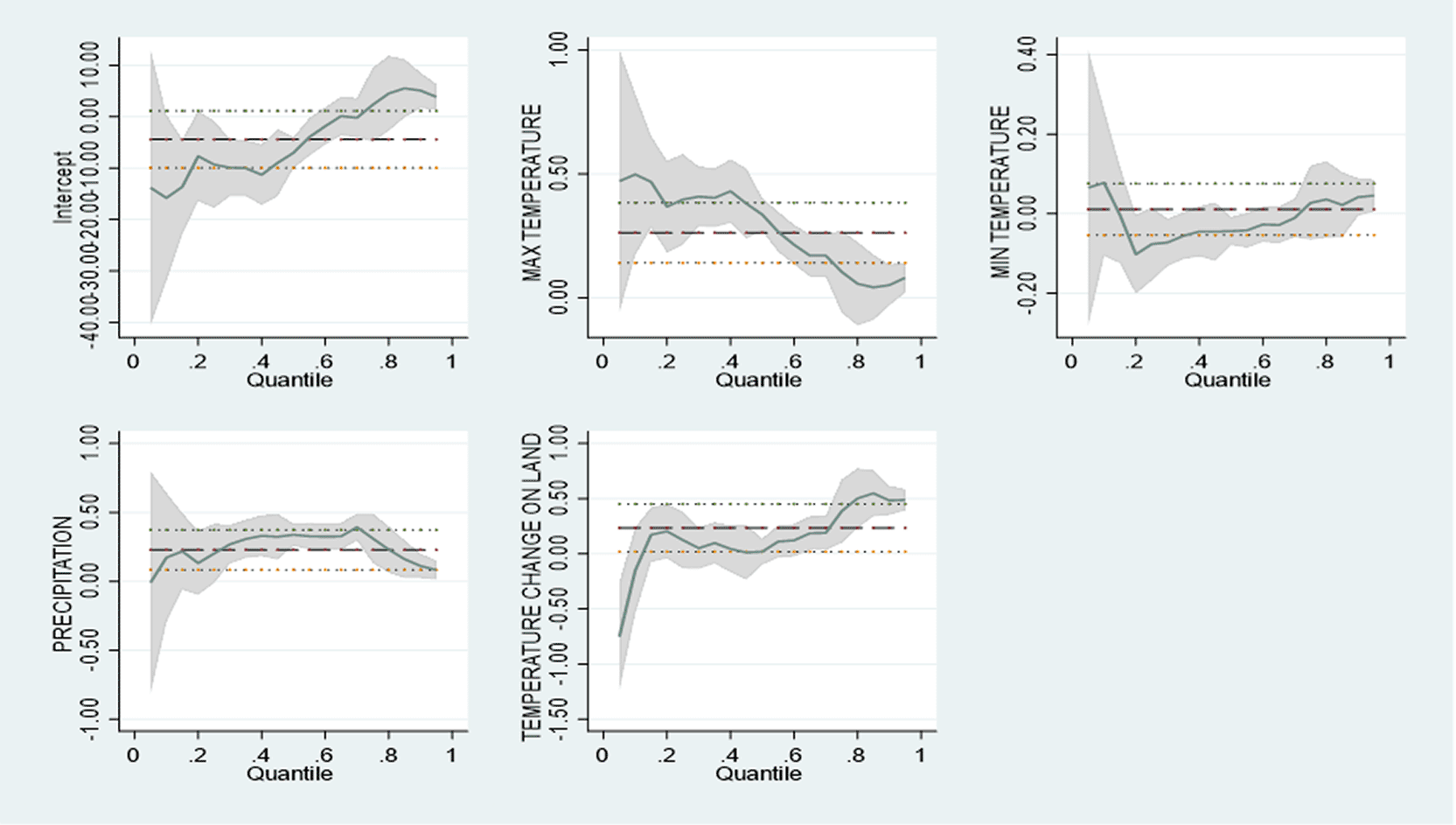
Source: Stata software.
The objective of this study was to examine the impact of climate change on maize yield in South Africa using a quantile regression model. The study concludes that maximum temperatures and precipitation have a positive correlation with maize yield. Consequently, minimum temperatures have shown mixed findings. For instance, the 25th coefficient was negative, whereas a positive association was observed at the 90th and 95th percentiles. The threshold for maximum and minimum temperatures was not estimated in the current study. Thus, the recommendations of the study are based on the correlational relationships observed between maize yield and independent variables. Therefore, the findings of the study should be read with caution because the study did not assess the short- and long-run relationships.
The study found a positive association between maximum temperature and maize yield in the 10th, 25th, and 95th quantiles. Based on these findings, there is a need for both small-scale and well-established large maize producers to target the warm seasons to optimize their maize yield. Thus, the weather forecasting information could assist farmers in considering changing planting dates to mitigate risks and maximize yield potential across diverse temperature scenarios. The results have shown that when minimum temperatures decrease, it could lead to a decrease in maize yield in the 25th quantile. Thus, the study recommends that farmers utilize maize varieties that are resistant to cold temperatures. The adoption of maize varieties that are resistant to cold temperatures could make farmers (small-scale farmers) more resilient to changing weather temperatures. Additionally, the study recommends the use of hybrid maize varieties that mature early so that they will avoid planting during cold seasons such as the winter period to optimize maize yield.
The coefficients for precipitation were positively correlated with maize yield and significant across all quantiles, except the 10th percentile. These findings demonstrate that when rainfall increases, it is likely to increase maize yield. Based on these findings, the study recommends that both small-scale and large maize producers should consider planting during the rainy season, as the dry planting period could negatively affect maize yield. The study found a positive connection between maize yield and temperature change on land at the 75th, 90th, and 95th percentiles. Based on these results, the study recommends the selection of maize hybrids that perform well under warm conditions while also demonstrating resilience to potential heat stress. There is a need for farmers to choose maize varieties with robust root systems to improve nutrient and water absorption under warm soil conditions.
One of the limitations of this study is that the authors did not estimate the threshold at which maximum temperatures are detrimental to maize yield in South Africa. Second, the study did not consider the effects of climate change on maize yield in the short and long run. Future research should focus on estimating the threshold for maximum temperatures to determine the extent to which it reduces maize production in South Africa.
| Views | Downloads | |
|---|---|---|
| F1000Research | - | - |
|
PubMed Central
Data from PMC are received and updated monthly.
|
- | - |
Provide sufficient details of any financial or non-financial competing interests to enable users to assess whether your comments might lead a reasonable person to question your impartiality. Consider the following examples, but note that this is not an exhaustive list:
Sign up for content alerts and receive a weekly or monthly email with all newly published articles
Already registered? Sign in
The email address should be the one you originally registered with F1000.
You registered with F1000 via Google, so we cannot reset your password.
To sign in, please click here.
If you still need help with your Google account password, please click here.
You registered with F1000 via Facebook, so we cannot reset your password.
To sign in, please click here.
If you still need help with your Facebook account password, please click here.
If your email address is registered with us, we will email you instructions to reset your password.
If you think you should have received this email but it has not arrived, please check your spam filters and/or contact for further assistance.

Comments on this article Comments (0)