Keywords
Local municipality, accountability, transparency, community trust

Local municipality, accountability, transparency, community trust
Trust remains a central tenet of effective governance, as it enables citizens to have confidence in the institutions and leaders that serve them (Zindi, 2024). Kraai et al. (2023) and Zindi (2024 highlight transparency and accountability in public governance as foundational to developing trust amongst stakeholders, especially citizens. Regrettably, the pervasiveness and persistence of corruption and financial mismanagement amongst government officials has eroded the trust of citizens in many developing nations, impacting the stability and legitimacy of many governments (Krah and Mertens, 2023). When corruption predominates, institutions become opaque and accountability systems are weakened or even captured, allowing corruption to flourish to the disdain of citizens. This often leads to many citizens losing their faith in their leaders and institutions, creating an environment of widespread disillusionment and skepticism with political process and government, and social unrest. Many studies have since been conducted to explore practices and principles that need to be applied to restore the public’s trust in government. Kraai et al. (2023) and Zindi (2024) have specifically highlighted governmental transparency and accountability respectively, as key to restoring the trust of communities in government institutions and its leaders.
The apartheid government in South Africa was largely unaccountable and lacked transparency; hence, in the country’s transition to democracy, many institutional reforms and laws were tabled to establish a more decentralised system of government, to promote participation, accountability, equity and effective service delivery (Krah and Mertens, 2023). A key framework that was enacted in the project of decentalisation was the three-tier governance system, namely, national, provincial and local level (Abioro, 2021). In this framework, local level (municipalities) serves as the key touchpoint of citizens and government, providing most of the essential services that citizens need. Thus, they essentially act as the ‘face’ of government in the eyes of the people, as this is the level of government most citizens interact with. Legal frameworks include the Municipal Systems Act (No. 32 of 2000) and the Municipal Finance Management Act (MFMA) (No. 56 of 2003), which have allowed municipalities to operate more autonomously, so as to respond to community demands more promptly and efficiently (Zindi, 2024). These measures, at least in theory, enable local governments to manage local resources, uphold financial discipline, and foster openness and accountability in theory.
Municipalities that satisfy governance and financial compliance standards are categorised into several classifications, namely, category A, B, and C, which dictate their functions and eligibility for fair share distributions and conditional payments from the national government (Berliner and Wehner, 2022). Although the budgets designated for municipalities may seem small in comparison to other countries, they are often sufficient for maintaining infrastructure development, service provision, and increasing local employment (Msenge and Nzewi, 2021). The National Treasury reports that allocations to local government have consistently risen, increasing from R87.3 billion in 2015/16 to over R133 billion by 2019/20, representing almost 9% of total national budget spending.
Notwithstanding these positive initiatives and reforms, debate has emerged over the effectiveness of decentralisation, with detractors contending that enhanced autonomy has, in certain instances, resulted in heightened occurrences of maladministration and corruption (Arkorful et al., 2021). Auditor-General of South Africa (AGSA) reports have shown persistent irregular, pointless, and wasteful spending in several municipalities, resulting in significant financial losses and diminishing public trust (Abioro, 2021). In the 2018/19 audit cycle, just 8% of municipalities received clean audits, revealing financial mismanagement and inadequate accountability. Such reports are touted to have had devastating impacts of both investor confidence and citizens trust, which are elements that are both pivotal meeting the developmental objectives of municipalities and the successful execution of Integrated Development Plans (IDPs) and service delivery programs (Berliner and Wehner, 2022).
A cooperative partnership between municipal administrations and local communities promotes more transparency, improves public involvement, and expedites inclusive local economic growth. Pratolo et al. (2022) assert that enhancing community trust at all governmental levels is essential for the efficient implementation of policies and programs. Consequently, effective governance processes must be instituted even at the local municipality level. Moreover, governance controls are crucial in ensuring that the considerable amount of local municipality money allocated will be effectively handled and may yield additional value, both for the growth of local municipalities particularly and for the state overall (Kanyane et al., 2022). Regrettably, numerous reports indicate that assets within local municipality administrations, particularly human, organisational, and technology resources, remain underdeveloped and are constrained by several limits (Brás and Dowley, 2021). Moreover, there is an element of environmental ambiguity arising from disputes between particular restrictions, including the new local municipality law and the rules enacted by the Minister of Home Affairs regarding local municipality governance, exacerbating the confusion among local municipality personnel in implementing effective governance practices, particularly concerning accountability (Ríos et al., 2024). Another challenge is the difficulties encountered by local municipalities in creating financial reports that are responsible to their sources of financing, specifically the federal, regional, and district governments, each of which has distinct regulations and templates for their respective reports. The swift technological transformation mandated by the new local municipality legislation poses a significant challenge for local municipality administrations to implement.
In light of the identified issues, it is imperative to do research on effective governance practices in local municipality administrations throughout the new local municipality law era, with a specific focus on accountability and transparency. Accountability as well as transparency are the primary components of effective governance that may mitigate financial mismanagement. Implementing robust accountability and transparency policies is anticipated to enhance community trust in local municipality administrations (Mnguni and Subban, 2022). Regrettably, governance processes in local municipality administrations have garnered minimal research interest. Research investigating the effects of accountability and transparency strategies on community trust is similarly scarce (Mensah et al., 2023).
While there are a litany of studies examining governance and trust at national or even state (provincial) levels, relatively few studies focus on local municipalities as a unit of analysis. Even fewer studies have examined the combined effect of transparency, accountability and related organisational factors such as expertise and organisational commitment on citizen trust. This is a significant gap as local municipalities are the most direct point of contact between citizens and government; hence, their performance largely shapes the perception of citizens about government as a whole.
This study seeks to address the aforementioned gap by analysing the roles of accountability, transparency and related internal institutional factors in building trust among communities in local municipalities. By providing empirical evidence at a local level, the research study aims to contribute to both the academic understanding and practical policymaking on creating governance climates that promote practices that build and sustain citizen trust.
Local are catalyst of community development and economic growth when they are accountable and transparent in their operations. Regrettably, Benito et al. (2021) notes that local municipalities in South Africa generally demonstrate poor transparency and accountability in the governance, especially with regards to finance, which is key to service delivery. Some of the troubling accounts Benito et al. (2021) mentions include a case where local municipality finances were exclusively administered by the local municipality leader and thirty-three representatives of the local municipality consultation council, without allowing for citizen engagement in the administration process. Moreover, the local municipality member vote was executed in a non-democratic manner, according to centralised (inherited) principles. Such cases would undoubtedly jeopardise local municipality governance, potentially leading to loses of revenue and financial mismanagement. Naraidoo and Sobhee (2021) made similar reports, asserting that local municipality administrations are often not transparent in how they handle the local municipality budget and growth program, resulting in the community’s ignorance regarding the budget quantity and its utilisation. Masuku et al. (2022) discovered that the monitoring mechanism operated by a specific local municipality advisory council, intended to supervise the local municipality administration, was highly ineffective, and that community engagement was absent, suggesting that the local populace is hardly included in the formulation of municipal policies. Furthermore, regarding accountability, the local municipality ‘s accounting process was conducted solely to fulfil formal legal obligations rather than to ensure authentic accountability to the small community.
Ngqobe et al. (2021) states that skills capacity is also often an issue in local municipality workforces, including local municipality heads, which is a significant impediment to the effective implementation of policy and the formulation of strategic initiatives. This, in turn, contributes to inadequate oversight and transparency in local municipality reporting of finances. Masiya et al. (2021) made a similar observation, stating that the prevalence of financial mismanagement was largely due to the inadequate expertise of staff. Thusi et al. (2023) similarly identified this problem when examining local accountability in several local municipality administrations in East Java.
Maleka and Moeti (2021) stated that the primary constraints hindering the execution of effective governance in local municipality administration is the proficiency of human resources and the organisational dedication of the local municipality head and personnel. These factors were used as predictors of transparency and accountability in this governance: competency and organisational commitment of local municipality personnel.
Furthermore, we investigated the influence of accountability and transparency on trust in the community, as proposed by Mohammed et al. (2024) in their research. Sethunya and Mlambo (2022) discovered that principles of accountability and transparency fostered community trust in the local municipality administration, which in turn motivated people to actively engage in the local municipality ‘s growth strategy. The partnership involving the local municipality and the community has resulted in certain local municipality being designated as exemplary and serving as standards for another local municipality in South Africa.
According to Mojapelo and Ngoepe (2021), organisational commitment is characterised as a personal stake in a company’s success. In the public sector context, governmental institutions are fundamentally dedicated to implementing effective governance, necessitating organisational commitment for success. A substantial amount of research reveals that organisational commitment; encompassing performance, responsibility, and transparency is a crucial determinant of an organisation’s ability to attain its objectives. Boboyeva (2025) discovered a favourable correlation between relational governance and oganisational commitment in privately owned firms. Hofisi and Chigova (2023) assert that accountability and transparency in local municipalities in particular are significantly improved when senior management demonstrates complete commitment. In such contexts, both government officials and the community often collaborate towards the shared aim of fulfilling the local municipality’s programming and governance objectives.
The subsequent hypothesis was proposed based on these findings:
A positive association exists between organisational commitment and responsibility.
Transparency is positively correlated with organisational commitment.
According to Boufounou et al. (2024), government organisations are held responsible for providing information regarding their operations, programs, and performance, encompassing both financial and non-financial elements. The local municipality administration must prepare financial and performance reports with accuracy and integrity to mitigate information asymmetry about financial management. The local municipality serves its communities through open processes if accountability is established, and robust accountability and transparency are anticipated to enhance the community’s trust. Local municipality administration is perceived to have fulfilled its commitments if it met the expectations of the residents as well as the federal, provincial, and regency governments that provided funding.
Communities will exhibit greater trust in the local government when its websites, announcements, and information boards proficiently communicate accountability to the public. According to McKenzie and Marx (2024), accountability enhances the transparency of local administrations. Jung (2022) observed that public stakeholders’ trust in local government is enhanced by the openness and accountability of regional financial management.
Therefore, the following hypothesis was proposed:
Transparency is positively correlated with accountability. Confidence in one’s community correlates favourably with responsibility.
Xin et al. (2023) assert that equitable access to information between the government and the community will result in diminished opportunistic conduct by the government and reduced community confidence in governmental trustworthiness. The preparation of high-quality financial reports with enhanced openness signifies successful corporate governance procedures in public companies. The public’s trust in the government is seen to increase with greater transparency. Research by Tshuma et al. (2024) indicates that governmental transparency is a crucial determinant of community trust. Individuals trust government institutions more when they exhibit transparency and integrity, since they perceive these entities to be less prone to unethical conduct. Maramura and Shava (2021) discovered that individuals’ faith in local governments augmented when they felt heightened transparency, accountability, and responsiveness.
In light of these data, the subsequent hypothesis appears to be a plausible option:
A robust correlation exists between transparency and trust within the community.
To clarify, accountability and transparency are only standard exogenous variables, despite their appearance as intervening factors inside the conceptual framework. The lack of substantial references and support hindered the formulation of the interim hypothesis. Only the arrows are necessary to discern the sequence in which the variables are interconnected.
The theoretical framework for this research was developed using “new” institutional theory, particularly concerning institutional isomorphism and stakeholder theory. Isomorphism denotes the tendency of organisations to act uniformly due to their acceptance of particular policies, which in this context is local municipality governance policies. This process of convergence can be categorised into three mechanisms: coercive, mimetic, and accepted, which delineate how policies are adopted and the responses elicited by these policies within companies (Hutete and Sibanda, 2022). Coercive isomorphism refers to pressures imposed by external entities, whereas mimetic isomorphism involves organisations adopting policies by emulating other organisations perceived as effective. Normative isomorphism transpires when organisations endeavour to apply certain policies in attempts to improve organisational performance due to demand from professionals or academics within the entity (Thusi and Selepe, 2023). Consequently, normative isomorphism arises from two fundamental elements: formal education and professionalism, both linked to competence.
From an institutional standpoint, the local municipality administration, as a subordinate body of the central government, inherently faces pressure in the institutionalisation of governance procedures as stipulated by several statutes. Nonetheless, institutionalising of effective governance practices, particularly accountability and transparency, would not enhance organisational value if the isomorphic process ceases at the stage of compulsion (Mohangi and Nyika, 2023). Therefore, normative isomorphism in public institutions is essential for ensuring that the measures taken, result in the desired qualities. Literature suggests that challenges of good governance in local municipality administration are intricately linked to human resource matters, particularly ability and loyalty, which might be correlated with normative isomorphism concerns. Consequently, this particular form of isomorphism is the central focus of our research. Mamokhere (2022) discovered that managerial commitment contributes is an element of competence and is positively correlated with ethical isomorphism, which relates to the formulation of novel public administration policies, namely performance assessment systems in local government.
Furthermore, Mamokhere and Kgobe (2023) found that the acceptance of new policies for adopting performance assessment systems in local government in South Africa was influenced by employee competency linked to normative isomorphism. In a different research context, Chiwawa and Wissink (2024) discovered that the intensity of the company’s dedication to partnership exhibited a stronger correlation with normative isomorphism, manifested through managers’ professional engagement and the extent of collaboration with proximate “flagship” news organisations and rivals.
Stakeholder theory underlies the connection between accountability, transparency (publication), and trust among community members. Stakeholder theory is a prominent framework in accounting and transparency research introduced by Gasela (2022). In the discipline of accounting studies, stakeholder theory is intricately linked to the role of transparency as a mechanism for signalling legitimacy to stakeholders.
Disclosing social activities in the firm’s finance and annual reports is a vital tactic to demonstrate the company’s dedication to ethical business conduct. According to stakeholder theory, organisations are inextricably linked to their social contexts. Organisations must uphold stakeholder legitimacy and integrate stakeholders into the policy and decision-making framework to facilitate the attainment of corporate objectives, including financial viability with assurances of continuity (Gasela, 2022). While stakeholder theory originates from a private sector perspective, several researchers extend its application to the public sector. Public-sector administrators undertake their responsibilities for many motivations, such as the greater good, in contrast to their private-sector colleagues, who are primarily driven by the company’s continued existence or profit. Nonetheless, their decisions possess are equally significant in influencing people or groups striving to achieve their companies’ goals. Similarly, citizens may influence public managers and governmental companies, as they do in the business community.
Stakeholder scenarios in the public sector are analogous to those in the private sector from both instrumental and normative viewpoints (Grawe et al., 2023). During an election, the communities may select a new leader based on the administration’s transparency about both financial and non-financial performance metrics. Maintaining community trust is essential for the incumbent local municipality head’s legitimacy and electoral viability in the forthcoming election. Consequently, instruments employed in the private sector may be adapted for application in the public sector, especially in domains such as transparency and accountability. Accountability and Competence (2.4) institutional policy, especially on transparency and accountability, is founded on knowledge acquired via formal education and extensive professional experience.
According to Nkgapele (2024) and Nyalungu et al. (2025), the financial accountability of government institutions is positively influenced by proficient employees. This aligns with Nyalungu et al. (2025) assertion that organisations may enhance their preparedness to meet accountability demands by acquiring competencies through HRD programs. Consequently, the subsequent theory is justifiable to propose: Accountability is positively correlated with individual competence. The conceptual framework below shows that: Competency → Accountability (H1 – Supported): The skills and capabilities of municipal personnel enhance their accountability in service delivery.
Organisational Commitment → Accountability (H2 – Supported): Employees exhibiting commitment to their organisation are more inclined to demonstrate accountability in their positions.
Organisational Commitment → Transparency (H3 – Not Supported): Despite being hypothesised, no significant direct correlation was found between commitment and transparency.
Accountability does not inherently result in transparency, as indicated by the study’s findings.
Accountability → Community Trust (H5 – Not Supported): Accountability, in isolation, did not markedly enhance community trust in this research. Transparency fosters community trust; when municipal activities are clear, residents are more inclined to trust the government. As shown in Figure 1, the study’s conceptual framework links competency and organisational commitment to accountability and transparency, which in turn influence community trust.
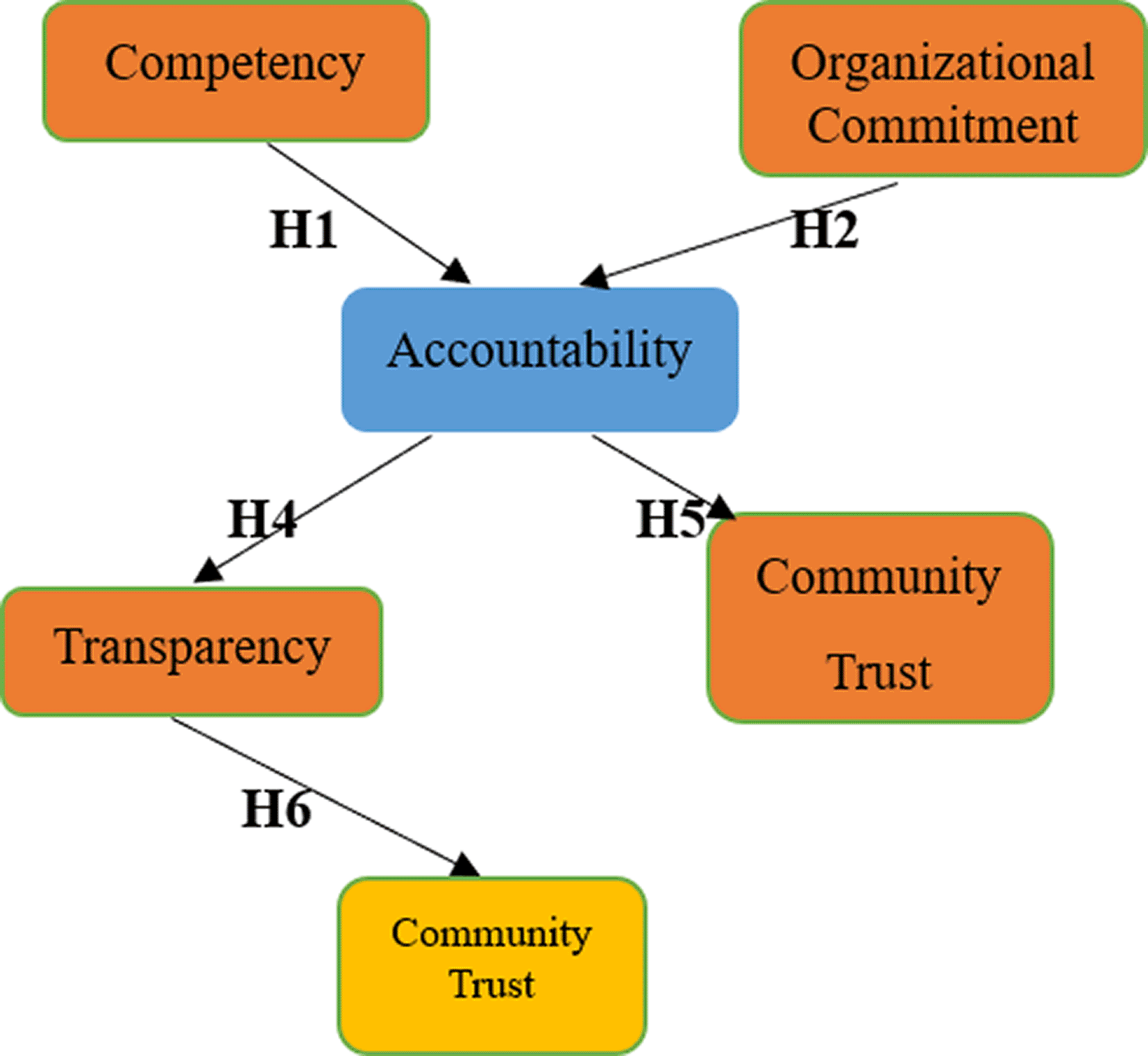
Source: Self-generated.
The population in this study consisted of municipal officials from various local municipalities from the KwaZulu Natal Province of South Africa. The South African Statistics Centre reports that the province of KwaZulu natal comprises 44 local municipalities. The optimal sample size is 28, as per the methodology established by Pasipamire and Muroyiwa (2024) for selecting sample sizes. The municipalities selected included Mtubatuba, Umdoni, Ndwedwe, and Mandeni, largely influenced by geographical factors. The local municipalities were also categorised by their developmental status as advanced, middle, or disadvantaged, based on the infrastructure and revenue.
Respondents were ordered into two groups, based on their roles and responsibilities within municipal governance structures. The first group comprised local municipality head, secretary, treasurer, and unit head were among the authorities who received the initial survey, which encompassed elements such as responsibility, proficiency, and commitment to the organisation. These respondents were selected because of their expert knowledge on governance processes. The second group consisted of members of the local municipality consultative councils who completed a survey on trust, transparency, and accountability. These respondents were chosen for their neutrality, as their independence would have been compromised if local official had been surveyed on both sets of constructs.
This study was framed under the positivist paradigm and employed a quantitative, cross-sectional survey design with hypothesis testing. This design was deemed appropriate because it enabled the collection of perception-based data from multiple participants groups at a single point in time, with correlational analysis done for constructs such as organisational commitment, trust, transparency, and accountability.
The survey data was collected over a period five months, from September 2023 to January 2024. 150 questionnaires were sent to members of local municipality consultative councils and 150 to local government officials throughout 150 localities. The selected respondents were approached at their workplaces, so assuring a high response rate. Upon the elimination of incomplete surveys, we retained a viable sample of 120 couples, constituting 65.65% of the population, sourced from 32 municipalities administrations.
A sample size of 128 was deemed enough for this investigation. The research instruments were derived from three sources: Fourie and Van der Waldt (2021) for organisational commitment, Al-Naser and Hamdan (2021) for municipal government personnel competency, and Paranata (2022) for transparency, accountability, and community trust. All components were included in the research questionnaire. The initial segment of the study examined demographic data and responder attributes concerning the educational qualifications and training of all municipality’s council and administration workers.
To ensure validity and reliability, we followed a rigours multi-stage. First, the survey instruments were reviewed by five senior survey researchers, whose feedback informed revisions to the wording, sequence, and structure of questions. Secondly, the questionnaire underwent a pilot test including 27 municipalities administrations in Mtubatuba municipalities to confirm clarity and content validity. We requested the pilot responders to complete the survey and provide their feedback. After data collection, we enhanced the questionnaire by modifying the phrasing, organisation, and sequence of questions according to their complexity.
Thirdly, the psychometric soundness of the final questionnaire was tested statistically, ensuring construct validity and internal reliability prior to hypothesis testing. Each survey item was converted into a sequence of statements. This enabled the utilisation of a five-point Likert scale, with 1 signifying strong disagreement and 5 indicating strong agreement, to assess all parameters. Gatekeeper permission were obtained from municipal authorities prior to data collection. Informed consent was obtained from all participants for the purpose of procedures and voluntary participation in the study. Anonymity was ensured with all data securely stored and reported in aggregate from only.
The analysis utilised Partial Least Squares (PLS), an appropriate method for this study owing to its minimal sample size requirements, low data assumptions and flexibility for research without robust theoretical foundations (Fosu and Hlungulu-Feketshane, 2025). Finally, ethical consideration was strictly observed. A minimum sample size of ten times the highest number of inner or outer model links aimed at any latent variable inside the model is necessary for partial least squares (PLS) analysis, as stated by Abbasov (2025). Due to organisational commitment being a latent variable with up to ten potential manifestations, Cifuentes-Faura et al. (2023) advises a minimum sample size of one hundred (10 x 10).
The indicators of the research variables were the emphasis of the questions in the latter section of the questionnaire. In accordance with the recommendations of Fosu and Hlungulu-Feketshane (2025), we sought the insights of five expert survey researchers prior to executing the field survey. We solicited their feedback on potential enhancements to the questionnaires. We amended the instructions, terminology, syntax, quantity of questions, and the length of each question in response to their input, so enhancing the questionnaire.
Table 1 presents the demographics of the sample and respondents, categorising each group based on their role, educational attainment, and participation in structured training. Table 1 presents the proportions of local municipality officials with bachelor’s degrees 581 (29.35%) and master’s degrees 33 (1.67%). Individuals possessing master’s and bachelor’s degrees are seeking employment inside the local municipality. Although these figures constitute a little fraction of the workforce, 999 individuals (50.48%) have attained merely a high school education, reflecting an enhancement compared to the conditions of the previous local municipality law period (Grawe et al., 2023). The demand for more educated and proficient local municipality personnel emerged due to modifications in legislation regarding local autonomy and governance.
To meet policy mandates regarding qualifications, local municipality administrations have employed recent college graduates and facilitated further education for current personnel at various institutions. The quantity of necessary training opportunities for local municipality personnel attained a flawless score of 100%. The choices encompassed subjects like information technology, budget management, financial reporting, and local municipality administration. Additionally, in various locations, one may encounter other supplementary classes. These findings indicate that initiatives are underway to enhance the administration and governance of the local municipality by elevating the competencies of its personnel (Gasela, 2022).
This study employed descriptive statistics to illustrate the present condition of managing the five aspects: competence, organisational commitment, accountability, transparency, and community trust. The data may have been influenced by common method variance (CMV) due to its self-reported nature. To ascertain the magnitude of this phenomenon, the Harmanone-factor test was conducted. According to Ismail et al. (2022), if a single latent variable accounts for over 50% of the explained variation, common method bias emerges as an issue. The first component represented just 18.15% of the variance, as indicated by the findings of the CMV test and the un-rotated component analysis. Consequently, the current investigation did not substantially concern itself with prevalent procedural bias. Notwithstanding assertions that this does not undermine the conclusions, other studies have indicated CMV rates ranging from 23 to 26%.
Moreover, Table 2 reveals that the mean values of the five variables demonstrate a good level, as they approximate a scale value of 4. The clarity variable has the greatest value of 3.79. It indicates that nearly all local municipalities in KwaZulu natal disseminate details regarding their duties, money, and accomplishments using diverse media, such as local municipalities websites, advertisements, and verbal communication at community gatherings.
| Construct | Minimum | Maximum | Mean | Std. deviation |
|---|---|---|---|---|
| Competency | 1.72 | 4.00 | 2.73 | 0.27 |
| Community trust | 1.58 | 4.00 | 2.86 | 0.39 |
| Accountability | 1.45 | 4.00 | 3.52 | 0.26 |
| Organisational Responsibility | 2.18 | 4.00 | 3.68 | 0.24 |
| Clarity | 1.27 | 4.00 | 3.79 | 0.52 |
The competency variable has a low average value, barely surpassing four on the rating system. We discovered that, in the present period, several individuals had undergraduate and graduate degrees in local municipality governance, either through official education or efforts to recruit. Notwithstanding extensive training, the average competency score of local municipality workers is just 2.73. The limited education of most local municipality officials, mostly at the senior and junior high school levels, suggests that the training programs have not effectively improved the competency of local municipality personnel.
These results should be an important priority for local municipality, lawmakers, and legislators in their efforts to improve the proficiency of local government personnel (Mamokhere et al., 2022). The research intends to investigate the stated theories. We evaluated the data with PLS. Despite the survey being piloted to guarantee robust outcomes, we reassessed the validity and reliability of the instrument prior to hypothesis testing. It sought to enhance the trust in the validity and reliability of the measures.
4.3.1 Construct validity
Construct validation seeks to evaluate the extent to which the outcomes derived from the measurement align with the theoretical frameworks for which the test was developed. Consequently, we examined the loading and the cross-loading scores, employing 0.5 as a heuristic standard. In the initial assessment, we discovered that many concept scores did not conform to the established guideline. Consequently, we eliminated the following: Comp1, Comp3, Comp4, Orgcom1, Orgcom2, Orgcom3, Orgcom4, Orgcom5, Acc1, Acc2, Acc5, Acc6, and Trust3. Subsequent to their removal, we re-evaluated the data. Table 3 indicates that all the other items associated with a specific construct had strong loadings for that construct and lower loadings for alternative constructs, hence affirming construct validity.
4.2.2 Convergent validity
Subsequently, we assessed convergent validity, which refers to the extent to which many items intended for assessing the same construct are in concordance. According to Hair et al. (2010), we employed factor loading and average variance extracted (AVE) for testing. According to Table 4, the load values for every component are above the suggested threshold of 0.5. Every single item had an AVE score that conformed to the established criterion of exceeding 0.5 (Fosu and Hlungulu-Feketshane, 2025).
4.2.3 Discriminatory validity
The discriminant validity of the measurements, defined as the extent to which elements distinguish across constructs or evaluate distinct notions, was evaluated by analysing the correlations among the metrics, which is of possibly overlapped constructs. According to Table 5, the correlation value of the construct with itself is superior than that of other constructs; thus, this criteria is also satisfied (Molina Rodríguez-Navas et al., 2021).
To evaluate the variability between each of our measuring items, we employed Cronbach’s alpha and combined reliability ratings. As observed in Table 6, all alpha scores above 0.6 as stipulated. Furthermore, the combined reliability values varied from 0.720 to 0.750. A combined reliability score of 0.70 or above is deemed satisfactory. Consequently, it was determined that the measurements provided were dependable.
| Construct | Evaluation goods | Cronbach’s alpha | Composite reliability | Loaded range | No of goods* |
|---|---|---|---|---|---|
| Competency | Comp2,comp5, comp6 | 0.645 | 0.747 | 0.648–0.799 | 3(6) |
| Accountability | Acc3, acc4 | 0.645 | 0.764 | 0.778–0.813 | 2(6) |
| Organisational commitment | Orgcom6,Orgcom7, Orgcom8,Orgcom9 | 0.646 | 0.725 | 0.574–0.735 | 4(10) |
| Clarity | Cla1, Cla2,Cla3 | 0.633 | 0.733 | 0.645–754 | 3 (3) |
| Community trust | Trust1, Trust2,Trust4, Trust5 | 0.687 | 0.752 | 0.698–0.760 | 4 (5) |
Table 7 offers the results of the hypothesis testing. It can be observed that three hypotheses, specifically H1, H2, and H6, have been confirmed with same degrees of significance.
| Hypotheses | Hypo | Coef. | P-values | Accepted |
|---|---|---|---|---|
| Competency – Accountability | H1 | 0.167 | 0.000* | Yes |
| Organisational commitment – accountability | H2 | 0.361 | 0.000* | Yes |
| Organisational accountability | H3 | −0.014 | 0.246 | No |
| Accountability- Clarity | H4 | 0.257 | No | |
| Accountability- community trust | H5 | 0.024 | 0.124 | No |
| Clarity- community trust | H6 | 0.241 | 0.000* | Yes |
This study indicates that the proficiency of local municipality personnel is a crucial factor that must be assessed when improving accountability. This outcome aligns with the perspective that educational and training initiatives aimed at raising the proficiency of local municipality personnel are crucial for improving accountability procedures, despite the fact that, on average, the competence of these staff members remains suboptimal. Most of local municipality officials possess education only up to the senior high school level, rather than holding degrees. This is consistent with the findings of Abioro (2021), who revealed that administrators in numerous communes in Vietnam, including those in mountainous and remote areas traditionally perceived as lacking capacity, can formulate sound plans and budget projections given adequate guidance and instruction.
The Ministry of Home Affairs, both central and local municipalities endeavour to enhance the proficiency of local municipality personnel by employing graduates (Abioro, 2021). This strategy seeks to enhance the number of personnel possessing the skills to administer communities efficiently. Furthermore, Table 1 reveals a positive trend of more individuals possessing bachelor’s and master’s degrees who are employed in local municipality administration. The results underscore the significance of recognising the competency of local municipality workers as essential. Since the implementation of independence for local municipalities in 2014, local municipalities are required to formulate plans for strategy, five-year midterm plans for growth, annual short-term work growth plans, programs, activities, tactics, and to uphold good governance practices, particularly concerning accountability and transparency (Mamokhere et al., 2022). The competency level of local municipality personnel must be enhanced to accomplish all these responsibilities.
This study affirms that staff organisational commitment is crucial for enhancing responsibility, corroborating the findings of Mamokhere et al. (2022). The substantial allocation of finance from the national government serves as an incentive for local municipality administrations. The central government mandates effective accountability in the use and disclosure of local finances to secure regular annual funding of local municipalities. These objectives motivate personnel dedicated to fulfilling the standards of local municipality fund accountability (Abioro, 2021). Nonetheless, the results of this research do not corroborate H3; specifically, the organisational commitment of staff is not linked to transparency, despite the fact that the transparency of local municipality exhibits the highest average value among the assessed characteristics ( Table 2). The results suggest that variables other than the commitment of local municipality personnel exert more effect on transparency procedures throughout the community.
As previously stated, this study employed “new” institutional theory, specifically about the process of isomorphic behaviour in governance policy; to elucidate its conclusions. From the perspective of isomorphism, local municipalities endeavour to enhance employee competency by implementing various training and educational programs, as well as establishing dedicated personnel to activate normative isomorphism mechanisms (Mamokhere et al., 2022). The policy’s fundamental direction will be attained, which is advantageous. This accomplishment is underpinned by accountability, which is influenced by the proficiency and the commitment of local municipality personnel. This may also indicate why the majority of local municipality administrations in the KwaZulu Natal Province exhibit strong accountability ( Table 2). Consequently, it may be inferred that normative isomorphism procedures have effectively facilitated the formalisation of accountability within local municipality administrations.
This study further revealed that responsibility was not correlated with transparency (H4). This finding contrasts with Abioro (2021), which indicated that the separation afforded to Tanzanian local municipalities, specifically regarding the collecting of natural taxes, has enhanced transparency in public finances by mandating that local municipalities record their income and expenditures for the benefit of residents (accountability). This study indicates that the transparency level of local municipality administration was substantial, with an average score of 4.35 ( Table 2). We contend that transparency in South African local municipality may be influenced by factors other than staff commitment and accountability, such as the significant pressure exerted by rules and external entities, including the local municipality community and higher-level governmental bodies, such as central or the region governments. Numerous previous research has revealed that the adoption of novel public administration strategies by lower-level governments is influenced by influence from higher-level government bodies.
This assumption signifies the necessity for more investigation. This study indicated that accountability was not correlated with community trust (H5). This outcome contradicts Krah and Mertens (2023), who discovered that leader responsibility within the framework of local municipality self-governance in China might enhance community support and confidence. This discrepancy with several prior studies constitutes a research gap warranting exploration in future investigations. The present analysis validates that transparency is favourably correlated with community trust (H6). This discovery reinforces the significance of using stakeholder theory inside the public sector. This aligns with the findings of Sofyani et al. (2022), who identified openness as a means to foster community trust. Kraai et al. (2023) identified a pronounced emphasis on enhancing transparency within the public sector at the institutional level as a strategy to bolster public confidence.
Consequently, they contend that improving transparency is a means to bolster trust between citizens and the public sector. Transparency in local municipality administrations is established via the provision of organised and precise financial information, schemes, operations, and performance, while actively engaging the local population in all local municipality initiatives. Zindi (2024) assert that notable instances of public confidence augmentation via transparency include the extensive implementation of freedom of information statutes and publicly accessible metrics and rankings concerning the functioning of public entities. It is important to recognise that complete openness may not always be advantageous in some situations. Msenge and Nzewi (2021) discovered in their experimental research that transparency may lead to suboptimal decision-making or undermine the confidence in institutions when the making of public choices is perceived as irrational or when decisions appear not to adhere to universally applicable principles. Total transparency may compromise the efficacy of actions, particularly when a choice results in increased property prices to address market price volatility, such as the clearance of land for a particular construction project. Consequently, the degree of openness in local municipality administrations warrants consideration, and this matter may provide a basis for further studies.
This study demonstrates that the competency and the organisational commitment of local municipality workers correlate with responsibility. Nonetheless, organisational commitment is not correlated with transparency. This study found that local municipality community trust is positively correlated with clarity, but not with accountability. Given the sparse research and literature on local municipality, our study findings provide insights specifically about critical aspects that enhance accountability practices and community trust. These data show a significant impact. To enhance accountability, the local municipality administration must continuously engage personnel who are really proficient and dedicated to accountability. This method may be executed by adequately educating personnel and facilitating their pursuit of higher education at the university level. Local municipalities are advised to uphold optimal openness by granting access to crucial information concerning programs, budgeting, and local municipality efficiency, hence enhancing community confidence.
This work theoretically advances the discourse on “new” institutional theory, particularly with institutional isomorphic behaviour in governance processes within local municipalities. This study clearly revealed that competency and commitment, as measures of normative isomorphic relationships are positively correlated with local municipality accountability. The study further elaborates on stakeholder theory in the public sector, particularly elucidating the connection between transparency and community trust. Notwithstanding these significant achievements, this study possesses a drawback. The study was only carried out in the local municipality administrations of a single province in South Africa, specifically the KwaZulu natal province.
The finding of this study shows that while accountability is strengthened by organisational competence and commitment, it is transparency that most strongly predicts public trust in local government.
Based on this, it is recommended that municipalities prioritise building transparent systems of communication and disclosure, alongside targeted capacity-building programs to strengthen accountability. These recommendations are directly informed by the observed relationships between variables in the current study. However, several limitations should be acknowledged. The study is observational and cross-sectional in nature, which restricts to ability to make causal inferences. Furthermore, reliance on self-reported data raises the possibility of response bias, despite measures taken to minimise common method variance. The geographic scope, being limited to municipalities within KwaZulu, may also limit generalisability to other regions. Future research should therefore adapt longitudinal, and intervention designs to assess the long-term and causal impacts of transparency and accountability initiatives on trust. Expanding studies to long-term and causal impacts of transparency and accountability initiatives on trust. Expanding studies to other provinces and comparative contexts would also strengthen external validity and deepen insights into how government practice shape community trust diverse contexts.
The study was conducted in adherence to the ethical principles outlined in the Declaration of Helsinki for research on secondary data. Ethical approval to conduct the study was obtained from Mangosuthu University of Technology, Institutional Ethical Committee on January 19, 2025, with Reference number REF: MSci/02/2025. Written informed consent was obtained from each participant, ensuring their understanding and voluntary agreement to partake in the research.
| Views | Downloads | |
|---|---|---|
| F1000Research | - | - |
|
PubMed Central
Data from PMC are received and updated monthly.
|
- | - |
Provide sufficient details of any financial or non-financial competing interests to enable users to assess whether your comments might lead a reasonable person to question your impartiality. Consider the following examples, but note that this is not an exhaustive list:
Sign up for content alerts and receive a weekly or monthly email with all newly published articles
Already registered? Sign in
The email address should be the one you originally registered with F1000.
You registered with F1000 via Google, so we cannot reset your password.
To sign in, please click here.
If you still need help with your Google account password, please click here.
You registered with F1000 via Facebook, so we cannot reset your password.
To sign in, please click here.
If you still need help with your Facebook account password, please click here.
If your email address is registered with us, we will email you instructions to reset your password.
If you think you should have received this email but it has not arrived, please check your spam filters and/or contact for further assistance.

Comments on this article Comments (0)