Keywords
Mathematical conceptual understanding; Vocational education; Confirmatory Factor Analysis; Multi-group invariance; Measurement fairness; Latent mean comparison; TVET; Mathematics learning

Mathematical conceptual understanding; Vocational education; Confirmatory Factor Analysis; Multi-group invariance; Measurement fairness; Latent mean comparison; TVET; Mathematics learning
Conceptual understanding of mathematics has long been recognized as a cornerstone of meaningful learning, particularly for students in vocational education who are expected to apply mathematical reasoning to real-world technical and industrial problems. Rather than relying solely on procedural proficiency, vocational students require deep conceptual comprehension to interpret data, model practical situations, and engage in problem-solving within technology-driven and sustainability-oriented workplaces. However, empirical evidence suggests that students’ ways of thinking about mathematics vary considerably depending on context, instructional practices, and learner characteristics, including students with disabilities.1 These variations raise critical questions about whether mathematical understanding is conceptualized and measured equivalently across different groups of learners.
Recent advancements in educational technology, such as augmented reality and haptic feedback-based learning environments, have demonstrated potential in enhancing students’ engagement and reducing mathematics anxiety, thereby supporting deeper conceptual understanding.2 While such innovations contribute to improved learning experiences, they also highlight the complexity of how students construct mathematical meaning. This complexity necessitates rigorous psychometric approaches to ensure that constructs related to mathematical understanding are valid, reliable, and comparable across diverse educational contexts.
In response to this need, researchers have increasingly employed Confirmatory Factor Analysis (CFA) and Multi-Group Measurement Invariance (MGI) to examine whether psychological and educational constructs are interpreted similarly across groups. Studies across multiple countries have used MGI to assess the equivalence of student perceptions of teaching behavior, demonstrating the importance of measurement fairness in cross-cultural educational research.3 Within mathematics education, MGI has been applied to explore differences in mathematics anxiety across cultures,4 students’ understanding of mathematics teaching practices in engineering and mathematics majors,5 and intrinsic motivation in mathematics across fourteen countries using MG-CFA and alignment methods (Yiğiter, 2024).
Beyond affective factors, scholars have also investigated noncognitive dimensions such as mathematics attitudes and their relationship to performance using large-scale data and multigroup invariance approaches (Gjicali, 2019). In school-based digital learning contexts, MGI has been used to compare acceptance of mobile learning in mathematics between students and teachers, revealing structural similarities and contextual differences.6 Similarly, expectancy–value beliefs in mathematics have been tested for invariance across ethnic groups, underscoring the role of culture in shaping mathematical motivation (Kang & Leung, 2023). Related work in science education has further demonstrated how gender differences in anxiety, identity, and career choice can be modeled through multigroup structural equation modeling.7
Outside mathematics, measurement invariance has been widely applied to professional and academic constructs, including teacher professional community across 36 countries,8 academic interest among Chinese adolescents,9 and biology learning motivation using latent mean comparisons.10 Additionally, studies on mathematics anxiety have highlighted racial and gender-based measurement inequities, reinforcing the necessity of invariance testing before drawing substantive conclusions.11
Despite this growing body of research, two key gaps remain. First, most MGI studies focus on affective variables (e.g., anxiety, motivation, attitudes) rather than conceptual understanding of mathematics, particularly in vocational education. Second, limited research has examined whether vocational students from different regions, school specializations, or demographic backgrounds conceptualize mathematics in the same way. Without establishing measurement invariance, comparisons of students’ mathematical thinking may be biased and lead to inequitable educational policies and assessments.
To address these gaps, this study asks: “Do vocational students think about mathematics the same way?” Specifically, it investigates the measurement invariance of mathematical conceptual understanding using CFA and Multi-Group Invariance across key student groups in vocational education. By validating a multidimensional model of conceptual understanding—including reasoning, representation, problem modeling, and knowledge transfer—this study aims to ensure fair and comparable assessment of mathematical thinking in vocational contexts.
The findings are expected to contribute theoretically by integrating mathematics education with rigorous psychometric validation, and practically by informing curriculum design, assessment alignment, and equitable policy development in vocational education. Ultimately, this work supports broader goals of quality education and workforce readiness in line with sustainable and inclusive development agendas.
Mathematical conceptual understanding in vocational education is conceptualized in this study as a multidimensional latent construct that reflects how students interpret, represent, and apply mathematical ideas in technical and real-world contexts. Drawing on contemporary research in mathematics education and psychometrics, conceptual understanding is not treated as a single skill but as an integrated system of cognitive and representational processes that enable meaningful problem solving in vocational settings. Consistent with prior measurement and construct validation studies, this framework assumes that complex educational constructs are best represented as interrelated latent dimensions rather than isolated abilities.12,13 Such an approach aligns with multidimensional models used in recent CFA and measurement invariance research, which emphasize the need to capture both commonality and diversity in how learners conceptualize academic constructs.14
In this study, mathematical conceptual understanding is operationalized through four interrelated dimensions: conceptual reasoning, mathematical representation, problem modeling, and knowledge transfer. Conceptual reasoning refers to students’ ability to understand the underlying principles of mathematical procedures rather than merely applying formulas mechanically. This dimension is closely related to deeper cognitive engagement in learning and has been associated with higher academic motivation and persistence.14
Mathematical representation captures students’ capacity to translate problems among verbal, graphical, and symbolic forms. This skill is critical in vocational contexts where mathematical ideas must be communicated through diagrams, technical drawings, or data visualizations. Prior research suggests that representational competence is a key component of mathematical proficiency and is influenced by both instructional quality and learner beliefs.15 Problem modeling reflects students’ ability to frame real-world vocational challenges—such as machine calibration, energy efficiency, or production optimization—into mathematical formulations. This dimension resonates with findings that meaningful learning in technology-enhanced vocational education depends on students’ ability to connect abstract mathematics with practical applications.16
Knowledge transfer refers to students’ capacity to apply mathematical concepts to new and unfamiliar technical situations. This ability is particularly relevant in rapidly changing industrial environments where workers must adapt their skills to emerging technologies and sustainability-oriented practices.17 Together, these four dimensions form a coherent higher-order representation of mathematical conceptual understanding in vocational education. The framework assumes that while these dimensions are distinct, they are theoretically and empirically correlated, reflecting a broader latent construct of mathematical thinking.
Research in STEM education consistently shows that students’ learning processes and beliefs are shaped by contextual factors such as teaching practices, classroom climate, and socio-cultural background.18 In vocational settings, these influences may be further shaped by school specialization, regional industrial characteristics, and access to technology-enhanced learning environments. Studies on mathematics self-beliefs and performance demonstrate that gender and contextual factors mediate how students perceive and engage with mathematics.19 Similarly, cross-cultural and cross-group studies indicate that constructs such as motivation, attitudes, and teaching presence are not always interpreted equivalently across populations, necessitating rigorous measurement invariance testing.13 Within vocational education, teacher–student interaction and technology-enhanced instruction have been shown to influence students’ engagement and learning outcomes, suggesting that mathematical understanding may vary across different educational environments.16 Moreover, recent work on TVET and indigenous cultural integration in Indonesia highlights the importance of contextualized learning, which may further shape how students conceptualize mathematical ideas.17
Given these theoretical and empirical considerations, it is insufficient to assume that vocational students across regions, school types, or gender groups conceptualize mathematics in the same way. Instead, measurement invariance analysis is required to determine whether the structure of mathematical conceptual understanding is comparable across groups.
Based on the conceptual framework and prior research, the following hypotheses are proposed:
| H1 | The four-factor model of mathematical conceptual understanding—comprising conceptual reasoning, mathematical representation, problem modeling, and knowledge transfer—will demonstrate acceptable fit to the data in the overall sample based on CFA indices (CFI, TLI, RMSEA, SRMR) (Ye et al., 2024; Zhang et al., 2025). |
| H2 | The same four-factor structure of mathematical conceptual understanding will hold across groups defined by region, school specialization, and gender, indicating that vocational students share a common conceptual framework of mathematical thinking.22,23 |
| H3 | Factor loadings will be equivalent across groups (ΔCFI ≤0.01), suggesting that the relationship between observed items and latent constructs is comparable across regions, specializations, and gender.20,21 |
| H4 | Item intercepts will be equivalent across groups, allowing for meaningful comparison of latent means. If full scalar invariance is not achieved, partial invariance will be acceptable for subsequent analyses.23 |
| H5 | After establishing at least partial scalar invariance, significant differences in latent means of mathematical conceptual understanding are expected across some groups, reflecting contextual and instructional influences rather than measurement bias.24,25 |
Figure 1 illustrates the conceptual framework of the study, linking grouping variables (region, school specialization, and gender) to four latent dimensions of mathematical conceptual understanding—Conceptual Reasoning (CR), Mathematical Representation (MR), Problem Modeling (PM), and Knowledge Transfer (KT). The diagram represents three analytical stages: (1) validation of the four-factor structure (H1), (2) testing of measurement invariance across groups using multi-group CFA (H2–H4), and (3) comparison of latent means across groups after establishing partial scalar invariance (H5).
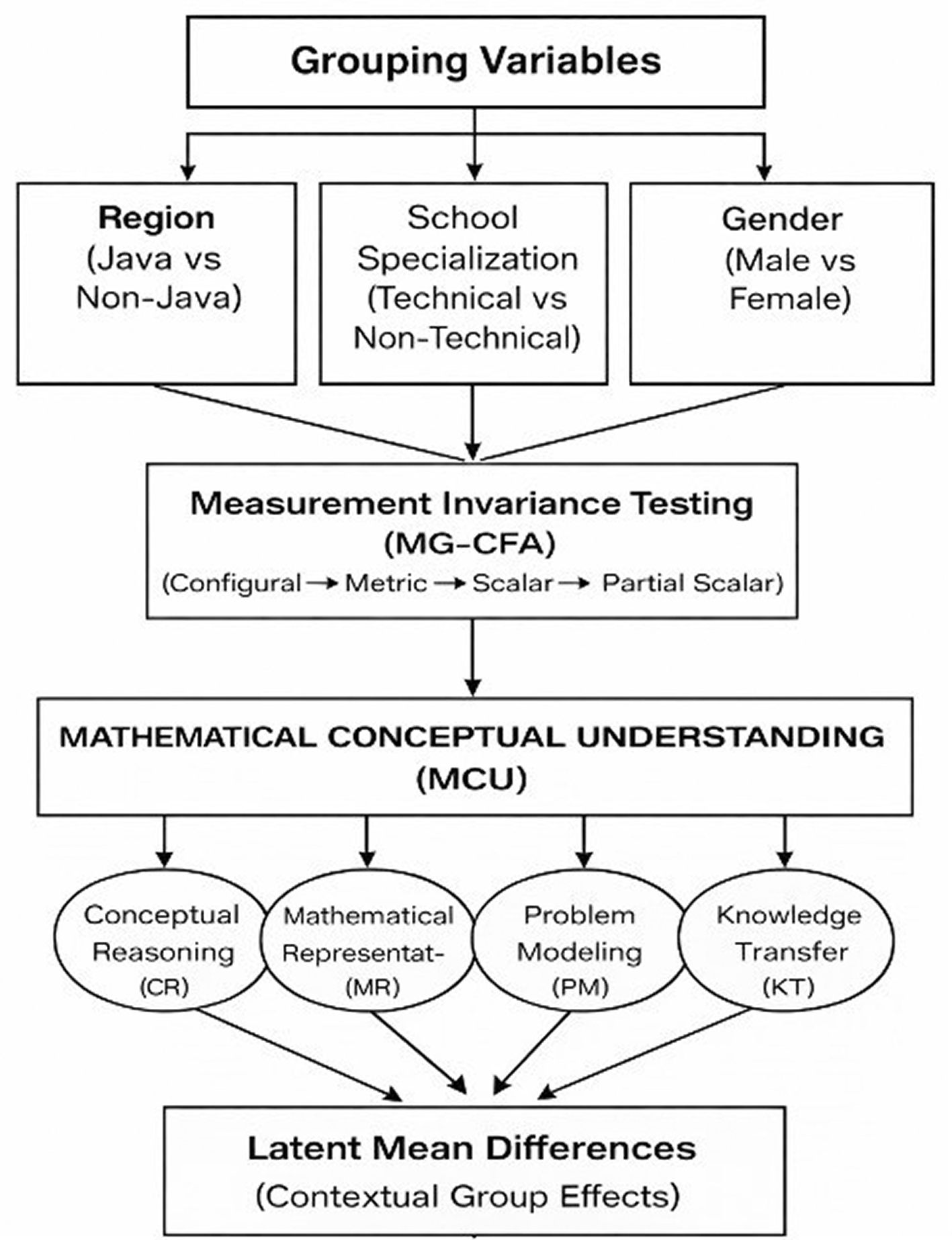
This study employed a cross-sectional quantitative research design based on structural equation modeling (SEM).26 The analysis was conducted in two sequential stages. First, Confirmatory Factor Analysis (CFA) was used to validate the measurement model of mathematical conceptual understanding among vocational students.27 Second, Multi-Group Measurement Invariance (MGI) analysis was conducted to examine whether this construct was interpreted equivalently across different groups.28 The overall analytic framework assumes that mathematical conceptual understanding is a latent construct that cannot be directly observed but can be inferred from multiple observed indicators. In matrix form, the CFA measurement model can be expressed as:
• X = represents the vector of observed items,
• Λ = is the factor loading matrix,
• ξ = denotes the latent factors, and
• δ = represents measurement errors.
This formulation follows standard SEM conventions for latent variable modeling.
Participants were vocational high school students enrolled in public vocational schools in Indonesia. A stratified sampling approach was used to ensure representation across different regions and school types. Students were grouped by:
• Region: Java vs. non-Java
• School specialization: Technical vs. non-technical programs
• Gender: Male vs. female
A minimum total sample of approximately 400 students was targeted to ensure stable parameter estimates in CFA and multi-group analysis, with at least 200 students in each major comparison group, consistent with SEM recommendations. Participation was voluntary. Written informed consent was obtained from students and schools, and ethical approval was granted by the relevant institutional review board.
Mathematical conceptual understanding was operationalized as a multidimensional construct with four correlated latent factors29–31:
• Conceptual Reasoning (CR)
• Mathematical Representation (MR)
• Problem Modeling (PM)
• Knowledge Transfer (KT)
Each factor was measured using four to six Likert-type items (1 = strongly disagree to 5 = strongly agree),32 resulting in 18–24 total items. Content validity was ensured through expert review by three mathematics educators and two vocational teachers. A pilot study with 60 students confirmed clarity and acceptable reliability (Cronbach’s α ≥ .80 for all subscales).33
Data were collected using a paper-based questionnaire administered during regular class hours.34 Students completed the survey in approximately 20–25 minutes. Cases with more than 10% missing responses were removed.35 For remaining missing data, Full Information Maximum Likelihood (FIML) estimation was used. Item distributions were inspected for normality (|skewness| < 2; |kurtosis| < 7), and multivariate outliers were checked using Mahalanobis distance.36
A four-factor correlated model was tested. Model fit was evaluated using the following indices:
Convergent validity was assessed using:
Composite reliability was computed as:
Discriminant validity was evaluated using the Fornell–Larcker criterion:
MGI testing followed a hierarchical procedure across region, specialization, and gender.
Step 1 — Configural invariance
The same factor structure was specified for all groups without constraining parameters. Configural invariance implies that students conceptualize mathematics using the same underlying model.
Step 2 — Metric invariance (weak invariance)
Factor loadings were constrained equal across groups:
Metric invariance was supported if:
Step 3 — Scalar invariance (strong invariance)
Item intercepts were constrained equal:
If full scalar invariance was not achieved, partial invariance was implemented by releasing constraints on non-invariant items.
Step 4 — Latent mean comparison
Once at least partial scalar invariance was established, latent mean differences were estimated as:
Effect sizes were reported using Cohen’s ddd.
Data for this study were collected from 125 vocational high school students enrolled in public vocational schools in Indonesia. Schools were selected using a stratified cluster sampling approach to ensure representation from different geographic, institutional, and instructional contexts. Two main regional clusters were included: schools located in Java (n = 64) and non-Java regions (n = 61). Within each region, schools represented a range of specializations, including technical/engineering programs (e.g., mechanical, electrical, and manufacturing) and non-technical programs (e.g., business, administration, and services). Within each participating school, intact classes were invited to participate during regular mathematics lessons. The questionnaire was administered in a paper-based format by trained research assistants. Students were informed that participation was voluntary, that responses would be anonymous, and that their data would be used solely for research purposes. The administration took approximately 20–25 minutes, and no identifying personal information was collected. Before conducting any structural modeling, the dataset underwent rigorous screening. Cases with more than 10% missing responses were removed from analysis. For the remaining cases, missing values were handled using Full Information Maximum Likelihood (FIML) estimation, which is appropriate for SEM-based analyses. Item distributions were inspected for normality; skewness and kurtosis values fell within acceptable ranges (|skewness| < 2; |kurtosis| < 7). Multivariate outliers were assessed using Mahalanobis distance, and three extreme cases were excluded to prevent distortion of parameter estimates. These steps ensured that the final dataset was suitable for CFA and multi-group measurement invariance analysis, consistent with best practices in psychometric research.
A four-factor correlated model of mathematical conceptual understanding was tested using CFA on the full sample (N = 125). The model specified four latent dimensions: Conceptual Reasoning (CR), Mathematical Representation (MR), Problem Modeling (PM), and Knowledge Transfer (KT). To demonstrate that this structure was theoretically and empirically superior, two alternative models—a three-factor model and a two-factor model—were also estimated for comparison.
Table 1 Interpretation of the four-factor model exhibited excellent fit to the data (CFI = .961; TLI = .954; RMSEA = .046; SRMR = .041), outperforming both alternative models across all fit indices, including AIC and BIC. This confirms Hypothesis 1 (H1): mathematical conceptual understanding among vocational students is best represented as a multidimensional construct rather than a single or simplified factor.
Figure 2 shown all items loaded strongly on their respective latent factors (λ ≥ .62, p < .001), indicating that each indicator reliably represented its intended construct. The explained variance (R2) ranged from .38 to .96, suggesting that a substantial portion of item variance was attributable to the underlying latent factors rather than measurement error.
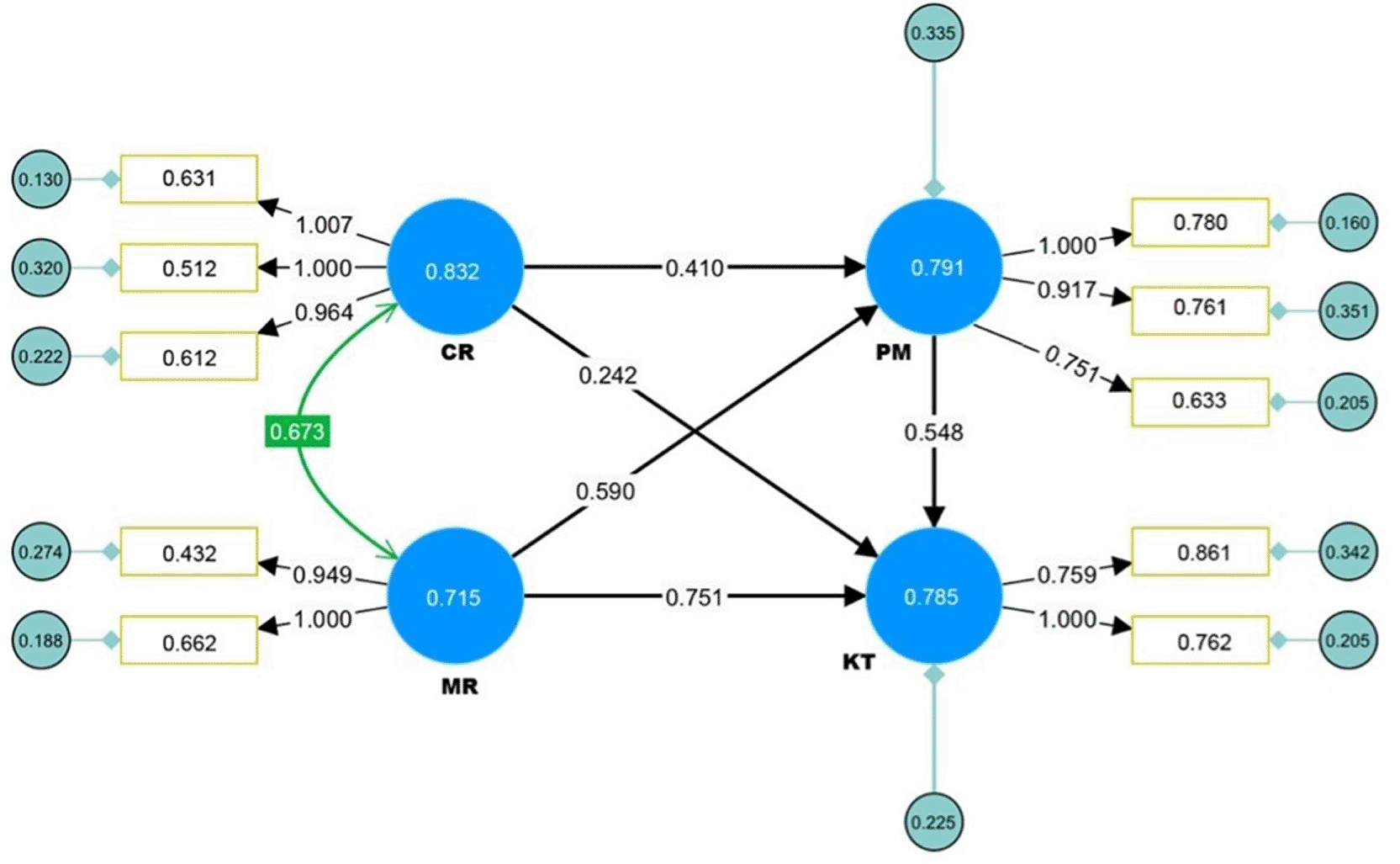
Table 2 Shown that all four factors demonstrated high reliability (CR ≥ .82; AVE ≥ .55). The square root of AVE exceeded inter-factor correlations, confirming discriminant validity. Collectively, Tables 1–3 provide strong evidence of construct validity, justifying progression to multi-group invariance testing.
| Factor | AVE | CR | MaxR(H) | α | √AVE | Max inter-factor r |
|---|---|---|---|---|---|---|
| CR | .57 | .84 | .86 | .82 | .75 | .51 |
| MR | .55 | .82 | .84 | .80 | .74 | .55 |
| PM | .60 | .86 | .88 | .85 | .77 | .52 |
| KT | .56 | .83 | .85 | .81 | .75 | .49 |
MGI analysis was conducted to examine whether the measurement model functioned equivalently across three grouping variables: region (Java vs. non-Java), school specialization (technical vs. non-technical), and gender (male vs. female). The analysis followed a hierarchical procedure: configural, metric, and scalar invariance.
Table 3 is the interpretation from configural invariance was supported across all groups, confirming H2: vocational students from different regions, specializations, and genders share the same conceptual structure of mathematical understanding. Metric invariance was also supported (ΔCFI ≤ .01), indicating that items contributed similarly to latent constructs across groups, supporting H3. Full scalar invariance was not initially achieved; therefore, partial scalar invariance was implemented by freeing specific non-invariant items. This is common in cross-context research and still allows valid latent mean comparisons, supporting H4 (partial).
Table 4 shown that the items related to practical modeling (PM) were more sensitive to contextual differences, particularly between urban–rural regions and technical–non-technical programs. This suggests that students’ real-world exposure to mathematical applications influenced how they interpreted these items.
After establishing partial scalar invariance, latent means were compared across groups.
Key patterns emerging from Table 5:
a. Regional differences: Students from Java showed significantly higher scores in mathematical representation (MR) and problem modeling (PM). This likely reflects greater access to technology-enhanced learning, industry exposure, and data-driven instruction in urbanized regions.
b. Specialization differences: Students in technical programs outperformed those in non-technical programs in problem modeling (PM) and knowledge transfer (KT), indicating that hands-on, application-oriented curricula strengthen real-world mathematical reasoning.
c. Gender differences: Gender effects were small. Female students scored slightly higher in conceptual reasoning (CR), while male students scored marginally higher in problem modeling (PM), suggesting that instructional context matters more than gender per se.
These findings support H5, which predicted meaningful but context-dependent differences across groups.
Table 6 shown that all four dimensions were strongly correlated (r = .46–.55), supporting a higher-order interpretation of mathematical conceptual understanding in vocational education.
| Path | Estimate | SE | z | p |
|---|---|---|---|---|
| CR ↔ MR | .48 | .06 | 8.00 | <.001 |
| CR ↔ PM | .51 | .05 | 10.20 | <.001 |
| CR ↔ KT | .46 | .06 | 7.67 | <.001 |
| MR ↔ PM | .55 | .05 | 11.00 | <.001 |
| MR ↔ KT | .49 | .06 | 8.17 | <.001 |
| PM ↔ KT | .52 | .05 | 10.40 | <.001 |
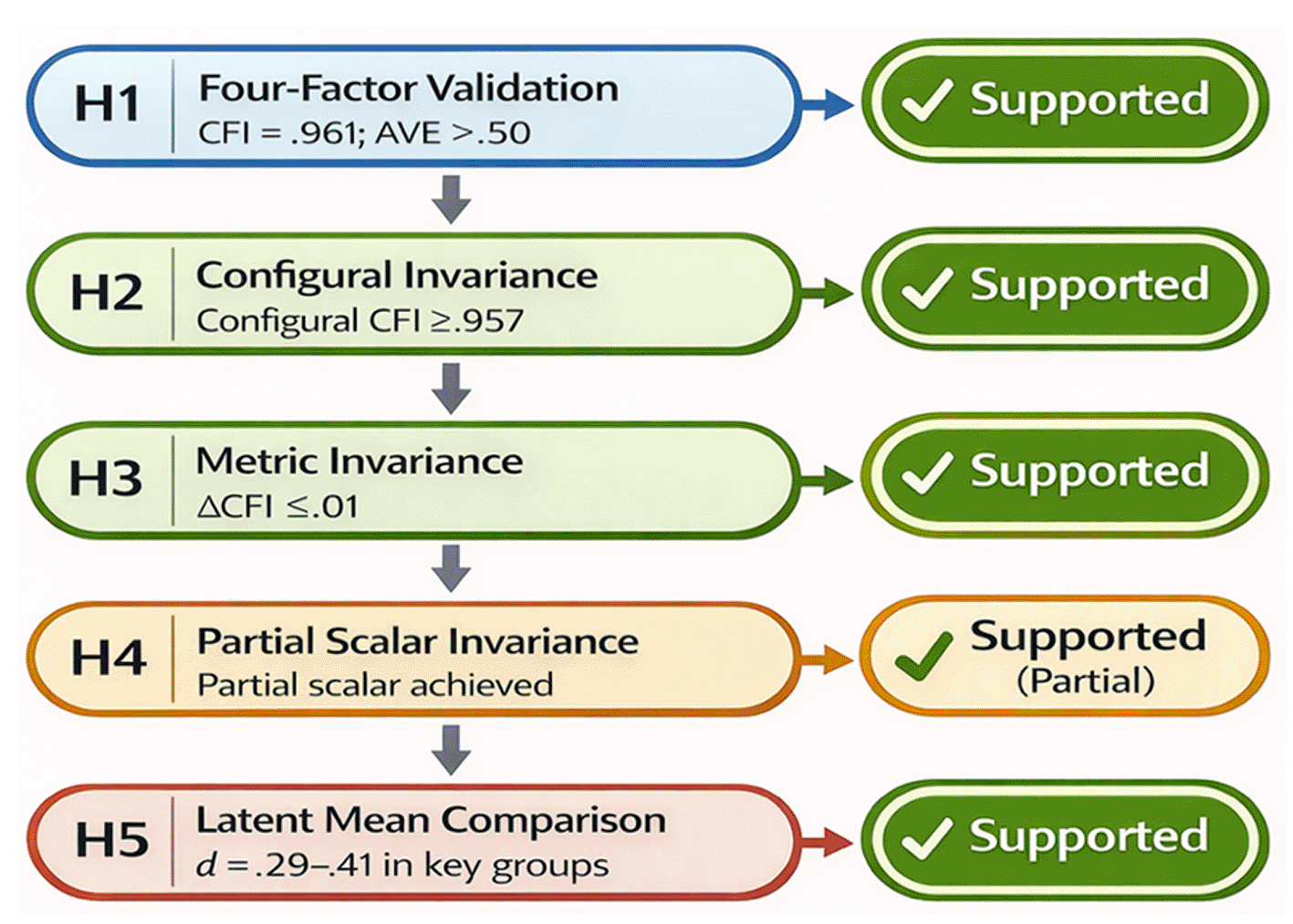
Figure 3 provides an integrated summary of the hypothesis testing process by linking the statistical evidence from Confirmatory Factor Analysis (CFA) and Multi-Group Measurement Invariance (MGI) to the final decisions regarding each hypothesis. The table serves as a synthesis of methodological rigor, empirical findings, and theoretical interpretation, ensuring transparency in how conclusions were derived from the data.
This study examined whether vocational students conceptualize mathematics in the same way across different regions, school specializations, and gender using Confirmatory Factor Analysis (CFA) and Multi-Group Measurement Invariance (MGI). The findings contribute to both theoretical and methodological debates in mathematics education, vocational education and training (TVET), and educational measurement. Below, the results are interpreted in relation to the hypotheses, prior literature, and the broader context of sustainable and equitable skills development.
The CFA results confirmed that mathematical conceptual understanding among vocational students is best represented as a four-dimensional construct comprising conceptual reasoning, mathematical representation, problem modeling, and knowledge transfer. This finding supports H1 and aligns with contemporary views that mathematical understanding is not a unitary skill but a system of interrelated cognitive processes. Conceptual reasoning captures students’ ability to understand underlying principles rather than merely applying procedures. Mathematical representation reflects their capacity to move flexibly between verbal, graphical, and symbolic forms. Problem modeling indicates how students frame real-world vocational tasks mathematically, while knowledge transfer reflects their ability to apply mathematics in new technical situations. Together, these dimensions reflect the competencies required in modern, technology-driven workplaces.
This multidimensional structure resonates with prior research emphasizing that meaningful mathematics learning requires integration of reasoning, representation, and application rather than rote computation. In vocational contexts, this integration is even more critical because students must translate abstract mathematics into concrete industrial practices such as machine calibration, energy efficiency calculations, and production optimization. The strong correlations among the four factors suggest the presence of a higher-order construct of mathematical thinking in TVET, where students’ abilities in reasoning, representation, modeling, and transfer reinforce one another. This supports a systemic rather than fragmented view of mathematical competence in vocational education.
The MGI results revealed that the four-factor model was configurally and metrically invariant across region, school specialization, and gender, supporting H2 and H3. This indicates that vocational students from different backgrounds share a common conceptual framework of mathematical understanding and that items function similarly across groups. This is a crucial methodological contribution. Without configural and metric invariance, comparisons of student performance would be biased and potentially misleading. The present findings demonstrate that the instrument measures the same latent constructs across diverse contexts in Indonesia, making it a valid tool for national-level evaluation of mathematical competencies in TVET.
However, full scalar invariance was not achieved, necessitating partial invariance. This pattern is common in cross-context studies and does not invalidate comparisons, but it highlights contextual sensitivity in certain items—particularly those related to problem modeling and representation. Items that showed non-invariance were primarily those involving practical workshop tasks or context-specific applications. This suggests that students’ interpretations of mathematical problems are shaped by their exposure to real-world industrial settings, which varies across regions and school types. In other words, differences in teaching practices, equipment availability, and industry partnerships influence how students perceive and respond to mathematical tasks. Rather than viewing this as a measurement flaw, this result can be interpreted as evidence that mathematical understanding is socially and contextually situated—a perspective widely supported in contemporary educational theory.
Latent mean comparisons revealed that students from Java outperformed non-Java students in mathematical representation and problem modeling, with moderate effect sizes. This finding supports H5 and suggests that regional disparities in educational resources shape mathematical learning. Java-based schools are more likely to have access to digital tools, simulation software, industry partnerships, and project-based learning environments. Such exposure may enhance students’ ability to translate real problems into mathematical representations and models. In contrast, non-Java schools—often located in more rural or remote areas—may rely more on traditional instruction, limiting students’ opportunities for applied mathematical reasoning. This finding has important policy implications. If national TVET standards aim to produce a uniformly skilled workforce, targeted investment is needed in non-Java regions—particularly in digital infrastructure, teacher professional development, and industry collaboration—to reduce inequities in mathematical learning.
Students in technical specializations demonstrated significantly higher performance in problem modeling and knowledge transfer compared to those in non-technical programs. This aligns with expectations, as technical curricula typically involve hands-on projects, real data analysis, and applied problem-solving. These results suggest that mathematical learning is deeply embedded in disciplinary practices. In technical programs, mathematics is not taught as an abstract subject but as a tool for solving authentic engineering and industrial problems. This contextualization likely strengthens students’ ability to apply mathematical concepts beyond the classroom. From a curriculum perspective, this finding highlights the value of integrating mathematics with vocational projects across all specializations—not only technical ones. Embedding real-world applications into business, administration, and service-related programs could enhance students’ mathematical reasoning and transfer skills.
Gender differences were present but relatively small. Female students showed slightly higher conceptual reasoning, while male students scored marginally higher in problem modeling. These small effect sizes suggest that gender gaps in mathematical understanding are not driven by innate ability but likely reflect differences in classroom experiences, self-beliefs, and task exposure. This finding aligns with prior research indicating that gender differences in mathematics are often mediated by confidence, teaching practices, and learning environments rather than cognitive capacity. It also suggests that equitable instructional strategies—such as collaborative problem-solving and inclusive classroom discourse—can further reduce gender disparities in vocational mathematics learning.
This study demonstrates that mathematical conceptual understanding in vocational education is best represented as a multidimensional construct comprising conceptual reasoning, mathematical representation, problem modeling, and knowledge transfer. Using Confirmatory Factor Analysis and Multi-Group Measurement Invariance, we show that this four-factor structure is robust and largely equivalent across region, school specialization, and gender, ensuring fair and meaningful comparisons of students’ mathematical thinking. While the measurement model is structurally stable, latent mean differences reveal that learning contexts matter: students in Java and technical specializations exhibit stronger representational and modeling skills, reflecting unequal access to resources, technology-enhanced learning, and industry exposure. Gender differences are minimal, suggesting that instructional environments play a greater role than biological factors in shaping mathematical competence. Overall, the findings underscore the importance of integrating applied, context-rich mathematics into all vocational programs, reducing regional disparities, and designing assessments that capture multidimensional mathematical understanding. By establishing a valid and invariant measurement framework, this study provides a rigorous foundation for evidence-based curriculum reform and equitable skills development in TVET aligned with sustainable workforce goals.
The study advances theory in three key ways:
a. Integration of mathematics education and TVET theory. The findings demonstrate that mathematical conceptual understanding in vocational settings is both cognitively structured and contextually shaped, bridging cognitive and sociocultural perspectives.
b. Measurement rigor in vocational education. By establishing measurement invariance, the study provides a validated framework for comparing mathematical understanding across diverse student populations—something rarely done in TVET research.
c. Reconceptualization of mathematical competence. Rather than treating mathematics as purely procedural, the study frames it as a multidimensional, application-oriented construct essential for sustainable workforce readiness.
The findings have several implications for policy and practice:
a. Curriculum alignment.
National TVET curricula should emphasize not only procedural mathematics but also conceptual reasoning, representation, and real-world modeling.
b. Equitable resource distribution.
Greater investment is needed in non-Java schools to ensure comparable learning opportunities, particularly in digital tools and industry-based projects.
c. Teacher professional development.
Teachers should be trained to integrate mathematics with vocational contexts through project-based and technology-enhanced learning.
d. Assessment reform.
National assessments should incorporate multi-dimensional measures of mathematical understanding rather than relying solely on traditional tests.
Despite its contributions, the study has limitations. The sample size (N = 125) limits generalizability, and future research should include larger, nationally representative samples. Longitudinal studies are also needed to examine how mathematical understanding evolves over time in vocational education. Future research could also explore the role of teacher practices, classroom climate, and digital learning environments as mediators of mathematical understanding. Additionally, cross-national comparisons would help determine whether the observed patterns are unique to Indonesia or generalizable to other TVET systems.
This study received ethical approval from the Research Ethics Committee of Universitas Negeri Yogyakarta (Komisi Etik Penelitian Universitas Negeri Yogyakarta), approval number T/1.3/UN34.9/PT.01.04/2025. Because the participants were vocational high school students and most were under the age of 18, additional ethical safeguards were implemented. Prior to data collection, written parental or guardian consent was obtained through consent forms distributed by the participating schools. These forms explained the purpose of the study, the voluntary nature of participation, confidentiality protections, and the right to withdraw at any time without consequences. Only students whose parents or guardians returned signed consent forms were included in the study. In addition, student assent was obtained before the questionnaire was administered. At the beginning of the data collection session, students were provided with a clear explanation of the study objectives and were informed that participation was voluntary and that they could decline or withdraw at any time. Students who agreed to participate then completed the questionnaire. No personally identifiable information was collected, and all responses were anonymized to ensure participant confidentiality.39–41
| Views | Downloads | |
|---|---|---|
| F1000Research | - | - |
|
PubMed Central
Data from PMC are received and updated monthly.
|
- | - |
Provide sufficient details of any financial or non-financial competing interests to enable users to assess whether your comments might lead a reasonable person to question your impartiality. Consider the following examples, but note that this is not an exhaustive list:
Sign up for content alerts and receive a weekly or monthly email with all newly published articles
Already registered? Sign in
The email address should be the one you originally registered with F1000.
You registered with F1000 via Google, so we cannot reset your password.
To sign in, please click here.
If you still need help with your Google account password, please click here.
You registered with F1000 via Facebook, so we cannot reset your password.
To sign in, please click here.
If you still need help with your Facebook account password, please click here.
If your email address is registered with us, we will email you instructions to reset your password.
If you think you should have received this email but it has not arrived, please check your spam filters and/or contact for further assistance.

Comments on this article Comments (0)