Keywords
Artificial intelligence in education, spatial literacy, geometry learning, digital book, e-learning

Artificial intelligence in education, spatial literacy, geometry learning, digital book, e-learning
Spatial literacy, the ability to understand, analyze, and interpret information related to the space, shape, and position of objects, is increasingly recognized as a fundamental skill in mathematics learning for 21st-century students. Research shows that spatial literacy significantly supports mathematics performance (Medina Herrera et al., 2024; Schenck & Nathan, 2024) because it facilitates the understanding of abstract concepts such as geometry, function graphs, and algebraic structures that are difficult to grasp through verbal or symbolic approaches alone (Wijayanti & Nurafni, 2025; Yang et al., 2025). This ability enables students to interpret diagrams, maps, and three-dimensional models, essential tools in data analysis, statistics, and mathematical programming, but often underutilized in learning practices. Furthermore, spatial literacy has been shown to enhance critical thinking, problem-solving, and creativity in devising new strategies (Bufasi et al., 2024; Cotabish et al., 2024; Syahbudin et al., 2024), indicating that this skill is both conceptual and strategic for students’ professional readiness. However, the integration of spatial literacy into the mathematics curriculum remains limited, even though mastering this skill enables students to connect theory with practice, adapt to global challenges, and innovate in Science, Technology, Engineering, and Mathematics (STEM) fields (Uttal & Cohen, 2012). Thus, spatial literacy should be viewed as a core element for improving the quality of learning and students’ academic competitiveness.
Various studies have shown that many prospective teachers have not yet mastered spatial literacy adequately (Arici et al., 2019; Arıkan, 2026; Mahat & Loh, 2024; S. A. Saputra et al., 2025). Analysis of student abilities reveals strengths in mental manipulation and object reconstruction, but consistent weaknesses in projection representation and cognitive map integration, indicating serious gaps in geometric visualization and spatial information processing (Machromah & Purnomo, 2018). These limitations directly affect stereochemistry learning, as students struggle to visualize and manipulate three-dimensional molecular structures, leading to less precise application of concepts (Salame & Kabir, 2022). In the context of digital learning, low spatial literacy also reduces the flow, perceived ease of use, and perceived usefulness of 3D simulation software, thus reducing continued usage intentions (J. Zhou et al., 2024). Without systematic intervention, this problem has the potential to persist, and prospective teachers with low spatial abilities are likely to transmit these limitations to their students. Empirical data show that 51.4% of high school students are in the low spatial ability category (Chairunnisa et al., 2021), and even 98% are in the low category in another study (Yulianti et al., 2022), emphasizing the urgency of improving the spatial literacy of prospective teachers.
With the rapid advancement of technology, students’ preference for accessing learning materials has shifted from printed textbooks to e-books, driven by portability and flexibility. However, traditional textbooks remain superior for convenience, note-taking, and exam preparation (Amirtharaj et al., 2023). This transformation is furthered by the advent of artificial intelligence (AI) in education, which is no longer just a tool but rather an intelligent system that personalizes learning paths, provides adaptive feedback, and supports data-driven self-directed learning (Al Harrasi et al., 2025; Kovari, 2025; Vieriu & Petrea, 2025). Recent studies have shown that AI integration increases student engagement while positively contributing to academic performance and mental well-being (Dong et al., 2025; Shahzad et al., 2024). In mathematics education, AI provides interactive, context-rich learning experiences, thereby strengthening spatial literacy, conceptual understanding, and critical reasoning skills (Arifin et al., 2025; Gürefe et al., 2024; Zhao et al., 2025). However, research specifically developing AI-based digital textbooks to improve spatial literacy and understanding of geometry concepts among prospective teachers remains very limited. Previous research has shown that the use of GIS (Web-Based Geographic Information System) mapping tools and short online training can improve spatial literacy, with improvements varying by learning style (Gold et al., 2018; Xiang & Liu, 2019), highlighting the need for studies that examine the effectiveness of AI-based digital textbooks as an innovative medium that combines personalization, interactivity, and conceptual stimulation.
To bridge this gap, this study offers a novel contribution by comparing the influence and effectiveness of AI-integrated digital textbooks with conventional e-books using paired samples and normalized gain (N-gain) analysis. This approach aims to provide empirical evidence on the extent to which AI-based learning environments can enhance visualization, engagement, and conceptual understanding of geometry, while also confirming their pedagogical novelty compared to traditional digital media.
The development of Artificial Intelligence (AI) has transformed the digital education landscape through adaptive learning systems, learning analytics, and automated data-driven feedback (Fombona et al., 2025; Hariyanto et al., 2025). In higher education, AI is being utilized to analyze student learning patterns, predict academic achievement, and recommend personalized learning resources (Long et al., 2026). In the context of mathematics education, AI expands the learning experience through interactive visualizations, spatial transformation simulations, and real-time feedback that supports conceptual exploration (Lin & Jiang, 2025; Yoon et al., 2024). However, optimism about AI in education is not entirely without criticism. Several studies have shown that technology integration that is not designed on sound pedagogical principles can increase cognitive load (Gkintoni et al., 2025), visual distraction, and procedural dependency, thereby not always contributing to deep conceptual understanding. Furthermore, most research still focuses on the general effectiveness of AI on engagement or academic performance (Singh et al., 2026), while studies specifically linking AI to the development of higher-order cognitive skills—such as spatial literacy and understanding of geometric concepts—are still limited. Thus, an approach is needed that not only integrates AI as a technological tool but also systematically orchestrates the interactions among technology, pedagogy, and content to support meaningful knowledge construction.
Spatial literacy refers to an individual’s capacity to visualize, manipulate, reason, and communicate spatial relationships between objects and their representations (Newcombe & Shipley, 2015; Sorby et al., 2018). In geometry learning, spatial literacy serves as a cognitive foundation for understanding the structure, properties, and transformations of shapes relationally (Pujawan et al., 2020). Conceptually, spatial literacy encompasses three main dimensions: (1) visualization, the ability to perform mental rotations and transformations; (2) reasoning, the ability to establish logical relationships related to position and dimension; and (3) communication, the ability to represent ideas through symbols, diagrams, or concrete models (Uttal & Cohen, 2012). Empirical research shows a positive correlation between spatial skills and academic achievement in geometry (Atit et al., 2022; Young et al., 2018). However, spatial literacy is not synonymous with understanding geometric concepts. Conceptual understanding involves the ability to coherently link definitions, properties, representations, and relationships between concepts, rather than simply performing visual manipulations. Some student teachers demonstrate adequate procedural skills but still struggle to explain the mathematical reasoning behind certain geometric transformations or relationships. It indicates a gap between visual-spatial abilities and in-depth conceptual understanding. For student teachers, mastery of spatial literacy and understanding of geometric concepts are crucial, as both influence not only their personal academic performance but also the quality of the representations and explanations they will provide to students in the future. Therefore, learning interventions at the teacher education level require designs that simultaneously strengthen both the visual-spatial and conceptual dimensions.
Although studies on spatial aspects in mathematics education continue to grow, research focused on empirical interventions remains relatively limited. Of the 652 Scopus-indexed documents related to spatial aspects, only a small fraction explicitly highlight interventions to improve spatial reasoning (Palupi et al., 2023). This dominance of conceptual approaches indicates a gap between theoretical elaboration and pedagogical implementation. The development of AI-based digital textbooks offers an opportunity to bridge this gap. Unlike conventional e-books, AI-based systems can provide dynamic visualizations, spatial transformation simulations, and adaptive feedback based on student responses. The integration of abstraction theory with the Technological Pedagogical Content Knowledge (TPACK) framework (Sahrudin et al., 2025) provides a conceptual foundation for designing modules that not only present geometric content but also manage pedagogical and technological interactions in an integrated manner. The effectiveness of AI-based digital textbooks in improving spatial literacy and understanding of geometric concepts has not been widely tested empirically, particularly among student teachers. Some studies have focused more on its impact on engagement, self-efficacy, and learning satisfaction (Anierobi et al., 2025; Gerlich, 2025; M. Zhou & Peng, 2025), while its direct impact on conceptual understanding and spatial reasoning still requires further investigation. Furthermore, while dynamic visualizations can help reduce cognitive load in students with low spatial abilities (Sitompul et al., 2026), excessive adaptive features may actually reduce the need for independent mental elaboration. Therefore, the design of AI-based digital textbooks must strike a balance between scaffolding and independent exploration to encourage the internalization of concepts truly.
This study used a paired-samples design (pretest-posttest), in which each respondent served as their own control. Each participant underwent measurements before and after the intervention, which involved using an AI-based digital textbook for geometry learning. This approach enables direct analysis of individual performance changes and the assessment of learning improvements resulting from the intervention under identical teaching conditions, regardless of class size.
Respondents completed a seven-week intervention with an AI-based digital textbook designed to enhance spatial literacy. The textbook featured interactive 3D visualizations, adaptive feedback, and personalized task recommendations, focusing on spatial figures such as cubes, cuboids, prisms, and pyramids. Before being used in the learning process, the digital textbook was developed and validated by experts to ensure content suitability and pedagogical feasibility. Once validated, participants were given a pre-test to assess their initial spatial intelligence abilities.
During the seven-week intervention, students learned using the digital textbook according to a predetermined schedule. This learning process allowed them to interact with 3D models, receive real-time adaptive feedback, and complete tasks tailored to their individual abilities. Following the completion of the learning process, students were given a post-test to assess the effectiveness of the digital textbook in improving spatial literacy. Pre-test and post-test results were compared, and learning gains were analyzed using N-gain to quantitatively evaluate the intervention’s impact on students’ spatial abilities.
The respondents in the study consisted of 45 prospective teacher students (M ± SD = 20.0 ± 0.9) enrolled in the Geometry and Measurement course in the second semester of the Primary Teacher Education Study Program, Faculty of Teacher Training and Education, Universitas Muhammadiyah Prof. Dr. Hamka, Special Capital Region of Jakarta, Indonesia. There were 5 men (11.1%) and 40 women (88.9%). All students (respondents) provided written consent after being informed of the study’s objectives and procedures.
The main instrument used in this study was a spatial literacy test comprising three dimensions, adapted from established frameworks and aligned with the course syllabus. The first dimension is visualization (cognitive levels of understanding, applying, and analyzing), which measures students’ ability to represent objects spatially. For example, students are asked: “Draw a three-dimensional sketch of a cube with a side length of 5 cm and label each side.”
The second dimension is reasoning (cognitive level of evaluating), which assesses students’ ability to interpret and evaluate geometric relationships. One question uses a triangular prism: students are asked to create a spatial model of the prism, explain the relationship between the base and the perpendicular edge, relate the prism’s height to its volume and everyday applications, calculate the volume, and summarize their findings.
The third dimension is communication (cognitive level of creating), which emphasizes students’ ability to convey mathematical arguments logically and visually. For example, students respond to the statement that “The volume of a pyramid is always half the volume of a cube because it appears smaller” by presenting mathematical calculations, sketching a supporting spatial model, and explaining the rationale for their choice of visual representation (see Table 1).
Data analysis began with descriptive analysis, including calculating the mean and standard deviation of pre-test and post-test scores, as well as N-gain, to obtain an initial overview of the data distribution and variability. Normality test results indicated that the pre-test and post-test scores did not follow a normal distribution, as indicated by the Kolmogorov-Smirnov and Shapiro-Wilk tests (p < 0.05; see Table 2). Therefore, the non-parametric Wilcoxon signed-rank test was applied to evaluate significant differences in students’ spatial literacy scores before and after the intervention.
| Kolmogorov-Smirnova | Shapiro-Wilk | |||||
|---|---|---|---|---|---|---|
| Statistic | df | Sig. | Statistic | df | Sig. | |
| Pre-test | 0.145 | 45 | 0.019 | 0.855 | 45 | <0.001 |
| Post-test | 0.348 | 45 | <0.001 | 0.429 | 45 | <0.001 |
Next, N-gain analysis was conducted using the formula of pre-test score-pre-test score divided by ideal score-pre-test score with the following criteria: a score ≥ 0.70 is categorized as high, 0.30–0.69 as moderate, and < 0.30 as low (Blegur, Ma’mun, Berliana, Mahendra, Bakhri, et al., 2024b; Hake, 1999), to evaluate the effectiveness of geometric learning using AI-based digital books to improve students’ spatial literacy. This approach integrates descriptive, inferential, and relative perspectives, allowing a comprehensive interpretation of learning improvements.
Descriptive analysis
Figure 1 visualizes the analysis results of 15 questions. All post-test scores were higher than pre-test scores, indicating an increase in student achievement after the intervention. The most significant increases occurred in question 12 (Δ = 124), which measures evaluating solutions based on logical and systematic procedures; question 11 (Δ = 83), which measures calculating the volume of spatial objects—both within the reasoning dimension; and question 15 (Δ = 107), which measures providing spatial arguments based on the analysis of geometric problems within the communication dimension. This pattern indicates that the intervention had a stronger impact on higher-order cognitive aspects, particularly on items with relatively low initial scores.
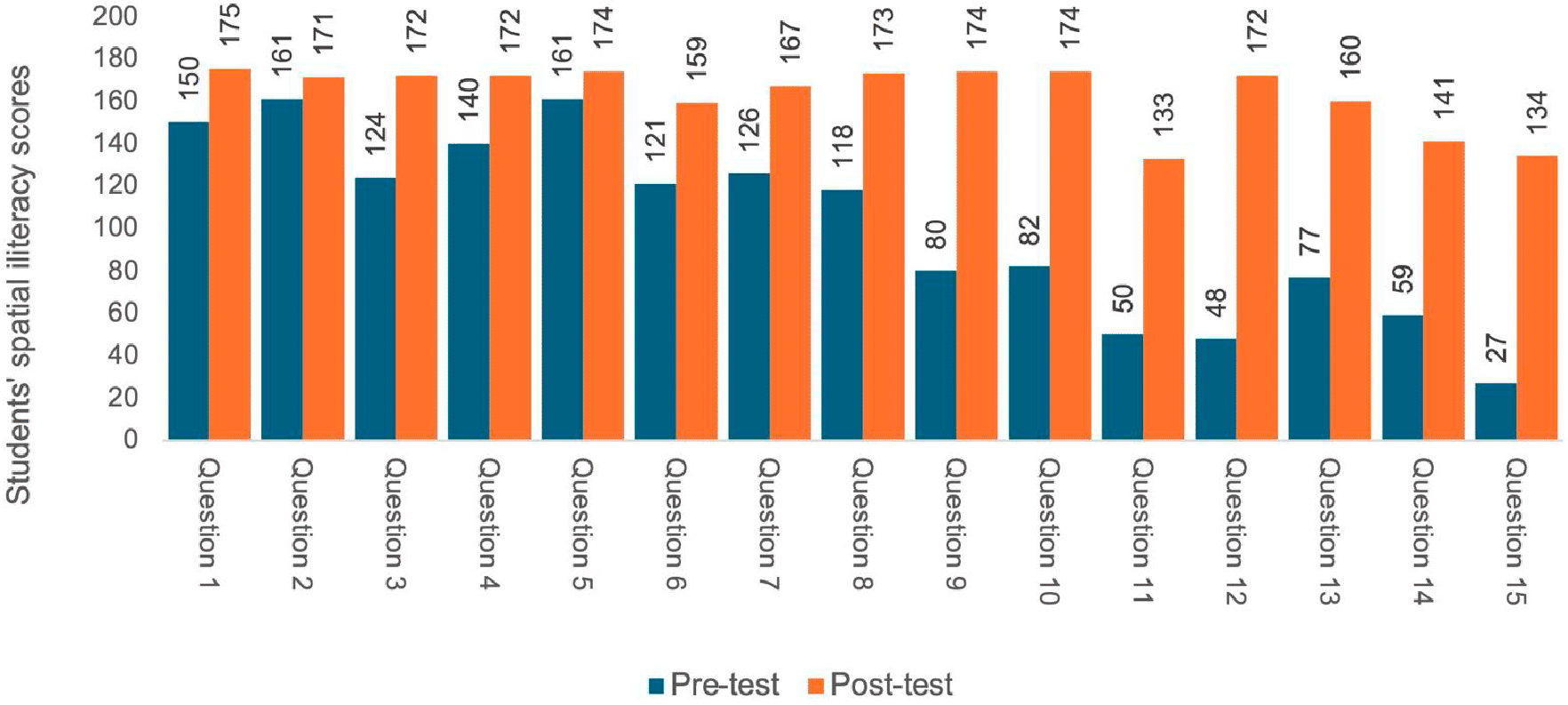
Conversely, the smallest increases were found in questions 2 (Δ = 10) and 1 (Δ = 25), which measure the ability to visualize three-dimensional objects and identify geometric shapes in various orientations, respectively, within the visualization dimension. Both items had relatively high pre-test scores, thus limiting the scope for improvement (a ceiling effect). In aggregate, the average score increased from 92.9 to 164.2, with an average difference of 71.3 points per question. These results empirically support the effectiveness of AI-based digital textbooks in improving students’ spatial literacy in geometry learning, particularly in previously more challenging aspects of mathematical reasoning and communication.
A more detailed analysis of the visualization ability dimension revealed that all indicators improved from pre-test to post-test. The greatest improvement occurred in converting two-dimensional images to three-dimensional models and vice versa (ΔM = 0.89), followed by using mathematical representations to present spatial information (ΔM = 0.68), identifying geometric shapes in various orientations (ΔM = 0.54), and visualizing objects in three dimensions (ΔM = 0.22). The decrease in standard deviation across all indicators indicates that the intervention not only increased the average score but also more evenly distributed students’ abilities.
The Wilcoxon signed-rank test showed a significant difference between pre-test and post-test scores on three visualization indicators: the ability to identify geometric shapes (Z = −2.807, p = 0.005), the ability to convert 2D-3D (Z = −4.729, p < 0.001), and the use of spatial representations (Z = −4.205, p < 0.001). However, the improvement in three-dimensional object visualization was not statistically significant (Z = −1.768, p = 0.077). The effect sizes showed a large effect on 2D-3D conversion ability (r = 0.70) and use of spatial representation (r = 0.63), a medium effect on geometric shape identification (r = 0.42), and a small effect on visualization of three-dimensional objects (r = 0.26) (see Table 3). These findings indicate that the intervention was more effective at improving transformation and spatial representation abilities than at improving direct 3D object visualization abilities.
| No | Visualization indicators | Descriptive (M ± SD) | Wilcoxon signed-rank | ||
|---|---|---|---|---|---|
| Pre-test | Post-test | Z (p) | r (n = 45) | ||
| 1 | Identify geometric shapes in various orientations. | 3.33 ± 1.30 | 3.87 ± 0.63 | -2.807a (0.005) | 0.42 |
| 2 | Visualize objects in three dimensions. | 3.58 ± 0.99 | 3.80 ± 0.69 | -1.768a (0.077) | 0.26 |
| 3 | Convert two-dimensional images to three-dimensional models (and vice versa). | 2.93 ± 1.32 | 3.82 ± 0.65 | −4.729a (<0.001) | 0.70 |
| 4 | Use mathematical representations (spatial models) to present spatial information. | 3.02 ± 1.40 | 3.70 ± 0.87 | -4.205a (<0.001) | 0.63 |
Furthermore, in the reasoning dimension, all indicators showed substantial improvement from pre-test to post-test. The greatest improvement occurred in evaluating solutions based on logical and systematic procedures (ΔM = 2.75), followed by developing problem-solving strategies in everyday life (ΔM = 2.05), calculating the volume of spatial objects (ΔM = 1.85), and understanding the relationship between shape, size, position, and orientation in space (ΔM = 1.60). The decrease in standard deviation across all indicators indicates that students’ abilities became more evenly distributed after the intervention, thereby increasing average achievement and reducing inter-individual variation.
The Wilcoxon signed-rank test results showed that all mathematical reasoning indicators improved significantly between the pre-test and post-test (p < 0.001). The effect size was in the very large category (r = 0.84–0.87), with the highest Z value for the logical and systematic solution evaluation indicator (Z = −5.849, r = 0.87) (see Table 4). Improvements were also seen in the development of problem-solving strategies, the calculation of spatial object volumes, and the understanding of spatial relationships. Descriptively, the decrease in standard deviations across all indicators indicates a more even distribution of abilities after the intervention. These findings indicate that the applied learning is associated with substantial improvements in mathematical reasoning, especially in higher-order thinking skills.
| No | Reasoning indicator | Descriptive (M ± SD) | Wilcoxon signed-rank | ||
|---|---|---|---|---|---|
| Pre-test | Post-test | Z (p) | r (n = 45) | ||
| 1 | Understand the relationship between shape, size, position, and orientation in space. | 2.26 ± 1.26 | 3.86 ± 0.65 | −5.603a (<0.001) | 0.84 |
| 2 | Develop strategies to solve mathematical problems in everyday life. | 1.82 ± 1.13 | 3.87 ± 0.63 | −5.659a (<0.001) | 0.84 |
| 3 | Calculate the volume of spatial objects. | 1.11 ± 0.68 | 2.96 ± 0.90 | −5.720a (<0.001) | 0.87 |
| 4 | Evaluate solutions using logical, systematic procedures. | 1.07 ± 1.12 | 3.82 ± 0.68 | −5.849a (<0.001) | 0.84 |
Furthermore, in the communication dimension, all indicators of mathematical communication skills showed a clear improvement from pre-test to post-test. The greatest improvement occurred in providing spatial arguments based on the results of geometric problem analysis (ΔM = 2.38), followed by using mathematical language to explain spatial problem solutions (ΔM = 1.85), and presenting spatial understanding through drawings, sketches, or written descriptions (ΔM = 1.82). The low pre-test mean score, particularly for spatial argumentation (M = 0.60), indicates that, before the intervention, students were still weak at formally communicating geometric reasoning results. The decrease in the post-test standard deviation indicates that students’ communication skills improved more evenly after the intervention.
The Wilcoxon signed-rank test results showed that all indicators of mathematical communication improved significantly between the pre-test and post-test (p < 0.001). The effect size was in the very large category (r = 0.76–0.82), with the highest effect on the ability to provide spatial arguments (Z = −5.493, r = 0.82) (see Table 5). Substantial improvements were also seen in the use of mathematical language and the ability to present spatial understanding. These findings indicate that implementing AI-based digital textbook learning is associated with significant strengthening of aspects of mathematical communication, particularly in argumentative ability, a key component of higher-order mathematical thinking.
| No | Communication indicator | Descriptive (M ± SD) | Wilcoxon signed-rank | ||
|---|---|---|---|---|---|
| Pre-test | Post-test | Z (p) | r (n = 45) | ||
| 1 | Use mathematical language to explain solutions to spatial problems. | 1.71 ± 1.20 | 3.56 ± 1.03 | −5.094a (<0.001) | 0.76 |
| 2 | Present spatial understanding through drawings, sketches, or written descriptions. | 1.31 ± 1.35 | 3.13 ± 0.97 | −5.152a (<0.001) | 0.77 |
| 3 | Provide spatial arguments based on the results of geometric problem analysis. | 0.60 ± 1.03 | 2.98 ± 1.03 | −5.493a (<0.001) | 0.82 |
Wilcoxon signed-rank
Based on an analysis of 45 students, all dimensions of spatial literacy increased significantly from pre-test to post-test. The visualization dimension increased from 3.12 ± 1.33 to 3.77 ± 0.76 (Z = −4.969; p < 0.001; r = 0.74), reasoning from 1.68 ± 1.22 to 3.67 ± 0.79 (Z = −5.419; p < 0.001; r = 0.81), and communication from 1.21 ± 1.28 to 3.22 ± 1.03 (Z = −5.756; p < 0.001; r = 0.86). The total spatial literacy score increased from 2.26 ± 1.52 to 3.63 ± 0.85 (Z = −5.780; p < 0.001; r = 0.86) (see Table 6), confirming that the intervention had a large effect both statistically and practically. These findings indicate that the intervention was effective in improving students’ multidimensional spatial literacy, especially in spatial reasoning and communication, which represent higher-order thinking skills.
| No | Dimensions of spatial literacy | Descriptive (M ± SD) | Wilcoxon signed-rank | ||
|---|---|---|---|---|---|
| Pre-test | Post-test | Z (p) | r (n = 45) | ||
| 1 | Visualization | 3.12 ± 1.33 | 3.77 ± 0.76 | −4.969a (<0.001) | 0.74 |
| 2 | Reasoning | 1.68 ± 1.22 | 3.67 ± 0.79 | −5.419a (<0.001) | 0.81 |
| 3 | Communication | 1.21 ± 1.28 | 3.22 ± 1.03 | −5.756a (<0.001) | 0.86 |
| 4 | Total | 2.26 ± 1.52 | 3.63 ± 0.85 | −5.780a (<0.001) | 0.86 |
N-gain analysis
The N-gain analysis results demonstrated that all spatial literacy dimensions were in the high category (g ≥ 0.70), with an average N-gain of 0.78 (77.77%), indicating effectiveness. The largest increase occurred in the reasoning dimension (N-gain = 0.86; 85.82%), followed by visualization (0.74; 74.37%) and communication (0.72; 72.15%). In aggregate, the total spatial literacy score increased from 1524 to 2450, from an ideal score of 2700, resulting in an N-gain of 0.79 (78.74%) (see Table 7). These results indicate that the intervention was not only statistically significant but also highly effective in practice, as measured by the normalized gain.
Scientifically, an N-gain value in the range of 0.70–0.86 indicates that most of the potential improvement in the score was achieved after the intervention. The dominant improvement in the reasoning dimension confirms that the intervention was very effective in developing higher-order thinking skills, such as spatial analysis and problem-solving. Meanwhile, the communication dimension, although slightly lower, remained in the high category, indicating significant progress in students’ ability to articulate spatial ideas. Thus, the intervention is very effective in comprehensively improving students’ spatial literacy.
The results of this study indicate that the use of AI-based digital textbooks significantly improved pre-service teachers’ spatial literacy across all dimensions: visualization, reasoning, and communication. A Wilcoxon signed-rank analysis showed a significant increase from pre-test to post-test, with Z-scores ranging from −4.969 to −5.780 (p < 0.001) and a large practical effect (r = 0.74–0.86). The N-gain results confirmed the intervention’s effectiveness, with an average score of 0.78, indicating a significant increase across all dimensions, particularly reasoning (0.86), which reflects higher-order thinking skills. These findings confirm that integrating AI into digital textbooks not only facilitates visualization but also strengthens spatial analysis and communication skills, which are essential foundations for pre-service teachers’ conceptual understanding of geometry.
Several previous studies have tended to position spatial literacy as a single construct, studied generally, or to use relatively simple digital tools such as GIS, online simulations, or conventional e-books (Gold et al., 2018; Xiang & Liu, 2019). These approaches have not integrated artificial intelligence as an adaptive system capable of dynamically modifying content, difficulty level, and feedback based on individual student responses. As a result, the potential for more precise personalized learning has not been optimally explored. Furthermore, some studies still limit the measurement of spatial literacy to aspects of mental manipulation or visualization alone (Chairunnisa et al., 2021; Machromah & Purnomo, 2018), thus reducing the complexity of the construct, which theoretically encompasses the dimensions of visualization, reasoning, and communication (Moore-Russo et al., 2013; Uttal & Cohen, 2012). This study addresses these limitations by operationalizing all three dimensions simultaneously to capture the multidimensional impact of AI-based interventions. From a demographic perspective, previous research has often been limited to early childhood populations (Mishra et al., 2025), elementary school students (Putri & Nurafni, 2025), and high school students (D. H. Saputra & Dwiningsih, 2025). In contrast, this study targets prospective teachers, a strategic group whose spatial competence has direct implications for the quality of future geometry pedagogy.
The synergy between content quality, pedagogical design, and system adaptability mechanisms can scientifically explain the improvement of students’ spatial literacy through AI-based digital textbooks. From spatial visualization, the systematic arrangement of material based on the classification of flat-sided and curved-sided geometric shapes forms a hierarchical cognitive structure. This organization helps students gradually construct mental representations of concepts, from simple to complex. The presence of illustrations, animations, and contextual application examples strengthens the connection between symbolic and visual representations. Cognitively, this multimodal representation reduces the burden of abstraction and increases the accuracy of mental manipulation of three-dimensional objects. In spatial reasoning, the presentation of HOTS-based questions and formula-proof activities encourages students to understand not only the conceptual basis and spatial relationships among geometric elements, but also among elements themselves. Accurate material, consistent with scientific definitions and aligned with learning outcomes, ensures the reasoning process takes place within a valid conceptual framework. Evaluations that align with spatial literacy indicators strengthen inferential skills by training students to analyze, compare, and draw conclusions from spatial structures. Meanwhile, spatial communication develops through varied exercises, the availability of answer keys, and clear adaptive feedback. This feature allows students to reflect on errors, refine arguments, and systematically articulate geometric ideas. Support for independent and collaborative learning also enriches the process of negotiating mathematical meaning. Thus, integrating structured content, higher-order cognitive activities, and AI-based feedback simultaneously strengthens all three indicators of spatial literacy while fostering a deep, sustained understanding of geometry.
The most significant finding of this research on the development of science and technology is the empirical evidence that AI-based digital textbooks can effectively promote the development of higher-order cognitive abilities in the context of mathematics education. The N-gain increase in the reasoning dimension (0.86) (see Table 7) indicates that the AI intervention not only strengthens mental manipulation skills but also supports spatial analysis and problem-solving, essential competencies in STEM and modern scientific research, alongside language and computational skills (Du et al., 2025; Medina Herrera et al., 2024; Zhu et al., 2024). AI enables personalized learning paths, adaptive feedback, and dynamic visualizations, enabling students to grasp abstract relationships between geometric concepts more quickly and accurately. It marks a significant contribution to educational science and technology, as AI technology not only expands access and interactivity but also strengthens analytical thinking skills, which are fundamental to innovation, experimental design, and the application of mathematics in the professional and research worlds. These skills aim to integrate the initial process, plan solutions, generate solutions, and draw conclusions to produce correct conclusions or answers (Anggoro et al., 2021; Blegur, Ma’mun, Berliana, Mahendra, Alif, et al., 2024a; Wang et al., 2025). Thus, this intervention serves as a concrete example of how AI can be applied to improve learning quality while preparing prospective teachers to address global STEM challenges.
In practice, this research guides curriculum development and teaching strategies for prospective teachers. First, AI-based digital textbooks can serve as a primary medium for strengthening spatial literacy, especially for students with low spatial abilities, as adaptive features scaffold learning, reducing cognitive load while stimulating independent exploration. Second, strengthening the spatial reasoning and communication dimensions emphasizes the importance of incorporating analysis, mental rotation, and visual representation activities into geometry learning modules, so that students not only imitate procedures but also deeply understand concepts and can translate them into real-life applications. Third, AI integration can support distance or blended learning more effectively than conventional e-books, thereby increasing engagement, motivation, and material retention. Finally, the use of AI-based digital textbooks can serve as an innovative learning model that can be adopted across various STEM courses, helping prospective teachers transfer and transform their spatial abilities to their students, thereby significantly improving the quality of geometry teaching and the application of STEM in primary and secondary education.
While the results of this study are promising, many opportunities and challenges remain for further research. First, future research should examine the effectiveness of AI-based digital textbooks with a larger, more diverse population, including prospective teachers from various STEM disciplines, to ensure the generalizability of the findings. Second, AI development can be expanded by adopting more complex adaptive learning algorithms, such as real-time data analysis to adjust task difficulty dynamically. Third, longitudinal research is needed to assess whether improvements in spatial literacy and geometry understanding are sustained over the long term and impact actual classroom teaching practices (including teaching practices). Fourth, the interaction between students’ initial abilities, learning styles, and AI design needs to be analyzed to minimize the risk of over scaffolding or technology dependency. Finally, future research could integrate multimodalities, such as augmented/virtual reality or 3D simulations, to strengthen the internalization of geometry concepts and spatial literacy. Thus, the research prospects not only pave the way for optimizing AI in education but also make strategic contributions to the development of technology-based pedagogical innovations in the digital era to enhance students’ immersive learning.
This study demonstrates that AI-based digital textbooks significantly improve pre-service teachers’ spatial literacy and understanding of geometry concepts across multiple dimensions. A Wilcoxon signed-rank analysis revealed significant improvements across all dimensions of spatial literacy, including visualization, reasoning, and communication, with a large practical effect (r = 0.74–0.86). An N-gain analysis confirmed the intervention’s effectiveness, with an average score of 0.78, considered high. The greatest improvement was found in the reasoning dimension, reflecting higher-order thinking, spatial analysis, and problem-solving skills. Improvements in spatial communication confirmed students’ ability to represent ideas systematically. These findings underscore the pedagogical value of AI in providing adaptive, interactive, and contextual learning experiences, surpassing the effectiveness of conventional e-books and demonstrating that technology can facilitate deeper internalization of geometry concepts.
These findings expand the literature on AI integration in mathematics education by linking higher-order cognitive abilities with adaptive digital media and demonstrating that improving spatial literacy is not merely technical but also strategic for pre-service teachers’ professional readiness. In practice, AI-based digital textbooks can serve as innovative learning models, supporting STEM curriculum development, improving teaching quality, and minimizing students’ spatial literacy gaps. These results also open up prospects for further research, including the development of more complex adaptive AI, multimodality integration, and longitudinal studies to assess the long-term impact on real-world teaching practices.
This research has obtained permission from the Research Ethics Committee of the Faculty of Teacher Training and Education, Universitas Muhammadiyah Prof. Dr. Hamka (Approval Letter No. 1687/FKIP/PTK/2025, dated October 15, 2025). All participants provided voluntary consent, both written and verbal. To protect the rights and privacy of participants, all collected data is guaranteed confidentiality and will only be used for research purposes.
Open Science Framework (OSF): Spatial literacy test (SLT). https://doi.org/10.17605/OSF.IO/3NBMP (Nurafni et al., 2026b).
This project contains the following extended data.
Spatial literacy test. This research instrument is structured around three main dimensions: visualization, reasoning, and communication, each of which represents an important aspect of spatial literacy. Overall, the instrument consists of 15 items proportionally distributed across the three dimensions of spatial literacy, with varying cognitive levels ranging from C2 to C6.
Data are available under the terms of the Creative Commons Zero “No rights reserved” data waiver (CC0 1.0 Universal).
Open Science Framework (OSF): Quantitative data on the spatial literacy test results of students. https://doi.org/10.17605/OSF.IO/BZPK8 (Nurafni et al., 2026a).
The project contains the following underlying data:
Data.xlsx. Data on spatial literacy scores were obtained anonymously from 45 student teachers. Assessment uses a four-point graded scale. In coding, a score of 1 is given to respondents who do not answer in accordance with the determined assessment criteria, while a score of 4 is given to respondents who fully answer in accordance with those criteria.
Data are available under the terms of the Creative Commons Zero “No rights reserved” data waiver (CC0 1.0 Universal).
| Views | Downloads | |
|---|---|---|
| F1000Research | - | - |
|
PubMed Central
Data from PMC are received and updated monthly.
|
- | - |
Provide sufficient details of any financial or non-financial competing interests to enable users to assess whether your comments might lead a reasonable person to question your impartiality. Consider the following examples, but note that this is not an exhaustive list:
Sign up for content alerts and receive a weekly or monthly email with all newly published articles
Already registered? Sign in
The email address should be the one you originally registered with F1000.
You registered with F1000 via Google, so we cannot reset your password.
To sign in, please click here.
If you still need help with your Google account password, please click here.
You registered with F1000 via Facebook, so we cannot reset your password.
To sign in, please click here.
If you still need help with your Facebook account password, please click here.
If your email address is registered with us, we will email you instructions to reset your password.
If you think you should have received this email but it has not arrived, please check your spam filters and/or contact for further assistance.

Comments on this article Comments (0)