Keywords
chronic heart failure, inspiratory muscle training, dysfunctional breathing, diaphragm thickness, functional ability

This article is included in the HEAL1000 gateway.
chronic heart failure, inspiratory muscle training, dysfunctional breathing, diaphragm thickness, functional ability
Chronic heart failure (CHF) is a clinical syndrome characterized by anatomical and biological disorders1 and the leading cause of mortality in patients with cardiovascular disease.2 Following cardiac damage, various pathological processes in the heart and the peripheral organs cause a reduced cardiac output and impaired myocardial and vascular function.3 Beyond cardiac symptoms, the increased peripheral resistance leads to pulmonary congestion and disruptions in the ventilation-perfusion ratio,4 increased respiratory rate, and hyperventilation.5 Concomitantly, the reduction of respiratory muscle strength and the limitation of physical activity are common hallmarks and are linked to a poor prognosis in patients with CHF. It is estimated that 40% of the patients exhibit respiratory pattern disturbances6 which indicates a dysfunctional breathing pattern and a decline in functional capacity,7 primarily due to respiratory muscle weakness, dyspnea and reduced ventilation.8
Changes in cardiac function may directly impact pulmonary integrity and reduce respiratory muscle strength causing dysfunctional breathing.6 Dysfunctional breathing, in patients with CHF, refers to abnormal breathing patterns that are not necessarily due to primary lung disease but are often related to the heart’s inability to supply blood effectively, affecting respiratory function.6,9 Inspiratory Muscle Training (IMT) has been recognized as an effective intervention to improve respiratory symptoms and reduce pulmonary complications. In respiratory diseased populations, breathing exercises, including IMT, have been shown to improve respiratory muscle function, reduce hyperventilation, and enhance respiratory muscle function10,11 as well as functional capacity, thereby improving overall respiratory efficiency.
Cardiac rehabilitation is considered standard care for CHF patients to improve cardiopulmonary symptoms.12 Studies using IMT in conjunction with exercise training programs have shown that IMT is an effective complementary treatment for respiratory pattern retraining, improves dyspnea, pulmonary ventilation, and overall exercise capacity in patients with CHF.13,14 Despite the benefits of IMT on respiratory muscles endurance, the impact of IMT with increased resistance on breathing retraining, diaphragm anatomical changes and functional capacity has not been thoroughly examined. Notably, only a limited number of studies have examined the effects of IMT alone in respiratory function in heart failure. Diaphragmatic function has been also poorly investigated.
The aim of the study is to investigate the effect of IMT on dysfunctional breathing, diaphragmatic thickness and functional ability. Secondary objective is to investigate the effect of IMT on maximal inspiratory pressure (MIP), dyspnea, and quality of life in patients with CHF.
This single-center, randomized controlled, single-blinded clinical trial is designed to investigate the effectiveness of IMT on breathing pattern, diaphragmatic thickness and functional ability in patients with CHF. The study protocol adheres to the guidelines outlined in the Standard Protocol Items: Recommendations for Intervention Trials (SPIRIT) statement.15 A completed SPIRIT checklist has been uploaded to an approved open repository. Ethical approval has been granted by the Ethics Committee of the University of West Attica (approval number: 51604/04-06-2025), and the trial is registered with the Clinical Trial Registry (registration number: NCT07104357).
This study includes a four-week intervention period. A total of 22 outpatients with CHF will be randomly assigned to two groups with a 1:1 ratio. The intervention group will be trained with IMT in conjunction with DB and the control group will receive only DB. There will be two measurements of the outcomes (0 and 4 weeks). The flow diagram of the study protocol is presented in Figure 1.
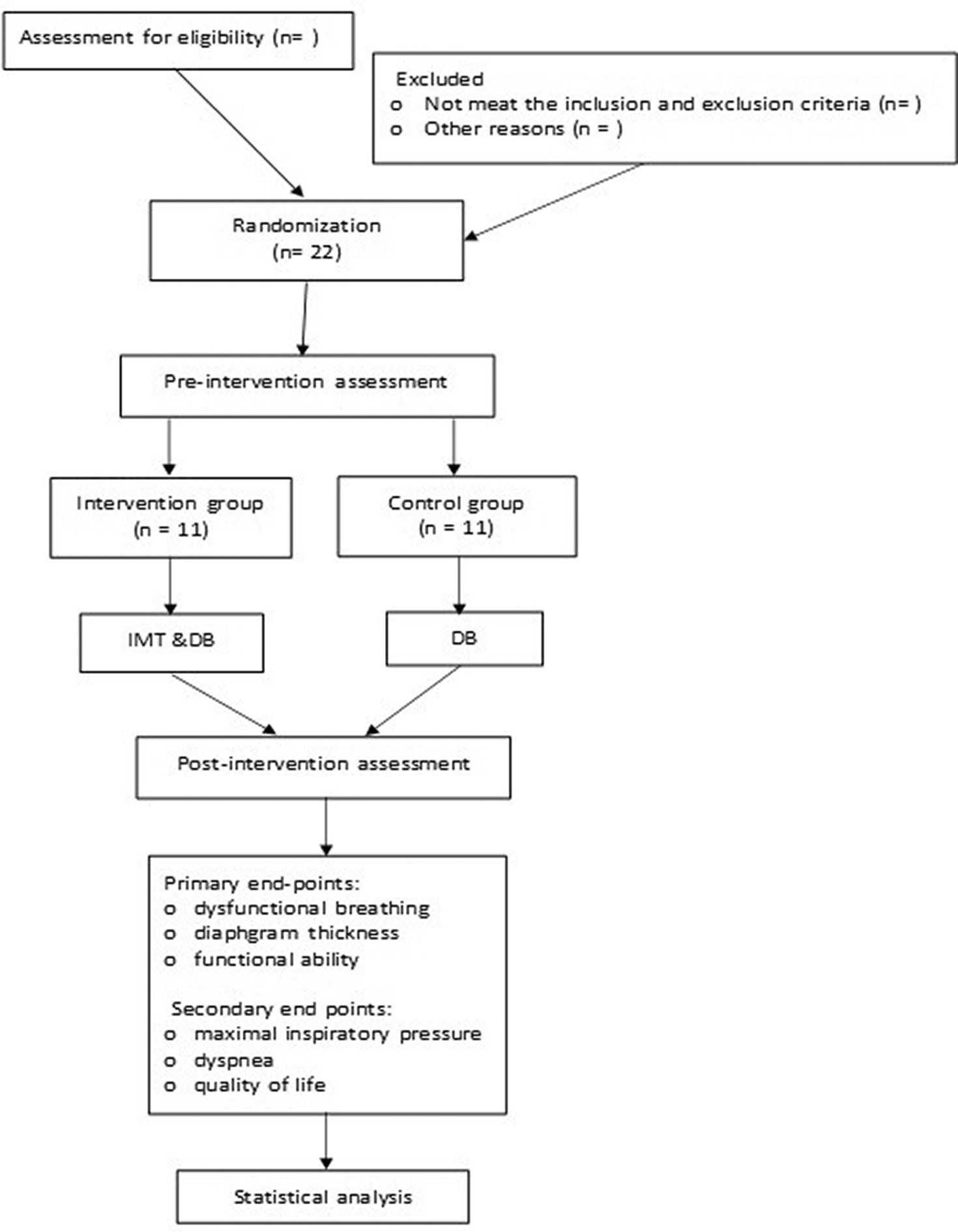
IMT: inspiratory muscle training; DB: diaphragmatic breathing.
All assessments will be conducted individually at the Laboratory of Advanced Physiotherapy in the Physiotherapy Department of the University of West Attica (UNIWA) in Athens, which will coordinate the study. All measurements will take place in the same laboratory. All participants will receive five treatment sessions for four weeks. Specifically, the first two sessions at every week will be conducted in the Laboratory, and the remaining three sessions will be home-based.
Participant recruitment will take place in the outpatient care unit of the Cardiological Clinic at “Evangelismos General Hospital” in Athens. The hospital’s research committee has approved the study protocol (76/21–03-25). Patients will enter the study according to the inclusion and exclusion criteria. Eligible participants who agree to take part in the study will be provided with detailed information about the benefits and the risks of the study. All participants will read and sign the consent form. They will be informed about (a) the study’s objectives and methods, (b) their voluntary participation, with the right to decide whether to take part, (c) their right to withdraw from the study at any time, even after signing the consent form, and (d) assurance that their decision to participate will not impact the research services provided.
Eligible participants will be adults aged ≥18 years with a clinical diagnosis of heart failure within the previous three to twelve months. Participants must be current outpatients in a stable optimal medical regimen for at least 3 months, able to perform IMT and breathing exercises. If they are clinically stable, without hospital admission in the previous 3 months and without participation in any other training program in the previous 6 months, they will qualify to participate in the study.16 The exclusion criteria from the study are unstable angina or recent acute myocardial infarction, uncontrolled hypertension, valve disease, and peripheral arterial disease and a 6MWT assessment of less than 300 meters.17 Patients with previous pulmonary disease (forced vital capacity <80% of predicted and/or forced expiratory volume in 1 seċ < 70% of predicted),18 history of exercise-induced asthma, and smokers will be also excluded.
The randomization will be carried out by the secretary of the Cardiological Clinic at ‘Evangelismos General Hospital’ using sequentially numbered, opaque, sealed envelopes to achieve allocation concealment. The secretary will open the sealed envelopes and independently allocate the participants to groups in a 1:1 ratio sequentially. The main researcher will be the only person aware of the participants’ randomization. All research colleagues will be blinded to group allocations.
The calculation of the appropriate sample size to examine differences between groups, was based on the effect size of 0.48 in the study of Padula and colleagues.19 More specifically, with an effect size of 0.48, power of 0.80, and α = 0.05, the minimum sample size was found to be 16 participants, corresponding to 8 patients allocated in the experimental group and 8 in the control group. Taking approximate a 20% drop rate and a 7% missing rate into account20 the final sample size was set to 11 per group. Thus, a total of 22 patients for the intervention and the control group will be recruited in this study.
A cardiologist of the outpatient clinic of ‘Evangelismos Hospital’ will examine the cardiac function of the out-patients and provide the diagnosis of heart failure. A physiotherapist will measure the MIP for each out-patient and administer the questionnaires in a random order.
All participants will attend a two-hour session to be informed about their disease and its consequences on their breathing pattern, functional ability and quality of life by the main researcher.
IMT and DB will be provided by two separate physiotherapists (one for IMT and another one for DB) at the laboratory of Advanced Physiotherapy at the Physiotherapy Department, UNIWA, Athens. Brief descriptions of the interventions planned for each group are provided below ( Table 1).
Experimental group: Participants (n = 11) will perform 20 sessions of respiratory muscle strengthening (20 minutes at 30–60% of MIP), using the Threshold Inspiratory Muscle Training device, and DB with pursed-lips exhalation for breathing retraining (calm breathing up to tidal volume-TV for 10 minutes). The specific training will take place five (5) days a week, once a day, for four (4) weeks, with a total duration of approximately 30 minutes.19 During IMT, the initial inspiratory load will be set at 30% of the patient’s maximal static MIP. Training loads will be adjusted weekly to ensure a 10% increase in MIP for each patient, reaching a final load of 60% MIP at the fourth week.14 Patients will complete three sets of 15 repetitions in every session. During DB, patients will be asked to inhale slowly (TV) through the nose, directing the airflow towards the diaphragm, allowing the upper abdomen to rise. Exhalation will be performed slowly through pursed lips, while engaging the abdominal muscles to push the air out. Patients will be instructed to maintain a breathing rate of 12–16 breaths per minute.
Control group: Participants will receive breathing retraining as described above for the intervention group.
Any departure from the administration of treatment sessions (such as missing more than one appointment) or any exacerbation of cardiac symptoms, which requires hospitalization, will lead to exclusion.
Outcomes will be assessed by independent research colleagues. The evaluations will take place at two points: prior to treatment (week 0), and post-treatment (week 4). Primary outcomes are the dysfunctional breathing (Hi-Lo Test), the diaphragm thickness (diaphragmatic ultrasonography), and the functional capacity (6MWT). Secondary outcomes such as MIP, dyspnea (MRC), and quality of life (SF-12 v2) will be also assessed.
Dysfunctional breathing will be assessed with the Hi-Lo breathing test.21 A physiotherapist will place one hand on the participant’s chest and the other on their abdomen while calm breathing up to TV. The test is considered positive if the upper chest breathing pattern is observed as dominant.22 Patients with functional breathing patterns exhibit noticeable abdominal expansion without visible superior migration of the thoracic cage.23
Diaphragmatic thickness will be evaluated with a diaphragmatic ultrasonography which is a reliable and non-invasive technique for evaluating diaphragm thickness, an indicator of hypertrophy or atrophy.24 The assessment will take place in the supine position that provides greater reproducibility and less variability.25 Measurements will be recorded in millimeters (mm), with normal diaphragm thickness typically ranging from 1 to 5 mm. Anatomical aspects will be assessed using an ultrasound device, E-CUBE 8LE (Seoul, Republic of Korea).
Functional capacity will be assessed with the 6-Minute Walk Test (6MWT), a simple and effective tool by measuring the maximum distance a person can walk in six minutes.26 This test is particularly suitable for individuals with CHF, as it poses a low risk of acute cardiac events for evaluating functional capacity.27 The 6MWT requires a flat, hard walking path measuring 30 meters in length, with markers placed every 3 meters and two cones to indicate the turning points. Additional equipment includes a stopwatch and a lap counter. The patient’s heart rate, blood pressure, and oxygen saturation will be recorded before and after the test.26 Since the 6MWT evaluates functional capacity and performance can be influenced by various factors, it is essential to conduct the test following a consistent and standardized protocol to ensure reliable results.
Maximal inspiratory pressure (MIP) will assess the inspiratory muscle strength. The measurement is taken at the mouth while the individual performs a maximal inhalation starting from residual volume, holding it for at least one second.28 Based on the force-length relationship, MIP increases as the diaphragm’s resting length increases that is, when the diaphragm is positioned higher or the lung volume is lower.28 MIP is a reliable and reproducible measure that does not depend on the patient’s respiratory flow. In patients with heart failure, a MIP below 70% of the predicted value is indicative of inspiratory muscle weakness.
Functional dyspnea will be assessed with the Medical Research Council (MRC) Dyspnea scale, a simple grading system to evaluate the functional disability due to dyspnea.29 Patients self-report their level of disability by selecting one of five grades (0–4) that best describes their experience. In the present study, the Greek version of the MRC Scale will be used to assess the sensation of breathlessness.
Quality of life will be evaluated with the Short Form Survey (SF-12v2), a questionnaire with 12-items, that measures quality of life in terms of physical and mental health.30 It is a shorter version of the SF-36 and is commonly used in clinical trials with a short-self reported simple format indicating no special knowledge to complete it. The Greek version of the SF-12v2 will be used to assess quality of life.
The study will start in October 2025 and is scheduled to be completed in November 2026.
The researcher colleagues will collect data (0, 4 weeks), send them to the secretariat of the Cardiological Clinic, which will forward it to the statistician. Throughout the study, the supervisor Professor of the main researcher (PostDoc candidate at the Physiotherapy dept of the University of West Attica-UNIWA) will oversee the data collection process.
Evaluation data will be retrieved from a predefined spreadsheet containing baseline characteristics. The primary researcher and the supervisor will ensure that a secure database will be used to record and maintain the data in a SPSS file. The paper copies used for the evaluation, the signed informed consent and any other paper documents related to the study will be securely maintained within the study setting. Following the completion of the study, the spreadsheets will be forwarded to the statistician for the analysis.
IBM Statistical Package for Social Sciences software (version 29.0, SPSS, Chicago, Illinois) will be used for the analyses. Descriptive statistics will be employed to elucidate the distributional characteristics of the dataset. The reliability of repeated measures for the study variables will be determined through the Intraclass Correlation Coefficient (ICC). A 2 × 2 repeated measures ANOVA with Bonferroni adjustment will be conducted for the interaction effect between intervention (experimental and control group) and time (0 and 4 weeks) for every dependent variable separately. Eta-squared (η2) will be used for the expression of the total variance explained by the respective interaction effects. The evaluation of the homogeneity of variance will be conducted by Levene’s test. The predetermined level of statistical significance is set at p < 0.05.
Data monitoring
A data monitoring committee of members from the UNIWA Physiotherapy Department will periodically review the accumulating data, determining if the trial should be modified or discontinued.
Harms
The procedures of the study (assessments and intervention) will be conducted by experienced physiotherapists. A clinical staff member will oversee the entire procedure, and any adverse events will be promptly reported to the UNIWA committee throughout the trial.
Auditing
An evaluation of the study will be conducted on the 2nd week. IMT intensity adjustments will be performed every week. Should any alteration or deviation from the protocol be observed, it will be recorded and addressed accordingly.
Research ethics approval
The Ethics Committee of UNIWA approved the present study under protocol no. 51604/04-06-2025. The ethics approval was obtained on 4th June 2025 from the University of West Attica. The study fully adheres to the Helsinki Declaration’s “Ethical Principles of Medical Research Involving Human Subjects.” Any protocol modifications will be promptly disclosed to the Ethics Committee. The trial is registered at the Clinical trials.gov database with identification number NCT07104357.
Protocol amendments
The study has already been modified and accepted in accordance with the suggestions from the UNIWA Ethics Committee. No further modifications are permitted.
Consent
Study participants will receive a translated version of the study protocol. Prior to participation, all individuals involved in the study will be fully informed, and written consent will be obtained from each participant.
Confidentiality
At the time of randomization, every participant will get a code number that will secure blinding and confidentiality of the participants. A confidentiality statement will be included in the consent form and will be signed accordingly. Participants’ confidentiality will be maintained throughout the study. No personal information will be disclosed.
The primary researcher, the supervisor and the statistician will have access to the data.
The entire procedure and the study protocol will be overseen by professionals and the physiotherapy dept. of the UNIWA committee. After the trial, participants will be monitored for approximately four weeks to address any potential harms or issues that will arise, and they will be able to contact the main researcher.
Breathing exercises have been shown to reduce dyspnea, relieve respiratory symptoms, and enhance clinical outcomes in patients with cardiac31 and pulmonary disease.32 IMT as a component of pulmonary rehabilitation has shown a significant effect on reducing dysfunction breathing, enhancing respiratory muscle function and exercise tolerance.14 Some studies suggest that IMT might improve pulmonary function, dyspnea, MIP and functional ability in patients with cardiovascular disease.33,34 Although IMT appears to be beneficial in managing patients with congestive heart failure,34 the effect of IMT on dysfunctional breathing, diaphragm thickness and overall functional capacity in patients with CHF has not yet been thoroughly investigated. Moreover, the degree to which IMT might copy with respiratory symptoms in CHF remains unclear. Most studies have examined the effects of IMT on dyspnea in CHF, but only when it was used in conjunction with rehabilitation programs.33 Randomized studies have yet to confirm the benefits of isolated IMT on pulmonary function. Moreover, the effects of IMT on dysfunctional breathing and diaphragm function obtained from ultrasound in patients with CHF have not been thoroughly reported.
Whole-body aerobic exercise training is currently recommended for patients with CHF to enhance respiratory muscle strength and functional capacity. However, it remains unclear whether IMT alone might reduce dysfunctional breathing, improve diaphragmatic and functionality in these patients. Vibarel et al.12 found that aerobic exercise training performed without IMT does not significantly impact inspiratory muscle strength, suggesting that the two interventions may have complementary effects.
Based on the above, our goal is to investigate the effect of IMT on breathing pattern and functional ability in patients with CHF. The results of our study will support the implementation of IMT in patients with CHF.
This RCT will be the first study to provide evidence of the effect of the IMT on dysfunctional breathing and examine further the effects on diaphragm function and functional ability. Thus, it is expected to contribute to the holistic management of patients with CHF by integrating respiratory physiotherapy into their rehabilitation, enabling them to control their breathing, self-manage dyspnea, and improve quality of life.
| Views | Downloads | |
|---|---|---|
| F1000Research | - | - |
|
PubMed Central
Data from PMC are received and updated monthly.
|
- | - |
Provide sufficient details of any financial or non-financial competing interests to enable users to assess whether your comments might lead a reasonable person to question your impartiality. Consider the following examples, but note that this is not an exhaustive list:
Sign up for content alerts and receive a weekly or monthly email with all newly published articles
Already registered? Sign in
The email address should be the one you originally registered with F1000.
You registered with F1000 via Google, so we cannot reset your password.
To sign in, please click here.
If you still need help with your Google account password, please click here.
You registered with F1000 via Facebook, so we cannot reset your password.
To sign in, please click here.
If you still need help with your Facebook account password, please click here.
If your email address is registered with us, we will email you instructions to reset your password.
If you think you should have received this email but it has not arrived, please check your spam filters and/or contact for further assistance.

Comments on this article Comments (0)