Keywords
Medication Error, Nurses, Emergency Department, Emergency Services.

This article is included in the Health Services gateway.
Medication Error, Nurses, Emergency Department, Emergency Services.
Medication administration is a complex, multidisciplinary, and significant process in the emergency departments (ED) of healthcare facilities worldwide. A large number of medications are administered to patients each day in these healthcare facilities. During such complex and multidisciplinary processes, medication errors (MEs) commonly occur and almost 90% of the cases are kept unreported, particularly in emerging countries, potentially leading to severe adverse outcomes for patients with serious multifaceted medical illnesses.1,2 Like the “tip of the iceberg”, reported errors are a small subsection of the sum of all errors. A study revealed that only 1.6% to 38% of MEs are reported among all administered medications, and it is estimated that reported errors constitute only 25% of all errors.3
Wrong use of medication is one of the most common types of medical errors.4 Thus, “Medication Error” is defined as any error that occurs during the medication process, including prescribing, distributing, transcribing, administering, and documenting, whether or not it was captured and corrected before reaching the patient or has the potential to harm the patient.5 Operationally, a “Medication Error” can be termed as wrong (drug, dose, patient, route, documentation, preparation, time, technique), administration of a defunct drug, or omission of a prescribed drug that may be avoided and may cause harm to the patient. In the hospital setting, MEs can occur at any stage of the medication process, including prescribing, preparation, administration, and documentation.1,5
Globally, approximately 10% of patients suffer from medical errors, costing $42 billion annually, which represents 1% of global health expenditure. Thus, the World Health Organisation (WHO) has recognised the issue as an endemic.6,4 MEs cost about $4 billion annually (IOM, 2007) and have a major impact on patient care2,7 Therefore, patient safety has become a significant global public health issue and MEs are increasingly seen as a significant safety risk.8,9 It was reported that between 18.7% and 56% of all hospitalised patients experience MEs at some point during their hospital stay.10
Medication processing is one of the most sensitive tasks for nurses and they are likely at risk of MEs. Research indicates that nurses spend more than 40% of their time administrating medication. Nurses play an important role among all healthcare groups and are full-time accountable for the care or safety of patients.11 The errors nurses make can lead to several direct and indirect adverse outcomes.
Due to the rapid leap, overcrowding, and instability, the ED is a high risk area for MEs12,5 Consequently, providing accurate information on MEs is the most significant step to avoiding MEs in an ED. Such information could accelerate an acceptable preventive method for safe practices in the future. Therefore, this study aims to determine rates and types of MEs and explore possible risk factors for these errors in the ED.
This study used a direct observation-based cross-sectional design and was conducted in the ED of a tertiary care hospital in Peshawar from December 2021 to August 2022.
The study population included all clinical nurses in the ED who met the inclusion criteria. The ED in this hospital comprises 200 beds and receives nearly 3,000 to 4,000 patients per day seeking initial treatment.13 In this observational-based study, nurses were randomly selected from the five units of the ED. The ED reported approximately 7.70 lakh patients in 2020.13 This statistical figure shows that the possibility of MEs is greater in this setting due to its acute dynamic clinical picture, overcrowding, high patient turnover, and excessive workload.
The first sample size was based on research studies published by Khowaja et al, where a convenience sample of 1053 doses was monitored through a structured medication observation form.3 A random selection of observed nurses was made in 68 enrolled participants based on observed shifts, and no prior selection of nurses was made. Each prescribed IV, IM, or subcutaneous medication at one time per patient was counted as a single dose, and all prescribed oral medication at one time per patient was considered as a second separate dose.
For the second sample size according to the census, 68 nurses were enrolled in the study to explore their perceptions of risk factors for MEs committed by nurses in the ED.
All registered nurses (RNs) directly involved in the medication process were included, while student nurses and nurses who did not agree to participate in the study were excluded.
The synopsis of this project was approved by the Advance Studies and Review Board and ORIC of Khyber Medical University. The objectives and aim of the study were clearly defined, and both verbal and written informed consent were taken from the study participants. To minimise the “Hawthorne Effect” the word ‘error’ was not disclosed to RNs during data collection. Three types of questionnaires were used: “Demographic information questionnaire”, “Wakefield questionnaire of factors”, and “Direct medication observation form”. A questionnaire related to demographic information of nurses (i.e. age group, gender, marital status, work experience, education, and job position) and “Wakefield questionnaires of factors” were distributed among the RNs in the five units and were returned to the distributor in the next two to three days.
Data was collected using three questionnaires. 1) A questionnaire related to demographic information of nurses (i.e. age group, gender, marital status, work experience, education, and job position). 2) A validated ‘structured medication observation form” (11 items) to determine the frequency and types of medication errors. This tool demonstrated Cronbach’s alpha of 0.780 indicating good reliability. 3) The Wakefield questionnaire (29 Items) to assess the factors contributing to MEs. The tool has been previously used and shown the reliability of (α = 0.76) for questions related to communication (α = 0.80) for packaging, (α = 0.77) for transcription, (α = 0.66) for working conditions (α = 0.66), and (α = 0.66) for pharmacy-related question.14
The “Direct medication observation form” was used to monitor a sample of 1053 doses from 8:00 AM to 2:00 PM and from 2:00 PM to 8:00 PM in four phases on days other than Sunday, recorded over two months. All ordered doses were conveniently observed and documented, considering ethical considerations. When a potentially harmful drug error was detected before administration, the nurse was requested to review the medication.
The data was analysed using IBM’s Statistical Package for the Social Sciences (SPSS) version 22.0 software. Descriptives and Inferential statistics were performed. Categorical data was reported as frequencies and percentages and continuous data was reported as mean (SD). Associations between the Medication error (Yes/No) and other explanatory variables were tested using the Chi-square test. Multivariate logistic regression was applied to obtain an adjusted odds ratio for potential confounders. A P-value of <0.05 was considered a statistical significance level.
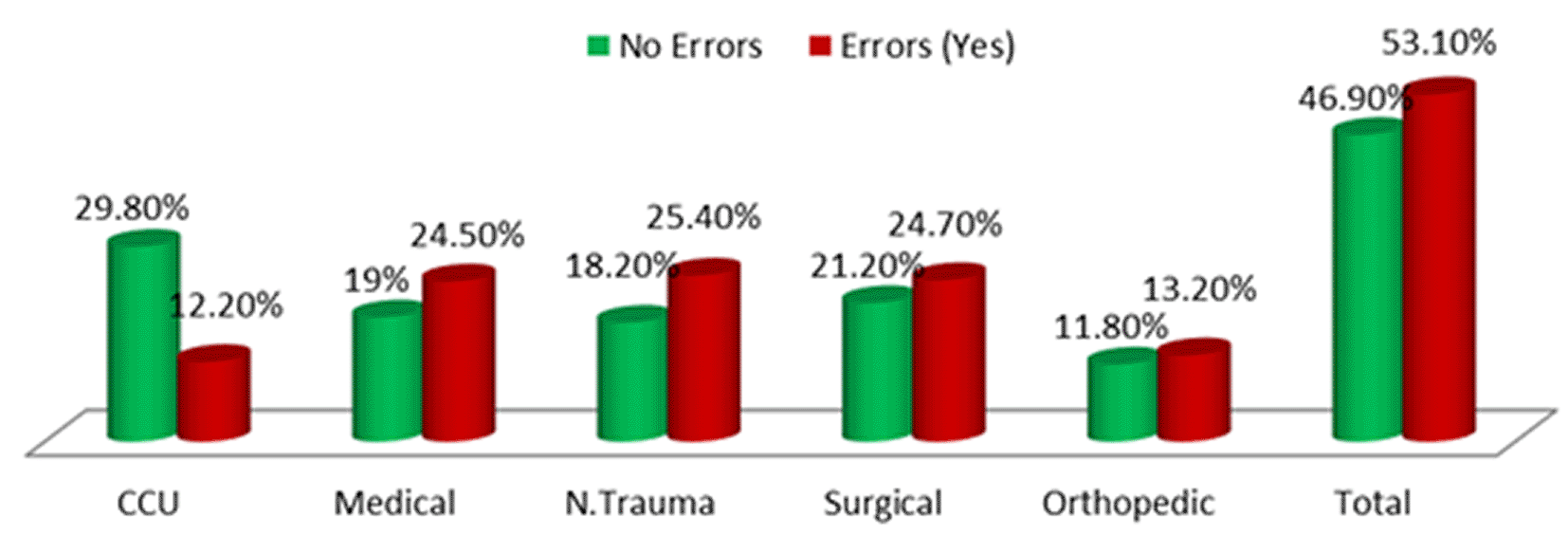
According to the results of this study, 73.5% of nurses were female, while 26.5% were male. Out of the total number of study participants (N = 68), 55.9% (n = 38) of the registered nurses were unmarried or single, while 44.1% (n = 30) were married. When comparing the education level of the study participants, it was found that the majority of the registered nurses held a diploma in nursing (64.7%), while the rest of the registered nurses had a Bachelor’s degree in nursing (35.3%). The results indicated that 83.8% (n = 57) of registered nurses worked as employees in medical teaching institutes, while 16.2% (n = 11) of registered nurses were civil servants. Working shifts were categorised into four groups, with 48.5% (33) of the registered nurses working in the fixed morning shift, 27.9% (n = 19) in the evening shift, and 1.5% (n = 1) in the night shift, while 22.1% (n = 15) of the registered nurses worked in rotation. The work units were categorised into five units, with 26.5% (n = 18) of the registered nurses assigned to the Orthopedic unit, 25% (n = 17) to the medical unit, 17.6% (n = 12) to Neuro Trauma and Surgical unit, and 13.2% (n = 9) to the CCU unit ( Table 1).53.2% (n = 560) of the doses were observed in male patients and 46.8% (n = 493) in female patients. The MEs were detected in 53.1% (n = 559) of doses. The units with the highest probability of MEs were Neuro Trauma 25.4% (n = 142) and Surgical Unit 24.7% (n = 138) ( Figure 1, and Tables 1 and 2). Each wrong dose was further observed across the 11 types of MEs where an additional 1029 errors were collected by further observing 559 wrong doses ( Tables 3, 4 and 5).
| Sociodemographic characteristics of nurses working in the emergency department | ||
|---|---|---|
| Variables | Frequency | Percentage |
| Gender | ||
| Male | 18 | 26.5% |
| Female | 50 | 73.5% |
| Age (Mean) * | 27.8 ± 4.3 | |
| Marital Status | ||
| Single | 38 | 55.9% |
| Married | 30 | 44.1% |
| Education | ||
| Diploma In Nursing | 44 | 64.7% |
| BS In Nursing | 24 | 35.3% |
| Hospital Status | ||
| Government | 11 | 16.2% |
| Medical Teaching Institute | 57 | 83.8% |
| Working Shift | ||
| Morning Shift | 33 | 48.5% |
| Evening Shift | 19 | 27.9% |
| Night Shift | 1 | 1.5% |
| Rotation | 15 | 22.1% |
| Working Units | ||
| Critical Care Unit | 9 | 13.2% |
| Medical | 17 | 25.0% |
| Neuro-Trauma | 12 | 17.6% |
| Orthopaedic | 18 | 26.5% |
| Surgical | 12 | 17.6% |
| Variables | Frequency | Percentage |
|---|---|---|
| Route Of Administration of Dose Observed | ||
| Oral | 157 | 14.9% |
| Intravenous, Intramuscular, Subcutaneous | 896 | 85.1% |
| Shift Of Dose Observation | ||
| Morning Shift | 377 | 35.8% |
| Evening Shift | 676 | 64.2% |
Furthermore, each wrong dose was also observed across the 11 types of errors in the Prescription, Preparation, Administration, and Documentation phase and a total of (n = 1981) sub-errors were identified by further observing 559 wrong doses. The preparation phase was the most common phase for errors 35.7% (n = 708), followed by the administration phase 34.9% (n = 692) ( Table 3). In sub-errors, the Surgical Unit was the most prone unit to MEs at 26.7% (n = 529) followed by the Neuro Trauma at 26.3% (n = 521) ( Table 3).
The most repeated type of error was ‘wrong time’ at 28% (n = 289), most commonly observed in the surgical unit (n = 85) and most commonly occurred during the administration phase at 41.6% (n = 288) out of (n = 692) sub-administration errors, followed by ‘wrong technique’ 20% (n = 211), mostly occurred in the medical unit (n = 61) and prevalently observed at preparation phase 26.4% (n = 187) out of (n = 708) sub-preparation errors ( Table 4). A detailed description of every medication error is shown in Tables 4 and 5.
In addition, Table 6 (refer to underlying data)revealed that the factors were classified into five subscales. In the Packaging category, 35.5% (n = 24) of registered nurses felt that “different medications look-alike” as the statement of strong agreement on medication errors. In the communication category, the majority of registered nurses, 51.5% (n = 35), strongly agreed with the statement “Physicians frequently change orders”. In the category of pharmacy, the majority of registered nurses 29.4% (n = 20) moderately agreed with the statement “Many patients are on the similar or same medications”; In the category of working conditions “Unit staffing levels are inadequate” was a strongly agreed statement reflected by the majority of registered nurses 60.3% (n = 41). In the Transcription category, 32.4%(n = 22) of the RNs agreed with the statement “Errors are made in the Medication Kardex”. The results of 29 factors were compared in which the majority of registered nurses, 60.3% (n = 41) strongly agreed that “unit staffing levels are inadequate”, followed by a statement that “Nurses are disturbed while administering medications to perform other duties” the second most strongly agreed statement stated by 58.8% (n = 40) of registered nurses. The strongly disagree factor was “Pharmacists are not available 24 hours a day” reflected by most of the registered nurses 50% (n = 34) followed by a statement that “Errors are made in the drug Kardex”. The moderately disagree statement was considered by 33.8% (n = 23) of registered nurses.
In Table 7, the chi-square analysis illustrates the correlation between the socioeconomic demographics of the nurses and the occurrence of dose errors. Notably, the analysis reveals that factors such as gender (p-value: 0.25), marital status (p-value: 0.543), level of education (p-value: 0.218), employment status (p-value: 0.154), working shift (p-value: 0.10), and working unit (p-value: 0.564) were found to be statistically insignificant in their association with dose errors. Table 8 illustrates the association between various factors, such as route of drug administration (p-value <0.001), shift of dose observation (p-value 0.021), unit of dose observation (p-value 0.000), and dose error, which is highly significant. However, the association between the day of dose observation (p-value 0.6) and dose error is insignificant.
Table 9 presents a significant association between various types of medication errors in different units of the Emergency Department and dose errors. Notably, there is a highly significant association of Wrong Technique During Observation (p-value <0.001), wrong patient during observation (p-value 0.021), wrong drug during observation (p-value 0.005), Wrong Dose During Observation (p-value <0.001), Wrong Preparation During Observation (p-value <0.001), Wrong Time During Observation (p-value <0.001), Wrong Route During Observation (p-value <0.003), Wrong Documentation During Observation (p-value <0.001), and Omission Of Dose During Observation (p-value <0.001) to dose errors.
Table 10 (refer to underlying data) illustrates a univariable logistic regression analysis, the factors associated with Medication Administration Errors (MEs) were examined. The findings revealed an association between married women and MEs compared to single women in which married women had more likelihood of MEs than single nurses but insignificant (OR = 1.35; 95% CI: 0.51–3.55; p-value 0.54). Nurses on rotation than those on the morning shift (OR = 4.24; 95% CI: 1.00–1.90; p-value 0.04), nurses employed as MTI servants than those employed as civil servants in the hospitals (OR = 2.59; 95% CI: 1.00–1.90; p-value 0.04, the Neuro Trauma unit compared to other units such as medical unit, CCU, Surgical, and Orthopedic (OR = 3.41; 95% CI: 2.30–5.03; p-value = 0.000), nurses to make MEs when administering medicine via IV, IM, or SC routes than through oral administration (OR = 2.72; 95% CI: 1.90–3.90; p-value = 0.00) had more likelihood and statistically significant however In the multivariable analysis, the medical unit compared to other units (AOR = 2.62; 95% CI 1.72–4.00, p-value = 0.000), Nurses administering medicine via IV, IM, or SC routes than through oral administration (AOR = 1.80; CI 1.20–2.70, p-value 0.004) had more likelihood and were more significant.
This study aimed to find out MEs by observing the real situation in the ED. With regards to MEs in terms of rate or prevalence, this study revealed an error rate of 53.1% which is much higher compared to a study in Aga Khan University Hospital, Pakistan, having a low rate of 5.5%.3 However, a study in Iran reported an incidence rate of 50.5% in the ED, which is close to the result of this study.12 Other studies in southern Iran and Ethiopia showed high incidence rates of 68.5% and 62.7% respectively.5 Consequently, there are inconsistencies between the rates of errors, making it difficult to relate study results, and the same problem was also found in the previous studies.14,15 This variation may be due to variability or irregularity in the method through which the data is collected (questionnaire, interview, observation), and distinction in the definitions of MEs or may be due to the distinction between quality care in public and private hospitals. The problem is that MEs are a public health concern that could lead to patient insecurity and the need for more attention to prevent errors.14
In terms of types and phases of MEs, this study revealed that the ‘wrong time’, the ‘wrong technique’ during the preparation and administration phase, and the omission of drugs during the administration, documentation, and preparation phase were the most observable types of errors. Our findings are consistent with previous studies. Simiyu et al. revealed that ‘wrong time’ errors are more prevalently observed while nurses administer medications.17 Harkanen et al. reported that MEs mostly occurred due to ‘wrong techniques’, ‘wrong time’, and omission of medication and documentation.17 In another study, Dabaghzade F et al. reported administration as the most common phase of errors in the ED and omission as the topmost type of error.12 The results of this study were found consistent with a systematic review study conducted in eleven Southeast Asian countries.18 The same results were also found in the previous observational studies respectively.4,17 These results show that nurses committed errors mostly at the time of preparation and administration phase. Therefore, nurses must have sufficient pharmacological knowledge and have full control over the medication process to minimise these types of errors in future. There should be a strong revealing system in the ED for the underlying factors and organised educational program centers based on these factors for nurses to overcome MEs in the ED.
Kim J et al. presented that during practice a lot of medication administration instructions and guidelines are not monitored,17,19 additional studies were also found that violated the rules and instructions of medication administration17 The same problem was found in this study; oral doses were left on patients and their attendants were responsible for self-administration. As a result, based on the previous research, direct observation is considered an effective method for identifying MEs and creating consistent results.5,20
Concerning the nurses’ perceptions of factors related to MEs in the ED, this study categorised twenty-nine factors into five categories. Among these, “working conditions” and “communication” were perceived as the topmost categories with mean values of 4.62 and 4.50. A study presented by Salmani et al reported that communication and working conditions were the two categories of factors that were more involved in MEs as compared to other categories. Furthermore, in the current study working conditions were considered the most prone category and on a Likert scale, the leading factor in this category was “insufficient staffing in the unit” 60.3% of RNs strongly agreed followed by “Nurses are distressed while administering drugs to perform other duties” 58.8%. A study in Iran reported that “ward staff shortage” is the key factor cited by 73% of nurses in this category.14 Simiyu et al. revealed that “nurses are disturbed in the course of administering drugs to perform other responsibilities” considered the key factor in this category.16 The results of this study are consistent with the previous studies. Therefore, these results recommended that working condition is the foremost category in MEs. Previous literature revealed that insufficiency in the form of staffing in the clinical areas leads to work burden, exhaustion, and a decline in nurses’ attention that consequently raises the possibility of MEs.14 So, these findings would be of concern to emergency nursing managers to address and measure the staff’s needs and distress level to reduce MEs in ED.
The second topmost category was the communicating category and the most likely factor in this category was “Doctors frequently change orders” 51.5% followed by “Poor communication between RNs and doctors” proposed by 45.6% of RNs. Salmani et al indicated “communication” as the second top category that impacts MEs however, the most dedicated factor in their study was “unclear drug orders”14 The identified factors in this study are incompatible with the factors that were identified in the previous studies. In prior studies has been shown that installing an electronic system rather than keeping the records manually, especially in the ED of public hospitals, can help to minimise illegibility, ambiguity, and poor communication during the medication process and in such a way the errors can be reduced.22–24
Packaging was the third category and the most perceived factor in this category was “different medications look-alike”. A study in Kenya reported the same factor that was perceived by the majority of nurses.16 Another study in Iran also showed the same result.14 When the medicine is unpacked from its original pack, the chance of errors may be increased with other similar or look-alike medicines, so it should be dispensed directly to patients to avoid errors in the medication process14,16 The resemblance in medicine names, pharmaceutical labels, and packing colour can play a significant role in MEs.21 In the prior studies, the positive outcome had been achieved in minimising MEs by applying different strategies, therefore the use of various drug-related strategies and compositions, including bold drug names, the use of distinguishable colors, standard fonts and icons can play a vital role in reducing MEs.22,23
In a study by Adam Wondmieneh et al, it was found that nurses working the night shift made 5 times more MEs compared to those working in the morning. However, multivariable analysis in this study indicated that nurses working on rotating shifts made 3.25 times more MEs than those working only in the morning or evening shifts.24
This study found more MEs by nurses in the medical unit compared to other units. MTI servants also had twice as many MEs as civil servants. However, no previous literature was found on MEs by MTI servants, and there were more MEs in the medical unit.
According to this study, multivariable analysis indicated that married women were 1.93 times more likely to make medication errors, but this association was found to be insignificant. This aligns with a study by Seyed Saeed Tabatabaee et al., which found that the relationship between married nurses and MEs was insignificant (p > 0.05).25
This study found high medication errors (MEs) in the ED, with common errors in preparation and administration. Staffing, communication, and packaging were key concerns. Interventions to address these and explore electronic systems are recommended. Further research is needed on shift rotations and MTI servants’ errors.
Limitations of the study: This study is carried out only in the ED of one public tertiary care hospital; the results would be more reliable if carried out in the ED of both types of hospitals (public and private). So, it is not possible to generalise the results or it should be generalised with care and caution. In addition, Observations have been made without external interruptions; there may be some impressions on the clinical performance of nurses, in such conditions, nurses may be more cautious or nervous in the presence of an observer and the chance of MEs may decrease or increase.
Strength of the study: The Incidence rate and types of MEs were observed and collected directly at the time of preparation, administration and documentation of the prescribed doses of medications. This study also linked the perceived root causes of MEs in the ED. In our healthcare system, similar to this study, broader-level studies are needed to enhance patient safety and improve the healthcare system.
EDs are constantly at risk of exposure to MEs due to their dynamic unstable environment. This study found that MEs in an ED are prevalent, and nurses bear a double responsibility for such errors. Furthermore, they are crucial to ensuring patient safety as compared to other workers. As revealed in this study; ‘wrong timing’, ‘wrong technique’, ‘omission of dose’, and ‘wrong documentation’ were the most shared types of errors. The heavy burden of MEs occurred in the preparation and administration phases. Furthermore, the factors that induced MEs in terms of greatest concern were working conditions, communication, and packaging-related factors. MEs were significantly associated with units, routes, and shifts of doses. In general, direct observation is an effective way to control MEs in an ED, as MEs represent a big challenge for healthcare organisations; therefore, it seems important that all tiers including physicians, nurses, clinical pharmacists, and nursing managers involved in the treatment process, must act in line to monitor MEs.
Recommendations: Given the positive outcome in the previous studies by implementing strategic recommendations22,23 and as well as in light of the findings of this study, subsequent recommendations can be considered to improve the quality of care such as: 1) Computerised Physician Order Entry is a very beneficial system in the ED, along with Electronic Drug Administration Records involvement by registered nurses. The CPOE and eMAR systems not merely detect and inhibit errors but also avoid delays in prescribing, administration and documentation. 2) The ED must have a full-bodied pharmacy system where the clinical pharmacists prepare prescribed doses of medicines in dilution and then distribute these prepared doses to ED-assigned nurses. 3) Medication error detection software must be installed in every ED. 4) A comparative study of MEs in public and private hospitals should be conducted to gain insight into the rates, types, and causal factors of factual errors. 5) Nursing directors need to be aware of the nurse shortage to control the workload of nurses by providing a sufficient workforce.
This study followed the ethical principles of the Declaration of Helsinki and received approval from the Institutional Review Board (IRB) of Khyber Medical University (Approval No.: Dir/KMU-EB/AM/000853, dated November 10, 2021). Participants were informed about the study’s purpose and procedures, and written informed consent was obtained from all participants prior to data collection. All data were anonymised to ensure confidentiality, and measures were taken to protect the rights and well-being of participants.
We ensured the ethical standards of our research by obtaining approval from the ASRB of the Institute of Public Health and Social Sciences, KMU, Peshawar, Pakistan. We also secured permission from the respective hospitals and obtained written informed consent from the participants after explaining the purpose of the study to them.
| Views | Downloads | |
|---|---|---|
| F1000Research | - | - |
|
PubMed Central
Data from PMC are received and updated monthly.
|
- | - |
Provide sufficient details of any financial or non-financial competing interests to enable users to assess whether your comments might lead a reasonable person to question your impartiality. Consider the following examples, but note that this is not an exhaustive list:
Sign up for content alerts and receive a weekly or monthly email with all newly published articles
Already registered? Sign in
The email address should be the one you originally registered with F1000.
You registered with F1000 via Google, so we cannot reset your password.
To sign in, please click here.
If you still need help with your Google account password, please click here.
You registered with F1000 via Facebook, so we cannot reset your password.
To sign in, please click here.
If you still need help with your Facebook account password, please click here.
If your email address is registered with us, we will email you instructions to reset your password.
If you think you should have received this email but it has not arrived, please check your spam filters and/or contact for further assistance.

Comments on this article Comments (0)