Keywords
Intellectual Disability, Mental Health, Community-Based Care, Health Inequalities

Intellectual Disability, Mental Health, Community-Based Care, Health Inequalities
People with intellectual disability experience a higher prevalence of mental health difficulties compared to the general population.1 Despite this greater need, they face persistent barriers to accessing appropriate mental health care, largely due to a lack of effective, tailored mental health care pathways designed to meet their needs.2
Community-based mental health services play a crucial role in delivering mental health care for adults with mental health needs, including those with intellectual disability.3 Community-based care brings services closer to where people live and maintain social relationships, supporting recovery within everyday environments and reducing reliance on institutional settings. Importantly, community-based mental health care is central to expanding access, promoting rights, and improving health and social outcomes.4
The World Health Organization’s World Mental Health Report “Transforming Mental Health for All”5 emphasises that effective community-based mental health systems should comprise a range of coordinated services designed to meet diverse and changing needs across the life course. These include mental health care integrated within general health services such as primary care and general hospitals; dedicated community-based mental health services, including multidisciplinary teams, day services and peer support; and mental health support delivered in non-health settings such as social care.
Despite this policy and evidence consensus, access to community-based mental health care for adults with intellectual disability is often inadequate. In the United Kingdom, there is variation in the availability, scope and quality of community learning disability provision, with services largely shaped by local priorities and resources.6 Systemic barriers such as limited professional training, stigma and discrimination, accessibility challenges, and weak integration across health and social care also drive inequalities in access and outcomes.7
Communication difficulties can further complicate assessment, diagnosis and care planning, particularly when reasonable adjustments are not made to support understanding and meaningful involvement in decision-making.8 As a result, adults with intellectual disability are at heightened risk of receiving inappropriate or delayed care, or care delivered only at crisis point, including avoidable hospital admissions.9,10
In England, the NHS Long Term Plan and Community Mental Health Framework emphasise expanding access to high-quality community mental health services for people with intellectual disability.11,12 While these reforms have increased overall use of community-based mental health services, healthcare professionals often report difficulties in recognising and responding to the specific mental health needs of people with intellectual disability.7
Current community-based mental health practices often prioritise behavioural support strategies and medication over psychosocial interventions13 despite evidence suggesting that a lack of tailored mental health support can contribute to placement breakdowns, hospital admissions, and prolonged inpatient stays.14 Addressing these issues requires a better understanding of how community-based models of care can be structured to meet the needs of this population.
The literature suggests that community-based mental health approaches characterised by early intervention, multidisciplinary working, and person-centred planning may improve access and outcomes for people with intellectual disability and mental health needs by preventing crises and reduce reliance on inpatient services.15 However, while these principles are embedded within general mental health policy, their adaption and implementation for adults with intellectual disability and co-occurring mental health difficulties remain non-standardised and inconsistently evaluated, with a lack robust evaluations of clinical outcomes.16
To reduce healthcare disparities, community-based mental health services must adopt evidence-based models that enhance access, quality of care, and mental health outcomes, while addressing systemic and practical barriers.15,17 Although a range of community-based models have been described including specialist intellectual disability mental health teams, integrated care pathways and intensive support services,18,19 there has been limited synthesis of how these models operate in practice, which components are most critical to effective care, and what hinders or enables access.
This review therefore aims to map and synthesise the existing evidence on models of community-based mental health care for adults with intellectual disability and examine how these models are structured, the key enablers and barriers influencing their delivery and accessibility, and gaps in the current evidence base.
Specifically, the objectives are:
• To identify and describe current models and frameworks of community-based mental health care used to support adults with intellectual disability;
• To identify key enablers associated with effective delivery of community-based mental health care;
• To identify barriers to accessing and delivering community-based mental health services for adults with intellectual disability.
The review addresses the following question: What models of community-based mental healthcare have been described for adults with intellectual disability, and what factors enable or hinder their effective delivery and accessibility?
This scoping review followed the Joanna Briggs Institute (JBI) methodology for scoping reviews20 and was informed by the framework proposed by Arksey and O’Malley.21 The review was conducted to systematically map key concepts, types of evidence, and gaps in the research literature related to models of community-based mental health care for adults with intellectual disability. Reporting of the scoping review methods and results followed the Preferred Reporting Items for Systematic Reviews and Meta-Analyses extension for scoping reviews guidelines (PRISMA-ScR)22 ( Figure 1).
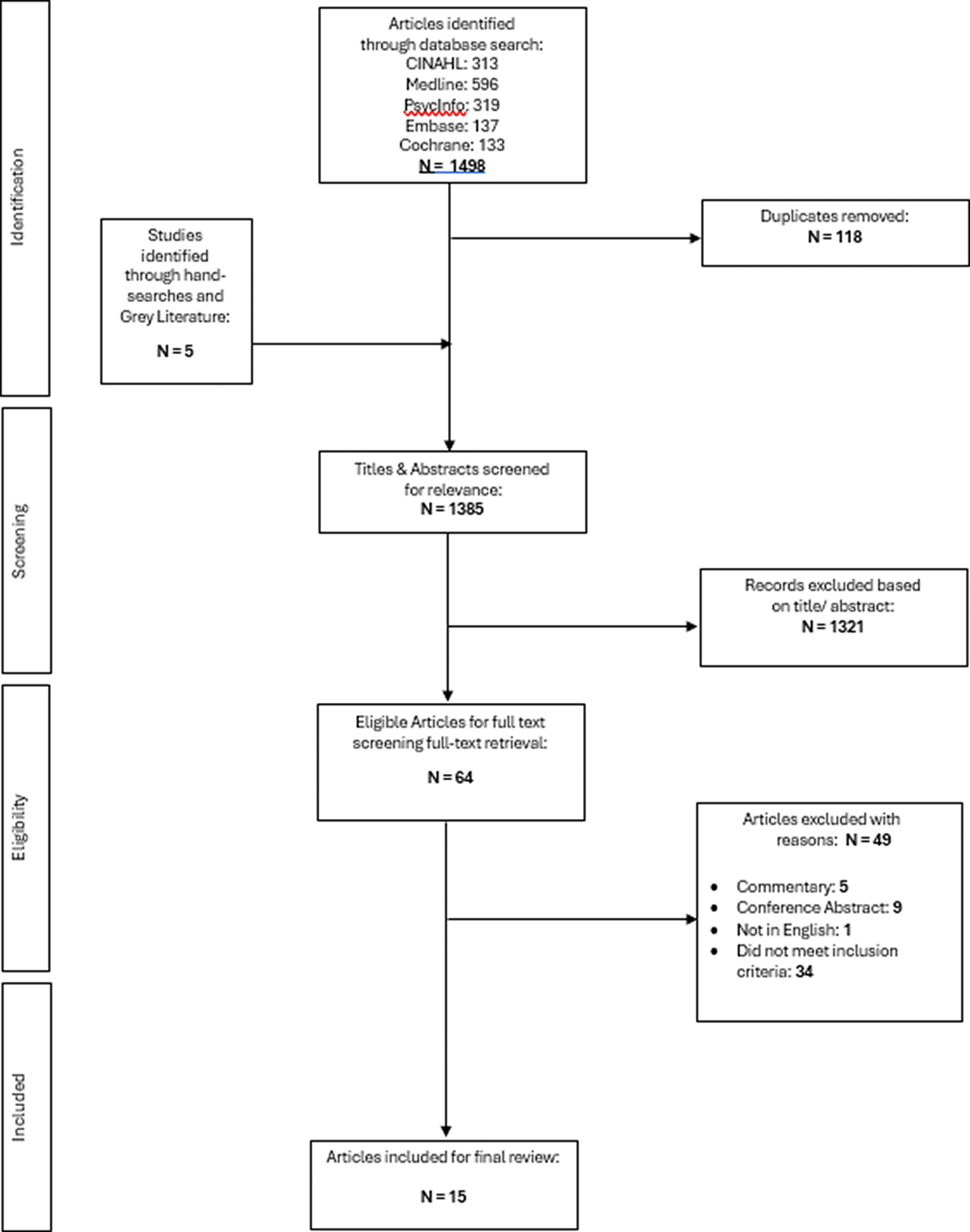
Flow diagram of records identified, screened and included in the review.
As a scoping review, the focus was on mapping and synthesising how models are described and evaluated in the literature, rather than formally assessing their effectiveness. Consistent with JBI guidance for scoping reviews,20 formal quality appraisal of included studies was not undertaken.
The inclusion and exclusion criteria ( Table 1) were determined using the Population, Concept, and Context (PCC) framework, which is recommended by JBI for scoping reviews.23
The inclusion and exclusion criteria using the Population, Concept, and Context (PCC) framework, which is recommended by JBI for scoping reviews.
A three-step search strategy, as recommended by JBI23 was employed with the support of a specialist librarian:
1. Initial search: A preliminary search of two databases Medline and CINAHL was conducted to identify relevant keywords, MeSH terms and index terms. Titles, abstracts, and subject terms of retrieved papers were analysed to refine the final search strategy.
2. Comprehensive search: The full search was performed across the following databases: PsycINFO, CINAHL, Cochrane Library, MEDLINE, and Embase. These databases were selected to capture multidisciplinary evidence across health, psychology, and social care disciplines. MEDLINE, Embase and Cochrane were included for clinical literature; PsycINFO provided psychological and behavioural research coverage; CINAHL captured nursing, allied health, and community care studies. Additionally, grey literature sources were searched. This included websites and repositories of NHS, Department of Health and Social Care, The King’s Fund and charity websites such as MENCAP, as well as government reports, and conference proceedings. Searches were conducted by one reviewer (DA) and verified by a second reviewer (CM).
3. Reference list screening: The reference lists of included articles were manually screened for additional studies that may have not been captured in the initial search.
The final search was conducted in December 2025. The search strategy was adapted for each database using and combining Boolean operators (“AND”, “OR”), truncations, and MeSH terms. The detailed search strategy for CINAHL is provided in Appendix 1.
The search results were imported into Ref Works reference management system for screening. Following de-duplication, 1345 articles remained. Titles and abstracts were screened by two reviewers (MI & CM) against the eligibility criteria. Full-text screening of potentially relevant studies eligible were then performed independently by three reviewers (DA, CM & MI). Disagreements were resolved through discussion with a fourth reviewer (SJ).
A standardised data extraction tool, based on the JBI template, was used to chart relevant information from the included studies. The extracted data included the following: Author(s), year of publication, country; description of the community-based mental health care model; study design; sample characteristics; and key findings. These are displayed in Table 2 (See extended data).50
The data extraction process was conducted by one reviewer (MI). 20% of the papers were independently verified by a second reviewer (DA) to ensure accuracy and consistency. Any discrepancies were resolved through discussion with the second and third reviewer (DA and CM).
A narrative synthesis approach was used to synthesise the data.24 Studies were grouped and mapped according to the themes developed from the data. A narrative summary of the findings was then provided to highlight the scope, characteristics, and gaps in the literature.
Key data extracted included characteristics of the community-based models of mental health care, access to care, the effectiveness of interventions, and evidence-based practices. Additionally, barriers to accessing mental healthcare were identified. The analysis also examined standards and benchmarks used to assess quality such as audits, patient and caregiver satisfaction with mental healthcare services.
The review included 15 studies published between 2014 and 2025, representing evidence from the United Kingdom (n = 8), Europe (n = 3), the United States (n = 2), Asia (n = 1) and Australia (n = 1). Most were qualitative or mixed-methods studies examining service models, practitioner experiences, and user perspectives within community-based intellectual disability and mental health services. A smaller number of evaluation studies assessed specific interventions, such as Intensive Support Teams (ISTs) or alternative crisis response models.
The scoping review revealed four key themes central to understanding current models of community-based intellectual disability services. These included: 1) models of community-based mental health care 2) enablers of effective care 3) barriers to access and 4) workforce challenges.
Models of community-based mental health care for adults with intellectual disability describe how mental health support is organised, delivered, and coordinated in community settings. Across the literature, four broad models of care are identified, differentiated by their level of specialisation, intensity, and integration with wider systems: specialist intellectual disability-led models, mainstream mental health-led models, intensive support models, and alternative crisis models. These models vary in their clinical focus, workforce composition, responsiveness, and capacity to address complex mental health needs in the community.
Specialist intellectual disability-led models of care are characterised by multidisciplinary expertise embedded within community-based services, with an explicit focus on the interaction between mental health, cognitive functioning, social context, and daily living needs. In the United Kingdom (UK), community intellectual disability teams exemplify this model, providing coordinated psychiatric, psychological, nursing, and allied health input to adults with intellectual disability living in the community.25,26 Core components typically include specialist assessment, ongoing mental health support, care coordination, and liaison with social care, housing, and families, with the aim of promoting community participation and preventing unnecessary hospital admissions.
Internationally, specialist intellectual disability-led models are operationalised differently but often reflect similar underlying principles. For example, in Australia, disability support services operate within a broader disability support paradigm, integrating mental health care into individualised support packages focused on quality of life, functional goals, and community inclusion.27 Although these services are not always described explicitly as mental health teams, they frequently include access to psychological and allied health interventions/therapies alongside social and vocational supports, reflecting a holistic, specialist model of community care.
Mainstream mental health-led models of care position primary care and generic mental health services as the principal providers of mental health support for adults with intellectual disability. These models emphasise equitable access to existing services but rely on adaptation rather than specialisation. In the UK, the Improving Access to Psychological Therapies (IAPT) programme provides evidence-based psychological interventions, such as cognitive behavioural therapy, for common mental health conditions.28 While access and waiting times for adults with intellectual disability are broadly comparable to those of the general population, outcomes are consistently poorer, suggesting limitations in the adequacy of standard interventions and insufficient adjustment for cognitive and communication needs.28
Similarly, evidence from Singapore demonstrates reliance on mainstream services as the default model of care for adults with intellectual disability.29 However, clinicians report limited training, confidence, and experience in working with this population, which constrains the effectiveness of care, particularly for individuals with complex or atypical presentations. These findings highlight limitations within mainstream-led models when specialist expertise and reasonable adjustments are not systematically embedded.
Intensive Support Teams (ISTs) represent a higher-intensity community-based model of care designed to provide rapid, flexible, and proactive support for adults with intellectual disability at risk of mental health crisis or exhibiting behaviours that challenge. In England, ISTs are multidisciplinary, typically involving psychology, nursing, occupational therapy, and related disciplines. Their aim is to deliver short-term, person-centred interventions within community settings.30 National policy positions ISTs as a core component of community intellectual disability care to reduce reliance on inpatient services and prevent escalation of distress.
Two broad configurations of this model have been identified: enhanced ISTs embedded within existing community intellectual disability services and standalone ISTs operating as independent teams.30 Although both configurations share similar aims and core components, evaluations have not demonstrated clear differences in clinical or cost-effectiveness outcomes. Qualitative evidence suggests that accessibility, continuity, person-centred practice, and effective communication with other services are critical mechanisms underpinning successful IST care.31 As such, ISTs can be conceptualised as an intermediate-intensity model of care, more responsive and focused than standard outpatient provision, but less resource-intensive than full crisis response systems.
Alternative crisis models of care emphasise integrated, time-limited crisis intervention delivered through coordinated multi-agency working. In the United States, the START programme provides a structured crisis prevention and intervention model offering 24/7 support, individualised care planning, and close collaboration between intellectual disability services, mental health teams, social care, and families.32 This model explicitly seeks to reduce crisis-driven hospital admissions through proactive planning and system-level coordination.
Similarly, Flexible Assertive Community Treatment (FACT) in the Netherlands has been adapted to support adults with intellectual disability through a flexible, relationship-based approach that integrates practical and emotional support with shared decision-making and respect for autonomy.33 This model applies assertive community treatment principles to provide sustained, multidisciplinary support aimed at maintaining continuity of care, reducing hospital admissions, and enhancing social functioning.
Structured approaches that support person-centred planning, such as “Planning Live”34 and the “Blue-Light” approach,35 offer complementary service frameworks for coordinating care, identifying unmet need, and improving communication across systems. However, these approaches are typically implemented as service-level practices rather than fully specified mental health models of care.
Across the literature, effective community-based mental health care for adults with intellectual disability is underpinned by a set of interrelated enablers that enhance engagement, promote wellbeing, and reduce reliance on inpatient care. Six key features were consistently identified: person-centred care, family and carer involvement, early recognition, adapted approaches, behavioural support, and trauma-informed care.
Person-centred care is a foundational enabler of effective community-based mental health support for people with intellectual disability, emphasising respect for individual preferences, values, and goals while balancing autonomy with appropriate support. Empowering individuals to participate in decisions about their care is associated with improved engagement, satisfaction, and adherence to interventions.36 However, the literature highlights ongoing challenges in implementing person-centred approaches, particularly for individuals with more severe intellectual disabilities, who are more likely to experience paternalistic decision-making and reduced influence over care choices.37,38
Several models demonstrate how these challenges can be addressed in practice. Flexible Assertive Community Treatment (FACT), for example, delivers support within individuals’ own environments and prioritises autonomy and collaboration, enabling care to be tailored to fluctuating needs while maintaining continuity.33 Similarly, the START programme in the USA incorporates person-centred crisis planning that recognises individual strengths and preferences, contributing to improved engagement and reduced inpatient admissions.32
In the UK, Intensive Support Team (IST) models embed positive behaviour support within person-centred planning, ensuring that interventions reflect individual needs and promote autonomy.30,31 The “Planning Live” and “Blue Light” interventions further demonstrates how effective communication strategies can enhance person-centred planning by ensuring that individual goals remain central to care decisions, supported by collaborative involvement from families and carers.34,35
Across models, services must navigate the tension between promoting autonomy and managing risk. While restrictive practices are typically used as a last resort, their use can undermine self-determination if not carefully managed.30,33 Effective person-centred care therefore requires ongoing attention to maintaining safety without compromising core principles of choice and control.
An additional enabling feature of person-centred care is the ability of services to signpost and coordinate access to wider services. Having clear, up-to-date knowledge of local and regional support networks enables services to respond flexibly to changing needs and sustain individuals within the community.31,34,39
Family and carer involvement is a critical enabler of effective community-based mental health care, providing continuity, advocacy, and contextual understanding that support both assessment and intervention. Evidence from the UK and Ireland indicates that specialist services, including community intellectual disability teams and mental health in intellectual disability services, actively involve families and carers in care planning and crisis prevention, strengthening the sustainability of interventions in home and community settings.25,40
Crisis-focused models such as ISTs and interventions such as “Planning Live” and “Blue Light” similarly emphasise family and carer involvement in developing action plans that support the individual within their wider social system, enhancing stability and reducing crisis escalation.30,34,35 Others further highlight the importance of a strong support network in promoting continuity and resilience in individuals’ lives.39
Evidence from the USA demonstrates that structured family engagement within START programmes contributes to more realistic crisis planning and the development of effective support networks, reducing the need for institutional care.32 However, tensions can arise when the preferences of individuals with intellectual disability differ from those of family members, highlighting the need for skilled communication and mediation.29 Effective family involvement therefore depends on collaborative approaches that respect the individual’s autonomy while recognising the central role of carers in sustaining care.
Early recognition of mental health deterioration or emerging behaviours that challenge is an important enabler for timely intervention. FACT services in the Netherlands exemplify proactive outreach, allowing multidisciplinary teams to identify and respond to early warning signs before crises develop.33 Similarly, ISTs and CLDTs in the UK employ structured monitoring and regular review to anticipate needs, reduce escalation, and support preventive strategies.30 Early recognition ensures interventions are delivered when they are most effective, preventing unnecessary distress and promoting continuity of community living.36 Proactive systems within specialist services that identify and address developing mental health issues provide the opportunity for timely interventions, reducing the severity and long-term impact of untreated conditions.27,40
Adaptation of services to the specific cognitive, communicative, and sensory needs of people with intellectual disability is critical for effectiveness. Tailored approaches enable meaningful participation, improve therapeutic outcomes, and reduce frustration or disengagement.
Some specialist services, including CLDTs, provide tailored interventions such as adjusted psychological therapies and individualised care planning that account for cognitive abilities, communication styles, and learning needs.25 Similarly, in mainstream UK mental health services, such as IAPT, adaptations may include simplified language, visual aids, and modified therapy materials to support understanding and engagement.28 However, the proportion of people with intellectual disability who improve or recover in these services continues to be lower than the general population, suggesting therapists could further adapt their approach.
Additionally, in Singapore, evidence indicates that the lack of tailored approaches in mainstream services limits access and effectiveness, highlighting the need for service adaptation across different healthcare contexts.29
Providing a wide range of adapted person-centred interventions, including psychodynamic therapy and psychoeducation is reported to be integral to support mental health treatment within clinical services.28,33,36 However, there is variation in awareness of relapse prevention strategies and a lack of clearly defined pathways for implementing interventions.40
Behavioural supports have a significant role in addressing the complex needs of people with intellectual disability and behavioural interventions are considered effective in improving outcomes.36 The use of Positive Behaviour Support (PBS) is viewed as a key intervention, with PBS approaches focusing on early intervention and crisis prevention, to promote behavioural stability and mental wellbeing in community settings.30,31
Behavioural support is central to managing behaviours that challenge and preventing crisis escalation. UK ISTs provide intensive, positive behaviour support interventions embedded within community care, aiming to reduce hospitalisation and improve quality of life.30 Similarly, CLDTs integrate behavioural strategies with broader mental health interventions, ensuring that behaviour management is consistent, evidence-based, and person-centred.25 In the USA, START programmes combine behavioural support with crisis planning, emphasising proactive management rather than reactive intervention.32 Effective behavioural support relies on trained staff, multidisciplinary collaboration, and integration with individual care plans to maintain stability in community settings.
The increased vulnerability to trauma in individuals with intellectual disability necessitates the need for trauma-informed care practices that address the impact of past experiences on their mental health and behaviour.36 Trauma informed care approaches have a pivotal role in meeting the needs of individuals with intellectual disability, who often experience higher rates of trauma due to their vulnerability.36
A trauma-informed approach recognises the high prevalence of past adversity and its impact on mental health in people with intellectual disability. Although evidence from the included studies is limited, frameworks such as START and CLDTs incorporate principles consistent with trauma-informed practice, including safety, choice, collaboration, and empowerment.26,32 Trauma-informed approaches support engagement, reduce re-traumatisation in care settings, and improve trust between service users and professionals. Embedding trauma-informed principles across services, including both specialist and mainstream provision, is increasingly recognised as essential for delivering effective and respectful care.
While a range of enablers support effective care for adults with intellectual disability, numerous barriers continue to impede service accessibility, quality, and outcomes. Across the literature, three key factors are consistently reported: poor integration, communication problems, and limited community inclusion.
Poor integration between health, social care, and disability services is a pervasive barrier to effective community-based mental health care. In the UK, fragmented commissioning arrangements and unclear service boundaries CLDTs, ISTs, mainstream mental health services, and social care frequently result in discontinuities in care.25,39 Limited funding, high service costs, and workforce pressures further exacerbate fragmentation, reducing the availability of consistent and comprehensive support.30,31
In practice, poor integration leads to delayed interventions, duplicated assessments, and gaps in responsibility, particularly at points of transition or crisis. In the USA, while the START programme explicitly promotes cross-system collaboration, access remains uneven outside of participating regions, and many local services lack formalised pathways for coordination.32 Similarly, in Australia, integration between disability support services and mainstream mental health provision under the National Disability Insurance Scheme (NDIS) varies considerably by region and provider capacity, creating inequitable access to care.27
Communication difficulties represent a significant barrier at both service-user and system levels. People with intellectual disability often require adapted communication approaches due to cognitive, language, or sensory differences. However, mainstream mental health services frequently lack the training, resources, or confidence to implement these adaptations effectively. For example, in UK IAPT services, limited use of accessible materials and insufficient clinician training restrict meaningful engagement and reduce treatment effectiveness.28 Comparable challenges have been reported in Singapore, where clinicians describe low confidence and limited experience in communicating with people with intellectual disability, hindering assessment and therapeutic work.29
Barriers also arise from poor communication between professionals and services. Inconsistent information sharing, fragmented documentation, and unclear referral processes between specialist and mainstream services compromise coordinated care and delay decision-making.25,30 These challenges are particularly evident in primary care, where General Practitioners report limited expertise in intellectual disability mental health, long waiting times for specialist advice, and difficulties navigating complex referral pathways.39 Collectively, these communication barriers delay access to appropriate interventions and contribute to unmet mental health needs.
Limited community inclusion is both a contributor to and consequence of poor mental health outcomes for adults with intellectual disability. Reduced access to employment, education, and mainstream leisure activities limits protective social networks and exacerbates mental distress.29,39
Although there is growing recognition that mental health services should actively promote social inclusion, this role is inconsistently embedded in service models.36 Geographic factors further complicate inclusion. For example, one study reported27 that individuals in more remote areas of Australia experience better access to certain community-based mental health services, with lower psychiatric admission rates, suggesting that service configuration rather than geography alone shapes access and outcomes.
Public misconceptions and stigma surrounding individuals with intellectual disability and their mental health needs also continues to limit opportunities for inclusion in mental health services.38 Within professional settings, stigma can manifest as lower expectations, reduced access to evidence-based interventions, or over-reliance on medication rather than psychosocial approaches.25,30
A consistent finding across the literature is the lack of specialised training and expertise among mental health professionals working with adults with intellectual disability. Targeted training is essential to equip staff with the skills required to deliver high-quality, integrated community mental health care.26 However, many clinicians report limited preparation for working with this population, which undermines confidence and competence in assessment and intervention.30
Difficulties in recognising and diagnosing co-occurring neurodevelopmental conditions, such as autism and ADHD, remain common and can lead to misdiagnosis or inappropriate treatment pathways.25,36,40 Others highlight that workforce limitations, including lack of specialist training and inconsistent competencies across sectors, contribute to variability in service provision and gaps in effective crisis and non-crisis support.35
Despite these challenges, evidence suggests that when appropriately trained, clinicians are able to adapt a range of psychotherapeutic approaches to meet the needs of adults with intellectual disability.40 Ongoing professional development and continuous training are therefore critical for strengthening workforce capability, improving confidence, and enhancing access to effective community-based mental health care.27
In the UK, specialist training pathways for psychiatrists emphasise competencies in assessment, formulation and management of mental health difficulties in people with intellectual disability across community and inpatient settings.26 Nonetheless, variation in knowledge between specialist and generic services highlights the need for more consistent and standardised training across sectors,40 including training for non-professional staff in education and social care to support early identification and prevention.26
Limited time and capacity within services significantly constrain the delivery of high-quality, person-centred community mental health care. High caseloads, increasing service demand, and workforce shortages reduce the time available for comprehensive assessment, therapeutic relationship-building, and delivery of adapted interventions.29 As a result, clinicians may be more likely to rely on pharmacological treatments, which can be quicker to implement but may not adequately address underlying psychosocial needs.38
Challenges in staff retention are closely linked to high levels of workload, emotional labour, and burnout among professionals working with adults with intellectual disability and co-occurring mental health needs. Sustained pressure, limited resources, and staffing shortages contribute to stress and fatigue, increasing the risk of burnout and subsequent turnover.30 Low pay, limited career progression, and the emotional demands of working with individuals with complex needs further exacerbate recruitment and retention difficulties, particularly within specialist intellectual disability nursing roles.26 In addition, increased demand on community services associated with transitions from out-of-area placements places further strain on an already stretched workforce. Adequate and sustained funding is therefore critical to support recruitment and retention, reduce workload burden, and maintain a stable, experienced workforce capable of delivering effective community-based mental health care.26,30
This scoping review identified a range of community-based mental health models for adults with intellectual disability, including specialist services, crisis-focused models, and adapted mainstream provision. Across these models, consistent enablers of effective community-based care were identified such as person-centred approaches, family and carer involvement, early recognition, adapted interventions, behavioural support, and trauma-informed practice. However, the findings also demonstrate that these enabling components are unevenly implemented and frequently undermined by systemic barriers and workforce constraints, resulting in fragmented and inconsistent care.
Despite longstanding policy and clinical recommendations advocating for integrated, specialist-informed models of care, services remain fragmented, with poor coordination between intellectual disability services, mainstream mental health services, and social care.41,42 This fragmentation directly reflects the barriers identified within our findings, particularly poor integration and communication across sectors, and continues to undermine the delivery of person-centred, continuous community-based care.
Mainstream primary care and psychological therapy services can play an important role in addressing mental health needs for adults with intellectual disability,29 particularly when reasonable adjustments, extended appointments, and adapted therapeutic approaches are implemented. However, the findings indicate that without integration with specialist expertise and clear referral pathways, mainstream services often struggle to respond to the complexity of co-occurring intellectual disability, autism, and mental health difficulties. As such, the effectiveness of mainstream provision is contingent on its ability to draw on specialist knowledge and to operate within a coordinated system of care rather than in isolation.
Some models show promise, particularly ISTs and crisis-focused models such as START and FACT, which aim to reduce hospital admissions and improve responsiveness during periods of acute distress.30,31,32,33 These models align with several of the enablers identified in the review, including early recognition, behavioural support, and family involvement. However, the findings suggest that these approaches represent partial models rather than comprehensive systems of care. Their focus on crisis intervention means they are often poorly integrated with preventative, therapeutic, and longer-term support. Implementation varies widely across regions, and few models are embedded within a broader framework that spans prevention, early intervention, treatment, and recovery. As a result, opportunities to address mental health needs earlier and more holistically are frequently missed.
The findings of this review indicate that there is no single, comprehensive model of community-based mental health care adults with intellectual disability. Current provision instead reflects a patchwork of partial or overlapping models, each addressing specific aspects of need but rarely operating as an integrated, end-to-end system of care. Crisis-focused services, such as ISTs and alternate crisis models, feature prominently within the literature. However, their prominence appears driven by system pressures to prevent hospital admission rather than clear evidence of superiority over preventative or longer-term therapeutic approaches. This emphasis risks reinforcing reactive patterns of care and further limits the development of proactive models spanning prevention, early intervention, treatment and recovery.
Although person-centred care is widely emphasised across models, the review findings indicate that services often fail to adequately account for heterogeneity within the population. Differences in level of intellectual disability, communication needs, co-occurring autism, and physical health conditions are not consistently reflected in care pathways or therapeutic provision. This limitation echoes workforce findings related to insufficient training and lack of expertise, particularly in recognising and responding to complex, overlapping presentations.
Similarly, the interface between physical and mental health is rarely addressed in a coordinated way, despite well-established evidence of poorer physical health outcomes for adults with intellectual disability. The absence of integrated physical–mental health approaches further contribute to fragmented care and undermines holistic wellbeing.
Behavioural support emerged as a central component of many community-based models, particularly within ISTs and crisis services. While Positive Behaviour Support (PBS) aligns with person-centred and preventative principles, the wider literature raises significant ethical and clinical concerns regarding Applied Behaviour Analysis (ABA). Critiques from people with intellectual disability and autistic individuals highlight experiences of harm, coercion, and trauma, including associations with post-traumatic stress symptoms.43,44
These critiques reinforce the importance of trauma-informed care, an enabler identified in the results but inconsistently implemented in practice. While PBS is increasingly incorporated into community services, the dominance of behaviour-focused approaches risks overshadowing broader psychological, relational, and environmental interventions. The findings suggest a need for greater emphasis on trauma-informed, rights-based, and psychologically informed models that address the underlying causes of distress rather than focusing narrowly on behaviour change.
UK national policies such as Building the Right Support, the Dynamic Support Register, and Care, Education and Treatment Reviews (CeTRs) provide important mechanisms for accountability and monitoring.45 These policies reflect many of the enablers identified in the review, including early recognition and cross-agency working. However, their impact is limited by insufficient investment in specialist services, workforce shortages, and inconsistent local implementation.30
As such, these policies function more as governance frameworks than as fully articulated models of care. They lack practical guidance on how enablers such as trauma-informed practice, adapted psychological therapies, and integrated workforce development should be operationalised across the system.
Despite these limitations, emerging interventions demonstrate how more structured, evidence-informed approaches might be embedded within community settings. The Multi-Component Anxiety Management Programme for Intellectual Disability (MCAMP-ID) integrates cognitive behavioural therapy, mindfulness, psychoeducation, and graded exposure within a co-produced, manualised format.46 Similarly, the Behavioural Interventions to Treat Anxiety in Adults with Autism and Moderate to Severe Intellectual Disabilities (BEAMS-ID) provide manualised behaviour therapy delivered to individuals and their carers, emphasising collaborative working, structured skills support and adaption to individual communication and learning needs.47 Moreover, Behavioural Activation and Learning Disabilities (BEAT-IT), a 12-session manualised intervention that adapts core behavioural activation principles to support engagement in meaningful activities, improve mood, and reduce depressive symptoms through structures, accessible materials and carer involvement.48 BEAT-IT illustrates how established psychological models such as behavioural activation, can be feasibly adapted for people with intellectual disability.
Together, the newer manualised interventions, such as Personalised Treatment packages for Adults with Learning disabilities who display aggressive challenging behaviour in community settings (PETAL), which targets aggressive behaviour, through personalised, modular treatment packages,49 these approaches illustrate how community-based mental health care can move beyond crisis-focused responses towards proactive, skills based, and psychologically informed support. While further evaluation is required, particularly in relation to long-term outcomes and implementation at scale, such interventions align closely with the enablers identified in this review, including adapted approaches, person centred care, workforce capability, and the potential for co-produced delivery within routine community services.
The review highlights several critical gaps in the evidence base. There are no randomised controlled trials evaluating community-based mental health models for people with intellectual disability, and few studies systematically compare outcomes across different models. Notably, none of the included qualitative studies centred the voices of people with intellectual disability, limiting understanding of how services are experienced and what aspects of care are most valued.
Further gaps include the absence of studies examining mental health care within social care contexts, such as residential services and day services, despite these settings playing a central role in daily support and wellbeing. These gaps mirror the workforce and service integration challenges identified in the findings and point to a disconnect between where people live and receive support, and where mental health care is conceptualised and evaluated.
There is a clear need for a structured, proactive model of mental health care for people with intellectual disability that provides both strategic direction and practical guidance. Such a model should operate across three interconnected levels:
(a) public mental health and social determinants of health;
(b) primary and social care; and
(c) specialist and community-based mental health services.
Prevention, early detection, equitable access, and cross-sector collaboration should be central, with crisis intervention positioned as one component within a broader continuum of care.
Multidisciplinary teams should place greater emphasis on preventative working, early recognition, relapse prevention, and collaboration with primary care, social care, and the third sector, rather than focusing predominantly on crisis response. Trauma-informed practice should be embedded across services, supported by psychoeducation and relapse prevention strategies, with clearer pathways for implementation.
Workforce development must be prioritised, including specialist training for professionals working with people with intellectual disability, and wider dissemination of adapted, manualised psychological therapies. Joint working across disciplines and sectors, alongside accessible therapeutic materials and protocols, will be essential to improving access, quality, and consistency of care.
This scoping review followed PRISMA guidance22 and employed a comprehensive search strategy, enabling a broad overview of community-based mental health care for people with intellectual disability. However, the narrative synthesis approach may introduce interpretative bias, and findings are constrained by the quality and scope of the available literature. The absence of studies centring the perspectives of people with intellectual disability limits understanding of the acceptability and lived experience of community-based mental health models, risks reinforcing professionally driven perceptions of care. This constrains the evidence base needed to inform genuinely co-produced service design.
Community-based mental health care for people with intellectual disability requires integrated, person-centred systems that move beyond crisis-focused responses. While promising service components exist, persistent fragmentation, workforce challenges, and limited adaptation undermine equitable access and continuity of care. Addressing these issues will require sustained investment, workforce development, trauma-informed practice, and coherent cross-sector frameworks. Proactive, inclusive, and evidence-based approaches are essential to reduce inequities and improve mental health outcomes for this population.
| Views | Downloads | |
|---|---|---|
| F1000Research | - | - |
|
PubMed Central
Data from PMC are received and updated monthly.
|
- | - |
Provide sufficient details of any financial or non-financial competing interests to enable users to assess whether your comments might lead a reasonable person to question your impartiality. Consider the following examples, but note that this is not an exhaustive list:
Sign up for content alerts and receive a weekly or monthly email with all newly published articles
Already registered? Sign in
The email address should be the one you originally registered with F1000.
You registered with F1000 via Google, so we cannot reset your password.
To sign in, please click here.
If you still need help with your Google account password, please click here.
You registered with F1000 via Facebook, so we cannot reset your password.
To sign in, please click here.
If you still need help with your Facebook account password, please click here.
If your email address is registered with us, we will email you instructions to reset your password.
If you think you should have received this email but it has not arrived, please check your spam filters and/or contact for further assistance.

Comments on this article Comments (0)