Keywords
Anger, Aggression, Hostility, Prevalence, Aggression questionnaire

Anger, Aggression, Hostility, Prevalence, Aggression questionnaire
The precise definitions and multifaceted nature of anger, aggression, and hostility continue to be areas of ongoing psychological research. Anger can be defined as an emotion that relates to an individual’s psychological interpretation of being attacked, abused, or rejected. Hostility, on the other hand, is an attitude of psychological compulsion and extortion, which is an effort to suppress others to represent the desired feedback. Hostility usually involves negative awareness of surroundings, which is increased by anger. Aggression is any behavior performed with the aim of harm or destruction.1–3 Anger, hostility, and aggression are not negative by themselves; in fact, they may be essential for human survival. Aggression is an intentional expression of energy, but the damage may not be intentional.4 The most extreme form of aggression, defined as violence that results in psychological harm, deprivation, injury, or death, will not be our focus in this study, as it requires further legal and ethical steps.5 Additionally, verbal or physical aggression is further subdivided into reactive and proactive.6,7 Reactive aggression, which is the focus of this study, is usually accompanied by anger and hostility, where anger serves as a crucial link between aggression and hostility.8–15 In contrast, proactive aggression, which is usually preceded by a conceptual feeling of superiority, is not usually initiated by anger or hostility.16–20 In a study in which participants, who were connected to a transcranial direct current stimulator (tDCS) to increase their left cortical activity, were exposed to anger stimulants, an insult showed more aggressive behavior.21 Measuring aggression is challenging because of the need for continuous monitoring of participants’ behaviors and the cost of the resources needed for the job. Moreover, it may lead to changes in participants’ behaviors as they know that they are being watched, which is commonly defined as the audience effect.22 Thus, many studies have applied self-rating tools to obtain perceptions of participants’ aggression. The Buss-Perry Aggression Questionnaire (AGQ), a tool published in 1992 with good generalizability, is commonly used and is considered the gold standard in this regard.23 A study using the AGQ on 5476 participants ranging from 15-26 years old (2785 males and 2691 females) found that aggression was highly expressed by teanagers and young adults.24 Multiple factors were significantly associated with increased aggression scores, including mood disturbances, failure in academics, missed college, media, family and peer influence, and others.24 Furthermore, a study in Greece that examined the aggression of 2050 high school students among 49 schools found a significant association between aggression and non-intact family structure, food intake, and household insecurity.25 Other factors were alcohol and tobacco use, which were significantly associated with increased anger, aggression, and hostility.26 Moreover, individuals with poorer social skills may have higher levels of anger and aggression.27 Another study focused on aggression and sleep in young adults and noted that sleep duration was negatively correlated with aggression scores.28 Another study found a significant positive correlation between the aggression of 843 university students with smartphone addiction and loneliness.29 A study that investigated aggression and body mass index (BMI) in female adolescents aged 12-18 years found a significant positive correlation.30 In another study, Fekih-Romdhane et al. aimed to determine whether cognitive function indirectly affected the relationship between smartphone addiction and aggression.31 The results showed that higher smartphone addiction and worsened cognitive function were significantly associated with greater physical aggression, verbal aggression, anger, and hostility. Additionally, older age was associated with more verbal aggression, higher Body Mass Index (BMI) was associated with more physical aggression, and more financial burden was associated with more hostility.31 All of these studies emphasized that aggression was noted in multiple settings and had many associated factors. An extremely sensitive setting, where aggression must be at its minimum, is the healthcare setting, as it may lead to a sentinel event. However, healthcare professionals’ anger and aggression were recorded in multidisciplinary teams between doctors and nurses, which had a negative effect on patient care as it caused miscommunication and less collaboration.32–34 One of the contributing factors is sex, as almost two-thirds of female radiologists encounter aggression from other female staff.35 In 2022, a study by Syed et al. was conducted in Riyadh, which assessed the prevalence of aggressive behaviors, such as workplace bullying toward healthcare practitioners, revealed that 53% of workers in several healthcare services had experienced some sort of workplace bullying.36 Furthermore, with an increased prevalence of bullying, job dissatisfaction reached up to 78% in severely bullied workers.36 In a study on medical students, which was performed in Karachi 2019, measured anger prevalence among medical students and revealed that medical students in educational settings had >90% frequency of expressing anger due to academic stress, such as study workload. An average of 65% of students showed hostility toward others in the academic setting.37 In particular, female students showed increased anger expression and hostility compared to male students, which could be due to academic stress.38
Resilience, which was inversely associated with aggression, was defined as the ability to return to normal with minimum disturbance after a disruptive event.39–54 The lack of resilience often leads to emotional instability, which can result in aggression.55 Myszkowski et al. showed that internal medicine residents experienced extreme stress on a day-to-day basis.56 Other healthcare providers and mental health nurses have experienced anger related to their medical practice.55 This shows the essence of promoting emotion-regulating techniques to reduce anger, aggression, and hostility among healthcare providers. In a study by Amin et al., medical students with high anger scores were given anger management sessions and measured after the intervention. They showed a significant anger reduction with an average of 25% compared to the control group.57 Moreover, anger management skills have been shown to significantly decrease anger manifestation and aggressive behavior.58 Spirituality was a major factor that showed its significance in two studies, yet it was not included in our study due to its difficulty in quantitative measurement. The first study was a cross-sectional study conducted on Iranian nurses who measured spirituality using the Palutzian-Ellison spiritual well-being questionnaire, which showed a significant inverse correlation between spirituality score and all AGQ scores, suggesting promoting spirituality modality as a part of medical education to reduce aggression.59 In the second study, Kanchibhotla et al., 219 convicted extremist offenders were chosen to enter a comprehensive 40-day yoga program.60 Several behavioral changes were observed during the program, including feelings of peace, aggression, and life satisfaction. The Buss-Perry scale questionnaires were administered before and after the 40-day yoga programme. A Significant reduction in aggression was observed, which led to improved quality of life and life satisfaction.60
These studies illustrate that aggressive behavior can be primarily prevented or minimized. Our study aimed to determine the perceptions of anger, aggression, and hostility levels among medical students using the Buss-Perry Aggression Questionnaire (AGQ) and investigate the associations between AGQ scores (physical aggression (AGQ_Phys), verbal aggression (AGQ_Verb), anger (AGQ_Ang), and hostility (AGQ_Host) and various demographic factors such as age, sex, BMI, academic level, GPA, studying hours, gaming, social media time, smartphone use, physical activity, and sleep duration among these students.
This descriptive, cross-sectional study was conducted in Jeddah, Saudi Arabia 2023. It included 138 medical students, representing approximately 47% of the calculated sample, from 3rd year to 6th year who electively participated through voluntary response sampling. The total population of medical students at the research site at the time of the study was 867 active students. A Cochran formula, utilizing a 52.6% prevalence of anger among medical students from a prior study in Karachi, Ahmed et al., indicated a target sample size of 266.37 However, the final sample size for this study was 138 students because of their refusal to participate. The reduced sample size may have affected the generalizability and statistical power of the findings. The electronic survey included an informed consent in the first page which included study title, ethical committee approval, data processing and handling and their associated risk. Accepting the informed consent is the only way to take participants to the second page where demographic and other data were obtained. No personally identifiable information e.g. name, ID number, phone number, email, student ID was collected. The third part in the survey utilized the Buss-Perry Aggression Questionnaire (AGQ), a widely used 29-item self-report instrument comprising four subscales: physical aggression (AGQ_Phys) items 1-9, verbal aggression (AGQ_Verb) items 10-14, anger (AGQ_Ang) items 15-21, and hostility (AGQ_Host) items 22-29.7 Participants responded to items using a seven-point Likert scale ranging from 1 (‘extremely uncharacteristic of me’) to 7 (‘extremely characteristic of me’). Subscale and total scores were calculated by summing the respective item responses, with specific items [Items 7 and 18] being reverse-scored prior to summation. This gave us AGQ_Phys scores ranging from 9 to 63 points (p), AGQ_Verb from 5 to 35 p, AGQ_Ang from 7 to 49 p, AGQ_Host from 8 to 56 p, and the total score (Total AGQ) from 29 to 203 p.
This study utilized Google Sheets for data coding and JASP version 0.19.3 for subsequent statistical analysis. The study established a p-value of < 0.05 as the threshold for statistical significance. The process involved calculating descriptive statistics (mean, standard deviation, median, and Interquartile Range [IQR]) for the demographic variables and AGQ scores. The demographic variables that were tested included sex (Male and female), educational level (third-year medical students (3MS), fourth-year medical students (4MS), fifth-year medical students (5MS), and sixth-year medical students (6MS)), age, BMI, CDC physical activity level, college GPA, studying time, and leisure time (social media time and gaming time per day in hours (hr)). Normality of data distribution was assessed using the Shapiro-Wilk and Kruskal-Wallis tests, as indicated in the results. For inferential analysis, the study employed independent sample t-tests, specifically Welch’s and Mann-Whitney T tests, to compare AGQ scores with associated variables. ANOVA test was also used to compare multiple groups and variables. Finally, Pearson’s and Spearman’s correlations were used to assess linear relationships between AGQ scores and continuous variables, such as college GPA and average smartphone use per day.
A total of 138 students participated in this study, including 109 males (79.0%) and 29 females (21.0%). The 138 students were divided by their academic year into 3rd year medical students (3MS): 36 students (26.1%), 4th year medical student (4MS): 74 students (53.6%), 5th year medical students (5MS): 20 students (14.5%), and 6th year medical students (6MS): 8 students (5.8%). Their ages were ranging 18 to 27 (mean 21.5, std 1.31) years for males and 19 to 25 (mean 21.4, std 1.37) years for females. The BMI results were calculated based on the participants’ estimation of their height and weight at the time of data collection. A total of 110 BMI scores were obtained for 83 males and 27 females and 28 participants preferred not to answer. The BMI of females ranged from 16.0 to 33.7 (mean 22.3, standard deviation 4.51) kg/m2, and males ranged from 16.1 to 60.3 (mean = 26.4, standard deviation 6.48) kg/m2. Furthermore, BMI scores were increasing per academic year with 16.1 to 39.8 (mean 23.8, std 4.94) kg/m2 for 3MS, 16.0 to 40.0 (mean 25.4, std 4.98) kg/m2 for 4MS, 18.1 to 60.3 (mean 26.3, std 9.77) kg/m2 for 5MS, 20.8 to 42.3 (mean 30.1, std 8.04) kg/m2 for 6MS ( Table 1). In ( Table 2), two variables were illustrated and categorized by sex and academic level. The first variable was the activity levels of the students obtained and calculated using the CDC physical activity scale, which is divided into active and inactive. A physically active individual is defined as an individual who workouts for at least 75 minutes of high-intensity conditioning, and muscle strengthening at least two sessions per week, or 150 minutes of moderate-intensity conditioning, and muscle strengthening workouts two days a week. Students who did not meet the CDC criteria were considered to be physically inactive. Based on this scale, multiple questions were asked to students to obtain their physical activity levels, and the results were separated based on sex and academic level. Four of females (13.8%) and 24 of males (22.0%) were considered to be active. Additionally, eight 3MS (22.2%), 15 4MS (20.3%), four 5MS (20.0%), and one 6MS (12.5%) were considered active. Students’ night sleeping time ranged from four to nine (mean 6.7, standard deviation 1.26) h for females and one to 12 (mean 6.6, standard deviation 1.44) h for males. The Night sleeping time per academic years was one–12 (mean 6.8, std 1.81) h for 3MS, four–ten (mean 6.5, std 1.27) h for 4MS, six–nine (mean 7.0, std 1.0) h for 5MS, five–nine (mean 6.4, std 1.29) h for 6MS. The second variable was students’ GPA scores out of five that were obtained and analyzed, ranging from 3.4 to 5.0 for male students (median 4.7, IQR 0.38, p-value Shapiro-Wilk <0.001), and 4.0 to 5.0 for females (median 4.9, IQR 0.23, p-value Shapiro-Wilk <0.001). GPA scores by academic year ranging 4.0 to 5.0 (median 4.8, IQR 0.20, p-value Shapiro-wilk <0.001) for 3MS, 3.4 to 5.0 (median 4.7, IQR 0.39, p-value Shapiro-wilk <0.001) for 4MS, 4.2 to 5.0 (mean 4.7, std 0.22) for 5MS, 4.2 to 4.9 (mean 4.6, std 0.22) for 6MS. The average study time was obtained in hours (hr) per day and categorized by sex and age. The mean study time decreased with advancing in medical school with a mean of 4.0 and std of 1.88 hr for 3MS, a mean of 3.9 and std of 2.48 hr for 4MS, a mean of 2.2 and std of 1.31 for 5MS, and a mean of 2.0, and a std of 1.20 6MS. Furthermore, Female students had a higher mean score than male students. A mean of 3.2 and std of 2.01 hr of studying for male students compared to a mean of 4.7 and std of 2.33 hr for female students. Additionally, Leisure time was obtained by asking students about their average gaming and social media use in hours (hr) per day. Gaming time mean was 1.7 and std 2.41 compared to females mean of 0.2 and std 0.58 hr. Additionally, the gaming time ranged from zero to 12 h for 3MS with a mean of 1.0, standard deviation of 1.37, 4MS mean of 1.5, standard deviation of 2.42, 5MS mean of 1.8, standard deviation of 3.0, 6MS mean of 0.9, and standard deviation of 1.73. In contrast, mean social media use in females was 4.0 with std 2.38 whereas males mean 3.4 and std 2.08 hr. The mean social media use of 3MS was 3.7 with std 2.26, 4MS mean 3.4 with std 1.90, 5MS mean 3.3 with std 2.33, and 6MS mean 4.0 with std 3.21 hours in ( Table 3).
| Age | ||||
|---|---|---|---|---|
| 3rd year medical student (3MS) | 4th year medical student (4MS) | 5th year medical student (5MS) | 6th year medical student (6MS) | |
| n | 36 | 74 | 20 | 8 |
| Mean | 20.3 | 21.6 | 22.6 | 23.3 |
| SD | 0.70 | 1.22 | 0.76 | 0.46 |
| BMI | ||||
|---|---|---|---|---|
| 3rd year medical student (3MS) | 4th year medical student (4MS) | 5th year medical student (5MS) | 6th year medical student (6MS) | |
| n | 36 | 49 | 17 | 8 |
| Mean | 23.8 | 25.4 | 26.3 | 30.1 |
| SD | 4.94 | 4.98 | 9.77 | 8.04 |
| Age | BMI | |||
|---|---|---|---|---|
| Male | Female | Male | Female | |
| n | 109 | 29 | 83 | 27 |
| Mean | 21.5 | 21.3 | 26.4 | 22.3 |
| SD | 1.31 | 1.37 | 6.48 | 4.51 |
| CDC 1 Physical Activity | ||||
|---|---|---|---|---|
| 3rd year medical student (3MS) | 4th year medical student (4MS) | 5th year medical student (5MS) | 6th year medical student (6MS) | |
| Total | 36 | 74 | 20 | 8 |
| Inactive (n) | 28 | 59 | 16 | 7 |
| % | 77.8 | 79.7 | 80.0 | 87.5 |
| Active (n) | 8 | 15 | 4 | 1 |
| % | 22.2 | 20.3 | 20.0 | 12.5 |
| College GPA2 | ||||
|---|---|---|---|---|
| 3rd year medical student (3MS) | 4th year medical student (4MS) | 5th year medical student (5MS) | 6th year medical student (6MS) | |
| n | 36 | 73 | 20 | 8 |
| Mean (Median) | (4.8) | (4.7) | 4.7 | 4.6 |
| SD (IQR) | (0.20) | (0.39) | 0.22 | 0.22 |
| CDC physical activity | College GPA | ||||
|---|---|---|---|---|---|
| Male | Female | Male | Female | ||
| n | 109 | 29 | n | 108 | 29 |
| Inactive (n) | 85 | 25 | Median | 4.7 | 4.9 |
| % | 78.0 | 86.2 | IQR | 0.38 | 0.23 |
| Active (n) | 24 | 4 | |||
| % | 22.0 | 13.8 | |||
| Factors and total | Total AGQ1 | AGQ_Host2 | AGQ_Ang3 | AGQ_Verb4 | AGQ_Phys5 |
|---|---|---|---|---|---|
| n | 138 | 138 | 138 | 138 | 138 |
| Median | 71.5 | 23.0 | 12.0 | 17.0 | 19.5 |
| Shapiro-Wilk | 0.97 | 0.97 | 0.97 | 0.97 | 0.96 |
| P-value of Shapiro-Wilk | 0.010 | 0.003 | 0.002 | 0.008 | < .001 |
| IQR | 43.3 | 15.8 | 13.0 | 8.0 | 14.0 |
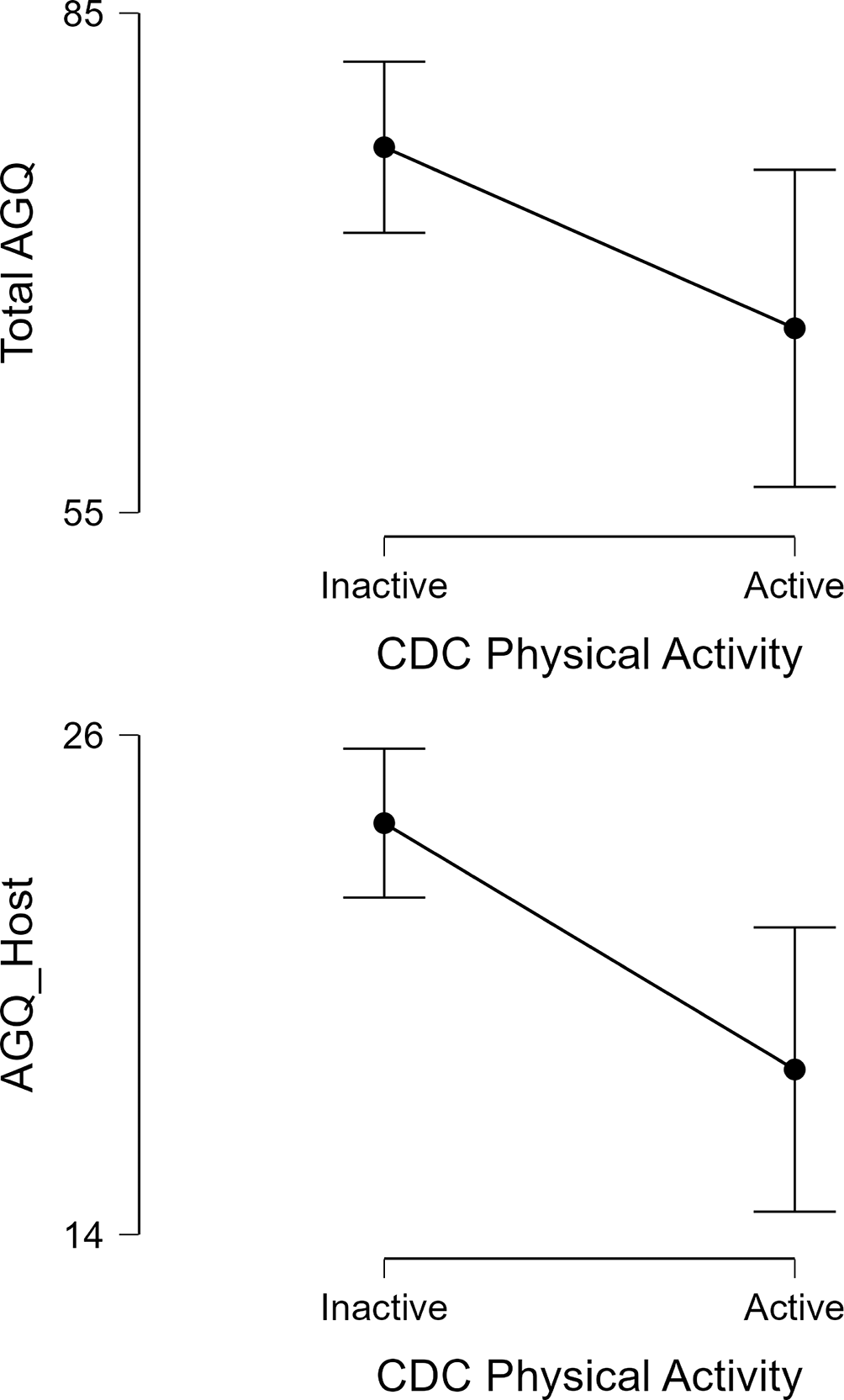
Total aggression scores (Total AGQ) ranged from 29.0 to 203.0 with a median of 71.5, IQR of 43.3. Hostility scores (AGQ_Host) ranged from 8.0 to 56.0 with a median of 23.0, IQR of 15.8. Anger scores (AGQ_Ang) ranged from 7.0 49.0 with a median of 12.0, IQR of 13.0. Verbal aggression scores (AGQ_Verb) ranged from 5.0 to 35.0, with a median of 17.0, IQR of 8.0. Physical aggression scores (AGQ_Phys) ranged from 9.0 to 63.0 with a median of 19.5, IQR of 14.0. In the analysis of these factors the medians and IQR were used in place of mean and std as all previous variables showed non-normal distribution which were further verified by shapiro-wilk p values of 0.01 for Total AGQ, 0.003 for AGQ_Host, 0.002 for AGQ_Ang, 0.008 for AGQ_Verb, and p value of less than 0.001 for AGQ_Phys. An insignificant difference in Total AGQ scores was found between males and females, resulting in 74.5 and 75.7 respectively, with a p-value of 0.93 in the Mann-Whitney t-test, as the Shapiro-Wilk test was positive in the male population with a p-value of 0.029 compared to 0.16 in females. Additionally, the AGQ_host, AGQ_Ang, AGQ_Verb, and AGQ_Phys scores showed no association with sex (p = 0.0784, 0.088, 0.0297, and 0.534, respectively, in the Mann-Whitney t-test). Furthermore, comparing educational levels with Total AGQ, AGQ_Ang, AGQ_Verb, and AGQ_Phys showed insignificant results in the Welch ANOVA test with p-values of 0.243, 0.317, 0.634, and 0.559, respectively. The only exception was the AGQ_Host score with educational level, which showed an association with a significant p-value of 0.023 in the Welch ANOVA test, as the Kruskal-Wallis test was positive with a p-value of 0.038. The 5MS had significantly less hostility when compared to 4MS in the post-hoc analysis, with a p-value of 0.028, as illustrated in ( Table 4). The second significant factor was physical activity level, which significantly reduced both the Total AGQ and AGQ_Host scores. An Independent Welch’s t-test was used to determine an association between Total AGQ and activity level, which showed a p-value of 0.047. In comparison, An Independent Mann-Whitney T-test was used as the Shapiro-Wilk test was significant with an inactive group with a p-value of 0.01, to find the association between AGQ_Host scores and activity level, which showed a p-value of 0.002 ( Table 5 and Figure 1). The third was GPA, as it showed a significant positive correlation with both AGQ_Ang and AGQ_Host, with Spearman’s rho 0.193 and p-value of 0.024, and Spearman’s rho 0.197 and p-value of 0.021 ( Table 6), respectively. Studying hours per day had significant positive correlations with AGQ_Phys, with Spearman’s rho of 0.190 and p-value of 0.046. The fifth and last factor was age, which had a significant inverse correlation with both AGQ_Ang and AGQ_Host with Spearman’s rho -0.168 for both and p-values of 0.050 and 0.0499, respectively.
| Descriptives - AGQ_Host | |||||
|---|---|---|---|---|---|
| Educational level | N | Mean | SD | SE | Coefficient of variation |
| 3MS1 | 36 | 23.833 | 9.063 | 1.511 | 0.380 |
| 4MS2 | 74 | 23.743 | 10.026 | 1.166 | 0.422 |
| 5MS3 | 20 | 17.050 | 7.837 | 1.752 | 0.460 |
| 6MS4 | 8 | 21.750 | 8.294 | 2.932 | 0.381 |
| Homogeneity correction | Cases | Sum of squaresa | df | Mean square | F | P | η2 |
|---|---|---|---|---|---|---|---|
| None | Educational Level | 772.399 | 3.000 | 257.466 | 2.909 | 0.037 | 0.061 |
| Residuals | 11861.572 | 134.000 | 88.519 | ||||
| Welch | Educational Level | 772.399 | 3.000 | 257.466 | 3.685 | 0.023 | 0.061 |
| Residuals | 11861.572 | 28.435 | 417.148 | ||||
| Post-hoc | Mean difference | SE | t | Ptukeyb | |
|---|---|---|---|---|---|
| 3MS | 4MS | 0.090 | 1.912 | 0.047 | 1.000 |
| 5MS | 6.783 | 2.624 | 2.585 | 0.052 | |
| 6MS | 2.083 | 3.677 | 0.567 | 0.942 | |
| 4MS | 5MS | 6.693 | 2.371 | 2.823 | 0.028 |
| 6MS | 1.993 | 3.502 | 0.569 | 0.941 | |
| 5MS | 6MS | -4.700 | 3.936 | -1.194 | 0.632 |
| Kruskal-Wallis test | |||
|---|---|---|---|
| Factor | Statistic | df | p |
| Educational Level | 8.438 | 3 | 0.038 |
| Group descriptives | ||||||
|---|---|---|---|---|---|---|
| Group | N | Mean | SD | SE | Coefficient of variation | |
| AGQ_Host | Active | 28 | 18.0 | 8.80 | 1.66 | 0.49 |
| Inactive | 110 | 23.9 | 9.46 | 0.90 | 0.40 | |
| Total AGQ | Active | 28 | 66.1 | 24.56 | 4.64 | 0.37 |
| Inactive | 110 | 76.9 | 27.18 | 2.59 | 0.35 | |
| Variable | Group | W | P |
|---|---|---|---|
| Total AGQ | Inactive | 0.978 | 0.067 |
| Active | 0.938 | 0.098 | |
| AGQ_Host | Inactive | 0.977 | 0.058 |
| Active | 0.897 | 0.010 |
| Variable | College GPA | Studying hours per day | Age | |
|---|---|---|---|---|
| 1. AGQ_Ang1 | Spearman’s rho | 0.193* | 0.166 | -0.168* |
| p-value | 0.024 | 0.083 | 0.050 | |
| 2. AGQ_Host2 | Spearman’s rho | 0.197* | 0.172 | -0.168* |
| p-value | 0.021 | 0.072 | 0.049 | |
| 3. AGQ_Verb3 | Spearman’s rho | 0.057 | 0.031 | 0.014 |
| p-value | 0.508 | 0.752 | 0.870 | |
| 4. AGQ_Phys4 | Spearman’s rho | 0.029 | 0.190* | -0.095 |
| p-value | 0.736 | 0.046 | 0.268 | |
| 5. Total AGQ5 | Spearman’s rho | 0.152 | 0.175 | -0.121 |
| p-value | 0.077 | 0.068 | 0.157 | |
In this study, variables such as demographics, academic data, and lifestyle preferences were explored in relation to aggression scores of medical students. Physical activity level was one of the most significant factors correlated with aggression scores. It showed that the less physically active a student was, the more likely he or she would score higher in the Total AGQ and hostility scores. To clarify, using the tests mentioned in the results section, it was found that the association between physical activity level and both total aggression and hostility scores had an inverse significant association with p-values of 0.047 and 0.002, respectively. These findings highlight the importance of physical activity in regulating hostility among students and open up the possibility of encouraging the implementation of physical activity in the curriculum for better coping and overall well-being. Unfortunately, physical activity levels decreased throughout the academic years, which showed that 6th year medical students were less active, with 12.5% of them considered physically active, yet there was no significant increase in aggression scores of 6th year medical students compared with other academic levels. This may be due to the multifaceted nature of aggression. Another difference was physical activity between the two sexes, which found that 13.8% of female students were considered physically active compared to 22% of males. However, sex was not a significant factor in aggression scores.
There was a significant increase in hostility and anger with increased GPA, which could possibly be due to increased study time, decreased gaming time, decreased age, and lower BMI. GPA had a significant positive correlation with studying hours per day, with Spearman’s rho of 0.330 and p-value <0.001. GPA also had significant inverse correlations with gaming time, age, and BMI, with Spearman’s rho (-0.186, -0.244, and -0.318) and p-value (0.041, <0.001, and <0.001), respectively. The significant inverse correlation between GPA and BMI could be explained by the significant positive correlation between age and increased BMI, with a Spearman’s rho of 0.220 and a p-value of 0.021. To make things clearer, GPA was insignificantly decreased with higher academic levels, yet age was significantly increased with a p-value of <0.001 in the ANOVA test from 3rd year to 6th year. Another exception mentioned above was 5th year medical students, who showed significantly lower hostility scores than the rest. Females were found to have significantly higher GPA (p-value 0.003 in Mann-Whitney t-test) with a median of 4.9 GPA, than males 4.7. Studying hours per day was significantly positively correlated with GPA, with a Spearman’s rho and a p-value of <0.001. Female students had significantly higher studying time than male students, which further highlighted the correlation between GPA and studying time.
Studying hours per day was positively correlated with physical aggression scores, supporting the notion that prolonged academic demand may be associated with emotional exhaustion or frustration. Interestingly, senior students reported fewer studying hours and, in the case of fifth-year students, significantly lower hostility scores compared to other academic levels. This may reflect improved coping mechanisms, adaptation to academic demands, or shifts in assessment structure during clinical years, although further research is required to explore these hypotheses.
In the comparison between males and females using video games, males were found to have more than double the number of gaming sessions than females. Those who used smartphones more on average showed slightly higher AGQ_Verb. The mean social media use in females was 4.0, whereas males’ mean was 3.4. Moreover, based on academic level, sixth-year students had the highest use of social media with a mean of 4.00. Regarding BMI results, males had a higher BMI than females, and sixth-year students had the highest BMI, which could be linked to being inactive, as sixth-year students were the least active group, as previously mentioned.
One of the studies confirmed a significant prevalence of anger among medical students across all five years, which is largely attributed to stress levels associated with medical education. It also highlighted that stress was identified as the primary cause of anger, consistent with the existing literature on psychological distress faced by medical students. Despite the high frequency of anger, second-year students exhibited the least anger, while first-year students showed the highest anger levels.37 This is similar to our study, which suggests that a longer study time could lead to more stress, which ultimately leads to more aggressive tendencies.
Another study found a statistically significant reduction in both anger and aggression levels among students who participated in training compared to the control group. The training focused on helping medical students recognize and manage their emotions more effectively. By providing tools to express anger in healthier ways, the program aimed to enhance emotional intelligence, which is crucial for personal and professional development. The authors suggested that the benefits of anger management training can extend beyond immediate emotional regulation. By equipping students with strategies to handle anger, the training may contribute to better interpersonal relationships and academic performance. This highlights the need for further studies to explore the long-term effects of such training and its applicability in different educational settings, suggesting that anger management could be an essential component of medical education.56
Generally, the current evidence suggests a complex interaction among study habits, physical activity levels, satisfaction with study, and expression of aggression. Another significant factor was average smartphone use and its association with increased verbal aggression, as mentioned in the results section, which showed results parallel to the Fekih-Romdhane study, as smartphone addiction in young adolescents was significantly associated with anger, verbal and physical aggression, and hostility.56 Another possible factor was average internet use, which was not significantly associated with AGQ in this study. However, the study by Li et al. showed a significant association between internet addiction and all AGQ scores using a modified Chinese version of the Buss-Perry Aggression Questionnaire (AQ-CV).61
One notable study identified that first-year students, who tended to experience greater scholarly loads and extended periods of study, had greater aggression levels.37 This finding suggests that the tension of heavy scholarly loads could have a detrimental effect on social relationships. Conversely, further research suggests a different stance: those who cut study time were less satisfied academically. This lower satisfaction can cause an increase in frustration and anger, showing how emotional reactions are shaped by academic involvement.37 These conflicting results point to the intricacy of these interactions and the necessity for further study to better understand the intricate dynamics involved. It is necessary to research various definitions of aggression since their method, as well as the methodology followed in each study, so that they can become aware of the entire topic. The personality types and coping mechanisms of individuals also need to be taken into account because they have the potential to determine the way students react in their academic setting.
This was a cross-sectional study, which may not be the best to show associations or causality. This study used voluntary sampling due to the sensitivity of the study topic; however, this sampling technique may have selection bias. A small number of participants were included in this study because of the low participation rate, as many students refused to be self-assessed for these traits. Many factors that were significant in other studies were not included, as the survey was too long and many students failed to complete it. A short version of the assessment tool may result in a higher participation rate; however, it may require a validity test before being implemented in the target population.
Future research should aim to create interventions that address not only the underlying causes of aggression in medical students but also general well-being. By cultivating healthier study techniques and coping mechanisms, institutions can buffer against the negative impacts of academic stress and improve students’ satisfaction and mental health. To promote the well-being of medical students, encouraging regular physical activity, effective coping mechanisms, good sleep hygiene, and healthy interpersonal relationships may contribute to lowering AGQ scores and positively impacting students’ future careers. Further research is recommended to explore these associations and to guide targeted interventions that support the personal and emotional development of future healthcare professionals.
| Views | Downloads | |
|---|---|---|
| F1000Research | - | - |
|
PubMed Central
Data from PMC are received and updated monthly.
|
- | - |
Provide sufficient details of any financial or non-financial competing interests to enable users to assess whether your comments might lead a reasonable person to question your impartiality. Consider the following examples, but note that this is not an exhaustive list:
Sign up for content alerts and receive a weekly or monthly email with all newly published articles
Already registered? Sign in
The email address should be the one you originally registered with F1000.
You registered with F1000 via Google, so we cannot reset your password.
To sign in, please click here.
If you still need help with your Google account password, please click here.
You registered with F1000 via Facebook, so we cannot reset your password.
To sign in, please click here.
If you still need help with your Facebook account password, please click here.
If your email address is registered with us, we will email you instructions to reset your password.
If you think you should have received this email but it has not arrived, please check your spam filters and/or contact for further assistance.

Comments on this article Comments (0)