Keywords
Peer tutoring; Nursing education; Nursing research education; Academic self-confidence; Student-centered learning; Undergraduate nursing students; Oman

Peer tutoring; Nursing education; Nursing research education; Academic self-confidence; Student-centered learning; Undergraduate nursing students; Oman
This version of the article has been substantially revised to improve methodological transparency, reporting accuracy, and interpretive rigor. The title, abstract, and key sections of the manuscript have been refined to ensure consistency with the study’s quasi-experimental post-test-only non-equivalent control group design. Language implying causality or effectiveness has been moderated throughout, with findings now presented as associations and group differences rather than definitive intervention effects.
The introduction has been streamlined, redundant content removed, and the literature review strengthened to provide a clearer justification for the study within the context of nursing research education and the Gulf region. The methods section has been expanded to provide additional detail regarding participant recruitment, sampling procedures, group allocation, tutor selection, instrument development, and ethical safeguards. Clarification has also been added regarding the absence of pre-test measures and the implications for baseline equivalence between groups.
The results section has been revised to improve statistical reporting, presentation of demographic data, and interpretation of findings. Tables have been corrected and additional explanatory information included where appropriate. The discussion has been updated to provide a more balanced interpretation of the findings, with greater attention given to potential confounding factors and methodological limitations.
Finally, the limitations section has been substantially strengthened to acknowledge the absence of randomization, lack of baseline measures, potential contamination, self-report bias, tutor–tutee heterogeneity, lack of blinding, baseline differences between groups, and the absence of adjusted analyses. Collectively, these revisions improve the scientific robustness, transparency, and reproducibility of the study while maintaining the original objectives and findings.
See the authors' detailed response to the review by Omar Al Omari
See the authors' detailed response to the review by Saeeda Khan and Yasir Ali
Nursing education has increasingly shifted toward student-centered, active learning pedagogies aimed at fostering high-order thinking, collaboration, and learner autonomy. Peer tutoring is a collaborative learning strategy in which students teach and support one another, fostering academic growth, confidence, and social skills for both tutors and tutees in a flexible, relatable environment particularly in theoretically demanding courses such as nursing research (Kim et al., 2021). As research competence is foundational to evidence-based nursing practice, identifying effective instructional strategies that enhance students’ engagement, understanding, and academic self-confidence remains a priority (Al Yahyaei et al., 2024).
Grounded in social constructivist learning theory, peer tutoring emphasizes knowledge co-construction, reciprocal learning, and active participation. When learners assume teaching responsibilities or study alongside their classmates, they frequently demonstrate improvements in thinking, communication, and self-assurance. Research also indicates that peer learning may be equally effective as lectures in improving academic performance and equipping students for clinical practice (Choi et al., 2021; Muthalib et al., 2023). An additional advantage of peer learning is its ability to reduce the loneliness experienced by contemporary students, promoting an environment of teamwork and mutual accountability in education (Koo et al., 2024). Several investigations have linked this approach to improvements in achievement, analytical skills, and learner satisfaction (Choi et al., 2021; Wang, 2024). Peer tutoring is a widely recognized, evidence-based instructional strategy employed across various disciplines. Despite its enduring popularity, comprehensive research on its effectiveness in teaching nursing research concepts remains scarce.
Evidence from nursing education literature indicates that peer tutoring contributes positively to students’ academic achievement, satisfaction, and sense of belonging (Kim et al., 2021b; Mottershead, 2022). Students who participated in tutoring consistently performed better academically than those who did not and reported that the sessions were helpful to their learning (Im Kang et al., 2021; Dias et al., 2026).
Despite the growing body of evidence supporting peer tutoring in clinical, skill-based, and foundational nursing courses, its application in nursing research education remains underexplored. Nursing research courses are often perceived as abstract, complex, and anxiety-provoking by undergraduate students, leading to reduced engagement and lower academic confidence. While innovative instructional approaches have been advocated to address these challenges, empirical evidence examining peer tutoring as a strategy for improving learning outcomes in nursing research courses is limited. This gap is particularly evident in the Gulf region, including Oman, where cultural norms favor collaborative learning and peer interaction, potentially enhancing the effectiveness of peer-assisted pedagogies.
Recent call in nursing education literature emphasize the need for innovative, evidence-based teaching strategies to strengthen research literacy and scholarly inquiry among undergraduate nursing students (Catarelli et al., 2023; Dias et al., 2026). Integrating peer tutoring into nursing research education aligns with contemporary curricular reforms that prioritize competency-based education, collaborative practice, and lifelong learning skills. As nursing programs increasingly emphasize self-directed learning, collaborative practice, and development of scholarly inquiry capacities, peer tutoring provides a proven mechanism for cultivating these capabilities. However, rigorous evaluation of its effectiveness within this context is necessary to inform curriculum design and teaching practice.
To date, no published studies have systematically examined the impact of peer tutoring on learning outcomes in undergraduate nursing research courses in Oman or the wider Gulf region. Addressing the gap is critical, as understanding the pedagogical value of peer tutoring in research education may support the development of more engaging, inclusive, and effective teaching strategies. Such evidence is also aligned with national educational priorities emphasizing quality, innovation, and student-centered learning.
A structured search of PubMed, Scopus, CINAHL, and Google Scholar using the keywords ‘peer tutoring’, ‘peer-assisted learning’, ‘nursing education’, ‘research education’, ‘Oman’, and ‘Gulf region’ identified no published studies specifically examining the impact of peer tutoring on learning outcomes in undergraduate nursing research courses in Oman or the wider Gulf region. This gap highlights the need for context-specific evidence regarding the effectiveness of peer tutoring in nursing research education.
Therefore, the present study aimed to evaluate the effectiveness of peer tutoring in improving knowledge acquisition and academic self-confidence among undergraduate nursing students enrolled in Nursing Research course at a private university in Oman. By examining learning outcomes within this under-researched context, the study seeks to contribute empirical evidence to the nursing education literature and inform best practices for teaching research competencies in undergraduate nursing programs.
A quasi-experimental post-test-only non-equivalent control group design was used to examine the effectiveness of peer tutoring on learning outcomes among undergraduate students enrolled in a Nursing Research course. This design was selected to allow comparison between students exposed to the peer tutoring intervention and those receiving traditional instruction while maintaining feasibility within an academic setting. Although this design enabled comparison between students exposed to peer tutoring and those receiving traditional instruction, the absence of pre-intervention measures limited the ability to establish baseline equivalence for knowledge and academic self-confidence. Consequently, findings should be interpreted with appropriate caution.
The study was conducted at the College of Health Sciences, University of Buraimi, Oman, during the Fall 2025 semester. The University of Buraimi is a private higher education institution comprising four colleges, including the College of Health Sciences. The Bachelor of Science in Nursing program enrolls approximately 1,200 students and requires completion of 135 credit hours over four academic years. The Nursing research course is a core component of the undergraduate curriculum, focusing on foundational research concepts, and group-based proposal development.
Participants were undergraduate nursing students enrolled in the Nursing Research course during the Fall 2025 semester. Approximately 200 students were registered across morning and evening sections of the course. A convenience sampling technique was used to recruit participants from both sections. Approximately 200 students were enrolled in the Nursing Research course across morning and evening sections during Fall 2025. All eligible students were invited to participate. Of these, 145 students expressed willingness to participate and provided consent. Eight students were excluded because of absence during scheduled data collection sessions, resulting in a final sample of 137 students included in the analysis (70 experimental; 67 control).
Sample size estimation was conducted using G*Power software for a two-group comparison, assuming a moderate effect size (Cohen’s d = 0.30), a significance level of alpha = 0.05, and a statistical power of 0.80. The required minimum sample size was determined to be 70 Students, distributed between the experimental and control groups.
Inclusion criteria comprised enrollment in the nursing research course during the fall 2025 semester and willingness to participate in the study. Students who were absent during scheduled peer-tutoring sessions were excluded from data collection.
The Nursing Research course spanned 15 weeks, including course orientation in week 1, a midterm examination in week 8, and the final examination in week 15. Peer tutoring sessions were implemented during weeks 7, 9, 10, and 11 of the semesters. An open invitation to serve as a peer tutor was extended to the students in the experimental group. Interest Students volunteered to deliver brief micro-teaching sessions of approximately 10 minutes on assigned research topics aligned with the course objectives.
Faculty members evaluated volunteer tutors using a standardized microteaching Criteria Checklist assessing content accuracy, clarity, organization, engagement strategies, questioning techniques, and facilitation skills. Fourteen peer tutors were selected, maintaining an approximate tutor-to-tutee ratio of 1:4–5. Selected peer tutors participated in three brief preparatory sessions focused on reinforcing key research concepts, effective small group facilitation, and constructive feedback provision. Tutors were provided with structured teaching materials including case analyses, worksheets, guided questions, and practice exercises.
Both experimental and control group received standard faculty-led lectures covering the same Nursing Research content. I addition, students in the experimental (morning) session engaged in peer tutoring activities during scheduled course support time, with minimal faculty oversight to ensure consistency across sessions. Students in the control (evening) session received only traditional lecture-based instruction.
At the conclusion of the intervention period, Students in the experimental group completed self-report questionnaires assessing knowledge, academic self-confidence, and perception of the usefulness of peer tutoring. Students in the control group completed a self-reported questionnaire and academic self-confidence only.
Participants’ demographic characteristics were collected using a structured questionnaire, including age, sex, cumulative grade point average (GPA), and residential status.
Knowledge of nursing research concepts was measured using 10 faculty-developed multiple-choice questions (MCQs) aligned with course content. Items were formatted in NCLEX-style and mapped to three cognitive levels: comprehension, application, and higher-order thinking. The content validity of the 10-item knowledge assessment was established through review by three nursing education experts with experience in nursing research teaching. Minor revisions were made based on their feedback to improve clarity and relevance. The scale demonstrated acceptable internal consistency.
Academic self-confidence was measured using a revised version of the Self-Confidence Scale originally developed by Sander and Sanders (2003). The Academic Self-Confidence Scale demonstrated good internal consistency reliability. The instrument comprises 14 items rated on a 5-point Likert scale ranging from 1 (No confidence at all) to 5 (Complete confidence). Higher total scores indicate greater academic self-confidence.
Students in the experimental group completed the Usefulness of Peer Tutoring Scale developed by Thomson, Smith, and Annesley (2014). The scale consists of 18 items rated on a 5-point Likert scale (1 = Strongly disagree to 5 = Strongly agree) and demonstrates strong construct validity and internal consistency (Cronbach’s α = 0.80) (Thomson et al., 2014). Higher scores reflect more positive perceptions of peer tutoring effectiveness.
Data was analyzed using IBM SPSS Statistics version 30. Descriptive statistics, including means, standard deviations, frequencies, and percentages, were used to summarize participant characteristics and outcome variables. Independent samples t-tests were conducted to compare knowledge and academic self-confidence scores between the experimental and control groups. Pearson’s correlation coefficient was used to examine the relationship between knowledge scores and academic self-confidence. Statistical significance was set at p < .05.
Ethical approval was obtained from the Research and Ethics Committee of College of Health Sciences, University of Buraimi, Oman prior to data collection. The Ethical approval number for this study is AY25-26COHS-010. To minimize potential coercion, written informed consent was obtained from all participants. Participation was voluntary, and students were assured that their decision to participate or withdraw would not affect their academic standing or course grades. All data were anonymized and stored securely in password-protected electronic files and locked cabinets accessible only to the research team. Participant confidentiality was maintained throughout the study and in all subsequent reports and publications. Participation status was not disclosed to course instructors during grading activities. All questionnaires were coded anonymously, and only aggregate findings were reported.
A total of 137 undergraduate nursing students participated in the study, comprising 70 students in the experimental group and 67 in the control group. Participant demographic characteristics are summarized in Table 1.
The majority of participants in both groups were female. In the experimental group, 62 students (88.6%) were female and 8 (11.4%) were male, while in the control group, 59 students (88.1%) were female and 8 (11.9%) were male. No statistically significant difference was observed between groups with respect to gender distribution (χ2 = 0.926, p > .05).
With regard to residence status, 41 students (58.6%) in the experimental group and 43 students (64.2%) in the control group resided on campus, whereas 29 students (41.4%) and 24 students (35.8%), respectively, lived off campus. This difference was not statistically significant (χ2 = 0.501, p > .05).
However, statistically significant differences were observed between the two groups in age and cumulative grade point average (CGPA). The mean age of students in the experimental group was higher (M = 25.14 years, SD = 6.58) than that of the control group (M = 22.27 years, SD = 3.13), and this difference was statistically significant (p = .001). Similarly, the experimental group demonstrated a significantly higher mean CGPA (M = 3.28, SD = 0.67) compared with the control group (M = 2.91, SD = 0.60; p = .001).
Independent samples t-tests were conducted to examine differences in knowledge and academic self-confidence between students who participated in peer tutoring and those who received traditional instruction only ( Table 2).
Students in the experimental group demonstrated significantly higher knowledge scores (M = 9.71, SD = 0.64) than those in the control group (M = 8.94, SD = 1.62). This difference was statistically significant, t(135) = 3.70, p < .001. The 95% confidence interval for the mean difference ranged from 0.36 to 1.19. Effect size analysis indicated a moderate effect of the peer tutoring intervention on knowledge outcomes (Cohen’s d = 0.63, 95% CI: 0.29–0.98).
Similarly, academic self-confidence scores were significantly higher among students in the experimental group (M = 56.56, SD = 8.33) compared with the control group (M = 48.04, SD = 7.80). This difference was statistically significant, t(135) = 3.64, p < .001, with a 95% confidence interval for the mean difference ranging from 5.78 to 11.24. The magnitude of the intervention effect on academic self-confidence was large (Cohen’s d = 1.05, 95% CI: 0.70–1.41).
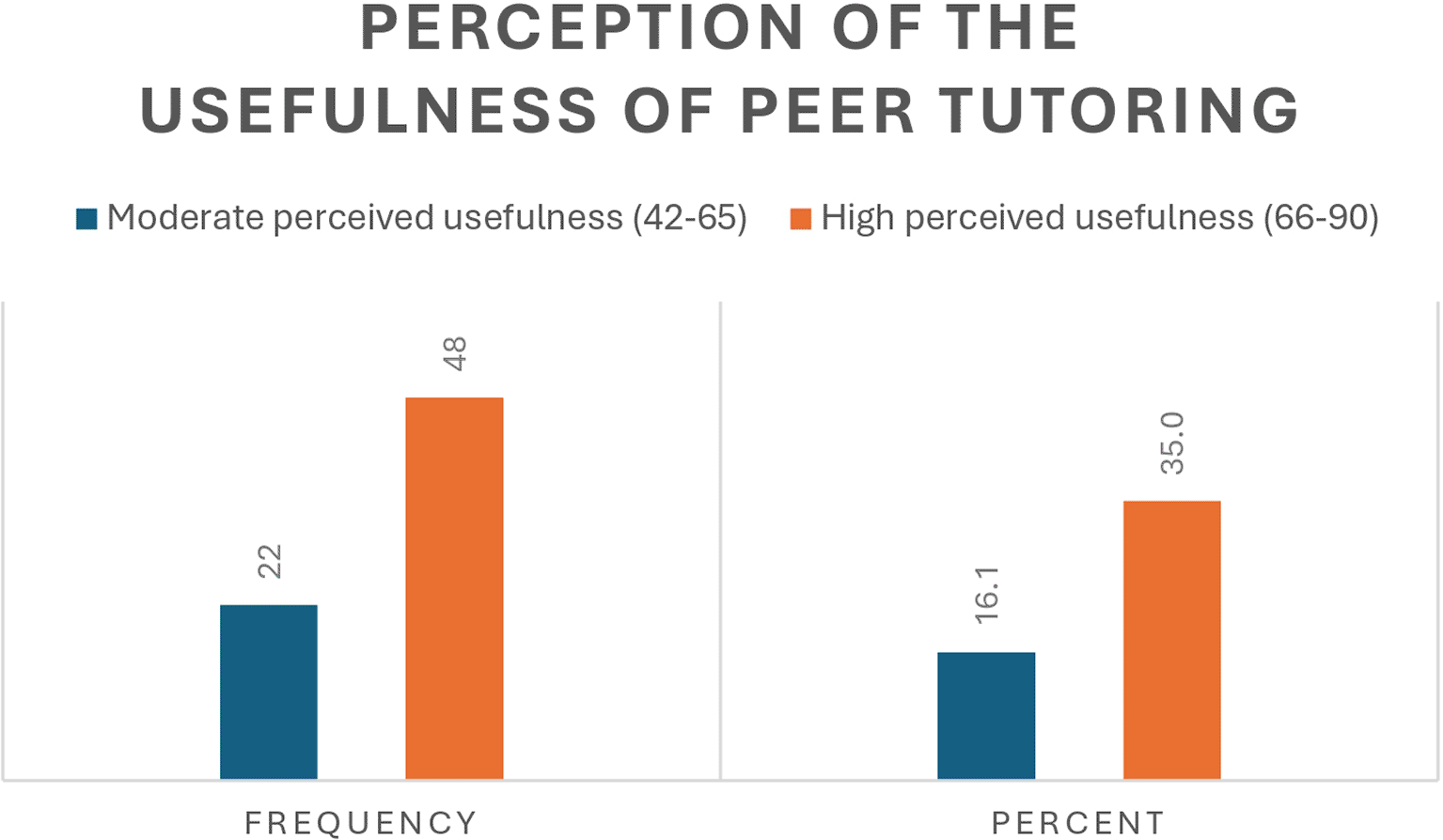
Perceptions of the usefulness of peer tutoring were assessed among students in the experimental group only. As illustrated in Figure 1, the majority of participants reported highly perceived usefulness of peer tutoring. Specifically, 48 students (68.6%) scored within the high perceived usefulness range (scores 66–90), while 22 students (31.4%) reported moderate perceived usefulness (scores 42–65). None of the participants reported low perceived usefulness. These findings indicate a consistently positive perception of peer tutoring among students exposed to the intervention.
Pearson’s correlation analysis was performed to examine the relationship between knowledge and academic self-confidence among all participants (N = 137). A moderate, positive, and statistically significant correlation was identified between knowledge scores and academic self-confidence (r = .34, p < .001), indicating that higher levels of knowledge were associated with higher levels of academic self-confidence ( Table 3).
| Variables | Mean | Std. Deviation | Knowledge of the participants | Academic self-confidence of the participants | |
|---|---|---|---|---|---|
| Knowledge of the participants | 9.34 | 1.279 | Pearson Correlation | .342*** | |
| Sig. (2-tailed) | 0.000 | ||||
| Academic self-confidence of the participants | 52.39 | 9.107 | Pearson Correlation | .342*** | |
| Sig. (2-tailed) | 0.000 |
Additional analyses examining associations between demographic variables and outcome measures revealed that higher CGPA, older age, and off-campus residence were significantly associated with higher knowledge and academic self-confidence scores (p < .05).
The present study demonstrated that undergraduate nursing students who participated in peer tutoring within a nursing research course achieved significantly higher knowledge scores and academic self-confidence compared with those who received traditional lecture-based instruction. These findings are consistent with previous empirical studies conducted among nursing students in clinical skills and foundational courses in Oman and Turkey, which reported superior academic and affective outcomes following peer-assisted learning interventions (Al Yahyaei et al., 2024; Şengül et al., 2022).
The observed improvement in knowledge acquisition supports existing evidence that peer tutoring facilitates deeper learning through interactive discussion, clarification of complex concepts, repeated engagement with content, and meaningful social interaction (Al Yahyaei et al., 2024; Dias et al., 2025; Kim et al., 2021). In the context of nursing research education, where students are required to develop abstract reasoning and proposal-writing skills, peer tutoring may enable learners to process content more actively and contextualize research concepts through collaborative dialogue. Furthermore, observational learning, peer modeling, and social persuasion appear to contribute to improved academic self-confidence, particularly when students receive feedback in a supportive peer-led environment (Feng et al., 2024; Mottershead & Alonaizi, 2022).
A notable finding of this study was the significantly higher academic self-confidence observed among students in the peer-tutoring group compared with the control group. Nursing research courses are frequently perceived by students as conceptually difficult and intimidating, often leading to reduced confidence and engagement. Peer tutoring offers a student-centered pedagogical approach that creates a psychologically safe learning space, enabling students to ask questions freely, articulate uncertainties, and receive peer affirmation. These findings align with earlier studies reporting increased psychological empowerment, academic self-efficacy, and confidence among nursing students participating in peer learning initiatives (Al Yahyaei et al., 2024; Dias et al., 2025; Kim et al., 2021; Shaukat & Bashir, 2016).
The positive and statistically significant correlation between knowledge and academic self-confidence identified in this study further reinforces the interdependent relationship between cognitive and affective learning outcomes. As students’ understanding of nursing research concepts increased, their confidence in engaging with academic tasks also improved. This relationship is particularly salient in research education, where inadequate confidence can act as a barrier to active participation, critical inquiry, and scholarly engagement.
Students’ perceptions of the usefulness of peer tutoring further support the quantitative findings. The majority of participants in the experimental group rated peer tutoring as highly useful, reflecting strong acceptance of the intervention and perceived value in collaborative and individualized learning opportunities. This finding is consistent with prior research demonstrating high levels of student satisfaction and perceived effectiveness of peer tutoring in nursing education (Kim et al., 2021; Lin et al., 2025; Wang, 2024). Within the Omani cultural context, which emphasizes collectivism and group-oriented learning, peer tutoring may be particularly effective in fostering motivation, engagement, and shared responsibility for learning.
Associations between higher CGPA, older age, off-campus residence, and improved knowledge and self-confidence scores may reflect greater academic maturity, self-directed learning skills, and prior educational exposure. Because age and CGPA differed significantly between groups, the observed between-group differences should be interpreted cautiously, as these variables may have contributed to the outcomes. Importantly, this study extends the existing body of nursing education literature by demonstrating the effectiveness of peer tutoring in a theoretical course, namely nursing research, rather than in clinical or skills-based settings alone. To the authors’ knowledge, this is among the first studies conducted in Oman to evaluate peer tutoring within a nursing research course. As such, the findings provide region-specific evidence supporting the integration of student-centered pedagogical strategies in Gulf nursing education and align with Oman Vision 2040, which emphasizes innovation, quality, and learner-centered approaches in higher education.
The findings of this study have important implications for nursing education, curriculum design, and faculty development. The demonstrated effectiveness of peer tutoring in enhancing knowledge acquisition and academic self-confidence suggests that this student-centered pedagogical approach can be strategically integrated into undergraduate nursing curricula, particularly in theoretically demanding courses such as nursing research. Incorporating structured peer tutoring may help address students’ learning anxiety, improve engagement, and foster deeper conceptual understanding, thereby strengthening research literacy and evidence-based practice competencies among future nurses.
From a curricular perspective, peer tutoring aligns well with contemporary competency-based and learner-centered educational frameworks that emphasize collaboration, self-directed learning, and critical inquiry. Embedding peer tutoring within nursing research courses may support the development of transferable skills such as communication, teamwork, and scholarly thinking, which are essential for professional nursing practice. Additionally, the reciprocal benefits observed among peer tutors highlight the potential of peer-assisted learning to promote leadership development and metacognitive growth among high-performing students.
At the institutional level, peer tutoring may represent a feasible and potentially sustainable strategy; however, future studies are needed to examine its cost-effectiveness. Faculty members play a critical role in designing, monitoring, and evaluating peer tutoring interventions; therefore, targeted faculty development initiatives are recommended to ensure effective implementation and quality assurance. In the context of Oman and the wider Gulf region, where collaborative learning is culturally congruent, peer tutoring may be particularly effective in promoting inclusive and supportive learning environments. The study’s findings also support national higher education priorities focused on innovation, quality improvement, and student engagement.
Several limitations should be considered when interpreting the findings. First, the quasi-experimental design, absence of randomization, and use of convenience sampling limit causal inference and increase the potential for selection bias. Second, the absence of pre-test measures prevented confirmation of baseline equivalence in knowledge and academic self-confidence. Third, significant baseline differences in age and CGPA existed between groups and adjusted analyses were not conducted; therefore, these factors may have influenced the observed outcomes. Fourth, allocation according to existing course sections may have introduced section-related confounding and possible contamination between groups. Fifth, self-reported measures of academic self-confidence and perceived usefulness are susceptible to social desirability and response bias. Sixth, variability in peer tutor abilities, learner engagement, and tutor-tutee interactions may have influenced intervention effectiveness. Seventh, the study was conducted at a single institution, limiting the generalizability of findings to other nursing programs and educational contexts. Finally, independent samples t-tests were used to compare outcomes between groups, baseline differences in age and CGPA may have influenced the findings. Future studies should consider adjusted analyses or randomized allocation to reduce the potential effect of confounding.
Based on the findings, several recommendations are proposed. Nursing educators should consider integrating structured peer tutoring into nursing research courses to enhance students’ understanding and academic self-confidence. Peer tutoring may also be extended to other theory-based nursing courses, such as statistics, ethics, and leadership, where students commonly encounter learning challenges. Faculty development programs should include training on the design, implementation, and evaluation of peer tutoring interventions to ensure instructional consistency and effectiveness. Future research should employ randomized controlled designs and multi-institutional samples to strengthen generalizability. Longitudinal studies are recommended to examine the sustained impact of peer tutoring on knowledge retention and research competence, while qualitative investigations could provide deeper insight into students’ and tutors’ lived experiences of peer-assisted learning.
This study provides evidence that peer tutoring is an effective instructional strategy for enhancing both knowledge and academic self-confidence among undergraduate nursing students enrolled in a nursing research course. Students who participated in peer tutoring demonstrated superior learning outcomes compared with those who received traditional instruction and reported high perceived usefulness of the approach. Incorporating peer tutoring into nursing education curricula may contribute to the development of more confident, competent, and research-literate future nurses.
| Views | Downloads | |
|---|---|---|
| F1000Research | - | - |
|
PubMed Central
Data from PMC are received and updated monthly.
|
- | - |
Provide sufficient details of any financial or non-financial competing interests to enable users to assess whether your comments might lead a reasonable person to question your impartiality. Consider the following examples, but note that this is not an exhaustive list:
Sign up for content alerts and receive a weekly or monthly email with all newly published articles
Already registered? Sign in
The email address should be the one you originally registered with F1000.
You registered with F1000 via Google, so we cannot reset your password.
To sign in, please click here.
If you still need help with your Google account password, please click here.
You registered with F1000 via Facebook, so we cannot reset your password.
To sign in, please click here.
If you still need help with your Facebook account password, please click here.
If your email address is registered with us, we will email you instructions to reset your password.
If you think you should have received this email but it has not arrived, please check your spam filters and/or contact for further assistance.

Comments on this article Comments (0)