Keywords
carbonization; thermal treatment under inert atmosphere; transition metal additive; copper catalyst; titanium catalyst; turbostratic carbon; temperature-dependent catalytic role switching

This article is included in the Japan Institutional Gateway gateway.
carbonization; thermal treatment under inert atmosphere; transition metal additive; copper catalyst; titanium catalyst; turbostratic carbon; temperature-dependent catalytic role switching
The depletion of fossil resources and the increasing severity of environmental degradation have accelerated global efforts to develop sustainable technologies for the production of energy, chemicals and functional materials from renewable resources. Among the various alternatives, woody biomass has attracted significant attention due to its abundance, renewability and carbon-neutral nature. However, the efficient utilization of this resource will require the development of conversion technologies capable of producing value-added products while minimizing waste generation.
The thermochemical conversion of biomass under oxygen-limited conditions enables the formation of liquid products, solid carbonaceous residues (char) and gaseous species.1 One of the key advantages of such thermal processes is the potential to simultaneously form liquid chemicals and solid functional materials. The liquid products can be utilized as renewable fuels or chemical feedstocks, while biomass-derived char has applications in environmental remediation, carbon sequestration, energy storage and catalysis.2 Despite these advantages, precisely controlling the yield and quality of thermochemical conversion products remains a significant challenge. In particular, the product distribution is highly sensitive to operational parameters such as heating rate, residence time, final temperature and the presence of catalysts or additives. Among these factors, temperature plays a decisive role in governing the balance between primary volatilization reactions and secondary processes, including condensation, further devolatilization and carbonization. Thermal treatment of biomass at temperatures in the vicinity of 500 °C typically generates liquids as the major products together with char having relatively disordered carbon structures. In contrast, higher temperatures (generally above 700–800 °C) promote enhanced devolatilization, secondary cracking reactions and the densification or reorganization of carbon frameworks.3,4
Catalytic carbonization under an inert atmosphere has emerged as an effective strategy for tailoring product distributions and improving the properties of the resulting materials.5 Transition metals such as copper (Cu) and titanium (Ti) are of particular interest because of the unique chemical reactivities and interactions with carbonaceous intermediates of these elements. Cu has been reported to promote aromatization and to stabilize carbon structures, whereas Ti can facilitate bond cleavage and gasification-related reactions.5,6 However, the majority of studies to date have focused on single temperature regimes and have not sufficiently addressed the manner in which catalytic roles evolve with increasing temperature.
Previous work by the authors demonstrated that, at 800 °C, the addition of Cu increases the char yield while Ti enhances mass loss and promotes the formation of both gas and liquid phase products.7 Observations using electron microscopy have also demonstrated distinct catalyst–char interactions under high-temperature conditions. Building on these findings, the goal of the present study was to integrate both moderate and high temperature processing (at 500 and 800 °C, respectively) into a unified framework to elucidate the temperature-dependent catalytic effects of Cu and Ti during the thermal treatment of woody biomass.
Wood flour was prepared from Todo fir (Abies sachalinensis) wood specimens harvested in Hokkaido, Japan. The wood material was supplied by the Forest Products Research Institute, Hokkaido Research Organization (HRO), Japan. The species identification was confirmed based on supplier documentation and macroscopic anatomical characteristics according to standard wood identification references used in Japanese wood science research. Therefore, no voucher specimen was deposited in a public herbarium. Species identification was confirmed by the supplier (HRO) and verified by the authors based on macroscopic anatomical characteristics. The wood was mechanically ground and then sieved to obtain a uniform particle size fraction. Copper powder (99.9%, average particle size 75 μm) and titanium powder (99.9%, average particle size 45 μm) were used as catalysts. The wood flour was mixed with either Cu or Ti powder at a mass ratio of 7:3 using an agate mortar to ensure that homogeneous dispersions were obtained. A portion of catalyst-free wood flour was used as a control sample.
Carbonization experiments were conducted using a thermogravimetry-differential thermal analysis (TG–DTA) apparatus (TG8120, Rigaku Corporation, Japan). In each trial, a sample mass of approximately 10 mg was placed in an alumina crucible and heated under nitrogen at a flow rate of 200 mL min−1. Heating rates of 10, 20 or 40 °C min−1 were applied and the material was heated to a final temperature of either 500 °C to generate primarily liquid products or 800 °C to produce primarily char. After reaching the target temperature, each specimen was held at that temperature for 3 min and then allowed to cool naturally while maintaining the flow of nitrogen.
Elemental compositions (that is, the C, H and N proportions) of char residues were determined using a CHN analyzer (MT-5, Yanako Co., Ltd.). Oxygen contents were calculated by difference following these analyses.
Microscopic Fourier transform infrared (FT-IR) spectra were acquired using an FT/IR-4200 spectrophotometer (Jasco, Japan), The spectra were recorded using the KBr pellet method to identify functional groups in the char residues.
The morphology of the carbonized samples and catalyst–char interactions were observed using scanning electron microscopy (SEM; JEM-5310, JEOL, Japan) operated at an accelerating voltage of 15 kV. Carbonized specimens were sufficiently conductive and therefore examined without additional coating.
Transmission electron microscopy (TEM; JEM-2100F, JEOL, Japan) was employed to investigate the carbon microstructure and to evaluate the interlayer spacing of turbostratic carbon domains. TEM observations were performed at an accelerating voltage of 200 kV to minimize beam-induced structural damage.
Two-dimensional fast Fourier transform (FFT) analysis was applied to high-resolution TEM images, and the resulting power spectra were rotationally integrated to obtain interlayer spacing distributions. The peak maxima in these distributions were used to determine the average carbon layer spacing.8,9
Supplementary Figures 1 and 2 present the thermogravimetric (TG–DTA) behavior of char residues obtained at 500 °C and 800 °C, respectively, highlighting the influence of Cu and Ti catalysts under an inert atmosphere. At 500 °C (Supplementary Figure 1), clear differences in thermal decomposition behavior were observed depending on the catalytic metal added.
The TG curves indicate that the incorporation of Cu reduced the overall mass loss and resulted in higher char yields compared with the untreated samples. In contrast, the addition of Ti led to increased mass loss, suggesting enhanced devolatilization during carbonization. These trends were consistently observed across different heating rates (r10, r20, and r40), indicating that the catalytic effect dominated over the influence of heating rate under the present conditions.
A quantitative comparison of the mass loss data further supports these observations: Cu-containing specimens exhibited systematically lower mass losses, whereas Ti-containing specimens showed higher mass losses relative to the non-catalyzed samples. This behavior implies that Cu preferentially promoted the stabilization and retention of solid carbon, while Ti facilitated the decomposition of biomass components at intermediate temperatures. Overall, these results demonstrate that char evolution at 500 °C can be effectively controlled by the choice of catalyst, with Cu favoring char formation and Ti enhancing thermal decomposition.
Supplementary Figure 2 shows the TG–DTA profiles of char residues obtained at 800 °C under an inert atmosphere. The TG curves indicate enhanced mass loss at this higher temperature, reflecting more extensive thermal decomposition compared with the behavior observed at 500 °C (Supplementary Figure 1).
Elemental compositions of char residues at 500 and 800 °C results ( Table 3) reveal that the char residues produced at 500 °C contained higher carbon contents, whereas those obtained at 800 °C exhibited lower carbon contents, consistent with the increased mass loss observed in the TG–DTA measurements. Notably, even at 800 °C, the Cu-containing specimens retained higher carbon contents than both the Ti-containing and untreated samples. This trend is consistent with the TG–DTA results and provides quantitative support for the role of Cu in stabilizing the solid carbon phase at elevated temperatures. In contrast, Ti addition promoted further decomposition, leading to reduced carbon retention.
| Sample ID | Heating rate (°C min−1) | Catalyst | Weight loss ratio (%) † | Weight loss ratio (%) ‡ |
|---|---|---|---|---|
| r10 | 10 | None | 78.2 | 78.2 |
| r20 | 20 | None | 79.7 | 79.7 |
| r40 | 40 | None | 79.9 | 79.9 |
| Cu r10 | 10 | Cu | 52.0 | 74.3 |
| Cu r20 | 20 | Cu | 51.0 | 72.8 |
| Cu r40 | 40 | Cu | 58.0 | 82.9 |
| Ti r10 | 10 | Ti | 65.2 | 93.1 |
| Ti r20 | 20 | Ti | 63.1 | 90.1 |
| Ti r40 | 40 | Ti | 66.7 | 95.3 |
| Sample ID | Heating rate (°C min−1) | Catalyst | Weight loss ratio (%) † | Weight loss ratio (%) ‡ |
|---|---|---|---|---|
| 1 (r10) | 10 | None | 82.1 | 82.1 |
| 2 (r20) | 20 | None | 82.3 | 82.3 |
| 3 (r40) | 40 | None | 81.7 | 81.7 |
| 4 (Cu r10) | 10 | Cu | 61 | 89.3 |
| 5 (Cu r20) | 20 | Cu | 55.9 | 81.9 |
| 6 (Cu r40) | 40 | Cu | 57.2 | 83.9 |
| 7 (Ti r10) | 10 | Ti | 59.3 | 86.8 |
| 8 (Ti r20) | 20 | Ti | 57.7 | 84.6 |
| 9 (Ti r40) | 40 | Ti | 58.4 | 85.6 |
| Element (wt%) | r10 | r20 | r40 | Fir (untreated) |
|---|---|---|---|---|
| Hydrogen (H) | 3.4 | 2.9 | 3.1 | 6.1 |
| Carbon (C) | 78.7 | 78.8 | 80.5 | 50.1 |
| Nitrogen (N) | 0.3 | 0.2 | 0.4 | 0 |
| Oxygen (+ ash)* | 17.5 | 18.1 | 16 | 43.7 |
Table 3 summarizes the elemental compositions of the char residues obtained at 500 °C under different heating rates (r10, r20, and r40), together with those of untreated Fir. After carbonization at 500 °C, the char residues exhibited markedly higher carbon contents (approximately 79–81 wt%) than the untreated material (50.1 wt%), accompanied by substantial reductions in hydrogen and oxygen contents. These results indicate effective carbon enrichment during carbonization at this temperature.
The carbon content of the char residues at 500 °C showed only minor variations with heating rate, whereas the oxygen (+ ash) content ranged from 16.0 to 18.1 wt%. Hydrogen contents decreased to approximately 3 wt%, and nitrogen contents remained low (<0.5 wt%) in all cases. These trends suggest that, at 500 °C, the elemental composition of the char residues was primarily governed by thermal decomposition reactions rather than by the heating rate.
Table 4 presents the elemental compositions of the char residues obtained at 800 °C. In contrast to the samples carbonized at 500 °C, the char residues produced at 800 °C exhibited substantially higher carbon contents, reaching approximately 93 wt% irrespective of heating rate. Correspondingly, hydrogen contents were reduced to approximately 1.3–1.4 wt%, while the combined oxygen and ash contents decreased to around 5 wt%. Nitrogen contents remained consistently low (<0.3 wt%).
| Element (wt%) | r10 | r20 | r40 |
|---|---|---|---|
| Hydrogen (H) | 1.4 | 1.3 | 1.3 |
| Carbon (C) | 93.4 | 93.5 | 93.2 |
| Nitrogen (N) | 0.2 | 0.3 | 0.2 |
| Oxygen (+ ash)* | 5.0 | 4.9 | 5.3 |
At 800 °C, variations in elemental composition with heating rate were negligible, indicating that the char structure had reached a thermally stabilized state. The consistently high carbon content and low heteroatom concentrations demonstrate that extensive devolatilization and deoxygenation occurred at this temperature, leading to the formation of a highly carbonized solid residue. Overall, the elemental analysis results clearly show that increasing the carbonization temperature from 500 to 800 °C promoted further carbon enrichment and structural stabilization of the char, while the influence of heating rate became insignificant at the higher temperature.
Figure 1 presents a representative SEM cross-sectional image of a Cu-containing char residue prepared at 500 °C. The image illustrates the typical microstructural features observed after Cu-assisted carbonization, including the direct contact between Cu particles and the carbonized matrix derived from Abies sachalinensis. The region indicated as the reaction area highlights localized morphological modifications associated with the presence of Cu.
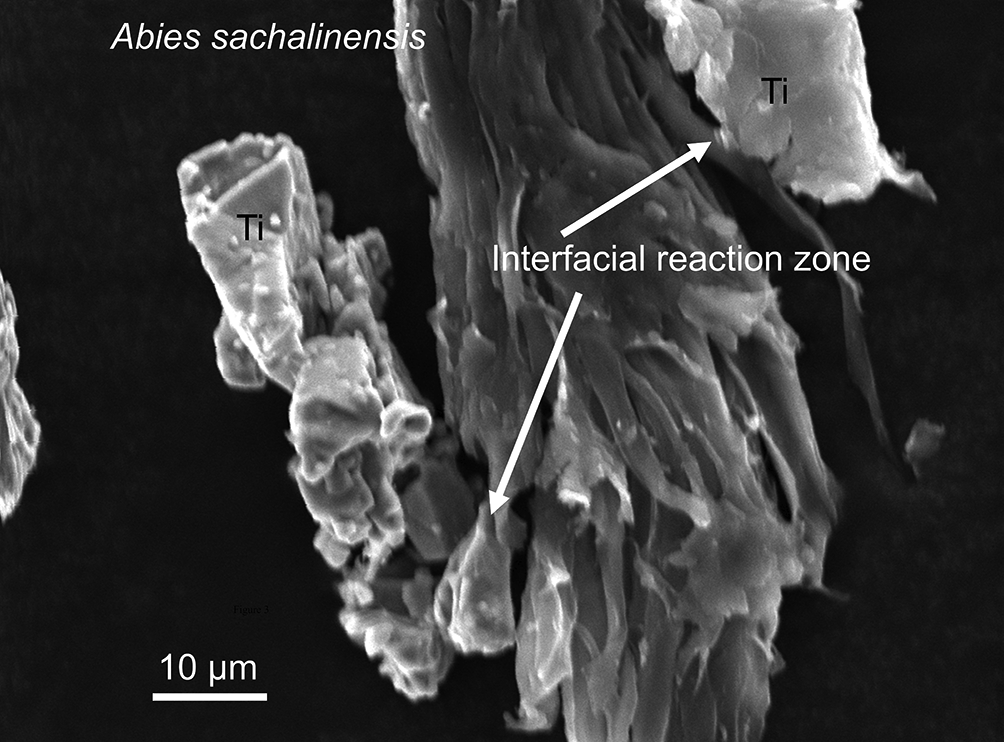
The arrow indicates the interaction region between the Cu particles and the carbonized wood structure. Scale bar: 10 μm.
In the catalyst-free samples ( Figures 2 (1)–(3)), the carbon structure is highly disordered, and the interlayer spacing increases systematically with heating rate, ranging from approximately 0.84 to 1.12 nm. This trend indicates progressive structural relaxation at higher heating rates in the present study, consistent with general interpretations of disordered and turbostratic carbon structures based on interlayer spacing analyses.8
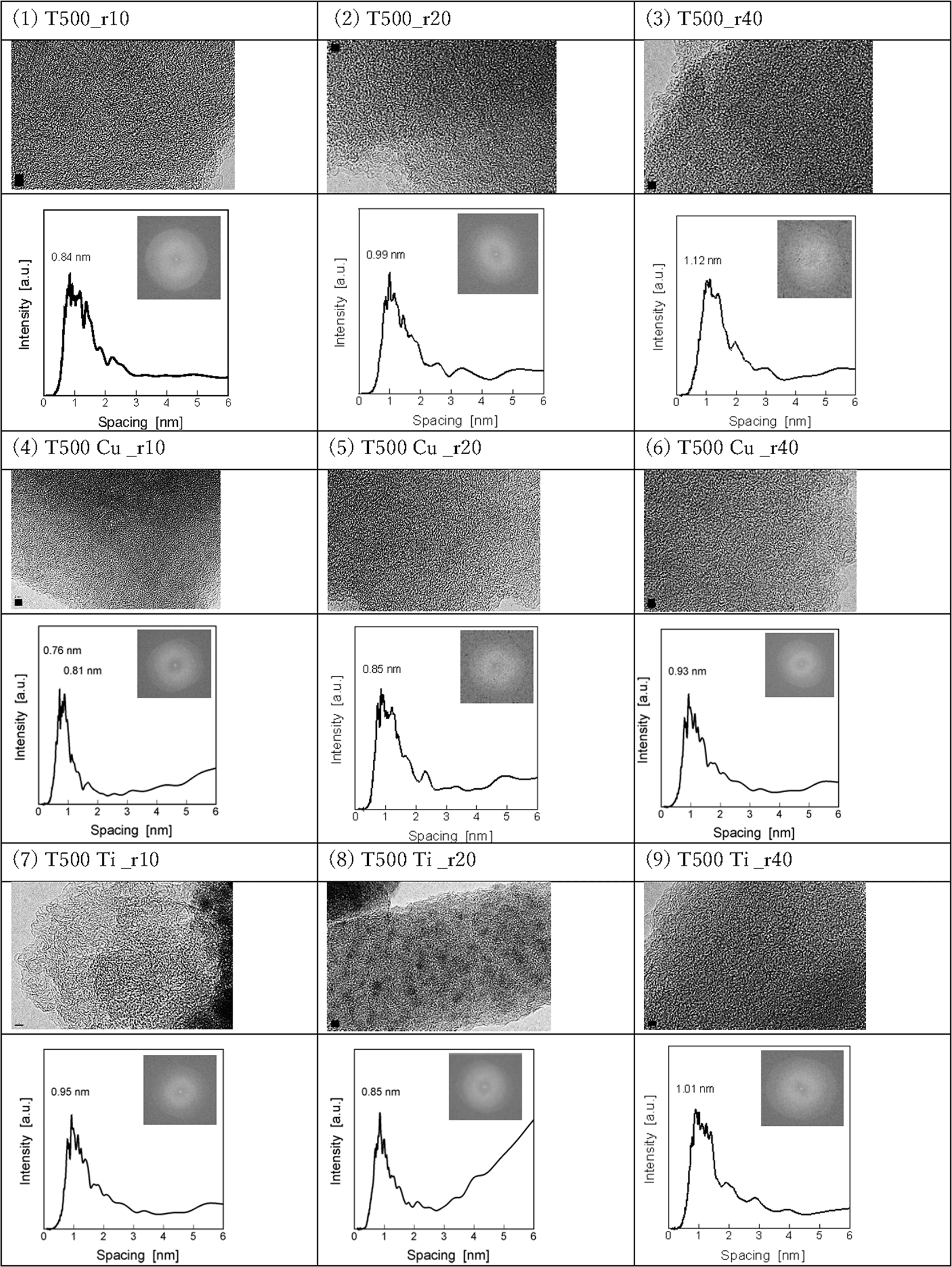
Panels (1–3) show samples without additives (T500_r10, T500_r20, and T500_r40), panels (4–6) show Cu-added samples (T500_Cu_r10, T500_Cu_r20, and T500_Cu_r40), and panels (7–9) show Ti-added samples (T500_Ti_r10, T500_Ti_r20, and T500_Ti_r40). The corresponding fast Fourier transform (FFT) analysis and radial intensity profiles are presented below each image to evaluate the interlayer spacing of turbostratic carbon structures. Scale bar: 2 nm.
In contrast, Cu-assisted samples ( Figures 2 (4)–(6)) exhibit partially developed layered carbon domains at all heating rates. The corresponding radial intensity profiles show relatively constrained interlayer spacings of approximately 0.76–0.93 nm. Notably, increasing the heating rate does not lead to a pronounced expansion of the interlayer spacing, suggesting that Cu suppresses excessive structural loosening during carbonization at 500 °C.
Ti-assisted samples ( Figures 2 (7)–(9)) show heterogeneous carbon structures with no systematic dependence of interlayer spacing on heating rate. The interlayer spacings vary irregularly, indicating that Ti does not consistently promote structural ordering under the present conditions.
A direct comparison across Figure 2 demonstrates that partially layered carbon structures at 500 °C are preferentially formed in the presence of Cu, whereas catalyst-free samples undergo progressive structural relaxation and Ti-assisted samples exhibit irregular structural evolution. These results indicate that Cu plays a specific role in locally organizing the carbon framework and constraining interlayer expansion during carbonization at moderate temperatures.
Figure 3 shows a cross-sectional SEM image of a typical specimen exhibiting the effects of interactions between the Ti and the carbon matrix after the high-temperature treatment. Distinct reaction zones are observed at the Ti–carbon interface, accompanied by pronounced fragmentation of the carbon framework. This SEM image is intended to provide a qualitative illustration of the characteristic morphology induced by Ti at elevated temperatures and does not imply uniform behavior across all samples.
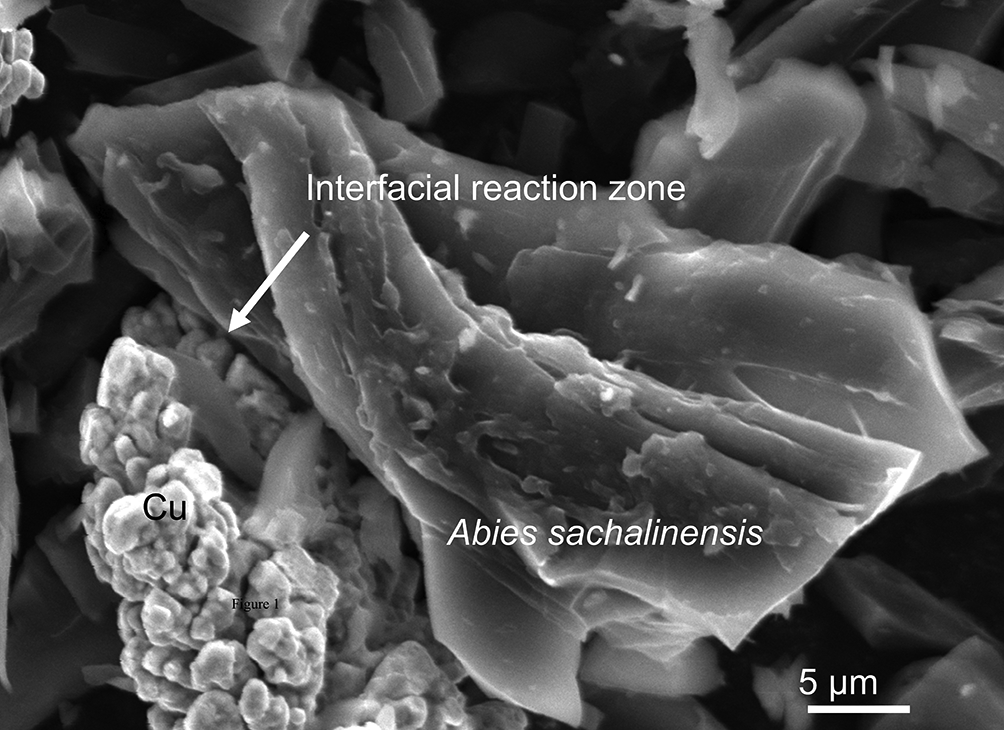
The catalyst–char interaction and associated surface structural modification are visible. The arrow indicates a reaction zone on the cell wall surface. Scale bar: 10 μm.
Figure 4 shows TEM images and corresponding interlayer spacing distributions of carbon residues formed at 800 °C under different heating rates, without additives and with Cu or Ti addition.
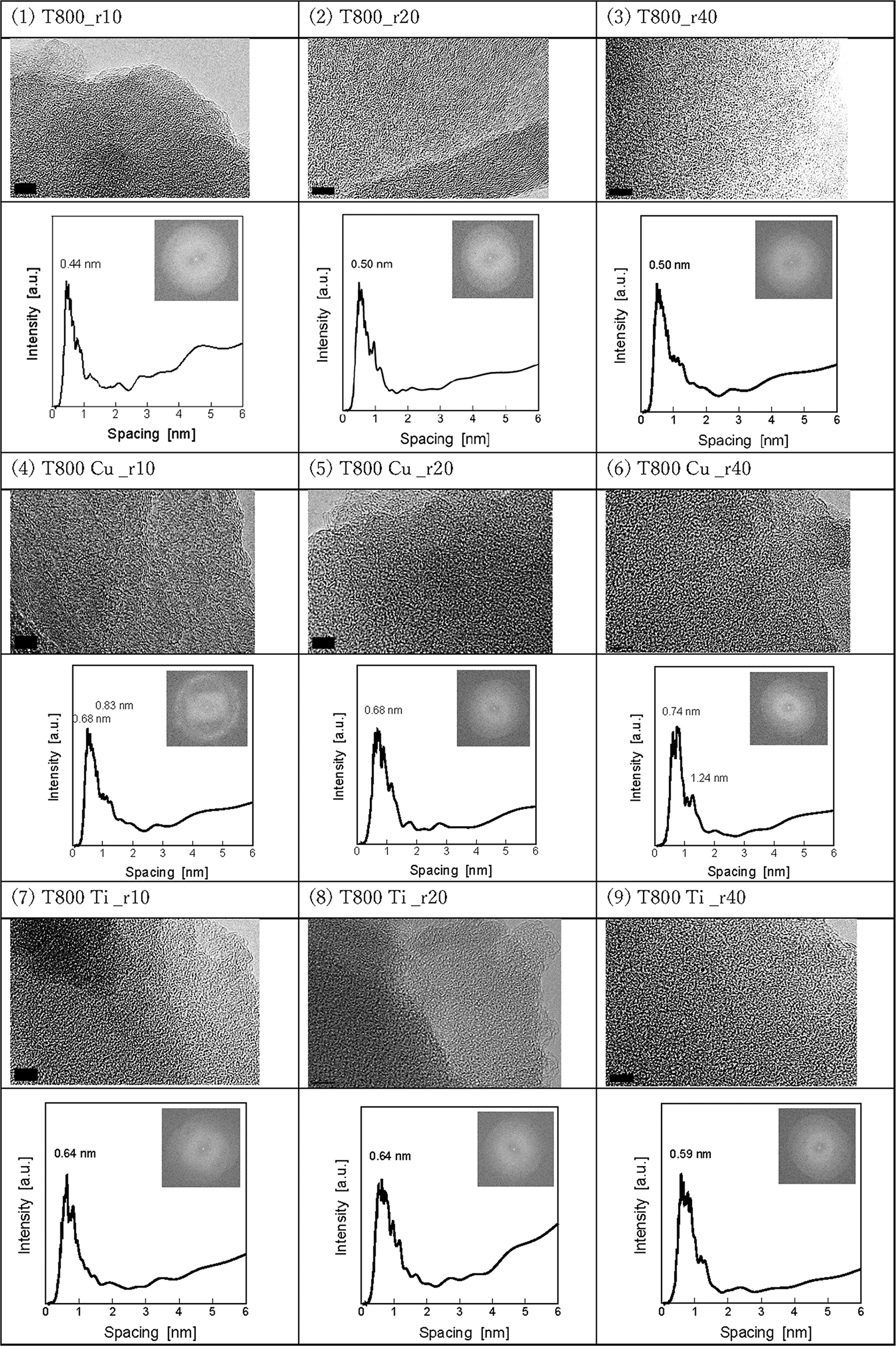
Panels (1–3) show samples without additives (T800_r10, T800_r20, and T800_r40), panels (4–6) show Cu-added samples (T800_Cu_r10, T800_Cu_r20, and T800_Cu_r40), and panels (7–9) show Ti-added samples (T800_Ti_r10, T800_Ti_r20, and T800_Ti_r40). The corresponding fast Fourier transform (FFT) patterns and radial intensity profiles are shown below each image to estimate the interlayer spacing of turbostratic carbon structures. Heating rates r10, r20, and r40 denote 10, 20, and 40 °C min−1, respectively. Scale bar: 2 nm.
In the catalyst-free samples ( Figures 4 (1)–(3)), relatively compact carbon structures are observed, with interlayer spacings centered at approximately 0.44–0.50 nm. No clear systematic dependence on heating rate is evident, suggesting that the carbon framework has reached a thermally stabilized and densified state at 800 °C.
In Cu-assisted samples ( Figures 4 (4)–(6)), partially disrupted carbon structures are observed, accompanied by a moderate increase in interlayer spacing to approximately 0.63–0.74 nm. Although some variation with heating rate is present, the overall interlayer spacing remains constrained compared with lower-temperature carbonization. According to established interpretations of turbostratic carbon structures based on TEM analyses, such constrained interlayer spacing reflects modification of nanoscale carbon organization.10 In the present study, these features indicate that Cu modifies the nanoscale carbon structure even at elevated temperatures.
Ti-assisted samples ( Figures 4 (7)–(9)) exhibit heterogeneous carbon structures with irregular interlayer spacing distributions. The interlayer spacings range from approximately 0.63 to 0.82 nm and show no systematic dependence on heating rate, suggesting that Ti induces localized structural perturbations rather than uniform microstructural reorganization at 800 °C.
Overall, the TEM observations at 800 °C demonstrate that catalyst addition increases the interlayer spacing relative to catalyst-free carbonization, with Cu exerting a more consistent influence on the nanoscale carbon structure than Ti. These results highlight distinct roles of Cu and Ti in controlling carbon microstructure under high-temperature conditions.
Based on the experimental results summarized in Figures 1–4 and Table 1–4, a temperature-dependent modulation model of the catalytic roles of Cu and Ti is proposed, as schematically illustrated in Figure 5. Rather than interpreting the effects of Cu and Ti as isolated experimental observations, their catalytic behaviors can be understood within a unified, temperature-oriented framework. In this approach, the thermal decomposition behavior, elemental composition, and microstructural evolution of the chars are treated as complementary descriptors that collectively reflect the dominant influence of temperature.
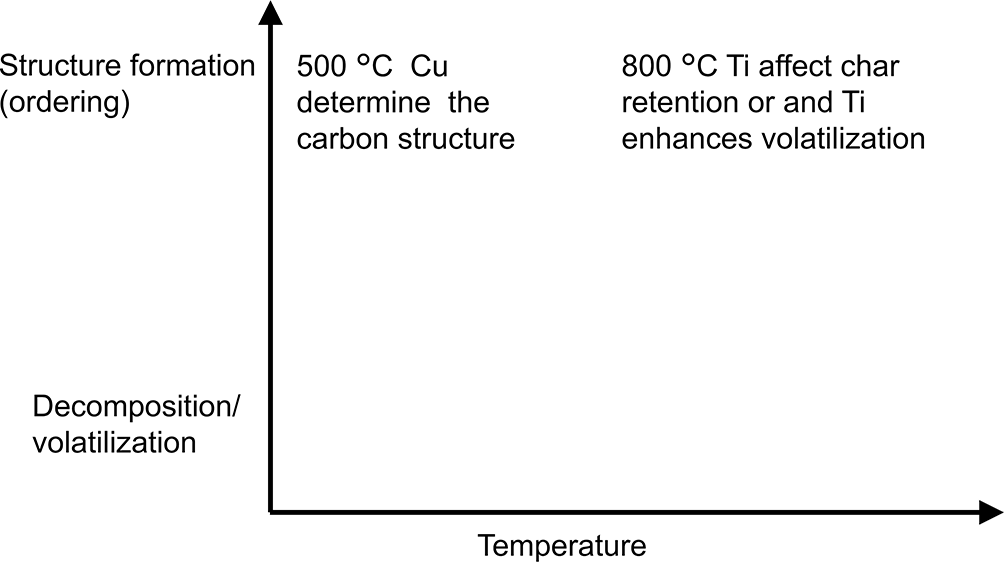
Conceptual diagram showing the different roles of Cu and Ti additives during carbonization. Cu promotes the formation of carbon structures at 500 °C, whereas Ti affects char retention and volatilization at 800 °C.
The TG–DTA, elemental analysis, and SEM/TEM results consistently demonstrate that the apparent catalytic functions of Cu and Ti during woody biomass carbonization under nitrogen are strongly influenced by temperature. A qualitative transition in their dominant roles is observed between 500 and 800 °C. Rather than showing a monotonic enhancement or suppression of decomposition, both metals exhibit temperature-dependent behavior, indicating that their influence on carbonization pathways is governed by the prevailing thermal regime.
At 500 °C, Cu primarily acts to moderate carbon decomposition and stabilize the solid carbon phase. TG–DTA measurements show reduced mass loss and enhanced char retention in the presence of Cu, accompanied by higher carbon contents in the elemental analysis. SEM and TEM observations further indicate that Cu preserves the carbon framework, leading to the formation of partially layered, turbostratic carbon structures. These results suggest that Cu moderates bond cleavage and promotes the reorganization of carbonaceous intermediates into stabilized solid phases during intermediate-temperature carbonization under an inert atmosphere.
In contrast, Ti-containing samples treated at 500 °C exhibit increased mass loss, lower carbon retention, and more heterogeneous microstructures. The absence of well-developed layered carbon domains suggests that Ti does not stabilize the carbon framework at this temperature but instead facilitates devolatilization and fragmentation of biomass-derived carbon networks.
At 800 °C, carbonization enters a regime dominated by thermal stabilization and densification of the carbon structure.4 Elemental analyses show that the char residues reach carbon contents of approximately 93 wt%, largely independent of heating rate, indicating that bulk composition is primarily governed by temperature. Under these conditions, Cu-containing samples still exhibit slightly higher carbon contents than Ti-containing or catalyst-free samples, suggesting that Cu continues to suppress excessive carbon consumption, although its structural influence is less pronounced than at 500 °C.
In contrast, Ti-assisted samples at 800 °C show extensive fragmentation of the carbon framework and distinct reaction zones at the Ti–carbon interface in SEM and TEM images. When considered together with the increased mass loss observed in TG–DTA measurements, these observations suggest that Ti promotes high-temperature interfacial reactions that enhance carbon consumption, likely through catalytic activation at the metal–carbon interface.
Taken together, these results support a temperature-dependent model in which Cu primarily contributes to the stabilization and preservation of solid carbon phases, particularly at intermediate temperatures, whereas Ti promotes decomposition processes, with this effect becoming dominant at elevated temperatures. This differentiation underscores the importance of temperature-specific catalyst selection when controlling char yield, composition, and microstructure during woody biomass carbonization under inert atmospheres.
The temperature-dependent modulation of the catalytic roles of Cu and Ti has important implications for the rational design of functional carbon materials derived from woody biomass. In particular, carbonization at 500 °C in the presence of Cu produces partially layered, turbostratic carbon structures with relatively preserved frameworks and expanded interlayer spacing. Such structural characteristics are commonly associated with enhanced accessibility and reactivity in disordered biomass-derived carbons.11 Such microstructural features are expected to be advantageous for applications requiring accessible active sites, including gas adsorption, energy storage electrodes, and catalyst supports.2
The disordered stacking and enlarged interlayer gaps observed in Cu-assisted chars at intermediate temperatures may facilitate the diffusion of ions and gas molecules while maintaining sufficient structural stability. In contrast, the pronounced decomposition associated with Ti addition, especially at elevated temperatures, leads to extensive fragmentation and reduced solid carbon retention. While this behavior is unfavorable for maximizing char yield, it may be advantageous in processes targeting devolatilization or gas-phase product generation rather than solid carbon materials.
At 800 °C, the carbon structure becomes thermally stabilized, and temperature emerges as the dominant factor governing bulk carbon ordering. Under these conditions, the influence of catalyst choice on microstructural evolution is reduced, although Cu-containing samples still exhibit relatively high carbon contents, indicating continued suppression of excessive carbon consumption.
Overall, these findings demonstrate that functional carbon materials with tailored properties can be produced through appropriate combinations of catalyst selection and carbonization temperature. Cu-assisted carbonization at intermediate temperatures is particularly suitable for producing turbostratic carbon structures with potential functional utility, whereas Ti incorporation is more appropriate for applications emphasizing decomposition and volatile formation. This temperature-specific catalyst utilization concept provides a practical framework for controlling both the yield and functionality of biomass-derived carbon materials.
This study demonstrates that the catalytic effects of Cu and Ti during the thermal treatment of woody biomass are strongly temperature dependent. Cu promotes the formation of partially layered, functional carbon structures at moderate temperatures and contributes to the retention of solid carbon even at elevated temperatures, whereas Ti enhances devolatilization and carbon consumption, particularly under high-temperature conditions.
These findings provide a comprehensive framework for designing biomass carbonization under inert atmospheres with the aim of simultaneously producing liquid chemical products and functional carbon materials.
FFT analysis was performed using a custom script provided by Prof. Kyoichi Oshida. While the script is not publicly available, the radial profile data derived from the FFT analysis are included in the dataset, allowing reproduction of the figures presented in the manuscript.
Supplementary Figure S1. TG–DTA curves of woody biomass during carbonization at 500 °C under a nitrogen atmosphere with heating rates of 10, 20, and 40 °C min−1 (r10, r20, and r40). Panels (1–3) show untreated wood samples (T500), panels (4–6) show Cu-added samples (T500Cu), and panels (7–9) show Ti-added samples (T500Ti). Green, blue, and red lines represent TG, DTA, and temperature profiles, respectively.
Supplementary Figure S2. TG–DTA curves of woody biomass during carbonization at 800 °C under a nitrogen atmosphere with heating rates of 10, 20, and 40 °C min−1 (r10, r20, and r40). Panels (1–3) show untreated wood samples (T800), panels (4–6) show Cu-added samples (T800Cu), and panels (7–9) show Ti-added samples (T800Ti). Green, blue, and red lines represent TG, DTA, and temperature profiles, respectively.
| Views | Downloads | |
|---|---|---|
| F1000Research | - | - |
|
PubMed Central
Data from PMC are received and updated monthly.
|
- | - |
Provide sufficient details of any financial or non-financial competing interests to enable users to assess whether your comments might lead a reasonable person to question your impartiality. Consider the following examples, but note that this is not an exhaustive list:
Sign up for content alerts and receive a weekly or monthly email with all newly published articles
Already registered? Sign in
The email address should be the one you originally registered with F1000.
You registered with F1000 via Google, so we cannot reset your password.
To sign in, please click here.
If you still need help with your Google account password, please click here.
You registered with F1000 via Facebook, so we cannot reset your password.
To sign in, please click here.
If you still need help with your Facebook account password, please click here.
If your email address is registered with us, we will email you instructions to reset your password.
If you think you should have received this email but it has not arrived, please check your spam filters and/or contact for further assistance.

Comments on this article Comments (0)