Keywords
Data integration, Indonesia, Islamic education, Muslim, Religiosity

Data integration, Indonesia, Islamic education, Muslim, Religiosity
The rapid advancement of technology, globalization, the growing human population, and the finite nature of natural resources have intensified competition for survival and improved living standards. Consequently, life’s pressures have increased, leading to stress across various domains. This scenario can precipitate numerous problems and social crises (Nurutdinova et al., 2019). There has been a notable rise in social issues such as moral decline, corruption, substance abuse, suicide, promiscuity, juvenile delinquency, radicalism, conflicts, mass riots, and homicides (Liu & Kia-Keating, 2019; Solmi et al., 2022). Factors like religiosity and education are believed to play a role in mitigating or slowing down these issues and crises (Zimmer et al., 2016). This belief stems from the idea that religious and/or well-educated individuals are generally better equipped to refrain from engaging in deviant behaviors.
Islam requires its adherents to believe in Allah SWT and consistently perform various good deeds, thus embodying religiosity. In the Islamic context, religiosity is defined as the degree of belief in, understanding of, and adherence to Islamic teachings in daily life, based on the Qur’an and the sunnah of the Prophet Muhammad (Suryadi & Hayat, 2021). Huber & Huber (2012) argue that there are five dimensions of religiosity, i.e., (1) the dimension of religious knowledge (intellectual dimension), (2) the dimension of belief (ideology), (3) the dimension of public practice, (4) the dimension of private practice, and (5) the dimension of religious experience. According to Tiliouine et al. (2009), the dimensions of religiosity include religious practice, religious altruism, and religious honor. Therefore, individuals with a high level of religiosity are those who consistently perform obligatory worship, exhibit Islamic behavior and morals, and supplement these with sunnah worship.
Various factors may influence the religiosity of individuals. Family background and upbringing play a crucial role, as parents, grandparents, and other relatives considerably shape an individual’s religious identity and practices (Bano & Ferra, 2018). The social and cultural environment in which a person resides can affect their level of religiosity (Guveli, 2015). For example, those living in predominantly Muslim communities or countries often exhibit higher levels of religiosity, while those in secular or non-Muslim settings may show lower levels. Personal experiences, such as spiritual encounters or traumatic events, can influence an individual’s religiosity, prompting them to either strengthen their faith, question it, or abandon it altogether (Weine et al., 2020; Alam et al., 2022). Gender differences also play a role, with women often showing higher levels of religious practice than men in certain contexts (Ghannam & Gorey, 2023). Political and social factors, including government policies, societal norms, and economic conditions, can also affect religiosity (Rehman & Askari, 2010). Education impacts religiosity by providing exposure to Islamic teachings, which can deepen understanding and practice. Conversely, limited education or exposure to different perspectives can result in a superficial grasp of Islam (Bano & Ferra, 2018; Masuda & Yudhistira, 2020).
Although numerous studies have attempted to investigate the effects of various factors (including education) on religiosity, no study has yet addressed their data integration. Therefore, this study aimed to evaluate the effects of Islamic religious education and other factors on the religiosity of Indonesian Muslim by integrating data from various studies and analyzing the data quantitatively using a meta-analysis method.
This study employed a quantitative approach to integrate studies examining the influence of Islamic religious education and other factors on the religiosity of Indonesian Muslim, i.e., the meta-analysis method. The meta-analysis method is a research technique and statistical analysis of data from various independent primary studies that focus on answering the same research question. It aims to produce quantitative estimates of the phenomena being studied. Meta-analysis is part of research synthesis, which involves integrating existing knowledge and research findings related to a specific problem. The purpose of synthesis is to increase the generalization and application of these findings, as well as to develop new knowledge through the integration process (Wyborn et al., 2018).
The data collection method consisted of two stages, i.e., (1) literature search and selection, and (2) database development. The literature search for database compilation was conducted using the Google Scholar platform with the keywords “religiosity” and “Islam”. A total of 628 records were initially identified from the database. The records were subsequently subjected to the study selection process by following the Preferred Reporting Items for Systematic Reviews and Meta-Analyses (PRISMA) protocol ( Figure 1).
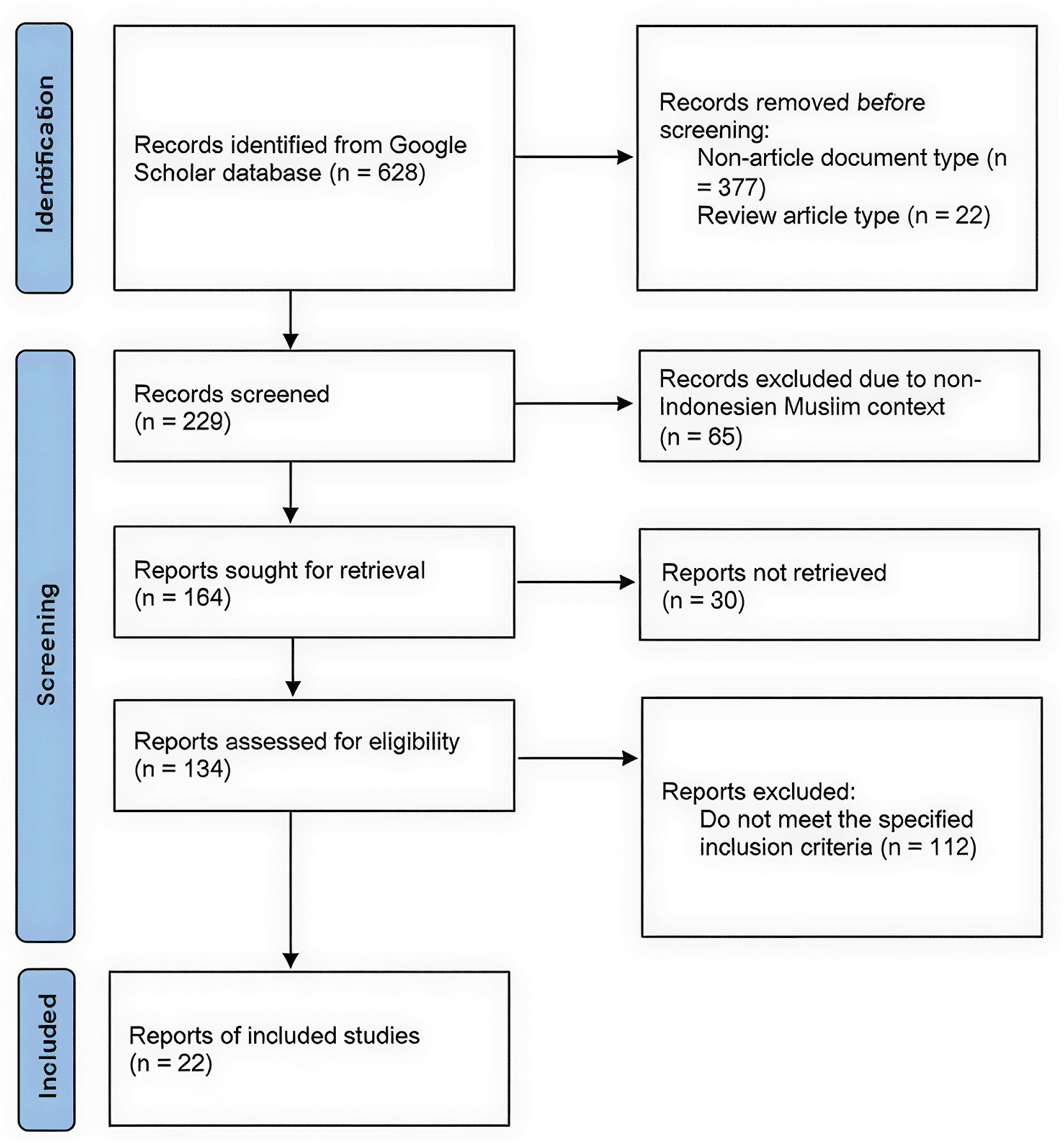
The diagram illustrates the identification, screening, eligibility assessment, and inclusion of studies in the present meta-analysis. After removing non-article document types (n = 377) and review articles (n = 22), 229 records were screened. Of these, 65 records were excluded due to non-Indonesian Muslim context. Subsequently, 164 reports were sought for retrieval, of which 30 were not retrieved. A total of 134 reports were assessed for eligibility, and 112 were excluded for not meeting the inclusion criteria. To be included in the database, the articles should report the correlation between religiosity and other related variables, specifically variables that influenced religiosity (with religiosity as the dependent variable). Finally, 22 studies were included in the meta-analysis.
The data analysis technique consisted of two parts, namely: (1) determining the effect size and its integration, and (2) publication bias analysis. The effect size used in this study was the correlation value (r). The standard error (SE) value of the correlation was calculated based on the Fisher Z transformation (Koricheva et al., 2013) as follows:
After each study was calculated for its effect size using the aforementioned equation, the cumulative effect size was calculated through the integration process. The integration of the effect sizes from all studies was conducted using a random effects model, specifically the DerSimonian and Laird method (Koricheva et al., 2013).
A publication bias analysis was conducted to ensure the validity and generalizability of this study. Publication bias is defined as the tendency of researchers to publish experimental findings that have positive results while not publishing findings when the results are negative or inconclusive. This may mislead the results generated as well as the conclusion. When information that differs from published studies is unknown, people may draw conclusions based solely on the published studies. Several publication bias analyses conducted in this study included the funnel plot, Egger’s test, and Begg’s test (Lin & Chu, 2018).
A number of studies have identified various factors influencing Islamic religiosity in Indonesia, as outlined in Table 1. The findings indicate that several key variables play essential roles. These include Islamic religious education, encompassing learning outcome, qurban education, understanding the concept of aqidah and ibadah, hidden curriculum, motivation to participate in Al-Quran education, aqidah and moral lessons, discipline in Islamic religious education learning, and the ability to memorize the Al-Quran. Family education is also crucial, involving interpersonal communication within the family, Islamic parenting, and parental religiosity. Participation in dakwah activities, particularly through social media platform and the intensity of watching online dakwah videos, further impacts religiosity. Additionally, halal orientation, including halal knowledge and halal label, and obedience to sharia, such as the use of hijab, are influential. Intelligence, both emotional and spiritual, along with moral behavior – positive moral behavior and the avoidance of negative behaviors like accessing pornographic sites – are also significant determinants. The categorization of these variables is further detailed in Table 2.
| No. | Reference | Variable | Category of variable | Respondent |
|---|---|---|---|---|
| 1 | Rahmawati et al. (2002) | Accessing pornographic sites | Negative moral behavior | Users of cyber café (N = 83) |
| 2 | Al Bone (2005) | Interpersonal communication within family | Family education | Students of SMA in Jakarta (N = 358) |
| 3 | Al Bone (2005) | Learning outcome | Islamic religious education | Students of SMA in Jakarta (N = 358) |
| 4 | Azizah (2006) | Positive moral behavior | Positive moral behavior | Students of SMPN 2 Bantul (N = 146) |
| 5 | Putri (2015) | Qurban education | Islamic religious education | Students of SMP Agus Salim Semarang (N = 82) |
| 6 | Trihandayani (2017) | Islamic parenting | Family education | Students of SMA in Jakarta (N = 150) |
| 7 | Aji (2018) | Halal knowledge | Halal orientation | Muslim society (N = 186) |
| 8 | Maskur (2019) | Parental religiosity | Family education | Students of MAN Prambon Nganjuk (N = 103) |
| 9 | Augustine et al. (2019) | Use of hijab | Obedience to sharia | Students of SMA Muhammadiyah 1 Ponorogo (N = 152) |
| 10 | Desmayonda & Trenggana (2019) | Halal label | Halal orientation | Consumers of Mujigae restaurant Bandung (N = 100) |
| 11 | Prasetiya et al. (2019) | Emotional intelligence | Intelligence | Students of MA in Probolinggo (N = 100) |
| 12 | Prasetiya et al. (2019) | Spiritual intelligence | Intelligence | Students of MA in Probolinggo (N = 100) |
| 13 | Widodo (2019) | Understanding the concept of aqidah and ibadah | Islamic religious education | Students of SMK Muhammadiyah Magelang (N = 45) |
| 14 | Syah (2019) | Participation in dakwah via Youtube | Participation in dakwah activities | Students of MA Al-Muhtadi Sendangagung (N = 50) |
| 15 | Mahmudi & Attamimi (2020) | Hidden curriculum | Islamic religious education | Students of SMPN 1 Mlarak Ponorogo (N = 114) |
| 16 | Romadi (2020) | Intensity of watching online dakwah videos | Participation in dakwah activities | Students of UIN Suska Riau (N = 100) |
| 17 | Sa’adah (2021) | Motivation to participate in Al-Quran education | Islamic religious education | Students of SD Masjid Syuhada Yogyakarta (N = 120) |
| 18 | Sa’adah (2021) | Learning outcome | Islamic religious education | Students of SD Masjid Syuhada Yogyakarta (N = 120) |
| 19 | Andini et al. (2021) | Halal label | Halal orientation | Consumers of pempek in Palembang (N = 73) |
| 20 | Huda (2021) | Aqidah and moral lessons | Islamic religious education | Students of MTs Roudlatul Ulum Pasuruan (N = 56) |
| 21 | Kristiyowati & Afiqi (2021) | Discipline in Islamic religious education learning | Islamic religious education | Students of SMPN 1 Adipala Probolinggo (N = 40) |
| 22 | Aminudin et al. (2022) | Ability to memorize Al-Qur’an | Islamic religious education | Students of SMP Muhammadiyah 1 Probolinggo (N = 35) |
The results of the meta-analysis, presented in Table 3, identify several variables that significantly influence Islamic religiosity. Variables demonstrating a positive correlation with Islamic religiosity (P < 0.05) include obedience to sharia, participation in dakwah activities, halal orientation, Islamic religious education, family education, and positive moral behavior. Conversely, negative moral behavior exhibits a significant negative correlation with Islamic religiosity (P < 0.05). Notably, the meta-analysis indicates that the intelligence variable does not have a significant impact on Islamic religiosity.
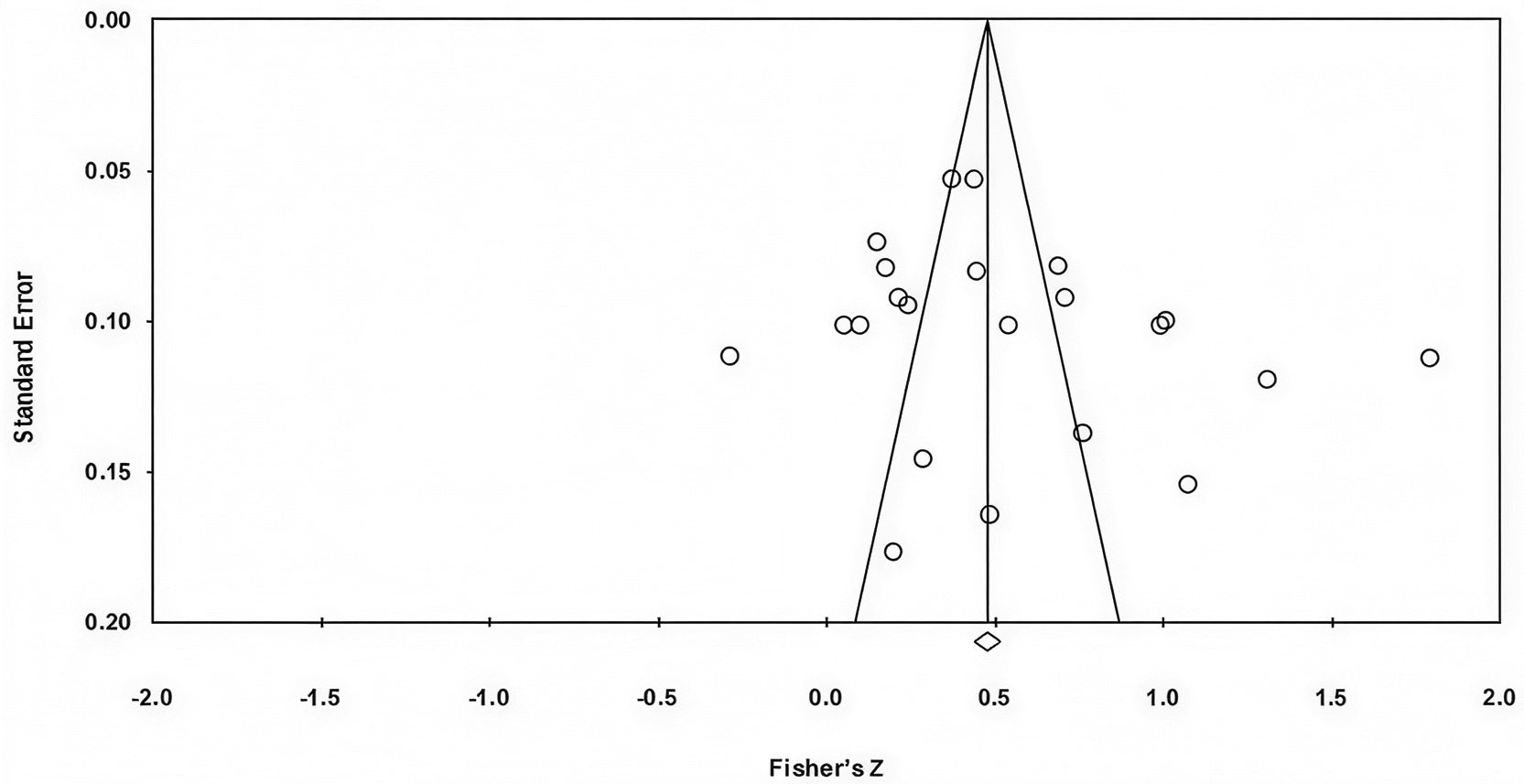
The results of the publication bias test, illustrated in Figure 2 through a funnel plot, indicate a relatively symmetrical distribution of data on both sides of the effect size (Fisher’s Z value). Additionally, the Begg and Egger statistical tests produced non-significant probability values (P = 0.367 for the Begg test and P = 0.291 for the Egger test). These findings collectively suggest that there is no evidence of publication bias in this study.
The respondents in studies examining various factors influencing Islamic religiosity are predominantly students across different educational levels, including elementary school/Islamic elementary school (SD/MI), junior high school/Islamic junior high school (SMP/MTs), and senior high school/Islamic senior high school (SMA/MA). Only a limited number of studies have included respondents outside of the student demographic. This trend aligns with the findings of a systematic literature review on religiosity research in Indonesia conducted by El Hafiz & Aditya (2021). Their review indicates that religiosity studies in Indonesia primarily focus on students and college students, largely due to the reliance on convenient sampling techniques that target easily accessible respondent groups. Consequently, there is a notable scarcity of research involving other demographic groups. To address this limitation, future studies on Islamic religiosity should broaden their scope to include diverse respondent groups that have been relatively underrepresented, such as workers, the elderly, individuals with medical conditions or illnesses, and others.
The meta-analysis results indicate that Islamic religious education (Pendidikan Agama Islam, PAI) positively influences Islamic religiosity. According to the Government Regulation No. 55 year 2007 concerning Religious Education and Religious Schools, religious education serves to shape Indonesians into individuals who are faithful and pious to the God Almighty, possess noble character, and contribute to maintaining peace and harmony both within and across religious communities. Furthermore, religious education aims to develop students’ abilities to understand, internalize, and practice religious values in harmony with their mastery of science, technology, and the arts. Islamic religious education, specifically, reflects an Islamic orientation, rooted in the teachings of the Qur’an and the Sunnah. The objectives of PAI encompass three aspects: (1) teleological, focusing on returning to Allah SWT; (2) aspirational, aiming for happiness in this world and the hereafter; and (3) directive, guiding individuals to serve as devoted servants of Allah SWT. Therefore, PAI seeks to enable students to utilize their knowledge and skills to remain connected to Allah SWT, achieve happiness in both worldly and eternal contexts, and, through their extensive knowledge, become obedient and righteous individuals. When these aspects are fully realized, students transform into insan kamil, or complete human beings—faithful, pious, and noble in character (Rosyada, 2017).
In the context of PAI instruction across various formal educational institutions, its implementation in schools is significantly influenced by the resources and potential available within the school environment, the broader community, peer interactions, and students’ familial backgrounds. PAI instruction in schools encompasses fundamental components such as the Qur’an and Hadith, faith or creed (aqidah), ethics (akhlaq), Islamic jurisprudence (fiqh), and Islamic history (tarikh) (Hatim, 2018). Islamic boarding schools (pesantren) and madrasahs emphasize religious education more deeply, which naturally results in a more comprehensive curriculum. The curriculum in madrasahs largely mirrors that of general schools, covering the Qur’an and Hadith, creed and ethics, Islamic jurisprudence, and Islamic cultural history, with the addition of Arabic language studies. The primary difference lies in the depth of the material and the allocation of instructional hours. In pesantren, beyond emphasizing the Qur’an and Hadith, the curriculum includes mastery of classical Islamic texts (kitab kuning), which cover fields such as jurisprudence (fiqh), theology (aqidah or tauhid), grammar (nahwu), morphology (sharaf ), rhetoric (balaghah), Hadith, Islamic mysticism (tasawuf ), ethics, and religious practices like prayer, supplication, and devotional acts (wirid) (Arifai, 2018). At the university level, the development of PAI curricula is more comprehensive, accommodating the competencies of professional educators, including pedagogical, personal, social, and professional competencies, along with an additional leadership competency (Suwadi, 2016).
Despite its broad implementation, PAI instruction across various educational institutions still faces numerous shortcomings and remains suboptimal. One of the most prominent weaknesses lies in its emphasis on the cognitive aspects of religious awareness, while neglecting the affective and conative-volitional dimensions, such as the will and determination to practice religious teachings (Hatim, 2018). Consequently, a gap arises between knowledge and practice, between gnosis and praxis, in the application of religious values, which undermines the formation of moral character. Yet, moral education lies at the heart of religious education (Khuzaimah, 2017). Additionally, PAI instruction has predominantly focused on teaching about religion, resulting in many individuals who understand religious values but fail to align their behavior with these principles. Criticism of PAI often highlights its methodological and orientation-related weaknesses, which tend to be normative, theoretical, and cognitive. This has led to a lack of social relevance in addressing contemporary societal challenges. Social issues in Indonesia, such as the prevalence of drug abuse, corruption, and materialistic lifestyles, further burden PAI with the expectation of addressing these moral crises (Nisa & Hamami, 2023).
Islamic religious education in schools faces several implementation challenges, including: (1) in theology, there is a tendency toward fatalistic understanding; (2) in ethics, the focus is often on manners without fully encompassing the holistic character of a religious individual; (3) worship is taught as a routine religious activity, lacking emphasis on its role in shaping personal character; (4) in jurisprudence (fiqh), the approach tends to view Islamic legal principles as static and timeless, with insufficient attention to their dynamics and underlying spirit; (5) Islamic teachings are often presented as dogmatic, with little effort to foster rationality and a love for scientific progress; and (6) the study of the Qur’an predominantly emphasizes reading fluency, without adequate focus on understanding its meaning and extracting deeper insights (Khuzaimah, 2017). Therefore, Islamic religious education (PAI) in various formal educational institutions should be integrated with a more comprehensive and holistic concept of religiosity, enabling the development of well-rounded Indonesian individuals in accordance with constitutional mandates.
Within this context, teachers play a central role in Islamic religious education and in nurturing students’ religiosity (Syarnubi, 2019). Teachers serve multiple functions, including as motivators (encouraging students to be more enthusiastic and active in learning), facilitators (providing resources and ease for teaching and learning processes), mediators (utilizing educational media to enhance the effectiveness of learning), classroom managers (ensuring a focused and conducive environment for achieving educational goals), demonstrators (illustrating and explaining learning materials), inspirers (motivating students towards academic progress), mentors (offering guidance and even acting as learning partners), catalysts for creativity and imagination (designing engaging and active learning processes that stimulate students’ creativity and imagination), and team-building developers (training students in collaboration while instilling positive values in their character). To optimize these roles, teachers must possess both capability and loyalty. Capability refers to a teacher’s mastery of the subject matter and effective teaching skills, spanning planning, implementation, and evaluation. Loyalty pertains to dedication to teaching responsibilities, both during classroom sessions and outside them (Rosyada, 2017). Additionally, teachers’ exemplary behavior, both within and outside the classroom, is essential for developing students’ religious character, as reflected in practices such as regular worship, ethical conduct aligned with Islamic teachings, polite communication, and mutual respect within the school community (Rifki et al., 2022).
Teachers must also demonstrate adequate competence to maximize their role as educators. Teacher competencies are outlined in Law No. 14 year 2005 on Teachers and Lecturers (Mulyani, 2009), encompassing professional competence (related to subject matter expertise and its development), pedagogical competence (involving learning theories and principles, student characteristics, curriculum design, teaching methods and media, planning, implementation, and evaluation), personal competence (reflecting a stable, mature, wise, authoritative personality, and demonstrating faith, piety, honesty, noble character, work ethic, responsibility, warmth, harmony, openness, compassion, patience, fairness, and democratic values), and social competence (referring to the ability to communicate and interact inclusively with students, peers, educational staff, parents, and the broader community). To be an effective teacher, one must exhibit various qualities essential to the profession, including enthusiasm, stimulation of student progress, warmth, task orientation, hard work, tolerance, politeness, wisdom, trustworthiness, flexibility, adaptability, democracy, the ability to overcome stereotypes, and responsibility for student learning activities (Rosyada, 2017). Moreover, in the 21st century and the current era of disruption, teachers must prepare students with the “four Cs” competencies: critical thinking, communication, collaboration, and creativity and innovation (Roekel, 2012).
Efforts to enhance students’ religiosity through Islamic religious education (PAI) must be strategically formulated. Beyond optimizing the teacher’s role, as previously mentioned, improving the quality of PAI instruction in the classroom is essential to fostering students’ religiosity. Given the limited allocation of time for PAI—only two hours per week—the teaching process must be both effective and efficient while achieving its learning objectives, including enhancing students’ religiosity. The instructional process can begin with an opening greeting (salam), prayer, Qur’an recitation (tadarus), and a short religious talk (kultum) to create a conducive atmosphere for learning PAI. During the core learning activities, teachers should act as facilitators, encouraging students to actively engage in learning through presentations and discussions. Additionally, teachers are encouraged to employ diverse teaching methods and media tailored to the subject matter, addressing cognitive, affective, and psychomotor domains, thereby integratively enhancing students’ motivation, engagement, and learning outcomes. The session concludes with a summary of the material, assignments or homework (if any), and a closing prayer and greeting.
Students’ religiosity is cultivated not only through formal classroom instruction but also by fostering a religious atmosphere or culture within the school or madrasah (Latifah et al., 2022). This approach is crucial for educational institutions and teachers to optimize students’ religious development through school policies, curriculum strategies, learning objectives, content, methods, and media. Creating a religious environment can involve activities such as congregational prayers in the school mosque or prayer room (e.g., Dzuhur and Jum’ah prayers), encouraging optional prayers (sunnah) such as Dhuha during breaks and Dzuhur rawatib, Qur’an recitation training, mentoring sessions, regular Islamic studies (weekly or monthly), Islamic women’s studies, celebrations of Islamic holidays (Eid al-Fitr, Eid al-Adha, Isra’ Mi’raj, Mawlid), the establishment of Islamic spiritual organizations (Rohis), utilizing school media for disseminating Islamic content (bulletin boards, websites, social media), involving students in collecting and distributing zakat, infaq, and shadaqah to those in need, implementing reward and punishment systems for students, and other initiatives that foster a religious atmosphere and culture in schools.
To enhance students’ religiosity beyond the school environment, collaboration between schools, PAI teachers, parents, and the broader community is essential. Teachers are expected to communicate effectively with parents regarding religiosity-focused PAI programs. Parents, in turn, should reinforce these programs at home, monitor and evaluate their children’s progress in faith (aqidah), worship (ibadah), and ethical conduct (akhlaq) in daily life, and provide feedback to PAI teachers. The local community can also participate in religiosity-based PAI programs, such as distributing zakat, infaq, and shadaqah, organizing social service activities, celebrating Islamic holidays, and more. If religious institutions or Islamic boarding schools (pesantren) are located near the school, they can serve as valuable partners in enhancing students’ religiosity by providing speakers or religious facilitators for school programs and hosting short-term boarding programs (pesantren kilat).
Another significant variable is adherence to Islamic law (syariat), which positively influences Islamic religiosity. This indicates that greater compliance with Islamic syariat enhances an individual’s level of religiosity. Adherence to Islamic syariat involves observing and following the laws and rules established in Islam, derived from the Qur’an and Sunnah. This compliance includes a profound understanding and commitment to fulfilling Allah SWT’s commands and avoiding His prohibitions in all aspects of life. In the context of the meta-analysis, adherence to syariat particularly pertains to the use of the hijab by Muslim women. In Indonesia, the term hijab is synonymous with headscarves or veils (kerudung or jilbab). The motivations for wearing the hijab among students at various educational levels (elementary, secondary, and tertiary) vary greatly, as do its styles—ranging from consistent use to conditional use, such as wearing it only at school where it is mandated, especially in Islamic schools or madrasahs.
Students’ understanding of Islamic teachings significantly determines their hijab-wearing practices. Some wear the hijab solely due to school regulations, while others recognize it as a divine obligation. The Qur’an enjoins Muslim women to wear the hijab in Surah Al-Ahzab (33:53, 59) and Surah An-Nur (24:31, 60). Wearing the hijab serves several functions and benefits for Muslim women. It reflects their obedience to Allah SWT’s command to cover their aurat (parts of the body required to be covered) as prescribed in these Qur’anic verses. Additionally, wearing the hijab instills a sense of tranquility and peace, encourages virtuous behavior, and helps prevent sinful acts (Tannisyafolia, 2021). This obedience correlates with increased religiosity among Muslim women through the act of wearing the hijab. It also offers protection by reducing the risk of harassment. From a health perspective, the hijab shields the hair and scalp from direct sunlight, protects hair from dust and pollution, and helps prevent skin cancer (Nilam et al., 2023).
Engaging in dakwah activities significantly enhances Islamic religiosity. Derived from the Arabic word meaning “invitation” or “call,” dakwah in Islam refers to the act of inviting others to understand, believe in, and practice Islamic teachings, thereby fostering individual and communal faith. These activities can be conducted offline, such as attending religious gatherings (majelis taklim), sermons, and study circles (pengajian), or online, through reading Islamic content on websites or watching dakwah videos on platforms like YouTube, Facebook, Instagram, and Twitter. According to the stimulus-response model (Mirdad, 2020), individual behavior is influenced by external stimuli rather than internal motives or attitudes. This model suggests that if a stimulus captures the recipient’s attention, the message is likely to be accepted and processed further. When applied to dakwah, participating in these activities—whether offline or online—stimulates religiosity across cognitive, affective, and psychomotor domains.
Two critical factors influencing the relationship between dakwah participation and Islamic religiosity are intensity (frequency of participation) and duration (length of engagement). Greater intensity in participating in dakwah activities is associated with a deeper understanding of religion, which subsequently enhances religiosity. Intensity correlates with all dimensions of religiosity—faith (iman), practice (Islam), and moral excellence (ihsan) (Romadi, 2020). Duration also plays a significant role. For instance, when watching dakwah videos online, full-length viewing allows for a comprehensive understanding of the content. In contrast, partial or intermittent viewing may lead to fragmented information and even misinterpretations.
The halal orientation positively impacts Islamic religiosity by emphasizing a commitment to living in accordance with Islamic principles in all aspects of life. In the meta-analysis, halal orientation specifically refers to halal knowledge and certification, particularly in the context of food and beverages. Allah SWT commands humanity to consume food that is halal and good (tayyib) as stated in Surah Al-Baqarah (2:168), with further elaboration on prohibited foods provided in Surah Al-Maidah (5:3). Halal food is defined as permissible in both substance and acquisition, while tayyib implies that it is healthy, safe, and not excessive (Mausufi et al., 2023). In his commentary, Ibn Kathir notes that Allah SWT permits all food on Earth as long as it is halal, good, and non-harmful to the body and mind. While halal options are abundant, the number of prohibited items is minimal, as outlined in Surah Al-Maidah (5:3).
Halal knowledge is a significant variable influencing Islamic religiosity, as explained by the knowledge-attitude-behavior model (Huda et al., 2018). When knowledge accumulates within an individual, it influences their attitudes and subsequently their behavior. A deep understanding of halal indicates extensive exploration and accumulation of information on the subject. Knowledge can be categorized into two types: objective knowledge, which refers to accurate information about a specific topic, and subjective knowledge, which pertains to personal perceptions. Halal knowledge falls under the category of objective knowledge, as the principles of halal and haram are explicitly detailed in the Qur’an and the Hadith of Prophet Muhammad (peace be upon him), rather than arising from individual perceptions. The variable of halal certification is closely linked to halal knowledge. For example, in the context of halal meat, individuals with sufficient halal knowledge understand the procedures required for certification, particularly concerning halal slaughter. These procedures include using a sharp knife, reciting tasmiyah (mentioning Allah’s name), ensuring the animal is well-treated before slaughter, and requiring the slaughterer to be a mentally sound adult Muslim or a person of the book (ahlul kitab) (Solek, 2017).
Family education is an essential factor in shaping an individual’s Islamic religiosity. It refers to the process of teaching and learning within the family, where parents or other family members act as educators for children and others in the household. Family education encompasses various aspects of life, including moral, social, emotional, and intellectual dimensions, with the aim of fostering character, values, and skills necessary for a healthy and productive life. It lays the foundation for the character and personality of children. Through family education, children acquire values, skills, and knowledge necessary to become responsible individuals who contribute positively to society. Parents and other family members play a crucial role in creating an environment that supports the holistic growth and development of children.
In this meta-analysis, key variables influencing religiosity include parental religiosity, Islamic parenting, and interpersonal communication within the family. Parental religiosity significantly impacts the religiosity of children. Religious formation begins in early childhood, with parents serving as the primary educators (Maskur, 2019). Early experiences are critical components of a child’s personality development. Parents, therefore, act as role models in fostering and nurturing religiosity. This tendency of children to emulate their parents’ behavior, including in religious development, can be explained through social learning theory. According to this theory, individuals learn by observing and selectively imitating the behaviors of others (Lesilolo, 2018). Thus, parents serve as models for their children’s religiosity development.
Beyond their role as role models, parents also act as educators for their children. The Qur’an emphasizes the importance of Islamic religious education by parents in verses such as Surah At-Tahrim (66:6), Surah Taha (20:132), and Surah Luqman (31:13). Additionally, the Prophet Muhammad (peace be upon him) stated: “Every child is born upon the natural disposition (fitrah). It is their parents who make them Jewish, Magian, or Christian” (Narrated by Bukhari and Muslim). These verses and the Hadith highlight the urgency of Islamic religious education by parents. This leads to the concept of Islamic parenting, which involves child-rearing practices aligned with Islamic values based on the Qur’an and Sunnah (Anggraini et al., 2022). Islamic parenting begins even before birth, involving acts such as prayers, performing good deeds, reciting the adhan in the newborn’s ear, giving a good name, shaving the baby’s hair, conducting aqiqah ceremonies, and exclusive breastfeeding.
Islamic parenting comprises several essential aspects, including psychological and mental education, faith and sharia education, and moral and social education (Anggraini et al., 2022). Psychological and mental education involves fostering joy, playfulness, affection, and instilling noble character in children. Faith and sharia education entails inculcating the principles of Islamic faith and law (rukun iman and rukun Islam), supervising the performance of five daily prayers, encouraging almsgiving, motivating fasting during Ramadan, fostering a love for Qur’an recitation, and encouraging dhikr (remembrance of Allah). Moral and social education involves teaching children by example, instilling values such as avoiding envy and jealousy, practicing proper etiquette in daily life, promoting the greeting of salam, and treating children fairly.
Effective interpersonal communication between children and family members, particularly parents, enhances children’s interest and motivation in understanding and practicing religious values. Harmonious relationships among family members create a conducive environment for children’s overall development, including their religiosity. Interpersonal communication within families depends on harmony and openness, especially between parents and children. In this context, parents act as the message source, conveying religious messages to their children as recipients (Thariq, 2018). Frequent communication of religious messages positively influences children’s Islamic religiosity. The key to effective communication lies in parental attentiveness, expressed through invitations, praise, advice, reprimands, and appropriate discipline.
Positive moral behavior correlates strongly with Islamic religiosity. Such behavior aligns with ethical standards, values, and principles deemed good and moral in society or religion. Indicators of positive moral behavior include honesty, discipline, hard work, creativity, independence, democracy, critical thinking, curiosity, justice, patriotism, respect for others, friendliness, peacefulness, environmental care, loyalty, and more. Conversely, negative moral behavior contradicts ethical standards and often damages trust, harms social relationships, and negatively impacts individuals, families, and society. Examples of negative moral behaviors include corruption, collusion, nepotism, gambling, lying, cheating, substance abuse, theft, violating public regulations, harming others, and even murder. While positive moral behavior enhances religiosity, negative moral behavior has an adverse effect, reflecting an inverse relationship between the two.
In this study, negative moral behavior affecting religiosity includes the tendency to access pornographic websites. Frequent and intense consumption of such content can significantly decrease an individual’s religiosity. Viewing pornography often contradicts moral values and religious teachings, which generally advocate that sexuality should be experienced within the sanctity of marriage and in a dignified manner. In contrast, pornography frequently portrays sexuality in vulgar and undignified ways. It can trigger impulsive behavior, reducing self-control over sexual urges and leading to feelings of guilt or regret, particularly for individuals who recognize such actions as contrary to their religious values.
Excessive exposure to pornographic content can distort an individual’s perception of sexuality and interpersonal relationships. This may result in diminished self-respect and respect for others, opposing religious principles that uphold dignity and honor. Furthermore, engaging with pornography can alienate individuals from their religious practices. Feelings of guilt, unworthiness, or reluctance to engage with religious communities may cause avoidance of worship, religious gatherings, or other spiritual activities. Over time, pornography can supplant spiritual and religious values with an increased focus on sexual gratification or visual stimulation, leading to reduced interest in religious practices or spiritual pursuits.
Adolescents are particularly vulnerable to the temptation of accessing pornographic websites (Mardyantari et al., 2018). Adolescence is marked by transitions and changes across physical, emotional, moral, social, intellectual, and sexual dimensions. Sexual changes, driven by the maturation of the pituitary gland and its influence on reproductive hormones, heighten sexual drives during this period (Batubara, 2010). This often leads adolescents to seek information about sex, which is readily available online. Consequently, adolescents become a high-risk demographic for pornography exposure, particularly due to the accessibility of pornographic websites. For many, these websites serve as an outlet for mental tension and, when frequently accessed, can evolve into addictive behavior. Addiction occurs as pornography stimulates neurotransmitters during sexual arousal, producing pleasurable sensations that encourage repeated behavior and lead to psychological dependency (Imawati & Sari, 2018). Regarding its impact on religiosity, addiction to pornography causes adolescents to lose track of time, neglect worship, distance themselves from Islamic values, and ultimately experience a decline in their level of religiosity.
The meta-analysis of various factors influencing Islamic religiosity indicates that several variables positively correlate with and enhance Islamic religiosity. These include adherence to syariat (Islamic law), participation in dakwah activities, halal orientation, Islamic religious education (PAI), family education, and positive moral behavior. Conversely, negative moral behavior negatively correlates with religiosity. According to the findings, intelligence does not significantly influence Islamic religiosity. In terms of the relationship between Islamic religiosity and religious education in Indonesia, the two are deeply interconnected and mutually reinforcing. Islamic religious education serves as a critical factor in fostering the development of an individual’s religiosity, while Islamic religiosity, in turn, strengthens one’s engagement with religious education.
| Views | Downloads | |
|---|---|---|
| F1000Research | - | - |
|
PubMed Central
Data from PMC are received and updated monthly.
|
- | - |
Provide sufficient details of any financial or non-financial competing interests to enable users to assess whether your comments might lead a reasonable person to question your impartiality. Consider the following examples, but note that this is not an exhaustive list:
Sign up for content alerts and receive a weekly or monthly email with all newly published articles
Already registered? Sign in
The email address should be the one you originally registered with F1000.
You registered with F1000 via Google, so we cannot reset your password.
To sign in, please click here.
If you still need help with your Google account password, please click here.
You registered with F1000 via Facebook, so we cannot reset your password.
To sign in, please click here.
If you still need help with your Facebook account password, please click here.
If your email address is registered with us, we will email you instructions to reset your password.
If you think you should have received this email but it has not arrived, please check your spam filters and/or contact for further assistance.

Comments on this article Comments (0)