Keywords
Deep Learning, Mastery Learning, Contextual Learning, Authentic Learning, Immersive Learning, VET

Deep Learning, Mastery Learning, Contextual Learning, Authentic Learning, Immersive Learning, VET
Vocational learning in the era of Industry and Society 5.0 is focused on fostering adaptive, contextual, and sustainable work competencies, which allow students to build deep knowledge through authentic work experiences and lifelong learning. This paradigm emphasizes the integration of technical skill mastery, reflective capacity, and independent learning abilities in responding to the dynamics of the world of work (Hyland, 2019; Mbagwu, 2020; Zuo et al., 2025). In practice, vocational learning does not only function as a transfer of skills, but as a process of professional experience construction through direct involvement in real work situations, social partnerships, and industry-based problem-solving (Jaedun et al., 2024; Pacher et al., 2023). Therefore, vocational learning design requires an authentic, collaborative, and integrated work competency development-oriented learning environment (Gulikers et al., 2008; Wong et al., 2022).
In line with these principles, current vocational pedagogical frameworks position learning within a spectrum ranging from work-oriented, work-connected, to work-integrated learning, designed to ensure the continuity of career development and the sustainability of workforce competencies (Chinedu et al., 2023; Deaconu et al., 2018; Sudira, 2018). Models such as Project-Based Learning and Problem-Based Learning strengthen the integration between learning and work practices through project-based experiences and real-world problem solving (Hiim, 2017; Jabarullah & Hussain, 2019). This approach also supports the development of 21st-century skills, including critical thinking, creativity, digital literacy, and entrepreneurship, which are key requirements in a knowledge-based work ecosystem (Billett, 2023).
Transformations towards Society 5.0 are accelerating the need for vocational learning systems that can adapt to the integration of cyber-physical technology and artificial intelligence in the workplace. This shift requires a workforce that is not only technically competent, but also adaptive to smart technologies and automation systems (Lagorio & Cimini, 2024; Vieira, 2022). Despite this, Vocational Education and Training (VET) institutions still face a gap between curriculum design, learning experiences, and the evolving competency needs of industry (Triyono & Hariyanto, 2024; Suharno et al., 2020). These gaps indicate the need for methodological innovations that can bridge the integration between vocational pedagogy and smart learning technologies.
In this context, Deep Learning (DL) offers strategic potential as a data-driven learning system capable of personalizing learning paths, simulating work practices, and providing adaptive feedback on student performance (Chiang et al., 2022; Kohale et al., 2024; Pécot et al., 2021; Rui et al., 2024). However, despite the rapid development of DL in education, its application in VET remains dominated by a technocentric approach and has not been pedagogically parameterized within a competency-based learning framework. These studies remain fragmented between pedagogical and technical dimensions, failing to produce a comprehensive integrative framework for implementing Deep Learning in vocational education. Therefore, a conceptual synthesis is needed that integrates the technical and pedagogical parameters of DL into a single systemic framework for vocational learning. This systematic review aims to synthesize pedagogical and technical parameters of Deep Learning in Vocational Education and Training and to develop an integrated conceptual framework to guide instructional design and implementation.
Deep Learning (DL) is a subfield of machine learning that utilizes layered artificial neural networks to learn data representations hierarchically, from simple to complex features automatically without manual feature engineering (Feng, 2022; Jiang, 2022; Nguyen, 2022). The DL architecture consists of input layers, hidden layers, and output layers that perform nonlinear transformations through activation functions to generate predictions or classifications based on data patterns. The model training process takes place through forward propagation and backpropagation mechanisms with gradient-based optimization such as SGD or Adam, and is supported by stabilization techniques such as regularization and batch normalization to improve model accuracy and generalization.
DL surpasses traditional algorithms in its ability to automatically and adaptively extract data representations (Kang, 2020; Zhou, 2021). Various architectures have been developed according to data characteristics, such as multilayer perceptrons for tabular data, convolutional neural networks for visual data, and recurrent neural networks and transformers for sequential data. Advances in big data and GPU/TPU computing have expanded the application of DL across domains, including education. In the vocational context, DL is understood as a representation learning framework that enables learning pattern analysis, performance prediction, and data-driven instructional decision-making.
In vocational education, DL serves a strategic role in building personalized, adaptive, competency-based learning systems. One of its main implementations is Intelligent Tutoring Systems (ITS), which can analyze student learning traces, identify misconceptions, and dynamically adjust learning paths (Parker & Roumell, 2020; Wang & Ran, 2022). This approach supports the principle of mastery learning, where students must achieve mastery of a skill before proceeding to the next stage, aligning with the characteristics of practice-based education and competency completion.
In addition, DL is utilized in psychomotor training through the integration of Virtual Reality (VR) and Augmented Reality (AR). Models such as convolutional neural networks are capable of analyzing movements, work procedures, and practical performance in real-time to provide precise corrective feedback (Chan et al., 2022; Polat & Ekren, 2023). DL is also used in educational predictive analytics and career recommendations, such as predicting dropout risk and mapping student competency suitability to industry needs (Nor et al., 2023). This utilization strengthens the function of vocational education in facilitating an effective transition from learning to the world of work.
Authentic Learning is the main pedagogical foundation in contemporary vocational education because it places students in the context of solving real problems relevant to the world of work (Martínez-Argüelles et al., 2023; Wong et al., 2022). This approach emphasizes industry-based projects, case investigations, team collaboration, and the application of professional standards. In authentic learning designs, students not only understand technical procedures but also the rationale and context for applying skills, thereby strengthening the connection between school and workplace practices.
To enhance this experience, immersive learning using VR and AR provides realistic yet safe simulations of work environments. The integration of this technological approach with DL enables granular analysis of practical performance, adaptive difficulty level adjustments, and dynamic simulation of complex work scenarios (Chan et al., 2022; Polat & Ekren, 2023). The integration of DL, authentic learning, and immersive technology forms the conceptual foundation for developing a pedagogical-technical framework for AI-based vocational learning.
This study used a Systematic Literature Review (SLR) approach guided by the PRISMA 2020 protocol (Preferred Reporting Items for Systematic Reviews and Meta-Analyses). The review protocol was developed before the search process started to guide the search strategy, selection, and data extraction, although it was not registered in a protocol database such as PROSPERO.
The literature search was conducted through major academic databases relevant to the field of educational technology and vocational education, namely Scopus, ScienceDirect, IEEE Xplore, SpringerLink, and Web of Science. To broaden the scope of the search and capture cross-indexed publications, the search process was supported by Publish or Perish software as a citation-based discovery tool that searches Google Scholar-indexed sources. The search was conducted from June 2025 to January 2026 (including early access articles) to ensure the recency of the reviewed literature. The search strategy used a combination of keywords that were terminologically consistent with the parameters in the Deep Learning model, including: “deep learning”,: vocational education”, “vocational training”, “skill acquisition”, “authentic learning”, “immersive learning”, “mastery learning”, and “contextual learning”. Keywords were combined using Boolean operators (AND, OR) and truncation techniques to increase search sensitivity and coverage, for example: “deep learning” AND “vocational education” OR “vocational training” AND “immersive learning”. This strategy is designed to capture studies that discuss the integration of Deep Learning technical capabilities such as data-driven adaptation, intelligent feedback, and simulation fidelity with competency-based vocational pedagogical approaches.
The thematic classification of selected literature in the Table 1. shows that Deep Learning parameters in vocational learning are not evenly distributed across the dimension of immersive technology alone, but also include adaptive assessment mechanisms, mastery learning, and contextual and collaborative integration in the VET ecosystem. This distribution confirms that the DL parameter model developed is pedagogical-systemic, not technology-centric.
The inclusion criteria for this study are peer-reviewed journal articles and conference proceedings that are available in full text, discuss Deep Learning as a system or approach in the design, adaptation, or evaluation of vocational learning, and relate it to pedagogical approaches consistent with the model, namely authentic learning, immersive learning, mastery learning, and/or contextual learning. Articles that discuss AI or DL in general without explicit relevance to vocational learning or work competency mastery, focus on general education or non-vocational higher education, are technical in nature without adequate pedagogical or conceptual analysis, or are not available in full text, were excluded from the synthesis. A summary of the complete selection criteria is presented in Table 2.
Literature was searched in six major academic databases: Scopus, ScienceDirect, IEEE Xplore, SpringerLink, Web of Science, and Google Scholar through Publish or Perish as described in the Study Design section. The search time frame also followed the same criteria, namely from 2016 to January 2026. The study selection process followed the PRISMA 2020 protocol through the stages of identification, screening, eligibility assessment, and inclusion. The inclusion criteria included: articles discussing the implementation, parameters, or architecture of Deep Learning in the context of VET; full text available; published in English; journal articles or conference proceedings of reputable publications. The screening was carried out in stages by two independent reviewers through a review of the title, abstract, and full text. Disagreements were resolved through deliberative discussion until consensus was reached, and if necessary, a third reviewer was involved to make the final decision. The PRISMA flowchart and details of the number of articles are presented in Figure 1.
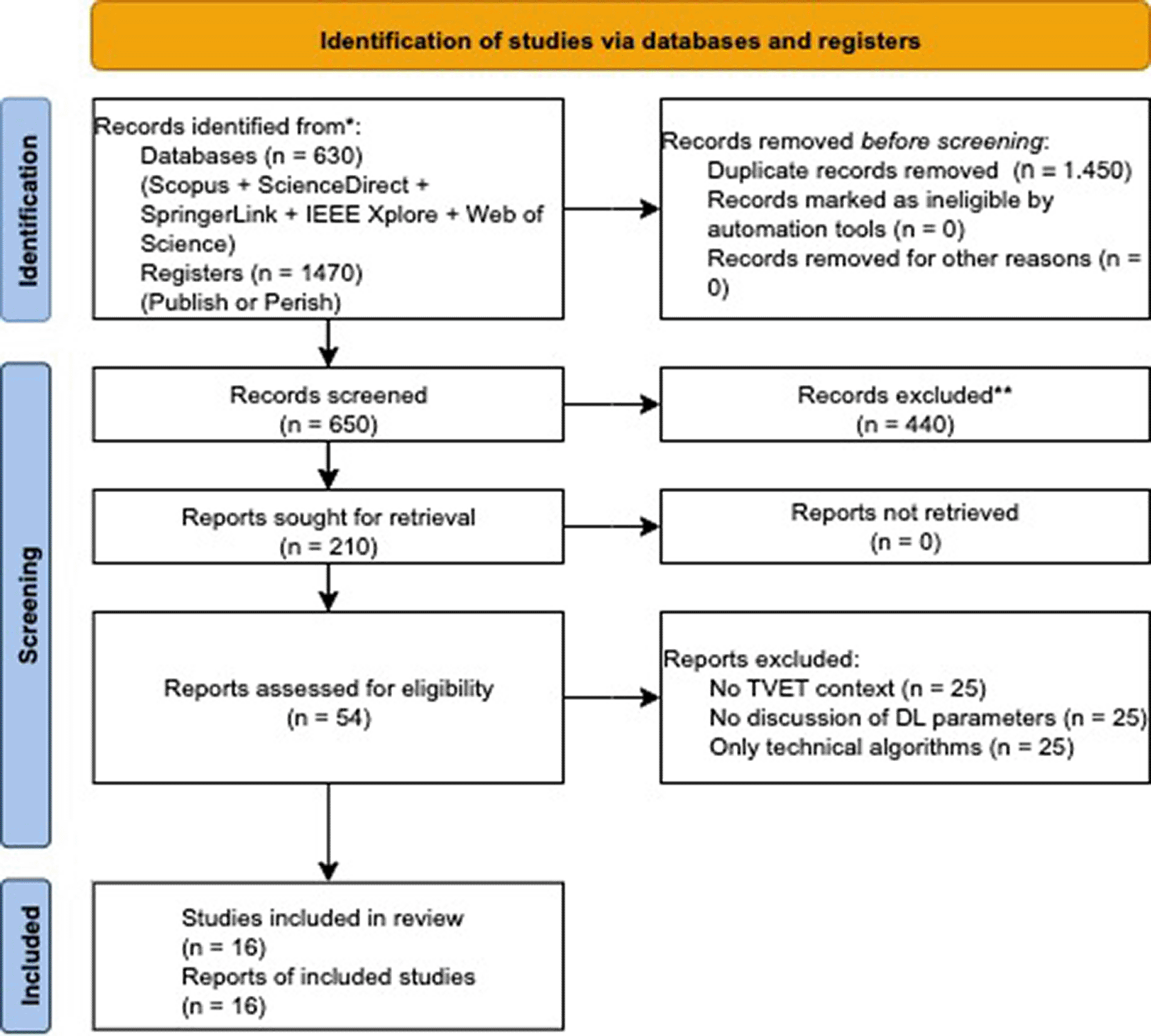
Following the eligibility and quality assessment stages, 16 articles were identified as meeting the inclusion criteria and were used in the qualitative synthesis. Since each article represented one empirical study or review study, the number of studies included was equivalent to the number of study reports (n = 16). The synthesis process focused on mapping the pedagogical and technical parameters of Deep Learning that form adaptive vocational learning systems. The main dimensions identified include data-driven learning personalization (adaptive mastery learning), high-fidelity simulation environments (immersive and authentic learning), and competency-based assessment (authentic assessment). This systematic review provides an empirical and conceptual foundation for formulating a Deep Learning parameter model in the context of vocational education and training.
The literature search process yielded a total of 2,100 records from five academic databases. After excluding duplicates, 650 unique articles were selected for title and abstract screening. In this stage, 440 articles were excluded because they were not relevant to the context of Deep Learning in vocational education and training. A further 210 articles were searched in full text, and 54 articles were deemed to meet the eligibility criteria. After full-text review and quality assessment, 16 articles were found to meet all inclusion criteria and were analyzed in a qualitative synthesis. The complete selection flow is presented in Figure 1, while the characteristics of the included studies are shown in Table 1.
A full analysis was conducted on sixteen articles that met the inclusion criteria. The characteristics of the reviewed studies are summarized in Table 3, covering the research context, participant groups, geographical distribution, methodological approaches, theoretical frameworks, and the main findings of each study. The reviewed studies demonstrate methodological and contextual diversity, ranging from immersive VR training in vocational settings to authentic project-based learning in higher education.
| Author | Research Subject | Country | Method | Concept Theory | Finding |
|---|---|---|---|---|---|
| Mayer et al. (2023) | Literatur problem-solving computer learning | Germany | Scoping Review | Domain-specific problem solving, authentic computer-based learning, eye-tracking analytics | Eye-tracking is effective in uncovering cognitive processes of problem-solving in authentic simulations, but gaze metric reporting and data validity are still limited. |
| Lowell & Tagare (2023) | Student in counseling course | United States | Mixed-methods (quantitative & qualitative triangulation) | Authentic learning, fidelity VR (physical–social), situated & experiential learning. | Authentic VR improves metacognitive reflection and self-efficacy, but does not automatically improve learning transfer; Fidelity needs to be optimized to avoid cognitive load. |
| Ruhanen et al. (2021) | Consultancy project’ and international partner | Australia | Reflective case study (course redesign analysis) | Authentic learning, PBL, employability skills, work-integrated learning. | Real consultancy projects enhance engagement and work skills, as well as bridge the theory-practice gap |
| Veber et al. (2022) | Vocational training participants | Switzerland | Implementation Case Studies | Immersive learning, cyber-physical systems, experiential learning. | The integration of digital simulations and physical environments increases the effectiveness of training, but requires high infrastructure investment. |
| Boel (2024) | Vocational students | Belgium (Flanders) | Educational Design Research (EDR) | Immersive VR, serious games, gamification, authentic learning. | Serious iVR games increase engagement and usability perception. However, effectiveness is determined by instructional design. |
| Thomann (2024) | Vocational students | Germany | Quantitative statistical analysis | Immersive VR, cognitive load theory, motivation & immersion. | IVR increases motivation and immersion, but does not excel in declarative knowledge; There is a gap between perceived vs actual learning. |
| Parker & Roumell (2020) | TVET students | Swedia | Theoretical/Conceptual Analysis | Mastery learning, functional contextualism, VET pedagogy. | The contextual-functional approach strengthens mastery learning through the relationship between skill functions and work contexts. |
| Mukhtar et al. (2026) | Technical experts | Malaysia | Design and Development Research and Mixed-method | Flipped classroom, mastery learning, mobile learning, Fuzzy Delphi. | The ZOOMRBT model is valid according to experts and flipped–mastery integration improves engagement and HOTS. |
| Haryani et al. (2021) | Vocational students | Indonesia | Research & Development (R&D) | Contextual Teaching and Learning (CTL) | The integration of vocational contexts in the material increases students’ understanding and interest in learning. |
| Sephokgole (2021) | TVET students in agriculture program | Afrika Selatan | Kuantitatif (Survey) | Contextual factors in TVET learning. | Learning success is influenced by factors such as resources, socio-economic status, and the relevance of the industrial curriculum. |
| Cattaneo (2025) | VET teacher | Switzerland | Quantitative cross-sectional survey SEM | Technology integration, ICAP model, institutional factors. | Technology integration is influenced by the personal factors of teachers and institutional support; School culture is more decisive than curriculum. |
| Wong et al. (2022) | Undergraduate students | Hongkong | Exploratory mixed-method | Authentic learning, low-fidelity simulation, game-based learning, role-play, asynchronous engagement. | Low-fidelity buyer-seller roleplay via social networks is effective in facilitating authentic learning outcomes, although not statistically significant due to sample limitations. |
| Paeßens et al. (2023) | VET Students | Chili | Empirical Studies (Instrument Development & Validation) | Authentic assessment, collaborative PBL. | Authentic technology-based assessments are valid for measuring multidimensional collaborative problem-solving. |
| Mulders et al. (2024) | Vocational training participants | Siprus | Empirical Case Studies | Simulation-based training, immersive skill learning. | VR simulators are effective for skill acquisition, improving safety and practice efficiency. |
| Weijzen et al. (2024) | Students and vocational lecturers/educators, as well as professional partners | Netherlands | Participatory qualitative research | Critical pedagogy, collaborative learning. | There is a gap between ideal collaboration vs practice dan reflective interventions encourage transformative learning. |
| Wu (2024) | Vocational Education Students | China | Quantitative survey (Cross-sectional design) | Multimedia learning, constructivism, experiential learning. | Multimedia technology increases job satisfaction, innovation, and readiness, although it is still at a moderate level of integration. |
As shown in Table 3, the studies analyzed demonstrate diversity in educational contexts, ranging from vocational training and higher education to professional development. Various learning environments were utilized, including immersive virtual reality, serious games, cyber-physical systems, and authentic problem-based computer simulations. Methodologically, the research was dominated by qualitative approaches, case studies, and educational design research, which emphasized the exploratory and developmental nature of learning technology integration. In addition, all studies consistently emphasized the importance of hands-on engagement, alignment of tasks with the workplace, and reflective practices in improving student competency. In order to acquire a deeper comprehension of the conceptual convergence among studies, a thematic synthesis was conducted to identify conceptual patterns and key parameters that shape implementation, as summarized in the Table 4.
The results of the thematic synthesis show that the literature on Deep Learning in vocational learning does not solely focus on technological aspects, but forms a configuration of pedagogical and technical parameters that are integrated with each other. The major themes center on mastery of competencies through authentic learning, data-based adaptive mechanisms, high-fidelity simulation environments, and process-based assessments that support the principles of mastery learning. This thematic distribution indicates that the implementation of Deep Learning in vocational education is developing as a comprehensive pedagogical-technological system. The identified parameter patterns further become the conceptual basis for formulating the Deep Learning parameter model proposed in this study.
The analysis of 16 articles reveals that the key parameters for Deep Learning implementation in Vocational Education and Training (VET) institutions are not self-contained constructs, but are inherently related to effective pedagogical principles. The main findings are synthesized into five clusters of thematic parameters:
The fundamental parameters that determine the effectiveness of Deep Learning (DL) applications in vocational learning are the model training processes that are inherently related to the quality and quantity of the datasets used. Literature analysis confirms that model performance does not only depend on its architectural sophistication, but is critically determined by the relevance and authenticity of training data specific to the vocational domain (Meyer, 2023; Veber et al., 2022). In this context, data quality is defined by the alignment between the data and the predetermined learning outcomes, where the data must represent the tasks and performance standards applicable in the workplace. A DL model for welding competency assessment requires a dataset consisting of thousands of visual or sensory samples that have been carefully annotated by industry experts (Chan et al., 2022; Yunus, 2025). This process transfers tacit knowledge and professional standards into the model, thereby ensuring the validity of the assessment. The training dataset transforms into a digital representation of the curriculum and industry competency standards, whose position as key parameters must be comprehensively validated before initiating the technical training process.
Once a high-quality dataset has been constructed, technical parameters such as learning rate, batch size, and epoch require precise calibration (fine-tuning). However, this optimization process has a dual purpose that is both technical and pedagogical. In pedagogical terms, an equally essential goal is to achieve computational efficiency to minimize latency in delivering feedback to students. In this framework, a rapid practice-feedback-correction cycle is vital to prevent the internalization of errors and accelerate the achievement of competency mastery. Therefore, fine-tuning these parameters is not merely technical optimization, but rather a pedagogical calibration that balances depth of analysis and speed of interaction, in order to realize a responsive and effective practical learning experience.
The optimization of Deep Learning (DL) models in VET significantly depends on their ability to support mastery learning (Mukhtar et al., 2026; Parker & Roumell, 2020). This approach is relevant to VET as it ensures mastery of essential prior competencies before learners advance to more complex. A key parameter of DL in this framework is its capacity to function as a formative assessment engine that operates dynamically and individually. By analyzing student response data in real-time, including error patterns, response times, and interactions with the material, DL models are able to precisely identify competency lack in each student. This automatic diagnostic capability overcomes a major implementation challenge of mastery learning in conventional classrooms, namely the limitation of teachers in providing simultaneous individual attention and feedback.
Once competency lack are identified, the DL function shifts to adaptive learning pathways. Based on specific diagnoses, the system does not simply repeat the same material, but automatically provides relevant remedial interventions. These interventions can take the form of micro-learning modules, alternative demonstration videos, additional exercises, or even practice scenarios in a Virtual Reality environment that focus on aspects that have not yet been mastered (Mukhtar et al., 2026). Only after validation of mastery does the system open access to the next learning module. Thus, DL ensures the formation of a solid foundation of knowledge and skills, which are essential elements for long-term success in the vocational domain. In this way, DL supports mastery learning to ensure work readiness. The system will not graduate students before they meet industry standards, thereby ensuring that students have valid entry-level skills when entering the workforce.
The following fundamental parameter is the ability of DL to support contextual learning. Contextual learning emphasizes the acquisition of knowledge and skills through their relevance to real-world situations, which has been shown to significantly increase student motivation and learning retention (Haryani et al., 2021; Parker & Roumell, 2020; Sephokgole et al., 2021). In the VET context, the effectiveness of a DL model critically depends on its ability to be trained using datasets that are not only large but also contextually grounded in industry practice. These datasets can be technical case studies from industry, data from teaching factory environments, interaction logs from work-based learning scenarios, or even labor market trend analyses for entrepreneurship learning.
By training models on this authentic data, DL architectures inherently internalize the patterns, anomalies, and complexities of industrial problems, making them a digital proxy for industrial reality (Ruhanen et al., 2021). Through continuously updated datasets, DL enables dynamic curricula that train students to update their occupational skills, which is a vital aspect of long-term employability. Once successfully trained with contextually enriched data, DL models can function as generators of relevant dynamic learning scenarios. Unlike static teaching materials, DL-based systems can generate problem-based questions, simulate project challenges, or even run interactive dialogues through chatbots that simulate real professional interactions.
The next fundamental pedagogical parameter is the capacity of Deep Learning (DL) to realize authentic learning (Paeßens et al., 2023; Wong et al., 2022). Authentic learning requires students to engage in solving complex and ill-defined vocational problems, often through collaborative processes that reflect the dynamics of the modern workplace (Weijzen et al., 2024). Within this framework, a key parameter of DL lies in its capacity to underpin hands-on, simulation-based learning environments and digital learning playgrounds distinguished by their authenticity. When trained on real-world datasets, DL models generate virtual practice spaces that are not only safe for experimentation but also possess sufficient verisimilitude to cultivate self-efficacy and facilitate skill transfer to authentic workplace contexts (Lowell & Tagare, 2023). Finally, being involved in authentic learning environments powered by DL correlates positively with an increase in perceived employability.
Authentic learning powered by DL facilitates the development of transferble competencies, which are skills that can be transferred between professional roles (Martínez-Argüelles et al., 2023; Meyers, 2009). In addition, AI-based collaborative simulations can train interpersonal skills and work habits, which are key indicators of employability. The main advantage of DL-based practices lies in the seamless integration of learning activities with authentic assessment mechanisms. Analysis shows that the implementation of valid and reliable authentic assessments remains a significant challenge in conventional VET systems (Paeßens et al., 2023; Wong et al., 2022). DL offers a solution with its ability to conduct technology-based multidimensional assessments that can measure not only the final results, but also the problem-solving process carried out by students, including aspects of collaboration (Mayer et al., 2023; Paeßens et al., 2023). By analyzing a variety of performance data from student interactions in simulations, such as sequence of actions, efficiency, and decision-making patterns, DL models can provide detailed and objective formative feedback.
A further pedagogical parameter significantly enhanced by Deep Learning (DL) is immersive learning, which utilizes technologies such as VR, AR, and MR to create interactive and high representationally accurate learning environments (Mulders et al., 2024; Veber et al., 2022). The use of immersive technology in VET has a significantly positive impact on students’ behavioral, cognitive, and affective outcomes (Boel, 2022; Lowell & Tagare, 2023; Thomann, 2024). The key parameter for the application of DL in this context is its ability to function as an intelligent simulation engine that can create and manage a safe, repetitive, and efficient virtual practice environment. Thus, DL not only supports visualization but actively builds a digital learning playground where students can engage in hands-on practice to master complex procedures without real-world consequences.
Furthermore, the most significant transformative role of DL in immersive learning is its ability to turn static simulations into adaptive learning experiences. The main strength of DL in immersive environments is its ability to generate unexpected scenarios. This directly trains students’ adaptability so they can be more responsible in finding and keeping a job. According to Wu (2024), instead of following a programd linear arrangement, the DL model can analyze students’ performance in real-time and dynamically adjust the difficulty level or even introduce unexpected new challenges. This adaptability has been essential for maintaining student engagement and optimizing the development of complex and sustainable problem-solving skills. DL leverages granular simultaneous interaction data from the simulation environment, including movement patterns, action choices, and responses to feedback, to generate multidimensional and adaptive technology-based authentic assessments tailored to the competency profiles of learners (Mayer et al., 2023; Paeßens et al., 2023).
The conceptual model of deep learning in Figure 2 shows integration in VET institutions is built on the integration of pedagogical parameters and technical capabilities to create an adaptive and authentic learning ecosystem. Based on contextual datasets that represent industry competencies and scenarios, this model trains DL architecture as an intelligent machine that simultaneously drives four pedagogical pillars: (1) mastery learning through real-time performance analysis, personalized learning paths, and instant formative feedback; (2) authentic learning, in which the DL model presents contextual work scenarios that validly reflect the complexities of the industrial world; and (3) immersive learning through VR/AR-based high-precision simulations that enable the practice of complex psychomotor skills in a safe and controlled environment, and (4) authentic assessments that evaluate the problem-solving process in a multidimensional way, not just the end result. These four pillars work in a continuous cycle, with assessment data enriching the adaptive pathways, thereby forming a dynamic, student-centered model focused on enhancing employability, work readiness, and career adaptability of graduates, while also bridging the competency gap between vocational education and the demands of the modern industry.
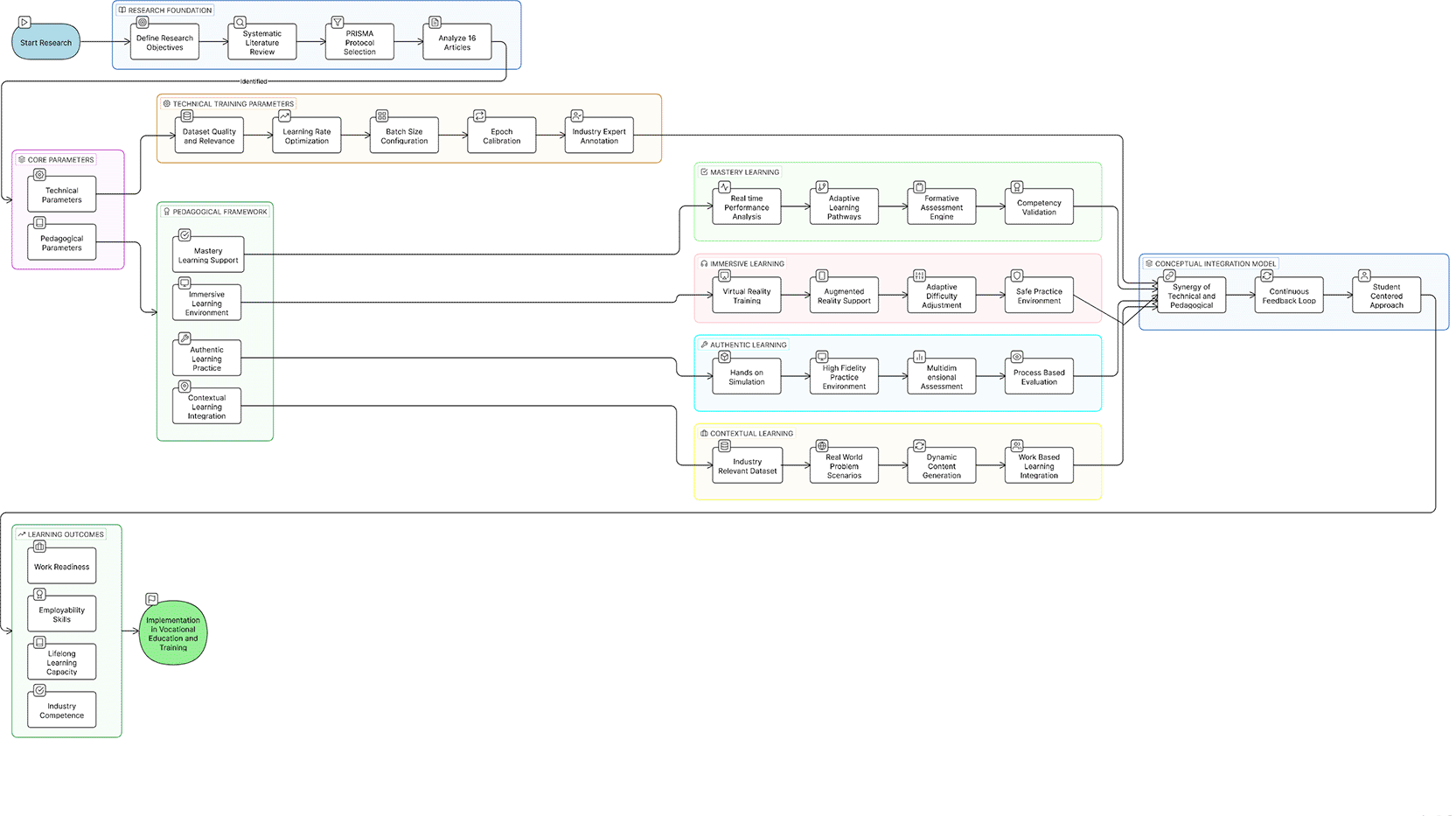
These findings shift the focus of DL evaluation from sole accuracy to a socio-technical-pedagogical framework that positions complete, authentic, contextual, and immersive learning as the main criteria. Practically: (1) VET needs to develop a curriculum based on experiential learning that produces authentic data and prepares teachers as AI-based facilitators; (2) policymakers should direct investments not only toward hardware but also toward curating relevant national vocational datasets; (3) the industry acts as a core partner in validating, providing data, and contributing domain expertise throughout the DL development cycle.
This SLR is limited by 16 articles and potential publication bias, while the rapid pace of DL innovation makes some technical parameters quickly obsolete. Moving forward, it is possible to: conduct empirical/quasi-experimental studies in the context of VET institutions to measure the impact of pedagogically parameterized DL on competence and employability; develop low-cost and scalable DL models (e.g., mobile AR); research ethical aspects of algorithmic bias and student data privacy, and to build sustainable industry-academia partnerships for dataset curation. The long-term implication of applying these DL parameters is the enhancement of individuals’ capacity to secure and maintain decent employment. Technology is not just a teaching aid, but an instrument for building career resilience in the era of Industry 5.0.
| Views | Downloads | |
|---|---|---|
| F1000Research | - | - |
|
PubMed Central
Data from PMC are received and updated monthly.
|
- | - |
Provide sufficient details of any financial or non-financial competing interests to enable users to assess whether your comments might lead a reasonable person to question your impartiality. Consider the following examples, but note that this is not an exhaustive list:
Sign up for content alerts and receive a weekly or monthly email with all newly published articles
Already registered? Sign in
The email address should be the one you originally registered with F1000.
You registered with F1000 via Google, so we cannot reset your password.
To sign in, please click here.
If you still need help with your Google account password, please click here.
You registered with F1000 via Facebook, so we cannot reset your password.
To sign in, please click here.
If you still need help with your Facebook account password, please click here.
If your email address is registered with us, we will email you instructions to reset your password.
If you think you should have received this email but it has not arrived, please check your spam filters and/or contact for further assistance.

Comments on this article Comments (0)