Keywords
Ecological citizenship, ecosophy, javanese culture, Islamic values, global civilization

This article is included in the Ecology and Global Change gateway.
Ecological citizenship, ecosophy, javanese culture, Islamic values, global civilization
The current global ecological crisis has reached an alarming stage. Indonesia, despite being a mega biodiversity country, faces a profound environmental paradox. Although known for its rich endemic flora and fauna, the government has recorded extremely high deforestation rates in recent years. Data from Forest Watch Indonesia (2025) indicates that during 2017–2021, deforestation in Indonesia averaged 2.54 million hectares per year, equivalent to six football fields every minute. This destruction is not confined to a single region. Still, it is widespread across the archipelago: Kalimantan (1.11 million ha/year), Papua (556,000 ha/year), Sumatra (428,000 ha/year), Sulawesi (290,000 ha/year), Maluku (89,000 ha/year), Bali-Nusa (38,000 ha/year), and Java (22,000 ha/year). These figures do not merely indicate physical damage to the ecological landscape.
Deforestation is not only a threat to the national ecological landscape but also significantly impacts the sustainability of the global life support system. As one of the world’s largest carbon sinks, Indonesia’s tropical forests play a crucial role in stabilizing the Earth’s climate (Ismail et al., 2025; Murdiyarso et al., 2021). Massive deforestation contributes significantly to increased greenhouse gas emissions, accelerates the pace of climate change, and undermines global commitments in international climate agreements such as the Paris (Sindico, 2016; Streck et al., 2016). The loss of endemic biodiversity also exacerbates the global ecological crisis related to species extinction and the disruption of the world’s ecosystem chains. Furthermore, forest destruction threatens the environmental wisdom of indigenous communities that have long maintained the balance between humans and nature.
The increase in deforestation reveals a more profound crisis in the fractured relationship between humans and nature. This reflects the failure of modern humanistic values in understanding this relationship (Pinn, 2021). This phenomenon demonstrates the failure of the contemporary humanist paradigm based on instrumental rationality and the exploitation of natural resources. This paradigm has given rise to a dominant form of relationship, rather than a participatory one. In this context, ecological destruction manifests the spiritual decline and crisis of meaning that plagues contemporary human existence. The environmental crisis in Indonesia must be understood as part of a global crisis, and its resolution requires the integration of local values, ecological spirituality, and alternative approaches such as ecosophy, which can balance the relationship between humans and nature more holistically.
The dominance of exploitative approaches in development has stripped away the spiritual and ethical dimensions of our treatment of nature. Therefore, a new approach is needed based not only on technology and policy, but also on human ontological and cosmological awareness as part of the universe of ecological spirituality. By examining the integration of spirituality and culture, this study seeks to uncover the environmental depth of Javanese society as an epistemological alternative to the contemporary ecological crisis. Existing traditions do not merely represent ritual practices but also contain worldviews that position nature as a living and sacred entity. These rituals reflect how local communities build harmonious relationships between humans, nature, and God by combining Islamic teachings and local wisdom.
The integration of Islamic teachings and Javanese culture is evident in how the Selorejo community integrates religious values with environmental conservation practices. Establishing local community and the Wonokerto Lestari Village Forest Management Institution (LPHD) demonstrates collective efforts to preserve forests through an approach combining spirituality, customs, and community participation. In this context, the religious practices and local traditions of the Selorejo community offer cultural and spiritual resistance to the ecological crisis. Located on the slopes of Mount Kawi, the Selorejo community has long maintained a harmonious relationship with the forest as a source of life and an integral part of their customs. Through rituals such as selametan alas or selametan sumber, which are forms of caring for nature and expressing gratitude for the abundance of natural resources, as well as the tradition of village cleansing, which reflects gratitude and efforts to ward off evil, the people of Selorejo express a deep ecological awareness.
The increasingly dire situation of local wisdom due to the dominance of exploitative ecological approaches and the lack of studies examining the spiritual and cultural dimensions of the relationship between humans and nature underscores the importance of reviving traditional roots in caring for nature. Furthermore, as a form of responsibility for the complexity of contemporary ecological issues, studies on the relationship between humans and nature through cultural and religious perspectives are becoming increasingly relevant. This is also a strategic step, especially in responding to global agendas such as the Sustainable Development Goals (SDGs), particularly point 13 (Climate Action), point 15 (Life on Land), and point 11 (Sustainable Cities and Communities) (Savira & Honosutomo, 2024; Waqiah & Sarjan, 2025). In the context of Javanese society, particularly in Selorejo Village, this raises several fundamental questions that need to be addressed systematically: (1) What does Javanese society carry out the forms and characteristics of ecological practices in maintaining harmonious relations with nature?; (2) How are Islamic values and local wisdom integrated into the environmental rituals of Javanese society? Moreover, (3) How do ecological practices in Java fit into the context of global ecological ethics?
This study aims to uncover how the integration of Islamic teachings and Javanese culture is manifested in ecological rituals still preserved by Indonesian communities today. This research describes the form of traditions and interprets the symbolic meanings and ethical values contained within them, particularly those related to ecological awareness and sustainable living. The relevance of this research lies in the importance of rediscovering local wisdom as a source of contextual environmental ethics rooted in the community’s cultural practices. Amidst the global ecological crisis, understanding local rituals rich in ecological meaning can contribute to building a sustainability paradigm based on culture and spirituality. In a broader scope, this research also aims to enrich the global environmental ethics discourse with local perspectives sourced from the traditions and spirituality of Southeast Asian communities, while offering an alternative to the dominance of sustainability narratives that often stem from Western technocratic and secular approaches.
This study employs a qualitative approach with ethnographic methods to examine how Islamic values and local Javanese cultural wisdom are incorporated into ecological rituals in Selorejo Village, Malang, Indonesia (Creswell & Poth, 2016). Data collection utilized three methods. First, participatory observation, where researchers immersed themselves in community events like Selametan Alas and Selametan Sumber to grasp their symbolic and socio-cultural significance. Second, in-depth interviews with key informants such as indigenous leaders, members of the local community and community conservation participants were conducted to understand their perceptions, values, and motivations driving these practices. Third, documentation involved reviewing records or literature on how the Selorejo community blends Islamic principles with local wisdom to support the primary data.
Data analysis was carried out thematically, guided by ecosophy theory and ecological spiritusity concepts (Braun & Clarke, 2006). The data are organized into themes such as ecological practices in Javanese society, Islamic values and local wisdom in environmental rituals, and ecosophical practices in Java as a model for global ecological ethics. Validation of findings involved triangulation of sources (observations, interviews, documentation) and among researchers. The process included pre-field activities (literature review and preparing research tools), fieldwork (data collection over three months), thematic analysis, and reporting.
This study adhered to the institutional ethical guidelines for qualitative social science research at Universitas Gadjah Mada. In accordance with these guidelines, formal ethics approval was not required for this non-invasive study involving adult participants, as the Faculty of Philosophy does not have a research ethics committee. The study was conducted with appropriate institutional permission to carry out fieldwork. The absence of formal ethics approval does not imply a disregard for research ethics, as the study was conducted in line with institutional guidelines and internationally recognized ethical principles.
Informed consent was obtained verbally from all participants prior to data collection after they had received complete information about the study. Verbal consent was considered appropriate given the ethnographic context of the research and to ensure participants’ comfort and trust within the community setting. Participants were informed about the purpose of the study, the voluntary nature of participation, and their right to withdraw at any time. Confidentiality was maintained through pseudonymization (P1, P2, …) and secure data handling.
The indigenous community of Selorejo, which is part of Javanese society, believes that civilization in Malang originated in the forest, known as Wana Asrama. This forms the basis of the Javanese cosmological view that the forest is where spiritual, social, and ecological life first grew and developed (Yoamara et al., 2020). The community living on the slopes of Mount Kawi in Dau Regency represents the historical continuation of an ancient civilization, which maintains a cosmological relationship with nature as the center of their global orientation. The Selorejo forest, located on the slopes of Mount Kawi, is an important part of the lives of residents. Local community is the guardian of local wisdom in managing the Selorejo forest, passed down through generations to preserve Javanese culture and awareness of global sustainability. In the ecological rituals of the Kawi community, the forest not only serves as a source of livelihood and a water catchment area but also holds strong spiritual significance. Through the values and ethics embedded in the ecological rituals practiced by the indigenous community, it becomes evident that these rituals not only function to preserve natural resources but also maintain a harmonious relationship with nature (Baines & Miss (Miis), 2024). The ritual traditions there include: Merti Wono (forest and water source blessing), wong ireng performance art, marking of traditional boundaries, and reforestation and environmentally friendly agriculture, which are relevant in the search for solutions to the current environmental crisis (Pratama et al., 2025).
The concrete manifestation of the ecological practices of the local community is embodied in a traditional ritual known as Merti Wono. Literally, “merti” means “to care for” or “to clean,” and “wono” means “forest.” Merti Wono is a ritual to clean or “bathe” the forest. This tradition involves clearing the forest area of trash, dry branches, and wild plants believed to disrupt the ecosystem’s balance. This cleansing is physical and symbolic, as an effort to purify the natural space believed to be the dwelling place of ancestral spirits or forest guardians (danyang). Therefore, this ritual is also called a forest blessing ceremony, with the intention that the forest and the surrounding community are always blessed with safety. The forest blessing ceremony consists of several traditional rituals, including marking customary boundaries. This is done traditionally to affirm the sacred boundaries of the area, not as a form of ownership claim. Areas marked with customary boundaries become conservation zones that cannot be converted for other uses, which is an effort to build ecological awareness within the community. The community participating in this ritual consists of four traditional areas: Pohon Kering, Pohon Gandul, Gunung Tumpeng, and Kebon Roto. They gather for joint prayers and the forest blessing ceremony, which is typically held on Wednesday of the Suro month (a combination of the Javanese and Hijri calendars). The tradition continues with tree planting and reforestation, particularly around water sources and landslide-prone areas. The tree species prioritized in the reforestation ritual are hardwood trees, capable of strongly supporting the soil and storing large amounts of water. This ritual is closely linked to the blessing ceremony around the water source (spring). Water sources are considered the center of life because they provide clean water for residents and are an integral part of the forest ecosystem. In this ritual, prayers for safety and requests for the water to remain clean and not dry up are usually recited, reflecting the spiritual relationship between humans and nature.
Women play a central role in the ecological practices of the local community. This role is reflected in their involvement in preparing food and offerings, which are symbolic and reflect the ecological knowledge passed down from generation to generation. Women are responsible for preparing traditional dishes made from local produce, as well as arranging offerings that are rich in spiritual meaning. This is followed by the Wong Ireng performance, which serves as an initiative to encourage the younger generation to participate. This also functions as an educational medium, ensuring that traditional values and ecological practices are sustained across generations. Next is the jagong alas tradition, where the term “jagong” comes from the Javanese language, meaning to gather or dialogue, while “alas” means forest. Jagong Alas means dialogue in the forest, a deliberative forum between indigenous communities, traditional leaders, village elders, and the younger generation that takes place in the forest area or sacred places. This unity of indigenous rituals stems from the ecological and spiritual awareness of the community that the forest is not merely a resource but also a sacred space where life begins (Wana Asrama) (Li et al., 2025). All its activities reflect respect for the land, trees, and water, which strongly connect the local community and contribute to the global context.
The activities of the Selorejo community in this finding can be described as harmonization through the integration of Islamic values into Javanese culture, such as Selametan Alas (Merti Wono) and Selametan Sumber (Annisa & Wardana, 2020). An essential part of the Islamic tradition in the archipelago is selametan. Acculturation, a phenomenon that occurs when groups from different cultures come into direct and ongoing contact, causes changes in the original cultural patterns of one or both groups. This is what led to the ceremony (Geertz, 1960). Integrating Islamic teachings with the local wisdom of the archipelago highlights a moderate, tolerant, and contextually appropriate attitude that aligns with local culture. This demonstrates how Islam interacts with Javanese culture, a part of local wisdom. This idea is rooted in the long history of Islamic integration with local culture through artistic expression, peaceful practices, and customs like the Prophet’s maulid, slametan, and tahlilan, which foster social cohesion and serve as a means of da’wah (Ellyatus Sholihah et al., 2025; Taufik Usman et al., 2023). A process of cultural acculturation or values involves blending Islamic teachings with aspects of Javanese culture, beliefs, or customs that have historically existed in the Selorejo community. In reality, the Selorejo people incorporate Islamic elements into their cultural traditions.
Figure 1 illustrates the process through which Islamic principles are integrated with Javanese culture and local wisdom in Selorejo environmental rituals, demonstrating pathways from cultural contact to global contribution:
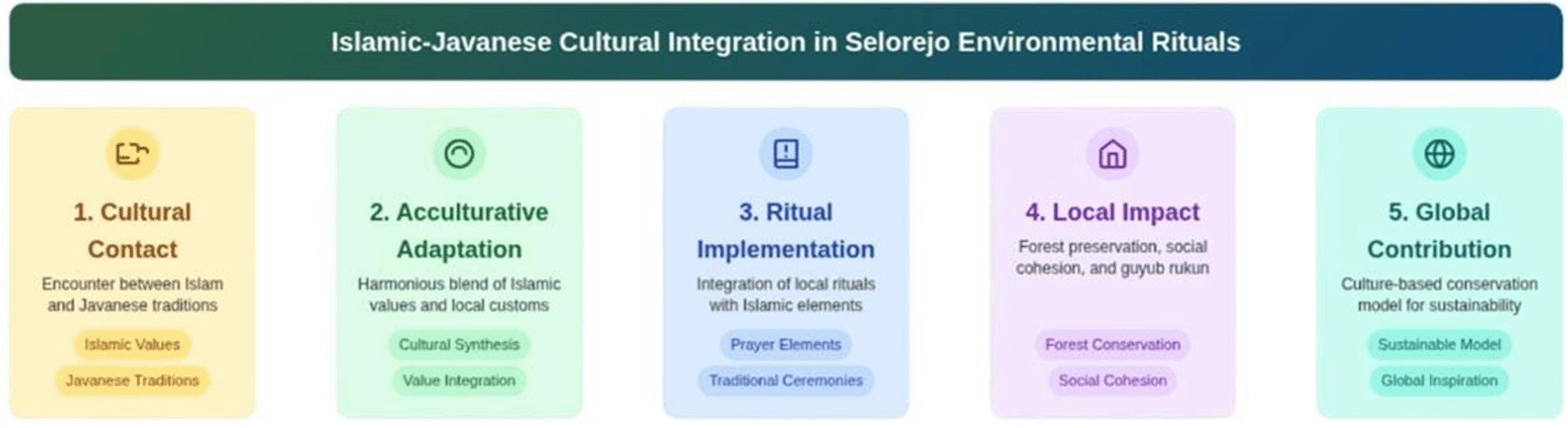
Based on Figure 1, divided into five main points, illustrates how Javanese culture and Islamic principles merge in Selorejo’s environmental rituals. First, “Cultural Contact” refers to the initial interaction between Javanese practices and Islamic teachings, characterized by the exchange between Javanese and Islamic ideals. Second, acculturative adaptation shows a peaceful process of blending local traditions with Islamic beliefs, resulting in value integration and cultural synthesis. Third, Ritus Implementation explains how Islamic elements are integrated into regional customs, such as incorporating prayer components into slametan rites. Fourth, local impact covers positive effects on the environment and nearby communities, like conserving forests and strengthening social bonds through the “guyub rukun” ethic. Lastly, Global Contribution emphasizes how this culture-based conservation approach can inspire sustainability efforts worldwide, focusing on locally relevant yet globally applicable sustainable methods.
The prayers offered during each performance of the Javanese rite conducted by the Selorejo people reflect aspects of Islamic principles. Through this ceremony, the community is encouraged to recognize the importance of forests and water supplies as stewards of their ecosystems. Redfield’s acculturation hypothesis, which categorizes acculturation outcomes into three types, aligns with this process. The first is acceptance, meaning most foreign cultures are embraced and the native culture is lost (assimilation). The second is adaptation, which blends the old and new cultures functionally. Reaction’s third category involves rejection and a desire to revert to the old culture. The phenomenon known as adaptation acculturation occurs in the Selorejo community, where Islamic elements are integrated into Javanese rituals without replacing them. These rituals also demonstrate harmony that reflects the values of Islamic humanism, which connects God, nature, and humans, as well as a pluralistic epistemology that considers social responsibility, local traditions, and Islam. According to Misrita’s research among the Dayak people of Kalimantan, ceremonies are performed to promote restoration and honor the forest because they see it as an ancestor’s legacy that must be protected (Misrita et al., 2019). The preservation of forests is both a cultural and spiritual issue and a technical one. Based on field data, the Selorejo community’s methods reduce deforestation while also creating a platform for fostering greater inclusivity and harmony and the emergence of cultural hybridity between Islam and Indigenous beliefs.
Integrating aspects and principles of Islam with regional customs, like the ceremonies of the Selorejo community, creates a unique religious expression within the community’s cultural setting. This is evident in the blending between the two. Al-’ādah muḥakkamah and al-’tsābit bi al-’urf ka al-tsābit bi al-naṣ, which permit adaptation to local cultural demands, support the principles of moderate Islam, promote tolerance, and preserve local wisdom. According to research on Islamic indigenization, Islam Nusantara, and religious practices, these three concepts share Moderation traits (Sefriyono et al., 2025). This method illustrates a part of the cultural evolution of Islam, making it relevant to the context of the Selorejo people’s rituals. The rituals of the Selorejo people preserve ancient Javanese frameworks that incorporate Islamic ideas, including prayers or other Islamic principles. Bhabha proposed the concept of a “third space” as a place where cultures interact, negotiate, and develop a hybrid identity that is a new and dynamic fusion rather than fully belonging to one of the original civilizations (Baba, 1995).
Selametan and other rites in Selorejo exemplify a “third space,” where Javanese culture and Islam merge to forge a unique spiritual identity that encourages social cooperation and environmental conservation. These practices show how religion and indigenous knowledge can coexist peacefully to foster a sustainable and inclusive set of values, counterbalancing a society torn by social divisions and ecological crises. It has been demonstrated that blending local customs with religious principles such as moderation, tolerance, and moral responsibility promotes social harmony, safeguards the environment, and advances sustainable development goals. In a global context, this model can inspire other communities to preserve their traditions and protect the environment simultaneously (Sukiyawati & Muhammad Majid, 2024). Religious principles and local culture need to coexist to build a peaceful society, protect the environment, and promote comprehensive, sustainable development that can be applied locally or worldwide.
Local community emphasized that everyone must participate in forest conservation efforts; the tree-planting events organized by the people of Selorejo exemplify the inclusiveness and harmony necessary to slow down deforestation. According to research by Muttaqin et al. (2019), community-based forest ecosystem service management can help reduce emissions from deforestation and forest degradation. However, it requires establishing strong organizational structures at the local level and developing a solid plan for sustainable management. One potential way to reduce emissions from the forestry industry in Selorejo is through community-based forest ecosystem management. However, the success of this strategy relies heavily on the level of community empowerment, the credibility and authority of local institutions, and the presence of a systematic, focused, and long-term management plan.
The Loita community in Southern Kenya’s Enaimina Enkiyio forest exemplifies how indigenous groups manage their natural resources through customary rites and sacred materials. The community controls access, use, and preservation of the Enaimina Enkiyi woodland through traditional ceremonies and sacred practices objects (Nyagwalla Otieno et al., 2023). This suggests that conservation strategies rely on local communities’ social structures and cultural values rather than solely on official regulations and technology. In line with Geertz’s idea above, it demonstrates how the Loita and Selorejo communities support environmental protection through hybrid cultural practices (Geertz, 1960). Ecological ceremonies like selametan in Selorejo blend Javanese and Islamic customs, promoting harmony and environmental protection. Since sacred sites serve as centers for spirituality, natural resource management, and cultural identity, they are the focus of traditional ceremonies in the Loita community, leading to sustainable forest management. This shows how local spiritus and cultural values support social cohesion and environmental conservation rather than hindering them. Although Islam is the dominant religion, Javanese religious practices are flexible and context-dependent rather than strict, resulting in a unique form of Islam known as Nusantara Islam or Local Islam. This highlights the Javanese people’s ability for innovative spirit and social adaptation, which helps maintain religious and cultural unity. The research demonstrates how ethical teachings, forest preservation practices, and community-based conservation groups such as the environmental rituals performed by local communities in Selorejo collectively contribute to global biodiversity conservation.
The environmental rites of the Selorejo community demonstrate a harmonious blending of Islamic values and local Javanese wisdom, reinforcing cultural identity and playing a key role in ecological conservation. This approach offers an alternative solution to global issues like climate change and environmental degradation by integrating spirituality, culture, and moral responsibility in managing natural resources. This model can be adopted worldwide as a sustainable and contextually appropriate form of community-based conservation and aligns with the 11th goal of the Sustainable Development Goals (SDGs), namely Sustainable Cities and Communities (Henderson & Loreau, 2023). Local rites and wisdom in environmental conservation highlight sustainable community building and are grounded in cultural values.
Local cultural traditions have proven essential in maintaining social stability, strengthening community identity, and encouraging active participation in conservation efforts (Amini et al., 2024). This approach bases natural resource management on cultural and spiritual values, enhancing community involvement and fostering a sense of moral responsibility for the environment (Colléony et al., 2020). Meaningful interactions with nature, guided by cultural and spiritual values, have fostered well-being, enhanced people’s connection to nature, and supported efforts to conserve biodiversity. Additionally, community involvement in sustainable practices, like education and hands-on activities, can promote greater sustainability literacy and environmentally friendly behaviors (Qureshi, 2020). The environmental rites of the Selorejo community show that a culturally and spiritually based approach is not only locally relevant but also offers an alternative conservation model that can be adapted globally. Amid the world’s ecological challenges, this approach opens up opportunities for creating a global environmental ethics that is more humane, inclusive, and rooted in humanity’s collective consciousness and cultural diversity.
The study in Selorejo shows that local ecosophy practices do not stop at the level of “traditional wisdom,” but can be interpreted as a form of ecological citizenship rooted in the community’s concrete actions in caring for the forest. Practices such as Merti Wono, marking customary boundaries (tetenger adat), reforestation, and Jagong Alas show that residents not only preserve forests as cultural heritage, but also fulfill a moral obligation to ensure the sustainability of ecological spaces for others. This is in line with Dobson’s thinking (2003), ecological citizenship differs from conventional citizenship and environmental citizenship, which focus on rights and legal compliance. The essence of ecological citizenship lies in non-reciprocal moral obligations, namely the responsibility of those who “take up ecological space” to repair damage that affects others. These obligations, which transcend national borders and time, are evident in the way the Selorejo community protects water sources through Selametan Sumber, plants hardwood trees in landslide-prone areas, and cleans the forest during the ritual of “bathing” the forest floor. This collective commitment shows that ecological citizens are not merely a theoretical category, but are formed through daily practices, ecological actions, and intergenerational responsibility (Karatekin & Uysal, 2018). The daily practices instilled in Selorejo are based on religious spiritual values.
Recent literature confirms that ecological citizenship is shaped by the fact that the negative impacts of human actions, such as carbon emissions, deforestation, excessive resource extraction, and unsustainable consumption patterns, are widespread and felt by others. Findings in Selorejo show how awareness of these cross-regional and cross-generational impacts is translated into concrete actions. For example, communities recognize that upstream damage (deforestation in the Sabuk Kawi region) impacts flooding and drought in downstream villages, prompting them to develop customary mechanisms such as traditional boundaries, prohibitions on cutting certain trees, and the establishment of conservation zones to limit their ecological footprint on other communities. In other words, to the extent that the ecological footprint of an individual or group crosses geographical and temporal boundaries, to that extent the scope of moral and political obligations attached to them as ecological citizens also extends (Jagers et al., 2014). It is in this context that the Selorejo practice finds its relevance: residents not only comply with the state’s environmental regulations, but consciously change their lifestyles, consumption patterns, and economic choices through environmentally friendly agriculture, customary water use, and collective work such as Merti Wono and reforestation of water sources to prevent ecological suffering for other communities and future generations. Ecological citizenship as a political approach to mobilizing personal and collective responsibility is evident in the way the Selorejo community has established customary institutions such as indigenous communities, which function to regulate timber harvesting, impose sanctions, and ensure that every household participates in forest restoration. This shows that ecological citizenship is not merely a moral campaign or ethical discourse, but a structure of action that influences community political decisions, from determining ritual days to forest and water management.
Dobson (2003) emphasizes that ecological citizenship focuses on moral obligations related to ecological justice, particularly inequalities in the use of ecological space and the distribution of ecological burdens across classes, countries, and generations. In Selorejo, this principle is reflected in the understanding that indigenous peoples, as users of forest space, have a greater responsibility to maintain its balance. This is manifested through restrictions on the consumption of forest products, mutual assistance in restoring landslide areas, and the Selametan Sumber ritual, which emphasizes the importance of preserving water for other villages that depend on the flow from Selorejo. Studies show that local involvement in conservation efforts has a positive impact on biodiversity and improves socioeconomic conditions (Bajracharya et al., 2005; Mengie & Szemethy, 2025). Through the perspective of ecological citizenship, critical questions shift from simply “how to be a greener consumer” to “who benefits and who is harmed by current patterns of production and consumption, and to what extent citizens must change their social, economic, and political practices to improve them.” Within this framework, the practices of the Selorejo community are not only examples of pro-environmental behavior, but also a form of ecological citizenship that corrects global ecological inequalities through customary regulations, collective rituals, and conservation actions based on intergenerational responsibility. This is what makes Selorejo’s local practices relevant as an alternative ecological model amid the global crisis.
If this framework is applied to Selorejo, ritual and customary practices such as Merti Wono, Jagong Alas, Wong Ireng, tetenger adat, and collective reforestation can be interpreted as community-based ecological citizenship infrastructure. This citizenship emphasizes collective responsibility and action for environmental sustainability in local communities. This approach integrates the principles of ecological citizenship, which include responsibility, sustainability, rights, justice, and participation, into community activities and initiatives (Wibowo et al., 2023). Jagong Alas is not only a traditional forum, but also a public deliberation arena where residents discuss forest conditions, determine exploitation restrictions, and agree on conservation measures. Practices in Selorejo show that local communities feel a sense of responsibility towards future generations for the preservation of nature. The idea of intergenerational justice is at the heart of environmental ethics, which emphasizes that current actions should not sacrifice the ability of future generations to meet their needs. This is supported by the idea that the environment is a communal resource shared by future generations, and that the current generation must preserve it as a form of gratitude to their predecessors (Behrens, 2012; Moody & Achenbaum, 2014).
The Islamic dimension in ecological practice enriches the meaning of ecological citizenship. Articles on Islamic “eco-theology” emphasize that the concepts of khalifah fil ardh, the prohibition of fasad, and the principle of rahmatan lil ’alamin can be read as a theological basis for ecological citizenship ethics: humans are not only citizens of a country, but also cosmic citizens who are responsible before God for the ecological impact of their actions (Rakhmat, 2022). Islamic teachings emphasize the role of humans as stewards of the earth, responsible for maintaining ecological balance (Mizan) and preventing environmental damage (Fasad). This principle encourages collective responsibility and inspires action towards environmental preservation (Ball, 2025; Nur et al., 2025). With this framework, the residents of Selorejo can be understood not only as “forest farmers” or “indigenous subjects,” but as subjects of ecological citizenship who unite cultural and religious aspects by carrying out their cosmic mandate as guardians of the earth, a dimension that is rarely touched upon by secular ecological citizenship theory. The integration of cultural, religious, and environmental responsibilities in this way can strengthen environmental awareness and knowledge, as well as encourage sustainable behavior (Suhartanto et al., 2024). The Selorejo case shows that ecological citizenship can be understood not only as an abstract theoretical construct, but also as a way of life that grows out of local ecosophy, Islamic theology, and customary institutions that regulate human relations with nature. This opens up space for the formulation of global environmental governance that is not only based on technology and economic instruments, but also on moral, spiritual, and cultural dimensions that bind humans to cross-spatial and cross-generational responsibilities for the sustainability of the earth.
This study demonstrates that the environmental rituals of the Selorejo community embody an integrated ecosophical framework in which Islamic values and Javanese local wisdom converge into a living form of conservation-based ecological citizenship. The six identified rites, Merti Wono (Selametan Alas), Selametan Sumber, Jogo Wono performing arts (Wong Ireng), Jagong Alas, boundary marking and reforestation, and eco-friendly agriculture, show that nature is understood not merely as a resource, but as a sacred trust and manifestation of God’s blessing. These practices maintain forest cover, protect water sources, and support biodiversity while shaping ethical subjectivities, intergenerational responsibility, and a sense of moral obligation toward humans, non-human beings, and future generations. In this way, ecosophy is operationalized at the community level and offers a concrete, locally grounded expression of global ecological citizenship, in line with SDGs 11, 13, and 15.
Beyond their cultural and spiritual significance, Selorejo’s rituals have direct implications for conservation and disaster mitigation in a landslide and flood prone mountain landscape. The ritualized “cleansing” of forests, reforestation with deep-rooted species around springs and unstable slopes, and the establishment of customary conservation zones enhance ecosystem resilience and reduce disaster risk. These findings indicate that environmental governance should recognize and protect such ecological citizenship practices rather than treating them as marginal or merely symbolic. Future research should comparatively examine similar ecosophical practices in other regions and explore policy, legal, and educational mechanisms for integrating local spiritual into broader environmental and disaster risk reduction frameworks at regional, national, and global levels.
This study was conducted with prior permission and agreement from the community involved. All participants were informed about the purpose of the research, the voluntary nature of their participation, and their right to withdraw at any time without penalty. Informed consent was obtained from all individuals who took part in the study. No personal identifiers were collected, and all data were anonymized to protect confidentiality and privacy.
| Views | Downloads | |
|---|---|---|
| F1000Research | - | - |
|
PubMed Central
Data from PMC are received and updated monthly.
|
- | - |
Provide sufficient details of any financial or non-financial competing interests to enable users to assess whether your comments might lead a reasonable person to question your impartiality. Consider the following examples, but note that this is not an exhaustive list:
Sign up for content alerts and receive a weekly or monthly email with all newly published articles
Already registered? Sign in
The email address should be the one you originally registered with F1000.
You registered with F1000 via Google, so we cannot reset your password.
To sign in, please click here.
If you still need help with your Google account password, please click here.
You registered with F1000 via Facebook, so we cannot reset your password.
To sign in, please click here.
If you still need help with your Facebook account password, please click here.
If your email address is registered with us, we will email you instructions to reset your password.
If you think you should have received this email but it has not arrived, please check your spam filters and/or contact for further assistance.

Comments on this article Comments (0)