Keywords
Authoritarianism, Myanmar, Coercion, Democracy, Southeast Asia

Authoritarianism, Myanmar, Coercion, Democracy, Southeast Asia
The Myanmar military (Tatmadaw) has been at the center of international headlines for the wrong reasons. It holds a reputation for genocide, bombings, mass killings, forced displacements, torture, and other vast brutal acts (BBC, 2022; Head, 2024; Henschke et al., 2021; HRW, 2017; Linn, 2024), targeted towards the Myanmar people, which it vowed to protect. Patterns of atrocities have occurred in the past decade. Although persecutions towards the Rohingya people, for example, have lasted for decades, the 2017 Tatmadaw pogrom, which saw the murder, rape, and forced displacement of approximately 700,000 Rohingya Muslims, further reflected the challenges of having Myanmar’s military rule leading the country (Amnesty, 2025; Motlagh et al., 2018).
Although there were glimpses of democratic transition starting in 2012, with the National League for Democracy (NLD) attaining parliamentary seats during by-elections and winning a majority of seats in the 2015 elections, this was not a sustained trend. Amid concerns about losing their grip on power through the military-backed political party, the Union Solidarity and Development Party (USDP), the Tatmadaw announced that the 2020 elections were invalid due to allegations of rigging (Kipgen, 2021). Consequently, Myanmar again fell to military junta rule the following year, deposed the democratically elected leaders, and put the state into a state of emergency, which continued to be extended until 2025 (extended every 6 months) (Tisdall, 2025). Even when elections were finally held in 2025, many observers concluded that the process was a sham, citing the strong military involvement, political repression, censorship, and bans on political party participation (Kavi & Pyae, 2025; Ratcliffe & Thu, 2026; Shahid, 2026).
The central question this study asks is why Myanmar has continued to fall into domestic chaos, despite other regions in Southeast Asia with authoritarian tendencies remaining relatively stable. In Southeast Asia, countries like Vietnam, Singapore, Malaysia, Laos, Cambodia, and Brunei Darussalam can also be considered to lack democratic features by Western standards (Elharthi, 2020; Kuhonta, 2025; Morgenbesser & Pepinsky, 2019; Slater, 2025). However, these states have shown that, despite adopting monarchies or the dominance of a single political party, relative stability can be established, and their people’s needs can be fulfilled. Although there were considerable prospects for Myanmar to successfully transition to democracy 14 years ago, what has driven the continued decline and chaos in the nation? Could it be that Myanmar lacks the performance legitimacy that scholars have argued is the primary factor in the longevity of authoritarianism in many Southeast Asian states? (Acharya, 2003; Arumugam, 2025; Case, 2009; Emmerson, 2005; Sinpeng, 2019).
To answer this empirical puzzle, this study argues that in understanding the features of Myanmar’s authoritarianism, two questions need distinct analysis. First, what constitutes the authoritarian system in Myanmar? Given the conceptual stretching and ambiguity associated with the loosely used term ‘authoritarianism’, this study agrees that it poses many conceptual problems in assessing the regime varieties of non-democratic nations (Gilbert & Mohseni, 2025). The graded approach to regime varieties helps clarify this by seeking to understand where a particular regime falls based on the degree to which it departs from ideal democratic practices (Bollen & Jackman, 1989; Elkins, 2000; Gilbert & Mohseni, 2025). In conceptualizing the regime variety of Myanmar, this study is informed by the 2024 Democracy Index published by the Economist Intelligence Unit, which looks at the extent of free and fair elections, civil liberties, political participation, and a functioning government, with an index range between 0 and 10 (the latter as the most democratic) (EIU, 2024). To display the extent of authoritarianism in Myanmar, comparisons are also made with other members of the Association of Southeast Asian Nations (ASEAN), including states considered non-democratic. Second, it also uses data on free elections and the participatory index from the 2025 Varieties of Democracy to trace consistencies in the conceptualization of authoritarianism in Myanmar (VDem, 2025).
The second question asked whether Myanmar’s authoritarianism reflects performance legitimacy or coercion. Bridging Kuhonta’s 2025 analytical framework on the Southeast Asian authoritarian developmental state, this study argues that the lack of domestic stability (despite a brief democratic transition through elections) is associated with Myanmar’s authoritarian regime’s leaning toward a purely coercive model. As Kuhonta argued, the coercion model shows that a state is deeply “[…] rooted in entrenched parties and militaries” (Kuhonta, 2025, p. 2); meanwhile, performance legitimacy emphasizes economic success and institutional responsiveness (Alagappa, 1995; Kuhonta, 2016, 2017). The argument presented in past studies is that the dictatorial longevity observed in many Southeast Asian non-democratic states can be associated with the large number of performance legitimacy actions (H. Crouch, 2019; Kuhonta, 2025; Truong & Trinh, 2024). However, this study argues that those features are absent in Myanmar, and specifically seeks to identify the occurrence of two other features that lead to the conclusion of the state falling under the category of coercion: persistent forms of violence or the threat of violence; and the deployment of violence through institutional structures (Kuhonta, 2025).
Combined, this qualitative study, which examines trends in Myanmar’s political development since 2012, finds that the analytical frameworks for regime variety and the categorization of authoritarianism yield a more nuanced understanding of the nature of non-democratic rule in Myanmar. It allows the interpretation that, in the context of authoritarianism, certain features need to be assessed to explain why some non-democratic nations can prevail while others fall into chaos. By doing so, this study can make sense of why the military grip in Myanmar has persisted, despite unsuccessful past efforts to facilitate democratic transitions.
Past studies have examined two main discourses related to this study. The first examines the many factors underlying longevity in Myanmar’s authoritarianism, citing issues ranging from elections and institutionalization to the role of technology and other influential variables. Meanwhile, the second related discourse examined the one-decade period during which efforts were made to transition Myanmar into a democracy. The studies within the discourse examine the challenges encountered and why a continued effort to establish governance change could not proceed. These discourses, although influential in understanding Myanmar’s authoritarianism, fall short in explaining the longevity of the dictatorship because they lack consideration of the regime’s varied forms and of actions that lean towards coercion rather than performance legitimacy.
What has been the existing interpretation explaining authoritarianism’s longevity in the case of Myanmar? As shown in several past studies, the variables introduced have ranged from the misuse of elections and constitutional changes to surveillance and the institutionalization of violence (Aung, 2025; M. Crouch, 2020; Dean, 2017; Morgenbesser, 2015). In a 2015 study, for example, the argument is centered on how the Tatmadaw has used one of democracy’s tools (elections) to either “[…] feign conformity to established rules and/or shared beliefs about how political power should be maintained or mobilize citizens in a unanimous show of manufactured support for the ruling party” (Morgenbesser, 2015). Others have argued for an increase in the state’s coercive apparatus through the introduction of greater surveillance, as well as the establishment of preemptive constitutions to reduce the likelihood of constitutional democracy (Crouch, 2020; Dean, 2017; Putra, 2024; Zreik, 2025).
Meanwhile, others have looked at other explanatory variables to make sense of the long duration of Myanmar’s military dictatorships. A 2022 study concluded that coercion and co-optation to counter resistance were among the Tatmadaw’s primary strategies to assert control over its territory (Stokke et al., 2022). Meanwhile, other studies looked at the role of management policies, citing the following specific policies as the factors leading to the prolonging of the junta’s rule: “[…] establishing a patrionage network with different civilian sections of people, emphasizing national ideology, directing coercive mechanisms against anti-government forces, launching educational propaganda, applying media censorship …” (Amin & Chandni, 2021).
In addition to other similar studies that examined the influence of technology, the exploitation of energy and resource wealth, and the prevalence of political repression (Ruzza et al., 2019; Turnell, 2012), several studies have examined Myanmar’s foreign relations as affecting the dictatorship’s longevity. One of the most prominent has been the idea that China’s close relations with Myanmar’s military have enabled the Tatmadaw to strengthen its grip on power and remain in control despite resistance (Beining, 2017; Bimo, 2025; Dossi & Gabusi, 2023; Kobayashi & King, 2022). Furthermore, other studies have cited the political and military support of major powers in the region, including India and Russia, which have contributed significantly to the recognition of Myanmar’s de facto power, which took control in 2021 (Aswani, 2025; Naing, 2025).
The second discourse examined the reasons why it has been difficult to sustain a democratic transition in Myanmar. One of the more interesting conclusions from studies argued that Myanmar was not leaning towards democratic change, but rather towards a hybrid form of rule (Middleton & Win, 2021; Stokke & Aung, 2020). Rather than expecting that democracy would be the eventual end product of Myanmar’s struggle for people-oriented rule, Stokke and Aung’s study, for example, mentioned that the form of hybrid regime is what is being expected to form, which ultimately leads to many aspects of democracy being absent (Stokke & Aung, 2020). In this sense, Middleton and Win argued for the presence of ‘hybrid governance at work,’ with boundaries drawn between authoritarian and democratic public spheres to prevent further democratization (Middleton & Win, 2021, p. 45).
Meanwhile, other studies zoomed in on the NLD. As one of the pro-democracy political parties that once held a majority of parliamentary seats, the NLD has faced challenges in advancing democracy. Swe’s 2021 study, for example, examined the structural barriers imposed by the NLD as the reason it was unable to exercise significant agency in implementing domestic reforms (Swe, 2021). Others have pointed to the increased popularity of the NLD and Aung San Suu Kyi, which has led the Tatmadaw to be more cautious in progressing with elections in the future (Ganesan, 2017). Meanwhile, Huang’s 2016 study examined how the elections that led to the NLD’s increased popularity undermined the junta’s perception of democracy and how the NLD’s growing influence was at odds with the military’s vision for the country’s evolution (Huang, 2017). Consequently, it was no wonder that the democratization in Myanmar is considered a slow process, due to the likelihood of a ‘protracted transition’ (Bunte, 2016, p. 369).
In light of these two discourses on democratic transition and the prolongation of authoritarian tendencies in Myanmar, the novelty of this study lies in the following. First, as a means of substituting for discussions on the variables that prolong authoritarian rule, this study examines how Myanmar’s authoritarianism differs from that of other authoritarian countries in Southeast Asia. Through a graduated approach, this study visualizes significant differences in ranks to showcase the unique shape of authoritarianism that has resulted from the Tatmadaw’s continued influence in Myanmar’s politics. Second, by examining the extent to which Myanmar is suited to a performance legitimacy or coercive authoritarian state, this study provides a more nuanced understanding of how instances of coercion, in the form of violence/threat of violence, and institutionalized coercive violence, prolong dictatorial rule. Therefore, despite expectations that Southeast Asian non-democratic states would be stable, this study does not identify that the performance legitimacy element is fulfilled in the context of Myanmar.
To assess why the outcome of authoritarianism in Myanmar has differed from that in other authoritarian settings in Southeast Asia, this study employs two analytical frameworks. Both aim to identify the constitutive elements of Myanmar’s authoritarian regime (as a particular regime variety) and to categorize Myanmar’s military rule as falling under the performance legitimacy or coercion category. This section will explore those analytical frameworks and how they are utilized in this study.
The first asks, what constitutes the authoritarian system in Myanmar? Situated within a regime variety, this article acknowledges that the term authoritarianism has been conceptually overstretched over the years. Therefore, using a graded approach, introduced in Gilbert and Mohseni’s 2025 study (Gilbert & Mohseni, 2025), the aim is to identify and classify “[…] according to the degree to which they (authoritarian systems) depart from or are similar to the democratic ideal” (Gilbert & Mohseni, 2025, p. 5).
As the relevant discourse explains, concepts of authoritarianism tend to lead to problems in understanding non-democratic regime varieties. Therefore, whether taking the ideal, configurative, or graded approach, the aim of researching authoritarian regimes is to reveal “[…] what constitutes a liberal democracy, authoritarian system or hybrid regime” (Gilbert & Mohseni, 2025, p. 1). Doing so acknowledges that although these authoritarian systems may seem the same and have similar non-democratic elements, they may also be entirely different. Therefore, the outcome of the system’s governance should also be expected to diverge between one authoritarian system and another. Acknowledging the differences of political regimes among states has led to some unique insights into the unique terms associated with implementing democracies, such as ‘hybrid regimes,’ ‘semi-democracy,’ ‘illiberal democracy,’ ‘democracy with adjectives,’ etc (Collier & Levitsky, 1997; Diamond et al., 1988; Zakaria, 1997). Conceptualizing regime varieties, therefore, offers distinct benefits, as it does not paint a single picture, as non-democratic practices within the state can lead to multiple interpretations of systems (and policy outcomes).
The graded approach to regime variety conceptualization holds that liberal democracy has universal conceptual parameters, with the ‘antithesis’ of democracy at the other endpoint (Case, 2009; Gilbert & Mohseni, 2025). Bridged to the case study of Myanmar acknowledges that authoritarianism may take different forms and that different terms can represent the internal dynamics at play in that nation. In the following discussions, the graded approach adopted for this study uses secondary data from two sources. First, ‘Our World in Data 2024’ ‘Democracy Index,’ published by the Economist Intelligence Unit (EIU, 2024). Several democratic elements assessed in the data include free and fair elections, civil liberties, preference for democracy, political participation, and functioning government, with an index range of 0 to 10.
The second source of data is obtained from the Varieties of Democracy, with Myanmar’s scores compared with those of other Southeast Asian states. Two of its indexed data are important for the discussions of this study. They include the participatory democracy index, which assesses the extent to which the ideal of participatory democracy is being achieved (participation defined across all political processes, including electoral and non-electoral) (VDem, 2025). Meanwhile, data on free and fair elections are based on perceptions ranging from fundamentally flawed at one end to favorable at the other (VDem, 2025).
The second conception aims to assess Myanmar’s authoritarianism to determine whether it falls into the category of performance legitimacy or coercion. When it comes to Southeast Asia’s authoritarian systems, Kuhonta argued that the region has many cases of authoritarian developmental states, which explains its relative stability (Kuhonta, 2025). Although a limited case of coercion is still to be expected, the systems are defined more with the facilitation of the public’s interests based on the parameters of economic success and domestic institutions responsive towards the public’s demands (Alagappa, 1995; H. Crouch, 2019; Kuhonta, 2016, 2017; Truong & Trinh, 2024). The central argument, therefore, is that the Southeast Asian form of authoritarianism’s performance legitimacy is what has been “[…] central to dictatorial longevity” (Kuhonta, 2025, p. 2).
Bridged to the case study of Myanmar’s authoritarianism, the anomaly of Myanmar not resulting in the domestic stability observed in other dictatorships leads the discussions to focus on two issues. The first examines whether an authoritarian development model is indeed taking place in Myanmar, where institutional responsiveness to grassroots demands is observed (Johnson, 1982; Kuhonta, 2025). Furthermore, as a major element to the arguments of performance legitimacy, it also looks at whether there is an emphasis on economic growth in the case of Myanmar, which is a feature that has allowed many of the Southeast Asian states consistent with the conception of ‘repressive-responsive’ state (M. Crouch, 2020; Kuhonta, 2025; Truong & Trinh, 2024). Second, the forms of Myanmar’s military rule are also assessed to determine whether its authoritarianism aligns with performance legitimacy or coercion. If the latter is observed, the expectation is that the findings will be consistent with Kuhonta’s 2025 study, which showed that Southeast Asian states adopt an authoritarian developmental state, thereby leading to relative stability, albeit lacking democratic elements. However, if coerciveness reflects Myanmar’s rule over the past several years, the expectation would be that Myanmar’s authoritarianism would not see domestic stability as a result of the military rule, and constant chaos would prevail.
To operationalize these analytical frameworks, the following discussion sections will be structured as follows. First, the graded approach would reveal where Myanmar’s democratic ranks lie based on the 2024 Democracy Index, the Varieties of Democracy’s 2025 participatory democracy index, and free and fair elections data. With comparisons made with other Southeast Asian studies (democracies and non-democracies), the first discussion reveals the unique elements of Myanmar’s authoritarianism and how it reflects a distinct form of regime variety. The second discussion analyses the implications of Myanmar’s military rule over the years and how the coercive governance models introduced have further deepened Myanmar’s difficulties. Consequently, despite other authoritarian systems in the region maintaining relative stability in the absence of democratic features, Myanmar stands out for its coercive model.
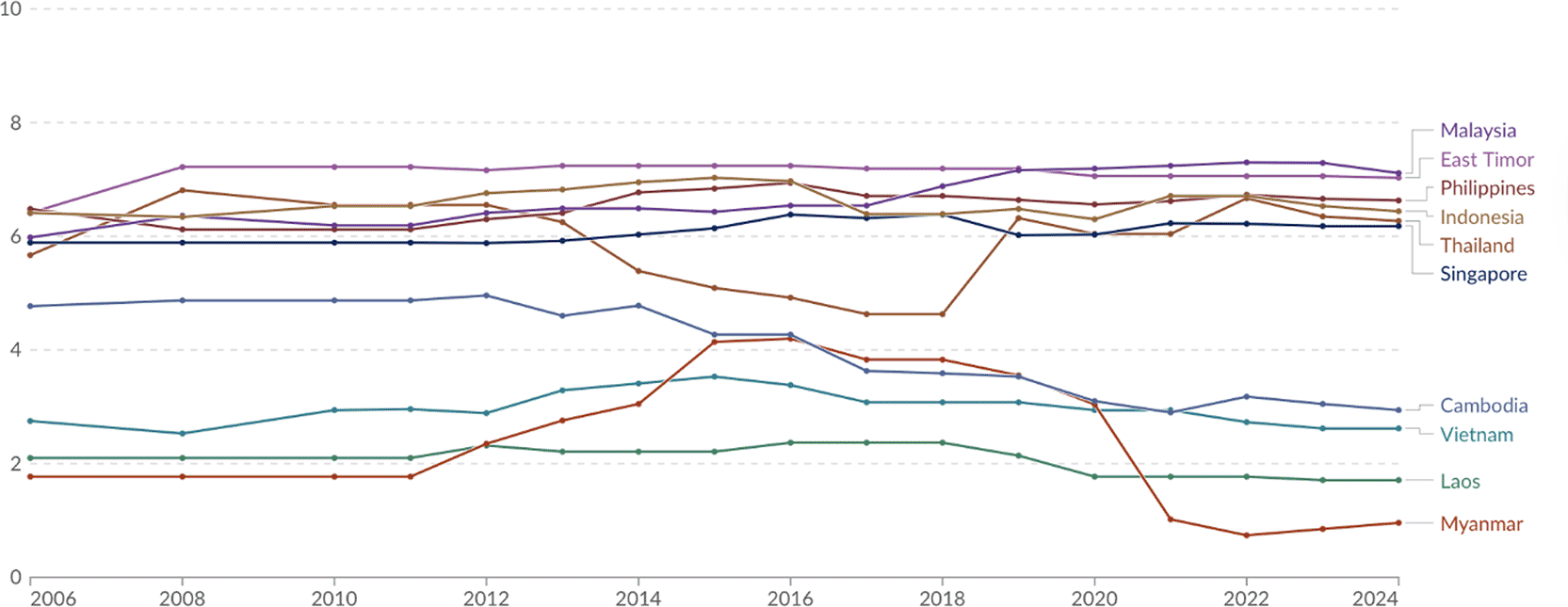
What does Myanmar’s authoritarianism consist of? And how does it compare with other non-democratic nations in Southeast Asia? To reveal patterns in democratic rise and decline and to assess how distant Myanmar is from ideal democratic features, the first data source is the 2024 Democracy Index, with comparisons to Southeast Asian states. As Figure 1 below shows, from 2006 onward and including the fluctuations between 2012 and 2021, Myanmar is currently ranked lowest on free elections, civil liberties, political participation, and a functioning government (EIU, 2024).
The index ranges from 0 to 10 (most democratic).
Source: Economist Intelligence Unit (EIU, 2024).
As seen in Myanmar’s score between 2006 and 2011, the junta’s rule, which suppressed opposition voices from the NLD, severely impacted its score on democratic elements. Unfortunately, during this time, the Tatmadaw showed little effort toward democratic processes, as power remained highly centralized in the military (Armao, 2015; Steinberg, 2021). However, efforts were made to facilitate a democratic transition through the 2008 referendum on the need for elections to be conducted publicly and fairly (Chambers & Cheesman, 2024; Harding & Kyaw, 2022). However, the 2010 elections were still generally perceived as military-controlled, with the military-backed USDP winning approximately 80% of the votes (Marston, 2013). Therefore, as seen in Figure 1, optimism towards Myanmar’s transition to democratic values only began after the 2012 Myanmar by-elections, when the NLD won the majority of the remaining seats (Lidauer, 2012). As seen also between 2012 and 2016, there was an upward trend in the Democracy Index, reflecting positive discussions on elections, political participation, and Myanmar’s development, with a greater emphasis on political rights.
However, the decline began in 2021 after the military coup. Since then, Myanmar’s democracy index score has consistently been below 1, indicating that, between 2006 and 2024, the democratic elements in Myanmar decreased from 1.77 to 0.96 in 2024. As seen in Figure 1, Myanmar’s score indicates that it is currently declining in state performance across fair elections, political participation, civil liberties, and government functioning.
How about the other non-democratic nations of Southeast Asia? The 2024 Democracy Index shows that although some countries, like Cambodia, Vietnam, and Laos, also have low scores, they are far from the ideal democratic practices of a state. As shown in Figure 1, there is little fluctuation or decline between 2006 and 2024. The pattern shown leans towards stagnation, as little change has occurred or been introduced in those countries. Another important observation from the Democracy Index is that, based on the total score, Myanmar’s level of anti-democratic practices is significantly lower than those categorized as authoritarian. Looking at Kuhonta’s 2025 study, for example, it states that countries in the pure coercion category include Cambodia and Laos. The ranks of these two authoritarian states are considerably lower than Myanmar’s, suggesting that the levels of authoritarianism and anti-democratic values in those two countries are significantly lower than in Myanmar. Looking further, the conditions of other ‘authoritarian developmental’ states like Vietnam, Singapore, and Malaysia show that the appreciation of democratic practices is significantly different, albeit categorized as authoritarian.
Looking at the data from the 2024 Democracy Index shows that although many Southeast Asian states are considered non-democracies and authoritarian regimes, their shapes differ significantly. Although it would be a simple task to categorize states into the contrasting categories of democracies and non-democracies, the graded approach shows that the significance of the level of anti-democratic practices within a state warrants further assessment. To supplement the Democracy Index’s findings, the Varieties of Democracy offers another lens on how far Myanmar is from the ‘ideal’ practices of democracy.
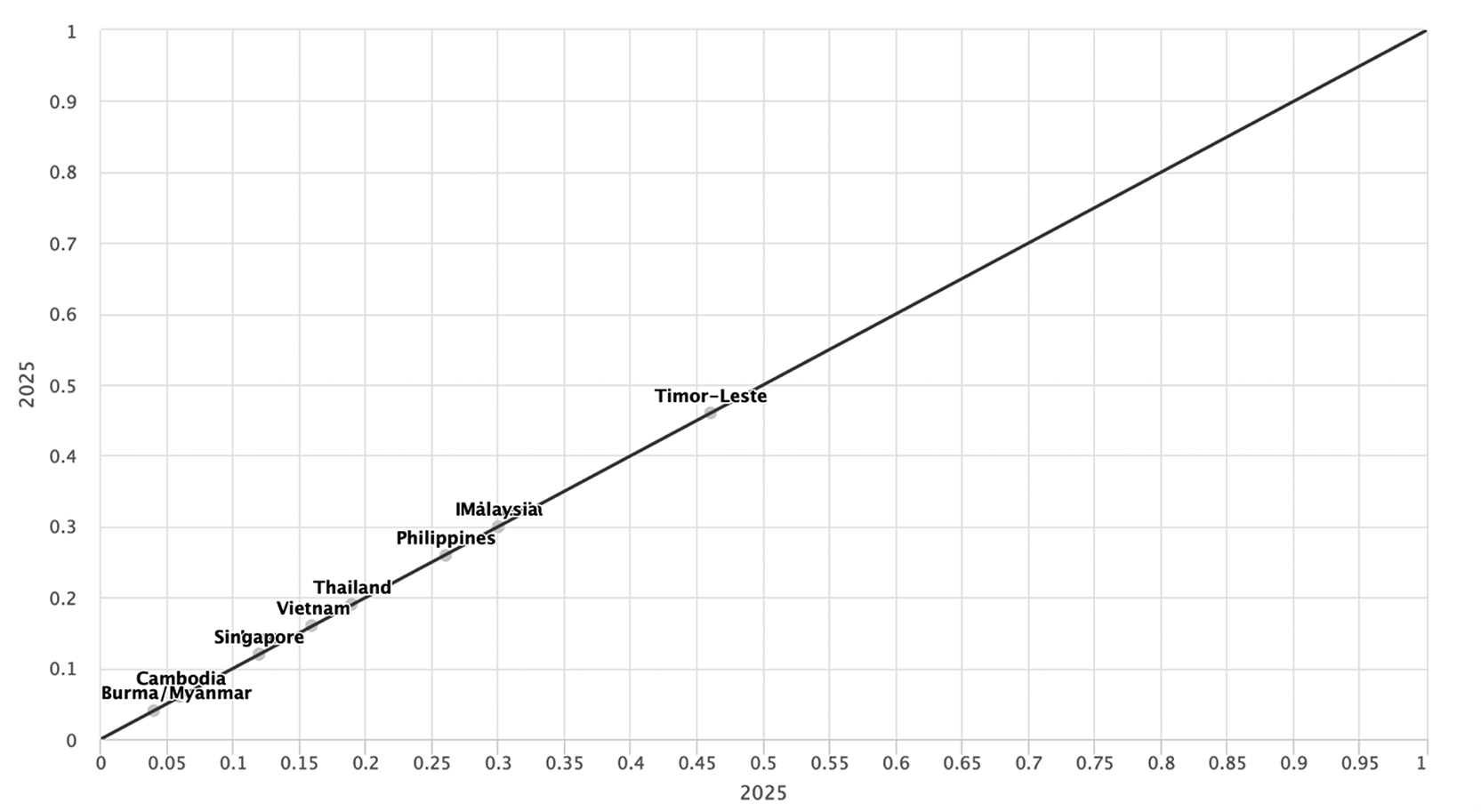
In Figure 2 below, the Varieties of Democracy participatory democracy index assesses how far Southeast Asian states are from the ideal of participatory democracy. This is determined by citizens’ active participation in all political processes. Similar to the 2024 Democracy Index, countries like Myanmar and Cambodia are considered to have the least democratic participation, showing a significant distance from the ideal level of democratic participation within a state (VDem, 2025).
The scale is between low to high (0–1).
Source: Varieties of Democracies (VDem, 2025).
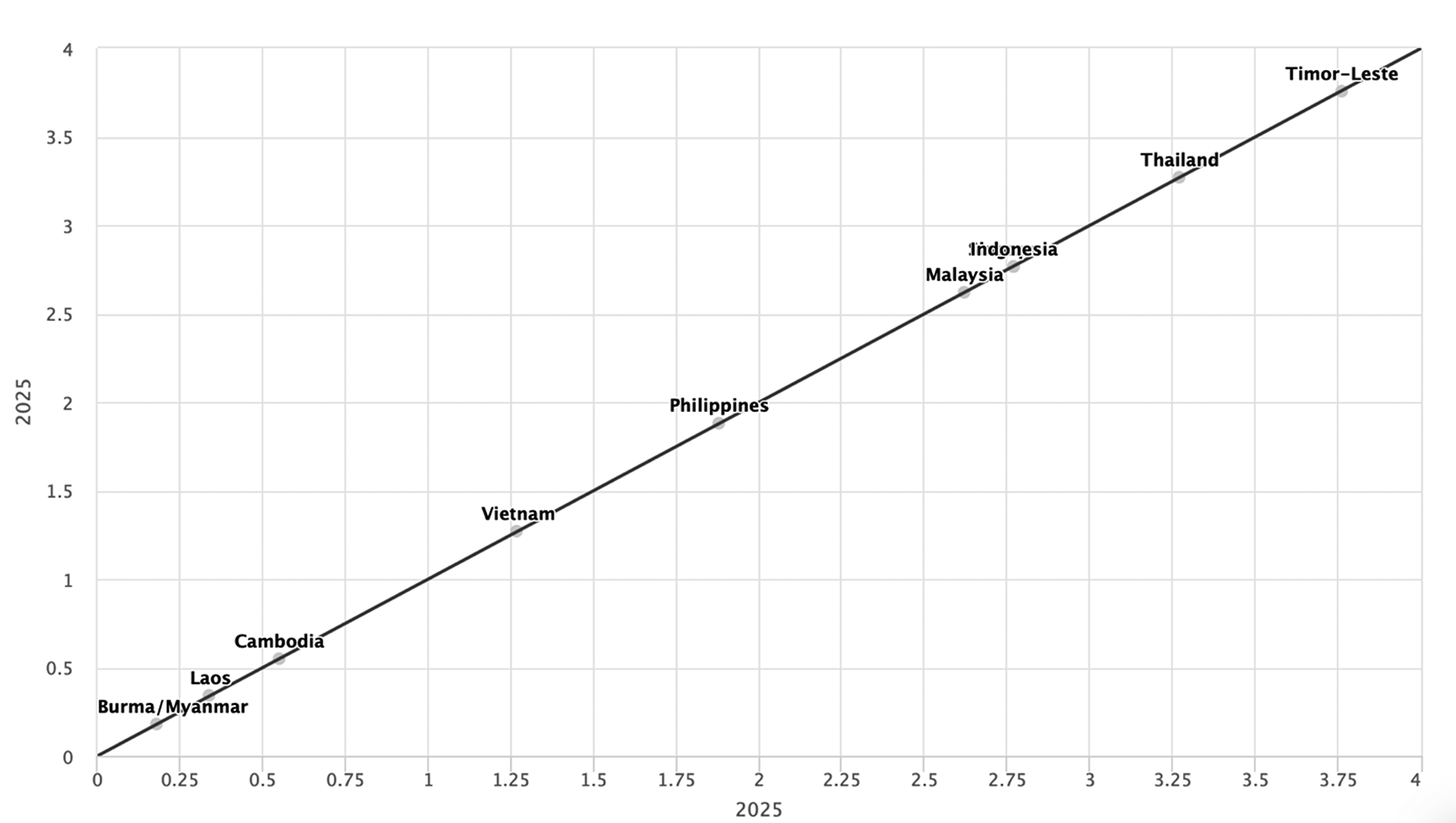
Similarly, as seen in Figure 3 below, rankings of whether a Southeast Asian state is considered to adopt free and fair elections show similar patterns of concern. States closer to 0 indicate a lack of trust in pre-elections, election days, and post-election processes; meanwhile, higher scores indicate stronger acknowledgement that deficiencies in electoral processes are unintentional (VDem, 2025). Myanmar was again among the Southeast Asian states that performed poorly on election freedom and fairness, indicating that the issue of democracy, from the lens of held elections, is far from ideal.
The scale is ordinal (converted to interval by the measurement model).
Source: Varieties of Democracies (VDem, 2025).
From the figures presented, Myanmar’s regime type within the authoritarian category becomes much clearer. The graded approach shows that Myanmar has technically been considered one of the states in Southeast Asia that consistently ranks lower on liberal democratic parameters, with a gradient of antithesis to democracy at the other endpoint. As stated in past studies on regime variation’s graded approach, this allows the interpretation of regimes’ practices as being departing from the democratic ideal (Bollen & Jackman, 1989; Elkins, 2000; Gilbert & Mohseni, 2025).
Although the Democracy Index and the Varieties of Democracy data show concerning and stagnant trends in democratic practices in other nations considered authoritarian, these are not at the same level as in Myanmar. This suggests that the authoritarian level of Myanmar is fundamentally worse compared to other states with similar political systems and those that are distant from democratic ideals. Therefore, when this article earlier asked, “What explains the stability observed in other authoritarian regimes in Southeast Asia but not in Myanmar?” and pointed to the significance of Myanmar’s scores being far from democratic practices and liberal democracy, this interpretation is viable.
The graded approach used in this section has also been argued by Ermakoff (2024) to be important for assessing and conceptualizing authoritarianism. The study showed that scale-based approaches allow studies to “[…] measure the degree to which features deemed definitive of democracy are absent or depleted” (Ermakoff, 2024, p. 1). As the data presented in this section shows, the significance of the degrees of authoritarianism and its linkages towards fair elections, political participation, civil liberties, and functioning of government, allows what the scale-based discourse of authoritarianism conceptualization mentions as an assessment of differences in the degrees on the absence/depletion of feaures constitutive of democracy (DeVellis, 2012; Duncan, 1984; Ermakoff, 2024). Nevertheless, is there a connection between this graded approach to dictatorial longevity?
In determining whether the Tatmadaw has practiced authoritarianism leaning toward performance legitimacy or coercion, several histories of the Myanmar military’s rule will be assessed. Although the focus would be on the past several years before and after the 2021 military coup, given that the actors in power in the status quo are the same ones who led the nation before the 2010 elections, the military rule’s development before the 20th century is also included in the analysis.
One thing that can be understood from the graded approach of assessing Myanmar’s authoritarianism is that coercion has been the primary mode of governance by the Myanmar military throughout the past decades. Therefore, rather than categorizing Myanmar’s system as an authoritarian developmental state, in which autocratic actors aim to strike a balance between economic performance and institutional responsiveness to substitute for the lack of democratic practices, this section argues that Myanmar’s authoritarianism is strictly coercive. Therefore, following Kuhonta’s unique conception of Southeast Asian authoritarianism, this section traces two elements of the Tatmadaw’s political rule: coercion or the threat of violence, and the deployment of coercive violence through institutional structures (Kuhonta, 2025). Together, the empirical cases and the consistency with the patterns of coercion explain why Myanmar continues to fall into conflict, and why the intentions of democratic transitions have never been sustained in the past. In contrast, dictatorial longevity persisted due to the unique authoritarian features of Myanmar.
The Tatmadaw’s ideology in the present does not differ significantly from how they perceived governance should be operated in the past. Following efforts to counter British colonial rule, several of the Burmese nationalist groups received specialized repressive political indoctrinations from the Imperial Japanese Army before World War II (Aung, 2025; Zaw, 2017). Those nationalist groups formed the Burma Independence Army (BIA), which was then reorganized to counter the Japanese occupation of Burma, and successfully expelled the colonial rulers from the nation (Seekins, 2007; Selth, 1986). Although popular among the Bamar Buddhists, the military waged a number of conflicts against minority ethnic groups and employed nationalist propaganda after the 1962 coup (Aung, 2024; Ethirajan, 2015; Taylor, 1976). The military continued to hold a grip of power, continuing its repressive regime by undermining the citizenship of non-Buddhists, adopting divisions against ethnic minorities, and increasing surveillance and censorship nationwide (Aung, 2025; von der Mehden, 1963).
Encountering the dilemma of wanting to maintain the military’s grip of power in Myanmar and the increasing opposition voices, several changes took place. First, the 1990 elections, which saw the victory of Aung San Suu Kyi’s NLD, were quickly rejected by the Tatmadaw (Kuhonta, 2025). Under increasing international pressure, the Myanmar military agreed to allow opposition parties to participate in elections, as seen in the 2015 and 2020 elections, which again saw the NLD attain a majority of votes (Bünte, 2021, 2022). Nevertheless, this phase of the democratic transition still had heavy involvement by the Tatmadaw. First, the Ministries of Defense, Home Affairs, and Border Affairs were still under military control. Second, a quarter of the parliament seats are reserved for the Tatmadaw, including the Vice-Presidential seat. As Bunte examined in 2022, such control over the parliament enabled veto power in cases where the constitution was under consideration for revision (Bünte, 2022). Nevertheless, what soon followed was the Tatmadaw annulling the 2020 elections through a February 2021 coup that would backslide on any attempts at democratic practices in contemporary Myanmar (Kurlantzick, 2025; Peter, 2020).
First, what has been clear since the Myanmar military’s struggle over power in the past decades until the 2021 coup, is that the junta is primarily focused on political power monopoly, not economic performance. Therefore, it fulfils the criteria for dominance through coercion, in the form of violence or the threat of violence. Since gaining independence in 1948, and the Myanmar military’s constant rise to power (despite the conduct of elections), the Tatmadaw has actively engaged in actions of genocide, bombings, tortures, and mass killings (BBC, 2022; Head, 2024; Henschke et al., 2021; HRW, 2017; Linn, 2024). These are indeed concerning developments, especially since the perpetrators are those who vowed to protect the city’s citizens. The ruling through fear, repression, and violence has only led to increased distrust among the Myanmar population, as they no longer consider the Tatmadaw as the ideal authority to protect the people.
Unfortunately, over the past few decades, economic conditions in Myanmar have also improved little. Myanmar is one of ASEAN’s least-performing member states (Cuyvers, 2019; Peters, 2019), mainly due to domestic turmoil that continues to unfold from time to time. This lack of stability has also made it difficult for the junta to perform economically due to embargos, lack of foreign investment trust, and concerns over a functioning government (Tang, 2025; WB, 2019). Therefore, unlike other Southeast Asian states that show promise in economic performance, albeit without democratic practices, Myanmar cannot be categorized similarly. The military has been preoccupied with political power and the means to achieve it, rather than delivering the promised economic impact at the micro and macro levels in Myanmar (Miklian, 2019; Takhun, 2025).
Meanwhile, developments in Myanmar after the 2021 military coup reflect the second pattern of Kuhonta’s conceptual framework, which is the institutionalization of coercive violence. In fact, institutionalized violence in Myanmar had already taken shape since the military junta’s rule in the 20th century (APHR, 2025; Maung, 2023; Ratcliffe, 2024; UN, 2024). However, the expectation was that, after the democratic transition phase starting in 2011–2012, this would be somewhat suppressed through the facilitation of common Myanmar voices in parliament. Unfortunately, this has not taken place, with more and increased coercive violence taking place through institutional structures.
One of the highlights of the institutionalized coercive violence took place through the digital space. After the military coup in 2011, the systematic oppression of the Myanmar government was presumed, which included arbitrary arrests and killings (Mint & Bamrungchok, 2026; UN, 2024). However, violence evolved to press down on online access, as the Tatmadaw sought to weaponize the digital technology and communication infrastructures available to the Myanmar people, in an effort to control the discourse surrounding the events that put Myanmar’s democratic transition into a backslide. As a form of digital authoritarianism, the Myanmar military has engaged in internet shutdowns, mass surveillance, online censorships, criminalizing digital expression, signal jamming, and many more (APHR, 2025; BOBP, 2024; Borak, 2026; FH, 2026; JFM, 2025; Mon, 2025). As Mint and Bamrungchok observed, this use of digital technologies by the military “[…] has become central to an integrated system of the military’s authoritarian control designed to govern through fear and technological dominance” (Mint & Bamrungchok, 2026). To top off this concern in the digital space is the ‘Cybersecurity Law’ enacted in 2025, which justified further systematic surveillance (APHR, 2025).
Looking at the statistics, the digital authoritarianism in the junta’s recent rule is one of the worst globally. Reports showed that almost half of Myanmar’s townships have encountered prolonged internet blackouts, with the banning of social media platforms and VPNs (Chia & Singer, 2021; NIKKEI, 2022; Schneider, 2021). This severe restriction makes it difficult for the local Myanmar citizens to mobilize support for democratic discourses. It has left them unable to play an active role in voicing opposition to the Tatmadaw’s democratic backsliding since the 2021 military coup.
Nevertheless, a major element of the institutionalization of coercive violence can be seen in how the junta sought to legitimize its power through military-controlled elections. The elections were scheduled to take place in three phases between December and January 2026. Many observers have mentioned this as ‘sham elections’ (Borak, 2026; HRW, 2025; Hume, 2025; Kwok, 2025) for several reasons. First, in connection with the digital authoritarianism argument, digital and civil freedoms were absent before, during, and after the elections (Shahid, 2026). Second, an element of fear was present as violence intensified in the run-up to the 2025 elections, with approximately 400 military aerial strikes occurring before the December elections (Mishra, 2026). As a result, turnout exceeded 50 percent, largely out of fear of prosecution for not voting (Reuters, 2026).
The 2025–2026 elections do not qualify as fair and free elections due to several concerns. The NLD, known to be the main opposing voice of the Myanmar military dictatorship, has been banned from taking part in the elections. Not only that, but any political parties associated with the NLD were also dissolved or barred from taking part in those elections (Siddiqui, 2026). With many of Myanmar’s democratic-supporting figures behind bars during the elections, the military-backed USDP dominated the voting, with no clear opposition to challenge them.
Although the recent elections are not the first in which the Tatmadaw was heavily involved in directing the process and dictating the results, their significance speaks volumes. After that slight democratic transition a decade earlier, the expectation is that Myanmar would eventually lean towards a slow but consistent democratic process, which would eventually lead to political rights being appreciated. However, because of the growing dispopularity of the military during that democratic transition phase, the Myanmar military decided to take power back. Consistent with Kuhonta’s 2025 analytical framework, not only has there been clear evidence of coercive violence taking place in the context of Myanmar, but there is clear evidence of institutionalized violence taking place before and after the 2026 elections. Before that, the emergence of digital authoritarianism was the military’s means of controlling the discourses circulating in Myanmar’s digital space. As systematic oppressions continued to take place, matters became worse with the holding of military-backed elections, with those running only those approved by the military. With the USDP holding a grip on power, any policy adopted would only favor the prolonging of the military’s dictatorship.
Returning to a question asked at the beginning of this article, the reason why Myanmar’s authoritarianism leads to continuous domestic instability is the heavy emphasis on coercion rather than performance legitimacy. Even as a coercive model of authoritarianism, Myanmar is among the worst in Southeast Asia, undertaking repressive policies towards its own people, and not balancing them with any economic benefits. Therefore, unlike many other single-party-dominated states in the region, Myanmar lacks the performance legitimacy that has led to relative political stability in countries like Cambodia and Vietnam, or in monarchy-like systems such as Brunei Darussalam.
What explains the longevity of the Tatmadaw’s dictatorship rule in Myanmar? For decades, studies on authoritarianism have argued that Southeast Asia’s authoritarianism has achieved relative stability and continuity by balancing the lack of civil rights with economic performance. Deemed authoritarian developmental states, they have lasted for decades and centuries despite making few changes consistent with democratic ideals. However, the case of Myanmar serves as an empirical puzzle. Longevity in Myanmar’s military rule has occurred, but this is not matched by performance in the economic sector. What drives this phenomenon?
This study looks inside Myanmar’s authoritarian regime and asks two distinct questions. First, what constitutes Myanmar’s authoritarian system? In the absence of stability like that seen in Vietnam, Laos, and Brunei Darussalam, this study first bridges the gap by using a graded approach to determine regime varieties. It is argued that several distinct features of Myanmar’s authoritarianism are far from ideal democratic practices, with strong significance even compared to other authoritarian states in the region. Looking at data from the 2024 Democracy Index, for example, Myanmar ranks lower among Southeast Asian countries in free and fair elections, civil liberties, preference for democracy, political participation, and functioning government. Meanwhile, Varieties of Democracy’s 2025 data on the participatory democracy index and free and fair elections also showed that Myanmar’s authoritarianism is the worst in the region. Within a graded approach, one can see how seriously concerning the authoritarian setting in Myanmar is and how far Myanmar’s governance is from the ideal of democracy.
Therefore, a look into the regime variety of Myanmar shows that even authoritarianism has its levels of significance. Despite many Southeast Asian states falling under this category, Myanmar, as an authoritarian state, has led to troubling developments domestically, which have further caused domestic instabilities throughout the past decades. A graded approach can capture these nuances, suggesting that Myanmar’s authoritarianism leans toward a fully coercive model.
The second question asked in this study is: Is Myanmar’s authoritarianism performance legitimacy or coercion? First asked in Kuhonta’s 2025 study, states categorized in the performance legitimacy category are those that have balanced their lack of democratic features with positive economic performance and impacts on their people. In contrast, an authoritarian regime is considered coercive if it engages in violence, the threat of coercive violence, or institutionalized repression, without being balanced by performance in the economic sector.
Looking into the case studies of Myanmar, the Tatmadaw can be classified as a coercive regime. The longevity of its power can be associated with its forced rise to power and the continued interventions it has conducted by force, rather than being naturally embraced and accepted by the people. At the first level, the threat of violence can be seen since before the 20th century, during the fight against colonial rule, to the recently conducted 2021 military coup that brought back power to the Myanmar military. Genocidal actions, bombings, torturings, and mass killings have been several key features in the Tatmadaw’s rule. Whenever they have accepted opposition parties to take part in elections, unsatisfactory results for the military have led to those election results being abandoned, followed by the return of a military dictatorship.
Furthermore, the findings also reveal that Myanmar’s authoritarianism consists of institutionalized coerciveness. This can be seen in the Tatmadaw’s use of digital space to suppress opposition voices and criticism, which became a regular occurrence after the post-2021 military coup. Not only does institutionalized coercion take the form of digital authoritarianism, but it is also evident in the military-backed elections held in 2025–2026, which inevitably led to the USDP’s victory after the NLD and pro-democratic political parties were barred from participating. These empirical cases show that Myanmar’s authoritarianism is purely coercive, and this has been the reason why, despite certain positive developments leaning toward a democratic transition, such efforts have never been sustained amid the re-emergence of domestic instability.
| Views | Downloads | |
|---|---|---|
| F1000Research | - | - |
|
PubMed Central
Data from PMC are received and updated monthly.
|
- | - |
Provide sufficient details of any financial or non-financial competing interests to enable users to assess whether your comments might lead a reasonable person to question your impartiality. Consider the following examples, but note that this is not an exhaustive list:
Sign up for content alerts and receive a weekly or monthly email with all newly published articles
Already registered? Sign in
The email address should be the one you originally registered with F1000.
You registered with F1000 via Google, so we cannot reset your password.
To sign in, please click here.
If you still need help with your Google account password, please click here.
You registered with F1000 via Facebook, so we cannot reset your password.
To sign in, please click here.
If you still need help with your Facebook account password, please click here.
If your email address is registered with us, we will email you instructions to reset your password.
If you think you should have received this email but it has not arrived, please check your spam filters and/or contact for further assistance.

Comments on this article Comments (0)