Keywords
Cervical cancer screening, knowledge, Attitude, Practice, Primary healthcare workers, Nigeria.

This article is included in the Oncology gateway.
Cervical cancer screening, knowledge, Attitude, Practice, Primary healthcare workers, Nigeria.
Cervical cancer is one of the most preventable forms of cancer, yet it continues to contribute substantially to the global burden of disease among women. Globally, it ranks among the most common cancers affecting women, and it continues as a leading cause of cancer-related deaths in low- and middle-income countries1 The World Health Organization (WHO) rated cervical cancer as the fourth most common cancer among women globally, with more than 600,000 new cases and over 340,000 deaths reported annually.2,3 The burden of the disease is disproportionately higher in low- and middle-income countries (LMICs), where nearly 90% of cervical cancer deaths occur due to limited access to screening and treatment services.1
Persistent infection with high-risk types of Human Papillomavirus (HPV) is the necessary cause and recognized primary etiological factor in the development of cervical cancer.4 HPV is a common sexually transmitted infection that affects a large proportion of sexually active individuals worldwide. Although most HPV infections resolve spontaneously, persistent infection with oncogenic HPV types can lead to the development of precancerous lesions and eventually invasive cervical cancer if left untreated.4–7
Cervical cancer is largely preventable through effective primary and secondary prevention strategies.8 Primary prevention involves vaccination against HPV, while secondary prevention focuses on screening and early detection of precancerous lesions.8–10 The use of screening methods such as Papanicolaou (Pap) smear, liquid-based cytology, HPV DNA testing, and visual inspection with acetic acid (VIA) has been documented to detect early cervical abnormalities before progression to cancer.5,8 Despite the availability of effective preventive strategies such as HPV vaccination and cervical cancer screening, the burden of the disease remains disproportionately high in sub-Saharan Africa.7,8
The global health community has increasingly recognized the importance of cervical cancer prevention. By the year 2020, in response to the significant global burden of cervical cancer, the WHO launched the strategic approaches for global cervical cancer elimination as a public health problem, which aim to achieve the “90–70-90” targets. This initiative outlines the “90–70–90” targets to be attained by 2030: achieving HPV vaccination coverage of 90% among girls by age 15, ensuring that 70% of women undergo screening with a high-performance test at least twice (by ages 35 and 45), and providing appropriate treatment for 90% of women diagnosed with cervical precancerous lesions or cancer.8,11 Achieving these targets requires robust health systems, particularly at the primary healthcare level, and adequately trained healthcare workers who can deliver screening and preventive services in the community.11,12
Despite these global efforts, cervical cancer remains a major public health issue in many LMICs, including Nigeria. Nigeria has one of the highest cervical cancer burdens in sub-Saharan Africa, with an estimated 12,000 new cases and 8,000 annual deaths.13,14 Limited access to screening services, inadequate awareness among women, and health system constraints contribute significantly to the persistence of the disease burden.7,15
Primary Health Care (PHC) systems represent the foundation of health service delivery in many countries. PHC facilities serve as the first point of contact for many individuals within the healthcare system and provide essential services, including health education, disease prevention, early detection, and referral for specialized care.16,17 In Nigeria, PHC facilities deliver essential community-based health services, including maternal and child health care, immunization, family planning, and health promotion.18,19Because PHC centers are widely distributed and accessible to communities, they are uniquely positioned to support cervical cancer prevention efforts, particularly in resource-limited settings.12,20 PHC centres play significant roles in the prevention and control of cervical cancer through community-based health education and promotion, early detection, and referral services.8,11
PHC workers are key actors in cervical cancer prevention programs. They provide health education on risk factors, symptoms, and preventive strategies. They may perform screening procedures such as visual inspection with acetic acid (VIA) and visual inspection with Lugol’s iodine (VILI), which are recommended low-cost screening methods in low-resource settings.11,21 They also provide counselling and facilitate referral services for women who require further diagnostic evaluation or treatment at secondary and tertiary healthcare facilities.22
However, studies have reported gaps in knowledge and practice related to cervical cancer screening among healthcare workers in LMICs. Inadequate training, lack of screening equipment, limited laboratory facilities, and weak referral systems have been identified as major barriers to the effective implementation of cervical cancer screening programs.23–26 In Nigeria, although awareness of cervical cancer screening among healthcare workers has improved, the availability and utilization of screening services remain limited, particularly at the primary healthcare level.26–29 Previous studies suggest that many PHC facilities lack the infrastructure and trained personnel required to provide screening services, and that healthcare workers’ knowledge and attitudes significantly influence screening uptake and program effectiveness.26,30–32
Lagos State, the most populous state in Nigeria, has a complex healthcare system characterized by high population density and substantial demand for health services.33 The state operates a three-tier level of healthcare system with primary, secondary, and tertiary facilities. PHC centers are recognized as the first point of contact for most residents seeking healthcare services. Strengthening cervical cancer screening at this level may therefore yield substantial public health benefits.18,33
Given the important role of PHC workers in implementing screening services, it is critical to understand their knowledge, attitudes, and practices regarding cervical cancer prevention and improving women’s health outcomes. Identifying existing gaps and barriers to screening implementation can help inform policy decisions and guide targeted interventions aimed at improving screening coverage and reducing cervical cancer morbidity and mortality. Therefore, this study aimed to assess the knowledge, attitudes, and practices, as well as the associated factors, regarding cervical cancer screening among primary healthcare workers in Lagos State, Nigeria. The findings of this study will provide evidence to guide policymakers and healthcare planners in designing strategies to improve cervical cancer screening services within the primary healthcare system.
This study was conducted in Lagos State, located in the southwestern geopolitical zone of Nigeria. Though the smallest by landmass, Lagos State is the most populous state in Nigeria, with an estimated population exceeding 20 million residents. With Ikeja as its capital city, Lagos State serves as Nigeria’s commercial and financial hub and is characterized by rapid urbanization and socio-economic diversity. Lagos State is divided into 20 officially structured Local Government Areas (LGAs).
Lagos State operates a three-tier healthcare system comprising primary, secondary, and tertiary.33 PHC centres serve as the first point of contact for community health services and are coordinated by the Lagos State Primary Health Care Board under the supervision of the Lagos State Ministry of Health. The state has over 300 PHC centres distributed across the LGAs to provide accessible community-based health services.33 PHC facilities in Lagos State provide cervical cancer prevention services through health promotion and education, community mobilization, and promotion of screening services. They also support HPV vaccination programmes targeting adolescent girls aged 9-14 years and provide referral services for women requiring further diagnostic evaluation or treatment.
This study used a descriptive cross-sectional design to assess the knowledge, attitudes, and practices of cervical cancer screening among PHC workers in Lagos State, Nigeria. The study population comprised healthcare workers providing services in PHC facilities located within selected LGAs of Lagos State. These included medical doctors, nurses, Community Health Extension Workers (CHEWs), laboratory scientists, and other PHC staff. Male and female PHC workers who must have worked in the PHC setting for at least 6 months were included in the study.
The minimum sample size of 156 respondents was calculated using the Cochran formula for descriptive studies: where Z represents the standard normal deviate at a 95% confidence interval (1.96), p represents the estimated proportion of the respondents who knew about cervical cancer screening (89.7%) in a previous study carried out among female healthcare workers in Plateau State, North Central Nigeria,34 q represents 1 − p (10.3%), and d represents the margin of error set at 5%. To account for potential non-participation, an additional 10% was included as a non-response rate in the final calculated minimum sample size.
A multistage sampling approach was adopted to select respondents in this study. Initially, in the first stage, three LGAs were selected from the 20 LGAs in Lagos State using simple random sampling through balloting. The selected LGAs were Surulere, Oshodi-Isolo, and Mushin LGAs. Subsequently, in the second stage, three PHCs were selected from each LGA using simple random sampling through balloting. Finally, in the third stage, all clinical PHC workers who were present on duty at the time of data collection were selected and invited to participate in this study.
Data were collected using a pre-tested semi-structured self-administered questionnaire adapted from previous related studies. Five trained research assistants were involved in the data collection. To ensure clarity and reliability, the questionnaire was pre-tested among 20 PHC workers, which was approximately 10% of the sample size, at a PHC in Ikorodu LGA. The questionnaire included sections on socio-demographic characteristics, knowledge of cervical cancer screening, attitudes toward cervical cancer screening, and cervical cancer screening practices.
Data analysis was conducted using the Statistical Package for Social Sciences (SPSS) version 26. Descriptive statistics were generated and presented as frequencies, percentages, and means with corresponding standard deviations. Respondents’ knowledge, attitudes, and practices regarding cervical cancer screening were categorized and summarized.
Knowledge of cervical cancer screening in terms of eligibility, methods, frequency, treatment options, and the use of the screen and treat algorithm was assessed using 33 questions, with correct responses scored as 1 and incorrect or unknown responses scored as 0. With the maximum obtainable scores of 33 and the minimum obtainable score of zero (0), and using 50% as a cut-off point, scores ranging from 0–16 were classified as poor knowledge of cervical cancer screening, while scores ranging from 17–33 were classified as good knowledge of cervical cancer screening.
Attitudes towards cervical cancer screening were measured using a 5-point Likert scale, with response options scored as strongly agree (5), agree (4), undecided (3), disagree (2), and strongly disagree (1). The attitude section contained 9 scenarios; the total maximum obtainable point was 45, and the total minimum obtainable point was 9. Using 50% as the cut-off, scores ranging from 0–23 were classified as negative attitudes towards cervical cancer screening, while scores ranging from 24–45 were classified as positive attitudes towards cervical cancer screening.
Practice of cervical cancer screening in terms of previous performance of cervical cancer screening on a patient, as well as the referral of the screened and diagnosed cases, was assessed using 6 questions, with correct responses scored as 1 and incorrect or unknown responses scored as 0. With the maximum obtainable scores of 6 and the minimum obtainable score of zero (0), and using 50% as a cut-off point, scores ranging from 0–3 were classified as poor practice of cervical cancer screening, while scores ranging from 4–6 were classified as good practice of cervical cancer screening.
Associations between the sociodemographic characteristics and the knowledge, attitudes, and practices of cervical cancer screening were tested using Chi-square statistics, with statistical significance set at 5% (p ≤ 0.05).
Ethical approval for the study was obtained from the Health Research and Ethics Committee of Lagos University Teaching Hospital (LUTH), with number ADM/DCST/HREC/APP/532. Written informed consent was obtained from all participants before data collection. Participation was entirely voluntary, and confidentiality was ensured by assigning identification numbers to questionnaires in place of personal identifiers. Participants were informed of their right to withdraw at any time without prejudice and provided with contact information for further inquiries or support if needed.
A total of 209 Primary Health Care (PHC) workers participated in the study. The mean age of respondents was 36.8 ± 8.8 years, with the majority aged 30–39 years (40.7%), followed by those 40–49 years (26.8%) and < 30 years (22.0%). Only 10.5% were aged 50 years and above. Females constituted most respondents (77.0%), reflecting the female-dominated nature of the PHC workforce. Most respondents were married (73.7%), while 20.6% were single, and only small proportions were divorced (3.8%) or widowed (1.9%). The dominant ethnic group was Yoruba (77.5%), followed by Igbo (17.2%), reflecting the demographic distribution of Lagos State. Most respondents identified as Christians (80.4%), while 19.6% were Muslims.
Regarding the professional category, nurses constituted the largest group (41.1%), followed by CHEWs (30.6%), medical doctors (16.8%), and laboratory scientists (11.5%). Over half of the respondents (58.4%) held a first degree, while 30.1% had diploma qualifications and 11.5% had postgraduate qualifications. Regarding work experience, 43.5% had practiced for 1–4 years, 27.8% had practiced for over 10 years, and 23.9% had practiced for 5–10 years. Almost half of the respondents (46.4%) earned above ₦100,000 monthly, while 27.3% earned ₦50,000–₦100,000, and 26.3% earned less than ₦50,000.
Most respondents (72.7%) were aware that screening tests exist for cervical cancer, while 14.4% did not know, and 12.9% reported that no screening test existed. Regarding eligibility for screening, 76.1% correctly identified women aged above 21 years or those sexually active for three years as eligible candidates for screening. However, 63.6% incorrectly believed that all women, irrespective of age and marital status, should undergo screening, indicating some misconceptions regarding screening guidelines.
In terms of screening methods, Pap smear was the most recognized method (85.7%), followed by HPV DNA testing (79.4%), cervical biopsy (79.4%), and visual inspection with acetic acid (VIA) (71.8%). Other methods identified included liquid-based cytology (67.0%), colposcopy (52.6%), and visual inspection with Lugol’s iodine (51.7%). Only 3.4% of respondents incorrectly believed that no screening methods were available. Despite this awareness, 63.2% of respondents reported that cervical cancer screening services were not available in their health facilities, while only 28.7% reported availability of screening services. ( Table 1).
| Variable | Frequency (n = 209) | Percentage (%) |
|---|---|---|
| Knew that there were screening tests for cervical cancer | ||
| Don’t know | 30 | 14.4 |
| No | 27 | 12.9 |
| Yes | 152 | 72.7 |
| *People who can undergo cervical cancer screening | ||
| All females, irrespective of age and marital status | 133 | 63.6 |
| Married women only | 9 | 4.3 |
| Women younger than 21 years of age | 71 | 34.0 |
| Women above 21 years of age or those who are sexually active for the last 3 years | 159 | 76.1 |
| Women above 30 years of age | 150 | 71.8 |
| Only women above 50 years of age | 21 | 10.1 |
| Don’t know | 3 | 1.4 |
| *Methods of cervical cancer screening you know | ||
| Pap smear | 179 | 85.7 |
| Human Papillomavirus (HPV) DNA testing | 166 | 79.4 |
| Liquid-based cytology | 140 | 67.0 |
| Visual inspection with acetic acid (VIA) | 150 | 71.8 |
| Visual inspection with Lugol’s solution | 108 | 51.7 |
| Cervical biopsy | 166 | 79.4 |
| Colposcopy | 110 | 52.6 |
| No methods available | 7 | 3.4 |
| Don’t know | 7 | 3.4 |
| Availability of a cervical cancer screening test in your health facility | ||
| Don’t know | 17 | 8.1 |
| No | 132 | 63.2 |
| Yes | 60 | 28.7 |
Knowledge of the recommended screening frequency for cervical cancer was relatively poor. Nearly 45.5% of respondents incorrectly believed that a Pap smear should be conducted annually, whereas only 14.8% correctly identified the recommended interval of once every three years. Similarly, 33.5% believed HPV DNA testing should be performed annually, while only 9.1% correctly identified the recommended five-year interval. ( Table 2).
Respondents demonstrated moderate awareness of treatment options following a positive screening result. The most identified treatment option was chemotherapy (79.4%), followed by targeted therapy (61.7%), radiation therapy (59.8%), hysterectomy (56.5%), and cryotherapy (55.5%). However, knowledge of fertility-preserving treatments such as trachelectomy (45.5%) and cold knife cone biopsy (45.0%) was relatively lower. Only 42.1% of respondents had heard of the screen-and-treat algorithm for cervical cancer screening, and among those aware, only 31.8% reported using the approach in their health facilities. ( Table 3).
| Variable | Frequency (n = 209) | Percentage (%) |
|---|---|---|
| *Treatment options for women who test positive after the screening test | ||
| Hysterectomy (removal of the cervix and uterus) | 118 | 56.5 |
| Cryotherapy | 116 | 55.5 |
| Loop Electrosurgical Excision Procedure (LEEP) | 98 | 46.9 |
| Cold knife cone biopsy (cervical conization) | 94 | 45.0 |
| Trachelectomy (removal of the cervix) | 95 | 45.5 |
| Radiation therapy | 125 | 59.8 |
| Chemotherapy | 166 | 79.4 |
| Targeted drug therapy | 129 | 61.7 |
| Immunotherapy | 93 | 44.5 |
| Knew of the screen and treat algorithm for cervical cancer screening | ||
| No | 121 | 57.9 |
| Yes | 88 | 42.1 |
| Previous use of the screen and treat algorithm for cervical cancer screening in your health facility | (n = 88) | |
| No | 60 | 68.2 |
| Yes | 28 | 31.8 |
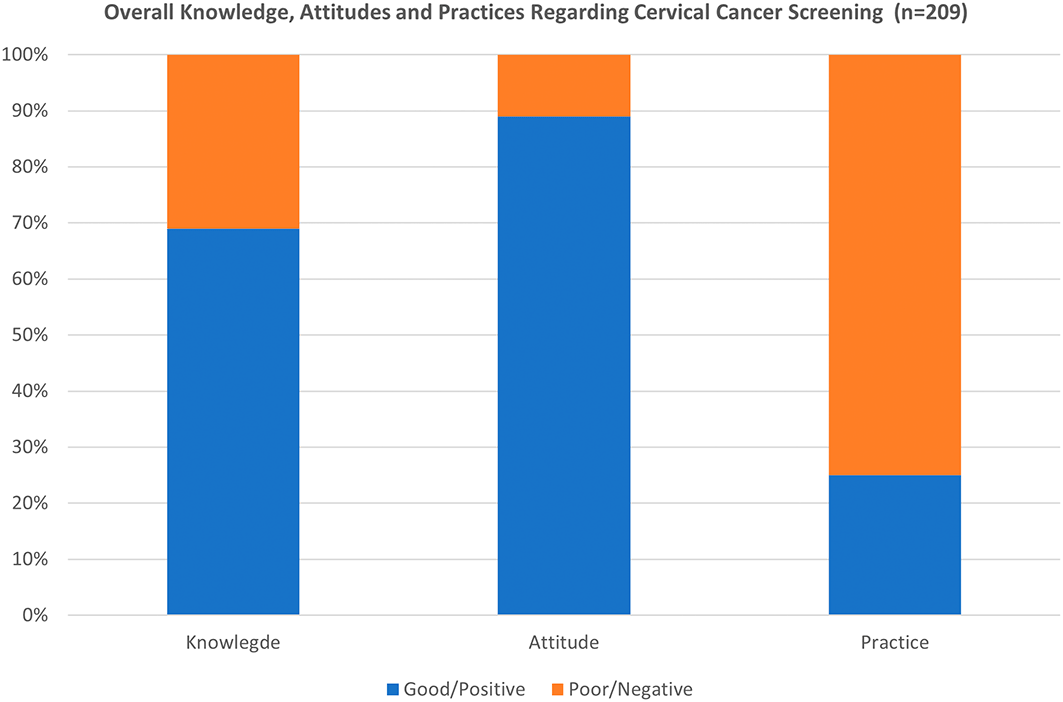
Overall, 69% of respondents demonstrated good knowledge of cervical cancer screening, while 31% had poor knowledge. ( Figure 1).
Most of the respondents showed a positive attitude toward cervical cancer screening. Most respondents (81.8%) strongly agreed that cervical cancer screening is an essential part of women’s health care, and 82.8% strongly agreed that screening facilitates early detection and improved treatment outcomes. Furthermore, 73.2% strongly supported the introduction of cervical cancer screening programs in their communities. About 46.4% strongly agreed that they were willing to perform visual screening of the cervix, while 37.3% agreed with the statement. More than half (54.1%) strongly agreed that additional training was necessary to effectively perform cervical cancer screening, highlighting perceived skill gaps among PHC workers. Only 2.4% strongly agreed that they were too busy to screen women, suggesting that workload was not a major barrier. ( Table 4).
Overall, 89% of respondents demonstrated a positive attitude toward cervical cancer screening, while 11% showed a negative attitude. ( Figure 1).
Despite relatively good knowledge and positive attitudes, screening practices were poor. Only 24.9% of respondents had ever performed cervical cancer screening on a patient, while 75.1% had never conducted a screening test. Among those who had performed screening, visual inspection with acetic acid (VIA) was the most used method (67.3%), followed by Pap smear (50.0%), colposcopy (23.1%), VILI (19.2%), and liquid-based cytology (19.2%). Only 3.9% had performed HPV DNA testing. ( Table 5).
| Variable | Frequency (n = 209) | Percentage (%) |
|---|---|---|
| Performed cervical cancer screening on a patient before | ||
| No | 157 | 75.1 |
| Yes | 52 | 24.9 |
| *Ifyes,typeofcervicalcancerscreening performed | (n = 52) | |
| Visual inspection of the cervix with acetic acid (VIA) | 35 | 67.3 |
| Visual inspection of the cervix with lugol’s iodine (VILI) | 10 | 19.2 |
| Pap smear test using Ayre’s spatula | 26 | 50.0 |
| Human Papillomavirus (HPV) DNA testing | 2 | 3.9 |
| Liquid-based cytology | 10 | 19.2 |
| Cervical biopsy | 8 | 15.4 |
| Colposcopy | 12 | 23.1 |
| Number of times you have performed cervical cancer screening on a patient | ||
| 1–5 | 39 | 18.7 |
| 6–10 | 4 | 1.9 |
| >10 | 11 | 5.3 |
| Never | 155 | 74.2 |
| ` *If you have never performed cervical cancer screening on a patient before, why | (n = 155) | |
| Absence of indication | 29 | 18.7 |
| Lack of necessary equipment or supplies needed | 61 | 39.4 |
| Lack of necessary laboratory resources to screen | 64 | 41.3 |
| I do not have the necessary training to screen a patient for cervical cancer | 98 | 63.2 |
| Cervical cancer screening is a doctor’s procedure | 120 | 77.4 |
Screening experience was also limited among all the respondents, as only 5.3% had performed screening more than ten times, while 74.2% had never conducted any screening. The major barriers to screening among those who had never conducted cervical cancer screening on a patient included lack of training (63.2%), lack of laboratory resources (41.3%), and lack of equipment or supplies (39.4%). ( Table 5).
About 75.6% of respondents reported referring patients or acquaintances for cervical cancer screening, although only 45.0% routinely asked patients whether they had previously undergone screening. Approximately 25.4% of respondents had diagnosed pre-cancerous cervical lesions, and most referred these patients to general hospitals (50.9%) or teaching hospitals (20.8%). Similarly, 20.6% had diagnosed cervical cancer, and 27.9% referred these patients to gynaecologists in hospitals. ( Table 6).
Overall, 75% of respondents demonstrated poor screening practice, while 25% demonstrated good practice. ( Figure 1).
Knowledge of cervical cancer screening was statistically significantly associated with professional category (P < 0.001), level of qualification (P = 0.033), duration of practice (P = 0.002), and income (P < 0.001). Medical doctors (91.4%) and nurses (76.7%) demonstrated higher levels of knowledge compared with CHEWs (54.7%) and laboratory scientists (45.8%). However, there was no statistically significant association between the overall knowledge of cervical cancer screening and age, sex, marital status, ethnicity, or religion (P > 0.05). Attitudes toward cervical cancer screening were generally favourable across all socio-demographic groups, with no significant associations observed except for duration of practice (P = 0.021) and income (P = 0.033). In contrast, cervical cancer screening practice was significantly associated with multiple variables, including marital status (P = 0.009), ethnicity (P = 0.002), religion (P = 0.043), professional category (P < 0.001), qualification (P = 0.015), duration of practice (P < 0.001), and income (P < 0.001). Good practice of cervical cancer screening was highest among medical doctors (54.3%) and lowest among laboratory scientists (4.2%). ( Table 7).
| Variables | Knowledge | Attitude | Practice | |||
|---|---|---|---|---|---|---|
| Good | Poor | Positive | Negative | Good | Poor | |
| n = 144 | n = 65 | n = 187 | n = 22 | n = 52 | n = 157 | |
| n (%) | n (%) | n (%) | n (%) | n (%) | n (%) | |
| Age group | ||||||
| <30 | 28 (60.87) | 18 (39.13) | 41 (89.13) | 5 (10.87) | 9 (19.57) | 37 (80.43) |
| 30–39 | 62 (72.94) | 23 (27.06) | 75 (88.24) | 10 (11.76) | 20 (23.53) | 65 (76.47) |
| 40–49 | 39 (69.64) | 17 (30.36) | 52 (92.86) | 4 (7.14) | 14 (25.00) | 42 (75.00) |
| ≥50 | 15 (68.18) | 7 (31.82) | 19 (86.36) | 3 (13.64) | 9 (40.91) | 13 (59.09) |
| χ2 = 2.05 | p = 0.562 | χ2 = 1.05 | p = 0.741 | χ2 = 3.80 | p = 0.284 | |
| Sex | ||||||
| Female | 106 (65.84) | 55 (34.16) | 144 (89.44) | 17 (10.56) | 36 (22.36) | 125 (77.64) |
| Male | 38 (79.17) | 10 (20.83) | 43 (89.58) | 5 (10.42) | 16 (33.33) | 32 (66.67) |
| χ2 = 0.08 | p = 0.109 | χ2 = 0.98 a | p = 1.000 | χ2 = 0.12 | p = 0.132 | |
| Marital status | ||||||
| Single, never married | 25 (58.14) | 18 (41.86) | 37 (86.05) | 6 (13.95) | 10 (23.26) | 33 (76.74) |
| Married | 108 (70.13) | 46 (29.87) | 139 (90.26) | 15 (9.74) | 34 (22.08) | 120 (77.92) |
| Divorced | 7 (87.50) | 1 (12.50) | 7 (87.50) | 1 (12.50) | 5 (62.50) | 3 (37.50) |
| Widowed | 4 (100.00) | 0 (0.00) | 4 (100.00) | 0 (0.00) | 3 (75.00) | 1 (25.00) |
| χ2 = 5.53 a | p = 0.171 | χ2 = 1.14 a | p = 0.704 | χ2 = 12.14 a | p = 0.009 * | |
| Ethnicity | ||||||
| Yoruba | 113 (69.75) | 49 (30.25) | 146 (90.12) | 16 (9.88) | 45 (27.78) | 117 (72.22) |
| Igbo | 22 (61.11) | 14 (38.89) | 30 (83.33) | 6 (16.67) | 2 (5.56) | 34 (94.44) |
| Hausa | 1 (50.00) | 1 (50.00) | 2 (100.00) | 0 (0.00) | 0 (0.00) | 2 (100.00) |
| Others | 8 (88.89) | 1 (11.11) | 9 (100.00) | 0 (0.00) | 5 (55.56) | 4 (44.44) |
| χ2 = 3.09 a | p = 0.333 | χ2 = 2.81 a | p = 0.470 | χ2 = 13.11 a | p = 0.002 * | |
| Religion | ||||||
| Christianity | 113 (67.26) | 55 (32.74) | 153 (91.07) | 15 (8.93) | 47 (27.98) | 121 (72.02) |
| Islam | 31 (75.61) | 10 (24.39) | 3 (82.93) | 7 (17.07) | 5 (12.20) | 36 (87.80) |
| χ2 = 3.30 a | p = 0.350 | χ2 = 0.13 a | p = 0.154 | χ2 = 0.04 a | p = 0.043 * | |
| Professional category | ||||||
| CHEWS** | 35 (54.69) | 29 (45.31) | 54 (84.38) | 10 (15.63) | 8 (12.50) | 56 (87.50) |
| Laboratory scientists | 11 (45.83) | 13 (54.17) | 22 (91.67) | 2 (8.33) | 1 (4.17) | 23 (95.83) |
| Medical doctor | 32 (91.43) | 3 (8.57) | 35 (100.00) | 0 (0.00) | 19 (54.29) | 16 (45.71) |
| Nurses | 66 (76.74) | 20 (23.26) | 76 (88.37) | 10 (11.63) | 24 (27.91) | 62 (72.09) |
| χ2 = 22.75 | p < 0.001 * | χ2 = 6.12 a | p = 0.063 | χ2 = 27.37 | p < 0.001 * | |
| Level of qualification | ||||||
| First Degree (BSc, MBBS) | 88 (72.13) | 34 (27.87) | 113 (92.62) | 9 (7.38) | 31 (25.41) | 91 (74.59) |
| Diploma | 36 (57.14) | 27 (42.86) | 52 (82.54) | 11 (17.46) | 10 (15.87) | 53 (84.13) |
| Postgraduate | 20 (83.33) | 4 (16.67) | 22 (91.67) | 2 (8.33) | 11 (45.83) | 13 (54.17) |
| χ2 = 6.99 | p = 0.033 * | χ2 = 4.62 | p = 0.111 | χ2 = 8.39 | p = 0.015 * | |
| Duration of practice (years) | ||||||
| < 1 | 3 (30.00) | 7 (70.00) | 6 (60.00) | 4 (40.00) | 0 (0.00) | 10 (100.00) |
| 1–4 | 59 (64.84) | 32 (35.16) | 81 (89.01) | 10 (10.99) | 10 (10.99) | 81 (89.01) |
| 5–10 | 43 (86.00) | 7 (14.00) | 48 (96.00) | 2 (4.00) | 24 (48.00) | 26 (52.00) |
| > 10 | 39 (67.24) | 19 (32.76) | 52 (89.66) | 6 (10.34) | 18 (31.03) | 40 (68.97) |
| χ2 = 14.66 | p = 0.002 * | χ2 = 11.50 | p = 0.021 * | χ2 = 28.18 | p < 0.001 * | |
| Income (Naira) | ||||||
| 0 - < 49,999 | 24 (43.64) | 31 (56.36) | 44 (80.00) | 11 (20.00) | 3 (5.45) | 52 (94.55) |
| 50,000-100,000 | 40 (70.18) | 17 (29.82) | 52 (91.23) | 5 (8.77) | 5 (8.77) | 52 (91.23) |
| >100,000 | 80 (82.47) | 17 (17.53) | 91 (93.81) | 6 (6.19) | 44 (45.36) | 53 (54.64) |
| χ2 = 24.76 | p < 0.001 * | χ2 = 7.37 | p = 0.033 * | χ2 = 40.79 | p < 0.001 * | |
This study assessed knowledge, attitudes, and practices regarding cervical cancer screening among PHC workers in Lagos State, Nigeria. The findings reveal that although most respondents demonstrated good knowledge (69%) and positive attitudes (89%) toward cervical cancer screening, the actual practice of screening services was poor (25%). This discrepancy highlights an important implementation gap between awareness and service delivery within the primary health care system, and it reflects broader challenges affecting cervical cancer prevention programs in many LMICs.
The study found that a majority of PHC workers had good knowledge of cervical cancer screening, which is encouraging given the critical role of healthcare workers in promoting preventive health services. Similar levels of knowledge have been reported among healthcare providers in other LMICs. For example, studies conducted in Ethiopia, Cameroon, and Uganda reported that most healthcare workers were aware of cervical cancer and recognized screening as an important preventive strategy.35–37 The high level of awareness may be attributed to the increasing global attention to cervical cancer prevention, professional training, and exposure to health education campaigns.
However, this study identified important knowledge gaps regarding screening eligibility and screening intervals. A significant proportion of respondents incorrectly believed that cervical cancer screening (including Pap smear and HPV DNA testing) should be conducted annually. Current international guidelines recommend cytology screening every three years for women aged 21–65 years and HPV DNA testing every five years in appropriate populations.8,11,38 Similar misconceptions regarding screening intervals have been reported among healthcare workers in Nigeria, Ethiopia, Tanzania, and South Africa.39–42 This may reflect inadequate familiarity with current international guidelines. Poor knowledge of screening intervals may contribute to inconsistent screening practices and inappropriate clinical recommendations to patients.
The study also demonstrates limited awareness of the screen-and-treat approach, with fewer than half of respondents familiar with this strategy. The screen-and-treat model is recommended by WHO for low-resource settings, as it enables same-day treatment following screening and minimises loss to follow-up.8,20,43,44 Limited awareness of this strategy among PHC workers suggests a critical need for targeted training and guideline dissemination.
The study also found that most respondents had positive attitudes toward cervical cancer screening, with most recognizing screening as an essential component of women’s health care and its importance for early detection and improved treatment outcomes. Most respondents strongly supported the implementation of screening programs in their communities. Positive attitudes among healthcare providers have been widely reported in previous studies. For instance, research conducted in Uganda and Ethiopia found that healthcare workers generally support cervical cancer prevention programs and recognize the importance of early detection.37,45
Healthcare workers are key influencers of patient behaviour, and positive provider attitudes are critical for improving cervical cancer screening uptake among women. Existing evidence indicates that a healthcare provider’s recommendation is one of the strongest determinants of uptake of cervical cancer screening services.46–48 When healthcare providers actively promote screening, women are significantly more likely to undergo screening tests. Consequently, healthcare workers’ attitudes toward screening play a crucial role in improving screening uptake. Despite these positive attitudes, many respondents in this study reported needing additional training to perform cervical cancer screening effectively. Similar findings have been reported in studies conducted in Nigeria, Kenya, and other LMICs, where healthcare workers expressed willingness to provide screening services but lacked adequate training or confidence in their clinical skills.23,26,49,50
Although respondents demonstrated reasonable knowledge levels and positive attitudes, screening practices were poor, with 75% demonstrating poor screening practices overall. Only about one-quarter of respondents reported having performed cervical cancer screening. The discrepancy between knowledge and actual practice of cervical cancer screening has been reported in several studies among healthcare providers in LMICs. For example, studies conducted among healthcare workers in Ethiopia and South Africa found that although most respondents were aware of cervical cancer screening, only a small proportion had ever performed screening procedures.40,42,51,52 Similar research in Nigeria found that healthcare workers often had adequate knowledge but rarely performed screening due to structural and institutional barriers.22,29
Several factors may explain the low screening practice observed in this study. The most reported barrier was a lack of training, with many respondents indicating that they lacked the necessary skills to perform screening procedures. This barrier has also been documented in studies from Ethiopia.40,51 Healthcare worker training has been identified as a key determinant of cervical cancer screening implementation in many LMICs; thus, the training gap among healthcare workers is a major barrier to cervical cancer screening implementation, especially in LMICs.53,54 In addition, inadequate availability of screening equipment and limited laboratory capacity and resources emerged as key barriers. Many respondents reported that screening services were unavailable in their facilities due to inadequate infrastructure and resources. Similar barriers have been documented in a systematic review focused on sub-Saharan African countries, where limited resources and infrastructure significantly constrained screening programs.30 These barriers are commonly reported in low-resource health systems and often limit the integration of cervical cancer screening into routine PHC services. In addition, healthcare workers may perceive cervical cancer screening as a specialized procedure performed primarily by gynaecologists, which may discourage PHC workers from providing screening services. However, global health strategies increasingly emphasize task-shifting and task-sharing approaches, where trained nurses and community health workers provide appropriate screening services at primary healthcare facilities.8,55
Among respondents who had performed screening, visual inspection with acetic acid (VIA) was the most used screening method. This finding aligns with global recommendations for cervical cancer screening in resource-constrained settings. VIA is widely recommended for resource-limited settings because it is low-cost, easy to perform, and provides immediate results, making it suitable for use in PHC facilities without sophisticated laboratory infrastructure.21,56 Several countries in Africa and Asia have successfully implemented VIA-based screening programs at the primary healthcare level as part of national cervical cancer prevention strategies.
However, the study found extremely low utilization of HPV DNA testing, which reflects the limited availability of advanced diagnostic technologies in primary healthcare settings. Although HPV testing is increasingly recommended as the primary screening method in many countries, its implementation in LMICs remains limited and challenging due to high costs and laboratory requirements.7,8,11 Expanding access to affordable HPV testing technologies may improve future screening coverage.
The study found that most respondents reported referring patients for cervical cancer screening or treatment, indicating some level of engagement with cervical cancer prevention efforts. Referral systems and practices are particularly important in PHC settings, where diagnostic and treatment services may be unavailable. The referral practices observed in this study suggest that PHC workers recognize the importance of specialist care for suspected cervical cancer cases.
However, fewer than half of respondents routinely asked patients about their cervical cancer screening history. This suggests missed opportunities for opportunistic screening for preventive care during routine consultations, which has been recommended as an effective strategy for increasing screening coverage in low-resource settings.27,57 Integrating cervical cancer screening into maternal and reproductive health services, including antenatal care and family planning clinics, has been shown to significantly improve screening uptake.58 PHC workers are uniquely positioned to deliver these integrated services because they interact frequently with women of reproductive age.
This study demonstrates that knowledge of cervical cancer screening among PHC workers was not influenced by basic socio-demographic characteristics such as age, sex, marital status, ethnicity, or religion. This suggests that exposure to information on cervical cancer may be relatively widespread across these groups. However, knowledge was significantly associated with professional and socioeconomic factors, including professional category, level of qualification, duration of practice, and income. These findings indicate that formal training, clinical exposure, and professional advancement are critical in shaping PHC workers’ knowledge and skills in cervical cancer prevention.
Medical doctors and nurses demonstrated significantly higher levels of knowledge compared with CHEWs and laboratory scientists. These findings are consistent with studies conducted in South Africa, Tanzania, Somalia, and Ethiopia, where higher professional qualifications and training, as well as longer clinical experience, were associated with better knowledge of cervical cancer prevention and participation in screening programs.31,41,51,59 This pattern underscores the influence of educational background and professional exposure on knowledge acquisition among healthcare workers. Given that CHEWs and nurses often serve as frontline providers in PHC settings and are the first point of contact for many women, strengthening their capacity through targeted, continuous professional development training programs is essential to improving cervical cancer prevention outcomes.
Attitudes toward cervical cancer screening were generally favourable across socio-demographic groups. This suggests that while willingness to support screening is high, it is not necessarily dependent on professional category or background characteristics. Similar findings have been reported in sub-Saharan Africa, where healthcare workers often demonstrate positive attitudes despite gaps in knowledge and practice.45 The minimal variation with significant differences observed in duration of practice and income indicates that higher years of professional experience and socio-economic status may enhance a positive attitude to cervical cancer screening.
In contrast, screening practice was significantly associated with multiple socio-demographic and professional variables, highlighting substantial inequities in service delivery. The markedly higher practice levels among medical doctors compared with CHEWs and laboratory scientists underscore the influence of clinical training and role expectations. These findings reflect persistent structural and capacity-related barriers, including limited skills, inadequate training, and restricted access to screening resources at the PHC level. Evidence from WHO guidelines emphasizes the importance of task-shifting and targeted capacity building to enable lower-cadre health workers to deliver screening services.8 Addressing these disparities through continuous professional training and health system strengthening is essential to improve screening uptake and achieve equitable cervical cancer prevention outcomes.
This study had several strengths. First, it assessed multiple dimensions of cervical cancer screening, including knowledge, attitude, and practice among PHC workers. Second, the study included various categories of healthcare professionals, allowing for comparison across professional groups. Third, the use of structured questionnaires and standardized data analysis improved the reliability of the findings. However, certain limitations should be acknowledged when interpreting the results. First, the cross-sectional design limits the ability to establish causal relationships between variables. Second, reliance on self-reported information introduces the possibility of recall bias and social desirability biases. Third, the primary focus of this study was on PHC facilities within Lagos State, which may limit the extent to which the findings can be generalized to other regions of Nigeria. Despite these limitations, the study provides valuable insights into the knowledge gaps, training needs, and structural barriers affecting cervical cancer screening services in primary healthcare settings.
This study assessed the knowledge, attitudes, and practices of cervical cancer screening among primary healthcare workers in Lagos State, Nigeria. The findings revealed that although most healthcare workers demonstrated good knowledge and positive attitudes toward cervical cancer screening, the actual implementation of screening services remains limited. Only a small proportion of respondents reported performing screening procedures in their facilities, indicating a significant gap between awareness and practice.
The study also identified key barriers to cervical cancer screening at the primary healthcare level, including inadequate training, lack of screening equipment, and limited laboratory infrastructure. These challenges may hinder the effective implementation of cervical cancer prevention programs and contribute to the continued burden of the disease. Strengthening primary healthcare workers’ capacity through regular training programs and improving the availability of screening equipment and resources are essential for expanding cervical cancer screening services. Additionally, integrating cervical cancer screening into routine maternal and reproductive health services may help improve access and uptake among women.
The findings of this study have several important implications for strengthening cervical cancer prevention programs through the PHC systems in Nigeria and similar LMICs to achieve the global targets of eliminating cervical cancer as a public health problem by 2030. First, capacity building for PHC workers is essential. Regular training programs should be implemented to improve healthcare workers’ knowledge and skills in cervical cancer screening techniques such as VIA and HPV testing. Second, screening services should be integrated into routine PHC services, particularly maternal and reproductive health programs, to improve early detection and prevention of cervical cancer. Task-shifting strategies that enable trained nurses and community health workers to perform screening procedures may also help expand screening coverage. Third, health system strengthening is necessary to ensure that PHC facilities are adequately equipped with screening equipment and supplies. Government investment in screening infrastructure will be essential for expanding cervical cancer prevention services. Fourth, strengthening referral systems between primary, secondary, and tertiary healthcare facilities. PHC workers should also be trained on appropriate referral services. Fifth, enhancement of community awareness programs to promote prevention and early screening. PHC workers should continue to sensitize the community about cervical cancer prevention. Sixth, further studies should explore the effectiveness of community-based screening interventions and evaluate strategies for improving HPV vaccination and screening coverage in Nigeria. Finally, improving cervical cancer prevention requires strong policy support and national cervical cancer control programs aligned with the WHO cervical cancer elimination strategy, which emphasizes vaccination, screening, and treatment as key pillars of cervical cancer prevention. Addressing these gaps will be critical for achieving the global cervical cancer elimination targets by 2030, which will depend on strengthening primary healthcare systems and empowering frontline healthcare workers to provide preventive services.
| Views | Downloads | |
|---|---|---|
| F1000Research | - | - |
|
PubMed Central
Data from PMC are received and updated monthly.
|
- | - |
Provide sufficient details of any financial or non-financial competing interests to enable users to assess whether your comments might lead a reasonable person to question your impartiality. Consider the following examples, but note that this is not an exhaustive list:
Sign up for content alerts and receive a weekly or monthly email with all newly published articles
Already registered? Sign in
The email address should be the one you originally registered with F1000.
You registered with F1000 via Google, so we cannot reset your password.
To sign in, please click here.
If you still need help with your Google account password, please click here.
You registered with F1000 via Facebook, so we cannot reset your password.
To sign in, please click here.
If you still need help with your Facebook account password, please click here.
If your email address is registered with us, we will email you instructions to reset your password.
If you think you should have received this email but it has not arrived, please check your spam filters and/or contact for further assistance.

Comments on this article Comments (0)