Keywords
smart city; science mapping; spatial scientometrics; inter-city scientific collaboration, distance decay

This article is included in the Artificial Intelligence and Machine Learning gateway.
smart city; science mapping; spatial scientometrics; inter-city scientific collaboration, distance decay
Cities concentrate economic production, innovation, and knowledge-intensive activities, functioning as central hubs in the global knowledge economy (Balland et al., 2020; Hidalgo et al., 2018; Verginer & Riccaboni, 2021). As scientific production becomes increasingly internationalized and interconnected (Csomós et al., 2020), interurban linkages in knowledge creation intensify. Research on inter-city scientific networks remains underdeveloped compared to spatial economics, where interurban linkages have been studied for decades.
In spatial economics, gravity models constitute a foundational framework for explaining inter-city interactions. These models predict that flows between cities scale with their economic mass (e.g., GDP or population size) and decay with geographical distance (Head & Mayer, 2014). Analogous spatial interaction theory mechanisms operate in scientific systems. Empirical evidence demonstrates geographical bias in citation practices and collaboration networks: researchers disproportionately cite geographically proximate work and are more likely to collaborate with partners located nearby, reinforcing distance-decay effects in knowledge production (Hoekman et al., 2010; Pan et al., 2012; Wuestman et al., 2019).
However, most studies examining inter-city scientific collaboration adopt an aggregate perspective, treating science as a homogeneous domain. Inspired by ‘global city network’ studies (Friedmann, 1986; Sassen, 1989, 2005), this literature maps cities’ positions within global knowledge networks but rarely differentiates between distinct scientific fields (Cao et al., 2023; Maisonobe et al., 2016a; Matthiessen et al., 2010; L. Zhang et al., 2025a). Consequently, limited attention has been devoted to how inter-city collaboration structures vary across specific research domains.
This limitation is particularly relevant in the case of Smart City (SC) research. As an inherently interdisciplinary field, SC scholarship integrates technological innovation with governance and social science perspectives (Mora et al., 2019a). Prior research suggests that disciplinary domains differ in collaboration intensity, team structure, and spatial reach (Fernández et al., 2016; Hall et al., 2018). However, it remains unclear whether and how such differences manifest at the inter-city scale within SC research.
This study addresses this gap by examining global inter-city collaboration patterns in the SC research community. First, building on existing SC research sub-field division (see Rasoulzadeh Aghdam et al., 2025, who distinguished 3 technological, and 1 social oriented emerging SC research topics), we disaggregate the field into technology-oriented and social-governance oriented (in short: social-oriented) sub-fields, and analyse whether their inter-city collaboration structures exhibit distinct geographies. Technological research may cluster around infrastructure-intensive hubs and social-oriented research may exhibit stronger local embeddedness. Second, extending the city-level mapping approach of Matthiessen et al. (2010), we identify global patterns of output and impact at the city-level. By incorporating disciplinary diversity – the technology-oriented and social-oriented sub-fields) into the analysis of inter-city scientific networks, this study advances spatial interaction and global city network research, demonstrating how field-specific knowledge regimes shape the geography of academic collaboration.
Scientometrics is the quantitative study of science and scholarly communication (van Raan, 2019). Spatial scientometrics is a specialized sub-field, addressing explicitly the spatial and geographical aspects of scientific activities, focusing on how regional concentration or distance influence the creation and impact of scientific knowledge (Frenken et al., 2009a; Frenken & Hoekman, 2014; Gao, 2022).
Spatial interaction models and agglomeration economies have long conceptualized cities as knowledge agglomerations (Fujita et al., 1999). In this view, proximity in urban areas directly impacts economies through more efficient matching and sharing of inputs, boosted by knowledge spillovers (Autant-Bernard et al., 2007; Duranton & Puga, 2004). These knowledge spillovers originate from the spatial concentration of R&D and universities in the cities, highlighted by studies on article production (Csomós, 2018).
These insights have been extended to scientific collaboration and citation networks. Spatial scientometrics research demonstrates that co-authorship ties and citation flows exhibit systematic spatial structures (Frenken & Hoekman, 2014). In line with spatial interaction theory, a gravity-like logic emerges, consistent with formal gravity model specifications (see e.g. Head & Mayer, 2014): collaboration intensity increases with urban research mass (e.g., institutional scale, publication output) and decreases with geographical distance (Csomós et al., 2020; Hoekman et al., 2010; Pan et al., 2012; Wuestman et al., 2019). Distance-decay effects persist in the digital era: urban scale and geographical proximity remain significant predictors of both collaboration probability and scientific impact.
Nevertheless, most large-scale analyses treat science as a homogeneous system. Inter-city collaboration and citation structures are typically examined in aggregate form, despite evidence that disciplinary domains differ substantially in collaboration practices, team size, citation behaviour, and internationalization patterns. Aggregation may therefore obscure important field-specific spatial dynamics.
Global city network research emphasizes interurban linkages as constitutive elements of global urban hierarchies (Derudder & Taylor, 2020; Friedmann, 1986; Sassen, 1989, 2005; Taylor, 2001). Within this framework, cities derive their global positioning from their integration into transnational flows of capital, services, and increasingly, knowledge.
Applied to science, this perspective highlights how cities occupy differentiated positions within global knowledge networks. Empirical studies map inter-city co-authorship networks to identify central hubs, peripheral nodes, and hierarchical structures in scientific production (Cao et al., 2023; Maisonobe et al., 2016a; Matthiessen et al., 2010; L. Zhang et al., 2025a). These studies consistently reveal pronounced core-periphery configurations, with a limited number of global cities dominating collaboration intensity and citation impact.
Core-periphery structures in scientific collaboration networks reflect gravitational mechanisms similar to those identified in spatial economics: large, research-intensive cities attract disproportionate collaboration flows, while peripheral cities exhibit weaker connectivity. Nonetheless, these analyses rarely differentiate between scientific fields. The implicit assumption of structural uniformity across disciplines may mask substantial variation in how different academic disciplines organize inter-city linkages. If disciplinary areas differ in infrastructure dependency or collaboration norms, then global urban hierarchies in science may not be invariant across fields.
A growing body of research demonstrates that disciplinary heterogeneity shapes collaboration structures. The concept of cognitive proximity (Boschma, 2005a) suggests that collaboration likelihood depends on shared knowledge bases and interpretative frameworks; thus excessive cognitive distance can hinder cooperation (Bu et al., 2025). Disciplinary areas differ in their scholarly impact and the cross-fertilization from other disciplines (Yan, 2016; Y. Zhang et al., 2025b). Team size, collaboration intensity and cross-border reach also differ systematically between fields (Fernández et al., 2016; Hall et al., 2018; Wuchty et al., 2007). Two interrelated mechanisms are particularly relevant for understanding field-specific spatial patterns.
First, infrastructure intensity varies across domains. Engineering and technological disciplines are dependent on critical research infrastructure (see the nanotechnology case in Sandip, 2006), whereas social science, planning, and governance research exhibit more divergent, interpretive knowledge territories that reflect greater context-sensitivity (Becher & Trowler, 2001). The infrastructure requirements favour concentration of technological domains in well-resourced metropolitan research hubs, reinforcing agglomeration dynamics through technology, whereas context sensitivity may anchor social sciences more strongly to specific places and encourage regionally embedded collaboration structures.
Second, collaboration norms and academic cultures vary. Disciplines differ in typical team size, authorship conventions, and incentives for international collaboration (Wuchty et al., 2007), and the spatial reach of their networks is likely influenced.
Despite recognition of disciplinary heterogeneity, systematic cross-city evidence remains limited. Studies occasionally compare broad field categories and document variation in distance sensitivity and collaboration intensity. For example, Abramo et al. (2020) examined the effect of geographic distance on knowledge flows, showing differences between social sciences, humanities, and (natural, engineering, medical, agricultural) sciences. However, few investigations analyse whether gravity-like dynamics differ structurally across different domains at the inter-city level.
Taken together, epistemic regimes and geography are intertwined. Technological domains may exhibit stronger hierarchical concentration in global hubs due to infrastructure dependency and large-scale collaboration norms. Social-oriented research may demonstrate stronger local embeddedness and higher sensitivity to geographical distance. Whether such differences manifest within interdisciplinary domains remains empirically underexplored.
SC research provides a particularly suitable case for examining field-specific spatial dynamics within a shared thematic umbrella. Although relatively recent, the field has evolved substantially. Early contributions emerged in architecture and social science journals, while the mid-2000s witnessed rapid expansion driven by engineering and computer science perspectives emphasizing ICT-enabled urban solutions. More recently, governance, planning, and sustainability perspectives have gained prominence, although technological orientations remain influential (Bibri & Krogstie, 2020; Ricciardi & Za, 2015; Shang et al., 2020; Zhao et al., 2021). Overall, SC scholarship integrates technological innovation with governance and social science perspectives (Mora et al., 2019a).
This internal differentiation suggests the co-existence of distinct disciplinary orientations within the same overarching field. Technology-oriented strands may be more infrastructure-intensive and globally connected through large research hubs, while social-oriented strands may be more context-dependent and locally embedded. If so, their inter-city collaboration structures may differ in hierarchical configuration, spatial reach, and sensitivity to geographical distance.
We have therefore identified the following gap. Science is demonstrated to be spatially structured, and inter-city scientific networks have been mapped extensively. However, these analyses largely aggregate across disciplines. SC research offers a natural test case to assess whether disciplinary heterogeneity delineates into distinct inter-city geographies within a single interdisciplinary domain. In particular, it allows examination of whether gravity-like dynamics – urban research mass effects (attraction to places) and distance decay (collaboration decreasing with space) – vary between technology-oriented and social-oriented strands.
Accordingly, this study addresses the following research questions from a spatial scientometric perspective:
RQ1: How is global SC research distributed across cities, and what are the patterns of scientific production, citation impact, and inter-city collaboration?
RQ2: Do technology-oriented and social-oriented thematic domains exhibit distinct scientific production, citation impact, and inter-city collaboration?
RQ3: How does geographical distance affect inter-city collaborations across the two thematic domains in SC research?
By addressing these questions, this study provides a multi-dimensional mapping of the global SC research landscape, uncovering the hidden spatial and thematic logic that governs international scientific collaboration.
To examine global SC research, metadata were retrieved from the Web of Science (WoS) Core Collection. The search strategy was informed by Subject Category (SC field in WoS) definitions and established conceptual frameworks (Cocchia, 2014; Albino et al., 2015; Eremia et al., 2017), as detailed in Table 1. To maintain consistency, the selection was restricted to English-language journal articles and proceedings papers that were published between 2010 and 2022. After excluding records with missing publication years, a final set of 25,782 publications was retained.
A primary technical requirement of this study was to isolate the technology-oriented and social-oriented sub-fields within the SC domain to allow for a comparative spatial analysis.
For science mapping, we employed co-word analysis (Callon et al., 1983) as a thematic-detection technique. While methods such as bibliographic coupling (Kessler, 1963; Yan & Ding, 2012) or co-citation (Small, 1973) exist, co-word analysis is the most effective tool for identifying the conceptual content of a field (Zupic & Čater, 2015).
For co-word analysis, the fields DE (Author-Defined Keywords, reflecting the researchers’ primary focus), and ID (Keywords Plus, algorithmically generated by WoS) were used and standardised, using the Keyword Standardisation and Restructuring (KSR) procedure (Borsi et al., 2025). This involved systematic expert-supported manual cleaning in order to merge synonyms and restructure overlapping terms to improve the analytical potential.
Low-frequency keywords (n < 20) were removed, and 772 terms in 22,190 articles remained. The co-occurrence matrix was normalised using Salton’s Cosine coefficient (Salton & McGill, 1983; Hamers et al., 1989) and subsequently clustered using the Louvain community detection algorithm (Blondel et al., 2008), which maximizes modularity and creates non-overlapping clusters.
We divided our temporal range into two periods: a rapid publication explosion period (2010–2017) and a stabilized output period (2018–2022). For the two periods, we got respectively 5 and 6 clusters. In both cases, the largest cluster includes sustainability-related content, with multiple dimensions of sustainability (social, environmental, the social-oriented cluster) while the remaining 4 (2010–2017) and 5 (2018–2022) clusters have a strong technological focus, such as IoT, big data, remote control, and sensors (the technology-oriented cluster) (Figure 1 A, B).
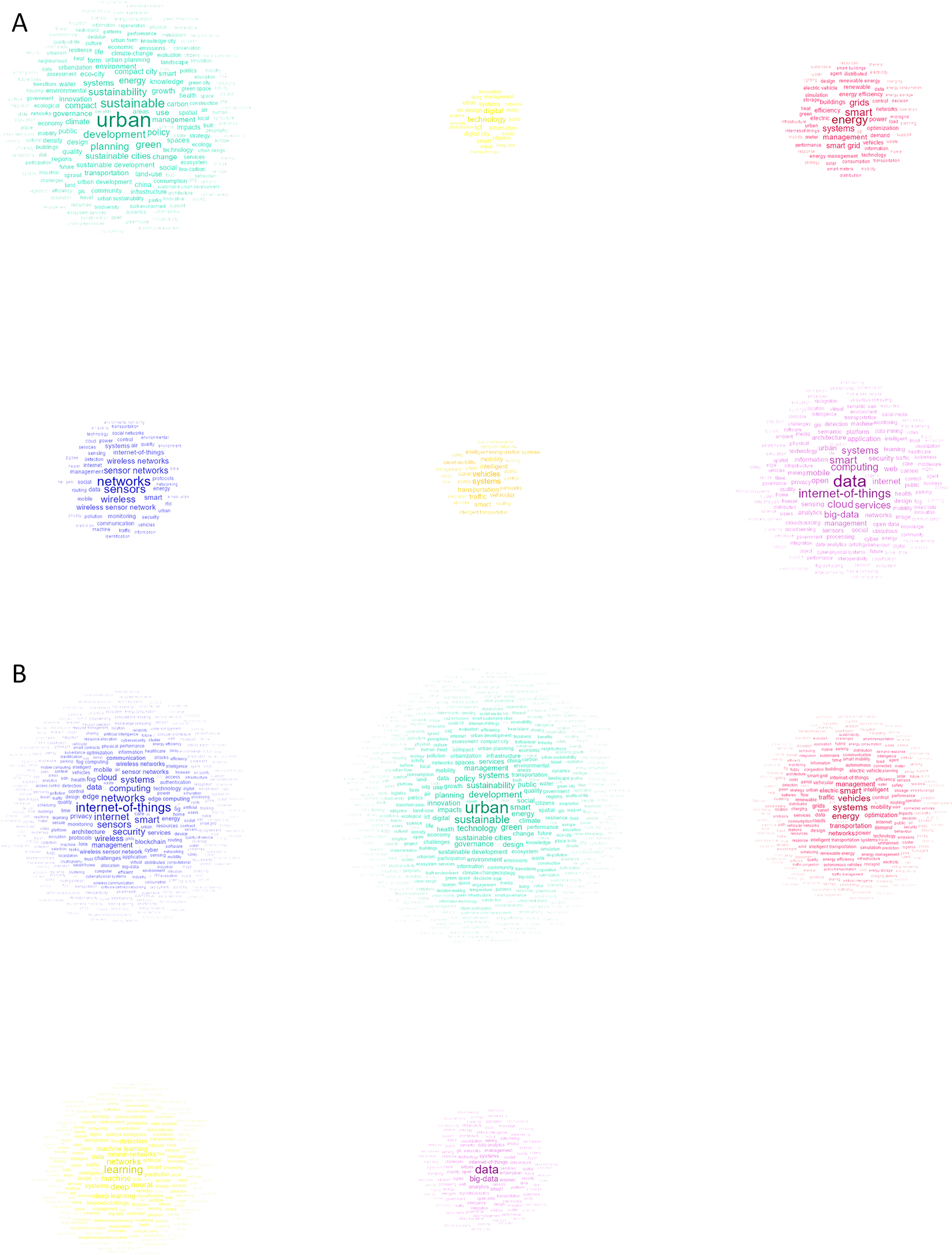
A. wordclouds of clusters between 2010-2017. B. wordclouds of clusters in 2018-2022. Note: Larger words indicate higher frequencies within their respective thematic clusters. For the keyword cloud visualizations, minimum keyword occurrence was set at 20.
Thus, following the framework by Bibri and Krogstie (2017), the resulting clusters were aggregated into two meta-domains: a technology-oriented cluster and a social-oriented clusters (Figure 2A--D). This classification served as the basis for all subsequent comparative analyses. Creating wordcloud figures (Figure 1, Figure 2) we used ‘ggplot2’ (Wickham, 2016) and ‘ggwordcloud’ (Le Pennec & Slowikowski, 2024) R Packakes.
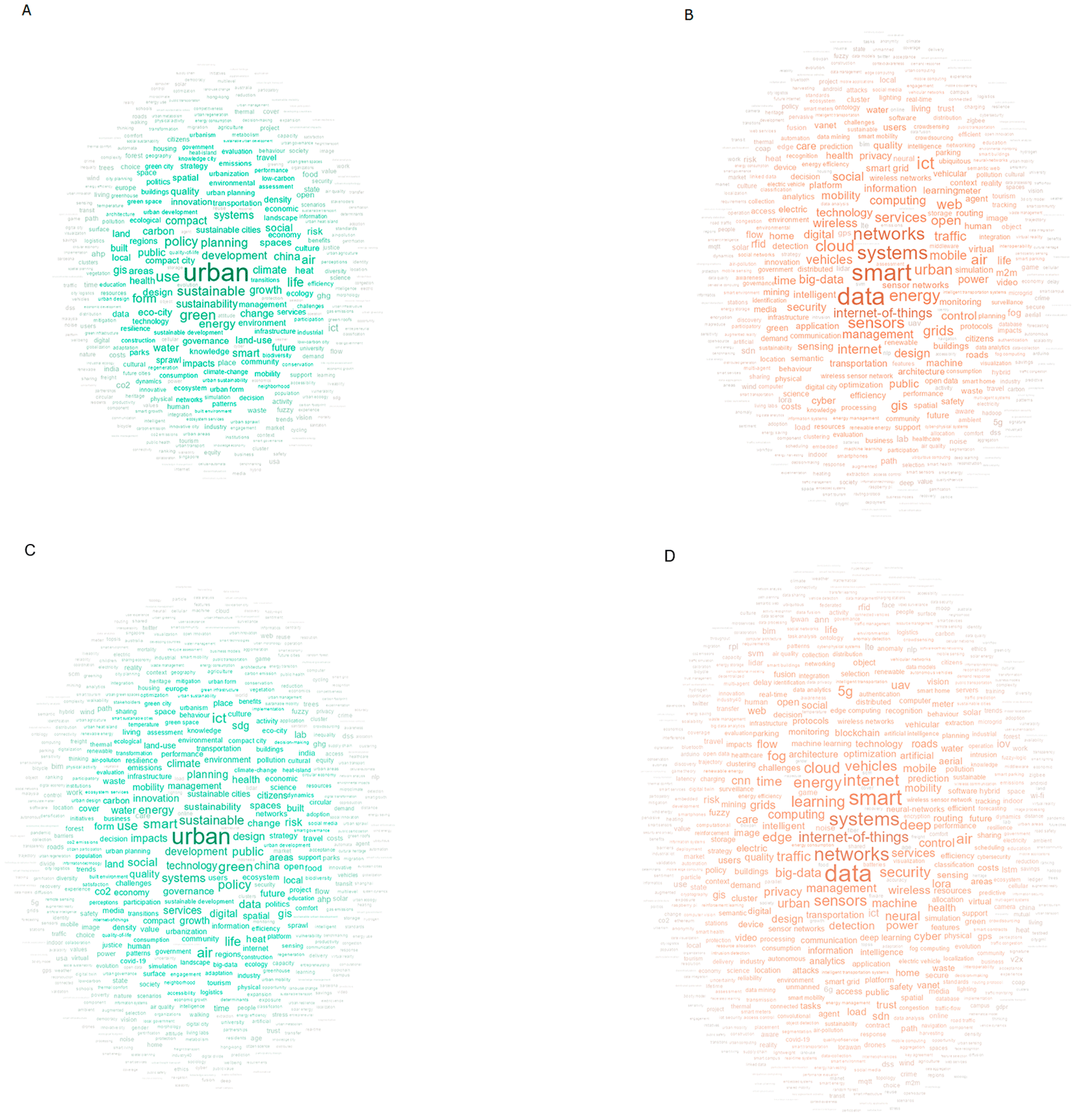
A. Wordclouds of social-oriented smart city cluster, 2010–2017 (green). B. Wordclouds of technology-oriented smart city cluster, 2010–2017 (orange). C. Wordclouds of social-oriented smart city cluster, 2018–2022 (green). D. Wordclouds of technology-oriented smart city cluster, 2018–2022 (orange). Note: Larger words indicate higher frequencies within their respective thematic clusters. For the keyword cloud visualizations, minimum keyword occurrence was set at 20.
The second phase of data processing involved extracting geographical information from author affiliations. City names were identified and isolated for 5,907 publications in the first period (2010–2017) and 16,023 in the second (2018–2022).
To analyse the evolution of collaborative distance, publications were classified into five spatial collaboration categories reflecting increasing geographical reach:
• Single affiliation (no external collaboration).
• Intra-city collaboration (multiple affiliations within the same city).
• Intranational inter-city collaboration (different cities within the same country).
• Intra-macro-regional collaboration (cross-border within the same macro-region).
• Cross-macro-regional collaboration (inter-continental/cross-macro-regional).
Scientific output was measured by aggregating publication counts to the city level to map globally the distribution of SC knowledge. In this article, we did not use fractional counting for aggregation. To analyse the distance effect, we aggregated research output for the five spatial collaboration categories mentioned above. Scientific impact was measured with several variables. For revealing citation patterns in RQ1 and RQ2, we used Category Normalised Citation Impact (CNCI) from Clarivate’s InCites database. This allows for an unbiased comparison of impact regardless of field-specific citation norms. We calculated the aggregated mean values of CNCI for each city by taking the arithmetic average of the CNCI values of papers produced in the city. We presented scientific output and impact between the two periods 2010–2017 and 2018–2022 on maps. We applied the following Rpackages for creating the maps: ‘ggplot2’ (Wickham, 2016),‘sf’ (Pebesma, 2018; Pebesma & Bivand, 2023), for base map layers (coastlines and country borders) we used from Natural Earth via the ‘rnaturalearthdata’ (South et al., 2024) and ‘rnaturalearth’ package (Massicotte & South, 2026).
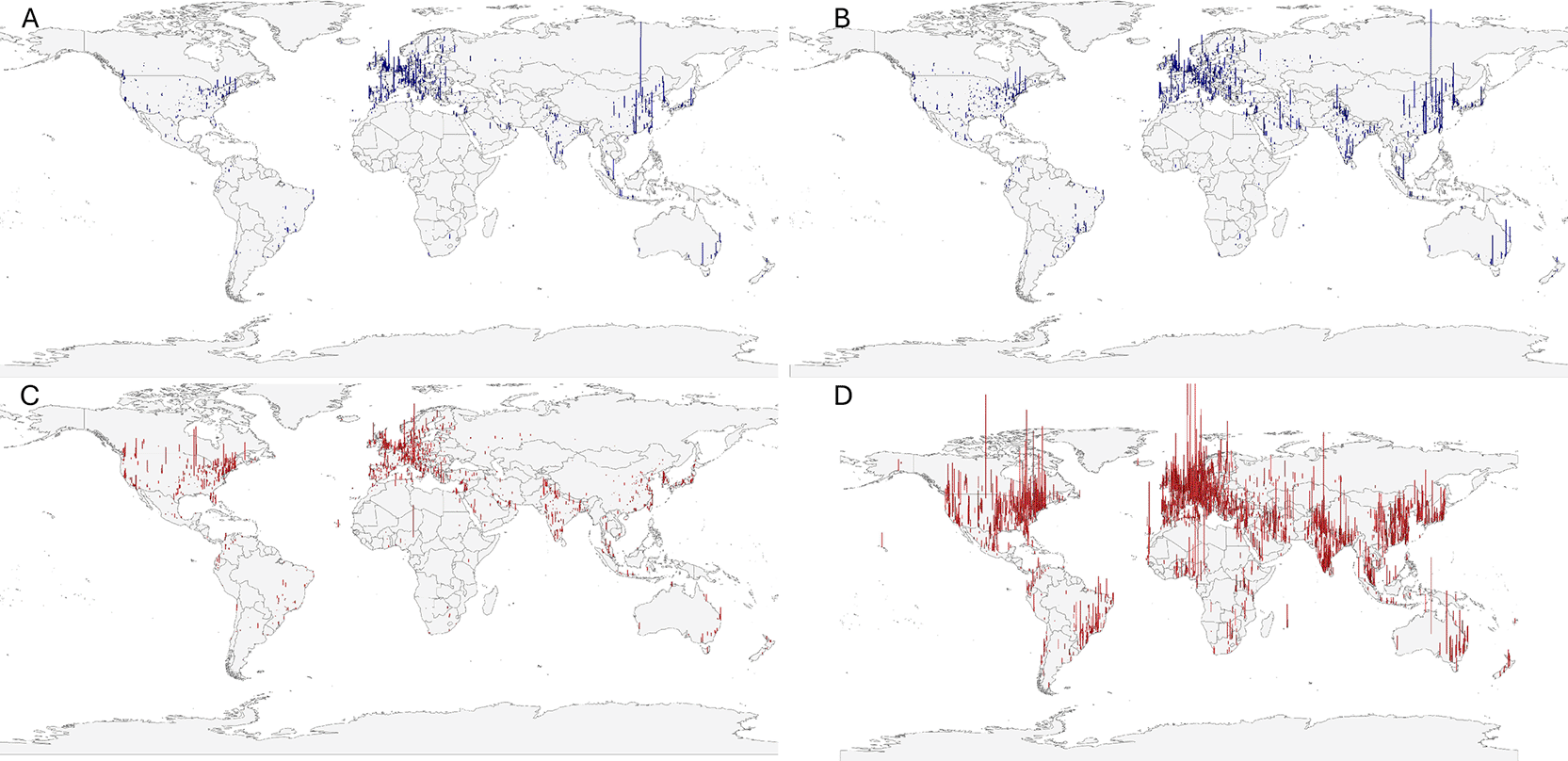
A. Output, blue, 2010–2017. B. output, blue, 2018–2022. C. Impact, red 2010–2017; D. Impact, red 2018–2022.
Source of base map layers (coastlines and country borders) we used from Natural Earth via the ‘rnaturalearthdata’ (South et al., 2024) and ‘rnaturalearth’ package (Massicotte & South, 2026).
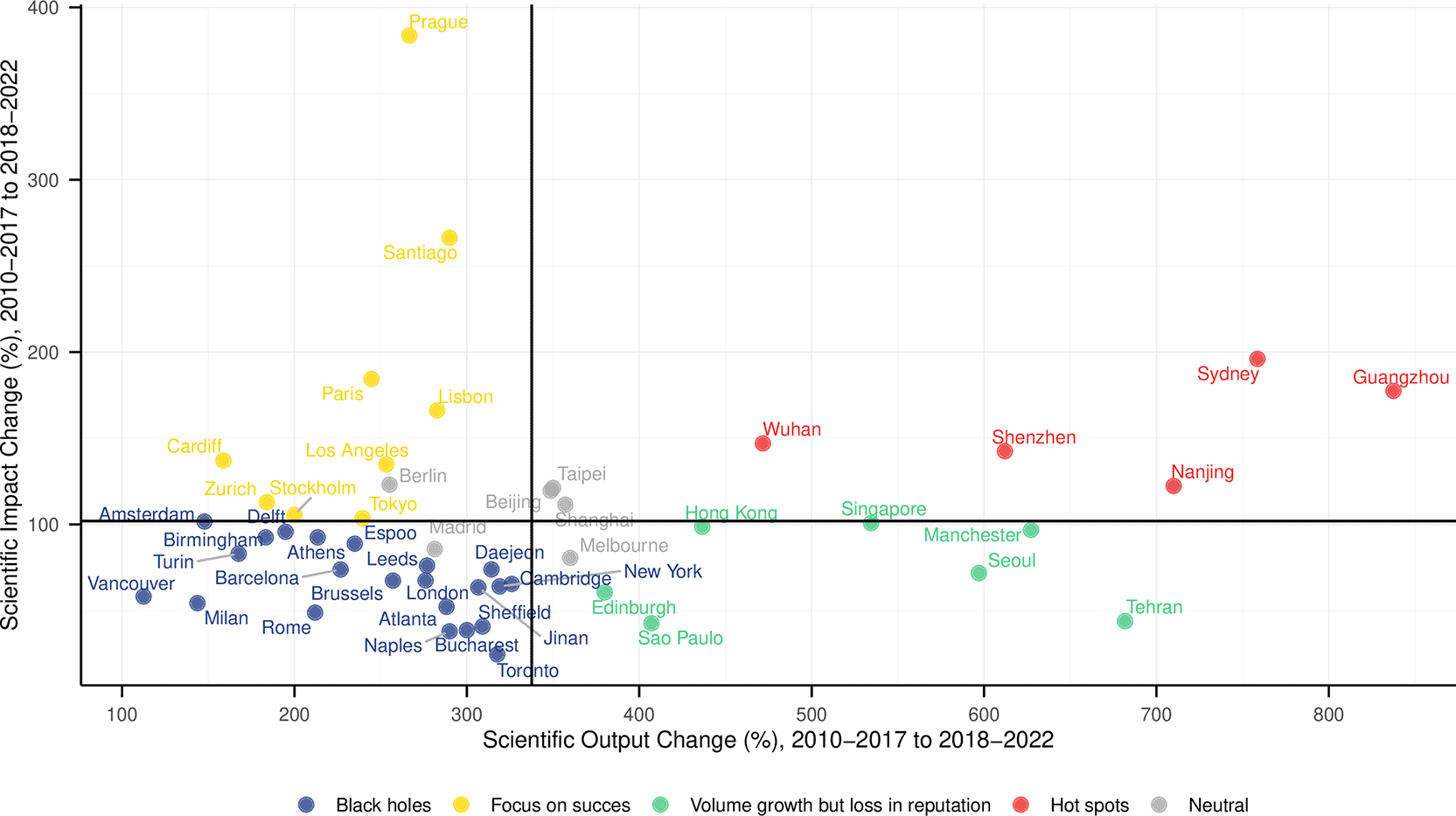
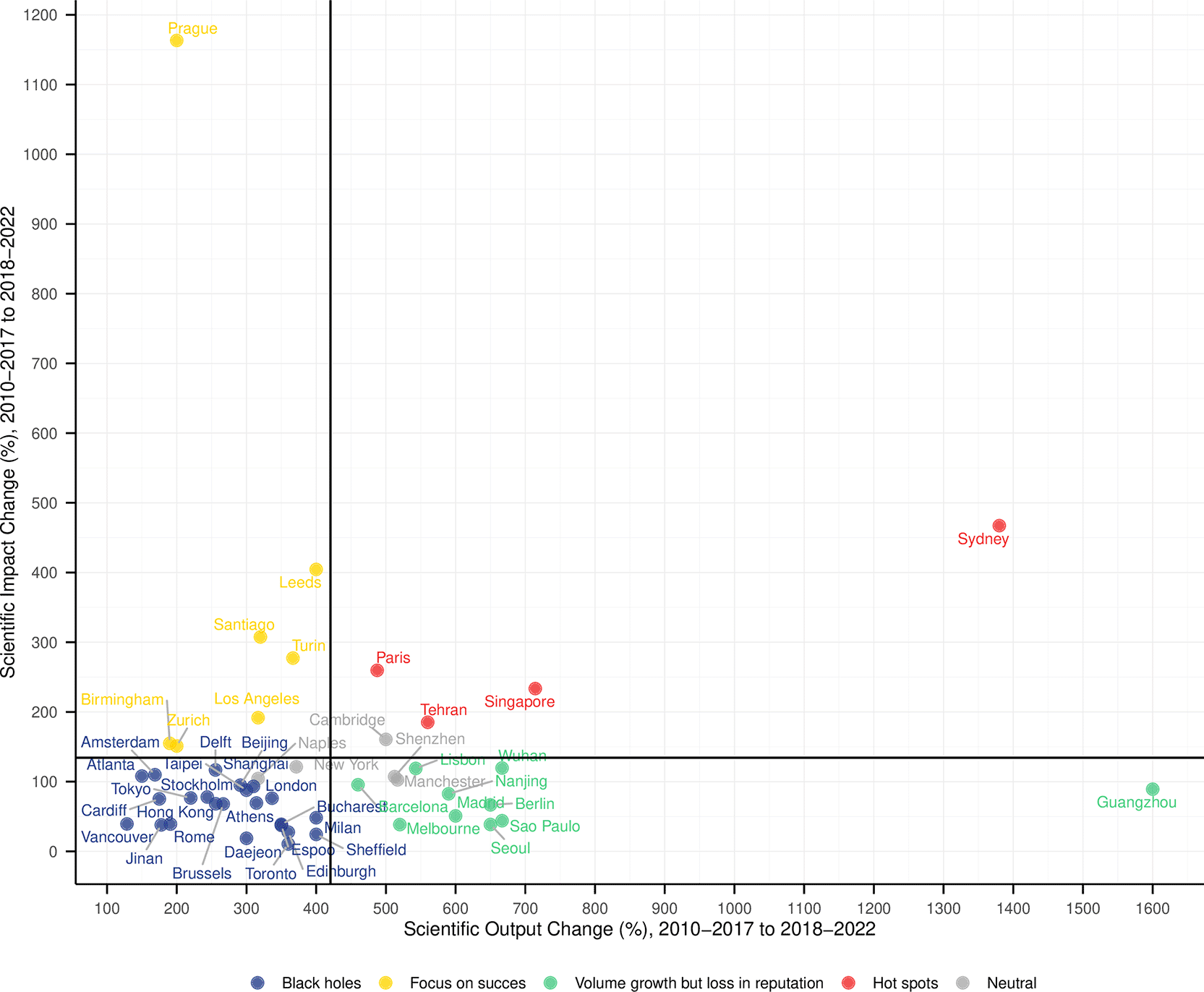
Note: Based on Matthiessen et al., 2010, Figure 6. Output change: percentage change of publication output between period 1 and period 2; Impact change: percentage change of mean Category Normalized Citation Index (CNCI) between period 1 and period 2.
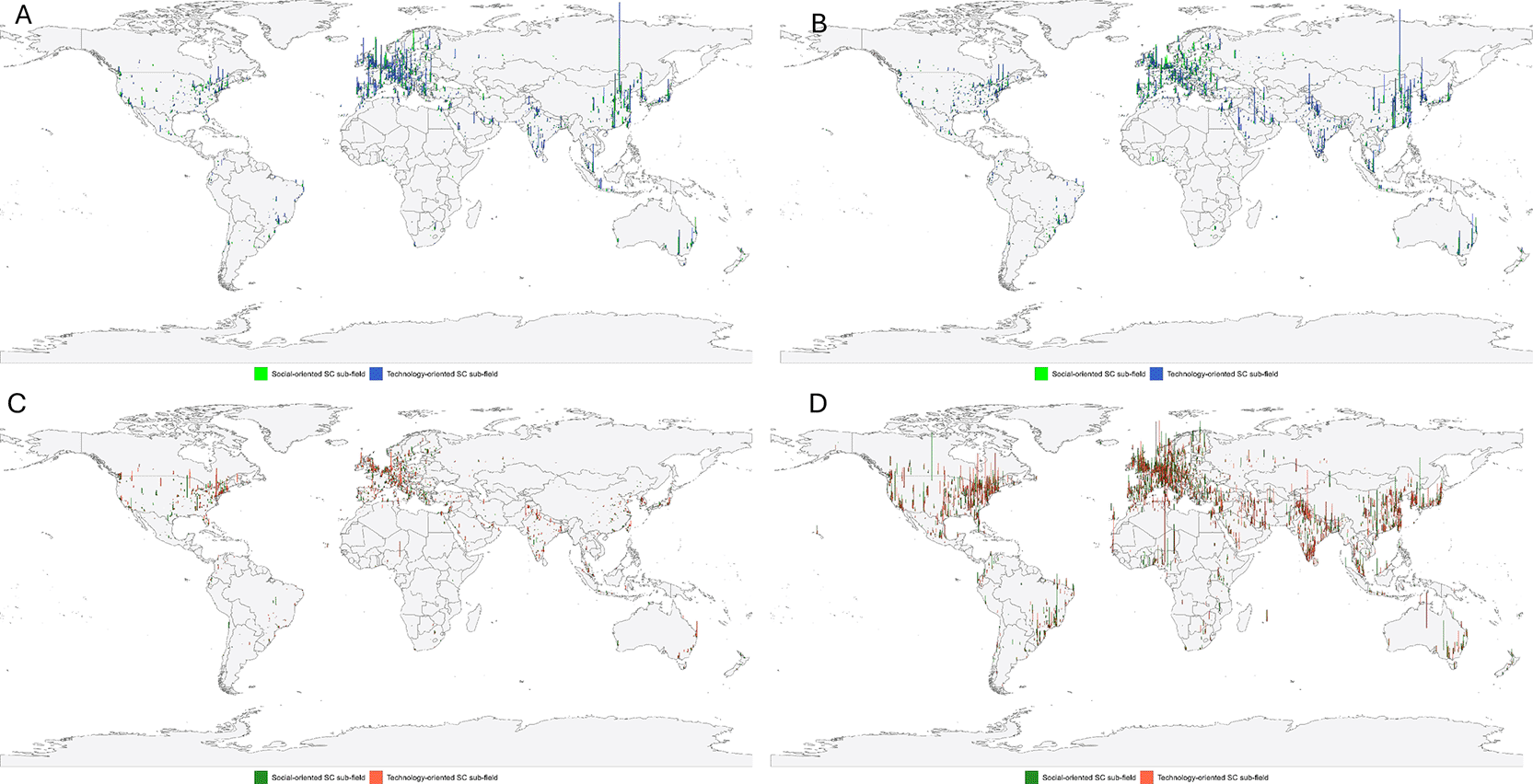
A. Output, 2010–2017, green: Social-oriented SC sub-field; blue: Technology-oriented SC sub-field, 2010–2017. B. output, 2018–2022. green: Social-oriented SC sub-field; blue: Technology-oriented SC sub-field; C. Impact, 2010–2017; green: Social-oriented SC sub-field; orange: Technology-oriented SC sub-field, 2010–2017. D. Impact, 2018–2022. green: Social-oriented SC sub-field; orange: Technology-oriented SC sub-field. Source of base map layers (coastlines and country borders) we used from Natural Earth via the ‘rnaturalearthdata’ (South et al., 2024) and ‘rnaturalearth’ package (Massicotte & South, 2026).
For the investigation of distance decay, we compared scientific output and impact among the five spatial collaboration categories from single affiliation to cross-macro-collaboration. As the outcome was measured with a volume, the percentage of publications in each spatial category, we used a similar volume for comparison, which expresses impact. We chose the percentage of highly cited papers ‘Top 5%’ and ‘Top 10%’ for all spatial categories. This kind of approach was also used in Csomós et al. (2020), using Top 1%. As this article is not focusing on the excellence of science, but rather describes a specific SC research field, we chose ‘Top 10%’ and ‘Top 5%’ indicators. Using both values enables us to find the connection between spatial collaboration categories, output, and strengthening impact. Finally, following the work of Figure 6 of Matthiessen et al. (2010), we mapped the relative change in output and impact to track the evolving positions of cities within the global SC hierarchy. We used the categories found in Matthiessen et al. (2010), and the indicators of output and citation change; since it was not described in detail which kind of citation indicator was used, we chose the mean CNCI for measuring impact on the diagram. For visualization, 49 cities with at least 5 publications in both sub-fields in both time periods were selected. Figure 4, Figure 6, Figure 7, Figure 8 We used ‘ggplot2’ (Wickham, 2016) and ‘ggrepel’ (Slowikowski, 2024) R Packakes for the diagrams in this study.
Note: Based on Matthiessen et al. (2010), Figure 6. Output change: percentage change of publication output between period 1 and period 2; Impact change: percentage change of mean Category Normalized Citation Index (CNCI) between period 1 and period 2.
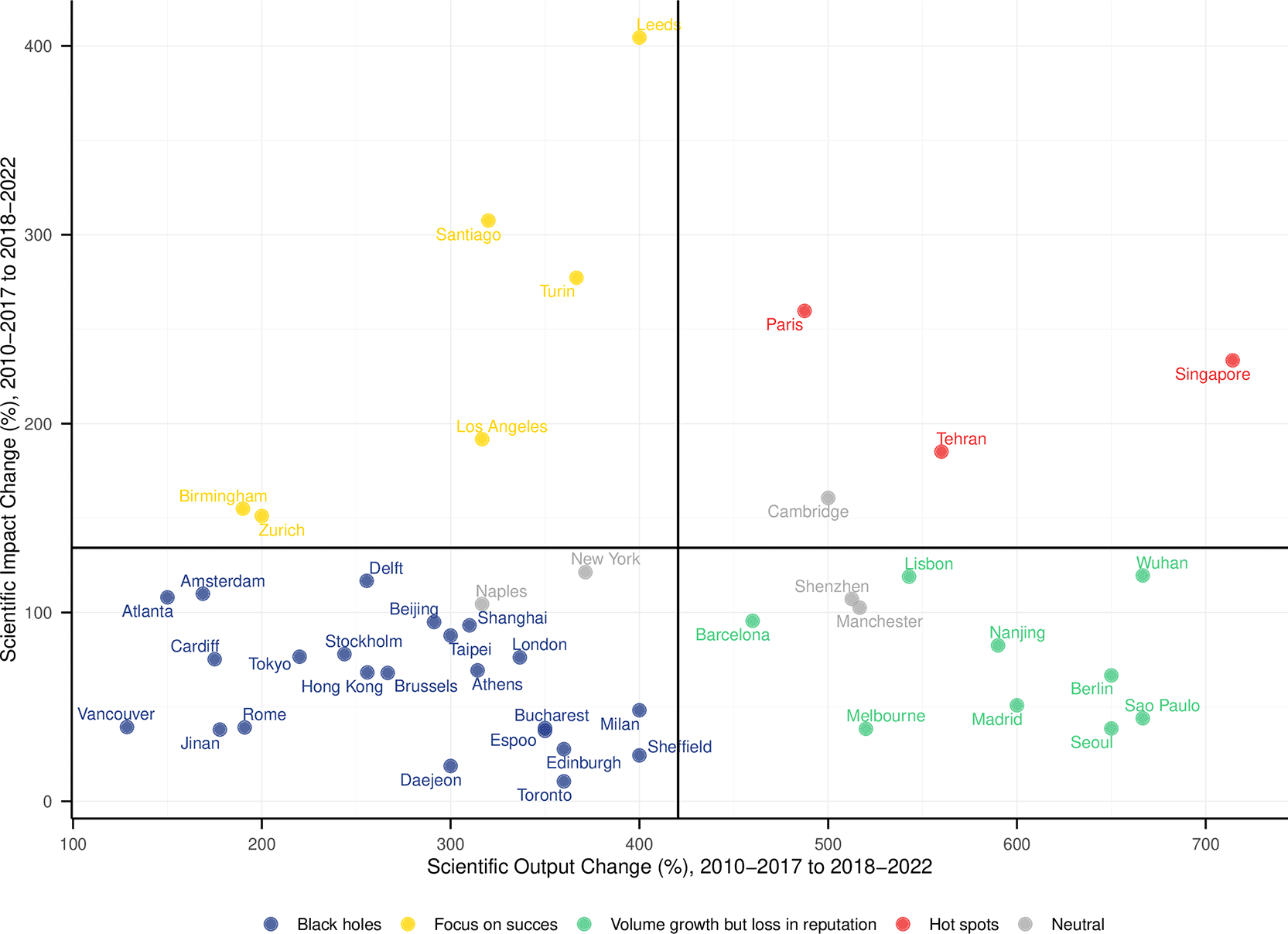
Note: outliers: Guangzhou, Prague, and Sydney. Figure 7 based on Matthiessen et al. (2010), Figure 6. Output change: percentage change of publication output between period 1 and period 2; Impact change: percentage change of mean Category Normalized Citation Index (CNCI) between period 1 and period 2.
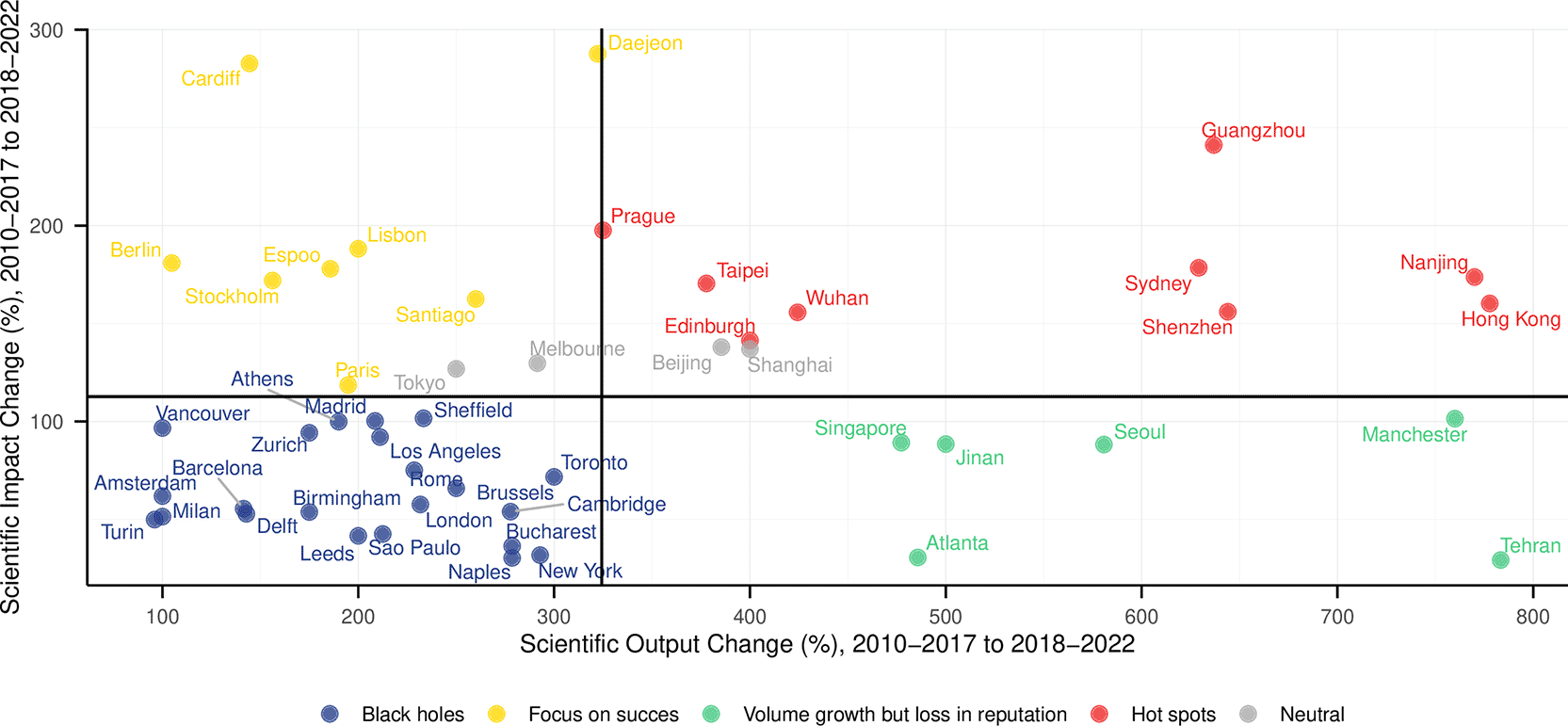
Note: Based on Matthiessen et al., 2010, Figure 6. Output change: percentage change of publication output between period 1 and period 2; Impact change: percentage change of mean Category Normalized Citation Index (CNCI) between period 1 and period 2.
This rigorous data processing phase transformed a heterogeneous set of 21,930 articles into a structured, dual-track dataset defined by both the representative knowledge regimes (the two sub-fields of SC research) and geographies across the two time periods. This structured dataset provides the necessary foundation to address the research questions.
Most SC publications concentrate in East Asian and European hubs. India and the Middle East also have relevant output, especially in the second period ( Figure 3A, 3B). Over the two periods, the number of cities involved in SC research is increasing (1,566 and 2,836 cities, respectively in the first and second period). At the same time, a spatial concentration of the research output is observed, with hubs preserving their leading positions. If only cities with at least 10 papers in both periods are considered, their number is more stable (721 and 778 respectively, in the two periods).
The impact of publications exhibits further dynamics. The mean CNCI values for cities demonstrate that while East Asia is strong in research output, significantly higher impact values are located in Europe and in the United States. Overall, the global North holds a strong position in the field of SC research ( Figure 3C, 3D).
As demonstrated in Figure 3, the global state of SC research is illustrated across two periods. Figure 4 presents the percentage change in these dimensions, indicating future trends. There are 49 cities that have at least 5 publications in both SC sub-fields (social-oriented and technology-oriented clusters), in both time periods (n = 49). Figure 4 represents these based on Matthiessen et al. (2010), Figure 6. Cities are categorised by their rate of change of output and impact. Following the nomenclature of Matthiessen et al. (2010), the following groups of cities are distinguished:
• ‘Hot spots’ (red): both scientific output and impact have seen a growth of more than 25% above the mean value of both variables.
• ‘Volume growth but loss in reputation’ (green): only scientific output has grown more than 25% above the mean value.
• ‘Focus on success’ (yellow): only the impact value has grown more than 25% above the mean value.
• ‘Black holes’ (blue): both output and impact values have fallen more than 25% below the mean value.
• ‘Neutral’ (gray): the values of the variables did not exceed a 25% change to the mean.
‘Hot spot’ cities are few; only Sydney, Guangzhou, Nanjing, Shenzhen, and Wuhan belong to this category. The ‘Focus on success’ city group is also remarkable. Despite their relative decline in output, these cities are gaining influence. Apart from the ‘Black holes’, most European cities are in this group. ‘Volume growth but loss in reputation’ cities are geographically diverse, involving cities from Brazil, Iran, China, Singapore, South Korea, and the United Kingdom.
Regarding inter-city collaborations, a decrease is observed in the rate of publications produced in intra-city collaboration over the two time periods: from nearly two-thirds to half; inter-city collaboration is rising ( Table 2). For the highly cited papers, a dramatic increase of inter-city collaborations emerges for the second period. There is a difference between the ‘Top 5 %’ and ‘Top 10%’ highly cited publications: the more highly cited a paper is, the higher the rate of inter-city collaborations.
| Output share %, 2010–2017 | Output share %, 2018–2022 | |
|---|---|---|
| No collaboration or intra-city collaboration | 66.1 | 50.9 |
| Inter-city collaboration | 33.9 | 49.1 |
| Total | 100 | 100 |
| Top 10% cited pubs share %, 2010–2017 | Top 10% cited pubs share %, 2018–2022 | |
|---|---|---|
| No collaboration or intra-city collaboration | 58.06 | 37.47 |
| Inter-city collaboration | 41.93 | 62.53 |
| Total | 100 | 100 |
| Top 5% cited pubs share %, 2010–2017 | Top 5% cited pubs share %, 2018–2022 | |
|---|---|---|
| No collaboration or intra-city collaboration | 56.6 | 34.37 |
| Inter-city collaboration | 43.39 | 65.63 |
| Total | 100 | 100 |
The two sub-fields of SC research exhibit divergent trends. The technology-oriented cluster accounted for two-thirds of all papers. We observed an increase in social-oriented papers in Europe and partially in Latin America in the second period; however in the North American region and in Asia the share of this sub-field declined marginally. The research output of global SC hubs covers both SC sub-fields. Within India and Middle East an increase in the number of papers can be attributed to the technology-oriented sub-field (see Figure 5A and 5B). Between 2010–2017, 803 cities participated in the social-oriented sub-field, while 1,303 in the technology-oriented sub-field. In the subsequent period (2018–2022), the number of cities in the social-oriented sub-fields are 1,744, and in the technology-oriented sub-field 2,405. The global north plays a remarkable role in terms of the impact of SC research. The impact of the Social-oriented sub-field is relevant in both periods in Europe and U.S., and in the second period it also appears in Japan and in Australia. China’s research impact is evident in technology-oriented fields for the second period ( Figure 5C, 5D).
Focusing on output and impact change between the two periods, in the case of the social-oriented sub-field, three cities demonstrate extreme positive change: Prague in impact, Guangzhou in output, and Sydney in both. Along with Sydney, we find Paris, Singapore, and Tehran in the ‘Hot spot’ category. Among ‘Volume growth but loss in reputation’ cities belong to a wide array of geographical locations ( Figure 6).
Zooming in the diagram without Prague, Sydney, and Guangzhou (the outliers) in the ‘Focus on success’ group, we mostly find European cities along with Los Angeles and Santiago. Important research centres such as Beijing or London belong to the ‘Black hole’ group ( Figure 7).
In the case of the technology-oriented sub-field of the SC domain, we find no outliers. In the ‘Hot spots’ group, Hong Kong and Nanjing have the greatest positive change of output, and Guangzhou has the highest impact change. In the ‘Volume growth but loss in reputation’ group Manchester, Seoul, Jinan, Singapore, Tehran and Atlanta are found. Most of the cities in the ‘Focus on success’ and ‘Black hole’ groups are located in Europe ( Figure 8).
Comparing Figures 7 and 8, 14 cities are in the same group in both sub-fields. Most of them are in the ‘Black holes’ category, except for Sydney (‘Hot spot’), Seoul (‘Focus on success’), and Santiago (‘Volume growth but loss in reputation’).
Our findings confirm the trend that scientific collaborations are becoming increasingly common. The share of papers with only one affiliation sharply decreased between the 2010–2017 and 2018–2022 periods, and a higher proportion of articles originates from inter-city collaborations. However, distance still matters, since the majority of publications emerged from intra-city collaborations. Between the two periods, the proportion of articles increased in every inter-city category, and the rate of increase was higher in categories covering greater distances. Therefore, there is a marked transition from localised research to globalised networks. When inter-city collaborations cross national borders, cases between macro-regions are more common than those within them. At the same time, the intranational inter-city networks show a consistent growth for the second period in both output and high impact share. In the case of highly cited papers, the geographical distance decay effect is weakening. While intra-city collaborations between 2010–2017 were 46.36% of the ‘Top 5%’ most cited publications, this share has diminished in the second period to 29.49%. In contrast, cross-macro-regional collaborations represent the largest rate of highly-impact papers, contributing 35.55% of the ‘Top 5%’ cited papers between 2018 and 2022. It is also striking that, in the first period, the distribution of output and highly cited papers across the collaboration scale shows similar proportions, whereas in the second period, the differences between categories are much more pronounced for both output and highly cited papers ( Table 3).
Comparing the two sub-fields ( Table 4), the proportion of single affiliation articles is significantly higher, nearly triple (24.52%) in the social-oriented SC sub-field than the 8.73% share of the technology-related SC sub-field in 2010–2017. In the case of output, including highly cited papers in single affiliation category has significantly higher values than in the technology-oriented sub-field in both time periods. Besides, a decreasing share of single-institution work appears in both sub-fields by 2018–2022.
As for the total of SC research, intra-city collaborations remain the primary mode of production for both fields, indicating that geographical closeness facilitates collaboration. Nevertheless, its dominance has eroded more sharply within the technology-oriented cluster, from 56.36% (2010–2017) to 43.72% (2018–2022), than in the social-oriented SC sub-field, where intra-city collaboration share has dropped slightly, from 43.8% to 40.81%.
However, when a publication comes from inter-city collaboration, there are no longer significant differences between the social and technology-focused areas. Even if a higher proportion of articles arises from collaboration between cities, countries, or macro-regions in the technology-oriented sub-field, the difference between the two sub-fields is not significant. The inter-city connectivity rises in both for the 2018–2022 period. In the case of inter-city collaborations, cross-macro-regional collaborations have the highest rates, followed by intranational inter-city links. In the case of highly cited papers, intranational inter-city collaborations are rising more and more in the technological-oriented sub-field. For the second period, the significance of cross-macro-regional collaborations increases, especially in the case of highly ‘Top 5%’ cited papers.
A critical divergence is found in the relationship between collaboration scale and citation impact. In the second period (2018–2022), the proportion of cross-macro-regional collaborations increases significantly among articles with the highest impact. In the technology-oriented sub-field there has been a dramatic pivot towards global networks. By 2018–2022, cross-macro-regional collaborations became the primary driver of elite impact, accounting for 38.44%, up from 21.84% of the ‘Top 5%’ cited papers. Simultaneously, the impact share of intra-city work in this field fell from 52.3% to 28.53%. Globalization is also significant in the social-oriented sub-field. Cross-macro-regional collaboration share rises from 19.75% to 30.24% of the ‘Top 5%’ cited publications. However, this field maintains a more balanced impact distribution, with intra-city collaboration still accounting for 31.25% of top-tier citations. These findings indicate that local context remains more vital for high-impact social-oriented research than in the technology-oriented sub-field.
This study examined the global landscape of smart city research by analysing patterns of scientific production, citation impact, and inter-city collaborations. It also explored how collaboration geographies differ between technology-oriented and social-oriented research and assessed the influence of geographical distance on the resulting collaborative networks.
In line with findings from other bibliometric studies (Hoekman et al., 2010; Wuchty et al., 2007), co-authored smart city papers have a higher impact than single-author papers, and the constraining effect of geographical distance is decreasing. This trend aligns with spatial interaction theory and gravity-model mechanisms (Frenken et al., 2009b; Head & Mayer, 2014), whereby collaboration and scientific impact increase with research capacity in the city but decay with the distance between the locations. As global scientific networks expand, our results suggest that distance decay is weakening (Maisonobe et al., 2016b; Csomós et al., 2020).
Smart city research presents a spatial paradox: although more cities are participating in the global conversation, the output and impact of that research remain concentrated in defined hubs and international networks. There is a geographical split between where research is produced and where its citation impact emerges. The global North (Europe and the US) maintains the highest impact values (CNCI), even though fewer papers are produced there compared to East Asian hubs. Cities such as Sydney, Guangzhou, Nanjing, Shenzhen, and Wuhan are emerging hotspots, where both output and impact have increased. While research volume grows more slowly in European cities, their citation impact is comparatively higher. Overall, there is a shift from localized, single-institution research toward longer-distance, global collaborations, with European-Asian city partnerships playing a central role in driving high-impact research, confirming the findings by Csomós et al. (2020).
The technology-oriented and social-oriented facets of smart city research exhibit the pattern experienced between the social sciences and humanities, and sciences. Scholarly work remains biased toward technology-oriented research, which accounts for roughly two-thirds of the field, is highly collaborative, and is driven by global networks, while intra-city efforts are declining. In contrast, social-oriented research is smaller but expanding in regions such as Europe and Latin America; it tends to produce more single-author or single-institution work, and it continues to rely on local context for high-impact outcomes. These differences can be interpreted through the mechanisms highlighted in the literature: technological domains depend on infrastructure-intensive research hubs, reinforcing global concentration (Castells, 1996; Frenken et al., 2009b; Balland et al., 2020), whereas social-oriented domains are more sensitive to local context and cognitive proximity, which sustains intra-city and regional collaborations (Gertler, 2003; Boschma, 2005b).
The results indicate that geographical distance continues to influence inter-city collaborations, although its effect is declining over time. In both the social- and technology-oriented sub-fields of smart city research, intra-city collaboration remains the most common mode of production, but its share has decreased, particularly in technology-oriented research. Collaborations spanning greater distances have increased substantially – especially cross-macro-regional partnerships – and are contributing disproportionately to highly cited papers, again particularly in the technology cluster. Both sub-fields also show growth in national and macro-regional collaborations, reflecting a broader shift from localized towards more globalized scientific networks, including within social-oriented smart city research. These patterns confirm the interplay of research capacity in the cities, distance decay and disciplinary norms in shaping the spatial organization of knowledge production.
From a practical perspective, the concentration of impact in global hubs highlights opportunities and challenges for cities seeking to strengthen their smart city research capacity. Although international networks drive high-impact technological research, maintaining local embeddedness remains critical for impactful social-oriented scholarship. As cities adopt ‘smart city’ agendas (Toh, 2022), this local embeddedness will require careful urban governance approaches.
During the preparation of this work, the authors used ChatGPT and Gemini 3 to improve language and readability. After using this tool, the authors reviewed and edited the content as needed and take full responsibility for the content of the publication.
| Views | Downloads | |
|---|---|---|
| F1000Research | - | - |
|
PubMed Central
Data from PMC are received and updated monthly.
|
- | - |
Provide sufficient details of any financial or non-financial competing interests to enable users to assess whether your comments might lead a reasonable person to question your impartiality. Consider the following examples, but note that this is not an exhaustive list:
Sign up for content alerts and receive a weekly or monthly email with all newly published articles
Already registered? Sign in
The email address should be the one you originally registered with F1000.
You registered with F1000 via Google, so we cannot reset your password.
To sign in, please click here.
If you still need help with your Google account password, please click here.
You registered with F1000 via Facebook, so we cannot reset your password.
To sign in, please click here.
If you still need help with your Facebook account password, please click here.
If your email address is registered with us, we will email you instructions to reset your password.
If you think you should have received this email but it has not arrived, please check your spam filters and/or contact for further assistance.

Comments on this article Comments (0)