Keywords
Autism spectrum disorder, autism mental status exam, pre-diagnostic tool, cross-cultural adaptation, validation, resource-limited specialist settings

Autism spectrum disorder, autism mental status exam, pre-diagnostic tool, cross-cultural adaptation, validation, resource-limited specialist settings
Autism spectrum disorder (ASD) is a complex, lifelong neurodevelopmental condition characterized by persistent deficits in social communication and interaction, alongside restricted, repetitive patterns of behavior, interests, or activities.1 Global prevalence has increased significantly over recent decades, with current estimates suggesting approximately 1–2% of children worldwide are affected.2,3 This rising prevalence, coupled with the critical importance of early intervention for optimizing long-term outcomes, has placed considerable pressure on diagnostic systems globally.4,5
In high-income countries, diagnosis is typically achieved through comprehensive multidisciplinary assessment involving gold-standard instruments such as the Autism Diagnostic Observation Schedule-2 (ADOS-2) and the Autism Diagnostic Interview-Revised (ADI-R).6,7 These tools, while robust, require extensive training, are time-consuming (often ≥2 hours per assessment), and involve significant costs for materials and licensing.8,9 Consequently, their availability is severely limited in low- and middle-income countries (LMICs), including Indonesia.10
Indonesia, the world’s fourth most populous nation, faces profound challenges in ASD diagnosis. Data on prevalence are limited, but estimates align with global figures, with significant under-identification in rural areas due to scarce specialist services, lack of trained personnel, and financial constraints.11,12 Specialists working in secondary or tertiary referral centers often lack access to ADOS-2 or ADI-R and must rely solely on clinical judgment, which can be subjective and variable, leading to potential over- or underdiagnosis, especially in complex cases with comorbidities.13–15 Furthermore, widely used screening tools such as the Modified Checklist for Autism in Toddlers, Revised (M-CHAT-R/F) are limited to children under 30 months and rely on parent report, making them unsuitable for older children or as a pre-diagnostic aid for specialists.16,17 There is an urgent, unmet need for a tool that can structure the specialist’s clinical examination, making it more objective, efficient, and reliable within the constraints of the Indonesian healthcare system.
The Autism Mental Status Exam (AMSE) is an 8-item, observation-based examination designed to structure the clinical assessment of ASD core symptoms in under 15 minutes.15,18 It was developed specifically to enhance the accuracy of clinical judgment in settings where gold-standard tools are impractical.18 By systematically guiding the observation of social interaction, communication, and repetitive behaviors—and incorporating key caregiver report—it operationalizes DSM-5 criteria within a routine clinical encounter.19 Validated in multiple countries (USA, Brazil, China, Turkey, Chile, Sweden and France.), the AMSE has demonstrated consistently high sensitivity (79–98%) and specificity (67–100%).20–25 As an open-access instrument requiring minimal training, it presents a promising solution for specialist diagnostic settings in LMICs.
A critical and often underexplored aspect of diagnostic tool validation is performance across different developmental stages. ASD symptoms manifest and evolve with age.26 In toddlers(<3 years), core symptoms may be more categorical and overt (e.g., absence of joint attention, lack of response to name). In preschool and school-aged children (≥3 years), symptoms often become more nuanced, variable, and influenced by compensatory strategies or comorbid conditions.27 Tools validated on mixed-age samples may mask important age-related differences in sensitivity and specificity. Therefore, a comprehensive validation must include age-stratified analysis to inform clinicians about the tool’s appropriate use across the intended age spectrum.
However, the use of observational tools is influenced by cultural norms surrounding social behavior, eye contact, communication styles, and play.28 A direct translation is insufficient; a rigorous cultural adaptation is essential to ensure diagnostic accuracy.29 No such adaptation or validation exists for the Indonesian context.
This study aimed to: (1) perform a comprehensive cross-cultural adaptation of the AMSE into the Indonesian language and context (AMSE-INA), and (2) evaluate its psychometric properties and diagnostic accuracy specifically for use as a pre-diagnostic tool by specialists in Indonesian referral settings where gold-standard instruments are not available.
This study employed a cross-sectional diagnostic accuracy design and was conducted in two sequential phases at the Growth and Development-Social Pediatrics Clinic Sardjito Hospital, an academic-tertiary referral center in Yogyakarta, Indonesia from July to December 2025. This study was conducted in two sequential phases. Phase 1 (July–September 2025) involved cross-cultural adaptation of the AMSE into Indonesian (AMSE-INA) following Beaton et al. guidelines, including forward translation, expert committee synthesis, back-translation, and pretesting. Pretesting was conducted in routine clinical practice, where clinicians used the adapted tool and provided feedback on its usability and cultural appropriateness; no patient data were systematically collected or used for research purposes during this phase. Phase 1 activities were initiated while the ethical approval application for Phase 2 was under review, as they did not involve research on human subjects.
Phase 2 (commenced after ethical approval) comprised the psychometric validation study involving human participants. Ethical approval (No. KE/FK/1426/EC/2025) was obtained from the Faculty of Medicine, Public Health, and Nursing Ethics Committee, Universitas Gadjah Mada prior to the initiation of Phase 2 data collection. All Phase 2 procedures were conducted in accordance with the approved protocol, and written informed consent was obtained from all parents/guardians.
The adaptation strictly followed the internationally recognized 6-step guideline by Beaton et al.29,30 to ensure semantic, idiomatic, experiential, and conceptual equivalence. The process included forward translation by independent translators (one clinician, two linguists), synthesis by an expert committee of behavioral-developmental pediatricians, back-translation, and pretesting with clinicians and target patients. The expert committee resolved discrepancies and made key cultural adaptations (e.g., modifying phrasing for “pointing” to align with local nonverbal communication norms). The final AMSE-INA version and a comprehensive scoring guide with culturally-anchored examples were approved by the original developer. This meticulous process resulted in an instrument with excellent content validity (see Results), confirming its conceptual soundness and cultural appropriateness for Indonesia.
Participants
Children aged 18 months to 18 years who were newly referred during September–December 2025 with concerns about social communication, language delay, or restrictive/repetitive behaviors were recruited consecutively. To ensure a clear validation of AMSE against core idiopathic ASD symptoms and avoid confounding variables, children with the following conditions were excluded: 1) severe, uncorrected sensory impairments (e.g., profound deafness, blindness); 2) major neurological deficits (e.g., cerebral palsy with significant motor impairment, progressive neurological disorders); 3) known genetic syndromes strongly associated with a distinct ASD phenotype (e.g., Rett syndrome, Fragile X syndrome). These exclusions are standard in diagnostic validity studies to enhance diagnostic clarity.
Sample Size Calculation
The sample size was calculated for diagnostic sensitivity using the formula by Dahlan,31 assuming a sensitivity of 85%, a 10% margin of error, an alpha of 5%, and an ASD prevalence of 75% in the referral population, targeting a minimum of 72 participants to achieve adequate power.
Procedures and Measures
Each participant underwent a multi-stage assessment:
• Demographic and Clinical Data: Collected via parent interview and medical record review.
• Index Test: AMSE-INA was administered by a trained fellow in social pediatrics (Rater A). A subset of participants (n = 67) was independently assessed by a second trained fellow (Rater B) for inter-rater reliability analysis. Another subset (n = 61) was reassessed by Rater A after 2–4 weeks for test-retest reliability.
• Comparator Test: The Childhood Autism Rating Scale, Second Edition – Standard Version (CARS-2 ST) Indonesian version32 was administered by a senior fellow blinded to AMSE scores. CARS-2 ST is a well-validated 15-item observational scale widely used to assess ASD severity.
• Reference Standard (Gold Standard): A best-estimate clinical diagnosis (BECD) was established by a senior consultant behavioral-developmental pediatrician with over 10 years of experience. The diagnosis was based on a comprehensive review of all available data (developmental history, clinical observation, and CARS-2 ST results) applying DSM-5 criteria.1 The consultant was blinded to the AMSE-INA scores to avoid incorporation bias.
Data were analyzed using IBM SPSS Statistics 30.0. Descriptive statistics summarized participant characteristics. The non-parametric Mann-Whitney U and Kruskal-Wallis tests were used for group comparisons as data were not normally distributed.
• Reliability: Internal consistency was measured using Cronbach’s alpha. Inter-rater and test-retest reliability were assessed using a two-way random-effects Intraclass Correlation Coefficient (ICC) for absolute agreement. ICC values >0.75 were considered excellent.33
• Validity: Content validity was quantified via the Content Validity Index (CVI) from four independent ASD experts. Concurrent validity was assessed using Spearman’s rank correlation between AMSE-INA and CARS-2 ST total scores. Discriminant (known-groups) validity was evaluated by comparing AMSE-INA scores across diagnostic groups (ASD vs. non-ASD) using the Kruskal-Wallis test across diagnostic groups and the Mann-Whitney U Test for two groups of diagnosis (ASD and Non-ASD).
• Diagnostic Accuracy: Receiver Operating Characteristic (ROC) curve analysis was performed with BECD as the state variable. The Area Under the Curve (AUC) with a 95% Confidence Interval (CI) was calculated. Optimal cut-off scores were identified using Youden’s Index (J = sensitivity + specificity – 1). Sensitivity, specificity, positive predictive value (PPV), negative predictive value (NPV), and likelihood ratios (LR+, LR-) were calculated for candidate cut-offs.
The cross-cultural adaptation process yielded the final AMSE-INA , comprising an administration form and a comprehensive scoring guide with culturally relevant behavioral examples for each item and each score (0, 1, 2). The cross-cultural adaptation yielded a linguistically and culturally appropriate AMSE-INA. Key adjustments included modifying phrasing for pointing behavior (“ke arah objek” – toward the object) to align with Indonesian communication norms. The expert committee confirmed conceptual equivalence with the original AMSE.
A total of 184 children were recruited, 10 were excluded based on pre-specified criteria: 2 for severe sensory impairment, 5 for major neurological deficits, and 3 for known genetic syndromes, leaving 174 for analysis The cohort had a median age of 4.8 years (range: 1.6–16.4) and was predominantly male (149 children, 85.6%), reflecting the known gender disparity in ASD referral patterns. Based on the gold-standard BECD, 99 children (56.9%) were diagnosed with ASD, and 75 children (43.1%) received other developmental diagnoses (e.g., language disorder, ADHD, global developmental delay). For age-stratified analysis, the sample was divided into two groups: children under 3 years (n = 41, 23.6%) and children 3 years and older (n = 133, 76.4%). Within the <3 years group, 17 children (41.5%) had ASD. Within the ≥3 years group, 82 children (61.7%) had ASD. No significant demographic differences existed between the ASD and non- ASD groups (p > 0.05), though clinical characteristics differed significantly ( Table 1).
The reliability metrics for AMSE-INA were robust, indicating its consistency as a measurement tool.
• Inter-rater Reliability: For the subset of 67 participants assessed by two independent raters, the ICC was 0.97 (95% CI: 0.94–0.98), indicating excellent agreement.
• Test-retest Reliability: For the subset of 61 participants re-assessed after 2–4 weeks, the ICC was 0.96 (95% CI: 0.93–0.97), indicating excellent temporal stability.
• Internal Consistency: Cronbach’s alpha for the 8-item scale was 0.66. Item analysis revealed that the “Pragmatics of Language” item had a low corrected item-total correlation (r = 0.18). Its deletion would increase the scale’s alpha to 0.78. In contrast, items like “Repetitive/Stereotyped Behavior” showed strong item-total correlations (r = 0.64).
• Content Validity: The scale-level CVI (S-CVI/Ave) was 1.00, and all item-level CVIs (I-CVI) were 1.00, indicating unanimous expert agreement on relevance.
• Concurrent Validity: AMSE-INA total scores correlated strongly with CARS-2 ST total scores (Spearman’s rho = 0.85, p < 0.001).
• Discriminant Validity: AMSE-INA scores significantly differed across diagnostic groups (Kruskal-Wallis H = 125.28, p < 0.001), with highest scores in the ASD group AMSE-INA scores were significantly higher in the ASD group (median = 8) compared to the non-ASD group (median = 3) (Mann-Whitney U, p < 0.001).
Diagnostic Accuracy
ROC analysis indicated outstanding diagnostic performance ( Figure 1). The AUC was 0.978 (95% CI: 0.958–0.998, p < 0.001). The optimal statistical cut-off was ≥5.5 (Youden’s Index = 0.886). For clinical utility, integer cut-offs were evaluated ( Table 2).
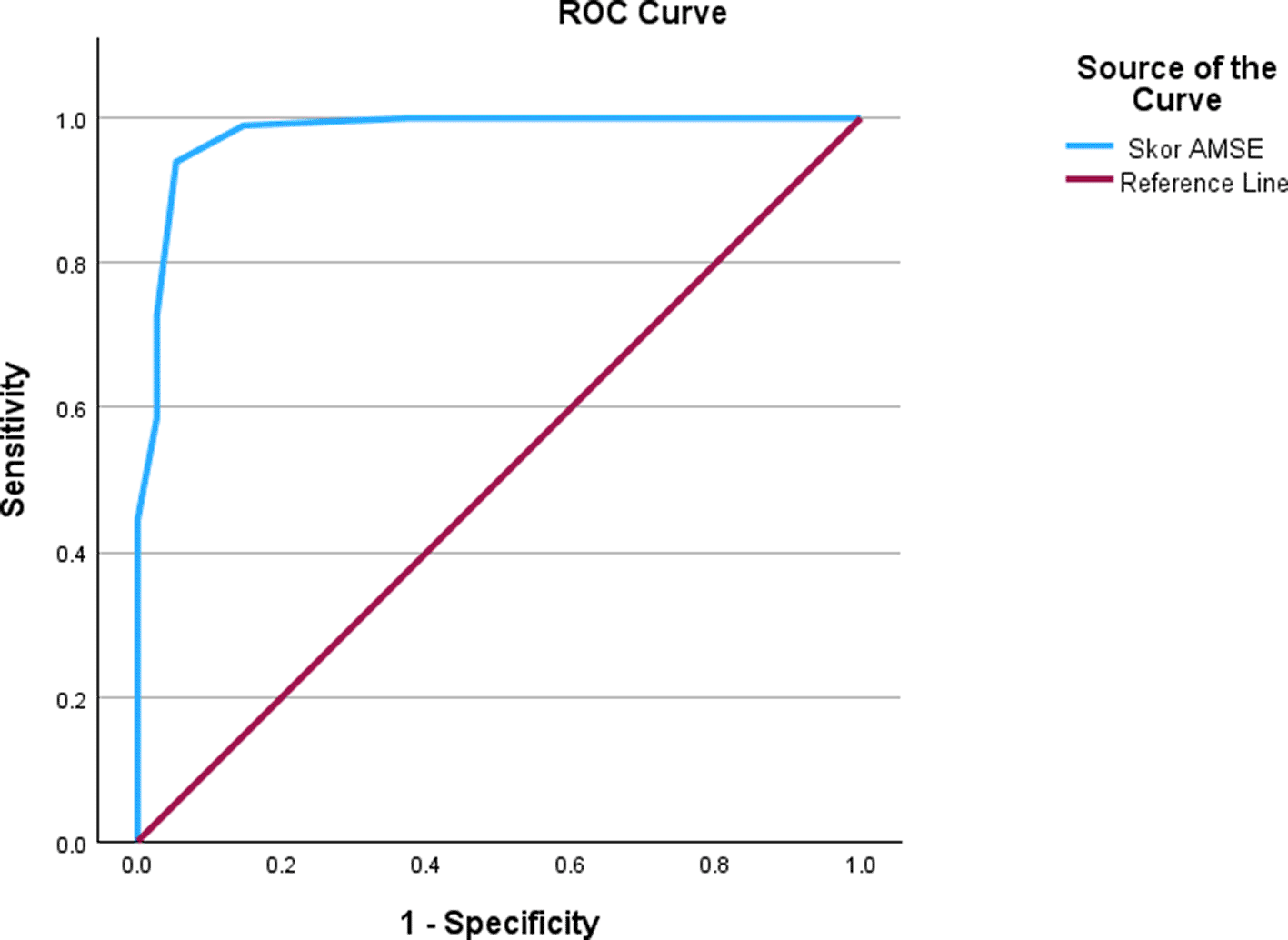
The blue curve represents the AMSE-INA performance across different cut-off scores. The diagonal dashed line represents the reference line (area = 0.5), indicating no discriminatory power. The Area Under the Curve (AUC) was 0.978 (95% CI: 0.958–0.998, p < 0.001), demonstrating outstanding diagnostic accuracy. The optimal cut-off score of ≥6 (Youden’s Index = 0.886) is indicated by the point nearest the top-left corner of the curve.
Age-Stratified Diagnostic Accuracy:
• Children <3 years: The diagnostic accuracy was perfect, with an AUC of 1.00.
• Children ≥3 years: The diagnostic accuracy remained excellent, with an AUC of 0.97 (95% CI: 0.93–0.99).
A cut-off of ≥6 provided an optimal balance for a pre-diagnostic tool in a specialist setting, maximizing specificity (94.7%) and PPV (95.7%) to minimize false positives, while maintaining high sensitivity (88.9%). A cut-off of ≥5 could be considered for high-sensitivity screening in lower-prevalence settings ( Table 3).
| Parameter | Overall sample (N = 174) | Children <3 years (n = 41) | Children ≥3 years (n = 133) |
|---|---|---|---|
| Sn [%, (95% CI)] | 88.9 (84.2–93.6) | 94.1(73.0–99.0) | 87.8 (79.0–93.2)| |
| Sp [%, (95% CI)] | 94.7 (91.3–98.0) | 100 (85.7–100)* | 92.2 (81.2–97.8) |
| PPV [%, (95% CI)] | 95.7 (92.5–98.6) | 100 (79.4–100)* | 94.7 (86.8–98.5) |
| NPV [%, (95% CI)] | 86.6 (81.5–92.7) | 96.0 (80.5–99.3) | 82.5 (69.8–91.3) |
| Accuracy [%, (95% CI)] | 91.4 (87.2–95.6) | 97.6 (87.4–99.6) | 89.5 (83.1–93.6) |
| LR+ (95% CI) | 16.7 (6.4–43.7) | >100 (5.0- ∞) | 11.3 (4.3–28.8) |
| LR- (95% CI) | 0.12 (0.07–0.20) | 0.06 (0.002–0.29) | 0.13 (0.07–0.24) |
This study successfully adapted and validated the AMSE for use in Indonesia. The resulting AMSE-INA is not merely a screening questionnaire but a structured pre-diagnostic examination tool with robust psychometric properties, specifically designed to aid clinical decision-making by specialists in settings where gold-standard instruments like ADOS-2 are inaccessible. The age-stratified analysis offers novel and crucial insights for its application across different developmental stages.
The cultural adaptation process was vital to this success. Modifications like clarifying “pointing toward an object” rather than “at an object” account for local nonverbal communication norms, ensuring behavioral anchors are meaningful.28,30 The development of a detailed, culturally relevant scoring guide based on pre-test feedback was crucial for achieving high inter-rater reliability, transforming the tool from a simple translation into an operational clinical instrument.30
The perfect content validity (CVI = 1.00) is a direct outcome of the rigorous adaptation process and confirms that AMSE-INA is culturally and conceptually appropriate for Indonesia. Key adaptations, such as refining the description of pointing behavior, mirror the essential work done in other cultural validations, ensuring the tool measures ASD symptoms rather than cultural misfit.18,23 This step is non-negotiable; a tool’s ecological validity in a new setting depends on such careful localization of behavioral anchors.
The observed internal consistency (Cronbach’s α = 0.66) warrants a nuanced interpretation that is common in the validation of multidimensional diagnostic tools. A moderate alpha is not indicative of a flawed tool but reflects its intentional design to capture the distinct, heterogeneous domains of ASD as defined by the DSM-5. The AMSE is not a unidimensional scale measuring a single latent trait; it is a structured clinical checklist that operationalizes two relatively independent symptom domains: social-communication deficits and restricted, repetitive behaviors (RRBs). This pattern is consistent with global AMSE validations, in which Cronbach’s alpha typically ranges from 0.61 to 0.80 rather than exceeding 0.90. For instance, studies in Chile and China reported alphas of 0.61 and 0.65, respectively,21,23 while Brazil reported 0.74,20 and Turkey reported 0.80.22
The moderate internal consistency (α = 0.66) is consistent with previous AMSE validations and reflects its intentional design to measure related but distinct clinical domains of ASD (social communication and restricted/repetitive behaviors).18,21,22 The low contribution of the “Pragmatics” item is a known characteristic of the tool across cultures and may relate to the challenge of reliably observing this domain in a brief examination.20,34 The high content validity confirms that Indonesian experts view the AMSE-INA items as fully representative of core ASD symptoms within the local context.
The consistently low item-total correlation for the “Pragmatics of Language” item across studies (including ours) is a known characteristic, likely due to its conditional scoring and the subtle, culturally-influenced nature of pragmatic deficits. Therefore, the internal consistency result should be interpreted as evidence that AMSE-INA’s total score is a composite of semi-independent domains, which is appropriate for its purpose. This stands in clear contrast to its excellent inter-rater and test-retest reliability, which confirms that clinicians can apply the scoring rules for each individual item with very high consistency.
The core strength of AMSE-INA lies in its excellent reliability and high diagnostic accuracy. The inter-rater and test-retest ICCs (>0.95) exceed those of many established clinical tools and indicate that AMSE-INA can yield consistent scores across clinicians and over time, a critical feature for a reliable diagnostic aid.35,36 The AUC of 0.98 is exceptional and aligns with findings from validation studies in Brazil (AUC = 0.99) and Turkey (AUC = 0.98).22,24 This confirms that the adapted instrument retains a near-perfect ability to discriminate between ASD and non-ASD cases within a referral population.
The proposed cut-off of ≥6 is strategically chosen for the tool’s intended use. In a specialist referral clinic where the pre-test probability of ASD is high (57% in this sample), the priority is to confirm the diagnosis with high confidence to justify resource-intensive interventions and family counselling. A specificity of 94.7% and a PPV of 95.7% mean that a child scoring ≥6 has a very high probability of having ASD, effectively “ruling in” the disorder. The high positive likelihood ratio (LR+ = 16.7) signifies a “conclusive” shift in post-test probability.37 This addresses a key need: reducing diagnostic uncertainty and subjective variability when gold-standard tools are absent.14,38
The age-stratified analysis provides one of the most significant and actionable findings of this study. The perfect diagnostic accuracy (AUC = 1.00) in children under 3 years is exceptionally promising. At the recommended cut-off of ≥6, AMSE-INA achieved 94.1% sensitivity, 100% specificity, and PPV in this young cohort. This indicates that when a toddler scores 6 or higher on AMSE-INA, the clinician can be virtually certain of an ASD diagnosis, a powerful asset for early, confident identification.
This superb performance in very young children likely stems from the nature of early ASD symptoms. In toddlers, core deficits (e.g., absent joint attention, lack of response to name, limited social smiling) are often more categorical, severe, and easily observable within a brief clinical interaction.27,39,40 The structured observation of AMSE-INA effectively captures these clear behavioral markers. This finding is crucial for Indonesia, as it suggests AMSE-INA is not just a general tool but one with particular strength in facilitating early detection within specialist settings, directly addressing the national problem of late diagnosis.
For children aged 3 years and older, accuracy remained excellent (AUC = 0.97), though specificity at the ≥6 cut-off was slightly lower (92.2%) than in the younger group. This is clinically understandable. As children develop, ASD symptoms can become more nuanced, variable, and intertwined with comorbid conditions (e.g., ADHD, anxiety) or intellectual disability.26 Some children may develop compensatory strategies that mask core social deficits during brief observations. Furthermore, the “Pragmatics of Language” item, which is more frequently scorable in this verbal older group, has known reliability challenges, potentially contributing to score variability. This does not diminish the tool’s value for older children but underscores that clinical judgment must always integrate the AMSE-INA score with a comprehensive developmental history. A score just below 6 in an older child with strong historical evidence of ASD should not rule out the diagnosis.
The strong correlation with CARS-2 ST supports the convergent validity of AMSE-INA with an established ASD assessment tool. However, future validation against gold-standard instruments like ADOS-2 would strengthen the evidence, though pragmatic constraints in LMICs often limit such comparisons.
AMSE-INA fills a specific niche in Indonesia’s diagnostic ecosystem. Widely-used tools like M-CHAT-R/F are parent-reported and age-restricted, serving as initial population screens.15,41 In contrast, AMSE-INA is a clinician-driven, specialist-level observational tool. It does not replace a comprehensive clinical evaluation but structures and objectifies it, directly addressing the over-reliance on unstructured clinical judgment that can lead to diagnostic delays and errors in resource-limited settings.13,42,43 For a specialist who cannot administer an ADOS-2, the 15-minute AMSE-INA provides a standardized framework for systematically assessing DSM-5 criteria, integrating caregiver reports, and generating a quantifiable score that strongly predicts the final diagnosis.
AMSE-INA’s role must be understood within the existing Indonesian diagnostic landscape. Tools like the M-CHAT-R/F are vital for Level 1 screening in community or primary care settings. In contrast, AMSE-INA is a Level 2, specialist-administered, observational tool. It does not replace a full clinical evaluation but structures and objectifies it. For specialists who cannot access an ADOS-2, AMSE-INA provides a standardized, evidence-based framework for efficiently gathering and synthesizing diagnostic information during a consultation. Its 15-minute administration time makes it feasible in busy public hospital settings, and its zero cost eliminates a major barrier to adoption. It effectively bridges the gap between a positive screening result and a definitive, specialist-level diagnosis.
This study has limitations. The single-center, tertiary-care sample may affect generalizability to primary care or other regions. The gender imbalance, while reflective of global ASD epidemiology and referral bias, indicates a need for conscious effort to validate tools in female populations. While BECD is a well-accepted reference standard, future research directly comparing AMSE-INA with ADOS-2 in Indonesia would strengthen the evidence base. The sample size for the <3 years subgroup, while adequate for initial analysis, warrants replication in a larger, prospective study of toddlers. Furthermore, implementation science research is needed to study the rollout, training, and real-world impact of integrating AMSE-INA into routine practice across different healthcare tiers in Indonesia.
This study provides a comprehensive cross-cultural adaptation and validation of the Autism Mental Status Exam for Indonesia. AMSE-INA is a reliable, valid, and diagnostically accurate pre-diagnostic tool across a wide age range that equips specialists with a structured, rapid, and accurate method for assessing ASD when access to gold-standard instruments is constrained. By providing a standardized framework to guide observation and clinical judgment, it has the potential to significantly improve diagnostic consistency and accuracy, reduce delays, and facilitate earlier intervention pathways for children with ASD in Indonesia and similar resource-limited settings. Its open-access nature and minimal training requirements make it a feasible and scalable solution for bridging the diagnostic gap in specialist care. Its widespread implementation in secondary and tertiary healthcare settings is strongly recommended.
| Views | Downloads | |
|---|---|---|
| F1000Research | - | - |
|
PubMed Central
Data from PMC are received and updated monthly.
|
- | - |
Provide sufficient details of any financial or non-financial competing interests to enable users to assess whether your comments might lead a reasonable person to question your impartiality. Consider the following examples, but note that this is not an exhaustive list:
Sign up for content alerts and receive a weekly or monthly email with all newly published articles
Already registered? Sign in
The email address should be the one you originally registered with F1000.
You registered with F1000 via Google, so we cannot reset your password.
To sign in, please click here.
If you still need help with your Google account password, please click here.
You registered with F1000 via Facebook, so we cannot reset your password.
To sign in, please click here.
If you still need help with your Facebook account password, please click here.
If your email address is registered with us, we will email you instructions to reset your password.
If you think you should have received this email but it has not arrived, please check your spam filters and/or contact for further assistance.

Comments on this article Comments (0)