Keywords
Cerebral palsy, transcranial direct current stimulation, treadmill gait training, accelerometer gait analysis, motor function, range of motion, walking tolerance

Cerebral palsy, transcranial direct current stimulation, treadmill gait training, accelerometer gait analysis, motor function, range of motion, walking tolerance
This version has been substantially revised in response to peer-review comments. The manuscript has been updated to improve methodological transparency, reporting consistency, and technical reproducibility. The intervention protocol has been expanded to include detailed tDCS parameters, including electrode size, current density, stimulation duration, ramp-up/ramp-down procedures, impedance monitoring, and a dedicated table summarizing the stimulation protocol. The gait assessment figure has been replaced with an appropriate illustration of the tri-axial accelerometer system used in the study, and inconsistencies in outcome measure terminology and citations have been corrected.
The statistical analysis has been revised to better reflect the exploratory nature of this feasibility study. Formal hypothesis testing and associated p-values have been removed, and the findings are now presented using an estimation-based approach with Hedges' g effect size estimates. Correspondingly, the Abstract, Results, Discussion, and Conclusion have been revised to avoid inferential claims and to present the findings as preliminary treatment effect estimates. Mechanistic interpretations have been moderated and are now presented as hypothesis-generating. Finally, the manuscript has been carefully edited to correct citation inconsistencies, improve clarity, and enhance overall reproducibility while maintaining open access to the complete de-identified participant-level dataset through the Zenodo repository.
See the authors' detailed response to the review by Umair Ahmed and Romasa Sarwar
Motor control and coordination in pediatric cerebral palsy patients have been improved through various methods. Treadmill training demonstrates efficacy in enhancing gait velocity, balance, and functional independence. Furthermore, transcranial direct current stimulation (tDCS) presents a non-invasive and safe alternative to surgical or pharmacological treatments. Collectively, these interventions have proven effective in advancing gait performance and functional capabilities in this population.1–3
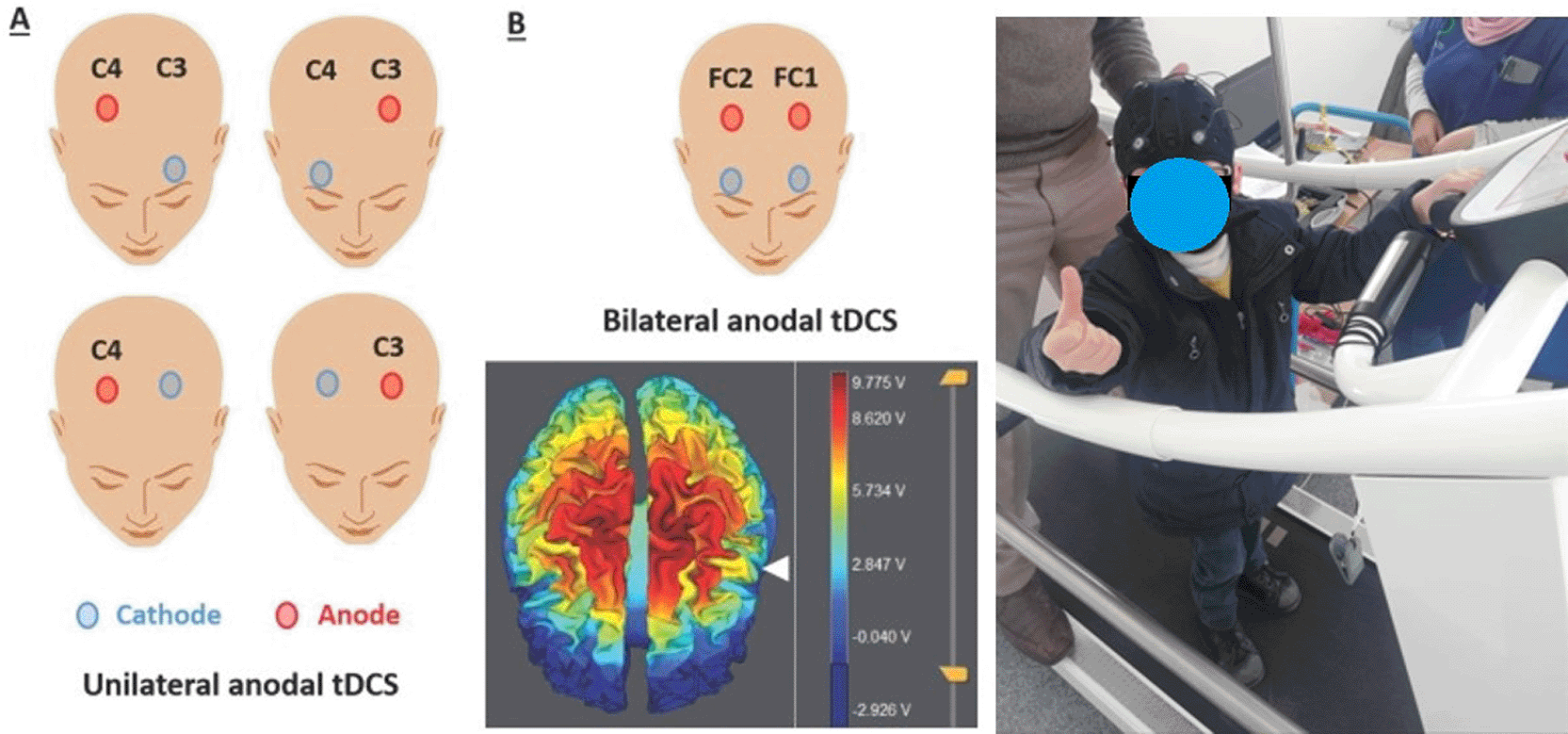
A) shows the conventional tDCS precool done in previous literature, where the anodal stimulation only targeted the lesion side. Whereas B) shows the proposed tDCS stimulation in this study used bilateral anodal tDCS stimulation based on brain mapping data of a bilateral neuromotor deficit associated with reduced activation in bilateral corticospinal and sensorimotor pathways, even in cases of unilateral brain lesions.
The optimal protocol for administering tDCS to pediatric cerebral palsy patients has yet to be established. Contrary to earlier studies that utilized unilateral anodal stimulation targeting the contralateral motor cortex,4–6 a hypothesis suggests that bilateral stimulation of both hemispheres could yield superior outcomes. This premise is supported by Nevalainen et al. (2012),7 who identified through magnetoencephalography (MEG) a widespread disruption in neural excitability within both sensory-motor cortices of children with CP. This bilateral impairment occurs even in cases of unilateral lesions and contributes to reduced activation in corticospinal pathways. Accordingly, subsequent research applying unilateral anodal tDCS to the ipsilateral motor cortex (non-lesioned hemisphere) demonstrated enhancements in motor functions such as reaching skills and movement duration.8,9
As a feasibility study, this pilot research assessed the practicality and initial effects of administering bilateral anodal tDCS concurrently with treadmill training to enhance gait parameters, range of motion, and reduce spasticity in pediatric patients with diplegic CP.
The study protocol received ethical approval based on the Declaration of Helsinki (JUST-420-2019). Besides, this study protocol and procedures were registered retrospectively in the National Clinical Trial Registry (https://clinicaltrials.gov/study/NCT07342660, Registration No.: NCT07342660). This is because the study originally registered within the Erasmus+ program database and the Jordan University of Science and Technology Deanship of Research system. However, internal registration would not be enabling the open access to the study protocol, Hereby, we proceeded with retrospective registration in a public registry and we clearly stated that in the registration database.
This exploratory feasibility case series employed a convenience sample of five children (aged 4–12 years) with spastic diplegic cerebral palsy recruited from the pediatric rehabilitation clinic. Inclusion criteria stipulated a Gross Motor Function Classification System (GMFCS) level of I-III, the ability to walk independently for at least 10 meters, and an IQ greater than 70. Key exclusion criteria included a history of orthopaedic surgery, neurolytic blocks, or Botox injections in the past six months, as well as the presence of concurrent orthopedic impairments, epilepsy, intracranial metal implants, or hearing aids. In addition, voluntary written informed consent was obtained from all participant children by their legal guardians before participation in the study.
While prior research utilizing unilateral anodal tDCS in children with CP positioned a single anode over the C3 or C4 motor cortex and a cathode on the supra-orbital area according to the 10–20 EEG system,5,7,8–11 the present study employed a bilateral montage. Using the 10–10 EEG system for more precise placement, two 4 × 4 cm saline-soaked sponge electrodes (16 cm2 contact area) serving as the anodes were positioned over the left FC1 and right FC2 regions (encompassing motor and frontal areas), while two corresponding cathodes of identical size were positioned over the bilateral supra-orbital areas ( Figure 1).12 A current intensity of 1 mA was delivered, corresponding to a current density of 0.0625 mA/cm2. Stimulation was applied using a 3-second ramp-up and 3-second ramp-down period. Before each session, electrode-skin impedance was checked and maintained below 5 kΩ throughout stimulation to ensure stable current delivery and participant safety, Table 2.
The therapeutic protocol commenced with two treadmill familiarization sessions. This was followed by ten combined treatment sessions, each consisting of a 12-minute interval: a 1-minute warm-up, a 10-minute simultaneous treadmill training and tDCS therapy period, and a 1-minute cool-down. Treadmill speed was initiated at 50% of the child’s maximum ground speed from the 6-Minute Walk Test (6MWT) and was progressively increased based on individual tolerance. Tolerance was gauged by the absence of fatigue complaints, a heart rate not exceeding 70% of maximum, and the maintenance of proper gait without shuffling. Assistants were present to provide support and verbal feedback to promote correct movement patterns. All enrolled participants completed the full intervention protocol, including all ten treatment sessions, without missed sessions, or withdrawals. The bilateral anodal tDCS was delivered continuously throughout the entire 10-minute treadmill training period, and throughout all sessions, children were continuously monitored for discomfort or adverse events, and stimulation was immediately discontinued if any intolerance occurred.
Pre- and post-intervention data were collected, including body function measures like joint range of motion, activity measures such as walking endurance (6MWT), and motor function evaluation (GMFM-IS). Gait parameters in children walking on a 10-meter track were assessed using a tri-axial accelerometer measuring accelerations in x, y, and z axes ( Figure 2). Gait variability was determined using autocorrelation coefficients for each axis, indicating abnormality or normality. This method proved effective for studying gait function maturation in children by analysing deviations in each gait cycle relative to the mean value.13–15
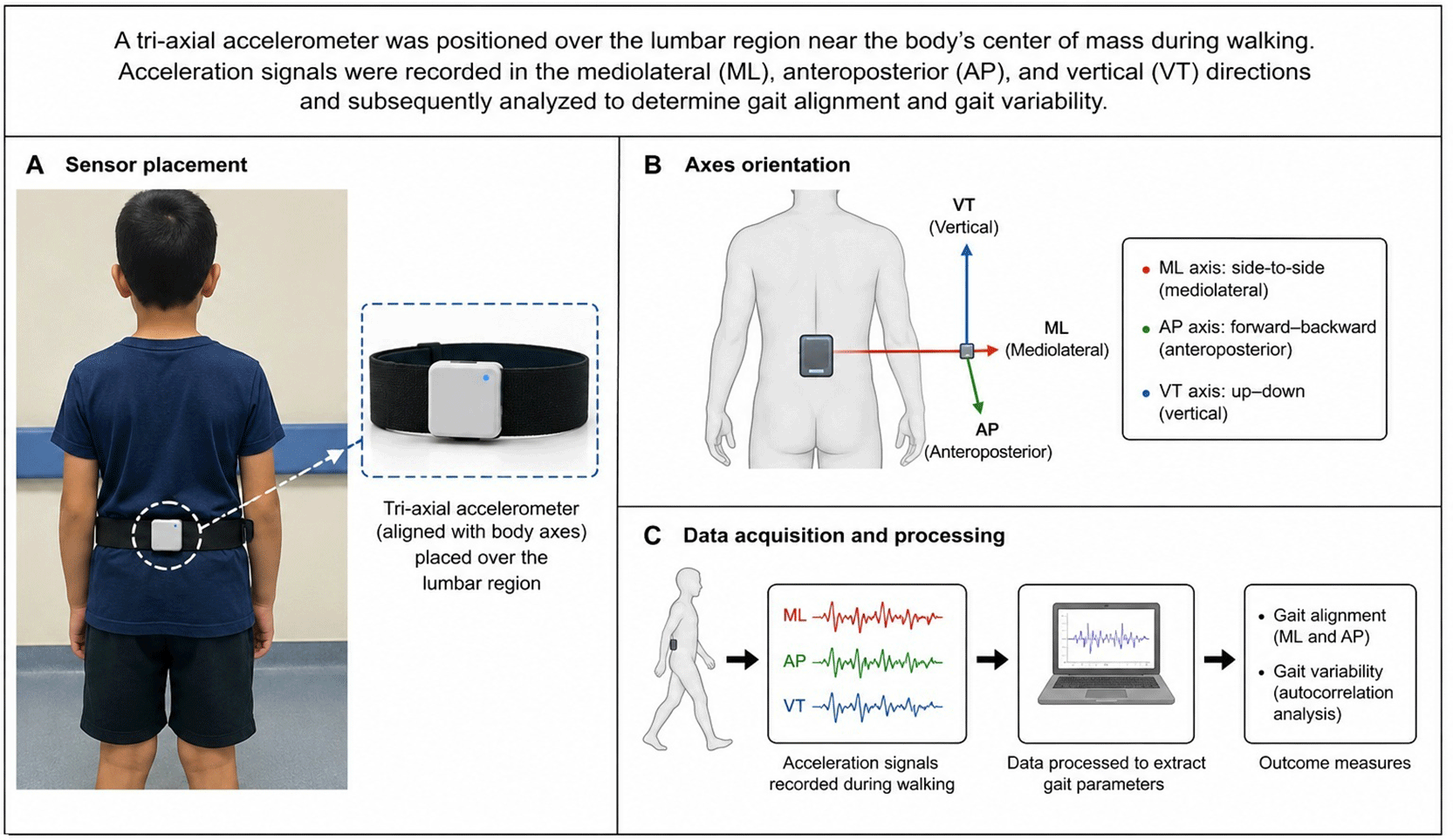
(A) Placement of the wearable tri-axial accelerometer over the lumbar region near the body's center of mass using an adjustable belt. (B) Orientation of the three orthogonal measurement axes: mediolateral (ML), anteroposterior (AP), and vertical (VT). (C) Schematic representation of the data acquisition and processing workflow. Acceleration signals recorded during overground walking were processed to quantify gait alignment (mediolateral and anteroposterior stability) and gait variability using autocorrelation analysis.
Given the exploratory nature of this feasibility study and the extremely small sample size (n = 5), the primary emphasis was placed on descriptive statistics and estimation of treatment effects rather than formal hypothesis testing. Mean ± standard deviation (SD) was calculated for all outcome measures. The magnitude of the intervention effect was estimated using Hedges’ g, which is recommended for studies with small sample sizes,16 because it provides a less biased estimate of standardized effect size. Effect sizes were interpreted according to conventional thresholds as small (0.2), moderate (0.5), and large (0.8). This analytical approach is consistent with current recommendations for pilot and feasibility studies, where estimation of treatment effects and identification of potential clinical signals are considered more informative than significance testing for guiding the design of future definitive trials. Gait outcomes were derived from the average of two 10-m walking trials completed before and after the intervention. The complete dataset is publicly available.17
All five participants completed the ten planned intervention sessions, resulting in 100% adherence and no withdrawals. No stimulation-related side effects or intolerance were reported by the children, parents, or caregivers. The study found that after 10 sessions of bilateral anodal tDCS and treadmill treatment, there was a remarkable improvement in medio-lateral alignment during gait, with a large clinical effect size. However, there were no remarkable changes in anterior-posterior alignment and gait variability. Additionally, walking tolerance or distance travelled, and motor function showed minimal improvement after the treatment sessions. The treatment did have a remarkable impact on left ankle dorsiflexion and right ankle dorsiflexion, with large clinical effect sizes. However, the treatment had minimal effects on the passive range of motion of the left and right hip and knee (See details in Table 1).
Two studies investigated the efficacy of integrating unilateral anodal tDCS with treadmill training to improve gait alignment in pediatric populations with CP.8,10 The first reported improvements in balance functions, and static anterior/posterior, medio/lateral swaying,8 and the second reported improvements in pelvic tilting and distance traveled (6MWT). However, this study applied bilateral anodal tDCS over prefrontal and motor areas influenced by previous brain imaging findings7 of global excitability alterations and reduction in children with CP. Hereby, this study’s approach is reported to be safe with no side effects, and we may assume that this approach would improve results by targeting both sides of the brain.
To start with, the spatiotemporal parameters of gait can be evaluated in three axes: anteroposterior, medio-lateral, and vertical. Tri-axial accelerometers are used to record these dimensions, providing a valid tool for analyzing gait parameters.18
The observed improvement in medio-lateral alignment may be related to mechanisms previously proposed in the literature,14 where they reported that the major advantage of treadmill training over conventional ground training was in the lateral mechanical force the treadmill produced. In other words, the treadmill training will introduce mechanical lateral force to the body, and it was assumed that such mechanical lateral force generated by the treadmill would be behind the improvement in medio-lateral alignment in this study and previous studies.
On the other hand, in terms of gait variability, the gait pattern of children and adolescents with CP is often characterized by increased gait variability15,16 and asymmetry19 compared with their healthy-developed peers. This manifests as stride-to-stride fluctuations. Normally, the fluctuations are relatively small in terms of the coefficient of variation in the gait speed and stride time.20,21 Hereby, measuring gait variability is considered important because it serves as a sensitive and clinically relevant parameter in the evaluation of gait, mobility, fall risk, and the responses to therapeutic interventions.21 However, due to a lack of studies examining the changes in gait variability after the tDCS and treadmill treatments, this study’s results would be the first in this field and would add preliminary data that there are no remarkable improvements in gait variability post-tDCS treatment. Nevertheless, there is a crucial need for further studies in this regard.
Rehabilitation specialists use GMFM to measure motor function in children with CP for intervention effectiveness.22 This study finding comes from Grecco et al. (2015),10 who examined the effect of tDCS and treadmill gait training on 24 children with CP and found no significant changes in gross motor functions. This is because previous studies showed that significant improvements in gross motor function may require more time and intensive treatment, with one study reporting such improvement after 6 weeks18 and 12 weeks of intervention.23 This highlights the importance of further research to understand the time and intensity required for interventions to have a significant impact on gross motor function in children with CP.
No research has explored how combining tDCS with treadmill training impacts passive ROM in children with spastic CP. The observed large treatment effect for ankle dorsiflexion may reflect the combined influence of treadmill training and bilateral anodal tDCS. Previous study showed that treadmill training can reduce ankle joint stiffness and improve heel strike in children with CP.24 Besides, Treadmill training has been linked to increased anterior tibialis muscle activity, leading to improved ankle dorsiflexion.25 In addition, tDCS could temporarily reduce spasticity in children with CP.26 Hereby, the combined effect of tDCS and treadmill training may lead to improved ankle dorsiflexion by reducing joint stiffness and muscle spasticity.
This pilot study successfully demonstrated that the application of bilateral anodal transcranial direct current stimulation (tDCS) concurrently with standard treadmill gait training is both a safe and feasible intervention for children diagnosed with diplegic CP. This study effectively fulfills the role of an essential pre-clinical or proof-of-concept study, as recommended by medical research councils before proceeding to a large-scale RCT, which is recommended and crucially needed. However, this study is still an exploratory single-group feasibility study, the observed treatment effects should be interpreted cautiously and cannot be attributed solely to bilateral anodal tDCS or treadmill training. Future randomized controlled trials are required to determine treatment efficacy and to elucidate the mechanisms underlying the observed improvements.
| Views | Downloads | |
|---|---|---|
| F1000Research | - | - |
|
PubMed Central
Data from PMC are received and updated monthly.
|
- | - |
Provide sufficient details of any financial or non-financial competing interests to enable users to assess whether your comments might lead a reasonable person to question your impartiality. Consider the following examples, but note that this is not an exhaustive list:
Sign up for content alerts and receive a weekly or monthly email with all newly published articles
Already registered? Sign in
The email address should be the one you originally registered with F1000.
You registered with F1000 via Google, so we cannot reset your password.
To sign in, please click here.
If you still need help with your Google account password, please click here.
You registered with F1000 via Facebook, so we cannot reset your password.
To sign in, please click here.
If you still need help with your Facebook account password, please click here.
If your email address is registered with us, we will email you instructions to reset your password.
If you think you should have received this email but it has not arrived, please check your spam filters and/or contact for further assistance.

Comments on this article Comments (0)