Keywords
Deforestation, Poverty, Livelihood, Welfare, Social protection, Social policy, Systematic review

This article is included in the Ecology and Global Change gateway.
Deforestation, Poverty, Livelihood, Welfare, Social protection, Social policy, Systematic review
Indonesia possesses one of the largest tropical forests in the world, yet over the past three decades it has experienced high rates of deforestation (Badan Pusat Statistik RI, 2023; Margono et al., 2014). The primary drivers of deforestation include land conversion for oil palm plantations, mining, infrastructure development, and agricultural expansion (Austin et al., 2019; Gaveau et al., 2016). Data from the Ministry of Environment and Forestry indicate that Indonesia’s net deforestation reached approximately 462,500 hectares per year between 2018 and 2020 (KLHK, 2025). This high rate of deforestation not only threatens biodiversity and increases carbon emissions but also directly affects the socio-economic livelihoods of forest-dependent communities (Sunderlin et al., 2005; Wunder, 2001).
The impact of deforestation on socio-economic outcomes is complex and often contradictory. On one hand, oil palm expansion has been shown to increase regional income and create employment at the macro level (Budidarsono & Susanti, 2013; Edwards, 2019). Several studies have even found poverty reduction in districts with large oil palm areas (Edwards, 2019). On the other hand, deforestation can also lead to the loss of local communities’ access to forest resources, which have long served as livelihood buffers, particularly during times of crisis (Dewi et al., 2005; Mansourian et al., 2017). Poor households, women, and indigenous communities are often the most affected because they possess limited adaptive capacity (Colfer et al., 2016).
The socio-economic outcomes relevant to deforestation encompass five main domains: poverty, livelihoods, welfare (income, consumption, food and health access), social policy, and social protection (Bebbington, 1999; Scoones, 2013). Poverty is measured not only by income but also by vulnerability and lack of access to basic services (Sen, 1999). Livelihoods comprise the assets, activities, and strategies that households employ to survive (Chambers & Conway, 1992). Welfare includes both monetary and non-monetary dimensions, such as nutritional status and health access (Ravallion, 2012). Social policy and social protection refer to state interventions designed to protect communities from risks and poverty (Bappenas RI, 2014; Devereux & Sabates-Wheeler, 2004).
Development programmes linked to deforestation in Indonesia, such as the national food estate and REDD+ projects, have often been criticised for disregarding local communities’ rights and failing to involve them in decision-making processes (Li, 2011; Peluso & Vandergeest, 2011). The food estate on peatlands in Central Kalimantan, for instance, has been assessed as failing to achieve its food production targets while simultaneously causing ecosystem degradation and the displacement of indigenous livelihoods (Baringbing, 2021; Marwanto & Pangestu, 2021). Meanwhile, REDD+ projects in various regions have been reported to trigger social exclusion and agrarian conflicts because their incentive mechanisms do not reach marginalised groups (Howson & Kindon, 2015). These phenomena demonstrate that social protection policies that are not adaptive to deforestation dynamics may create new risks.
Conversely, locally based approaches and traditional wisdom have shown potential for successfully balancing natural resource use and community welfare. Agroforestry, for example, has proven to be more economically profitable than swidden cultivation while simultaneously reducing pressure on forests (Roshetko et al., 2007; Van Noordwijk et al., 2020). Chainsaw buyback programmes combined with entrepreneurship have succeeded in shifting some illegal loggers towards alternative businesses (Fawzi et al., 2020). Locally based peatland management in Riau has also shown that communities can utilise peat ecosystems sustainably provided hydrological functions are maintained (Armanto et al., 2025; Syahza et al., 2020). Participatory methods such as photovoice have also proven effective in capturing the perspectives of women, who are often overlooked in development narratives (Bennett & Dearden, 2014; Castleden & Garvin, 2008).
Although numerous studies have examined the relationship between deforestation and socio-economic aspects, most remain fragmented, focusing on only one or two outcomes and concentrated in Sumatra and Kalimantan (Merten et al., 2020; Obidzinski et al., 2012). Eastern Indonesian regions such as East Nusa Tenggara, Maluku, and Papua remain severely under-represented in the literature, even though their ecological and institutional characteristics differ (Agung et al., 2014; Stomph, 2017). Consequently, a comprehensive and systematic understanding of how deforestation relates to all five socio-economic outcomes simultaneously across Indonesia is still lacking. A systematic literature review is therefore essential to synthesise the available evidence, identify general patterns and contradictions, and provide a robust foundation for policy recommendations (Moher et al., 2009; Pullin & Stewart, 2006).
Based on the above discussion, this study poses one primary research question: “How does deforestation relate to socio-economic outcomes including social policy, social protection, welfare, poverty, and livelihoods in Indonesia?” This question is designed to bridge the gap between studies that view deforestation from an economic growth perspective and those that highlight social justice and the protection of vulnerable communities (Angelsen, 2009; Cramb et al., 2015). Answering this question will help determine whether the relationship is uniform or varies according to geographical context, type of exposure, and population characteristics (Larson, 2010; Ribot & Peluso, 2003).
The objectives of this systematic literature review are as follows: to identify, extract, and synthesise empirical evidence from studies examining the relationship between deforestation and poverty, livelihoods, welfare (income, consumption, food access, health), social policy, and social protection in Indonesia (Petticrew & Roberts, 2008); to identify general patterns, contradictions, and research gaps, including variations by geographical region (Sumatra, Kalimantan, Java, Sulawesi, Nusa Tenggara, Maluku, Papua), type of exposure (oil palm, food estate, REDD+, illegal logging, mining, fire), and population groups (gender, formal/informal status, indigenous communities) (Brockhaus et al., 2014; Myers et al., 2017); and to provide evidence-based policy recommendations for integrating social policy and social protection into forest management and conservation programmes in Indonesia, while also outlining an agenda for further research to address existing study limitations (Gallemore et al., 2015; Pirard et al., 2023).
This study uses a systematic literature review (SLR) design that follows the guidelines of PRISMA 2020. SLRs were chosen because they allow for the systematic and transparent identification, evaluation, and synthesis of evidence (Moher et al., 2009). This design is suitable for answering complex research questions and involves different types of socio-economic outcomes from various study designs (Petticrew & Roberts, 2008). The PRISMA flowchart used in this study is presented in Figure 1.
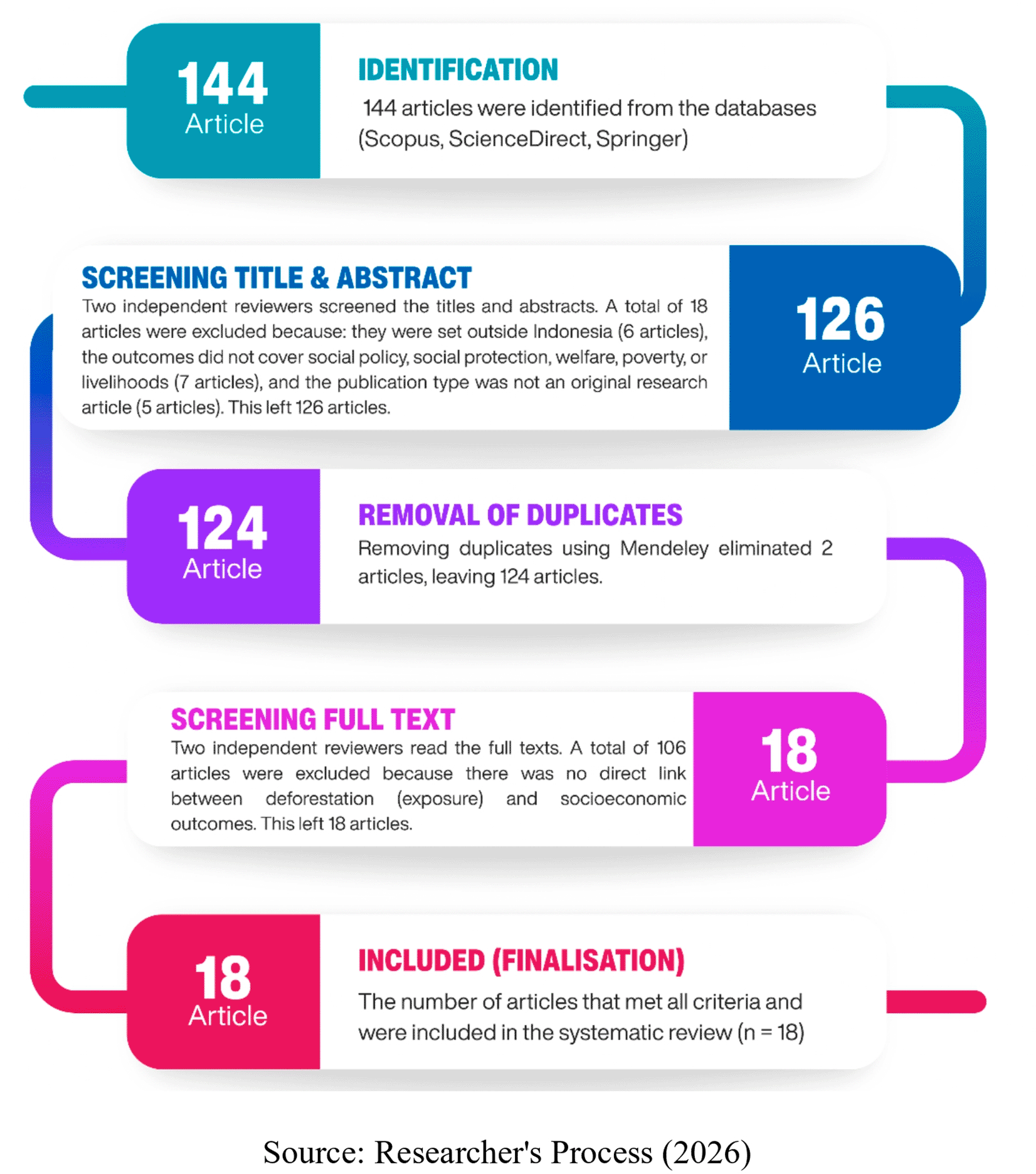
The eligibility criteria in this systematic review are determined based on the PEO (Population, Exposure, Outcome) framework. The PEO framework was chosen because the research questions did not involve a comparison group, suitable for observational and qualitative studies in the environmental and social fields. Full details of the inclusion and exclusion criteria are presented in Table 1.
Population: A study that includes the human population in Indonesia, including households, farmers, forestry workers, indigenous communities, women, the poor, and people living in areas with deforestation or forest-related programs.
Exposure: Deforestation, forest loss, or land use change as the main variables. These exposures can be in the form of oil palm expansion, food estates, REDD+, illegal logging, small-scale mining, forest fires, or post-disaster relocation.
Outcome: At least one socio-economic outcome, which includes social policy, social protection, welfare, poverty, or livelihood. Studies that only report environmental outcomes (such as carbon stocks, biodiversity) or macroeconomic outcomes (such as national GDP) without any correlation to socio-economic aspects are excluded.
In addition to the three PEO components above, the eligibility criteria also include the following aspects. The databases used are only Scopus, ScienceDirect, and Springer. The year of publication is limited from 2016 to 2026. The accepted language is English. Document types included were only original empirical studies articles, while books, book chapters, proceedings, review articles, editorials, commentaries, systematic reviews, and meta-analyses were excluded. Full text access must be open access (available free of charge immediately after publication). The research location must be in Indonesia.
Literature searches were conducted on three electronic databases: Scopus, ScienceDirect, and Springer. These three databases were chosen because they have a wide range of environmental, social, and policy sciences, and provide adequate filter features. The last search date was March 31, 2026. Details of the three databases along with the date of access are presented in Table 2.
| No | Database | Last search dates |
|---|---|---|
| 1 | Scopus | 31 March 2026 |
| 2 | ScienceDirect | 31 March 2026 |
| 3 | Springer | 27 March 2026 |
The search strategy was developed based on the PEO (Population, Exposure, Outcome) framework. For the Scopus database, the search strategies used are as follows: (TITLE-ABS-KEY (deforestation OR “forest loss” OR “land use change”) AND TITLE-ABS-KEY (“social policy” OR “social protection” OR welfare OR poverty OR livelihood) AND TITLE-ABS-KEY (Indonesia)) AND PUBYEAR >2015 AND PUBYEAR <2027 AND (LIMIT-TO (DOCTYPE, “ar”)) AND (LIMIT-TO (LANGUAGE, “English”)) AND (LIMIT-TO (OA, “all”)). The three blocks are combined using the Boolean AND operator. The filters applied include the year of publication (2016–2026), language (English), document type (research article), and open access (open access).
Study selection was conducted in three main stages by two independent reviewers (Author 1 and Author 2). The first stage is title and abstract screening based on the eligibility criteria in Table 1. The second stage is the removal of duplicates using Mendeley software. The third stage is full-text screening to decide on the final inclusion. Any discrepancies between the two reviewers are resolved through discussion or involve a third reviewer if no consensus is reached. This selection process does not use automation tools. Complete study selection flow, including the number of studies identified (n = 144), after title and abstract screening (n = 126), after duplicate removal (n = 124), after full-text screening (n = 18), and number of included studies (n = 18).
Data from each study that met the criteria were extracted using a pre-designed structured form. The form includes information about the identity of the study (author, year, title, journal), population characteristics (location, sample size, demographic group), exposure (type of deforestation, duration, intensity), outcome (reported socio-economic domain, specific indicators, measurement methods), key findings (direction of relationship, effect size if any, p-value or confidence interval), as well as funding sources. Extraction was carried out by two reviewers independently, then the results were compared to ensure consistency. If there is unclear or missing data, the study authors are contacted by email a maximum of twice.
Due to the high heterogeneity in the study design, exposure type, and outcomes measured, no statistical meta-analysis was performed. Instead, the thematic synthesis method developed by Thomas & Harden (2008) is used. The thematic synthesis process consists of three stages. The first stage is line-by-line coding of the results of each study. The second stage is the formation of a descriptive theme by grouping similar codes into initial themes that are still close to the original text. The third stage is the development of an analytical theme that goes beyond the original study content to generate new interpretations, answer research questions, and identify patterns and contradictions.
To explore heterogeneity, a subgroup analysis was conducted based on three characteristics: geographical area (Sumatra, Kalimantan, Java-Bali, Sulawesi, Nusa Tenggara, Maluku-Papua), type of exposure (oil palm, food estate, REDD+, illegal logging, mining, fires, general land cover change), and study design (cross-sectional, longitudinal, qualitative, mixed methods). The results of the analysis of these subgroups are integrated into a thematic synthesis to uncover variations in relationships between contexts. Sensitivity analysis was not performed because there was no meta-analysis; Instead, findings from studies with high risk of bias were discussed separately and compared with findings from higher-quality studies.
A total of 18 articles met the eligibility criteria and were included in this systematic review. In summary, most of the studies are located in Sumatra and Kalimantan (Chrisendo et al., 2020; Duker et al., 2019; Edwards, 2019; Hasudungan et al., 2024; Herwirawan et al., 2017; Howson, 2018; Pramono et al., 2021; Sulistyorini et al., 2025), some in Java (Fattah et al., 2025; Garcia-Fry et al., 2022; Rahman et al., 2017; Widianingsih et al., 2024), and the rest cover national areas or inter-island comparisons (Edwards, 2019; Fattah et al., 2025; Pramono et al., 2021; Sulistyaningrum & Nasution, 2026; Syahza et al., 2020). Only a few studies include Nusa Tenggara and Papua (Herwirawan et al., 2017; Pramono et al., 2021). The dominance of studies in Sumatra and Kalimantan reflects the intensity of deforestation and expansion of oil palm plantations on the two islands, but also indicates the limited representation of eastern Indonesia. The complete characteristics of each study are presented in Table 3.
| No | Author(s) (Year) | Location | Study design | Population (N) | Main exposure | Main outcome | Analytical method |
|---|---|---|---|---|---|---|---|
| 1 | Sulistyaningrum & Nasution (2026) | Indonesia (national) | Quantitative | Macro: I-O table 185 sectors; Micro: 5,445 forestry worker households | Forest degradation (TEV loss IDR 683 billion) | GDP, income, employment; health access, financial access, food security | Input-Output analysis & Probit regression |
| 2 | Widianingsih et al. (2024) | Tarumajaya, Bandung, West Java | Qualitative (case study) | Village community, village government, BPD, PKK, farmers, etc. (sample size not specified) | Land use change (proposed utilization of land from PT Lonsum, PTPN VIII, Perhutani) | Social policy, social protection (land access), welfare | Case study, FGD, in-depth interviews, field observation |
| 3 | Hasudungan et al. (2024) | Sumatra and Kalimantan | Mixed methods | 50 empirical field studies +4 key informants | Oil palm expansion, FDI, changes in livelihood assets (natural, financial, human, social, physical capital) | Food security, well-being | Systematic literature review + semi-structured interviews |
| 4 | Garcia-Fry et al. (2022) | Cangkringan, Sleman, Yogyakarta | Quantitative (microsimulation OLUTM) | 41 interviewed residents, synthetic population of 820 agents | Post-disaster relocation and land use-transport change (agronomic urban boundary) | Livelihood diversification, mobility efficiency, travel cost savings | Operational land use and transport microsimulation (OLUTM) |
| 5 | Edwards (2019) | 133 rural districts outside Java | Quantitative (difference-in-difference IV) | 133 districts; SUSENAS, SAKERNAS, PODES data | Oil palm expansion (change in district oil palm area share 2000–2015), instrumented with agro-climatic suitability (GAEZ) | District poverty, per capita expenditure, wages, agricultural employment, government revenue/expenditure, infrastructure, deforestation, fire hotspots, conflict, malaria, respiratory infection | Difference-in-difference instrumental variables |
| 6 | Chrisendo et al. (2020) | Jambi, Sumatra | Quantitative (panel data) | 701 farm households (2012 and 2015 surveys) | Oil palm cultivation (land use change from rubber to oil palm), changes in gender labor division | Nutritional status (dietary diversity score, calories, vitamin A, zinc, iron), household expenditure, off-farm work, gender roles | Random effects panel, SUR, logit |
| 7 | Herwirawan et al., 2017 | North Central Timor, East Nusa Tenggara (border with Timor-Leste) | Quantitative | 58 border villages | Land use/land cover change 2000–2015 (deforestation, conversion to shrub and savanna, settlement expansion) | Patterns of land cover change, relationship with poverty and population | Landsat visual interpretation, transition matrix, Spearman correlation |
| 8 | Fattah et al. (2025) | Five regions (Sumatra, Java-Bali, Kalimantan, Sulawesi, Papua-Maluku-Nusa Tenggara) | Quantitative (nonparametric truncated spline regression) | Longitudinal data 2015–2023, 45 observations (5 regions × 9 years) | Rural migration, land use change, village fund allocation | Agricultural sector growth, rural poverty, rural unemployment | Truncated spline nonparametric regression with longitudinal data |
| 9 | Yeny et al. (2022) | Four villages in ex-PLG area, Pulang Pisau, Central Kalimantan | Mixed methods | 120 respondents + FGD with experts | Food Estate plan on degraded peatland (land conversion, irrigation/canals, mechanization, exotic species introduction, changes in farming methods) | Identification of socio-economic and natural resource risks | Field survey, interviews, FGD, literature study, spatial analysis, qualitative risk analysis (AS/NZS 4360) |
| 10 | Rahman et al. (2017) | Mount Salak, Bogor, West Java | Qualitative & quantitative | 20 agroforestry farmers +20 swidden farmers (total 40) + FGD + observation at 25 locations | Farming system type: agroforestry (durian-cassava, teak-yam-maize) vs swidden (upland rice, maize); social and capacity factors | Economic profitability (NPV, B/C ratio), social potential, pressure on forests | RRA, FGD, semi-structured interviews, field observation, cost-benefit analysis |
| 11 | Sulistyorini et al. (2025) | Kinipan, Lamandau, Central Kalimantan (Dayak Tomun community) | Qualitative | Population not surveyed; data from documentary narrative (12,961 views) | Deforestation due to oil palm expansion (2004–2005), conversion of customary forest, agrarian conflict, criminalization of customary leader | Impacts of deforestation: physical environment, social conditions, ecological wisdom | Document analysis, ecocriticism, place dependence |
| 12 | Pramono et al. (2021) | 14 BRI project clusters across Indonesia | Qualitative (perspective) | No individual population; FDI projects and affected communities | Surge in Chinese investment (BRI): infrastructure, resource extraction, coal power plants, land conversion, pollution, emissions, Omnibus Law | Identification of socio-ecological risks and governance challenges | Risk analysis, policy review, spatial analysis (NDVI, SST) |
| 13 | Wisnaeni & Najib (2025) | Pulang Pisau and Gunung Mas, Central Kalimantan | Qualitative (doctrinal and non-doctrinal legal research) | Dayak indigenous communities and local populations; informants from environmental agency, customary leaders, academics, WALHI, legal aid | Food Estate implementation as National Strategic Project: peatland conversion, centralized decision-making, marginalization of local government, neglect of indigenous rights (no FPIC) | Legal, ecological, and social impacts | Semi-structured interviews, document analysis, literature study |
| 14 | Fawzi et al. (2020) | Gunung Palung National Park, West Kalimantan | Quantitative & qualitative (intervention program) | 50 logging couples (46 responded to questionnaire); monitoring in 35 sub-villages | Chainsaw buyback and entrepreneurship program (chainsaw purchase IDR 4 million + capital IDR 6 million + business assistance) | Transition to sustainable alternative livelihoods, change in number of active loggers | Field monitoring, questionnaires, interviews, descriptive statistics |
| 15 | Howson (2018) | Sungai Lamandau, West Kotawaringin, Central Kalimantan | Qualitative (ethnography) | Three groups (Mendawai, Javanese transmigrants, Banjarese rubber tappers); 15–40 households per village | REDD+ implementation: cooperative formation, alternative livelihood programs, closure of protected areas and buffer zones, entry permit system, pro-environment behavior incentives, jelutung seedling distribution | Identification of hidden (slippery) violence, exclusion of marginal groups | Ethnography, semi-structured interviews, observation (9 months) |
| 16 | Duker et al. (2019) | Meru Betiri, Indonesia; Bale Mountains, Ethiopia | Qualitative (extensive case study) | Indonesia: 32 interviews; Ethiopia: 57 interviews + FGD | Involvement in or being affected by REDD+ projects that restrict access to land, forest, and resources previously used for smallholder agriculture, grazing, or forest product collection | REDD+ benefits fail to replace lost livelihoods from smallholder agriculture and forest access; reduced land access, inadequate economic benefits, unstable funding, social conflict | Semi-structured interviews, FGD, validation, case study |
| 17 | Syahza (2020) | Riau Province | Qualitative & quantitative | Coastal and rural communities on peatlands (farmers, plantation workers, fishers, households) – sample size not specified | Peatland utilization for agriculture, plantations (oil palm, coconut, rubber, sago, coffee, cocoa, areca nut), forestry, settlements, economic activities; risks of fire, flood, drought, land subsidence, sea intrusion, biodiversity loss, carbon emissions | Economic contribution of peatlands to community welfare, importance of maintaining ecological functions | Thematic map overlay, socio-economic survey, Rapid Rural Appraisal (RRA), multiplier effect analysis |
| 18 | Spiegel (2020) | Tewang Pajangan, Gunung Mas, Central Kalimantan | Qualitative participatory (photovoice) | 12 participants (6 women +6 men); focus on 6 women | Socio-ecological changes: small-scale gold mining, deforestation, floods, land degradation, reduced agricultural space, declining forest resources and traditional livelihoods; photovoice intervention | Local knowledge, community identity, anxiety about the future, intergenerational relations, perceptions of home, work, and ecological loss | Photovoice, interviews, group discussions, observation, gender mapping |
In terms of research design, quantitative studies dominate with cross-sectional and longitudinal approaches (Chrisendo et al., 2020; Edwards, 2019; Fattah et al., 2025; Herwirawan et al., 2017; Sulistyaningrum & Nasution, 2026). Qualitative studies with case study, ethnography, and photovoice approaches are also quite numerous (Duker et al., 2019; Howson, 2018; Spiegel, 2020; Sulistyorini et al., 2025; Widianingsih et al., 2024; Wisnaeni & Najib, 2025; Yeny et al., 2022). Some studies used mixed methods, such as Hasudungan et al. (2024), Garcia-Fry et al. (2022), and Fawzi et al. (2020). This diversity of designs enriches the understanding of the relationship between deforestation and socio-economic outcomes from various perspectives.
The most studied type of deforestation exposure is oil palm expansion (Chrisendo et al., 2020; Edwards, 2019; Hasudungan et al., 2024; Howson, 2018; Sulistyorini et al., 2025). National food estate programs and REDD+ have also received significant attention (Duker et al., 2019; Howson, 2018; Wisnaeni & Najib, 2025; Yeny et al., 2022). Several studies examined deforestation due to illegal logging, small-scale mining, forest fires, and land cover change in general (Fawzi et al., 2020; Herwirawan et al., 2017; Pramono et al., 2021; Spiegel, 2020; Sulistyaningrum & Nasution, 2026). The most commonly reported socio-economic outcomes were poverty and livelihoods, followed by welfare (income and food security), while social policies and social protection were less often measured directly.
Some studies have found that oil palm expansion is associated with a reduction in poverty rates at the district level. Edwards (2019) reports that a 10 percentage point increase in oil palm planted area from 2000 to 2015 is associated with a 6.1 percentage point faster poverty reduction and a growth in per capita household expenditure of about 9 percent faster than in districts with smaller oil palm areas. These findings are reinforced by Fattah et al. (2025) which shows that village funds consistently reduced poverty and unemployment in almost all regions of Indonesia from 2015 to 2023, even though land-use changes have a negative impact on the growth of the agricultural sector.
However, the aggregate findings hide a sharp inequality at the household level. Hasudungan et al. (2024) reports that although some households have experienced increased income and market access from palm oil expansion in Sumatra and Kalimantan, the poor face higher food insecurity, decreased nutritional diversification, and increased dependence on food purchases. Chrisendo et al. (2020) reinforces these findings by showing that in Jambi Province, oil palm adoption by smallholders is positively correlated with diet quality through increased income, but this effect is highly uneven. Households that are able to adapt tend to be more prosperous, while vulnerable groups (landless farmers, women, and poor households) actually experience a decrease in welfare. Herwirawan et al. (2017) adds that in the semi-arid border region of East Nusa Tenggara, deforestation is not significantly correlated with poverty or village population, indicating that the relationship between the two variables is highly dependent on the local ecological and socio-economic context.
Fattah et al. (2025) reports that Java-Bali shows the highest policy effectiveness in reducing poverty, while Papua-Maluku-Nusa Tenggara faces the greatest institutional challenges. These differences reflect the quality of governance, access to infrastructure, and development history that differ between regions. In areas with weak institutions, the positive impacts of deforestation (if any) are more difficult to feel by the poor.
Deforestation has a profound impact on people’s livelihoods. Sulistyaningrum & Nasution (2026) reports that forest degradation in Indonesia caused GDP losses of around IDR 822.8 billion, income losses of IDR 260.6 billion, and the loss of about 4,735 jobs in the forestry sector in 2022. The most dramatic impact was seen in indigenous communities. Sulistyorini et al. (2025) documents how deforestation due to the expansion of oil palm plantations in the Dayak Tomun customary forest area, Central Kalimantan, from 2004 to 2005 has transformed forest landscapes into plantations, depriving communities of access to forest resources that are the basis of traditional livelihoods. Spiegel (2020) using photovoice methods on six women in Central Kalimantan shows that small-scale gold mining and deforestation have reduced agricultural space, disrupted forest resources, and forced changes in often unfavorable and unstable livelihoods.
On the other hand, communities are responding to deforestation by diversifying their livelihoods. Garcia-Fry et al. (2022) reports that after the relocation due to the 2010 Merapi eruption in Yogyakarta, around 63 percent of farmers diversified their livelihoods, and around 94 home business entrepreneurships (HBE) were formed. This diversification reduces transportation expenditure to monthly income from around 21–26 percent to 11–18.4 percent, as well as lowers CO2 emissions. Rahman et al. (2017) shows that agroforestry based on durian-cassava and teak-maize yams has a higher NPV value and benefit-cost ratio than the slash and slash-burn system (swidden). Agroforestry also strengthens land use rights, increases social prestige, strengthens social cohesion, and creates job opportunities.
Intervention programs designed to divert livelihoods away from destructive activities have also shown mixed results. Fawzi et al. (2020) reports that the chainsaw buyback and entrepreneurship program in Gunung Palung National Park succeeded in diverting 50 poaching pairs to 90 new businesses with income equivalent to the regional minimum wage. However, the business failure rate reached 33 percent and the rate of back to logging was only 6 percent. The problem is that the number of active loggers in the national park has not decreased significantly as new loggers fill the gap. Howson (2018) and Duker et al. (2019) also criticize alternative livelihood programs in REDD+ projects that do not take into account social and gender dynamics, thus exacerbating the exclusion of marginalized groups.
Welfare in the context of deforestation includes both monetary and non-monetary dimensions. Evidence from 18 studies shows a systematic trade-off between increased monetary income and a decrease in non-monetary aspects of welfare, especially in vulnerable groups. Hasudungan et al. (2024) reports that in Sumatra and Kalimantan, oil palm expansion increases income and cash flows for some households, but poor groups experience food insecurity, decreased nutritional diversification, increased dependence on food purchases, and risk of malnutrition. Chrisendo et al. (2020) found that in Jambi, oil palm adoption was positively correlated with diet quality through increased income, while women’s off-farm work was also positively correlated with nutrition. However, this positive effect is only enjoyed by households that have adequate assets and adaptive capacity.
Sulistyaningrum & Nasution (2026) shows that informal workers in the forestry sector have lower access to banking services and food security than formal workers, but access to health services does not differ statistically significantly. These findings indicate that social protection in Indonesia still does not adequately reach informal workers in the forestry sector. Pramono et al. (2021) reports that the surge in Chinese foreign investment through the Belt and Road Initiative (BRI) project in Indonesia has led to land clearing, habitat fragmentation, water and air pollution, carbon emissions, and risks to indigenous peoples and local livelihoods.
On the other hand, a local wisdom-based approach shows the potential to improve well-being without sacrificing ecological functions. Syahza et al. (2020) reports that the use of peatlands in Riau Province for agriculture, plantations, forestry, and other economic ventures makes a major contribution to the welfare of coastal and rural communities, as long as it is done carefully by maintaining hydrological, biodiversity, and carbon storage functions. Rahman et al. (2017) also confirms that agroforestry is not only more economically profitable but also reduces pressure on the surrounding forests.
Top-down social and social protection policies have shown generally disappointing results. The national food estate program in Central Kalimantan’s peatlands is the most obvious example. Yeny et al. (2022) reports that food estate development has a medium to high level of risk, with community activities and changes in farming methods as the highest sources of risk. Wisnaeni & Najib (2025) reinforces this finding with a profound ecological-legal critique. The food estate program is considered to have failed to achieve food production targets, caused deforestation and peat degradation, increased carbon emissions, displaced the livelihoods of the Dayak indigenous people, and violated the principle of constitutional decentralization. The absence of the Free Prior and Informed Consent (FPIC) process is one of the root problems.
The REDD+ project has also received similar criticism. Howson (2018) reports that the implementation of the Lamandau River REDD+ project has exacerbated the exclusion of marginalized groups, especially landless farmers, women, and rubber tappers without access to land. The REDD+ market mechanism creates “slippery violence” through the closure of protected areas, the entry permit system, and the uneven distribution of incentives. Duker et al. (2019) compares two REDD+ projects in Indonesia and Ethiopia, concluding that the neglect of smallholder agriculture interests makes it difficult to achieve emission reduction and welfare improvement targets.
However, not all social policies fail. Fattah et al. (2025) shows that village funds allocated since 2015 have consistently reduced poverty and unemployment in almost all regions of Indonesia. Although village funds are not specifically designed to respond to deforestation, their success shows that village-based approaches that provide autonomy and flexibility to local communities are more effective than centralized mega projects. Widianingsih et al. (2024) also highlights that changes in land use for the benefit of villages in Tarumajaya Village, Bandung, through proposed land use by large companies, can increase village resilience, reduce agrarian inequality, and promote social justice.
A synthesis of 18 studies reveals some common patterns. First, the relationship between deforestation and socio-economic outcomes in Indonesia is heterogeneous and highly contextual, with no universal relationship. This is reflected in the findings of Edwards (2019) which show that palm oil expansion reduces aggregate poverty at the district level, while Hasudungan et al. (2024) and Chrisendo et al. (2020) report that poor groups actually experience increased food vulnerability and decreased nutritional diversification. Second, there is a systematic trade-off between aggregate economic benefits (increased income, reduction in aggregate poverty) and losses to vulnerable groups (decreased food security, loss of access to resources, increased vulnerability), as documented in Sulistyaningrum & Nasution (2026) on GDP losses and income from forest degradation.
Third, the most negatively affected groups are those who are already structurally vulnerable: landless farmers, women, indigenous peoples, and informal workers. Sulistyorini et al. (2025) and Howson (2018) show how Dayak indigenous communities and marginalized groups in REDD+ projects are losing access to the forest resources on which they base their livelihoods, while Spiegel (2020) through the photovoice method reveals the impact of deforestation on women in Central Kalimantan. Fourth, social and social protection policies that are top-down and ignore the local context are likely to fail, as evidenced by Yeny et al. (2022) and Wisnaeni & Najib (2025) on food estates and Howson (2018) and Duker et al. (2019) on REDD+. In contrast, locally-based approaches such as village funds (Fattah et al., 2025), agroforestry (Rahman et al., 2017), peat local wisdom (Syahza et al., 2020), and participatory programs (Fawzi et al., 2020; Widianingsih et al., 2024) show potential for success.
Fifth, there is significant regional variation, with Java-Bali showing the highest policy effectiveness, while Papua-Maluku-Nusa Tenggara faces the greatest institutional challenges, as revealed in Fattah et al. (2025). Herwirawan et al. (2017) also shows that in East Nusa Tenggara, deforestation is not even significantly correlated with poverty, indicating the importance of the local context. Sixth, gender roles are very important but often overlooked; women are more negatively affected by deforestation and gender-insensitive programs, as documented in Chrisendo et al. (2020), Howson (2018), and Spiegel (2020). A summary of the relationship directions for each outcome is presented in Table 4.
There were some limitations in the evidence synthesized from the 18 studies. First, geographic bias is very clearly visible. Most of the studies are located in Sumatra and Kalimantan, while eastern regions of Indonesia such as Papua, Maluku, and Nusa Tenggara are highly under-represented. This is acknowledged in Herwirawan et al. (2017) which examines the border region of North Central Timor, as well as Fattah et al. (2025) which shows that Papua-Maluku-Nusa Tenggara faces the greatest institutional challenges yet few studies have addressed the region in depth. As a result, the generalization of the findings throughout Indonesia has been limited, as the ecological and socio-economic characteristics of the eastern region differ significantly from the western region of Indonesia.
Second, the dominance of cross-sectional design over longitudinal studies is an important methodological limitation. The majority of included studies use cross-sectional designs, such as Sulistyaningrum & Nasution (2026), Edwards (2019), and Herwirawan et al. (2017), which are only able to capture relationships at a single point in time without being able to draw strong causal conclusions. Only a few studies use longitudinal design, such as Garcia-Fry et al. (2022), Chrisendo et al. (2020), and Fattah et al. (2025). These limitations make it difficult to determine the direction of the cause-and-effect relationship between deforestation and socio-economic outcomes. In addition, non-standard outcome measurements between studies make it difficult to quantitatively compare effect measures, such as the differences in poverty and welfare indicators used between Edwards (2019), Chrisendo et al. (2020), and Fattah et al. (2025).
Third, the limitations of the review process also need to be noted. Only 18 studies met the strict inclusion criteria (open access, English, 2016–2026), so there may be relevant publications missed, especially from grey or Indonesian-language literature. In addition, no studies simultaneously measured all five socio-economic outcomes within a single analytical framework, so the interactions between outcomes (e.g. between poverty, livelihoods, and social policies) could not be directly analyzed. The potential for publication bias is also a concern, where studies with positive or significant results are more likely to be published than studies with negative or non-significant results.
A systematic review of 18 studies showed that the relationship between deforestation and socio-economic outcomes in Indonesia is complex and non-uniform. In general, deforestation, especially caused by oil palm expansion, contributes to a reduction in aggregate poverty at the district level as well as an increase in household income in the most affluent groups. However, this positive impact is not enjoyed equally. Vulnerable groups including landless farmers, women, indigenous peoples, and informal workers have experienced increased food insecurity, decreased nutrient diversification, and loss of access to forest resources that have historically supported their livelihoods.
On the policy front, large-scale and centralized programs such as food estates and REDD+ consistently fail to protect the rights of indigenous peoples and marginalized groups, as reflected in the non-implementation of Free, Prior, and Informed Consent (FPIC) principles and worsening social exclusion. In contrast, locally-based approaches such as village funds, agroforestry, peat management based on local wisdom, and participatory chainsaw buyback programs have proven to be more adaptive and have the potential to improve welfare while reducing pressure on forests.
The main conclusion of this review is that deforestation in Indonesia produces a trade-off between aggregate economic growth and social justice. Social protection policies that are not designed adaptively to the dynamics of deforestation tend to fail to protect the most vulnerable groups.
Based on the above conclusions, the following recommendations were formulated for three stakeholder groups. For governments to be able to integrate socio-economic impact analysis, including food security, livelihoods, and gender, in every land conversion licensing process as well as strategic projects such as food estate and REDD+. Require the implementation of Free, Prior, and Informed Consent (FPIC) for indigenous peoples affected by deforestation. Implement a temporary moratorium on food estate expansion in peatlands and primary forests until a participatory impact study is available. Strengthen village-based approaches through the allocation of village funds for conservation-based alternative livelihood programs.
In addition, researchers can standardize multi-location longitudinal studies with standard outcome indicators to enable future meta-analysis. Expand the scope of the research area to the east of Indonesia, especially Papua, Maluku, and Nusa Tenggara, which are still under-represented. Use participatory approaches such as photovoice and focus group discussions to capture the perspectives of women and indigenous peoples that are often overlooked.
Finally, for development practitioners to prioritize agroforestry and community-based forest management over large-scale monoculture projects. Include adaptive social protection components, such as temporary income guarantees and conditional food access, in any alternative livelihood program. Actively involve women in the planning, implementation, and evaluation of programs as they are most affected but often excluded.
This study is a systematic literature review that does not involve the collection of primary data from humans, animals, or biological specimens. All data used comes from scientific articles that have been published and are available openly (open access). Therefore, no approval from the ethics committee (ethical approval) or informed consent from the participants is required. This research has been conducted in accordance with the ethical principles of scientific publications, including avoiding plagiarism, listing citations appropriately, and not manipulating results.
| Views | Downloads | |
|---|---|---|
| F1000Research | - | - |
|
PubMed Central
Data from PMC are received and updated monthly.
|
- | - |
Provide sufficient details of any financial or non-financial competing interests to enable users to assess whether your comments might lead a reasonable person to question your impartiality. Consider the following examples, but note that this is not an exhaustive list:
Sign up for content alerts and receive a weekly or monthly email with all newly published articles
Already registered? Sign in
The email address should be the one you originally registered with F1000.
You registered with F1000 via Google, so we cannot reset your password.
To sign in, please click here.
If you still need help with your Google account password, please click here.
You registered with F1000 via Facebook, so we cannot reset your password.
To sign in, please click here.
If you still need help with your Facebook account password, please click here.
If your email address is registered with us, we will email you instructions to reset your password.
If you think you should have received this email but it has not arrived, please check your spam filters and/or contact for further assistance.

Comments on this article Comments (0)