Keywords
Urban sustainable consumption, Green purchase intention, Green purchase behavior, Behavioral spillover, Greenwashing

Urban sustainable consumption, Green purchase intention, Green purchase behavior, Behavioral spillover, Greenwashing
Environmental degradation driven by urbanization, industrialization, and overconsumption has escalated sharply in Malaysia, raising urgent concerns for sustainable consumption (Manisalidis et al., 2020; Waris & Hameed, 2020). Humanity’s ecological footprint now exceeds Earth’s biocapacity by 70%, requiring 1.7 Earths annually (Walsh, 2024), reflecting a sharp increase from previous estimates (WWF, 2020). In Malaysia, urban expansion and industrial growth have exacerbated environmental stress, including deforestation at 0.5% annually (Koons, 2024), rising air pollution causing 32,000 premature deaths, and waste generation at 39,000 tons per day with only 33.16% recycled (International Trade Administration, 2024; Lee, 2024). Limited infrastructure, with just one waste-to-energy plant compared to Singapore’s five and China’s 700, further constrains sustainable waste management (Bernama Staff, 2024; Reccessary, 2024).
National frameworks such as the Circular Economy Blueprint, Renewable Energy Roadmap, and the National Climate Change Bill aim to improve environmental performance, yet gaps remain, including fragmented policy execution and misalignment between federal and state priorities (Nadar, 2023; Institut MASA, 2024). Despite policy support and corporate initiatives like Aeon’s “No Plastic Bag Day” (AEON, 2021; Yue & Mohd Nor, 2024), consumer adoption of green products remains inconsistent, with only 39% practicing responsible consumption despite 80% awareness (Visa, 2023). Price sensitivity, perceived product quality, and availability continue to hinder sustainable behavior (Qi & Ploeger, 2021; Kumarasinghe et al., 2023).
Plastic pollution compounds these challenges, as Malaysia ranks among the top 20 global producers of plastic waste, generating 0.81 million tons in 2021 and importing an additional 35.13 thousand tons in 2022, with 73.1 thousand tons released into oceans (Macheca et al., 2024). Consumers’ willingness to adopt green alternatives, particularly among educated urban populations, has become critical for curbing ecological impacts and promoting circular practices (Tan & Goh, 2018; Unnisa & Kalpana, 2025). These insights underscore the importance of understanding behavioral determinants that drive green purchasing, switching, and disposal, particularly amid rising environmental consciousness and policy-driven opportunities.
This study addresses these gaps by investigating psychological, environmental, and economic drivers of urban sustainable consumption in Malaysia, providing empirical evidence crucial for shaping policy, corporate strategies, and societal shifts toward lasting environmental stewardship.
Rapid urbanization, industrial expansion, and climate change have intensified environmental pressures in Malaysia, from escalating waste generation of 39,000 tons daily with only 33.16% recycled (International Trade Administration, 2024) to persistent deforestation impacting 38% of Malaysians’ top concerns (Koons, 2024; Wei et al., 2022). Despite growing environmental awareness, a pronounced gap remains between consumer knowledge and actual green purchasing, with only 39% engaging in sustainable practices despite 80% recognizing environmental impacts (Visa, 2023; Bin Rusli et al., 2022). This intention-behavior discrepancy is aggravated by price sensitivity, as over 55% of Malaysians resist paying premiums for green products, compounded by modest wage growth and inflation limiting discretionary spending (Bernama, 2023; Ikram, 2025; Wahab, 2024). Structural barriers such as limited retail availability and perceived behavioral control further inhibit consistent adoption of green practices (Afridi et al., 2021; Wei et al., 2022). Complicating these consumer-level challenges is widespread greenwashing, undermining trust as firms exaggerate environmental claims, while nascent regulatory frameworks fail to ensure verification and accountability (Bhanu, 2025; Loong et al., 2025; Greenpeace Malaysia, 2024). The misalignment of policy, enforcement, and stakeholder engagement amplifies the challenge, as initiatives like the Environmental Quality (Amendment) Bill 2023 are hampered by fragmented governance and insufficient consumer involvement (Nadar, 2023; Greenpeace Malaysia, 2023). Moreover, prior research remains limited, focusing disproportionately on Generation Z or specific urban clusters, restricting insight into diverse demographic and geographic influences on sustainable consumption (Rou & Lian Kang, 2023; Yue & Mohd Nor, 2024; Ahmed et al., 2023). These converging environmental, economic, behavioral, and regulatory constraints reveal a systemic barrier to translating awareness into action, particularly in urban Malaysia where micro-level consumer decisions accumulate to shape macro-level sustainability outcomes. Addressing this requires an integrative understanding of the psychological, environmental, and economic determinants that drive green purchase intention, purchasing, switching, and disposal behaviors, offering critical guidance to policymakers, businesses, and NGOs seeking to foster genuine, scalable, and enduring sustainable consumption.
2.1.1 Green Switching Behavior (GSB)
Green switching behavior reflects consumers’ deliberate transition from conventional to green products, signaling a profound commitment to environmental responsibility (Castro Santa et al., 2024; Maslikhah et al., 2024). Beyond purchase, it entails lifestyle shifts driven by environmental awareness, social norms, and perceived efficacy of actions (Zhuang et al., 2021; Hussain & Huang, 2022). Mediated by repeated green purchases, switching strengthens habitual sustainability despite price sensitivity and skepticism (Perez-Castillo & Vera-Martinez, 2021; Chen et al., 2022). Neuroscientific evidence highlights its affective and identity-based dimensions, making GSB a pivotal lever for sustainable consumption transitions in urban Malaysia (Zhang et al., 2022; Castro Santa et al., 2024).
2.1.2 Green Disposal Behavior (GDB)
Green disposal behavior embodies intentional actions like recycling, reusing, and donating to minimize ecological harm and close the product lifecycle loop (Singh, 2023; Leonard & Meilina, 2024). It reflects ethical commitment, informed by environmental knowledge, personal values, and social norms, bridging consumption and waste (Sneddon et al., 2022; Camilleri & Ferrari, 2024). Mediated by prior green purchase behavior, disposal practices sustain sustainable consumption while reinforcing circular economy principles (Li et al., 2021; Aiguobarueghian et al., 2024). Accessible infrastructure and community support enhance engagement, highlighting GDB as a pivotal endpoint in urban Malaysia’s sustainability transition (Zoli & Congiu, 2024; Yusoff et al., 2023).
2.1.3 Green Purchase Behavior (GPB)
Green purchase behavior reflects the deliberate selection of products that minimize environmental harm, embodying consumers’ ethical alignment with sustainability and resource conservation (Yusoff et al., 2023). Beyond transactional decisions, it integrates environmental awareness, moral norms, and perceived efficacy, motivating actions even amid cost or convenience trade-offs (Sheikh et al., 2023; Brinsi & László, 2024). This behavior catalyzes green switching, where initial purchases trigger habitual replacement of conventional products with greener alternatives through psychological spillover and action-follow-up mechanisms (Castro Santa et al., 2024; Stangherlin et al., 2023). Simultaneously, green purchase behavior strengthens environmental self-identity and perceived consumer effectiveness, promoting green disposal practices such as recycling, reusing, and donating, thereby closing the product lifecycle loop (Sneddon et al., 2022; Siew et al., 2025). These interlinked behaviors are further reinforced by social norms, accessibility, transparent eco-labeling, and trust in green products, while threats such as greenwashing or infrastructural barriers can impede their continuity (Zhuang et al., 2021; Margariti et al., 2024). By bridging intention, purchase, switching, and disposal, green purchase behavior emerges as the pivotal engine of sustainable consumption, transforming ethical awareness into systemic environmental stewardship in Malaysia’s urban context (Ogiemwonyi et al., 2023; Castro Santa et al., 2024).
2.1.4 Mediating Effect of Green Purchase Behavior
Green purchase behavior serves as the pivotal bridge translating consumers’ intentions into tangible green actions, mediating the pathway from green purchase intention to both green switching and disposal behaviors (Zhuang et al., 2021; Huynh et al., 2024). By converting cognitive readiness into action, GPB strengthens environmental self-identity, perceived consumer effectiveness, and habitual competence, enabling consistent switching to greener alternatives and responsible disposal practices (De Sio et al., 2022; Butar Butar et al., 2024). Attitudes, perceived behavioral control, and subjective norms reinforce this process, while accumulated experience mitigates perceived risk and price sensitivity (Zhuang et al., 2021; Nitika et al., 2022). This mediating role situates GPB as the engine of behavioral spillover, operationalizing intention into a systemic, post-purchase sustainability trajectory that advances urban Malaysian consumption toward enduring environmental stewardship (Munir et al., 2023; Zhuang et al., 2021).
2.1.5 Moderating Effect of Greenwashing (GWS)
Greenwashing (GWS) represents a critical disruptor in sustainable consumption, undermining trust, amplifying skepticism, and weakening the progression from green purchase intention to actual behavior (Feghali et al., 2025; Şenyapar, 2024). By creating deceptive impressions of environmental responsibility, firms erode consumer confidence and inflate perceived risk, even among those with strong pro-environmental values (Bulut et al., 2021; Ganesh & Priya, 2024). While prior studies focused on its pre-intention influence, the moderating effect of greenwashing on the intention-behavior link remains underexplored, representing a crucial vulnerability in the TPB framework (Ajzen, 1991; Tarabieh, 2021). Exposure to misleading green claims, as in high-profile cases like H&M or Volkswagen, can derail actual green purchases despite strong intentions, highlighting the fragility of behavioral realization under market deception (Alizadeh et al., 2024; Sawayda et al., 2022). This positions greenwashing as a structural barrier, revealing whether intentions act as resilient anchors or are susceptible to manipulation (Shi & Omar, 2024).
2.1.6 Green Purchase Intention (GPI)
Green purchase intention (GPI) embodies a deliberate consumer commitment to prioritize green products, reflecting both cognitive evaluations of ecological benefits and emotional engagement with sustainability goals (Kumar et al., 2020). Empirical evidence consistently positions GPI as a critical antecedent to green purchase behavior (GPB), translating environmental motivation into concrete action (Zhuang et al., 2021; Tian et al., 2022). Yet, a persistent intention-behavior gap reveals that favorable attitudes and subjective norms alone do not guarantee actual green consumption, with factors such as perceived behavioral control, price sensitivity, and skepticism influencing the translation from intention to behavior (Margariti et al., 2024; Tawde et al., 2023). In Malaysia’s urban markets, rising environmental awareness and knowledge bolster GPI, but structural and psychological barriers can inhibit GPB, emphasizing the need for strategies that convert intention into measurable, sustained green consumption (Alhomssi & Abbass Ali, 2022).
2.1.7 Mediating Effect of Green Purchase Intention
Green Purchase Intention (GPI) acts as the psychological engine transforming consumer motivation into real green behavior. It bridges how attitude, perceived behavioral control, subjective norms, environmental concern, and price sensitivity evolve from abstract beliefs into concrete purchasing choices (Zhuang et al., 2021; Kun et al., 2025). Positive evaluations of green products and strong perceived capability (Ajzen, 1991) significantly heighten intention, while social norms and environmental concern reinforce moral alignment and pro-social motivation (Ogiemwonyi et al., 2023; Xu et al., 2022). Even price sensitivity, when balanced with perceived value, channels through intention rather than acting as a direct barrier (Sheikh et al., 2023). Structural modeling consistently confirms that intention fully mediates these relationships, closing the attitude-behavior gap and establishing GPI as the decisive motivational conduit linking cognition, affect, and green purchasing behavior (Yuan et al., 2023; Zhuang et al., 2021).
2.1.8 Attitude (ATT)
Attitude (ATT) encapsulates an individual’s evaluative, cognitive, and emotional disposition toward objects, behaviors, or issues, shaping their beliefs, feelings, and behavioral tendencies (Kang et al., 2025). In sustainable consumption, a positive environmental attitude strongly predicts green purchase intention (GPI), as consumers perceive green products as morally and socially desirable, and linked to advantageous outcomes (Hoang Yen & Phuong Hoang, 2023; Zhuang et al., 2021). Empirical evidence across product categories, from organic foods to green packaging, confirms that favorable attitudes consistently drive intention, although external constraints like affordability may modulate actual behavior (Chekima et al., 2016; Amoako et al., 2020).
2.1.9 Perceived Behavioral Control (PBC)
Perceived Behavioral Control (PBC) reflects an individual’s perception of their ability to perform a behavior, integrating internal capabilities and external resources such as time, money, and access (Albanese et al., 2025). In sustainable consumption, higher PBC enhances green purchase intention (GPI) as consumers feel empowered to overcome financial, informational, and logistical barriers (Zhuang et al., 2021). Empirical studies across Malaysia, Vietnam, and India confirm that perceived control strongly predicts intention to buy green products, though contextual factors like availability, affordability, and prior experiences modulate this effect (Nguyen et al., 2016; Huong Nguyen et al., 2019; Choi & Johnson, 2019).
2.1.10 Subjective Norms (SN)
Subjective norms (SN) profoundly shape green purchase intentions by reflecting perceived social pressures from family, peers, and significant referents, driving individuals to align behaviors with collective expectations (Sus & Drew, 2023). Empirical evidence demonstrates that both injunctive and descriptive norms reinforce sustainable consumption across diverse green product categories, including cosmetics, clothing, and general green goods (Pop et al., 2020; Zhuang et al., 2021). In collectivist contexts such as Malaysia, SN amplifies intentions by embedding ethical behavior within social identity and peer validation, highlighting the social contagion of pro-environmental actions (Alalei & Jan, 2023).
2.1.11 Environmental Concern (EC)
Environmental concern (EC) reflects the cognitive, affective, and conative engagement of individuals with environmental issues, encompassing awareness, emotional responses, and motivation to act (Laheri et al., 2023). Strong environmental concern drives green purchase intention (GPI) by linking ethical responsibility, ecological emotions, and perceived moral obligation to tangible consumption choices (Niehoff et al., 2023; Zhuang et al., 2021). Empirical studies in Malaysia and emerging markets demonstrate that heightened EC correlates with increased adoption of green products across diverse categories, from organic skincare to eco-labeled goods, reinforcing sustainable consumption through both emotional commitment and behavioral motivation (Al Mamun et al., 2020; Yadav & Pathak, 2017).
2.1.12 Price Sensitivity (PS)
Price sensitivity (PS) reflects consumers’ responsiveness to price changes, shaping perceived value and purchasing decisions (Kagan, 2025). In sustainable consumption, elevated PS acts as a barrier to green purchase intention (GPI), as green products often carry premium costs due to eco-certifications and environmentally responsible processes (Zhao & Zhong, 2015). Empirical evidence in Malaysia and developing regions demonstrates that high PS dampens adoption of green products despite favorable attitudes or environmental concern, highlighting economic constraints as a critical influencer in sustainable consumption (Ali et al., 2021; Wei et al., 2022).
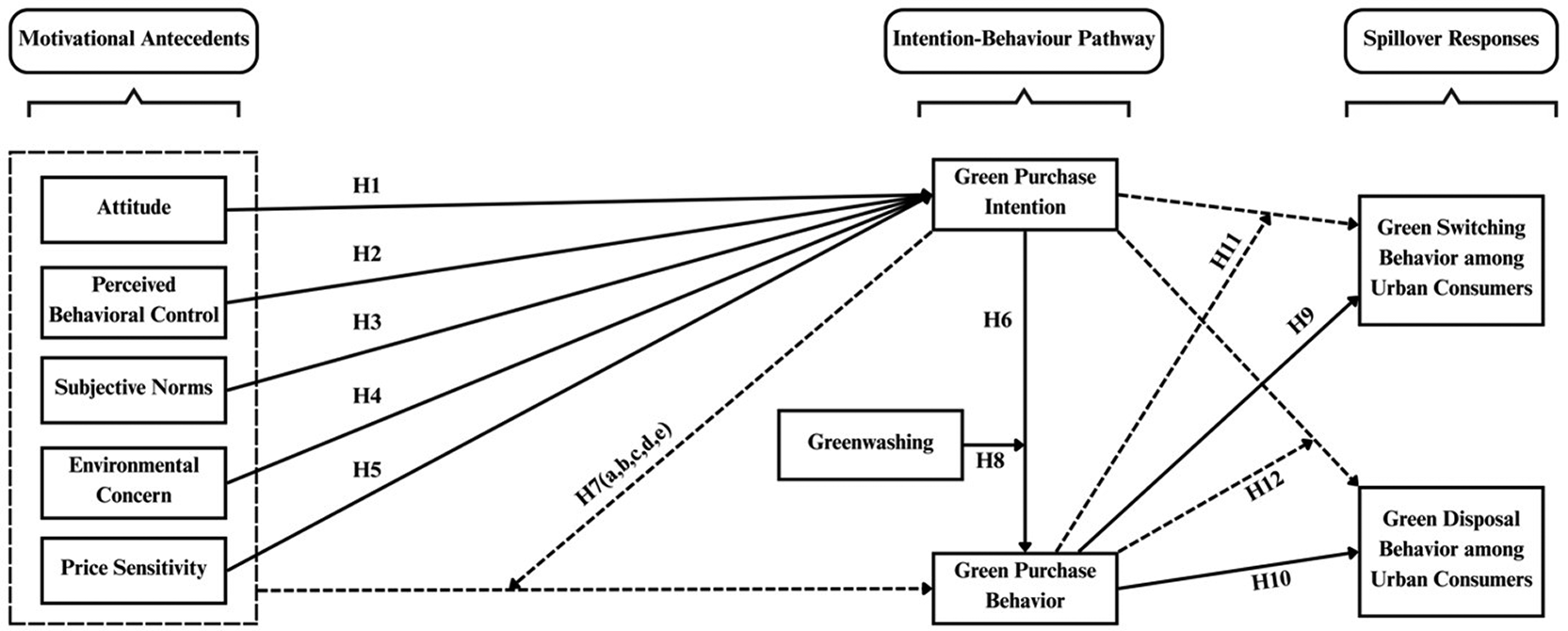
Figure 1 below presents the conceptual framework of the study. The model examines the influence of attitude, perceived behavioural control, subjective norms, environmental concern, and price sensitivity on green purchase intention, which subsequently influences green purchase behaviour and spillover responses in the form of green switching and green disposal behaviours among urban consumers. Greenwashing is incorporated as a moderating factor within the intention–behaviour pathway.
2.2.1 Theory of Planned Behavior (TPB)
The Theory of Planned Behavior (TPB) by Ajzen (1991) provides a powerful lens for decoding green consumer behavior, linking attitude, subjective norms, and perceived behavioral control to intention and actual action. Unlike the Theory of Reasoned Action, TPB integrates perceived control, reflecting individuals’ confidence and external constraints that shape their ability to act sustainably (Ajzen, 1991; Joshi & Rahman, 2015). Its predictive precision has been proven across green consumption contexts (Liobikienė et al., 2016; Varah et al., 2021), showing that favorable attitudes, strong social influence, and high self-efficacy collectively heighten green purchase intention. Extensions incorporating environmental concern and price sensitivity further refine TPB’s explanatory scope, positioning it as the most robust and contextually relevant framework for understanding Malaysia’s sustainable consumption dynamics (Rui Wen, 2023; Ho & Huynh, 2022).
2.2.2 Value-Belief-Norm (VBN)
The Value-Belief-Norm (VBN) theory explains pro-environmental behavior as a cascade from deeply held values, biospheric, altruistic, egoistic, to beliefs about ecological consequences and personal responsibility, which activate moral norms guiding green actions (Stern, 2000; Han, 2015). Individuals aware of environmental impacts and motivated by ethical obligation are more likely to adopt sustainable consumption practices, transcending economic trade-offs, and fostering green purchase intention grounded in personal commitment and ecological consciousness (Hau Nguyen et al., 2025; Hein, 2022).
2.2.3 Blending Theory of Planned Behavior and Value-Belief-Norm
Blending the Theory of Planned Behavior (TPB) with the Value-Belief-Norm (VBN) theory provides a powerful lens to understand green consumer behavior, capturing both rational decision-making and moral obligation. TPB explains intention through attitude, subjective norms, and perceived control (Ajzen, 1991), while VBN emphasizes biospheric and altruistic values that trigger personal norms and ecological awareness (Stern, 2000). In Malaysia, this synergy reveals how internal values, social pressures, and economic considerations collectively shape sustainable consumption, overcoming cost barriers through moral motivation and ethical commitment (Hein, 2022; Rou & Lian Kang, 2023; Hau Nguyen et al., 2025).
2.2.4 Spillover Theory
Behavioral spillover captures how initial green actions trigger broader sustainable practices, linking purchase, switching, and disposal behaviors in a cascading effect (Austin et al., 2011; Nash et al., 2019). Positive spillover strengthens environmental self-identity and efficacy, fostering brand switching and responsible disposal, while negative spillover may offset gains through compensatory consumption (Castro Santa et al., 2024; Fanghella et al., 2019). In Malaysia, spillover reveals how early green engagement shapes enduring sustainable consumption patterns (Stangherlin et al., 2023; Behn et al., 2025).
This study employs a quantitative, theory-driven methodology to unravel the mechanisms shaping urban sustainable consumption in Malaysia, integrating Theory of Planned Behavior, Value-Belief-Norm, and Spillover frameworks (Barroga et al., 2023). Guided by a positivist paradigm (Park et al., 2020) and a deductive approach (Williams, 2024), the study adopts an explanatory design to capture causal relationships among five predictors, attitude, perceived behavioral control, subjective norms, environmental concern, and price sensitivity, on green purchase intention and its spillover into switching and disposal behaviors (George & Merkus, 2025). A cross-sectional survey using structured questionnaires captured primary data from urban consumers (Stewart, 2025; Sieber, 2023; Taherdoost, 2022), with a sample size of 160 determined via G*Power analysis (Faul et al., 2007). Data collection combined online distribution through Google Forms and selective in-person engagement to maximize inclusivity and representation. Prior to participation, respondents were provided with information outlining the purpose of the study, the voluntary nature of participation, and assurances of anonymity and confidentiality. Informed consent was obtained electronically before participants proceeded to complete the questionnaire. Only individuals aged 18 years and above were eligible to participate in the survey. Participants provided electronic informed consent before accessing the questionnaire and proceeding with the survey. Pilot testing with 55 respondents ensured reliability, while rigorous cleaning, coding, and tabulation prepared the dataset for analysis. IBM SPSS provided descriptive profiling of demographics and construct central tendencies, establishing a robust foundation for interpretation (IBM, 2024). Core structural relationships, mediations, and moderation effects were tested using SmartPLS 4 through confirmatory factor analysis, path modeling, and bootstrapping, ensuring construct validity and predictive precision (Hair et al., 2022). This approach delivers reliable, generalizable insights that deepen theoretical and practical understanding of sustainable consumption behavior in Malaysia.
Table 1 below presents the demographic profile of the respondents. The sample comprised 263 participants, with males accounting for 57% and females 43%. The majority of respondents were aged 18–25 years (87.8%) and were predominantly Malaysian (70.3%). Most participants were students (83.3%), with the majority reporting a monthly income of RM1000 or below (68.4%). In terms of environmental consumption behaviour, 78.7% indicated awareness of green products, while 91.3% reported previous purchase experience.
As shown in Table 2 below, all reflective constructs demonstrated strong psychometric robustness across reliability, validity, and collinearity diagnostics. Internal consistency was excellent, with all Cronbach’s Alpha and Composite Reliability (CR) values exceeding the 0.70 benchmark (Hair Jr. et al., 2021), confirming that the indicators coherently represent their latent variables, including complex constructs such as intention, behavioral spillover, and greenwashing. Convergent validity (AVE) was firmly established, as all AVE values surpassed the 0.50 threshold (Hair et al., 2013), indicating that each construct captured substantial shared variance despite the conceptual diversity of psychological, behavioral, and post-consumption measures. Multicollinearity (VIF) was not a concern, with all item-level VIF values ranging between 1.336 and 2.543, well below the critical ceiling of 5 (Hair Jr et al., 2014), demonstrating that predictors, mediators, and outcome variables remained empirically distinct without inflating structural paths.
As shown in Table 3 below, discriminant validity, assessed using HTMT (Henseler et al., 2015), further confirmed that the constructs were sufficiently distinct. Although two HTMT values involving Green Purchase Intention (GPI), specifically with Environmental Concern (0.904) and Perceived Behavioral Control (0.924), slightly exceeded the 0.90 conventional guideline, they remained within the upper permissible boundary of 1.00 (Franke & Sarstedt, 2019). Given that the majority of HTMT values fell well below 0.90, the overall pattern supports satisfactory discriminant validity and indicates that the constructs maintain adequate empirical separation. Collectively, these results confirm that the reflective measurement model is exceptionally stable, theoretically coherent, and empirically precise, providing a rigorous foundation for testing the structural pathways that drive sustainable consumption and behavioral spillover in urban Malaysia.
The bootstrapping procedure with 5,000 resamples was employed to test the significance of all hypothesized paths. As presented in Table 4, the results showed that four of the five predictors of Green Purchase Intention (GPI): attitude (H1) (t = 2.630, p = 0.009), perceived behavioral control (H2) (t = 5.513, p = 0.000), environmental concern (H4) (t = 6.557, p = 0.000), and price sensitivity (H5) (t = 2.228, p = 0.026) were significant, whereas subjective norms (H3) were non-significant (t = 0.518, p = 0.604). GPI strongly predicted Green Purchase Behavior (H6) (t = 11.598, p = 0.000). In addition, Green Purchase Behavior generated substantial spillover effects into green switching behavior (H9) (t = 21.572, p = 0.000) and green disposal behavior (H10) (t = 12.950, p = 0.000).
The mediation tests further revealed significant indirect effects through intention for attitude (H7a) (t = 2.513, p = 0.012), perceived behavioral control (H7b) (t = 4.937, p = 0.000), environmental concern (H7d) (t = 6.080, p = 0.000), and price sensitivity (H7e) (t = 2.106, p = 0.035), while subjective norms (H7c) remained non-significant (t = 0.519, p = 0.604). Moreover, significant spillover mediation pathways were observed from GPI to GPB to green switching behavior (H11) (t = 9.692, p = 0.000) and from GPI to GPB to green disposal behavior (H12) (t = 7.869, p = 0.000). The moderating effect of greenwashing (H8) on the intention–behavior relationship was non-significant (t = 1.122, p = 0.262), indicating that the intention–behavior pathway remained statistically stable. Effect size results reported in Table 4 further underscore this behavioral cascade, with Green Purchase Behavior exerting extremely large effects on switching (f2 = 1.300) and disposal (f2 = 0.578), while intention demonstrated a substantial effect on behavior (f2 = 0.535). Among the antecedents of intention, environmental concern and perceived behavioral control showed the strongest influence, while subjective norms played a minimal role.
The coefficient of determination and predictive relevance statistics are reported in Table 5. The coefficient of determination (R2) indicates that the model explains a substantial proportion of variance in the endogenous constructs. Specifically, green purchase intention recorded a high explanatory power (R2 = 0.737), while green purchase behavior also demonstrated strong explanatory capability (R2 = 0.543). Furthermore, the results confirm meaningful downstream spillover effects, with switching behavior (R2 = 0.565) and disposal behavior (R2 = 0.366) showing moderate explanatory power. Predictive relevance (Q2) further reinforces these findings, as intention (Q2 = 0.722) and behavior (Q2 = 0.531) exhibit strong predictive accuracy, while switching (Q2 = 0.388) and disposal (Q2 = 0.395) demonstrate moderate yet meaningful predictive capability.
| Variables | R-Square (R2) | Q2 Predict |
|---|---|---|
| Green Disposal Behavior (GDB) | 0.366 | 0.395 |
| Green Purchase Behavior (GPB) | 0.543 | 0.531 |
| Green Purchase Intention (GPI) | 0.737 | 0.722 |
| Green Switching Behavior (GSB) | 0.565 | 0.388 |
Table 6 reports the predictive model fit statistics. The model fit indices, including SRMR, d_ULS, d_G, and NFI, fall within acceptable thresholds for complex behavioral models, indicating an adequate model fit. These statistics suggest that the proposed structural model demonstrates acceptable predictive performance and theoretical parsimony despite the complexity of the behavioral relationships examined.
| Saturated model | Estimated model | |
|---|---|---|
| SRMR | 0.080 | 0.121 |
| d_ULS | 4.220 | 9.813 |
| d_G | 1.275 | 1.513 |
| Chi-square | 1915.092 | 2139.115 |
| NFI | 0.716 | 0.683 |
Taken together, the results confirm a coherent and high-performing structural model in which strong intentions translate into purchasing behavior and subsequently extend into wider sustainable practices through behavioral spillover, offering a theoretically grounded and empirically robust explanation of urban sustainable consumption.
This study uncovers the psychological architecture driving urban sustainable consumption in Malaysia and extends established behavioral theories in a context where their predictions have long been assumed rather than tested. The results reveal a decisive shift from collectivist expectations toward individual agency: Attitude, Perceived Behavioral Control, Environmental Concern, and Price Sensitivity significantly strengthen Green Purchase Intention (H1, H2, H4, H5 accepted), whereas Subjective Norms do not (H3 rejected). This divergence from classic TPB assumptions in collectivist cultures indicates that urban consumers in Malaysia now anchor their green choices in internalized ecological values and personal efficacy rather than social pressure, offering a major theoretical recalibration. The positive effect of Price Sensitivity (H5) on intention further challenges dominant literature portraying green products as cost barriers, suggesting that consumers increasingly perceive them as value-aligned, cost-effective investments, an economically grounded logic rarely observed in emerging markets.
The translation of intention into behavior reinforces this pattern of empowered decision-making. The strong relationship between Green Purchase Intention and Green Purchase Behavior (H6 accepted) demonstrates a narrowing intention-behavior gap, while the non-significant moderation of greenwashing (H8 rejected) indicates that once intention is internalized, it evolves into a stable psychological contract sustained by identity consistency, value internalization, and cognitive alignment rather than susceptibility to misleading claims. This clarifies greenwashing’s true position within the behavioral sequence: influential during attitude formation but negligible in post-intention execution.
The mediating role of GPI further illuminates this motivational circuitry. GPI significantly channels the effects of Attitude, PBC, Environmental Concern, and Price Sensitivity into behavior (H7a, H7b, H7d, H7e accepted), while mediation from Subjective Norms remains absent (H7c rejected). Collectively, these findings portray the urban Malaysian green consumer as intrinsically driven, efficacy-oriented, and economically rational, an emerging behavioral profile with substantive theoretical and practical importance.
The most novel contribution lies in the empirical confirmation of downstream behavioral spillover. Green Purchase Behavior powerfully triggers both Green Switching and Green Disposal actions (H9, H10 accepted), and GPB fully mediates the pathway from intention to these higher-order behaviors (H11, H12 accepted). This demonstrates that intention alone is insufficient for extended sustainability practices; behavioral spillover materializes only after the identity-reinforcing act of purchase reconfigures self-perception and activates further pro-environmental commitments.
Overall, this study advances TPB by revealing an intention-behavior system shaped more by personal agency than collectivist norms, challenges price-barrier assumptions, clarifies greenwashing’s stage-specific influence, and empirically validates a cascading spillover mechanism. These insights deepen scholarly understanding of sustainable consumption in emerging economies and provide actionable guidance for policymakers and marketers seeking to cultivate durable, value-driven green behavior in urban Malaysia.
Urban Malaysia’s sustainable consumption landscape generates powerful implications across theory, practice, policy, society, and methodology. Theoretically, this study reshapes dominant behavioral models by showing that intention is only the mid-point of a broader behavioral cascade: personal attitudes, perceived control, environmental values, and economic evaluations, not social norms, drive intention, while green purchase behavior becomes the pivotal behavioral anchor that converts intention into switching and disposal actions, extending TPB, enriching VBN’s moral-ecological lens, and empirically structuring spillover as a sequential mechanism rather than an incidental effect. Managerially, the results position first green purchases as the gateway to long-term loyalty and circularity, urging firms to lower economic and psychological entry barriers, design credible and transparent green claims, embed recycling and take-back infrastructures, and anticipate fluid switching as empowered consumers gravitate toward authentically green brands. For policymakers, the evidence underscores the strategic value of stimulating initial green purchases through fiscal incentives, eco-literacy campaigns, strict anti-greenwashing regulation, and investment in urban recycling systems that convert willingness into consistent disposal behavior. Societally, the confirmation of positive spillover, absent moral licensing, reveals an emerging culture of ecological consistency in Malaysia where early green actions reinforce identity, inspire community diffusion, and accelerate collective transitions toward circular consumption. Methodologically, the study advances sustainability research by demonstrating the value of PLS-SEM enriched with predictive relevance (Q2), sequential mediation modelling, and boundary-condition testing of greenwashing, showing that rigorous structural modelling can both validate theoretical resilience and generate policy-relevant forecasts. Together, these implications offer a unified roadmap for scholars, regulators, and industry leaders seeking to convert individual green intentions into systemic, self-reinforcing sustainability transformations in urban Malaysia.
Urban Malaysia’s green consumption reveals nuanced limitations and transformative pathways for future research and practice. Methodologically, the cross-sectional design captures a snapshot of GPI, GPB, GSB, and GDB, yet cannot establish temporal causality or track spillover persistence, suggesting longitudinal approache to capture dynamic behavioral evolution. Geographically and demographically, data were concentrated in Kuala Lumpur, Selangor, and Penang, primarily among younger, educated adults, potentially inflating normative and cognitive effects; future studies should expand across diverse urban centers, socio-economic strata, and generational cohorts to fully capture Malaysia’s heterogeneous urban consumer landscape. Conceptually, broad green product categories limit granularity, as motivations for food, electronics, or apparel differ, highlighting the need for category-specific analyses to inform precise managerial strategies. The novelty of the constructs, particularly behavioral spillover from GPB to GSB and GDB and the moderating role of greenwashing, introduces theoretical originality but limits triangulation and comparability, warranting replication to validate findings. Macroeconomic and infrastructural factors, such as regulatory incentives, and recycling systems were excluded, leaving systemic enablers of disposal and switching underexplored, while the greenwashing requires dynamic contextual reconceptualization alongside variables like environmental identity and habit strength. Firms should lower entry barriers, integrate verifiable eco-labels, employ dual moral-economic framing, and embed product take-back and circular design to convert intentions into lasting behaviors, while policymakers must enhance eco-literacy, fiscal incentives, anti-greenwashing enforcement, and urban recycling infrastructure to reinforce spillover effects. Academically, future research should extend TPB-VBN models with additional antecedents such as moral obligation, environmental identity, and product trustworthiness, explore multi-outcome spillover including reduction, repair, and collaborative consumption, and employ longitudinal-mixed methods (qualitative and quantitative) to dissect cultural and infrastructural moderators shaping behavioral pathways. Together, these insights provide a holistic roadmap for converting intention into systemic sustainability, bridging individual psychology, market strategy, and policy infrastructure, and offering a robust template for ASEAN and emerging economies confronting urban environmental challenges.
Ethical approval for this study was obtained from the Asia Pacific University Research Ethics Committee (APU REC) (Reference No: APU/FLT/EA/2026/006). The study was conducted in accordance with institutional and international ethical guidelines for research involving human participants. Participation in the study was voluntary, and all respondents were informed about the purpose of the research, the anonymity and confidentiality of their responses, and their right to withdraw at any time without consequences. Only individuals aged 18 years and above were eligible to participate, and informed consent was obtained electronically prior to completion of the questionnaire.
| Views | Downloads | |
|---|---|---|
| F1000Research | - | - |
|
PubMed Central
Data from PMC are received and updated monthly.
|
- | - |
Provide sufficient details of any financial or non-financial competing interests to enable users to assess whether your comments might lead a reasonable person to question your impartiality. Consider the following examples, but note that this is not an exhaustive list:
Sign up for content alerts and receive a weekly or monthly email with all newly published articles
Already registered? Sign in
The email address should be the one you originally registered with F1000.
You registered with F1000 via Google, so we cannot reset your password.
To sign in, please click here.
If you still need help with your Google account password, please click here.
You registered with F1000 via Facebook, so we cannot reset your password.
To sign in, please click here.
If you still need help with your Facebook account password, please click here.
If your email address is registered with us, we will email you instructions to reset your password.
If you think you should have received this email but it has not arrived, please check your spam filters and/or contact for further assistance.

Comments on this article Comments (0)