Keywords
hybrid work, organizational commitment, work flexibility, job autonomy, mixed methods, Peru, consulting sector, human resource management

hybrid work, organizational commitment, work flexibility, job autonomy, mixed methods, Peru, consulting sector, human resource management
The emergence of hybrid work—a flexible labour arrangement combining on-site and remote modalities—represents one of the most consequential organizational transformations of the past decade. Accelerated by the COVID-19 pandemic, hybrid models have evolved from emergency adaptations into deliberate strategic choices for organizations worldwide. According to data published by Business Empresarial (2025), an estimated 81% of global organizations have adopted some form of hybrid work arrangement, primarily motivated by productivity gains, cost optimization, and enhanced work–life balance.
In the Latin American context, approximately 72% of companies across the region have implemented hybrid arrangements, particularly in financial, technological, and professional services sectors (Economist Impact, 2021). In Peru, recent data indicate that 44% of small and medium-sized enterprises adopted hybrid work between 2023 and 2024 (Duréndez et al., 2024). Despite this widespread adoption, empirical evidence on how hybrid work is statistically associated with core organizational outcomes—particularly organizational commitment—remains limited in the Peruvian context.
Organizational commitment, conceptualized by Meyer and Allen (1991) as a psychological state that characterizes an employee’s relationship with the organization and shapes their decision to remain, is a critical predictor of retention, performance, and organizational effectiveness. High levels of commitment are consistently associated with lower turnover intentions, higher productivity, and stronger organizational citizenship behaviours (Mowday et al., 1979). Conversely, attenuated commitment may manifest as disengagement, absenteeism, and talent attrition—outcomes that organizations operating under hybrid models must actively counteract.
However, the statistical relationship between hybrid work and organizational commitment is neither automatic nor universal. While flexible arrangements may foster autonomy, reduce stress, and improve work–life balance, they may simultaneously generate professional isolation, weaken interpersonal bonds, and reduce the sense of organizational belonging—particularly when not adequately supported by leadership and institutional policies (Toscano & Zappalà, 2020; Tosca, 2022). Understanding the dimensions through which hybrid work is associated with commitment thus carries both theoretical and practical significance.
This study addresses this gap by examining the statistical association between hybrid work and organizational commitment in a consulting firm in Chimbote, Peru, conceptualized as an organizational case study. The research, conducted in 2025, employed a sequential explanatory mixed-methods design integrating quantitative survey data with qualitative managerial perspectives. The study makes three principal contributions: (1) it provides context-specific empirical evidence from an under-researched emerging economy setting; (2) it decomposes the hybrid work construct into theoretically grounded dimensions—job autonomy, work flexibility, and communication and coordination—and examines each dimension’s statistical relationship with commitment; and (3) it integrates quantitative results with qualitative insights to offer a nuanced understanding of the organizational mechanisms at play.
The article is structured as follows: Section 2 reviews the theoretical and empirical literature; Section 3 presents the conceptual framework and research hypotheses; Section 4 describes the methodology; Section 5 reports the results; Section 6 discusses the findings; Sections 7 and 8 address theoretical and practical implications; Section 9 discusses limitations; Section 10 proposes directions for future research; and Section 11 concludes.
Hybrid work has been conceptualized under several related constructs, including telework, remote work, and flexible work arrangements. Hill et al. (2003) proposed one of the earliest frameworks, defining hybrid arrangements as models that combine presential and non-presential work modalities to achieve a balance between professional obligations and personal life. Gajendran and Harrison (2007), in a landmark meta-analytic study of 46 samples, demonstrated that telecommuting—a core component of hybrid models—was positively associated with job satisfaction, organizational commitment, and performance, with co-worker relationship quality marginally affected only at high intensities (>2.5 days/week remote).
The consolidation of hybrid work as a mainstream modality was substantially accelerated by the COVID-19 pandemic. Microsoft’s (2021) Work Trend Index documented a paradigm shift, noting that hybrid work had become the expectation rather than the exception among knowledge workers globally. The global consultancy PwC (2022) similarly reported that 83% of executives observed productivity improvements under hybrid arrangements and that the model catalysed meaningful cultural transformations, promoting flexibility, trust, and collaborative resilience.
More recently, Bloom et al. (2023), in a randomized controlled trial published in Nature, evaluated a hybrid work intervention among 1,600+ employees at a major Chinese technology firm. Their findings revealed a 33% reduction in voluntary turnover in the hybrid condition compared to the fully on-site control group, with no measurable decrease in productivity—offering some of the most robust experimental evidence available for the commitment-related associations of hybrid work. In Brazil, Cord and Moresi (2025), using a mixed-methods study of 383 employees in a financial institution, found that hybrid work was perceived as best combining efficiency and flexibility, with professional recognition and personal well-being shaping productivity perceptions.
Despite this growing evidence base, Toscano and Zappalà (2020) caution that the benefits of hybrid work are contingent on the quality of organizational support structures. Their research during the COVID-19 pandemic demonstrated that low perceived organizational support in remote and hybrid settings was associated with professional isolation and diminished commitment, particularly among newly hired employees whose socialization processes were disrupted. These findings underscore the importance of active managerial support and structured integration mechanisms in hybrid environments.
The three-component model developed by Meyer and Allen (1991) remains the dominant framework in organizational behaviour research on commitment. The model distinguishes between: (a) affective commitment—the emotional attachment, identification, and involvement an employee has with the organization; (b) continuance commitment—the perceived costs and lack of alternatives that make leaving the organization undesirable; and (c) normative commitment—the felt obligation and loyalty toward the organization.
Mowday et al. (1979) established that high organizational commitment, particularly its affective dimension, is strongly associated with retention, extra-role performance, and goal alignment. Becker’s (1960) side-bet theory provides the foundational logic for continuance commitment: accumulated organizational investments create switching costs anchoring continued membership. Wiener (1982) articulated the normative dimension through the internalization of organizational norms and values, generating a moral imperative to remain.
In hybrid work contexts, commitment faces specific structural challenges. Allen et al. (2015), in a comprehensive review of telecommuting research, concluded that flexibility-enhancing arrangements generally show positive associations with affective commitment, but that this relationship is moderated by implementation quality and perceived organizational support. Greenberg et al. (2024) further documented that while remote work is associated with health benefits and reduced stress, it also introduces risks of career stagnation and social disconnection that may erode normative and affective commitment over time.
This study draws on three complementary theoretical frameworks. First, the Job Characteristics Model (Hackman & Oldham, 1976) provides the conceptual basis for operationalizing hybrid work through five core job dimensions: skill variety, task identity, task significance, autonomy, and feedback. Jobs enriched along these dimensions are theorized to generate higher intrinsic motivation, satisfaction, and internal work motivation—outcomes conducive to organizational commitment and consistent with competency-based approaches (McClelland, 1973).
Second, Self-Determination Theory (SDT; Deci & Ryan, 1985) posits that sustained motivation and well-being arise from the fulfilment of three basic psychological needs: autonomy, competence, and relatedness. Well-designed hybrid arrangements can satisfy all three—providing scheduling autonomy, enabling skill development through varied work environments, and maintaining team relatedness through structured communication—thereby fostering durable, internalized engagement consistent with high commitment.
Third, Social Exchange Theory (Blau, as cited in Cropanzano & Mitchell, 2005) and the related construct of Perceived Organizational Support (POS; Eisenberger et al., 1986) suggest that employees who perceive the organization as supportive and valuing of their contributions will reciprocate with positive attitudes and behaviours, including heightened commitment. In hybrid contexts, organizational support manifests through technological provision, managerial accessibility, psychological safety, and policy clarity.
Grounded in the theoretical integration described above, this study proposes that hybrid work—operationalized through job autonomy, work flexibility, and communication and coordination—is positively associated with organizational commitment as conceptualized by Meyer and Allen’s (1991) three-component model. In line with the non-experimental, cross-sectional design, the hypotheses are stated in terms of statistical association rather than causality.
Hybrid work is positively and significantly associated with organizational commitment among employees of a consulting firm in Chimbote, Peru.
Job autonomy, as a dimension of hybrid work, is positively associated with organizational commitment.
Work flexibility, as a dimension of hybrid work, is positively associated with organizational commitment.
Communication and coordination, as a dimension of hybrid work, are positively associated with organizational commitment.
As shown in Figure 1, the conceptual framework proposes that hybrid work is positively associated with organizational commitment, and that its key dimensions—job autonomy, work flexibility, and communication and coordination—are also positively related to this outcome.
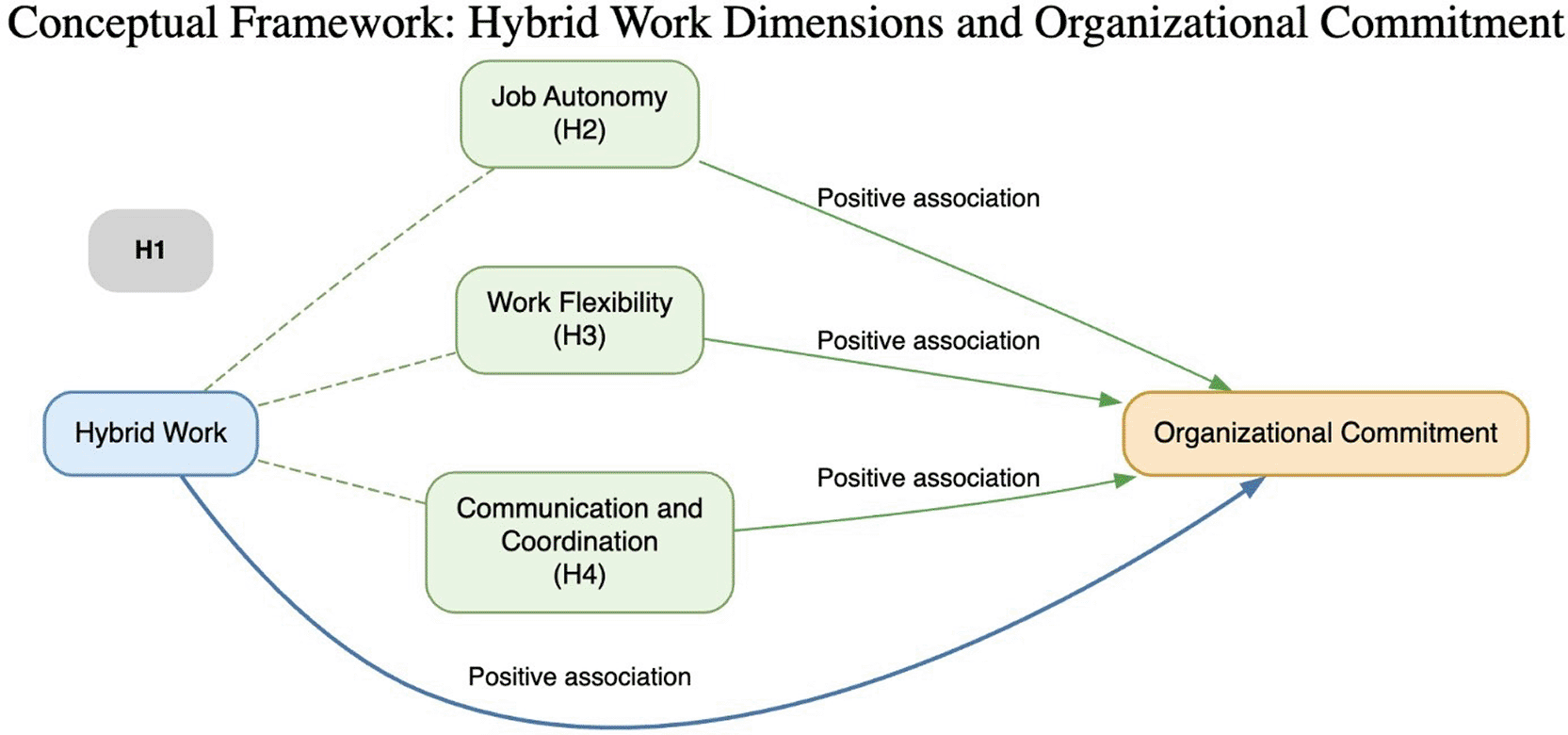
Note. The model proposes that hybrid work is positively associated with organizational commitment (H1), and that its key dimensions—job autonomy (H2), work flexibility (H3), and communication and coordination (H4)—are also positively associated with organizational commitment. Own elaboration based on Hackman and Oldham (1976), Meyer and Allen (1991), and Eisenberger et al. (1986).
This study employed a sequential explanatory mixed-methods design (Creswell & Plano Clark, 2017; Hernández et al., 2014), in which a quantitative phase was followed by a qualitative phase intended to explain and contextualize the quantitative results. In the sequential explanatory design, QUAN data collection and analysis precede QUAL data collection, with the latter directly informed by the former; this sequencing is well-suited to studies seeking to explain statistical associations through organizational narratives and managerial perspectives.
The overall research strategy is conceptualized as an organizational case study (Yin, 2018) conducted within a single consulting firm. Case study methodology is particularly appropriate in management research when the unit of analysis is a bounded organizational system and when the research aim is to generate context-specific, in-depth understanding rather than statistical generalization (Eisenhardt, 1989). The design was non-experimental and cross-sectional: no manipulation of variables was performed, and data were collected at a single point in time. The quantitative component was correlational in level, seeking to assess the direction, magnitude, and statistical significance of associations between hybrid work dimensions and organizational commitment.
The research is applied in nature under the OECD Oslo Manual (2018) classification, as it was oriented toward generating knowledge applicable to a concrete organizational challenge—specifically, understanding how hybrid work is associated with employee commitment in a Peruvian consulting context.
The study was conducted at IMPULSA 365 S.A.C., a professional consulting firm located in Chimbote, Ancash region, Peru, providing services in business consulting, administrative management, and organizational development. The firm had formally adopted a hybrid work model at least six months prior to data collection, making it an appropriate site for examining mature—rather than emergent—hybrid work practices.
The target population comprised all 60 employees who had worked under a hybrid modality for a minimum of three months. A total census sampling strategy was adopted: because the entire population was accessible, willing to participate, and of a size permitting exhaustive enumeration, a census eliminates sampling error and maximizes the precision of parameter estimates within this organizational unit (Tamayo y Tamayo, 1997). Inclusion criteria required employees to: (a) hold active employment status, (b) have direct experience with both presential and remote modalities, and (c) have at least six months of organizational tenure. Employees in their probationary period or without direct hybrid work exposure were excluded.
For the qualitative component, four area leaders or supervisors were purposively selected based on their direct oversight responsibility for hybrid teams, ensuring functional diversity across administration, finance, project management, and human resources.
Hybrid work scale
The hybrid work construct was operationalized using an adapted version of Hackman and Oldham’s (1976) Job Characteristics Model, contextualized for hybrid work environments. The scale comprised items across five theoretically grounded dimensions: skill variety, task identity, task significance, job autonomy, and feedback. A five-point Likert response format was employed (1 = Never; 5 = Always). Items were subjected to content validation by a panel of three expert judges holding doctoral or master’s qualifications in organizational management and human resources, using a dichotomous validity matrix assessing sufficiency, clarity, coherence, and relevance.
Organizational commitment scale
Organizational commitment was measured using an adapted version of Meyer and Allen’s (1991) Three-Component Model, comprising items distributed across three dimensions: affective commitment (items 1–6), continuance commitment (items 7–11), and normative commitment (items 12–17), for a total of 17 items on a five-point Likert scale. This instrument underwent the same expert validation procedure as the hybrid work scale.
Instrument reliability
Prior to the main data collection, a pilot test was administered to 10 participants meeting the inclusion criteria. Internal consistency was assessed using Cronbach’s alpha coefficient across all 26 items. The combined instrument yielded α = .883, indicating excellent reliability (Bisquerra, 2009). Standardized alpha was.876, confirming robustness across items with varying variance. Item-level analysis identified no items with corrected item-total correlations below.30 that would warrant removal while maintaining acceptable overall alpha.
Prior to data collection, formal institutional approval was obtained from the firm’s legal representative (IMPULSA 365 S.A.C., Chimbote, 19 May 2025). All participants received a full briefing on the study’s academic purpose, the voluntary and anonymous nature of participation, and the exclusive use of aggregated data for research purposes. Written informed consent was obtained from all participants. Data were collected over three weeks in May 2025 via digital (Google Forms) and paper-based questionnaires according to participant preference. Response completeness was verified for each submission; no missing data were identified.
Qualitative data were collected through individually administered, in-person structured interviews with the four area leaders, each lasting approximately 45–60 minutes. A standardized 10-question protocol addressed the five hybrid work dimensions (skill variety, task identity, task significance, autonomy, and feedback). All interviews were audio-recorded with consent and transcribed verbatim prior to analysis.
Quantitative analysis
Statistical analyses were performed using IBM SPSS Statistics v.29. Descriptive statistics (frequencies, percentages) were computed for both study variables and categorized into three levels (low, medium, high) using tertile-based cut-points. Prior to inferential testing, distribution normality was assessed using the Kolmogorov-Smirnov test; results indicated non-normal distributions for both variables (p < .05), supporting the use of non-parametric correlation methods.
Simple linear regression was employed to test H1, with hybrid work as the independent variable and organizational commitment as the dependent variable. Model adequacy was assessed through the F-statistic, R2, adjusted R2, the standardized coefficient (β), t-statistic, p-value, and 95% confidence interval for the unstandardized coefficient (B). Regression is used here in its predictive-associative sense consistent with the cross-sectional, non-experimental design; no causal claims are implied.
To test H2, H3, and H4, Spearman’s rank-order correlation coefficients (ρ) were computed for the pairwise relationships between each hybrid work dimension (job autonomy, work flexibility, communication and coordination) and the composite organizational commitment score. Spearman’s ρ was selected over Pearson’s r in view of the ordinal measurement level of the Likert items and the confirmed non-normal distributions, as ρ makes no distributional assumptions and is robust to rank-based data (Field, 2018).
Qualitative analysis
Interview transcripts were analysed using directed content analysis (Hsieh & Shannon, 2005). Analysis proceeded deductively, using the five hybrid work dimensions as a priori coding categories. Within each category, responses were examined for emergent themes, illustrative statements, and areas of consensus or divergence across the four informants. Frequency of mention was quantified to provide an indicative measure of thematic prominence. Qualitative themes were subsequently integrated with the quantitative findings to generate explanatory depth.
Simple linear regression was conducted to examine the statistical association between hybrid work and organizational commitment. The overall model was statistically significant (F(1, 58) = 15.11, p < .001), accounting for 20.7% of the variance in organizational commitment (R2 = .207; adjusted R2 = .193). For each unit increase in the hybrid work score, the organizational commitment score was associated with an increase of 0.469 units (B = 0.469, β = 0.455, t(58) = 3.89, p < .001, 95% CI [0.228, 0.711]). These results support H1. Table 1 presents the complete regression output.
Descriptive analysis revealed that 55.0% of employees (n = 33) reported high levels of hybrid work adoption, 31.7% (n = 19) reported moderate levels, and 13.3% (n = 8) reported low levels. With respect to organizational commitment, 58.3% (n = 35) demonstrated high commitment, 30.0% (n = 18) moderate commitment, and 11.7% (n = 7) low commitment. Tables 2 and 3 present the complete frequency distributions of hybrid work levels and organizational commitment, respectively. These results indicate a predominance of high levels in both hybrid work adoption and organizational commitment within the sample.
| Level | n | % | Cumulative % |
|---|---|---|---|
| Low | 8 | 13.3 | 13.3 |
| Medium | 19 | 31.7 | 45.0 |
| High | 33 | 55.0 | 100.0 |
| Total | 60 | 100.0 |
As shown in Table 4, Spearman rank-order correlations were computed for the three hybrid work dimensions against the composite organizational commitment score. All three associations were positive and statistically significant at p < .001. Job autonomy showed the strongest positive association (ρ = 0.693), followed by work flexibility (ρ = 0.661) and communication and coordination (ρ = 0.648). These results support H2, H3, and H4. According to Cohen’s (1988) benchmarks, all three associations fall within the large-effect size range (ρ ≥ .50), indicating practically meaningful relationships within this organizational context.
Directed content analysis of the four managerial interviews yielded consistent patterns across the five hybrid work dimensions. With respect to skill variety and digital competencies, all four leaders (4/4) agreed that hybrid work had strengthened employees’ digital skills and capacity for self-management, with increased proficiency in communication platforms, project tracking tools, and virtual collaboration environments consistently noted.
Regarding task identity, three of four leaders (3/4) reported high clarity in role definition and task objectives, noting that digital planning tools and weekly synchronization meetings had helped maintain task identity despite physical dispersion. On task significance, three leaders (3/4) perceived that employees understood the organizational relevance of their contributions, though they acknowledged that prolonged fully remote periods were associated with lower emotional connection to the organization’s mission.
Concerning autonomy, all four leaders (4/4) unanimously agreed that hybrid work had enhanced employee autonomy, fostering greater personal responsibility and proactive decision-making while necessitating clear performance expectations. Feedback and communication were identified by three leaders (3/4) as functioning effectively through virtual channels, including messaging platforms, video conferencing, and structured feedback sessions.
A recurring emergent theme was the risk of emotional distance when remote work is prolonged without compensatory face-to-face interaction. Leaders recommended maintaining periodic in-person team meetings to reinforce organizational culture and interpersonal trust—a finding that substantively explains the quantitative communication-commitment association and points to the boundary conditions of the hybrid work model.
These qualitative findings provide contextual depth and help explain the mechanisms underlying the quantitative relationships observed.
The findings of this organizational case study indicate that hybrid work is positively and significantly associated with organizational commitment in a professional consulting firm in Chimbote, Peru (H1: β = 0.455, F(1,58) = 15.11, p < .001), consistent with the theoretical expectations of the Job Characteristics Model (Hackman & Oldham, 1976), Self-Determination Theory (Deci & Ryan, 1985), and Social Exchange Theory (Cropanzano & Mitchell, 2005). These context-specific findings align with converging evidence from the experimental study by Bloom et al. (2023) in China, the mixed-methods study by Cord and Moresi (2025) in Brazil, and the meta-analytic review by Gajendran and Harrison (2007), all of which document positive associations between flexible work arrangements and employee commitment outcomes.
The observation that 55% of employees reported high hybrid work adoption and 58.3% demonstrated high organizational commitment suggests that the firm has achieved a relatively successful institutionalization of the hybrid model. This is contextually noteworthy: research by Chuchon (2023) and Pérez (2024) has documented variable commitment outcomes across Peruvian sectors, with younger employees showing stronger preferences for remote modalities and older employees preferring presential contact. The consulting sector’s emphasis on results-oriented work, professional autonomy, and project-based collaboration may create particularly favourable conditions for the hybrid work–commitment association.
Among the three dimensions, job autonomy showed the strongest positive association with organizational commitment (ρ = 0.693). This corroborates the centrality of autonomy as a motivational resource in both the Job Characteristics Model (Hackman & Oldham, 1976) and SDT (Deci & Ryan, 1985). When employees are trusted to organize their schedules and make task-level decisions, they experience enhanced personal responsibility and psychological ownership—factors theoretically linked to affective and normative commitment (Allen et al., 2015). Qualitative data reinforced this pattern: all four leaders agreed that hybrid work had strengthened employees’ self-regulatory capacity.
Work flexibility demonstrated a large positive association with commitment (ρ = 0.661), supporting the proposition that flexibility reduces occupational stress and facilitates a healthier work–life equilibrium, which in turn is associated with stronger loyalty (Cord & Moresi, 2025). This finding aligns with Bustinduy’s (2024) concept of smart working, which emphasizes outcome-oriented management over time-and-place constraints. The quantitative association is particularly meaningful in the Peruvian context, where Saenz (2025) documented that 53% of professional women prefer hybrid work for its flexibility benefits.
Communication and coordination showed the lowest, yet still large, association with commitment (ρ = 0.648). This is consistent with warnings by Toscano and Zappalà (2020) that inadequate communication in hybrid environments can generate isolation and erode trust. The significant association suggests the firm’s investment in digital communication infrastructure has maintained team cohesion; however, qualitative data flagged residual risks of emotional disengagement with prolonged remote-only periods, indicating that communication quality requires ongoing managerial vigilance.
The integration of quantitative and qualitative evidence yields a richer explanatory account than either methodology alone could provide. Specifically, qualitative findings identified enhanced digital skills, managerial trust, and structured feedback as the organizational mechanisms through which hybrid work is associated with stronger commitment—creating a reciprocity cycle between autonomous performance and institutional recognition consistent with Social Exchange Theory (Cropanzano & Mitchell, 2005) and POS (Eisenberger et al., 1986). These mediating mechanisms represent a theoretical refinement over purely correlational accounts of the hybrid work–commitment relationship and merit formal testing in future structural equation modelling research.
This study contributes to theory in three ways. First, it provides empirical support for the conceptual integration of Hackman and Oldham’s (1976) Job Characteristics Model with Meyer and Allen’s (1991) Three-Component Model in a hybrid work setting, demonstrating that job enrichment through autonomy, flexibility, and communication is positively associated with multi-dimensional commitment outcomes. This integration advances existing frameworks by specifying the mechanism—job enrichment dimensions—through which hybrid work is associated with commitment, rather than treating hybrid work as an undifferentiated construct.
Second, the study extends Social Exchange Theory and POS theory to the hybrid work domain within an emerging economy context. The finding that supportive hybrid work arrangements—characterized by autonomy, flexibility, and communicative responsiveness—are associated with heightened commitment is consistent with the reciprocity logic of both frameworks and broadens their applicability beyond predominantly North American and European research bases.
Third, the study contributes to a nascent but growing body of Latin American organizational research on hybrid work. By documenting large positive associations in a small-to-medium professional services organization in Peru, the findings indicate that the organizational correlates of hybrid work are not exclusive to large multinationals or technologically advanced contexts, but are observable in resource-constrained organizations in developing economies when management practices are appropriately designed.
The findings carry several actionable implications for human resource managers and organizational leaders in the Latin American consulting and professional services sectors.
First, organizations should formalize hybrid work policies that explicitly delineate the parameters of employee autonomy, including scheduling freedoms, performance expectations, and accountability mechanisms. Clear institutional frameworks reduce the ambiguity that Gartner (2025) associates with a 12% increase in voluntary turnover risk, and enable employees to exercise autonomy within a structured, psychologically safe environment.
Second, investment in digital communication infrastructure and employee training is essential for sustaining commitment in hybrid environments. The qualitative data from this study identify digital skill development as both a benefit of hybrid work and a precondition for its commitment-enhancing potential. Organizations should provide structured digital competency training and regular virtual engagement activities to maintain team cohesion and reduce the risk of emotional isolation.
Third, periodic in-person interaction should be structurally integrated into hybrid schedules rather than left to ad hoc discretion. Leaders in this study consistently recommended face-to-face team meetings to reinforce organizational culture, interpersonal trust, and the sense of collective purpose underpinning affective and normative commitment—a practice aligned with the concept of ‘intentional presence’ in hybrid work design.
Fourth, organizations should implement periodic diagnostic assessments of hybrid work quality and organizational commitment using validated instruments. The scales adapted in this study offer a replicable, low-cost diagnostic tool for evidence-based human resource management in the professional services sector.
This study has several limitations that must be considered when interpreting and generalizing its findings.
First, and most importantly, the cross-sectional design means that the observed statistical associations cannot be interpreted as evidence of causality. The regression model is employed in its predictive-associative sense, consistent with the non-experimental design. Longitudinal designs with repeated measurements would be required to assess temporal precedence and the stability of the hybrid work–commitment relationship over time.
Second, this study was conducted in a single consulting firm (N = 60) in Chimbote, Peru. As an organizational case study, the findings represent context-specific evidence that captures the depth and particularity of this organizational setting—a legitimate and valuable form of empirical knowledge in management research (Yin, 2018; Eisenhardt, 1989). However, the single-organization design necessarily limits statistical generalizability to other firms, industries, or regions. The findings should be understood as context-bound and treated as hypotheses to be tested through multi-organization replication studies rather than as universally applicable conclusions.
Third, all quantitative data were collected through self-report measures, creating susceptibility to common method bias (Podsakoff et al., 2003). Future research should triangulate self-reported commitment data with objective organizational indicators such as turnover records, absenteeism data, and performance evaluations. The use of supervisor-rated commitment scales as a complementary measure would reduce mono-source bias.
Fourth, the qualitative component was limited to four managerial informants. While purposively selected for informational richness, this sample does not permit theoretical saturation or generalization of qualitative themes. Future qualitative inquiry should incorporate larger, more diverse samples including employee perspectives across hierarchical levels and functional areas.
Fifth, the hybrid work construct was operationalized through an adaptation of the Job Characteristics Model (Hackman & Oldham, 1976), originally developed for traditional work contexts. While the adaptation is theoretically justified, future research should develop and validate scales specifically designed for hybrid environments, incorporating contemporary dimensions such as digital boundary management, platform literacy, and asynchronous communication competence.
Several directions merit investigation in future research. Longitudinal studies tracking hybrid work practices and commitment levels over time—particularly during the post-pandemic institutionalization phase in Latin America—would enable directional conclusions and illuminate the temporal dynamics of the associations documented here. Comparative multi-organization, multi-sector studies would reveal whether the associations identified in this consulting firm are sector-specific or more broadly applicable across Peruvian and regional organizational contexts.
Future research should also examine potential moderators of the hybrid work–commitment association, including leadership style (particularly transformational and empathetic leadership), organizational culture type, individual differences in autonomy preference and digital self-efficacy, and Hofstede’s national cultural dimensions (power distance, individualism–collectivism). The mediating mechanisms suggested by the qualitative findings—digital skill development, managerial trust, and feedback quality—should be formally modelled in structural equation frameworks to establish their role in the statistical pathway from hybrid work to commitment.
Disaggregating commitment outcomes across the three Meyer and Allen (1991) dimensions (affective, continuance, normative) would advance theoretical precision, as the current study focused on composite organizational commitment. Finally, equity dimensions of hybrid work adoption—including gender, care responsibilities, and socioeconomic access to home workspace technology—warrant dedicated investigation in the Peruvian context, where Saenz (2025) has already documented gendered preferences for hybrid arrangements.
This organizational case study provides context-specific empirical evidence that hybrid work is positively and significantly associated with organizational commitment in a consulting firm in Chimbote, Peru. Among the dimensions examined, job autonomy showed the strongest positive association with commitment (ρ = 0.693), followed by work flexibility (ρ = 0.661) and communication and coordination (ρ = 0.648). These quantitative associations were corroborated by qualitative managerial perspectives identifying digital skill development, enhanced trust, and structured feedback as key explanatory mechanisms.
The study contributes to the growing body of evidence on hybrid work in emerging economies, demonstrating that the organizational correlates of well-managed hybrid arrangements are observable in resource-constrained professional services organizations in Latin America. The findings offer actionable guidance for human resource practitioners seeking to leverage hybrid work as a strategic resource for talent retention, productivity, and institutional sustainability.
Consistent with the cross-sectional, non-experimental design, all associations are interpreted in statistical rather than causal terms. Future longitudinal and multi-organizational research should build on these findings to further elucidate the directional mechanisms, boundary conditions, and equity dimensions of the hybrid work–commitment relationship across the Latin American organizational landscape.
This study received ethical approval from the Research Ethics Committee of the School of Business Administration at Universidad César Vallejo (Peru). The project was approved under reference number 00299–2025/CEI-AE. All participants were informed about the purpose of the study, and their participation was voluntary. Informed consent was obtained prior to data collection, and the confidentiality of participants’ responses was strictly guaranteed.
| Views | Downloads | |
|---|---|---|
| F1000Research | - | - |
|
PubMed Central
Data from PMC are received and updated monthly.
|
- | - |
Provide sufficient details of any financial or non-financial competing interests to enable users to assess whether your comments might lead a reasonable person to question your impartiality. Consider the following examples, but note that this is not an exhaustive list:
Sign up for content alerts and receive a weekly or monthly email with all newly published articles
Already registered? Sign in
The email address should be the one you originally registered with F1000.
You registered with F1000 via Google, so we cannot reset your password.
To sign in, please click here.
If you still need help with your Google account password, please click here.
You registered with F1000 via Facebook, so we cannot reset your password.
To sign in, please click here.
If you still need help with your Facebook account password, please click here.
If your email address is registered with us, we will email you instructions to reset your password.
If you think you should have received this email but it has not arrived, please check your spam filters and/or contact for further assistance.

Comments on this article Comments (0)