Keywords
AI-Powered Learning, Arabic Language Learning; Artificial Intelligence Tools; Educational technology; ChatGPT for Language Learning; Language learning; Mobile-Assisted Language Learning (MALL).

This article is included in the Artificial Intelligence and Machine Learning gateway.
AI-Powered Learning, Arabic Language Learning; Artificial Intelligence Tools; Educational technology; ChatGPT for Language Learning; Language learning; Mobile-Assisted Language Learning (MALL).
The 21st century is mainly driven by the rapid advancement of Artificial Intelligence, including Generative AI, which has introduced a transformative shift in the evolution of knowledge (Bozkurt, 2023; Doshi & Hauser, 2023; Lv, Z. 2023; Rane, 2023). AI and GAI have recently emerged as prominent domains of research attracting many researchers across different academic fields (Ahmad et al., 2022; Gendron, Andrew, & Cooper, 2021; Zhang et al., 2021). The advent of this technology has significantly influenced multiple fields, especially education, where the global recognition of GAI’s potential to revolutionise learning settings is demonstrated in several previous studies, including Chen, Chen, & Lin, 2020; Johnson, Coggburn, & Llorens, 2022a; Johnson et al., 2022b; Morandín-Ahuerma, 2023; Sapci & Sapci, 2020; Wong et al., 2020). Consequently, there is a growing interest among educators and academics in exploring how AI in general, and GAI in particular, can enhance educational experiences through improved student learning outcomes (Gašević, Siemens, & Sadiq, 2023; Wang et al., 2023). More importantly, the use of AI to facilitate the complex process of learning Arabic grammar has attracted considerable interest in the field of language education (Mnasri & Habbash, 2021; Morales et al., 2023; Shao et al., 2022; Shareef & Irhayim, 2021; Younes et al., 2023).
The literature extensively highlights the application of AI in educational environments, emphasizing its capacity to tailor learning trajectories, provide adaptive feedback, augment student involvement, and educators’ engagement (Cukurova, Miao, & Brooker, 2023; Hooda et al., 2022; Huang, Lu, & Yang, 2022). Despite these developments, a considerable gap still persists in the utilization of AI technologies among university students in Arabic-speaking countries to improve their comprehension of Arabic grammar. According to Al Shobaki, El Talla and Al Najjar (2023), Western and non-Western (including Arab) countries have recognised the significance of integrating AI technologies in education and research (Bencsik, 2022; Huertas-Abril & Palacios-Hidalgo, 2023; Rizk, 2019; Tachkov et al., 2022). AI and associated tools contribute in enhancing the decision-making process and improving education quality among learners (Pedró et al., 2019). Accordingly, several studies have emphasized the adoption of these applications in educational practices (Forero-Corba & Bennasar, 2023; Huang, Saleh, & Liu, 2021; Sijing & Lan, 2018; Yang, 2022).
Apart from the aforementioned studies, there are a limited number of studies that investigate the use of AI applications in enhancing Arabic language performance among university students. For example, Al Shobaki, El Talla, and Al Najjar (2023) focused on improving Arabic language proficiency using AI tools in educational institutes. Viktorova and Mamchur (2021) focused solely on chatterbot tools in the Arabic context. Furthermore, Khalatia and Al-Romany (2020) explored the challenges associated with the use AI applications for Arabic language acquisition. Yet, this study did not examine any applications. Overall, a wide range of studies have investigated the applications of both AI and GAI to improve institutional performance (Mao, Chen, & Liu, 2023). Currently, several universities, including those in the Arab World, face various challenges in adopting AI tools for students (Kuleto et al., 2021; Sharma et al., 2022). Accordingly, the current research explores the effectiveness of AI tools in enhancing Arabic grammar mastery among university students (Abou Adel, 2022; Qiqieh et al., 2025). It attempts to provide educational institutions with essential information to develop Arabic language programs that effectively develop Arabic speakers’ grammatical skills through AI-based teaching methods. The study intends to achieve two objectives: first, it seeks to use advanced AI technology to produce better grammatical results, and second, it will provide a framework for integrating AI into the process of Arabic grammar acquisition among Arabic language speakers. There are currently few scholarly researches on the use of AI applications in various disciplines, including linguistics; nevertheless, limited studies have focused on grammatical performance improvement using AI.
Based on the aforementioned, the present research seeks to address the following questions:
There is a gap in the existing literature regarding the use of AI in the acquisition of the Arabic language among university language learners. Limited research has investigated the influence of AI tools on language acquisition. Al-Raimi et al. (2024) and Gasaymeh et al. (2024) found that students exhibit a positive attitude towards AI tools, noting that they can attain better writing outcomes, save more time and receive instant feedback. Bensalem et al. (2024) raised a question on the impact of skill development within the framework of the current issue. The research indicated that the use of AI tools for creating conversational environments and syntax-based tools can significantly improve grammatical skills and language proficiency as evidenced research conducted by Mohammed and Ja’ashan in 2025 and Almineeai and Hezam in 2024. It was emphasized that guidance and ethical issues are fundamental prerequisites for realising the maximum benefits of AI tools, which are seen as a positive resource for students.
Al Shobaki et al. (2023) asserted that some studies, including those by Al-Masry and Agha (2021), focused solely on similar AI applications, namely within digital media institutes in different Palestinian universities. The study conducted by Al-Atl (2012) investigated basic education institutes as its case study. Marie-Sainte et al. (2018) explored AI algorithms to assess their ability for automatic Arabic text processing. The algorithms must exhibit their effectiveness as this demonstration will improve the performance of language learning resources. AI applications in educational institutions create multiple learning pathways that enable students to learn Arabic grammar, which poses significant challenges. The research by Nael, ELmanyalawy, and Sharaf (2022) advanced this discipline by demonstrating how computational modelling functions as a valuable tool for teaching languages. The research comprehensively analysed the morphological aspects, and provided crucial insights to non-native speakers who face difficulties in mastering Arabic grammar and syntax.
Numerous studies demonstrated how artificial intelligence technology assists non-native speakers of Arabic in their acquisition of the language. Researches on native Arabic speaker experiences remain limited as there is a lack of studies examining the advanced grammatical requirements of higher education professionals seeking to master their field. The study by Sylini (2020) investigated the role of artificial intelligence technology in facilitating Arabic language acquisition for non-native Arabic students in Saudi Arabia. The research by Habibulloh (2024) manifested that some AI tools enable automatic content correction and provide users with writing style recommendations and interactive learning materials which help users develop their skills. Several studies demonstrated that Arabic language teaching through artificial intelligence platforms produces favourable results, particularly in e-learning environments. In this context, many university students use AI tools such as ChatGPT, Grammarly and machine translation to complete different language learning tasks, including academic writing (Rohmawaty et al., 2024; Selim, 2024; Bensalem et al., 2024). For instance, numerous machine learning techniques, including neural networks, have been used to facilitate the acquisition of the Arabic language from extensive text data, enabling AI models to understand the complexities of Arabic grammar and syntax (Alsaleh & Larabi-Marie-Sainte, 2021; Harrag & Al-Qawasmah, 2010; Souri et al., 2018).
Past studies suggested methods for integrating AI applications to improve Arabic teaching and acquisition, addressing challenges in their implementation (Abdel Qader, 2024). Nonetheless, the use of AI in Arabic language acquisition is seen as inevitable, with calls for supporting AI applications that serve Arabic at all linguistic levels (Amayreh, 2024). AI presents promising prospects for Arabic language development, but also faces challenges that require ongoing efforts to improve the integration of Arabic within AI technologies (Al-khafaji. B, 2025). Overall, numerous studies emphasize the need to integrate AI applications in educational institutions and raise technological awareness in academic settings (Mahmoud, 2020; Al-Jmali.S,2024, Hassanein, N, 2024).
This study investigates the impact of AI applications on the development of grammar skills among Arabic language learners. The case study was conducted on Al Ain University students. The study is carried out using a structured questionnaire distributed to university students. A total of 90 students were approached through a systematic sampling method to collect responses. First, the questionnaire was presented to each participant, who voluntarily agreed to participate. The questionnaire is structured on a five-point Likert scale, with answers ranging from 1 (Strongly Disagree) to 5 (Strongly Agree). The researchers collected responses from participants which they later analyzed through SPSS software. The researchers used SPSS as their primary statistical tool as it handles both descriptive and inferential statistical analysis according to Unegbu et al. (2020). The researchers used SPSS to analyze data for identifying patterns between variables and determining how AI-based learning affected grammar development results.
The researchers tested the reliability and validity of the measurement tools using SPSS software. The research team employed correlation and regression analysis methods to study how AI tools affect students’ grammar proficiency. The researchers also used Cronbach’s Alpha to evaluate reliability and correlation analysis to establish validity. Students’ feedbacks were also used to analyze the research data.
The researchers utilized AI-powered applications, such as ChatGPT, LENGO, SIRI, and Alexa together with Telegram-based grammar interactive learning tools as the independent variable. The dependent variable was the improvement in students’ grammatical proficiency which they measured through their personal experiences and responses to the structured questionnaire (GAI).
This study complied with the research ethics guidelines of Al Ain University. Ethical approval was obtained from the Institutional Review Board (Approval No. COP/AREC/AD/53). Participation was voluntary, written informed consent was obtained, and all responses were anonymized.
1.1. Data Reliability Analysis
The researchers employed reliability analysis with Cronbach’s alpha in SPSS to maintain consistent and trustworthy results from their gathered data. The questionnaire items receive internal consistency evaluation through Cronbach’s alpha, indicating the strength of the correlation among all items in the study. The study revealed an overall Cronbach’s alpha coefficient of 0.978, exceeding the commonly accepted threshold of 0.70, which indicate high reliability. The researchers assessed the reliability of the entire questionnaire. The questionnaire successfully delivers trustworthy results which remain constant throughout different test groups.
The researchers utilized correlational analysis to examine two aspects of their study: internal consistency and construct validity. They also employed Spearman correlation analysis to test the data validity. The analysis results are presented in Table 1. The correlation values (r) range from −1 to 1, where r > 0.7 indicates a strong positive correlation, values between 0.5 and 0.7 indicate a moderate positive correlation, and r < 0.5 represents a weak correlation.
| Correlation Matrix | |||||||
|---|---|---|---|---|---|---|---|
| Q1 | Q2 | Q3 | Q4 | Q5 | Q6 | GAI | |
| Q1 | 1 | .763** | .779** | .852** | .842** | .875** | .857** |
| Q2 | .763** | 1 | .746** | .755** | .769** | .841** | .906** |
| Q3 | .779** | .746** | 1 | .791** | .811** | .846** | .856** |
| Q4 | .852** | .755** | .791** | 1 | .905** | .933** | .860** |
| Q5 | .842** | .769** | .811** | .905** | 1 | .927** | .869** |
| Q6 | .875** | .841** | .846** | .933** | .927** | 1 | .907** |
| GAI* | .857** | .906** | .856** | .860** | .869** | .907** | 1 |
The high and significant Spearman correlations among items Q1–Q6 indicate a strong interrelationship, suggesting they may be measuring a com mon underlying construct. This supports the internal consistency of the instrument. Moreover, the strong correlation between each item (Q1–Q6) and the GAI (a composite score from Q7–Q10) indicates convergent validity, showing that the items relate well to another theoretically relevant factor; hence, confirming the validity of the data.
Table 1 indicates that all correlations are significant at p-value <0.01, demonstrating that the relationships are statistically reliable. GAI exhibits a strong positive correlations with all questions (r > 0.85), indicating that AI tools significantly impact grammatical skill development. The highest correlations are between GAI and Q2 (r = 0.906) and GAI and Q6 (r = 0.907), indicating that these aspects of AI usage are most predictive of overall impact.
The data was analysed using Likert measurement for each question. In this study, a total of 10 questions were asked to the students, and their responses were collected on a five-point Likert scale. The responses were analysed in SPSS and summarized in Figure 1.
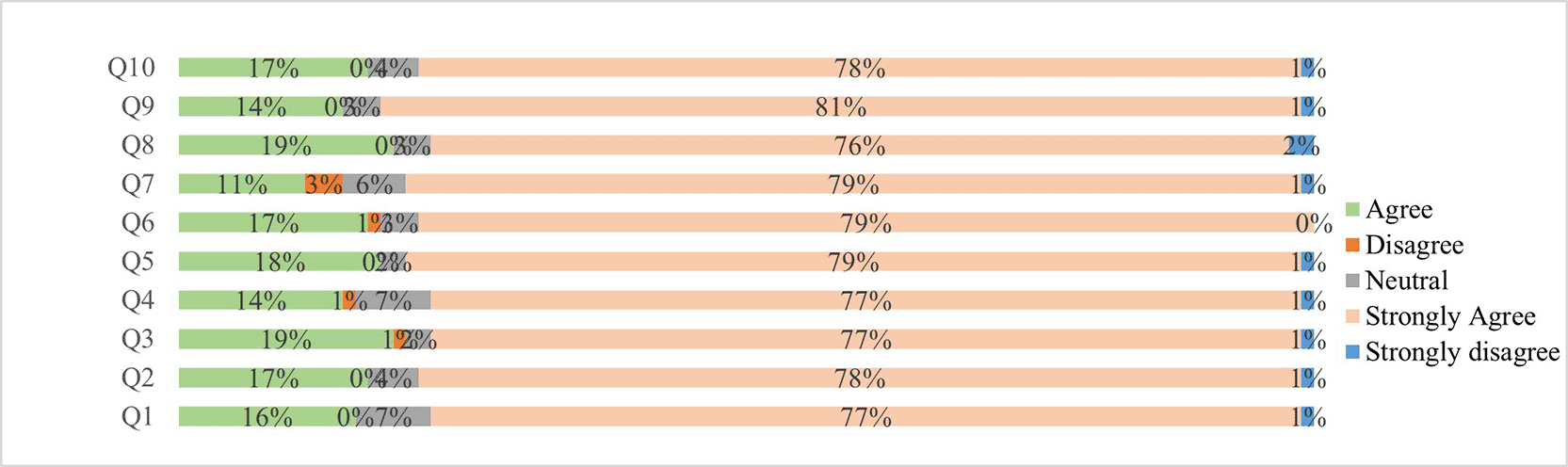
Figure 1 illustrates the data analysis for each question in the survey results. The results demonstrate that most respondents (79%) strongly agree or agree with the statement across all questions. On the other hand, the number of respondents disagreeing and strongly disagreeing with the statement is rather low, that is, below 5% in both cases. This implies that the respondents generally have a positive view of the statement, with a limited number of respondents expressing neutral and divergent views. The data obtained was also analysed using minimum, maximum, mean, and standard deviation measures, as illustrated in Table 2.
In Table 1, the mean represents the average response on a Likert scale (1 to 5), where higher values indicate a strong agreement with the statement. This dataset indicates that all means range from 4.64 to 4.76, suggesting that the majority of respondents either “agree” or “strongly agree” with the questionnaire statements. Therefore, the students mostly agree with the positive application of AI-based tools in their learning environment. Moreover, the standard deviation (STD) measures differences in responses from the mean. The analyzed data showed that responses maintained consistent results because their standard deviation remained below 0.7. The data analysis used percentage agreement in addition to mean and standard deviation. The responses of agree and strongly agree were combined and interpreted as shown in Table 3.
Table 3 shows that all questions received high mean scores (>4.6), reflecting strong agreement among participants. For Q.2 (M = 4.76, STD = 0.61) and Q.7 (M = 4.74, STD = 0.57), the highest and most consistent agreement was observed. The relatively low standard deviations for these items indicate that participants rated them highly and consistently, demonstrating a strong consensus in their responses.
The ANOVA and regression analysis were conducted in SPSS, and the results are presented in Table 4 and Table 5, respectively.
| Model | Sum of squares | df | Mean square | F | Sig. |
|---|---|---|---|---|---|
| Regression | 28.697 | 6 | 4.783 | 167.289 | .000b |
| Residual | 2.373 | 83 | .029 | ||
| Total | 31.070 | 89 |
The Significance (p-value) in Table 4 indicates a value of 0.000, demonstrating that the regression model achieves high statistical significance. The independent variables (Q1–Q6) show a major effect on the GAI score according to this research. The model fit assessment reveals an F-Statistic of 167.289, indicating that the model accounts for a major part of the changes in the dependent variable. The results demonstrate that AI applications significantly correlate with enhancements in grammatical proficiency. The Regression Sum of Squares (28.697) exceeds the Residual Sum (2.373), indicating that the predictors account for most of the GAI variability while only leaving a small portion of the data unexplained. The AI-related questions (Q1–Q6) significantly contribute to the perceived impact of AI on grammar development. The model proves to be highly predictive because students’ grammatical learning experiences depend on how they use AI.
Table 5 demonstrates that the “Rules & Questions in Grammar” (B = 0.440, p = 0.000) has the strongest and most significant impact. The study demonstrates that structured grammar rules provide the most effective method for teaching students grammar skills. The study yields that ChatGPT (B = 0.112, p = 0.033) has a substantial impact on improving grammar skills. It also indicates that Telegram interaction (B = 0.189, p = 0.000) has a significant impact because users receive immediate feedback during their real-time interactions. LENGO (B = 0.104, p = 0.146) and SIRI & ALEXA (B = 0.090, p = 0.149) do not significantly contribute to grammar improvement. Additionally, voice-based AI tools provide less effective results compared to both interactive systems and structured platforms. The negative B value of −0.038, and the p value of 0.734, show that this feedback-based tool does not affect learning outcomes.
Students strongly agree that ChatGPT is useful for improving their grammar skills as evidenced an average score of 4.66, and a mean score of 93.2% ( Figure 1) for “agree and strongly agree”. This indicates the achievement of the learning objectives of the study. Regression analysis showed that ChatGPT was useful in improving grammar skills (B = 0.112, p = 0.033). This was similarly concluded by Al Al Shobaki, El Talla, and Al Najjar (2023) who recommended Institutions to promote the use of AI for students to improve their work efficiency and proficiency. The impact of ChatGPT on improving grammar skills was positive for only 6.8% of the participants. This is explained by the absence of training and practice coupled with the intensity of training. Therefore, ChatGPT is still useless for students.
Respondents to the “Rules and Questions in Grammar” application item confirmed that learning grammatical skills through this application leads to better application performance. The positive impact of AI tools for assisting students with grammar rules and questions needed evaluation, which resulted in a high agreement rate and a mean score of 4.76. The application demonstrates its maximum impact on grammar skills through its most vital function according to regression analysis results (B = 0.440, p = 0.000). The program requires intensive exercises, which most study participants used because it assesses learners’ level while directing them to practical exercises that help them improve their weak areas.
These findings correspond with Viktorova and Mamchur (2021), who recommend Telegram and similar apps for assessing learners’ abilities. The evaluation of the LENGO application item shows that 93.0% of students who participated in the study confirmed that LENGO helped them track their grammar skill progress over time which resulted in better learning outcomes. The mean score reached 4.65, indicating a very strong agreement among participants. The regression analysis manifests that LENGO did not provide a significant effect (B = 0.104, p = 0.146). According to Alzahrani (2022) AI tools, including LENGO help students and teachers solve language problems which Arabic-speaking students experience. LENGO provides complete assessment solutions for reading, writing, speaking, and listening abilities which enable users to assess their current skill level and discover their development needs. LENGO provides tracking capabilities, which allow users to see their progress through its easy-to-use reporting system and analytical features that assist learners in maintaining their language study objectives through motivation.
The students described their experience with language-assisting tools, such as Siri and Alexa, noting that these tools facilitated prompts, offered translation services, and delivered grammar explanations. The study reveals that 92.8% of participants agreed that these tools helped improve their communication skills using proper language rules. The regression analysis demonstrates that their contribution to grammar improvement did not reach statistical significance at a level (B = 0.090, p = 0.149). Siri and Alexa enable users to communicate effectively by responding to voice commands issued in standard Arabic as they do not comprehend other Arabic dialects. The tools enable students to practice language skills through vocabulary acquisition, grammar rules learning, and exercise practice serving as their language partner. The study results received confirmation through the research of Cóndor-Herrera et al. (2022) which yielded that Alexa usage improved language learning results among students particularly in communication skill development.
Students exhibited positive feedback regarding the development plan for the Language Clinic. They demonstrated a 94.2% agreement with the plan giving an average score of 4.71. The “Language Clinic” did not show any significant effect on grammar improvement according to the regression analysis results showing B at −0.038 and p at 0.734. The Language Clinic develops customized educational programs which assess students’ strengths and weaknesses before providing specific learning materials for development. 5.8% of the participants showed either disagreement or neutral response about its usefulness. Alzahrani (2022) confirmed these results through a systematic review demonstrating that AI applications help students learn continuously.
Students achieved a 94.8% agreement rate that AI applications together with language learning applications and researcher feedback enabled them to obtain measurable advancements in their language abilities. The regression analysis demonstrated how these tools impact language learning results. Almelhes (2023) confirmed these results in his research illustrating how AI-based applications solve language problems while improving students’ performance. The research manifested that students experienced great improvements in their ability to study independently when they used AI tools. The study demonstrated that 94.0% of participants believed AI tools changed their learning practices into continuous sustainable learning methods which they demonstrated through a mean score of 4.70. The analysis showed a strong positive correlation between self-directed learning and academic achievements.
The results showed that AI systems used to assess student performance created customized learning pathways which resulted in continuous student development and engagement. This also aligned with Jim (2023), who found ChatGPT to be a highly effective learning tool. The tool helped students choose their topics to study while they found resources and performed their learning tasks. The study showed that all students intended to use ChatGPT for SDL after graduation, demonstrating its effectiveness in boosting self-directed learning.
The analysis demonstrated a mean score of 4.73, indicating that students had a favorable view of their grammatical skills. The correlation analysis showed strong positive correlations with AI tool usage while the regression analysis established that AI applications played a crucial role in helping students achieve grammatical proficiency. The current results support Almelhes’s research (2023), demonstrating that AI algorithms successfully enhanced students’ academic results in grammar and linguistics. The participant responses show that AI technology helps students fix their grammatical mistakes while they work to master the language. The study found that 93.8% of students agreed with the statement that their peer interactions inside and outside the classroom helped them develop their grammatical skills which led to a mean score of 4.69. Peer learning improves communication abilities among students because it helps them share information which leads to better grammar skills.
The correlation analysis revealed a strong positive correlation between peer learning and grammar development. The study provided examples which showed how peer learning supported language development. The results confirmed the findings of Muhammad Sabri et al. (2025), manifesting that AI technology can assist university students in both group learning activities and their grammar acquisition.
The general results of this study have clearly confirmed that university students frequently utilize AI tools in their studies. Generally, local students tend to agree upon the usage of different AI tools, as 93.2% of students use ChatGPT, 95.2% of them use the “Rules and Questions in Grammar” application, and 93.4% of them utilize Telegram. It has been found that the usage of AI tools in educational settings in Al Ain University is associated with students’ engagement, exhibiting strong positive correlations between these two variables.
The study also confirmed that AI-based language tools significantly enhance and sustain students’ grammatical skills at Al Ain University. Correlation analysis revealed strong positive relationships (r > 0.85) between the use of AI tools and grammatical proficiency. Regression analysis further showed that tools like “Rules and Questions in Grammar” (B = 0.440, p = 0.000), ChatGPT (B = 0.112, p = 0.033), and Telegram (B = 0.189, p = 0.000) had meaningful effects on improving grammar skills. The consistently high average scores, ranging from 4.64 to 4.76 across different tools, highlight the ongoing improvement in students’ grammatical abilities enabled by AI technologies.
AI has been used to enhance grammar and language learning in several languages including Spanish (Huete-García & Tarp, 2024; Márquez García & Salgado, 2019), German (Kharis et al., 2022), Italian (Lo Bosco, Pilato, & Schicchi, 2021), French (Safitri et al., 2021), Chinese (Ma & Chen, 2024), and among others. However, each language faces different types of challenges, given its structure, syntax, and semantics. One of the challenges AI tools encounter in grammar learning is addressing grammar irregularities. Some studies have measured the complexity and amount of irregularities in different languages (Ehret et al., 2023). It has been reported that the Russian and Arabic languages score high on complexity measures, making it more difficult to develop AI tools to understand their grammar. These studies should be taken into account while developing complex AI tools for grammar and language learning.
A new Arabic chatbot called Tayseer was recently launched (Alabbas & Alomar, 2024). However, since this software was introduced subsequent to the present study, further research should explore the potential of Arabic chatbots in facilitating learning. As previously discussed, many AI and GAI tools use formal standard Arabic. However, formal Arabic is very different from colloquial Arabic (El Zarka & Hellmuth, 2009), which limits the use of AI tools among some Arabic-Speaking populations. Additionally, colloquial Arabic has many dialects, including Levantine, Egyptian, Maghrebi, and Gulf, as explained by Holes (2018). Developing AI tools capable of processing these various dialects would expand their utility among Arabic speakers. This will increase their adoption within Arabic-Speaking communities.
AI can provide personalised (i.e., individualised) approaches to learning and education, allowing students to learn in different ways, guided by AI input. For example, AI techniques can help provide detailed and tailored feedback to low-performing students, thus scaffolding their performance. Voice-enabled AI techniques have become popular among Western and non-Western populations. However, future research should investigate the prevalence of text-enabled versus voice-enabled AI tools and how each impacts learning performance and quality.
The study findings demonstrated that artificial intelligence applications play a key role in improving students’ grammatical skills. Correlation and regression analyses confirm that AI tools like “Rules and Questions in Grammar,” ChatGPT, and Telegram significantly boost grammar abilities, providing personalized support, flexible learning options, and instant feedback. The study also yielded that Incorporating AI into language learning programs encourages student motivation and active participation, which leads to continuous language development. However, tools like LENGO, Siri, and Alexa, although beneficial, demonstrated limited statistical significance in grammar improvement.
To maximize the effectiveness of AI applications in language learning, the following recommendations are proposed:
1. Incorporate language-based knowledge and skills using AI applications in student activities inside and outside the classroom.
2. Ensure educators are adequately trained to implement AI tools effectively and continuously assess the impact of these tools on student learning outcomes.
3. Recognize the importance of integrating AI into Arabic language education at all levels to tackle specific linguistic challenges.
The utilization of AI applications to enhance grammar performance, as evidenced by this investigation, open several avenues for future research. Findings of this study provide practical implications for educational practice, particularly regarding the integration of AI into Arabic grammar instruction. The strong positive correlations and significant regression results highlight the effectiveness of AI tools such as ChatGPT, “Rules and Questions in Grammar,” and Telegram in improving grammatical proficiency. These findings suggest that AI technologies should be systematically incorporated into Arabic language curricula across educational levels to enhance learning outcomes.
The study highlights that educational institutions should invest in professional development programs to train educators. Additionally, these programs must effectively incorporate AI tools to ensure that technology integration addresses the diverse linguistic needs within the Arabic language. Policymakers are encouraged to develop and fund initiatives that support research and the application of AI in education, making these technologies accessible and effective across various learning environments.
| Views | Downloads | |
|---|---|---|
| F1000Research | - | - |
|
PubMed Central
Data from PMC are received and updated monthly.
|
- | - |
Provide sufficient details of any financial or non-financial competing interests to enable users to assess whether your comments might lead a reasonable person to question your impartiality. Consider the following examples, but note that this is not an exhaustive list:
Sign up for content alerts and receive a weekly or monthly email with all newly published articles
Already registered? Sign in
The email address should be the one you originally registered with F1000.
You registered with F1000 via Google, so we cannot reset your password.
To sign in, please click here.
If you still need help with your Google account password, please click here.
You registered with F1000 via Facebook, so we cannot reset your password.
To sign in, please click here.
If you still need help with your Facebook account password, please click here.
If your email address is registered with us, we will email you instructions to reset your password.
If you think you should have received this email but it has not arrived, please check your spam filters and/or contact for further assistance.

Comments on this article Comments (0)