Keywords
Public healthcare workers, Emotional exhaustion, Health Impairment, Job demands, Job resources, Personal resources

This article is included in the Social Psychology gateway.
Public healthcare workers, Emotional exhaustion, Health Impairment, Job demands, Job resources, Personal resources
The public healthcare sector is characterised by numerous challenges that often lead to an increased level of emotional exhaustion (EE) among those working in it. This phenomenon can be attributed to a combination of factors, including demanding interactions with patients and users and an increasingly heavy workload (Dal Santo et al., 2024; Sarabia-Alcocer et al., 2024). Recent literature has emphasised the negative effects of EE and linked it to a range of adverse health symptoms. This emphasises the urgent need to develop and implement effective strategies aimed at alleviating this emotional distress (Bakker et al., 2023; Buscema et al., 2025). Literature proposes different research that highlight the important role of burnout – in particular emotional exhaustion – in mediating the relationship between job demands and resources (Bakker et al., 2023; Hakanen et al., 2006). However, research that examine the motivational pathway of the Job Demands-Resources (JD-R) model demonstrates how job resources – i.e. social support from colleagues, from the family and from superiors – protect workers by reducing emotional exhaustion, thereby safeguarding their health and work-family life (Rhéaume, 2022; Zhang et al., 2020). Developments on the JD-R model have shed further light on the central role of emotional exhaustion such a mediator of the relationship between personal resources – such as self-efficacy – and well-being (Hobfoll, 2002; Schaufeli & Taris, 2014; Simbula et al., 2011). By promoting self-efficacy and other personal resources, healthcare professionals may be better able to cope with the complexity and demands of their role, potentially leading to better psychological outcomes (Bakker et al., 2023; J. Huang et al., 2016). This study aims to contribute to the existing body of knowledge in this area by examining the mediating role of emotional exhaustion in the interplay between job demands, job resources, personal resources and health impairments in a sample of public healthcare workers. Through this research, we aim to improve understanding of the complex dynamics at play and inform future interventions that prioritise the well-being of healthcare workers.
According to the JD-R model (Bakker et al., 2023), high quantitative work demands, which include high workload and time pressure, have consistently predicted emotional exhaustion. Several studies have found a positive mediation effect of emotional exhaustion between job demands – i.e. work demands and role conflict – and physical and mental health impairment, absenteeism and work-family conflict (Baka et al., 2023; Y. Huang et al., 2011; López-Cabarcos et al., 2021; Rhéaume, 2022; Vignoli et al., 2016). A recent study conducted on Polish social services workers in Poland, tested witch component of burnout was better mediating the relationship between job demands and health impairment, finding that the mediation function of burnout in health impairment it’s mediated only by emotional exhaustion (Baka et al., 2023). Another study conducted on Italian workers, tested the hypothesis that job demands and work-family conflict contribute to absenteeism in the workplace through the mediation of emotional exhaustion. The authors found that emotional exhaustion mediates only the relationship between job demands and absenteeism, while the work-family conflict mediation was not significant (Vignoli et al., 2016). The conservation of resources (COR) theory (Hobfoll, 1989) assumes that emotional exhaustion occurs when people do not have enough emotional resources to meet the demands of work. This depletion of resources ultimately leads to negative health consequences and underpins the assertion that the demands placed on employees can significantly affect their emotional and physical well-being (Bakker et al., 2023). A recent study conducted on a sample of healthcare workers has shown that emotional exhaustion fully mediates the relationship between job demands – i.e. workload and role conflict – and work attitudes – i.e. turnover intention and affective commitment – and illustrates how increased job demands can lead to burnout and health impairments (López-Cabarcos et al., 2021). Taking the literature into account, our first hypothesis states that:
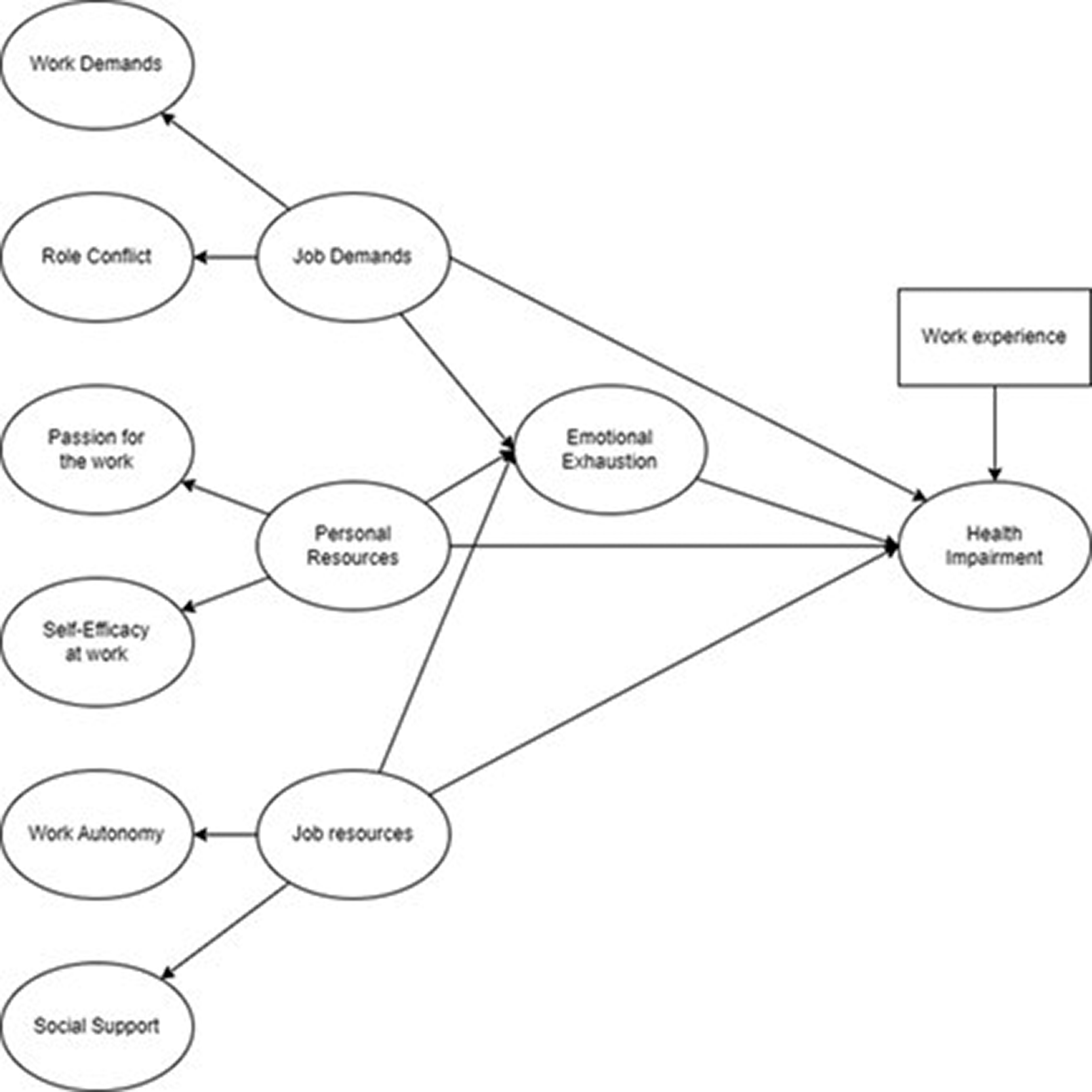
Work demands and role conflicts (job demands) are positively associated with health impairments via the mediation of emotional exhaustion.
Meta-analyses and systematic reviews conducted over the last 25 years have shown that there are specific contextual factors that lead to burnout. However, while job demands are considered a strong predictor of emotional exhaustion, job resources are less strongly related to burnout and have shown a consistent negative relationship (Bakker et al., 2023). A meta-analysis shows that both job autonomy and support in the workplace are negatively related to emotional exhaustion (Aronsson et al., 2017). In addition, Proposition 2 of the JD-R theory explains the process of health impairment and the motivational process, which clarifies that job resources are described as factors that satisfy basic psychological needs and promote job engagement, thereby mitigating the negative effects of job demands. Several studies indicated that job resources such as social support and job autonomy are negatively associated with emotional exhaustion in different types of workers (Bakker et al., 2023; Charoensukmongkol et al., 2016; Kinman et al., 2011). According to the literature:
Social support and work autonomy (job resources) are negatively related to health impairments through the mediation of emotional exhaustion.
Research shows that self-efficacy at work is a crucial personal resource that significantly influences the health status of healthcare workers (Bakker et al., 2023; Hobfoll, 2002). Mostly of the studies presented in the literature test and explore the mediation role of personal resources in the relationship between job characteristics and burnout (J. Huang et al., 2016), but there severe highlight an hidden spot that posit emotional exhaustion such as a mediator between personal resources and health impairment. For example, higher self-efficacy is associated with better health outcomes and lower psychological distress. This suggests that employees with high self-efficacy are better able to cope with work-related stressors, which can lead to less emotional exhaustion and health impairments (Chae & Ha, 2021; Isaac et al., 2018). In addition, an older study found that self-care behaviours have a positive impact on nurses’ quality of life, supporting the notion that self-efficacy influences health management. On the other hand, research on personal resources suggests that intrinsic motivation promotes engagement and job satisfaction, which can alleviate feelings of emotional exhaustion (Ferreira & Gomes, 2021). Research shows that passion for work has a significant impact on the emotional exhaustion of healthcare workers. For example, Moreno-Jiménez et al. (2023) found that a strong passion for work in demanding environments such as intensive care units is associated with lower levels of daily exhaustion. This forms the basis for the idea that passion can serve as a protective factor against emotional exhaustion, which can subsequently lead to health impairments. Furthermore, the relationship between passion, self-efficacy, emotional exhaustion and health outcomes is consistent with COR theory (Hobfoll, 1989), which states that individuals with more personal resources experience less emotional exhaustion and fewer negative health outcomes. Consistent with the existing literature, our third hypothesis states that:
Passion for work and self-efficacy at work (personal resources) are negatively associated with adverse health outcomes through the mediation of emotional exhaustion.
The model aims to analyse the mediating role of emotional exhaustion between the JD-R dimensions – job demands, job resources, and personal resources - and health impairments, using work experience as a control variable as shown in Figure 1.
| Variables | N | % |
|---|---|---|
| Gender | ||
| Male | 105 | 19.7 |
| Female | 424 | 79.4 |
| Non-binary | 5 | 0.9 |
| Age | ||
| ≤ 25 y | 8 | 1.5 |
| 26–36 y | 119 | 22.3 |
| 37–47 y | 100 | 18.7 |
| 48–58 y | 225 | 42.1 |
| ≥ 59 y | 82 | 15.4 |
| Work activity | ||
| Nurse | 262 | 21.2 |
| Physician | 113 | 49.1 |
| Healthcare assistant | 119 | 22.3 |
| Other healthcare workersa | 30 | 5.6 |
| Missingb | 10 | 1.9 |
| Marriage | ||
| Unmarried | 129 | 24.2 |
| Married | 333 | 62.4 |
| Divorced | 68 | 12.7 |
| Widow/er | 4 | 0.7 |
| Expertise | ||
| ≤ 9 y | 122 | 22.8 |
| 10–21 y | 139 | 26.0 |
| 22–30 y | 163 | 30.5 |
| ≥ 31 y | 110 | 20.6 |
| Job hierarchy | ||
| No responsibilities | 478 | 89.5 |
| Middle management | 46 | 8.6 |
| High management | 10 | 1.9 |
The present project was approved by the Ethics Committee of the University of Turin and the National Health Service (NHS) (Prot. n. 0433453–07/21/2023 - UOR: SI000045 - Classif. III/11). Participants were recruited from a metropolitan NHS in northern Italy, using a representative sample. All participants gave written informed consent before the survey (Buscema, 2026). Following their consent, an online survey was distributed to participants via the open-source platform LimeSurvey from December 2024 to February 2025. A total of 843 employees responded to the survey, but only 534 HW were included in the analysis due to drop-outs. We compared the analysed sample (n = 534) to those who dropped out (n = 309) on age, gender, and work experience using t-test and chi-square test of independence. No significant differences were found for age, χ2(4) = 0.72, p = .09, gender, χ2(2) = 0.67, p = .72, and work experience, t(790) = 0.03, p = .98, suggesting that the analysed sample was representative of the full group of respondents. Of the participants, 105 (19.7%) were male, 424 (79.4%) were female and 5 (0.9%) were non-binary. Most participants were between 48 and 58 years old (42.1%) and worked as nurses (49.1%). The demographic characteristics are shown in more detail in Table 1 (Buscema, 2025).
Based on the JD-R model research, the job demands variables included the dimensions of quantitative job demands and role conflict, the job resources variables included social support and job autonomy, while the personal resources included the self-efficacy and passion for work. Year of work experience was used as a control variable. Quantitative demands were measured using the Quantitative Workload Inventory (Spector & Jex, 2011) and relate to perceived workload in terms of quantity and intensity. This dimension makes it possible to determine the individual perception of the workload that the HW must cope with. Role conflict was measured using a five-point Likert-scale adapted from the Copenhagen Psychosocial Questionnaire (COPSOQ III) (Burr et al., 2019) to achieve a better fit with the rest of the questionnaire and refers to the degree of clarity and contradiction of job demands. Social support was measured using a five-point Likert-scale, which is an adaptation of two subscales of the COPSOQ III (Burr et al., 2019), namely “Social support from superiors” and “Social support from colleagues”. This scale refers to aspects of relationships between peers and with direct superiors that can affect well-being at work. Autonomy at work was measured by adapting the relative subscale of the COPSOQ III (Burr et al., 2019) labelled “Influence at work”, which refers to the degree of autonomy or influence the employee has in their tasks. Passion at work was measured using a shorter, five-item version of the subscale of the Italian version of the Passion for Work Scale (Zito & Colombo, 2017) labelled “harmonious passion”, which refers to the sense of appreciation employees feel when they think about their work. Work self-efficacy was measured using the relative self-efficacy subscale of the COPSOQ III (Burr et al., 2019), which “refers to participants’ feelings of competence and effectiveness in relation to their work. Emotional exhaustion was measured using the short version of the relative subscale from the Italian version of the Burnout Assessment Tool (Mazzetti et al., 2023). Studies confirm that this subscale effectively reflects the core characteristics of burnout, which emphasises its relevance to the emotional states with which HW (Fiabane et al., 2019; Innstrand, 2022). Physical and psychological symptoms were measured to assess the health impairments – both physical and psychological - of HW. To be consistent with the instrument used, we used the two subscales of the BAT (Mazzetti et al., 2023). A list of all the variable included in the study is provided as supplementary material (Table S1).
The internal consistencies of all measured variables are shown in Table 2 using McDonald’s Omega and Cronbach’s Alpha, while Table 3 shows the correlations between all analysed constricts. Using a two-step approach, we tested some confirmatory factor analyses (CFAs) to provide evidence of the validity of the model and the data. Then, we tested our hypotheses using structural equation modelling (SEM) (Kline, 2023) with MPlus version 8. We used bootstrap to create 2000 samples. The estimates of the indirect effect consisting of the products of the a path (i.e., from job demands and job resources to emotional exhaustion) and the b path (i.e., from emotional exhaustion to health impairment) were estimated with the associated 95% bootstrap confidence interval (CI). If the CI does not include zero, then we consider the indirect effect to be statistically significant.
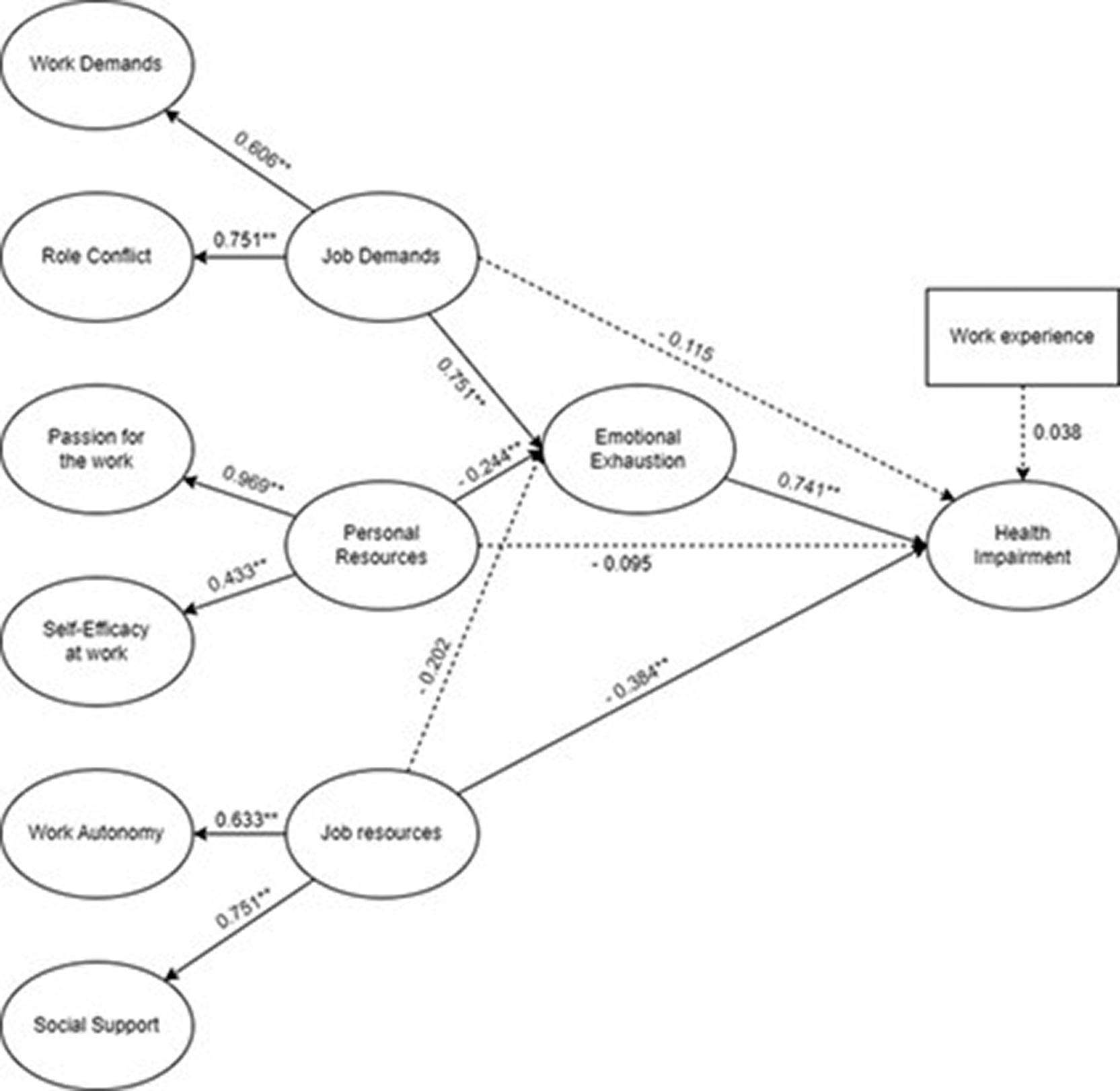
The model showed good fit to the data according to Kline’s (2023) criteria, with the following indices: CFI = 0.909, TLI = 0.901, χ2(647, N = 534) = 1574.954, p < 0.001, SRMR = 0.069, and RMSEA = 0.052 (CI = 0.049 to 0.055). In the measurement model, all constructs were specified as latent variables and estimated using confirmatory factor analysis (CFA). All factor loadings were statistically significant (p < 0.05 or 0.01) and ranged between 0.74 ad 0.89; see supplementary material (Table S2).
The results of the model’s path coefficients showed a significant positive relationship between job demands and emotional exhaustion and a negative relationship between personal resources and emotional exhaustion, while job resources have a negative relationship with health impairment and emotional exhaustion have a positive relationship with health impairment ( Table 4). We analysed the standardised total and specific indirect effects. The results ( Figure 2) show that two of the C.I. do not contain zero, confirming only two of the three hypothesised mediations. Emotional exhaustion fully mediates the relationship between job demands and health impairments (standardised indirect effect = 0.556, p < 0.001, C.I. = 0.332 to 0.781) and the relationship between personal resources and health impairments (standardised indirect effect = − 0.181, p < 0.044, C.I. = −0.357 to −0.005), while the specific total effect of job resources on health impairments is not significant (p < 0.228). Our model explained 68.5% of the variance in health impairment. We confirmed the full mediation of hypothesis 1 and hypothesis 3.
| Constructs | Mean | S.D. | 1 | 2 | 3 | 4 | 5 | 6 | 7 |
|---|---|---|---|---|---|---|---|---|---|
| 1. WD | 3.95 | 0.88 | -- | ||||||
| 2. RC | 3.45 | 1.05 | .40** | -- | |||||
| 3. SOC | 3.49 | 1.05 | −.09* | −.41** | -- | ||||
| 4. IW | 3.32 | 0.86 | −.12** | −.27** | .38** | -- | |||
| 5. PW | 4.18 | 1.46 | −.07 | −33** | .38** | .41** | -- | ||
| 6. EFF | 4.36 | 0.93 | .01 | −.10* | .15** | .36** | .46** | -- | |
| 7. EE | 3.45 | 1.06 | .47** | .41** | −.23** | −.25 | −.35 | −.16** | -- |
| 8. HI | 2.76 | 0.90 | .29** | .34** | −.32** | −.26** | −.33** | −.22 | .64** |
The aim of the present study was to investigate the mediating role of emotional exhaustion in the interplay between job demands, job resources, personal resources and health impairments in a sample of 534 public healthcare workers in Italy. Our findings, which follow on from recent studies on these topics (Bakker et al., 2023) confirm that emotional exhaustion plays a crucial role in predicting health impairment in public healthcare workers. We have gained valuable insights into the dynamics at play in this work environment. The model fits the data well and explains much of the variance in our independent variable. In support of hypothesis 1, our results confirmed that emotional exhaustion fully mediates the relationship between job demands (i.e., quantitative job demands and role conflict) and health impairments. This emphasises the central role of emotional exhaustion as a psychological mechanism through which high job demands translate into negative health outcomes in healthcare workers (Bakker et al., 2023). The findings emphasise the importance of targeted interventions aimed at reducing emotional exhaustion to mitigate the negative effects of excessive demands in healthcare. By addressing the root causes of job demands and promoting emotional resilience, organisations can significantly improve the wellbeing of their employees and reduce the risk of adverse health outcomes (West et al., 2018).
Contrary to our expectation, hypothesis 2 was not supported, as emotional exhaustion did not significantly mediate the relationship between job resources (i.e., social support and work autonomy) and health impairments. Instead, job resources showed a direct negative effect on health impairment. This result is partially consistent with the JD-R model, with Hypothesis 2, which postulates two different pathways: the health impairment process and the motivation process (Bakker et al., 2023). While the model suggests that job resources mitigate the effects of job demands and reduce emotional exhaustion by satisfying basic psychological needs, our results suggest that the protective role of job resources may bypass emotional exhaustion and directly influence health outcomes. This result differs somewhat from previous meta-analytic findings showing that job resources such as autonomy and social support are consistently, albeit modestly, negatively associated with emotional exhaustion (Aronsson et al., 2017; Charoensukmongkol et al., 2016).
One possible explanation for this discrepancy could lie in the context-specific nature of job resources in healthcare, where high emotional and cognitive stress can reduce the buffering capacity of these resources. Another interpretation is that job resources exert their positive effects not primarily by reducing fatigue, but by directly enhancing resilience and recovery, thereby improving overall health regardless of perceived emotional distress (Kinman et al., 2011). This would support the notion that job resources act as facilitators of well-being and not just as protective factors against burnout.
The results of our study support hypothesis 3 and show that emotional exhaustion fully mediates the relationship between personal resources – especially passion for work and self-efficacy at work – and health impairments. Our findings suggest that employees who exhibit greater self-efficacy and intrinsic motivation (i.e. passion for their work) are less likely to suffer from emotional exhaustion and are therefore less prone to health problems. This finding is consistent with previous research emphasising the protective role of self-efficacy in healthcare. Higher self-efficacy has been associated with better health outcomes, greater coping ability and lower psychological distress in healthcare professionals (Chae & Ha, 2021; Isaac et al., 2018).
Similarly, passion for work has been shown to be a motivating resource that sustains commitment and buffers emotional exhaustion. For example, Moreno-Jiménez et al. (2023) found that healthcare workers with high levels of passion for work experienced significantly lower daily emotional exhaustion, especially in high-stress environments such as intensive care units. Furthermore, these results are consistent with COR theory (Hobfoll, 1989), which states that people who have an abundant supply of internal resources are better able to resist resource depletion and thus protect themselves from emotional exhaustion and poor health outcomes. Self-efficacy and passion can therefore be seen as key personal resources that not only increase motivation but also protect against the stresses of a demanding work environment.
We should note some limitations of our research and the way we approached it. Firstly, our study was cross-sectional in nature, which limits the conclusions that can be drawn. A longitudinal study could have shown changes over time to eliminate cohort effects and provide more information about the development of the sample. Secondly, most participants were female, but this can also be seen as a strength, especially in the healthcare sector where women make up the majority of the workforce. Thus, our study also contributes valuable insights to the growing body of gender-sensitive occupational research and supports the development of interventions that are better tailored and more effective for female employees. Thirdly, the results of this study relate to a large organisation operating in the Italian NHS, so future studies may seek to identify these profiles in other countries.
The extensive mediating role of emotional exhaustion between job demands and health impairments emphasises the urgency of implementing systemic interventions aimed at reducing excessive workload and role conflict – the main factors for emotional distress. Organisational strategies such as optimising staff-patient ratios, improving task clarity and redesigning job processes can reduce work demands and thus reduce emotional exhaustion and its downstream health consequences. In addition, the direct protective effects of job resources on health impairments highlight the need for work environments that empower healthcare workers. Interventions that promote autonomy in clinical decision-making and strengthen collegial support networks – such as peer mentorship programmes or team-based care models – can promote resilience and improve well-being, even in high-pressure environments. Finally, the proven value of personal resources such as self-efficacy and passion for work suggests that interventions at the individual level should complement organisational initiatives. Programmes that focus on strengthening self-efficacy (e.g. skills training, feedback-rich environments) and promoting meaningful work (e.g. values alignment, job design workshops) could serve as effective tools to prevent emotional exhaustion and protect long-term health.
Overall, our findings suggest that an integrated approach that takes into account both the structural characteristics of the workplace and individual psychological resources is essential to maintain the health and performance of healthcare professionals. This approach is particularly important in public health systems where chronic understaffing and limited resources pose an ongoing challenge to workforce sustainability.
This study emphasises the central role of emotional exhaustion in mediating the effects of job demands and personal resources on health impairments in healthcare workers. While job resources exerted a direct protective effect, emotional exhaustion fully explained the effects of job demands and personal resources on health outcomes. These findings highlight the importance of addressing both organisational and individual factors to promote employee wellbeing. By reducing excessive demands, fostering a supportive work environment and strengthening personal resources such as self-efficacy and passion for work, healthcare organisations can better protect their employees from emotional distress and health deterioration — an essential step towards sustainable healthcare.
| Views | Downloads | |
|---|---|---|
| F1000Research | - | - |
|
PubMed Central
Data from PMC are received and updated monthly.
|
- | - |
Provide sufficient details of any financial or non-financial competing interests to enable users to assess whether your comments might lead a reasonable person to question your impartiality. Consider the following examples, but note that this is not an exhaustive list:
Sign up for content alerts and receive a weekly or monthly email with all newly published articles
Already registered? Sign in
The email address should be the one you originally registered with F1000.
You registered with F1000 via Google, so we cannot reset your password.
To sign in, please click here.
If you still need help with your Google account password, please click here.
You registered with F1000 via Facebook, so we cannot reset your password.
To sign in, please click here.
If you still need help with your Facebook account password, please click here.
If your email address is registered with us, we will email you instructions to reset your password.
If you think you should have received this email but it has not arrived, please check your spam filters and/or contact for further assistance.

Comments on this article Comments (0)