Keywords
asthma, pregnancy, β2-adrenergic receptor, polymorphism, asthma control

asthma, pregnancy, β2-adrenergic receptor, polymorphism, asthma control
Asthma is a heterogeneous chronic inflammatory airway disease characterized by variable respiratory symptoms and airflow limitation.1 It represents a significant global health burden, affecting an estimated 262 million people and causing 455,000 deaths worldwide, and it is particularly relevant among women of reproductive age because asthma is one of the most common chronic diseases in pregnancy.2,3 Genetic factors play a critical role in determining asthma susceptibility, severity, and response to therapy, alongside environmental influences.4,5
The β2-adrenergic receptor (β2-AR) is a key molecular target of β2-agonists and plays a central role in airway smooth muscle relaxation.6,7 Variations in the β2-AR gene (ADRB2), particularly the Arg16Gly (rs1042713) and Gln27Glu (rs1042714) polymorphisms, have been associated with altered receptor regulation/function, including enhanced receptor downregulation or desensitization and variable responsiveness to bronchodilators.8,9 These polymorphisms may influence airway reactivity, asthma severity, and treatment outcomes, thereby contributing to inter-individual variability in asthma phenotypes and disease control.8–10
Asthma during pregnancy is a clinically important condition, affecting approximately 4–10% of pregnancies overall, with reports reaching up to 12% in some populations.3 Poorly controlled asthma has been associated with adverse maternal and fetal outcomes, including preeclampsia, preterm birth, and low birth weight.3,11 However, the pregnancy-specific contribution of genetic factors, particularly β2-AR polymorphisms, to asthma susceptibility and control remains insufficiently characterized, and further work on personalized and pharmacogenomic approaches in this population is still needed.12
Recent advances in genetic and genomic studies have highlighted that asthma pathogenesis is shaped by complex interactions among multiple susceptibility loci and environmental exposures, rather than by single variants alone.13–15 However, pregnancy-specific precision, biomarker, and individualized trait-based studies in asthma remain limited, and whether such approaches improve outcomes in pregnant women is still uncertain.16 Investigating β2-AR (ADRB2) polymorphisms together with other genetic and environmental factors may therefore help clarify biologic heterogeneity and could support future identification of women at higher risk of poor asthma control during pregnancy. Therefore, this study aimed to evaluate the association between β2-AR Arg16Gly and Gln27Glu polymorphisms and asthma occurrence during pregnancy, and to assess their interaction in relation to asthma control.
A case–control study was conducted in Makassar, Indonesia, from June to December 2025.
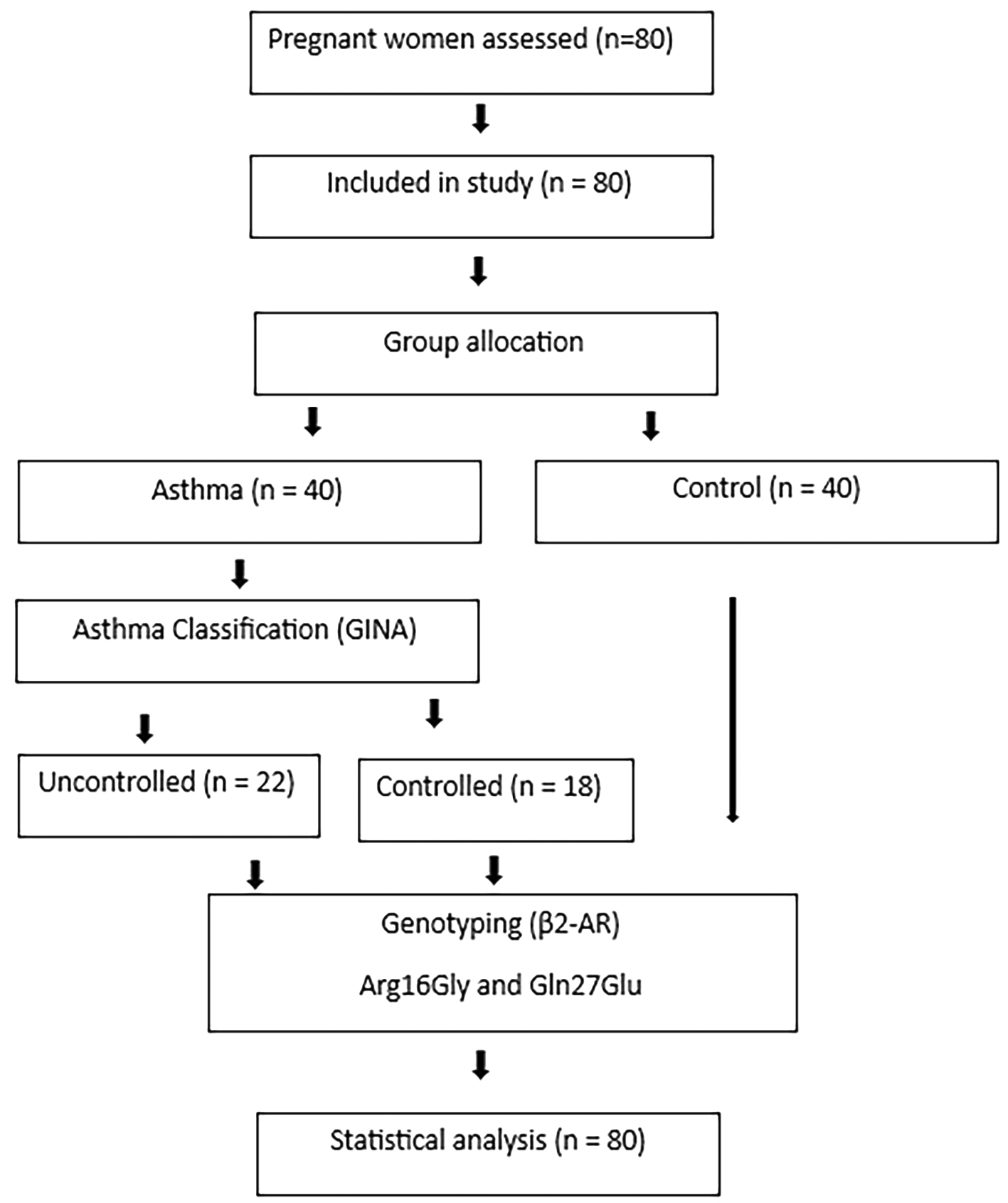
A total of 80 pregnant women were included, consisting of:
• 40 subjects with asthma during pregnancy (case group)
• 40 non-asthmatic pregnant women (control group)
Subjects were recruited from Wirahusada Medical Center, Indonesia.
Inclusion criteria:
• Pregnant women diagnosed with asthma based on clinical and GINA criteria
• Willing to participate and provide informed consent
Exclusion criteria:
Asthma classification
Asthma control was classified according to Global Initiative for Asthma (GINA) criteria into:
All patients subsequently followed the study flow, underwent genetic testing, and had their asthma control assessed. The overall research process up to data analysis is illustrated in Figure 1.
Genomic DNA was extracted from peripheral blood samples using a standard Chelex-based method. Approximately 3 mL of peripheral venous blood was collected from the cubital vein into EDTA-containing vacutainer tubes and stored at −20 °C until processing.
Prior to extraction, frozen samples were thawed in a 37 °C water bath. A total of 200 μL of whole blood was mixed with 800 μL of saponin solution and incubated at 4 °C for 5 minutes. The mixture was then centrifuged at 10,000 rpm for 10 minutes at room temperature. The supernatant was discarded, and the pellet was washed once with 500 μL of phosphate-buffered saline (PBS), followed by centrifugation at 4,000 rpm for 5 minutes. This washing step was repeated three times.
Subsequently, 150 μL of distilled water (ddH2O) and 20% Chelex solution were added to the pellet. The mixture was heated in boiling water (100 °C) for 10 minutes and then centrifuged at 10,000 rpm for 10 minutes. The supernatant containing genomic DNA was transferred into a new microtube and used as a template for polymerase chain reaction (PCR). PCR amplification was performed using two pairs of primers targeting β2-adrenergic receptor (β2-AR) gene polymorphisms at codons 16 (Arg16Gly) and 27 (Gln27Glu).
The primer sequences were as follows:
Arg16Gly polymorphism
Forward (5′-CGCCTTCTTGCTGGCACCCAAT-3′)
Reverse (5′-CCAACTACTTCATCACTTCACTGG-3′)
Gln27Glu polymorphism
Forward (5′-GAATGAGGCTTCCAGGCGTC-3′)
Reverse (5′-GGCCCATGACCAGATCAGCA-3′)
Each PCR reaction mixture contained approximately 100 ng of genomic DNA template, PCR buffer (10 mM Tris-HCl, pH 8.3; 50 mM KCl), 1.5 mM MgCl2, 200 μM dNTPs, 1.25 U Taq DNA polymerase, and 10 pmol of each primer in a final reaction volume adjusted with nuclease-free water.
PCR amplification was carried out in a thermal cycler with the following conditions: initial denaturation at 94 °C for 2 minutes, followed by 30 cycles of denaturation at 94 °C for 30 seconds, primer annealing at 55 °C for Arg16Gly polymorphism and 60 °C for Gln27Glu polymorphism (each for 30 seconds), and extension at 72 °C for 1 minute. A final extension step was performed at 72 °C for 5 minutes.
The PCR products were purified using a commercial purification kit (Qiagen, Germany) according to the manufacturer’s instructions. DNA sequencing was performed using an automated sequencer (ABI Prism, USA). Sequencing reactions were carried out in a unidirectional manner, using conditions similar to PCR amplification, consisting of 30 cycles of denaturation at 96 °C, annealing at 50 °C, and extension at 60 °C.
Following sequencing, the products were subjected to polyacrylamide gel electrophoresis and analyzed using the automated sequencer system. The resulting gel images were processed using dedicated software to generate electropherograms, which were subsequently interpreted to determine genotype variations.
A total of 80 pregnant women were included, comprising 40 subjects with asthma and 40 non-asthmatic controls. The mean age did not differ significantly between groups (28.02 ± 5.17 vs 28.02 ± 4.26 years; p = 0.96). Among the asthma group, 22 (55%) were classified as uncontrolled and 18 (45%) as controlled based on GINA criteria ( Table 1).
The Arg16Arg genotype was more frequent among subjects with asthma compared to controls (68.0% vs 32.0%). This genotype was associated with a significantly increased risk of asthma during pregnancy (OR = 2.95; 95% CI: 1.09–8.00; p = 0.05) ( Table 2).
| Genotype | Asthma (n = 40) | Control (n = 40) | OR | 95% CI | p-value |
|---|---|---|---|---|---|
| Arg16Arg | 17 (68.0%) | 8 (32.0%) | 2.95 | 1.09–8.00 | 0.05 |
| Non-Arg16Arg | 23 (41.8%) | 32 (58.2%) | Reference | — | — |
In contrast, the Gln27Gln genotype was more common in the asthma group than in controls (58.2% vs 45.2%), but this difference was not statistically significant (OR = 2.42; 95% CI: 0.8–7.2; p = 0.10) ( Table 3).
Analysis of genotype interaction demonstrated that subjects with the combined Arg16Arg + Gln27Gln genotype had a significantly higher risk of asthma compared to those with non-Arg16Arg + non-Gln27Gln genotypes (OR = 4.38; p = 0.03) ( Table 4). No analysis could be performed for the Arg16Arg + non-Gln27Gln group due to the absence of subjects in this category.
Among asthmatic subjects, the Arg16Arg genotype was significantly associated with uncontrolled asthma (76.5% vs 23.5%; OR = 5.05; 95% CI: 1.2–20.2; p = 0.01) ( Table 5).
| Genotype | Uncontrolled | Controlled | OR | 95% CI | p-value |
|---|---|---|---|---|---|
| Arg16Arg | 13 (76.5%) | 4 (23.5%) | 5.05 | 1.2–20.2 | 0.01 |
| Non-Arg16Arg | 9 (39.1%) | 14 (60.9%) | Reference | — | — |
Similarly, the Gln27Gln genotype was associated with an increased risk of uncontrolled asthma (61.8% vs 38.2%; OR = 8.07; 95% CI: 0.64–22.6; p = 0.04) ( Table 6).
The combined Arg16Arg + Gln27Gln genotype markedly increased the risk of uncontrolled asthma compared to non-Arg16Arg + non-Gln27Gln (OR = 16.25; p = 0.01) ( Table 7). No subjects were identified in the Arg16Arg + non-Gln27Gln subgroup.
Pregnancy complications were slightly more frequent in the asthma group compared to controls (2.5% vs 0%), but this difference was not statistically significant (p = 0.31) ( Table 8). Similarly, no significant difference was observed between uncontrolled and controlled asthma groups (p = 0.36) ( Table 9).
| Group | Complications | Normal | OR | 95% CI | p-value |
|---|---|---|---|---|---|
| Asthma | 1 (2.5%) | 39 (97.5%) | 1.01 | 0.95–1.02 | 0.31 |
| Control | 0 | 40 (100%) | Reference | — | — |
| Group | Complications | Normal | OR | 95% CI | p-value |
|---|---|---|---|---|---|
| Uncontrolled | 1 (4.5%) | 21 (95.5%) | 1.01 | 0.87–1.04 | 0.36 |
| Controlled | 0 | 18 (100%) | Reference | — | — |
Fetal complications were observed in 5% of asthmatic pregnancies and none in controls, but the difference was not statistically significant (p = 0.15) ( Table 10). No significant association was found between asthma control status and fetal complications (p = 0.83) ( Table 11).
| Group | Complications | Normal | OR | 95% CI | p-value |
|---|---|---|---|---|---|
| Asthma | 2 (5%) | 38 (95%) | 0.95 | 0.47–1.02 | 0.15 |
| Control | 0 | 40 (100%) | Reference | — | — |
The absence of a significant age difference between groups suggests that maternal age was unlikely to explain the observed association between ADRB2 polymorphisms and asthma in this study. The more important baseline finding was that 55% of pregnant women with asthma were classified as uncontrolled, indicating a clinically high-risk cohort. This is relevant because recent open-access literature shows that asthma in pregnancy is highly heterogeneous, with multiple treatable traits influencing disease expression, while poor control and exacerbations remain the main drivers of adverse maternal and perinatal risk. Recent cohort evidence also indicates that exacerbation risk during pregnancy is shaped largely by modifiable clinical factors, including prior exacerbations, reduced inhaled corticosteroid use, smoking, and obesity. Therefore, the baseline profile of this study supports the interpretation that the subsequent genotype associations were observed in a population with substantial instability of asthma control, rather than being explained by demographic imbalance alone.16–18
The higher frequency of the Arg16Arg genotype in the asthma group suggests that ADRB2 rs1042713 may contribute to asthma susceptibility in this cohort.19 This interpretation is supported by recent open-access evidence showing that the Arg 16Gly variant was associated with increased bronchial asthma risk in a Sudanese case–control study, while contemporary pharmacogenetic literature continues to identify ADRB2 as an important determinant of inter-individual variability in β2-agonist response and asthma control.20 In addition, sequence-based data from a Brazilian asthma population indicate that the distribution and clinical impact of ADRB2 variants may differ across populations because allele frequencies are influenced by ethnic composition and population structure.21 Therefore, the present finding is biologically credible, but it should still be interpreted cautiously because the effect of rs1042713 is likely context-dependent and requires confirmation in larger pregnancy-specific cohorts.
Although the Gln27Gln genotype was more frequent in the asthma group, the association was not statistically significant, suggesting that ADRB2 rs1042714 may not act as a strong independent determinant of asthma during pregnancy in this cohort. This finding is consistent with previous studies showing that the effect of Gln27Glu is less consistent than Arg16Gly and may vary across populations and clinical outcomes.22 Previous research has shown that rs1042714 is more often associated with differences in lung function and bronchodilator response rather than with asthma susceptibility itself.10 In addition, earlier pharmacogenetic studies have reported that the clinical impact of ADRB2 variants is influenced by ethnic background, environmental exposure, and treatment context, which may explain the non-significant result observed in the present study.23 Therefore, the higher proportion of Gln27Gln in the asthma group may indicate a possible trend, but the current data do not support a definitive association.
The markedly higher asthma risk in subjects with the combined Arg16Arg + Gln27Gln genotype suggests that the contribution of ADRB2 in this cohort may be better captured through a combined genotype profile than through single-polymorphism analysis alone. This interpretation is consistent with previous studies showing that ADRB2-guided treatment strategies improve clinical outcomes and reduce exacerbations, indicating that the clinical impact of β2-receptor variation becomes clearer when genetic information is interpreted in an integrated manner rather than as an isolated marker.24,25 Previous genomic reviews have also shown that asthma heterogeneity is driven by multiple interacting traits, and that precision-based stratification is more informative than one-variant models.15 Therefore, the significant interaction observed in this study may reflect a cumulative functional effect of codon 16 and codon 27 variants on β2-AR signaling, although this finding should still be interpreted cautiously because one genotype subgroup was absent and the sample size was limited.
The strong association of Arg16Arg with uncontrolled asthma, together with the much larger effect observed for the combined Arg16Arg + Gln27Gln genotype, suggests that in this cohort ADRB2 variation is more closely related to disease control than to asthma diagnosis alone. This interpretation is consistent with previous open-access studies showing that ADRB2 variants are associated with differences in bronchodilator response and asthma control, and that rs1042713 contributes to inter-individual variability in salbutamol responsiveness. Clinically, this finding is relevant because recent pregnancy-specific open-access evidence shows that uncontrolled asthma and exacerbations, rather than asthma alone, are the main drivers of adverse obstetric risk, especially preeclampsia. Therefore, the absence of a significant difference in maternal and fetal complications in the present study should be interpreted cautiously and may reflect limited sample size rather than absence of biological effect. In the same context, the association between Gln27Gln and uncontrolled asthma should also be read carefully because the confidence interval was wide, indicating limited precision despite the observed positive trend.9,26,27
The Arg16Arg genotype is associated with an increased risk of asthma during pregnancy, while the Gln27Gln genotype is associated with uncontrolled asthma. The interaction between Arg16Arg and Gln27Gln genotypes significantly increases the risk of asthma occurrence (OR = 4.38) and uncontrolled asthma (OR = 16.25). No significant associations were found between asthma status and maternal or fetal complications.
This study was approved by the Ethics Committee of Hasanuddin University (Approval No: No: 778/UN4.6.4.5.31/PP36/2025; Date: 1 May 2025). Written informed consent was obtained from all participants prior to inclusion in the study. A template of the informed consent form, along with the ethical approval certificate, has been deposited in the Zenodo repository and is publicly accessible at https://doi.org/10.5281/zenodo.19674229.28 All patient data were anonymized prior to analysis to ensure confidentiality and privacy.
| Views | Downloads | |
|---|---|---|
| F1000Research | - | - |
|
PubMed Central
Data from PMC are received and updated monthly.
|
- | - |
Provide sufficient details of any financial or non-financial competing interests to enable users to assess whether your comments might lead a reasonable person to question your impartiality. Consider the following examples, but note that this is not an exhaustive list:
Sign up for content alerts and receive a weekly or monthly email with all newly published articles
Already registered? Sign in
The email address should be the one you originally registered with F1000.
You registered with F1000 via Google, so we cannot reset your password.
To sign in, please click here.
If you still need help with your Google account password, please click here.
You registered with F1000 via Facebook, so we cannot reset your password.
To sign in, please click here.
If you still need help with your Facebook account password, please click here.
If your email address is registered with us, we will email you instructions to reset your password.
If you think you should have received this email but it has not arrived, please check your spam filters and/or contact for further assistance.

Comments on this article Comments (0)