Keywords
open science, research culture, research technicians, technology and skills specialists, research technical professionals, research integrity, reproducibility, robustness, technical expertise

This article is included in the Research on Research, Policy & Culture gateway.
open science, research culture, research technicians, technology and skills specialists, research technical professionals, research integrity, reproducibility, robustness, technical expertise
Crises of trust, reproducibility, and accountability are reshaping how scientists conduct and how the public perceive research. Concerns over the replication crisis,1–3 the limited reusability of research outputs (e.g., data, code, and protocols),4–7 and high-profile cases of research misconduct8–10 have highlighted systemic issues in contemporary science. Open science11 is increasingly seen as a response and solution to these challenges: by mandating that research outputs be openly accessible, it facilitates scrutiny and replication, thereby contributing to the strengthening of scientific integrity and public trust.12,13 Beyond issues of access and replication, open science also aspires to transform research culture by promoting collaboration, advancing equitable dissemination of knowledge, and recognising diverse forms of scholarly contribution.14–17 Such practices of transparency and inclusivity serve to enhance accountability and credibility, thereby reinforcing both the reliability of scientific knowledge and confidence in science among the public and peers.13,18 The momentum behind open science is evident in its promotion by international organisations,11,19–21 funder mandates,20,22–25 institutional frameworks and community-led initiatives.26–28 The rapid mobilisation of knowledge, accelerated by artificial intelligence (AI) tools that use publicly available information, including open access scientific papers, further underscores the need to ensure the credibility and robustness of scientific outputs.29
However, increasing engagement in open science requires more than a set of guidelines or technical infrastructure. It depends on people who conduct the research and on their receiving appropriate training, recognition and reward for their involvement in open science practices. To date, most investments in awareness-raising and training initiatives have been directed toward students and early career researchers, with the scholarly literature similarly concentrating on these researchers’ attitudes, behaviours, and adoption of open science practices.30–33 In contrast, research technicians and technology and skills specialists (here collectively referred to as research technical professionals or RTPs),34 including but not limited to laboratory technicians, data engineers, archivists, informaticians, data scientists, statisticians, software developers, audio-visual technologists, technical professional staff and individuals staffing core facilities, have largely been left out of these initiatives and opportunities. This omission persists despite their critical contributions to research, including providing core technical expertise, operating and maintaining essential infrastructure, developing new methodologies, and training researchers and students.35 In particular, these professionals are frequently engaged in the most crucial stages of research projects, including study planning, methods development, data collection and curation, and the management and operation of specialised equipment.34 Their expertise not only ensures the rigour, efficiency and reproducibility of research processes and outputs, but also underpins the success of academic researchers and contributes to the development of a positive research culture. Yet despite their significant contributions, RTPs are frequently overlooked in research recognition and assessment processes, and are not consistently regarded as key research personnel.36,37 Counteracting this omission, we here offer an opinion piece grounded in existing literature, policy developments and the authors’ professional experience across research, academic, and technical roles.
The lack of acknowledgment of RTPs’ essential role is particularly relevant to open science. Open science relies on robust methods, high-quality data, reproducible workflows, and reliable infrastructure. Embedding open science principles into the stages of the research lifecycle in which RTPs are most involved would not only increase the visibility of their contributions but also accelerate the implementation of open practices across research teams. Recognising their contributions within assessment frameworks would make it possible to better identify the support they require, design appropriate training opportunities, and strengthen their career development pathways. In turn, this investment would generate cascading benefits by embedding open and reproducible practices in the training they provide to students and colleagues, and reinforcing the rigour of research outputs.
Open science policies and reforms, however, have largely emphasised the responsibilities of academic researchers while treating technical professionals as support staff.38 Given their critical role in maintaining research quality, reproducibility, and sustainability, excluding RTPs from training, recognition, and policy processes is likely to limit the feasibility and long-term impact of open science. This opinion article argues that recognising and integrating RTPs more systematically offers a significant opportunity: by involving them at a structural level, stakeholders can accelerate the adoption of open practices, enhance the reliability of research outputs, and strengthen the wider cultural and institutional foundations of open science.
Science today faces three interconnected challenges that threaten its reliability, efficiency and societal credibility: reproducibility, low reusability of research outputs, and misaligned incentives. These challenges emerge at different stages of the research lifecycle, from project planning to dissemination, creating the very problems that open science seeks to address. Understanding where and how they emerge is key to identifying the points at which research technical professionals (RTPs) can act as catalysts for improvement.
The reproducibility crisis, a term often used to describe failures of reproducibility and replication, refers to the failure to obtain the same or consistent results when research is repeated, whether by re-running the original data and code or by conducting new studies using the original protocols under similar conditions.1,2,39–41 While expectations around reproducibility, replicability, standardisation and the meaning of “data” vary widely across disciplines and epistemic cultures, reproducibility is particularly important in STEM contexts where methodological rigour, documentation and transparency are critical. Reproducibility promotes transparency, accountability, and verification, which are at the heart of open science. When studies cannot be reliably reproduced, this often indicates issues in research practices such as selective or incomplete reporting of methods, analyses, or workflows, limited or absent sharing of data, code, or computational environments, and insufficient metadata or poor documentation that prevent replication of analytical conditions.39–41 Beyond reproducibility alone, RTPs contribute to research quality across disciplines through practices such as robust documentation, consistency in data collection and processing, transparency of workflows, and the long-term usability and stewardship of research outputs, even in contexts where direct replication may not be the primary goal.
In response, the need to improve reproducibility of research findings has driven increased awareness across the research community,3,42 leading to the emergence of national and international open science initiatives that promote openness and shared standards such as UNESCO’s Recommendation on Open Science,11 the UK Reproducibility Network, Center for Open Science, and community efforts like CodeCheck43 and FORRT.44 Yet the effectiveness of these and similar initiatives depends on the capacity and support structures available within institutions.42,45 RTPs who are involved in designing workflows and methods, maintaining infrastructure, and training researchers, are pivotal in embedding reproducible and verifiable practices, where relevant, throughout the research process.
A lack of transparency and reproducibility directly limits the reusability of research outputs. Reusability refers to the capacity of others to access and use any research output (e.g., protocols, data, code) to address new research questions, something that is essential for meta-research and cumulative science, including meta-analyses and mega-analyses. However, it remains hampered by lack of standardisation, fragmentation and insufficient metadata.46–49 The rapid adoption of AI tools further raises concerns about data privacy, security and ethics.50 As research increasingly informs decision-making in sectors such as healthcare, education, and governance, the need for transparent, accessible, and reusable outputs has become paramount.18,51–53 In response, major research funders (e.g., NIH, Horizon Europe, Gates Foundation, UKRI), repositories and scientific journals have issued policies and recommendations to promote responsible sharing of research outputs.54,55 Yet, despite these requirements, responsibility for implementation often falls on individual researchers without adequate institutional or technical support.45,56
Finally, misaligned incentives in research assessment and career progression perpetuate poor practices and exclude the contributions of certain research professionals.30,57,58 This challenge is structural, manifesting across the entire academic system and favouring individual outputs, publication volume, and short-term productivity, over the core open science values of collaboration, transparency, reproducibility, and data stewardship. Initiatives such as the San Francisco Declaration on Research Assessment (DORA)59 and the Coalition for Advancing Research Assessment (CoARA)60 advocate for more holistic evaluation frameworks that recognise diverse contributions, including technical expertise, open science practices, and team science. However, implementation remains inconsistent, with few mechanisms to reward the contributions that improve long-term reproducibility and integrity.3,57,61 This persistent structural barrier underscores the need for RTPs’ involvement to help create the supportive environment necessary to make open science reforms practical and sustainable.
Despite years of global effort, ongoing challenges in ensuring research robustness, reproducibility, transparency, and integrity continue to sustain a gap between open science policy aspirations and everyday academic practice. The UNESCO Recommendation on Open Science (2021) laid out a shared vision for more equitable and collaborative research, yet nearly five years later, progress remains uneven.11 The Open Science: Monitoring Progress, Assessing Impact conference (July 2025) revealed that barriers such as limited awareness, fragmented data practices, insufficient institutional coordination, and structural constraints in research assessment persist.62 Moreover, access to and benefits from open science remain uneven due to disparities in funding, skills, and tools. While policies have proliferated and researchers are increasingly expected to adopt open science practices, the pace of change has been slow and uneven across disciplines and institutions.63 It is in this context that the role of RTPs - who have so far received limited attention in the open science discourse - may be productively mobilised.
Research technical professionals (RTPs) are uniquely positioned to help address persistent challenges in science. Their direct involvement in the processes through which research outputs are created, and their position in research teams places them in a distinct position to accelerate meaningful and sustainable change. Their contribution rests on three capacities: A) Embeddedness in Data and Methods, B) Institutional Memory and Disciplinary Knowledge, and C) Culture of Support and Mentorship. Each of these captures a distinct aspect of how RTPs enable and sustain open research practices, as summarised in Figure 1 (Boxes A-C).
A. Embeddedness in Data and Methods: RTPs’ close involvement across the research lifecycle including contribution to research workflows, methodologies, and data management enables them to ensure transparency, consistency, and reproducibility from the very beginning of a research project. They are directly engaged in conducting research, establishing and adapting methods, troubleshooting experimental issues, and providing guidance to colleagues. Through this continuous engagement, RTPs ensure that open science practices such as transparent methods, accessible data and clear provenance are integrated into daily research practice rather than applied retrospectively ( Figure 1A).
B. Institutional Memory and Disciplinary Knowledge: While researchers’ level of direct technical engagement often declines with career progression, RTPs retain long-term, practice-based expertise that sustains methodological continuity and institutional memory.64 Their sustained involvement enables them to preserve institutional standards, adhere to compliance frameworks, ensure procedural consistency across projects, and support the ongoing application of open science principles such as documentation, data transparency, and reproducibility. In this way, they act as custodians of accumulated technical and methodological knowledge, helping to ensure institutional expertise is not lost during staff turnover35,37,65 ( Figure 1B).
C. Culture of Support: RTPs foster a culture of openness and collaboration through training, mentoring, and sustained engagement with researchers. They routinely teach new staff and students in established methods and practices, supervise or provide feedback on experimental approaches, and encourage adherence to established standards.35,66 By modelling collaborative approaches and promoting credit-sharing, RTPs expand the collective capacity of research teams and help normalise open and reproducible practices within research cultures ( Figure 1C).
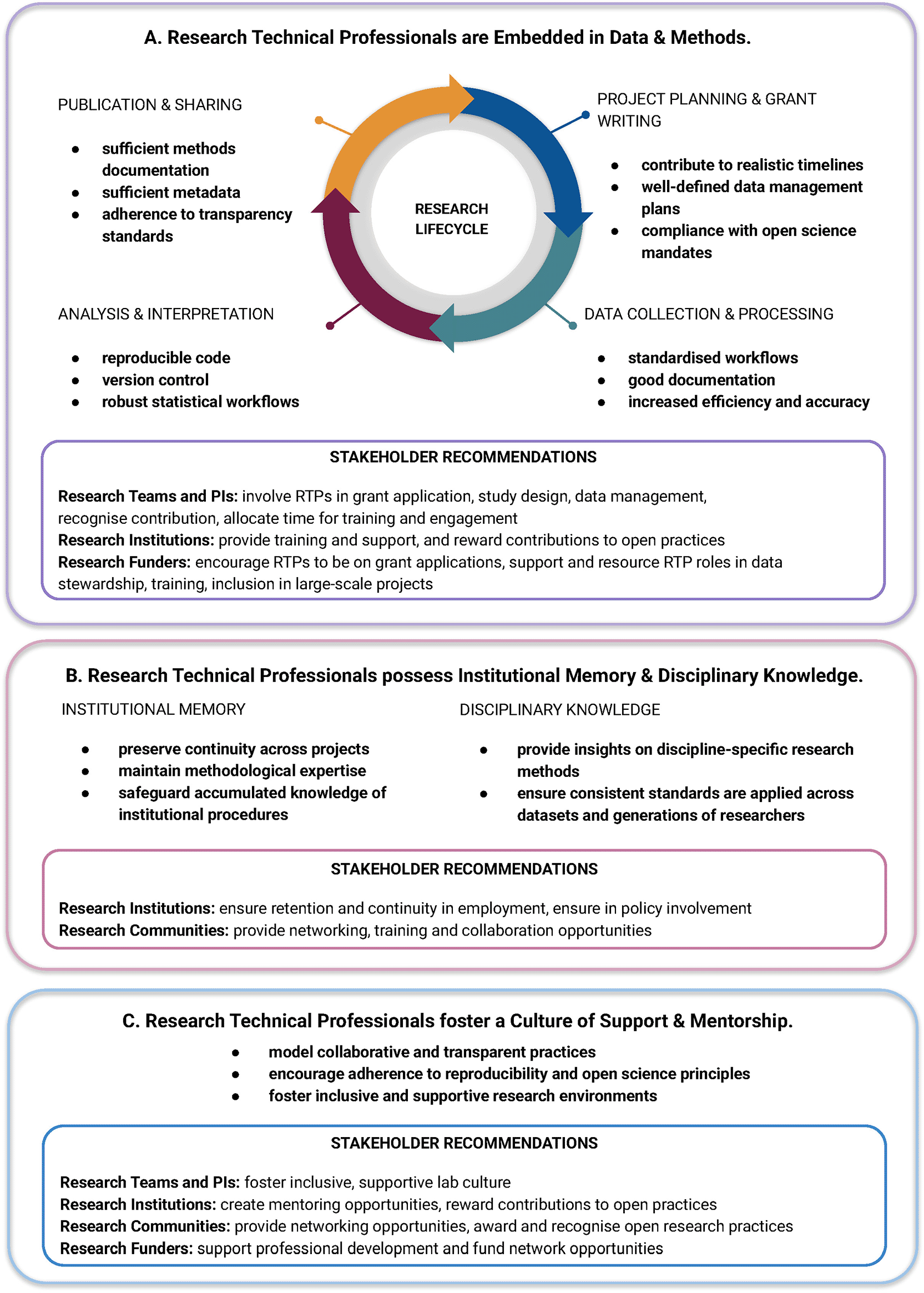
Each box (A-C) represents core capacities through which RTPs contribute to open and reproducible research, along with corresponding Stakeholder Recommendations boxes outlining required actions by Research Teams & PIs, Institutions, Funders, and Research Communities. A. Research Technical Professionals are Embedded in Data & Methods. RTPs’ contributions are mapped across the research lifecycle and stakeholder actions are outlined to ensure embedding open science in practice. B. Research Technical Professionals possess Institutional Memory & Disciplinary Knowledge. RTPs’ roles in preserving methodological expertise and ensuring continuity, alongside stakeholders’ actions to support RTPs’ career stability, institutional integration and networking. C. Research Technical Professionals foster a Culture of Support & Mentorship. RTPs’ contributions to fostering collaborative, transparent research environments, with corresponding recommendations to recognise and resource mentoring and training roles.
Thanks to these capacities, RTPs are uniquely positioned to advance open science in practice. By embedding reproducibility from a project’s start, maintaining continuity across datasets and protocols, and mentoring researchers in best practices, they directly enhance both the reliability and reusability of scientific outputs. Moreover, through their influence on research culture, RTPs promote collaboration, openness, and adherence to transparency standards, creating the conditions necessary for open science to move from policy aspiration to everyday practice. In short, empowering RTPs not only strengthens the technical foundation of research but also translates open science from a policy aspiration into an operational and cultural reality.
We argue that despite their critical role in enabling open and reproducible research, research technical professionals (RTPs) face systemic challenges that can limit their visibility, engagement, and influence in shaping the open science landscape. Although they hold the expertise needed to strengthen transparency and knowledge transfer, their formal inclusion in research planning and recognition structures remains inconsistent.
RTPs’ contributions are often not fully recognised, and their participation is frequently not facilitated or encouraged during the early stages of project design, where decisions about data management, methods, and dissemination are made. Authorship conventions and institutional performance indicators tend to prioritise individual publication outputs, limiting recognition of technical and collaborative contributions that underpin open science. In our view, this exclusion does not reflect a lack of value but rather a structural gap in how roles are defined and rewarded within the current system.
In addition to limited recognition, RTPs encounter limited opportunities for professional development and resourcing. Funding streams for training, mobility, and networking are frequently directed toward researchers, leaving many RTPs without the resources to stay current with evolving standards in data stewardship, reproducibility and open science. This constrains their ability to introduce innovations and to act as effective bridges between researchers, institutions, and often external infrastructures. Recent initiatives, such as CASDAR for data stewards,67 are beginning to address these disparities by facilitating networking and knowledge exchange among professional communities.
RTPs are also underrepresented in policy and governance processes. While they are commonly responsible for implementing data management and compliance frameworks, they are rarely included in formulation of institutional or national policies. As a result, open science guidelines can be aspirational but misaligned with the operational realities of research environments, reducing both their uptake and their practical impact.
Finally, the structural precarity of many RTPs roles undermines the sustainability of their contributions. Positions tied to short-term projects or grant cycles make it difficult to retain expertise and continuity, counteracting RTPs’ capacity to preserve institutional memory. While permanent contracts are not always feasible, several mechanisms can enhance staff continuity and retention. Institutional affiliation frameworks can help address this challenge by establishing formal links between project-funded staff and their host institutions through mechanisms often reserved for permanent employees such as affiliate or associate status, inclusion in institutional training programmes, or participation in research communities of practice. Such frameworks provide ongoing institutional recognition and access to career development opportunities. Additionally, dedicated career tracks such as those developed under the UK Technician Commitment68 formalise professional progression pathways and align technical expertise with institutional missions in research and innovation. Together, these approaches ensure that RTPs’ knowledge remains embedded over the long-term within research institutions.
Collectively, these challenges constrain RTPs’ potential to accelerate the transition toward transparent, sustainable and inclusive research practices. From our perspective, addressing them requires coordinated action from across research teams, institutions, research communities, and funders to strengthen pathways for recognition, training, inclusion, and long-term capacity building, thereby enabling RTPs to fulfil their central role in realising open science in practice.
In the research landscape, each stakeholder plays a crucial and complementary role to support RTPs. The following actions reflect our proposed approaches, illustrating both immediate opportunities and long-term strategies:
PIs and their teams are at the forefront of producing scientific knowledge and shaping the culture of openness. Their leadership is most effective when it recognises the specialised expertise and professional value that RTPs bring to the research process. By integrating RTPs into grant writing, study design, data management, training, and recognition processes, research teams can unlock the full potential of technical expertise in supporting reproducible, robust and transparent workflows.
While many RTPs hold permanent positions69 and are embedded within research infrastructures, others are employed on fixed-term contracts linked to specific projects. This diversity creates both opportunities and challenges for integration. Permanent RTPs can contribute directly to the design and costing of new proposals, ensuring methodological feasibility and alignment with open science requirements. The expertise and training needs of project-based RTPs should likewise be anticipated and budgeted for within grant proposals, even if they are not yet identified at the proposal stage. Accounting for RTPs’ training, development, and engagement costs ensures continuity of expertise and supports a sustainable culture of reproducible research across projects. The responsibilities of PIs and research teams towards the inclusion and recognition of RTPs can be summarised as follows:
RTPs are essential for reproducibility and robustness across the research lifecycle: RTPs (permanent staff ) must be consulted and integrated from the project proposal stage (grant inclusion) through study design, data management, and analysis. Their expertise ensures methodological feasibility, robust workflows, standardised data management (FAIR practices), and transparent, validated data processing pipelines ( Figure 1A, Stakeholder Recommendations).
RTPs’ contributions must be recognised and attributed fairly: RTPs’ contributions should be recognised formally, moving beyond token acknowledgments. This recognition should take the form of authorship and the application of frameworks such as the CRediT taxonomy70 to specify their roles and contributions to project outputs ( Figure 1A, Stakeholder Recommendations).
Investment in RTPs’ development and networking is necessary: Training, development, and networking costs for RTPs should be explicitly costed and justified within grant proposals. Time and resources must be allocated for RTPs to pursue professional growth through workshops, conferences, and collaborative networks. These investments ensure their skills remain up-to-date and their expertise continues to underpin reproducible and open research ( Figure 1A and 1C, Stakeholder Recommendations).
Institutions provide the infrastructure, policies, and incentives necessary to adopt open science practices and values. Their role in supporting RTPs is both structural and cultural, encompassing training, career stability, and recognition:
Retention and professional development are key to sustaining the RTP workforce: To maintain a skilled and resilient RTP community, institutions must prioritise both training and career stability. This involves offering comprehensive training in open science principles, reproducibility, and data stewardship, alongside creating secure employment pathways and internal mobility schemes that safeguard methodological continuity ( Figure 1A-1C, Stakeholder Recommendations).
RTPs must be integrated and rewarded for driving open science: Institutions should formally integrate RTPs into governance and policy-making processes, ensuring their expertise shapes practical, implementable open science frameworks. RTPs’ contributions to open practices, reproducibility, and FAIR-aligned data management should be recognised and incentivised through promotion criteria, internal awards, and structured career development opportunities ( Figure 1B and 1C, Stakeholder Recommendations).
Communities such as scientific societies and grassroots organisations play a key role in fostering cultural change and providing venues for recognition and dissemination. By connecting RTPs across institutions and disciplines, these communities strengthen knowledge sharing and promote the adoption of best practices in research:
Networking and collaboration strengthen the RTP ecosystem: Communities should actively include RTPs in networking, training, and knowledge-exchange events. Facilitating participation in collaborative networks ensures that technical expertise informs the development of shared standards and best practices across disciplines ( Figure 1B and 1C, Stakeholder Recommendations).
Recognition drives cultural change: Establishing dedicated awards and honours for technical contributions highlights the critical role of RTPs in advancing open, reproducible research. Visible recognition at community and disciplinary levels helps shift the culture towards valuing technical excellence as integral to scientific achievement ( Figure 1B and 1C, Stakeholder Recommendations).
Funders have a strategic role in setting expectations and providing resources for open science, as well as in recognising RTPs as key professionals and supporting or requiring their inclusion in grant applications:
RTPs should be formally included and supported in funding structures: Funders should encourage RTPs to be recognised as key personnel or co-leads in grant applications. This formal inclusion strengthens methodological feasibility and accountability in project delivery ( Figure 1A, Stakeholder Recommendations).
Dedicated funding for training and community engagement is essential: Grant mechanisms should mandate or strongly encourage the allocation of resources for technician training, conference attendance, and engagement with professional networks. Such funding builds capacity and ensures RTPs’ expertise remains at the cutting edge of evolving research practices ( Figure 1A and 1C, Stakeholder Recommendations).
Technical expertise must be embedded in large-scale initiatives: Major projects should be required to integrate RTP roles in data stewardship, workflow standardisation, and FAIR-aligned practices. This ensures long-term sustainability, accessibility, and reproducibility of research outputs ( Figure 1A and 1C, Stakeholder Recommendations).
To summarise, building a culture of reproducibility and openness requires coordinated action across the research ecosystem. Principal Investigators, institutions, research communities, and funders each hold distinct but interdependent responsibilities in valuing, integrating, and sustaining RTPs. Recognising and resourcing RTPs’ expertise ensures methodological robustness, data transparency, and the long-term resilience of research infrastructures. Only through collective commitment to providing training, fair recognition, and structural inclusion can the full potential of RTPs be realised in advancing open and reproducible science (see Figure 1).
Recent national initiatives demonstrate two distinct yet complementary approaches to integrating research technical professionals into the open science landscape: the United Kingdom’s broad-based research technicians professionalisation model and the Netherlands’ targeted data stewardship framework.
The UK has taken a comprehensive approach, embedding RTPs’ recognition and development into the wider research system. The TALENT Programme (2020–2025), led by the Midlands Innovation consortium and funded by Research England, generated evidence, policy recommendations, and practical interventions that laid the groundwork for systemic change. Building on TALENT’s outcomes, the UK Institute for Technical Skills & Strategy (ITSS) was established in 2023, hosting the Technician Commitment (now with over 120 institutional signatories) and supported by funders such as UKRI and the Wellcome Trust. These initiatives unite research, policy, and practice to enhance visibility, recognition, and sustainability of technical careers, supported by professional bodies such as the Institute of Science & Technology (IST), which provides structured recognition via professional registrations (RSciTech, RSci, CSci), alongside training, Continuing Professional Development (CPD) and inclusive governance.
Funders have also played a central role in embedding support for RTPs within research funding structures. UK Research and Innovation (UKRI), a signatory to the Technician Commitment, has incorporated explicit recognition of technical roles into its grant guidance by clarifying cost eligibility for TRAC-qualified research, including infrastructure-related estates and indirect costs. Through its People and Teams Action Plan,71 UKRI further reinforces the Commitment’s objectives by addressing career precarity and promoting sustainable technical career pathways across the research system.
However, despite this strong national infrastructure and various initiatives, explicit integration of RTPs into open science frameworks remains underdeveloped. The focus has largely been on workforce development and recognition, with limited articulation of how these initiatives directly accelerate transparency, data sharing, and reproducibility.
In contrast, the Netherlands has embedded RTP roles directly within the open science agenda through the professionalisation of data stewardship. The National Programme of Open Science (NPOS) report Professionalising Data Stewardship in the Netherlands (2021)72 laid out a national roadmap with eight key competence areas for data stewards, addressing FAIR data alignment, compliance, infrastructure, and policy. The Open Science NL Work Programme (2024–2025) has since launched a €10 million National Training Platform for Research Data Professionals,73 offering accredited, FAIR-aligned training across career stages. This focused approach situates RTPs at the heart of open science implementation, but it tends to privilege data management over other domains such as method development, workflow design, and experimental reproducibility, where technical expertise is equally essential.
Taken together, these cases illustrate complementary strategies. The UK model emphasises career development and professional recognition as prerequisites for long-term workforce sustainability, while the Dutch model emphasises integration of RTPs into open science practices through data stewardship. For the dual benefit of both RTPs and open science, future frameworks could combine these approaches: coupling structured career progression and institutional recognition with explicit, operational integration of RTPs across the entire research workflow: from data creation to dissemination. Such alignment would not only enhance the stability and visibility of technical professionals but also embed open, reproducible, and transparent practices at every stage of the research process.
We argue that research technical professionals (RTPs) are uniquely positioned to address persistent challenges in science and accelerate open science. Situated at the interface of research design, methodological implementation, and data management, they provide the technical and cultural infrastructure that allows open science principles to move from policy aspiration to everyday practice. Their contribution spans three interrelated capacities that together underpin a resilient research ecosystem: embedding transparency and reproducibility within research projects, sustaining institutional memory and disciplinary knowledge, and cultivating cultures of support, mentorship, and inclusivity. Through these roles, RTPs act as structural enablers of scientific integrity and openness rather than as peripheral contributors.
By being embedded and directly engaging with research workflows, data and methods, troubleshooting, and standardising protocols, RTPs address persistent challenges that limit progress toward open science. Their close involvement ensures transparency and reproducibility from the very outset of research projects, making protocols, data, code and other research outputs traceable and verifiable. Second, they sustain institutional memory and disciplinary knowledge. While both researchers and RTPs may face employment precarity, RTPs often occupy roles that provide greater continuity across projects and generations of researchers, helping to retain accumulated expertise that might otherwise be lost during staff and student turnover. Third, they cultivate a culture of support, openness, and collaboration by training colleagues, mentoring students, and modelling inclusive and transparent practices that foster a culture where sharing, learning and collective responsibility for research quality are the norm. These capacities uniquely position RTPs to strengthen not only individual research projects but also the long-term integrity and sustainability of the research ecosystem.
While RTPs hold the expertise to make open science work in practice, their potential is constrained by systemic barriers such as limited visibility, uneven recognition, and restricted access to professional development and policy influence. Addressing these barriers is not merely a matter of fairness but it is essential for building a sustainable, high-quality research ecosystem. Without the stable presence, recognised expertise, and institutional continuity that RTPs provide, open science risks remaining a series of fragmented initiatives rather than a cohesive transformation. Fostering collaborations between researchers and research technical professionals as well as recognising their contributions is essential for advancing scientific excellence74 and accelerating open science.
Realising the full potential of RTPs’ roles requires structural and coordinated change across the research ecosystem. Each stakeholder has a complementary role to play. Research teams and principal investigators should integrate RTPs into grant development, study design, research workflows, and dissemination processes, while ensuring recognition through authorship and contributorship frameworks. Beyond acknowledgement, PIs can strengthen RTPs’ impact by supporting their participation in conferences, workshops, and collaborative networks. Institutions must provide stable career pathways, invest in open science training, and embed RTPs in policy-making committees to ensure that open science frameworks are realistic and implementable. Institutions should establish recognition mechanisms, such as internal awards and promotion criteria that explicitly value contributions to open and reproducible research. Research communities, including professional societies and grassroots initiatives, have a role in shifting culture by offering networking opportunities, creating awards for technical contributions, and ensuring RTPs are central to the development of shared standards. Finally, funders hold a strategic lever: they can require RTPs’ inclusion as key personnel in research projects, invest in training and community engagement, and clarify costing models so that technical expertise is both visible and valued.
Investing in and supporting RTPs is cost-effective, feasible, and delivers high returns by improving the efficiency, reliability, and sustainability of public investment in research. As the UK and Dutch case studies demonstrate, coordinated national initiatives can catalyse meaningful structural change when funders, institutions, and communities act together. Yet these efforts must be broadened internationally and extended beyond single-role categories such as data stewards, building a globally sustainable and professionalised RTP workforce. Crucially, systematic monitoring and evaluation of these initiatives is required to identify which measures most effectively foster inclusion, recognition, and cultural change. Embedding such mechanisms will not only ensure accountability but also enable successful models to be scaled and adapted across diverse research systems, accelerating the global transition toward robust and open science.
Empowering RTPs through recognition, professional development, and meaningful engagement ensures that open science moves from aspiration to practice. Equipping RTPs with the tools, training, and visibility they deserve strengthens research quality, fosters supportive environments, and builds a sustainable network of professionals guiding best practices across disciplines. In short, recognising and integrating RTPs across all levels of the research system is essential for achieving open, trustworthy, and high-quality science that benefits society at large.
Note:
This manuscript was prepared with the assistance of generative AI tools. ChatGPT (OpenAI; accessed 2 Oct. 2025; chat.openai.com) was used for copyediting and language refinement, while Google Gemini was used to assist in identifying relevant literature that may not have been captured through the authors’ standard literature searches.
| Views | Downloads | |
|---|---|---|
| F1000Research | - | - |
|
PubMed Central
Data from PMC are received and updated monthly.
|
- | - |
Provide sufficient details of any financial or non-financial competing interests to enable users to assess whether your comments might lead a reasonable person to question your impartiality. Consider the following examples, but note that this is not an exhaustive list:
Sign up for content alerts and receive a weekly or monthly email with all newly published articles
Already registered? Sign in
The email address should be the one you originally registered with F1000.
You registered with F1000 via Google, so we cannot reset your password.
To sign in, please click here.
If you still need help with your Google account password, please click here.
You registered with F1000 via Facebook, so we cannot reset your password.
To sign in, please click here.
If you still need help with your Facebook account password, please click here.
If your email address is registered with us, we will email you instructions to reset your password.
If you think you should have received this email but it has not arrived, please check your spam filters and/or contact for further assistance.

Comments on this article Comments (0)