Keywords
Workforce, Work-Life Balance, Compensation, Student Loan Debt

Workforce, Work-Life Balance, Compensation, Student Loan Debt
The foundation of pediatric healthcare is a primary care medical home supported by pediatric subspecialists, forming a multidisciplinary team that meets children’s unique medical care needs. Maintaining a pediatric subspecialist workforce is crucial for several reasons. Many chronic childhood diseases such as asthma, congenital heart disease, and chronic kidney disease have better outcomes with pediatric subspecialists.1,2 Pediatric medicine is increasingly complex, often exceeding the scope and comfort of primary care,3 thus the availability of subspecialty care plays a key role in primary care provider comfort in treating children. Without adequate pediatric subspecialists, a number of harm risks are exacerbated, including increased travel distance, longer wait times, and more children referred to adult specialists.2,4 Therefore sustaining a pediatric subspecialty workforce is essential with projected pediatric needs continuing to grow.3,5
In 2000, the American Academy of Pediatrics Committee on Pediatric Workforce Subcommittee on Subspecialty Workforce published a questionnaire designed to analyze pediatric subspecialists’ perspective on the health care market.6 This study indicated that “subspecialists face competitive market pressures, and the market’s ability to support additional subspecialists may be diminishing.”6 Despite a consistent number of pediatric residents choosing fellowship training since 2020, an excess of pediatric subspecialist did not materialize.7 Physician shortages in many subspecialties have been reported by primary care providers and academic department chairs, with increasing recruitment times, travel distance to specialists, and patient wait times.8 Possible reasons for these shortages include salary inequities and increasing educational debt, Medicaid versus Medicare reimbursement disparities, concentration of specialists in large academic medical centers, increasing part-time work, and fellow attrition.9,10
Pediatric workforce needs vary across specialties. Outpatient-based subspecialties such as endocrinology and rheumatology struggle to fill around half of their fellowship positions.11 In contrast, inpatient and procedure focused subspecialities such as critical care, neonatology, and cardiology have high fellowship fill rates, higher lifetime earning potential, and robust workforces.11 Salary disparities have been associated with workforce imbalances,11 but published trainee surveys from 2005 and 2009 did not demonstrate that educational debt was a leading factor in the choice of subspecialties.12,13 Pediatric trainees constitute the potential future of the pediatric subspecialty workforce. Therefore, pediatric resident physicians’ perceptions of different subspecialties will be important components of developing solutions to workforce shortages. It is essential for adjustments to be made based on data rather than advocacy alone. To this end, the objective of this study was to survey and quantify pediatric resident physician perceptions about the workload, reimbursement, and work-life balance of different pediatric subspecialties.
To ensure consent, the survey began with a written statement informing potential participants that they were being asked to participate in research, what they will be asked to do, that their participation is voluntary, the risks and benefits of participation, and who to contact with any questions about the research. Consent was implied by participants’ voluntary decision to proceed with and complete the survey.
First- and second-year Pediatrics, Medicine-Pediatrics, Child and Adolescent Psychiatry, and Child Neurology, Neurodevelopment and Disability residents at Indiana University were given the opportunity to complete a survey at their annual pediatric housestaff retreat in spring 2024. The survey assessed pediatrics specialties in several domains on a Likert scale from 0 to 5, with labels starting at 0: ‘Much lower,’ ‘Slightly lower,’ ‘Average,’ ‘Slightly higher,’ and ‘Much higher.’ Domains included (1) patient complexity, (2) inpatient volume, (3) perception of specialty compensation, and (4) perception of work-life balance. The specialties included were Adolescent Medicine (Adol), Cardiology (Card), Child Protection (Child Prot), Critical Care (PICU), Endocrinology (Endo), Gastroenterology (GI), Hematology Oncology (HemOnc), Hospital Medicine (Hosp), Infectious Disease (ID), Neonatology (NICU), Nephrology (Neph), Pulmonology (Pulm), and Rheumatology (Rheum). The survey designed using Qualtrics (Provo, Utah) aimed to assess how various aspects of medicine or personal life influence future career decisions. Because resident clinical experience is largely hospital-based, factors such as inpatient complexity and volume were included along with compensation and work-life balance. Survey data were linked with year in residency and sex.
Mean salary data were sourced from the 2022 AAMC Faculty Salary Report, including salaries from assistant and full professors from all regions.14 Work characteristics for each subspecialty and changes in subspecialty fellowship numbers are from Leslie, et al.15 Fellowship Match data are from the 2023 NRMP Medicine and Pediatric Specialty Match.16
Data was analyzed and graphs generated using GraphPad Prism (La Jolla, California) and Microsoft Excel (Redmond, Washington). Survey data was analyzed using the Brown-Forsythe and Welch ANOVA test with multiple comparisons when comparing specialties to Hospital Medicine, and multiple unpaired t-tests for inter-specialty comparisons of categorized survey responses. With normally-distributed data, we used parametric statistical analyses.17,18 XY data correlations including survey responses, salary data, or fellowship data were evaluated with Pearson coefficients. Contingency data on potential career change were analyzed by Fisher’s exact test.
Survey responders : There were 67 total retreat attendees and 54 responses giving a response rate of 80.6%. Survey responders included 16 males and 38 females, with 20 first year residents and 34 second year residents. Thirty-three were in categorical Pediatrics, 10 were in Medicine-Pediatrics and 11 were in other residencies combined with Pediatrics including Child Neurology, Emergency Medicine-Pediatrics, Child and Adolescent Psychiatry, Neurodevelopment and Disabilities, and Genetics-Pediatrics.
The change in total fellowship positions does not correlate with unfilled positions, but salary does: Several pediatric sub-specialties have had increasing difficulties in filling fellowship positions, especially over the past decade. The 2023 Fellowship Match was no different ( Figure 1A), with multiple sub-specialties seeing 40% or more of positions unfilled including Child Abuse (48%), Developmental-Behavioral (45%), Endocrinology (40%), Infectious Disease (52%), Nephrology (47%), Pulmonology (41%), and Rheumatology (39%). While there have been changes in the number of fellowship positions over the past decade, there is no correlation between those changes and the 2023 Fellowship Match results ( Figure 1B). However, when the unfilled fellowship positions from 2023 are plotted with AAMC Faculty Survey data from 2022, there are strong negative correlations among the pediatric subspecialties that filled the fewest positions and those subspecialties with the lowest mean salary among assistant professors and professors ( Figure 1C).
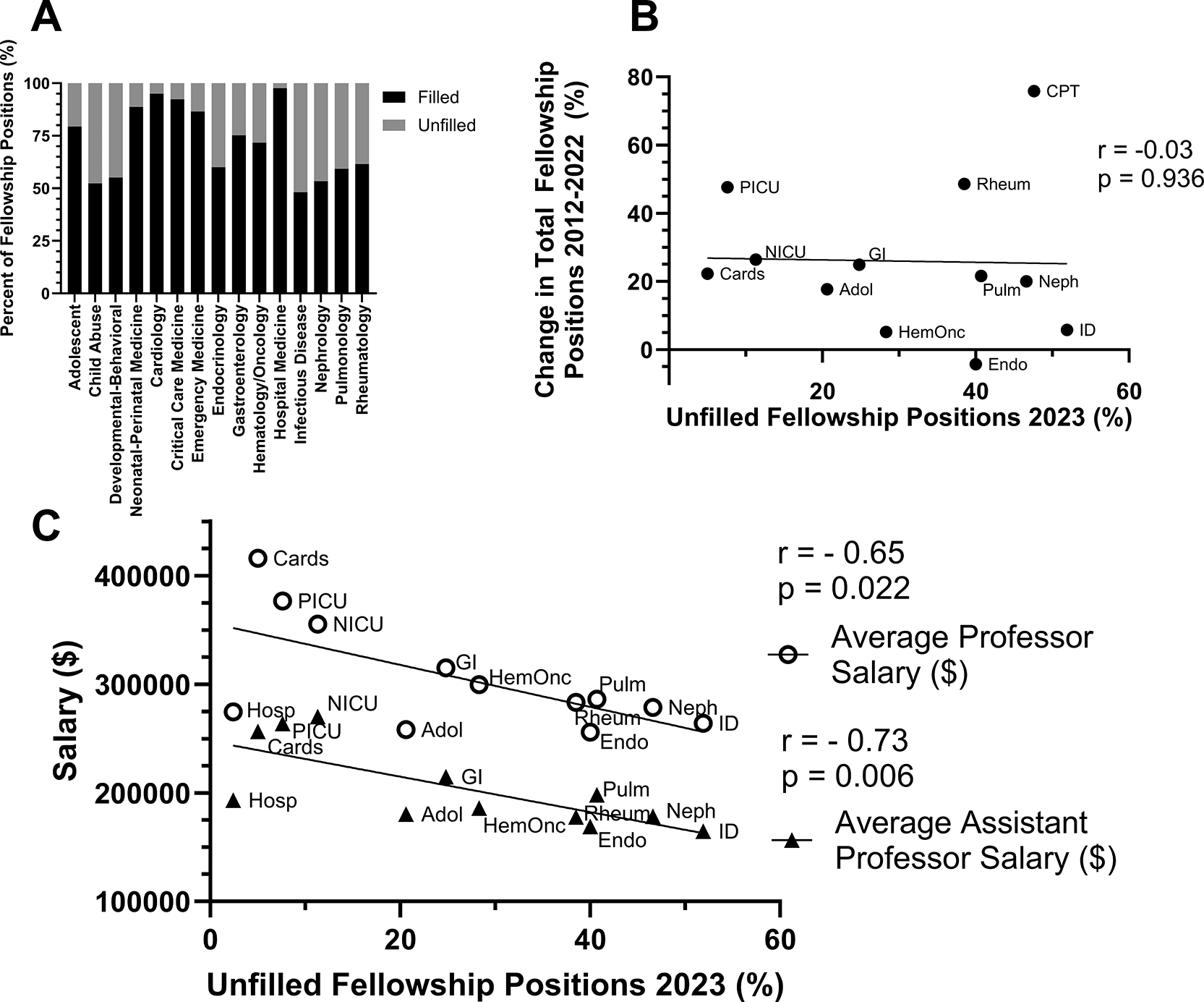
(A) Percent of filled and unfilled Pediatrics fellowship positions by subspecialty. (B) Plotted XY data of the percent of unfilled fellowship positions by subspecialty (X-axis) and the percent change in fellowship positions by subspecialty from 2012–2022 (Y-axis). Correlation evaluated by Pearson coefficient. (C) Plotted XY data of the percent of unfilled fellowship positions by subspecialty (X-axis) and AAMC faculty survey mean salary data (Y-axis). Correlation evaluated by Pearson coefficient.
Residents generally view Hospital Medicine as generally having lower complexity and support, higher volumes and comparable work-life balance and similar compensation than many other subspecialties: Subspecialties were compared to Hospital Medicine, which has the highest match fill rate ( Figure 1A). Survey results revealed several statistically significant findings ( Figure 2). Residents consistently grouped several specialties – Adolescent Medicine, Child Protection, Pediatric Endocrinology, Pediatric Infectious Disease, Pediatric Nephrology, and Pediatric Rheumatology – as lower or equivalent complexity, volume, and compensation compared to Hospital Medicine. Conversely, Pediatric Cardiology, Pediatric Critical Care, Pediatric Gastroenterology, and Neonatal/Perinatal Medicine were perceived to be more complex, better compensated, and handling similar inpatient volumes to Hospital Medicine. There were largely no differences between any of the specialties and Hospitalist Medicine in their perceived work-life balance, except for Pediatric Rheumatology ( Figure 2E).
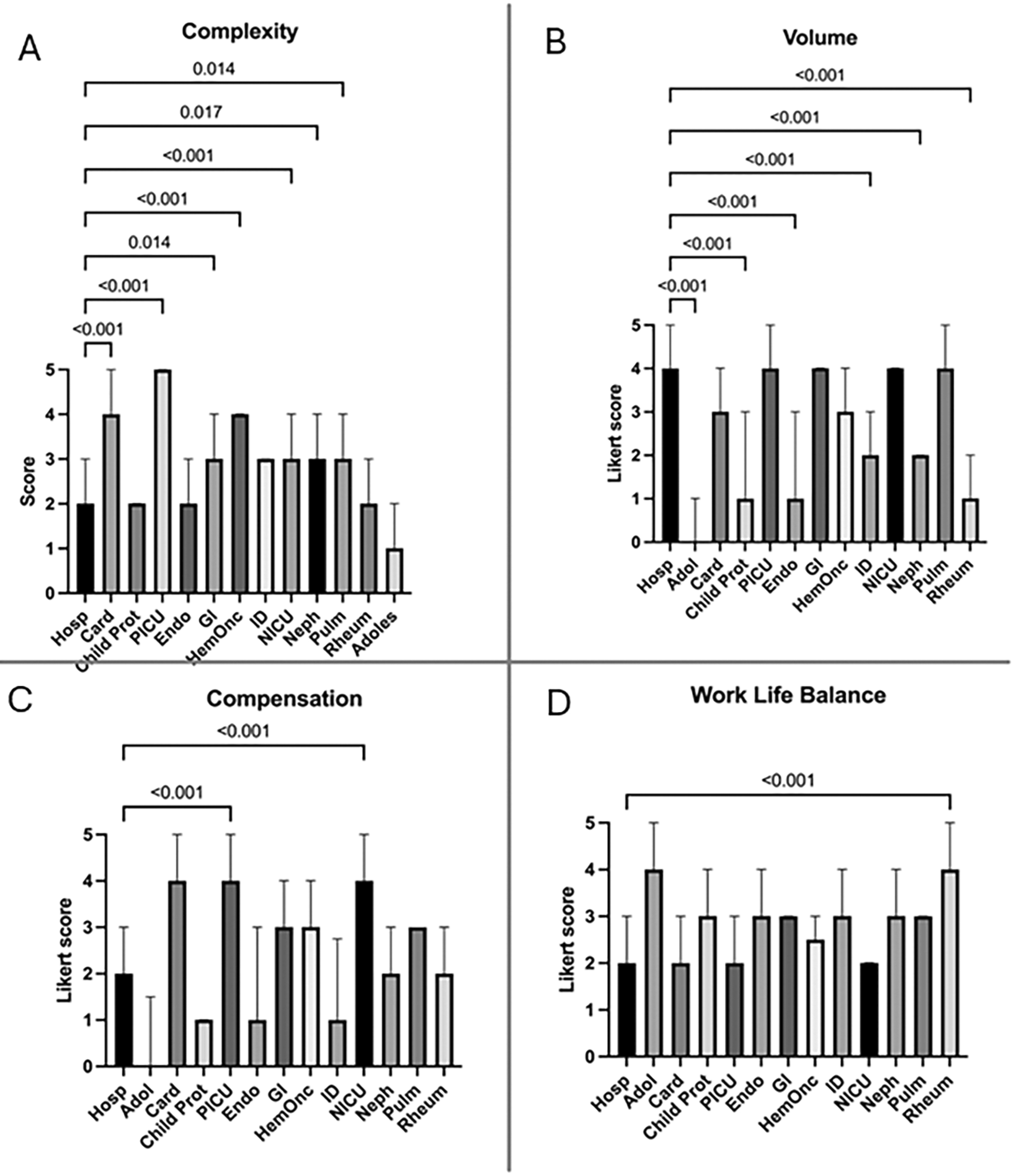
A. Residents viewed Cardiology, PICU, GI, HemOnc, NICU and Nep as more complex than Hosp. B. Adol, Child Prot, Endo, ID, Neph and Rheum were viewed as lower volume than Hosp. Cards, Child Prot, PICU, GI, HemOnc and NICU were viewed as receiving more inpatient support Hosp. C. PICU and NICU were viewed as having higher compensation than Hosp. D. Work Life balance was viewed as comparable between Hosp and other subspecialties with the exception of Rheum which was considered to have higher Work Life Balance.
Residency year and rotation experience had a modest effect on subspecialty perception while gender had almost no effect. When the survey data are broken down by residency year, very few differences exist between first- and second-year resident perceptions (Extended data S1). The data correlates with previous clinical experience, with second year residents perceiving higher complexity in Child Protection and increased inpatient volume in Pediatric Cardiology. First-year residents perceived better compensation in Adolescent Medicine. Additionally, second-year residents reported better work-life balance for Pediatric Infectious Disease and Pediatric Rheumatology than first-year residents.
When resident survey responses are separated by individual specialty experience, a few significant differences due to experience are apparent (Extended data S2). Residents with clinical experience in Adolescent Medicine, Pediatric Cardiology, and Child Protection reported higher complexity than those without experience (S2A). Regarding inpatient volume, those with experience surveyed higher volumes in Adolescent Medicine, Pediatric Cardiology, Pediatric Critical Care, and Pediatric Nephrology (S2B). Experience also led to higher perceived compensation and work-life balance for Adolescent Medicine, Pediatric Gastroenterology, and Pediatric Rheumatology (S2C-D ). There were almost no differences in subspecialty perception based on gender (Extended data S3).
Resident’s perception on subspeciality compensation correlated with published numbers and increasing debt load correlated with interest in a higher paying subspecialities: As previously mentioned, notable trends persist in the salaries of assistant professors and professors across different pediatric subspecialties when compared to unfilled fellowship positions in those specialties. With these correlations in mind, we also found significant trends in perceived compensation in resident responses ( Figure 3). Resident perception of compensation aligns accurately with the 2022 AAMC Faculty Salary Report ( Figure 3C). Residents whose career choice was most influenced by compensation were also strongly influenced by debt ( Figure 3A). The best compensated sub-specialties — Pediatric Cardiology, Pediatric Critical Care, or Neonatology — directly correlated with specialties that have been previously published as the most likely to work more than 50-hours per week ( Figure 3B).
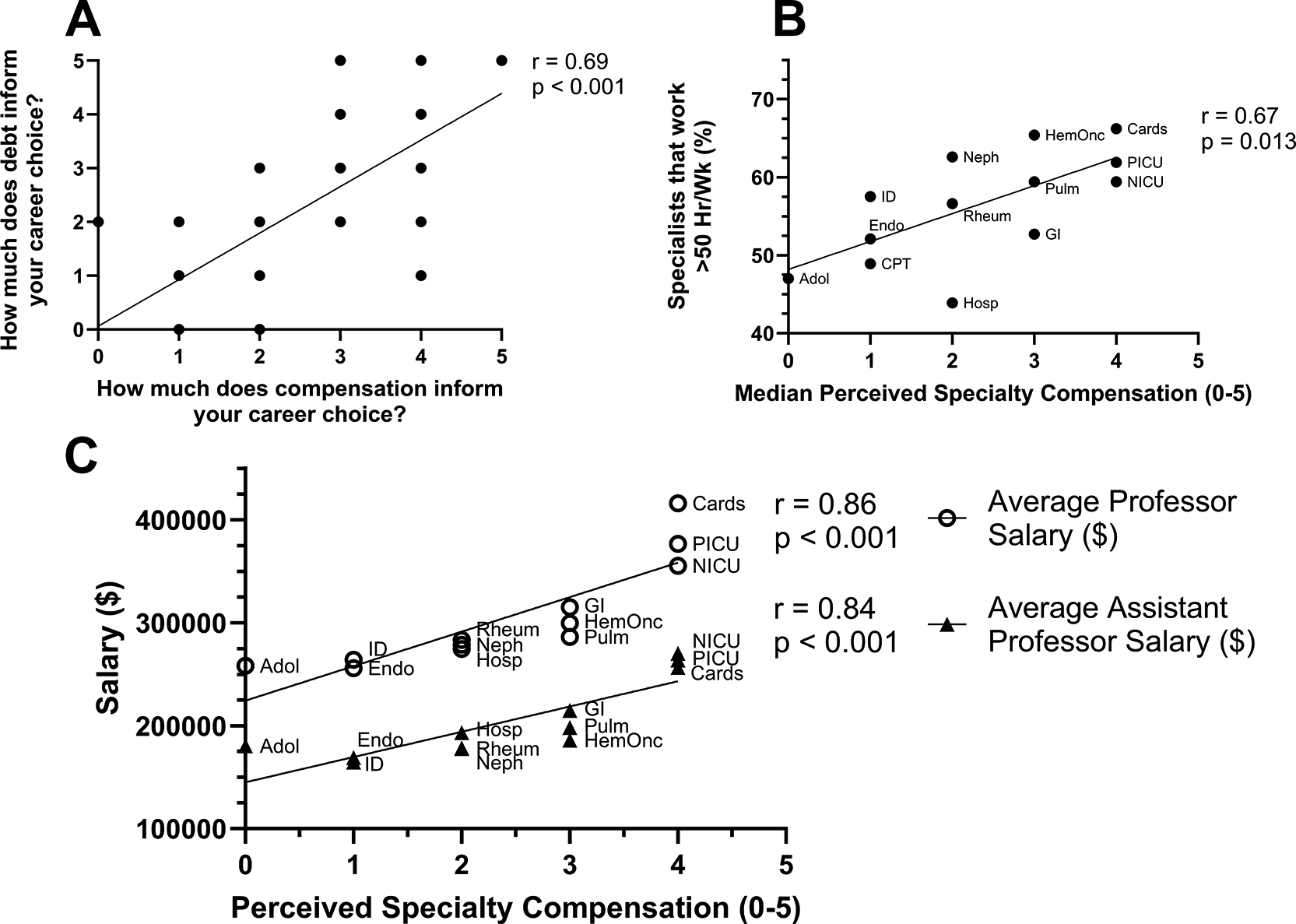
(A) XY plot of survey responses regarding compensation (X-axis) and debt (Y-axis) upon career choice. (B) XY plot of perceived compensation (X-axis) and the percent of clinicians in each subspecialty that works over 50 hours per week. (C) Median resident perception of specialty compensation (X-axis) plotted against AAMC faculty survey mean salary data (Y-axis). Linear correlations evaluated by Pearson coefficient.
Work-life balance and family considerations are leading factors when choosing a subspecialty: When surveyed on how work or personal factors affect career choice, residents reported work-life balance and family as top factors ( Figure 4A). Prior experience was another notable factor; however, compensation and debt were considered less influential than almost all other factors. Consistent with these findings, work-life balance and family concerns had a strong positive correlation ( Figure 4B). While resident perceptions of work-life balance for each specialty were similar ( Figure 2D), plotting perceived work-life balance against faculty salary reveals specialties with higher median work-life balance such as Adolescent Medicine and Pediatric Rheumatology are correlated with some of the lowest salaries ( Figure 4C). Conversely, specialties with the lowest perceived median work-life balance — Neonatology, Pediatric Critical Care, and Pediatric Cardiology — have the highest average salaries.
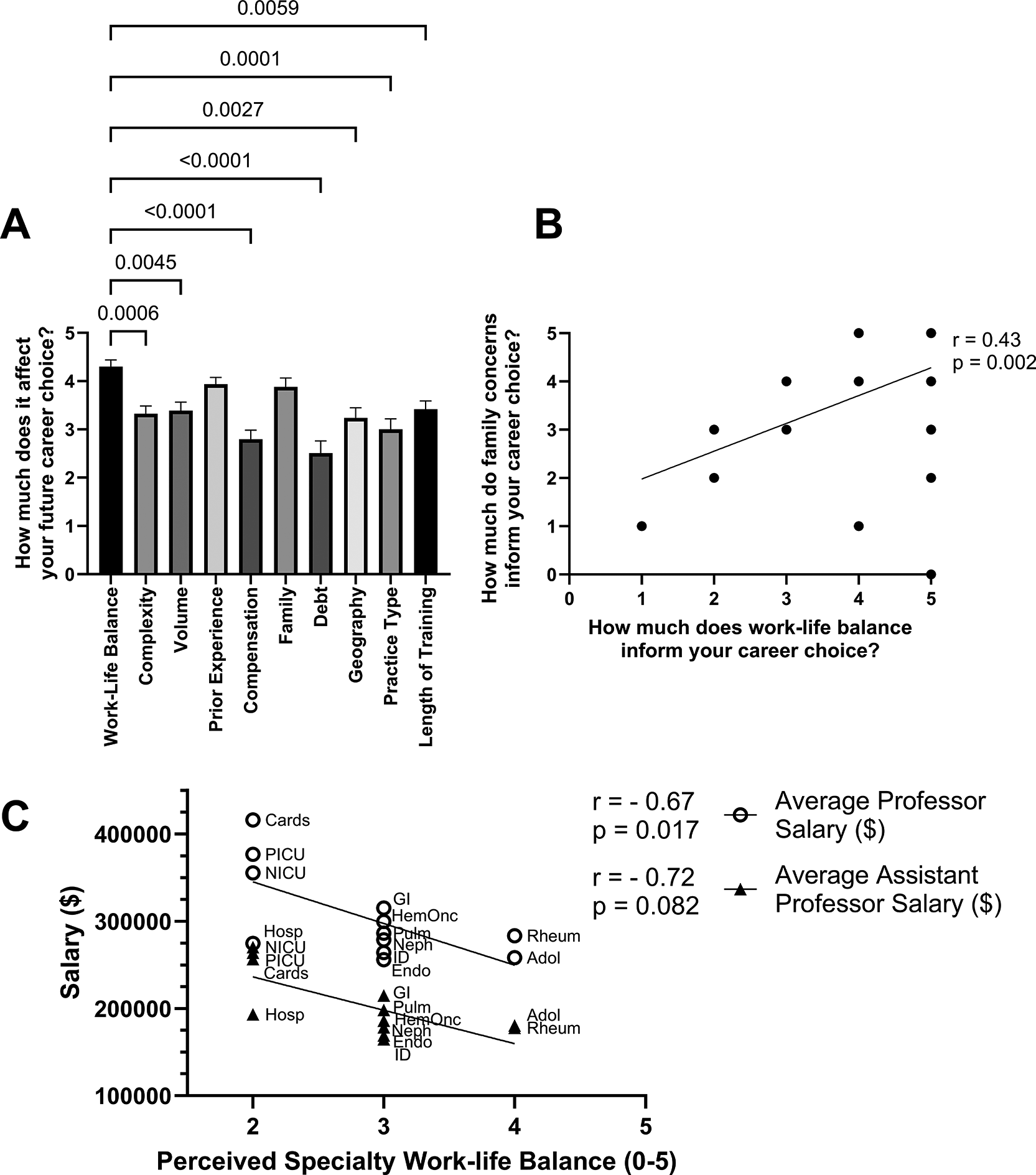
(A) Survey responses on the influence of work and personal life factors on career choice, mean +/− SD. Each factor was compared to each other (significance with brackets) and with Work-Life Balance (significance with brackets). Analyzed with Brown-Forsythe and Welch ANOVA test with multiple comparisons. (B) Individual survey responses on career choice influences, with work-life balance (X-axis) and family (Y-axis). Correlation evaluated with Pearson coefficient. (C) Median resident perception of specialty work-life balance (X-axis) plotted against mean faculty salary (Y-axis), correlation also evaluated with Pearson coefficient.
Prior experience correlates with complexity and practice type (academic vs community) as career choice considerations: There were some differences in perceived complexity among specialties ( Figure 2A) as well as inpatient volume ( Figure 2B). When individual responses are plotted to compare the influence of specialty complexity on career choice versus inpatient volume, there is a positive correlation between significance of complexity with the influence of inpatient volume ( Figure 5A). Regarding prior clinical experience, those who valued this experience more highly in their career choice also found specialty complexity ( Figure 5B) and work environment ( Figure 5C) to be more important.
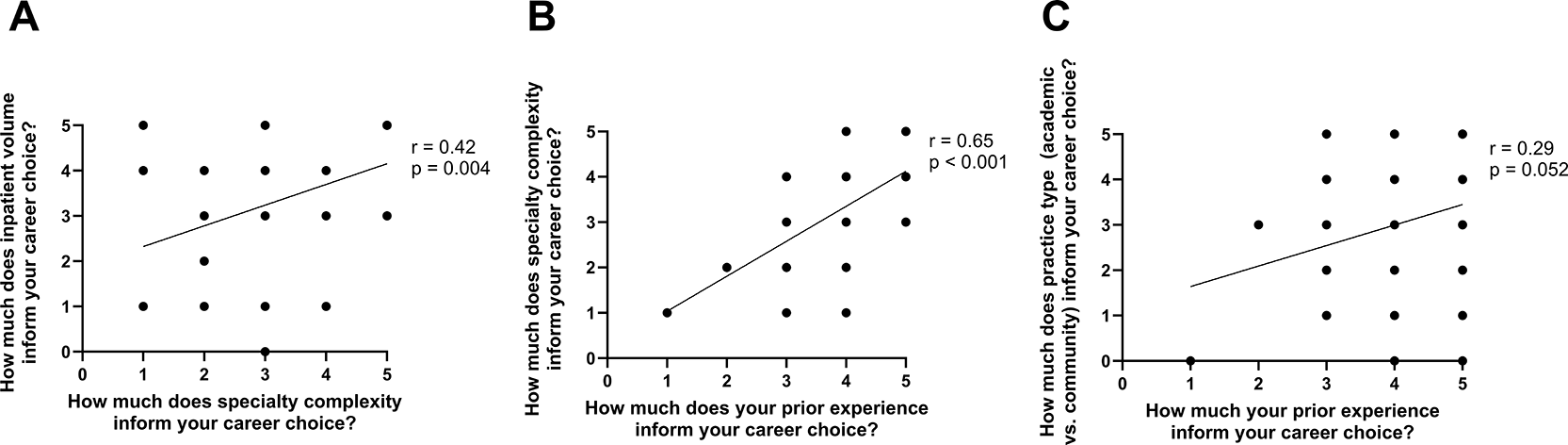
Plotted are individual survey responses concerning (A) complexity versus inpatient volume, (B) prior experience versus complexity, and (C) prior experience versus practice type. Correlation evaluated with Pearson coefficient.
Almost half of pediatric residents are considering a career changes:
Finally, and maybe most critical in the eyes of pediatrics training, when these 54 first- and second-year residents were asked if they have considered a career change (to another specialty or out of clinical medicine), 7 first year and 17 second year residents (total 44%) reported considering a career change out of Pediatrics.
This study provides several insights to pediatric subspecialty workforce issues. As seen in previous literature,9,19 subspecialties including Adolescent Medicine, Child Abuse Pediatrics, Pediatric Endocrinology, Pediatric Infectious Disease, Pediatric Nephrology, and Pediatric Rheumatology not only receive less compensation, but also fill a lower proportion of their fellowship slots compared to better compensated pediatric subspecialties ( Figure 1). Lower subspecialty faculty salary, rather than changes in fellowship positions over the past decade, correlated with unfilled fellowship slots from the 2023 Fellowship Match ( Figure 1B and 1C). From the resident survey results, residents perceived many other specialties as more complex, compared to Hospital Medicine which has the highest fellowship fill rate, but lower volume. In the survey, similar or less compensated subspecialties are perceived to be about as complex as Hospital Medicine but with lower inpatient volumes. While resident exposure modestly influences subspecialty perception compared to Hospital Medicine, gender has very little impact. Ensuring accurate findings, we found residents generally have accurate perceptions about how subspecialties rank according to compensation. However, as seen previously, prior experience, work-life balance, and family considerations are the strongest determinations of subspecialty interest. The discussion on pediatric subspecialty reimbursement, faculty salary, fellow recruitment, and specialist retainment has received increasing attention over the past 10 years.19–22 Unfortunately, the patterns recognized previously have persisted in 2022 salary data and 2023 fellowship match data, as seen in Figure 1. Resident survey data on perceived compensation aligns with actual salaries ( Figure 3), largely grouping specialties into those like Hospitalist Medicine in compensation and those with increased compensation (PICU, NICU). Unsurprisingly, individuals most concerned about financial debt also had career choices most strongly influenced by compensation ( Figure 3A). While debt or compensation may not be the strongest influences on career choice ( Figure 4A) in agreement with previous trainee surveys,22,23 medical education debt is an unresolved and growing issue, particularly in Pediatrics.20,21,24 As long as compensation remains low in fields such as Adolescent Medicine, Child Abuse Pediatrics, Pediatric Endocrinology, Pediatric Infectious Disease, Pediatric Nephrology, and Pediatric Rheumatology, and burdensome education debt continues to loom over new graduates, financial considerations will continue to be barrier in recruiting new pediatric subspecialists.
While debt and compensation may not be the most essential factors in career choice for our surveyed residents, work-life balance, workload, and experience are. This aligns with previous trainee surveys,20,23 suggesting residency and fellowship directors as well as pediatrics chairs have another potential target for recruiting and training pediatric subspecialists. Unsurprisingly, individuals most influenced by prior clinical experience also value subspecialty complexity more strongly (S3B) and have preferences regarding practice type (S3C). Interestingly, subspecialties perceived by residents to have better work-life balance are also some of the least compensated (S2C).
This study focused on residents, who are the future of the pediatric workforce. Their perceptions should be major factors in future interventions to address pediatric workforce disparities. Using a prospective survey with statistical analysis allows data, rather than advocacy, to drive workforce-related decisions. This study has some limitations. The survey focused on inpatient issues and excluded Developmental Pediatrics and Emergency Medicine. This focus may reduce emphasis on outpatient clinics and patient phone calls, affecting metrics such as work-life balance. For example, the outpatient responsibilities of specialties such as Nephrology, Endocrinology, and Rheumatology may have been under-accounted for compared to inpatient-focused specialties like Infectious Disease, Pediatric Critical Care, Hospitalist, and Neonatology. Additionally, the results of this survey represent a single institution. This survey (Extended data S4) was made by the study team for this project and is not a validated existing survey. Future research is needed to determine if results are consistent across academic centers. While we had a high response rate at the retreats when the survey was administered, not all residents attended. This affected the response rate, particularly for combined program residents.
In conclusion, this survey provides valuable insight into trainee perspectives on pediatric subspecialties. Given the continued decline in new subspecialty fellows and slow attrition of the pediatric subspecialty workforce, concerns are heightened over the future care of our children. The findings of this survey highlight some previously identified trends, but from the trainee perspective. Pediatric trainees highly value work-life balance, family, and clinical experience more than debt or compensation. Additionally, while debt and compensation may not be top influences on trainee career choices, those subspecialties with the best perceived work-life balance and fewest matched fellowship spots are also the least compensated among pediatrics subspecialties. These facets of personal and professional life need to be considered by leaders in pediatrics training and recruitment in their efforts to develop and shape the future pediatric workforce.
Research involving Human Participants and/or Animals: The research was approved by the Indiana University IRB as exempt (IRB: #22549) and conducted consistent with the Declaration of Helsinki as a statement of ethical principles for medical research. The research was approved as exempt as no protected health or identifying information was recorded with survey research methodology.
| Views | Downloads | |
|---|---|---|
| F1000Research | - | - |
|
PubMed Central
Data from PMC are received and updated monthly.
|
- | - |
Provide sufficient details of any financial or non-financial competing interests to enable users to assess whether your comments might lead a reasonable person to question your impartiality. Consider the following examples, but note that this is not an exhaustive list:
Sign up for content alerts and receive a weekly or monthly email with all newly published articles
Already registered? Sign in
The email address should be the one you originally registered with F1000.
You registered with F1000 via Google, so we cannot reset your password.
To sign in, please click here.
If you still need help with your Google account password, please click here.
You registered with F1000 via Facebook, so we cannot reset your password.
To sign in, please click here.
If you still need help with your Facebook account password, please click here.
If your email address is registered with us, we will email you instructions to reset your password.
If you think you should have received this email but it has not arrived, please check your spam filters and/or contact for further assistance.

Comments on this article Comments (0)