Keywords
civic education; Pancasila education; Generation Z; student engagement; self-regulated learning; digital citizenship

civic education; Pancasila education; Generation Z; student engagement; self-regulated learning; digital citizenship
This revised version of the article includes substantial updates to the methodology section to improve the clarity, transparency, and rigor of the study. Compared with the previously published version, this version provides a more detailed explanation of the participant selection procedures in both the quantitative and qualitative phases. It also clarifies how the quantitative findings informed the qualitative inquiry and how both datasets were integrated to support the study’s conclusions.
Additional revisions have been made to explain the data analysis procedures more explicitly, including the techniques used to analyze and interpret the research findings. This version also provides further information on the measures taken to ensure the trustworthiness of the qualitative data and the ethical safeguards applied throughout the research process. These updates are intended to strengthen the methodological credibility of the article and provide readers with a clearer understanding of how the study was designed, conducted, and interpreted.
See the authors' detailed response to the review by Tsulis Amiruddin Zahri
Civic education occupies a strategic position in higher education because universities are expected to produce graduates who are not only academically competent but also ethically responsible, socially responsive, and prepared for democratic participation. In the Indonesian context, Pancasila is not a peripheral enrichment topic but a foundational reference point for higher education and student development. The higher education curriculum is expected to support intellectual development, noble character, and practical capability, while Pancasila remains part of the compulsory curriculum at the tertiary level and a reference for ideological development in student affairs (Republic of Indonesia, 2012; Ministry of Research, Technology, and Higher Education of the Republic of Indonesia, 2018). However, formal policy recognition does not by itself resolve the pedagogical problem of how civic values are learned meaningfully in contemporary university classrooms.
That pedagogical problem has become sharper for Generation Z learners. This cohort has grown up in media-rich, always-connected, and highly interactive environments, but digital familiarity does not automatically translate into deep engagement, self-regulation, or critical judgment (Aagaard, 2019; Dontre, 2021; Ng, 2012; Twenge, 2019). Educational technology research consistently warns against treating technological exposure as equivalent to educational readiness. Students who are comfortable with devices may still struggle with distraction, fragmented attention, weak task persistence, and uneven digital literacy when learning environments are poorly structured or pedagogically passive (Broadbent & Poon, 2015; Henrie et al., 2015; Schindler et al., 2017; Sun & Rueda, 2012). For civic education, such weaknesses matter because the subject aims to bridge moral understanding and public action rather than merely transmit declarative knowledge.
A second problem concerns the mismatch between the instructional form and the learner’s expectations. Generation Z students tend to respond more positively to multimodal, collaborative, and feedback-rich learning environments than to static text-heavy resources (Bond & Bedenlier, 2019; Bond et al., 2020; Martin & Bolliger, 2018; Ng, 2012). However, civic education in many higher education settings remains dominated by lecture-based delivery, slide decks, and digital files that reproduce conventional pedagogy without redesigning interaction. This matters because studies of online and blended learning repeatedly show that digital delivery alone does not guarantee engagement; what matters is the pedagogical architecture of the learning environment, including task design, interaction structure, feedback loops, and opportunities for self-regulated participation (Broadbent & Poon, 2015; Carini et al., 2006; Henrie et al., 2015; Martin & Bolliger, 2018).
There is also a more specific theoretical gap. The literature on Pancasila and civic education establishes the normative importance of value formation and the continuing debate around the institutionalization of Pancasila education in Indonesia (Hastangka & Ediyono, 2023). A separate body of literature on digital learning explains how engagement, multimodality, feedback, and collaboration support learning in technology-mediated environments (Bond et al., 2020; Mayer, 2009; Schindler et al., 2017). However, these conversations are rarely integrated into a design-oriented explanation of how civic values can be internalized in digital settings. As a result, the field often oscillates between two insufficient positions: treating civic education as content transmission on the one hand, or treating digital innovation as self-evidently beneficial on the other.
International evidence across five continents points in the same general direction while also revealing context-specific emphases that sharpen the rationale for the present study. In North America, research on online engagement and civic learning shows that sustained participation depends on meaningful interaction, visible relevance, and participatory opportunities rather than content exposure alone (Bowyer & Kahne, 2020; Kahne et al., 2016; Martin & Bolliger, 2018). In Europe, scholarship from Denmark, Germany, and wider higher education contexts similarly shows that digital environments can widen participation yet still produce distraction, shallow engagement, or weak civic framing when pedagogy is underdesigned (Aagaard, 2019; Bond & Bedenlier, 2019; Helm et al., 2024; Vajen et al., 2023).
In Asia, evidence from South Korea and Hong Kong indicates that pre-class design, service-learning, and guided participation are decisive for deeper learning and longer-term civic engagement (Chan & Lo, 2024; Lee & Choi, 2019; Lin et al., 2025). In Oceania, Australian and New Zealand scholarship emphasizes that technology becomes educationally meaningful only when it supports self-regulation and a productive educational interface (Broadbent & Poon, 2015; Kahu & Nelson, 2018). Evidence from South America and Africa adds a further warning: Latin American higher education research shows that engagement in online learning depends as much on pedagogical quality as on connectivity (Salas-Pilco et al., 2022), Chilean evidence reports uneven behavioural, cognitive, and affective engagement alongside lecturer-side implementation difficulties (Pedraja-Rejas et al., 2023), Brazilian work links active online learning with gains in critical thinking (Rossi et al., 2021), Ghanaian evidence connects digital competence with digital citizenship in higher education (Arkorful et al., 2024), and South African scholarship demonstrates that digital shifts may reproduce inequality unless they are designed around inclusion and care (Czerniewicz et al., 2020). Together with broader systematic reviews of digital competence and technology-based engagement (Balalle, 2024; Zhao et al., 2021), this body of research suggests that the central question is not whether civic learning should become digital, but how digital design can be made pedagogically and civically consequential.
This study addresses that gap by positioning interactive civic e-modules as a pedagogical response to an observable mismatch among civic goals, student engagement mechanisms, and students’ digital learning preferences. Its theoretical contribution is not a claim that technology automatically improves civic learning. Rather, it advances an integrated framework in which civic value internalization in digital environments depends on four linked conditions: multimodal clarity, participatory structure, feedback for self-regulation, and civic authenticity. The study, therefore, reframes interactive e-module design as a problem of civic pedagogy rather than only a matter of media choice.
Accordingly, the study investigates three research questions. First, what character and engagement patterns emerge in relation to responsibility, discipline, cooperation ( gotong royong), and critical thinking disposition? Second, how do students and lecturers perceive the pedagogical limitations of current civic education materials and practices? Third, what design principles should inform an interactive civic e-module that is educationally meaningful, technologically appropriate, and aligned with the civic purposes of Pancasila Education?
Civic learning is not exhausted by knowledge acquisition. Research in civic education and democratic learning suggests that civic identity and value internalization develop through participation, dialogue, social learning, and reflection rather than through information transmission alone (Haste & James, 2006; Kahne et al., 2016; Vygotsky, 1978). This broader participatory view is also consistent with evidence that digitally mediated participation can widen opportunities for voice and civic expression, although the quality of participation still depends on how interaction is structured and supported (Boulianne, 2015). This argument is especially relevant in the Indonesian context, where debates over Pancasila education have long concerned not only whether Pancasila is taught, but how its meaning is recognized, institutionalized, and enacted in educational life (Hastangka & Ediyono, 2023). For university students, therefore, responsibility, discipline, and cooperation ( gotong royong) should be understood as dispositions practiced in learning environments, not merely values described by lecturers.
A second strand of theory explains why learning environments matter. Engagement is increasingly understood as multidimensional, involving behavioral, emotional, cognitive, social, and agentic participation (Chi & Wylie, 2014; Fredricks et al., 2004; Kahu, 2013; Kuh, 2009; Reeve & Tseng, 2011). This emphasis on agency also resonates with social cognitive and self-determination perspectives, which argue that learners participate more actively when they perceive efficacy, autonomy, and meaningful opportunities for contribution (Bandura, 2001; Deci & Ryan, 2000). Recent higher education research further shows that engagement in digital environments is relational and pedagogically contingent: it is strengthened when students encounter meaningful interaction, visible progress, self-efficacy support, and coherent activity design (Godsk & Møller, 2024; Getenet et al., 2024; Torres Castro, 2024; De Bruijn-Smolders & Prinsen, 2024; Han, 2025). Self-regulated learning research complements this view by showing that students are more likely to succeed when they can set goals, monitor progress, manage effort, and adjust strategies over time; recent reviews likewise highlight the role of analytics-informed scaffolds, structured feedback, learning-analytics systems, resilience, and shared metacognitive support in online and blended learning (Broadbent & Poon, 2015; Pintrich, 2004; Zimmerman, 2002; Freitas et al., 2015; Guo et al., 2022; Hattie & Timperley, 2007; Hidayatullah & Csíkos, 2023; Imhof et al., 2024; Dong et al., 2024; Edisherashvili et al., 2022; Heikkinen et al., 2023; Huang & Lee-Post, 2025; Lim et al., 2023; Maré & Mutezo, 2025). For civic education, this means that responsibility and discipline are not only moral outcomes but also learning behaviors supported by visible structure, feedback, and opportunities for contribution.
A third strand concerns the relationship between pedagogy, media, and civic action in digital environments. Multimedia learning theory suggests that words, visuals, and activities can improve comprehension when they are coordinated to support cognitive processing rather than overload it (Mayer, 2009, 2014). Recent research on technology-enhanced higher education similarly indicates that multimodal resources, interactive collaboration, and carefully sequenced learning activities are most effective when they are pedagogically aligned rather than treated as decorative add-ons (Sailer et al., 2024; Chan & Ng, 2024; Kang et al., 2025; Tedla & Chen, 2025). Participatory and collaborative pedagogies further indicate that project-based work, service-learning, and discussion-centered tasks help students internalize social responsibility through authentic action (Celio et al., 2011; Guo et al., 2020; Kokotsaki et al., 2016; Chan & Lo, 2024; Lin et al., 2025). Meanwhile, digital citizenship scholarship increasingly conceptualizes citizenship as a set of ethical, critical, participatory, and context-sensitive practices that extend across networked environments (Choi, 2016; Jones & Mitchell, 2016; Chen et al., 2021). Empirical work has further operationalized these capacities through digital citizenship scales and has shown that both students’ and teachers’ enactment of digital citizenship is shaped by experience, internet use, and psychological dispositions (Choi et al., 2017, 2018). Studies of online inquiry and collaborative learning likewise show that digitally mediated dialogue becomes educationally consequential when interaction is structured around presence, feedback, and purposeful discourse rather than mere content posting (Garrison et al., 2000; Chan & Ng, 2024). Recent digital citizenship scholarship also shows that contemporary citizenship increasingly unfolds in hybrid environments where students must evaluate information critically, communicate ethically, and collaborate across online and offline settings (Ali et al., 2023; Gu et al., 2023; Webster, 2024; Prasetiyo et al., 2024; Opoku et al., 2025). Together, these literatures suggest that digital civic modules should function as participatory learning environments rather than static archives.
Bringing these traditions together, the present study treats pedagogical mismatch as the key explanatory mechanism linking observed passivity with underdeveloped civic learning habits. The argument is that civic values are less likely to be internalized when learners encounter static materials, weak feedback, and limited participation. Conversely, digital civic modules are more likely to support value enactment when they combine multimodal clarity, participatory structure, self-regulatory feedback, and civic authenticity. Recent reviews of gamification, project-based learning, blended learning, and self-regulated online learning support this integrated proposition by showing that motivation and persistence improve when challenge, feedback, collaboration, and autonomy are pedagogically coordinated rather than added superficially (Deterding et al., 2011; Dichev & Dicheva, 2017; Bai et al., 2020; Sailer & Homner, 2020; Subhash & Cudney, 2018; Ratinho & Martins, 2023; Kokotsaki et al., 2016; Khaldi et al., 2023; Li et al., 2024; Mushtaq et al., 2025; Faza & Lestari, 2025). Table 1 summarizes this conceptual integration and shows how the study’s design implications are grounded in the literature rather than in technological novelty alone.
| Theoretical strand | Core claim | Relevance to civic education | Design implication |
|---|---|---|---|
| Engagement and agency | Engagement in digital higher education is relational, multidimensional, and strengthened by meaningful interaction and agentic participation (Godsk & Møller, 2024; Getenet et al., 2024; Han, 2025). | Civic values are more likely to be enacted when students discuss, contribute, deliberate, and respond to public issues in structured learning environments. | Use discussion prompts, collaborative tasks, scenario-based decision making, and visible participation structures. |
| Self-regulated learning | Responsibility and discipline are strengthened by goals, monitoring, analytics-informed scaffolds, and feedback (Dong et al., 2024; Heikkinen et al., 2023; Huang & Lee-Post, 2025). | Students need visible structures that help them manage effort, persistence, and reflection while learning civic content. | Add progress indicators, low-stakes checks, reflection prompts, and timely formative feedback. |
| Digital citizenship | Citizenship increasingly unfolds in digital and hybrid public spaces and requires ethical, critical, and participatory competences (Ali et al., 2023; Gu et al., 2023; Webster, 2024; Opoku et al., 2025). | Civic courses should prepare students for responsible participation, media evaluation, and ethical communication in digitally mediated public life. | Use authentic civic cases, media evaluation tasks, digitally mediated deliberation, and public-issue analysis. |
| Multimodal, collaborative, and motivational design | Technology-enhanced learning is most effective when multimodal, collaborative, and motivational features are pedagogically aligned rather than decorative (Sailer et al., 2024; Chan & Ng, 2024; Li et al., 2024; Tedla & Chen, 2025). | Abstract civic concepts become more accessible and actionable when linked to concrete cases, collaborative inquiry, and feedback-rich participation. | Integrate video, audio, infographics, peer discussion, project-based problem solving, and carefully aligned feedback. |
This study adopted a sequential explanatory mixed-methods design (Creswell & Plano Clark, 2017). The quantitative phase was placed first because the study needed a broad empirical map of students’ character-related indicators, their engagement with existing digital materials, and their preferences for interactive learning. The qualitative phase was then used to probe the meaning of those patterns through the perspectives of students and lecturers. The design therefore served a needs-analysis purpose: it clarified the pedagogical mismatch that should inform the redesign of a Pancasila Education e-module, rather than testing the effect of an intervention.
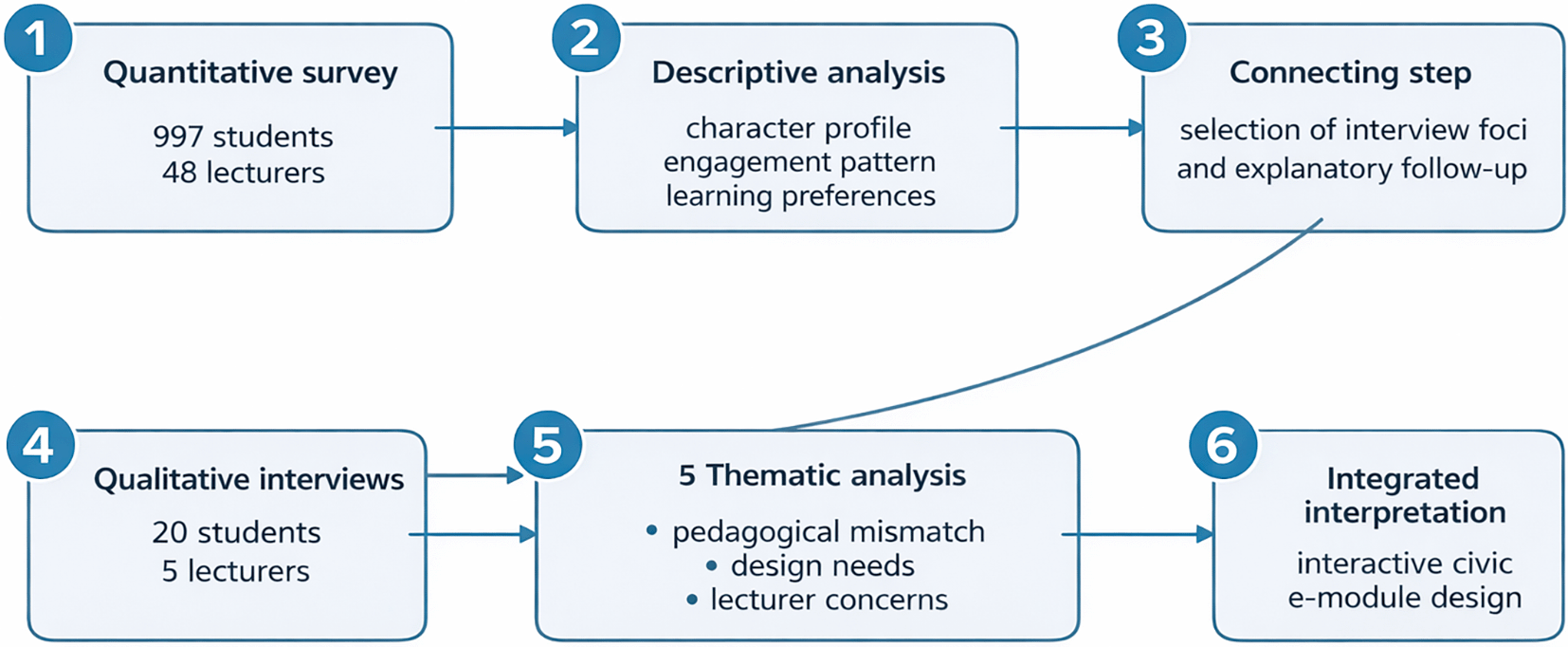
The phases were connected in three steps. First, the survey results identified the main points of mismatch, particularly the contrast between students’ strong preference for multimodal and interactive learning and the continuing use of static text-heavy materials. Second, these quantitative patterns informed the focus of the interviews, so the qualitative inquiry asked participants to explain why the mismatch occurred, how it shaped engagement, and what forms of interaction were pedagogically meaningful. Third, the two strands were brought together during interpretation to generate design implications for an interactive civic e-module. This sequence is shown in Figure 1.
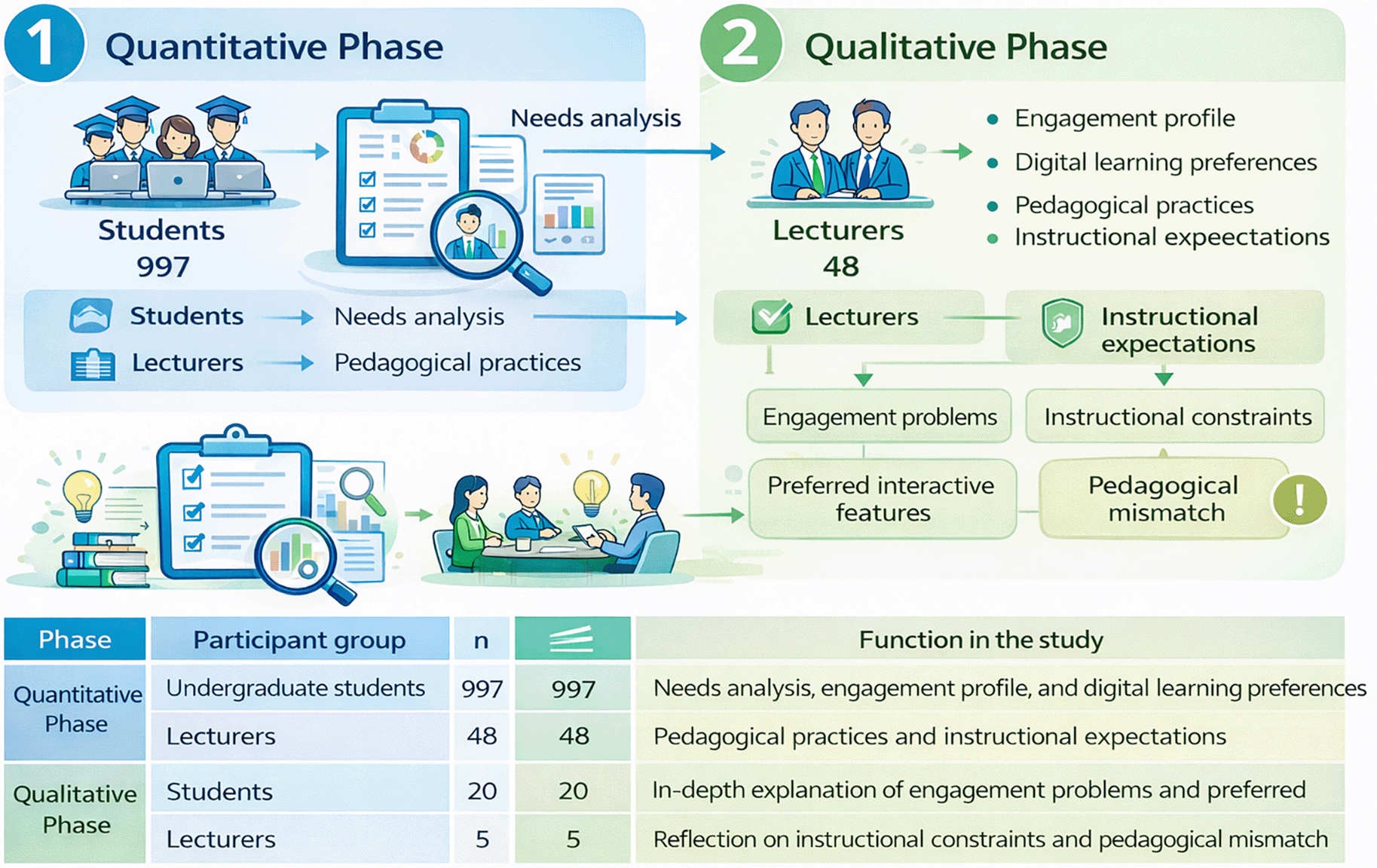
The study was conducted at Universitas Riau, Indonesia. The quantitative phase involved 1,045 respondents, consisting of 997 undergraduate students and 48 lecturers. Student respondents were included to capture variation across academic backgrounds and to obtain a sufficiently broad picture of how Pancasila Education was experienced by Generation Z learners in higher education. Lecturer respondents were included because they represented the instructional practices, assumptions, and implementation constraints that shape civic education delivery in the institution.
The qualitative phase used purposive sampling after the survey had been examined descriptively. The selection of 20 students and 5 lecturers was guided by the need to illuminate the survey patterns rather than to reproduce the quantitative sample statistically. Students were selected to reflect variation in reported engagement, preference for interactive materials, and experiences with existing digital resources. Lecturers were selected because they could explain current teaching practices, conceptual-depth concerns, and the practical feasibility of e-module redesign. The study context and participant composition are shown in Figure 2.
Two data sources were used, each with a distinct role in the mixed-methods sequence. First, the Character Assessment and Needs Analysis Questionnaire gathered students’ self-reports on responsibility, discipline, cooperation (gotong royong), critical thinking disposition, engagement with current digital resources, and preferences regarding interactive module features. Lecturer questionnaire responses were used to describe prevailing instructional assumptions and pedagogical practices. Second, semi-structured interviews explored how students and lecturers explained the weaknesses of current civic education materials, the causes of disengagement, and the features considered necessary for a future interactive module.
The interview protocol was developed after an initial reading of the descriptive survey patterns. Items were directed toward the areas where the quantitative results required explanation, including passive learning behaviour, uneven engagement with existing digital resources, strong preference for multimodal formats, and lecturers’ concerns about preserving conceptual depth. In this sense, the quantitative phase did not stand apart from the qualitative phase; it shaped the questions used to obtain richer explanatory evidence.
The questionnaire primarily served as a diagnostic needs-analysis instrument ( Table 2). Because complete psychometric coefficients, item-development procedures, and formal construct-validation evidence were not reported in the available study documentation, the survey outputs are interpreted as descriptive indicators rather than validated latent constructs. The quantitative findings are therefore used to identify patterns and derive design implications, not to estimate causal effects or test a predictive model.
| Instrument component | Variables/reporting domain | Operational focus in this study | Sources |
|---|---|---|---|
| Student questionnaire | Responsibility, discipline, cooperation ( gotong royong), and a critical thinking disposition | Descriptive profile of character-related civic learning tendencies relevant to e-module redesign | Bowyer & Kahne, 2020; Chan & Lo, 2024; Gu et al., 2023; Lin et al., 2025 |
| Student questionnaire | Engagement with current digital materials and interactive feature preferences | Needs analysis of participation, passivity, multimodal preference, feedback, and collaboration | Chan & Ng, 2024; Getenet et al., 2024; Godsk & Møller, 2024; Sailer et al., 2024 |
| Lecturer questionnaire and interviews | Current teaching practices and instructional assumptions | Interpretation of delivery modes, conceptual-depth concerns, and implementation constraints | De Bruijn-Smolders & Prinsen, 2024; Helm et al., 2024; Han, 2025; Vajen et al., 2023 |
| Student interviews | Relevance, interaction, feedback, and collaborative civic learning needs | Thematic explanation of pedagogical mismatch and module design implications | Ali et al., 2023; Huang & Lee-Post, 2025; Opoku et al., 2025; Webster, 2024 |
Data collection followed the logic of the sequential explanatory design. Quantitative data were collected first through the questionnaire, allowing the study to establish the descriptive profile of character-related tendencies, digital engagement, and learning-format preferences. After these results had been reviewed, the qualitative interviews were conducted to explain the patterns that were most relevant to the redesign problem. The interview phase focused on three issues: why static materials were experienced as weak or disengaging, which interactive features students regarded as meaningful, and how lecturers balanced pedagogical innovation with conceptual rigor.
Ethical procedures were integrated into both phases. Before participation, respondents received information about the study purpose, procedures, voluntary nature of participation, confidentiality safeguards, and the right to withdraw without penalty. Written informed consent was obtained before questionnaire completion and again before the interviews. Institutional ethical approval was obtained from the Faculty of Teacher Training and Education, Universitas Riau, Indonesia (approval number 2765/UN19.5.1.1.5/AK/2025; approved on 10 December 2025).
Quantitative data were analyzed descriptively. Percentages were used to summarize patterns in learning-format preferences, engagement with existing digital resources, perceived effectiveness of current methods, passive learning behaviour, and character-related tendencies. Because the study was framed as a needs analysis, no inferential test was used to claim population-level effects or causal relationships. The percentages functioned as diagnostic evidence for identifying the scale and direction of the pedagogical mismatch.
Qualitative interview data were analyzed thematically through data familiarization, coding, data reduction, pattern comparison, and interpretive synthesis (Miles et al., 2014). Codes were first organized around recurrent explanations of static materials, limited interaction, feedback needs, multimodal preferences, collaborative learning, and lecturers’ concerns about conceptual depth. The codes were then compared across student and lecturer accounts to identify themes that could explain the quantitative patterns and clarify their implications for e-module design.
Mixed-methods integration occurred through both connection and interpretation. Connection occurred when the quantitative results informed the interview focus. Interpretation occurred when qualitative themes were aligned with the descriptive indicators to determine whether the two strands converged, extended one another, or revealed tension. This procedure allowed the study to move from numerical tendencies to a more grounded explanation of why an interactive civic e-module was needed and what design features it should prioritize.
The integrative analysis was kept within the boundaries of the evidence. Survey percentages were not treated as proof of effectiveness, and interview themes were not used as statistically generalizable claims. Together, the two datasets supported a design-oriented conclusion: the need for an e-module that combines multimodal explanation, structured collaboration, formative feedback, and visible progress cues in Pancasila Education.
Several procedures were used to strengthen the credibility and transparency of the qualitative strand. Student and lecturer accounts were compared to avoid relying on a single participant group. Themes were checked against the descriptive survey patterns so that qualitative interpretation remained anchored in the broader needs-analysis evidence. During coding and synthesis, an analytic trail was maintained by moving from initial codes to broader categories and then to design implications; this helped preserve the connection between participants’ explanations and the final framework.
Confidentiality was maintained by treating questionnaire responses and interview materials as confidential human-participant data. Identifying information was not used in the presentation of findings, and the analysis emphasized patterns relevant to instructional redesign rather than personal characteristics of individual respondents. These safeguards are consistent with the ethical approval and informed-consent procedures reported in the Ethical considerations section.
Three quantitative patterns stand out. First, the survey points to areas of concern in responsibility, discipline, and cooperation (gotong royong), while critical thinking appears moderate rather than strongly developed. Second, students showed an overwhelming preference for multimodal and interactive learning: 92.5% preferred such formats, whereas only 7.6% favored static, text-heavy resources. Third, engagement with current digital materials remained uneven. While 53.6% reported frequent engagement, 46.4% also displayed passive learning behavior and 12.9% explicitly judged the current methods ineffective. The mere availability of digital resources, in other words, had not produced active civic learning.
Figure 3 reinforces the asymmetry summarized in Table 3. Students’ strong preference for multimodal and interactive formats suggests that instructional form is not a superficial design issue; it is a substantive pedagogical variable. At the same time, the figure shows that engagement with current digital materials remains mixed. The contrast between reported frequent engagement and the sizeable proportions of passive behavior and perceived ineffectiveness indicates that access alone is insufficient. What is needed is a learning environment deliberately designed to convert access into participation, sustained attention, and meaningful civic practice.
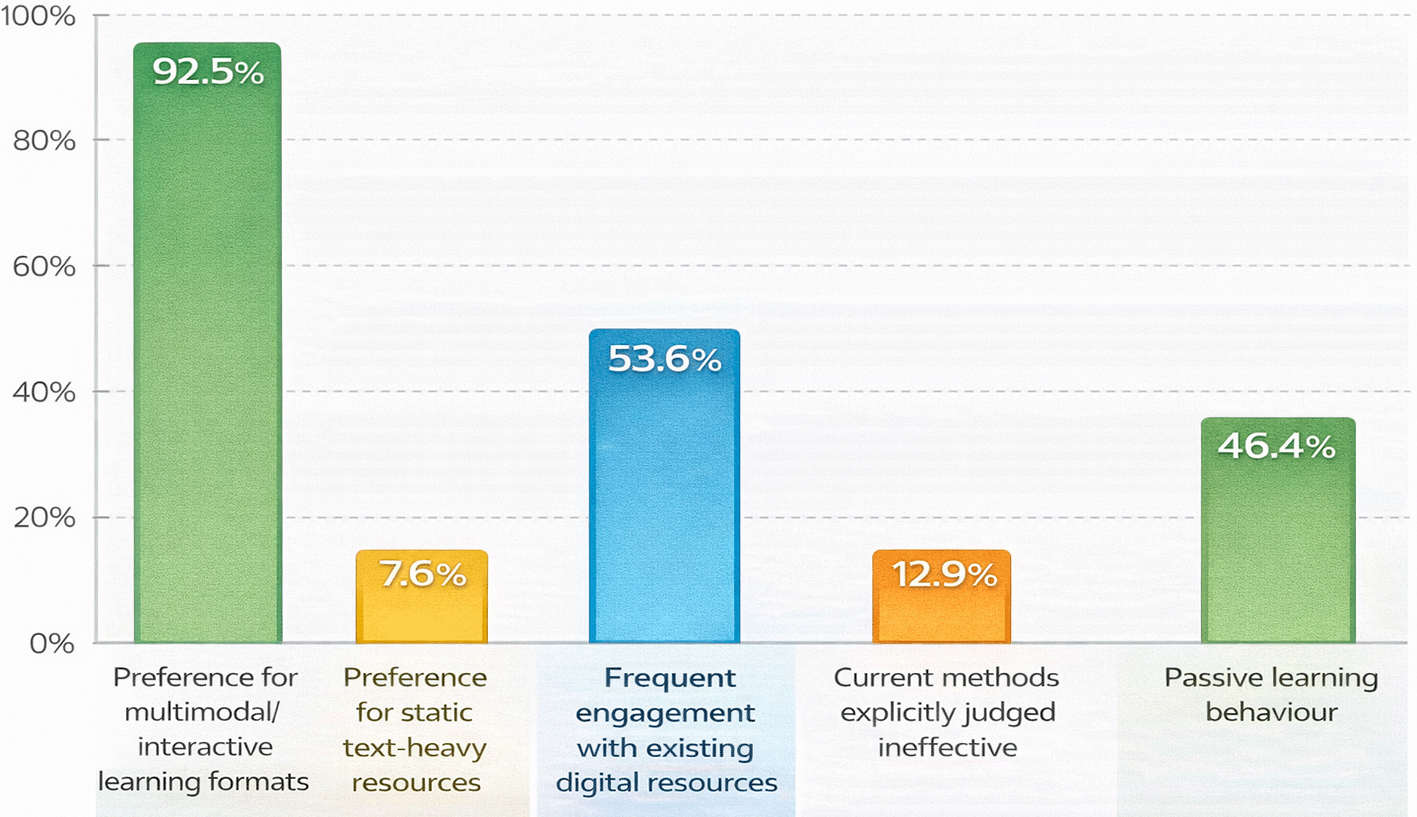
Table 3 summarizes the quantitative evidence supporting the diagnosis of pedagogical mismatch. The distribution reveals a pronounced imbalance between students’ strong preference for multimodal and interactive learning and the continuing reliance on static instructional resources. The coexistence of only moderate engagement, explicit judgments of ineffectiveness, and substantial passive learning behavior indicates that current digital provision has not yet generated robust behavioral participation or self-regulated civic learning.
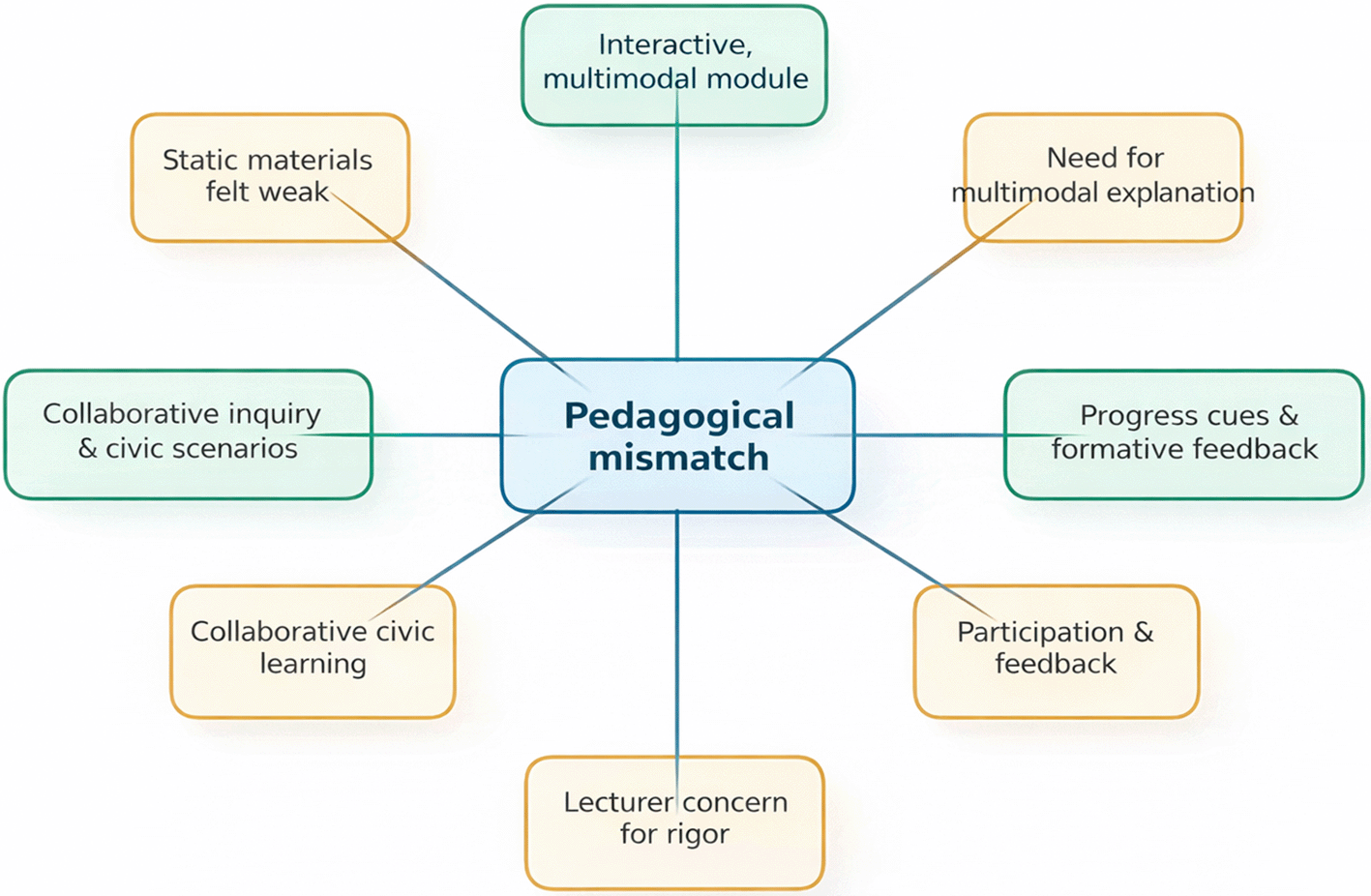
As summarized in Table 4, the interview data clarified why the quantitative mismatch was so pronounced. Students consistently described current civic resources as static, low in relevance, and weak in opportunities for interaction, reflection, and feedback. Lecturers, by contrast, emphasized the need to preserve conceptual depth and to avoid reducing civic learning to mere entertainment. Even so, the qualitative data did not reveal a disagreement about the aims of civic education. Both groups valued meaningful civic learning; the tension lay in different assumptions about how that learning should be organized and experienced.
Figure 4 shows that these qualitative themes were not isolated findings but part of an interconnected explanatory pattern. Static materials, low relevance, limited participation, demand for feedback, and lecturers’ concerns about conceptual rigor all converged on a shared diagnosis of pedagogical mismatch. Viewing these relationships as a network helps clarify how the qualitative findings informed the design implications generated through the mixed-methods analysis.
The findings suggest that the core problem is not simply that students prefer more attractive media. The deeper issue is a pedagogical misalignment between the civic purposes of the course and the learning architecture through which those purposes are pursued. This pattern resonates with recent evidence from several regions. In Oceania, Webster (2024) and Getenet et al. (2024) show that digital citizenship and online engagement depend on more than technological access; they require critical literacy, confidence, and structured participation. In Europe, Godsk and Møller (2024), De Bruijn-Smolders and Prinsen (2024), and Vajen et al. (2023) similarly show that educational technology can widen participation yet still produce shallow engagement or thin civic framing when interactivity is weakly organized. In Asia, Gu et al. (2023), Chan and Lo (2024), Kong and Lin (2023), Prasetiyo et al. (2024), and Lin et al. (2025) likewise demonstrate that digital citizenship, service-learning, and self-regulated participation depend on carefully designed environments rather than mere platform adoption. Evidence from Africa and Latin America adds an inclusion-centered caution: Ghanaian studies connect digital competence and networking agency to digital citizenship (Arkorful et al., 2024; Opoku et al., 2025), while Latin American and Chilean syntheses continue to show uneven behavioral, cognitive, and affective engagement in higher education online learning (Salas-Pilco et al., 2022; Pedraja-Rejas et al., 2023). Recent reviews reach a similar conclusion: digital tools matter far less when learning is not scaffolded by active pedagogy, feedback, collaboration, and intentional engagement structures (Balalle, 2024; Johar et al., 2023; Zhao et al., 2021).
Read against that wider literature, the present study makes three contributions. First, it identifies pedagogical mismatch as an explanatory construct linking static delivery, passive engagement, and underdeveloped civic dispositions in Pancasila Education. Second, it extends student-engagement research by showing that responsibility, discipline, and cooperation (gotong royong) are not only outcomes to be measured after instruction but practices rehearsed through the design of instruction itself. Third, it sharpens digital citizenship scholarship by connecting value internalization to concrete design features—multimodality, collaboration, formative feedback, and progress visibility—within a value-based, non-Western civic curriculum. The theoretical contribution of the study, then, does not rest on a claim that digitalization is inherently beneficial. It lies in specifying the pedagogical conditions under which an interactive civic e-module can plausibly serve civic formation.
The qualitative data strengthen this argument. Students were not simply asking for more entertaining materials. They wanted clearer explanations, richer media pathways, more active participation, and visible feedback. That distinction matters because it suggests that the problem is not superficial boredom, but the absence of an instructional structure through which civic values can be enacted. It also explains why lecturers’ caution should not be reduced to simple resistance to innovation. Recent comparative work shows that educators often recognize the participatory promise of digitalization while still needing stronger conceptual frameworks for digital citizenship, collaborative learning, and ethically grounded online engagement (Vajen et al., 2023; Helm et al., 2024; Chan & Ng, 2024). In that sense, the present study supports a design agenda that preserves conceptual rigor while changing the social form through which civic learning is experienced.
These findings also matter because citizenship now unfolds in digitally mediated public spheres. Students are increasingly expected to evaluate information critically, communicate responsibly, and collaborate across hybrid online-offline settings (Chen et al., 2021; Ali et al., 2023; Webster, 2024; Prasetiyo et al., 2024). Related research on online global and digital citizenship further indicates that digital environments can deepen dialogic, intercultural, and civic learning when they are structured around reciprocity, reflection, and meaningful exchange rather than mere content transmission (Helm et al., 2024; Gu et al., 2023; Opoku et al., 2025). A civic course that remains tied to static delivery, therefore, risks reproducing the very gap it seeks to close: students may learn the vocabulary of civic values while remaining underprepared to practice those values in the communicative settings where contemporary citizenship is enacted. For Pancasila Education, value internalization must therefore be linked to deliberation, collaboration, ethical judgment, and critical evaluation of public issues, not only to doctrinal recall.
Four design implications follow. First, interactive civic e-modules should provide multimodal clarity through carefully coordinated text, audio, video, cases, and visual explanation. Second, they should create participatory structures through peer discussion, collaborative tasks, and scenario-based civic problem solving so that students practice cooperation (gotong royong) and civic dialogue as part of learning itself. Third, they should support self-regulation through progress indicators, low-stakes formative checks, feedback loops, and prompts for reflection. Fourth, they should preserve civic authenticity by linking module activities to real social issues, ethical dilemmas, and digitally mediated public participation. Recent evidence on gamification, collaborative learning, blended engagement, and self-regulation suggests that these features are most effective when they are integrated into a coherent pedagogical ecosystem rather than implemented as isolated tools (Li et al., 2024; Mushtaq et al., 2025; Tedla & Chen, 2025; Han, 2025; Huang & Lee-Post, 2025). This design logic is more defensible than a generic call for innovation because it ties each feature to a clear civic and pedagogical purpose.
The study also has practical implications for lecturer development and institutional support. If interactive civic learning is to be implemented seriously, lecturers will need support in translating abstract civic content into activities that remain conceptually rigorous while becoming more participatory and feedback-rich. Institutions, in turn, should connect civic module development to wider agendas of digital literacy, ethical communication, and collaborative inquiry. Without that support, digital redesign is likely to remain fragmented and tool-driven rather than pedagogically coherent.
A major strength of the study lies in the combination of broad descriptive evidence from a large student sample with qualitative explanation from both students and lecturers. That combination allows the analysis to move beyond surface-level preference claims. The study is also explicitly design-oriented, which makes its implications practically useful for the development of interactive civic learning materials.
Several limitations should nevertheless be acknowledged. First, the study was conducted at a single university, so the findings should not be generalized uncritically to other higher education settings. Second, the quantitative component relied on descriptive, self-reported data, which limits causal inference. Third, full psychometric details for the questionnaire, along with fuller qualitative reporting details such as coder triangulation, reflexivity, and member checking, were not available in the study documentation reviewed for this article. The findings are therefore best read as strong needs-analysis evidence rather than as definitive tests of theory. Future research should extend this work through multi-site validation, fuller instrument reporting, and design-based or longitudinal evaluation of interactive civic modules.
This study shows that the challenge of civic education in higher education lies not only in the transmission of civic knowledge but also in the alignment of instructional design with the learning ecology of Generation Z. The findings indicate areas of concern in responsibility, discipline, and cooperation ( gotong royong), mixed engagement with current digital materials, and a strong student preference for multimodal and interactive learning environments. They also show that lecturers and students share the goal of meaningful civic learning, even though they differ in how that learning should be structured.
The principal contribution of the study is a theory-informed and empirically grounded framework for redesigning an interactive civic e-module. The framework argues that participatory value internalization in Pancasila Education depends on four design conditions: multimodal clarity, structured collaboration, formative feedback, and progress visibility. Further research is needed to validate this design framework across broader contexts and to test whether interactive civic e-modules improve both learning engagement and civic character formation.
Ethical approval for this study was obtained from the Faculty of Teacher Training and Education, Universitas Riau, Indonesia (approval number 2765/UN19.5.1.1.5/AK/2025; approved on 10 December 2025). Participation was voluntary. Before questionnaire completion and interviews, participants received information about the study purpose, procedures, confidentiality protections, and their right to withdraw without penalty. Written informed consent was obtained from all participants. Questionnaire responses and interview materials were handled confidentially, and the reporting of findings avoids information that could identify individual participants.
| Views | Downloads | |
|---|---|---|
| F1000Research | - | - |
|
PubMed Central
Data from PMC are received and updated monthly.
|
- | - |
Provide sufficient details of any financial or non-financial competing interests to enable users to assess whether your comments might lead a reasonable person to question your impartiality. Consider the following examples, but note that this is not an exhaustive list:
Sign up for content alerts and receive a weekly or monthly email with all newly published articles
Already registered? Sign in
The email address should be the one you originally registered with F1000.
You registered with F1000 via Google, so we cannot reset your password.
To sign in, please click here.
If you still need help with your Google account password, please click here.
You registered with F1000 via Facebook, so we cannot reset your password.
To sign in, please click here.
If you still need help with your Facebook account password, please click here.
If your email address is registered with us, we will email you instructions to reset your password.
If you think you should have received this email but it has not arrived, please check your spam filters and/or contact for further assistance.

Comments on this article Comments (0)