Keywords
Forced migration, Psychology, Professional development, Push-pull theory, Teachers

This article is included in the Human Migration Research gateway.
Forced migration, Psychology, Professional development, Push-pull theory, Teachers
The increasing rate at which secondary school teachers in Nigeria are pursuing international relocation in the digital age has become a source of profound concern for educators, policymakers, and development stakeholders. Historically, the emigration of skilled professionals from Nigeria was most pronounced among medical doctors and nurses (Adenipekun, 2023; Onah et al., 2022). However, recent evidence suggests that teachers have increasingly joined this trend, raising critical questions about the future of the nation’s educational system (Okwara, 2023; Wahab, 2022). Given that national development is fundamentally anchored in educational quality (Anuku, 2024; Olusola, 2025), the exodus of teaching personnel threatens to undermine the very foundations of teaching and learning in Nigeria. What makes this trend particularly significant in the current moment is the role of technology in reshaping how teachers imagine and pursue opportunities abroad.
The digital era has fundamentally transformed migration landscapes. Internet and social media platforms expose Nigerian teachers to attractive work environments, salaries, and lifestyles of their counterparts in destination countries such as the United Kingdom, Canada, and the United Arab Emirates (Dekker & Engbersen, 2014; Oiarzabal & Reips, 2012). This constant digital connectivity demystifies relocation processes, provides practical roadmaps, and cultivates virtual communities of aspirants, thereby intensifying migration intentions (Czaika & Weisner, 2025).
Despite growing awareness of these digital influences, most research on skilled migration from Nigeria still relies on a push-pull framework. That framework treats migration as a rational response to economic and structural conditions. This has value, but it misses something important. For example, existing studies have extensively documented the economic and structural drivers of skilled migration. However, much of this work remains within push-pull thinking, treating migration as a rational response to external conditions. Such approaches, while useful, tend to overlook how migration intentions are socially constructed, emotionally negotiated, and increasingly shaped by digital connectivity. In the context of Nigerian teachers, these dimensions — professional identity, moral responsibility, and exposure to global opportunities deserve closer attention. Migration cannot be reduced to a simple calculation of costs and benefits. This study moves beyond a purely descriptive account of push and pull factors. It asks not just why teachers consider leaving, but how they come to see migration as both necessary and difficult at the same time. In doing so, it contributes to ongoing debates by foregrounding emotional ambivalence and the role of digitally mediated peer networks in shaping migration intentions. This study aims to fill this gap by exploring and describing the perceptions and motivations shaping international relocation intentions among public and private secondary school teachers in Nigeria, with attention to the role of digital and social media influences. It directly addresses the following objectives:
1. To examine the perceptions of international relocation intentions among public and private secondary school teachers in Nigeria.
2. To identify the push factors shaping international relocation intentions among public and private secondary school teachers in Nigeria.
3. To explore the motivations and deterrents that moderate international relocation intentions among Nigerian secondary school teachers.
The push-pull theory by Lee (1966) has long been a foundational framework for explaining migration decisions, highlighting adverse conditions in origin countries and attractive opportunities in destination contexts. For Nigerian teachers, this is evident through poor pay, limited professional growth opportunities, lack of institutional support, and better working conditions abroad. While this framework is useful for identifying structural migration drivers, it falls short in understanding how individuals interpret, negotiate, and respond to these conditions (Castles et al., 2014; de Haas, 2010).
One key limitation of push-pull explanations is their tendency to view migration as a rational, individual decision based on objective cost-benefit analyses. However, recent migration studies suggest that migration intentions are also influenced by subjective meanings, emotional ties, and social connections (Carling & Collins, 2018; Boccagni, 2017). Migration decisions often involve conflicting feelings, where aspirations for better opportunities coexist with guilt, fear, and expected losses. These emotional complexities challenge the linear logic of push-pull models and highlight migration as a deeply personal and relational process rather than purely economic.
Moreover, the impact of digital technologies has changed how migration is perceived and pursued. Social media, online communities, and peer networks not only offer information but also shape perceptions of possibilities and desirability (Dekker & Engbersen, 2014; Leurs & Smets, 2018). Exposure to others’ experiences helps individuals create shared visions of mobility that can sustain migration aspirations. Migration is now influenced by digital connections, where intentions are formed through ongoing interactions with networked individuals.
This study builds on these ideas by viewing migration intentions as socially and emotionally constructed processes, not just outcomes of push and pull factors. It focuses on two key aspects: (1) emotional ambivalence, which captures the tension between desire and hesitation, and (2) digital and peer networks, which mediate how migration possibilities are perceived and collectively reinforced. By doing so, the study expands push-pull theory by placing migration decision-making in a broader social, emotional, and digital framework, contributing to the evolving understanding of migration intentions in current research.
This study utilized a qualitative research design to gain a deep understanding of the perceptions and motivations of Nigerian teachers regarding international relocation. A qualitative approach is ideal for exploring complex social phenomena and capturing the richness of individual experiences and subjective meanings (Creswell & Poth, 2018).
The population for the study included all secondary school teachers in public (federal and state) and private secondary schools in Nigeria. This population constitutes the workforce that delivers instructions to students in secondary education in the nation.
The sample for the study consisted of 10 public and private secondary school teachers (five from each sector), and two focus discussion groups of six teachers in each group (12 teachers), making a total of 22 participants. The participants were selected from different schools in Imo, Rivers, Lagos, Niger, and Benue States in four geopolitical zones (Southeast, South-south, Southwest, and Northcentral) of Nigeria. Out of the six geopolitical zones of Nigeria, only Northwest and Northeast were excluded from the study. The two zones were not included due to security challenges and accessibility constraints affecting data collection during the study period.
A purposive sampling technique was used to select participants based on the criteria that they hold NCE and B.Ed. degrees, and possess TRCN certification, and have been teaching for more than three years. The purpose of this sampling technique was to ensure the inclusion of public and private secondary school licensed subject teachers from almost all the six geopolitical zones of Nigeria.
An instrument titled “Teacher Perceptions and Motivations for Relocation Intentions” was used to collect two forms of data from the participants. Firstly, semi-structured in-depth interviews (IDIs) were conducted with the 10 public and private secondary school teachers to gain a comprehensive understanding of their perceptions and motivations regarding relocation intentions abroad. The IDIs allowed the researchers to delve deep into the participants’ experiences while maintaining enough structure to address the research objectives (Morris, 2015; Rutledge and Hogg, 2020; Wengraf, 2001).
Secondly, focus group discussions (FGDs) were held with two groups of 12 public and private secondary school teachers. To facilitate manageable interaction and in-depth discussion, only six teachers participated in each group. The instrument used for the IDIs was also employed in the FGDs, with slight modifications in wording and prompts to facilitate group interaction while maintaining the core content of the original questions (Guest et al., 2017; Krueger & Casey, 2015; Morgan, 1997).
Data collection was carried out both online and in-person to reach participants in various schools and across different geographical zones of Nigeria. FGDs were conducted online via Google Meet, while IDIs were conducted both online and in person. Physical data collection was facilitated as teachers who returned home on vacation were easily accessible. The researchers managed the online FGD participants considering various challenges such as poor internet connectivity, power outages for charging phones, data subscription issues, time management, poor quality devices, among others. All IDI and FGD sessions were audio-recorded and transcribed verbatim to ensure accuracy. Both data collections commenced in September 2025 and was completed in November 2025.
To enhance the trustworthiness of the findings, this study employed several strategies aligned with Lincoln and Guba’s (1985) framework for establishing rigor in qualitative research. First, triangulation was achieved through two approaches (method and data triangulation across states and school types). Second, peer debriefing with senior qualitative researchers, and lastly, thick description using verbatim quotes.
Ethical approval for this study was obtained from the Faculty of Education Research Ethics Committee at the University of Johannesburg, South Africa, and BOUESTI, Ikere-Ekiti, Nigeria with ethical clearance numbers SEM 2–2025-145 and 4–2025-0376 respectively on 30 September 2025 and 16 October 2025 respectively. All participants were informed of the study’s purpose, and written informed consent was obtained before their participation. Participation was voluntary, and participants were informed of their right to withdraw from the study at any time without consequences. Anonymity and confidentiality were ensured; therefore, pseudonyms (e.g., Pu. 1 [Public school teacher 1], Pr. 2 [Private school teacher 2]) are used in the presentation of findings.
The transcribed data were analyzed using thematic analysis, following the six-phase process outlined by Braun and Clarke (2006). This involved: (1) familiarization with the data, (2) generating initial codes, (3) searching for themes, (4) reviewing themes, (5) defining and naming themes, and (6) producing the final report. The analysis was guided by the three research objectives, leading to the identification of major themes and sub-themes presented in the results. Data were analyzed using ATLAS.ti version 24 (ATLAS.ti Scientific Software Development GmbH, 2026) to organize, code, and interpret qualitative data. Direct quotes from participants are presented to enhance the trustworthiness of the findings.
This section presents the thematic analysis of qualitative findings from IDIs and FGDs. Ten secondary school teachers (five public, five private) participated in the IDIs, while two groups of six teachers each (one public, one private) took part in the FGDs, totaling 22 participants across five Nigerian states: Imo, Rivers, Lagos, Niger, and Benue. The analysis addressed three objectives, revealing three major themes corresponding to each objective: (1) perceptions of relocation intentions, (2) push factors for relocation, and (3) motivations and deterrents. Each theme is examined with attention to similarities and differences between public and private school teachers.
This theme captures how Nigerian secondary school teachers conceptualize and emotionally experience the idea of relocating abroad. Their perceptions ranged from positive to deeply conflicted, revealing the psychological complexity of migration decisions.
For many participants, relocation represented a necessary escape from an untenable situation, a gateway to a functioning system, or the realization of a long-held aspiration. The most dominant perception was that of relocation as an escape route. Teachers employed powerful metaphors of survival to describe their desire to leave. One public school teacher with 18 years of experience framed it as a “last-minute transfer request” after years of national service:
Pu. 6: “After 18 years, the possibility feels like a last-minute transfer request. I’ve served my nation. Now, maybe, I can serve myself and my family better elsewhere.” – FGD 1 with Public Teachers.
This metaphor was even more starkly articulated by a younger private school teacher who likened Nigeria to a “sinking ship,” conveying not just dissatisfaction but imminent peril.
“It feels like an escape route from a sinking ship. I’m young; I don’t want to be trapped in a system that doesn’t value my energy or my degree.” – IDI with Private Teacher 10.
Closely related was the perception of relocation as an opportunity to work in a better system. Teachers contrasted their current reality—described as an “analogue environment”—with the digitally enabled, well-resourced classrooms they imagined abroad. This perception extended beyond better pay to professional efficacy: the desire to work where their skills would matter.
Pr. 2: “Frustration drives the possibility. I teach digital skills in an analog environment. Abroad, I wouldn’t be fighting generators and bad internet. My skills would actually matter.” – FGD 2 with Private Teachers.
For some, this perception encompassed career trajectory. The teachers spoke of having “hit a ceiling” in Nigeria, while abroad offered the prospect of learning “new curricula, modern methods” with proper compensation:
“It feels like the logical next step for career growth. Here, I’ve hit a ceiling. Abroad, I can learn new curricula, modern methods, and be properly compensated.” – IDI with Private Teacher 6.
For a third group, relocation was simply a dream come true—a daily aspiration for a life where basic professional dignity is assured:
“It’s a dream I think about daily. The possibility of being paid a living wage on time, every month, seems like a fantasy you chase abroad.” – IDI with Public Teacher 3.
Positive perceptions were consistently tempered by negative emotions. The prospect of relocation evoked feelings of separation from loved ones, fear of starting over, and profound ambivalence. One public school teacher articulated this emotional rootedness:
Pu. 5: “It’s a conflicting feeling. I am rooted here—my family, my church. But it’s also scary. Starting over in a new country is not child’s play.” – FGD 1 with Public Teachers.
This conflict produced what many described as mixed feelings: excitement coexisting with guilt, hope intertwined with fear. Guilt stemmed from awareness that departure would deprive Nigerian students of dedicated teachers. Fear arose from uncertainty about whether reality abroad would match aspirations.
“It’s exciting and daunting. Exciting for the opportunities, daunting because of the unknown. But the stagnation here makes the risk worth it.” – IDI with Private Teacher 7.
“It’s a mixture of hope and guilt. Hope for a better life, guilt for thinking of leaving the students who need good teachers the most.” – IDI with Public Teacher.
Notably, while both public and private school teachers expressed ambivalent feelings, private school teachers more frequently framed their mixed emotions in terms of professional burnout, whereas public school teachers emphasized loss of community and rootedness.
These perceptions did not develop in a vacuum. Teachers explicitly identified two interconnected influences shaping their thinking about relocation: social media and peer networks.
Social media served multiple functions. First, it created awareness of opportunities through job adverts for teaching roles in the UK, Canada, and the UAE:
“The internet has influenced me through job adverts. I’ve come across teaching assistant roles in the UK and Gulf countries online. Even if I don’t apply immediately, just seeing those opportunities makes me feel like there is more out there than what we have here.” – IDI with Private Teacher 1.
Second, social media exposed teachers to better work environments abroad. Through YouTube videos and social media posts, teachers could see classrooms, staff rooms, and teaching resources in destination countries, making the abstract idea of a “better system” tangible:
Pr. 1: “YouTube is a major one. You see Filipino and Indian teachers sharing their ‘day in the life’ videos in the UK or Dubai. It demystifies everything. You see the classrooms, the staff rooms. It makes it look achievable, not just a fantasy.’ – FGD 2 with Private Teachers.
Third, social media kept the intention alive by providing continuous reinforcement. Teachers followed Nigerian educators abroad who shared their journeys, creating a sense that relocation was possible:
“The internet has made relocation feel closer. I’ve watched YouTube videos of Nigerian teachers explaining how they moved to Canada or the UK. It gives you both hope and anxiety. Hope because it looks achievable, anxiety because you realize how much preparation is needed.” – IDI with Public Teacher 5.
Fourth, for some, social media mounted pressure and created restlessness. The constant stream of success stories could feel like a countdown, making those still in Nigeria feel left behind.
“For me, LinkedIn has really influenced my thinking. I see Nigerian teachers posting about getting jobs abroad or doing certifications. Sometimes it motivates me, but sometimes it also makes me feel pressured, like everyone is leaving and I’m stuck. Social media creates awareness, but also a kind of restlessness.” – IDI with Public Teacher 2.
Peer influence operated similarly but through personal relationships. Teachers reported that relocation had become a “headline story” among colleagues—impossible to ignore. Some had formed dedicated information-sharing groups:
Pr. 1: “We have a quiet WhatsApp group we call ‘The Escape Committee.’ We share links to opportunities, tips for IELTS, and motivate each other. When one person gets an interview, we all celebrate. It creates a sense that we’re in this together.” – FGD 2 with Private Teacher.
Peers played dual roles: some encouraged and pushed colleagues to apply, while others offered cautions about cultural shock, adaptation difficulties, and stories of migrants stranded abroad. Yet even discouragement kept the conversation alive:
Pu 1: “Sometimes colleagues encourage it. Sometimes they discourage it, saying, ‘Abroad is not easy.’ But the conversation is always there.” – FGD 1 with Public Teachers.
Having explored how teachers perceive relocation, this theme examines the specific grievances driving their desire to leave. These reasons represent the “push factors”—systemic failures that make departure seem necessary. Participants articulated an interconnected web of reasons, summarized in Figure 1.
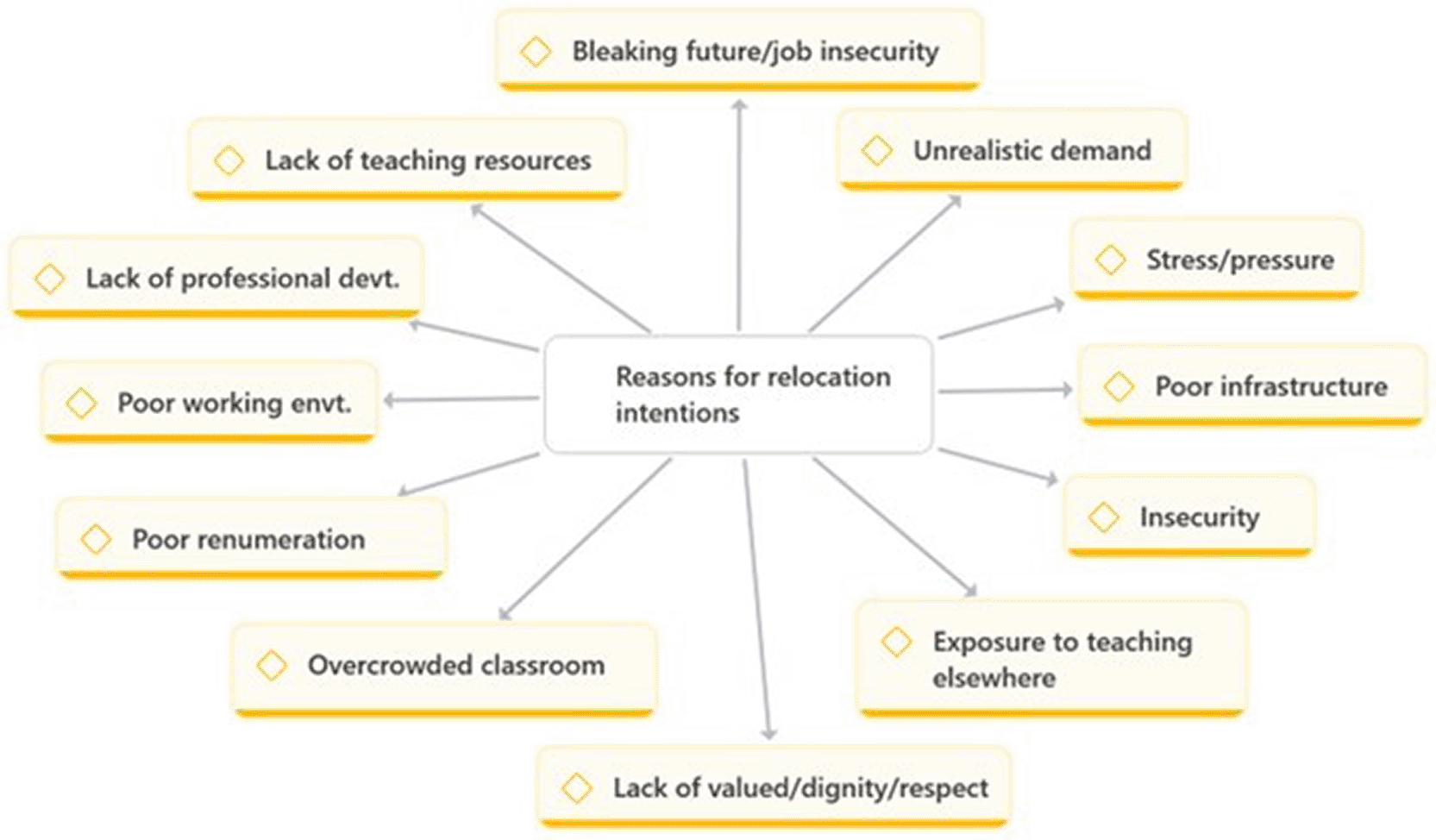
The thickness of connections between nodes indicates how frequently reasons were mentioned together.
Figure 1 presents a network visualization of the reasons teachers gave for considering relocation. The thickness of connections between nodes indicates how frequently reasons were mentioned together, revealing the interrelated nature of these push factors.
As Figure 1 illustrates, three factors anchor the network: poor remuneration, lack of professional development, and poor working environment. Each radiates outward to related concerns.
Poor remuneration was the most universally cited reason for considering relocation. Teachers consistently described their salaries as insufficient for basic needs, let alone comfortable living. The problem was exacerbated by Nigeria’s economic context—subsidy removal had driven up living costs without commensurate salary adjustments.
The language teachers used to discuss pay revealed that this was not mere dissatisfaction but a sense of fundamental betrayal. One public school teacher framed it as a broken promise:
Pu. 3: “I feel it’s a betrayal of a sort. I promised to teach these boys. But at 45, with my salary not taking me home, the possibility is becoming a necessity I can no longer ignore.” – FGD 1 with Public Teachers.
For some, financial motivation crystallized during specific crises. A private school teacher described how her husband’s prolonged unpaid strike during the ASUU shutdown revealed the fragility of their household income, which rested on her “unstable private school salary”:
Pr. 4: “It was during the prolonged ASUU strike when my husband, a university lecturer, was at home for months with no pay. I realized our entire household was resting on my unstable private school salary. I needed a solid plan B that could become plan A.” – FGD 2 with Private Teachers.
Beyond economics, teachers cited profound lack of professional dignity as a reason for wanting to leave. This manifested in multiple ways: being required to purchase basic teaching materials from personal funds, working in environments that neither valued nor respected the teaching profession, and facing the reality that even in death, teachers are not honored.
One public school teacher contrasted this with the imagined alternative abroad:
“It’s not that I don’t love my country or my students, but it’s the thought of working in a system that values you, pays you what is due, and where you don’t have to buy chalk from your pocket.” – FGD 1 with Public Teachers.
A particularly haunting illustration came from a teacher recounting a colleague’s death:
Pu. 2: “When my colleague, Mr. X, who taught History, passed away. The school couldn’t even contribute meaningfully to his burial. We, the teachers, had to do a levy. That day, I saw my future: service without dignity, even in death.” – FGD 1 with Public Teachers.
Job insecurity was another dimension of professional devaluation, mentioned particularly by private school teachers. Unlike their public sector counterparts with some government protection, private school teachers described being constantly replaceable:
“My experience has been job insecurity. In private schools, you can be replaced easily. There’s no strong sense of stability. That has shaped my thinking because abroad, teaching seems like a more secure profession. I want a place where I feel settled, not anxious every term.” – IDI with Private Teacher 7.
Teachers described working conditions that made effective teaching nearly impossible. Lack of equipment and resources—textbooks, laboratory equipment, teaching aids, chemicals—meant that teachers could not deliver the education students deserved. One public school teacher recounted a moment of profound professional shame:
Pu. 3: “During the last WAEC practical, we had to describe an experiment with a microscope we didn’t have. I looked at my students’ memorising steps from a textbook, and I felt like a fraud. That moment crystallised it.” – FGD 1 with Public Teachers.
Overcrowded classrooms compounded this problem. Teachers described managing classes of 70 or more students, a stark contrast to the classes of 20–25 they saw online in schools abroad. This made teaching not just difficult but physically exhausting:
Pu. 2: “Managing classes of 70 students has made me exhausted. Abroad, I see classrooms of 20–25 students online—it’s motivating.” – FGD 1 with Public Teachers.
For some teachers, particularly in public schools, the decision to consider relocation was driven by insecurity—the very real threat of kidnapping, banditry, and terrorism. One teacher described a moment of paralyzing fear:
Pu 4: “The day bandits kidnapped over 300 students in a neighbouring state. They were just like my students. I stood in my class of 80, looking at the rusty burglar-proof windows, and knew I couldn’t protect them. The fear was paralyzing.” – FGD 1 with Public Teachers.
This fear was inseparable from poor school infrastructure—the “rusty burglar-proof windows” that offered no real protection. Years of such conditions accumulated into a desire to leave:
Pu. 3: “Years of poor infrastructure, lack of books, and overcrowded classes make me consider leaving.” – FGD 1 with Public Teachers.
A recurring theme across both sectors was the absence of professional development opportunities. Teachers described no training, no workshops, no in-service programs. The educational system, they felt, wanted to use them but not invest in them.
This stagnation was thrown into sharp relief by exposure to teaching practices abroad through social media. Teachers saw colleagues who had relocated attending conferences, undergoing training, and advancing professionally. The gap between what was possible and their daily reality became an “ocean”:
Pr. 1: “I attended a tech workshop in Lagos. The facilitator, a Nigerian who taught in the UK, showed us how he used VR for lessons. The gap between what is possible and what I grapple with daily felt like an ocean. I went home and updated my CV.” – FGD 2 with Private Teachers.
Even when new curricula were introduced, teachers were expected to implement them without training—then blamed for poor results:
Pr. 1: “Having my school owner introduce a ‘new, British curriculum’ without any training for us, and then blaming us when the students’ results weren’t excellent. The lack of professional development here is frustrating.” – FGD 2 with Private Teachers.
Private school teachers uniquely emphasized unrealistic demands from school management and parents. They described pressure to produce results in impossibly short timeframes, demands that all students must pass external examinations, and management that consistently sided with parents against teachers. This created chronic stress:
“In private schools, one experience that shaped me is how much pressure is placed on teachers. Parents expect results, management expects extra lessons, and you barely rest. Over time, it makes you wonder if teaching abroad might offer a healthier balance, where the workload is structured and compensation matches the effort.” – IDI with Private Teacher 6.
This accumulated into burnout—physical and emotional exhaustion that made the promise of work-life balance abroad powerfully attractive:
“My reason is simple: burnout. In private schools, the workload is too much. Sometimes you teach, mark, do extra lessons, and still the pay is small. I know someone who moved to the UK as a teaching assistant first. Now she’s doing well. When I think of teachers abroad, I imagine someone who is financially stable and not constantly overworked.” – IDI with Private Teacher 6.
When asked to rank their reasons for relocation, teachers revealed a striking hierarchy. While financial reasons were universally important, professional development emerged as the top priority for most participants. Others prioritized professional dignity, safety, family comfort, and job security.
Figure 2 presents a Sankey diagram showing the top reasons teachers prioritized. The thickness of each block represents the number of participants who ranked that reason as their primary motivation. Professional development appears as the thickest block, indicating it was the most frequently cited priority.
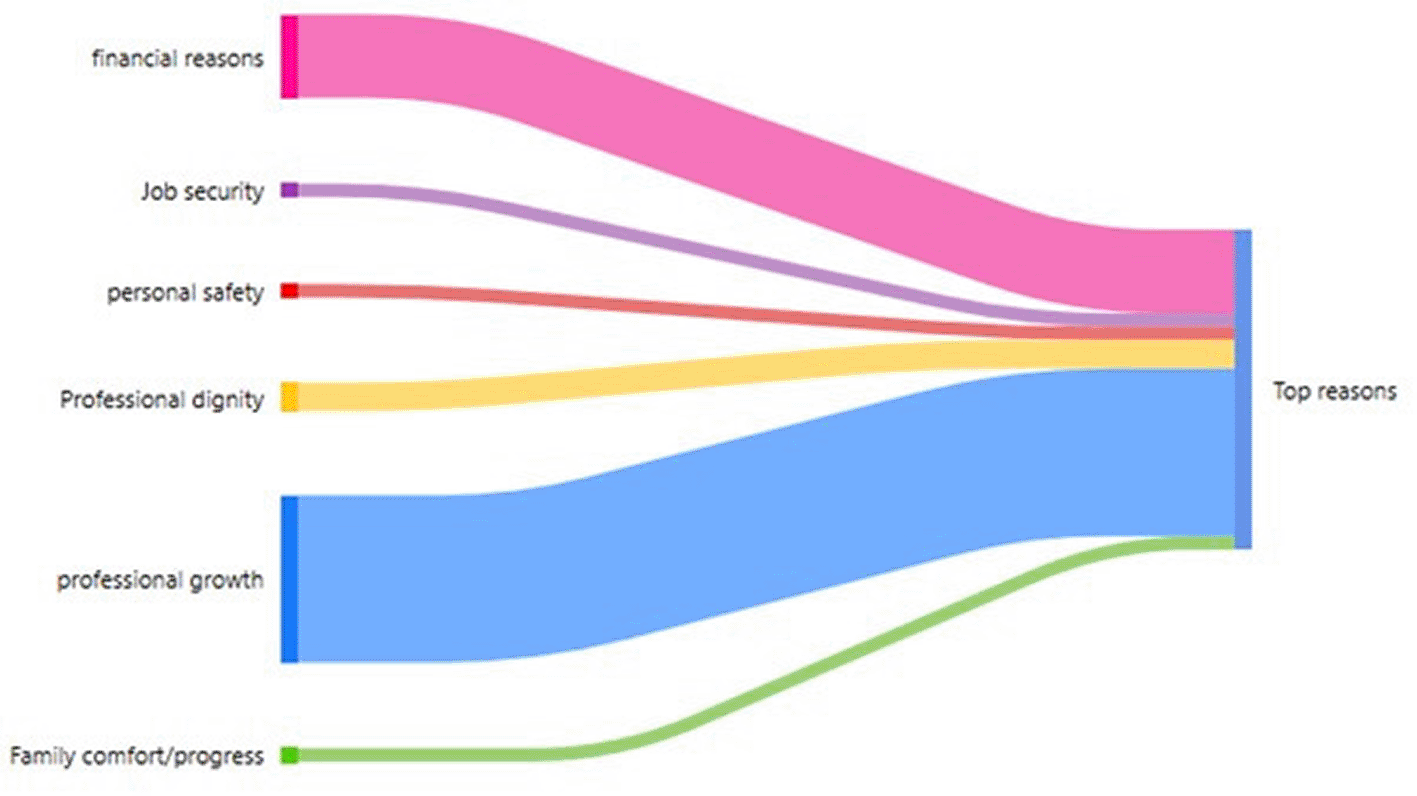
The thickness of each block represents the number of participants who ranked that reason as their primary motivation.
The prioritization revealed important nuances in teacher motivation:
Pu. 5: “Professional growth, financial stability, family considerations.” FGD 1 with Public Teachers.
“At the top for me is financial stability. Teaching here is meaningful, but the salary does not match the effort. Professional growth comes second. But honestly, if the financial aspect was better in Nigeria, I might not think of leaving.” IDI with Public Teacher 1.
This suggests that while money matters, it is often the combination of financial inadequacy with professional stagnation that makes the prospect of leaving compelling.
This final theme addresses the aspirations that pull teachers toward relocation and the factors that hold them back. Together, they reveal the competing forces teachers navigate.
When teachers imagined what relocation would offer, they articulated aspirations that mirrored their reasons for leaving. These represent the “pull factors”—positive attributes of destination countries that make relocation attractive. These pull factors are illustrated in Figure 3.
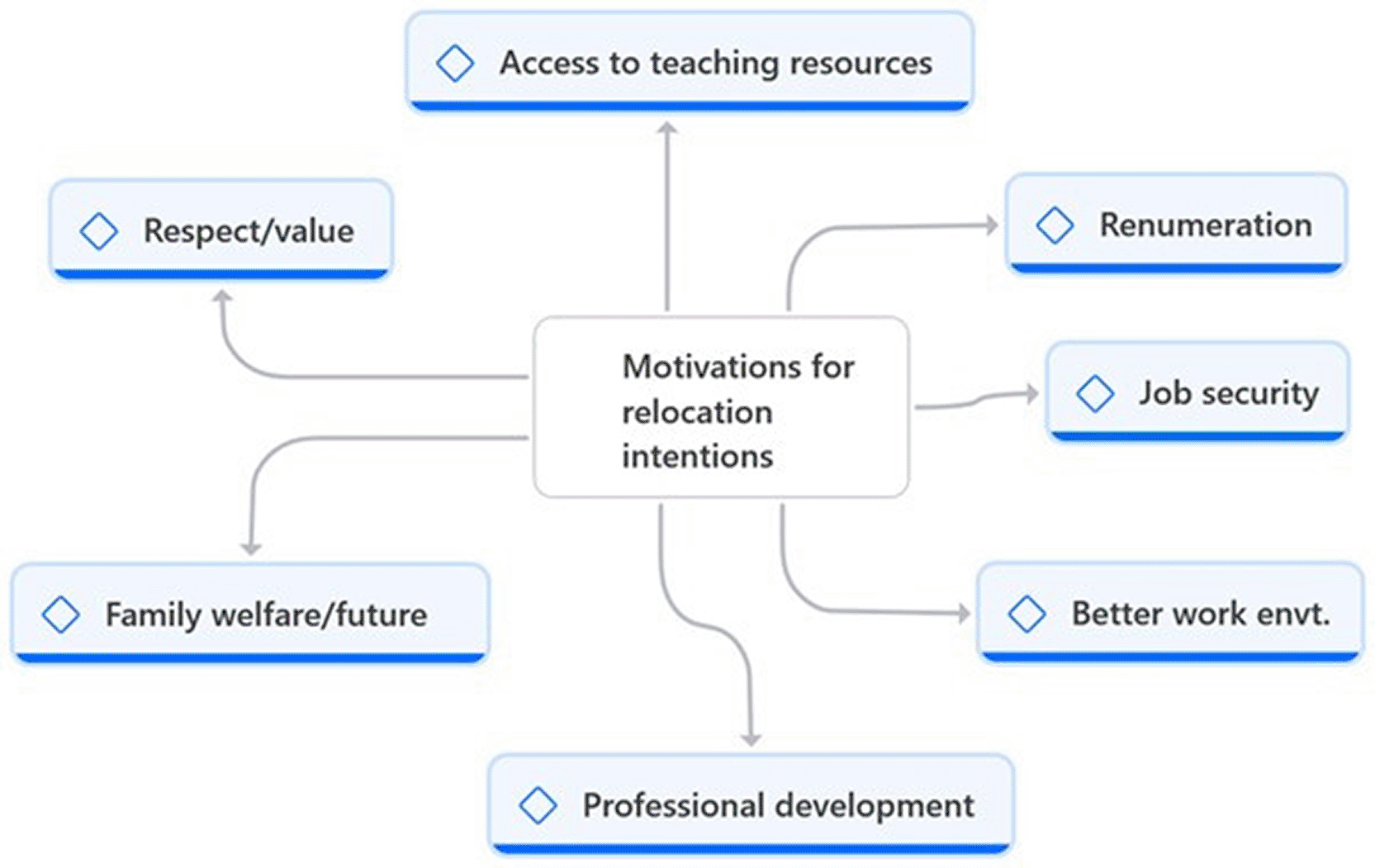
Figure 3 presents a network of motivations teachers associated with relocating abroad. The interconnected nodes reveal how multiple aspirations combine to create a compelling vision of a better professional life.
The primary motivations included:
Better Remuneration and Welfare: Teachers were motivated by the prospect of salaries commensurate with their effort and attractive welfare packages:
Pu. 2: “Financial stability is a big motivation for me. Teaching abroad might offer higher salaries.” – FGD 1 with Public Teachers.
“My motivation is simple: better pay and better working conditions. Private school teaching here is exhausting, and the salary is not proportional.” – IDI with Private Teacher 6.
Professional Development and Career Growth: The possibility of meaningful career advancement was a powerful motivator:
“My biggest motivation is career advancement. Abroad seems to offer clearer opportunities for development.” – IDI with Public Teacher 5.
Access to Teaching Resources: The prospect of working in well-equipped schools with modern facilities motivated some:
Pu. 6: “Motivated by facilities and growth.” – FGD 1 with Public Teachers.
Family Welfare and Future: Many teachers were motivated by the desire to provide a better future for their children:
“I’m motivated by the chance to give my children a better future if I eventually settle abroad.” – IDI with Private Teacher 10.
Professional Dignity and Respect: The desire to be in a system that recognizes and values teachers was a key motivator:
“My motivation is professional respect. I want to feel that teaching is seen as an important career.” – IDI with Private Teacher 9.
Pr. 3: “Motivated by recognition and structured environment.” – FGD 2 with Private Teachers.
Job Security: The prospect of stable employment without fear of sudden dismissal motivated some:
“I’m motivated by stability and peace of mind. I want to work without fear of being dismissed suddenly.” – IDI with Private Teacher 7.
Despite powerful motivations, teachers identified significant deterrents that created hesitation. These represent emotional, financial, and psychological barriers to relocation. These deterrents are shown in Figure 4.
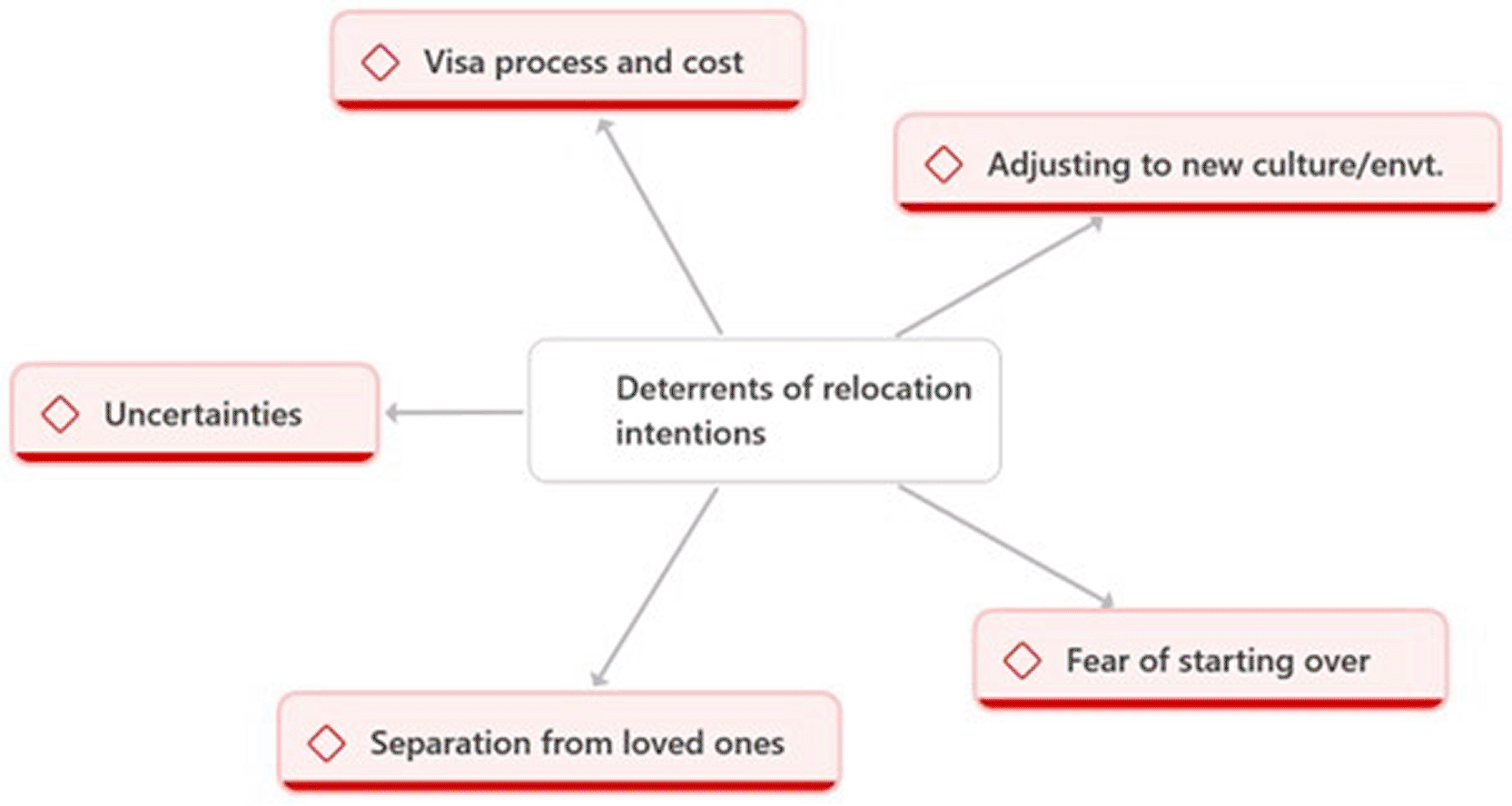
Figure 4 presents a network of deterrents that moderate teachers’ relocation intentions. The thickness of connections indicates how frequently deterrents were mentioned together, revealing clusters of barriers.
The primary deterrents included:
Separation from Loved Ones: The most frequently cited deterrent was the emotional cost of leaving family, friends, and community:
“But my deterrent is emotional—leaving my family, my church community, and everything familiar.” – IDI with Private Teacher.
“Leaving my aging parents and children behind would break my heart.” – IDI with Public Teacher 1.
Fear of Starting Over: For experienced teachers, the prospect of beginning anew in a lower position was daunting. They feared their Nigerian experience might not be recognized or valued:
“But honestly, one deterrent is starting from scratch. After teaching for so long here, it is painful to think I might have to begin again abroad in a lower position.” – IDI with Public Teacher 3.
Visa Cost and Processing: The financial and logistical barriers were significant deterrents. The cost of applications, certifications, exams, and visa processing could be prohibitive:
“The deterrent is that relocation is expensive. The cost of certifications and applications can discourage someone like me.” – IDI with Private Teacher.
“The discouraging part is the processing itself—visas, exams, and documentation. Sometimes it feels overwhelming.” – IDI with Public Teacher.
Adjusting to New Culture and Uncertainties: Fear of not fitting into a new cultural setting, potential discrimination, and the general “fear of the unknown” served as powerful deterrents.
“Also, I fear not fitting in culturally.” – IDI with Public Teacher.
Qualification Concerns: Some teachers worried whether their Nigerian qualifications would be valued or recognized abroad.
“My deterrent is competition. Sometimes I wonder if Nigerian qualifications will be valued enough outside, or if I will struggle to prove myself.” – IDI with Private Teacher 8.
Nigerian public and private secondary school teachers perceive relocation through a complex emotional lens—as both a necessary escape from a failing system and a source of guilt and fear. Their reasons for considering departure are multiple and interconnected, spanning economic pressures, professional devaluation, infrastructural deficits, existential threats, and career stagnation. Professional development emerged as the most frequently prioritized reason, suggesting that teachers are not solely motivated by material gain but by a desire for meaningful career progression. While powerful motivations pull them toward relocation, significant deterrents—particularly emotional ties to family and fear of starting over—hold many in a state of ambivalence. Social media and peer networks play a crucial role in shaping these perceptions, keeping the possibility of relocation alive and, for some, creating pressure to act.
Rather than viewing migration intentions as a simple evaluation of push and pull factors, the results of this study indicate a more intricate process. Teachers are not just reacting to their circumstances. They are actively interpreting their situations, considering emotional, social, and digital aspects. Migration, therefore, is not just a response to challenges. It is an aspiration that evolves through self-reflection, conversations with fellow educators, and exposure to different opportunities elsewhere. The findings of this study uncover a diverse landscape of migration intentions that go beyond simple economic explanations.
The first objective was to examine how Nigerian secondary school teachers perceive the prospect of international relocation. The findings revealed that teachers hold complex, often contradictory perceptions. On one hand, they view relocation positively as an “escape route” from a failing system, an opportunity to work in a better-resourced environment, and for some, a long-held “dream.” These positive perceptions were vividly captured in metaphors such as “escape from a sinking ship” and “last-minute transfer request” after years of national service. On the other hand, teachers simultaneously experienced negative emotions including fear of separation from loved ones, anxiety about starting over in an unfamiliar context, and guilt about abandoning students who need dedicated teachers.
What explains this perceptual complexity? The findings suggest that teachers are not making calculations in isolation but are deeply embedded in social and emotional contexts that shape their thinking. The positive perceptions reflect a rational response to genuine systemic failures documented extensively in Nigerian educational literature, including poor working conditions and inadequate compensation (Ofoegbu, 2004; Ojo et al., 2025). However, the negative emotions reveal that migration decisions are not purely rational economic choices but are mediated by profound attachments to family, community, and professional identity. While these findings align with aspects of push-pull theory (Lee, 1966), they also highlight its shortcomings, especially in addressing the emotional ambivalence and socially mediated processes that shape migration intentions.
The role of social media and peer networks in shaping these perceptions was particularly striking. Teachers reported that platforms like YouTube, WhatsApp, and LinkedIn exposed them to better working conditions abroad, kept relocation intentions alive through success stories, and in some cases, created pressure and restlessness. This finding extends existing knowledge by demonstrating how digital connectivity functions as a constant, personalized pull factor that demystifies migration processes and creates virtual communities of aspirants (Dekker & Engbersen, 2014; Oiarzabal & Reips, 2012). The “Escape Committee” WhatsApp group described by participants represents a novel form of collective migration planning enabled by digital technology, suggesting that the digital era has fundamentally transformed how migration intentions are formed and sustained.
The second objective aimed to identify the push factors driving teachers’ relocation intentions. The findings revealed an interconnected web of grievances with poor remuneration, lack of professional development, and poor working environment at its core. Teachers described salaries insufficient for basic needs, particularly considering Nigeria’s rising inflation following subsidy removal. One public school teacher’s language of “betrayal” and a private school teacher’s reference to her “unstable private school salary” during her husband’s ASUU strike illustrate how economic pressures are experienced not merely as dissatisfaction but as fundamental failures of the system to ensure survival and dignity.
These findings align with existing research documenting teacher motivation challenges in sub-Saharan Africa (Bennell & Akyeampong, 2007; Akyeampong, 2003) and specifically in Nigeria (Ofoegbu, 2004; Ojo et al., 2025). However, this study extends knowledge by revealing how these factors interconnect. Poor remuneration is not experienced in isolation but intersects with professional devaluation, as illustrated by the haunting account of teachers having to fund a deceased colleague’s burial. It was a moment one teacher described as seeing “service without dignity, even in death.” This finding suggests that economic push factors are amplified by a profound sense of professional disrespect that erodes teachers’ sense of worth and belonging.
The lack of PD emerged as a particularly significant push factor, with teachers describing no training, workshops, or in-service programs. This stagnation was thrown into sharp relief by exposure to teaching practices abroad through social media. When a teacher described attending a workshop facilitated by a Nigerian teaching in the UK who demonstrated VR technology, the gap between “what is possible and what I grapple with daily felt like an ocean.” This finding extends existing literature on teacher digital competence deficits in Nigeria (Ade-Ibijola & Okonkwo, 2023; Alasoluyi, 2021; Ogegbo, 2023) by showing how awareness of international standards through digital platforms transforms professional stagnation from a background frustration into an active push factor.
Private school teachers uniquely emphasized unrealistic demands from parents and school management, chronic stress, and burnout as push factors. This finding aligns with critiques of profit-driven private school practices that prioritize parental satisfaction over teacher welfare (Olajuwon, 2025). Also, it is consistent with evidence that market-oriented education systems often produce more precarious and insecure working conditions for teachers (Verger et al., 2016). The finding extends knowledge by showing how these pressures combine with other factors to create what one teacher described as a desire for “work-life balance” abroad. It is a concept notably absent from public school teachers’ narratives, who instead emphasized loss of community and rootedness.
The third objective explored the motivations pulling teachers toward relocation and the deterrents that moderate these intentions. Motivations mirrored push factors in positive form: better remuneration, professional development opportunities, access to teaching resources, family welfare, professional dignity, better work environment, and job security. This mirroring effect is theoretically consistent with push-pull theory (Lee, 1966), which posits that migration decisions involve negative factors in origin countries and corresponding positive factors in destination countries.
However, the prioritization of motivation revealed important subtleties. While financial reasons were universally important, professional development emerged as the top priority for most participants. These findings challenge simplistic narratives that frame teacher emigration primarily as a quest for higher salaries. Instead, it suggests that teachers are driven by a desire for meaningful career progression, professional growth, and the opportunity to work in environments where their skills can be effectively utilized. This aligns with research on teacher motivation that distinguishes between hygiene factors (salary, working conditions) and motivators (recognition, achievement, growth) (Oberländer et al., 2020; van Laar et al., 2020). The finding suggests that interventions aimed at retaining teachers must address not only material conditions but also PD and career pathways.
The deterrents identified separation from loved ones, fear of starting over, visa costs and processing, cultural adjustment concerns, and qualification recognition worries reveal why migration intentions do not always translate into action. These deterrents represent powerful emotional, social, and practical anchors that create mixed feelings or uncertainties even among teachers strongly motivated to leave. The fear that Nigerian teaching experience might not be valued abroad reflects legitimate concerns about qualification recognition that have been documented in migration literature (IOM, 2021). The emotional costs of leaving aging parents and children behind reveal the profound personal sacrifices migration entails, costs that economic models of migration often overlook.
This study investigated the perceptions, push factors, motivations, and deterrents shaping international relocation intentions among Nigerian public and private secondary school teachers. The findings reveal that teachers perceive relocation through a complex emotional lens—as both a necessary escape from systemic failures and a source of guilt, fear, and ambivalence (mixed feelings). The reasons driving these intentions are multiple and interconnected, spanning economic pressures, professional devaluation, infrastructural deficits, existential threats from insecurity, and career stagnation. PD emerged as the most frequently prioritized reason, challenging simplistic economic explanations of teacher emigration.
The study’s key contribution lies in demonstrating how digital technology and social media have fundamentally transformed migration intentions by providing constant exposure to alternative realities abroad, creating virtual communities of aspirants, and keeping the possibility of relocation continuously alive. It also reveals the powerful deterrents, particularly emotional ties to family and fear of starting over that create ambivalence and hold many teachers in a state of indecision.
As Nigeria grapples with the challenge of retaining its teaching workforce, the voices of teachers in this study serve as both a warning and a guide. They warn that without systemic change, the exodus will continue. But they also guide by illuminating what truly matters to teachers: not just better pay, but professional dignity, career growth, and the opportunity to work in environments where their skills can flourish. Addressing these deeper aspirations may hold the key to stemming the tide of teacher brain drain.
The findings of this study carry several practical implications for policy, practice, and teacher development in Nigeria.
1. The finding that PD topped teachers’ priorities suggests that salary increases alone will not suffice to retain teachers. However, policymakers must invest in structured career pathways, continuous PD programs, and opportunities for advanced training and certification. Teachers’ registration council of Nigeria and Nigeria Union of Teachers (NUT) have critical roles to play in advocating for and implementing such programs.
2. The findings reveal that private school teachers face unique pressures including unrealistic demands, job insecurity, and burnout. School owners must recognize that profit maximization at the expense of teacher welfare is ultimately self-defeating, as it fuels the very turnover they seek to avoid. Implementing fair employment practices, reasonable workloads, transparent grievance procedures, and competitive compensation could reduce turnover intentions.
3. The digital skills gap identified in this study and supported by existing literature (Ade-Ibijola & Okonkwo, 2023; Ogegbo, 2023) calls for urgent curriculum reform. Teacher training programs must integrate both hard digital skills (LMS proficiency, digital content creation, data management) and soft digital skills (online collaboration, digital ethics, adaptability) into their curricula. Partnerships with international institutions could expose Nigerian teachers to global best practices.
4. The finding that private school teachers were largely unaware of union activities suggests an urgent need for outreach and representation. The NUT must extend its protection to private school teachers who currently lack the job security and advocacy that public school teachers enjoy. Union-led PD initiatives could also address the career stagnation concerns raised by participants.
5. The deterrents identified visa costs, qualification recognition concerns, fear of starting over, point to areas where ethical migration management could be improved. Clear information about qualification equivalences, transparent visa processes, and pre-departure orientation programs could help teachers make informed decisions while potentially reducing exploitation.
This study has several limitations that should be acknowledged. The sample size of 22 participants limits generalizability, and the focus on five states means findings may not represent secondary school teachers in regions not covered, particularly the Northwest and Northeast. The study also relied on self-reported intentions rather than observed migration behavior, and member checking was not feasible due to geographic dispersion. Future research could use a larger quantitative survey to establish prevalence or longitudinal tracking to see which deterrents prove most powerful in preventing relocation.
Ethical approval for this study was obtained from the Faculty of Education Research Ethics Committee at the University of Johannesburg (ethical clearance number: SEM 2–2025-145). All procedures involving participants were conducted in accordance with the ethical standards of the institutional research committee. Informed consent was obtained from all participants, and their confidentiality and anonymity were strictly maintained.
During the preparation of this manuscript, the authors utilized the following generative AI tools:
Grammarly (Grammarly Inc., version as of April 2026) – used for grammar checking, spelling correction, punctuation, and basic style improvements. ChatGPT (OpenAI, GPT-4, April 2026 version) – used for language refinement, formatting suggestions, editorial assistance including word count reduction, and adherence to journal submission guidelines.
Neither tool was employed to generate research data, conduct analysis, interpret findings, or produce original intellectual content. The authors have reviewed and taken full responsibility for all content presented in this manuscript.
| Views | Downloads | |
|---|---|---|
| F1000Research | - | - |
|
PubMed Central
Data from PMC are received and updated monthly.
|
- | - |
Provide sufficient details of any financial or non-financial competing interests to enable users to assess whether your comments might lead a reasonable person to question your impartiality. Consider the following examples, but note that this is not an exhaustive list:
Sign up for content alerts and receive a weekly or monthly email with all newly published articles
Already registered? Sign in
The email address should be the one you originally registered with F1000.
You registered with F1000 via Google, so we cannot reset your password.
To sign in, please click here.
If you still need help with your Google account password, please click here.
You registered with F1000 via Facebook, so we cannot reset your password.
To sign in, please click here.
If you still need help with your Facebook account password, please click here.
If your email address is registered with us, we will email you instructions to reset your password.
If you think you should have received this email but it has not arrived, please check your spam filters and/or contact for further assistance.

Comments on this article Comments (0)