Keywords
Environmental justice, Environmental governance, India, Bibliometric analysis, TCCM framework, Environmental regulation, Climate justice, Sustainability

This article is included in the Uttaranchal University gateway.
Environmental justice, Environmental governance, India, Bibliometric analysis, TCCM framework, Environmental regulation, Climate justice, Sustainability
Environmental concerns have grown both in scope and severity over the last few decades. A rise in industrialization, the rapid extension of cities and an increase in energy needs have all caused negative impacts to our environment through pollution of the air, water, soil and ecosystem. Environmental harms have major implications for public health, access to natural resources and overall quality of life (Kauneckis & Huda, 2022). The effects of environmental harms are not uniform (Nagaveni & Anand, 2017). Some populations are exposed to greater levels of pollution than others and these same groups have less ability to find relief in governmental institutions. Inequitable distributions of pollution exposure and lack of remedy availability have brought about increased concern for environmental justice. Environmental justice addresses two main concepts: fairness in environmental decision-making processes, and equal opportunity for individuals to receive legal or regulatory protections (Konoorayar, 2021).
In India, environmental justice is very closely tied to the legal, regulatory, administrative, and policy institutions that govern environmental activities. Courts, Tribunals, Pollution Control Boards (PCBs), Statutory Agencies (SA’s) Public Interest Litigation (PIL), Climate Policy and Regulatory Mechanisms provide the base of the legal and regulatory framework of environmental governance (Abbas et al., 2026). Because of these additional factors, environmental justice in India is dependent on more than just adjudication. It also depends upon the level of cooperation among institutions, effective implementation of regulations by those responsible, active involvement from the public in decision-making processes, and fair access to redress (Dorsch & Flachsland, 2017).
As a result of the importance of addressing environmental governance issues in India, it has developed into an important area of study in both academia and government (Afsal & M, 2025). The study of environmental governance in India exists at the nexus of several disciplines including law, policy, administration, regulation, public health and sustainable development (Anand et al., 2025). Therefore, it is influenced by various types of institutions including courts, tribunals, PCBs, SA’s and policy entities. Due to the influence of these institutions on compliance behaviour and environmental results, researchers have begun to study how environmental justice is associated with governance practices, institutional capacity, regulatory mechanisms, public participation and environmental inequalities.
Because of the increasing number of studies being conducted on environmental governance and justice issues in India (Donthu et al., 2021), it is clear that there is an expanding amount of research interest in this topic. Research articles on environmental governance and justice in India can be found in journals across a wide variety of disciplines, including environmental law, environmental management, public health, policy studies and environmental science (Fenna, 2023). Specifically, without a systemic approach to identifying studies on environmental governance and justice in India (Gope, 2024), it becomes difficult to determine what themes are most prevalent among existing studies, what new research directions may emerge and where there are gaps in current research. While research has clearly expanded in terms of its quantity on environmental justice and governance in India, existing research remains largely fragmented across various disciplines including environmental law, policy studies, public health, environmental management and climate change (Hussain et al., 2024). Most existing research studies focus on a particular aspect of the legal or policy or environmental issue under consideration rather than examining the overall intellectual structure of the field (Sethi et al., 2021). Additionally, there is currently little overlap between analyses of legal frameworks and quantifiable measures of environmental outcomes. Furthermore, while comparative studies of enforcement/compliance/distributive justice/institutional effectiveness continue to grow incrementally (Sidique, 2024), they remain relatively rare compared to single-country case studies. Thusly, it would be valuable to perform a bibliometric/TCCM analysis of research concerning environmental justice and environmental governance in India (Van Eck & Waltman, 2010).
The preliminary keyword structure of the dataset provides insight into the conceptual organisation of the field. Environmental justice appears as the central concept and is closely associated with themes such as environmental governance, climate change, sustainability and regulation (Yadav et al., 2024). The presence of India as a dominant term indicates a strong contextual focus. The co-occurrence of keywords suggests that research on environmental justice and environmental governance in India is organised around justice-oriented environmental concerns within a governance framework (Singh & Varma, 2026). At the same time, additional themes such as community level issues, legal perspectives and development related concerns indicate that the field has multiple dimensions (Jani & Pandya, 2022).
These limitations indicate the need for a systematic bibliometric and TCCM-based assessment that can organise existing research, identify dominant themes, and suggest future research directions (Aria & Cuccurullo, 2017).
Bibliometric analysis helps researchers examine the body of literature on a particular topic. A bibliometric analysis allows researchers to systematically analyse publications from different perspectives (Orubebe, 2018). These include examining patterns of publication, examining the number of times articles have been cited, analysing themes associated with the articles and examining collaboration among authors. Through the use of multiple bibliometric tools, researchers may be able to identify overall trends in a research area and the most prominent themes that exist in the research area (Guo & Lee, 2025). When combined with a defined analytical framework a bibliography analysis provides researchers with an organized and comprehensive view of the literature (Khandwe, 2025).
In addition, this study uses bibliometric analysis to assess studies concerning Environmental Justice and Environmental Governance in India (Kashwan, 2022). The studies analysed included publication trends, source of publications, citation trends, keywords for studies and thematic clustering through recognized databases. The TCCM (Theory, Context, Characteristics, Methodology) framework was also used to organize the results based upon the three dimensions of the framework. Utilizing this approach will allow the researcher to objectively evaluate how the research field has developed and where possible gaps in the research field exist (Paul & Rosado-Serrano, 2019).
Therefore, the five primary goals of this study are:
1) Identify the trend of publications and citations pertaining to Environmental Justice and Environmental Governance Research in India.
2) Identify leading journals, contributors (countries/organizations), and other important information in this specific research area.
3) Examine and compare the dominant and emerging themes in Environmental Justice and Environmental Governance Research in India through keyword frequency analysis, trending topics, and keyword co-occurrence analysis.
4) Assess conceptual, contextual, characteristic, and methodological content of prior literature using the TCCM framework.
5) Identify gaps in Environmental Justice and Environmental Governance Research in India, and suggest future research directions.
A major benefit of this study is that it combines a bibliometric mapping tool with a TCCM framework to study Environmental Justice and Environmental Governance Research in India. Bibliometric analysis reviews the trend of publications, citations received by each publication, authors’ institutions of origin, collaborative relationships among authors and thematic clusters (Roy, 2020). The TCCM framework is then used to classify the previously described bibliometric review into theoretical constructs, contextual frameworks, methodological approaches and descriptive characteristics. Therefore, an organizing mechanism exists for creating a structured knowledge base for the field and identifying areas that could be strengthened both conceptually and empirically to improve understanding of issues and create greater relevance to public policy decision-making (Reddy et al., 2025).
The current study utilised a bibliometric research methodology based on the TCCM framework. Bibliometric methods are appropriate for assessing the development and structural elements of a specific area of research via publication patterns, citations, source usage, keyword frequency and co-authorship networks. The study focused on relevant environmental justice literature and environmental governance literature relating to India (Reddy et al., 2025). A TCCM framework is employed as an organizing lens to categorise the literature into four categories: Theory, Context, Characteristics and Methodology. The TCCM framework provides assistance in identifying the conceptual orientation of the literature, the geographic location of the literature, the thematic structure of the literature and the methodological deficiencies that exist within the chosen research field (Ali et al., 2024). By applying the TCCM framework to organize the bibliometric results, it will provide a means to interpret the descriptive indicators in addition to their conceptual, contextual, thematic and methodological classifications (Aria & Cuccurullo, 2017; Donthu et al., 2021; Van Eck & Waltman, 2010).
Data collection occurred utilizing the Scopus database using a Boolean search string against title words, abstract words and keywords. Data extraction from Scopus occurred on 25th March 2026. The search criteria were: TITLE-ABS-KEY (((“Environmental Justice”) OR (“Environmental Jurisprudence”) OR (“Environmental Governance”) OR (“Environmental Litigation”) OR (“Environmental Adjudication”) OR (“Environmental Law”) OR (“Environmental Regulation”)) AND (India OR Indian OR (“Indian Judiciary”))). The search criteria were developed to identify studies focusing on Environmental Justice, Environmental Governance, Environmental Law, Environmental Regulation, Environmental Litigation and Environmental Adjudication within the Indian context. The preliminary dataset contained 519 documents, 1470 authors and 318 sources.
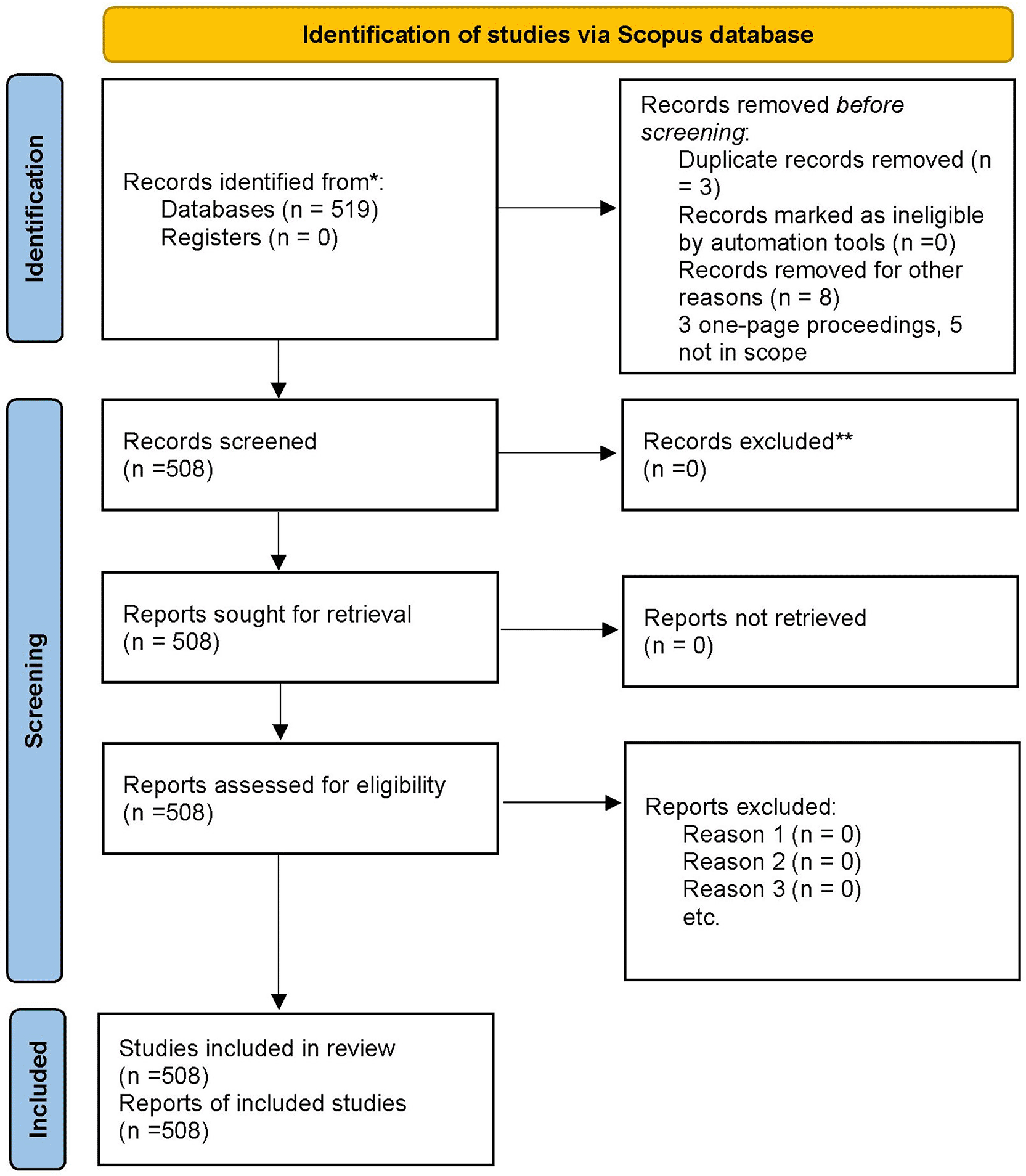
Documents unrelated to environmental justice, environmental governance, environmental regulation, environmental law, environmental adjudication, or the Indian environmental policy context were excluded. After screening, 11 records were removed, and 508 documents were retained. The final dataset consisted of 508 documents, 1463 authors and 310 sources for bibliometric examination. The metadata of the documents, including the names of the authors, titles, authors’ affiliations, sources of publication, citations, and keywords, were extracted from CSV format. The PRISMA framework was used to present the document identification, screening and final selection process (Kumar et al., 2025). This helped maintain transparency in the selection of studies for bibliometric mapping (Afsal & M, 2025; Anand et al., 2025; Divan, 2024; Sidique, 2024). The complete process of document identification, screening, eligibility assessment, and final inclusion is presented in figure 1.
The cleaned dataset was examined using Biblioshiny and VOSviewer. Biblioshiny was used to generate descriptive bibliometric results such as annual scientific production, source contribution, citation pattern, keyword frequency and trend topics. VOSviewer was used to construct network maps, especially for country collaboration and keyword co-occurrence (Bhat, 2015; Bhat, 2025; Pillai & Dubash, 2023; Roy, 2020).
In addition to the above-mentioned preliminary steps, Microsoft Excel was utilized for cleaning, organization, and preparation of data (Arora et al., 2026), in order to facilitate its interpretation (Arora, Ahmad, Kumar, & Singh, 2025a).
To evaluate the quantity of research produced in India regarding environmental justice and environmental governance, this study employed a range of bibliometric indicators.
1. Annual scientific output
2. Average citation patterns
3. Distribution of publications by type of document
4. Source production per year
5. Country collaboration networks
6. Most-cited publications
7. Frequency of keywords
8. Trend topics
9. Co-occurrence networks between keywords
These indicators allowed researchers (Arora et al., 2025), to track publication trends, determine which types of documents are being published most often (citing), locate the primary sources of those publications, describe country-level collaborations, provide an overview of the prevailing themes discussed in the literature and outline future research possibilities (Kashwan, 2022; Kauneckis & Huda, 2022; Sethi et al., 2021; Yadav et al., 2024).
Treemapping was performed to analyse keywords based upon their occurrence frequency. The most frequently discussed topic in the literature was Environmental Justice, as it appeared 126 times in the literature, and “India”, which also appears a high number of times (118) was close second. Thus, these results suggest the majority of literature is focused on issues related to environmental justice in India (Kashwan, 2022; Kauneckis & Huda, 2022; Sethi et al., 2021; Yadav et al., 2024).
A co-occurrence analysis of the Keywords was completed to explore relationships among those Keywords that were mentioned the greatest amount of time. A Co-occurrence Network was created to show how “Environmental Justice,” which was identified through frequency analysis as the Keyword that was referenced the most often relates to other important Key Concepts such as climate change, sustainability, governance and India. Cluster Analysis was completed to identify six distinct themes:
Cluster 1 - Environmental Justice Core.
Cluster 2 - India & Governance.
Cluster 3 - Regulatory Framework.
Cluster 4 - Indigenous & Community Rights.
Cluster 5 - Legal and Policy Perspectives.
Cluster 6 - Climate & Development Nexus.
Additionally, each cluster provided insight into potential research gaps, new directions for research and opportunities for additional empirical comparisons (Jani & Pandya, 2022; Khandwe, 2025; Patel, 2026; Reddy, 2026).
Following completion of the bibliometric analysis, the TCCM framework was applied to organize and synthesize the findings.
Theory was used to establish the conceptual foundation for the body of literature studied. Specifically, theory was primarily concerned with the relationships between environmental justice, environmental governance and various regulatory frameworks (Guo & Lee, 2025; Hussain et al., 2024; Reddy et al., 2025).
Context was used to analyse the geographic and institutional settings in which the literature took place. The primary context for this body of literature is India. However, other contexts such as Global South, BRICS and climate justice were identified as secondary contexts.
Characteristics were used to categorize the thematic clusters generated by keyword co-occurrence and cluster analysis (Ahmad et al., 2025). Methodology was assessed using research methods represented in the literature to identify a lack of empirical comparison studies, comparative studies and mixed-method studies (Jani & Pandya, 2022; Khandwe, 2025; Patel, 2026; Reddy, 2026).
This study’s scope is limited to documents listed in Scopus. Therefore, studies relating to environmental justice in India but located in other databases may have been omitted from consideration. Interpretation of the results is also contingent on the reliability of authors’ metadata, keywords, titles, abstracts and other source information retrieved from Scopus. However, despite these limitations, this large dataset provides a solid basis for mapping this area of research since it spans many years contains 508 documents and encompasses scholarly activity across multiple fields.
Another limitation is due to inclusion criteria specified by the search string “Indian”. While this search strategy was intended to produce literature concerning environmental justice and environmental governance in India, there may be instances where records contain literature about broader environmental justice studies where “Indian” refers to Indigenous or Native American communities. This limitation was accounted for through screening.
This part contains the bibliometric outcomes from this study. In addition to a description of the data set the analyses include indicators for publication growth, citation behaviour, geographic origin of sources, evolution of source production over time, international collaborative research, most frequently cited papers globally, occurrence frequencies of keywords (word cloud), trending topics and keyword co-occurrences (Guo & Lee, 2025; Hussain et al., 2024; Reddy et al., 2025).
The results from Table 1 show that the research field has grown continuously and that there were many different places where researchers could publish their work. Many authors collaborated on papers and many of them came from outside the country. There was an indication of some internationally based citations indicating that there is considerable recognition by scholars who are researching environmental governance issues (Chand, 2018).
| Time period | 2000–2026 |
|---|---|
| Number of documents | 508 |
| Number of sources | 310 |
| Annual growth rate | 8.06% |
| Authors | 1463 |
| International co-authorship | 26.38% |
| Average citations per document | 34.75 |
The table displays the general descriptive characteristics for the data base as it existed for the years 2000–2026. In addition to providing a visual picture of how much the various dimensions of research developed in these selected areas, the data provides a basis for quantitatively assessing how these developments occurred. In all, 508 articles were published using 310 publishing entities. The fact that 510/308 or about.83 of one article appeared in each publishing entity means that there was no small group of publishers that accounted for most of the publication activity. Instead, articles were widely disseminated across many different publishing entities; reflecting a high degree of interdisciplinary involvement.
An annual growth rate of 8.06 percent indicated a consistent increase in the number of scholarly outputs over time. A continuous growth rate of this magnitude implies continued academic interest rather than an occasional variation. The trend represents a steady build-up of research into the area.
There were 1463 authors who made contributions to the 508 articles included in the database. This indicates that there was widespread scholarly participation. Additionally, the ratio of authors to articles suggest that collaborative research efforts were common (Chand, 2018). Joint research activities involving lawyers, policymakers and environmentalists occurs commonly enough in environmental governance research to explain why so many authors were involved in each paper. Twenty-six percent of authors were international. That is moderately international. While the field still appears to be heavily rooted domestically, there is significant evidence that authors around the world are collaborating on research regarding environmental governance institutions.
The sustained growth pattern indicates rising research output with citation performance influenced by publication age; both production and citation patterns indicate gradual consolidation of the field rather than decline in scholarly interest (DeSouza et al., 2023). Figure 2 enables comparison between volume of published documents and citation performance over time for the study period 2000 to 2026. In early years, the number of documents published per year is limited. Low numbers increase steadily during the mid-2000’s. Rapid increases begin after 2015. The annual rate at which production increases accelerates rapidly after 2019. These changes reflect increasing academic attention toward environmental justice, governance of the environment, climate change, regulation and sustainability in India.
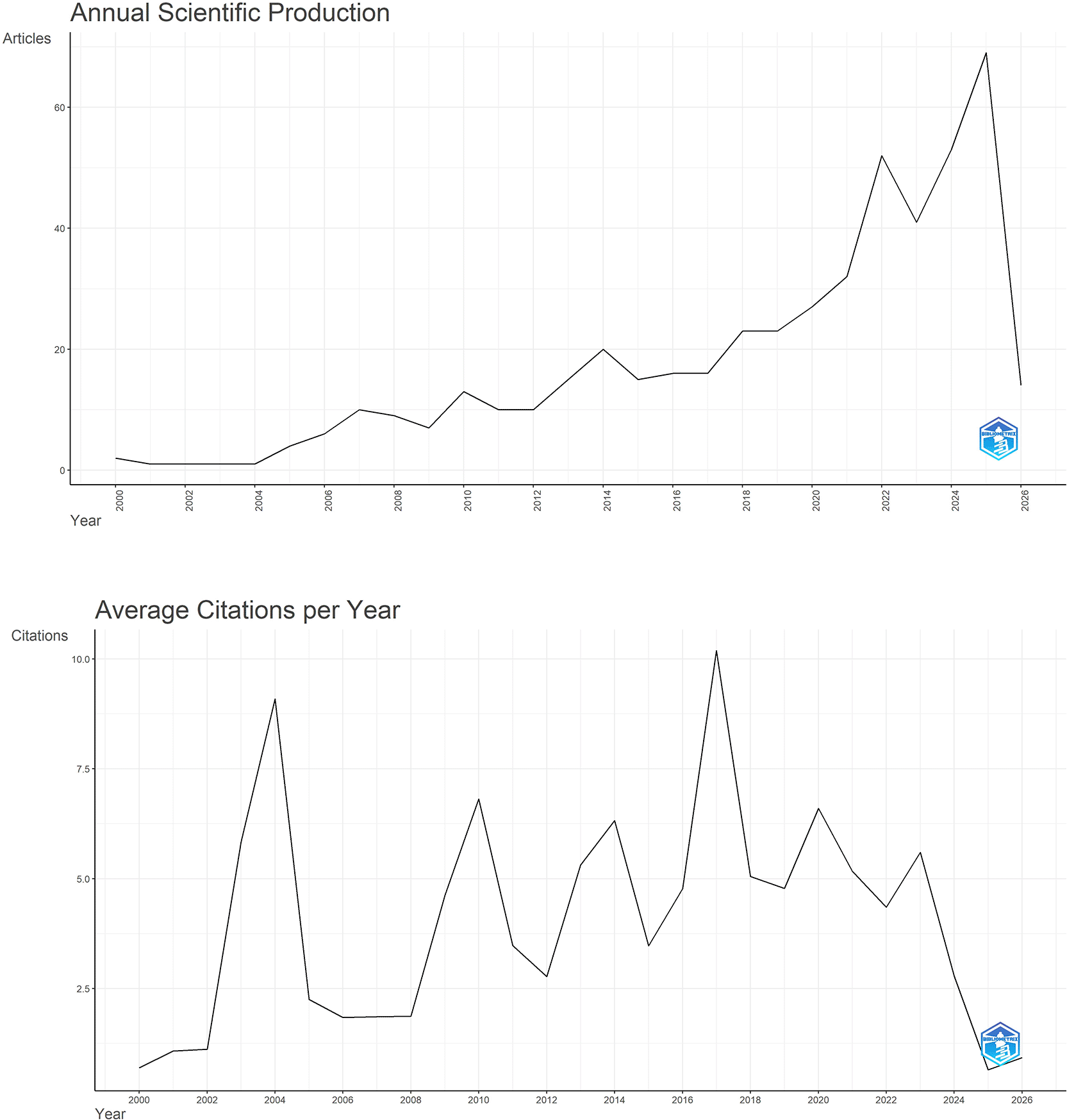
Citations display different trends. Average citations are higher in initial years relative to their publication volumes (Devarhubli & Shrivastava, 2024). This outcome is consistent with accumulation of citations over time. There has been longer exposure to being referenced for those early years’ publications therefore greater opportunity to be cited. Recent years show lower average citation values despite higher publication counts. This decrease is due to the delay in citation rather than relevance (Dilay et al., 2020). The divergence between increasing production and lower recent citation averages shows that the field is currently in an expansion phase. More productive output than immediate citation accumulation is being generated. As recent publications mature, citation averages may increase (Ganguly et al., 2020).
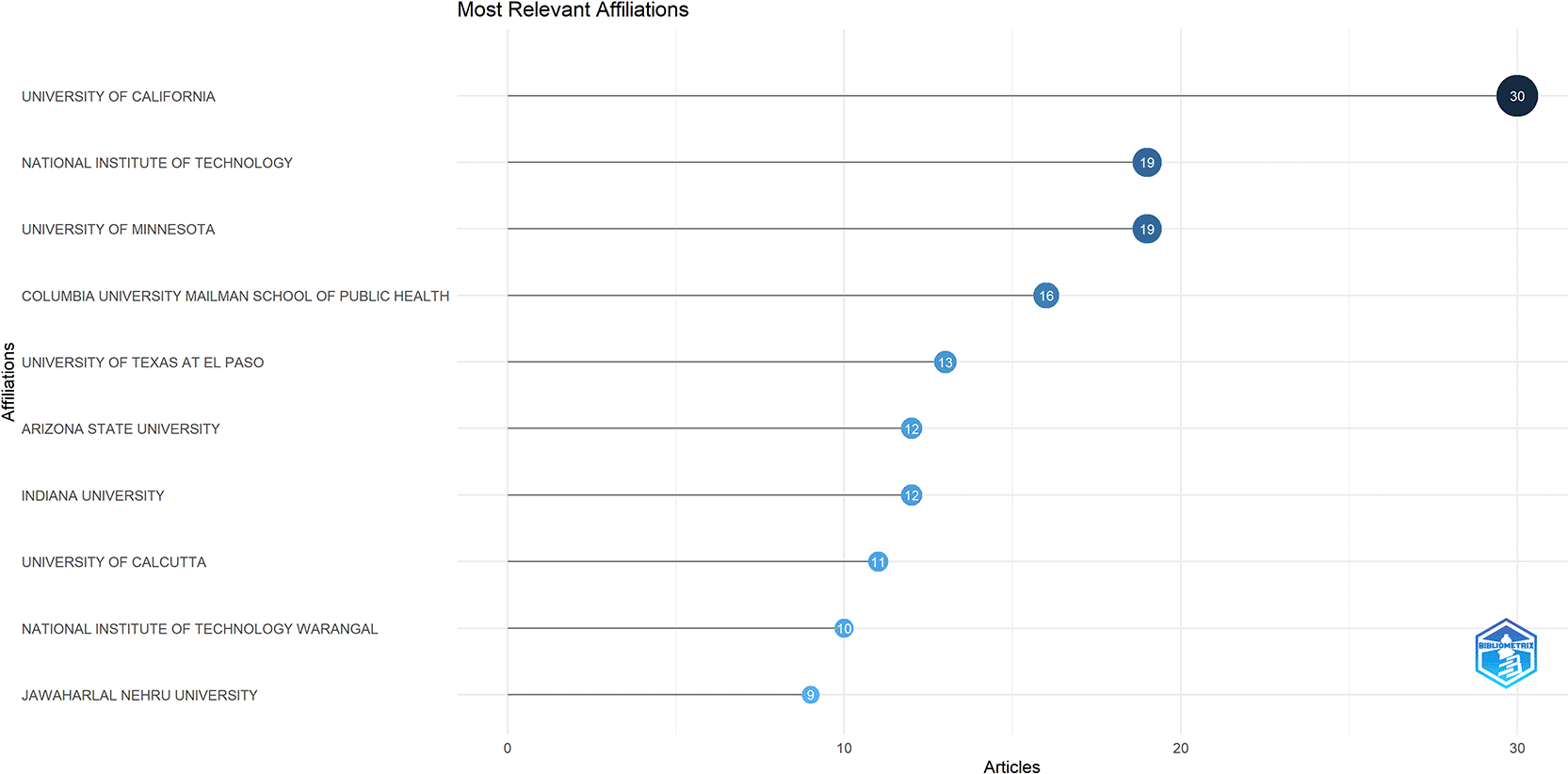
Table 2 outlines the number of publications produced each year by specific journals. As such, it enables an evaluation of how many sources are contributing to the development of the research area on a yearly basis (Ganguly et al., 2020).
Publication activity remains low until the middle years (2003–2008). Fewer than five journals have reported one to three publications each year. Early contributors included Environmental Management and Geoforum. Therefore, as indicated by this pattern, the first round of discussion occurred within established forums for environmental management and policy.
A slow increase is apparent between 2009–2014. Consistent growth was demonstrated by Energy Policy, and Environmental Monitoring and Assessment has been consistently publishing. The distribution of these contributions indicates that there was increasing interest in both regulatory/monitoring perspectives, in addition to those focused on law.
From 2015 through the present time (2020) publications increased significantly across multiple journals. International Journal of Environmental Research and Public Health experienced significant increases in publications post 2016. Also showing increasing numbers of publications were Journal of Environmental Management. These trends suggest a broadening of academic engagement connecting environmental governance with public health and administrative regulation (Jha-Thakur & Khosravi, 2021).
From 2020 to the end of 2026 represents continued growth. Highest growth rate among the listed source journals is recorded by Journal of Environmental Management. Maintaining consistent rates of publication throughout this period are International Journal of Environmental Research and Public Health and Environmental Monitoring and Assessment. Lower volume but maintaining steady presence are Marine Pollution Bulletin and Environmental Research Letters. Distribution of the number of publications across all journals indicate that the study of environmental justice/environmental governance in India has appeared in a variety of discipline-specific, environmental management/public health/policy/sector-specific journals. Gradual emergence, followed by growing, particularly post 2015, demonstrates an increasing level of academic focus and thematic convergence across environmental research fields.
Figure 3 provides an illustration of disciplinary dispersion and clearly shows the leading journals. This illustrates how environmental justice has been integrated into all areas of research such as management policy, health, and sector-specific studies (Gill, 2012). The graph represents the journals where researchers have published the greatest number of articles, by frequency of publication, within the dataset. The graphs illustrate which journals produced the largest numbers of articles during the time frame of 2000 to 2026.
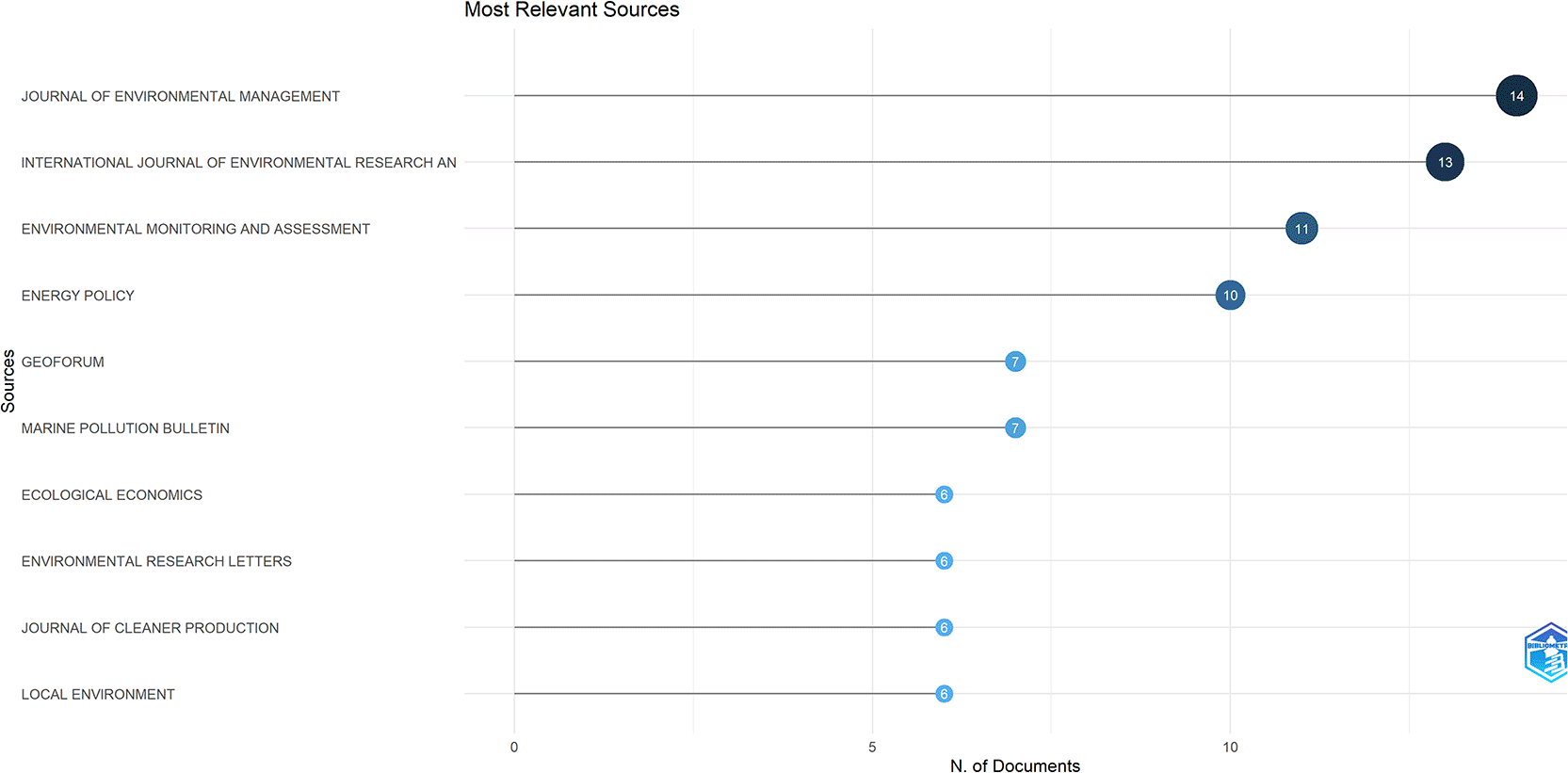
Journal of Environmental Management is shown to be the journal with the greatest number of publications by the visual distribution. Thus, it can be inferred that scholarly work regarding environmental governance, institutional mechanisms etc. are generally conducted within environmental management research (Gill, 2016). The Journal of Environmental Management may serve as a base of discussion for topics concerning regulatory frameworks and adjudication.
Also, International Journal of Environmental Research and Public Health show a high level of representation. This may reflect the relationship between environmental justice and public health outcomes. Decisions made by regulators, policies developed by governments, and implementations of environmental policy decisions can create risks associated with exposure and affect the environment at the community level.
Energy Policy and Environmental Monitoring and Assessment appear to contribute at a regular rate. As a result, their inclusion suggests that research in this area extends beyond policy evaluation and monitoring of the environment, and includes implementation and regulation.
Lastly Geoforum and Marine Pollution Bulletin also contribute at moderate levels. This may suggest that there is some research related to governance and environmentally related problems specific to sectors (Gill, 2018).
In Figure 4, During the initial stages of publication, early dissemination of publications is primarily characterized by early publication dispersal toward increased frequency and consistency in contributing publications in select journals. The transition from dispersed to consistent publication patterns represents a maturity of environmental justice and governance research in India as well as continuing reliance upon established publishing channels (Gill, 2018).
Early years of the study are defined by sparse and non-uniformly distributed contributions of single or few authors per journal. As such this pattern represents the developmental stage at which research has developed sufficient enough to produce an increase in total amount of scholarship produced (Chand, 2018; Ganguly et al., 2020; Jha-Thakur & Khosravi, 2021).
By mid-decade, a trend toward sustained contribution began to appear. A set of journals were shown to be producing multiple consecutive annual contributions. Among these were Journal of Environmental Management and International Journal of Environmental Research and Public Health. Specifically, both demonstrated increases in output since the late 2010’s. Together, they demonstrate that some journals have matured into dependable publication venues for environmental justice and governance research in India.
Energy Policy and Environmental Monitoring and Assessment represent two journals that provide a continued, yet moderate, stream of publications throughout the duration of the study. They demonstrate a steady but gradual increase in output indicating on-going interest in the topic without rapid increases in the number of publications.
As seen in the figure, it is clear that there is a significant shift toward greater stability in source-based production beginning around 2019. The fact that lines continue to develop in recent years indicates that the field has moved beyond the “burst” stage of development and into a “consolidation” phase where researchers are engaging with a smaller number of journals for extended periods rather than briefly entering and exiting them.
As shown in Table 3, however, the most frequently referenced journals are not primarily legal literature instead, the bulk of citation concentration occurs among journals focused on environmental policy and science. This indicates that environmental justice and regulatory institution scholarship is situated in environmental science and policy dialogue and thus does not exist only within the realm of legal doctrine (Gill, 2012, 2016, 2018).
Energy Policy was found to be the most cited journal with a total citation count of 849 indicating considerable academic reference toward scholarship related to environmental governance and the study of regulatory institutions appearing in Energy Policy.
Journal of Environmental Management ranked second with an overall citation count of 815.
The third-ranked journal in terms of overall citation count was Critical Reviews in Environmental Science and Technology, with a total citation count of 814. The high citation value for a review-oriented journal indicates that synthesizing based research in this area has been heavily referenced. Because reviews are typically more cumulative in nature than other types of research articles they tend to garner higher levels of citation counts.
Science of the Total Environment followed in fourth place with an overall citation count of 773. The level of citation counts garnered by Science of the Total Environment reflects engagement from a broader range of environmental science scholarship.
Overall, Figure 5 shows an international connection among all the research areas studied in this work. In terms of output and collaborative centrality, the most important area for studies related to the topic was India. Rather than being a reflection of isolated country-wide scholarly activity, the structure of the figure shows evidence of transnational academic collaborations.
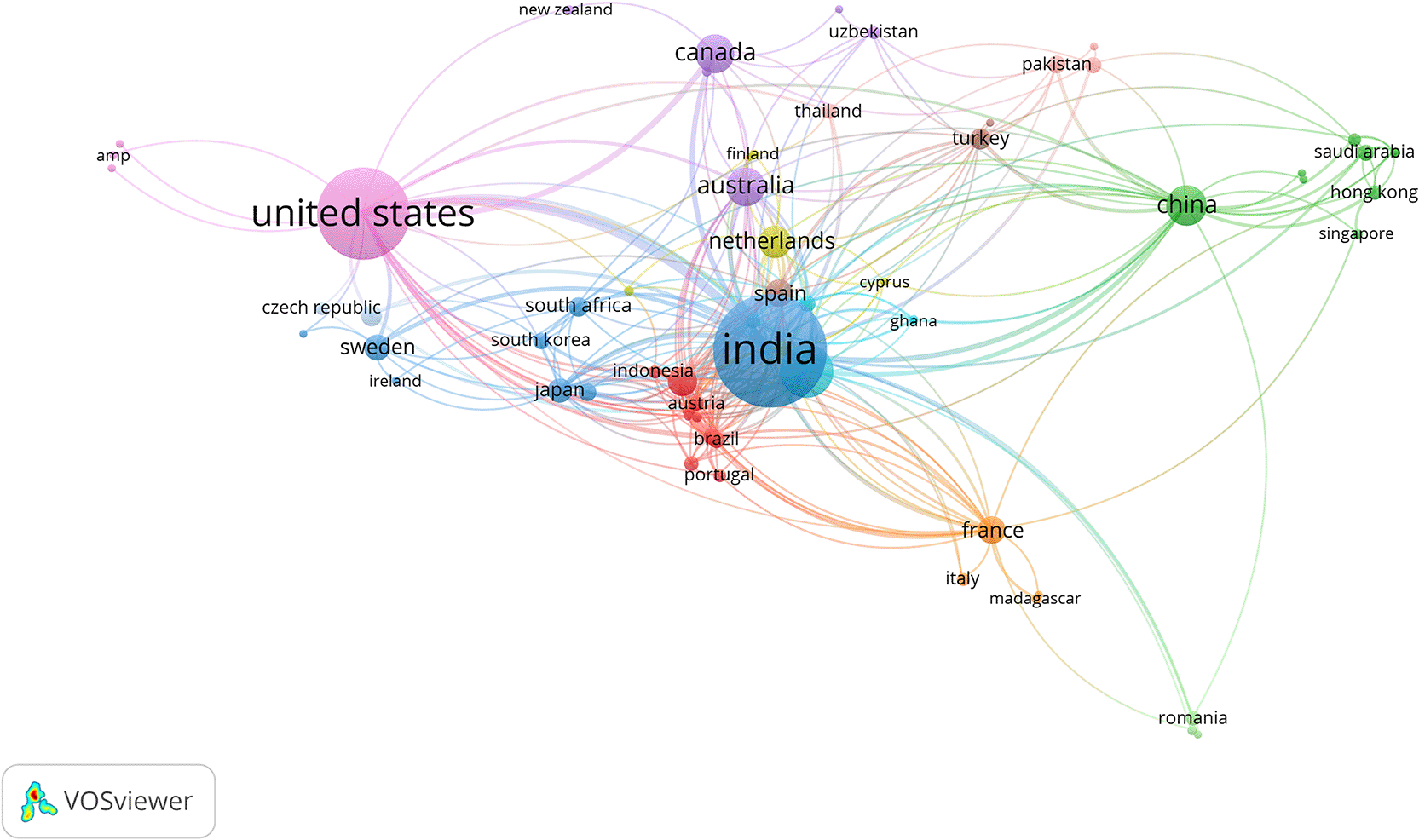
The representation shown in the figure does not show a simple count of publications vs. citations. Instead, it illustrates the relationships or “linkages” among authors across different countries through their co-authorship. Size of each node is based upon its total document output. Thickness or weight of links among countries is based upon how frequently those countries collaborated. The colours used to group countries together reflect how strongly they are collaborating with one another (Chand, 2018; Ganguly et al., 2020; Jha-Thakur & Khosravi, 2021).
India stands out clearly as the largest central node. The size of the node implies that there are a high number of documents included in the data set. The fact that the node has many links to other countries and that the linkages are well defined imply that India is involved in significant levels of international cooperation, even though the overall degree of international co-authoring is relatively low. India’s links are strongest to the U.S., China, UK, Australia, Spain and numerous European and Asian countries.
There is a second large node representing the U.S. with many outgoing connections to Europe, Japan and South Korea. The linkage between India and the U.S. is very strong suggesting that there is considerable collaboration occurring between these two countries. Furthermore, while much of the U.S.’s research is focused domestically, it also collaborates extensively with researchers from throughout Asia and Europe creating a separate cluster of collaborative efforts.
A third major cluster is represented by China located at the far-right hand edge of the diagram. Links from China connect to India, Australia and many of its regional neighbours. As can be seen from the color grouping, China participates in a highly organized network of collaborators rather than in merely individualized pairs.
European countries such as Spain, Netherlands, Austria and France form part of interrelated clusters and have many linkages to other European nations. While these nodes are smaller than India and the U.S., they demonstrate moderate levels of publication output combined with robust regional collaborative activity.
The three basic features demonstrated by the collaborative networks are:
Firstly, India serves as the core center of this collaborative effort.
Secondly, the U.S. and China serve as secondary cores of this collaborative effort.
Thirdly, collaborative efforts occur in a multi-directional manner and do not take place solely within geographic regions.
In comparison to other disciplines, very heavily cited papers are strongly located in environmental science and policy-oriented journals as shown in Figure 6. They have significant influence on the larger body of environmental justice, environmental governance, environmental regulation and environmental science literature documented within this data set. Additionally, the large variation in citation numbers among these documents confirm that the research field relies on a number of well cited foundational works instead of an assortment of less frequently cited specialized papers (DeSouza et al., 2023; Ganguly et al., 2020).
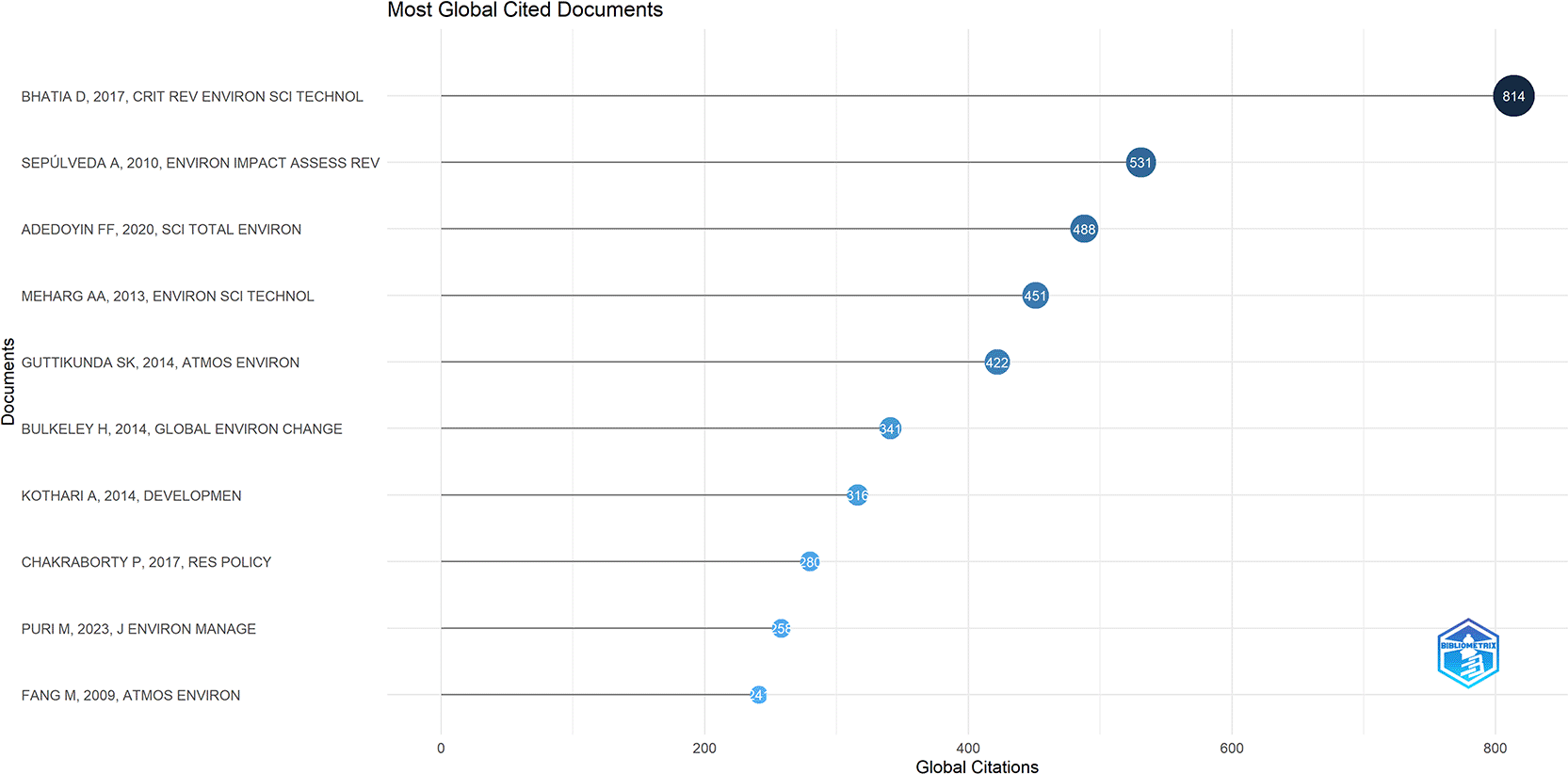
Bhatia D 2017 published in Critical Reviews in Environmental Science and Technology has been cited 814 times. It is significantly higher than all of the other cited items presented here indicating it is a well-recognized piece of scholarship globally. Therefore, the work likely serves as a reference for many researchers in the field. Sepúlveda A 2010 published in Environmental Impact Assessment Review had 531 citations making it one of the next highest number of citations. Adedoyin F.F. 2020 in Science of the Total Environment also has 488 citations. Meharg A.A. 2013 in Environmental Science and Technology and Guttikunda S.K. 2014 in Atmospheric Environment have 451 and 422 citations respectively. Each of these studies are receiving continued references to their work over time and serve as sources for discussion about environmental issues and regulations. Bulkley H. 2014 in Global Environmental Change and Kothari A. 2014 in Development both have approximately 340–320 citations. Both studies have demonstrated cross-disciplinary impact from environmental sciences to governance to development studies.
All of the remaining authors, Chakraborty P. 2017 in Renewable Energy Policy Puri M. 2023 in Journal of Environmental Management and Fang M. 2009 in Atmospheric Environment cite their work a minimum of 240–280 times. While they do not come close to being as heavily cited as the paper at the top of the list, each still has a significant number of citations. As expected, there is a citation gradient illustrated in figure six. There is clearly only one document that is extremely influential and then there are several additional documents that illustrate a decreasing trend. Document sources include journals related to environmental science, policy, governance, and atmosphere demonstrating some degree of interdisciplinarity among their citations.
Environmental Justice is a leading keyword as it represents the largest number of hits at 126, 20% of the overall frequency as shown in figure 7. Environmental Justice serves as the main conceptual anchor for the body of literature. Thus, there has been significant academic interest in the environmental justice concept including its use to create and support legal and regulatory aspects of environmental governance (Ashu & Singh, 2025). In addition to being an anchor point; environmental justice represents the single most prominent theme across all themes identified in the research.
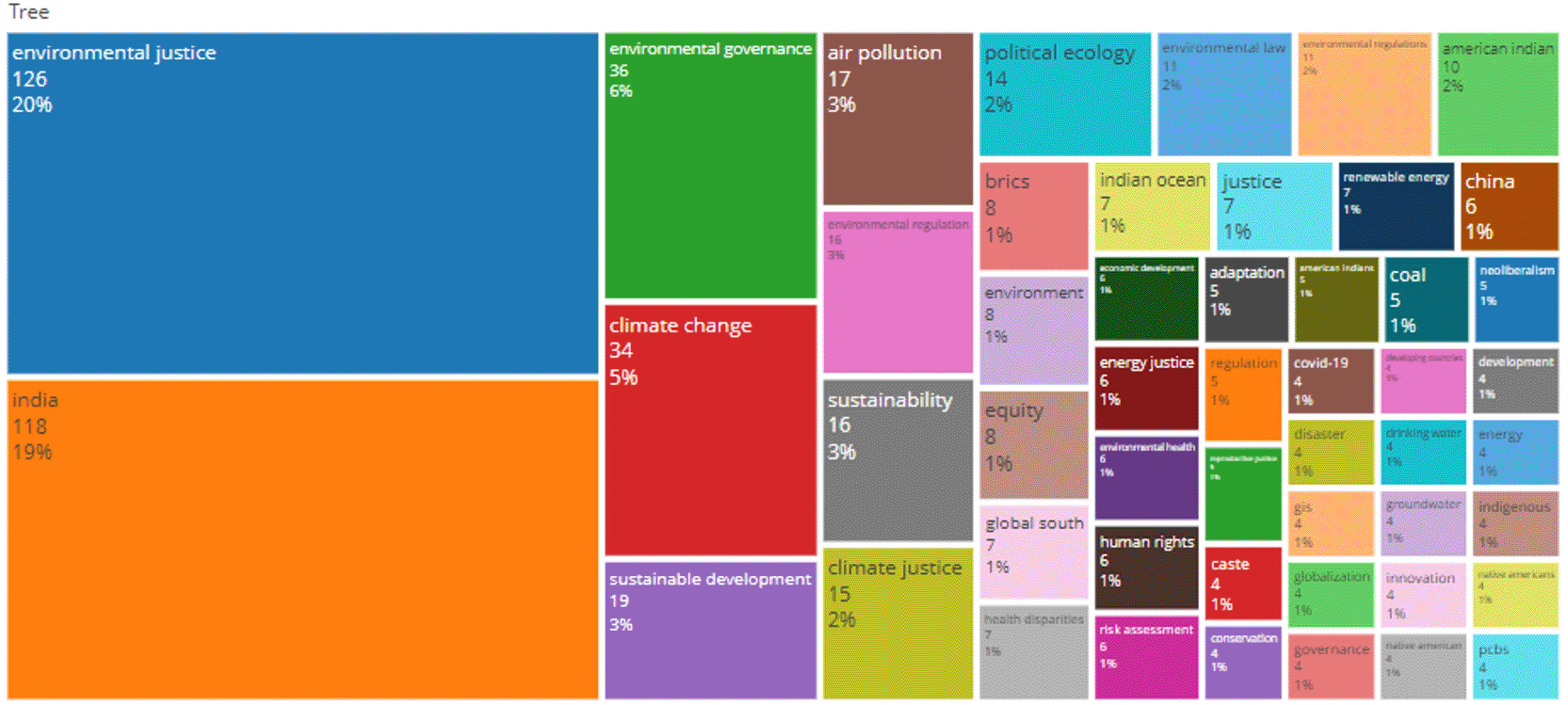
India appears as the second most frequent keyword with 118 occurrences representing 19 percent. This reflects the geographic concentration of the research area. The high frequency indicates that a significant portion of the literature is context specific and connected to institutional or policy developments within India.
Environmental governance records 36 occurrences representing 6 percent. Climate change follows with 34 occurrences at 5 percent. These frequencies indicate that governance structures and climate related issues form substantial thematic clusters within the literature.
Sustainable development and sustainability together account for 19 and 16 occurrences respectively. Climate justice records 15 occurrences. These terms suggest integration of distributive and equity-based discussions within environmental research.
Secondary keywords such as air pollution political ecology environmental regulation equity global south and human rights appear with lower but visible frequency. The presence of terms such as BRICS coal renewable energy and indigenous indicates sector specific and socio-economic dimensions.
Figure 8 presents trend topics based on temporal distribution of selected keywords. Each horizontal line represents the time span during which a term appears in the dataset. The size of the circle indicates term frequency. The position of the circle along the timeline reflects the period of strongest occurrence.
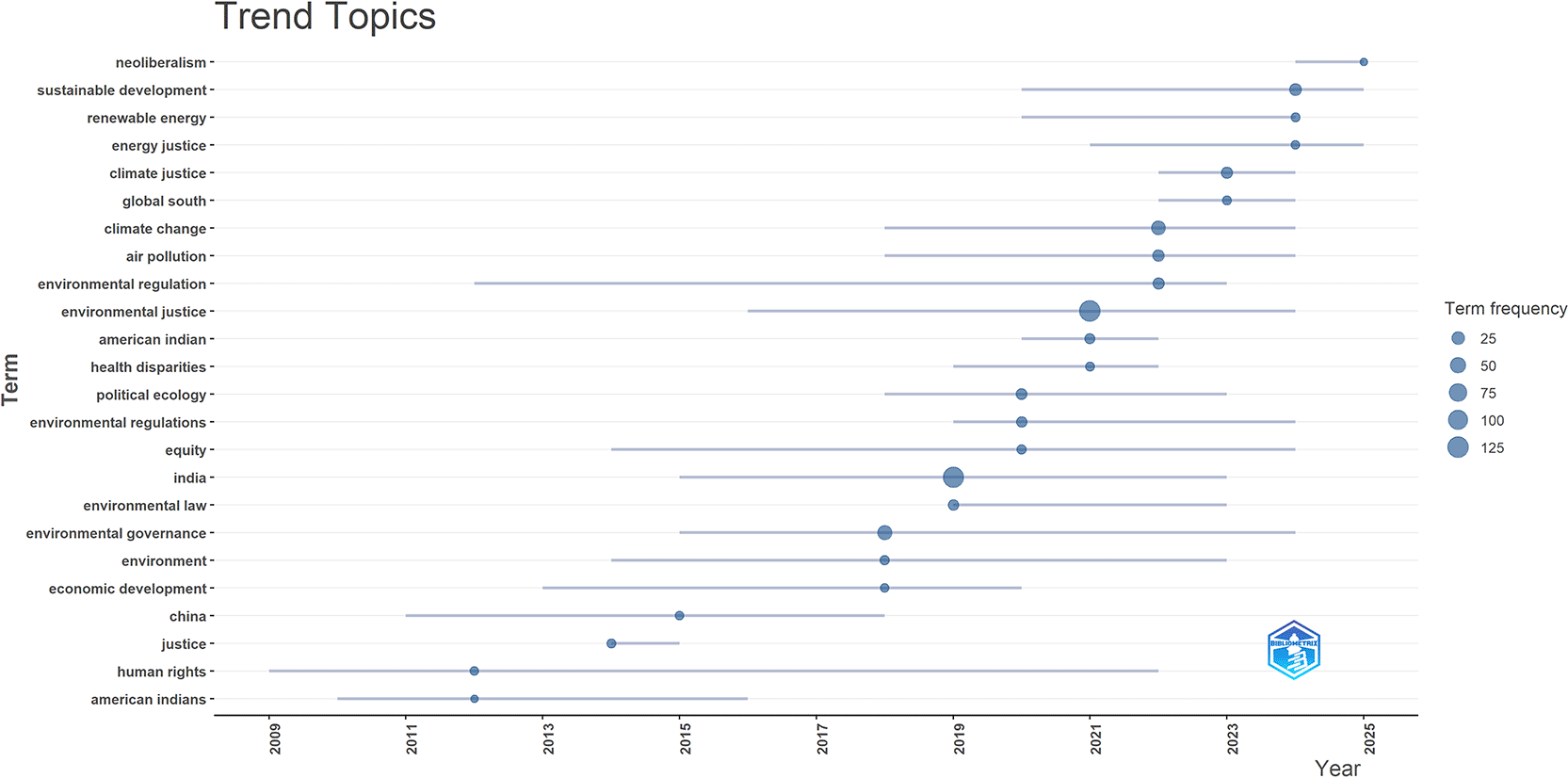
Environmental justice shows a long temporal span beginning in the early phase of the dataset and extending into recent years. The large marker indicates high frequency. This confirms that environmental justice remains the dominant and sustained theme throughout the study period (Bhat, 2025).
India also displays a strong and continuous presence particularly after the mid phase of the timeline. Environmental Justice is a leading keyword as it represents the largest number of hits at 126. Environmental Justice serves as the main conceptual anchor for the body of literature. Thus, there has been significant academic interest in the environmental justice concept including its use to create and support legal and regulatory aspects of environmental governance. In addition to being an anchor point; environmental justice represents the single most prominent theme across all themes identified in the research.
The Figure 9 of a Three-Field plot, which connects authors’ journal publications, their selected keywords and the countries for which they are affiliated (left – journal; centre – keywords; right – countries) depicts the degree of interconnectedness among those elements. The size of the lines connecting each element together illustrates how strongly those elements relate to one another. Overall, this structure reveals a primary cluster, connecting environmental justice, India, top publishing journals, and leading research countries.
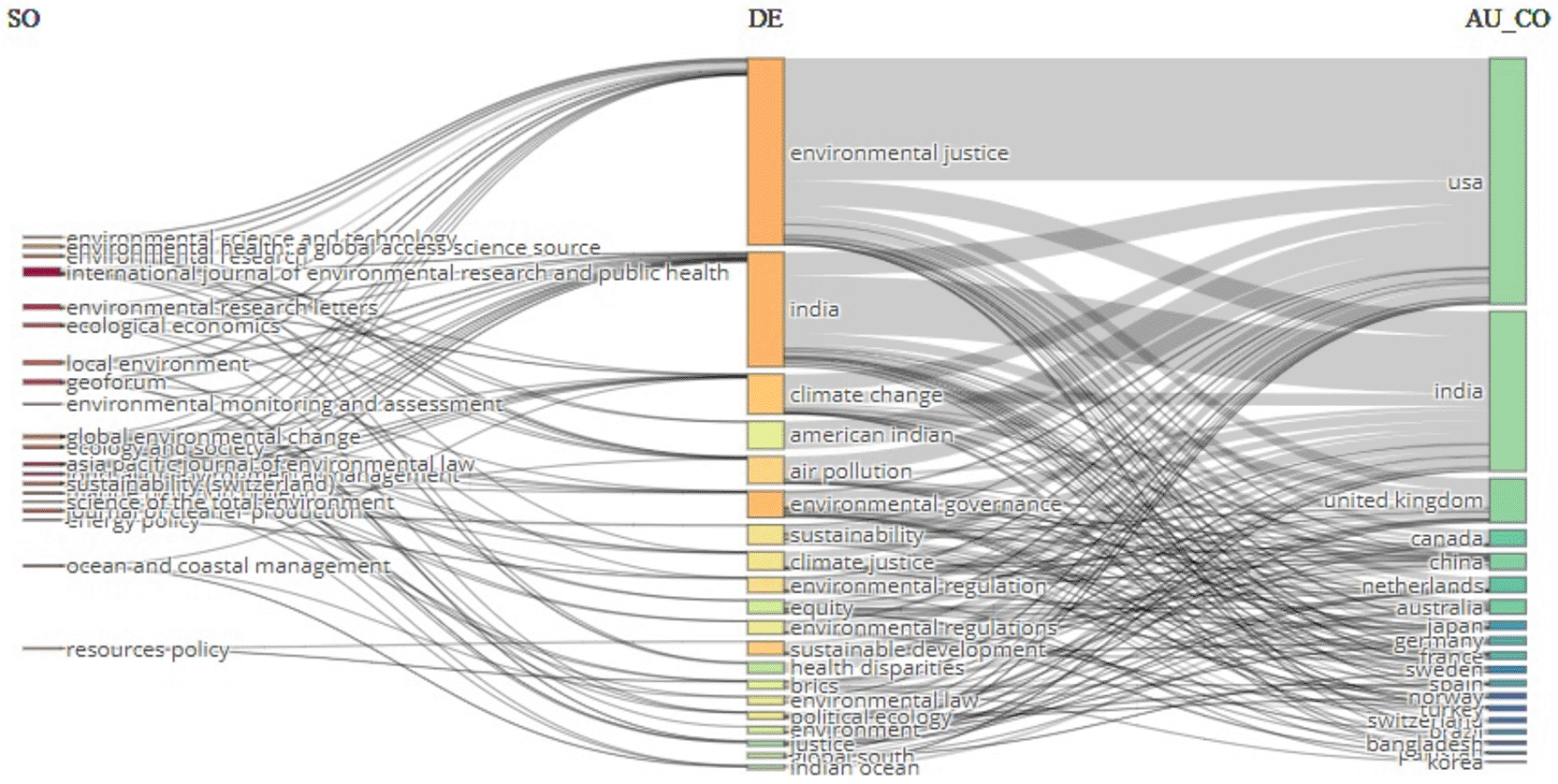
As depicted by its prominence in the centre keyword column, environmental justice has established strong relationships with many different journals and countries. Furthermore, it is illustrated through the strongest associations extending towards the United States and India. These strong associations indicate that environmental justice research is being actively published and collaboratively researched between the U.S., India and other countries.
India also appears in the three-column format as both a keyword and as a country. There is a strong association between the keyword “India” and the country of “India”. This association illustrates context-specific research grounded in national institutions and policy development. As demonstrated by the arrows flowing from the journals to the “India” keyword and then on to “India”, as a country, this research is concentrated at a national level.
Secondary, yet still connected keywords include climate change, air pollution, environmental governance, sustainability, and climate justice. Each of these keywords has established relationships with numerous journals and multiple countries. The presence of these additional keywords illustrate that researchers have diversified their research topics away from a singularly focused conceptual area (Bhat, 2015). From a source perspective, journals such as Journal of Environmental Management, International Journal of Environmental Research and Public Health, Environmental Research Letters and Science of the Total Environment demonstrate multiple outgoing connections.
The United States exhibits the highest number of nodes from a country perspective, in addition to having the highest number of incoming links as it relates to both environmental justice and other related terms. Following closely behind is India. All other countries represented in this network (including the United Kingdom, Canada, China, Australia, Germany, and France) represent moderately sized nodes indicating some degree of activity in environmental justice research however relatively small compared to the U.S. and India.
Figure 10 is a visualization of the co-occurrence network of the keywords. Keywords are represented by nodes. Size of each node is based on how frequently it occurred. Lines between nodes reflect co-occurrence. Nodes of the same colour are part of a cluster.
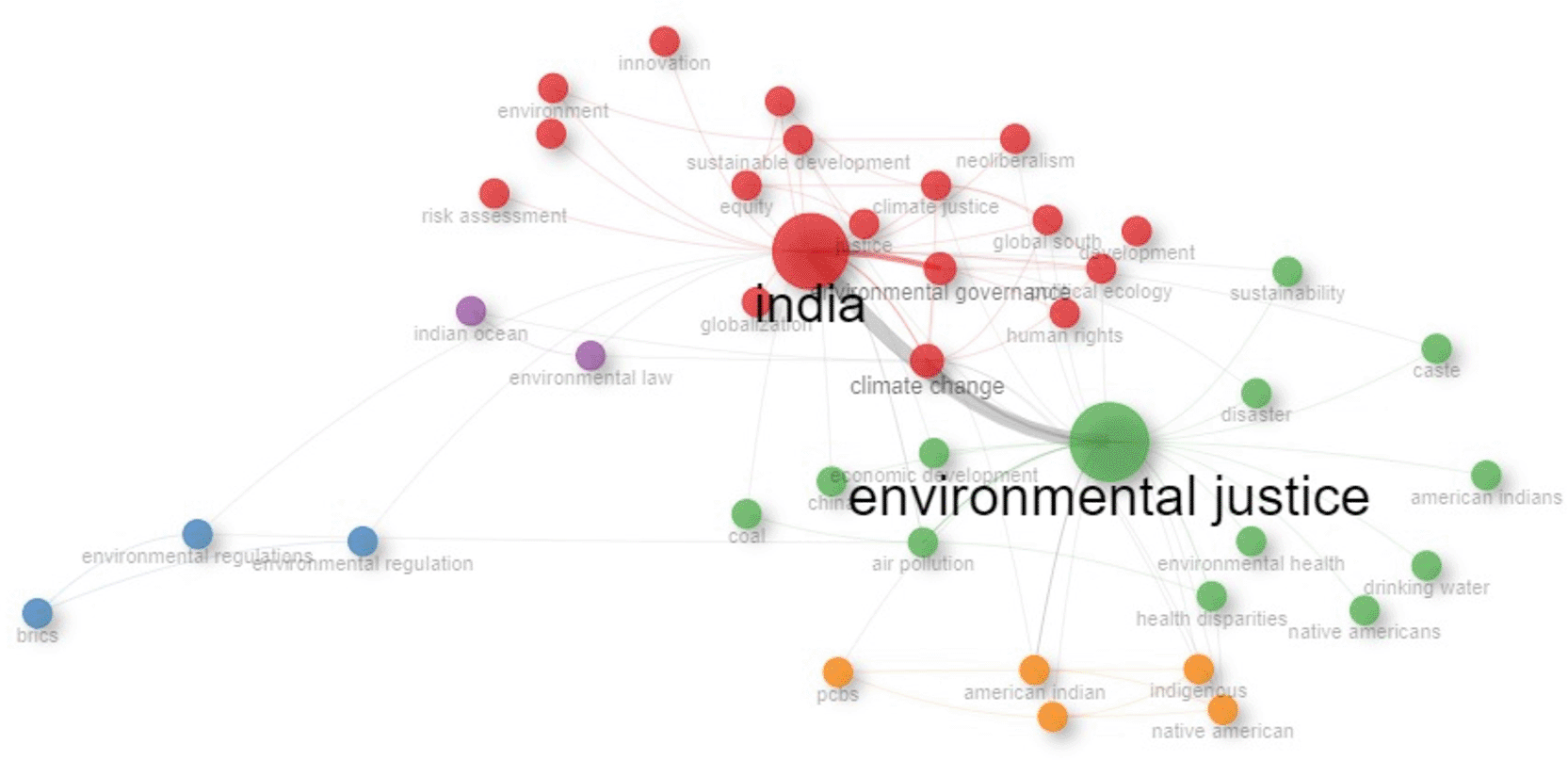
Environmental Justice was identified as having the highest number of occurrences, making it the centre of the diagram. It also had the greatest number of connections. Therefore, environmental justice served as the principal concept for the group (Divan, 2024).
The next largest group included India. It had several connections to environmental justice, climate change, equity, sustainable development and environmental governance. This shows a geographically concentrated body of work. National context has been combined with justice-based concepts.
A third cluster was formed around climate change, economic development, coal and air pollution. All were connected to one another, and all were connected to environmental justice. This cluster represents a development/governance perspective of environmental management.
Another cluster contained indigenous, native American, American Indian, and drinking water.
Environmental Regulation and Environmental Regulations formed their own small cluster. Fewer connections indicate that they have been analysed from a regulatory perspective as a subset of the larger justice framework.
Neoliberalism, Global South and Political Ecology were found in another cluster which was also connected to Equity and Sustainable Development. Social and Structural perspectives are reflected through this connection.
Network Structure shows that environmental justice is at the centre of an integrative concept. Clusters surrounding environmental justice include Governance, Development, Indigenous Rights, Regulatory Analysis and Climate Change Issues. Co-occurrence Network Pattern shows that there is a relationship between these topics; rather than representing isolated subject matter.
The cluster structure indicates that environmental justice functions as the conceptual core. Surrounding clusters represent governance, regulation, indigenous rights, climate development linkages, and legal analysis. The gaps suggest areas where deeper comparative, empirical, and cross disciplinary investigation is required (Nayak, 2017).
Table 4 presents the cluster structure derived from the keyword co-occurrence network. Each cluster represents a group of closely connected terms that appear together in the literature. The clusters indicate thematic organization within the research field.
Cluster 1 is primarily concerned with environmental justice, and its relationship to other health-related, sustainability-based and environmental health terms. The strong linkages between environmental justice, environmental health, health disparities, drinking water and disaster demonstrate how researchers typically relate justice concerns with environmental risk exposures and public health outcomes. Although the identified gap demonstrates that there is an abundance of justice-based literature, the empirical measurement of distributive outcomes across regions has been very limited (Patel, 2026).
Cluster 2 addresses issues regarding India and governance terminology. Climate Change, Equity, Sustainable Development, and Environmental Governance, combined with “India” demonstrate that much of the current scholarship concerning India is grounded in national institutional and policy contexts. Therefore, this cluster illustrates the connection between justice literature and both developmental and regulatory frameworks. Additionally, the identified gap demonstrates the need for a more comprehensive comparative study of different national systems (Pillai & Dubash, 2023).
Cluster 3 pertains to Regulatory Frameworks. Terms such as environmental regulation and environmental regulations indicate a significant emphasis on formal legal and policy instruments. Inclusion of BRICS (Brazil, Russia, India, China, South Africa) indicates that part of the research effort is focused upon emerging economies within the realm of regulatory discourses. The gap demonstrated by the absence of enforcement/compliance data from these countries indicates a lack of systemic investigation into these issues (Singh, 2025).
Cluster 4 reflects community-specific environmental justice concerns. The inclusion of terms such as American Indian and Native American suggests that many of the documents searched may represent a larger body of environmental justice literature than was originally assumed to be relevant. As a result of the search and screening process used for this study, it is recommended that this issue be taken into consideration. The identified gap also suggests that there is too little interlinkage between domestic case studies and broader international frameworks (Vikram & Kaur, 2025).
Cluster 5 represents Legal/Policy Perspectives. Environmental Law and related spatially-based terms illustrate a focus on doctrinal/governance-oriented research. The cluster clearly demonstrates an examination of legal interpretation/design. The identified gap demonstrates that the connections between legal analyses and quantitatively-based assessments have been limited (Gill, 2018).
Cluster 6 illustrates the Climate-Development Nexus. The combination of climate justice, economic development, coal, and air pollution demonstrate a clear connection between environmental justice and both energy or developmental sectors. This cluster demonstrates policy-relevant approaches for addressing environmentally-related impacts of development activities. The identified gap indicates the need for sector-specific analytical frameworks.
The TCCM framework helped organize the bibliometric findings across four analytical dimensions (Theory, Context, Characteristics, Methodology) that go beyond a simple listing of descriptive bibliometric measures, as it links the keyword patterns, thematic clusters, publication trends and methodological gaps identified in this study to wider research developments (Paul & Rosado-Serrano, 2019). In the present study, the TCCM framework provides a structured understanding of how environmental justice and environmental governance research in India has evolved and where future research can be strengthened.
Figure 11 presents the TCCM framework used to organise the findings of the study. It shows how the literature is examined through four dimensions: theory, context, characteristics and methodology. These dimensions provide a structured basis for interpreting the conceptual focus, geographical setting, thematic clusters and methodological direction of environmental justice and environmental governance research in India (Reddy, 2026).
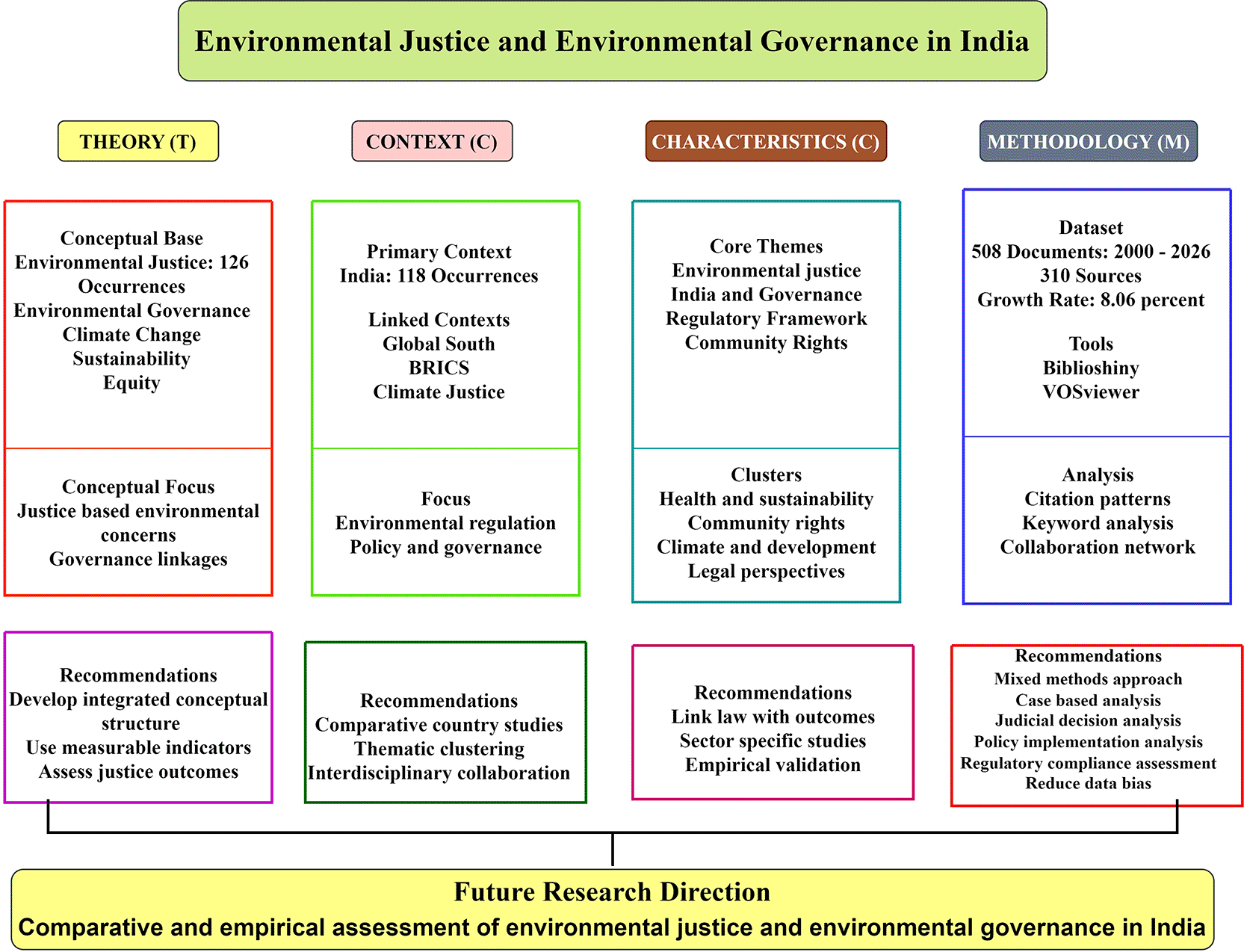
The conceptual structure of the literature is derived from the keyword distribution and co-occurrence patterns. Environmental justice appears as the most frequent keyword with 126 occurrences, representing 20 percent of the total frequency. This indicates that the research field is primarily organised around justice-related environmental concerns. The co-occurrence network shows strong linkages between environmental justice, India, climate change and sustainability. This suggests that the conceptual base extends beyond normative discussions and incorporates governance and regulatory dimensions. The presence of environmental governance, environmental regulation and equity further supports this interpretation (Afsal & M, 2025; Anand et al., 2025; Divan, 2024; Sidique, 2024).
However, there is no evidence to suggest that the data set supports or reflects a single theoretical framework for environmental justice. There is evidence of a strong conceptual emphasis on environmental justice within the existing literature. However, this work has limited connection with the broader concepts of regulation, governance and development. These limitations are also evident in the identified knowledge gap that highlights the need for a measurable method by which distributive outcomes will be assessed. Future research would benefit from building upon an integrated conceptual model that links environmental justice and its relationship to governance and regulatory processes. Measurable indicators may facilitate a systemic process by which justice outcomes can be evaluated (Bhat, 2015; Bhat, 2025; Pillai & Dubash, 2023; Roy, 2020).
The structural organization of the literature concerning the subject matter of environmental justice is based mainly in India. Of the total frequency of keywords found (i.e., “India”), this term appears in 118 instances or 19% of all frequencies; therefore, it is apparent that the primary base of environmental justice research is India. Additionally, as indicated through the country collaboration network, India is positioned as the core node with the greatest density of inter-country collaborations. With regard to co-authorships, India has ties to the United States, China, the United Kingdom, Australia and many other European countries. However, despite these collaborative relationships, international co-authorships represent only 26.38%, which suggests an overall low level of collaboration when compared to a strong emphasis on domestic-based research. Furthermore, the thematic areas of environmental governance, climate change, sustainable development and public health clearly define both the spatial and topical boundaries of environmental justice research conducted in India (Vikram & Kaur, 2025).
These thematic areas suggest that environmental justice research in India is studied through the lens of environmental regulation, institutional governance, public health, sustainability and climate-related policy issues (Kashwan, 2022; Kauneckis & Huda, 2022; Sethi et al., 2021; Yadav et al., 2024).
As suggested above, although references to global south, BRICS and indigenous communities are identified, they appear at significantly lower frequency levels than those related specifically to India. Therefore, it will be necessary to carefully screen for records concerning India versus more general topics in environmental justice literature.
A combination of the keyword structure and cluster analysis provide definitions of the literature. The literature is anchored at its centre with two primary areas of study; environmental justice and India, and secondary themes that include environmental governance, climate change, sustainability and equity (Singh, 2025).
Cluster analysis identifies six clusters of themes. The first cluster provides a representation of the environmental justice core and provides an indication of how environmental harm relates to public health and sustainability. The second cluster provides an indication of India and governance and signifies the integration of discussion about justice with institutional and development contexts. The third cluster represents regulatory frameworks and demonstrates an interest in legal and policy mechanisms. The fourth cluster focuses on indigenous and community rights and highlights problems associated with vulnerable populations. The fifth cluster presents perspectives from legal and policy, and presents interests in institutional design and legal interpretation. The sixth cluster demonstrates climate change and development inter-relationships and links environmental justice with economic and energy related concerns.
Keyword distribution indicates a layered structure with a small number of dominant terms and a larger set of supporting themes. Keyword growth over time indicates that after 2015 there was increasing emphasis on climate related and governance themes.
Cluster gaps indicate empirical measurement of distributive outcomes is limited, evaluation of enforcement effectiveness is limited, and weak linkage between legal analysis and quantitative assessment are present. These cluster gaps highlight the need for greater linkage between conceptual discussions and quantifiable outcomes (Singh & Varma, 2026).
The study uses a bibliographic approach using 508 documents that were published in peer-reviewed journals from 2000 through 2026, and included 310 different sources. Using software applications (Biblioshiny) and (VOSviewer), the study analyses publication trends; citation patterns; keywords, source distributions and international collaborations (Singh & Varma, 2026). The trend for the number of publications has been increasing at an annual growth rate of 8.06%. This study finds a noticeable increase in research activity since 2015 and accelerating growth since 2019. Average citation rates for the earliest studies are significantly higher than those for later studies. Studies published during the last few years have fewer citations because they do not yet reflect the full range of citations available for them. Most of these journals are part of an interdisciplinary research framework, including journals like Journal of Environmental Management, International Journal of Environmental Research and Public Health, Energy Policy and Environmental Monitoring and Assessment. Methodologically, most of this research relies on secondary data and bibliometric mapping techniques. There appear to be significant gaps in the literature regarding the application of empirical methodologies, case studies, and field-level data. Additionally, there appears to be a lack of evaluation of law enforcement outcomes, or regulatory effectiveness. It would therefore be beneficial for future research to employ mixed-methods designs by combining the bibliometric analysis described above with empirical investigations (Sethi et al., 2021).
The authors employed a bibliometric analysis to map the structural dimensions of the knowledge domain for environmental justice and environmental governance in India, based on the TCCM framework. Their results demonstrate environmental justice and India as the core elements of this body of literature; whereas, the other secondary themes include environmental governance, environmental regulation, climate change, sustainability, public health and development. It also found an upward trend of publications over time which appears to be most pronounced since 2015. Additionally, it is noted an increase in interdisciplinary collaboration in areas including environmental management, policy, public health, law and regulation. Finally, the TCCM analysis demonstrates that there is significant conceptualization in the field however, it needs stronger theoretical frameworks, comparative analyses, empirical validations and assessments of outcomes.
This study adds to the body of literature on Environmental Justice (EJ) and Environmental Governance (EG), with respect to the Indian experience. In doing so it offers an integrated bibliometric and TCCM based evaluation.
It assesses the growth of the field as evidenced by trends in publication, citation behaviour, source distribution, national collaborations, word frequencies and trend topics; and also analyses co-occurrences for keywords.
Furthermore, the study identifies the major theme areas that characterize the literature — namely, EJ, EG, Regulatory Frameworks, Climate Change, Sustainability, Public Health Concerns, Community Issues and Developmental Issues. Additionally, this study provides additional value by structuring these themes through the TCCM framework at Theory level, Context level, Characteristics Level and Methodology level. This allows identification of research gaps with regards to the application of Theory to empirical evidence, Comparative analysis of empirical data from different sources, enforcement and compliance with regulations and distributive justice outcomes. The Findings are intended to guide potential scholars undertaking studies on environmental justice or environmental governance in India.
Through a bibliometric approach using the TCCM framework this paper analyses the structural dimensions and thematic evolution of Indian academic production regarding environmental justice and environmental governance. Bibliographic data were obtained from 508 documents indexed by SCOPUS between 2000 and 2026. The results indicate that both environmental justice and India are at the core of the literature analysed. Supporting sub-themes identified include environmental governance, environmental regulation, climate change, sustainability, public health and other related to sustainable development. Additionally, an increasing trend has been observed for the number of publications in the field under investigation during all the years studied with a greater increase since 2015. Since 2019 there also has been an even larger increase. This indicates increasing academic attention toward environmental justice and governance issues in India. The source analysis shows that the field is not limited to legal journals. It is spread across environmental management, public health, environmental monitoring, policy and environmental science journals. This confirms the interdisciplinary nature of the research field.
The keyword and cluster analysis show that the literature is organised around six broad thematic areas. These include the environmental justice core, India and governance, regulatory frameworks, indigenous and community rights, legal and policy perspectives and the climate-development nexus. These clusters show that the field connects justice concerns with regulation, public health, sustainability, climate change, development and community-level issues.
The TCCM analysis further shows that the literature has a strong conceptual focus on environmental justice but still requires deeper theoretical integration. The context remains strongly centred on India with some connection to broader Global South and comparative governance discussions. The characteristics of the literature show thematic diversity, while the methodology dimension indicates the need for more empirical, comparative and mixed-method studies.
| Views | Downloads | |
|---|---|---|
| F1000Research | - | - |
|
PubMed Central
Data from PMC are received and updated monthly.
|
- | - |
Provide sufficient details of any financial or non-financial competing interests to enable users to assess whether your comments might lead a reasonable person to question your impartiality. Consider the following examples, but note that this is not an exhaustive list:
Sign up for content alerts and receive a weekly or monthly email with all newly published articles
Already registered? Sign in
The email address should be the one you originally registered with F1000.
You registered with F1000 via Google, so we cannot reset your password.
To sign in, please click here.
If you still need help with your Google account password, please click here.
You registered with F1000 via Facebook, so we cannot reset your password.
To sign in, please click here.
If you still need help with your Facebook account password, please click here.
If your email address is registered with us, we will email you instructions to reset your password.
If you think you should have received this email but it has not arrived, please check your spam filters and/or contact for further assistance.

Comments on this article Comments (0)